




Abstract
As children with refugee backgrounds continue to enroll in schools worldwide, attention to their educational needs and experiences has increased. In this study, we analyze the extent that schools and classrooms provide refugee students with equitable educational opportunities compared to students who are not refugees, and whether their teachers feel prepared for and engaged in culturally responsive instructional practices. Using survey data on 130,803 teachers and 8,054 schools sampled from 41 predominantly distant resettlement host countries in the 2018 Teaching and Learning International Survey, we find lower levels of resources, safety, and social inclusion for refugee students but higher levels of preparation and instructional practices in multicultural education among their teachers. The results have policy implications for supporting students with refugee backgrounds in different school contexts.
Keywords
Of the nearly 26 million refugee persons living around the world, half are children under the age of 18 (United Nations High Commissioner for Refugees [UNHCR], 2018). From 2009 to 2018, the total number of refugee children increased more than 40% (UNHCR, 2018). However, of the 7.1 million school-age refugee children, less than half are enrolled in school (UNHCR, 2019b). This gap in school attendance varies widely by age. About 63% of refugee children are enrolled in primary school, compared to only 24% at the secondary level (UNHCR, 2019b). These inequalities in schooling have motivated global initiatives for creating more equitable educational systems that promote the sustainable inclusion of refugee children within host countries, such as a UNHCR (2019a) strategy that outlined enrollment targets and learning objectives for this student population to reach by 2030.
As efforts to improve basic educational opportunities for refugee children continue, countries may draw on studies that have examined the learning experiences and needs of those who are already in school. Given the central role of teachers, researchers have focused on teacher preparation and classroom instruction for refugee students, including in Australia (Block et al., 2014), Kenya (Mendenhall et al., 2015), Sweden (Obondo et al., 2016), Turkey (Karsli-Calamak & Kilinc, 2021), and the United States (Roxas, 2011). Studies have especially critiqued the lack of language supports (García & Sylvan, 2011) and culturally responsive curriculum for refugee students (Bajaj et al., 2017; Bajaj & Bartlett, 2017). Thus, although new global initiatives aim to expand schooling for refugee children, less clear is the extent to which current schools are providing meaningful inclusion in terms of access to services, qualified personnel, and a learning environment supportive of refugee students’ cultural backgrounds.
In this study, we provide a comprehensive picture of the formal schooling environments of refugee students in different countries. We make two main contributions to the literature about refugee students. First, by using the Teaching and Learning International Survey of 2018 (TALIS 2018), we document the distribution of refugee students across 41 countries as well as characteristics of their school and classroom contexts. Second, we examine the extent to which teachers of refugee students are prepared for and attentive to culturally responsive instructional practices. The study can inform international initiatives beyond school access by providing new insights on the learning conditions and educational opportunities of refugee students across a range of countries. Indeed, although more than 83% of identified refugees reside in Africa, Asia, and Latin America (United Nations, 2019), comparative research on their school inclusion in these regions is scarce. In analyzing whether teachers feel prepared for culturally responsive practices in classrooms with refugee students, the results also have implications for teacher training and development.
In the following sections, we first present geographical trends of refugee migration over the last two decades. We bring attention to the growth of refugee persons in distant host countries—places where permanent residence and citizenship are the resettlement goal. We use a conceptual framework of structural and relational inclusion to examine the educational opportunities of refugee students in these countries. Next, we highlight the importance of multicultural education in supporting relational inclusion, particularly whether teachers of refugee students in distant resettlement countries are prepared for and responsive to multicultural practices. We then describe our methods for analyzing structural and relational inclusion of refugee students across distant resettlement countries. Our results focus on the extent to which different aspects of inclusion vary by the percentage of refugee students in a given school or classroom setting. We conclude with a discussion of the current school inclusion of refugee students.
The term refugee varies in use and meaning (Czaika & Kraler, 2020). This study’s use of the term refers to “people who have fled war, violence, conflict, or persecution and have crossed an international border to find safety in another country” (UNHCR, n.d.). TALIS 2018 uses a similar definition but also includes those who have fled a natural disaster. Although this legal definition differentiates refugees from internally displaced individuals, we note that the latter is a larger population that may share some similar circumstances, but within their country’s borders.
Refugees and Host Countries
Researchers have categorized refugee host countries into two geographical groups: neighboring host countries and distant resettlement countries (Dryden-Peterson, 2016). Although imprecise and not always distinct, the categories are useful to delineate that 73% of all people of refugee status reside in a host country that neighbors their country of origin (UNHCR, 2020). For example, most of Turkey’s 3.6 million refugees in 2020 are from neighboring Syria (UNHCR, 2020). The number of refugee peoples in neighboring host countries presents challenges for schools that are often underresourced (Karsli-Calamak & Kilinc, 2021) and affected by social and political instability (Cazzetta, 2020). More importantly, resettlement in neighboring countries is often treated as a temporary solution, even though displacement is typically long-standing (Devictor & Do, 2016). Refugees in neighboring countries thus occupy a liminal status where participation in their host country is legally constrained (Dryden-Peterson, 2016). In contrast, distant resettlement countries (e.g., Germany or Sweden) host a smaller percentage of all refugees, tend to be wealthier, officially sponsor permanent resettlement, and claim to provide a clearer pathway to citizenship, which is critical for long-term social mobility (Hoon et al., 2020; Nunn et al., 2015). These differences are noteworthy, even though changing political climates and anti-refugee sentiments can leave resettlement policies in flux within distant host countries as well.
Researchers have focused on the educational rights of refugees residing in neighboring host countries (Chopra & Dryden-Peterson, 2020; Dryden-Peterson, 2016; Dryden-Petersen et al., 2017), given their sheer number and challenges to their inclusion. However, the educational experiences of refugees in distant resettlement countries also require attention for two main reasons. First, although most refugees over the last two decades have resided in neighboring host countries, the growth rate in total refugees is nearly identical in neighboring and distant host countries (Figure 1). 1 The growth rate for refugee peoples from middle-income host countries (based on gross national income per capita) and, to a lesser extent, from high-income host countries during that period is also similar for low-income host countries (Figure 1) that sometimes resettle more refugees than others, particularly from neighboring countries. Second, although distant settlement countries may have more resources and opportunities for legal citizenship attainment, refugee children are often in schools that do not meet their academic and linguistic needs (Mendenhall et al., 2017; Miller et al., 2018; Obondo et al., 2016; Ratković et al., 2017; Short & Boyson, 2012) or that diminish their learning experiences (Cun, 2020; Koyama & Chang, 2019). Their teachers are also likely to be ill-prepared to work with students who are unfamiliar with the language of instruction and who have experienced disruptions in their schooling (Obondo et al., 2016). As some refugee students in neighboring countries may migrate to a distant resettlement country (Czaika & Kraler, 2020), research on schools in the latter context is also needed.
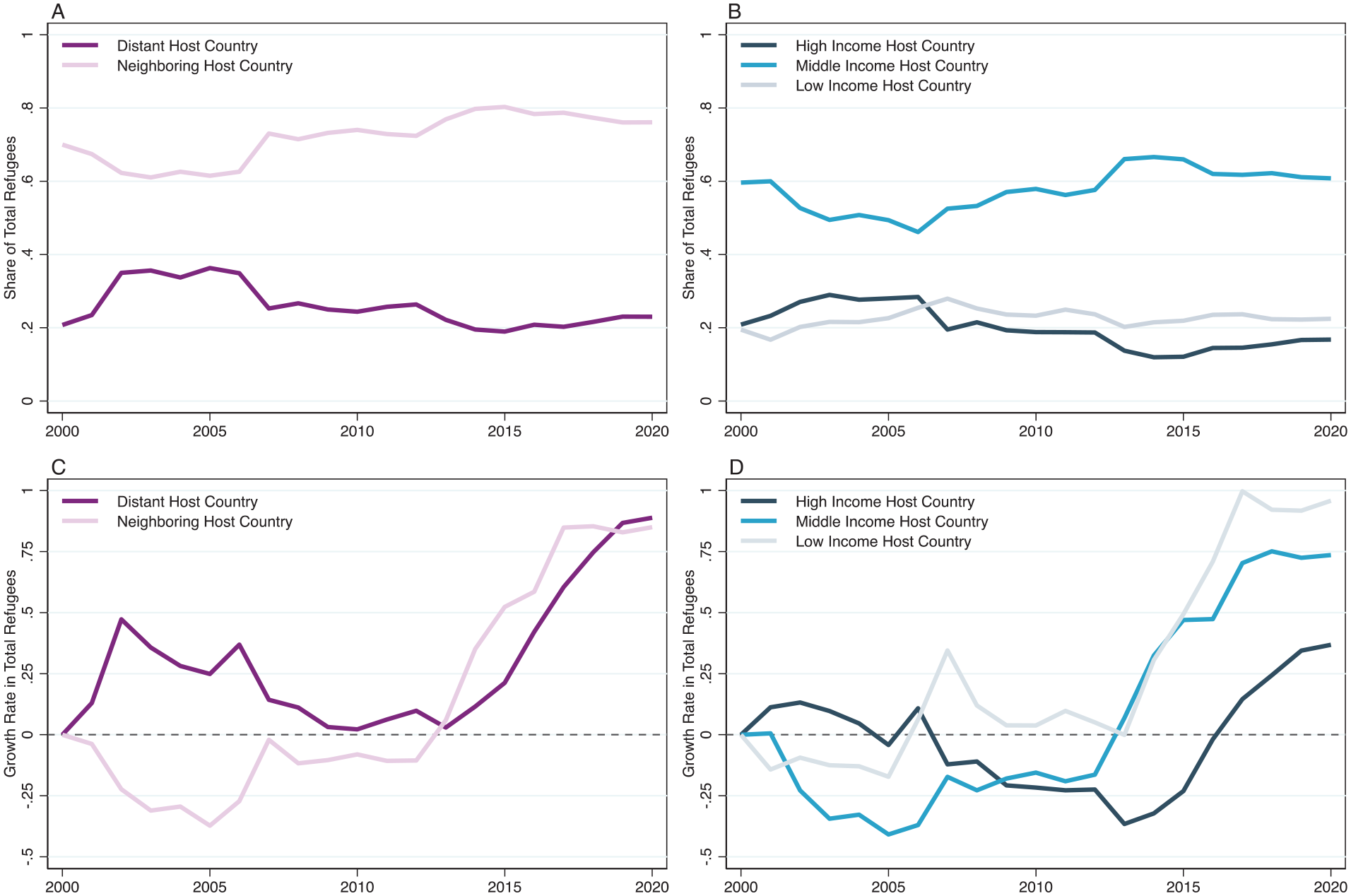
Comparison of total share of refugees (Panels A and B) and growth rate (Panels C and D) in refugees by geography and income of host countries (see supplement Table S1 for classification procedures).
Conceptual Framework
Structural and Relational Inclusion
We conceptualize the school experiences of refugee students in terms of structural and relational inclusion. The term structural inclusion refers to access to institutions and services. For example, since 2012, the UNHCR has advocated for the structural inclusion of refugee students in host countries’ national education systems, in contrast to a more common parallel school model, particularly in neighboring host countries, that physically separates national and refugee students. The curriculum and language of instruction are also different in these parallel schools (Dryden-Peterson, 2016; Korać, 2003; Strang & Ager, 2010). For refugee students, access to similar quality curriculum, teachers, language of instruction, and shared space as their peers is a basic but critical measure of educational opportunity and school integration (Dryden-Peterson et al., 2017). Yet such measures can also be inadequate, especially when the curriculum purposely excludes refugee students from the national narrative (Dryden-Peterson, 2020) or promotes ethnocentrism that further marginalizes them (Kim & Choi, 2020). Often missing in structural inclusion, for example, is a critical history of conflict and social justice in the national narrative.
Relational inclusion, in contrast, is a sociocultural process related to identity development and an individual sense of belonging and connectedness (Dryden-Peterson, 2016; Korać, 2003; Strang & Ager, 2010). Researchers have advocated for relational inclusion for refugee students in terms of a school culture of warmth (Miller et al., 2018; Naidoo, 2015), support for their language skills as resources (García & Sylvan, 2011), curriculum that draws on refugee students’ experiences and interests (Bajaj & Bartlett, 2017; Obondo et al., 2016), and participation in extracurricular programs (Mendenhall & Bartlett, 2018). An emphasis on relational inclusion in schools also benefits students who are not of refugee backgrounds. School climate and curriculum that promote cultural diversity is important for all students (Banks, 2001). Although distant resettlement countries may have more resources to support structural inclusion, less clear is the degree to which schools in these countries support relational inclusion. Monitoring both forms of inclusion is important to work toward educational equity for refugee students.
Multicultural Education
Multicultural education aims to address students’ relational inclusion through curriculum that is relevant to students’ cultural backgrounds (Ladson-Billings, 1995). Attention to creating inclusive and equitable education for all students within multicultural education (Banks & Banks, 1997) has also been described as “citizenship education,” which includes developing students’ knowledge and skills for living in a culturally diverse society as well as maintaining all citizens’ rights to their cultural communities and a shared national culture (Banks, 2001). Seen from this view internationally, different definitions and implementations of multicultural education are tied to varying ideologies related to national identity and citizenship. More recent critical approaches to multicultural education advocate moving beyond cultural sensitivity and tolerance in education to addressing structural systems of inequalities (Hernández Sheets, 2003) and White supremacy (Fylkesnes, 2018). Gorski’s (2009) typology of multicultural education—conservative, liberal, and critical—captures common school approaches that range from cultural assimilation to multicultural competence, and from identity development to social justice.
As schools in host countries aim to improve relational inclusion for refugee students, teacher development in multicultural education becomes an essential component of reform (McAllister & Irvine, 2000). What is less known is how prepared teachers of refugee students feel to teach in culturally diverse classrooms and the extent to which teachers are attentive to culturally responsive practices in classrooms with refugee students. As the number of refugee students increases across host countries, particularly in distant resettlement countries, an understanding of the current preparation of teachers in multicultural education is even more urgent. Low levels of multicultural preparation and responsive practices, for instance, would suggest that countries may be providing refugee students with structural inclusion, but not relational inclusion. Such a pattern would also have implications for teacher education and development. One challenge with examining relational inclusion and multicultural education across teachers and countries is that comparative data on teachers of refugee students are scarce.
Summary and Research Questions
The present study expands research on the education of refugee students by leveraging new international data to examine their structural and relational inclusion within predominantly distant resettlement countries (defined as countries where more than 50% of the refugee population is from a distant country of origin). 2 We ask two research questions: (a) To what extent do the schools and classrooms of refugee students provide them with educational opportunities similar to those of students who are not refugees? and (b) To what extent do teachers of refugee students feel prepared for and attentive to multicultural education practices?
Methodology
Data Source and Sample
We used data from TALIS 2018, one of the largest ongoing international surveys on the working conditions of teachers. The 2018 survey, its third iteration, was the first to include a question about refugee students. When combined with new survey information on teacher preparation and practices related to multilingual and multicultural classrooms (Organisation for Economic Cooperation and Development [OECD], 2019a), TALIS 2018 was ideal for describing the educational contexts of refugee students on an international scale. TALIS 2018 also sampled 41 (out of 47 total) predominantly distant resettlement countries (see online supplement Table S1), where 15% of all refugee peoples resided in 2018, and the total number has increased more than 40% since 2000 (see online supplement Figure S1). 3 Our analytic sample consisted of 130,803 lower secondary teachers in 8,054 schools. Within each country or partner, participants were surveyed by using a two-stage probability sampling design, with schools first selected by using probability proportional to the number of teachers within the selected strata, according to the context of each country. In the second stage, participants were randomly selected from the list of teachers in each school (OECD, 2019b). Both public and private schools were sampled, but specialized schools were excluded, such as those that taught exclusively adults or only children classified as having special needs. We focused on the teacher survey, but we also used the principal survey when examining school-level characteristics.
Measures
Key Predictor
Refugee Students
Our main predictor was the percentage of students who were classified as refugees in the teacher’s target classroom. 4 TALIS 2018 defined a refugee as “one who, regardless of legal status, fled to another country, seeking refuge from war, political oppression, religious persecution, or a natural disaster.” The response options included none, 1% to 10%, 11% to 30%, 31% to 60%, or more than 60%. We grouped the last two response categories because few teachers indicated more than 60%. 5 Principals were asked a similar question about the percentage of refugee students in their school. Thus, TALIS 2018 provided two measures about refugee students in the data set: refugee students at the classroom level, according to teachers, and refugee students at the school level, according to principals. We used each measure separately, depending on the outcome and level of analysis. Both measures were limited by how well teachers and principals understood the backgrounds of their students, given that official school records of refugee status are rare.
Structural Inclusion Outcomes
School Characteristics
We examined the schools of refugee students according to the principal surveys. The first set of variables included two binary measures of whether the school was a public school and located in a city and a continuous measure of the student-to-teacher ratio. Research shows that refugees may be dispersed across regions within countries (Hoon et al., 2021) and thus attend schools with varying resources. The second set included two measures developed by the TALIS technical team about whether a shortage of resources (e.g., instructional materials or physical space) and personnel (e.g., teachers or support staff) was “a problem” in the school (0 = not a problem, 1 = a problem; a bit of a problem). The TALIS technical team also created a separate composite scale of school safety (e.g., vandalism and theft, bullying, and drug use). See online supplement Table S2 for a list of individual items in each composite and the technical report for reliability estimates (OECD, 2019b).
Teacher Characteristics
To examine the educational environments of refugee students, we included the following teacher characteristics: education level (Level 5A or higher on the International Standard Classification of Education), number of years of teaching, whether in a full-time position, and whether the position was permanent. We also used two separate composite scales of self-reported individual self-efficacy and teaching practices (clarity of instruction, cognitive activation, and classroom management) created by TALIS with strong reliability (OECD, 2019b).
Classroom Characteristics
Prior research has suggested that refugee and immigrant students may be sorted into classrooms with students from other historically marginalized groups (Dryden-Peterson, 2016). Teachers surveyed by TALIS 2018 were asked to indicate the percentage of students from each of the following identified backgrounds (TALIS descriptions): students whose first language is different from the language of instruction, low academic achievers, students with special needs, students with behavioral problems, students from socioeconomically disadvantaged homes, and students who are immigrants or from migrant backgrounds (same response options for refugee students). We created separate variables for each question. It is important to note that the categories were not mutually exclusive, as student backgrounds could include multiple identities, and teachers may have been counting the same students when indicating the percentage from each identified category. Lastly, we included a continuous measure of the classroom enrollment size.
Relational Inclusion Outcomes
Multicultural Education Preparation
Teachers were asked whether they had participated in any preservice training related to teaching multicultural or multilingual classrooms (0 = no, 1 = yes) and how prepared they felt after the training (not at all, somewhat, well, or very well). We dichotomized the latter to better identify high levels of teacher preparation (0 = not at all or somewhat, 1 = well or very well). Teachers further indicated any in-service professional development they had had related to teaching multicultural or multilingual students in the last 12 months (0 = no, 1 = yes) and whether they currently needed professional development on the same topic (0 = no or low level of need, 1 = high or moderate level of need). 6
TALIS 2018 also asked about instructional practices related to teaching in culturally diverse classrooms. The first set included questions regarding whether teachers could adapt their teaching to the cultural diversity of students, ensure students with and without a migrant background worked together, raise awareness of cultural differences among students, and reduce ethnic stereotyping among students. We dichotomized the four response options (0 = not at all or to some extent, 1 = quite a bit or a lot) to capture teachers’ sense of expertise in each. A second set asked questions (0 = no, 1 = yes) regarding whether their school supported activities that encouraged students’ ethnic and cultural identities, organized multicultural events, taught students how to address ethnic and cultural discrimination, and integrated global issues in the curriculum. 7
Analysis
For Research Question 1, we examined differences in the schools of refugee students relative to schools without refugee students by using logistic regression models:
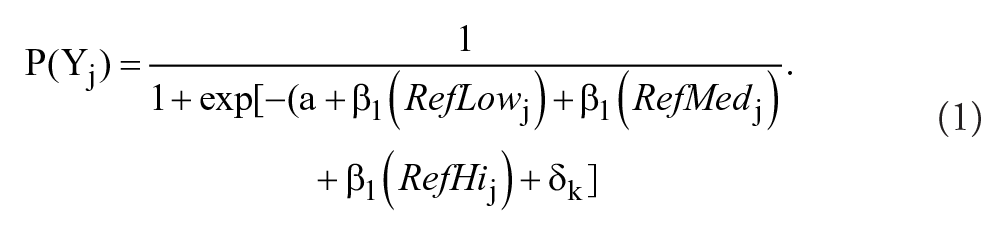
The probability of each school characteristic, Yj, is a function of the percentage of students in school j who are from refugee backgrounds, represented by RefLow (1%–10%), RefMed (11%–30%), and RefHi (> 30%). The omitted reference group is a school with no refugee students. We included fixed effects of countries in to control for country-specific contextual effects. We compared predicted probabilities of each school characteristic for schools with different percentages of refugee students relative to schools with none (i.e., the average marginal effect). For example, we examined whether predicted probabilities of personnel staffing challenges in schools were higher in schools with 30% refugee students versus schools with none. We used a similar but separate logistic model when examining the probability of each teacher and classroom characteristic, replacing the key predictor with the percentage of refugee students in classrooms. 8 Where structural inclusion was similar, the expectation was that there would be little difference in the schools and classrooms of students with and without refugee backgrounds. As one of the main purposes of this study is to describe raw disparities in educational opportunities for refugee students, we did not include other covariates in models that examined differences in school, teacher, and classroom characteristics for this population.
For Research Question 2, we focused only on teachers. We substituted the outcome in the logistic regression model with each measure of teacher multicultural preparation and instructional practices. The key predictor was the percentage of students who were refugees in their classroom. One expectation of relational inclusion was that teachers in classrooms with more refugee students would be more prepared for and attentive to multicultural practices. In addition to documenting these raw trends by using Equation (1), we also used adjusted models to examine whether any differences in multicultural preparation and practices between teachers may have been related to the school, teacher, and classroom characteristics analyzed in Research Question 1.
In all analyses, we incorporated the analytical sample weights and set of replicate weights. The sample weights allowed for inferences regarding the population of TALIS 2018 schools and teachers. The replicate weights, when used with balanced repeated replication, provided appropriate standard errors for each estimate. The sample and replicate weights used simultaneously in the analyses accounted for unequal selection probabilities, stratification, and clustering in the TALIS 2018 two-stage random sample design (OECD, 2019b, p. 157). 9 The weights also accounted for participant nonresponses. We used Stata 17.0 (StataCorp, 2021) for all analyses.
Results
Research Question 1: The Schools and Classrooms of Refugee Students
We display the distribution of refugee students in schools and classrooms across the TALIS 2018 sample in Figure 2. The results show that 15% of all schools reported having at least one refugee student; about 15% of all teachers also reported having at least one refugee student in their classroom. Among schools and classrooms with any identified refugee students, the majority included about 1% to 10% refugee students. There was wide variation internationally. In about half of TALIS 2018 countries and partners, less than 10% of principals and teachers reported having any refugee students. In contrast, more than 30% of teachers indicated having refugee students in 11 of the 41 TALIS 2018 countries and partners. The percentage of classrooms with at least one refugee student ranged from less than 1% in Japan and Hungary to more than 50% in Cyprus and Sweden. Some countries, such as Saudi Arabia and South Africa, appeared to show more grouping of refugee students at the classroom level than at the school level. Austria, in contrast, had a higher percentage of schools with refugee students (67%) than classrooms with refugee students (37%).
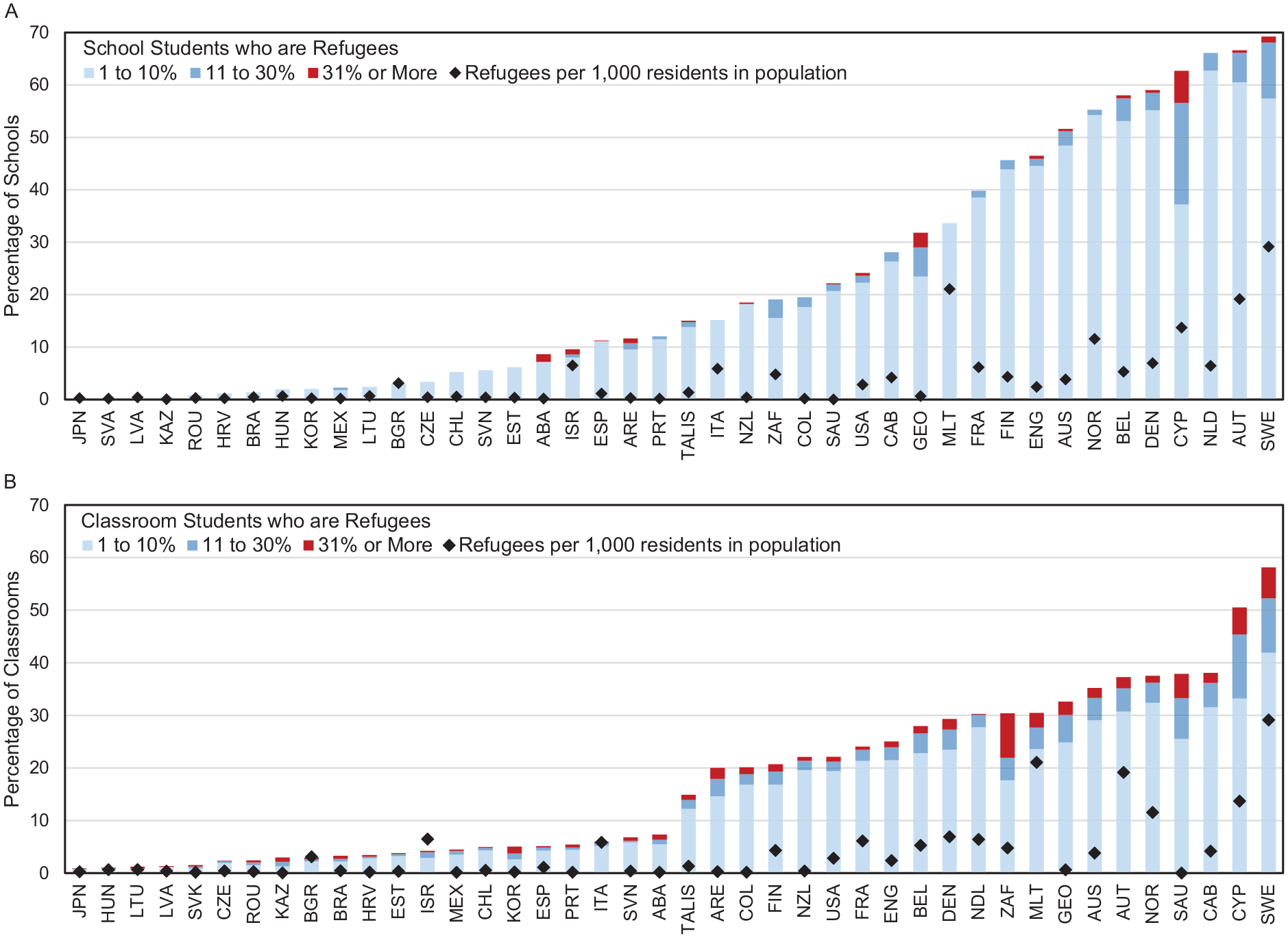
Percentage of schools (Panel A) and classrooms (Panel B) with refugee students (TALIS 2018). Refugees per 1,000 residents (UNHCR, 2019).
To provide more context, we linked data on the overall refugee population in each country (refugees per 1,000 residents) to data about refugees from TALIS 2018. Countries with a greater percentage of schools and classrooms with at least one refugee student tended to have a larger refugee population overall. There were also surprises. Nearly 40% of teachers in Saudi Arabia reported having at least one refugee student in their classrooms, but the number of refugees in the country was low (0.008 per 1,000). In contrast, Israel (2.129 per 1,000) and Bulgaria (2.839 per 1,000) had larger refugee populations, but less than 5% of teachers reported having any refugee students in their classrooms. These examples suggest different ways that countries may sort refugee students across and within schools.
In Table 1, we describe the school and classroom characteristics of refugee students across the sample by using our estimated models. We present average differences in each outcome between schools and classrooms with refugee students (1%–10%, 11%–30%, more than 30%) relative to settings with no refugee students. The results show that schools with a greater percentage of refugee students were more likely to be located in large cities (based on population) and managed by a public education authority (all p < .05). For example, schools in which 1% to 10% of the students were refugees were more likely to be in a large city by an average of 29 percentage points, compared to schools with no refugees. In terms of size, in schools in which more than 30% of the students were refugees, the average student-teacher ratio was about 4.6 students (p < .01) higher than in schools with no refugees. Problems with resources and personnel were greatest in schools with the highest percentage of refugees (p < .05). Schools with refugee students also reported having higher levels of student delinquency and violence (all p < .001). In classrooms with refugee students, teachers tended to have fewer years of experience (p < .001) than did teachers in classrooms with no refugee students. Teachers in classrooms with 1% to 10% refugee students reported having higher average levels of self-efficacy and instructional practices than did teachers in classrooms with no refugee students. The classrooms of refugee students were also noticeably different from those without refugee students, as they tended to be larger (about two to three more students) and, on average, included a higher percentage of students identified as from disadvantaged backgrounds, including language minority, low academic achievement, special needs, behavioral challenges, and low socioeconomic status (allp < .001).
Regression Models Examining School, Teacher, and Classroom Characteristics of Refugee Students (Results Presented as Marginal Effects)
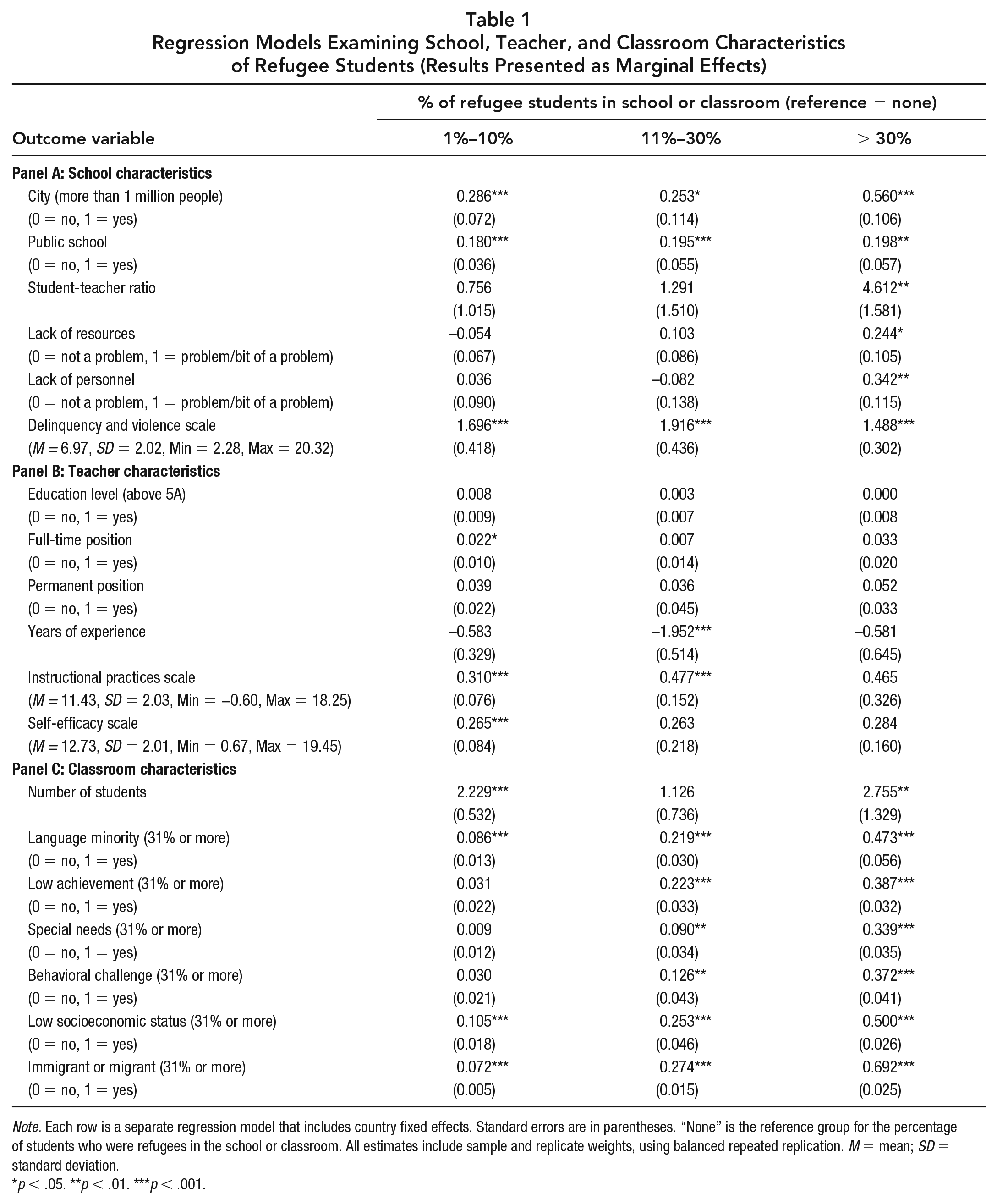
Note. Each row is a separate regression model that includes country fixed effects. Standard errors are in parentheses. “None” is the reference group for the percentage of students who were refugees in the school or classroom. All estimates include sample and replicate weights, using balanced repeated replication. M = mean; SD = standard deviation.
p < .05. **p < .01. ***p < .001.
Research Question 2: Multicultural Preparation and Instructional Practices
In Figure 3, we present unadjusted trends in multicultural preparation and instructional practices of teachers in classrooms with refugee students relative to those of teachers in classrooms without refugee students. The main finding is that teachers of refugee students tended to report higher levels of multicultural preparation and practices than did teachers with fewer or no refugee students. Table 2 reports parameter estimates, adjusted for teacher background characteristics. Panel A shows that teachers in classrooms with more refugee students were more likely to have participated in preservice training on teaching in multicultural or multilingual classrooms (5–14 percentage points higher). They were also more likely to report feeling prepared (5–20 percentage points higher) and participating in in-service professional development on teaching in multicultural or multilingual classrooms (12–17 percentage points higher). The last row in Panel A shows that some teachers of refugee students reported needing more professional development (8–10 percentage points higher).
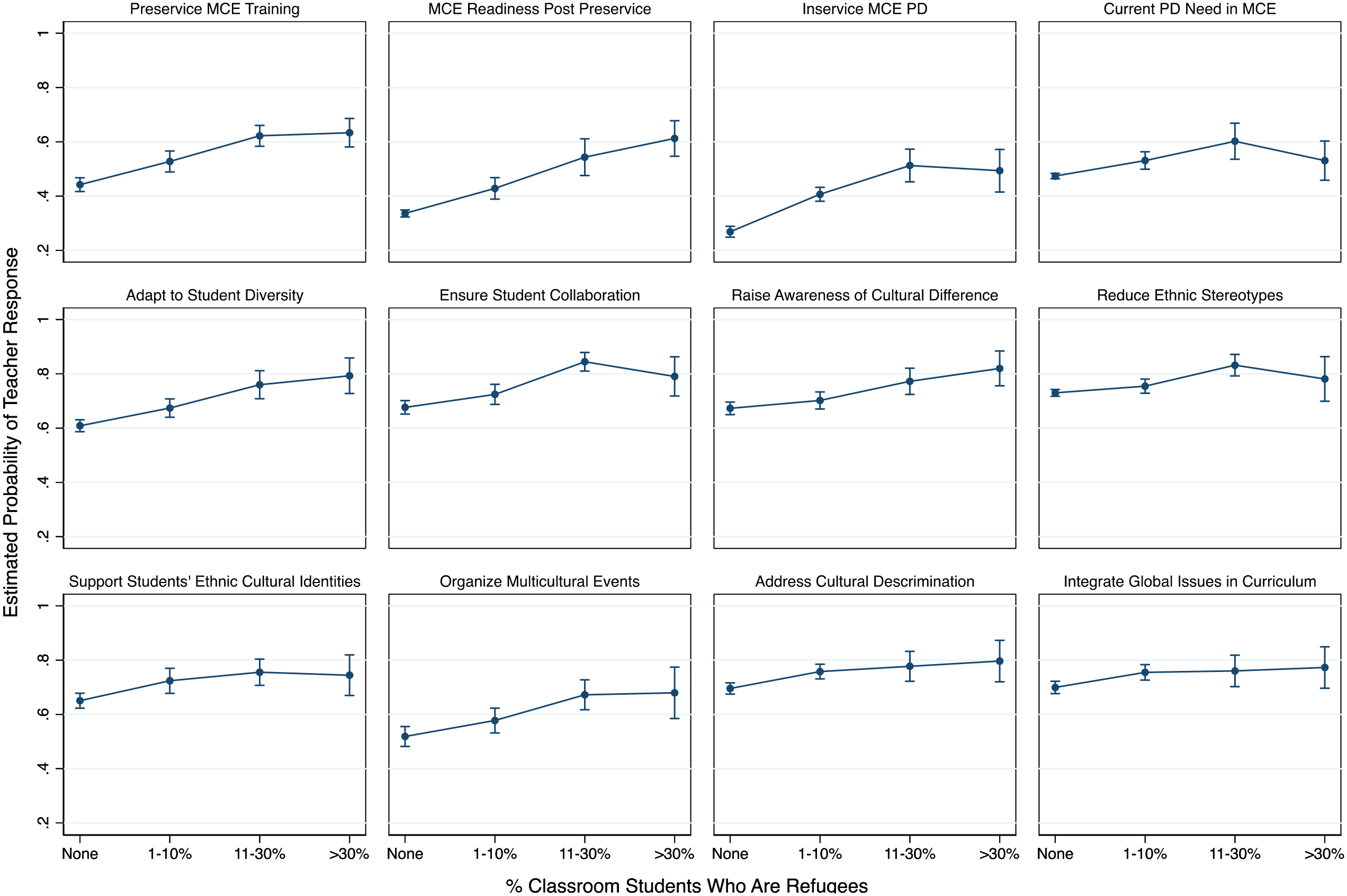
Estimated probability (unadjusted) of teacher response to multicultural training and practices by percentage of classroom students classified as refugees, with 95% confidence intervals. MCE = multicultural education; PD = professional development.
Regression Models Examining Multicultural Preparation and Practices of Teachers in Classrooms With Identified Refugee Students (Results Presented as Marginal Effects), Controlling for Teacher Background Characteristics
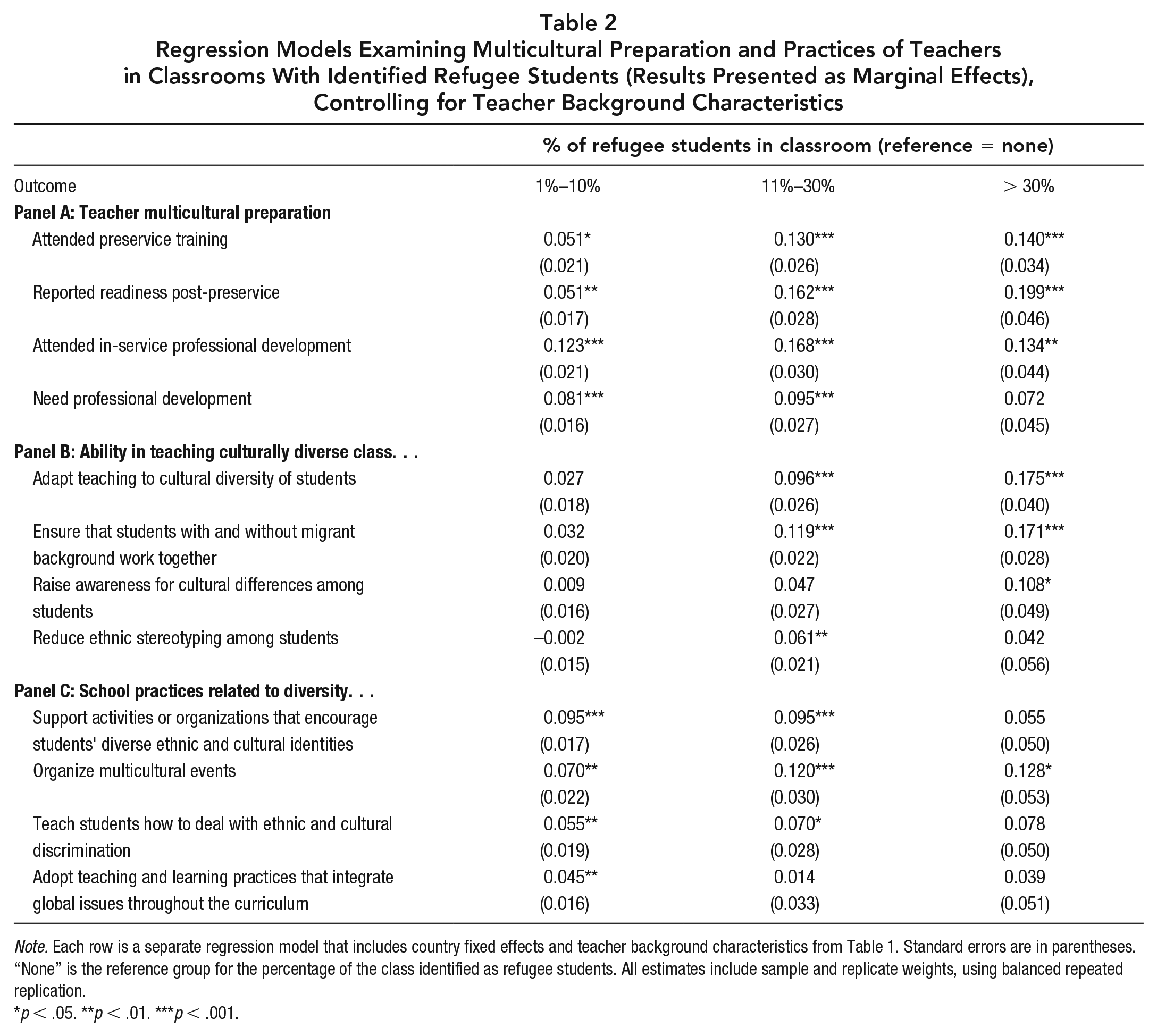
Note. Each row is a separate regression model that includes country fixed effects and teacher background characteristics from Table 1. Standard errors are in parentheses. “None” is the reference group for the percentage of the class identified as refugee students. All estimates include sample and replicate weights, using balanced repeated replication.
p < .05. **p < .01. ***p < .001.
Table 2, Panel B displays the multicultural instructional practices of teachers. The results show that teachers in classrooms with more refugee students were more likely to feel capable of adapting their teaching to the cultural diversity of students than were teachers without refugee students. They were also more likely to ensure that students with and without migrant backgrounds worked together, raise awareness of culture differences among students, and reduce ethnic stereotyping. We find similar patterns in Table 2, Panel C, when teachers were asked about multicultural practices at the school level. That is, teachers with more refugee students tended to indicate that the school, as a whole, supported activities that encouraged students’ ethnic and cultural identities, organized multicultural events, taught students how to address ethnic and cultural discrimination, and integrated global issues throughout the curriculum.
In summary, Table 2 shows that regardless of teacher experience, education, self-efficacy, and other background characteristics, teachers of refugee students tended to report more multicultural preparation and practices as well as a desire for more training. Additional analyses also show that these results are robust to controlling for school characteristics (see online supplement Table S3). However, differences in multicultural teacher practices (but not in preparation and school practices) are mostly removed when controlling for classroom characteristics (see online supplement Table S4). This result suggests that multicultural teacher practices in classrooms with and without refugee students were likely to be similar when other student demographics in the classrooms were similar.
Discussion
In this study, we make several contributions to international research on the education of refugee students. First, we examine broad structural inclusion in terms of the extent to which refugee students are physically included in schools and classrooms with students who are not of refugee backgrounds in predominantly distant resettlement host countries. Second, in the same countries, we further assess the school, teacher, and classroom characteristics of refugee students to understand access to basic educational opportunities. Third, we analyze relational inclusion in terms of whether the teachers of refugee students are prepared for and attentive to multicultural education and instructional practices.
Unequal Structural Inclusion
In the last decade, the UNHCR has campaigned for the inclusion of refugee children in their host country’s national education system. Our TALIS 2018 results show that about 15% of schools included refugee students; a similar percentage of classrooms within these schools included refugee students as well. Hardly any schools or classrooms reported that more than 30% of students were classified as refugees (the majority were 1%–10% refugee students), suggesting that refugee students were likely to be taught in the same physical environments as peers who were not of refugee backgrounds. In other words, among these nonspecialized schools, there is limited evidence that refugee students were sorted into educational settings separate from their peers and without access to the national curriculum.
However, the study also shows that the inclusion of refugee students in the same learning environments as their peers who are not refugees can be a misleading measure of educational opportunity. Additional analyses show that schools with refugee students tended to report higher levels of delinquency and violence than schools without refugee students, in addition to challenges with school resources and personnel. Classrooms with refugee students were more likely to be taught by teachers with fewer years of experience than were classrooms with no refugee students. Most noticeably, classrooms with refugee students tended to have larger enrollments and more students from marginalized backgrounds.
The sorting of refugee students in this study is consistent with research on neighboring host countries. Refugee students in these nearby countries tend to attend national schools (when available or accessible) that are also disadvantaged and serve marginalized national students (Dryden-Peterson, 2020). The present study expands on prior literature as our findings indicate that refugee students in distant resettlement countries experience a similar pattern of structural inequality. One implication is that although schools may be following UNHCR guidelines to include refugee students into the same learning environments as students who are not refugees greater monitoring of basic indicators of educational opportunity is also needed. Indeed, an argument could be made that schools and classrooms with refugee students must not only provide similar opportunities as those with students who are not refugees but also do more to address disruptions in refugee students’ educational experiences and improve their long-term outcomes.
Multicultural Education and Relational Inclusion
Where structural inclusion is often foundational to academic success, relational inclusion is also critical for refugee students. Our results show that teachers of refugee students tended to report greater levels of formal preservice and in-service training in teaching multicultural or multilingual classrooms than did teachers of classrooms without refugee students. The same teachers also reported greater abilities in instructional practices focused on equity and diversity and broader school activities that supported the cultural backgrounds of students and inclusion of all. Although TALIS 2018 did not ask refugee students about their school experiences, the results encouragingly suggest that their teachers reported preparation and practices in key aspects of multicultural education.
Why might evidence of relational inclusion be greater than of structural inclusion when based on the available measures used in this study? One possible explanation is that schools are increasingly aware of how important it is to establish an inclusive culture for refugee students (Mendenhall et al., 2017; Miller et al., 2018), including the design of curriculum that draws on their experiences and strengths (Bajaj et al., 2017; Bajaj & Bartlett, 2017). As refugee students in distant resettlement countries may have potential paths to citizenship and its accompanying political rights, governments have an interest in supporting these students’ education, well-being, and future contributions to society. Another explanation is that teachers with experience teaching multicultural classrooms are assigned to or select classrooms with refugee students or students from diverse cultural backgrounds. Although the sorting of more trained teachers to work with more advantaged students is a global problem (Luschei & Jeong, 2018), this study provides a different perspective on teacher quality, as school policies may be ensuring that teachers with more training in multicultural education are also working with refugee students. A related possibility is that teachers who are attentive to identifying refugee students in their classroom may also have more familiarity with multicultural education.
One concern with our findings is that classrooms without refugee students have less access to teachers prepared for and attentive to multicultural education. All students benefit from learning how to participate in a globalizing world (Banks, 2001). The raw and adjusted results also importantly challenge a perception that the inclusion of refugee students or other minoritized student groups has a negative impact on the learning opportunities of other students. A related issue is that multicultural education strategies may be perceived as the responsibility only of some teachers or relevant for teaching only certain classrooms and populations. Such perceptions, reinforced by the aforementioned assignment of teachers, may further stigmatize multicultural education and students from diverse cultural backgrounds (Kim & Cooc, 2022). Without broader integration of multicultural education in all classrooms, refugee students may encounter peer interactions outside their classrooms that could lead to multiple levels of marginalization.
We note that many of the measures of teacher preparation and instructional practices in this study fall in the Gorski (2009) typology of “liberal” multicultural education, which focuses on supporting diversity and developing competencies for living in a globalizing world. As such, the results are encouraging, but mainly for this specific view of multicultural education. We emphasize that countries seeking to adopt what Gorski describes as a “critical” approach to multicultural education need to address systemic and structural inequalities that affect marginalized groups in society. For refugee students, this approach would mean school curriculum that includes them in the national narrative (Dryden-Peterson, 2020) and greater access to language supports (García & Sylvan, 2011). Critical multicultural education would also include examination of global policies and structures that lead to persecution and forced migration.
Limitations and Future Research
This study has several limitations that can guide future research. First, the identification of refugee students in classrooms and schools was based on teacher and principal self-reports. Although the percentage of classrooms and schools with refugee students generally reflected the size of the refugee population in each country, teachers and principals may have over- or underidentified refugee students. Second, a related limitation is the lack of student-level and student-reported data that would allow for more complex understandings of refugee students’ classroom experiences. The grouping of all refugee students under a single classification in the survey design also overlooks their diverse contexts. Third, TALIS 2018 sampled teachers in 41 distant resettlement host countries, many from the OECD. The design allowed for a comparison of teachers in countries with different refugee populations and histories of migration, but some of the largest hosting countries (e.g., Germany; UNHCR, 2020) were not part of TALIS 2018. Fourth, the measures of multicultural instructional practices in TALIS 2018 focused primarily on recognizing student diversity (Cooc & Kim, 2021). Measures of critical practices related to addressing social justice and inequality within schools (Gorski, 2009) were missing, as were measures of caring practices that holistically address student well-being. Relatedly, TALIS 2018’s principal and teacher surveys included measures of “delinquency and violence” and items regarding “disruptive” student behavior to examine school and classroom environments as well as teacher practices. Without accompanying items to examine educators’ beliefs and biases, such measures are limited. Similarly, our measures of structural inclusion did not capture specific curricular standards and materials within the schools and classrooms of refugee students, including supports for language needs, interrupted learning, and postsecondary life. Given these limitations, further research is needed regarding teacher preparation and pedagogical approaches that are culturally responsive to refugee student experiences. Although teacher, classroom, and school measures are helpful for examining the school environments of refugee students, more comparative studies are needed that capture refugee students’ perspectives about their school experiences. Of additional interest is how such experiences may vary geographically within countries, including those with and without dispersal policies for refugee peoples upon arrival (Hoon et al., 2021).
Conclusion
The present study shifts attention from refugee students residing within neighboring host countries to those resettling permanently in distant countries. Our findings present a more nuanced picture of issues of inclusion. Refugee students in distant resettlement countries mostly attend schools and classrooms with peers who are not refugees; however, these learning environments also tend to have larger student-teacher ratios, more students identified as being disadvantaged, and more reported incidents of instability and resource challenges in school environments. Teachers in classrooms with refugee students reporting more preparation in multicultural education and instructional practices than did teachers in classrooms without refugee students is a promising finding. However, students from all backgrounds should have access to teachers who are prepared in multicultural education. Multicultural education is not an intervention, and it is not only for refugee students. Such views can contribute to a deficit lens of refugee students rather than seeing them as holding important knowledge and perspectives (Leonardo, 2020). Our study’s examination of multicultural education in classrooms with refugee students advocates for structural and relational inclusion in ways that move beyond only their admission into the state; schools must provide a multicultural education that values refugee students’ cultural and linguistic assets within classrooms, schools, and society.
Supplemental Material
sj-pdf-1-edr-10.3102_0013189X221149396 – Supplemental material for School Inclusion of Refugee Students: Recent Trends From International Data
Supplemental material, sj-pdf-1-edr-10.3102_0013189X221149396 for School Inclusion of Refugee Students: Recent Trends From International Data by North Cooc and Grace MyHyun Kim in Educational Researcher
Footnotes
Correction (March 2023):
Figure 1 was updated to reflect the correct legend labels in panels A-D.

Notes
Authors
NORTH COOC, EdD, is an associate professor of special education at the University of Texas at Austin, 1 University Station, Stop 5300, Austin, TX 78712;
GRACE MYHYUN KIM, PhD, is an assistant professor in the Department of Curriculum and Instruction at the University of Texas at Austin, 1912 Speedway, Stop D5700, Austin, TX 78712;
References
Supplementary Material
Please find the following supplemental material available below.
For Open Access articles published under a Creative Commons License, all supplemental material carries the same license as the article it is associated with.
For non-Open Access articles published, all supplemental material carries a non-exclusive license, and permission requests for re-use of supplemental material or any part of supplemental material shall be sent directly to the copyright owner as specified in the copyright notice associated with the article.
