



Abstract
Agricultural practices indirectly affect the atmosphere–and climate.
CLIMATE CHANGE: Cooler on the farm
From the 20-Foot-tall fiberglass artichoke that establishes Castroville as the “Artichoke Capital of the World” to the “AsparaBus” that takes attendees to and from Stockton's Asparagus Festival, agriculture dominates California's Central Valley, a 450-mile expanse bound by the Sierra Nevada range and coastal mountains. Curiously, climate scientists have recently discovered that the region's abundant produce counterbalances global warming.
How? Bountiful harvests require vast irrigation. When this irrigation water evaporates, it creates cool air, which stems rising temperatures. This explains why summer temperatures haven't been increasing in the Central Valley at rates predicted by climate models.
Agriculture is generally underrepresented among the human activities (e.g., burning fossil fuels) that can alter climate. But humans have converted roughly one-third of Earth's natural vegetation to farmland, making agriculture a main anthropogenic force driving environmental change. Deforestation releases tons of stored carbon into the atmosphere. But according to David Lobell, who studies the impact of agricultural practices on climate change at Lawrence Livermore National Laboratory, a key physical ramification of clearing forest for crops is that it increases surface reflectivity of the sun's rays. “Forests are darker than any grass,” he says. “Most crops are grass, so as you cut down forests to grow food, less sunlight is absorbed, resulting in a cooling effect.”
Climatologists such as Lobell are refining their understanding of land-atmosphere interactions by focusing on evolving crop management practices (including increased irrigation) that can tweak regional temperature balances on a smaller scale. Says Lobell, “We're trying to understand what practices are important for predicting future climate so we can incorporate that knowledge into our climate models.”
Nature's air conditioner: Irrigation suppresses rising temperatures in some regions.
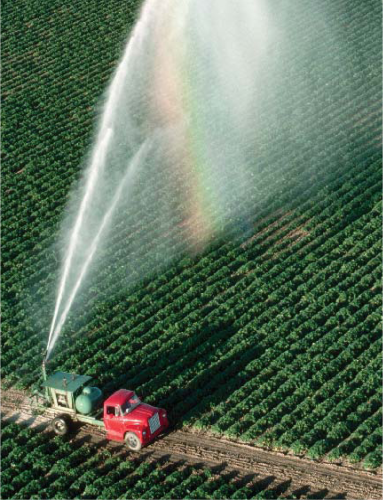
Evaporation and reflectivity are the two primary characteristics that affect land-atmosphere interactions important to climate. Irrigation affects the former; farming practices that affect the latter include:
In their search for renewable fuels, researchers at
[ON TOPIC] NUCLEAR TERRORISM
Boom or bust? A fallout shelter, circa 1961.

Fifteen years after the end of the Cold War, the notion of “duck and cover” in the event of a nuclear war seems woefully naïve. But as a second nuclear age dawns and a new threat paradigm emerges (namely a nuclear terrorist attack), the concept of civil defense is becoming less anachronistic.
“Everybody who grew up with ‘duck and cover’ and thought it was unrealistic should think again about terrorist scenarios where recovery is a reality,” says Ashton Carter, codirector of the Preventive Defense Project, a collaboration between Harvard and Stanford universities that studies post-Cold War threats to U.S. security. In April, Carter and former Defense Secretary William Perry convened a workshop with experts on what the days after a nuclear terror attack would look like; one of their key findings: “Fallout shelters deserve a comeback.”
Unlike during the Cold War when planning for the aftermath of a U.S.-Soviet nuclear exchange was a macabre exercise (“The survivors would envy the dead,” Nikita Khrushchev once remarked), Carter says today's government officials have a duty to plan for a terrorist detonation. “Even if there are several terrorist bombs, we can and will pick ourselves up.” Adds Michael May, director emeritus of the Lawrence Livermore National Laboratory and former codirector of Stanford's Center for International Security and Cooperation, “Our main concern is to make sure that people at all levels of government have a clear idea of what a detonation would entail and what actions will help the most people.”
In particular, panic could cause many people needlessly to leave their location, exposing them to deadly radiation. This underscores the need for first responders and public officials (from mayors to governors to federal agencies) to provide authoritative guidance. “Most of a city's population would survive,” Carter says. “Public policy should be there for their welfare.”
Q+A Audrey Kurth Cronin
Terrorism is most effective when it's a strategy of leverage and draws its power from the actions of states. It's actually a weak tactic that is designed to bring more power to itself by drawing states into an action-reaction dynamic. This distracts us from the fact that terrorist organizations do eventually meet their demise. The best way to keep ourselves out of this short-term tactical dynamic is to think about what sort of an end do we want.
Terrorism pales compared to the dangers of nuclear proliferation, and I don't see those two things as being unconnected.
An expert in terrorism, Audrey Kurth Cronin is on the faculty of the National War College and is a nonresident fellow at the University of Oxford where she teaches in the Department of Politics and International Relations. Her comments here are her own and may not reflect the opinion of any U.S. government agency or institution

THREAT ASSESSMENT: A natural target
The Romans salted Carthaginian soil to sterilize it in 146 BC. Eighteen centuries later, Oliver Cromwell scorched so much Irish farmland that half the country starved. Combatants have often targeted agriculture during warfare. So when U.S. forces in Afghanistan found hundreds of translated Al Qaeda documents about U.S. agriculture–including a list of livestock diseases, some of which are transmissible to humans–it raised fears about agroterrorism, the intentional introduction of plant or animal pathogens, such as foot-and-mouth disease virus, into a farming operation. Biosecurity experts warn that farms are inviting terrorist targets because they present few barriers, and because they contribute significantly to the economy, providing 17 percent of U.S. jobs. According to Georgia Democratic Cong. David Scott, “If we have a weak link in the war on terror, this is it.”
Director of the National Agricultural Biosecurity Center at Kansas State University and chief biological scientist at the Midwest Research Institute, Franz also served as commander of the U.S. Army Medical Research Institute of Infectious Diseases from 1995 to 1998.
“Preparedness for dealing with an attack at the state and local levels varies from good to not so good. The departments of agriculture and homeland security need to be attached at the hip. Communication and collaboration across consumer groups, law enforcement, and state agricultural departments is critical to a successful response.”
Passings
IGOR SERGEYEV

The science and nuclear arms control community lost a number of distinguished and influential members this year. Here, friends and colleagues offer their recollections of a few of the departed.
Marshal Igor Sergeyev and I first met in Moscow in October 1997 at the Ministry of Defense an hour before we were to join our respective civilian bosses at a high-level meeting. We became instant friends and became so engrossed in our discussions that we lost track of time and ended up being 10 minutes late to the meeting. Fortunately, our bosses were even later, and our transgression went unnoticed. That beginning set the stage for Igor and I to establish a meaningful and lasting relationship. Igor was a pragmatic, visionary, and passionate patriot–and most importantly a true military professional. His sense of humor was refreshing and his passion for the Chicago Bulls basketball team was enormous. Our candid discussions covered a wide spectrum of topics, but most important was our shared vision that while nuclear weapons would probably never be completely eliminated, reductions in our respective military stockpiles should be made a priority by both governments. He was always very candid and open in our discussions and was the key in facilitating an open and unprecedented period of transparency and communication between the United States and Russia. He made a difference and will be missed.
United States Air Force (Retired)
Former commander-in-chief,
U.S. Strategic Command
Vaclav Havel once remarked that culture is, at bedrock, a matter of how we treat each other. It's in this sense that Ruth–a former editor of the Bulletin–was so superb and refined. She brought a particular quality of attention and a deft, all-but-invisible touch to the orchestration of human relationships. She had an uncanny way of inhabiting social forms, of creating space for the play of interest and delight. In conversation Ruth's reactions were often surprising, inviting you to look at familiar things in a new light.
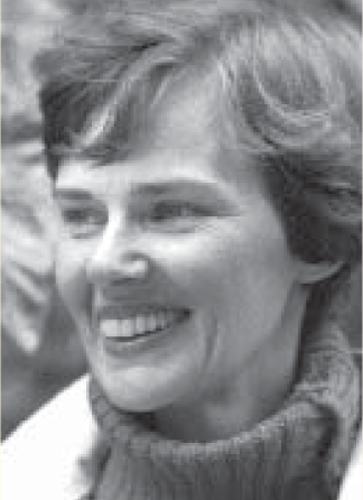
One space animated with her acute and lovely qualities–christened “Vidiots” by Ruth-was a regular gathering of friends at the Youngs' apartment for a cultural evening. This was not, I hasten to say, a book club; it was, in a way, a counter-book-club. We would come together for an evening devoted to significant amounts of alcohol, impossibly rich desserts, and television. It was highbrow television–“The Jewel in the Crown,” “War and Peace,” “The Singing Detective,” and so on–but the truth is we would have watched anything for the pleasure of each other's company. Quietly and decisively, Ruth presided over these wonderfully indulgent evenings.
And so it is that Ruth lives on. Not in the usual way people are said to live on in the cultural artifacts they leave behind, but in the ways we, her friends, attend to and enjoy each other. She stirs in the air of freedom and delight, high seriousness and supple gaiety she has bequeathed us.
The Invisible Institute
Before going to work for Paul Leventhal at the Nuclear Control Institute (NCI) in 1995,1 was concerned that he might be a difficult boss. As NCI president, he pursued the truth with the diligence typical of his former life as an investigative journalist, and his style could be intimidating. But working at NCI turned out to be a great experience. Paul may have appeared uncompromising in public, but he always encouraged vigorous debate and never stopped searching for common ground with his opponents.

Paul had the courage to plunge into the most hostile of environments–such as the Japan Atomic Industrial Forum conference, an annual celebration of the virtues of plutonium–find the elephant in the room, and yank its tail. Whether the issue was the weapon-usability of reactor-grade plutonium, the ineffectiveness of International Atomic Energy Agency safeguards, or the vulnerability of nuclear power plants to a 9/11-scale attack, Paul strove to make sure that no one could ignore the plain facts.
Among diplomats, Paul could be diplomatic. One exception was when he practically chased a high-ranking Russian Embassy official out of the NCI office after lecturing him on the dangers of Russia's plutonium fast breeder reactor program. I was mortified, naïvely thinking that the Russian's request for this meeting was a sincere attempt at dialogue. But Paul smelled a rat. I later appreciated his intuition when, on the day that the FBI apprehended a spy in its ranks named Robert Hanssen, the diplomat was suddenly recalled to Moscow. He reportedly had posed as a liaison to D.C. think tanks to conceal his mission as one of Hanssen's handlers.
In recent years, Paul had been discouraged by the Bush administration's dismantling of the nonproliferation legacy he had helped build as a Senate staff member in the 1970s. I think the best way to honor his memory is to continue the fight against the plutonium industry both at home and abroad.
Union of Concerned Scientists
The first time I met Janet, in the halls of the United Nations, when she was the chair of the Campaign for Nuclear Disarmament, she told me about a reading of Thucydides she had recently seen in London, staged during the aftermath of the first Gulf War. In that conversation I heard a deep sense of history, a brilliant mind, a curiosity about the world, a love of the arts, an enormous heart, and a sense of humor–all things that characterized our friendship and work under the banner of our nuclear-free world activist group, Atomic Mirror, until her sudden death in April.

All of those qualities were alive and well when we went to the Bulletin's 60th birthday party at Columbia University in October 2005. Somehow we got the time wrong, and showed up after the forum but in time for the reception. When we walked into the empty hall, and saw the Bulletin's famous Clock on the stage next to the podium, Janet turned to me and said, “Let's move it forward.” Nothing could better express Janet's dreams than what she did next. We went up to the stage and moved the clock from seven minutes to midnight to ten minutes past midnight. “There,” she said, “now we have a nuclear-free world. Let's celebrate, and get on with the rest of our lives.” For Janet, life always came first.
Co-founder and director,
Atomic Mirror
The physicist and philosopher Carl Friedrich von Weizsacker was well known for his involvement during the Second World War in the “Uranverein,” Nazi Germany's military nuclear project. But he ultimately revealed that it was “divine grace” that impeded him from building a German atomic bomb. After the war, he became a leading authority in Germany on world politics, philosophy, and furthering peace research. He introduced the concept of arms control in Germany, and was the driving force behind the 1957 Gottingen declaration, in which the nuclear science elite not only called for the definitive abdication of nuclear weapons in Germany, but also renounced working for a German military nuclear program. Weizsacker remarked that once the world had entered the nuclear age, “participating nations and ultimately mankind itself can only survive if war as an institution is abolished.” He insisted that the social and political responsibility of scientists in the nuclear age is concrete. His Max Planck Institute in Starnberg espoused the fundaments of political, environmental, and economic analysis, and alternative security concepts and disarmament during the Cold War.
A charismatic speaker, writer, and intellectual, he filled lecture halls easily and attracted young people who wanted to prevent a nuclear disaster. He was a formidable teacher who loved Platonic dialogues and scientific disputes, but always spoke gently and precisely, and listened carefully to his counterpart. And his influence on the German political elite was profound: He was asked twice to be a candidate for federal president. Both times he declined, arguing that he preferred to work on his primitive farmhouse in the Alps. When asked what his major contributions had been, he answered: “Most important was the overview about that which is called physics. Without physics, politics and ethics are bottomless.”
Chair, German Pugwash
It was Sally's combination of charm, wit, and determination that made her such a formidable woman. I first met her when she invited me to join the board of the Ploughshares Fund. I was delighted to be asked. Sally and Lew Butler, who was then chairman of the board, impressed on me that I would be doing them a great favor. I knew then that the opposite was true, and that became clearer to me over the years.

The Ploughshares Fund grew out of a conversation in Sally's living room overlooking San Francisco Bay. That was in the early 1980s, a time when anxiety about the danger of nuclear war was at fever pitch. Sally made it her mission to rid the world of the nuclear danger, and she was fearless and unwavering in pursuing that mission. She was also innovative and nimble, giving grants quickly to those with bright ideas. For example, she saw at once the importance of supporting work in Russia when that became possible. Some years ago I met two young Russian scientists who were trying to get the managers of nuclear complexes to respond to public worries about the environmental impact of their activities. By their own testimony, it was support from Ploughshares that enabled them to do that very important work.
Sally spoke with conviction and directness about her mission, but she was very lively and amusing too, so that working with her made you feel not only that you were doing something very worthwhile, but that you also were having a very good time.
Professor of political science and history, Stanford University
IN MEMORIAM
Photographer developed the first photos of Hiroshima and Nagasaki after the Bomb.
Mathematics professor worked on instrumentation for the Manhattan Project.
Campaigner for atomic veterans led research efforts to support benefit claims for vets exposed to radiation.
Early expert on climate change, who developed the Fairbridge curve, a 10,000-year record of changes in sea level, which shows early evidence of glacial melting.
Physician and nuclear chemist was outspoken about the health risks of radiation.
Former Bulletin copy editor.
Former chief scientist for the U.S. Arms Control and Disarmament Agency was a prescient and lonely voice of warning about terrorism.
Geneticist led ethics debate over stem cell research and reproductive technologies.
Nuclear physicist was one of few qualified to run a cyclotron for the Manhattan Project.
First director of the Stanford Linear Accelerator Center and outspoken advocate for nuclear arms control. (For more on Panofsky, see p. 48).
Chemist worked on the Manhattan Project, and later on nuclear safety.
Top Westinghouse executive was instrumental in designing America's first commercial nuclear reactor and first nuclear-powered submarine.
Swedish agriculturalist founded the “doomsday vault” to preserve and protect all known seed types in the event of global disaster.
Founder of the Electric Power Research Institute was recruited by E. O. Lawrence in 1942 to lead uranium separation efforts at Oak Ridge National Laboratory.
Pioneering space scientist designed a docking system that linked Soviet and American space capsules in the first joint flight of the two countries' space programs.
Physics professor worked with Enrico Fermi on the first controlled nuclear reaction.
Former Oak Ridge National Laboratory director helped develop the atomic bomb.