Abstract

Private eye, public view
Spy satellites have gone commercial. Last September, the Denver-based company Space Imaging launched the first privately owned high-resolution imaging satellite–dubbed “Ikonos”–into orbit from Vandenberg Air Force Base in California. According to a company press release, it is the “first commercial satellite of its kind,” able to capture one-meter resolution images of nearly any object on the earth's surface. “Although more capable than any other commercial system,” explained the release, “the [satellite's] camera cannot see people.”
In January, a private firm, Space Imaging, released this satellite image of North Korea's missilelaunch facility. For the first time, ordinary citizens could evaluate for themselves a high-resolution picture of this controversial site. The launch pad, with a visible shadow cast by the scaffolding, is in the upper left-hand portion of the picture. The full image appears on the Bulletin's web site.
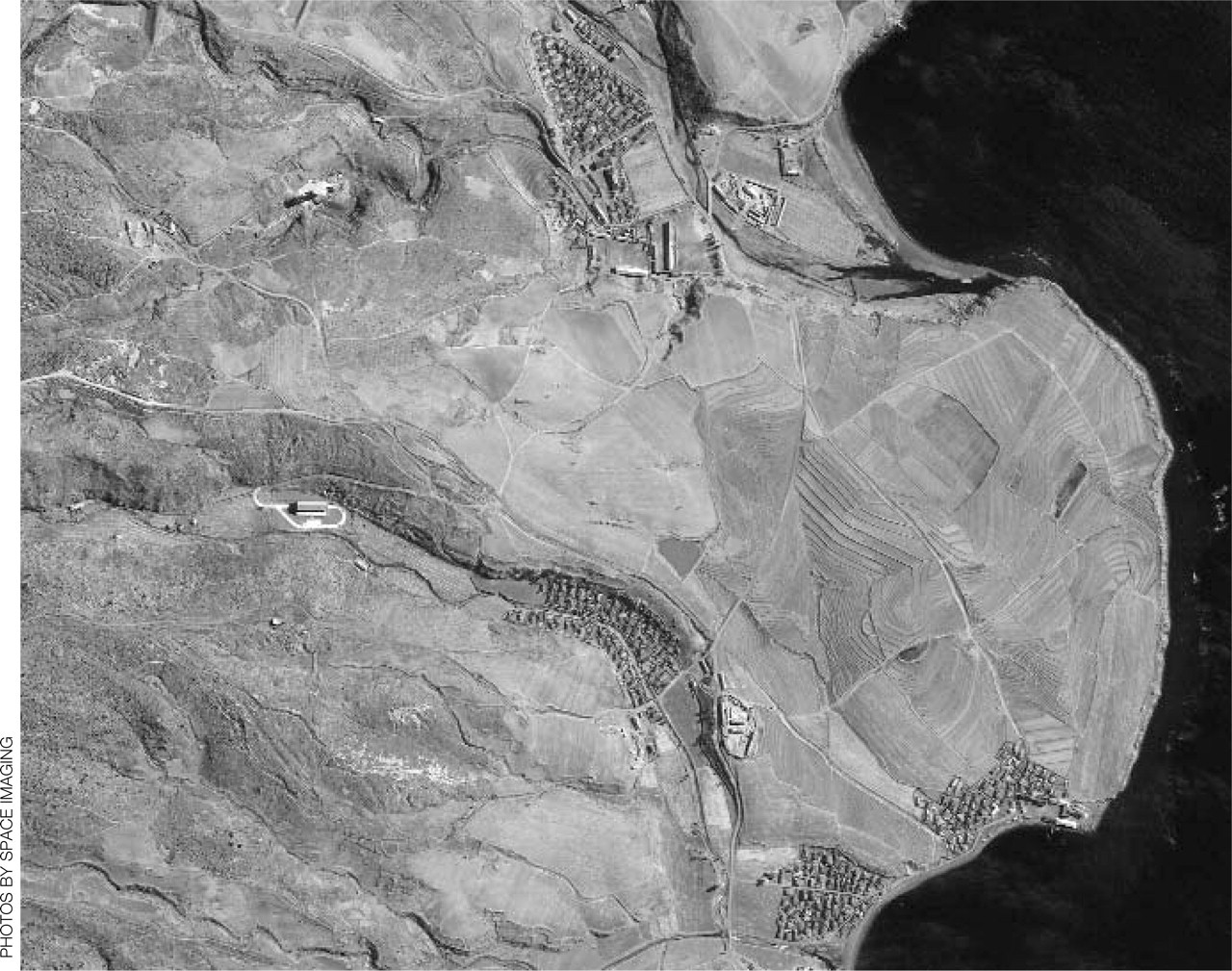
The initial images produced by Ikonos–spectac-ular close-ups of monuments, tropical storms, and geological formations–drew little media attention. But on January 3, Space Imaging demonstrated the ground-breaking potential of the satellite when it released the first public images of North Korea's No-dong missile site. The images, which show a launch pad nestled amid rice paddies and connected to support facilities by dirt roads, immediately took center stage in the long-simmering debate about that country's missile capabilities.
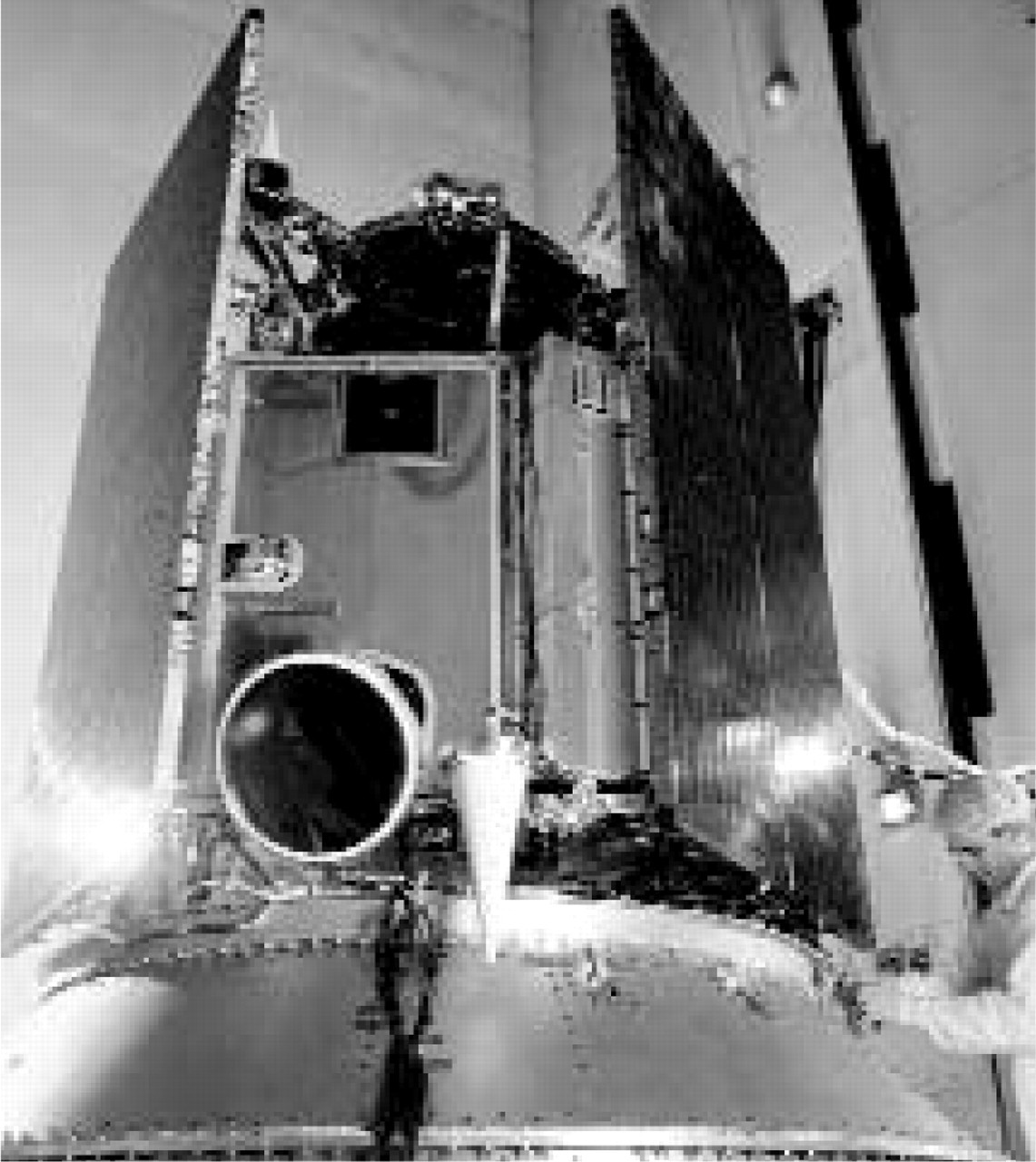
Preparing the Ikonos satellite for launch, September 1999.
To many analysts, the images merely confirmed what they had long suspect-ed–that North Korea's long-range missile program is not nearly as threatening as many U.S. officials make it out to be. John Pike of the Federation of American Scientists (FAS), who purchased the images and posted them on the FAS web site, quipped in the January 11 New York Times, “It's the mouse that roared. It's a singularly unimpressive facility.” An analysis of the images on the organization's web page contrasted the “extremely modest” missile facility with the “vast scale of the American response” to it.
Proponents of national missile defense, who view the North Korean “threat” as a principal raison d'âtre of missile defense, quickly went into damage-control mode. They argued that “rogue states” don't need a Cape Canaveral to launch nuclear-armed ICBMs at American cities. Frank Gaffney, director of the Center for Security Policy, told the Times, “North Korea can't feed its own people. But if crude [launch facilities] will do, then we're fools to ignore capabilities that have the potential to do us grave harm.”
Government officials also played down the significance of the images. During a January 11 Defense Department news briefing, reporters questioned whether the threat posed by North Korea's missile program had been overstated. In response, Defense Department spokesman Kenneth Bacon said, “Well, the mouse has not only roared, it's fired a missile…. We have always known that North Korea has primitive facilities, that it is far behind us technologically, but that it devotes an enormous amount of money, energy, and manpower to developing weapons of mass destruction and the means to deliver them.”
The Nodong images are, apparently, only the appetizers of a larger feast. Space Imaging has announced that it plans on offering similarly provocative images of China, Iran, and Iraq. And several other companies are reportedly preparing to launch their own remote-sensing satellites this year. Ann Florini, an associate at the Carnegie Endowment for International Peace, told the Los Angeles Times (January 18), “There could be a dozen or so of these satellites in orbit over the next few years. It is going to be a lot harder to hide.”
Not only will “rogue states” find it difficult to hide, the United States could also be vulnerable to the prying eyes of its enemies. But if this prospect makes the U.S. government nervous, it is not letting on. In fact, the Clinton administration plans on taking advantage of this new bounty in satellite imagery. According to the Los Angeles Times, the government has proposed spending $1 billion over the next six years on commercial satellite imagery and infrastructure.
Dag Jostein Fjarvoll, the Norwegian secretary of defense, explaining to reporter Inge Sellevåg why the latest U.S. X-band radar is being installed at Vardø, in northern Norway, very near Murmansk. (See story, page 26.)
However, the government has taken steps to try to restrict the sale of images of sensitive areas. Congress has passed legislation that prohibits the sale of satellite images to terrorist states and governments under U.S. and international sanctions. Legislation also exists that allows the State and Defense Departments to impose “shutter” restrictions on private U.S. companies when imaging Israel. At a January 12 press briefing about the Nodong images, State Department spokesman James Rubin told reporters that the government “retains the right at all times to restrict [satellite imagery] for national security or foreign policy reasons.”
Still, many pundits warn that we are entering a “brave new world”–in Frank Gaffney's words–in which all the “bad guys” will be able to watch America's every move.
Whether the United States will be victimized by peeping terrorists remains to be seen. But, as the Nodong case demonstrates, the commercialization of remote imaging technology will likely result in stronger challenges to official interpretations of far-off threats.
At least one Space Imaging customer, FAS ‘ s John Pike, already has plans to test the government's resolve concerning imaging restrictions. He told the Bulletin that he has hired Space Imaging to take photos of the Pentagon's secretive Area 51 base in Nevada. The base, which is used by the government for black-budget defense programs, has been the subject of myriad conspiracy theories about extraterrestrials, alien aircraft, and shadowy government activities.
Pike said he doesn't expect to find anything extraordinary. “The folks at Area 51 have to be the world's experts on how to hide stuff,” he said. Instead, he is interested in seeing whether Space Imaging will follow through with a request to photograph sensitive installations and, assuming it will, whether the government will step in to block the company.
As the Bulletin went to press in early February, Pike had still not received final word on his request. Space Imaging told him that his order, which was placed in early January, was on “weather hold.”
–Michael Flynn
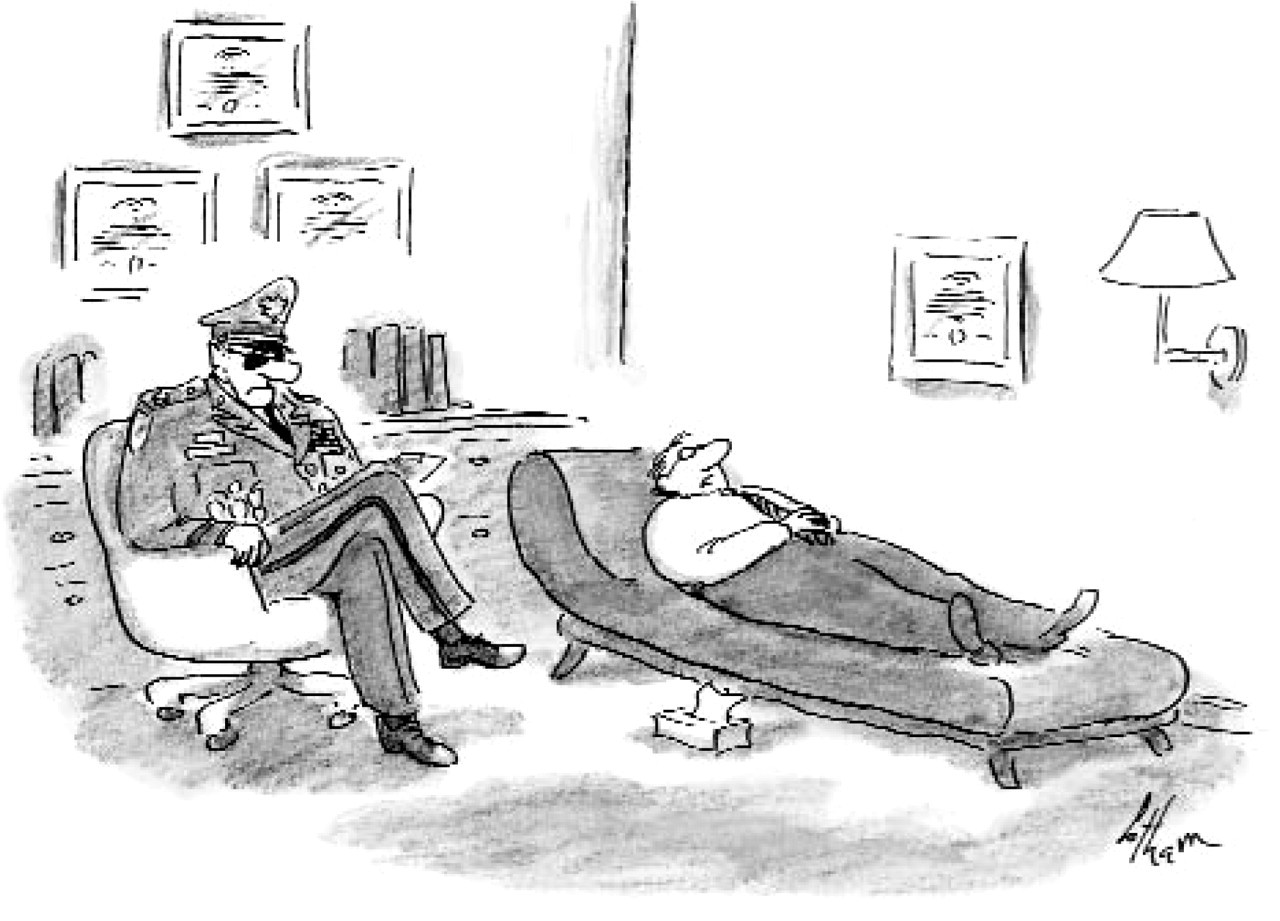
“You don't seem very sympathetic.”
WEB Watch
You've watched the debates and seen the commercials. But how do the candidates stack up online? Specifically, the Bulletin asked: When freed from the constraints of a 15-second sound bite, how well does each candidate spell out his ideas on foreign policy?

billbradley.com: How much do you want to know?
Bill Bradley leads the pack when it comes to well-organized information about his probable policies. In the area of foreign policy alone, visitors can read more than 10,000 words detailing exactly where Bradley stands and what he's accomplished. He also wins the award for best design, with fast-loading rollovers, clean graphics, information that's a cinch to find, and a popup window for campaign contributions. American Express and Visa accepted.
algore2000.com: I'm not Clinton, really
There's a scant 648 words devoted to foreign policy and national defense (although more might be gleaned from the five speeches posted online), but this is by far the most wholesome site of the lot. Who wants policy information when you can feel good about the Gores? Link to the kids section and take the Gore quiz (including questions on the number of counties in Iowa, Al and Tipper's first date, and the U.S. voting age). Or play “Where's Daisy”and search for the family pet.
bauer2k.com: Looks great, less filling
You won't find much on Gary Bauer's foreign policy online, at least not more than about 90 words promising to rebuild the military and conduct foreign policy based on “American values,” but his site does boast the biggest candidate photo.
georgewbush.com: Experimentation in the military?
George W. Bush's site is one of the front runners when it comes to clearly presenting information about his policies. An “Executive Summary” on foreign policy, at 1,546 words, packs more than twice the amount of information that Gore provides. American policy, he says, cannot be based on fear, which has “no place in the party of Reagan.” On defense, Bush adds almost 3,200 words, devoted mainly to his concern for the quality of the military and redefining overseas objectives. He also wants to “encourage a spirit of innovation and experimentation within the military.”
There's also a kid's section, but sorry, George–it just isn't as much fun as Al's.
forbes2000.com: I am the cyber king
Steve Forbes's publishing background is reflected in his site's “magazine feel,” although the motto “NEWS first, fast, and unfiltered” seems out-of-place in a political context. Forbes devotes about 500 words to national security, where he, too, name-drops the Reagan moniker: “As president, Steve will vigorously advance a twenty-first century
Reaganite agenda.” Forbes also invites “fully vested power users” to help organize e-precincts “in America's first, full-scale presidential campaign on the Internet.” For each e-recruit, you get a point. Twelve and you're an e-block captain; 250 and you're an e-city mayor.
keyes2000.org: Love me or leave me
Alan Keyes posts virtually nothing about foreign policy, except a brief statement advocating U.S. withdrawal from the United Nations lest America become “so corrupted by internationalism” that the United Nations becomes a “supra-national entity that undermines our sovereignty.”
mccain2000.com: Love me or leave me, part two
Nor does John McCain devote much space to foreign policy aside from a speech he gave in Kansas last year. His ideas on national security are outlined in a short, question-and-answer section dealing mostly with military readiness.
gopatgo2000.org: What do you expect?
Pat Buchanan devotes little space to foreign policy–only a few paragraphs explaining why America shouldn't intervene abroad. With the Reform Party's emphasis on domestic issues like jobs and immigration, that's not a big surprise. But visit Buchanan's site for some digital campaign memorabilia. He's got downloadable wallpaper patterns for your computer's desktop!
–Bret Lortie
Ready, set, irradiate
The long-running struggle over U.S. government permission to irradiate food products came to an end on December 14, when the Food & Drug Administration and the Department of Agriculture issued regulations for the irradiation of raw beef, pork, and lamb. With the addition of these items to the previously approved list, a method the industry hopes to convince the public to think of as “cold pasteurization” can now be used to “sterilize” virtually all types of foodstuffs.
Although the irradiation of grains, produce, and poultry had been previously approved, irradiated products have faced stiff barriers when it comes to public acceptance. Consumers are reluctant to pay the extra cost and some anti-nuclear activists have argued that zapping food products creates dangerous but unidentified radiolytic products. The only irradiated items that appear with any frequency in U.S. supermarkets are spices, along with the occasional papaya.
That may now change. Widespread publicity about outbreaks of food poisoning has resulted in greater public acceptance of the idea of irradiation–if it is the best way to eliminate dangerous microbes like E. coli 0157, listeria, and salmonella.
Enter the Titan Corporation of California, which is building a major new processing facility in Sioux City, Iowa. Titan has entered into a processing arrangement with poultry-producing giant Tyson Foods, which will soon be test-marketing foods that have been irradiated at the new plant. Two giant meatpacking companies, IBC and Excel Corporation, also plan to irradiate some products at Titan's new facility.
Considering that the idea of irradiation dates back to 1923, and that the use of radiation to sterilize food was promoted in the 1950s by those looking for ways to recycle the military and nuclear power industry's castoff radioactive products, there is some irony in the fact that the Titan Corporation system does not use a radioactive source. Titan will be employing its patented SureBeam method, which uses electricity to power a beam of high-energy electrons, a process the company is proud to distinguish from earlier techniques involving gamma radiation.
–Linda Rothstein
In brief
▪ Sharing
The target chamber from Lawrence Livermore National Laboratory's Nova laser was shipped to France in early December as part of the post-Cold War program of nuclear-weapons research sharing by two good friends who are nuclear powers together. In exchange, French scientists will develop a diagnostic system for use with Livermore's unfinished (and currently behind schedule and over budget) National Ignition Facility (Nature, December 16, 1999).
▪ When the language is confusing
New Scientist's “Feedback” page (December 18, 1999) notes that the International Radiation Protection Association has awarded a prize to Itsuzo Shigematsu of Tokyo University for his work in radiation protection and public health. Feedback suggests, however, that the prize–the “2000 Sievert Award”–sounds “less like an award and more like a particularly nasty punishment.” Reminds us of the sounds-slightly-naughty title of physicist Mark Silver-man's new book, due out this month: Probing the Atom: Interactions of Coupled States, Fast Beams, and Loose Electrons.
▪ Statistical certainty
Many scientists in Russia find themselves in difficult straits. But their plight is surely not as dire as Kate Gal-braith's tongue-in-cheek statistical analysis suggests: “At the current rate,” she writes, “the average age of academic doctors–the highest level of educational attainment in Russia–will rise from an already high 59.7 today to 63.5 in 2006. Consider that Russia's life expectancy for men, who dominate the profession, is 57.7. An actuary might justly conclude that the typical life expectancy of a Russian professor is negative two [years]” (December 1999/January 2000 Lingua Franca).
▪ For want of a nail …
Soldiers engage in training, and so do nuclear weapons, it appears. Take last year's bomb-dropping practice runs, performed in secret with mock nuclear bombs. These exercises were designed to give weapons scientists information about how big-banging B61s would behave if they were actually dropped. Ordinarily, the free-fall of mock warheads, a.k.a. “joint test assemblies,” would have been broken when their parachutes deployed, so they could be recovered and reused. Last year, however, two mock weapons suffered $170,000 worth of damage when their parachutes failed, causing them to plunge to the ground. Seems the contractor used dead (mock?) batteries as well (Associated Press, December 13, 1999).
▪ Not enough?
It's true that as 1999 drew to a close, Oak Ridge National Laboratory in Tennessee, eager to provide the public with tips on surviving a possible Y2K disaster, posted on its web site its entire 326-page manual, Nuclear War Survival Skills. After the turn of the century, however, Oak Ridge had to admit that it was the lab's own Y-12 nuclear weapons plant that had not made it through Y2K unscathed. The plant experienced a rollover-related computer glitch, but Energy Department officials said the problem had not affected operations or workers. So what did it affect? That's a secret–the computer that failed was engaged in classified work (Associated Press, January 2, 2000).
▪ IgNobels
As reported by the BBC last October, one of last year's Ig-Nobel awards went to English physicist Len Fisher of Bristol University, the man who cracked the physics of dunking. On the path to “the perfect dunk,” Fisher wrote a ground-breaking equation that describes what happens when the starch globules in a biscuit (or a cookie, as it's called in the colonies) absorb liquid, “producing a gunge that breaks off and falls to the bottom of the cup.” A second IgNobel went to the British Standards Institution, which was honored for writing a six-page description of the proper way to make a cup of tea.
▪ Noted in passing …
Having survived Y2K, on January 4 Britain's science minister found time to reflect on the possibility of fresh disasters–appointing a three-man team to study the risks of the earth being destroyed by a giant asteroid. The appointments were announced just 24 hours before the estimated number of threatening, near-earth asteroids was lowered by half…. Chemical & Engineering Week points out that a tiny provision in the last defense appropriation bill–the brainchild of Republican Sen. Ted Stevens of Alaska–exempts the Pentagon from paying any environmental fines that might be levied against it…. When a federal judge ruled that the aggregate amount of the CIA's budget for 1999 was too sensitive to release to Steve Af-tergood of the Federation of American Scientists, After-good decided to seek the budget number for 1988, using a process called “mandatory declassification review.” Tu rns out that a 10-year-old figure is also “too sensitive” to release…. December was a “hot” time in Scotland: The BBC reported that parents in Thurso, Caithness, near the Dounreay nuclear facility, were horrified to discover that a Santa's playground used by hundreds of children during the Christmas holidays had been constructed from three enormous used nuclear waste storage containers. And on December 21, another “hot particle” (a bit of radioactive fuel), the sixth of the year, was found on the beach near Dounreay…. According to John Cameron, a retired University of Wisconsin specialist speaking to the Medical College of Georgia, Americans are not getting enough radiation. He says there is clear evidence of beneficial health effects of greater exposure (Augusta Chronicle, January 27).
A radioactive rarity
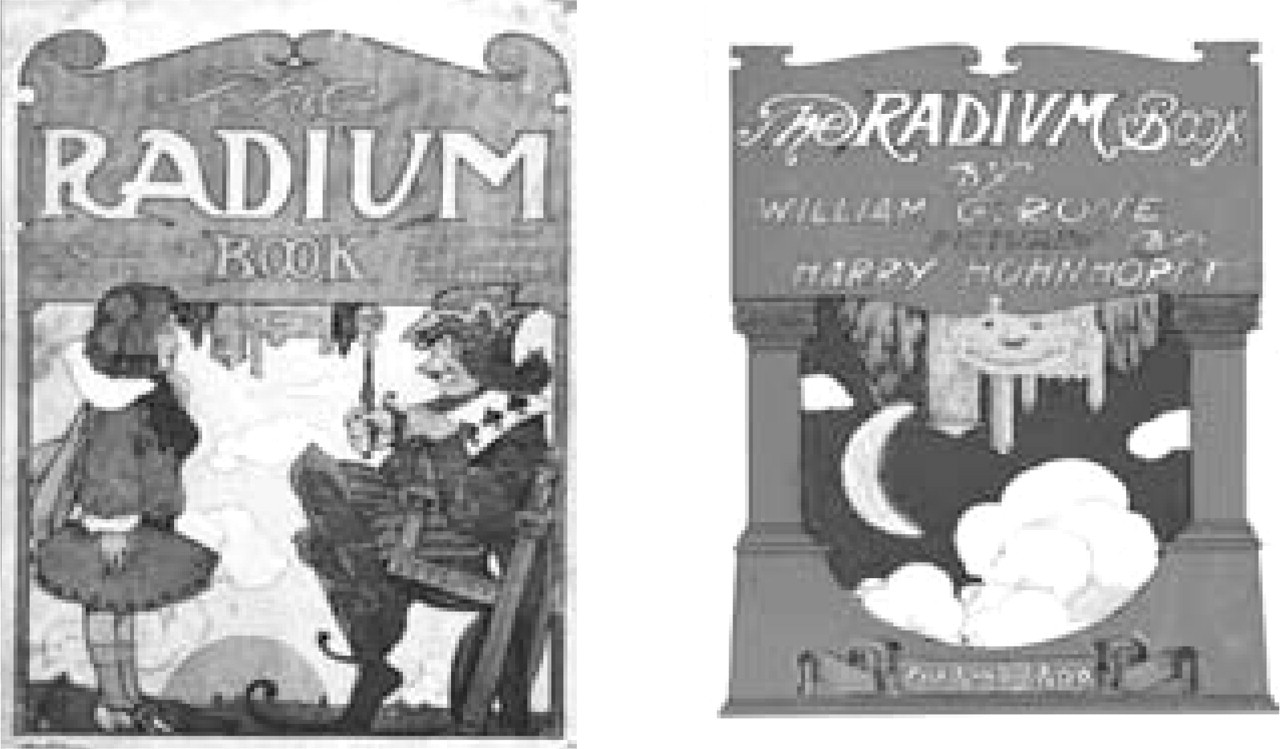
They say you never know what you're going to find on e-Bay, the Internet location where every day thousands of ordinary people act as auctioneers, offering their assorted wares to hundreds of thousands of others. So we probably shouldn't have been surprised when a friend of the Bulletin told us to take a look at the page where The Radium Book, by William Ganson Rose, was being auctioned off.
This children's book, published in 1905, featured four full-page illustrations that glowed in the dark. On one page, a crescent moon was coated with softly luminescent radium.
At the time, the pictures must have seemed harmless. As the seller points out, Madame Curie had discovered radium only seven years before and its properties were still being explored.
Just as the danger of handling radium became apparent among the workers who painted the substance on watch dials, it was probably soon realized that it might not be safe for small children to handle–or possibly lick or chew on–radium-coated pages.
By now the book has lost its special glow. But it is still an unusual item–the seller dubbed it the “rarest and most dangerous of children's books,” with only a single additional copy known to be in the Library of Congress.
The lucky bidder in the auction, which ended in early January, bought the book for $406.
–L. R.