




Abstract
The Parliament of Man: The Past, Present, and Future of the United Nations, by Paul Kennedy. Random House, 384 pages, 2006, $26.95.
Staring too long at the United Nations can induce acute dizziness. It requires reconciling the undeniable achievement of collecting the world's fractious nations in one place with the often tawdry reality of how they behave. The resulting bewilderment may help explain the extremism the institution provokes. From the right come blistering attacks on the organization and its leaders and calls for the United States to withdraw without delay. At slightly lower volume, but often with no greater wisdom, some idealists proclaim the organization ready to govern humanity.
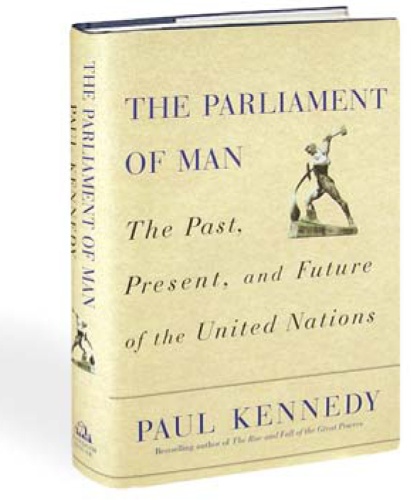
Thankfully, esteemed historian Paul Kennedy avoids both camps. The Parliament of Man is an informed, judicious account of the organization and its future. Formerly a chronicler of the great powers, Kennedy now sets his sights on their progeny–the world body that rose out of World War II as a bulwark against future cataclysms.
He does not hide from readers the idealism that animates his interest in the organization; his book's title, after all, comes from a Tennyson poem that bemoans mankind's inability to govern itself. But Kennedy quickly alights from the clouds and dives into the inner workings of the United Nations. His book chronicles the organization's work in peacekeeping, human rights, economic development, public health, and democracy promotion.
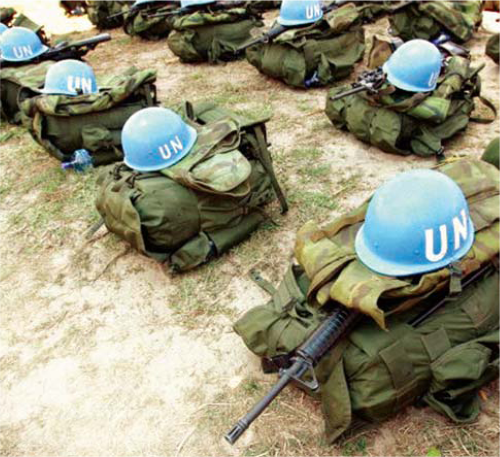
Delving into the bureaucracy as he does is dangerous; the story's thread can easily be lost amid a blizzard of acronyms, committees, and subcommittees. To his credit, Kennedy emerges mostly unscathed. He deftly explains how blue-helmeted U.N. peacekeepers became the organization's most enduring symbol. He sketches the fraught history of the Security Council–the domain of the great powers and the organization's command center. And he makes a convincing case that the United Nations' greatest triumph is its web of treaties and conventions on human rights: “We have established an international human rights regime that for all its dreadful setbacks may be the single most significant advance in our global mentality–in our way of thinking about the rights of others–since the campaigns against slavery.”
There are a few hints that Kennedy may have breathed too much of the stale air in U.N. headquarters. In describing the conflicts in the Balkans, he quickly reaches for the “ancient ethnic hatreds” card. It is a comforting explanation that tends to absolve the politicians and bureaucrats who allowed that crisis–month after bloody month–to descend into mass killing. Kennedy calls the Rwandan genocide the organization's “lowest moment,” but he doesn't skewer the U.N. brass for ignoring the genocide's warning signs. Instead, he says, “The basic cause was clear: There was simply too much chaos in the world, and the United Nations was being asked to do too much.” Well, yes, but when will that not be true? The untidy world did not force U.N. officials to downplay frantic cables from Kigali rather than thrust them before the Security Council. And it certainly didn't force then-Secretary General Boutros Boutros-Ghali to land at Sarajevo's airport and lecture the city's besieged residents that there were far worse places to live.
Supplying security: U.N. peacekeeping gear in Burundi in 2004.
WHAT I'M READING
Krauss is Ambrose Swasey Professor of Physics at Case Western Reserve University. He is a member of the Bulletin's Board of Sponsors.
Kennedy gives the organization's management scandals no more than a passing glance. Oil-for-food–the gift that keeps on giving to U.N. critics–merits only one short sentence, which is a shame. Kennedy could have nicely used that scandal as a case study in how the organization's critics often target the United Nations' largely defenseless (if certainly not morally pure) bureaucracy and let its great-power masters off the hook. Generally presented as a case of bureaucratic graft–which it was, in part–oil-forfood's deeper story is great-power negligence. The Security Council created the oil-for-food program and even a committee to oversee the contracts it awarded. But it could not be bothered to supervise the program (or, for several years, appoint the supervisors). As Kennedy points out, the critics might “in all decency cease from attacking the United Nations as an ineffective instrument when it is precisely they who have sought to make it so.”
Kennedy's soft touch means that the book will convince few of the United Nations' determined critics, who will see his approach as a whitewash. His frequent and unnecessarily snide references to “right-wingers” and “whiny neocons” will only confirm their doubts.
Kennedy's soft touch means that the book will convince few of the United Nations' determined critics, who will see his approach as a whitewash. His frequent and unnecessarily snide references to “right-wingers” and “whiny neocons” will only confirm their doubts.
When it comes time to leave behind the history and weigh in on the myriad proposals for U.N. reform, Kennedy emerges as a thorough going pragmatist. Revamp the Security Council to break the stranglehold of the five permanent members? Not so fast. “The greater the number of governments with a veto, the lower the number of peacekeeping and (especially) peace enforcement cases upon which all can agree. Is that what the reformers want?” It's a good point, and his survey of the other reform proposals is similarly grounded.
Kennedy shies away from speculating on how the United Nations should handle today's host of crises–not an unreasonable decision, given the pace of events. Still, one would love to know how he would resolve what is shaping up to be a consuming dilemma for the organization: How to keep nuclear weapons out of the hands of dangerous states? How precious is Security Council unanimity in the face of a nuclear Iran (or, for that matter, a devastated Darfur)? It is that kind of puzzle that will continue to bedevil realistic supporters of the organization.