




Abstract
A more open world is a safer world.
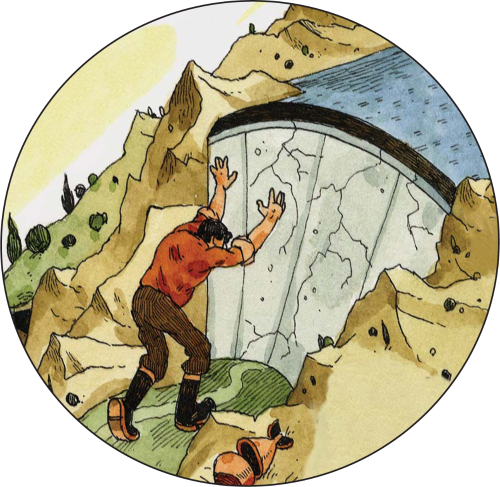
Thirty years ago, the invention of gene-splicing, which allowed biologists to move genes easily from one species of animal, plant, or microbe to another, caused widespread public alarm. People recognized that the new technology might create immediate public health hazards if, for example, genes for virulence were transferred from disease germs to bacteria like E. coli that normally inhabit the human gut. They also realized with apprehension that it could cause long-term dangers to the planetary ecology by upsetting the balance of nature in unpredictable ways.
The town of Princeton, New Jersey, where I live, appointed a citizens' committee to advise the municipal authorities concerning the regulation of gene-splicing experiments. The immediate question was whether to allow Princeton University to build a laboratory where such experiments could be conducted. But the committee also devoted much of its time to discussing broader issues and longer-range dangers. As a member of the committee, I wrote a statement of my view of the broader issues:
“The members of this committee have assumed a responsibility as guardians of the public health and safety of Princeton. In exercising our responsibility, we face a moral dilemma similar to that faced by every parent who watches a son or a daughter climbing a tree. The consequences of a fall may be tragic beyond imagining, a broken neck followed by a lifetime of physical helplessness, or a damaged brain and a stunted spirit. But the child shouts, ‘Can't you see how careful I'm being?’ or ‘But Jane's mother lets her climb as high as she likes.’ A wise parent is not afraid to say no and enforce parental authority when the child is behaving recklessly. A wise parent also knows that, no matter how terrible the consequences of an accident may be, we cannot always be saying no. If we forbid tree-climbing arbitrarily and absolutely, we not only destroy a part of the joy of childhood but also destroy the respect upon which our authority as parents ultimately depends. So this committee, as guardian of the public safety, recommends that the Princeton community not be afraid to assert its authority to put a stop to any experiments that the community considers reckless. But we recommend also that this authority be sparingly exercised. Where there is no evidence of negligence or recklessness, the community should let experiments go forward, accepting the risks that are inseparable from living in an unstable and rapidly changing world. We are not saying that scientists who do experiments are children and that we committee members are grown-ups possessed of superior wisdom. The whole human society on Earth is the child, science is the tree, and the wise upbringing of our species into a new era of global interdependence is an inescapable responsibility which we all share.”
Thirty years later, this statement still describes our situation surprisingly well. For three decades, gene-splicing experiments have gone forward under guidelines that require strict confinement of dangerous organisms, and nobody has been killed or hurt. The gene-splicing technology, combined with other new technologies such as rapid sequencing of genomes and in vitro fertilization of embryos, has led to enormous advances in our understanding of biological processes. The long-range dangers of biotechnology to human health and to the environment remain real but incalculable. Ultimately, the dangers do not come from any particular technology or from any particular organism. The dangers come from knowledge. And they are incalculable because we can never know in advance what new hazards knowledge will bring.
Dangers can come not only from biology but also from physics. As a physicist, I am well aware that physicists in the past were responsible for inventing more devilish devices than biologists. But there is a big difference between the nuclear and biological dangers. Nuclear science is a dead subject, while biology is alive and growing fast. The time when nuclear scientists invented new kinds of nuclear weapons ended around 1970. The last attempts of physicists to bring new horrors into the world by creative use of science concerned the so-called nuclear hand grenade, which was supposed to be a pure fusion device not requiring fissionable material. The idea was to use a chemical high explosive to drive a small implosion that would ignite a tiny quantity of fusion fuel. The neutrons from the fusion reaction would give a lethal dose of radiation to anybody within a few hundred yards from the explosion.
Groups of physicists in Russia and in the United States were enthusiastically playing with such devices in the 1960s. Fortunately, all their designs failed, and further study of the ignition process showed that a portable nuclear hand grenade is impossible. If the designs had succeeded, guerrilla fighters all over the world might now be armed with nuclear hand grenades instead of AK-47s, and every local terrorist threat might be nuclear. The world has become a little safer since we now know for sure that any portable nuclear explosive must be a fission bomb.
If a group of terrorists is planning to explode a nuclear bomb today, they need to be competent engineers, and they need to acquire fissionable materials and designs. They do not need to know the latest science. New discoveries in nuclear science will not make the task of the terrorists easier. Restrictions on freedom of inquiry in nuclear science will not make the world less dangerous.
But what of biology, the field in which new knowledge is undeniably creating new dangers? A good example to illustrate the way in which new biological knowledge arises is the recent work of David Haussler and his colleagues at the University of California, Santa Cruz, published in the online edition of the British journal Nature, August 16, 2006. They discovered a small patch of DNA called HAR1, short for Human Accelerated Region 1. This gene sequence is found in chickens and chimpanzees as well as humans–and for 300 million years it hardly evolved at all among the common ancestors of birds and mammals. But some 6 million years ago, after the human lineage diverged from its last common ancestor with the chimpanzee, the gene sequence evolved rapidly. The researchers identified 18 mutations that became fixed in the human DNA segment–a remarkable amount of change in just a few million years. The precise function of HAR1 is unknown. But unlike most genes that produce proteins, HAR1 provides the coding that allows cells–in this case, brain cells–to produce RNA molecules that modify the function of other genes. Moreover, the researchers found that HAR1 becomes active in the developing cortex of the human embryo from 7 to 19 weeks after conception. The evidence suggests that HAR1 has played a key role in the evolution and development of the human brain.
The discovery of HAR1 is probably an event of seminal importance, comparable with the discovery of nuclear fission in 1938 or the discovery of the DNA double helix in 1953. It opens the door to two new sciences: the study of RNA as an agent of embryonic development and the study of human evolution at the molecular level. These two new sciences will profoundly change the possible applications of biological knowledge for good or evil. None of these new applications could have been predicted before the discovery of HAR1. No committee scanning research proposals in human genetics could have picked out Haussler's program as particularly dangerous. The only way to stop dangerous knowledge from arising would be to stop research in human genetics altogether.
There are two main ways in which biological knowledge can be dangerous. Knowledge of microbes and of biologically important molecules can lead us to new lethal agents and new ways of infecting populations. Knowledge of human biology and evolution can expose new vulnerabilities for weapon-builders to exploit. In addition to these dangers of malicious abuse of biological knowledge, there are also dangers of well-meaning abuse, such as parents trying to give their babies competitive advantages by genetic manipulation of embryos. The long-range dangers of biological knowledge are real and serious.
A number of scientific colleagues with whom I've spoken have a view of the future that envisions a kind of endless arms race–not an offensive/offensive arms race analogous to the nuclear arms race of the Cold War, but a defensive/offensive arms race where the vast majority of the world's scientific community who want to benefit humanity face off against a tiny fraction of bad actors, who are mischievous, or just careless, or who want to put human health at risk.
The good guys in that race have the enormous advantage of much greater resources. On the other hand, the words of the Irish Republican Army, after its failed 1984 attempt to assassinate the British cabinet in Brighton should be borne in mind: “Today we were unlucky, but remember, we only have to be lucky once; you will have to be lucky always.” Is that kind of arms race stable? It's not clear to me that it is, but if it's the best we can do, so be it and let's do the best we can.
But we shouldn't retreat to the conclusion that this grim view of the future is the best we can hope for, at least not until we've looked carefully at other possibilities. We need to examine the range of rapid and effective international means for addressing the greatest risks.
There are two possible responses to these potential dangers. The first is to try to stop the increase of dangerous knowledge by restricting and controlling science. The second is to allow freedom of scientific inquiry and impose restrictions only on dangerous applications of knowledge. The second response will certainly not eliminate the danger. The history of biological weapons in the twentieth century shows how difficult it is to control dangerous applications after knowledge has been acquired. But I believe that the first response will be even less effective. The first response fails, because the attempt to suppress scientific inquiry puts incompetent people in positions of authority and increases the likelihood of disastrous mistakes.
If we are to establish a system of censorship, to decide which scientific inquiries are safe to pursue, the crucial question is: Who will be the censors? We can be sure that the job of censor will not attract first-rate scientific minds. The job will be intensely political and is likely to attract people with a political axe to grind. In the year 1644, the poet John Milton made a famous speech to the British parliament opposing the censorship of books. The argument that Milton used applies equally well to the censorship of scientific inquiry. “He who is made judge,” said Milton, “to sit upon the birth or death of books, whether they may be wafted into this world or not, had need to be a man above the common measure, both studious, learned, and judicious…. If he be of such worth as behooves him, there cannot be a more tedious and unpleasing journey-work, a greater loss of time levied upon his head, than to be made the perpetual reader of unchosen books and pamphlets…. Seeing, therefore, those who now possess the employment, by all evident signs wish themselves well rid of it …, we may easily foresee what kind of licensers we are to expect hereafter, either ignorant, imperious, and remiss, or basely pecuniary.”
This last phrase of Milton identifies precisely the two kinds of people who became candidates for the job of scientific censor in more recent times. “Ignorant, imperious, and remiss” describes the Communist apparatchiks of Russia in the time of Soviet biologist Trofim Lysenko. “Basely pecuniary” describes the capitalist lobbyists who swarm around the chambers of government today in Washington. Science will always have to defend itself against enemies of freedom on two sides, against ideological enemies on one side and against commercial enemies on the other. The ideological enemies are not only Christian fundamentalists on the Right, but also dogmatic Marxists and environmentalists on the Left. The commercial enemies are not only monopolistic corporations interested in profits, but also corrupt politicians interested in power. The choice that we have to make is not between scientific freedom and science governed by a wise group of philosopher-kings. The choice is between scientific freedom and science governed by political hacks of one kind or another.
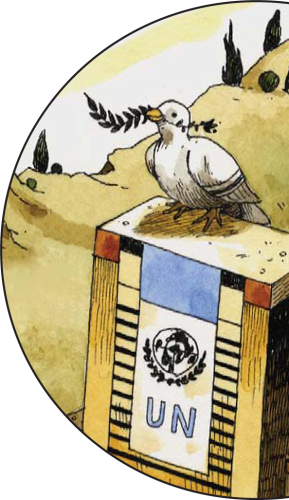
To stop scientists from thinking dangerous thoughts will not give us protection against the abuse of science, and the dangers of abuse will not go away. Disease germs designed for epidemiological efficiency, directed against human populations, livestock, or crops, can be enormously destructive. The science required to create such horrors already exists. What then should we do to protect ourselves? There is no magic remedy that can make the world safe, but there are two major steps that we could take toward a safer world. Step one is to establish effective and comprehensive public health services in countries including the United States that lack such services. Step two is to remove so far as possible all barriers to communication between scientists and public health experts of all countries. If we talk to our potential enemies, we have a better chance to find out who they are and what they might be doing. The international community of scientists can do a better job of collecting intelligence about its members than any of our secret services. When we are dealing with enemies of the human race hidden in ordinary houses and laboratories, a more open world is a safer world. Openness rather than secrecy is our best defense.