




Abstract
Can civilization cope with the unthinkable?
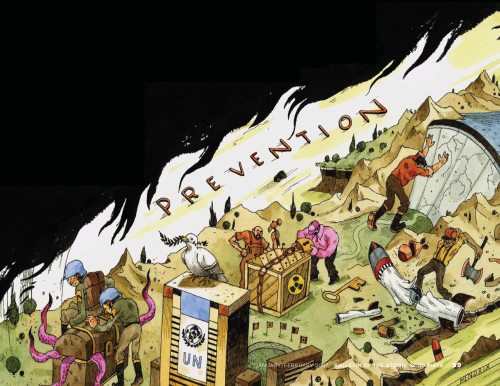
The Bulletin's Clock evokes the ominous sense of catastrophe brought to mind by the destructive power of nuclear explosives demonstrated at Hiroshima and Nagasaki in 1945. Scientists at the time were concerned that access to nuclear energy would generate danger of unprecedented magnitude if it were harnessed to historical antagonisms of the sort displayed in the war that the original weapons helped to terminate. As they expressed alarm, however, they also sought to convey constructive aspiration–at least a reasonable hope that the achievements of science might stimulate commensurate refinements in the management of human belligerence. Doomsday was to be avoided; identifiable catastrophes were to be systematically prevented–the Clock's minute hand could move away from midnight.
The fact that human societies have survived extensive deployments of nuclear weapons for over half a century has mitigated this original concern, but it has not invalidated it. Russia and the United States currently maintain cordial political relations and do not explicitly threaten each other. They nonetheless continue to preserve thousands of nuclear weapons on continuous alert status programmed to initiate massive attacks on the other within a few minutes and to complete them within a few hours. Were those prepared attacks ever to be undertaken, neither society would survive in recognizable form, and the global economy as a whole would be severely damaged for an extended period of time–not literally the end of civilization, but monumentally catastrophic. According to the doctrine of deterrence, the preservation of large alert forces assures that the massive assaults prepared by each nation will never be intentionally initiated, but prevailing practice unquestionably sets conditions under which an accidental or inadvertent engagement could occur. It also increases the risk of terrorist access to nuclear weapons and explosive materials.
Basic common sense suggests that the very modest residual requirements of deterrence could be assured with dramatically fewer weapons not held on alert status, as China has demonstrated for several decades. Were that to be the universal standard, the possibility of a catastrophic nuclear engagement or terrorist diversion of individual weapons would both be substantially diminished. At the moment, however, there is no official effort even to explore the prudent transformation of U.S. and Russian forces to such a configuration. That sustained neglect of evident common sense constitutes a warning that the two political systems in question do not comprehend the threat of catastrophe that their legacy deterrent practices represent.
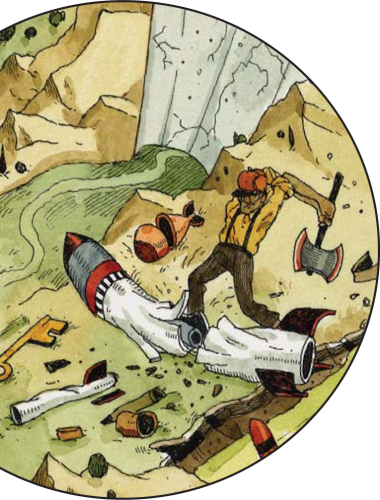
And those two governments are not alone as far as general anticipation and prevention of catastrophe is concerned. Although the imperative to prevent massively destructive events is universally affirmed, it is difficult to act upon in all parts of the world. Great dangers may be readily imagined but usually cannot be demonstrated in convincing detail until they actually occur. Since an attempt to develop decisive methods of prevention for every imaginable disaster would be overwhelming, it is rarely possible to establish the consensus required to act in advance. The chain of consequences is generally too uncertain, and success cannot be demonstrated beyond dispute. The prevailing rule of prudence therefore imposes the burden of proof on anyone who argues the need for a demanding preventive effort, and usually that burden cannot be met. For those practical reasons, most of what is done in the name of preventing catastrophe is actually preparation to respond to contingencies of a scale and character previously encountered. Civilization as we know it is organized to deal not with threats of greatest imaginable magnitude, but rather with those that are familiar and comprehensible. And because protection against a widely acknowledged threat is a powerful source of political consensus and moral justification in all forms of government, the threats in question are nurtured as much as they are feared.
Human institutions are not immutable, however, and it is not unreasonable to expect in due course some adaptive response to the more prominent threats of catastrophe. In particular, there are at least three looming problems that might plausibly induce meaningful advances in the practice of prevention: the management of nuclear explosive materials; the potential misuse of advanced biotechnology; and the limitation of climate change.
More than 60,000 nuclear weapons are believed to have been fabricated over the course of six decades, and a network of facilities has been established to produce the explosive isotopes they contain. Those facilities are embedded in a larger network that supports the 442 nuclear power reactors currently in operation throughout the world. The International Panel on Fissile Materials estimates the combined global stocks of plutonium and highly enriched uranium to be at least 1,800 metric tons–in principle, enough for more than 150,000 nuclear weapons.
National governments are responsible for the accounting and physical security of their weapons and their dedicated nuclear materials, and they do not inform each other in authoritative detail. As a result, no one knows the total inventory. The U.S. government's estimate of the number of nuclear weapons that currently exist worldwide has a margin of error of 5,000 weapons–even though each single weapon is itself an agent of mass destruction. The International Atomic Energy Agency (IAEA) monitors most, but not all of the materials involved in nuclear power generation. The IAEA does not claim to provide a comprehensive, accurate account of the current global inventory, let alone the history of explosive isotope production. The uncertainties of historical production are such that it is inherently doubtful a global account accurate to a single weapon's worth of material could ever be constructed. Human societies have generated nuclear explosive materials in a manner that virtually precludes exact knowledge of the threat they represent.
During the Cold War, when deliberate mass attack was considered to be the dominant form of threat, uncertainty about individual weapons did not appear to be significant. With thousands of weapons arrayed in active confrontation, it was assumed that the viability of deterrence did not depend on the exact number. If terrorist use is admitted to be a serious concern, however, the accounting and physical security of every weapon and the equivalent amount of explosive material becomes a matter of high priority.
Although it may never be possible to achieve a precisely accurate global system of managerial control, substantial improvement in current practice is definitely possible and is likely to become an insistent demand if ever there is an incident that validates fear of a nuclear terrorist threat. It is technically possible to devise a common accounting and physical security system that would assure continuous monitoring of weapons and materials and would make unauthorized and undetected diversion extremely difficult to accomplish. Indeed, a 2005 National Academy of Sciences report, “Monitoring Nuclear Weapons and Nuclear-Explosive Materials,” offers detailed recommendations for establishing international standards while controlling access to the details of design and location that national governments are dedicated to protecting. The development of such a system lies outside the bounds of political tolerance at the moment, but if the imagined threat of nuclear terrorism is ever demonstrated to be real, prevailing attitudes would presumably change.
It is increasingly evident that fundamental understanding of basic life processes–of molecular biology in particular–has potential consequences that are comparable in magnitude to the utilization of nuclear energy, albeit radically different in character. Although much of the apparent potential of biotechnology is yet to be demonstrated, it is prudent to assume that both the eradication and intensification of some historical diseases will be possible, as will the manipulation of emotional, cognitive, and reproductive functions. Transmissible agents that can propagate highly consequential effects across human, plant, and animal populations can be expected to enable both therapeutic and destructive applications on a global scale. This combination of opportunity and danger cannot be categorically disentangled and poses managerial problems capable of affecting the viability of human civilization as we currently know it.
In the case of nuclear energy, the consequence of scientific insight is naturally controlled by the inherent difficulty of acquiring the explosive isotopes, and the scale of activity required to do so is subject to observation and regulation. For biotechnology, however, it is knowledge itself more than access to materials or equipment that confers dangerous consequences.
More than a million articles on biotechnology are published annually, and seminal results are generated in all parts of the world. Yet, it is national governments that primarily conduct the current regulation of biotechnology. And that regulation is principally concerned with the localized containment of virulent pathogens, as opposed to assessing the broader implications of basic research. It seems apparent that highly consequential areas of biological research will have to be subjected to protective oversight on a global basis, based upon principles of enforced transparency and peer review. No researchers, however competent, patriotic, or honorable they may be, should carry the burden or be given the authority to make research decisions that might put an appreciable fraction of the human species at risk without subjecting themselves in advance to the discipline of individual oversight.
National competition in the destructive application of biotechnology would be so obviously ruinous that there is reasonable hope preventive regulation might prevail at the outset even though it did not for nuclear explosives.
There is now a well-considered scientific consensus that greenhouse gas concentrations in the atmosphere induced by aggregate human activity are generating a warming effect that poses a severe if not yet specifiable threat to the global ecology on which human civilization depends. Prudent containment of that threat will require not only dramatic improvements in the efficiency of energy use, but also a transformation in the basis of energy production over the next half century.
That transformation is, in principle, feasible, and many technologies can contribute to the process. Accomplishing this task, however, will require revision of current policies and security relationships particularly with regard to the generation of nuclear power. It is doubtful that the necessary transformation of energy generation can be accomplished without substantially increasing reliance on nuclear sources. But it would be exceedingly dangerous to undertake the necessary expansion of nuclear power on the basis of current reactor designs and current fuel-cycle management practices in the context of current deterrent force operations. That would increase the scope for dangerous diversion of nuclear material to weapons applications while preserving the incentive. Safe expansion of nuclear power requires not only much higher standards of material control but also the more fundamental security accommodation necessary to set those standards.
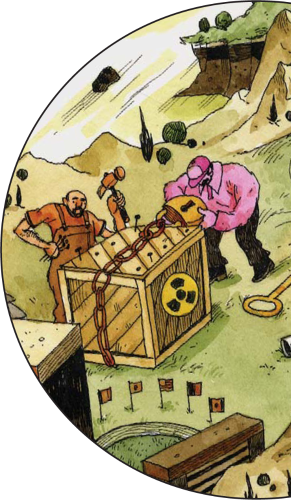
And that broad implication presents an opportunity. For those willing to sustain the element of hope symbolized by the Bulletin's Clock, the potential application of transparency rules and advanced monitoring techniques to protect against the destructive application of nuclear energy and biotechnology offers a credible means for shifting the basis of security policy–from traditional methods of belligerent confrontation for national advantage to more refined methods of collaboration for mutual benefit. The prevention of human-induced catastrophe is a compelling objective that will either be achieved or not achieved on a global scale.