




Abstract
Mike Moore is the Bulletin's contributing editor. He can be reached at
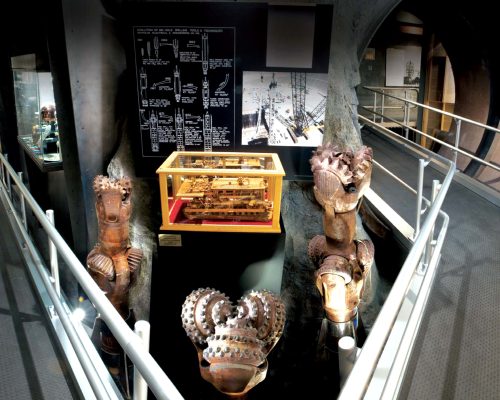
You know the drill: Tools on display in the Underground Testing Gallery at the Atomic Testing Museum in Las Vegas.
A history of bombing ourselves
It didn't take long for the new Atomic Testing Museum, located in shimmering Las Vegas, to expand its collection of artifacts. In its first week of operation, potential display items literally walked in off the street. A woman demonstrating at the museum donated her protest sign decrying the proposed nuclear waste repository at Yucca Mountain. And former Nevada Test Site workers, among the museum's first visitors, donated photographs and promised to return bearing additional relevant personal relics.
Now, if only there were room for all those contributions in the museum's packed 8,000 square feet of exhibition space. The museum captures a six-decade-long narrative of U.S. nuclear testing history, including a 41-year period (from 1951 to 1992) during which the United States carried out 928 nuclear tests (1,021 detonations) at the Nevada Test Site alone, according to the Energy Department.
On display near the museum's entrance is a copy of Albert Einstein's famous August 1939 letter to President Franklin Roosevelt, urging the development of nuclear weapons. By the exit, pieces of both the Berlin Wall and the World Trade Center are meant to evoke the testing program's role in the Cold War as well as the test site's ongoing role in counterterrorism efforts, according to museum director Bill Williams.
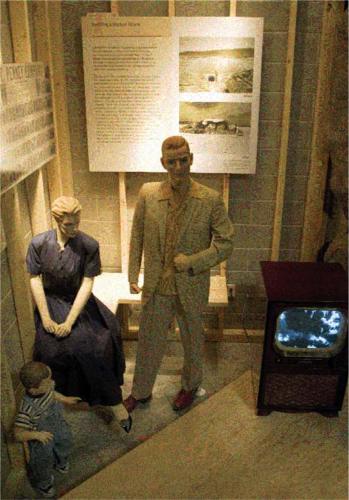
To document all of the site's activities, in addition to nuclear testing, Williams and a team of museum consultants settled on an array of exhibits: a silo from the experimental farm where scientists once investigated the effects from tests on plants and animals; a theater that recreates an atmospheric-test observation bunker–complete with rumbling seats and gusts of wind; displays of test mannequins and radiation detection devices; and, of course, lots of mushroom cloud pictures.
The museum's special exhibit hall, named after Nevada Democrat Sen. Harry Reid, currently displays nuclear-related art, but Williams, an archeolo-gist who specializes in the Cold War, wants to bring a more artifact-heavy exhibit to the hall next. He'd like to display the Apollo lunar rover test unit in the hall at some point, and has spoken with staff at the Smithsonian Institution, with which the museum is affiliated, to make it happen. (In the early 1970s, Apollo crews practiced maneuvers with the rover on the test site's barren, moon-like landscape.)
And it wouldn't be a museum if it didn't have a gift shop. At the Atomic Testing Museum, the fare is on the kitschy side–mushroom-cloud mouse pads (only $14), Miss Atomic Bomb tote bags, and a few educational books.
For all it includes, the museum does not present an unimpeachable view of history. It shares its building with Energy Department offices, and the federal government contributed $2 million to the museum's construction, opening it up to charges that it has an incentive to tell only one side of the testing story. Private donations and grants, some from companies involved in test site activities, made up for the remaining $3 million it cost to build the museum, and also explain certain exhibit names, for example, the “Wackenhut Guard Station.”
Nuclear family: Replicas of dummies used at the test site.
Williams believes the museum strikes the right balance on a controversial history. “Here we do this crazy sort of Las Vegas motion ride, and then all of a sudden you are dealing with some deep issues,” he says.
Some disagree. Shortly after the museum's mid-February opening, Mary Dickson, an outspoken critic of the effects of nuclear testing on people down wind of the test site, wrote a disparaging appraisal in Utah's Salt Lake Tribune: “Missing are exhibits about the human toll of nuclear testing, about downwinders, about how far the winds carried radioactive fallout and about the death and disease it caused.”
The museum also overlooks the enormous financial cost of the U.S. testing program (from 1981 to 1992, Energy spent more than $7 billion on nuclear testing) and fails to tackle one of the largest projects planned for the test site, the controversial Yucca Mountain waste repository. Moreover, it makes only passing mention of the possibility that U.S. nuclear testing could one day resume. “We did not expand on that in any way,” Williams says. “We didn't want to seem like we were advocating future testing.”
Williams acknowledges that some of the museum's critics have a point. Yet, he defends the museum against claims that it lures visitors into thinking about U.S. nuclear testing in terms of nostalgia, rather than with a critical eye. “We are basically covering the ground of that history, making sure that people remember that this was a war,” he says. “It was just a really weird war, in that it was a war in which the main participants bombed themselves.”
Despite the bout of controversy and a decidedly explosive subject matter, the museum's initial attendance was lower than expected. The curators may follow the example of the Liberace Museum and offer a shuttle service from the Strip. Williams is hopeful that tourists will come, even if the museum lacks blackjack tables and slot machines. “I think we've got an edge,” he says, “because we are not just an attraction.”
Q and A CARSON KREITZER
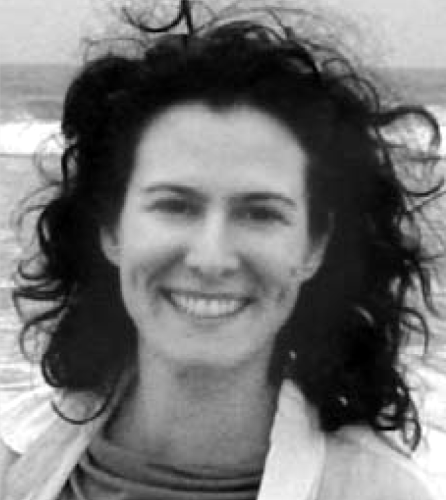
But he and Kitty stayed together. She was with him in the end. That's love. It's an important part of the play for me–learning that the woman next to you in bed, next to you in your home, next to you with your children, is your true love.
Science without borders
While U.S.-Arab relations continue to stagger, a Georgia Tech chemistry professor suggests the United States should use science as a foreign policy tool.
At an American Association for the Advancement of Science session on “Science in the Arab World,” Mostafa El-Sayed, the director of Georgia Tech's Laser Dynamics Laboratory, implored the United States and oil-rich Arab nations to devote increased resources to enhancing the scientific and technical capabilities of the have-not Arab nations. “There is a lot of misunderstanding between the United States and Arab countries, based on differences in religion and ideology, but science is a language we all speak,” El-Sayed told the February 19 meeting.
The Egyptian-born El-Sayed envisions a program that is a cross between the Peace Corps and a large-scale scientific exchange program. Arab scientists would come to the United States to work with their American counterparts–and, most importantly, experience the amenities of U.S. labs. American scientists, in turn, would travel to Arab nations to help further the science conducted there. The United States and oil-rich Arab nations would share the tab, with countries like Saudi Arabia matching U.S. aid dollar for dollar.
Small-scale versions exist now. Since coming to the United States in 1954, El-Sayed has returned to Egypt many times for various exchanges, conferences, and workshops with Arab scientists. But often these programs function independently of governments and lack a cohesive structure.
To El-Sayed, the equation is simple: Investment in science and technology stimulates economic growth in countries such as Egypt, Lebanon, and Jordan, allowing for improved education and a wider acceptance of democracy. For the United States, the program is equally win-win. It fosters goodwill, which has been in especially short supply since the start of the Iraq War, and it contributes to national security. “If you get the economies of these countries up, it's the best thing against terrorists and those crazy people who kill themselves,” El-Sayed says. “They kill themselves because there is no future. They take it as a job essentially. [Osama] bin Laden comes and says, ‘Enroll, and you'll get $20 a month.’”
The State Department has expressed interest in pursuing the idea, which El-Sayed believes dovetails with President George W. Bush's initiative to democratize the Middle East. Various segments of the U.S. government understand they must seek alternative ways of engaging the world. Lawrence Liver-more National Laboratory is already establishing science-cooperative projects in both the Middle East and Central Asia.
Using science as an olive branch is not a new concept. The ongoing dialogue between certain U.S. and Soviet scientists contributed to occasional thaws in the Cold War. El-Sayed believes this is because science serves as an optimal way of establishing commonality and extracting politics from an issue. “Scientific people are more international in their approach,” he says. “They see one another. They talk to each other. They are less emotional. If we couple the interaction between the Middle East and the United States, we'll get across [the U.S. position] much easier.”
Los blogamos
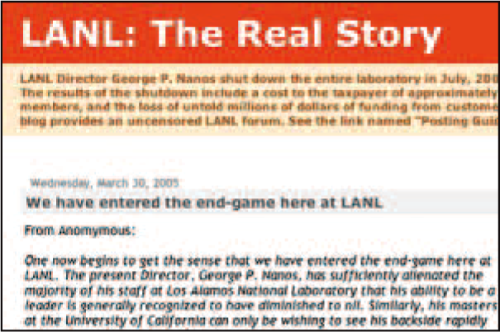
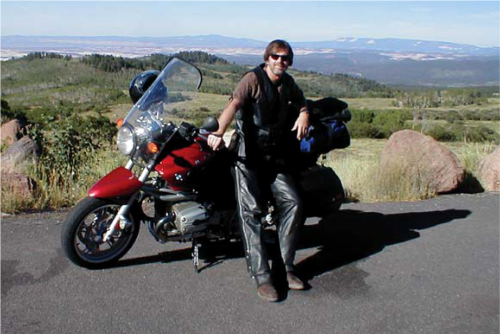
It's not often that the general public has the opportunity to peer into working life at a nuclear weapons lab, where secrecy is at a premium. But now web surfers can take a gander at what's going on at Los Alamos National Lab (LANL), thanks to “LANL: The Real Story,” a blog created by Doug Roberts, a motorcycle aficionado who has been a computer scientist at Los Alamos for 20 years. Roberts didn't establish his blog to satisfy the curiosity of outsiders looking in. Quite the opposite–he started it, he says, to address the need for those on the inside to have an “open forum to discuss issues they felt were important.”
What's my line?
In the wake of a work stand-down ordered last July by lab Director G. Pete Nanos (which was his response to two classified disks that had disappeared–it turns out the disks never existed), morale among Los Alamos workers was plummeting. The one place where LANL workers could vent their frustrations for all to see–the Readers' Forum of LANL's daily online NewsBulletin–was either slow to respond or completely unresponsive to submissions, Roberts says. (Two of his letters to the NewsBulletin fell by the wayside.)
Rebel with a cause: LANL blogger Doug Roberts.
Roberts and a number of colleagues began to feel an acute need for a forum that would be “uncensored and available to anybody.” By chance, his wife Ingrun provided the inspiration.
“One Sunday morning my wife opens the newspaper and sees a two-page spread on blogs,” Roberts says. “She asked me if I knew what a blog was, and I said, ‘You know, I think I do.’” Not long after, lanl-the-real-story.blogspot.com was born. Since its launch in late December 2004, the site has attracted more than 65,000 visitors. Roberts estimates that there are as many as 1,500 unique posters to the blog, although it is impossible to tell because so many commenters choose to remain anonymous. One explained: “I know that if I used my real name it would come back to me at the office, and I would be made to pay for it.” But Roberts says that his management at the lab has “applied no pressure.”
Roberts prefers to keep out of the fray, acting mainly as site moderator, simply posting the links and letters people send in. He won't comment on current morale at the lab, but thinks the blog is a decent barometer of lab opinion. Far and away the primary gripe on the blog regards the managing style of Nanos, who stepped on a lot of toes when he shut down the lab. The tone of the contributors, who appear mostly to be current and past LANL employees, runs the gamut from stone serious (“This is about the survival of our nation”) to silly (anti-Nanos limericks and song lyrics), but the overriding sense is that they're angry, worried about the future of the lab and their jobs.
The official LANL reaction to all this cyber-commiseration has been even-keel. “It's not really an issue from the lab's perspective,” says LANL spokesman Kevin Roark. “It's being administered from a completely private, personal computer. It's not an issue.” Practically all of Roberts's entries (which are marked with the time and date of posting) are made outside of work hours. Only on rare occasions has Roberts, who says he puts in about four or five hours of work a day on the blog, made noontime posts–from a computer at the Los Alamos public library, neutral territory.
Roark, who has visited “The Real Story” a few times but declined to give his personal opinion of it, says LANL has no comment about the blog. “We're not really tracking it.” Nor is the lab worried about secrecy leaks. “Lab employees are very wellversed in how to protect sensitive, classified, export-controlled information,” Roark says. “[It's] absolutely not an issue.”
Roberts says he will continue the blog until “it is no longer needed.”
“That will be when we have a management team at LANL that is of sufficient quality and openness that an outside discussion forum is no longer required to get important issues aired,” he says. “The way things look at the moment, however, that could be never.”
Ruth Salzman Adams
Ruth Salzman Adams, a steadfast globalist decades before globalism became fashionable, died February 25. She was 81.
The organizations that Adams devoted her life to enhancing–the Bulletin, the Pugwash Conferences on Science and World Affairs, and the John D. and Catherine T. MacArthur Foundation–shared and promoted that globalist perspective.
Adams joined the Bulletin in 1953 as an invaluable editorial assistant. At that time, the magazine was located in the basement of the University of Chicago's Social Science Building; former Manhattan Project scientist and Bulletin founder Eugene Rabinowitch was the magazine's editor. Those were dizzy years for Adams. The university's sprawling Manhattan Project lab yielded the Scientists' Movement in 1945; the Bulletin quickly emerged as the forum in which the most brilliant minds of the era discussed the fundamental questions of the atomic age.
In 1957, Rabinowitch, fellow Project scientist Joseph Rotblat, and philosopher Bertrand Russell organized the first Pugwash conference, held at its namesake village in Nova Scotia, Canada. In its early years, Pugwash was designed to cut a hole in the Iron Curtain by bringing together scientists from East and West to work on the technical foundations for arms control.
Adams attended the conference in a secretarial capacity. But her brilliance, ebullience, and understanding of the issues impressed nearly everyone and made her instrumental in future conferences. “[The meeting] was to shape most of the following decades of my life,” Adams recalled at a July 2003 Pugwash meeting. She remained a key player in Pug-wash until her death.
From 1961 to 1968, Adams–idealistic, plain-spoken, and impatient with Cold War cant–worked at the Bulletin as managing editor and then editor. She left the magazine in 1968 to go to the Middle East with her husband, a world-famous anthropologist. She assumed the editorship again in 1978.
Jerome Wiesner, former science adviser to President John F. Kennedy, a Pugwashite, and a MacArthur Foundation board member, recruited Adams to join the foundation in 1984. At MacArthur, she instituted the Peace and International Cooperation Program, which supported innovative initiatives throughout the world.
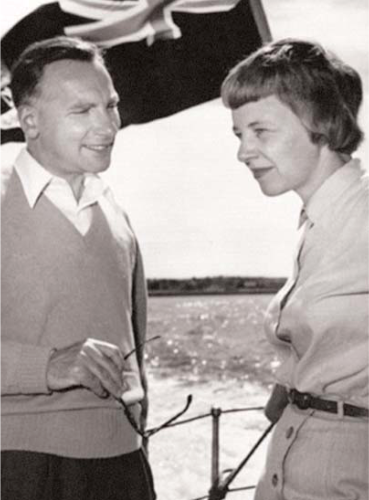
Ruth Adams with Joseph Rotblat, circa 1957.
Her interests were vast, but she gave particular attention to the developing world. “Ruth helped found the International Centre for Insect Physiology and Ecology in Nairobi, Kenya,” recalls Victor Rabinowitch, who met Adams when she worked for his father at the Bulletin and then worked with her himself as senior vice president of the MacArthur Foundation. “She traveled to Africa as a board member of the center, and to France, Germany, and England to raise money for the center and to get scientists involved.” The center, still going strong, combines basic and applied research in an effort to control tropical insects that kill livestock by the millions, devastate crops, and spread disease.
Adams also invested much time and energy in developing the next generation of thinkers. “She was never condescending,” recalls Sandy Ionno Butcher, former executive director of Student Pugwash USA and a longtime friend of Adams's. “She made us feel as though we had something special to contribute. She shared with us her enthusiasm, friendship, contacts, and belief that young people can and must play a role in determining the future.” This was Adams's true legacy, Ra-binowitch believes. “She inspired thousands of young people to get involved with and contribute to the issues of peace and social justice, not only through professional careers but through their work with civic institutions everywhere,” he says.
“To Ruth, public service was a privilege, rather than a chore.”