




Abstract
The Fast Flux Test Facility was supposed to underpin an ambitious U.S. breeder reactor program. But after the idea of the plutonium economy was abandoned, it became another of Energy's white elephants.
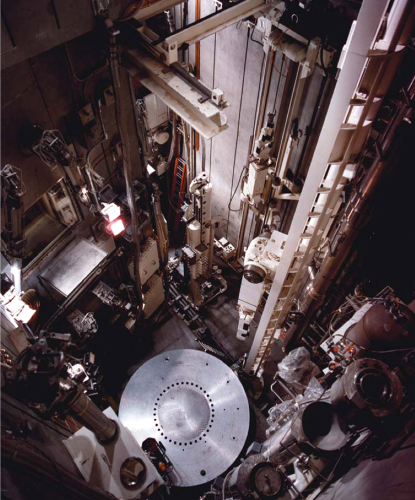
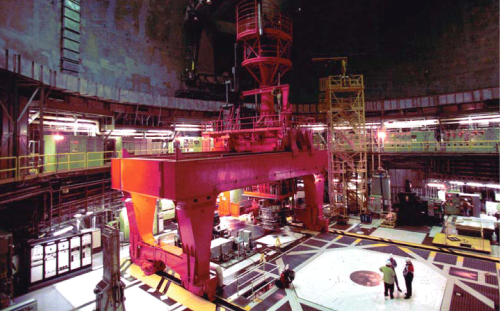
The FFTF (left) was initially built to test fuels, materials, and components for a first generation of breeder reactor. The reactor's main cell is shown at right.
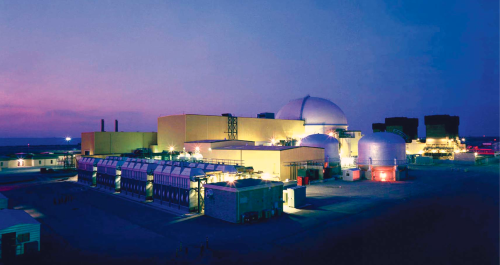
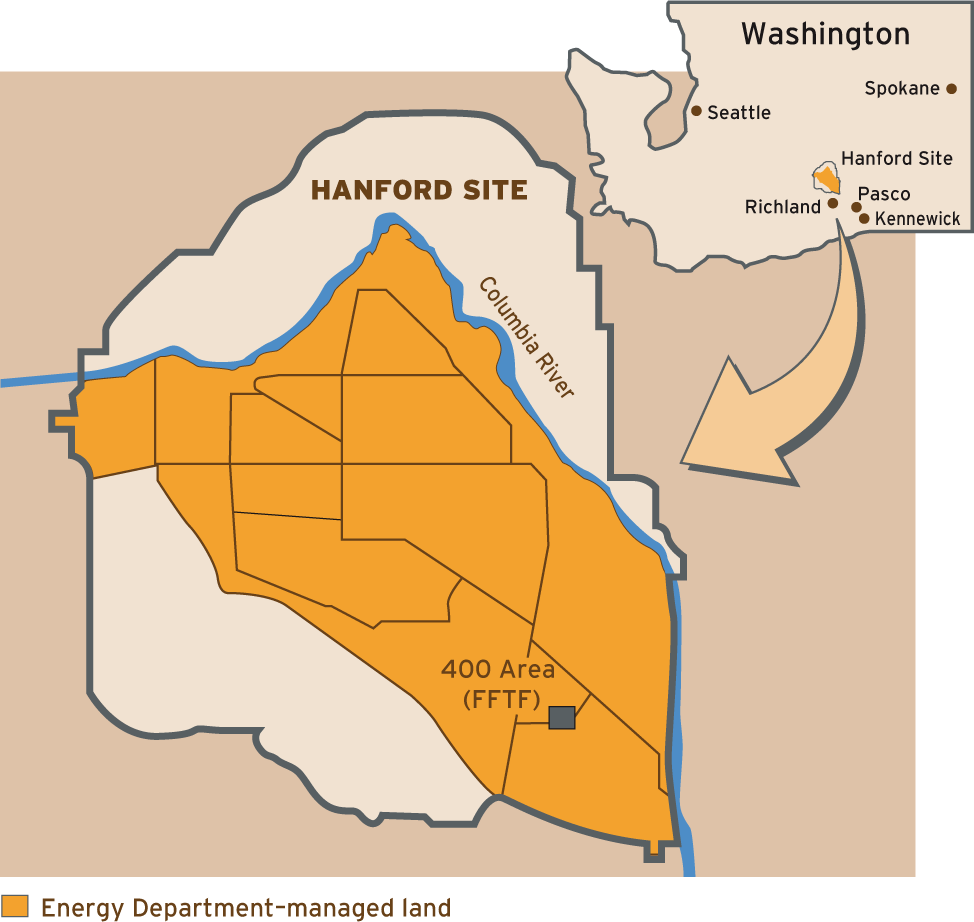
The Hanford Site nuclear reservation, covering more than 500 square miles in central Washington State, has long been connected with plutonium. The site produced the fissile material for the bomb dropped on Nagasaki and went on to generate nearly two-thirds of the plutonium for U.S. atomic weapons during the Cold War.
Hanford is also connected to plutonium by its Fast Flux Test Facility (FFTF), a research reactor originally designed to support the Clinch River project, a demonstration plutonium breeder reactor. Although Congress ended funding for the Clinch River breeder reactor in 1983, the FFTF operated until 1992, after which it remained on standby for more than a decade. Only last year did the Energy Department take irreversible action to deactivate the reactor. The facility's long, troubled history reflects the changing fortunes of the atomic age, as well as the contentious political geography of the Pacific Northwest.
The politics of plutonium
When it was first promoted, the plutonium breeder reactor represented the hopes of the atomic power industry. Commercial reactors today operate on fuel enriched in uranium 235, which fissions much more readily than uranium 238, the most common uranium isotope. But if uranium 238 captures a neutron (generated from fission), it can become plutonium 239, which is fissionable. A reactor using plutonium 239 fuel surrounded by rods containing uranium 238 could theoretically “breed” more plutonium than it consumed.
The centerpiece of the plutonium breeder reactor program in the 1970s was to be the Clinch River demonstration project, which was to be sited in Tennessee near Oak Ridge. Hanford got the go-ahead to build the Fast Flux Test Facility so that it could test fuels, materials, and components for Clinch River.
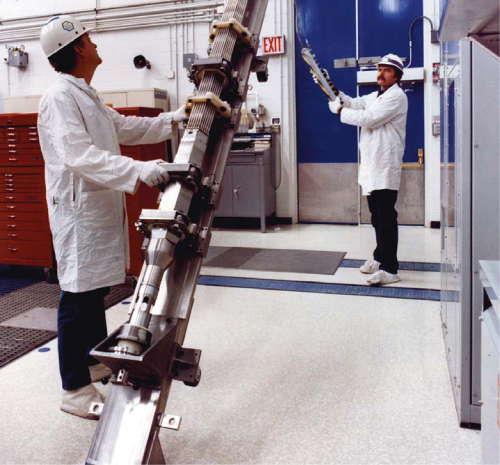
Technicians prepare fuel assemblies for a test in March 1984.
(“Fast flux” in this case refers to the physical conditions of the reactor. In typical commercial nuclear reactors, neutrons that sustain a chain reaction are released from fission at high energy, then slowed by collisions with water molecules in the reactor's coolant to speeds more efficient for inducing new fissions. But for a breeder reactor, fast neutrons are more efficient in “breeding” plutonium from uranium, and the reactor's coolant is a substance, such as liquid sodium metal, that is an inefficient moderator of neutron speed. Thus, a breeder operates with a “flux” of fast neutrons, and the FFTF was designed with reactor components, plutonium fuel, and a liquid sodium metal coolant similar to those of a breeder.)
Construction of the test facility began in December 1970 in the “400 Area” at the Hanford Site. In September 1971, President Richard Nixon visited Hanford to promote the breeder reactor program, but cost overruns and schedule delays at the facility quickly generated controversy. Congress had authorized the facility in 1967 based on estimates of $88 million for construction and completion in 1972.
In 1975, however, the General Accounting Office (GAO) reported that cost estimates for construction of the FFTF had risen above $500 million; that associated supporting requirements, in the form of research and development, additional equipment, and operating costs, would represent an additional $505 million; and that construction would not be finished until 1978. 1 When the facility was finally completed, construction costs had risen to approximately $647 million (about $1.8 billion in 2002 dollars). 2
In the meantime, the Clinch River project was experiencing its own cost overruns and delays. Moreover, the idea of a plutonium economy, in which fissile material would be shipped around the country, was raising serious concerns over terrorism and weapons proliferation. 3
In April 1977, President Jimmy Carter decided to terminate the Clinch River project and to “defer indefinitely” the commercial use of plutonium as reactor fuel because of economic, health, and proliferation concerns. Ronald Reagan attempted to reverse Carter's decision, but Congress, including a Republican Senate, refused to provide the billions of dollars necessary to construct the Clinch River breeder. In 1983, Congress terminated the project.
Cleanup and missions
Hanford, a major component of the Energy Department's old atomic weapons production complex, is extensively contaminated with radioactive and chemical materials.
With the end of the Cold War, Hanford's primary mission shifted from plutonium production to one of environmental remediation. The legacy of contamination at Hanford includes more than 50 million gallons of high-level radioactive waste stored in underground tanks; 2,300 tons of spent nuclear reactor fuel; contaminated groundwater covering about 80 square miles beneath the site; more than 1,700 contaminated waste-related locations; and more than 500 contaminated facilities. 4
In May 1989, the Energy Department, the Environmental Protection Agency (EPA), and the Washington State Ecology Department signed the Tri-Party Agreement (TPA), making a commitment to clean up Hanford.
Although the FFTF had lost its original mission with the demise of the Clinch River project, the fast flux facility continued to operate, generating plutonium 238 for power sources for NASA missions and producing tritium for U.S. nuclear fusion research. The facility also conducted international research, including tests for the Japanese breeder reactor program.
With the end of the Cold War, Hanford's primary mission shifted from plutonium production to one of environmental remediation.
Eventually, the facility ran out of missions to justify its continued operation. Energy Secretary Hazel O'Leary ordered the facility shut down in December 1993, and during 1994 the TPA agencies added deadlines to the agreement for deactivating the reactor. But officials representing local communities continued to seek new missions for the facility.
Thanks to the Hanford Site, the Energy Department has been a major employer in the Tri-Cities, named for nearby Richland, Kennewick, and Pasco. The economy of the Tri-Cities had waxed and waned as weapons production demands changed during the Cold War. Local business and government leaders had long been concerned about diversifying the region's economy; when Hanford's production mission ended, their concern intensified.
Hanford employment was particularly grim in 1995. Republicans had taken control of both houses of Congress and immediately looked for ways to cut federal funding. Their budget cuts included the Energy Department's cleanup program, reducing Hanford jobs by 4,800. Ironically, the Tri-Cities were represented in Congress by a Republican, Doc Hastings, who appealed to Energy Secretary O'Leary to maintain the facility on standby so local and state officials could find new missions for the reactor, which could employ about 1,000 workers if operating at full capacity. O'Leary agreed to postpone the draining of sodium from the reactor's coolant loops and in November 1995 returned the facility to standby. 5
Hastings supported a proposal from a private consortium to run the reactor to produce radioactive isotopes for medical diagnosis, treatment, and research. 6 FFTF supporters envisioned a national cancer treatment center in the Tri-Cities; the problem was that demand for medical isotopes alone would not justify restarting the reactor. So Hastings authored a legislative provision requiring Energy to consider using the facility to produce tritium, a relatively fast-decaying radioactive isotope used to “boost” hydrogen bombs. These proposals firmly entangled the test facility's future with the political geography of the Pacific Northwest.
Pacific Northwest politics
Fast Flux Test Facility timeline
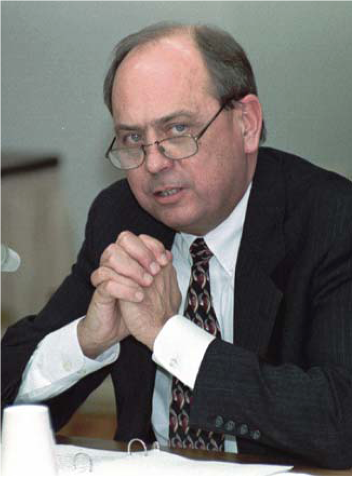
Cong. Doc Hastings.
Source: Energy Department (www.hanford.gov/fftf/chronology.html; www.hanford.gov/history/misc/1023-3rd.htm).
Even before the 2000 presidential election, Washington State had its own “blue country-red country” political divisions, with the snow-capped Cascade Range roughly dividing the state. Of Washington's congressional delegation, two Republicans represent the districts east of the Cascades. Western Washington, which includes most of the state's population, is represented by six Democrats and one Republican (whose district includes Seattle suburbs).
The reactor on standby, March 1999.
This political split is reflected in the Hanford Advisory Board, the independent, nonpartisan board that was established to provide advice and recommendations to the Energy Department on the Hanford cleanup. Members of the board represent a diverse array of organizations and interests, including environmental groups that would just as soon see no new nuclear work at the site, as well as local governments that want to find new missions for Hanford. Other members represent business interests, tribal interests, the general public, and more. 7 They come from different backgrounds but share a common interest in the Hanford cleanup–a cause that has brought people together before.
In 1992 and 1993, the TPA agencies formed two successive broad-based boards, the Future Site Uses Working Group and the Tank Waste Task Force, to advise on specific aspects of the Hanford cleanup. These advisory bodies found common ground and values when it came to remediation. Each board dissolved after it issued recommendations, but the participants and the TPA agencies considered these experiences successful. As a result, the TPA agencies established the Hanford Advisory Board as a continuing body in 1994, with many representatives who served on the two earlier boards. Accordingly, the advisory board adopted as key principles for cleanup many of the shared values expressed by the working group and the task force.
The Hanford Advisory Board issues its advice and recommendations on the procedural basis of consensus rather than majority rule. This approach gives broad support to its recommendations, but recommendations may contain general language crafted to reach consensus. For example, the board was able to reach consensus and recommend that funds for maintaining the facility on standby–at more than $30 million a year–should not come out of the Hanford cleanup budget. But there were some issues on which board members were not likely to reach consensus–like new missions for the FFTF. Cong. Doc Hastings's proposals to restart the test facility reopened old divisions among the board, and among local governments as well.
In 1996, an election year, most of the Washington congressional delegation supported new missions for the facility. But in nearby Oregon, the congressional delegation was solidly opposed to a restart, with Sen. Ron Wyden taking a lead role. The Oregon legislators believed that Hanford's cleanup progress would be jeopardized by reactivating the facility for a weapons production-related mission such as making tritium. 8 In late 1996, a coalition of groups including the Government Accountability Project, Heart of America Northwest, and Washington Physicians for Social Responsibility (all organizations with Hanford Advisory Board seats) expressed its opposition to restarting the FFTF for tritium production. 9 But as O'Leary was about to leave office in January 1997, she announced that Energy would evaluate options for producing more tritium, including restarting the facility.
A year later, the TPA agencies held hearings to take public comment on whether FFTF decommissioning milestones should be temporarily removed from the agreement while Energy considered the facility's future. Public opinion at the Portland and Seattle meetings was overwhelmingly opposed to a restart. At the Seattle meeting, which 450 people attended, comments came from a diverse array of people, including a quartet of singing grandmothers (known as the “Raging Grannies”) and Ben Cohen (cofounder of Ben & Jerry's Ice Cream), who called a restart “a bad investment.” 10
In December 1998, Energy Secretary Bill Richardson announced that the Tennessee Valley Authority's commercial nuclear reactors, which provide their own neutron streams from uranium fission, would get the tritium production mission. Although Richardson rejected the FFTF for tritium generation, he did not rule out using the facility for civilian applications, a decision he promised to make by spring 1999. 11
Finally, a decision
The TPA agencies agreed to suspend milestones for FFTF deactivation, pending a clear decision on the facility's future. To reach that decision, Energy initiated another round of analysis. In August 1999, Energy announced plans to produce a Programmatic Environmental Impact Statement (PEIS) that would evaluate future needs for its own nuclear infrastructure; to conduct research and development; and to produce nuclear isotopes for such purposes as medical and industrial applications and NASA space probes. Among the options considered was a restart of the FFTF, along with expanded missions at other Energy reactors in Idaho and Tennessee.
At its November 1999 meeting, the advisory board agenda included discussion on the FFTF, and board members quickly recognized that they would not reach consensus. At the end of the session, members agreed to send Energy a compilation of all viewpoints, for and against restart, with no consensus. 12
Energy issued a draft PEIS for public comment in July 2000 and then a final version in December that noted, among other observations, public attention to the FFTF. Energy had held seven hearings across the country on the draft environmental impact statement. At least 250 people attended each of the four hearings in the Pacific Northwest; hearings in Idaho, Tennessee, and the Washington, D.C. area, garnered no more than 20 people each. The final environmental impact statement noted that restarting the facility represented “the major point of public controversy” regarding nuclear infrastructure. 13
As the Clinton administration left office, Richardson released a Record of Decision that concluded that the facility would be permanently deactivated. Yes, Richardson's decision acknowledged, the FFTF had unique capabilities, but it did not have enough work to justify a restart. 14
Still, the saga was not quite over. In April 2001, the incoming Bush administration gave the facility's supporters one more bite of the apple, announcing that it would review Richardson's decision.
Eight months later, Energy at last decided that restarting the facility was “impracticable” and that it would proceed with permanent deactivation. Energy's announcement focused on financial uncertainties: Proposals to restart the facility might ultimately cost Energy more than $2 billion, including costs for decontamination, if the facility were to operate again. 15 And because the decision came just a few short months after 9/11, homeland security concerns could not have escaped Energy's notice. Indeed, in late September 2001, the Government Accountability Project and Heart of America Northwest had advised Energy Secretary Spencer Abraham of their intent to sue if Energy authorized a restart. The groups took issue with Energy because they felt it had not evaluated the effect of a terrorist attack on the facility. 16 A plutonium-fueled, sodium-cooled reactor would represent a significant challenge for homeland security–the FFTF's liquid sodium metal could react explosively with water or burn if exposed to air.
End game
This time, the decision to deactivate the facility stuck. Benton County, where Hanford is located, filed suit to block Energy from moving forward, but a federal court allowed Energy to proceed with permanent shutdown. In April 2003, Energy contractors began draining sodium from the plant's cooling system, a step considered irreversible. Benton County had spent nearly $250,000 on legal costs, and in May 2003 a majority of the county commissioners voted against further court appeals. At the end of the year, the Tri-City Herald designated the shutdown as one of the top regional stories of 2003.
In the end, the Fast Flux Test Facility fell victim to competing visions. The facility was to be a linchpin for the breeder reactor program. But once the breeder program fell through, the facility lost its main purpose and became “a neutron flux in search of a mission.” The facility was capable of applications that required a stream of neutrons, but so were other facilities: research reactors, conventional commercial reactors, or even particle accelerators; and operations at these other facilities faced much less public opposition.
To interests in the Tri-Cities, the FFTF represented the possibility of economic growth, jobs, and future Hanford missions like “atoms for medicine.” But to environmental and peace groups, missions for the facility meant reviving “atoms for the military” and distracting attention and money from the cleanup mission. In the final analysis, the facility's fate may have been sealed by September 11. The FFTF is potentially dangerous, and its permanent deactivation removes a challenge to homeland security.
Footnotes
1.

2.
3.
See, for example, J. Gustave Speth, Arthur B. Tamplin, Thomas R. Cochran, “Plutonium Recycle: The Fateful Step,” Bulletin of the Atomic Scientists, November 1974, pp. 14-22.
5.
Cong. Doc Hastings, “FFTF Can Become Important Asset to Nation,” Tri-City Herald, June 16, 1996, p. D5.
6.
Ibid.
8.
Wanda Briggs, “Oregon Politicians Deplore FFTF Plans,” Tri-City Herald, October 16, 1996, p. A3.
9.
Associated Press, “Doctors' Group Opposes Tritium at FFTF,” Tri-City Herald, December 20, 1996, p. A4.
10.
11.
12.
13.
Energy Department, “Final Programmatic Environmental Impact Statement for Accomplishing Expanded Civilian Nuclear Energy Research and Development and Isotope Production Missions in the United States, Including the Role of the Fast Flux Test Facility,” Washington, D.C., December 2000, DOE/EIS-0310, vol. 3, book 1, pp. 1-4.
14.
Energy Department, “Record of Decision for the Programmatic Environmental Impact Statement for Accomplishing Expanded Civilian Nuclear Energy Research and Development and Isotope Production Missions in the United States, Including the Role of the Fast Flux Test Facility,” 66 FR 7877-7887, January 26, 2001.