




Abstract
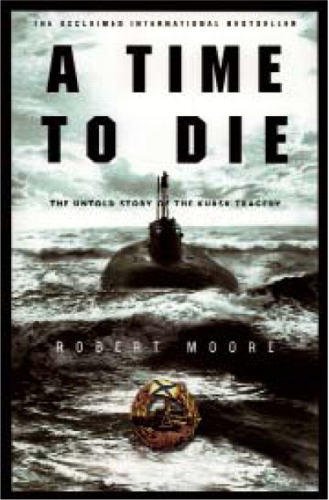
A Time to Die: The Untold Story of the Kursk Tragedy by Robert Moore, Crown Publishers, 2003, 271 pages; $25.00
Robert Moore's riveting tale of the sinking of the Kursk recounts the story of the botched attempt to rescue the 118 men stranded at the bottom of the Barents Sea when their nuclear-powered attack submarine went down on August 12, 2000. Based on two years of interviews with the crew's families, Norwegian and British rescue workers, and even some Northern Fleet officers (despite a Russian navy prohibition), Moore uncovers details that few know, and which have never been reported in the Russian press. For instance, the Russians refused to allow the British LR5 submersible, one of the most capable submarine rescue systems in the world, to enter the water; seven hours and 59 minutes were wasted before Norway's Seaway Eagle was permitted to put divers in the water; and the Russians erroneously insisted that a crucial valve on the rear hatch, which would break if turned the wrong way, opened counterclockwise. He also convincingly argues that the Kursk sailors must have survived several days, in contrast to the picture put out by the Russian government.
Moore begins this extremely engaging tale aboard the Memphis, a U.S. attack submarine secretly tracking the Northern Fleet's war games in the Barents Sea. The dramatic story unfolds like a good suspense novel, with the reader learning of events along with participants. Moore is strongest when describing the situation of Kursk family members and foreign rescue crews: their hopes for the sailors, their lack of access to information, and the outright lies they were told. When the wives of the Kursk's captain, Gennady Lyachin, and senior lieutenant, Sergei Tylik, began to hear rumors about a possible accident at sea, they asked the deputy commander of the Vidyaevo Naval Base, a trusted figure, for information. Promising to check, he returned shortly and told them: “Half the headquarters is closed, and the other half is filled with officers just passing the time of day. Relax. Everything is fine. We would know if there was an emergency.”
While Moore's description of the events surrounding the rescue attempt and the plight of the families rings true, in a few cases he resorts to rather purple prose. Statements such as “the world had come one bulkhead away from a nuclear disaster” exaggerate the situation. Moore's suggestion that the control rods in the nuclear reactor powering the vessel might not have been driven home in time, causing the reactor to overheat, is far from likely. While a control rod might get stuck, the shock and isolation devices on an Oscar-class submarine make it highly unlikely that it would happen in an accident not involving a problem with the reactor itself. It seems more likely that the reactor might overheat due to a loss of coolant caused by a loss of electric power to the main pumps, a pipe break, or a major pipe leak. Even after the control rods are driven home, the decay heat from the reactor core must be taken away to avoid meltdown.
The fact that the reactor did not overheat after the accident is a testament to the engineering of the Kursk. With the main battery damaged, there must have been natural convective cooling or some other safety features maintaining reactor temperatures. In any event, the reactor presented a much less immediate danger to humanity than the much older reactors on the decommissioned nuclear submarines that are barely kept afloat near Russia's shores.
The book also overstates the honesty of fleet officers while understating the problems they faced. Moore gives only one example of a Northern Fleet theft; in fact there have been many, including the involvement of senior officers in the theft of important materials, endangering the safety of both submarines and their weapons systems. There have also been many hazings and other criminal incidents, including the takeover by a Northern Fleet sailor of a docked nuclear-powered submarine. His unsuccessful attempt to blow up its torpedoes ended when an oxygen-generating canister exploded, fatally wounding him.
The author's view of corruption in the Russian military–that it is more likely to come from Moscow rather than from officers in the field–is not accurate. Although the majority of officers are patriotic, the navy has a corruption problem from top to bottom.
The reader already feels for the sailors on board the doomed boat and, despite knowing they are fated to die, hopes for the success of those few brave officers taking risks to push rescue efforts forward in the face of opposition emanating from Moscow and Severomorsk. Moore chronicles the actions of several officers in the field that are highly questionable and far from heroic, though none quite as shocking as that of Gennady Verich, head of the navy's search-and-rescue forces, who issued the unbelievable order to rip the hatch off the submarine, something that would surely kill any possible survivors.
There are a few points that leave the reader, like a Kursk family member, wishing for additional information. For example, Moore gives the history of the development of hightest peroxide (HTP) torpedoes and explains their dangers, but he does not explain why the Kursk carried these dangerous weapons, which caused her to sink. Besides performance factors (the high speed and long range of HTP torpedoes were only recently matched by battery-powered weapons), there are cost considerations. Not only would Russia's cash-strapped navy have found procurement of battery-powered torpedoes more expensive, but the costs of maintaining them had also skyrocketed because sailors so often stole metals, such as silver, zinc, platinum, and palladium, from the batteries and wiring.
Since the volume has no footnotes, the reader does not know the source of Moore's information; nor does he indicate if he asked particular questions. Did he ask any Russians to explain why the Norwegian divers were told to turn the e-valve on the rear hatch the wrong direction? Might it have been a simple translation error? (Perhaps the officers were giving the direction from inside the vessel, not outside.) Were certain Russian officers hoping the divers would break the door and get the officers off the hook, or was there some other explanation? This is shocking stuff, and Moore movingly describes the reactions of the dive team, but then fails to follow up and tell his reader if any more has been learned in hindsight. Because Moore regards it as one of the strangest events of the entire episode, he probably did ask about it, but without details regarding individual answers or refusals to answer, the reader remains in the dark.
Finally, while the activities in the North are thoroughly described, Moore does not attempt to delve into national ramifications or questions of politics, examining how the accident played out on the national scene, the politics of the response in Moscow, or the politics of the inquiry into the accident. The future of both the Russian state and the Russian navy, however, are likely to be influenced by the handling of this crisis and its aftermath. A broader examination of the political aspects of the Kursk disaster deserves coverage in another volume.
A Time to Die is a moving examination of the harsh final days of the Kursk that, true to its subtitle, really does tell an untold story. A translation would surely be welcomed by the many Russians whose hearts went out to the Kursk families, and who have yet to receive a full accounting from official sources.