




Abstract
The administrations near-gag order assured a less-than-satisfactory outcome to the congressional investigation of 9/11.
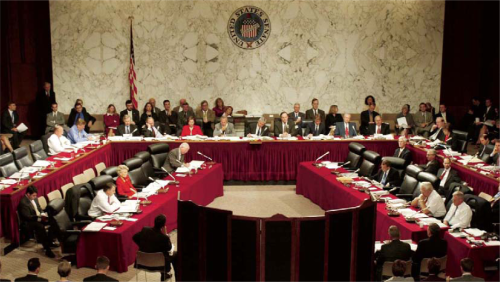
From the day after September 11, 2001, when the terrorist attacks on New York and Washington, D.C. took place, it was clear there would be a congressional investigation of the intelligence aspects of the disaster. Unanswered questions loomed in everyones minds: Who were the men who had seized airliners in flight and driven them into huge buildings? How had they eluded sophisticated American security systems? And what warning, if any, had there been?
It took some time to agree on the form the inquiry might take, but at length the issue was settled, and the examination was completed in December 2002. Oddly enough, given the magnitude of the attacks and the importance of learning how they could have happened, the inquiry attracted startlingly little attention.
How did that happen? It is important to understand how the investigation was conducted, how it became sidetracked, and what the process can tell us, not only about the workings of the Central Intelligence Agency (CIA) and its intelligence cohorts, but also about Bush administration policy and politics.
The shape of things to come
For nearly three decades after its creation, the peacetime U.S. intelligence community functioned in silence–in the shadows, as the spies are fond of saying. That was not so much because the work was inherently secret, but because there was broad public consensus at the height of the Cold War that intelligence activities were necessary and appropriate. During the time of the Vietnam war, however, that consensus began to erode, partly due to revelations of questionable activities, some in Vietnam, but others in the United States and elsewhere; partly due to Watergate-induced suspicion of the government, and partly due to the lessening of Cold War hostility between the United States and Russia (then the Soviet Union). Over the years there have been a succession of major investigations of the CIA and related matters.
The first investigation began in 1975, triggered by reports that the CIA was involved in assassinations abroad and illegal spying at home. In 1975 there was a presidential commission under Vice President Nelson A. Rockefeller to look into the domestic activities of intelligence, as well as inquiries by separate investigating committees in both the Senate and the House of Representatives. The Senate inquiry, headed by Idaho Republican Frank Church, is remembered today mostly to accuse it–unjustly–of various excesses; in fact, the committee labored hard to investigate without alienating. The House inquiry, headed by New York congressman Otis Pike, is largely forgotten, but was far more contentious at the time. Efforts to write law codifying charters for the CIA and other agencies failed. The main results of the 1975 investigations were the establishment of intelligence committees in both houses of Congress, an oversight arrangement that continues today; passage of a law (the Foreign Intelligence Surveillance Act, recently in the news); and promulgation of a presidential executive order prohibiting assassination. 1
A little more than a decade later, in 1986, the discovery that proceeds from illegal arms sales had been diverted to rebel fighters supported by a CIA covert action led to a fresh controversy. White House officials, specifically National Security Council (NSC) staffers, had orchestrated both arms sales and rebel aid, and intelligence agencies had had a supporting role (witting or unwitting) at many levels. This became known as the Iran-contra affair. Investigations of these excesses included one by a presidential commission headed by past (and future) national security adviser Brent Scowcroft, inquiries by the House and Senate intelligence committees, a joint committee established by Congress (there had also been joint committees to investigate Watergate and, just after World War II, the intelligence failure at Pearl Harbor), and a special prosecutor created under investigative provisions instituted after Watergate. The last acts of the Iran-contra drama did not take place until 1992, when a number of former officials–including convicted felons–were pardoned by the current presidents father. The major results of the political crisis were new strictures on CIA reporting to Congress on its covert operations. 2
Overlapping with the Iran-contra affair were hearings on the CIA that took place in 1991, on the occasion of the appointment of Robert W. Gates to be director of central intelligence (DCI). Gates, then serving as deputy national security adviser (under Scow-croft), had been deputy director of central intelligence. He was accused by CIA officers of slanting the agencys products to benefit the policies he favored.
That allegation resulted in a series of hearings before the Senate Select Committee on Intelligence. There were no programmatic results of the Gates nomination hearings, but the present DCI, George W. Tenet, was at that time a member of the staff of the Senate committee.
This is the background against which the September 11 investigation should be seen. Looking back, there have been periodic major inquiries into intelligence matters, as well as a rough correspondence between the perceived severity of excess and the scale of the investigations.
From the beginning the avenues available for the latest investigation were clear. There could be committee investigations by either or both houses of Congress, a joint congressional committee, or a blue ribbon commission. From the outset, President George W. Bush expressed no interest in a commission. When legislation authorizing a commission was first offered late in 2001, the military campaign in Afghanistan was at its height, and that fact was used to argue that investigations would distract the war managers. On January 29, 2002, when Bush spoke to Senate Majority Leader Tom Daschle, a White House spokesman told the press, The president thinks its important for Congress to review events in a way that does not unduly burden the defense and intelligence communities, as they are still charged with fighting a war. 3
The administration could do nothing to prevent inquiries from the Senate Select Committee on Intelligence or the House Permanent Select Committee on Intelligence, both of which began preparations for inquiries, exactly as those bodies had done for Iran-contra. In late January 2002, both President Bush and Vice President Richard Cheney separately approached Daschle, asking that inquiries be limited to the intelligence committees. In mid-February the two houses of Congress, controlled by different parties, responded by setting up a joint inquiry, an action described as unprecedented. 4
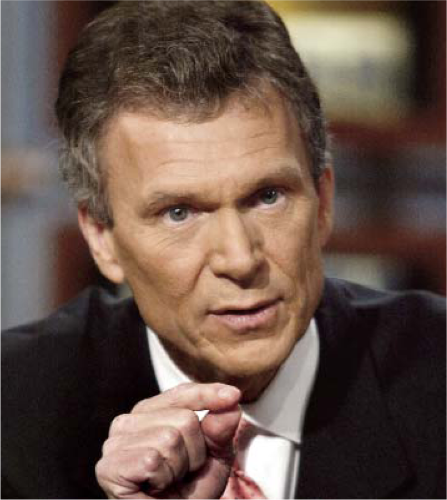
Tom Daschle, above. Opposite page: FBI agents testify behind a screen to protect their identities, September 24, 2002.
The joint inquiry would be headed by Florida Democrat Bob Graham, the Senate committee chairman, with Florida Republican Porter J. Goss, the House committee chair, serving as vice chair. The group was entitled to recruit its own staff independent of the parent committees, hold hearings, and report to Congress. Both intelligence lapses associated with the terrorist attacks and recommendations for organizational changes by the intelligence community were explicitly put on the joint committees agenda. The initial investigation was to take two months, with hearings to begin in mid-April and extend through July. The investigating committee would produce its report in October. 5
The inquiry officially began with a press conference held by Graham and Goss on February 14, at which they announced that the staff would be headed by L. Britt Snider. The cost of the inquiry was estimated at $2.6 million. Graham expressed the hope that Congress might pass new legislation based on the joint inquirys findings before the end of the year.
Interviewed last March in Orlando, Florida, Senator Graham reported steady progress and said he expected hearings to begin in late April or May. He expected half the hearings to be taken up by the events of September 11 and the rest to be concerned with counterterrorism programs as far back as 1985. Graham saw the joint committee making rapid progress, recruiting staff, and working with government agencies to identify documents relevant to the inquiry. 6
Instead, late April saw upheaval within the committee. Snider had been attacked from the moment he was appointed–the charge being that his friendship with Tenet was likely to produce a whitewash. The committees chiefs stood by Snider and for the moment his position was secure.
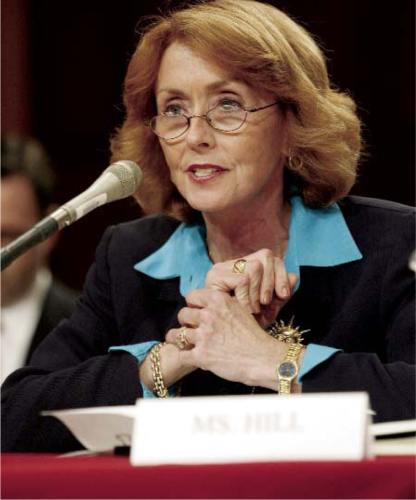
Eleanor Hill headed the joint inquiry staff.
It is true that Snider and Tenet were close–they had served together for six years on the Senate intelligence committee in the 1980s and 1990s, where Snider had been minority and general counsel and Tenet had directed the staff. The association resumed when Snider became a special counsel to Tenet, who then proposed him (successfully) for CIA inspector general.
On the other hand, Snider was a good choice as an investigator, for that is where his background lay. As a staff member on the Church committee in 1975, he had played a key role in uncovering government programs to read the telegrams of American citizens. There was also his Senate intelligence committee work, and Snider had done some pretty thorough investigations as CIA inspector general, including one on allegations that the CIA had introduced drugs into the United States. Snider stood among those who had actually thought about the CIAs relationship with Capitol Hill; he was the author of a monograph arguing that all sides in the White House-Congress-CIA triangle needed to focus on the cooperative process and not so much on the idea that secrets were being handed over, or that an agency was being invited to undermine administration policy. 7
Snider was also experienced in terms of intelligence organization reform, having been staff director of the Aspin-Brown commission in the mid-1990s, which, though it had not actually proposed many reforms (see No Reform Here: U.S. Intelligence, Bulletin, September/October 1996), did at least examine issues that were sure to come up in the 9/11 inquiry.
But a Snider-directed investigation was not to be, though the final product would be influenced by the people he hired. Tenets friend was unhorsed by his own hand. Among the 23 staff members Snider recruited or approved was a CIA employee who was in trouble as a result of questionable results on a lie detector test administered to recertify his security clearances. The employee left the agency and came to the committee staff before the matter was resolved. Snider apparently did not inform Graham and Goss of the problem, which they discovered elsewhere. They were furious, and Snider resigned on April 26.
Casting about for recommendations for someone to replace Snider, Sen. Richard Shelby, an Alabama Republican, learned of one possibility from Sam Nunn, a former Georgia senator. During Iran-contra and on the Senates Permanent Subcommittee on Investigations, Nunn had been assisted by Eleanor Hill, a former federal prosecutor in Tampa who had never lost a case. Hill ended up spending 15 years as a Senate investigator, then moved to the Pentagon as its inspector general. She was a partner in the law firm King & Spalding when recruited for the 9/11 investigation. By then it was the end of May.
Slogging through the masses of material sent over from the CIA and FBI, the congressional staff were challenged, to say the least. The CIA assigned 15 employees to liaison work, and the agency assembled a timeline of terror incidents starting in 1993. By May the timeline had reached only the year 2000, but it was 327 feet long, with 2,600 entries, each linked to supporting documents in the hundreds or thousands. The CIA reported turning over 150,000 pages of docu-ments. 8 Similar masses of data were made available by the FBI. The staff eventually reviewed more than 400,000 pages of documents and conducted some 400 interviews. 9
But outside the trenches, the committee leadership had yet to resolve a fundamental issue–whether the object of the exercise was to identify the intelligence failures before September 11, or to survey the community with an eye to proposing organizational reform. The look back v. look ahead arguments would never be reconciled and were reflected in the public hearings the committee eventually conducted.
By the time Congress left for the Memorial Day recess there had yet to be a hearing, public or otherwise, and the schedule had slipped at least three times. Meanwhile, the spot-light turned to another Senate committee, Judiciary, which examined FBI conduct of the investigation of alleged 9/11 conspirator Zacarias Moussaoui. The Judiciary committee uncovered several instances of the Bureau ignoring or bypassing recommendations of special agents or lawyers in field offices, particularly in Phoenix and in Minneapolis, to look at Muslims training at American flight schools, or to get a warrant to examine Moussaouis laptop computer.
These embarrassing inactions or oversights at FBI headquarters were a public controversy in May and June, and sparked a war of leaks, with FBI, CIA, and National Security Agency (NSA) information bearing on 9/11 being repeatedly leaked to reporters. Among the disclosures: that the NSA had intercepted messages clearly anticipating the terrorist attacks on the eve of September 11, but had not translated them until later; and that President Bush had received a daily brief from the CIA on August 6, 2001, suggesting that Osama bin Ladens Al Qaeda group, which carried out the attacks, might be interested in hijacking airliners. Another was that the CIA knew that certain of the 9/11 conspirators had entered the United States, but failed to pass the intelligence along to the FBI. The hands of a number of government agencies can be sensed in these leaks.
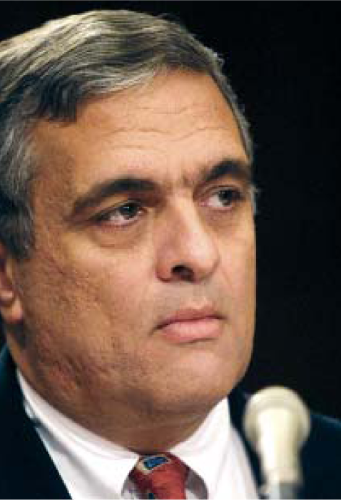
CIA Director George Tenet, NSA Director Michael Hayden, and FBI Director Robert Mueller.
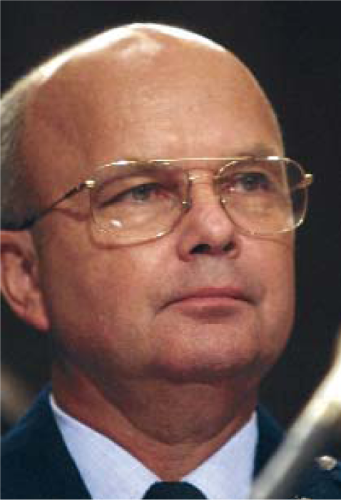
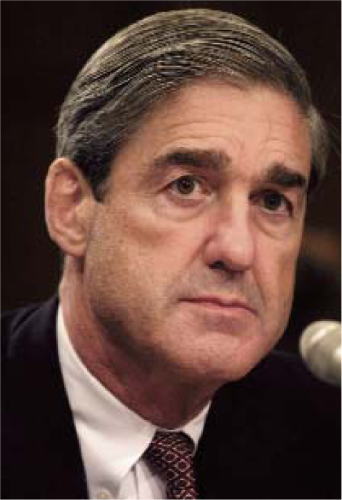
Thus, when the joint inquiry finally got under way on June 4, 2002, it opened in an atmosphere of excitement. Senator Graham gaveled into session a closed meeting that set procedures and schedule matters. For the public, observers spoke in tones of great expectation. Thomas Powers, author of a well-known biography of CIA spy chief Richard Helms, told reporters, This is a sort of final exam. The State Departments liaison to the Church committee, Jeffrey H. Smith, who later served as CIA general counsel, said: In terms of national significance, this is on par with the Iran-contra hearings and the Church commission [sic], and in some ways, its a more focused investigation and even more important. 10
A good starting point
The real work began in mid-June. An initial closed hearing took place on June 11 at which the committee heard testimony from National Security Council staff director Richard A. Clarke. A Clinton-NSC crusader for counterterror action, Clarke provided a timeline on terror events, spoke of the use of aircraft for terrorism, and discussed U.S. government re-sponses. 11 (Clarke had suggested a plan of action against bin Laden within days of the Bush inauguration, but eight months went by before a program to counter Al Qaeda reached the presidents desk, just before September 11.)
At the time, public hearings were expected to begin on June 25. Instead, the joint inquiry went ahead with another executive session, with Tenet, FBI Director Robert S. Mueller III, and NSA Director Lt. Gen. Michael V. Hayden. The officials had been asked to focus on the 9/11 plot itself. Mueller did so, describing how the terrorists who had piloted airplanes received their flight training after entering the United States, the entry of the other conspirators, the movements of the group just before their September 11 flights, the diversion of the airliners, financial support to the conspirators, and other details.
He gave the terrorists their due: There were no slip-ups. Discipline never broke down. They gave no hint to those around them what they were about. They came lawfully. They lived lawfully. They trained lawfully. They boarded the aircraft lawfully. Mueller was silent on the mishaps in intelligence sharing between the FBI and CIA, and also said nothing about the handling of the Minneapolis and Phoenix FBI offices attempts to take investigative action that might have revealed aspects of the plot. 12
Director Tenet ranged farther afield, disclosing that we had followed bin Laden for many years and had no doubt that he intended a major attack, dating CIA interest to the period from 1991 to 1996, when he was in the Sudan. The CIA chief argued that the United States had considered itself at war with Al Qaeda since 1998–Tenet had issued a memorandum to that effect to subordinates on December 4, 1998–and that the action had had three broad phases, the pre-Millennium period, a Ramadan period (November-December 2000), and the pre-9/11 period.
During all of these periods, the CIA had followed a specific plan with some success (the one agency officials have been most willing to acknowledge is the fending off of terrorist efforts to make multiple attacks on the occasion of the millennium celebrations at the end of 2000).
Like the FBI, the CIA provided details about the individual hijackers and acknowledged that the 9/11 plot had been professionally conceived and executed, tightly compartment-ed, and resilient enough to succeed despite several real blows. Tenet discussed warnings to the U.S. government in the summer of 2001, and the agencys belated placing of two of the terrorists on immigration watch lists that August, but said nothing of the CIAs interactions with President Bush. 13
General Haydens testimony at the hearing has not been released. Press accounts quote the ranking Republican, Senator Shelby, as characterizing Haydens testimony thus: The NSA collects a huge volume of data, is able to translate only a fraction of it, and is able to distribute only a fraction of that. 14
As this account of the June 18 testimony indicates, it was handled very responsibly. Press accounts were general and mainly related the idea drawn from Tenets account that Al Qaeda had begun planning the attacks for three years. The opening statements were made available to the public only months later. But enterprising reporters for Cable News Network zeroed in on the NSA intercepts–they no doubt saw themselves in competition with ABC News, which had reported the fact that intercepts existed on June 7–and by the next day they were able to report the texts of two intercepts the United States had received the day before 9/11, but not translated until the day after. The intercepts were reported widely. 15
A fatal flaw
The provenance of the leak of intercepted communications remains unknown, but it gave the Bush administration an opportunity to neutralize the inquiry. On June 20, in separate telephone calls to Graham and Goss, Cheney denounced the joint inquiry as the source of the NSA leak. White House spokesmen declared the information alarmingly specific.
Although experts on communications intelligence believed the leaks of the intercepts were innocuous, the congressmen could not but beware of the danger. 16 The previous winter the White House had already attempted (unsuccessfully) to halt the flow of intelligence information to all but a few senior legislators. Cheney, himself embroiled in legal difficulties over denying information to Congress on the unrelated matter of advice from oil companies to an energy policy review he had chaired, had advised Bush a month earlier to deny the joint inquiry information on CIA briefings of the president. In doing so, Cheney was exactly reprising his role in 197475 when, as a White House staffer, he helped President Gerald Ford create the Rockefeller commission to ward off charges of domestic spying. 17
The charge against the joint inquiry was made despite the fact that the White House itself had first made public the existence of the NSA intercepts, as early as September 2001, when the object had been to show that U.S. intelligence was not completely incompetent. Moreover, that NSA intercepted Al Qaeda telephone calls had been revealed as far back as 1998, when federal prosecutors cited similar information in an indictment of bin Laden in the embassy bombings of that summer. 18
Porter Goss, the joint inquiry vice chairman and a former CIA operations officer himself, had to take Cheneys complaints very seriously, and the other members were no doubt equally concerned. In the end, the joint inquiry asked the FBI to examine the committee for evidence of the leak. The net effect was to have an agency under investigation by Congress conduct a simultaneous criminal investigation of the investigators.
Not only did this produce negative images of the joint inquiry, it became a serious impediment to the ongoing inquiry. By August 2002, with the FBI asking members to take lie-detector tests, nearly all 37 members of the committee, along with nearly 60 other persons from staff, other congressional staffs, the CIA, and elsewhere, had come under FBI scrutiny, and the Bureau was asking for calendars, daybooks, diaries, working documents, and so on. The chilling effect can be imagined. No charges have ever been filed in the case of this leak. 19
The FBI counter-investigation actually constituted only the most visible part, the tip of the iceberg, of an extensive administration campaign to limit the damage from the investigation. It is likely that the resort to a closed hearing for testimony from senior officials on June 17 resulted from a White House refusal to permit them to testify in open session. Richard Clarke of the NSC staff would remain the only person from the Bush White House known to have given evidence. Differences with the administration on declassifying documents, and facts bearing on certain subjects, were repeatedly identified as problems in press reporting throughout the summer and fall of 2002. As Republican Sen. John McCain said in the February 3 issue of Time, the Bush administration slow-walked and stonewalled the House-Senate inquiry.
June 6, 2002: FBI agent Coleen Rowley, shown here with Sen. Patrick Leahy.
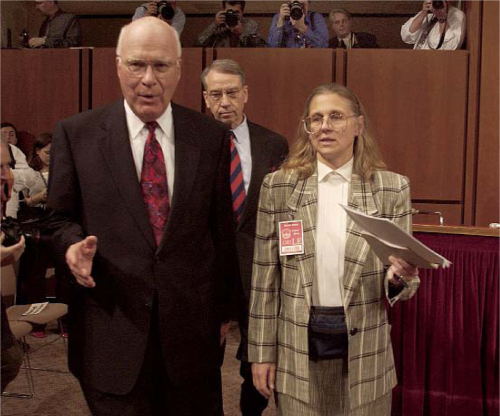
After the public phase of the investigation had already ended, on October 20 Senator Graham would say: Frankly, there is a piece of information which is still classified which I consider to be the most important information thats come to the attention of our joint committee. 20 The author believes that that information concerns White House knowledge of intelligence.
Numerous other setbacks and roadblocks beset the investigation. The committee requested an additional $1.5 million to hire more staff members. That request was blocked in the Senate by Minority Leader Trent Lott, a White House ally, in June. 21 The chief of the unit looking at the FBI, Thomas A. Kelley, who had previously been a senior Bureau employee and the FBIs contact person for investigations of an earlier controversy, the 1993 Waco disaster, became the subject of complaints to staff director Eleanor Hill. 22
At the CIA, all contacts were rigidly held within the liaison staff. Agency employees were prohibited from exchanging business cards with committee staff, and all interviews were held in a single office, monitored, and open in a way that could have been intimidating. 23
Eventually there would be 14 days of closed hearings and nine days of public ones, but only four CIA witnesses would appear, including George Tenet. The FBI never produced, at least for public session, some of its key personnel. Coleen Rowley, the Minneapolis legal counsel who acted so famously in the Mous-saoui case, did not testify. The Bush administration continued to play with the committee on witnesses, refusing to permit testimony from Defense Secretary Donald H. Rumsfeld or Secretary of State Colin Powell. 24
Senator Shelby, interviewed by the New York Times on the anniversary of the September 11 attacks, expressed dismay at the climate for this season of inquiry: You know we were told that there would be cooperation in this investigation, and I question that. I think that most of the information that our staff has been able to get that is real meaningful has had to be extracted piece by piece. Shelby concluded, Time is on the side of those people whove been investigated. 25 (A number of members would be leaving the House and Senate committees at the end of the session, which the administration well knew.)
When the public hearings finally opened on September 18, Eleanor Hill, who made careful presentations of the joint inquiry staffs findings at the outset of each day of testimony, noted that for two months there had been a long and arduous process for declassifying information. Tenet, she specified, had refused to release any references to the intelligence community providing information to the president or White House, or the identity of one particular Al Qaeda leader. Moreover, the CIA director claimed that the presidents knowledge of intelligence information relevant to this inquiry remains classified even when the substance of that intelligence information has been declassified. 26
The public hearings
Given the joint inquirys many problems, it is a substantial mark of its achievement that the public hearings brought out a number of fresh facts, and also put new light on several elements of the 9/11 story:
Because CIA actions are at issue, a good place to begin is with the agency. Tenet said in June that there was a plan against Al Qaeda. What came out in September was that the DCI had written a specific memorandum to senior subordinates and declared the agency at war with bin Laden. In her presentation of September 18, 2002, staff director Hill stated that despite the DCIs declaration of war in 1998, there was no massive shift in budget or reassignment of personnel to counterterror-ism until after September 11, 2001.
The CIA countered with a press release the next day. Hill had used the figures of 40 analysts devoted to terrorism agency-wide, but just three in 2000 (rising to five before 9/11) concentrating primarily on bin Laden. The agency reported it had 115 analysts working on terrorism, with nine full time, and the equivalent of eight more directly on bin Laden, plus another 20 within the Counterterrorism Center (CTC) working on aspects of Al Qaeda from an operational standpoint. 27 Within its own coun-terterrorism center, the FBI had also created a specialized unit focused on bin Laden, and that entity had 1719 personnel assigned by September 11.
In his own testimony on October 17, 2002, Tenet was also at pains to counter Hills findings. Tenet asserted that between 1998 and 2001 the CIA had increased its personnel on the counterterrorism mission by 50 percent and its budget by 60 percent. Over the same period, the number of CIA intelligence reports had increased from 50 to 100 per month. The CIA chief stated that he had ordered a baseline review of CIA operations in early 1999, that his Counterterror-ism Center had prepared a plan of attack that spring, that the plan had been briefed to senior management toward the end of July, and that it had subsequently been put into effect. The agencys funding for this mission increased from about 4 percent of its overall budget in 1994 to 10 percent in the budget request submitted shortly before September 11. 28
The joint inquiry staff director went through a series of specific reports issued by the CIA, concluding that there had been a modest, but relatively steady stream of intelligence specifically on bin Ladens interest in activities within the United States. 29 The CIA would not disagree with this conclusion. But, observed Hill, the Joint Inquiry Staff has not found any similar comprehensive listing of bin Laden-related threats to the United States issued by the intelligence community prior to September 11, 2001. The staff study notes a number of warning indicators of an attack (including no fewer than 33 communications intercepted by NSA between May and July 2001), as well as a number of intelligence reports (including National Intelligence Estimates, or NIEs, in 1995 and 1997) that discussed the use of aircraft as weapons.
Possibly the most controversial aspect brought out in the discussions regarding the CIA concerns the agencys knowledge of the travel of certain suspected terrorists, their entry into the country, and the handover of this information to the FBI and others for the individuals to be placed on a watch list. The hearings brought out a great deal of information on this issue–and more generally on cooperation between the intelligence agencies–from: Hill, Tenet, Mueller, the CIAs Counterterrorism Center officers, CIA and FBI field agents in New York (where a key exchange of information was mishandled), and others. Tenet diverged from his prepared testimony to defend the CIA officer responsible for confusion over placing the names of certain terrorists on an interagency watch list. Tenet also supplied other details on the watch list issue. 30
Considerable testimony also focused on the FBI. A major issue for that agency was the investigation of Zacarias Moussaoui and the so-called Phoenix electronic communication, the subject of Eleanor Hills entire presentation one day of the hearings. 31 The Phoenix agent and his supervisor were there to comment, as was an FBI headquarters staff officer. It took just two days for employees of the Pan American International Flight School in Minneapolis to become suspicious enough of Moussaoui that they called the local FBI. Based on conversations on two days in August 2001, the FBI also viewed the man as a threat to national security (though the joint staff statement qualifies this with the word reportedly).
Contrary to media reporting, which has been that Moussaoui professed interest in flying a large plane only while it was in the air, the report notes that he wished to learn to take off and land the 747 Model 400, which he referred to as an ego-boosting thing. The French intelligence on Moussaoui often mentioned in press accounts came from inquiries made by the FBI legat in Paris after hearing from Minneapolis. The case agent in Minneapolis messaged FBI headquarters as early as August 21 that the Secret Service ought to be informed (imperative that the USSS be apprised), since if the man seized a transatlantic aircraft it will have the fuel on board to reach D.C. In messages through CIA channels describing the suspect Moussaoui and an associate, and asking stations for any information on the two men, they were called suspect 747 airline hijackers, and Moussaoui a suspect airline suicide attacker.
Thus it becomes all the more puzzling that in his message to headquarters on September 4, 2001, exactly seven days before the actual terror attacks, the supervisory special agent on the case simply recounted the steps in the investigation. The message, according to the committee staff statement, did not place Mous-saouis actions in the context of the increased level of terrorist threats during the summer of 2001.
There is a lot more, and it should be noted that the 9/11 group apparently no longer considered Mous-saoui a part of their conspiracy, but this information on Moussaoui alone offered warning enough to afford the opportunity for instituting higher aviation security standards, which might at least have deflected some of the 9/11 attacks.
Many additional subjects came up during the hearings, from organizational reforms to the immigration system, to the workings of watch lists, to resource issues for the CIA, FBI, and other agencies, to counter-terrorism during the Clinton administration. Named witnesses (many testified anonymously) included Kristen Breitweiser and Stephen Push of the Families of September 11; Anthony Lake and Sandy Berger from the Clinton NSC; Richard Ar-mitage and Paul Wolfowitz of the Bush administration; former officials Brent Scowcroft, Louis Freeh, William Webster, and William E. Odom; former congressman Lee Hamilton and former senator Warren Rudman; Mary Jo White, former U.S. attorney for the Southern District of New York (who prosecuted almost all of the notable terrorism cases of the 1990s); the police chief of Baltimore; officials of the CIA, FBI, NSA, State Department, Defense Intelligence Agency, National Imagery and Mapping Agency, Immigration and Naturalization Service; and some individuals from the advisory commissions on terrorism. Many had useful comments. But it is unfortunate that the investigation was sidetracked the way it was.
And in conclusion …
The Joint Inquiry issued its final report on December 10. It contained factual, systemic, and related conclusions, along with recommendations, but proposed no legislation. The essential factual recommendation was that the intelligence community failed to capitalize on both the individual and collective significance of available information that appears relevant to the events of September 11.32 The group agreed that nothing in all the information the United States had collected precisely identified the time and place of the September 11 attacks, and that it had improved its collections in the years since 1998. But it also agreed that the CIA and others were aware of the potential for the use of aircraft as weapons, and that there were specific lapses in 10 areas, ranging from the failure to place certain terrorists on the watch list, to the Phoenix FBI proposals to check up on Muslims seeking flight training in the United States. The inquiry found that resources devoted to counterterrorism had increased, despite reductions or flat spending on intelligence overall after the end of the Cold War. Despite the increase, the accumulation of priorities and the inability to program for the future (the CIA relied upon supplemental budget requests for much of its extra spending in this area) assured continued inefficiency. It also confirmed the erosion in code-breaking capabilities at the National Security Agency claimed by General Hayden (the result of general technological development, and not known to be specifically relevant to September 11, since there is no evidence that Al Qaeda terrorists were talking over encrypted cellphone connections). The major recommendation was that the jobs of CIA chief and overall intelligence chief be separated by establishing a Director of National Intelligence as a new, Cabinet-level official with full authority over both the Pentagon and CIA intelligence budgets. A government-wide strategy for combating terrorism was also recommended, but this was not new.
Far more critical and engaged were the additional views filed by Senator Shelby, who filled 84 pages with a major critique of intelligence performance. Shelby backed the creation of a new domestic intelligence agency along the lines of Britains MI-5. Cong. Jane Harmans additional views were supportive of the overall enterprise. Two Republican senators, Jon Kyl of Arizona and Pat Roberts of Kansas, criticized the joint inquiry itself as dominated by the chairs and vice chairs–the Big Four–of the Senate and House intelligence panels. They argued that the resulting report fell well short of addressing the core problems that led to 9/11.
In 1997, a piece by CIA analyst Russ Travers, The Coming Intelligence Failure, appeared in the agencys in-house journal, Studies in Intelligence. In the piece, set in 2001, Travers wrote: As had been true of virtually all previous intelligence failures, collection was not the issue. The data were there, but we had failed to recognize fully their significance and put them in context. Indeed, he added, the system is sufficiently dysfunctional that intelligence failure is guaranteed.
One of the possibilities he foresaw: We are completely surprised by a state-sponsored terrorist attack.33 Except for the fixation that terrorism had to be state-sponsored, the Travers speculation is an eerie foretelling of the antecedents of September 11, as established by the Joint Inquiry Committee of Congress.
Despite its obvious importance, the inquiry was not permitted to tell the full story, to make the president accountable, or to propose legislation for intelligence reform. Its efforts on every front have been stymied or preempted.
The remedy might have been an independent commission, as was created in late November, but President Bushs appointment of Henry Kissinger to chair the group, and Trent Lotts denial of a chair to Warren Rudman, are indicative of the administrations general approach. The collapse of that first effort, with the withdrawal of Kissinger and his proposed co-chair, George Mitchell, afforded an opportunity to get it right.
The appointment of former New Jersey governor Thomas J. Keane as chairman and Lee Hamilton (who at least has some experience in the field) as vice chair should create a better atmosphere. However, the appointment of other members, like Reagan-era official John Lehman and former senator Slade Gorton, and the expansion of its mandate to cover all the standard subjects of counterterrorism fare (from border security to immigration), ensure that the final product will be more of the same and not a focused investigation of the intelligence and accountability issues arising from September 11.
Once again political interests stand in the way of good government.
Footnotes
1.
See Loch K. Johnson, A Season of Inquiry (Lexington: University of Kentucky Press, 1986); Kathryn S. Olmstead, Challenging the Secret Government: The Post-Watergate Investigations of the CIA and FBI (Chapel Hill: University of North Carolina Press, 1996); and Frank J. Smist, Jr., Congress Oversees the United States Intelligence Community, 1947-1989 (Knoxville: University of Tennessee Press, 1990).
2.
See John Prados, Presidents Secret Wars: CIA and Pentagon Covert Operations from World War II through the Persian Gulf (Chicago: Ivan R. Dee, Publisher, 1996); and John Prados, Keepers of the Keys: A History of the National Security Council from Truman to Bush (New York: William Morrow, 1991).
3.
Mike Allen, Bush Seeks to Restrict Hill Probes of Sept. 11, Washington Post, Jan. 30, 2002, p. A4; Walter Pincus, Congressional Panels Join to Probe U.S. Intelligence, Washington Post, Feb. 12, 2002, p. A15.
4.
Pincus, Congressional Panels Join.
5.
Walter Pincus, House, Senate Panels Set Joint Sept. 11 Probe, Washington Post, Feb. 15, 2002, pp. A18-19.
6.
James Risen, Panel to Review Readiness of Agencies Before Attacks, New York Times, March 5, 2002, p. A10.
7.
L. Britt Snider, Sharing Secrets with Lawmakers: Congress as a User of Intelligence. Central Intelligence Agency: Center for the Study of Intelligence (CSI 97-10001), Feb. 1997.
8.
Dana Priest and Walter Pincus, Strife, Dissent Beset Hills Sept. 11 Panel, Washington Post, May 20, 2002, p. A11.
9.
Eleanor Hill, Joint Inquiry Staff Statement, Part I, September 18, 2002, p. 6. (The Joint Inquiry has yet to produce a committee report or publish hearings.)
10.
Dana Priest, A Final Exam Begins for Security Agencies, Washington Post, June 4, 2002, p. A6.
11.
Dana Priest and Juliet Eilperin, We Should Have Known, Goss Says of 9/11, Washington Post, June 12, 2002, p. A12.
12.
Robert S. Mueller III, Statement for the Record, (June 18, 2002) FBI 24003 (declassified September 25, 2002).
13.
George Tenet, Final Draft 9-11 Testimony for the DCI, Central Intelligence Agency, June 18, 2002 (declassified circa October 17, 2002).
14.
Juliet Eilperin and Dana Priest, Sept. 11 Plot Likely Hatched in 98, Tenet Says, Washington Post, June 19, 2002, p. A10.
15.
Dana Bash and Kate Snow, Messages Intercepted by U.S. on September 10 Revealed, CNN.com, June 19, 2002; Pierre Thomas and Martha Raddatz, A Big Warning: Security Agency Intercepted Arabic Conversation that Spoke of the Sept. 11 Attacks, But Failed to Translate It in Time, ABC  , June 7, 2002.
16.
Mike Allen and Juliet Eilperin, Cheney Blames Leaks on Congress, Washington Post, June 21, 2002, p. A12.
17.
See John Prados, Lost Crusader: The Secret Wars of William E. Colby (New York: Oxford University Press, 2003).
18.
Walter Pincus, The Reasons Behind a White House Rebuke, Washington Post, June 24, 2002, p. A4. Pincus quotes the report, which appeared in the Washington Times on September 22, 2001.
19.
Dana Priest, FBI Leak Probe Irks Lawmakers, Washington Post, Aug. 2, 2002, p. A1.
20.
CBS News, Face the Nation, October 20, 2002.
21.
Carl Hulse, Prodding the FBI in Public and in Private, New York Times, June 10, 2002, p. A20.
22.
Richard Leiby and Dana Priest, Head of Sept. 11 Probe Allegedly Obstructed Dan-forths Waco Inquiry, Washington Post, June 22, 2002, p. A6.
23.
Priest and Pincus, Strike, Dissent Beset Hills Sept. 11 Panel.
24.
James Risen, White House Drags Its Feet On Testifying at 9/11 Panel, New York Times, Sept. 13, 2002, p. A12.
25.
Perspectives: Senator Richard C. Shelby: A Reaction to Sept. 11: This is a Massive Intelligence Failure, New York Times, Sept. 10, 2002, p. A14.
26.
Eleanor Hill, Joint Inquiry Staff Statement, Part I, September 18, 2002, p.2.
27.
Central Intelligence Agency, Statement by CIA Spokesman Bill Harlow, September 19, 2002.
28.
George Tenet, Written Statement for the Record of the Director of Central Intelligence Before the Joint Inquiry Committee, Central Intelligence Agency, October 17, 2002, pp. 910, 24.
29.
Hill, September 18, 2002.
30.
Authors notes for October 17, 2002.
31.
Handling of the Phoenix Electronic Communication and Investigation of Zacarias Moussaoui Prior to September 11, 2001, Joint Inquiry Staff Statement, September 24, 2002. A court ruling in the federal district court in Alexandria, Virginia, which is trying the Moussaoui case, issued on September 23, clarified the issues that could be discussed by government officials without prejudice to the legal case, resulting in a revised staff statement, released on October 17. The Hill statement of September 24 (amended) supplies greater detail, adds quotes from original documents, and modifies public knowledge.