




Abstract
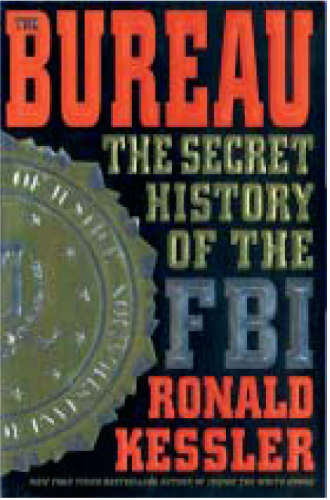
The Bureau: The Secret History of the FBI By Ronald Kessler, St. Martin's Press, 2002, 488 pages; $27.95
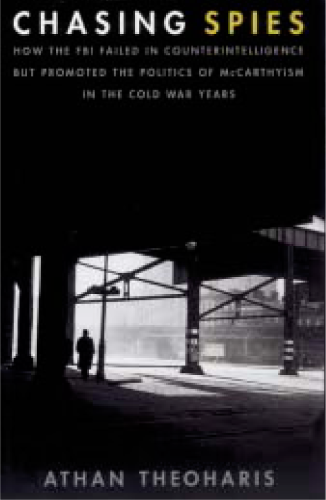
Chasing Spies: How the FBI Failed in Counterintelligence But Promoted the Politics of McCarthyism in the Cold War Years By Athan Theoharis, Ivan R. Dee Press, 2002, 307 pages; $27.50
The public often thinks of the Federal Bureau of Investigation (FBI) in terms of the “Most Wanted” list of bank robbers and murderers–a hold-over impression from the 1930s when FBI Director J. Edgar Hoover and his G-Men tracked down celebrity criminals like John Dillinger and “Machine Gun” Kelly. Today, though, the Bureau is more involved in fighting organized crime, white-collar fraud, and terrorism. In The Bureau, Ronald Kessler, a former Washington Post reporter, takes us on a tour of the FBI's history from the early days to the present.
The author flies past the Bureau's beginnings, slowing down only as the story turns to Hoover, who led the organization for almost 48 years. Armed with a law degree from George Washington University, a retentive memory, and a strong work ethic, Hoover caught the eye of his superiors and in 1924–at the tender age of 29–was selected by Attorney General (and later Supreme Court Justice) Harlan Stone to direct the then obscure agency. With a natural genius for management and a no-nonsense approach to weeding out slothfulness and the improper use of power (as exhibited in the Palmer Raids of 1920 against suspected left-wingers), Hoover managed to build the fledgling organization of crime-fighters into a formidable bureaucratic empire.
Along the way, the power that had accumulated in Hoover's hands gravitated to his head. He began to take personal credit in the media for the capture of fugitives like Dillinger, even though the director would arrive on the scene only after his agents had subdued the criminals. Hoover took umbrage at criticism of his organization and used his agents to gather embarrassing information about politicians–or anyone else–who called into question the Bureau's activities. Thus began his infamous Official and Confidential files, jammed with titillating tidbits about the sexual affairs and other transgressions of presidents and legislators. These files managed to keep many critics at bay.
As an added insurance policy, Hoover ingratiated himself to presidents by supplying them with information about their political opponents, gathered clandestinely by his ubiquitous agents (often through the use of illegal wiretaps, under the pretext of tracking down leaks). Most presidents found this information irresistible and were slowly drawn into Hoover's web, becoming susceptible to blackmail by the director.
To keep the general public happy with the FBI, Hoover nurtured contacts with key figures in the media who would write Pollyannaish reports or TV scripts about the director and his agents. According to Kessler, almost every piece written by the prominent columnist Walter Winchell carried a glowing reference to “G-man Hoover.” Reporters who wrote favorable articles were rewarded with inside information. “Hoover's thirst for glory would become unquenchable,” Kessler states.
As his hat size grew, Hoover extended his use of clandestine modus operandi beyond questionable surveillance techniques and into the even more dubious realm of aggressive operations designed to destroy individuals and organizations that he felt were anathema to the country's best interests. He directed these Cointelpro (counterintelligence) operations against anyone who failed to conform with his middle-of-the-road, Norman Rockwell image of American society, including civil rights activists, Vietnam War dissenters, suspected communists, and members of the Ku Klux Klan. A prime target was the civil rights leader Dr. Martin Luther King, Jr., whom the Bureau sought to blackmail. The agency even pressured King to take his own life before he was awarded the Nobel Prize for Peace in 1965–an element of the King operation skipped over by Kessler. The Bureau also provided speech-writers for Joseph McCarthy, the Senate's reckless communist witch-hunter, further contributing to the FBI's drift toward what Kessler refers to as “a national thought police.”
Kessler notes that Hoover and his agents did some good along the way, catching spies and terrorists from time to time, as well as bank robbers and mobsters. As for two widely circulated rumors about the director's sexual orientation, the author concludes he was most likely not gay (despite his life-long bachelorhood) and did not cross-dress. He was, however, “a Jekyll and Hyde [who] built a superb organization but also presided over monumental abuses.”
Hoover is not the only villain in Kessler's book. Ranking up there near the G-man are two more recent FBI directors: William S. Sessions (a Reagan appointee) and Louis Freeh (a Clinton appointee). Kessler's case against Sessions and Freeh rests on the claim that they were fundamentally incompetent. Sessions, the author tells us, was weak in intellect and judgment. Whatever the merits of this argument, one thing is certain: Sessions was unlucky. He had the misfortune of being at the Bureau's helm during its disastrous attempt in 1993 to free hostages from a compound operated by the Branch Davidian sect in Waco, Texas, leading to the deaths of 80 Davidians (including 25 children).
The author rates Freeh even lower, on grounds that he was a terrible administrator, a poor listener, and, to top things off, arrogant and hostile toward agents who raised legitimate questions about his policy decisions. Certainly the Bureau's bumbling investigation into whether nuclear scientist Wen Ho Lee had stolen weapons secrets from Los Alamos for the Chinese raised serious doubts about Freeh's management. So did his focus on building up a Bureau presence in U.S. embassies overseas. The rising threat of international crime requires the stationing of some FBI agents overseas, but the numbers spun out of control under Freeh. Above all, his lack of interest in computers caused the Bureau to drift for eight years while advances in information technology bypassed it. No wonder the CIA and the FBI failed to share information effectively before the September 11 terrorist attacks; Bureau agents could not even communicate well within their own building.
The heroes in Kessler's history are Directors William H. Webster, who served under President Jimmy Carter, and Robert S. Mueller III, the current boss who came on board only weeks before the terrorist attacks. Kessler says both men are good managers and listeners who earned the respect of FBI agents and the Justice Department alike. Overall, Kessler concludes that “the FBI has succeeded far more often than it has failed.”
Perhaps, but the Cointelpro operations will forever stain its reputation. One can hope the Bureau won't ever wander down that road again; in this time of fear about more Al Qaeda attacks on the United States, the FBI's respect for the civil rights of law-abiding Arab-Americans will provide a test.
Athan Theoharis's Chasing Spies is written more for the specialist. The author, a professor of history at Marquette University, wades into a dense swamp of obscure–though important–counterintelligence cases. He concludes that the FBI was able to find some Soviet spies now and then, but only because they turned themselves in, not as a result of any skill demonstrated by the Bureau in finding them.
In Theoharis's view, not only did the FBI resort to the use of illegal surveillance techniques, leading to a “culture of lawlessness,” but it was basically incompetent.
While going in circles as it chased spies, at Hoover's direction the FBI supported Senator McCarthy by providing him with investigative assistance, files, and advice. Hoover may have thought he was acting with the best patriotic intentions, Theoharis concludes, but “decisions to leak information to ideologically supportive members of Congress and journalists nonetheless damaged a democratic system of limited government.”
Both books have flaws. Kessler might have noted that the domestic spy operation (the Huston Plan) authorized by President Richard Nixon remained in effect even after the president withdrew his approval. And it is unfair of the author to conclude that the CIA's Chief of Counterintelligence, James Angleton, was “inept” for failing to catch spies. Although Angleton had his faults, he was a first-rate counterintelligence officer, did catch a number of spies, and might well have sniffed out Aldrich Ames and other recent CIA traitors had he still been on the job. Kessler is also too optimistic about the reliability of the polygraph, which experts have questioned.
In the Theoharis volume, the author could have included a more fulsome discussion of what top officials in the Eisenhower administration thought of J. Edgar Hoover's ties to McCarthy. For the most part, though, these volumes are valuable additions to the literature on the FBI, to which both authors have contributed significantly over the years.