




Abstract
The Cold War was in large part “fought” under water. U.S. and Soviet submarines trailed each other, strategic missile submarines stood ready to bombard the enemy's homeland, subs of both nations gathered intelligence, and a variety of undersea vehicles attempted to locate and retrieve weapons and other military equipment from the ocean floor.
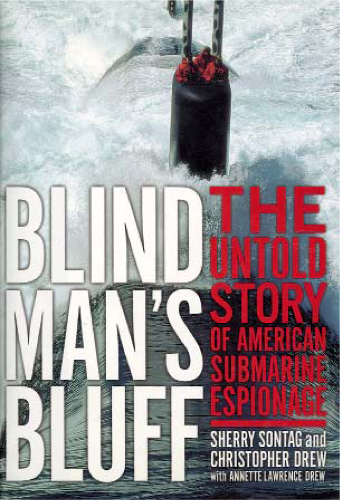
Published in 1998, Blind Man's Bluff, by investigative journalists Sherry Sontag and Christopher Drew, was a trailblazing volume. It addressed many U.S. Navy operations that had never before appeared in the open press and provided details of other operations that had not been fully explained.
One of these previously untold stories was the navy's proposal to recover components from the Soviet missile submarine K-129, which sank in the North Pacific in 1968, by designing a 20,000-foot-capability submersible called Deep Submergence Search Vehicle (dssv). But the Central Intelligence Agency took over the project and decided to bring up the entire submarine—history's deepest salvage effort. The cia project, which used the salvage ship Hughes Glo-mar explorer, was able to retrieve only the forward portion of the sub. Although the dssv was never built (a significant loss to U.S. military and scientific endeavors), the navy still played a major role in the operation, deploying a specially modified nuclear submarine, the Halibut, which spent weeks at sea towing underwater cameras to locate the wreckage.
Sontag and Drew also discuss at length “Operation Ivy Bells,” during which U.S. subs tapped Soviet sea-floor communication cables and forayed into Soviet coastal waters to gather intelligence. The descriptions of these operations are fascinating, including the Tom Clancy-style account of the Halibut's mission to “bug” the communications cable running along the ocean floor between Petropavlovsk and the Siberian mainland. As the sub was anchored near the ocean floor, with several divers in the water working on the recording device, a storm blew up. After hours in a precarious situation, the Halibut's two anchor cables broke:
“There was no way the officers and crew manning the diving planes could keep Halibut level…. Outside, the divers watched as Halibut began to drift upward. The men were still linked to the submarine through their air hoses. They knew they would die if Halibut pulled them up before they could decompress. If they cut themselves loose, they would suffocate.”
Inside the Halibut, the decision was made to flood ballast tanks, and the submarine smashed into the ocean floor. The divers scrambled into the chamber mounted on the submarine's after deck.
The book includes an engrossing account of the sinking of the U.S. nuclear sub Scorpion in 1968. The authors subscribe to the theory that a Mark 37 torpedo battery failure and fire were the cause of the loss of the sub. There are other theories, the most probable being that a Mark 37 torpedo accidentally started up during a test and then detonated (outside of the submarine), or that the propeller shaft was working loose.
The authors' principal source for the battery-fire theory is John P. Craven, whose name appears several times in the text and in the 43 pages of notes and acknowledgments. Craven was chief scientist for the navy's Special Projects Office—which was responsible for developing the Polaris missile submarines—when the U.S. sub Thresher sank with all hands in April 1963. The Thresher was the world's first nuclear submarine to be lost, taking 129 men with her.
The Thresher disaster led to the establishment of the Deep Submergence Systems Project (dssp), which developed advanced submarine rescue and escape systems, as well as other advanced submersibles and underwater search, recovery, and salvage systems, some of which were highly classified or “black” programs. Because Craven had led much of the navy's underwater research efforts in support of the Polaris program, he was made the temporary director of dssp while retaining his Special Projects position.
Craven is one of most knowledgeable experts in the United States in the field of undersea technology. I had the privilege of working directly for dssp's executives while an employee of the Northrop Corporation and saw firsthand Craven's effectiveness in advancing the navy's deep-submergence capabilities.
After the huge success of Blind Man's Bluff, Craven decided to tell the undersea story of the Cold War as only a participant could write it. In his 2001 book, The Silent War, Craven recounts many of the same stories Sontag and Drew told, as well as some new ones. Craven explains the massive cost overruns of the navy's two Deep Submergence Rescue Vehicles (dsrvs): They were used, he says, as a “cover” for the expenditure of funds for highly classified deep submergence programs. He also explains that dsrvs “designed, constructed, and deployed for every conceivable rescue mission would also be available for the intelligence ‘mission impossibles’ that were sure to occur.”
Another vehicle developed under the aegis of dssp was the nuclear-propelled submersible NR-1, a brainchild of Adm. H. G. Rickover. Craven's account of his dealings with Rickover and the development of their mutual respect makes fascinating reading. He does not, however, mention the conflict between dssp and Rickover over whether to announce that the NR-1 program existed, nor Rickover's insistence that only a “doctored” photo of it be released when its existence was acknowledged.
In his retelling of stories found in Blind Man's Bluff, Craven adds considerable detail. In discussing the sinking of the K-129, however, he crosses over into the sensational, contending that the Soviet submarine, a diesel-electric-propelled Golf-class missile craft, was a “rogue”:
“To put it succinctly, there existed a possibility, small though it might be, that the skipper of this rogue submarine was attempting to launch or had actually launched a ballistic missile with a live [nuclear] warhead in the direction of Hawaii.
“There is also a small possibility that this launch attempt doomed the sub. Whatever happened, something in the missile's warhead may have exploded, causing the initial damage and possibly kicking off a chain of other events.”
But why would a rogue submarine commander want to launch a ballistic missile at Hawaii? Craven offers no answers and provides no evidence for his “small possibility” theory. He does cite an unusual aspect of the K-129 sinking: The skeleton of a crew member in “foul-weather gear” was photographed near the wreckage. Most likely, the gear was donned after the submarine suffered an “event”—possibly flooding through the snorkel—and was attempting to surface. If so, crewmen would have been prepared to go on deck to make repairs as soon as the sub surfaced. But this does not, as Craven contends, lead to the “almost inescapable” conclusion that “the so-called Golf-class sub was on the surface when the fatal event took place.”
Here and elsewhere Craven makes statements that are not supported by known facts. Further, The Silent War contains many errors in dates, names, and events. For example, the U.S. Navy did not respond to the Soviet detonation of a nuclear bomb in 1949 with the establishment of the Polaris program (1955); the cruiser Indianapolis carried components for only the Hiroshima bomb, not the Nagasaki weapon; the pioneer nuclear submarine Nautilus slid down the ways in January 1954, not 1955; the Polaris A-3 missile had a multiple-reentry vehicle (mrv) warhead, not a warhead with independently targetable reentry vehicles (mirvs); the development of HY-80 steel began before the Polaris program was conceived; and no Soviet ballistic missile submarines had titanium hulls.
Craven writes that “all of the events described in this book are drawn from my undocumented personnel recollection. Dates and events are described as accurately as I can recall them.” Unfortunately, the errors call into question many of his assertions, severely limiting the value of the book. Fact checking in Combat Fleets, Jane's Fighting Ships, Ships and Aircraft of the U.S. Fleet, or other reference books could have made this a more useful volume.
Blind Man's Bluff—written by journalists—is better organized and is an easier read. Especially interesting is the book's listing of a score of collisions of U.S. and British submarines with Soviet undersea craft. The actual list is longer. It is remarkable that none of the submarines involved in these incidents were lost; but the list makes it understandable why some Soviet officials would contend that last year's Kursk accident resulted from a collision with a U.S. sub. Unfortunately, Blind Man's Bluff suffers from the authors' lack of knowledge of submarine and navy terminology. Still, while calling a submarine compartment a room may bother the professional, it does not affect the story. But this book, too, contains serious factual errors. For example, contending that—in 1957—Admiral Rickover “easily wielded enough power to keep [nuclear submarines] home” is inaccurate; Adm. Arleigh Burke and Secretary of the Navy Charles Thomas, not President Eisenhower, put Rear Adm. William F. Raborn in charge of Polaris; the U.S. nuclear submarine Seawolf did not have the V-shaped bow of a destroyer, but a hull form derived from the German Type XXI submarine, which had been copied by the navy after the war; the submersible MR-2 has a crew of five plus scientists, not two men; and submarines don't weigh— they displace—tons.
The publishers of both Blind Man's Bluff and The Silent War owed it to their authors and to those who purchased their books to have made certain the authors got their facts straight.
Despite their errors, both books contribute significantly to understanding the Cold War at sea and will be of value to both the general public and professionals. Although submarine operations led to U.S. Soviet confrontations, they also served to gather intelligence that helped each side understand the threat—or lack of threat—posed by the other.