



Abstract

Four billion dollars doesn't look like much from 3,000 feet: a building complex, hangars, houses, satellite dishes, and radar domes perched alongside an airfield and a golf range, surrounded on all sides by crashing surf. With its coconut-lined roads, irrigated lawns, and baseball diamonds, the big island of Kwajalein looks like a Florida subdivision with very poor zoning ordinances.
Ballistic missile defense systems have been a recurring dream since the 1960s, and Kwajalein has played a major role. Here, two Sprint missiles—a component of the short-lived “Safeguard” defensive system–blast off in 1973 from Meck Island.

Once our plane is on the ground, the stairs roll alongside our 727 and a stewardess welcomes us to Kwajalein, announces the local time, and reminds continuing passengers that this is a restricted military installation and that we are not to leave the aircraft during our layover. A uniformed guard with sunglasses and sidearm appears at the bottom of the stairs to emphasize the point.
When it comes to intercontinental ballistic missiles, Kwa-jalein Atoll is where it's at. A boomerang-shaped necklace of 97 islands in the dead center of the Pacific Ocean, Kwajalein has been at the center of the Pentagon's nuclear weapons programs since the end of World War II. This was the staging ground for U.S. atomic tests at nearby Bikini and Enewetak atolls in the 1940s and 1950s, and the bulls-eye for the testing of virtually every long-range delivery system in the arsenal, including Titan, Polaris, Minuteman, Atlas, Nike, Sprint, and the MX. Today the Kwajalein Missile Range is at the center of American efforts to develop defenses against the same sorts of weapons systems the United States perfected over its shimmering blue lagoon.
But Kwajalein isn't part of the United States, which may cause some problems for the $10.5 billion National Missile Defense (NMD) program, which is developing defenses against a limited missile attack by rogue nations like North Korea.
Kwajalein's neglected host nation wants to raise the rent.
∗ ∗ ∗ ∗
In Washington, National Missile Defense has won the battle for hearts, minds, and money. Defense hawks needed little prompting. Ever since Ronald Reagan's ambitious plans for a “Star Wars” space-based laser missile shield were scrapped at the end of the Cold War, they've worried that America was being left vulnerable to nuclear attack.
Now, more than a decade of hightech breakthroughs have made the creation of a limited national missile defense system entirely feasible, the argument goes, and we'd better get started before North Korea, Iraq, or some rogue Russian commander lobs a nuclear weapon at Hawaii, Alaska, or one of our overseas allies.
“This is completely unlike what was planned 25 years ago in that it's only meant to deal with a limited strike— the sort of thing North Korea might be capable of doing in the future,” says Paul Wolfowitz, who served as undersecretary of defense in the Bush administration, and is an adviser to presidential candidate George W. Bush. “Missiles are not the only way to deliver things, but I think if you can deal with a suitcase, deal with the suitcase; if you can deal with a missile, deal with a missile.”
With North Korea lobbing three-stage rockets over Japan, this argument has gained currency. Former security adviser Anthony Lake says nmd is necessary for many of the same reasons Wolfowitz does. Defense Secretary William Cohen cited North Korea's August 1998 Taepo Dong missile test as evidence that the United States needs nmd. This year, the Clinton administration added $6.6 billion to its budget and also supported a theater missile defense program to protect U.S. troops in conflict areas. Both programs have strong bipartisan support in Congress.
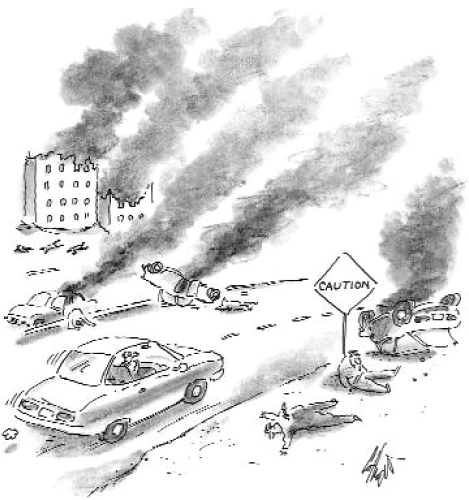
“They're tasty, but they're murder on your fillings.”

But the development of long-range missile defenses requires a long-range test range. That's why the Pentagon has put $4 billion worth of high-tech tracking equipment on the tiny islands of Kwajalein Atoll. It is the world's largest atoll, a ring of coral reef and islands surrounding a relatively shallow 850-square-mile lagoon in the middle of the Pacific Ocean. The lagoon serves as a giant catcher's mitt for incoming missiles and warheads. ICBMs are launched from Vandenberg Air Force Base in California and streak into the upper reaches of the atmosphere during their 5,000-mile simulated attacks on the center of Kwajalein lagoon. Kwa-jalein's high-tech tracking systems collect sophisticated information on the missile's performance for the benefit of weapons designers.
During missile defense tests, intercept vehicles are launched from Kwa-jalein to destroy the would-be attackers. The current prototype—the Exo-atmospheric Kill Vehicle (or EKV)—is supposed to soar into space at a boggling 4,500 miles an hour, identify and evade decoys, and strike the incoming warhead with such kinetic force that both vehicles are vaporized by the shock of the collision. “When you see an intercept in outer space it looks like there's been a huge explosion, but no warheads have been detonated,” explains Tom Johnson, a spokesman for the Ballistic Missile Defense Organization which oversees NMD development. “Its just pure kinetic force, so accuracy is very important.”
Kwajalein is the only facility in the world that can stage these intercontinental simulations. “We're unique in that its the only place where you can do exoatmospheric tests of long-range missiles,” says Bill Congo of the Army Space and Missile Defense Command in Huntsville, Alabama, which operates the Kwajalein Missile Range. “We've been testing out there for 40 years and its been a very successful facility.” His boss, Lt. Gen. John Costello, simply calls it “the jewel in the crown.”
“Without Kwajalein they'd never get the proper trajectory and altitude to test this kind of system,” says Dan Smith of the Washington-based Center for Defense Information. “They need that facility.”
∗ ∗ ∗ ∗
Kwajalein may be the Pentagon's crown jewel, but the crown belongs to somebody else. The atoll belongs to the Republic of the Marshall Islands, a small, resource-poor nation in the Central Pacific that was a U.S. Trust Territory until 1986. And seeing how vital the atoll has become to America's defense planners, the Marshallese government is now demanding a substantial rent hike, even though the current lease doesn't expire for another 15 years.
Marshall Islands Foreign Minister Philip Muller has said the $12 million a year the United States pays to use Kwajalein is insufficient, and that “the Marshallese people are entitled to a much better deal for use of this unique asset.” Muller told Reuters that if the United States refused to negotiate a higher rent, Kwajalein's iroji—traditional chiefs—might resume the disruptive protests they used in the 1970s and 1980s to swell the once-paltry U.S. rents. On several occasions, Marshall-ese reoccupied restricted islands and military facilities, delaying missile tests and forcing Washington to the table. “We know from history what they are capable of doing,” Muller said.
Indeed “they” are capable of doing a great deal. One of the leading figures of past protests was Imata Kabua, one of the iroji of Kwajalein, who was allegedly clubbed by a U.S.-employed guard during a protest in 1979. Kabua is now the president of the Republic of the Marshall Islands. He's also a millionaire several times over, in large part because roughly a third of the $12 million in annual Kwajalein payments goes directly to him and a handful of his fellow iroji. What worries many in Majuro, the Marshallese capital, is that in any future negotiations over Kwa-jalein the personal interests of their leaders may conflict with those of the nation.
In fact, it's the Marshallese people who could lose the most over the Kwa-jalein issue. That's because their government is also negotiating with the United States over the very basis of the national economy: $40 million in annual grants, which were supposed to be used to make the Marshall Islands self-sufficient. Instead, the money has been wasted, misappropriated, or otherwise squandered by the country's imperfect leadership. Having gotten what it needed, the United States didn't care enough to audit its grant payments or take the most basic measures to discourage corruption.
“We just sent the money out there. Nobody ever said ‘this development plan [won't do],’” recalls William Bodde, Jr., the first U.S. ambassador to the Marshalls. “Any money that goes now should be strictly controlled and audited.”
For a country of 60,000, the flow of U.S. grants, rent payments, federal programs, and compensation for the effects of past U.S. atomic tests has been enormous: approximately $1 billion over the past 15 years, or almost $17,000 for every man, woman, and child alive today. Some of that money has been targeted—Pell Grants make it possible for the country's only college to operate and for Marshallese to afford higher education in the United States. But the largest component— the block grants—were just handed over to the government with no strings attached. And the block grants are the part that's about to be renegotiated.
The result of past policies is plain to see. Majuro Atoll, the capital, is now a messy, crowded, depressing place. Some 20,000 people—a third of the country's population—live in ramshackle structures in Majuro's densely-packed urban center. Half the population is under 15 and the total number of people grows by about 5 percent a year. Few people of any age speak English, although it is the language of instruction in the dysfunctional public schools. This year hospital workers went on strike to protest the government's hiring and promotion policies. Every day, huge mounds of garbage calve into the ocean from the atoll's enormous garbage mountain. The schools' hot lunch program was canceled while the government built the luxury hotel resort where the president hangs out—a complex that consumed $1.1 million in government subsidies in 1998 alone.
Conditions are even worse in the Marshalls' other urban center, Ebeye, a slum-like labor reserve island for the Kwajalein Missile Range. After spending the day working as gardeners, maids, and cooks at the U.S. base, Marshallese workers return to Ebeye, where 14,000 people live on a 78-acre sandbar. The power plant is constantly breaking down and trash collection has collapsed. Meanwhile the local development agency has misspent $8 million in U.S. funds, according to official Marshallese audits.
Rather than increasing self-sufficiency, the block grants have made the Marshalls more dependent on the United States.
∗ ∗ ∗ ∗
I spent a month polling official Washington about U.S. policy in the Marshalls. Privately, most people involved with the former Pacific Trust Te rritories say that 15 years ago everyone knew this would happen if the United States failed to provide routine oversight. But back then policy-makers were more worried about closing off the region to the Soviet navy; they wanted matters wrapped up quickly. And what audit powers the United States retained in its independence agreement with the Marshalls was not acted upon because of a Byzantine struggle between the State and Interior Departments.
In Majuro many hope that the United States will renew its grants but provide better oversight to ensure the funds are spent properly. “This place could be a paradise,” a long-time American expatriate told me. “But money needs to go to health and education, not resorts and jet airplanes.”
They're encouraged that the official U.S. negotiator, Allen Stayman, has been sending a message in that vein. “We want to know what happened over the last 13 years before we make any decisions about the future,” he told me at his State Department offices. Key congressional leaders have asked the General Accounting Office to go to the Marshalls and ascertain how U.S. grants have been spent to date. “I've told the [Marshallese], ‘Look, we have to work together over the next three or four months to make sure that the GAO, the Congress, and myself have the answers to the obvious questions.’” The Marshalls would be forced to account for how and why grants were misspent and present workable plans for doing better the next time around. Until then, Stayman says, “It's premature to be talking about future aid.”
But once again, U.S. defense imperatives may foil efforts to hold the Marshallese leadership's feet to the fire.
Marshallese leaders are well aware of Kwajalein's importance to NMD. The concern is that they may once again leverage the country's strategic value to water down control of future U.S. development funds. “They're hoping the Defense Department is going to save the day for them,” a knowledgeable source told me. “They'll play Kwajalein for everything they can.”
The Marshallese people have sacrificed a great deal for U.S. security. They volunteered as scouts, spies, and stretcher bearers during the World War II invasions that captured their islands from Japan. Hundreds were evicted from their home islands to make way for 67 atomic and hydrogen bomb tests, and thousands have since suffered from radiation poisoning. More than 2,000 people live in the slums of Ebeye because their original homes are on islands incorporated into the Kwajalein Missile Range. Young Marshallese still volunteer and serve in the U.S. military today.
The United States can and should do better by this country's people this time around.
Author Guidelines
The Bulletin publishes both solicited and unsolicited manuscripts. Manuscripts will not be returned unless accompanied by a self-addressed, stamped envelope. Letters of inquiry before the submission of a manuscript are useful to determine whether a proposed article is appropriate for the Bulletin. Submit all material to Mike Moore, Editor, Bulletin of the Atomic Scientists, 6042 S. Kimbark, Chicago, IL 60637; fax to (773) 702-0725, or e-mail (
Avert disaster—follow the guidelines.
In most cases, articles should be no longer than 3,000 words. Although the Bulletin is a serious magazine, it is not a scholarly journal. Articles should be written in a lively style and should be suitable for the non-technical reader. Footnotes should be kept to a minimum in both length and number, but they should contain all essential information: author, title, name of publication (if a periodical), location and name of publisher (if a book), date of publication, and page references. All acronyms should be defined, and all personal first names should be spelled out. Illustrative material may be included, but the Bulletin reserves the right to use additional or alternative illustration. All materials submitted should be accompanied by brief biographical data, including the author's current position, institutional affiliation, the names of recently published books or monographs, and address and telephone number. Articles should have titles, but authors' titles usually are rewritten to meet journalistic or space requirements. The Bulletin follows the Chicago Manual of Style.
Articles often are sent for review to an expert in the relevant field before acceptance. All materials accepted for publication are subject to editing for greater clarity, effectiveness of communication, and space considerations. Authors will receive edited manuscripts or galley proofs for approval. Alterations should be kept to a minimum.
Articles accepted should not be released by the author to the press or to the public before publication. Any exceptions must be discussed in advance with the editor. The Bulletin maintains the copyright to all published material.
The editors select book reviewers and books to be reviewed. Unsolicited reviews generally are not accepted.