






Abstract
Objective
Outdoor-related activity has been on the rise in recent years, and hiking and backpacking are among those activities with the largest growth in participation. As the number of participants with varying experience increases, it is expected that there will be an increase in injuries related to these activities. Little empirical data exist related to outdoor injury types and rates. Our objectives were to determine incidence and frequency of injuries related to outdoor activity and requiring emergency medical system (EMS) activation at a national park.
Methods
This retrospective study examines injuries within Yellowstone National Park. Subjects were selected from a database containing all EMS calls within Yellowstone National Park from calendar year 2003 through 2004. Data collected included age, gender, type of injury, location, activity at the time of injury, and EMS response.
Results
There were 306 injuries reviewed. The mean age of patients was 40.9 years (SD: 23.0), and the group comprised 49.0% males. Emergency medical system transport was not required in 59.2% of injuries, and of those transported, 58.4% of patients required basic life support only. Of all injuries, 77.4% involved soft tissue, including lacerations. Hiking and walking accounted for 38.0% of all injuries, and 56.0% of those injuries involved the lower extremity. Only 8.8% of the injuries involved fractures and/or dislocations.
Conclusions
In this study of EMS responses at a national park, the majority of injuries sustained were minor in nature. More than one third of injuries occurred while patients were hiking or walking, and most of those injuries involved the lower extremity. These results will help optimize resource planning in the national park setting.
Introduction
Outdoor-related activity has been on the rise in recent years. A national survey on recreation and the environment, conducted in 2003, estimated that 97.6% of people participated in some sort of outdoor activity the year prior to being interviewed. 1 Furthermore, hiking and backpacking are among those activities with the largest growth in participation. 1 –3 It is estimated that 69.7 million individuals older than 16 years of age have hiked once in the past year. Backpacking is a popular recreational activity; 22.2 million people participated in this activity at least once, and 33.9 million people camped at primitive sites, where they carried their supplies to the site, which often requires backpacks. 1 More individuals are participating in hiking, mountaineering, and climbing for its extreme nature, and the increase results in many different experience levels. Despite the large number of participants, there are relatively few published studies on wilderness morbidity and mortality in relation to recreational activities occurring at national parks,2,4,5 perhaps because these injuries happen in remote areas and go unreported or because they are perceived to be minor in nature. 6 However, because of the increase in outdoor activity participation, injury and prevention should be studied further to enhance participant safety.
Yellowstone National Park is a popular site among hikers, outdoorsmen, and photographers. Yellowstone is the world's first National Park and is visited by approximately 3 million people annually. The park encompasses 3273 square miles, or 2 219 790.71 acres, and boasts the largest concentration of free-roaming wildlife in the lower 48 states. Within the park boundaries there are 97 trailheads, with 1200 miles of trail, and 300 backcountry campsites. Also within the park boundaries are 1 year-round and 2 seasonal medical clinics. From 1995 through 2004 there were 29.7 million visitors to Yellowstone National Park. 7
The study objective was to determine the frequency and type of injuries sustained by individuals while they are visiting a major national park and that required Emergency Medical System (EMS) activation. This information will help prepare prehospital providers, hospital emergency department providers and park personnel, and will optimize resource allocation for the care of these injuries.
Methods
Study Design/Population/Setting
This study comprised a retrospective review of EMS run sheets detailing injuries occurring at Yellowstone National Park and resulting in activation of the EMS. The study population included any visitor to Yellowstone National Park involved in a trauma that required an EMS response. The population included both genders, all ages, and all experience levels with regard to recreational activities. Subjects were selected from a database provided by the Yellowstone National Park EMS director, which contained all EMS calls within Yellowstone National Park from calendar year 2003 through 2004. The database contains data on age, gender, time and date of injury, advanced life support (ALS) or basic life support (BLS) response, motor vehicle accident, trauma or medical call, and injury sustained. Subjects were selected based on specific criteria: 1) they were trauma-related calls and 2) they had an injury that occurred outdoors anywhere in the park. Motor vehicle accidents were excluded. Seasons were defined using the standard divisions based on the Roman calendar. This study had institutional review board approval.
Measurements
The following data were abstracted from the EMS run sheets: 1) date and time of injury; 2) location of injury within the park; 3) EMS transport and type of transport (ALS vs BLS); 4) type of injury sustained and location on body; and 5) activity while injured. In order to ensure patient confidentiality each Yellowstone National Park EMS run sheet received a study number that replaced the original EMS run sheet number. Visitation statistics were obtained from the National Park Services Public Use Statistics Office. 7
Results
The study criteria initially produced 360 EMS runs. Upon review, 54 cases were excluded because they were medical in nature. This resulted in a sample size of 306 EMS runs for trauma. Only 125 patients (40.8%) required EMS transport, and 58.4% of the transports involved BLS-type runs.
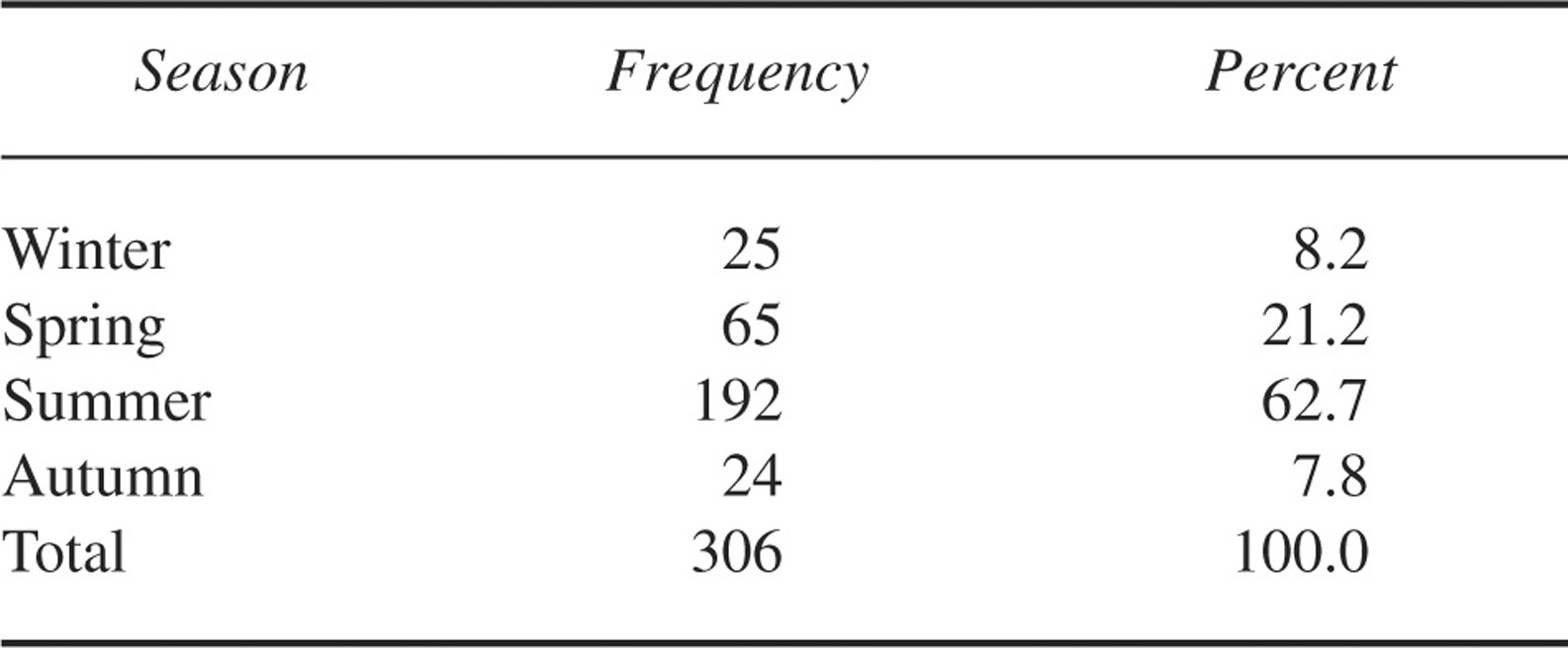
There were 5.2 people injured per 100 000 visitors between the years of 2003 and 2004, and no fatalities were captured using our inclusion criteria. The mean age for injured patients was 40.9 years (SD: 23.0 years), and 49.0% of patients were males. Most injuries occurred in the summer months (62.7%), and this season corresponds to the largest volume of park visitors (Table 1). Of the 302 incidents for which time of day was available, 37.1% of injuries sustained occurred between 7:00
Time of year for park injuries
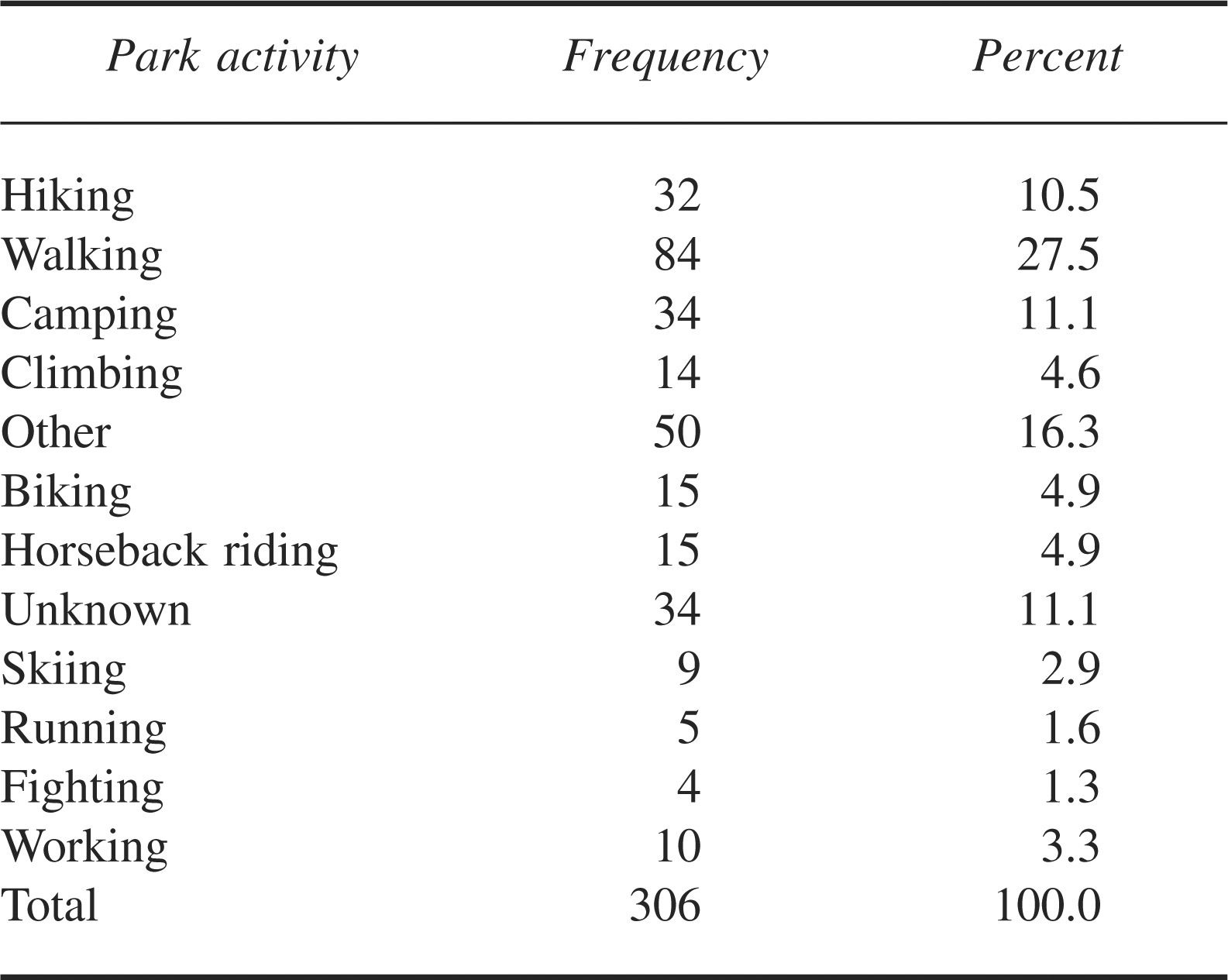
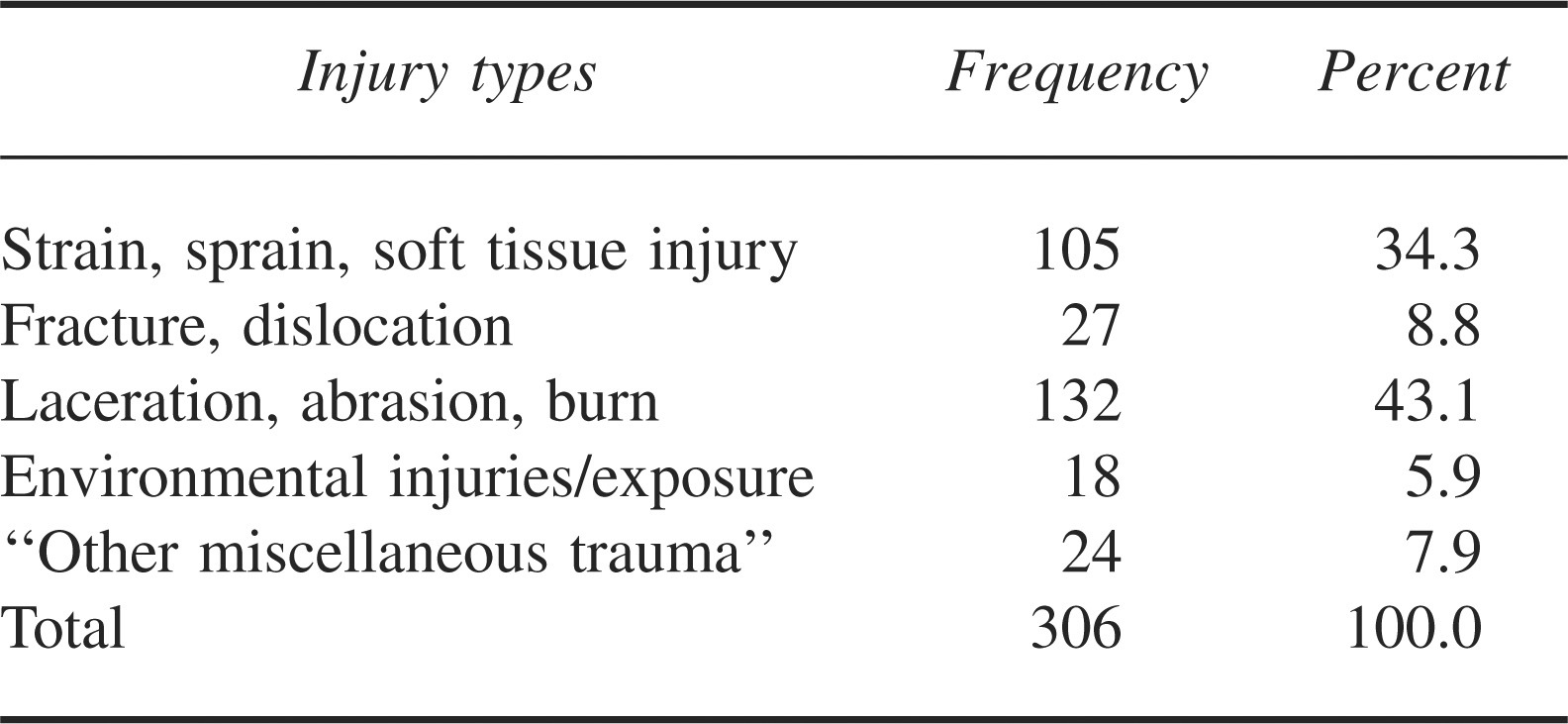
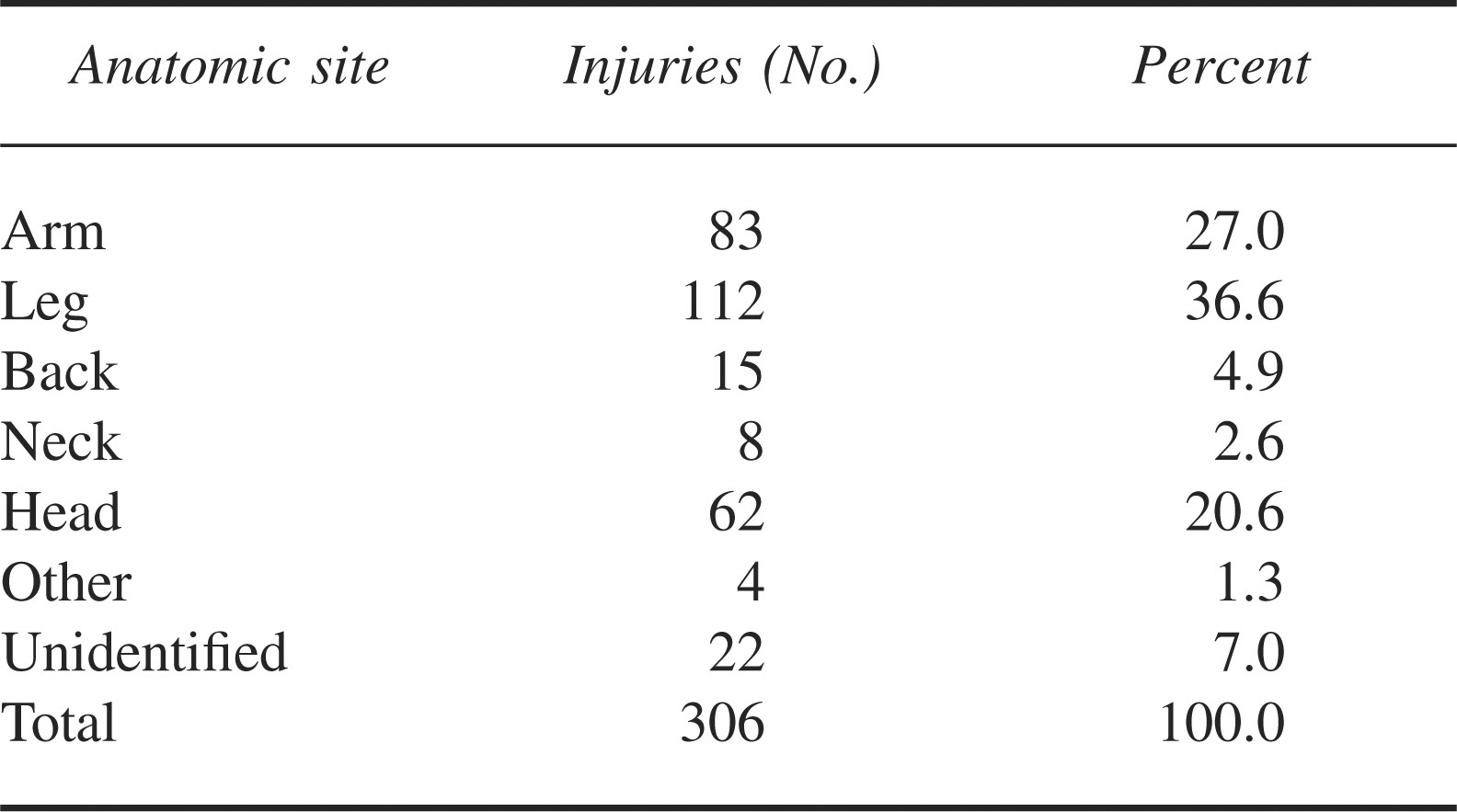
Hiking and walking accounted for the largest percentages of injury, followed by camping, biking, and horseback riding (Table 2). Of all injuries sustained, 77.4% resulted in soft tissue injuries, including lacerations; 8.8% involved fractures or dislocations; and 5.9% involved environmental exposures (Table 3). The lower extremity was the most often injured anatomic site (36.6%), followed by the arm (27.0%) and the head (20.6%) (Table 4). However, of those injuries that involved hiking or walking, 56.5% involved the lower extremity.
Park activity during injury
Injury types
Anatomic site of injuries
Discussion
This study, conducted at Yellowstone National Park, examined injuries sustained while individuals were engaging in outdoor activity and which resulted in activation of the park's EMS. To date, multiple studies have looked at specific types of injury incurred during a particular activity or at a certain location. 8 –12 This study attempted to address injuries sustained during outdoor recreational activity at Yellowstone National Park. To date, the only other known study of this type was conducted at national parks in the Pacific Northwest. 8 We believe this study is important because outdoor activity is gaining popularity and as more individuals are spending recreational time outdoors, this will likely lead to an increased incidence of outdoor injury. 1 The aim of our study was to determine the types of injuries sustained, the seasonal frequency of injury, and the incidence of injury at the park. Prior studies have indicated that such data would be useful for resource planning for a park population such as Yellowstone.13,14 For example, our data can be used to estimate future requirements for medical supplies as well as medical staffing.
In this study, the incidence of injury at Yellowstone National Park that required EMS activation was 5.2 per 100 000 visitors. Stephens et al 8 conducted a similar study looking at recreational injury at Mount Rainier National Park and Olympic National Park. Their study had an incidence of injury of 4.7 and 1.3 per 100 000 visitors, respectively, for the 2 parks. Montalvio et al 15 conducted a retrospective study over a 3-year period looking at nonfatal and fatal injuries based on case report files from 8 national parks within California. They found an overall incidence rate of nonfatal injury and illness of 9.2 per 100 000 visitors, indicating that outdoor injury rates appear to be relatively constant.
We found that the mean age of injury was 40.9 years (SD: 23.0 years) and that 49.0% of those injured were males. This is in contrast to a rate of 58% males injured in Washington State National Parks. 8 In New Hampshire, a 64.5% male predominance was seen, with a mean age of 35.6 years, 16 and in Hawaii, the mean age of injured visitors was 39.0 years, with 63% of those injured being males. 10
Of all injuries, 62.7% happened in the summer months and 52.9% occurred between 3:00
Hiking and walking accounted for 38.0% of the injuries. Furthermore, 77.4% of all injuries sustained resulted in soft tissue injuries, which include sprains, strains, abrasions, and lacerations, and only 8.8% were fractures or dislocations. This is similar to the 80% soft tissue injuries found in a study of wilderness recreation in 1992. 5 However, for wilderness search and rescues calls, which would include more serious cases, Ela 16 found, in a study of 457 cases in New Hampshire, that 33.75% of hikers sustained a fracture, 49.7% of hikers had a lower extremity injury, and that 57.3% of search and rescues calls occurred for those engaged in hiking. Johnson et al 9 conducted a study at the Sequoia Kings Canyon National Parks and looked at wilderness medical services. They found that from August 1986 through July 1987 434 patients contacted EMS, and of these patients, 41% had injuries sustained from falling or tripping and 19% of the injuries were orthopedic in nature. Our injury rates compare to those found in other studies, with 60% to 70% of injuries documented as being musculoskeletal in nature. 10 –12,15,17
The most common region of the body injured in previous studies was the lower extremity.10,17 We also found that the lower extremity was most commonly injured (36.6%). Likewise, of all the injuries at Yellowstone National Park that occurred while patients were hiking and walking, 56.5% involved the lower extremity. Thus, it appears that hiking frequently results in minor soft tissue injuries of the lower extremity.
According to the National Survey on Recreation and the Environment, the number of Americans who hike increased 46% between 1994 and 2002, from 47.8 to 69.7 million participants.1,11 As participation increases, it will become increasingly important to understand the problems associated with wilderness medicine to better combat the problem.
There are several limitations to our study. Time permitted review of EMS records only from 2003 and 2004. Furthermore, records only existed for those injuries that were triaged by the Yellowstone National Parks EMS system. It is logical to assume that many individuals were missed because they simply walked into one of the park's 3 ambulatory medical clinics or because they did not report their injuries. Thus, overall injury rates are likely higher.
Conclusions
In this study of EMS responses at Yellowstone National Park, the majority of injuries sustained were minor in nature. These injuries commonly involved soft tissues, including sprains, strains, and lacerations. More than one third of injuries occurred while patients were hiking or walking, and most of those injuries involved the lower extremity. These injuries occurred more often in the summer months during daylight hours. This knowledge can better prepare prehospital personal for the types of injuries to expect and the time of year during which to expect them. In addition, these results can help to provide better safety instruction to those visiting the park.