






Abstract
Objective
To study sleep parameters and mood profiles of a female explorer traveling solo and unaided to the South Pole during the winter.
Methods
During the 44-day expedition, global activity and sleep were assessed using a wrist actigraph (AW) worn on the nondominant wrist. Mood was assessed using an adapted Profile of Mood States questionnaire. Pre- and postexpedition physiologic profiles were conducted to assess body composition, strength and power, and aerobic capacity.
Results
The AW data revealed decreasing sleep duration throughout the expedition, with an average sleep time of 5 hours (range, 8 hours and 14 minutes to 1 hour and 42 minutes), with sleep times consistently <3 hours during the final third of the expedition. Mood responses indicated a progressive reduction in vigor and increase in fatigue. Sleep time was positively related to vigor and inversely related to depression and fatigue, a finding that is consistent with the notion that positive feelings (high vigor and low fatigue) are linked with sleep.
Conclusions
This account provides insight to help understand the limits of human tolerance and may be directly applicable when planning future expeditions of this nature.
Introduction
The explorer skiing solo and unaided to the South Pole is faced with many challenges, including extreme cold, 24-hour light, difficult and varied terrain, and large distances. Furthermore, the majority of the trek is uphill, with an increasing altitude from sea level to 2900 m. Prolonged exercise is associated with sleep disturbances, mood changes, 1 and loss of body fat, 2 and this physiologic and psychologic stress may be exacerbated in the polar environment. 3
Previous research has tended to use a global measure of mood disturbance by summing anger, confusion, depression, fatigue, and tension and subtracting vigor scores. Studies that have investigated each mood state independently, however, have shown that fatigue and vigor exhibit the greatest variation in scores. 4
Performing repeated prolonged bouts of intense exercise in Antarctic conditions is likely to be associated with both mood disturbance and sleep deprivation, which could have an impact on physical performance. The primary aim of this study was to assess mood states and sleep patterns of a female explorer during an expedition to the South Pole. A secondary aim was to assess the physiologic impact of the expedition. Observations of this nature could be used to develop a more comprehensive understanding of the psychologic and physiologic experiences of the polar explorer to better inform and prepare future explorers and to better understand the limits of human endurance performance.
Methods
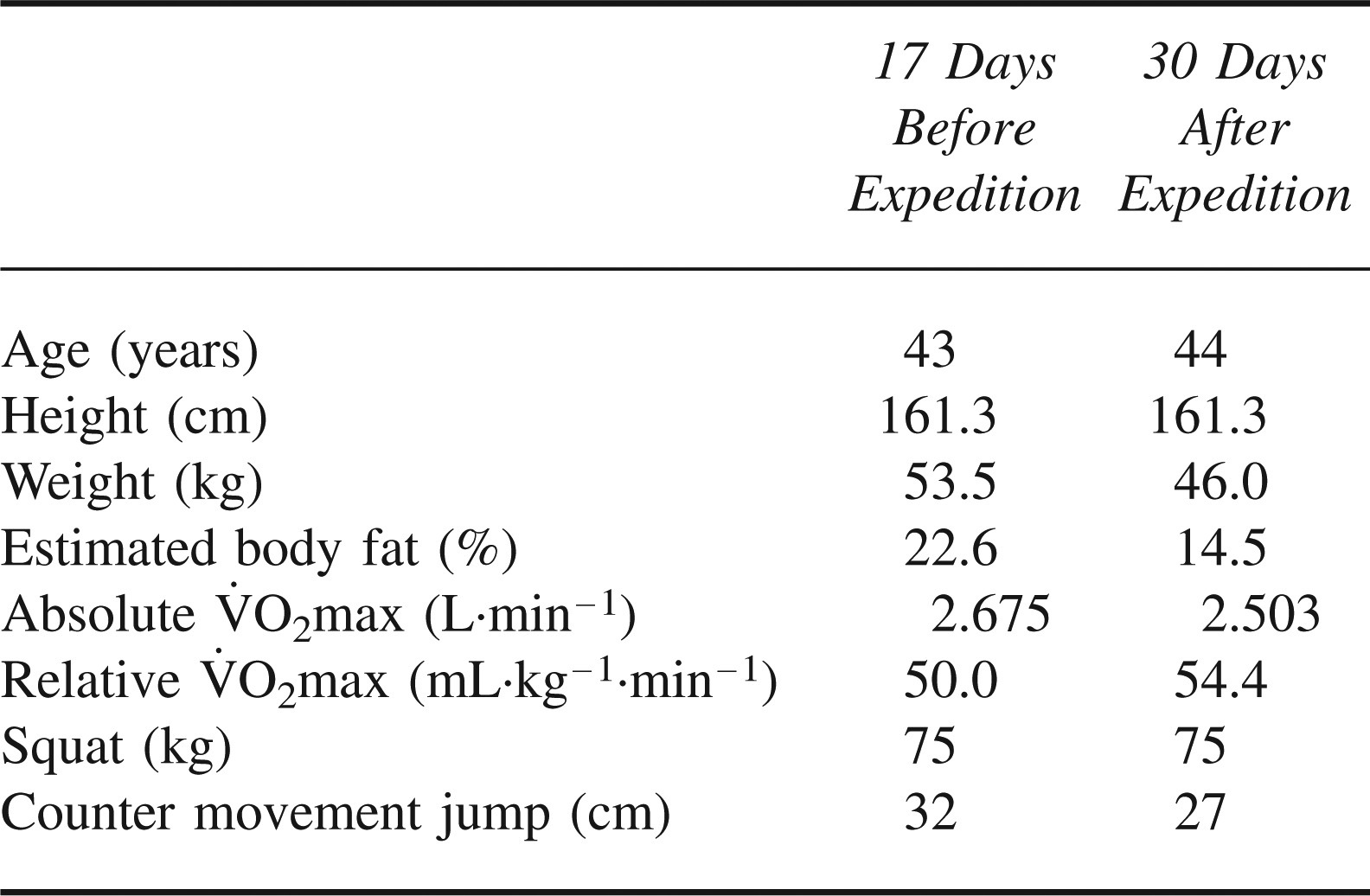
The participant was a woman (Table 1), hauling a harnessed sled using skis and ski poles, aiming to travel a distance of 600 km to the South Pole within 45 days, starting in December. This was her third expedition to the South Pole; however, it was the first occasion where she traveled solo and unaided. The explorer monitored her own progress by Global Positioning System (GPS); thus she was aware of time, distance covered, and altitude. Additionally, the explorer was in daily contact by radio with a support team agent.
Physical and physiologic characteristics of the female polar explorer
Physiologic Characteristics
The following tests, in order, were conducted 17 days before and 30 days after the expedition (the closest dates to the expedition that the explorer could attend because of travel constraints): 1) estimated percent body fat, assessed using a 4-site skinfold test
5
; 2) leg power, using a counter movement jump performed on a contact mat device and software (KMS version 2005.0.2; Fitness Technology, Skye, Australia); 3) maximal strength for 1 repetition, using a barbell back squat technique to the parallel position; 4) maximum aerobic capacity (
Sleep
Sleep and activity were monitored continuously by the use of an Actiwatch (AW) and Sleepwatch software (Version 5.28; Cambridge Neurotechnology Ltd, Cambridge, UK) worn on the nondominant wrist. The recording epoch was set to 2 minutes to allow sufficient memory storage for the entire expedition. The AW has been shown to be a relatively accurate instrument compared to polysomnography 7 for measuring sleep/wake parameters in a number of situations. 8 The following parameters were studied (automatically calculated by the software): 1) actual sleep time—the actual time spent asleep determined from sleep start to sleep end minus any wake time; 2) percentage actual sleep time—the actual sleep time expressed as a percentage of time asleep from sleep start to sleep end; 3) percentage moving time—the percentage of time spent moving during the actual sleep time, which is derived from the number of epochs where scores greater than zero were recorded and is an indicator of restlessness; 4) wake movement average—the average activity per epoch for the whole of the daytime before the sleep period from sleep end to sleep start; 5) sleep start and sleep end—the time of onset and offset of sleep.
Mood
Mood was assessed daily using the comprehensively validated Brunel Mood Scale (BRUMS),4,9 completed before bedtime. The BRUMS assesses anger, confusion, depression, fatigue, tension, and vigor. Examples of anger items include “bad-tempered” and “angry,” confusion items include “muddled” and “uncertain,” depression items include “depressed” and “miserable,” fatigue items include “sleepy” and “tired,” tension items include “anxious” and “panicky,” and vigor items include “lively” and “energetic.” Items are rated on a 5-point scale anchored by “not at all” (0) and “extremely” (4).
Results
Physiologic differences were apparent before and after the expedition (Table 1), including an improved aerobic capacity (8.8% change, relative to body weight), a dramatic loss of body weight in the form of muscle and fat (8.1%), and a loss of leg power (18.5% reduction in countermovement jump height).
The AW data reveal that each day after waking up, ∼2 hours was spent decamping before trekking began. The daily exercise routine involved extended periods of intense physical effort, interspersed with 10- to 15-minute rest periods, followed by 2 hours of making camp, eating, and preparing for bed. The longest sleep time achieved was 8 hours and 14 minutes on day 2, and the minimum was 1 hour and 42 minutes on day 35, with 2 hours and 6 minutes for the night before reaching the South Pole on day 44 (Figures 1–3). The average sleep time was 5 hours and 1 minute. There was a gradual reduction in the hours spent asleep throughout the expedition, and during the final third, the average sleep time was only 3 hours and 21 minutes.
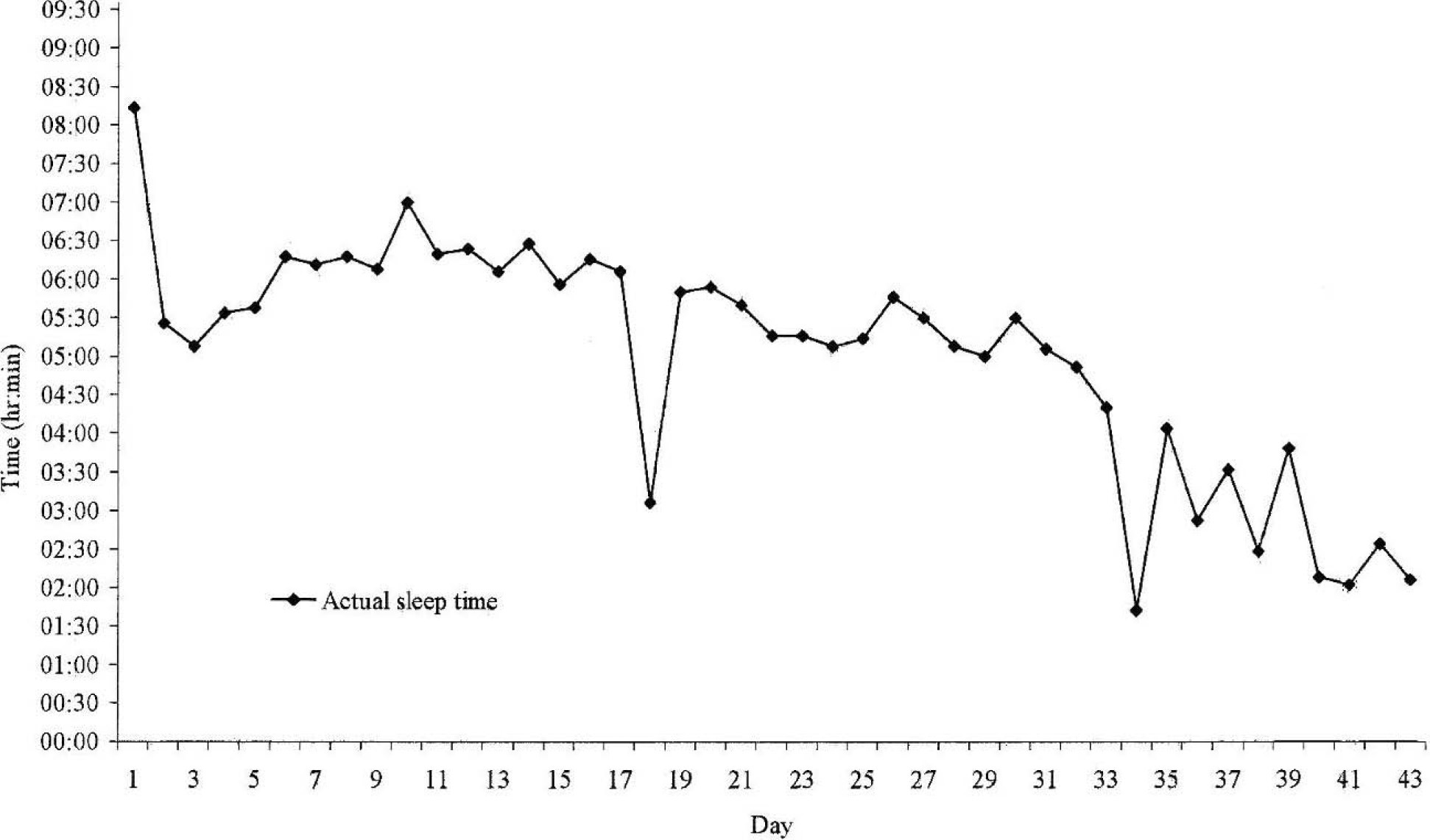
Actual sleep time during the expedition.
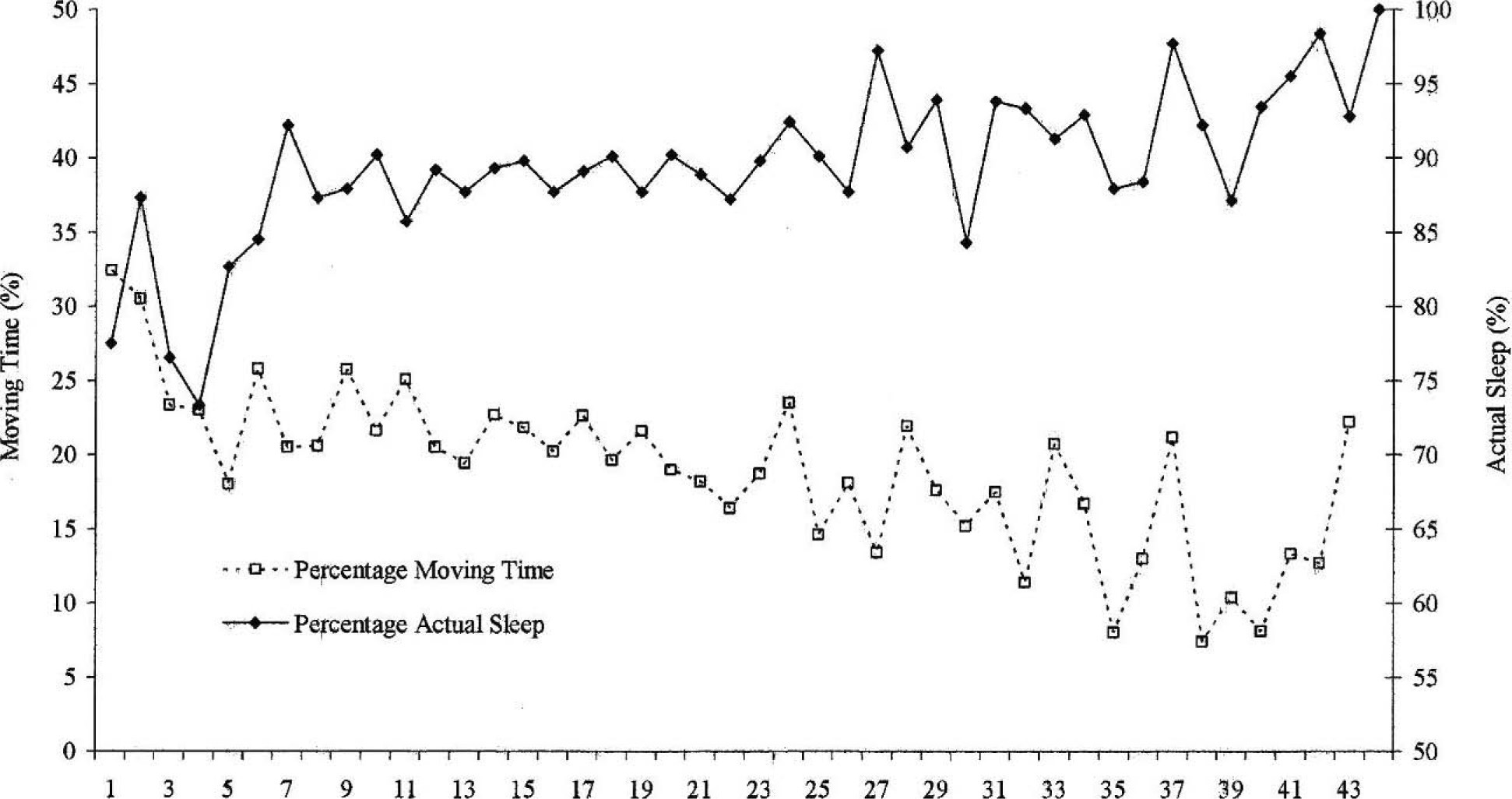
Percentage actual sleep and percentage moving time during sleep.
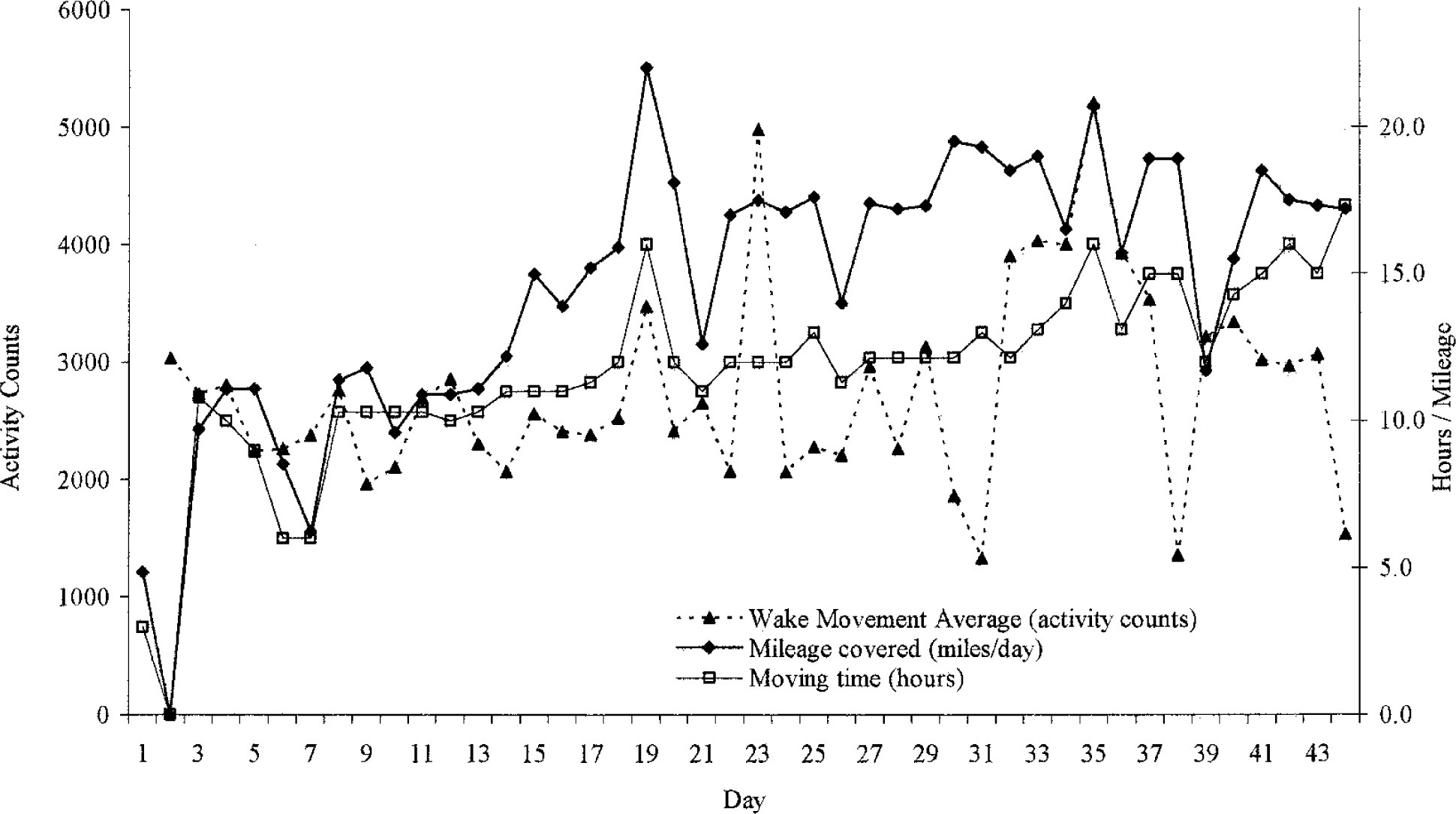
Wake movement average, hours spent trekking or hours awake, and distance during the expedition.
Pre-expedition mood data indicated considerable variation in vigor scores and some variation in confusion, depression, and fatigue. Tension scores tended to increase as the expedition drew nearer.
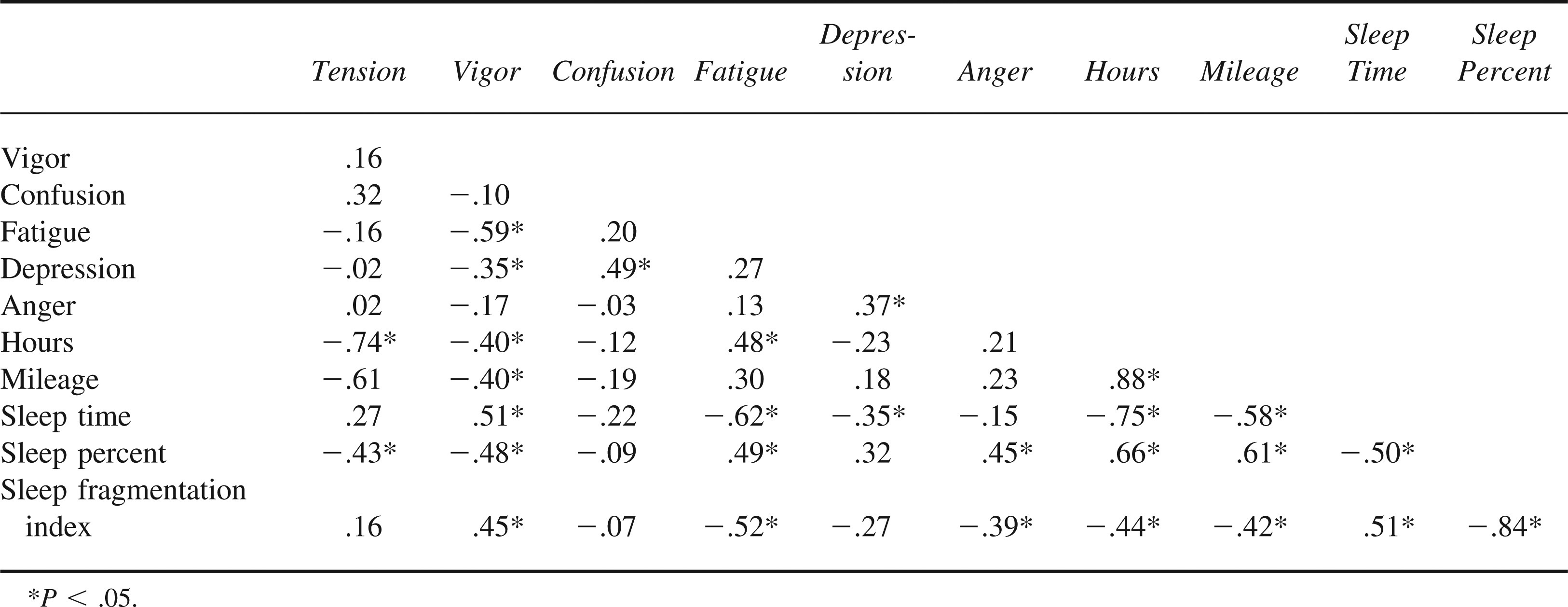
Statistical relationships between mood, performance, and sleep quality during the expedition indicated 26 significant intercorrelations (Table 2). Vigor was inversely related with fatigue and depression and positively related to sleep time. Depression was positively related to anger and inversely related to sleep time. Relationships between mood, sleep, and performance highly influenced the final days of the expedition. There was a sharp increase in depression and fatigue and a reduction in vigor during the final 10 days of the expedition (Figure 4).
Statistical significance of correlations between mood, hours of trekking, mileage covered, and sleep parameters
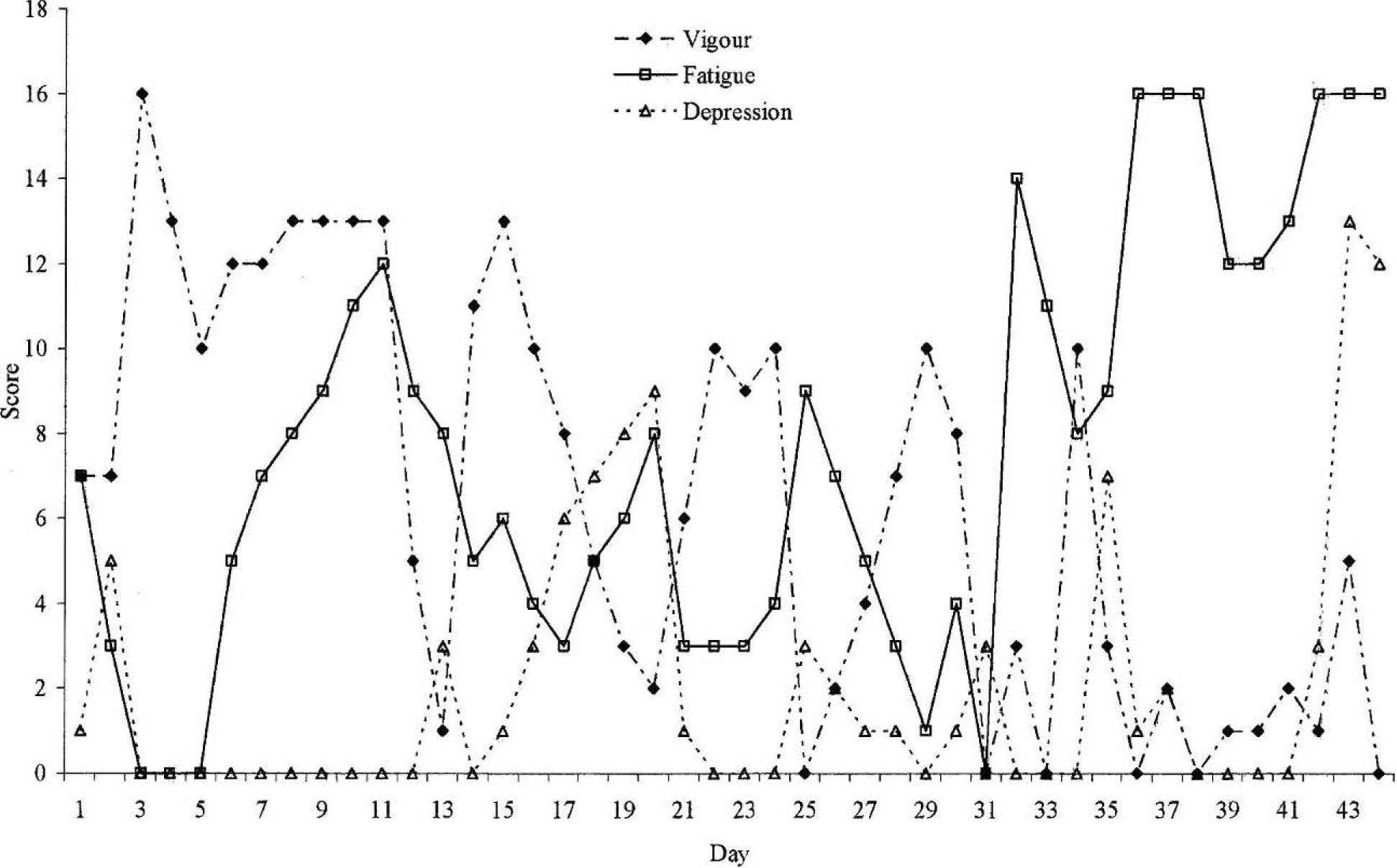
Mood states (vigor, fatigue, and depression) during the expedition.
Discussion
Consistent with previous research on physiologic and psychologic responses to extreme conditions, these data show extreme fatigue and reduced vigor while coping with high scores of depression, tension, and confusion, simultaneous with long bouts of hard exercise and little sleep. Because of the length of the expedition, there may be a multitude of factors affecting mood states on a daily basis; however, only trends can be discussed in this brief report. The pre- and postexpedition physiologic and anthropometric data, coupled with the AW data showing distance and work time, clearly showed extreme physiologic stress, which may be caused by high workloads, inadequate calorific intake, or both.
The reduction in the length of sleep can be explained by examining sleep start and end times. The sleep end times were consistent at ∼1100 hours until day 39, when an earlier wake up pattern emerged starting at ∼0800 hours; however, the sleep start times became progressively later. Mood data indicated the explorer reported intense fatigue and low vigor, suggesting a strong urge to sleep. The nature of the task and necessary focus on achieving the expedition goal, coupled with the lack of environmental time cues (24-hour light) could account for a psychologic overcoming of the desire to sleep longer.
The percentage of time spent asleep was moderately stable, with a mean of 88.7% (range, 73.3% on the night of day 4 to 100% on day 44). The percentage moving time (an indication of restlessness in sleep) is considered to be normal at ∼20%; the range of percentage moving time varied from 32.4% on day 3 to 7.4% on day 40, with an average of 18.9%. A downward trend was observed as the expedition progressed, reflecting better, if shorter, sleep (Figure 2). This could be because of sheer exhaustion (high fatigue and low vigor) causing a greater drive for restorative slow wave sleep.
Figure 3 shows moving time (hours), wake movement average (activity counts), and distance covered (miles per day) during the expedition: A comparison was made between the hours of trekking and the mileage achieved each day. The longest day was on day 35: sleep ended at 1128 hours, trekking started at 1525 hours and ended at 0718 hours (16 hours trekking), and sleep started at 0934 hours (total 22-hour day). The next day started just 1 hour and 42 minutes later at 1132 hours. Of note, the trekking hours continue to rise from day 30 to day 44, and yet distance covered failed to increase during this period, part of which may be attributed to a reduction in efficiency that could be explained by sleep deprivation.
Relationships between sleep time, mood, and performance indicated that increased mileage was associated with low vigor, high fatigue, and reduced sleep. Relationships between mood and indices of sleep indicated that sleep time was positively related to vigor and inversely related to fatigue. This is consistent with the notion that positive feelings (high vigor and low fatigue) are linked with sleep. It should be noted that high mileage was associated with more moving hours, and in the context of this study indicate that the individual had little time for sleep.
The use of intervention strategies to improve mood regulation is suggested. These are most effective when focusing on future events rather than the past and setting achievable goals. 10 It is suggested that as well as discovering a baseline mood profile for each individual, practitioners should attempt to establish which mood management strategies are favored and which are the most effective for the explorer's different moods.
Conclusion
This assessment of sleep and mood revealed that it is possible to continuously decrease sleep time to an extremely low level for a prolonged period (44 days) and simultaneously maintain a very high work load; however, this pattern may have adverse affects on mood characteristics and efficiency of travel. Teaching the individual mood regulation strategies to cope with extreme negative mood might enhance the quality of the experience from the perspective of the explorer and improve performance.