



Abstract
Anomalous perceptual experiences (APEs) have been reported anecdotally in ultra-endurance athletes. These experiences occur in the absence of psychiatric illness and may reflect the effects of extreme physiologic and environmental stressors. However, the literature is fragmented and terminology inconsistent, limiting understanding of the nature, prevalence, and mechanisms of these experiences. The aim of this study was to systematically review the literature describing APEs during ultra-endurance sport in an attempt to characterize their phenomenology, contextual features, and contributing factors. This review was registered prospectively (PROSPERO CRD420251079013) and conducted in accordance with PRISMA guidelines. A systematic search of Medline, Embase, and PsycINFO via the Ovid platform was completed in August 2025. Eligible studies reported APEs in adults participating in ultra-endurance sports lasting ≥6 h. Included studies were appraised for quality, and data were extracted for narrative synthesis. Fourteen studies met inclusion criteria: 4 case reports, 4 case series, 4 field studies, and 2 cross-sectional surveys. APEs were reported across diverse disciplines, including mountaineering, ultramarathon running, solo sailing, marathon volleyball, and dogsled racing. Experiences were commonly visual but also included auditory, somatic, and “sensed presence” phenomena. Sleep deprivation was the most consistent contributing factor, followed by exhaustion and low-light conditions. Symptoms typically emerged after ≥24 h of exertion, especially in darkness. Interpretations ranged from distressing to neutral or even supportive. No long-term psychiatric sequelae were reported. APEs appear to be transient nonpathologic phenomena triggered by extreme stress. Consistent terminology and categorization frameworks are needed. Findings have implications for athlete safety, event planning, and future research.
Introduction
Who is the third who walks always beside you?
When I count, there are only you and I together
But when I look ahead up the white road
There is always another one walking beside you
Gliding wrapt in a brown mantle, hooded
I do not know whether a man or a woman
—But who is that on the other side of you?
Excerpt from “The Waste Land” by T. S. Eliot. 1
The lines were stimulated by the account of the Antarctic expeditions (I forget which, but I think one of Shackleton's): it was related that the party of explorers, at the extremity of their strength, had the constant delusion that there was one more member than could actually be counted.
Footnote to “The Waste Land” by T. S. Eliot. 1
Ultra-Endurance Sport
In the scientific literature, endurance sports are typically defined as continuous physical activities lasting more than 30 min, a threshold based on the physiologic definition of endurance—the muscle's ability to sustain force or repeated contractions over time. However, Zaryski and Smith proposed that endurance can be understood from both physiologic and psychological perspectives, suggesting a minimum duration of 6 h to characterize ultra-endurance activity. 2 This extended definition has since been adopted by subsequent researchers. 3 As participation trends increasingly favor longer-duration athletic events, 4 the cultural and popular understanding of endurance sport appears to be converging with the scientific definition of ultra-endurance.
Anomalous Perceptual Experiences
Anomalous perceptual experiences (APEs) refer to disruptions in perception that can arise in individuals regardless of whether they have a psychiatric diagnosis. 5 These experiences may affect any sensory system and typically involve either altered interpretation of real stimuli or the perception of stimuli that are not present, such as hallucinations. 6
The continuum model of psychosis proposes that such perceptual anomalies lie along a spectrum of psychotic symptoms, varying in both severity and form. 7 At the severe end, they are characteristic of clinical conditions such as schizophrenia. 8 However, milder forms of these experiences are also observed among individuals in the general population who do not meet criteria for a psychotic disorder. 9
APEs During Ultra-Endurance Sport
Ultra-endurance sports demand prolonged physical exertion under conditions of physiologic stress, sleep deprivation, and extreme environmental exposure. These conditions are known to alter perceptual functioning, sometimes profoundly.10,11 A growing body of anecdotal and scientific literature reports a range of APEs in ultra-endurance athletes.
Examples range from the early expedition accounts of polar explorers such as Sir Earnest Shackleton, who experienced a third person “sensed presence” phenomenon (which later inspired T. S. Elliot, as quoted in the Introduction), 12 to contemporary accounts from recreational runners in the popular magazine Runners World: “In the latter stages of races, I have seen tree roots turning into snakes trying to trip me up and, more pleasurably, tables adorned with red wine.” 13 While few studies have quantitatively assessed the prevalence of APEs in ultra-endurance athletes, there is a large body of anecdotal accounts in magazines, internet forums, and other lay literature that suggest that such experience may be common.13–15
Psychiatric symptoms are characterized primarily through subjective reports; the clarity and consistency of phenomenological terms are especially important. At present, there is a risk that these phenomena are being retrofitted into established diagnostic categories rather than being used to shape new theoretical understandings. It remains unclear whether such experiences should be viewed as harmless by-products of extreme physical exertion, early manifestations of conditions such as high altitude cerebral edema or as distinct altered states of consciousness in their own right.
There is also a risk that symptoms are being attributed to causative factors relative to a single sporting discipline. For example, Hüfner et al attempted to define a syndrome of psychosis in mountaineers occurring at high altitude. 16 However, if they had considered the wider ultra-endurance athlete population, they may have found similar phenomena occurring outside of high altitude environments, for example, in solo sailors breathing oxygen-rich air at sea level. 17
Despite widespread anecdotal reports of APEs in ultra-endurance athletes, fundamental questions persist regarding their prevalence, phenomenology, contributing factors, and broader significance. It remains unclear whether APEs represent a normal feature of extreme exertion or a pathologic state with implications for athlete performance, safety, and long-term health and well-being. Ultra-endurance sport provides an unusual natural laboratory in which human perception can be studied under threshold conditions, potentially providing insights relevant to other states of extreme stress. Developing a more comprehensive and structured understanding of APEs across multiple ultra-endurance sporting disciplines would provide a good starting point to help identify shared phenomena and contributing factors.
Objective
The aim of this systematic review was to examine the existing peer-reviewed literature on APEs during ultra-endurance sport with a focus on characterizing the types of APEs, the context in which they occur, and possible contributing factors.
Methods
This systematic review was prospectively registered (PROSPERO CRD420251079013) and is reported in accordance with the Preferred Reporting Items for Systematic Reviews and Meta-Analyses x(PRISMA) guidelines. 18 Ethical approval was not required because the study provided a secondary summary of existing published data.
Inclusion and Exclusion Criteria
The inclusion and exclusion criteria for this review were developed using the Population, Interest, Comparison, Outcome, and Study design (PICOS) framework, which provides a structured approach to defining eligibility in systematic reviews:
Population: Adults (aged ≥18 y) engaged in ultra-endurance sports of duration ≥6 h. Excluding: Simulated sports (eg, lab-based virtual reality; studies of participants with diagnosed psychiatric disorders unless part of a mixed sample) Interest: APEs occurring during ultra-endurance sport Comparison: Not applicable due to the primarily descriptive and exploratory nature of the included studies Outcome: The characteristics and contexts of APEs Excluding: Studies that report general fatigue, affective symptoms, or cognitive performance without reference to APEs Study design: Peer-reviewed studies published in English Excluding: Animal studies, abstracts, letters to the author without full text data, and review articles
Information Sources
A systematic search of Medline, Embase, and PsycINFO was undertaken in August 2025 using the Ovid platform. In addition to this primary database search, references of included studies were searched manually and full-text articles were sourced if they met the criteria for inclusion.
Search Strategy
A comprehensive search strategy was developed in consultation with Christy Ballard, a subject-specific research librarian. Due to the considerable variability in terminology used across the literature to describe APEs, the search strategy required careful refinement and complexity to ensure comprehensive retrieval of relevant studies. Care was taken to be inclusive in the “ultra-endurance sport” arm of the search to minimize bias. For example, the main author is a climber, distance runner, and mountaineer—consultation with Christy Ballard ensured that other sports, such as solo sailing, motorsports, and deep-sea diving, were not unconsciously excluded. The search strategy was adapted for each database to account for differences in indexing, thesauri, and search functionalities. No date limits were applied, but results were restricted to humans and the English language. Full search strategies for each database are provided in the online Appendices 1 to 3 and are summarized in brief below.
Population/Activity Terms
Endurance, endurance athlete, endurance sport, endurance event, endurance training Ultra-endurance, ultramarathon Sport—plus specific sport types according to the database in question and common colloquially described ultra-endurance sports Altitude, mountaineering (not routinely included under sport but known to be a key area of research)
Outcome Terms
Psychosis, psychotic Hallucinations, illusions, perceptions, misidentification Delusions, paranoia Delirium
Study Selection
Search results were imported into Rayyan, an open-access software tool designed to facilitate systematic reviews. 19 Duplicates were removed prior to screening. Authors EED and SLD independently screened titles and abstracts for eligibility. Any disagreements were resolved through discussion, and PG served as an adjudicator where consensus could not be reached.
Data Extraction and Quality Assessment
Data relevant to the key themes were extracted independently by EED and SLD under the following headings: Author(s), Title, Year, Study design, Participant(s), Ultra-endurance sport, Measurement(s), APEs, and Key findings. The data extraction began on August 7, 2025 and took 2 d. Assessing the quality of included studies posed a challenge because there was no restriction on study type. Thus, for case reports and case series, the corresponding Joanna Briggs Institute checklist was used.20,21 The National Institutes of Health Quality Assessment Tool for Observational Cohort and Cross-Sectional Studies was used for the remaining articles. 22 See online Appendices 4 to 6for the checklist (Figure 1).
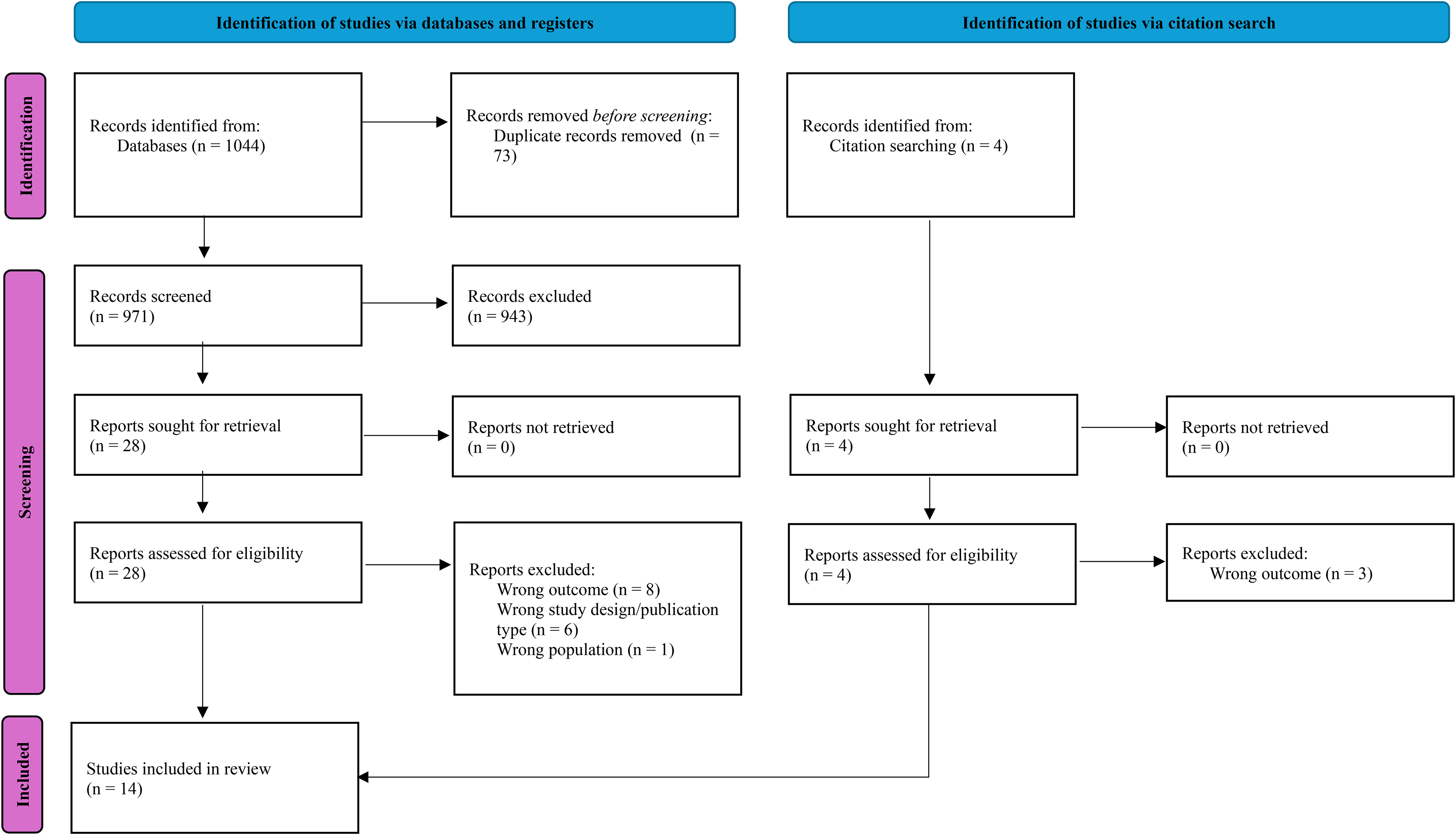
PRISMA flow diagram.
Results
Overview of Included Studies
Fourteen studies were included in this review, comprising a mixture of case reports (n=4), case series (n=4), field studies (n=4), and cross-sectional surveys (n=2). The ultra-endurance sports examined included mountaineering (n=6), ultramarathon running (n=5), dogsled racing (n=1), solo sailing (n=1), and marathon volleyball (n=1). Studies are summarized in Table 1.
Summary of Included Studies.
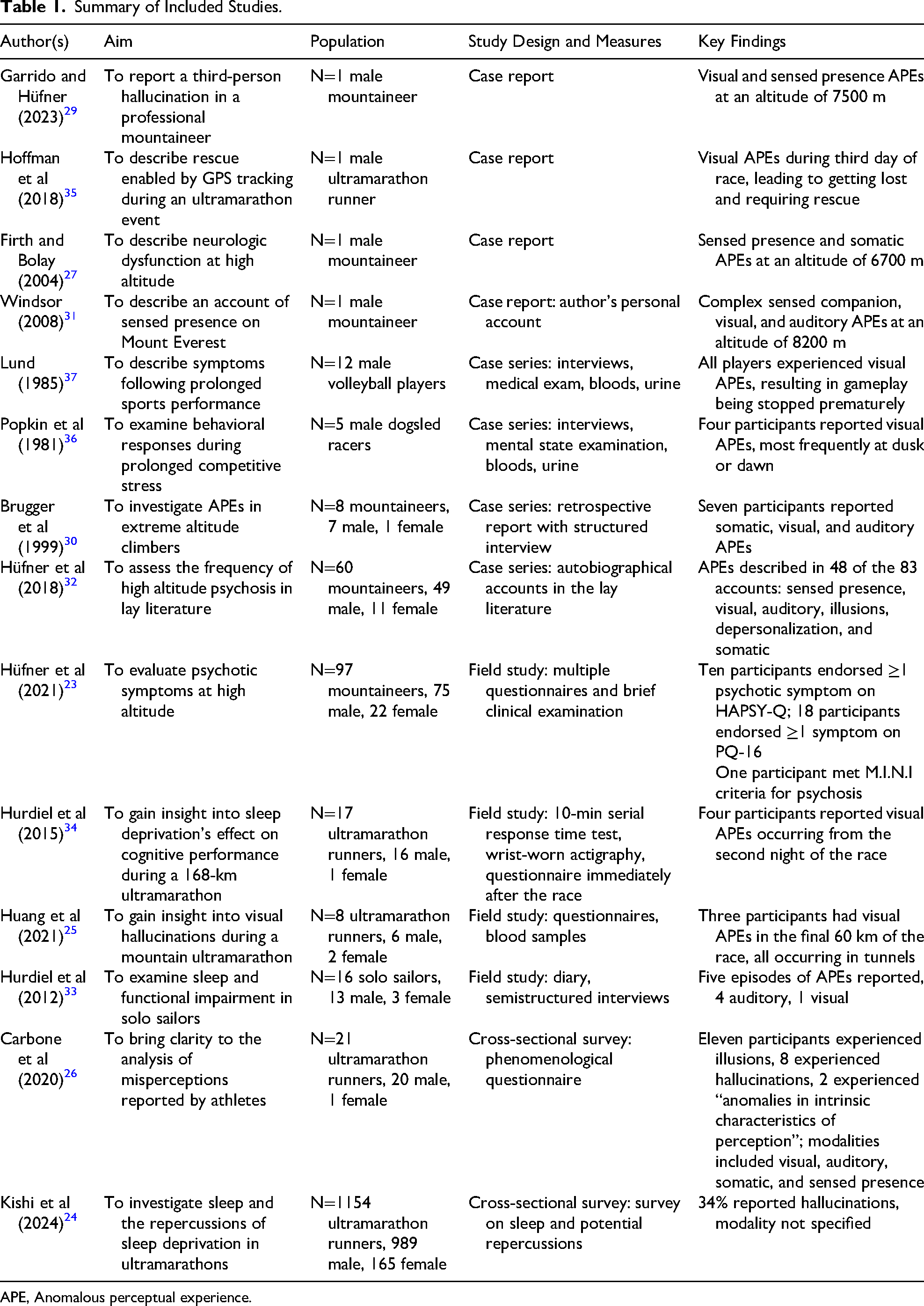
APE, Anomalous perceptual experience.
Types of APEs
Included studies reported a range of APEs of different modalities. Two studies did not describe the sensory modality of the APEs, reporting them only as “psychotic symptoms” 23 and “hallucinations.” 24 Visual phenomena were the most frequently reported, described in 11 of the 14 studies. These ranged from distorted stones 25 to complex scenes of a runner's family members accompanying them during the race. 26 Only 1 study did not report visual phenomena. 25
The experience of a “sensed presence”—a feeling or sense that another entity, individual, or being is present despite no clear sensory or perceptual evidence 28 —was reported in 7 studies.25–27,29–32 When quotes were present, they painted a rich perceptual experience: “I noticed an intense presence of two beings . . . a great sense of calm came over me. Those unexpected saviours, whose figure I did not perceive at any time, were companions.” 29
The next most common APEs were auditory phenomena, reported in 5 studies26,30–33 Phenomena included examples such as hearing ringing bells, 30 talking to Buddha and Gandhi, 26 and receiving instruction from a perceived companion. 31
Somatic, tactile, and proprioceptive phenomena were difficult to separate due to inconsistent definitions. As a group, they were reported in 5 studies.26,27,30–32 Examples include “While walking, he felt as if his legs were moving of their own accord and his torso was elongated. He felt detached from his person, as if he were observing himself from a distance.” 25 Among them, the 7 mountaineers in a study by Brugger et al reported “misperception” of one's own body in space; “illusions” of floating, moving like an automaton; and separation from one's body. 30 Although no description was given, Hüfner et al categorized “hallucinations somesthetic” and “depersonalization” in participants. 32 There also was 1 report of distorted perception of time. 30
Contributing Factors
Several studies centered their investigations on a hypothesized contributing factor, with altitude being the most commonly explored. Altitude was the focus of the 6 studies of mountaineers23,27,29–32 and 1 study of ultramarathon runners. 26 Sleep deprivation was another prominent topic of investigation. Hurdiel et al explored the effect of sleep during an ultramarathon 34 and during solo sailing races. 33 Kishi et al explored the patterns, strategies, and repercussions of sleep during an ultramarathon. 24
Sleep deprivation emerged as the most consistently reported contributing factor across studies, even when it was not the primary focus of investigation. Notably, only Hüfner et al did not identify sleep deprivation as a contributing factor in either of their studies.22,32 Perhaps most striking was an ultramarathon runner sleeping for just 10 min in more than 70 h of race time. 35 The ultra-endurance sports lasting multiple days also showed significant sleep deprivation; dogsled racers reported just a few hours of sleep over the final few days of a 2-wk race. 36
Exhaustion (defined loosely as both physical and/or mental) was a commonly identified contributing factor across studies, which is unsurprising given that the shortest reported event involved an average of 33.6 h of ultramarathon running, 24 whereas the longest was a 16-d, 7-h, and 10-min dogsled race. 36 Although the total duration of mountaineering expeditions was not always specified, it can be reasonably inferred that participants experienced prolonged exertion prior to the APEs. For instance, Windsor described a 3-mo expedition culminating in a 10-h summit push on Mount Everest, during which his APEs occurred. 31
Several studies identified a temporal pattern in the onset of APEs. Visual phenomena were reported to begin on Day 3 of racing in an ultramarathon runner, 35 during the final 60 km of a 246-km ultramarathon, 25 and on Day 3 of a 356-km ultramarathon. 26 In a mountaineering context, 1 individual experienced the onset of APEs on Day 10 of the expedition. 27 Supporting this temporal pattern of APEs occurring after multiple days of exertion, Hurdiel et al found a statistically significant increase in the likelihood of APEs the longer solo sailors had been racing. 33
Sensory deprivation was another frequently reported contributing factor, typically arising from low-light conditions. APEs were most commonly reported during night-time activity among dogsled racers and ultramarathon runners34,36 as well as mountaineers.29,31 Similarly, Huang et al found that all reported APEs among ultramarathon runners occurred when they were passing through tunnels. 25
Other potential contributing factors were social isolation,29,30,33,36 starvation,29,30–32,36,37 dehydration,29,30,35–37 cold,27,29,31,32,35,36 danger,29,32,36 challenging terrain,26,34,35 wind,31,36 and caffeine ingestion,26,36 although of note, Hüfner et al found caffeine to be protective. 23 Contributing factors often occurred simultaneously, and several studies speculated that this may support a cumulative threshold model for the emergence of APEs.
Functional Impact
The impact of APEs on the athletes’ performance and well-being varied from comforting and helpful29,31 to leading to distress and error in or cessation of the sport.23,35,37 Hüfner et al reported that APEs were perceived as neutral in 60%, helpful or comforting in 23%, and frightening or dangerous in 17% of participants. 32 The ultramarathon runners in the cross-sectional survey of Carbone et al described a range of APEs that, on the one hand, caused emotional distress (eg, sinister interpretation of environmental stimuli such as clouds, rocks, bushes, or trees as beasts) and, on the other hand, were comforting and helpful (eg, including family members accompanying a participant for several kilometers, entertaining them with extended conversations, and giving advice on how to complete the race and how to face adversity). 24
Causative Pathology
Several studies proposed potential neurobiologic or psychopathologic mechanisms underlying APEs in ultra-endurance athletes. These were universally acknowledged to be highly speculative.
Firth and Bolay hypothesized that the consistent reports of a “sense of presence” among mountaineers may represent a reproducible complication of extreme altitude. They suggested that dysfunction in the parietal or temporal cortex, particularly near the right angular gyrus, could underlie these experiences. 27 This hypothesis also was discussed by Hüfner et al, who proposed that hypoxia-induced alterations in cortical function, especially in the parietal and temporal lobes, may contribute to perceptual disturbances. 32 Carbone et al similarly considered dysfunction in these cortical regions and their associated limbic structures, positing that reduced cerebral perfusion in hypoxic conditions may disrupt sensorimotor integration. They further suggested that such disruptions could serve as early markers of global cerebral hypoxia. 26
Furthermore, Hüfner et al speculated that hypoxia may elevate central dopamine and serotonin levels, contributing to altered perception. They noted that high altitude cerebral edema is associated with white matter changes in the splenium of the corpus callosum, an area previously implicated in the development of psychotic symptoms. 32
Multiple other pathophysiologic mechanisms underlying APEs were suggested. For example, Carbone et al explored psychological variables, proposing that personality traits and individual temperament may predispose athletes to misperceptions or influence the content and quality of their APEs. 26 Meanwhile, Popkin et al proposed that the APEs observed in dogsled racers may have reflected a delirium-like state. 36 In a more affectively driven account, Brugger et al suggested that transient limbic system hyperactivation, triggered by strong emotional states, could underlie hallucinatory experiences. They also posited that sensed-presence phenomena might serve a psychologically adaptive function, alleviating the distress of isolation during solo climbing. Additionally, they speculated that emotional stress and elevated endorphin levels could lower the seizure threshold in the temporal lobe, further predisposing individuals to perceptual anomalies. 30
Resolution and Recovery
All studies reported transient APEs that resolved with rest, within 1 or 2 d of cessation of the ultra-endurance sport. There were no documented long-term psychiatric outcomes or persisting impairments.
Discussion
Terminology
The terminology used across the included studies to describe APEs is highly variable, frequently imprecise, and lacking definitional justification. This inconsistency spans both clinical and descriptive language, with terms such as hallucination, illusion, misperception, psychosis, and delirium applied inconsistently and sometimes interchangeably. This lack of standardization complicates efforts to compare findings across studies, synthesize results meaningfully, or develop a coherent understanding of the underlying phenomena. Where attempts have been made to categorize the APEs using existing diagnostic constructs, including actual descriptions of the APEs taken from participants’ accounts would allow fellow researchers to better assess whether categories have been assigned correctly.
For example, the term visual hallucination has been used to describe both the perception of distorted stones 25 and the experience of falsely perceiving 2 flashlights moving in the darkness, interpreted as rescuers approaching. 29 These 2 accounts likely reflect very different perceptual mechanisms. The former could plausibly be explained by a normal perceptual experience—a headlamp beam bouncing off irregular surfaces and casting shadows in a tunnel. The latter, however, involves a more elaborate visual construction without an external stimulus imbued with meaning and emotional salience.
Such imprecision in terminology risks flattening the nuanced nature of the subjective experience. When rich phenomenological episodes are reduced to single clinical terms, especially without clear diagnostic framing, there is a risk of both overpathologizing adaptive or benign experiences and underrecognizing emerging psychopathology. For instance, using psychiatric language such as psychosis, without diagnostic context, may lead to inappropriate clinical conclusions. It also has the potential to introduce stigma, particularly when describing experiences in otherwise healthy individuals functioning at the limits of human endurance.
Contributing Factors
Hüfner et al described the “third-man phenomenon” as a specific symptom of high altitude psychosis. 23 However, “sensed presence” has been documented across a range of contexts that do not involve altitude. 38 Such cross-contextual occurrences highlight the importance of avoiding a siloed approach to conceptualizing APEs. Limiting explanations to discipline-specific causative factors, such as hypoxia in mountaineering, may inadvertently restrict theoretical development. If researchers broadened their scope to include the wider ultra-endurance athlete population, they may observe similar experiential phenomena occurring under markedly different environmental conditions. In illustration of this, the survey by Carbone et al revealed similar “sensed presence” phenomena in ultramarathon runners while not at altitude. 26
The consistent presence of sleep deprivation across nearly all included studies means that one must consider that ultra-endurance sport may act as a trigger for APEs primarily through the mechanism of extreme sleep loss. In other words, participation in prolonged events or expeditions may not inherently induce APEs; rather, it may be the inevitable sleep disruption that creates the conditions in which such experiences emerge. This view is supported by Waters et al, whose 2018 systematic review identified a clear association between APEs and sleep deprivation in all settings, not just ultra-endurance sport. They found that APEs typically appeared within 24 to 48 h of wakefulness, becoming increasingly complex and associated with disordered thinking at between 48 and 90 h. 39 This chronology closely mirrors the patterns reported in this review.
Carbone et al, whose study in high altitude ultramarathon runners was included in this review, further discussed the neurobiologic mechanisms that may underlie the link between sleep deprivation and APEs. 26 They drew on emerging theories of synaptic homeostasis, suggesting that prolonged wakefulness leads to increased synaptic potentiation without the corresponding downscaling that occurs during slow-wave sleep. This pruning process, essential for maintaining perceptual accuracy, is disrupted when sleep is curtailed. As a result, APEs may arise and persist. 40 Again, this is highly speculative but suggests a potential mechanism through which sleep deprivation could account for the emergence of APEs in ultra-endurance sport.
Implications
The findings of this review have important implications for the understanding of APEs outside of severe and enduring mental illness. From a scientific perspective, APEs in the context of ultra-endurance sport provide a unique window into how perceptual systems behave under multiple physical and environmental stressors. The limited evidence summarized in this review suggests that APEs may be an adaptive and predictable response, but a clearer understanding of when APEs remain benign and when they compromise judgment or situational awareness would be valuable when considering athlete safety and performance.
APEs during ultra-endurance sport are transient, context dependent, and self-limiting. However, without proper understanding of the environmental and physiologic stressors that elicit these phenomena, they may be miscategorized as signs of psychiatric pathology. This highlights the need for clinicians, particularly those working in sports medicine and rural and wilderness settings, to develop the ability to differentiate between benign exertion-related experiences and emerging psychopathology. Caution should be exercised before attributing such experiences to psychotic illness, especially in athletes without a prior psychiatric history.
For athletes, coaches, and event organizers, awareness and normalization of these phenomena may help mitigate distress and reduce stigma. Psychoeducation that frames APEs as potential by-products of extreme exertion and sleep deprivation could foster psychological preparedness and promote adaptive coping. In events where sensory deprivation, isolation, or prolonged wakefulness are expected, anticipatory guidance may assist athletes in interpreting these experiences constructively rather than fearfully.
Race organizers and expedition leaders may benefit from education in psychological resilience training and monitoring. The inclusion of mental status tracking during ultra-endurance events could reduce risk, particularly where altered perception may compromise safety (eg, navigation errors and moving in hazardous terrain). Although APEs do not, in most cases, indicate a need for an athlete to be withdrawn from competition, they should prompt careful consideration of potential risks. Accordingly, training of support teams could help to normalize APEs, reduce fear, and support psychological safety to minimize risk.
Researchers seeking to establish the prevalence of APEs, understand the conditions under which they occur, and identify implications for athlete safety and performance should aim to conduct prospective, mixed-methods studies with appropriate comparator groups. A framework for future research is outlined in Table 2.
Framework for Future Research to Improve Understanding of APEs in Ultra-Endurance Athletes.
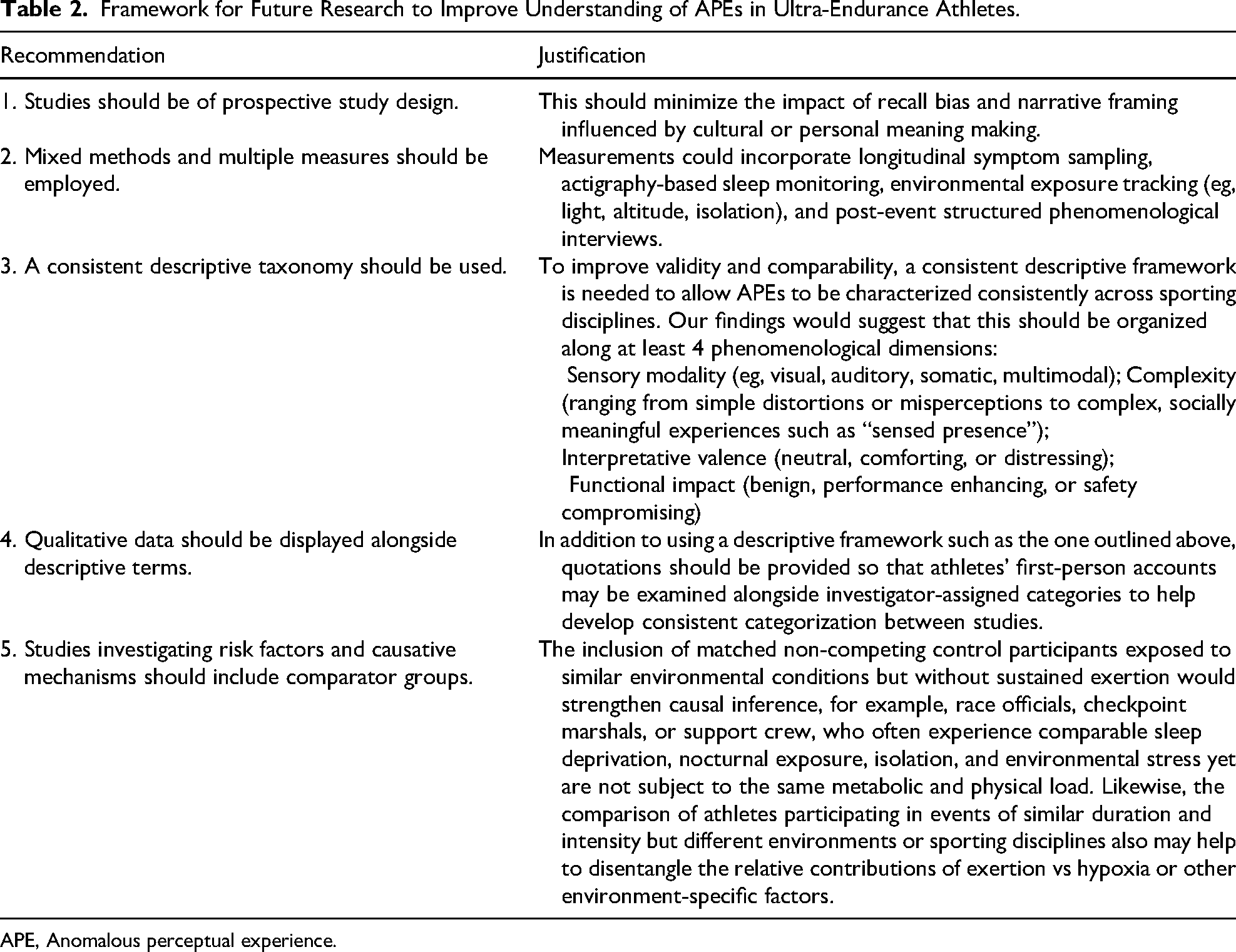
APE, Anomalous perceptual experience.
Limitations
This systematic review has several limitations that must be acknowledged. First, the included studies were heterogeneous in design, quality, and methodology. They ranged from single case reports and small case series to field studies and cross-sectional surveys, each employing different instruments, outcome definitions, and levels of detail. Most studies lacked standardized or validated measures for APEs, and the absence of a consensus framework for describing these phenomena impedes accurate cross-study comparisons and risks conceptual ambiguity. This variability limits the ability to synthesize findings quantitatively or to draw generalizable conclusions.
Second, a substantial portion of the data derived from retrospective self-reports, personal narratives, or lay literature. These sources are inherently vulnerable to recall bias, misinterpretation, and narrative framing influenced by cultural or personal meaning making. In some cases, the experiences may have been embellished or selectively reported, especially where the APEs formed a salient or dramatic part of the athlete's story.
Third, the review is limited by language and publication bias. Only English-language peer-reviewed articles were included, potentially excluding relevant studies in other languages or gray literature sources.
Fourth, there is limited demographic diversity across studies. Most participants were male, often from Western or European contexts, and typically involved in mountaineering or ultramarathon running. This raises questions about the generalizability of findings to other genders, cultures, or ultra-endurance disciplines.
Finally, the absence of control groups or comparative designs precludes strong causal inference. Although sleep deprivation and altitude are frequently implicated, their relative contributions cannot be reliably disentangled without more rigorous experimental or longitudinal designs. Similarly, the decision to focus on ultra-endurance sport in this review may represent an overly narrow perspective because APEs occur in individuals without psychiatric illness in many nonsporting contexts such as the bereaved 41 and spiritual believers. 42
Conclusion
This systematic review demonstrates that APEs are a recurrent and varied phenomena in the context of ultra-endurance sport. These experiences, which range from misperceptions to complex multimodal experiences, are most commonly visual but also may include auditory, somatic, and “sensed presence” phenomena. While traditionally associated with high altitude environments, similar phenomena were observed across a range of ultra-endurance disciplines, suggesting that these experiences are not exclusive to altitude-related pathophysiology. Sleep deprivation emerged as the most consistently reported contributing factor, with a clear temporal association between cumulative wakefulness and symptom onset. Other frequently implicated stressors included exhaustion and sensory and social deprivation. Although these phenomena are typically transient and self-limiting, they may have a variable impact—from neutral, to comforting, to distressing and performance impairing. Misinterpretation of such experiences, particularly by clinicians unfamiliar with ultra-endurance contexts or athletes concerned and fearful of their significance, may risk overpathologizing normal adaptive responses to extreme physiologic and environmental stress.
Given the limited number of high-quality studies and substantial methodologic heterogeneity, definitive conclusions about prevalence, etiology, and risk factors remain elusive. Future research should adopt a consistent taxonomy and use comparator groups to move beyond descriptive accounts and examine the mechanisms that contribute to APEs as well as their impact on athlete performance and safety.
Supplemental Material
sj-docx-1-wem-10.1177_10806032261423071 - Supplemental material for Anomalous Perceptual Experience During Ultra-Endurance Sport: A Systematic Review
Supplemental material, sj-docx-1-wem-10.1177_10806032261423071 for Anomalous Perceptual Experience During Ultra-Endurance Sport: A Systematic Review by Elizabeth E. Davidson, Sean L. Davidson and Paul Glue in Wilderness & Environmental Medicine
Footnotes
Acknowledgments
The authors thank Christy Ballard, subject librarian (medicine, University of Otago) for providing assistance in formulating the database search.

Ethical Considerations
There are no human participants in this article, and informed consent is not required.
Author Contribution(s)
Funding
The authors received no financial support for the research, authorship, and/or publication of this article.
Declaration of Conflicting Interest
The authors declared no potential conflicts of interest with respect to the research, authorship, and/or publication of this article.
Previous Presentation
Presented at the Royal Australian and New Zealand College of Psychiatrists (RANZCP) 2025 New Zealand Conference, September 8–10, 2025, Dunedin, NZ.
References
Supplementary Material
Please find the following supplemental material available below.
For Open Access articles published under a Creative Commons License, all supplemental material carries the same license as the article it is associated with.
For non-Open Access articles published, all supplemental material carries a non-exclusive license, and permission requests for re-use of supplemental material or any part of supplemental material shall be sent directly to the copyright owner as specified in the copyright notice associated with the article.
