






Abstract
In this study, Hypericum perforatum L. has been used for dyeing woolen fabrics and improving antibacterial properties. Tin chloride, iron II sulfate, alum and copper II sulfate mordant materials were used to dye wool with Hypericum perforatum L. Dyeings were also performed without using mordant materials. H. perforatum was extracted prior to dyeing. Fourier transform infrared (FTIR), inductively coupled plasma-mass spectrometry (ICP-MS), antibacterial activity, and fastness testing of the dyed fabric samples were performed. Scanning electron microscope (SEM) images of the dyed samples were also examined. It was determined that H. perforatum L. can be used for dyeing woolen fabrics while imparting antibacterial properties.
Keywords
Introduction
Herbal products have been used in textile dyeing since ancient times. Based on current consumer demands, use of natural dyes in dyeing is increasing once again. 1 It is known that use of chemicals can cause different problems to human health and environment. 2 Several research studies have been carried out on the advantages of various phytochemicals in many plants, fruits, and vegetables and their significant effects on human healthcare. 3 The screening of plants with medicinal properties is performed to discover bioactive substances or compounds. These bioactive compounds give a way forward for the development of less expensive agents with antimicrobial properties. 4 Antimicrobial clothing and textile materials have recently attracted consumer and manufacturer interests all over the world. 5 Furthermore, rapid growth in the population and increasing standard of living, especially in developing areas, have led to a huge demand for healthcare textiles. 6 Consumer attitudes towards hygiene and active lifestyle has created a rapidly increasing market for a wide range of medical textiles, which in turn, has stimulated intensive research and development. 7
Textiles are susceptible to cross contamination as they are conducive to the growth of pathogenic microorganisms. 8 The large surface area and capacity to retain moisture enable the growth of microorganisms on these textile structures, hence causing a range of undesirable effects to textiles and users and becoming a health and safety issue. 9 Researchers have discovered that microorganisms can survive for prolonged durations on various surfaces including textiles such as cotton, wool, and silk. 10 Natural fiber fabrics are more susceptible to microorganism attack than synthetic fiber fabrics. 11 The antibacterial properties of wool are an important functionality since they are susceptible to microbial growth. A large number of approaches have been applied for this functionality via synthetic and natural products. 12
Hypericum perforatum L. (St. John's Wort, Hypericaceae) is a member of the genus Hypericum, of which there are 400 species worldwide. 13 H. perforatum L. is a five-petalled, yellow-flowered perennial weed common to the western United States, Europe, and Asia. 14 The antimicrobial effect of H. perforatum has been known for many years. 15 Hypericin is one of the most important compounds of this plant. 16 The plant is traditionally used in several European countries for the treatment of skin injuries, burns, and neuralgia. 17 The antimicrobial activity of H. perforatum, due to hyperforin, proanthocyanidins, and xanthone compounds, is supported by many studies. 18
In this study, H. perforatum extract was used to dye and treat woolen fabrics. For this purpose, different mordant materials were also used in addition to H. perforatum for dyeing.
Experimental
Materials
Wool fabric (100%, 160 g/m2, 2/1 twill, Yünsa) was used. Dried H. perforatum (Figs. 1 and 2) obtained from the local market, used in dyeing experiments, was ground (Fig. 3) and extracted (Fig. 4) prior to use.
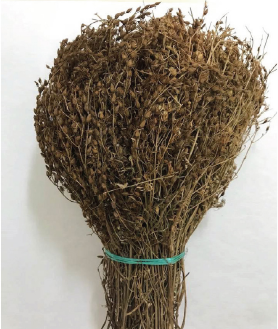
Dried H. perforatum L.
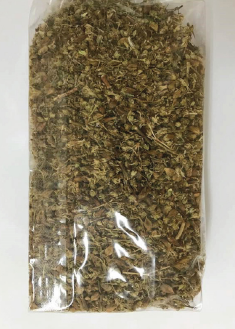
Shelled H. perforatum L.
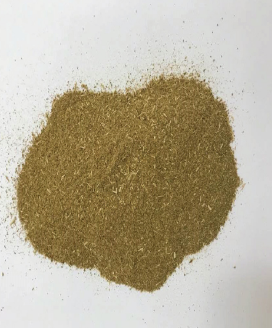
Ground H. perforatum L.
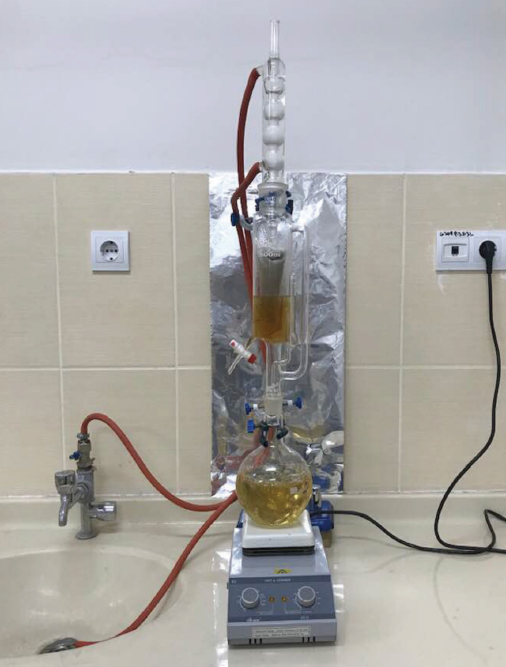
Extraction unit.
The ground plant (35 g) was placed in the extraction unit. After 1 L of distilled water was added to the system, extraction was started and continued for 5 h. The resulting extract was used for dyeing.
Dyeing
A Termal brand sample dyeing machine was used for dyeing. Dyeing experiments were carried out according to the dyeing graph shown in Fig. 5. The herbal extract was used for dyeing. During the dyeing process the liquor ratio was adjusted to 1:50 (based on the herbal extract). Four different mordant materials were used: tin chloride (SnCl2·2H2O, (3%)), iron II sulfate (FeSO4·7H2O, (3%)), alum (KAlSO4·10H2O, (20%)), and copper II sulfate (CuSO4·5H2O, (3%)).
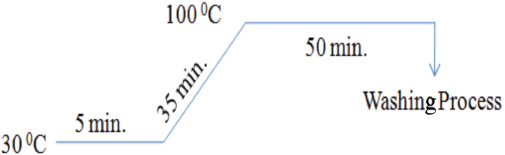
Dye graph of the wool fabrics.
After dyeing, a 3 min rinse was carried out, then washing was carried out at 60 °C for 5 min, followed by a 3 min rinsing step. After washing, the dyed wool fabric samples were dried at room temperature (RT).
After dyeing, color value analysis, light (ISO 105-B02, 1994), 19 washing (ISO 105-C10, 2006, Test A (1)) 20 fastness tests, and antibacterial effect (ASTM E2149-01:2001) 21 tests of the dyed fabric samples were performed. Antibacterial effect tests were performed with Escherichia coli (ATCC 25922, Gram-negative) and Staphylococcus aureus (ATCC 29213, Gram-positive) bacteria. Antibacterial effect tests were performed according to Eq. 1.

A is the 24 h contact time CFU/mL of the flask containing the dyed wool sample and B is the 0 h contact time CFU/mL of the flask.
SEM images (ZEISS EVO LS-10) of the dyed fabrics were also examined. Inductive coupled plasma-mass spectroscopic (ICP-MS) analysis was also performed. In addition, Fourier transform infrared (FTIR) analysis of the dyed woolen fabrics were also performed.
Results and Discussion
Dyeing of woolen fabrics was carried out by using Hypericum perforatum L. extract and various mordant materials. As a result of the dyeing process, yellow tones and brown tones were obtained. For example, in the dyeing experiment using potassium aluminum sulfate (alum) mordant, a* = 1.24, b* = 42.44, and h0 = 88.32 values were found and the color was perceived as yellow. In another dyeing experiment using copper (II) sulfate mordant, a* = 5.84, b* = 27.15, and h° = 77.86 values were found. The color obtained in this dyeing experiment was perceived as brown (Table I).
CIE L*a*b* C* h0 and K/S values of Dyed Wool Samples
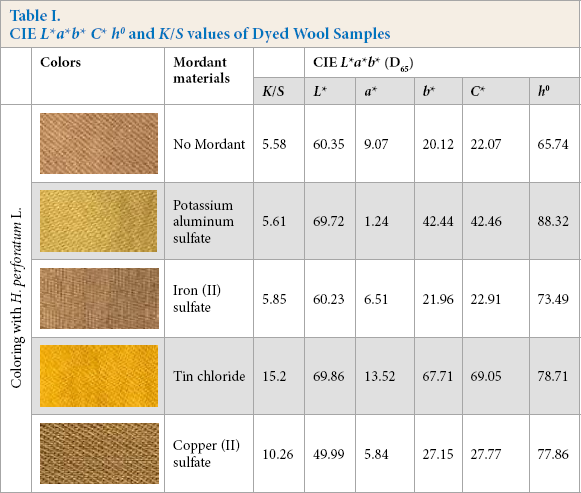
The L* values varied between 49.99 and 69.86 (Table I). The lowest value was obtained from the dyeing process using copper (II) sulfate, while the highest value was obtained from the dyeing experiment using tin chloride mordant.
The K/S values presented in Fig. 6 varied between 5.58 and 15.2. The highest K/S value was obtained by using tin chloride mordant in the dyeing process. The lowest K/S value was achieved without using mordant material in the dyeing processes.
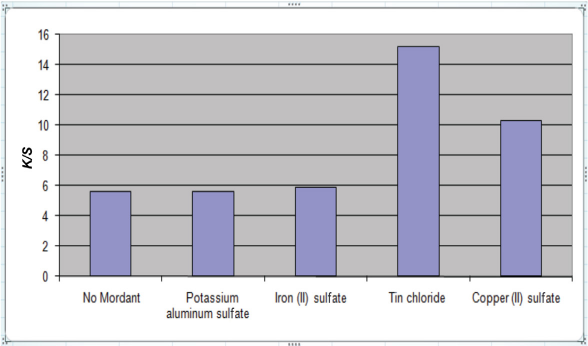
K/S values of the dyed samples.
Light and washing fastness tests were also performed for woolen fabrics dyed using Hypericum perforatum L. and the results of these tests are presented in Table II. Moderate to good values light fastness values were obtained. For example, the light fastness test result of the dyeing experiment using copper mordant was determined as 4-5. This value was the highest result. The lowest light fastness result was obtained by using tin chloride mordant (3).
Color Fastness Properties of Dyed Fabrics a
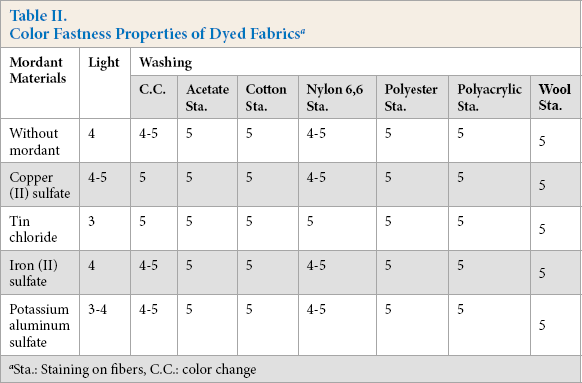
Sta.: Staining on fibers, C.C.: color change
In the washing fastness tests, both color change results and reference fiber staining values were examined. Multifiber fabric containing 6 different fiber types was used to examine the staining values. Very good values were obtained both in terms of color change and in staining multifiber fabric. These values varied between 4-5 and 5.
Antibacterial effect tests of woolen fabrics dyed using Hypericum perforatum L. extract were also performed and the results presented in Table III. The antibacterial effect test was also performed for the woolen fabric sample that had not undergone dyeing (control). No antibacterial properties due to the wool fabric itself could be detected.
Antibacterial Efficacy of Dyed Samples
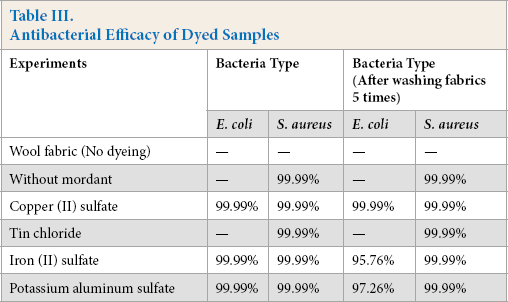
For all dyeing processes carried out with or without different mordant materials using H. perforatum extract, very good antibacterial values (99.99%) were obtained against S. aureus bacteria. In dyeing experiments without mordant, no antibacterial effect against E. coli bacteria were observed. Additionally, the woolen fabric sample obtained from dyeing using tin chloride mordant material did not show any antibacterial effect against E. coli bacteria. In all other dyeing experiments, 99.99% antibacterial effect against E. coli bacteria was obtained. In the antibacterial effect tests carried out as a result of washing the woolen fabrics 5 times according to the ISO 105-C10, 2006, Test A (1), the antibacterial effect values after washing were similar to those before washing.
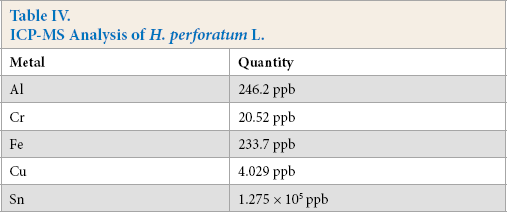
ICP-MS analysis of Hypericum perforatum L. was performed and presented in Table IV. Values of 246.2 ppb Al, 20.52 ppb Cr, 233.7 ppb Fe, 4.029 ppb Cu, and 1.275 ×10⁵ ppb Sn were detected in the analyzed H. perforatum. These elements in H. perforatum were thought to have an effect on the antibacterial properties.
ICP-MS Analysis of H. perforatum L.
Wool is composed of cuticles and a cortex, and only in the case of course wool, a medulla. The cuticle has valine, disulfide bond groups, and carboxyl groups, whereas the cortex makes up the main portion of the wool. It is made up of more than 18 amino acids, which can be divided into four distinct groups: cationic, anionic, nonpolar, and polar. The main functional groups include carboxyl (–COOH), amino (–NH2), and hydroxyl (–OH) groups; thus, the chemical properties were extremely active. In FTIR spectroscopy, the main characteristic peaks appeared between 1000 and 1700 cm−1, including amide I (1644 cm−1), amide II (1535 cm−1), and amide III (1239 cm−1) groups. The C–O contraction peak appeared between 1000 and 1300 cm−1. 22
When the FTIR analysis of dyed woolen fabrics was examined, no significant differences were found compared to the undyed woolen fabric. Similarly, when the SEM images were examined, no significant superficial image differences were found between the dyed and undyed woolen fabric samples (Fig. 7).
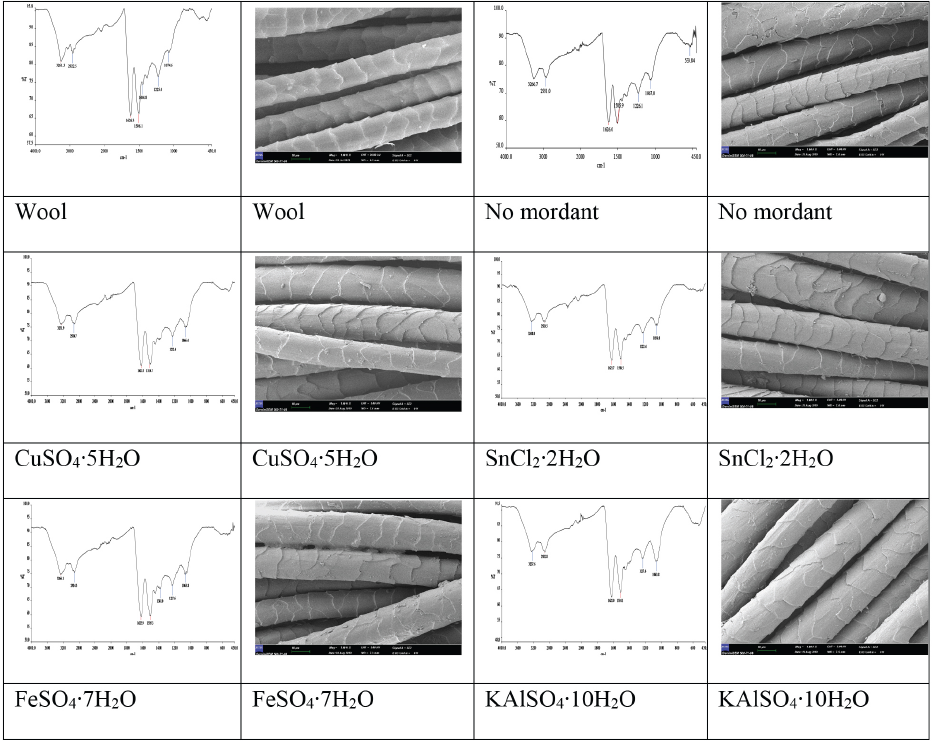
FTIR and SEM views of the dyed wool samples.
Conclusion
When choosing textile products, consumers prefer products that have been treated with antibacterial finishing. In this study, antibacterial properties were imparted on woolen fabrics by treatment with Hypericum perforatum L extract. Light and washing fastness tests of fabric samples dyed with H. perforatum extract were also performed. It was determined that H. perforatum extract can be used in coloring of woolen fabrics and provided sufficient light and washing fastness values. When antibacterial effect tests were examined, it was found that H. perforatum extract imparted antibacterial properties to woolen fabrics under various dyeing conditions.