




Abstract
Most captive female elephants are nulliparous and aged and many have endometrial disease, factors that may hinder fertility. This study characterized the pathologic features and demographic distribution of endometrial lesions from 27 captive Asian (Elephas maximus) and 13 African elephants (Loxodonta africanus), 12- to 57-years of age. The principal lesion was marked cystic and polypoid endometrial hyperplasia (CEH), present in 67% of Asian and 15% of African elephants ranging from 26 to 57 years. The lower prevalence in African elephants likely reflects their younger age range in this study. Fourteen of 15 affected elephants with breeding information were nulliparous. These results suggest that CEH and polyps are common in aged nulliparous elephants, and the severity of these lesions may impair fertility. These findings will be useful in the interpretation of ultrasonographic findings during reproductive examinations of potential breeding cows. Also, breeding programs should focus on younger animals.
Keywords
Both Asian (Elephas maximus) and African (Loxodonta africana) elephants are endangered and currently listed in appendix 1 of the Conference on the International Trade in Endangered Species. 8,10 Their endangered status is a result of habitat loss and poaching, as well as their long birth interval. Captive breeding to maintain self-sustaining populations has recently become a priority of the American Zoo and Aquarium Association Elephant Species Survival Plan as replacements from the wild become unavailable. 8,10
Few elephants had previously bred in captivity and most are aged, nulliparous, and of unknown fertility. In the wild, a typical population has 47% female elephants less than 15 years old, 33% 15–30 years old, and 20% greater than 30 years old, 9 whereas in captivity, 56% of the female Asian elephants were more than 25 years old in 1997, and by 2017, 66.7% of this population are projected to be greater than 30 years old. 10 In 2000, 58% of the captive female African elephants were less than 20 years of age, but in 10 years, two thirds of the population will be more than 25 years of age. 8
In the wild, most first births occur in Asian elephants between 15 and 20 years with a mean calving interval of 4.6–4.8 years. 9,10 Puberty in wild African elephants occurs between 7 and 12 years, and almost all are bred by 14 years. 1 Asian elephants in captivity were typically 15–16 years old or younger at the time of their first birth. 10 All calves were born to 10- to 22-year-old primiparous African female elephants in North America, with most calves born to female elephants under the age of 15 years. 8 Only one first-time mother gave birth after 20 years of age. In captivity, only 18% of the female elephants were proven breeders in 1997. 8
In some species, nulliparity and aging are associated with progressive degenerative changes to the endometrium that impair fertility. Endometrial disease has been noted in captive elephants, but no comprehensive pathology survey has been undertaken. This study characterizes the gross and histologic features and prevalence of endometrial disease in African and Asian elephants.
The study animals were from the North American (NA) captive Asian or African elephant population. Animals included in this study were of reproductive age (12 years or older) 9 and had a complete necropsy report. Forty elephants (27 Asian and 13 African elephants) of 84 deceased NA elephants of reproductive age met the selection criterion. Breeding information was available from 31 animals (22 Asian and nine African elephants). Necropsy reports were reviewed for endometrial lesions, and endometrial tissues from 18 Asian and five African elephants were examined. Tissues passed from the urogenital canal of one live Asian elephant also were included in the study. Case details are given in Table 1 (Asian elephants) and Table 2 (African elephants). Median age for Asian elephants was 41 years, whereas the African elephants were significantly younger (medial age = 22 years; Student's t-test, P = 0.0004). Lesion prevalence within the study population was calculated for each species. The association between the presence or absence of endometrial disease and age, parity, or species was analyzed using multiple logistic regression. The correlation between cystic and polypoid endometrial hyperplasia (CEH) and leiomyomas was analyzed by a Fisher exact test. Significance was determined at P ≤ 0.05.
Baseline demographic, reproductive, and pathologic data on captive, sexually mature Asian elephants (Elephas maximus) that died in North American zoos.∗
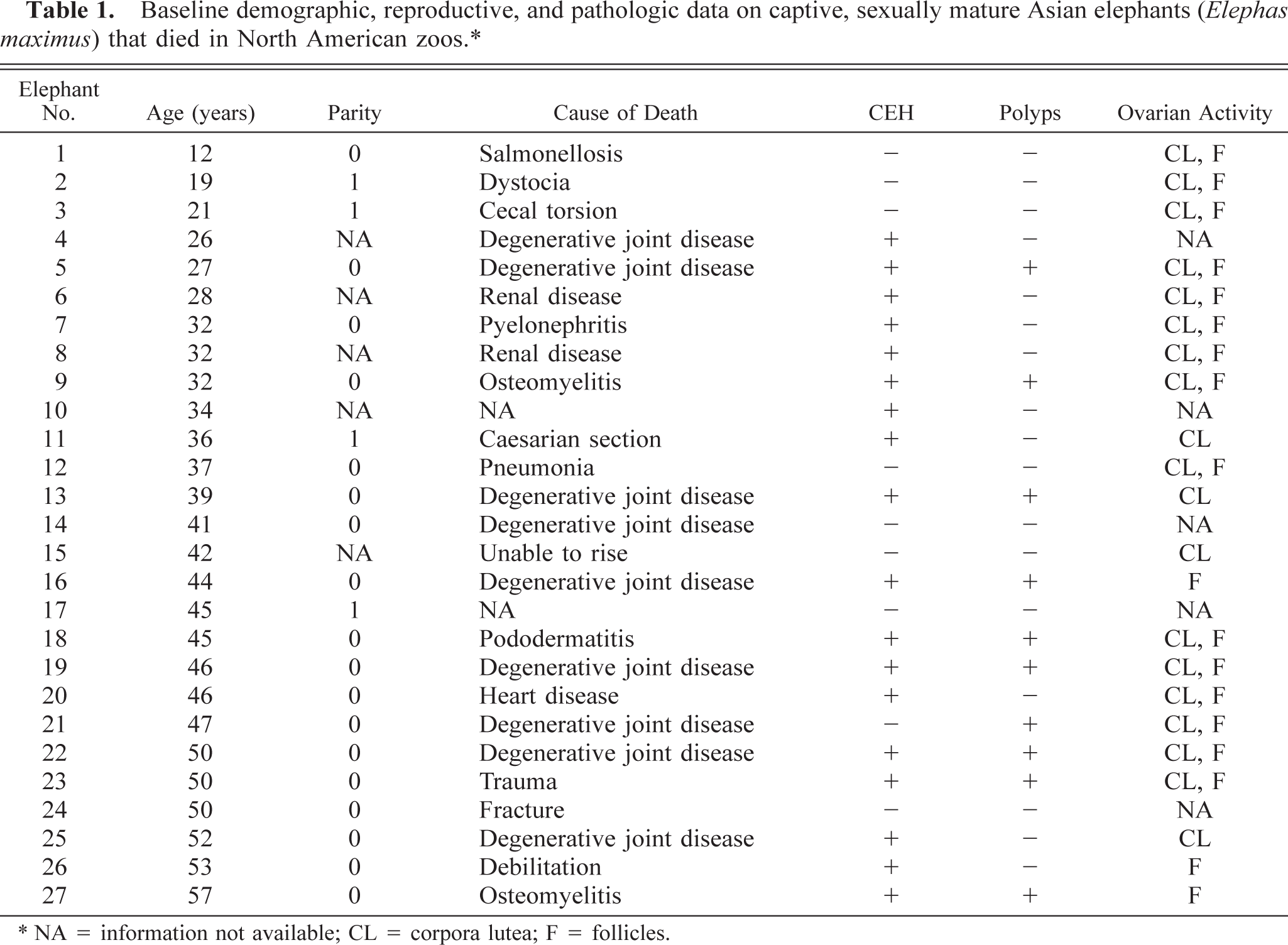
∗ NA = information not available; CL = corpora lutea; F = follicles.
Baseline demographic, reproductive, and pathologic data on captive, mature African elephants (Loxodonta africanus) that have died in North American zoos.∗
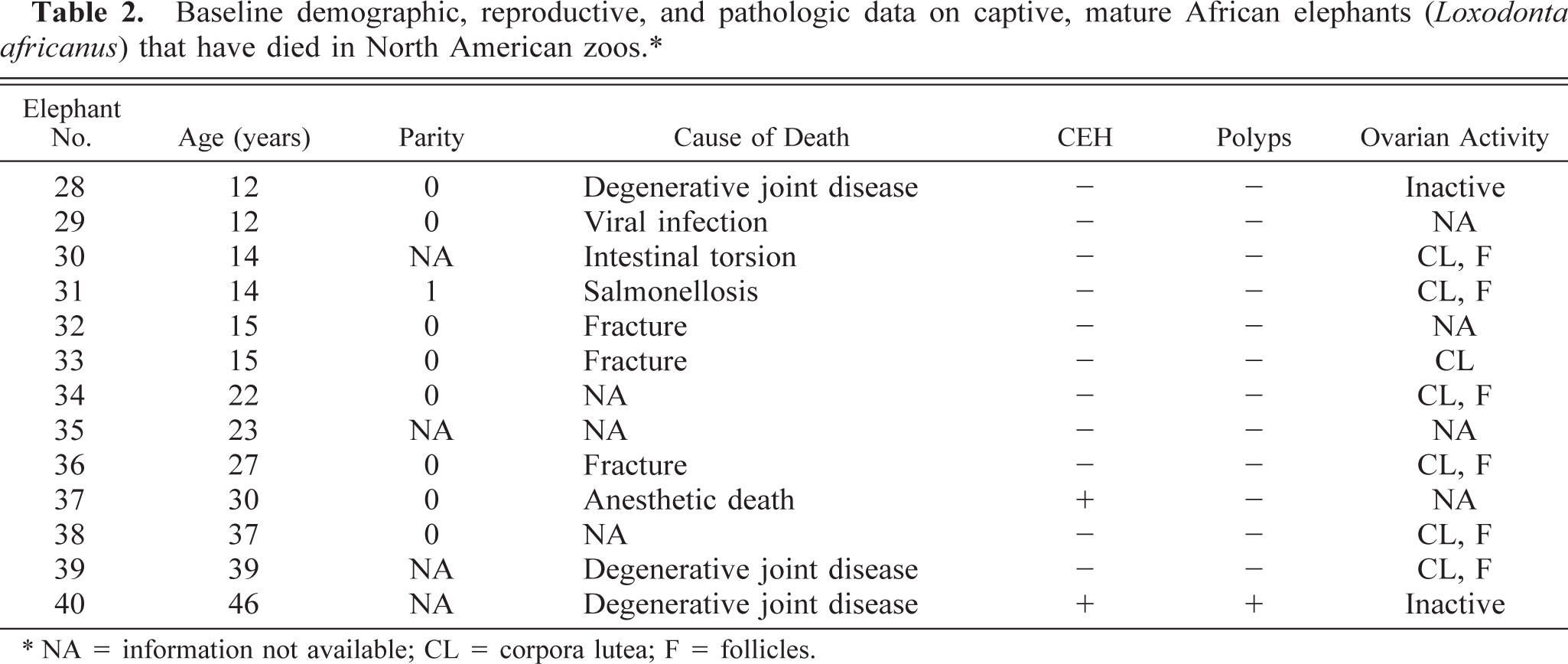
∗ NA = information not available; CL = corpora lutea; F = follicles.
Eighteen Asian elephants (67%) ranging in age from 26 to 57 years (median age = 39 years) had some form of hyperplastic endometrial disease including cystic hyperplasia and polyps. All affected elephants for which breeding histories were available were nulliparous, except one primiparous elephant. Only two of 13 African elephants (15%), 30 and 46 years old and of unknown parity, had hyperplastic endometrial disease.
The macroscopic appearance of the endometrium included widespread endometrial cysts ranging from 0.5 to 3 cm in diameter and single to multiple edematous polyps up to 10 cm in length and 1–3 cm in width (Figs. 1, 2). The cysts were generally diffuse within the endometrium, but in two elephants, only focal or multifocal cysts were visible at gross necropsy despite more diffuse disease histologically. Endometrial polyps often had prominent cysts along the apical surface and variably thick stalks. Some elongated polyps were twisted at their base and necrotic. Nineteen of 27 Asian elephants had leiomyomas either within the endometrium or compressing the endometrium from the superficial myometrium.
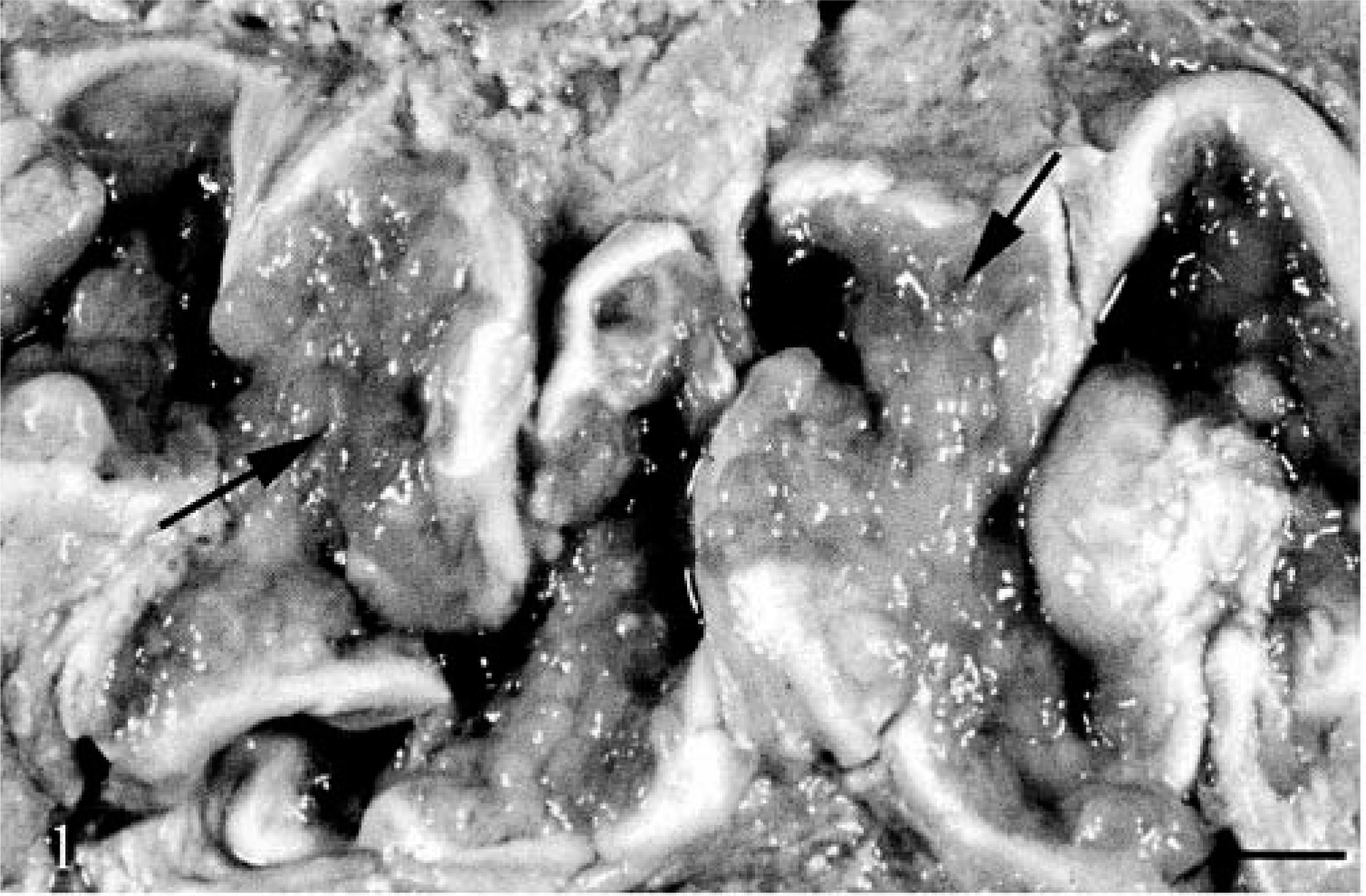
Endometrium; Asian elephant No. 27. Widespread endometrial cysts ranging from 0.5 to 3 cm in diameter line the endometrial surface (arrows). Bar = 2 cm.
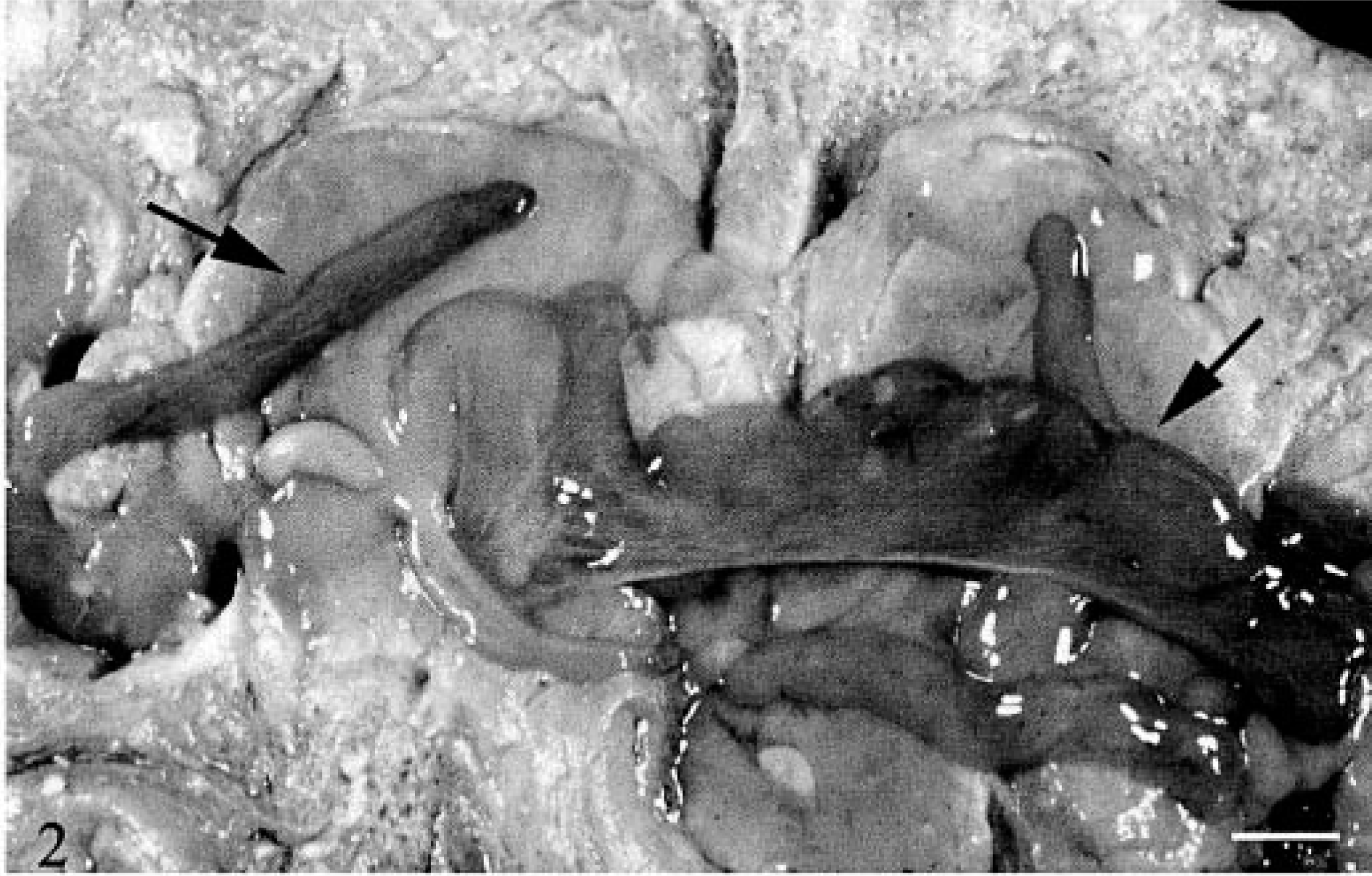
Endometrium; Asian elephant No. 13. Multiple elongated endometrial polyps project into the uterine lumen (arrows). Some elongated polyps were twisted at their base and were necrotic. Bar = 2 cm.
The 15 cases examined histologically had lesions that were similar in character but varied in severity. In most cases, the endometrium was moderately thickened (two to three times normal) by numerous cystic and hyperplastic haphazardly arranged glands. The cystic glands ranged from 2 to 100 times the normal diameter and markedly compressed the adjacent stroma. Larger cysts caused polypoid projections of the endometrium into the lumen. The cystic glands were lined with crowded and variably multilayered epithelium (Fig. 3). The epithelium was cuboidal to low columnar and attenuated in the larger cystic glands. In some areas, endometrial glands were arranged in disorganized clusters and were lined by crowded densely basophilic epithelia (adenomatous hyperplasia) (Fig. 4). A few elephants had endometrial nests surrounded by circumferential fibrous tissue. One Asian elephant had severe mixed inflammatory infiltrates and a moderate degree of fibrosis.
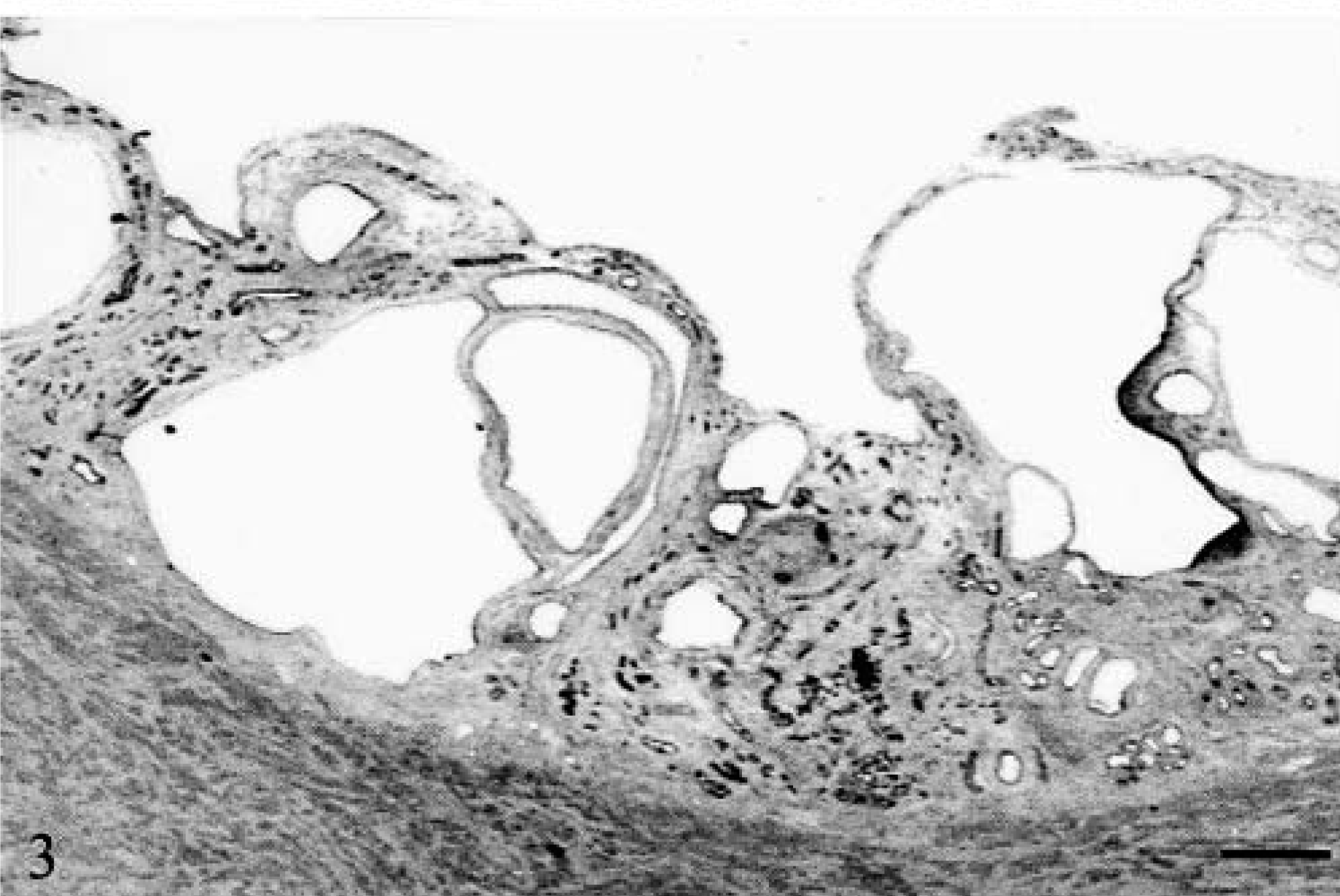
Endometrium; Asian elephant No. 27. The endometrium is expanded by numerous cystic and hyperplastic haphazardly arranged glands. The cystic glands range from 2 to 25 times the normal diameter and markedly compressed the adjacent stroma. The cystic glands are lined with crowded and variably multilayered epithelia. The epithelium is cuboidal to low columnar and attenuated in the larger cystic glands. HE. Bar = 0.1 cm.
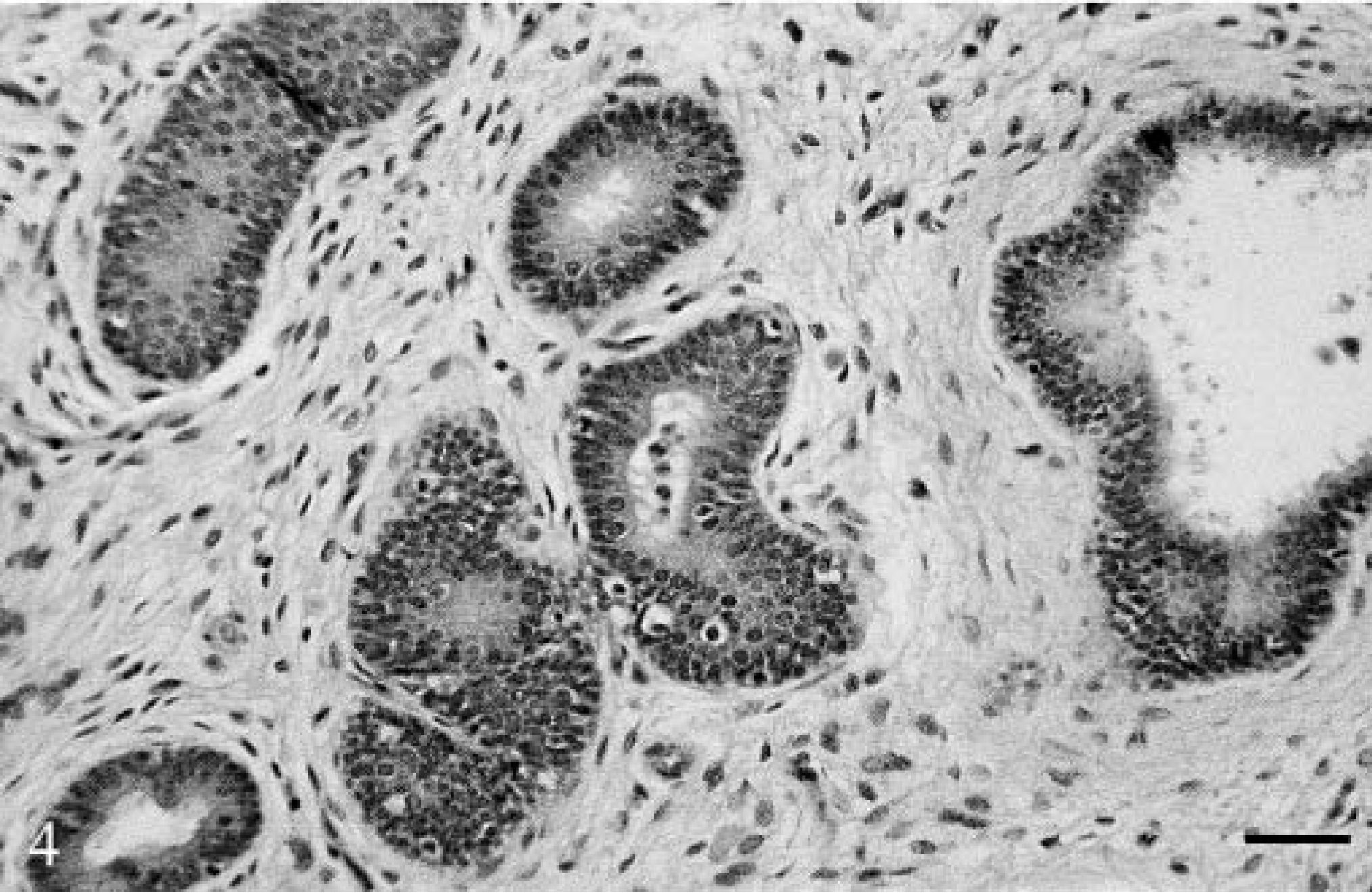
Endometrium; Asian elephant No. 27. Endometrial glands lined by crowded deeply basophilic epithelium are arranged in disorganized clusters or form cysts. HE. Bar = 0.1 mm.
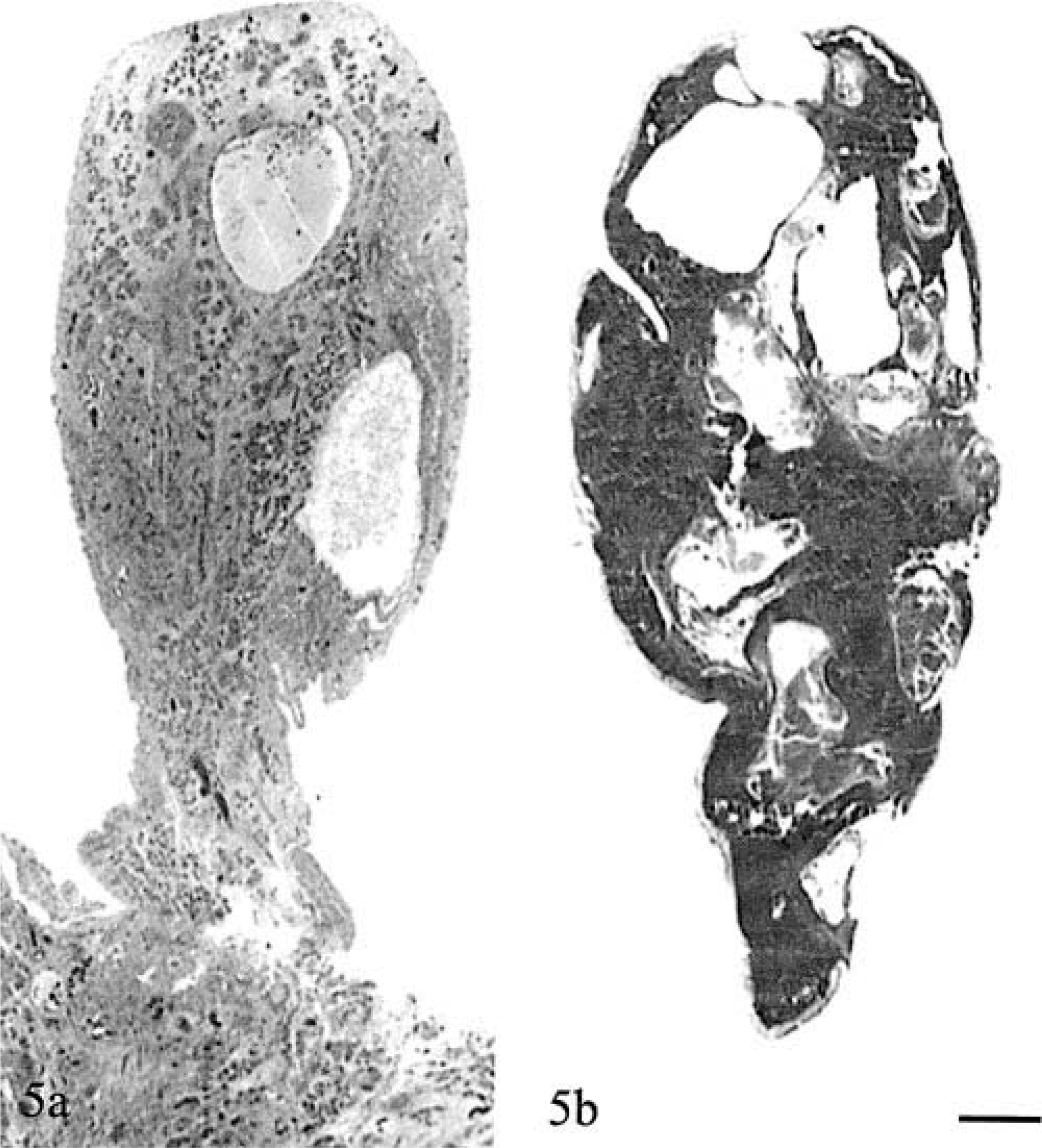
Histologically, the endometrial polyps were composed of a core of large cystic glands embedded in edematous stroma containing dilated capillaries, veins, and lymphatics (Fig. 5a). These glands also were lined with pseudostratified epithelium. The biopsy tissues expelled from the live Asian elephant cow (elephant No. 22) consisted of five red to brown, soft, fleshy, oval polyps, approximately 0.5 to 1.5 cm in diameter and 2.0 to 5.0 cm in length, containing multiple cysts. Histologically, the polyps were necrotic and contained cystic and normal glands lined by ghosts of cuboidal to columnar epithelial cells and embedded in loose stroma (Fig. 5b). These necrotic polyps were similar to those seen in the endometrium of other cases and distinct from urogenital polyps reported earlier in African elephants because of the lack of glandular structures in the latter. 7
The lesions in both aged African elephants were mild and consisted of cystic endometrial glands. One African elephant had polyps similar to those seen in the Asian elephants. Leiomyomas were not observed in any African elephants in this study.
Asian elephants had a significantly higher risk of developing endometrial hyperplasia than African elephants (odds ratio = 24.2; 95% confidence interval [CI] = 4.03–145.299), taking age into consideration. The overall risk for both species of developing endometrial hyperplasia increased 1.16 times with each year of age (95% CI = 1.064–1.264), and in Asian elephants alone, it increased 1.123 times with each year (95% CI = 1.006–1.253). No significant beneficial effect of parity was noted. No significant association could be found between leiomyomas and endometrial disease.
Overall, these results indicate that aged elephants have a higher risk of developing proliferative endometrial disease, and the risk may be greater in Asian elephants. Unlike the severity of disease in Asian elephants, African elephants had only mild cystic and polypoid changes. The younger population of African elephants in this study may be one reason for this species difference. A protective effect of parity on endometrial disease was not evident in this study, most likely because of the small number of parous animals in the study population.
The CEH found in the elephants was similar to that reported in other species; 2,5 however, the lesion in elephants was unique in its overall severity and the frequency and number of associated polyps. Furthermore, elephants are unique among ungulates in that CEH is associated with a normal hormonal environment, including both prolonged estrogen and progesterone phases similar to carnivores, and is not due to exogenous sources of estrogen or ovarian estrogen-secreting cysts or tumors, as is seen in the cow, ewe, or sow. 5 All Asian elephants and seven of nine African elephants from which the status of the ovaries was reported in the pathology report (Tables 1, 2) had evidence of ovarian cycle activity. Serum progesterone profiles available for elephant No. 16 shortly before death (E. Ramsay, unpublished) indicated cyclic peaks, providing further evidence of active cycling in aged diseased elephants. The normal estrous cycle in elephants is about 15–16 weeks in length, with a 4- to 6-week follicular phase and an 8- to 11-week luteal phase. 4 Aged, nulliparous dogs and cats have a similar prolonged follicular and luteal phase associated with CEH. In these species, estrogen primes the uterus for maximum effect of the prolonged progesterone exposure during the luteal phase of the estrous cycle. The size and number of glands increases under estrogenic influence, and the glands increase in secretory function under progestational effects. Progressive proliferative and prolonged secretory activity, cycle after cycle, may lead to irreversible change if pregnancy does not intervene to cause endometrial remodeling. It is possible that a similar hormonal mechanism of repeated nonreproductive cycles is responsible for the chronic proliferative changes in the elephant endometrium. Anatomically, elephant placentation is very similar to that of carnivores, being endotheliochorial and zonary with uniform number and thickness of endometrial glands. 6 This similar placentation may reflect analogous hormonal control of endometrial growth. In contrast, other ungulate species usually have epitheliochorial placentation (domestic cattle, horses, and pigs) and only rarely develop CEH unless exposed to exogenous hormones or abnormally high levels of endogenous hormones from follicular cysts or granulosa cell tumor. 5
CEH can lead to permanent infertility in all domestic species, presumably by preventing implantation or fertilization. 5 The practice of early breeding as prevention of CEH has stood the test of time in carnivores and would likely benefit elephants in captivity. In the wild, Asian elephants usually become pregnant by 15–16 years and then may have repeated pregnancies until 60 years. 9 During the 4.5-year calving interval, the elephant cows have lactational anestrus, so there would be no hormonal stimulation of the endometrium during this interval unlike the nulliparous cow. 9 Currently, however, the majority of the female elephants available for breeding programs are more than 25 years old, long past the time they would have normally first calved in the wild. 10
If endometrial hyperplasia represents an obstacle to fertility in elephants, then developing diagnostic modalities for its detection in live animals will be important. Expulsion of endometrial polyps represents an indirect means of diagnosing endometrial disease, but it would be desirable to detect disease before it reaches the advanced state of polypoid hyperplasia. Ultrasonography is now used to diagnose pregnancy, detect anatomic irregularities and leiomyomas, and follow ovarian cycles in elephants. 3 Ultrasonography may also assist in detecting endometrial cystic and polypoid lesions. Ultimately, it will be necessary to correlate gross and histologic lesions with ovarian hormone levels, ultrasonographs, and fertility. Although the challenges in captive breeding the elephant are legion, increased knowledge of the unique physiology of the elephant cow and potential obstacles may lead to improved screening of breeding candidates and use of preventative measures, such as early breeding or hormonal suppression. These efforts may increase the captive-breeding success for both Asian and African elephants, which is crucial for long-term conservation of these species.
Footnotes
Acknowledgements
We thank the following institutions for generously donating slides or tissues for this study: Baltimore Zoo, Brookfield Zoo, Busch Gardens Tampa Bay, Dallas Zoo, Denver Zoological Gardens, Detroit Zoological Institute, Chaffee Zoological Gardens of Fresno, Gladys Porter Zoo, Honolulu Zoo, Kings Island Park, Knoxville Zoological Gardens, Los Angeles Zoo, Louisville Zoological Gardens, Smithsonian National Zoological Park, North Carolina Zoological Park, Oklahoma City Zoological Park, Zoological Society of Philadelphia, Oregon Zoo, Riverbanks Zoo and Garden, Sacramento Zoo, Saint Louis Zoological Park, Zoological Society of San Diego, San Francisco Zoological Gardens, Six Flags Marine World, Rosamond Gifford Zoo at Burnet Park, Toledo Zoological Gardens, Wildlife Conservation Society (Bronx Zoo), and Zoo Atlanta. We thank the pathologists and veterinarians who performed the initial necropsies and responded to our survey. We also thank Dr. Stephen Griffey for photographic assistance, Arnold Saxton for technical advice, and Laurie Bingaman Lackey for assistance in data retrieval.