






Abstract
The ketamine/midazolam association of a dissociative with a sedative agent is used for the induction and maintenance of anaesthesia in laboratory animals. Anaesthesia may interfere with research results through side-effects on the nervous system, such as memory impairment. It is known that ketamine and midazolam affect cognition; however, their effects have not been clarified when used in a context of balanced anaesthesia. Thus, this study evaluated the effects of ketamine/midazolam on the acquisition of motor and of a spatial memory task in adult mice. Twenty-eight C57BL/6 adult male mice were divided into three groups: untreated control, treated with ketamine/midazolam (75 mg/kg / 10 mg/kg) and treated with midazolam (10 mg/kg) groups. Respiratory rate, heart rate and systolic pressure were measured every 5 min in the animals treated with ketamine/midazolam, as this was the only group that exhibited loss of the righting reflex. One day after treatment, animals were tested in the open field, rotarod and radial arm maze. There were no differences between treatments regarding open-field activity, rotarod performance or number of working and reference memory errors in the radial arm maze task. In conclusion, the learning process of spatial and motor tasks was not disrupted by the anaesthetic combination of ketamine/midazolam. These results suggest its safe use in adult mice in projects where acquisition of a spatial and motor task is necessary.
The ketamine/midazolam association of a dissociative with a sedative agent is used for the induction and maintenance of anaesthesia. These drugs are applied to laboratory animals as an anaesthetic combination 1 and to humans for sedative or analgesic purposes during various painful procedures and medical exams. 2
General anaesthesia has been described to impair learning in aged 3 and adult 4 rats. Other studies have shown an improvement of learning and memory in adult rodents after the administration of anaesthesia.5,6 These effects may last for weeks, which is a longer period than that expected considering the pharmacokinetic properties of the anaesthetics. 7 Hence, it is important to clarify the effects of different anaesthetic protocols on cognitive functions in rodents.
It has been described that synaptic inhibition via γ-aminobutyric acid A receptors or the decrease in excitation through
Little is known about the impact of ketamine/midazolam on task acquisition in adult subjects. In humans, the ketamine/midazolam combination used in a clinical context was shown to cause transient, dose-dependent memory impairment.13,14 There are no studies of the impact of the ketamine/midazolam combination on learning in animals. However, ketamine seems to provoke memory impairment when administered chronically15,16 and at high concentrations. 17 As was observed in humans, 18 midazolam caused temporary deficits in the acquisition of new memories (anterograde amnesia) in rodents. 19
The possible effects of the ketamine/midazolam combination on cognition may have not only clinical, but also research implications related to the welfare and normal behaviour of the animals. A deviation in behaviour caused by the anaesthesia could alter the outcome of research projects, especially in the neuroscience area.
The goal of this work was to evaluate the potential implications of a light anaesthetic dose of ketamine/midazolam combination on the acquisition of a spatial and motor memory task in adult mice.
Animals, material and methods
All procedures were carried out under personal and project licences approved by the national competent authority for animal protection, Direção Geral de Veterinária, Lisbon, Portugal.
Twenty-eight 5–6-month-old male C57BL/6 mice of conventional microbiological status that were bred in the animal facility of the institute (F2–F3 offspring of animals bought from Charles River, Barcelona, Spain) were distributed among seven cages (3–5 animals/cage; Makrolon type II cage, Tecniplast, Dias de Sousa, Alcochete, Portugal). Standard corncob litter (Probiológica, Lisbon, Portugal), a piece of tissue paper and a cardboard tube were provided in each cage. Water and rodent pellets (4RF25-GLP Mucedola, SRL, Settimo Milanese, Italy) were provided ad libitum. A food restriction schedule used by our group 20 was established one week before the beginning of the radial arm maze (RAM) task. In that period, a limited amount of food was provided by splitting pellets in small pieces and distributing them over the cage floor once a day. Initially, 2.2 g of food/mouse/day were given and, by weighing the mice daily, this amount was adjusted to a level that kept the mice at 85–95% of their free-feeding weight. The animals were weighed throughout the experiment to ensure that they maintained this weight. The animals were kept in a room with controlled temperature (21 ± 1°C) and humidity (55%). Light was provided on a 12/12 h cycle, with lights off at 19:00 h.
Anaesthesia
Mice were assigned randomly into three treatment groups: unanaesthetized control animals (n = 9), which received isovolumetric intraperitoneal injections of saline; animals treated with 75 mg/kg of ketamine and 10 mg/kg of midazolam (K/M), which was administered in a single intraperitoneal injection (n = 10); and animals treated with 10 mg/kg of midazolam (M), which was also given via the intraperitoneal route (n = 9).
Handling, injection and restraint of the animals were always performed by the same person. After ketamine/midazolam administration, animals were placed in a type III cage until the loss of the righting reflex. To maintain the temperature at 37 ± 2°C, animals were placed in dorsal recumbency on a homeothermic blanket covered with a cap, to avoid burning. The homeothermic blanket was connected to a rectal thermal probe (50–7061-F, Harvard Apparatus Ltd, Kent, UK). To measure the pulse rate and arterial pressure at intervals of 5 min, a cuff and a transducer connected to a pressure meter (LE 5001, Panlab, Barcelona, Spain) were placed on the tail base of animals. The animals wore a face mask delivering 100% of oxygen with a flow of 0.6 L/min. Animals were considered as being awake when they recovered the righting reflex, when they stretched the front paws to try to recover the right posture or when they reacted to the approach of the researcher's finger (stretching the nose to explore and poke). Animals that received saline injections were kept for 2 min in the type III cage (which was the average time until the loss of the righting reflex in animals receiving anaesthesia) and were then placed in their home cage, to avoid isolation stress. Animals treated with midazolam were sedated and placed for ~40 min (which was the average time until righting reflex recovery in anaesthetized animals) in a type III cage with a cardboard tube, to minimize stress. The latency to the loss of the righting reflex after ketamine/midazolam administration, induction time and the time from the loss of the righting reflex to the awakening of animals (time spent in dorsal recumbency) were recorded.
Open field
This test assesses exploratory behaviour, thus providing an indication of stress and anxiety. 21
Apparatus: A circular arena with a diameter of one metre made of grey polypropylene and surrounded by a wall of 30 cm was placed in the centre of the room and lit by two halogen lamps.
Test: Twenty-four hours post-treatment, each animal was released in the centre of the arena and allowed to explore it for 10 min. At the end of testing, the number of faecal boli was counted and the arena was cleaned with alcohol at 70%, to avoid the presence of olfactory cues. The test was recorded with a camera placed above the apparatus and fed into a computer using the multi-camera vigilance system GeoVision (GV-800/8, Taipei, Taiwan). The video analysis was performed using the VideoMot 2 program (TSE Systems, Bad Homburg, Germany), which measures several parameters: total speed, total distance walked, total number of transitions between regions, distance walked, number of visits and percentage of time spent in each region. In the video analysis, three concentric circles with diameters of 100, 66.6 and 33.2 cm were drawn using the VideoMot software, to define three concentric rings representing the periphery, middle and centre of the region, respectively. Latencies to exit and enter the centre were also registered. The recordings of the frequency of rearing were analysed later using the event-recording program, JWatcherTM version 1.0 (University of California, LA, USA and Macquarie University, Sydney, Australia, see http://www.jwatcher.ucla.edu). Because the VideoMot software calculates the speed of the motion of animals without taking into account the time spent without moving, this parameter was measured using the JWatcher software, which allowed the calculation of the real speed of animals. The duration of the status ‘immobile’ was only measured when the animals did not move for more than 3 s. The frequency of the event ‘immobile’ was also measured.
Rotarod
This protocol 22 tests the acquisition of a motor task.
Apparatus: The equipment (RotaRod Advanced for five mice, TSE Systems) consisted of a rotating drum (ø 3 cm; adjustable speed, 4–40 rotations/min [rpm]) with compartments allowing the simultaneous testing of up to five mice (cage mates).
Habituation: Animals were placed on the steady drum of the equipment for two trials of one minute. If an animal fell off during these trials, it was placed on the drum again, until one minute had elapsed.
Test: Twenty-seven hours post-treatment, animals were placed on the drum at 4 rpm. Once all animals were placed on the apparatus, the speed was increased from 4 to 40 rpm over 5 min, after which it remained at 40 rpm for an additional 5 min, resulting in maximum test duration of 10 min. The trial ended when the animal fell or when 10 min had elapsed. Two sessions per day were performed, with an intersession interval of 40 min; each session comprised three trials, with an interval of 5 min. This task was performed over seven days, to establish a learning curve. The latency and speed at which the animals fell were recorded using the RotaRod software.
Radial arm maze
This procedure evaluates spatial working and reference memory. 23
Apparatus: The maze was made of transparent acrylic and consisted of eight corridors/arms (length, 40 cm; width, 8 cm) disposed radially from a circular central platform (ø 18 cm). The apparatus had a wall with a height of 30 cm, and a food well was located 5 cm from the end of all arms (diameter, 1 cm). Commercialized pellets (Dustless Precision Pellets, 20 mg, chocolate-flavoured rodent purified diet, Bio-Serv, Frenchtown, NJ, USA) for laboratory animals were used as rewards. The maze was elevated by 50 cm above the floor on a central stand, around which the entire maze could be rotated.
Habituation: On the morning of the first habituation day, animals were placed in the apparatus in cage groups and were allowed to explore it for 15 min. In the afternoon, each animal was placed alone in the maze with all arms rewarded; the session ended after the mouse ate all the rewards or when 10 min had elapsed. On the second day, three trials were performed with the maze fully baited, with an inter-trial interval of one minute; each trial ended when all rewards were eaten or when 5 min had elapsed. The apparatus was rotated between trials to habituate the animals to this movement, which was also used in the test.
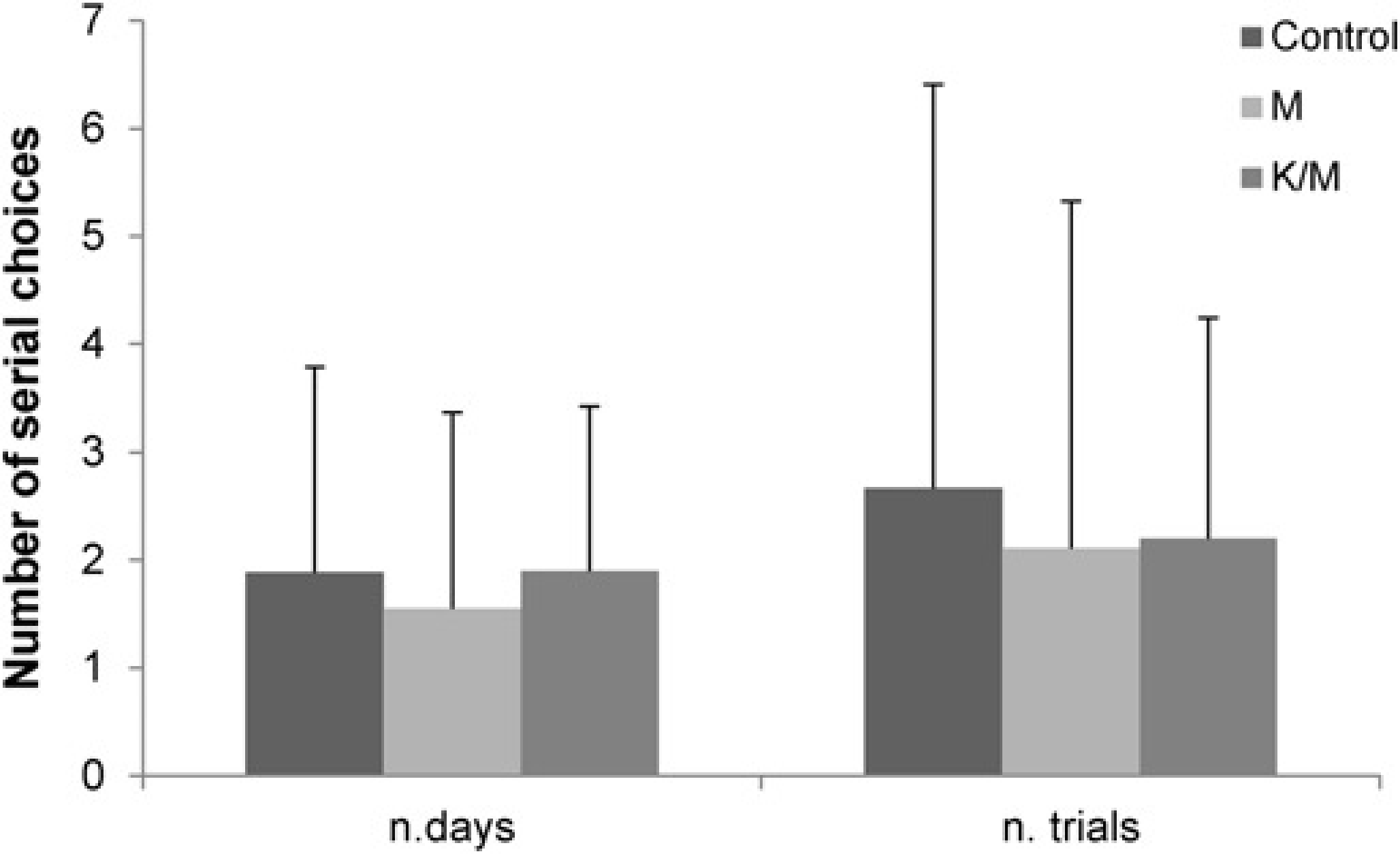
Test: Three of eight arms were always baited and were always the same for the same animal throughout the experiment. The angles between baited arms were always 90°, 135° and 135° and different arms were counterbalanced between groups, as much as possible. Only visual extramaze cues were presented and consisted of geometrical figures placed on the walls. All other room features were kept unchanged, to ensure a constant surrounding environment. Thirty-one hours post-treatment, the animal was placed in the central platform, inside a transparent cylinder; the trial started when the cylinder was lifted. It was considered that an animal had entered an arm when the four paws and the tail were inside it. The trial ended when the animal had visited all rewarded arms or when 5 min had elapsed. Once the animal returned to the central platform and the cylinder was lowered; the next trial began one minute later. The maze was rotated between trials in a clockwise or anticlockwise movement, 45–180°, in a random manner. One session of five trials was performed per day over nine days. To eliminate or reduce olfactory cues from different individuals, the maze was wiped with an alcohol solution at 25% between animals. The parameters evaluated were the number of working memory errors (number of re-entries in an arm that the animal had already visited in that trial) and reference memory errors (number of entries in an arm that had never been baited). These errors were measured by introducing the sequence of entries into arms in a JAVA application that processed the sequence and exported the results into a Microsoft Office Excel sheet. Time to complete the task, number of total errors, latency to enter the first arm, latency and number of errors until the choice of the first correct arm and number of trials and days that revealed a serial strategy were also recorded. A serial strategy is part of a stereotypic strategy and is characterized by the entrance in consecutive arms to find the rewards and completion of the task without using the spatial strategy.
All behavioural tasks (Figure 1) were performed by the same experimenter, who was blind to the anaesthetic treatment.
Timeline of the protocol of the behavioural tests performed. RAM: radial arm maze; h: hours
Statistical analyses
To compare independent samples, parametric statistics, such as one-way analysis of variance (ANOVA), two-way repeated-measures ANOVA and sample t-test, were used when data had a normal distribution and the groups had homogeneous variances. When these conditions were not met, a logarithmic transformation was performed; if this did not result in normally distributed data, non-parametric statistics, such as Kruskal–Wallis test, Fisher's exact test and Spearman's correlation test, were used.
All hypotheses tested were two-tailed and significance was set at P < 0.05. All results were explored using Microsoft Office Excel 2007 (Microsoft Corporation, Redmont, WA, USA), for data acquisition and SPSS 19.0 for Windows (SPSS Inc., Chicago, IL, USA), for statistical analyses. Parametric data are presented as the mean ± SD, whereas non-parametric data are shown as the median (minimum–maximum).
Results
Description of anaesthetic parameters
Animals that were treated with midazolam only were lightly sedated; therefore, as expected, the animals that received ketamine/midazolam were the only animals that lost the righting reflex. Loss of the righting reflex in these animals was observed after 2.1 ± 0.55 min and the animals spent 40.6 ± 12.43 min in dorsal recumbency. None of the animals lost the pedal withdrawal reflex, and only three animals lost the tail reflex over a period of 13.3± 5.77 min, indicating the presence of only light anaesthesia. In general, at recovery of full consciousness, the animals exhibited a certain muscular rigidity, with difficulty in turning to the right position. The respiratory rate, heart rate and systolic pressure during dorsal recumbency were 144.3 ± 30.10 breaths/min, 554.1 ± 42.23 breaths/min and 131.0 ± 44.99 mmHg, respectively.
Open field
There were no differences between groups regarding any of the parameters: total distance and distance walked in the different regions of the arena, latency to exit from and re-enter the centre, latency to enter the wall region and to re-enter the middle region, total number of transitions between regions and number of visits to each region, percentage of time spent in each region, speed calculated by the VideoMot software and real speed, frequency of rearing and of the event ‘immobile’ and number of faecal boli (Table 1). All animals spent significantly more time in the wall region than was expected by chance (55.6%) and significantly less time in the middle and in the centre regions than was expected by chance (33.5% and 11%, respectively) (P ≤ 0.0001), revealing a normal behaviour for this test.
Descriptive analysis and P value for the parameters of the open-field test
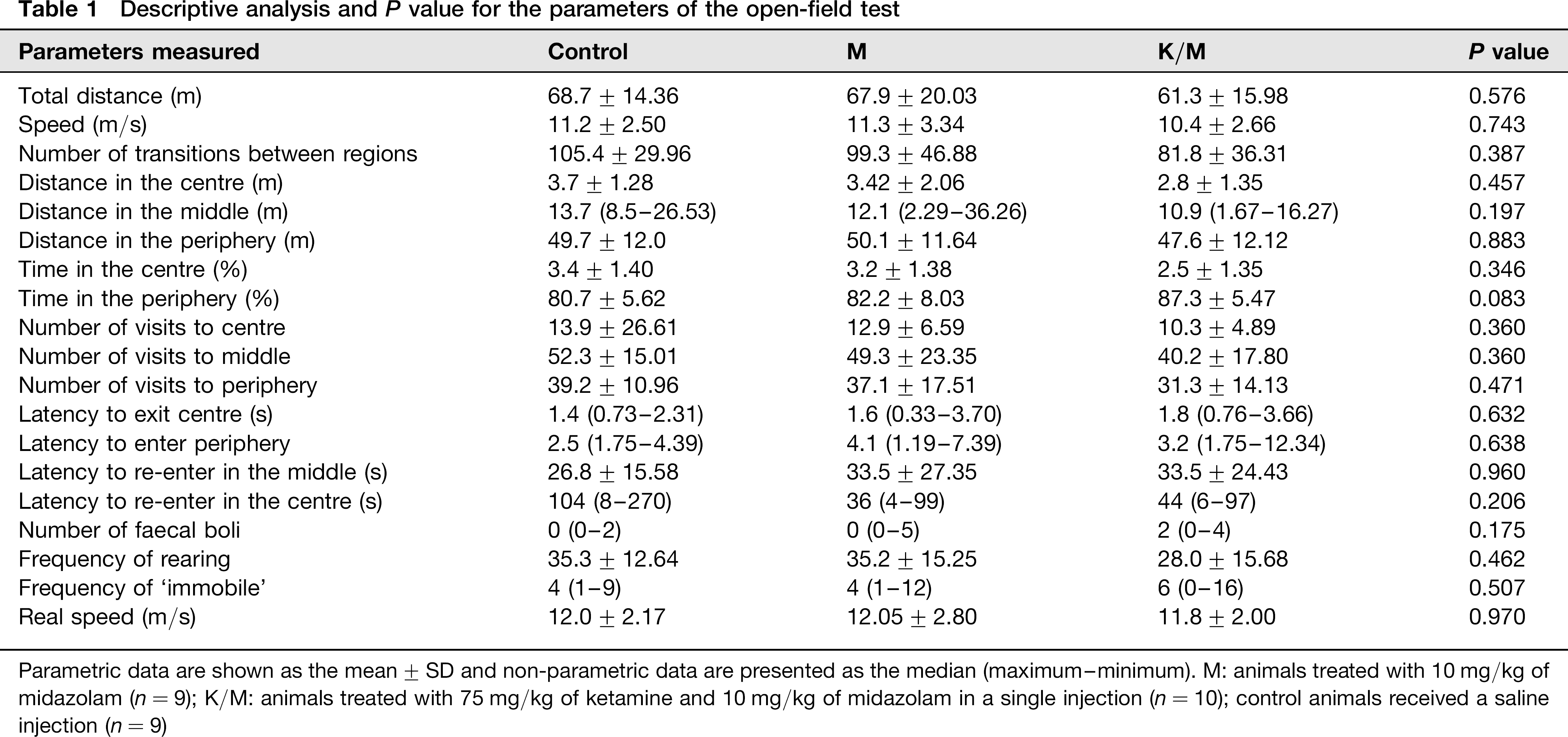
Parametric data are shown as the mean ± SD and non-parametric data are presented as the median (maximum–minimum). M: animals treated with 10 mg/kg of midazolam (n = 9); K/M: animals treated with 75 mg/kg of ketamine and 10 mg/kg of midazolam in a single injection (n = 10); control animals received a saline injection (n = 9)
Rotarod
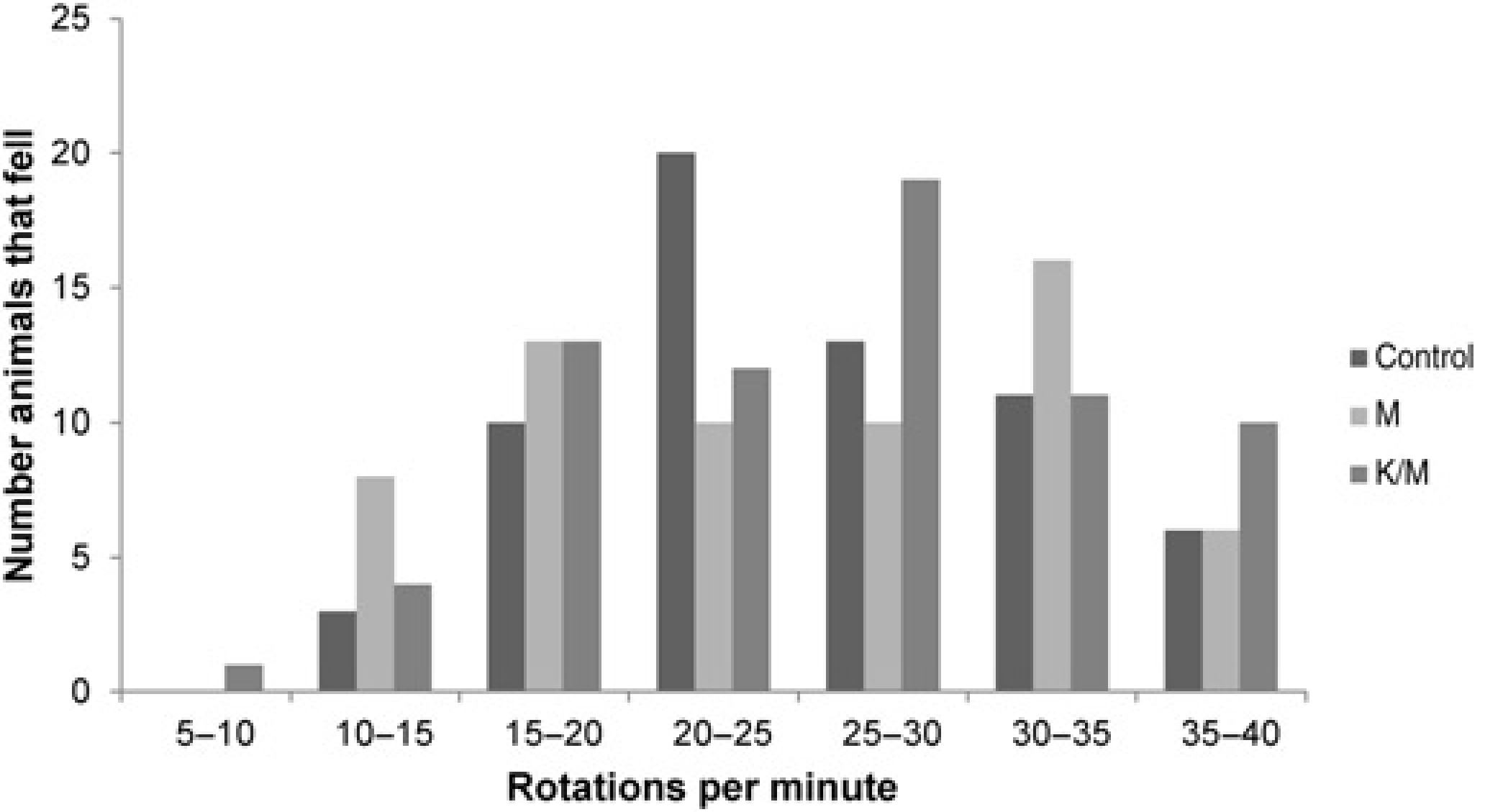
Groups had similar performances in the rotarod. No differences were detected between groups regarding latency (Figure 2, and Supplementary Table S1, see http://www.la.rsmjournals.com/cgi/content/full/la.2012.011179/DC1) or the speed at which the animals fell from the rotating drum. However, there was a difference between days (P < 0.0001), indicating the learning of motor skills in all groups. There were also differences between trials on each day (P ≤ 0.047). The majority of animals fell at 15–35 rpm (Figure 3). No association was detected between anaesthetic treatment and the maximum speed reached by an animal on the rotarod in any of the days. No correlation was found between rotarod performance and body weight.
Latency to fall from the rotating drum of rotarod task (in seconds). M: animals treated with 10 mg/kg of midazolam (n = 9); K/M: animals treated with 75 mg/kg of ketamine and 10 mg/kg of midazolam in a single injection (n = 10); control animals received a saline injection (n = 9). Data presented are the mean±standard deviation Number of animals that fell from the drum of the rotarod at each rotation interval (15–20, 20–25, 25–30, 30–35 and 35–40 rotations per minute). Columns represent the total number of animals that fell over the seven days for each speed interval. M: animals treated with 10 mg/kg of midazolam (n = 9); K/M: animals treated with 75 mg/kg of ketamine and 10 mg/kg of midazolam in a single injection (n = 10); control animals received a saline injection (n = 9)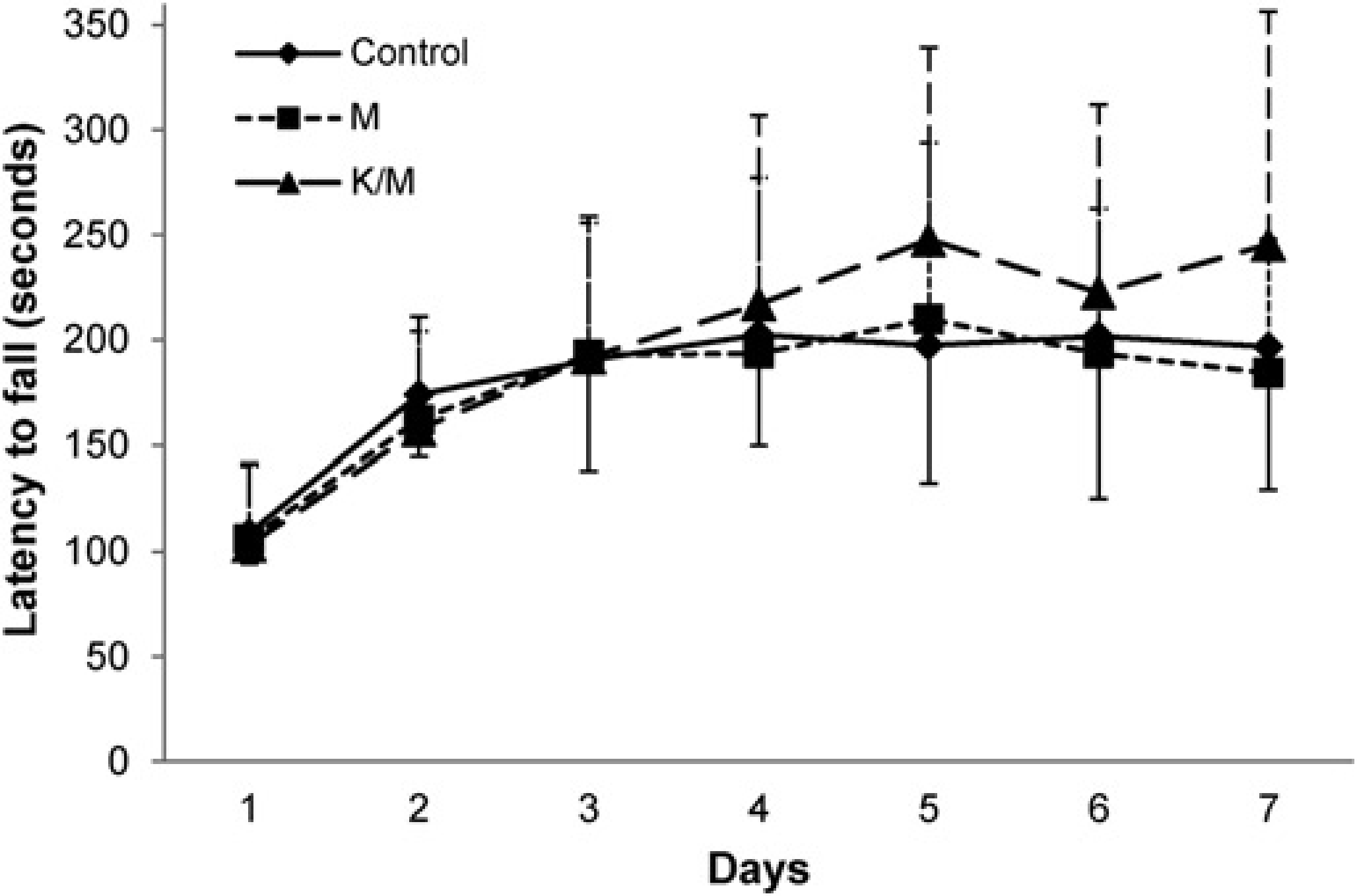
Radial arm maze
After determining that anaesthetic treatment did not affect the number of incomplete trials per day, the average of trials on each day was used in further analyses. There were no differences between groups regarding latency to enter the first arm and reference and working memory performance in the RAM (Figure 4 and Supplementary Table S1, see http://www.la.rsmjournals.com/cgi/content/full/la.2012.011179/DC1). The number of errors decreased over the days (P ≤ 0.0001) in all groups, indicating learning. All groups exhibited a similar number of entries per minute in the arms; thus, there were no differences related to speed/locomotor activity. There were no differences between groups regarding the number of days or trials in which a serial strategy was observed (Figure 5).
Number of reference (a) and working (b) memory errors in the radial arm maze task. M: animals treated with 10 mg/kg of midazolam (n = 9); K/M: animals treated with 75 mg/kg of ketamine and 10 mg/kg of midazolam in a single injection (n = 10); control animals received a saline injection (n = 9). Data presented are the mean±standard deviation Number of days or trials presenting serial choices, which are indicative of a stereotypic strategy, i.e. mice found the three rewarded arms by entering consecutive arms of the radial maze in a clockwise or anticlockwise manner. M: animals treated with 10 mg/kg of midazolam (n = 9); K/M: animals treated with 75 mg/kg of ketamine and 10 mg/kg of midazolam in a single injection (n = 10); control animals received a saline injection (n = 9). Data presented are the mean±standard deviation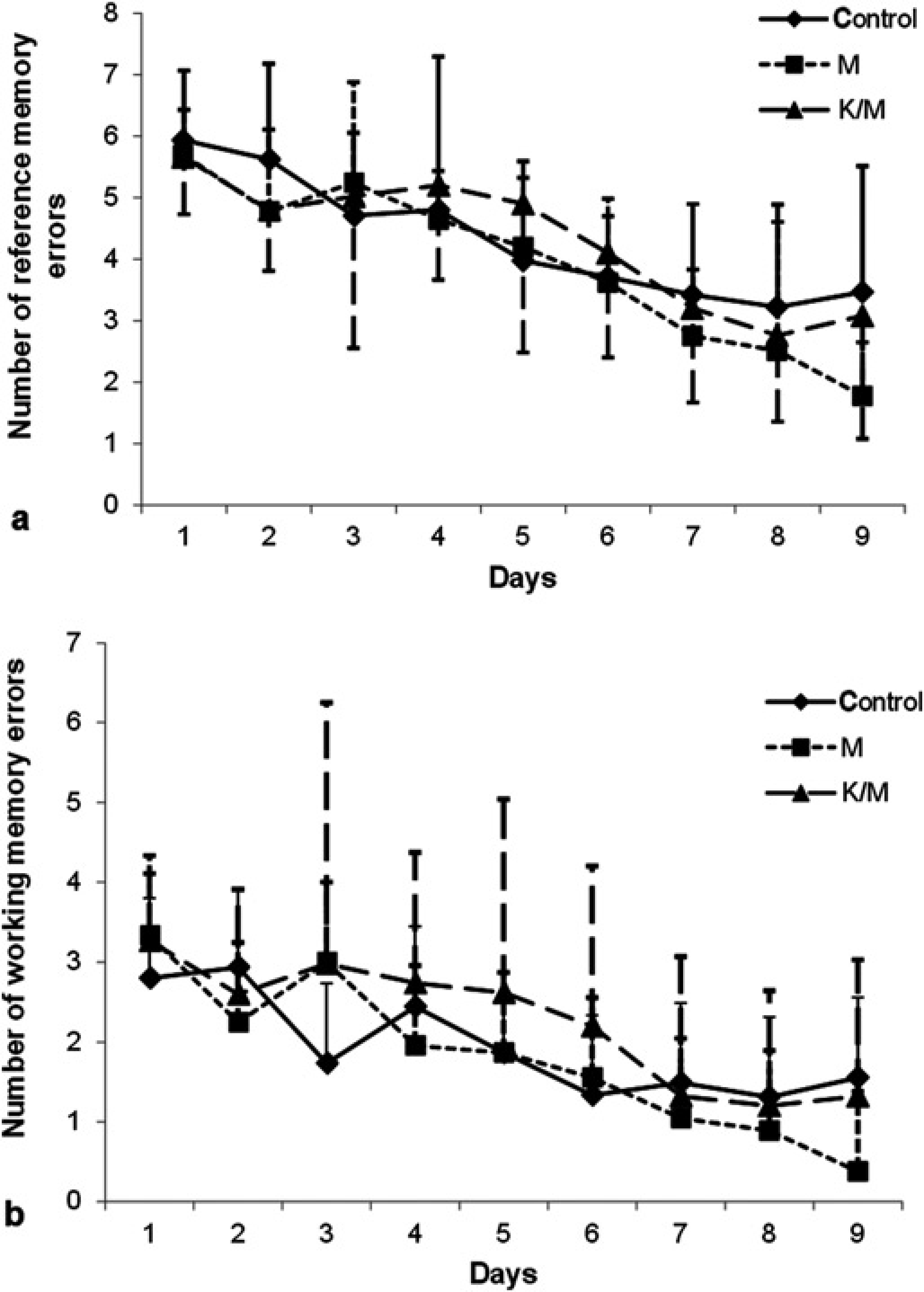
Discussion
This study showed that neither motor learning in the rotarod nor working memory or reference memory in the radial maze were affected by 75 mg/kg / 10 mg/kg of ketamine/midazolam administered one day before the tests.
In a previous study, 24 we found that a low concentration of ketamine/midazolam had no effect on the consolidation or recall of a simple spatial task. In the present study, we aimed to clarify the effects of this combination on the most labile process of memory, 25 the acquisition process, using a more demanding task, i.e. a task with increased sensitivity for the detection of potential slight differences between groups. We used a RAM protocol that allows the study of reference and working memory at the same time, thus minimizing the variability associated with collecting data twice in the same apparatus. 26 Furthermore, the learning of a motor task was evaluated in this study. As ketamine is described as acting in a dose-dependent manner in several species,15,27,28 we used a higher concentration of ketamine (75 mg/kg) compared with that used in the previous study. This concentration is applied widely to laboratory animals in combination with midazolam for the induction and maintenance of light anaesthesia, with some analgesia and muscular relaxation effects. However, it is not suitable for major surgery. This type of anaesthetic protocol may be used for minor procedures, such as venepuncture/catheter placement, subcutaneous implementation of devices or other procedures requiring immobilization (such as body scans). The recovery from these procedures is fast and animals may be allowed to perform cognitive tasks shortly after anaesthesia. Thus, it is important to assess the effects of anaesthetics on behaviour on the days following the interventions, as they may influence the results of the cognitive tasks.20,21
The lack of differences between groups regarding the open-field parameters indicates the presence of similar stress levels and exploratory activity in these animals, thus eliminating the possible influence of these variables in the behavioural tasks (rotarod and RAM).
In all groups, animals exhibited similar performance in the rotarod task, with improvement of motor learning over days (Figure 2). Moreover, there were no differences between groups concerning the number of animals that fell at each different speed (Figure 3). The results were unlikely to be influenced by physical weakness or fatigue 29 (animals performed better in later trials within a session) or by body weight 30 (no correlation between body weight and performance was found). Hence, the ketamine/midazolam combination or midazolam alone had no impact on the acquisition of a motor task. This is the first work that studied the effects of this combination on this task, which is dependent on cerebellar function. 31 The literature describes that NMDA antagonists cause disturbances in the motor coordination evaluated by rotarod32,33 and that midazolam has no effect on, 34 or decreases, rotarod performance. 35 However, contrary to the results of our study, the findings described in the literature were obtained minutes after treatment administration, when the animals could still be under the direct effect of the drugs.
In the radial maze task, the latency to enter the arms and the number of entries per minute were no different between groups, indicating that motivation and locomotor activity are unlikely to influence the acquisition of this task. Animals treated with 75 mg/kg / 10 mg/kg of ketamine/midazolam or with 10 mg/kg of midazolam or unanaesthetized control animals exhibited a similar number of working and reference memory errors in the RAM task (Figure 4), thus indicating an absence of influence of the treatments in the acquisition of this spatial task. Spatial strategy is closely related with the hippocampus, 36 and the prefrontal cortex is very important for the initial stage of working memory; 37 therefore, these areas seemed to not be affected by the treatments. The lack of differences between groups regarding the serial strategy provides further evidence that the ketamine/midazolam combination and midazolam alone did not impair spatial memory (Figure 5), as all animals exhibited a normal preference for a more efficient strategy that was guided by extramaze cues. 38 In the literature, midazolam has been described as impairing the acquisition of different tasks in humans39,40 and in chicks41,42 shortly (up to a few hours) after its administration. The treatment of neonatal mice with the benzodiazepine diazepam had no clear adverse effect on the acquisition of a spatial RAM task performed when the animals were adults (3 months of age). 43 Our results also showed that midazolam had no effect on the acquisition of the same task. Clear deficits were found in neonate mice treated with a combination of ketamine and a GABA agonist and later tested using the radial maze task (in adulthood).43,44 To the best of our knowledge, there is no record of studies performed in adult rodents treated with a ketamine/midazolam combination regarding the learning of a spatial task. Hence, the observation of deficits in adulthood after treatment of neonates with the ketamine/GABAA agonist combination may be due to the vulnerability of the infant brain during the growth spurt, 45 as we did not detect any effects of the ketamine/midazolam combination on the spatial acquisition of the radial maze task in adult mice. This is in contrast with that observed for volatile anaesthetics, which have been shown to cause cognitive impairment in adult animals, 4 especially in low concentrations.20,21 Thus, the effect of anaesthesia on memory may depend on many factors, such as the type of anaesthetic drug.
This study did not include a group treated with ketamine only because it is not advisable to use this type of anaesthesia in laboratory animals, as it provokes muscular rigidity. 1 Moreover, 75 mg/kg of ketamine would not be sufficient to cause the loss of the righting reflex, but provide only light sedation, which, in combination with muscular rigidity, may be stressful.
As mentioned previously, we studied only the effects of the administration of one dose of ketamine/midazolam in adulthood; therefore, we cannot apply these conclusions to very young or old animals or to animals subjected to other anaesthetic drugs or other depths of anaesthesia.
To the best of our knowledge, this is the first study suggesting that a light anaesthetic dose of the combination ketamine/midazolam has no influence on the acquisition of spatial (reference and working memory) and motor tasks. This work revealed the presence of normal behaviour regarding learning, locomotion and stress levels at least 24 h after anaesthesia. These results suggest that this anaesthesia protocol can be applied safely to adult mice in projects in which the acquisition of spatial and motor tasks is necessary.
Footnotes
Acknowledgements
Regarding financial support, the authors wish to thank the Fundação para a Ciência e Tecnologia (Lisbon, Portugal) and the co-financing by COMPETE: -01-0124-FEDER-009497 through the project grant PTDC/CV/099022/2008 and through a personal PhD grant (SFRH/BD/36121/2007) to A M Valentim. We would also like to thank Pedro Silva for programming the JAVA application, which was used to analyse the data of the RAM task.