




Abstract
The purpose of the study was to assess the haemodynamic (blood pressure and heart rate) changes and stress responses (serum cortisol and serum amyloid A [SAA] concentrations) to surgery in piglets during total intravenous anaesthesia (TIVA) with propofol and fentanyl. After preanaesthetic medication with intramuscular midazolam (0.5 mg/kg body mass), ketamine (10 mg/kg) and butorphanol (0.5 mg/kg) anaesthesia was induced in five piglets, with intravenous propofol (1 mg/kg) followed by tracheal intubation and mechanical lung ventilation. Soft tissue surgery was performed in the jugular and inguinal regions during TIVA with propofol (8 mg/kg/h) and fentanyl (35 μg/kg/h). Anaesthesia was maintained for 300 min after surgery as the piglets were the control group of a project involving extracorporeal membrane oxygenation. Mean plasma cortisol concentration decreased significantly (P < 0.05) from 59 ± 39.9 nmol/L (mean ± 1 SD) before surgery to 7.5 ± 2.5 nmol/L 300 min after end of surgical procedure. The mean SAA concentrations increased over the same period from 1.6 ± 2.3 μg/mL to 4.2 ± 5.6 μg/mL without statistical significance. The baseline (presurgery) mean arterial pressure (MAP) was 72 ± 9 mmHg compared with 72 ± 11 mmHg 300 min after end of surgery. Neither heart rate nor lactate concentrations changed significantly over the same time points: heart rate was 104 ± 11 and 103 ± 15 beats/min whereas mean lactate concentrations were reduced from 1.14 ± 0.45 mmol/L to 0.90 ± 0.22 mmol/L. Haemodynamic stability, a decrease in serum cortisol and a non-statistically significant rise in mean SAA concentrations suggest that the anaesthetic described suppresses the stress response of piglets to surgery without adverse cardiovascular effects. Therefore, it may prove useful in cardiovascular research.
Anatomical and physiological similarities to human beings at several age levels have justified the use of the pig model in cardiovascular research that cannot be conducted in vitro. 1 Recently, we used piglets to simulate acute respiratory failure in human infants and to investigate different treatment modalities of extracorporeal membrane oxygenation (ECMO). 2
The effects of anaesthetics on the cardiovascular system are profound and complicate the interpretation of haemodynamic data derived from animal models. Total intravenous anaesthesia (TIVA) with propofol and fentanyl has been used in porcine models, 3–5 but its effect on the stress response has not yet been evaluated in this species. Nociceptive stimulation caused by surgery initiates an endocrine-metabolic stress response resulting in adrenocorticotropic hormone release, which in turn increases cortisol secretion from the adrenal cortex. 6 Cortisol release is influenced by the severity of surgical trauma 7 and the anaesthetics used. 8 Consequently, cortisol concentrations have been used to evaluate the effects of anaesthetics on the stress response in pigs. 9,10
Acute phase proteins (APPs) are important indicators of general health and physical welfare in animals. 11 Changes in their serum concentration correlate positively with the degree of tissue damage in animals subjected to external or internal challenges, e.g. infection, 12 inflammation, 13 surgical trauma 9 or stress. 14 One of the fast reacting APPs is serum amyloid A (SAA) which is present at very low concentration under normal conditions.
The aim of the current study was to examine the haemodynamic effects of, and the stress response to surgery in piglets during TIVA with propofol and fentanyl.
Materials and methods
The study protocol was approved by the Ethical Committee for Animal Studies of the University of Veterinary Medicine Vienna and the Austrian Federal Ministry for Education, Science and Culture (GZ 68.205/27-Pr/4/2001). All experiments were performed in accordance with European and Austrian laws on animal experimentation and the principles stated in the ‘Guide for the Care and Use of Laboratory Animals’ published by the National Institute of Health. 15
Animals
Five female animals were randomly chosen from two litters of eight-week-old Landrace piglets originating from a breeding farm where herd health management was overseen by the University of Veterinary Medicine Vienna. The animals weighed 10.3 ± 0.48 kg and were judged to be healthy on the basis of physical examination. They were acclimatized at the University of Veterinary Medicine Vienna for at least one week before each trial. There the piglets were housed in groups of three to five in solid floor pens (3.3 m2) on straw bedding and were allowed free access to drinking water and a standard piglet diet (PorkoCidKorn F, Garant, Graz, Austria). Environmental temperature was held at 22–25°C at ambient humidity. Lighting was both natural and artificial with a 12 h on and off cycle (06:00 to 18:00 h).
Anaesthesia
Preanaesthetic medication
Preanaesthetic medication was intramuscular 0.5 mg/kg midazolam (Midazolam ‘Mayrhofer’ 5 mg/mL; Mayrhofer Pharmazeutika GmbH, Leonding, Austria), 10 mg/kg ketamine (Ketasol 10%; Gräub AG, Bern, Switzerland) and 0.5 mg/kg butorphanol (Butomidor; Richter Pharma AG, Wels, Austria) injected in one syringe 15 min before induction of anaesthesia.
Induction and maintenance of anaesthesia
A 25 mm 22 standard wire gauge (SWG) cannula (Vasocan Braunüle; Braun Melsungen AG, Melsungen, Germany) was placed in the marginal auricular vein through which fluids and other drugs were subsequently given.
After induction of anaesthesia with intravenous (IV) 1 mg/kg propofol (Propofol Fresenius 1% Fresenius; Kabi Austria GmbH, Graz, Austria), the trachea was intubated and mechanical lung ventilation (Ohmeda Excel 210 SE and Ohmeda 7800 Ventilator; Ohmeda, Madison, WI, USA) begun using standardized settings to maintain eucapnia (4.65–5.98 kPa). The respiratory rate (f
r) was 17–20 breaths/min, the tidal volume (V
Surgical procedure
This study was performed in conjunction with a project involving ECMO. 2 Surgery consisted of the cannulation of blood vessels. The right external jugular vein was surgically exposed and a 10 or 12 Fr BioMedicus ECMO cannula (Medtronic, Anaheim, CA, USA) was introduced and advanced until its tip lay in the right atrium. This was confirmed by echocardiography. The common carotid artery was also cannulated: a 10 or 12 Fr ECMO cannula was positioned with its tip in the aortic arch. The femoral vessels were exposed by skin incision in the inguinal area and a 22 SWG catheter inserted into the right femoral artery. The cannulae and catheters were secured by a ligature around the vessels and sutured to adjacent skin. Surgery was performed under aseptic conditions.
Measurements of the stress response
Clinical data
Heart rate and rhythm, body temperature and invasive arterial pressure were monitored using the respective modules of an HP ACMS patient monitor (Hewlett Packard ACMS; Philips Medizinische Systeme).
End-tidal carbon dioxide partial pressure and the F
Biochemical variables
Blood samples for SAA and cortisol analysis were drawn from the cannula in the radial artery after endotracheal intubation but before surgery and repeated 300 min after the end of surgery. Blood samples for blood gas and lactate analysis were withdrawn anaerobically into heparinized syringes before surgery and at 30, 60, 120 and 300 min after completion of surgery. They were analysed immediately using an ABL-3 blood gas analyser (Radiometer, Copenhagen, Denmark).
Serum amyloid A
Serum amyloid A was measured in serum using a commercial ELISA kit (Phase SAA kit; Tridelta Development, Wicklow, Ireland). All plates included the five standard dilutions to establish the standard curve for porcine SAA, ranging from 125 ng/mL to 2000 ng/mL and a blank sample. Test samples were analysed in duplicate. Initially serum samples were undiluted but if required were further diluted in diluent buffer and re-analysed.
Cortisol
A total of 0.5 mL of each plasma sample was extracted with 5 mL diethylether. The ether phase was transferred into a new vial, evaporated and dissolved in 0.5 mL assay buffer. Thereafter, the cortisol concentration in an aliquot was determined using an enzyme-immunoassay technique. 16
Statistical analysis
Statistical analysis was performed using the SPSS 9.0 Statistical Package (SPSS Inc© Chicago, IL, USA). Data are presented as mean ± SD and a P value of <0.05 was considered significant. A paired t-test was used to examine plasma cortisol, lactate and SAA levels and repeated measures ANOVA to compare blood pressure and heart rate at different time points with the baseline (pre-surgical) levels.
Results
The effects of preanaesthetic medication allowed straightforward placement of the IV catheter in the ear veins of all piglets without causing movement. All animals had a smooth induction to anaesthesia, which was subsequently stable. There were no deaths or adverse events in the course of the study.
Mean arterial blood pressure was 72 ± 9 mmHg and mean heart rate was 104 ± 11 beats/min before surgery began. Neither variables changed significantly over time (Figures 1–4), resulting in a mean arterial pressure (MAP) of 72 ± 11 mmHg and a mean heart rate of 103 ± 15 beats/min 300 min after the end of surgery. The mean lactate concentration decreased insignificantly from 1.14 ± 0.45 mmol/L before surgery to 0.90 ± 0.22 mmol/L at 300 min after surgery (Figure 5).
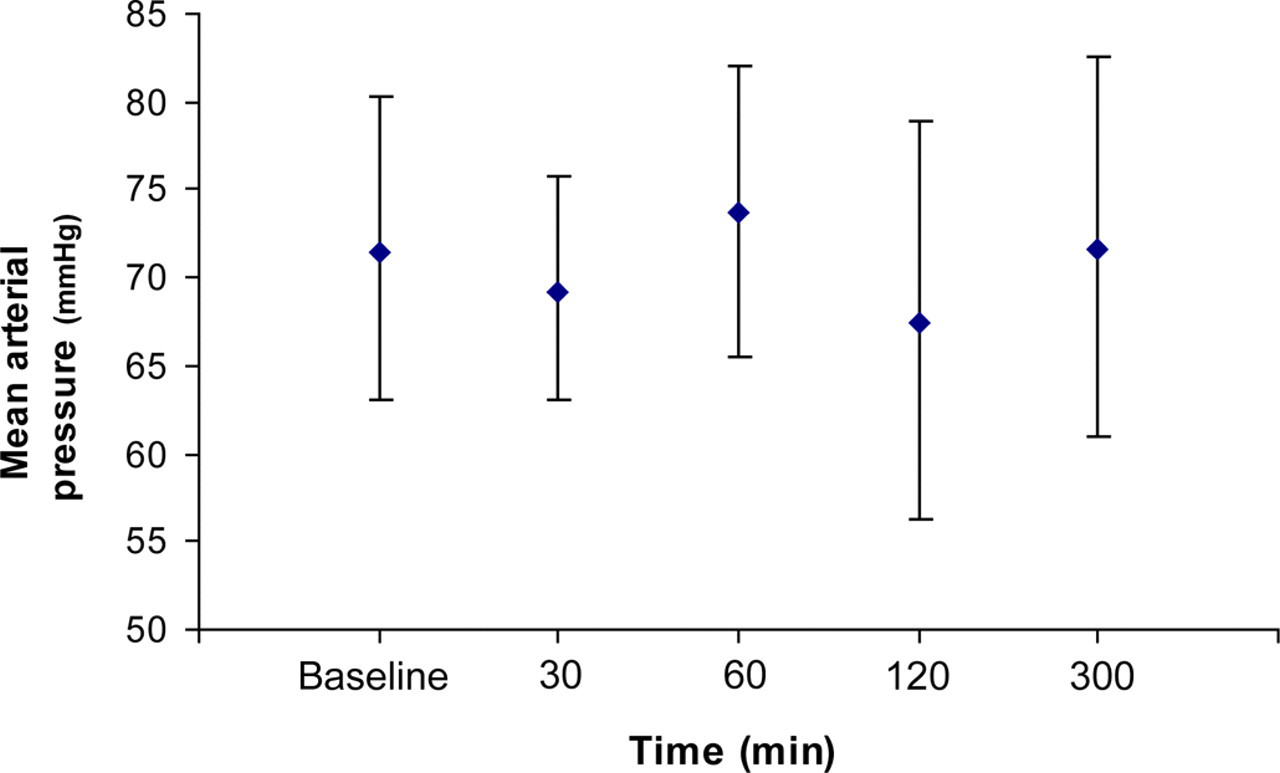
Mean arterial pressure during total intravenous anaesthesia with propofol and fentanyl in five piglets. Values are means ± SD, n = 5 animals
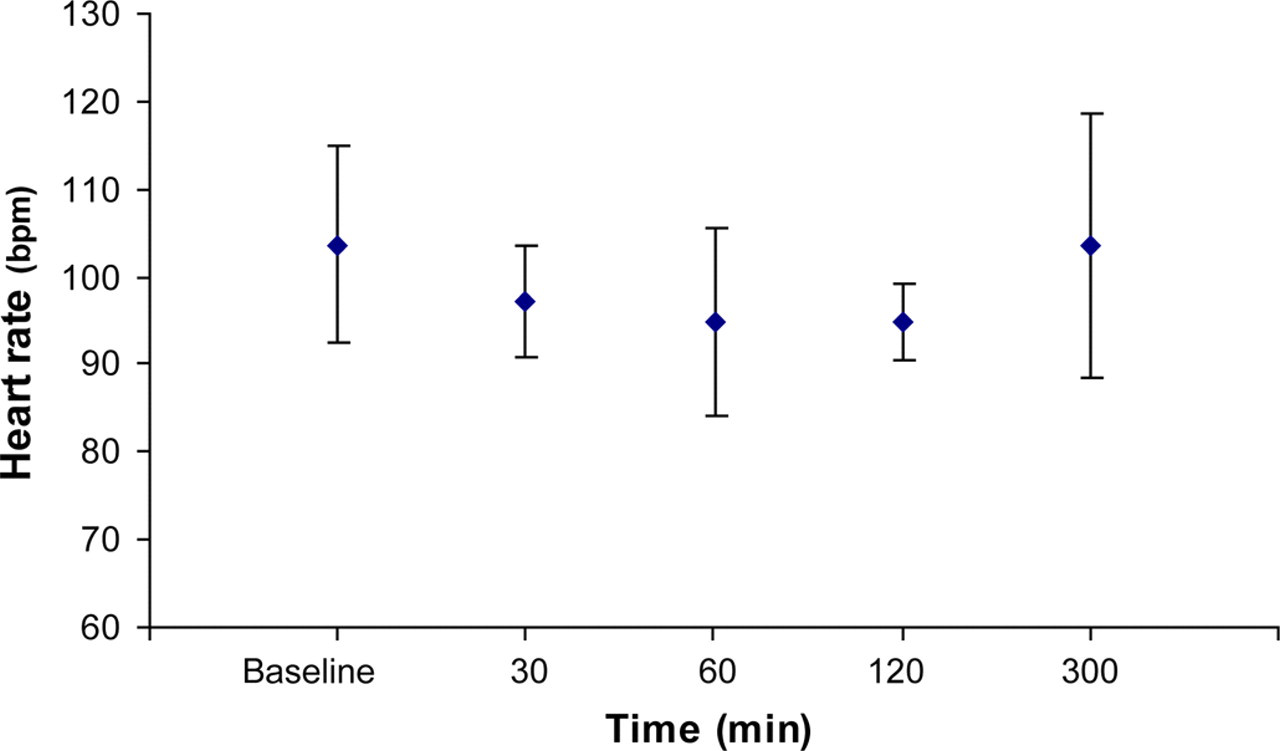
Mean heart rate during total intravenous anaesthesia with propofol and fentanyl in five piglets. Values are means ± SD, n = 5 animals
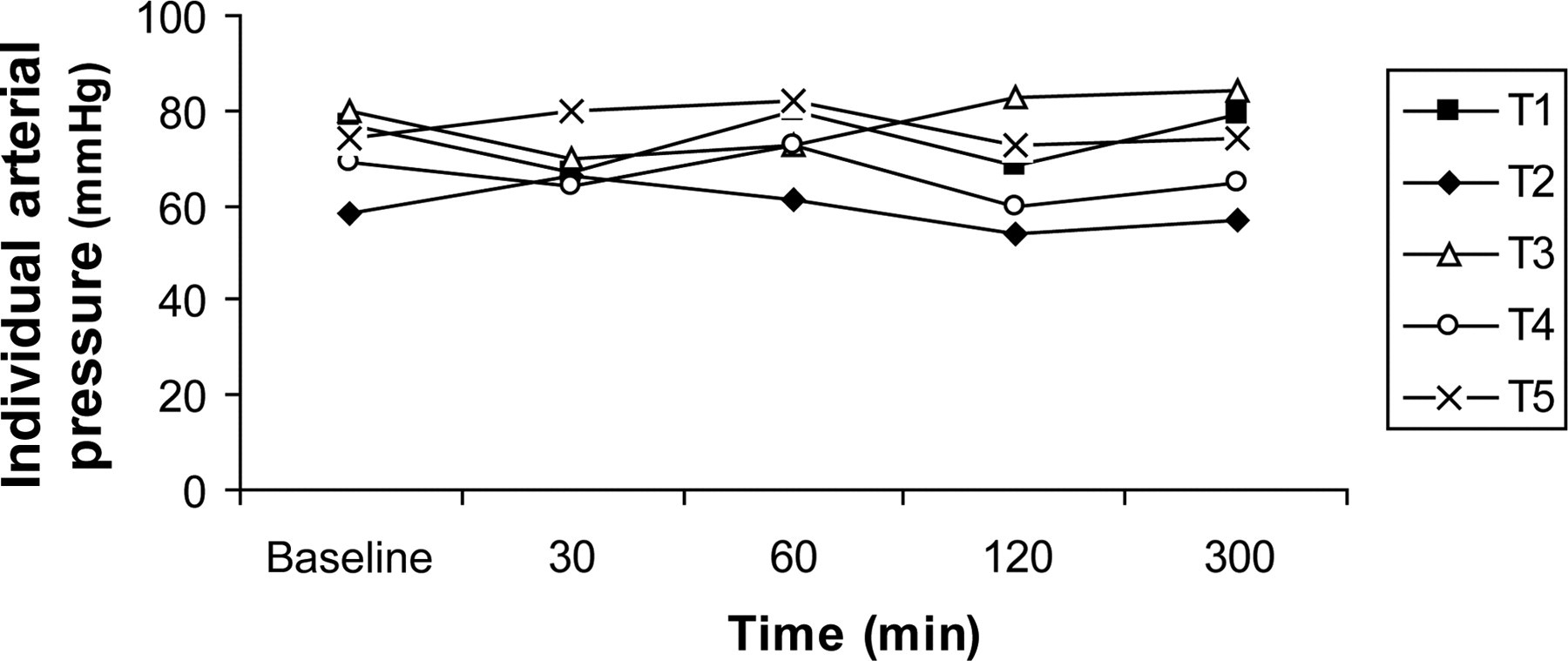
Individual arterial pressure during total intravenous anaesthesia with propofol and fentanyl in five piglets. T1–T5: piglets 1–5
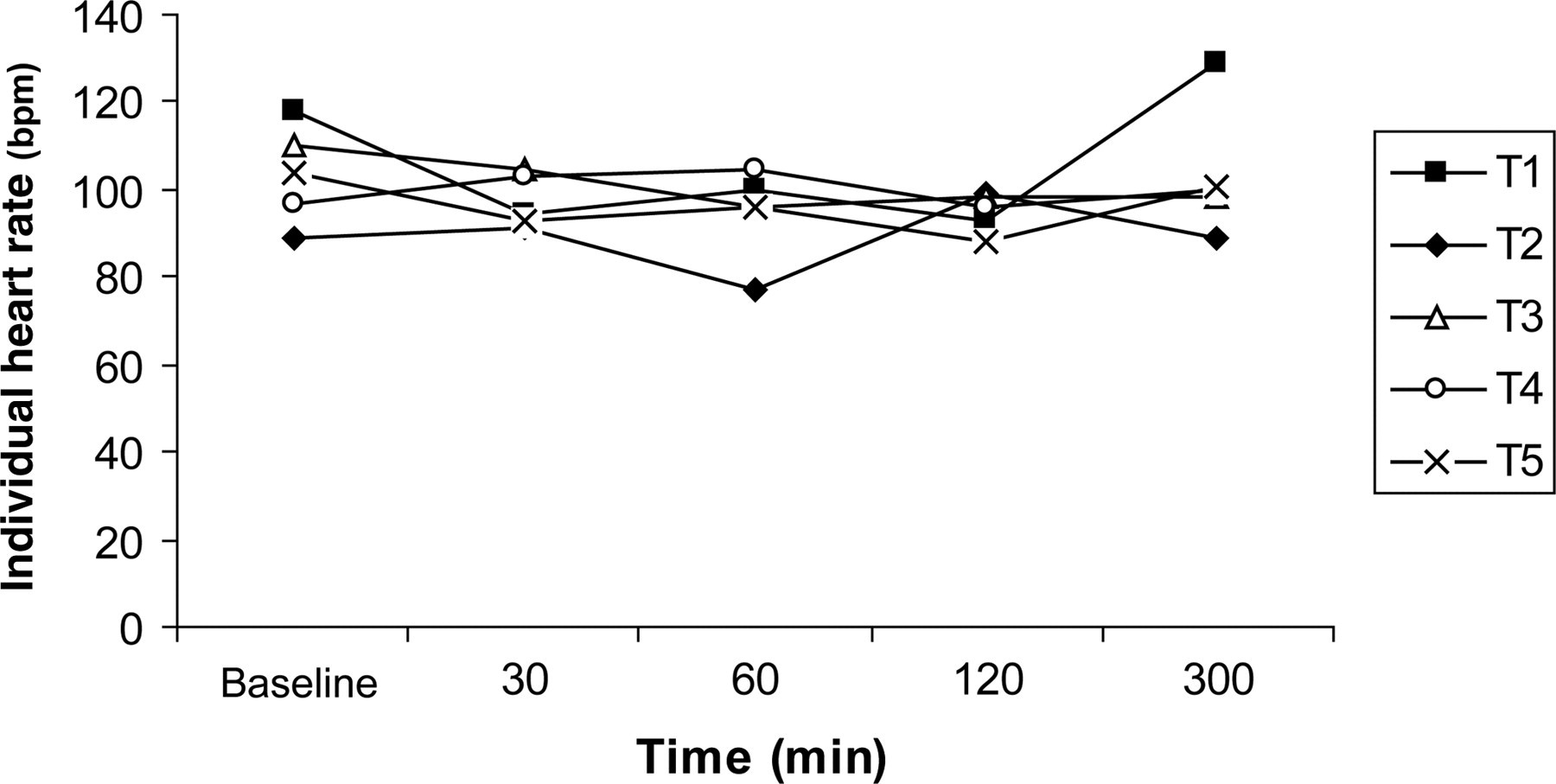
Individual heart rate during total intravenous anaesthesia with propofol and fentanyl in five piglets. T1–T5: piglets 1–5
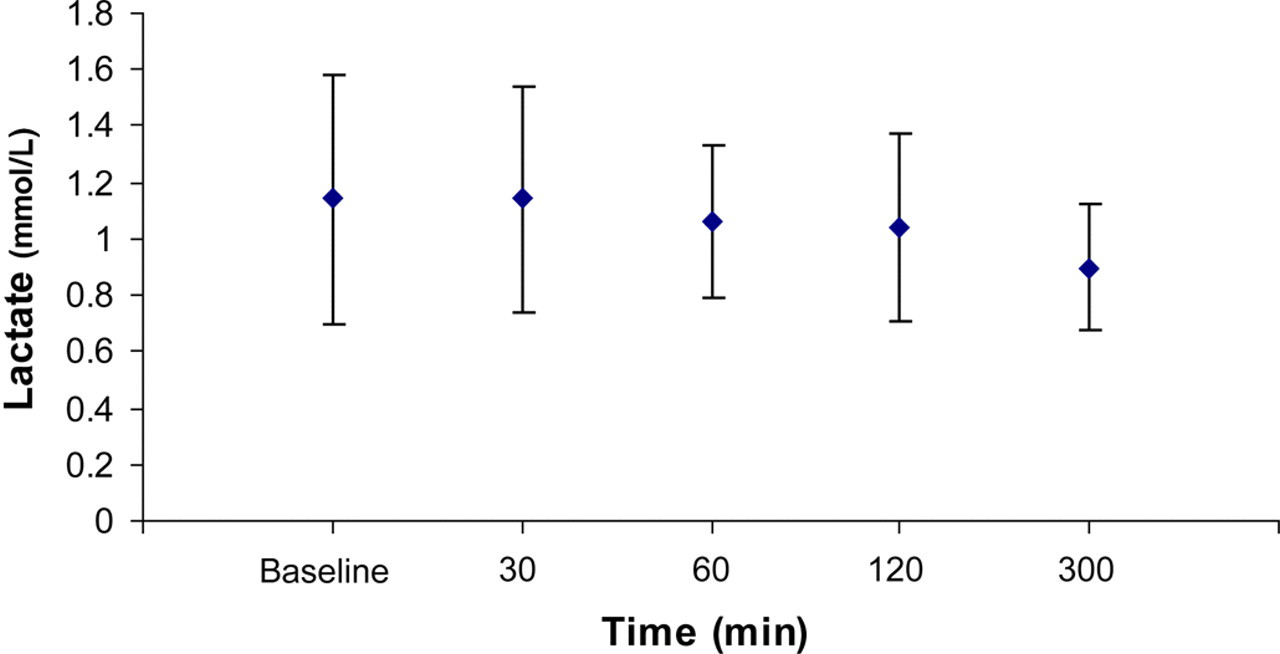
Mean lactate concentration during total intravenous anaesthesia with propofol and fentanyl in five piglets. Values are means ± SD, n = 5 animals
Similarly, mean plasma SAA concentrations did not differ significantly between the two time points (1.62 ± 2.34 μg/mL vs. 4.22 ± 5.56 μg/mL). However, in one animal an increase in the SAA level was observed (Table 1). Mean plasma cortisol concentration decreased significantly (P < 0.05) during anaesthesia from the presurgical baseline of 59.16 ± 39.86 nmol/L to 7.5 ± 2.53 nmol/L at 300 min after surgery (Table 1).
Serum amyloid A (SAA) and cortisol concentration in individual piglets before and after superficial soft tissue surgery
Discussion
This study reports the effects of a propofol and fentanyl combination for TIVA in piglets undergoing superficial surgery. The technique maintained haemodynamic stability: blood pressure, heart rate and lactate concentration remained unchanged over time. Moreover, this protocol prevented the stress response to surgical stimulation.
In accordance with international regulations concerning the treatment of laboratory animals, anaesthetic techniques for experimental procedures should provide adequate analgesia while causing minimal perturbation to physiological values. Cardiovascular changes, such as decreasing heart rate and hypotension after induction of anaesthesia are common and are caused by both propofol and fentanyl. 17 In severe bradycardia and hypotension, decreased perfusion may not satisfy tissue metabolic demand causing hypoxia and lactacidaemia. These undesirable side-effects did not appear to result from the propofol and fentanyl doses used in the current study as heart rate, mean arterial blood pressure and lactate concentrations remained unaffected over time.
Changes in blood pressure and heart rate are also used to monitor the adequacy of anaesthesia during surgery. The absence of hypertension and tachycardia in our animals during surgery was taken to indicate the technique's adequacy as a surgical anaesthetic. However, heart rate and blood pressure changes can also occur under other conditions of increased autonomic nervous activity, for example, during hypotension caused by hypovolaemia or extreme deviations of body temperature. 18 Based on these observations, beat-to-beat fluctuations in heart rate, which reflect autonomic nervous activity, have recently been used to measure the stress response 19 and neurovegetative activity during anaesthesia in animals. 20 Despite promising early results, further studies are needed to assess the significance of these monitoring methods. Alternatively, biochemical markers may be used to determine the degree of stress in human beings and animals during surgery.
The initial concentrations of cortisol measured in the current study did not represent true basal levels but baseline values before surgery began – because the piglets were already anaesthetized. They are similar to the concentrations found by Dalin et al. 21 in thiopental-anaesthetized pigs at a similar time after induction. However, plasma cortisol levels further increased during thiopental anaesthesia in Dalin's study whereas they did not during the propofol–fentanyl CRI described here. Similar observations have been reported in human beings undergoing goitre surgery, where cortisol release was suppressed by the combined administration of propofol and midazolam but not by thiopental. 22 The relative contribution of propofol or fentanyl in suppressing the stress response cannot be deduced from the current study, although fentanyl alone effectively suppresses the cortisol response to abdominal surgery in human patients. 23 Inhibitory effects may be mediated directly or indirectly via the hypothalamus or, as is the case with fentanyl, by the reduced secretion of pituitary hormone. 24 In contrast, serum cortisol levels may be decreased by direct inhibition of adrenal steroid genesis. This is potentially detrimental and applies to etomidate, an anaesthetic commonly used in haemodynamically unstable patients because of its positive effect on cardiac output and myocardial oxygenation. The blockade of 11-beta-hydroxylation in the adrenal gland by an imidazol radical produces, in effect, a pharmacological adrenalectomy and precludes etomidate's safe use for prolonged sedation. 25 A direct influence of propofol on adrenal steroidogenesis cannot be precluded in the current study, but the reduction in serum cortisol by propofol generally has been regarded as clinically insignificant 26 and results from deeper sedation rather than a direct adrenal inhibition. 27
Serum amyloid A is a fast reacting APP that is present at very low concentration under normal conditions. Baseline levels are barely measurable, but its concentration increases dramatically after stimulation 28 and to a greater extent than that of other APPs, e.g. haptoglobin. During an acute phase response, SAA increases up to 2-8-fold in cattle and up to 100-fold in horses 29 and pigs. 12 The rise in SAA concentration occurs within 4 h and is described after experimental infection with Actinobacillus pleuropneumoniae 12 and surgical stress 9 in pigs. No increase in SAA concentrations could be found 300 min after surgical stimulation in four of the piglets in the current study, which indicates adequate stress control by the anaesthetic. The fivefold increase in SAA concentration found in the fifth piglet may have been clinically irrelevant because the cortisol level decreased in this animal as it did in the other four.
Butorphanol was used as part of the preanaesthetic medication in the current study because it enhances depth of sedation in pigs 30,31 and decreases the dose required for induction of anaesthesia. 32 It is possible that our results were affected by its inclusion. Butorphanol is an opioid agonist–antagonist binding to both μ- and κ-opioid receptors with low efficacy actions at μ-opioid receptors. 33 This action may interfere with that of fentanyl, which is a μ-agonist. However, pharmacological profiles of butorphanol seem to depend on the species and conditions used in testing. In humans, the use of butorphanol as premedication did not change the interoperative fentanyl requirement for hysterectomy 34 and butorphanol has been reported to have a synergistic effect when used together with μ-agonist in cats 35 and rats. 36 Butorphanol was also used in rabbits, 37 rats 38 and humans 39 to reverse the respiratory depression caused by fentanyl without compromising postoperative analgesia.
To conclude, TIVA with propofol and fentanyl in piglets attenuated the stress response to superficial soft-tissue surgery. Variables of the physiological stress response – cortisol and SAA – remained within the normal range throughout the experiment. In addition, the dose of propofol and fentanyl used did not affect haemodynamic variables and is therefore suitable for anaesthetic techniques for animals involved in cardiovascular research.
Footnotes
ACKNOWLEDGEMENT
The authors wish to thank Prof R E Clutton for his critical reading of the manuscript.