




Abstract
Industry 5.0 introduces a human-centric, sustainable, and resilient paradigm that extends industry 4.0's digital foundations. While gaining scholarly interest, its impact on project management is still underexplored. This article offers a structured narrative review, using a project studies framework, to analyze how Industry 5.0 principles and technologies are reshaping project management practices, roles, and competencies. The findings highlight a shift toward artificial intelligence (AI)–enabled, value-driven, and networked leadership models, yet formalized frameworks remain limited. The article proposes two conceptual models: project management 5.0 and project manager 5.0, reflecting emerging practices and leadership attributes, and identifies research gaps for future exploration.
Keywords
Introduction
The concept of Industry 5.0 has emerged as a new phase of industrial development that builds upon the foundations of Industry 4.0 to introduce a more human-centric and sustainable approach to manufacturing and industrial processes. There is no unanimous definition of Industry 5.0 (Ghobakhloo et al., 2024; Madsen & Berg, 2021) and at the same time, there is a disagreement on considering Industry 5.0 as a paradigm shift away from Industry 4.0 (Zizic et al., 2022) or whether it is merely an extension of Industry 4.0 (Breque et al., 2021; Ghobakhloo et al., 2023, 2024; Renda et al., 2021). Regardless of the lack of definition and disagreement on the magnitude of Industry 5.0, we are currently in the midst of both—Industry 4.0 and Industry 5.0. While the principles of Industry 4.0—centered on automation, IoT, big data, and smart manufacturing—are still dominant, the principles of Industry 5.0 are also gaining traction and being gradually integrated into multiple sectors. (Breque et al., 2021; Mourtzis et al., 2022; Nahavandi, 2019; Nousala et al., 2024).
Unlike previous industrial revolutions that primarily focused on technological advancements, Industry 5.0 aims to achieve social goals beyond employment and growth, providing prosperity for the sustainable development of all humanity (Leng et al., 2022; Nahavandi, 2019). The key difference lies in the integration of human creativity with intelligent machines, or as Ghobakhloo et al. (2023) put it: “it extends the Industry 4.0 paradigm, an evolutionary step that places environmentalism, human centricity, and resilience among major industrial transformation principles” (p. 443). Similarly, Nahavandi (2019) states that “While the main concern in Industry 4.0 is about automation, Industry 5.0 will be a synergy between humas and autonomous machines” (p. 3).
This new concept is characterized by three main pillars: human-centricity, sustainability, and resilience (Ghobakhloo et al., 2023; Ivanov, 2023). Industry 5.0 aims to leverage the creativity of human experts in collaboration with efficient, intelligent, and accurate machines to obtain resource-efficient and user-preferred manufacturing solutions (Maddikunta et al., 2022). This approach is expected to increase production and deliver customized products more spontaneously compared to Industry 4.0 (Maddikunta et al., 2022).
Despite the growing discourse on Industry 5.0, there is limited understanding of how its principles are reshaping project management theories, methodologies, and practices. Taboada et al. (2023) and Mohammed and Skibniewski (2023) focused on the role of artificial intelligence (AI) in enhancing decision-making, planning, and performance monitoring in project management. In parallel, Stephen et al. (2024) discussed the integration of Industry 5.0 principles in construction management, emphasizing human-centric and sustainability aspects of project delivery. Similarly, Silva-Atencio and López-Valerio (2025) discussed how flexibility in contractual clauses impacts the performance of agile projects in the context of Industry 5.0. At the same time, Gartner, Ronco, et al. (2023) assessed innovation in manufacturing and proposed evaluation approaches, whereas Gibbin et al. (2023) discussed the evolution of themes that relate to sustainability and project management. None of these studies provided comprehensive understanding of how Industry 5.0 principles are influencing project management theories and practices.
Inspired by the argument presented by Klein and Müller (2020) that literature reviews provide strong evidence to “inform readers about a phenomenon or theory” (p. 240), the aim of this article is to provide a structured narrative review of the literature to:
Examine how Industry 5.0 principles and technologies, together with the corresponding ways of working, are influencing project management practices, and to Identify future research directions that support the integration of human-centric, sustainable, and resilient approaches in projects.
To achieve this aim, the article explores both the current and potential impact of Industry 5.0 on project management, focusing on how technological advancements and new paradigms of human–machine collaboration affect the project environment, roles, and methodologies. This exploration requires examining not only technological aspects but also shifts in mindsets, processes, and frameworks that guide project management practice in diverse sectors. The following research questions have been formulated to guide the literature search and ensure alignment with the article's aim: This question supports the examination of shifts in project management practices and methods in response to Industry 5.0 principles and technological advances, directly addressing the article's aim to analyze changes in practices and ways of working This question connects with the second part of the article's aim by helping identify new or adapted frameworks that incorporate human-centricity, sustainability, and resilience into projects, highlighting avenues for future research and practice. This question directly links to the first part of the article's aim by investigating how human-centric and collaborative approaches introduced by Industry 5.0 affect project managers’ roles, competencies, and responsibilities.
To contextualize this exploration within a broader academic framework, this article adopts the field of project studies—the research framework formulated by Geraldi and Söderlund (2018)—which offers a lens for understanding projects as complex social and organizational phenomena, making it particularly suitable for examining the transformative impact of Industry 5.0 on project management. This framework is based on a juxtaposition of three types of research that explore the kind of knowledge researched with three levels of analysis that reflect the diverse environments of projects, as summarized in Table 1. Type 1 research focuses on prediction and control, type 2 addresses the nature and dynamics of social systems, and type 3 focuses on critical reflection to induce deliberate changes. Research level 1 is concerned with individual and team social behavior, level 2 addresses project management processes, and level 3 is concerned with society and organizations’ interactions with projects.
Project Studies Framework as Defined by Geraldi and Söderlund (2018)
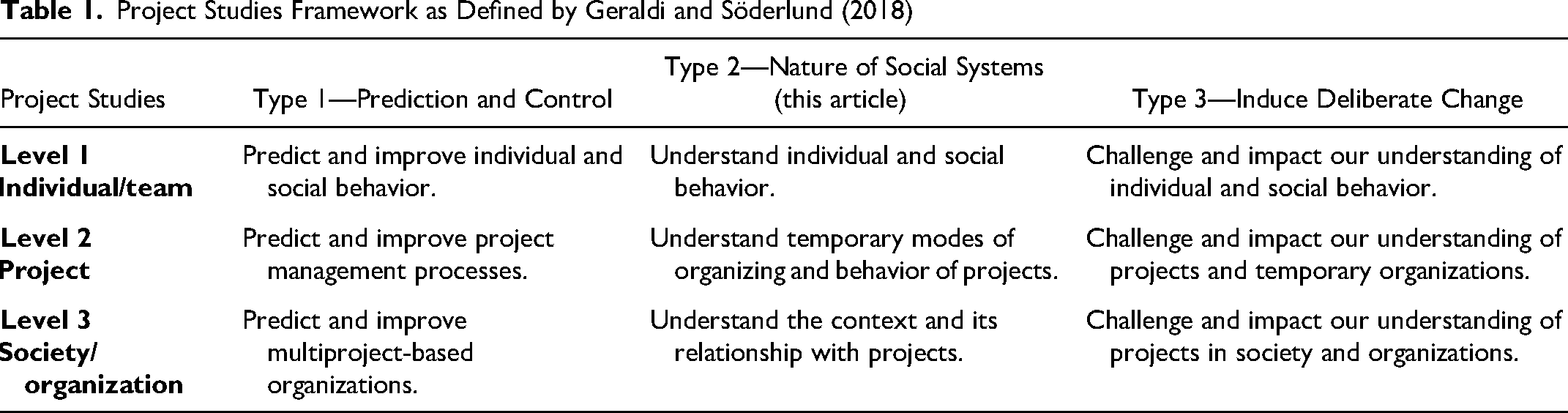
This article aligns with type 2 in the above framework across the three levels of analysis with the aim to contribute to project studies by probing the impact of Industry 5.0 on project management, guided by the aim of the article and research questions discussed earlier.
While the motivation for exploring Industry 5.0 is increasingly acknowledged, its implications for project management theory remain underexplored (Ali et al., 2025; Alves et al., 2023; Breque et al., 2021; Ghobakhloo et al., 2023). Existing project management frameworks and approaches—such as A Guide to the Project Management Body of Knowledge (PMBOK® Guide)—Seventh Edition (Project Management Institute (PMI, 2021), PRINCE2®, and agile—are rooted in assumptions of linearity, predictability, and control, where projects are often conceived as temporary endeavors to deliver predefined outputs within fixed constraints. The sociotechnical complexity of Industry 5.0 challenges these assumptions by embedding adaptability, networked leadership, stakeholder cocreation, and ethical governance at the core of project delivery (Hofer et al., 2025; Musarat et al., 2023; Silva-Atencio, 2025; Stephen et al., 2024).
From a theoretical standpoint, this shift invites reexamination of foundational perspectives in project management, including control models, task-oriented work structures, and traditional success measures. This article positions Industry 5.0 as a potential reconfiguration of project management paradigms rather than a simple extension of Industry 4.0 capabilities. This study therefore seeks to bridge the conceptual gap by examining how Industry 5.0 principles reshape project management processes, frameworks, and leadership roles, and by proposing conceptual models: project management 5.0 (PM 5.0) and project manager 5.0 that synthesize these shifts.
The following sections outline the approach and findings. The article will begin with a background on Industry 5.0 and a description of the adopted methodology. The article will then provide a rigorous synthesis of the relevant literature on how Industry 5.0 is reshaping project management, outline research gaps, and propose a future research agenda to advance our understanding of how project management can adapt and thrive in the Industry 5.0 era and beyond.
Understanding Industry 5.0
Industry 1.0 to 4.0
The journey of industrial revolutions represents a significant evolution in manufacturing and societal integration, characterized by distinct technological advancements and shifts in focus. The first industrial revolution, which was a transition that climaxed in the 1830s (Loy et al., 2021) with the introduction of mechanization through water and steam power, has led to the “increase of living standard for the Western colonization for the first time in history” (Loy et al., 2021 p. 2).
The second industrial revolution, said to have begun between 1870 and 1914 (Loy et al., 2021), brought improvements in product quality and quantity driven by mass production and electricity. The advances in technology and novel inventions influenced the evolution of management systems and the introduction of manufacturing principles, large amounts of synchronization among systems, and related standards and regulations (Loy et al., 2021).
The third industrial revolution, believed to have started in the 1970s, saw the advent of computers, information technology, and automation (Tan, 2021). Industry 3.0 laid the foundation for modern smart technologies with the surge in renewable and nuclear energy, automation, robotics, telecommunications, the internet, and electronic personal and mobile devices. While the automation was spearheaded withing the automotive sector, it was embraced by many other manufacturing sectors. Industry 3.0 also witnessed the growth of software applications leveraging the electronic hardware advances (Elangovan, 2022).
While each of these industrial revolutions brought about significant changes in production methods, workforce requirements, and management practices, Industry 4.0 brought significant advancements in manufacturing methods and the implementation of innovative technologies to improve productivity and working systems (Jally et al., 2021).
The transition into Industry 4.0 started around the start of the 21st century (Nousala et al., 2024) and the term “Industry 4.0” was ignited by Germany’s “Industrie 4.0” vision announced at the industrial trade fair Hannover Messe in 2011 (Pfeiffer, 2017). Industry 4.0 focused on the integration of cyber-physical systems, big data, and the Internet of Things (IoT) (Adel, 2023; Narkhede et al., 2023).
Industry 4.0 Challenges
Industry 4.0 focused on technological innovation, efficiency, profitability, and quality, driven by information technology and automation (Mohammed & Skibniewski, 2023). Özdemir and Hekim (2018) warned that extreme automation will present vulnerabilities and risks that were not considered enough. The promised nirvana of ultimate automation efficiency and productivity with minimal human intervention faced many setbacks. The following are some examples of challenges brought by extreme automation:
Elon Musk had a plan to deliver 200,000 Tesla Model 3 cars by the end of 2017. He made an unprecedented investment in factory robots to create what he called “alien dreadnought,” a manufacturing process so futuristic, unstoppable, and cost-effective that it would seem extraterrestrial. The production lines failed due to multiple faults, and Musk ended up ordering an upgrade of the production lines, slashing many automated tools and bringing back human workers (Randall et al., 2018). In 2018, Musk publicly acknowledged the over-automation mistake in a tweet: “Excessive automation at Tesla was a mistake. To be precise, my mistake. Humans are underrated” (Elon Musk’s tweet on X on 13 April 2018). The multiple crashes of the Boeing 737 MAX aircraft in 2018 and 2019 were directly tied to automation failures. A new automated system was implemented to help the aircraft handle certain flight conditions by automatically adjusting the nose of the plane. The overreliance on automation and the lack of training of pilots to override the system were identified as the main cause of the crashes. The planes were grounded until the software was upgraded in a way to increase human intervention in critical moments (Palmer, 2020). In an Amazon warehouse a robot punctured a can of bear repellent spray, because the robot lacked the ability to recognize the specific risk associated with handling hazardous materials. Amazon faced criticism over its heavy reliance on robots in warehouses and its inadequate safety measures for human workers. As a result, Amazon was forced to build dedicated warehouses to store hazardous goods such as pepper spray and bear repellent spray (Holt, 2019). Knight Capital Group, a major stock trading firm in the United States, implemented a faulty automated trading algorithm during a system update. The algorithm mistakenly executed millions of unintended stock orders and within 45 minutes, the company lost US$460 million and nearly went bankrupt. The culprit: poor testing and the lack of adequate human oversight or kill-switch mechanism to intervene in case of runaway automation (Skyrm, 2014). A worker in his 40s was crushed to death by a robot in South Korea. The man was inspecting the robot when the robotic arm, confusing the man for a box of vegetables, grabbed him and pushed him against the conveyer belt. The man experienced serious injuries and later died in the hospital (Atkinson, 2023).
Industry 5.0: Debut and Key Principles
Rada (2015), in his Linkedin article posted on 1 December 2015, may have been the first to coin the term Industry 5.0, with Peter Sachsenmeier as one of the first authors to talk about Industry 5.0 in academic journals in June 2016 (Sachsenmeier, 2016): “The changes brought about by synthetic biology are more fundamental and foreshadow a tectonic, disruptive, and even geostrategic shift: Industry 5.0” (p. 226). Although Sachsenmeier (2016) described Industry 5.0 as a disruptive paradigm shift, Özdemir and Hekim (2018) were the first to announce Industry 5.0 as an incremental advancement rather than complete shift: “We propose here Industry 5.0—as an evolutionary, incremental (but critically necessary) advancement that builds on the concept and practices of Industry 4.0” (pp. 71–72).
While Industry 5.0 builds on Industry 4.0 automation achievements, the shift or evolution to Industry 5.0 places a stronger emphasis on human-centricity, environmental sustainability, and resilience. This concept represents a technosocial revolution that combines economic growth objectives with greater societal responsibility, as described by Mohammed and Skibniewski (2023).
Similarly, Narkhede et al. (2023) argue that Industry 5.0 represents a departure from the purely technological focus of Industry 4.0, emphasizing the integration of human-centric approaches with advanced technologies. Ivanov (2023) presented a similar view arguing that the key difference lies in the integration of human creativity with intelligent machines.
As a result, this new concept of Industry 5.0 is characterized by three main pillars:
Human-centricity: Industry 5.0 places humans at the center of manufacturing systems, emphasizing the importance of human well-being and creativity in industrial processes (Leng et al., 2022). This approach recognizes the unique capabilities of human workers and seeks to create a harmonious relationship between humans and machines (Kulkarni & Patil, 2024). Similarly, Maddikunta et al. (2022) claim that Industry 5.0 is characterized by its focus on leveraging the creativity of human experts in collaboration with efficient, intelligent, and accurate machines, rather than replacing humans. Sustainability: Sustainability is a core principle of Industry 5.0, with a focus on developing eco-friendly manufacturing practices and addressing environmental concerns (Narkhede et al., 2023). This aligns with broader United Nations (UN) societal goals of sustainable development and responsible resource management. Resilience: Industry 5.0 emphasizes the need for resilient value creation, enabling organizations to adapt to changing circumstances and recover from disruptions, as described by Ivanov (2023). This focus on resilience is particularly relevant in the context of global challenges such as global heath crises and climate change.
Methodology
This article is aligned with the structured narrative literature review method, where broad research questions will interrogate a broad range of literature. This method, as Klein and Müller (2020) described, is between systematic and integrative reviews and leads to “the discovery of specific themes in literature and provide a historical overview” (p. 240). Narrative literature review is particularly well-suited for exploring the topic of the impact of Industry 5.0 on project management, given the emerging and conceptually rich nature of this subject. This approach allows for a critical examination of existing literature to uncover underlying assumptions, divergent perspectives, and evolving interpretations of how human-centric and technology-integrated paradigms are reshaping project management. This concurs with Ke et al.’s (2025) assertion that narrative reviews offer greater conceptual flexibility and excel in exploring complexity despite their shortcomings, particularly in documentation.
A key strength of the narrative review lies in its capacity to support theory development. By synthesizing insights from diverse disciplines, it enables the construction or refinement of theoretical frameworks that can better explain the shifting roles, competencies, and leadership styles required in the Industry 5.0 era. Moreover, the narrative format fosters the discussion of conflicting findings across studies such as debates on the value of automation versus human intuition or the tension between innovation and standardization in project delivery. This interpretive depth helps illuminate conceptual inconsistencies and unresolved questions, ultimately identifying meaningful research gaps and setting the stage for future empirical investigation.
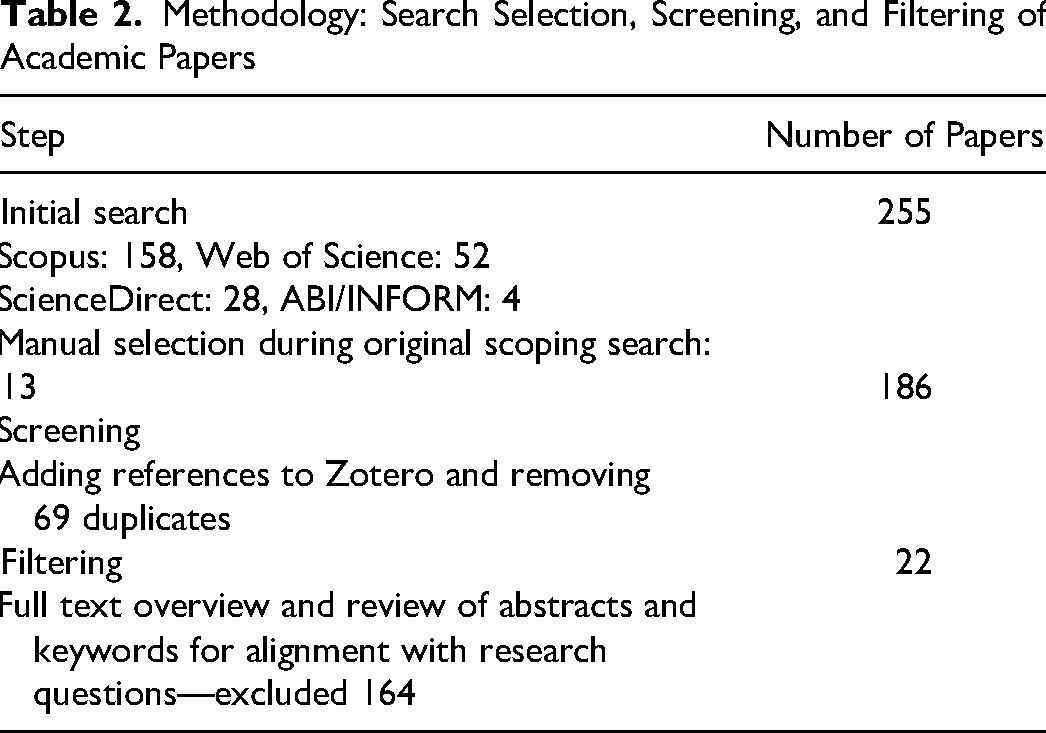
The literature search was conducted from February through May 2025 using four major databases: Scopus, Web of Science (WoS), ScienceDirect, and ABI/INFORM Global. These were chosen for their comprehensive coverage of interdisciplinary topics relevant to Industry 5.0 and project management. The search included English-language papers published starting in 2015 to date, containing both “Industry 5.0” and “project” in the title, abstract, or keywords. The initial search returned 255 papers (Scopus: 158; WoS: 52; ScienceDirect: 28; ABI/INFORM: 4; plus 13 manually identified sources).
Duplicates (n = 69) were removed via Zotero, leaving 186 records. These were screened through title and abstract review, followed by full-text scanning to assess alignment with the three research questions. Papers that did not substantively address any of the research questions were excluded (n = 164). The final dataset included 22 papers. A breakdown of the selection process is summarized in Table 2.
Methodology: Search Selection, Screening, and Filtering of Academic Papers
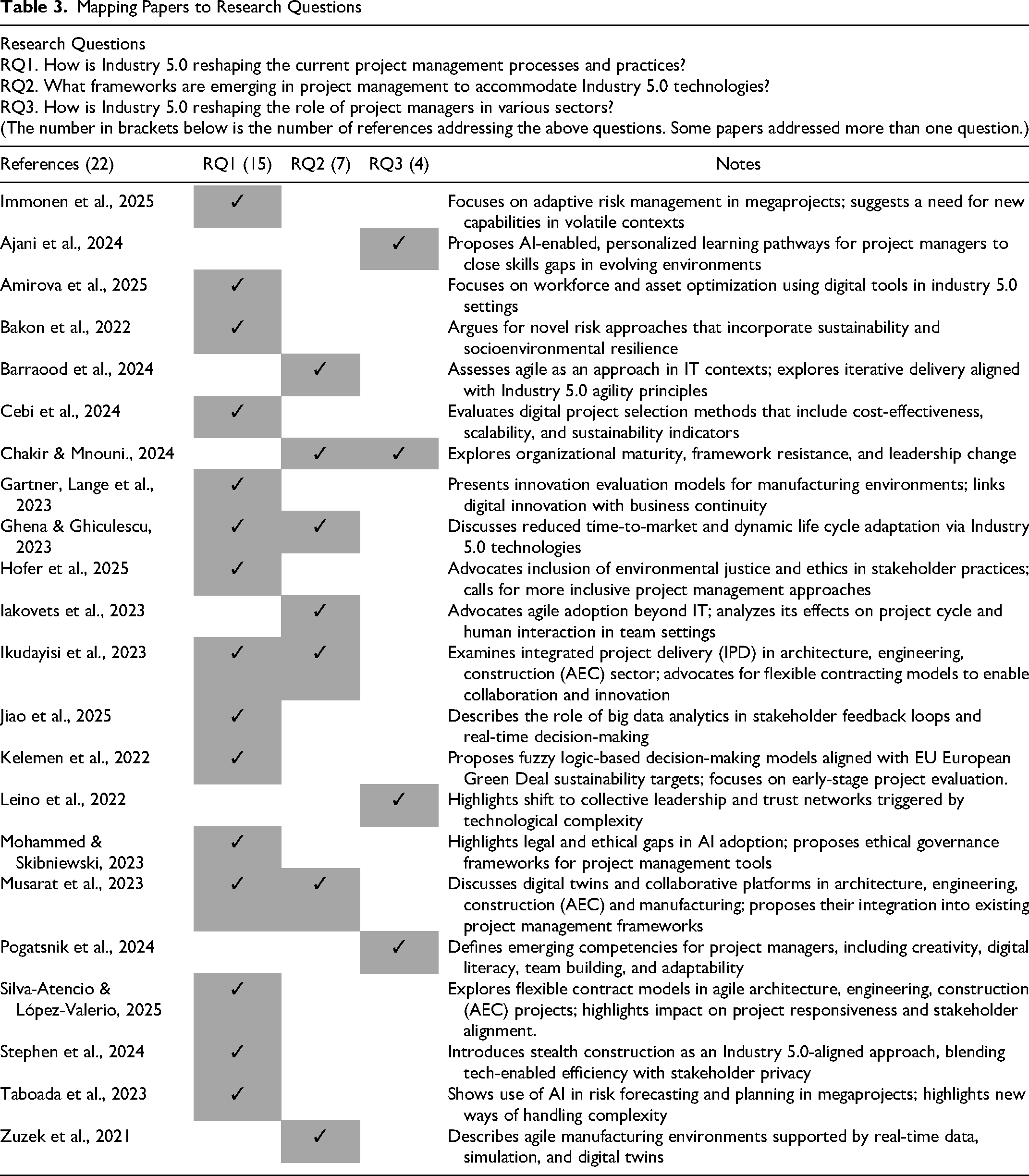
Although this review did not use formal coding software, a thematic synthesis approach was followed. Given the emerging nature of project management research for Industry 5.0 and the limited number of articles in top journals, we adopted a structured narrative review with a content-focused appraisal. The 22 included publications span recent journal articles, book chapters, and one refereed conference paper published in recent years. We prioritized relevance and depth of contribution to the study’s three research questions and recorded the results in Table 3 to ensure transparency and consistency.
Mapping Papers to Research Questions
Initial Analysis
The selected 22 papers were mapped against the three research questions, and the results are outlined in Table 3.
The selected papers provide diverse perspectives on the growing impact of Industry 5.0 technologies on project management practices. These perspectives range from the integration of advanced technologies, such as AI and digital twins, to the transformation of project methodologies, leadership models, and organizational cultures. While most papers address project management in the architecture, engineering, and construction (AEC) industry, less papers focus on manufacturing organizations. The majority of discussions are on decision-making processes in project evaluation and selection, including project performance and risk management practices. Few papers discuss emerging project management frameworks or explore the implications for project managers’ roles and skills in increasingly complex and dynamic environments. The following section provides a detailed analysis of the selected papers.
The New Project Management—Shaped by Industry 5.0
Industry 5.0 is considered by some scholars as a revolutionary paradigm shift, whereas others consider it as an evolutionary concept extending Industry 4.0 technologies. Regardless of whether Industry 5.0 represents a significant industrial revolution and a paradigm shift or whether it is just an extension of Industry 4.0, the emerging technologies and principles of Industry 5.0 are clearly reshaping the project management practices and methodologies and evolving role of project managers. As illustrated in Table 3, the majority of literature highlights the impact of Industry 5.0 on project management processes and practices (RQ1). The impact of Industry 5.0 on the role of project managers (RQ3) attracts less attention, with only few papers focusing on new frameworks (RQ2). The following sections discuss the influence of Industry 5.0 on project management, guided by these three research questions.
Project Management 5.0: Industry 5.0–Enabled Project Management Processes and Practices
Industry 5.0 marks a transformative shift in project management processes and practices by embedding values such as sustainability, human-centricity, and advanced digital innovation into core practices. This evolution challenges traditional practices and demands a reorientation of project selection activities, planning, execution, and monitoring processes, stakeholder engagement strategies, and governance processes. To capture this emerging shift, the article introduces project management 5.0 (PM 5.0) as conceptual configuration—an integrative way of understanding project management practices that are increasingly shaped by the principles and values of Industry 5.0. This conceptual configuration is not intended to replace existing frameworks and approaches such as agile, PRINCE2®, or the PMBOK® Guide. Instead, it serves as a conceptual scaffold to help unify their diverse strengths, providing a single interpretive entry point for educators, researchers, and practitioners.
Project selection in PM 5.0 is no longer solely driven by economic gain or operational feasibility; it now integrates regional and societal priorities. Kelemen et al. (2022) propose decision-making models based on fuzzy logic to ensure alignment with broader sustainability agendas such as the European Green Deal. These models assist project managers in selecting initiatives that contribute to environmental and social targets while managing inherent uncertainties. Gartner, Lange et al. (2023) reinforce this view by advocating for robust evaluation guidelines that balance digital innovation with business continuity—an essential capability in volatile, high-tech environments. Cebi et al. (2024) expand the criteria further, recommending the inclusion of scalability, cost-effectiveness, and the capacity for human–machine collaboration. In practice, this suggests that current selection tools like weighted scoring models and cost-benefit analysis may need to evolve to assess socioenvironmental value alongside traditional key performance indicators (KPIs) such as return on investment (ROI) or net present value.
Technological integration is central to PM 5.0, fundamentally altering traditional project planning and delivery. Taboada et al. (2023) and Immonen et al., (2025) show how AI can improve forecasting accuracy, automate risk detection, and optimize resource scheduling, particularly in complex megaprojects where traditional Gantt charts and program evaluation and review technique (PERT) analysis fall short in supporting the levels of complexity and uncertainty of megaprojects. AI-driven planning tools can now simulate multiple project scenarios, enhancing decision-making under uncertainty. Digital twins are another cornerstone technology, enabling real-time data sharing and collaboration across distributed teams. Musarat et al. (2023) highlight their role in democratizing information, allowing stakeholders to engage in planning iterations and progress tracking using shared visualization platforms. Stephen et al. (2024) demonstrate how stealth construction—a method enabled by Industry 5.0 tools—streamlines operations while reducing visibility to competitors and minimizing environmental disruption. These technologies also redefine project life cycle management by reducing time-to-market and increasing responsiveness (Ghena & Ghiculescu, 2023), while simultaneously enhancing workforce skills and optimizing asset utilization (Amirova et al., 2025). Practical implications include shifting from static project schedules to dynamic, AI-updated execution plans and deploying collaborative robots (cobots). Such cobots will not only support human workers in repetitive or high-risk tasks but also act as human companions or apprentices who will watch and learn how to execute the desired tasks as their human operators do (Nahavandi, 2019).
The integration of cyber-physical systems elevates risk complexity, necessitating novel approaches to uncertainty management. Bakon et al. (2022) argue that, although Industry 4.0 increased the intricacy of scheduling, Industry 5.0 multiplies the challenges by introducing ecological and social dimensions. In this context, traditional risk matrices and Monte Carlo simulations could be complemented with real-time predictive analytics and resilience modeling. Taboada et al. (2023) and Immonen et al., (2025) further reinforce the need for adaptive risk management in domains like construction and supply chain management. For instance, digital twins can simulate supply chain disruptions, enabling proactive interventions rather than reactive adjustments, whereas AI tools can flag potential cost overruns before they materialize.
Traditional contract management systems may hinder the responsiveness required in fast-evolving Industry 5.0 projects. Silva-Atencio and López-Valerio (2025) argue that procurement structures may need to evolve to support rapid technological adoption, advocating for agile and flexible contracting models that foster trust and collaboration. For example, agile procurement and outcome-based contracts that allow for midcourse corrections and iterative delivery are particularly beneficial in R&D and infrastructure projects. Similarly, Ikudayisi et al. (2023) highlight the significance of flexible procurement in enhancing project performance, especially under integrated project delivery (IPD) models. These models distribute risk and reward across stakeholders, incentivizing cooperation and innovation. In practice, this could mean replacing rigid service level agreements (SLAs) with adaptive partnership agreements that account for emergent technologies and evolving user needs.
Project Management 5.0 expands the stakeholder landscape beyond investors and clients to encompass communities, employees, and the environment. Hofer et al. (2025) advocate for stakeholder engagement practices that balance power asymmetries and emphasize environmental justice, calling for sociocentric project designs that reframe enterprises as societal agents. This necessitates a shift in traditional project stakeholder analysis tools, such as salience models and power/interest matrices, to include ethical influence and community resilience as key dimensions. Similarly, Jiao et al. (2025) highlight how big data analytics can enhance stakeholder engagement by transforming complex and heterogeneous inputs into actionable insights. For example, real-time dashboards can now track project performance across time, cost, and quality metrics while also integrating feedback from end users and local communities, promoting transparency and adaptability.
The deployment of AI and other emerging technologies in project environments also introduces new legal and ethical dilemmas. Mohammed and Skibniewski (2023) caution that despite the efficiencies offered by generative AI, issues related to data privacy, accountability, and bias remain unresolved. They recommend governance frameworks for auditing algorithmic decisions and ensuring transparency in AI-driven project tasks. Similarly, Hofer et al. (2025) observe that Industry 4.0 largely neglected ethics, whereas Industry 5.0 increasingly foregrounds them, promoting values of sustainability, inclusivity, and resilience. In PM 5.0 project practices, this might involve ethical impact assessments as part of feasibility studies or integrating digital ethics criteria into procurement and vendor evaluation processes. Having said that, it is important to distinguish ethical governance from regulatory compliance. While the latter ensures adherence to legal frameworks, ethical governance encompasses broader societal values, stakeholder trust, and long-term sustainability—often going beyond what is codified in policy.
As a result, the earlier discussion underscores that the transition to Industry 5.0 is not simply a technological upgrade but a fundamental rethinking of project management philosophies, systems, and tools. The challenge lies in integrating these innovations while navigating complex social, ethical, and operational landscapes.
Emerging Project Management Frameworks
As Industry 5.0 introduces human-centric, resilient, and sustainable values into industrial and technological ecosystems, it inevitably challenges traditional project management paradigms. This shift has sparked the question as to whether entirely new frameworks and approaches are emerging, or whether existing ones, such as agile approaches and integrated project delivery (IPD), are being adapted to accommodate the principles of Industry 5.0.
Agile project management has risen as a prominent contender to address the fluid and innovation-driven demands of Industry 5.0. Iakovets et al. (2023), Ghena and Ghiculescu (2023), and Barraood et al. (2024) argue that agile approaches, particularly in software development, align well with Industry 5.0's dynamic environments by enabling continuous iteration, reduced time-to-market, continuous stakeholder feedback, and sustainable value delivery. Through practices like daily coordination meetings, sprint retrospectives, and cross-functional collaboration, agile fosters rapid adaptation and user-centered design—qualities that resonate strongly with Industry 5.0’s human-centric ethos. Extending agile principles beyond software, Zuzek et al. (2021) demonstrate that manufacturing environments are increasingly capable of integrating agile components due to advanced digital capabilities such as rapid prototyping, computer simulation tools, and mixed reality. Their proposed frameworks embed concurrent product development with iterative loops supported by powerful digital twins and real-time visualization technologies. This contrasts with traditional waterfall models, where rigid sequential processes limit the capacity for real-time innovation or stakeholder cocreation. Yet, although agile’s iterative mindset aligns with Industry 5.0, its implementation in physical industries like construction or heavy manufacturing faces structural and cultural constraints, particularly when regulatory compliance or supply chain coordination are less agile by nature.
Another framework gaining attention in the context of Industry 5.0 is integrated project delivery (IPD), especially in complex and multistakeholder environments like construction. Ikudayisi et al. (2023) argue that IPD, with its emphasis on early stakeholder involvement, shared risk and reward, and integrated contractual arrangements, provides a viable structure for Industry 5.0–driven projects. IPD encourages innovation and agility through collaborative problem-solving, a necessity in environments that now incorporate cyber-physical systems and demand sustainable outcomes. However, despite its theoretical fit, the practical uptake of IPD remains limited. Complex legal structures, resistance to nontraditional contracting, and a lack of trust between parties have slowed its adoption. Compared to more widely institutionalized frameworks, such as the PMBOK® Guide or PRINCE2®, which prioritize control, documentation, and linear execution, IPD’s flexibility and relational focus remain underutilized.
While agile and IPD show potential alignment with Industry 5.0 values, the broader shift toward new frameworks is impeded by deep-rooted organizational resistance. Chakir and Mnouni (2024) note that many organizations remain hesitant to embrace new technologies due to path dependency and entrenched processes. Such resistance often manifests in risk-averse project governance structures, rigid hierarchies, and a lack of digital literacy, all of which hinder the adoption of more responsive and digital frameworks. Musarat et al. (2023) reinforce this challenge by observing that many industries have yet to fully adopt Industry 4.0 technologies, suggesting that transitioning to the more complex, value-oriented ideals of Industry 5.0 requires not just process change but long-term cultural transformation. This raises critical questions about whether emerging frameworks should be entirely new or if existing methodologies can evolve incrementally.
In summary, while agile and IPD exhibit features compatible with Industry 5.0, their adaptation remains uneven and context specific. The emergence of entirely new project management frameworks and approaches is not yet evident; rather, we are witnessing a gradual reconfiguration of existing models to accommodate the sociotechnical complexity of Industry 5.0. Overcoming resistance to change and fostering cultural readiness are key prerequisites for any substantive transformation in how projects are conceived, delivered, and sustained in this new industrial era.
Project Manager 5.0: The New Role of the Project Manager
The advent of Industry 5.0 is prompting a fundamental reassessment of the project manager's role. Traditional responsibilities centered on planning, controlling, and delivering outputs within scope, time, and budget constraints are evolving to encompass more complex leadership, collaboration, and digital fluency expectations. Aligning with the project management 5.0 (PM 5.0) concept introduced earlier, this article proposes the term “project manager 5.0” to describe the evolving role of project managers in Industry 5.0 environments.
One of the most significant shifts toward the project manager 5.0 role is the evolution from individual-centric leadership to networked, collective behaviors. Leino et al. (2022) observe that Industry 5.0 technologies—such as collaborative robotics, AI, and digital twins—trigger multiple, concurrent innovation projects. These are increasingly led by interconnected teams and informal leadership networks, rather than a single, centralized project authority. Trust-based leadership, distributed decision-making, and shared accountability are now emerging as the hallmarks of effective project leadership in technologically dynamic environments. This evolution contrasts with the traditional role of the project manager as a singular point of control, responsible for enforcing compliance with structured methodologies such as the PMBOK® Guide or PRINCE2®. In contrast, project manager 5.0 calls for a more facilitative role—a role that nurtures team autonomy, fosters psychological safety, and guides collective intelligence across cross-disciplinary teams. While such informal structures offer greater responsiveness and innovation, as Leino et al. (2022) highlight, there is still a lack of formalized frameworks to support these emerging leadership models, leading to challenges in coordination, accountability, and performance evaluation. On the other hand, while Leino et al. (2022) emphasize emergent collective leadership, Nahavandi (2019) frames human-centric leadership as intrinsically tied to trust and reliability between human intelligence on one side and intelligent devices, intelligent systems, and intelligent automation on the other side. In contrast, Carayannis and Morawska-Jancelewicz (2022) conceptualize Society 5.0 as a macrolevel sociotechnical system where leadership reflects systemic design—a smart bridge between the techno-centric and human-centric perspectives. This contrast reveals an unresolved tension: Is human-centricity rooted in interpersonal practice or systemic structure? Future studies should explore whether these conceptualizations can be reconciled through a multilevel leadership model in Industry 5.0 project environments.
As Industry 5.0 reshapes the technological and human landscape, it simultaneously redefines the competencies expected of project manager 5.0. Pogatsnik et al. (2024) argue that digital literacy, adaptability, creativity, and collaborative problem-solving are no longer desirable but essential. Managing complex sociotechnical systems requires not only understanding new tools but also applying them to enhance value creation and team performance. For instance, leveraging AI tools for predictive analytics or using virtual reality for stakeholder engagement are rapidly becoming part of the modern project manager's toolkit. This shift also represents a departure from traditional competency frameworks that prioritized technical skills like scheduling, budgeting, and risk control. While these competencies remain relevant, they may need to be complemented by other interpersonal skills and systems thinking qualities that allow project managers to navigate the interconnected challenges of sustainability, stakeholder diversity, and technological disruption.
The readiness of organizations to support this evolving project manager 5.0 role is another critical factor. Chakir and Mnouni (2024) stress the importance of developing talent strategies that embed continuous learning, innovation culture, and flexible leadership structures. Organizations should move toward higher levels of maturity that enable adaptive governance, integration of emerging technologies, and support for nonlinear project trajectories. However, as Chakir and Mnouni (2024) also point out, resistance to change and rigid organizational cultures can stifle the development of these competencies. Many firms still struggle to adapt even to Industry 4.0, suggesting that the leap to Industry 5.0 is likely to necessitate new forms of sustained investment in both technology and people. This includes frameworks for continuous capability assessment, knowledge sharing, and cultural transformation. Ajani et al. (2024) offer a potential solution in the form of AI-driven personalized learning pathways. These pathways can tailor professional development to individual learning styles and project contexts, accelerating skills acquisition. Nevertheless, Ajani et al. (2024) caution that gaps in infrastructure, educator readiness, and resource availability may inhibit the broad application of these tools. Addressing these limitations is essential for equipping future project manager 5.0 with the competencies to thrive in digitally intensive and socially complex environments.
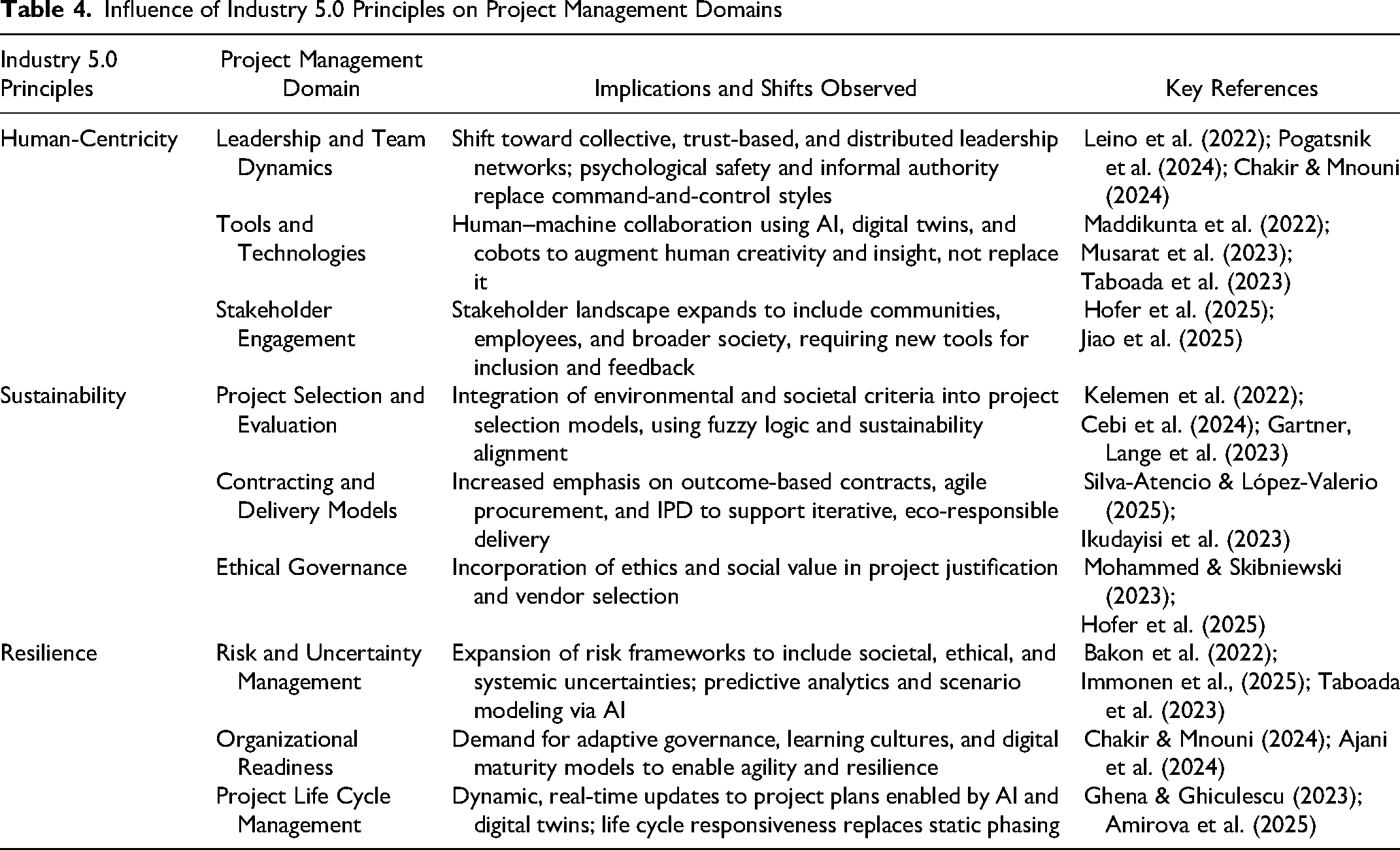
In conclusion, Industry 5.0 is not merely influencing but actively transforming the role of project managers from directive planners to adaptive, collaborative, and technologically literate leaders. Traditional frameworks and skill sets are no longer sufficient in isolation; they may need to evolve in tandem with organizational structures and educational systems. Without deliberate strategies to support this evolution, organizations risk falling behind in managing the complexity and potential of Industry 5.0 initiatives. To operationalize this shift, project managers should develop new competencies such as digital systems literacy, ethical decision-making in AI use, and facilitative leadership in nonlinear, distributed environments. These capabilities are not yet widely recognized in standard project management frameworks suggesting an urgent need to revisit current competency models and certification criteria. Table 4 summarizes the key ways in which Industry 5.0 principles are influencing core project management domains, drawing together the findings from the literature reviewed earlier.
Influence of Industry 5.0 Principles on Project Management Domains
Conceptual Integration: Project Management 5.0 and Project Manager 5.0
Inspired by Ke et al.’s (2025) assertion that literature reviews should define the intellectual architecture of the field and drive conceptual innovation rather than only organize and consolidate prior work—and in response to the evolving nature of Industry 5.0 and its uneven uptake across sectors—this article positions PM 5.0 and project manager 5.0 not as definitive frameworks but as emergent conceptual configurations. They synthesize the interplay between technological enablers and the guiding principles of human-centricity, sustainability, and resilience. These concepts are intended as exploratory scaffolds to stimulate future theoretical development and empirical validation.
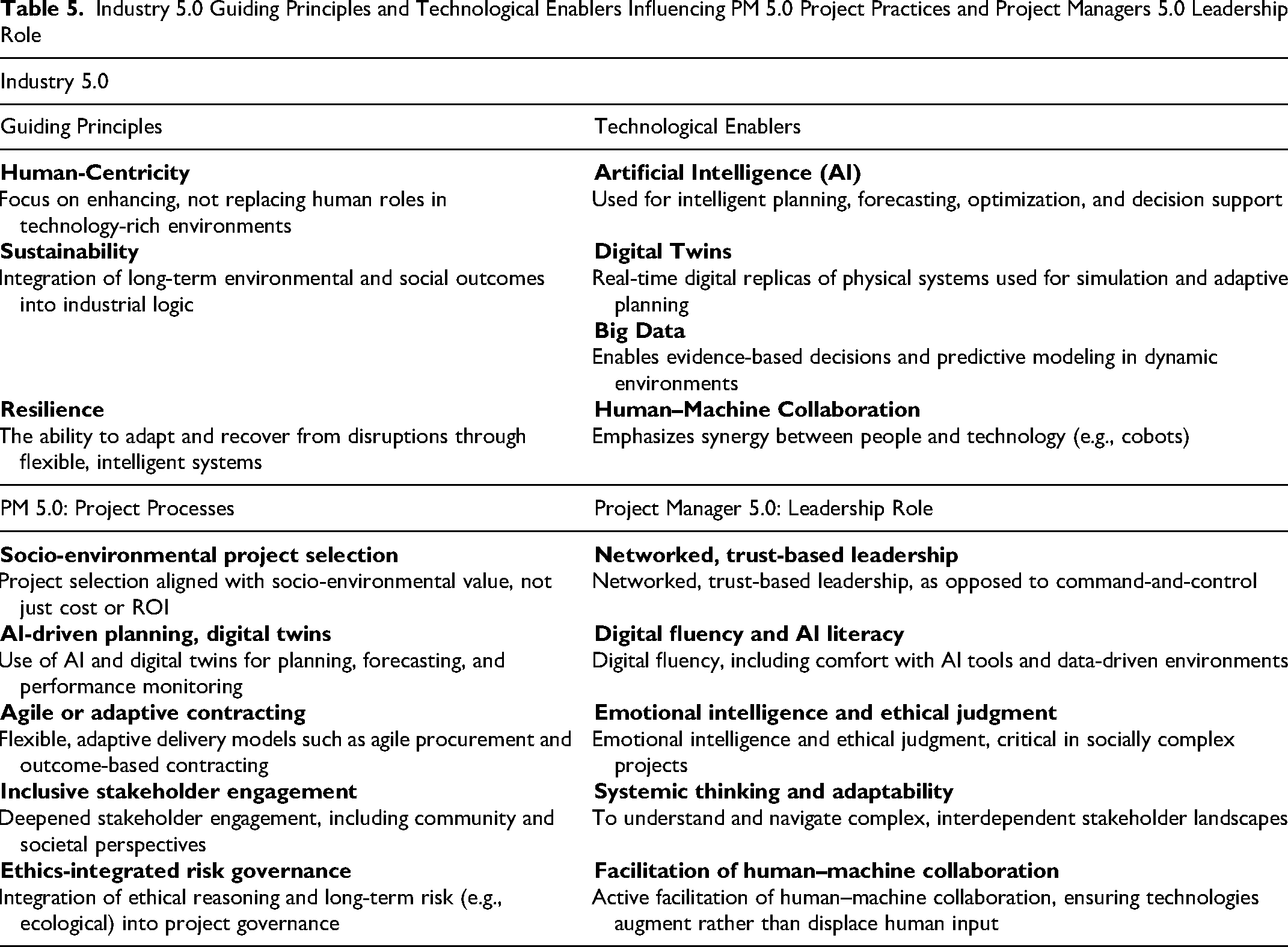
Table 5 and Figure 1 define these concepts as integrative contributions emerging as a result of Industry 5.0 guiding principles and technological enablers. Importantly, these constructs do not develop sequentially but rather evolve concurrently, each shaped by the guiding principles of Industry 5.0 and underpinned by its technological enablers. Moreover, they are mutually reinforcing: The adoption of new tools and methods necessitates corresponding shifts in leadership capabilities, while emerging leadership models, in turn, influence how project systems are designed and enacted.
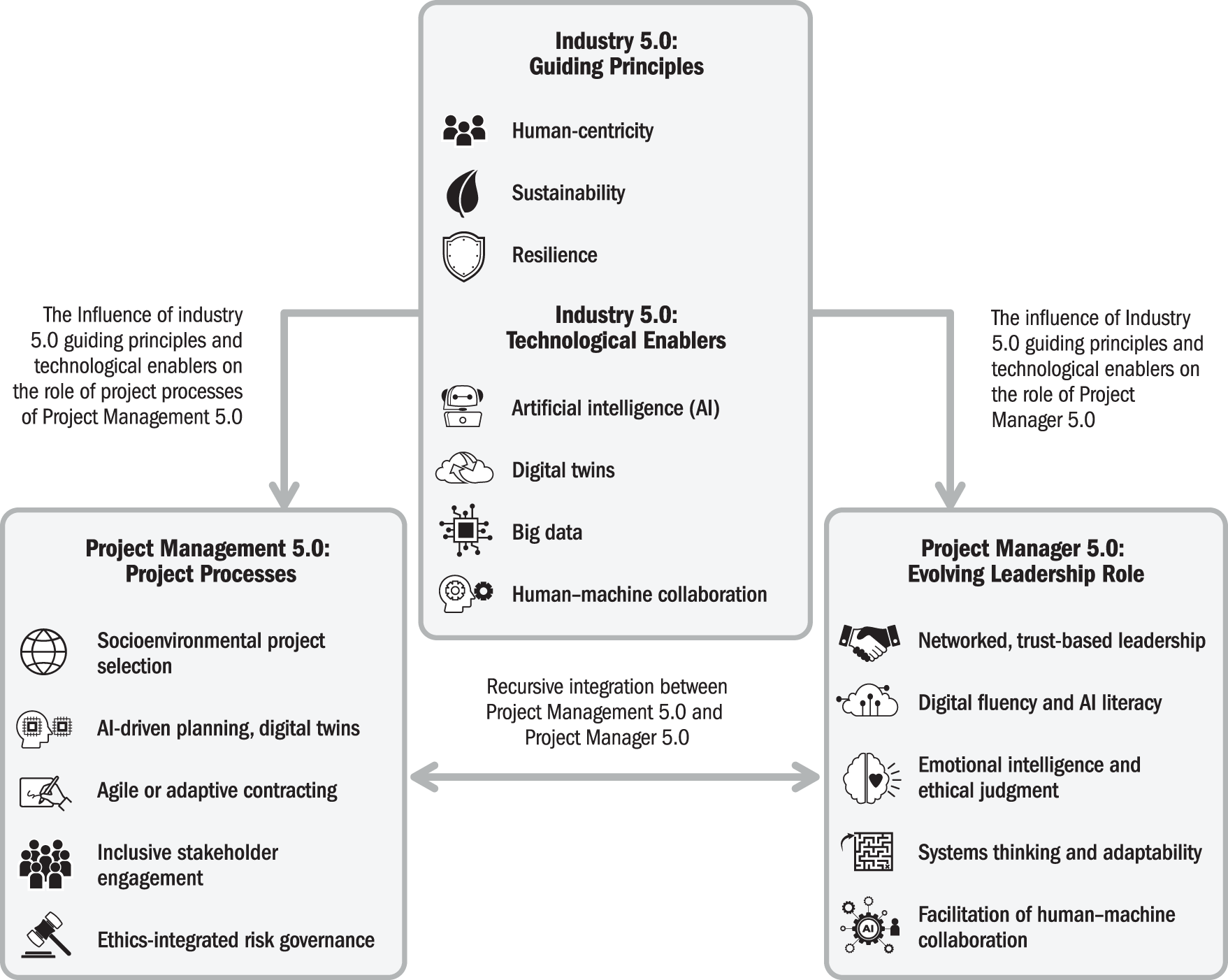
Conceptual framework illustrating how Industry 5.0 principles and technology exert simultaneous influence on project management processes (PM 5.0) and leadership roles (Project Manager 5.0), which in turn reinforce and shape each other through a recursive integration.
Industry 5.0 Guiding Principles and Technological Enablers Influencing PM 5.0 Project Practices and Project Managers 5.0 Leadership Role
In a landscape increasingly characterized by complexity, cross-disciplinarity, and ethical considerations, PM 5.0 can help reduce confusion caused by the multiplicity of frameworks by offering a coherent way to select and combine approaches according to project context, societal values, and stakeholder needs. For example, stakeholder engagement is treated variously across methodologies: Agile emphasizes continuous customer collaboration, the PMBOK® Guide suggests structured stakeholder plans, and IPD promotes integrated early involvement. PM 5.0 synthesizes these into a broader principle of inclusion and cocreation. Similarly, risk management practices—whether formalized in PRINCE2®, adaptive in agile, or contractually distributed in IPD—can be reinterpreted under PM 5.0 as a socioethical process balancing predictive analytics with participatory judgment. In planning and scheduling, PM 5.0 integrates the strengths of critical path techniques, iterative sprints, and AI-based forecasting into a dynamic view of scheduling as a living, value-oriented activity. Leadership, too, is reframed: Rather than being bound to a singular role or hierarchy, PM 5.0 highlights trust-based, distributed leadership as a common thread across methodologies. These examples illustrate how PM 5.0 can elevate technical and compliance-focused practices into richer sociotechnical, socioethical, or sociocognitive practices. By reframing these elements through Industry 5.0 values like inclusion, adaptability, and human-centricity, PM 5.0 supports a more holistic form of project thinking.
This approach educates the project management student and informs the practitioner by exposing them to the diverse range of tools and frameworks available, empowering them to select or combine methods based on contextual relevance and purpose. Crucially, it does so without prescribing allegiance to a single methodology or branding deviation as noncompliance. Instead, PM 5.0 encourages reflective and principled decision-making, enabling professionals to act with confidence, clarity, and responsibility across a variety of project environments. Together, PM 5.0 and Project Manager 5.0 offer a coherent framework for understanding the transformation of project management practice in the Industry 5.0 era and provide an essential foundation for advancing both theory and applied research in this rapidly evolving field.
To integrate and visualize the core findings of this review, Figure 1 presents a conceptual framework that illustrates the dual and parallel transformation occurring within project management in the context of Industry 5.0. It shows how the foundational principles of Industry 5.0 simultaneously shape both the evolution of project management practices (PM 5.0) and the emerging leadership role of the project manager (project manager 5.0). These two dimensions evolve concurrently and influence each other through recursive integration. This model underscores the need for a holistic understanding of transformation in project environments—one that accounts for both structural shifts in project systems and behavioral adaptations in project leadership.
Future Directions for Project Management in Industry 5.0
As Industry 5.0 continues to redefine the industrial landscape, it presents both an opportunity and a challenge for project management scholars. The literature reflects growing interest in integrating emerging technologies, fostering human-centric values, and embracing sustainability and resilience. However, there remain several critical gaps that call for further investigation and theoretical development.
PM 5.0: Reconceptualizing Project Management Processes and Practices
Although project selection and decision-making models increasingly incorporate sustainability and human-centric values, empirical validation across diverse contexts is limited. While early models incorporating fuzzy logic and sustainability indicators are emerging, there is a lack of integrative models that simultaneously account for human–machine collaboration, societal impact, long-term scalability, and policy alignment. Future research should focus on developing and testing multicriteria decision-making frameworks that effectively integrate fuzzy logic, ethical considerations, and alignment with policy objectives. Additionally, studies should explore how project selection processes can dynamically respond to evolving societal and environmental priorities.
In terms of technological integration, although AI, digital twins, and robotics are being adopted, more research is needed to understand their long-term implications for process optimization, stakeholder communication, and knowledge transfer on one hand, and their long-term implications on project outcomes, on the other hand. Future studies should address interoperability challenges and governance mechanisms for managing complex technological ecosystems as well as the impact of real-time data democratization on power dynamics and accountability in projects.
Project risk management calls for further investigation and conceptualization. As cyber-physical systems become increasingly intertwined with societal goals, risk is no longer limited to technical dimensions but also includes social, legal, and ethical complexities. Future studies should develop integrated risk management frameworks that encompass technical, societal, and ethical uncertainties. Legal and regulatory implications of AI-driven decision-making, particularly in high-risk sectors, also require comprehensive examination.
Stakeholder engagement in sociocentric ecosystems deserves examination and modernization. The transition to novel sociocentric project environments ought to present opportunities and challenges that necessitate new stakeholder engagement models. Research should explore frameworks that address power asymmetries and embed environmental and social justice considerations. Additionally, the role of digital platforms and big data analytics in enhancing stakeholder transparency, trust, and participation warrants further investigation.
Rethinking Project Delivery Models and Organizational Maturity
Although agile approaches and integrated project delivery (IPD) are seen as promising models, there is insufficient understanding of how these models and other traditional delivery models can be adapted to suit the human-centricity, sustainability, and resilience ethos of Industry 5.0. Research is needed to evaluate the hybridization of delivery models across sectors—particularly in construction and manufacturing—and to investigate the organizational enablers and barriers to adopting such models.
The literature highlights organizational maturity as foundational for Industry 5.0 readiness, yet little is known about how project-based organizations can measure and evolve their maturity levels in this new context. Longitudinal studies that track capability development, digital literacy initiatives, and change management practices will be crucial in understanding how organizations build adaptive capacity. Additionally, the development of organizational maturity models to evaluate readiness for Industry 5.0 adoption across sectors is a promising area for further research.
Envisioning the Role of Project Manager 5.0
The emergence of informal, trust-based leadership networks presents a shift from traditional hierarchical models. There is a pressing need for conceptual and theoretical frameworks that redefine the role of project manager 5.0. While existing studies highlight shifts toward networked and collective leadership models, there is limited empirical research on how these informal leadership structures operate in practice, how trust is built and maintained, and how collective intelligence can be systematically leveraged in project environments. Future studies should investigate the dynamics of distributed leadership and collective intelligence in multiproject environments; and explore how leadership theory evolves in a context driven by decentralization, emotional intelligence, and digital collaboration.
Similarly, as Industry 5.0 redefines the competencies required of project manager 5.0, this necessitates new approaches to education and training. Educational strategies and learning technologies for project managers deserve deeper inquiry. While AI-based personalized learning and digital tools offer potential, questions around implementation, resource equity, and curriculum design remain unresolved. Future research should investigate how educational institutions and industry bodies can codevelop training models that prepare the next generation of project managers for industry 5.0 demands.
Future Research Agenda: Toward PM 5.0
The emergence of PM 5.0 calls for a reimagining of project management theory and practice. Scholars are encouraged to pursue multidisciplinary, empirically grounded, and future-oriented research to advance our understanding of how project management can adapt and thrive in a world shaped by technological–human symbiosis, sustainability imperatives, and collaborative intelligence. To support the development of a future-ready project management discipline, we propose the following four interconnected research themes:
Theorizing Project Management 5.0
As Industry 5.0 challenges the assumptions underpinning the existing project management theories—particularly the dominance of control-oriented, techno-rational paradigms—future research should explore alternative theoretical models that account for sociotechnical complexity, ethical values, and human–machine collaboration. Key focus areas include:
Developing frameworks that conceptualize projects as sociocentric systems, integrating ethical, societal, and environmental values alongside traditional performance indicators. Investigating the interplay between human agency and AI-driven decision support in project environments, with implications for autonomy, accountability, and trust. Adopting lenses from systems thinking, complexity theory, and sustainability science to reconceptualize project success in the context of long-term societal impact.
This direction aligns with type 2 and type 3 project studies research (Geraldi & Söderlund, 2018), moving beyond prediction and control toward deeper understanding and critical reflection.
Innovating Project Management Frameworks and Delivery Models
The partial adaptation of agile approaches and the integrated project delivery (IPD) framework suggests an emerging crossbreeding in response to Industry 5.0. However, their current forms may be inadequate for projects that demand agility, stakeholder inclusivity, and digital–physical integration. Future research should:
Examine how existing frameworks can evolve to incorporate Industry 5.0 values, including stakeholder cocreation, iterative learning, and ethical responsiveness. Assess the effectiveness of hybrid or emergent approaches in high-complexity sectors such as advanced manufacturing, infrastructure, and healthcare. Explore how digital technologies (e.g., AI, digital twins, big data platforms) are reshaping project life cycle governance, particularly in terms of responsiveness, transparency, and ethical oversight.
Comparative, longitudinal studies across sectors and regions could generate insights into the contextual enablers and barriers to framework evolution.
Redefining Project Manager Competencies and Leadership Models
Industry 5.0 is reshaping the role of the project manager from that of a directive planner to a networked facilitator and systems integrator. This evolution requires a shift in both individual competencies and organizational talent strategies. Future research priorities include:
Investigating the emergence of collective and distributed leadership models, including how trust, autonomy, and psychological safety are cultivated in digitally augmented teams. Developing new competency frameworks that integrate digital literacy, ethical reasoning, systems thinking, and emotional intelligence. Assessing the effectiveness of AI-enabled professional development tools (e.g., personalized learning pathways) in building future-ready project leadership capabilities.
This line of inquiry could benefit from interdisciplinary collaboration with fields such as organizational psychology, leadership studies, and education technology.
Building Organizational Maturity for Industry 5.0 Readiness
Organizational readiness is a foundational enabler for successful Industry 5.0 adoption. Yet, few maturity models examine and assess the capacity of project-based organizations to integrate sustainability, digital innovation, and human-centricity simultaneously. Research gaps include:
Designing and validating maturity models that evaluate Industry 5.0 readiness across dimensions such as technology integration, cultural adaptability, and ethical governance. Conducting longitudinal studies to track how organizations evolve in response to Industry 5.0 imperatives, including capability development, digital infrastructure, and learning cultures. Exploring the organizational change management strategies necessary to overcome resistance, path dependence, and structural inertia.
Such research can offer practical pathways for organizations aiming to transition from Industry 4.0 optimization toward Industry 5.0 transformation.
In summary, the future directions for PM 5.0 and the proposed research agenda highlight the need for a multidisciplinary, future-oriented inquiry into the evolution of project management under Industry 5.0. Scholars and practitioners alike are encouraged to pursue research that not only captures technological advancement but also foregrounds human dignity, ethical responsibility, and collective value creation as central tenets of project practice in the coming era.
Limitations
This article provides a structured narrative review of the emerging intersections between Industry 5.0 and project management. While it offers conceptual insights and synthesis of early-stage literature, some limitations should be acknowledged to clarify the scope and boundary conditions of the findings.
Emerging and Limited Literature Base
The study is situated in an evolving research space where Industry 5.0 is still being defined and its relationship with project management is only beginning to be theorized. Although the literature search was broad across four major academic databases, the final inclusion of only 22 papers reflects the early and fragmented nature of the field. The review is therefore built on a modest corpus that may not capture the full spectrum of current academic and practitioner knowledge. This limitation is especially relevant when interpreting generalizations across frameworks or projecting long-term theoretical trends. Additionally, digital tools such as AI, digital twins, and big data analytics may not be equally accessible across sectors or regions. This digital divide presents limitations for the generalizability of findings and warrants attention in future research.
Conceptual Ambiguity Surrounding Industry 5.0
Industry 5.0 itself remains an evolving and contested concept. Some scholars position it as a paradigm shift emphasizing human–machine collaboration, ethics, and sustainability; others view it as a gradual extension of Industry 4.0 capabilities. This conceptual ambiguity presents a challenge when synthesizing literature that may use the term inconsistently or apply it with different theoretical assumptions. As such, comparisons across studies are subject to interpretation, and the boundaries between Industry 4.0 and Industry 5.0 interventions are not always clear. This also affects the clarity of assessing their impact on project management theory and practice.
Sectoral Imbalance in Reviewed Literature
A significant limitation of this study lies in the uneven distribution of sectoral focus across the reviewed literature. The analysis revealed a strong bias toward the architecture, engineering, and construction (AEC) sector, followed by a moderate focus on manufacturing and limited attention to information technology. Sectors such as healthcare, education, energy, financial services, and public administration are highly project intensive and likely to be influenced by Industry 5.0 transformations, yet they were either absent or mentioned only tangentially. This overrepresentation of AEC reflects the prominence of construction megaprojects and infrastructure innovation in current Industry 5.0 discourse. However, it also means that many of the frameworks and practices discussed in the literature (e.g., IPD, stealth construction, or AI-enabled planning) may be context specific and less transferable to projects in more service-oriented or socially driven sectors. Consequently, the applicability of findings, such as those related to risk management, stakeholder engagement, or ethical governance, may vary significantly across domains.
This imbalance limits the generalizability of the article’s conclusions and highlights an important gap in literature. The future research agenda mentioned earlier should broaden the sectoral lens by including diverse project environments, including agile tech start-ups, public infrastructure programs, humanitarian projects, and educational technology initiatives. These contexts may offer unique insights into how human-centricity, sustainability, and resilience manifest in different project cultures, governance structures, and regulatory environments. Moreover, many of the digital enablers discussed, such as AI, digital twins, or immersive platforms, assume a level of digital infrastructure that is not evenly distributed across sectors or regions. As such, the applicability of PM 5.0 practices must be interpreted in light of technological readiness and resource availability.
Methodological Constraints of a Narrative Review
The use of a structured narrative review methodology is appropriate given the conceptual richness and relative novelty of the topic. However, this approach does not follow the rigorous protocols of systematic reviews or meta-analyses. As a result, the identification of themes, interpretation of findings, and categorization of papers are influenced by subjective judgment. While transparency was maintained in the selection and screening process, the interpretive nature of this methodology may introduce selection bias or affect the emphasis placed on certain perspectives.
Lack of Empirical Validation
This review is entirely literature based and does not incorporate any primary empirical data. While it synthesizes theoretical and conceptual insights from existing studies, the proposed PM 5.0 and project manager 5.0 constructs remain propositional and untested. The absence of fieldwork, case study validation, or stakeholder input means that these ideas should be treated as conceptual scaffolding rather than established models. Future research should empirically examine these propositions through qualitative and quantitative methods to assess their relevance and practical implications in specific organizational settings.
Contribution
Despite the limitations, this article makes an important and timely contribution to the emerging discourse on Industry 5.0 and its implications for project management. By reviewing and thematically synthesizing early literature, it offers one of the first structured overviews of how core Industry 5.0 principles are beginning to reshape project processes, delivery frameworks, and leadership roles. The proposed concepts of PM 5.0 and project manager 5.0 (see Table 5 and Figure 1) provide a conceptual foundation for future empirical inquiry and practical adaptation, while the research agenda outlined in this article helps chart a clear direction for advancing theory and practice in a rapidly evolving industrial landscape.
Conclusion
Industry 5.0 represents more than a technological advancement; it signals a conceptual shift in how industrial projects are conceived, delivered, and managed; and presents a turning point for project management theory and practice. As this review shows, Industry 5.0 core principles of human-centricity, sustainability, and resilience, challenge the foundations of traditional project management and call for a reconfiguration of its practices, frameworks, and roles. Through the lens of project studies, this article synthesized the emerging body of literature and demonstrated that while current project management practices are beginning to reflect the influence of Industry 5.0, most frameworks remain grounded in Industry 4.0–era logics of control, efficiency, and automation, limiting their capacity to address the complex sociotechnical realities of modern projects.
The synthesis of the reviewed literature reveals a substantive transformation in the way projects are being conceived, delivered, and governed in response to the emerging paradigm of Industry 5.0. To articulate and interpret this shift, this article introduced two interrelated conceptual constructs: project management 5.0 and project manager 5.0. The former denotes the evolving configuration of project management processes, characterized by the integration of human–machine collaboration, ethically informed decision-making, and system-level resilience. The latter refers to the redefined role of the project manager as a digitally competent, ethically grounded, and socially responsive leader operating within increasingly complex and value-driven project environments.
The conceptual models of PM 5.0 and Project Manager 5.0 presented in this article offer a scaffold for rethinking project management as a sociocentric system in which technological enablers and human values are mutually reinforcing. From a theoretical perspective, these models invite the development of integrative frameworks that move beyond predictive control to embrace adaptability, networked leadership, stakeholder cocreation, and ethical value delivery. From a practical standpoint, they highlight the need for new competency models, governance structures, and delivery approaches aligned with Industry 5.0’s guiding principles.
Building on this synthesis, several targeted research questions emerge: (1) What theories or theoretical lenses are most appropriate for conceptualizing PM 5.0 as a distinct paradigm in project management, and how might they capture the sociotechnical, ethical, and collaborative dimensions of Industry 5.0? (2) What competencies should be prioritized in formal project management certification frameworks to prepare “Project Managers 5.0” for ethical, adaptive, and technology-integrated practice? (3) In AI-enabled project environments, how can ethical governance models be designed and implemented to achieve a balance among automation efficiency, effective project delivery, accountability, and stakeholder trust? (4) How can educational strategies be designed to prepare project professionals for the complex, value-driven environments of Industry 5.0? Collectively, these questions provide a focused agenda for advancing both the theoretical foundations and practical capabilities of project management in the Industry 5.0 era.
Ultimately, this article underscores the urgency for future research that is interdisciplinary, theory generating, and practice oriented. This article proposes a future research agenda including conceptual propositions such as theorizing the human–machine interface not only as a technical enabler but as a site of social negotiation and ethical complexity. Developing adaptive frameworks, educational strategies, and maturity models tailored to the realities of Industry 5.0 will be essential for equipping project professionals to navigate an increasingly complex and value-driven industrial landscape. In doing so, project management can become not only a vehicle for technological implementation but also a catalyst for sustainable and inclusive industrial transformation.
Footnotes
Author Biographies
 ) Public–Private Partnerships, a guest professor at Chang’an University in China, and a research associate at the Australia-China Relations Institute. He can be contacted at yongjian.ke@uts.edu.au