




Abstract
The aim of this article is to address the current knowledge gap in key soft skills required when managing projects in an Industry 5.0 context. Using a survey questionnaire, key social, emotional, and behavioral skills were identified and framed through the theoretical lenses of the Big Five personality traits and Schwartz’s personal values theories. The findings highlight the growing relevance of emotional resilience, innovation, cooperation, and social engagement, reflecting personality qualities such as openness to experience and agreeableness and personal values such as self-direction, universalism, and hedonism. The professional identity of project managers is posited to evolve concomitantly.
Keywords
Introduction
The rapid evolution from Industry 4.0 (I4.0) to Industry 5.0 (I5.0) has significantly reshaped the project management landscape. I4.0 corresponds to the digital transformation of manufacturing through the integration of cyber-physical systems, Internet of Things (IoT), and data analytics to create smart, interconnected, and efficient production processes (Marnewick & Marnewick, 2019). I5.0 emphasizes combining these technologies and others, such as artificial intelligence (AI), while prioritizing sustainability and human–machine collaboration. This focus calls for project managers with specialized skills. In particular, there is a prominent need to understand the unique soft skills set required for effective human-centered project management in the digital age, as proposed by the I5.0 paradigm. As highlighted by Sousa and Rocha (2019), adapting to digital transformations of processes and management paradigms is critical for maintaining business competitiveness in contemporary and future technological and societal scenarios. However, project managers must develop skills that enable them to manage both technological innovations and human-driven perspectives (Coelho et al., 2023; Golovianko et al., 2023). Understanding these required skills is crucial as project management methodologies have evolved from rigid, process-driven approaches to more agile, human-centric models, markedly in the COVID-19 pandemic context, which has enhanced the embracing of digital tools (Shadravan & Parsaei, 2023; Zizic et al., 2022) and as highlighted by the I5.0 concept.
Existing literature stresses the growing importance of project managers’ soft skills in I4.0, emphasizing areas such as adaptability and creativity (Ribeiro et al., 2021). However, the effect of soft skills on project management in I5.0 remains underexplored (Bushuyev et al., 2021; Lukianov et al., 2021). To overcome this gap, our study uses Soto’s (2023) psychological construct of Social, Emotional, and Behavioral (SEB) soft skills, framed in the theoretical lenses of the Big Five Personality Traits theory (McCrae, 1999) and Schwartz’s Values theory (2012). Thus, our study extends the application of theoretical constructs related to nontechnical skills to project management in an I5.0 context. Moreover, our results add to the extant literature by demonstrating that the project manager’s professional identity, influenced by personal values and personality traits, is evolving alongside the soft skills required for I5.0. Therefore, this study contributes to the professional identity literature in the project management area.
To address the identified research gaps, this study’s research question is the following: “What social, emotional, and behavioral skills are crucial for project management in Industry 5.0?” A pragmatic research paradigm, framed on a quantitative approach, was employed. The primary data collection method was an online survey questionnaire targeting active project managers across various industries.
In the project management area, extant studies have shown that developing human capital, including technical skills and soft skills, significantly impacts project success and organizational performance (Aliu & Aigbavboa, 2019; Greer & Carden, 2021). Thus, from a practical perspective, our research provides insights to inform the planning of training programs and professional development initiatives aimed at enhancing digital transformation capabilities.
This article is organized as follows: a discussion of the related background literature is presented next, namely on I5.0 and its impact on project management and soft skills. Then, the employed methodology is described, and the main findings are presented. In light of the extant literature, the main results are discussed. Finally, the main conclusions are provided, including limitations and future research avenues.
Theoretical Background
Industry 5.0 and Its Impact on Project Management
The contemporary world is an environment where digital technologies are foundational, influencing every aspect of human life (Li et al., 2022). Enhanced connectivity facilitates real-time communication, breaking geographical and cultural barriers. This interconnectedness is driven by digital platforms integrating various technologies, creating a seamless blend of digital and physical resources (Cortellazzo et al., 2019; Redshaw, 2020). However, the digital world also presents challenges such as the digital divide and environmental concerns due to increased carbon footprints (Fraga-Lamas et al., 2021). Addressing these issues requires inclusive policies and sustainable practices to ensure equitable access and mitigate adverse impacts (Linkov et al., 2018). Moreover, in a digital world, project managers must overcome resistance to change and address security and privacy concerns (Pan & Zhang, 2021).
The rapid progression from I4.0 to I5.0 marks a significant shift in the industrial landscape, bringing about profound changes in project management practices (Shadravan & Parsaei, 2023). Initially focused on predictability and control, modern project management methodologies now emphasize flexibility, responsiveness, and digital integration (Ng, 2019). Project managers must develop skills in various advanced technologies to stay ahead. Proficiency in blockchain, the IoT, and AI is becoming essential as these technologies revolutionize project management practices by enhancing, for example, decision-making, risk management, and resource allocation that improve project execution efficiency (Alfaifi & Aksoy, 2023). The application of data-driven decision-making techniques, such as real-time analytics, predictive modeling, and digital twins, is crucial for optimizing project performance (Whyte, 2019), decision-making, and efficiency (Marhraoui, 2023; Marnewick & Marnewick, 2022).
Emphasizing a human-centric approach and sustainability, project managers in an I5.0 context must balance technological advancements with ecological and humanitarian considerations, aligning projects with wider social and environmental goals (Barata & Kayser, 2023). This involves leveraging automated processes while maintaining a human-driven approach to maximize value (Golovianko et al., 2023) that builds on human creativity and intuition (Zizic et al., 2022). Also, this requires redefined soft skills such as empathy and a collaborative mindset (Coelho et al., 2023). Also, successful communication and adaptability are critical for project success in digital environments (Marnewick & Marnewick, 2021; Ng, 2019). Moreover, leadership skills are vital to ensure project managers can effectively manage diverse teams and stakeholder expectations in a digital world (van Heerden et al., 2023). Thus, the cultivation of soft skills is paramount for effective project management in the I5.0 era (van Heerden et al., 2023). However, the literature lacks an in-depth study of the relevance of such skills for project management in this context (Bushuyev et al., 2021; Lukianov et al., 2021).
Moreover, the dynamic nature of the digital age, characterized by rapid technological advancements and globalization, requires project managers to engage in continuous professional development to maintain relevance and effectiveness (Dempsey et al., 2022; Leong et al., 2023). Prioritizing soft skills for I5.0 allows for assessing and developing training programs that will adequately equip project managers for contemporary and future project management scenarios.
Soft Skills
Noncognitive skills are increasingly valued across various domains for their contributions to personal and professional success (Soto et al., 2022). Capabilities to nurture social relationships, adjust emotions, and control behaviors are clearly distinguishable from cognitive skills as evaluated by intellect tests (Duckworth & Yeager, 2015). Diverse qualities can be identified with noncognitive skills, such as sociability, conscientiousness, curiosity, and perseverance, significantly impacting life outcomes (Heckman & Kautz, 2012). In the project management area, the nontechnical skills of project managers are a major element influencing project success. For example, resilient project managers are better equipped to handle time pressure without experiencing emotional exhaustion (Rafique et al., 2023). However, previous research on project managers has largely overlooked the psychological factors contributing to project success (Hassan et al., 2017; Hussain et al., 2021).
The literature addressing these skills is inherently multidisciplinary and is crowded by a blurring collection of definitions, terminology, and taxonomies. Examples include “character strengths,” “noncognitive skills,” “soft skills,” “21st-century skills,” and “social and emotional learning” (Soto et al., 2021). We adopt Soto’s SEB terminology for clarity, representing how someone can think, feel, and behave when the situation calls for it. Social skills involve capabilities necessary for dynamic interaction such as communication, cooperation, and adherence to social norms (Napolitano et al., 2021). Emotional skills are crucial across professions, enabling empathy and emotional regulation (Giménez-Espert et al., 2019). Behavioral skills encompass responses to internal and external demands, which are crucial for goal achievement, including self-discipline and time management (Napolitano et al., 2021; Sampaio et al., 2022).
Various tools have been developed to assess SEB skills, for example:
The Social Skills Inventory, which measures social abilities (Riggio, 1986); The Levels of Emotional Awareness Scale, which measures emotional awareness (Lane & Smith, 2021); The Behavioral Skills Analysis scale, which evaluates the impact of specific behavioral skills on project success (Sampaio et al., 2022); and The Behavioral, Emotional, and Social Skills Inventory (BESSI), which offers a comprehensive coverage of SEB skills (Soto et al., 2022).
The BESSI scale stands out due to its comprehensiveness and empirical validation, essential for a holistic analysis of SEB skills. It has been utilized in several studies to investigate how these skills relate to success in life (Sewell et al., 2023; Soto et al., 2023, 2024). Our study used a condensed version of the original BESSI framework with 20 items (BESSI-20), which reduced the time required to complete the skills assessment while maintaining rigorous standards. This shorter version has already been employed in other research contexts (Sewell et al., 2023; Soto et al., 2023), confirming its suitability and effectiveness in rapidly capturing essential SEB skills. It evaluates the following dimensions (Soto et al., 2021), illustrated in Figure 1:
Self-management skills: abilities to achieve goals and complete tasks efficiently; Social engagement skills: abilities for effective social interaction; Cooperation skills: abilities to foster strong social bonds and connections; Emotional resilience skills: emotional self-regulation competencies; and Innovation skills: cognitive flexibility and tolerance for ambiguity.
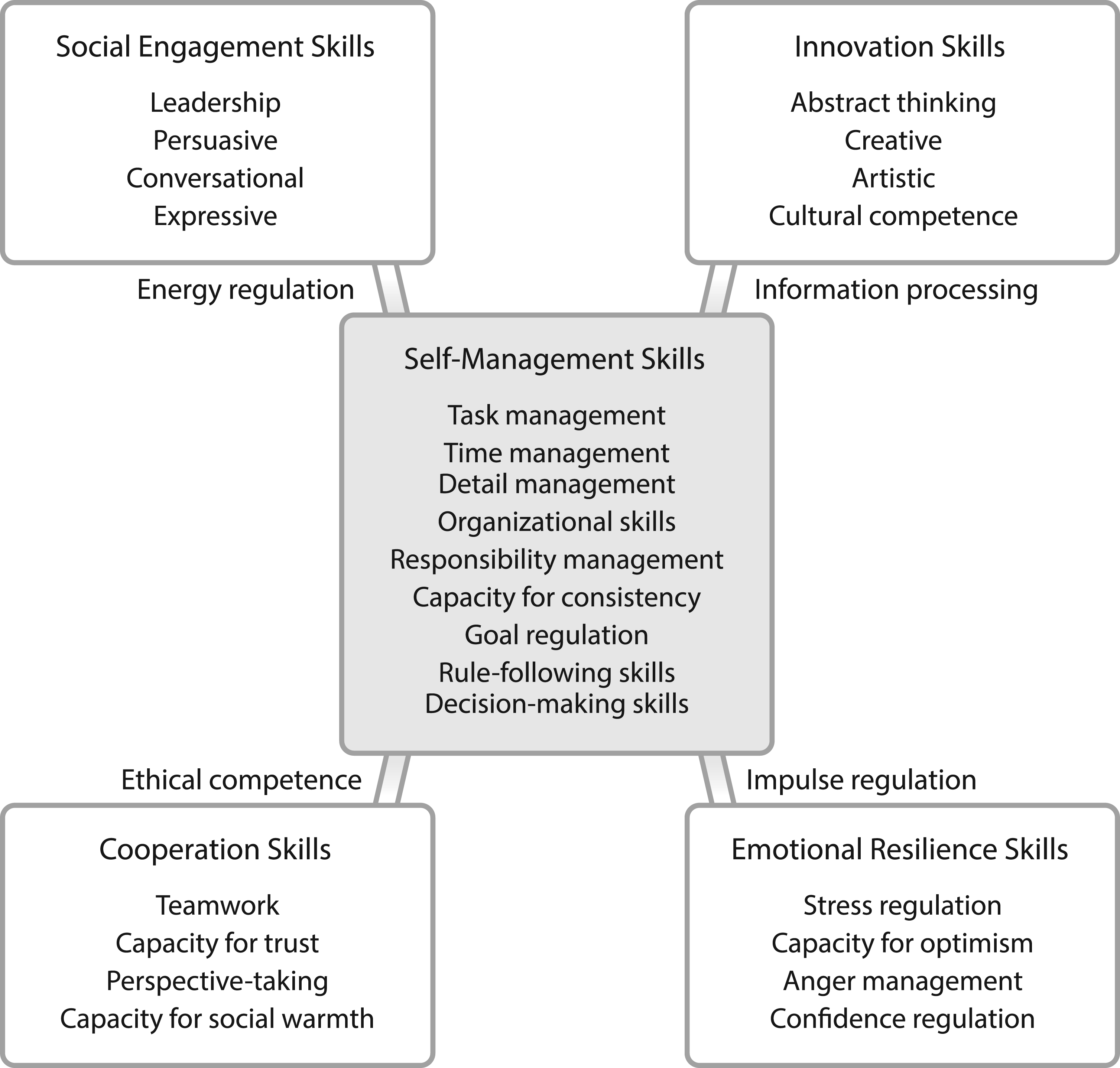
BESSI framework proposed by Soto et al. (2022).
SEB skills have been theoretically grounded in the Big Five Personality Traits theory (Soto et al., 2021): openness to experience, extraversion, conscientiousness, agreeableness, and neuroticism (Table 1). It has been empirically shown to support the BESSI-20 model (Wang et al., 2016). Social engagement is linked to extraversion, which reflects the capacity to actively connect with others, including conversational skills, persuasive ability, and leadership. Cooperation relates to agreeableness, representing capacities to preserve constructive social interactions such as viewpoint-taking, trust, and teamwork. Self-management is linked to conscientiousness, which involves the capacity to successfully execute plans and deliver results, including time management, organization, and consistency. Emotional resilience corresponds to (low) neuroticism, which includes abilities to manage emotions effectively such as stress and anger management. Innovation relates to openness to experience, which involves capacities to be open to innovation and change, including abstract thinking and creativity.
Big Five Personality Traits (John & Srivastava, 1999)
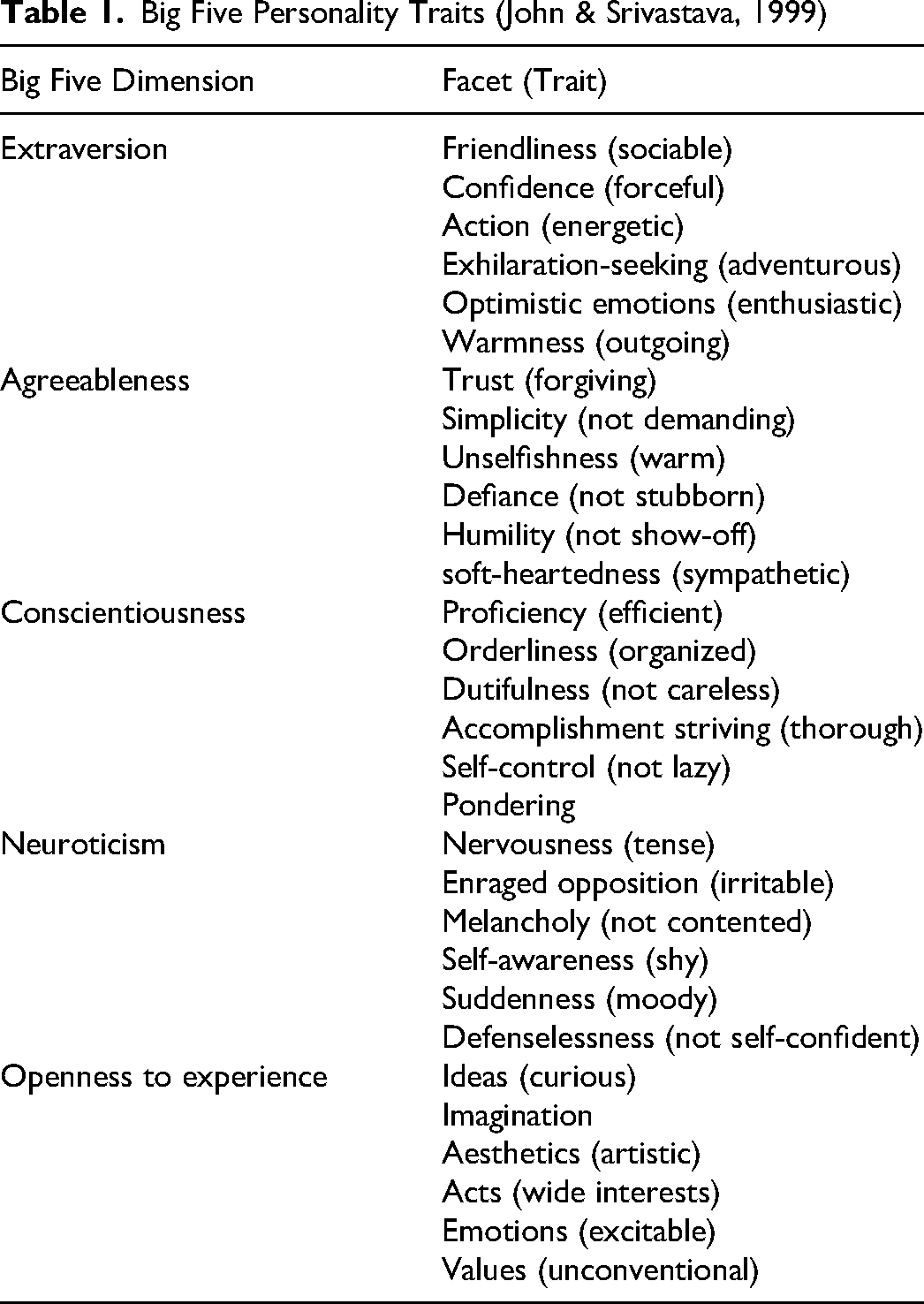
Personality traits influence the success of a project (Müller & Jugdev, 2012). For example, Bhatti et al. (2014) suggest that personality traits influence job performance, a key factor in project success. Wang et al. (2016) delved into the intricate connections among personality traits, risk propensity, and risk perception in project management. These authors found that extraversion, conscientiousness, and agreeableness considerably affect risk awareness, and that extraversion, conscientiousness, and agreeableness notably affect risk tendency. Noor et al. (2020) found that agreeableness and conscientiousness influence the accomplishment of small projects in the public construction area. Hussain et al. (2021) uncovered that personality traits, such as openness and extraversion, positively predict project success, whereas conscientiousness, neuroticism, and agreeableness did not directly correlate with success.
Despite being the predominant theoretical framework for understanding personality structure and individual differences (Langston & Sykes, 1997; McCrae, 1999), the Big Five model has been shown not to give a thorough explanation of how individual traits manifest in behaviors (Fleeson & Jayawickreme, 2015). The Vaske and Donnelly (1999) theory of value-attitude-behavior is relevant in this regard. It proposes that attitude and (intended) behavior result from the individual’s personal values. This cognitive hierarchy model of human behavior posits that values influence beliefs; in turn, these influence attitudes that influence behavioral intentions, leading to behaviors.
Values are generally defined as cognitive structures that facilitate adaptive behavior and social interaction (Homer & Kahle, 1988). As the most abstract level of social cognition, values serve as the building blocks for attitudes and behaviors, influencing our responses to environmental stimuli (Vaske & Donnelly, 1999). They are socially acquired beliefs that should be distinguished from innate personality dispositions (Olver & Mooradian, 2003) and, therefore, can be trained or developed. Cognitive processes, such as value judgments, guide individual decision-making (Homer & Kahle, 1988). Thus, we propose that personal values theories significantly complement Soto’s SEB model’s Big Five theory foundation by incorporating the behavioral manifestations of individual differences in personality traits.
Personal values are conceptualized within several frameworks, the most recognized being Schwartz’s Values Theory (Schwartz, 1992, 2012) as a measure of stable, underlying value structures opposed to situational work-related values (Rickaby et al., 2017). Thus, it measures value structures that predict future behavior. Schwartz’s Values Theory is widely adopted due to its emphasis on broad motivational values that underpin human behavior (Yahyagil, 2015) (Table 2): self-direction, stimulation, hedonism, achievement, power, face, security, tradition, humility, conformity, universalism, and benevolence.
Schwartz’s Universal Values (Schwartz, 2012)
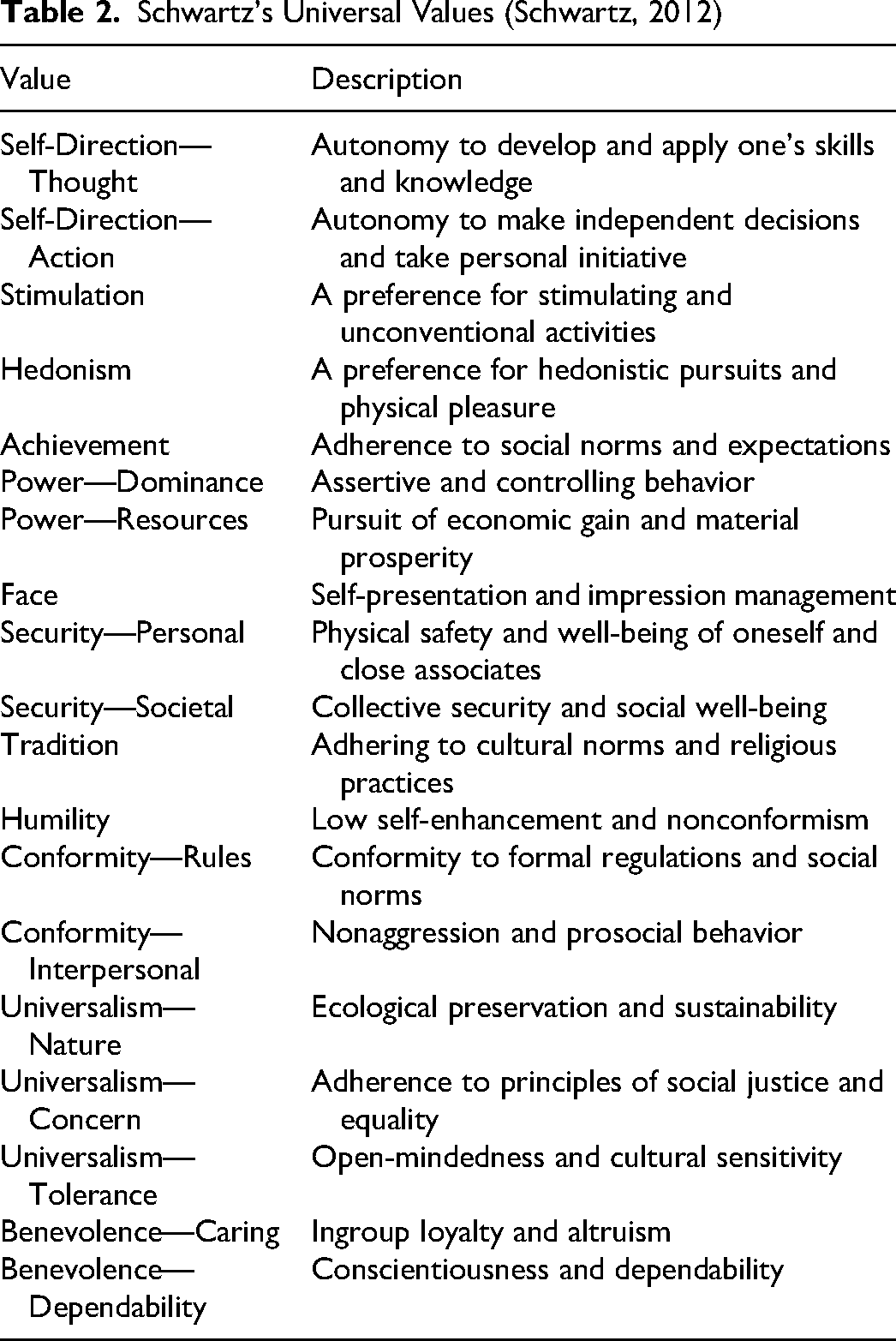
Roccas et al. (2002) have studied the correlation between personality traits and Schwartz’s universal values. They found that extraversion is related to personal values such as stimulation, achievement, and hedonism. Agreeableness is associated with benevolence, conformity, and tradition. Conscientiousness is linked to achievement and conformity. Openness to experience is connected to self-direction, universalism, and stimulation. Neuroticism was not strongly connected with any of Schwartz’s values.
Empirical studies demonstrate a positive correlation between value congruence and positive work attitudes and organizational outcomes (Rickaby et al., 2017). However, there have been few studies on the influence of individual personal values on project management. Jirachiefpattana (2013) found that openness to change and self-transcendence influence the project management of software development in Thailand. van der Sluijs and Silvius (2023) found that universalism, conformity, and security values are positively linked to the motivation of project managers for sustainability.
In summary, the interplay among SEB skills, personal values, and personality traits is significant, as personal values influence behavioral skills (Vaske & Donnelly, 1999), and personality traits influence emotional and social skills (Wang et al., 2016). Moreover, personality traits are shaped by underlying personal values (Jacobs & Wollny, 2022; Sindermann et al., 2023). Thus, we developed the conceptual framework depicted in Figure 2 as a theoretical foundation for soft skills. It posits that personality traits and personal values are underlying factors of social, emotional, and behavioral (soft) skills.
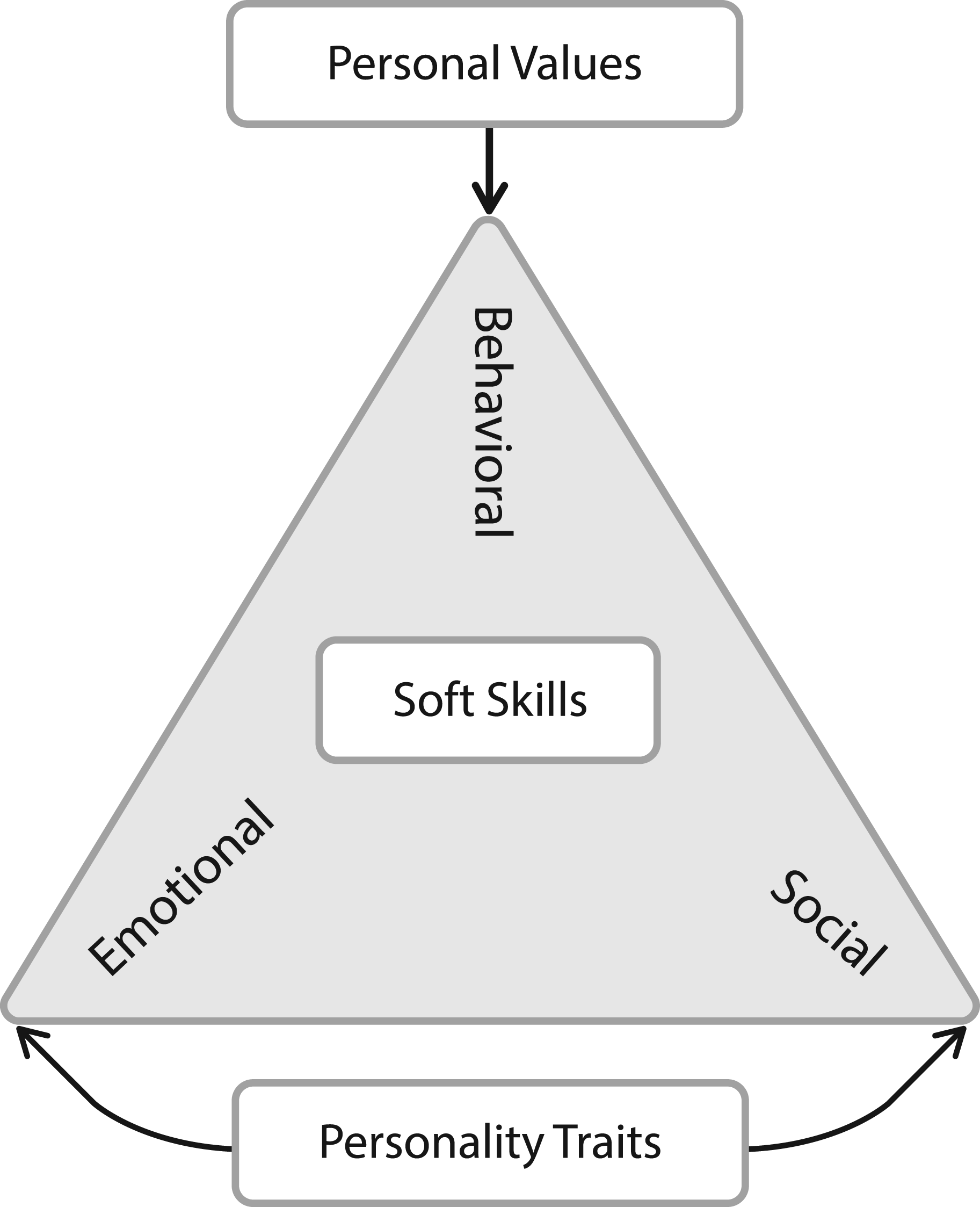
Proposed theoretical framework for soft skills.
The proposed theoretical framework for soft skills offers a holistic view of an individual’s capabilities, connecting SEB skills to enduring patterns of thought, emotion, and behavior. This integrated approach provides a more nuanced understanding of the nontechnical skills project managers need. Accordingly, the SEB skills of project managers in an I5.0 context, measured using the BESSI-20 instrument, will be discussed in light of both the Big Five personality traits and Schwartz’s values theories.
Correlations Among Soft Skills, Personality Traits, Personal Values, and Professional Identity
A professional identity is a person’s self-perception as a particular profession or occupation member; it encompasses beliefs, attitudes, and behaviors associated with that role. A strong professional identity can provide a sense of purpose, belonging, and direction in one’s career. Professional identity evolves through self-understanding and personal development, influenced by individual values and personality traits (Kononenko, 2023). For example, self-esteem and self-understanding shape professional identity, which is crucial for effective professional engagement (Kononenko, 2023). Personal values serve as guiding principles that influence behavior and decision-making in professional contexts. Aligning personal values with professional roles enhances job satisfaction and performance, indicating a compelling link between values and professional identity (İlhan et al., 2023). Personality traits, such as temperament, affect professional identity formation, suggesting that individual characteristics play a critical role in career development (Osmanova & Korashvili, 2023). For example, a person high in conscientiousness may develop a professional identity centered on being reliable and detail oriented. In contrast, someone high in openness might see themselves as innovative and adaptable in their profession. Personality characteristics, particularly extraversion and neuroticism, have been found to relate significantly to the observance of professional values among nursing students (Jasemi et al., 2020). These traits also predict work-related depression, anxiety, and irritation in nurses, with professional identity serving as a protective factor (Han et al., 2020). The interplay between personal values and personality traits can mediate job performance and satisfaction, emphasizing the need for a holistic understanding of these factors (İlhan et al., 2023). These outcomes highlight the value of contemplating personality traits and personal values in professional identity development processes induced by paradigm shifts such as I5.0.
Research Methodology
An abductive reasoning approach was used, integrating theoretical insights with empirical data to explore the evolving SEB skills required by project managers in I5.0. The research philosophy is aligned with pragmatism, which posits that concepts are relevant when they support actionable outcomes. This flexible approach allows us to bridge the gap between theory and practice (Saunders et al., 2009).
The I5.0 paradigm highlights the combination of advanced digital technologies with human-centric approaches. To explore the soft skills project managers need to account for each of these key aspects, a construct for each was developed: “Digital PM” (DPM) is defined as corresponding to a scenario with extensive digital embeddedness and intensive use of advanced digital technologies in delivering projects; “Traditional PM” (TPM) is defined as corresponding to a scenario where human interactions and values are essential in successfully delivering projects.
Data Collection
A quantitative approach was adopted, utilizing an online survey questionnaire to collect data on SEB skills from active project managers across industries. The unit of analysis in this research was individual project managers. The survey included two sections: Section A—an SEB skills comparison between DPM and TPM, using the BESSI-20 measurement instrument, where participants were asked to assess the relevance and prominence of each SEB skill in both DPM and TPM contexts; and Section B—demographic/professional background.
Pilot testing and expert validation ensured the survey’s reliability. The survey distribution strategy involved multiple channels to ensure a wide reach and diverse respondent base. Email distribution was a key method, with a total of 3,597 emails sent to potential respondents who had been involved in project management. This method aimed to target individuals directly and encourage participation through personalized communication. Additionally, the questionnaire was posted on the researchers’ LinkedIn profile and shared in relevant LinkedIn groups related to project management. This approach leveraged professional networks and communities to increase responses through peer engagement. The survey period spanned from May 2024 through June 2024, and 221 respondents completed it in full. The survey included a consent form outlining the privacy policy and the voluntary nature of participation.
Data Analysis
The data analysis was conducted using SPSS software v27 (IBM Corp.). Frequencies and descriptive statistics were used to analyze demographic variables, including respondents’ age, gender, educational background, country of origin, project roles, experience, business activity, and organizational size.
The SEB scale data was analyzed using Exploratory Factor Analysis (EFA) to uncover underlying factor structures in both DPM and TPM contexts. Principal Component Analysis (PCA) extraction and Varimax rotation were employed (Jolliffe, 2002). The adequacy of the dataset for factor analysis was established through the application of KMO and Bartlett's test of sphericity (Kaiser, 1974). Varimax rotation was used to simplify factor loadings and facilitate interpretability, being preferred for achieving a clear and distinct factor structure with minimal cross-loadings. Items were grouped into factors based on their highest loadings, ensuring that each item contributed significantly to a single factor, thus maintaining conceptual coherence. PCA was chosen for its effectiveness in reducing data dimensionality while preserving maximum variance. Factors were retained based on Kaiser’s (1974) criterion (eigenvalues greater than 1) and the scree plot. The reliability of the resulting factors was assessed using Cronbach’s alpha, and factors above or close to 0.7 were considered reliable (Nunnally, 1978).
Normality tests were conducted to ensure the validity and reliability of the statistical analyses (Tabachnick & Fidell, 2007). The approach included a comprehensive evaluation of skewness and kurtosis, alongside the Kolmogorov-Smirnov and Shapiro-Wilk tests (Shapiro & Wilk, 1965). Given the nonparametric nature of the data, the Friedman and Wilcoxon tests were employed to assess differences across various dimensions within the SEB scale. The Friedman test was used to evaluate significant differences across multiple related groups. The Wilcoxon signed-rank test provided additional insights into specific pairwise comparisons between DPM and TPM. This test assesses the differences between paired observations, ranking these differences while considering both their magnitude and direction. For each skill, the differences between DPM and TPM were ranked, and the ranks of the differences were summed for positive and negative differences separately. The test calculates the Z-value and the significance level (p value) to ascertain whether a statistically significant difference exists between the two contexts.
Respondents’ Characterization
The educational background of the respondents demonstrated considerable diversity, with the majority possessing advanced degrees, which signifies a highly educated respondent base. Specifically, 65.0% of the respondents had a master’s degree, whereas 28.0% held a bachelor’s degree. A smaller proportion had completed vocational school (1.0%) or high school (2.0%). Geographically, the respondents were predominantly from Portugal (81.0%). Other countries represented included Brazil (5.0%), Spain (3.0%), and several others, each contributing with less than 2% of the total respondents. The age distribution of respondents showed concentration in the mid-career stages. Specifically, 30.0% were aged 35 to 44, 25.0% were aged 45 to 54, and 20.0% were aged 18 to 24 years old. This age range distribution indicates a blend of emerging and seasoned professionals within the project management field. Regarding gender, the respondents were predominantly male (60.0%), which agrees with evidence that project management is a profession still mainly led by men (Burke & Richardsen, 2016).
Regarding their roles in projects over the past five years, most respondents (62.0%) identified as project managers. This was followed by portfolio or program managers (25.0%) and project team members (13.0%). Respondents’ experience levels varied, with 20% of project managers having 1 to 3 years’ experience, 18% 7 to 10 years’ experience, and 25% over 15 years’ experience. This experience level underscores the practical knowledge among the respondents, enhancing the reliability of the survey findings.
The respondents represented a wide range of business activities, with information technology/software development (25.0%), consulting/professional services (22.0%), and construction/engineering (15.0%) being the most common sectors. Other sectors included healthcare/pharmaceuticals (8.0%), government/public sector (10.0%), manufacturing/production (12.0%), and financial services/banking (8.0%). In terms of organization size, respondents were evenly distributed among micro (25.0%), small (35.0%), and medium (40.0%) enterprises. This balanced representation across different organizational scales allows for a holistic understanding of project management in various business contexts.
Findings
Exploratory Factor Analysis
EFA was conducted to identify and retain factors representing distinct dimensions of SEB skills that significantly contribute to total variance. Items “lead a group of people,” “express my thoughts and feelings,” “cooperate with other people,” “work toward my goals,” and “learn about other cultures” were excluded from the final BESSI-20 scale model due to their inability to consistently group within constructs, a crucial step to maintain equivalence between scales and ensure methodologically sound and reliable comparisons.
In the case of TPM, the analysis resulted in the retention of five factors (Table 3), each contributing significantly to the overall variance. The reliability of these factors was confirmed with Cronbach’s alpha values above or close to 0.7.
Exploratory Factor Analysis of the BESSI-20 Scale for TPM
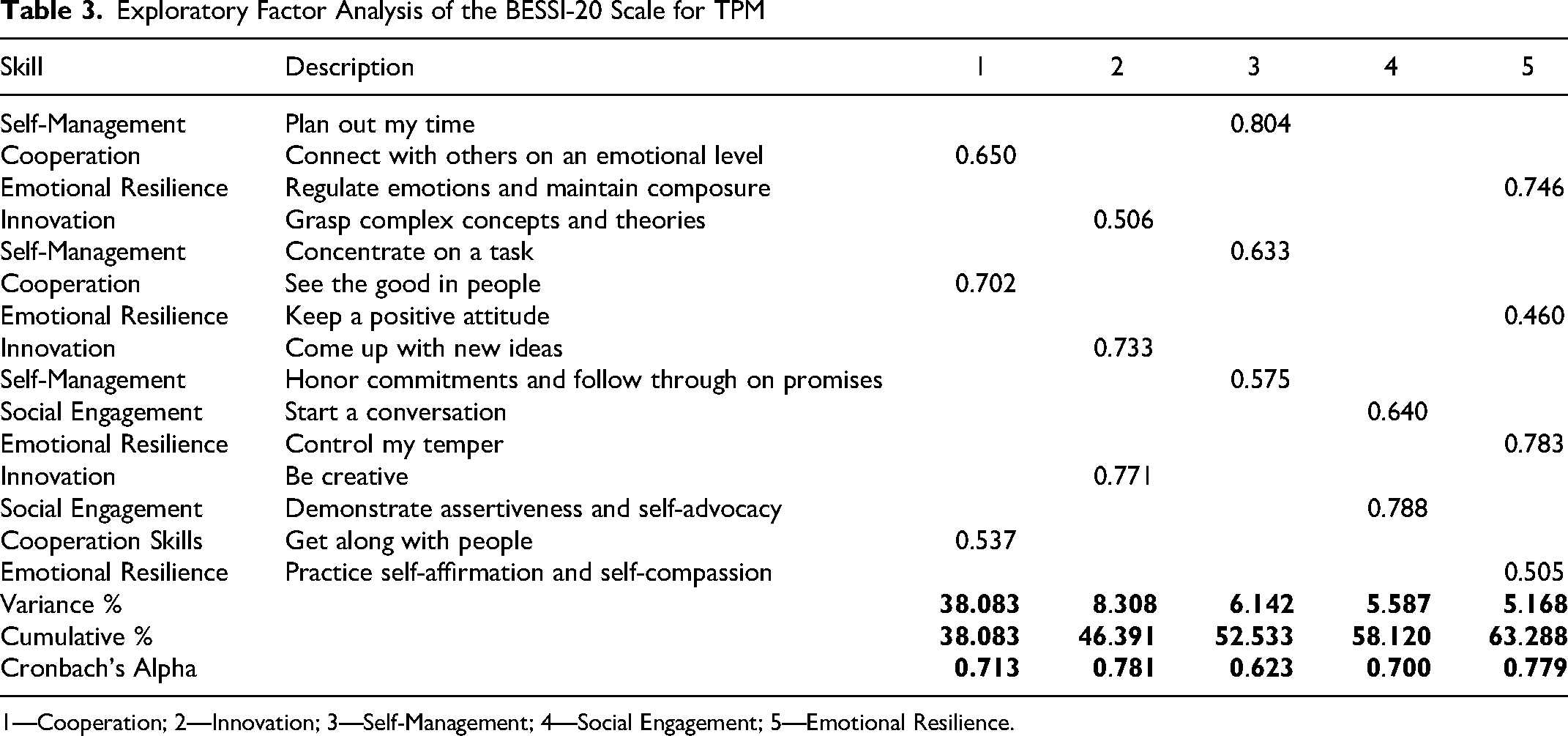
1—Cooperation; 2—Innovation; 3—Self-Management; 4—Social Engagement; 5—Emotional Resilience.
Initially, the EFA for DPM resulted in the retention of four factors based on eigenvalues and the scree plot. However, a second iteration was conducted to extract five factors to ensure that the scales were equivalent to those identified in the TPM context and more aligned with the BESSI-20 constructs (Table 4). Statistically this was feasible, as the fifth factor presented an eigenvalue close to 1 and contributed to the total variance, ensuring better alignment with the BESSI-20 constructs and allowing direct comparisons with the TPM context. Reliability was confirmed with Cronbach’s alpha values all above 0.7.
Exploratory Factor Analysis of the BESSI-20 Scale for DPM
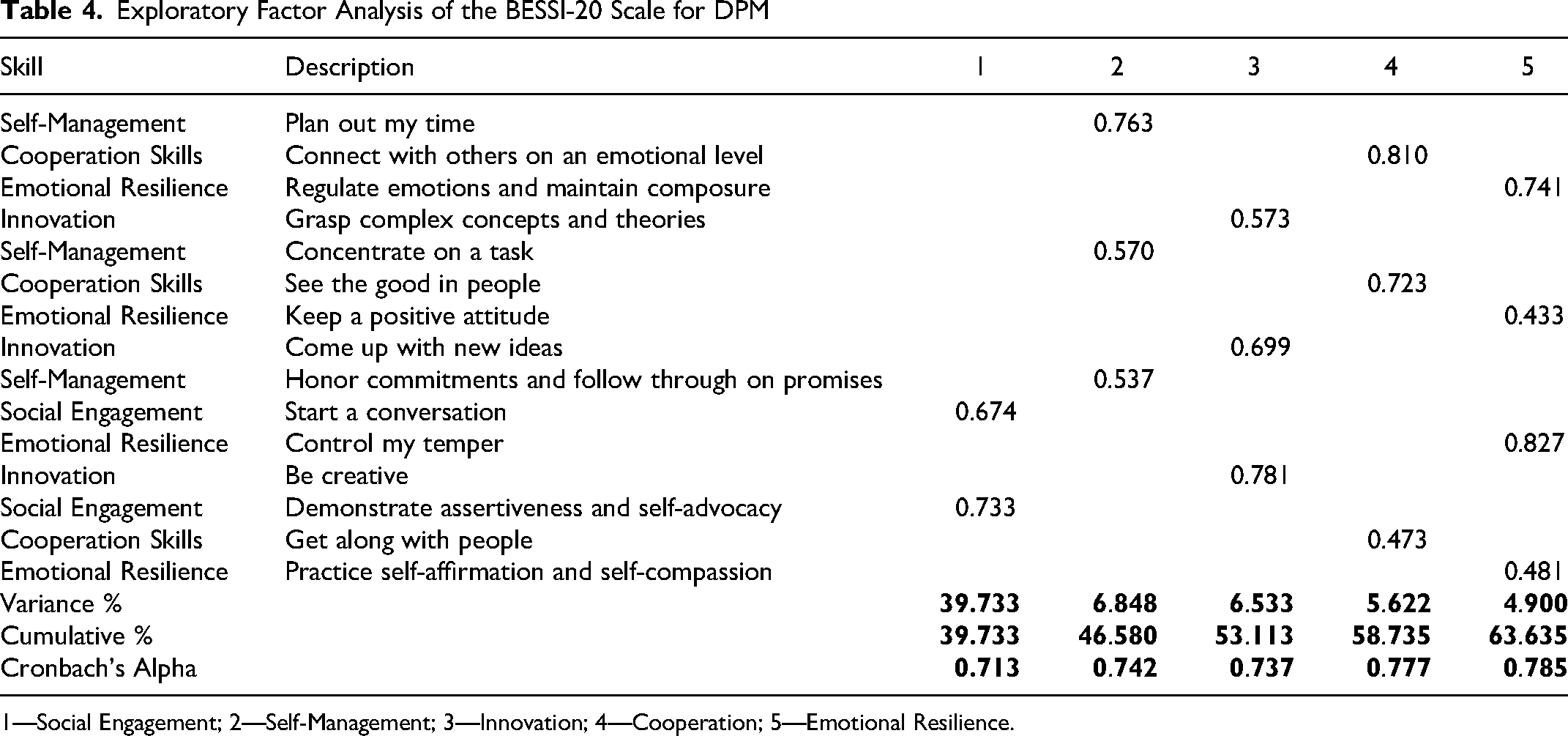
1—Social Engagement; 2—Self-Management; 3—Innovation; 4—Cooperation; 5—Emotional Resilience.
Skills Differences Between TPM and DPM Contexts
Both the Kolmogorov-Smirnov and Shapiro-Wilk tests consistently reject the null hypothesis of normality (p < 0.001) (Razali & Wah, 2011) for all SEB skills in both DPM and TPM environments. Thus, nonparametric statistical methods were used for further analysis (Sheskin, 2003).
The Friedman test results for the TPM environment (Chi-Square = 52.436; n = 212; df = 4; p < 0.001) indicate a statistically significant difference in SEB skills among project managers (Table 5). Social engagement and cooperation scored the highest mean ranks, indicating that project managers perceive these skills as more prominent or better developed in a human-driven scenario.
Friedman Test Mean Ranks

Social engagement highlights the importance of interpersonal skills, communication, and the ability to engage with team members and stakeholders effectively. These skills are crucial for maintaining team cohesion, resolving conflicts, and ensuring project objectives are clearly communicated and understood.
Cooperation underscores the value of teamwork and the ability to work collaboratively. In TPM environments, effective collaboration can facilitate smoother project execution and enhance overall team performance.
Self-management is also an important skill, reflecting the necessity for project managers to be organized, disciplined, and capable of effectively managing their time and responsibilities. It is essential for maintaining productivity and meeting project milestones.
The Friedman test results for the DPM context (Chi-Square = 170.037; n = 209; df = 4; p < 0.001) also indicate a statistically significant difference in SEB skills among project managers (see Table 5), with a focus on innovation and emotional resilience.
Innovation underscores the critical importance of creativity, adaptability, and the ability to drive innovative solutions in the face of rapid technological advancements and changing project scopes. Project managers in digital settings must continuously innovate to stay competitive and relevant.
Emotional resilience highlights the need for project managers to effectively manage stress, maintain optimism, and adapt to the frequent changes and uncertainties that characterize projects in the digital landscape. This skill is vital for sustaining motivation and team morale in high-pressure environments.
Self-management, analogously to the TPM environment, is essential in a DPM context. The ability to organize, prioritize tasks, and manage time efficiently is crucial for project managers to handle the digital world’s fast-paced and often unpredictable nature.
The relatively low ranking of social engagement and cooperation may reflect the challenges of remote and virtual team management. While these skills are still important, the reliance on digital communication tools might reduce the emphasis on traditional face-to-face interaction and collaboration.
The Wilcoxon Signed Rank test was carried out to investigate these results further.
The Wilcoxon Signed-Rank test (Table 6) confirms the Friedman test mean ranks and shows that there is a significant difference in innovation scores between the TPM and DPM contexts, indicating higher innovation in the DPM context. Emotional resilience also demonstrates a significant difference with higher scores in the DPM context. Cooperation and social engagement skills are confirmed to be significantly more important in the TPM context.
Wilcoxon Signed-Rank Test Results

aBased on positive ranks.
bBased on negative ranks.
Personality Traits and Personal Values
The relevance of specific personality traits and personal values to SEB skills was explored using the correlations reported in the literature (presented in the Theoretical Background section). For DPM, the prominent personality traits are openness to experience and low neuroticism. In TPM, the foremost traits are extraversion and agreeableness. Conscientiousness is significant to both DPM and TPM. Based on the correlations reported in the literature, the following personal values were relevant for project management in the two scenarios under analysis. The most important personal values for DPM are self-direction, universalism, and stimulation. TPM’s most important personal values are stimulation, hedonism, benevolence, and tradition. Achievement and conformity are personal values relevant to both DPM and TPM. These findings will be discussed in detail in the next section.
Discussion
In the I5.0 context, project managers must prioritize a human-centric approach and sustainability, balancing technological advancements with social and environmental concerns (Barata & Kayser, 2023). This requires integrating technology with human values, developing redefined soft skills, strong leadership, and a focus on sustainability. In particular, it is crucial to leverage automation while maintaining human creativity, intuition, and a human-driven approach (Golovianko et al., 2023; Zizic et al., 2022); prioritize empathy, collaboration, adaptability, and effective communication (Coelho et al., 2023); manage diverse teams and stakeholder expectations in digital environments (Marnewick & Marnewick, 2021; Ng, 2019); and align projects with broader ecological and humanitarian goals. Thus, developing strong soft skills is essential for successful project management in the I5.0 era (van Heerden et al., 2023).
The empirical data allowed us to identify SEB skills crucial for project management in an I5.0 context characterized by concomitant digitally embedded (DPM) and human-driven (TPM) approaches. Innovation and emotional resilience were found to be more prominent in DPM, whereas social engagement and cooperation were found to be more relevant in TPM.
The prominence of innovation in DPM underscores the necessity for creativity and adaptability in digital contexts. It reflects project managers’ need to constantly evolve and integrate new technologies and methods to stay competitive. In fact, the dynamic environment that characterizes the I5.0 paradigm requires project managers to be technically proficient, creative, and open to change, contrasting with the more static and predictable environments of TPM (Shivakumar, 2018). This emphasizes the need for continuous learning and adaptability over established practices and stability. It highlights the significance of adopting a culture of experimentation and risk-taking, encouraging project managers to explore new ideas and solutions without fear of failure. Such culture is vital for driving technological advancements and staying competitive in a rapidly changing digital landscape. However, this requires a delicate balance between encouraging innovation and maintaining project stability and predictability concerning benefits (Hanelt et al., 2021).
The relevance of emotional resilience highlights the need for project managers to manage stress and adapt to frequent changes effectively (Feroz et al., 2021; Vial, 2019). This highlights the significant stress and psychological demands on project managers in digital settings. Rapid changes, uncertainty, and continuous innovation pressures can lead to burnout and decreased performance if not adequately addressed. Thus, organizations should prioritize a supportive environment to maintain high resilience levels.
The greater relevance of cooperation and social engagement in TPM emphasizes the importance of collaboration and communication in environments where human interactions are key. These skills are essential for effective team collaboration and communication (Hoegl & Gemuenden, 2001).
Cooperation skills involve trustworthiness, altruism, and compassion, fostering a supportive and collaborative work environment (Roccas et al., 2002). Social engagement enhances collaboration, team cohesion, and project success (Ling et al., 2020). These results confirm that TPM environments are inherently more dependent on interpersonal dynamics than digital ones. However, while enhancing team cohesion and collaboration, emphasizing human interactions in a TPM environment may limit project managers’ effectiveness in more flexible, remote, and digital settings (Hoegl & Gemuenden, 2001). Moreover, the focus on social engagement in TPM may reflect a potential cultural bias favoring extroverted behavior. This bias might marginalize introverted team members or those thriving in less socially intense environments, possibly leading to a loss of diverse perspectives and skills. While strong social skills facilitate better team dynamics and stakeholder relationships, an excessive focus on cooperation may overshadow the need for a balanced skill set that includes technical expertise and problem-solving abilities, which are crucial in both TPM and DPM contexts (Ling et al., 2020).
Self-management skills are equally important in TPM and DPM. Organizing and prioritizing tasks and managing time efficiently are fundamental for project success in any environment, ensuring productivity and adherence to project management effectiveness standards (Kretschmer & Khashabi, 2020). Self-management encompasses diligence, organization, and dependability, which are essential for effective goal pursuit and task completion in both environments (Kretschmer & Khashabi, 2020). This finding suggests that managing time effectively, making sound decisions, and following through on commitments is universally valued. The challenge lies in maintaining high standards of diligence and dependability while being open to change and innovation (Kretschmer & Khashabi, 2020).
In DPM environments, the personality traits of openness to experience and low neuroticism are more prevalent, reflecting the personal values of self-direction, universalism, and stimulation. The pace of technological change associated with I5.0 is accelerating, and project managers will need to be able to adapt quickly to new technologies and approaches. This will require strong adaptability, resilience, autonomy, independence, and continuous learning and growth. These personality traits and personal values also align with I5.0’s concern for human values, societal challenges, and sustainability, in other words, the welfare of all people and things. Openness to experience encourages risk-taking and adaptability, which are crucial for navigating complex project environments (Caliendo et al., 2014). Neuroticism negatively impacts project performance, hindering proactive behavior and team dynamics (Neal et al., 2012). Thus, low neuroticism is associated with better emotional stability, vital for effective decision-making and stress management in project management (Neal et al., 2012). Self-direction promotes autonomy in project management, whereas universalism encourages consideration of broader impacts, aligning with sustainable practices in Industry 5.0 (Little et al., 1992). Stimulation reflects a desire for variety and challenge, driving engagement and innovation in project tasks (Gehring, 2007). While these traits are beneficial, it is essential to recognize that not all projects may require high openness or low neuroticism. Some environments may thrive on stability and routine, where different personality traits and personal values could be more advantageous.
In TPM settings, the personality attributes of extraversion and agreeableness are more pronounced, reflecting the personal values of tradition, stimulation, hedonism, achievement, conformity, and benevolence. This can lead to focusing on short-term gains over long-term goals, respect for established customs and practices, and resistance to change. Extroverted individuals tend to seek stimulating working environments, enhancing team collaboration and communication (Little et al., 1992). Their sociability often leads to effective leadership, particularly in transformational roles that inspire collective goals (Moss & Ngu, 2006). Agreeableness is positively associated with cooperative behavior and effective conflict resolution, both of which are critical for successful project outcomes (Mills et al., 1985). This trait aligns with personal values of benevolence and conformity, promoting a supportive work culture that values team cohesion (van Den Berg & Feij, 1993). Conversely, although these traits are beneficial, they may also lead to challenges, such as groupthink, where the desire for harmony overshadows the critical evaluation of ideas, potentially stifling innovation.
In both TPM and DPM contexts, conscientiousness is a significant personality trait, and achievement and conformity are relevant personal values that focus on thoroughness and reliability.
Based on these findings it is argued that in an I5.0 context that integrates digital and human-centered approaches, project managers must strike the right balance of SEB skills related to innovation, emotional resilience, social engagement, and cooperation, that is to say—creativity, intuition, adaptability, empathy, collaboration ability, effective communication, and leadership. In other words, project managers must show strong autonomy and emotional stability, manage stress effectively, nurture creativity, demonstrate openness to change and a desire for variety and challenge, focus on thoroughness and reliability, and embrace risk-taking. Also, they need the ability to build strong relationships and foster a positive work environment, leading to enhanced team collaboration, communication, cohesion, effective leadership and conflict resolution.
Consequently, project managers’ professional identity differs from a TPM to a DPM scenario, potentially influencing their effective professional engagement (Kononenko, 2023), job satisfaction and performance (İlhan et al., 2023), career development (Osmanova & Korashvili, 2023), and adherence to professional values (Jasemi et al., 2020). Thus, the project managers’ profile changes associated with I5.0 require the adaptation of existing skill frameworks, academic courses, and professional development and capacity-building programs. Integrating key SEB skills training into project management curricula and professional development initiatives is essential for preparing project managers to meet the demands of a rapidly evolving industry (Alvarenga et al., 2019). Our research results provide practical insights for developing training programs addressing key SEB skills.
Conclusion
Our research has comprehensively analyzed the critical SEB skills required by project managers operating within an I5.0 landscape, effectively addressing the identified research gap concerning the differing significance of these skills in human-driven (TPM) and digital-centered (DPM) scenarios. The use of the BESSI-20 scale allowed to quantitatively assess and compare SEB skills in this context, identify the most relevant skills for each environment, and link these skills to underlying personality traits and personal values, thereby providing a nuanced understanding of soft skills key to successfully delivering projects in I5.0.
In the context of the I5.0 paradigm, which advocates for a human-centered approach to technological innovation, our research further amplifies the importance of balancing innovation, emotional resilience, cooperation, and social engagement skills. Project managers must now navigate a landscape where continuous innovation, ethical considerations, and social and environmental sustainability are deeply intertwined, necessitating a balanced skill set that includes technological proficiency, creativity, emotional intelligence, adaptability, empathy, collaborative ability, effective communication, and leadership.
Moreover, this study contributes to understanding how a project manager’s professional identity evolves with these required skills. Specifically, the research highlights the heightened relevance in I5.0 of the personal values associated with autonomy, independence, tolerance, and concern for the welfare of all people and things. These correlate with the personality traits of curiosity, imagination, open-mindedness, low anxiety, extroversion, and consideration. These specificities in the professional identity of project managers in an I5.0 context can strongly influence their performance, career development, and fulfillment within the profession.
Theoretical and Practical Contributions
This study extends the application of theoretical constructs related to key nontechnical skills to project management practice in an I5.0 context. Moreover, it offers a more nuanced understanding of project managers’ evolving role and identity in the digital age, namely by the I5.0 paradigm. Practically, the findings of this study have significant implications for education and training programs for project managers. The research enables organizations to tailor their professional development programs to meet project managers’ needs in a digital environment. Additionally, the research may inform the development of new professional certifications focusing on the SEB skills required for project management in a digital world.
Limitations and Future Research Directions
The limitations of this study include its predominantly Portuguese sample and reliance on self-reported measures, which may result in a social desirability bias in SEB assessments. Future research is encouraged to build upon these results by exploring longitudinal changes in SEB skills, expanding the scope to diverse industries and regions, and examining the impact of emerging technologies such as AI and machine learning on project management practices. Additionally, there is a need to investigate how project managers can integrate human-centric design principles with advanced technological tools to foster innovation and resilience in I5.0 contexts.
Footnotes
Acknowledgments
The authors thank the survey participants, the editor, and the anonymous reviewers for their valuable feedback.
Declaration of Conflicting Interests
The author(s) declared no potential conflicts of interest with respect to the research, authorship, and/or publication of this article.
Funding
The author(s) disclosed receipt of the following financial support for the research, authorship, and/or publication of this article: This work was supported by national funds through FCT/MCTES (PIDDAC): CIMO, UIDB/00690/2020 (DOI: 10.54499/UIDB/00690/2020) and UIDP/00690/2020 (DOI: 10.54499/UIDP/00690/2020); SusTEC, LA/P/0007/2020 (DOI: 10.54499/LA/P/0007/2020); ARISE (LA/P/0112/2020); and CEMMPRE (UIDB/00285/2020).
Author Biographies
 .
.