




Abstract
Objective:
The objective of the study is to explore diversity and perceptions related to culture among New York City sonography clinicians and educators and determine whether this specific workforce is keeping pace with the changing demographics of the city population.
Materials and Methods:
An 18-question survey, which addressed demographics, work environment, and perceptions about diversity and inclusion in the workplace, was disseminated to sonography educators and hospitals in the five boroughs of New York City.
Results:
A total of 112 sonographers responded and 50% were White/Caucasian, 34.16% represented Asian/Pacific Islander (17.5%), Black/African American (10.83%), Hispanic/Latino (5%), and Native American/Alaskan Native (0.83%) populations, as well as 15.83% preferred not to respond. Most sonographers identified their gender as female. The 21 to 30 years age group was the least represented, and the age group 31 to 51+ years represented over three-quarters of the workforce. Most respondents worked with culturally diverse staff and were satisfied with their work environment. However, the Black/African American group showed the lowest average satisfaction score, and their responses were the least positive.
Conclusion:
In this cohort of respondents, Black/African, Hispanic, and Native American ethnicities were underrepresented compared with the city’s reported diverse population. Consequently, new programs and initiatives should be considered to increase ethnic and racial inclusivity, to respond to the needs of citizens of New York City.
Keywords
Diversity in the health care professions has been discussed as it pertains to physicians, nurses, and other health care professionals. Despite research evidence that demonstrates the effectiveness of recruitment policies to support diversity hiring, many racial and ethnic groups remain significantly underrepresented in the health care workforce. 1 In 2019, the United States Census Bureau’s American Community Survey reported that there were 22 million health care professionals in the workforce. 2 In that survey, 9.8 million were categorized as health care technicians and practitioners, including physicians, nurses, pharmacy technicians, laboratory technologists, pharmacists, therapists, diagnostic medical sonographers, radiologic technicians, speech-language pathologists, dental hygienists, physician assistants, surgical technologists, dentists, paramedics, and other miscellaneous health practitioners. About two-thirds of the health care professionals identified as Caucasian and only one-third identified as minorities. 2
By the year 2043, the demographic makeup of the United States is expected to shift considerably. 3 The population of Caucasians is estimated to decrease from 78% to 69% by 2060, whereas Hispanic, African American, Asian American, and Native American populations combined will increase from 22% to 31%. 3 Given these statistics, increasing awareness and visibility of health disparities has become a concern for the public and government health care organizations. In 2021, Salsberg et al 4 conducted a cross-sectional study comparing the racial/ethnic diversity among various health care providers and professionals, including therapists, nurses, pharmacists, physicians, speech-language pathologists, physician assistants, and dentists. His group found that although there was diversity within these professions and new graduates were a more diverse group than current professionals in the field, Black/African, Hispanic and Native American people were still underrepresented in comparison with the general population. 4 These findings mirrored those of other studies that have determined health care professionals were not generally proportionally representative of the communities they serve.5,6
The patients who health care professionals service are a diverse group; however, if professionals caring for them are not, it may affect the level of care they are receiving.1,7 The 2021 National Healthcare Quality and Disparities Report determined that Black/African, Hispanic, and Native American people remain underrepresented in several health professions and the lack of racial, ethnic, and gender concordance between providers and patients can lead to miscommunication, stereotyping and stigma, and, ultimately, suboptimal health care. 7 When this lack of representation is combined with factors outside the health care delivery system, such as poor maintenance of health, access to care, and environmental conditions, even larger ethnic and racial health inequities arise.8,9 According to the National Institute of Health, 10 health disparities for racial minorities in the United States can take many forms and can include higher rates of chronic disease and premature death.
The Importance of Diversity and Cultural Competence Among Sonographers
Given the rapidly changing US demography, it is evident that future health care professionals will be caring for patients with cultural and ethnic backgrounds that differ from their own. To provide effective care, health care providers should practice cultural competency; they must have a good understanding of how and why ethnic origins, belief systems, cultural biases, and family structures influence the way people experience illness, communicate with providers, follow medical advice, and respond to treatment. Such differences can exist and may translate into different health care outcomes. 11
Sonographers work with and provide care for patients with a variety of cultural, ethnic, economic, and racial backgrounds. Developing and practicing cultural competence successfully with patients and other health care providers are essential to sonographers’ ability to effectively interact and serve diverse patients. Attaining greater diversity in the sonography workforce can greatly contribute to advancing cultural competency and improving patient satisfaction, and ultimately, health outcomes for minority patients. 12 Health care providers who share culture, language, and traditions with the patients they serve can more easily obtain important information regarding patients’ medical history and modify the examination to suit specific needs of that patient. In addition, they tend to understand better the historical events that have affected minority groups. 1 In contrast, a lack of diverse staff can negatively impact this patient-sonographer relationship by way of language and social barriers. A patient who does not feel represented by those providing care may become more anxious about being examined and be less willing to provide a pertinent patient history. 13
The Diversity of New York City
New York City (NYC) is home to a plethora of ethnic enclaves and a diverse, vibrant population. 14 White inhabitants represent 41.3% of the city’s population, and Black/African, Hispanic, Asian, and Native American people make up the remainder. 15 It has been reported that in 2014, NYC had only about 9% of physician workforce composed of minority populations. For a population that is 58.7% African American, Hispanic, Asian, or Native American, only about 12% of practicing physicians in NYC were from minority groups. 16 The Center for Health Workforce Studies performed a comparative analysis of data from 2006 to 2010 and 2011 to 2015 and reported that NYC’s physicians and dentists continue to be less racially and ethnically diverse than the state’s population. 17 Hispanic people were underrepresented in the state’s nursing workforce and Asian people were overrepresented. However, the representation of White/Caucasian and Black/African professionals in nursing resembled that of the state’s population. 17 If one of the most diverse cities is not keeping pace with the changing demographics, then how reflective is this of the rest of the country?
The literature describing the racial and ethnic diversity in the health care workforce is extensive; however, only a few studies mention sonography in regard to race and ethnicity. There is a significant gap in the literature addressing the diversity of the sonographers.
The goal of this study was to explore diversity and perceptions related to culture among the city’s sonography clinicians and educators across the five boroughs of NYC.
Materials and Methods
This study was a descriptive, cross-sectional survey study designed to assess the status of racial and ethnic diversity and explore perceptions related to culture across NYC’s sonography professionals. It explored attitudes and perceptions about diversity and inclusion in the workplace, work environment, and demographics. Institutional review board (IRB) approval was obtained through the SUNY Downstate (IRB number: 1831119).
Respondents received the survey introduction e-mail that acted as a consent document for participants, and the process of participants proceeding to the survey and completing it constituted consent.
Using the data on sonographers in the state of New York, based on the Bureau of Labor Statistics, it was calculated that NYC has approximately 2500 practicing sonographers. Five hundred sonographers from all five NYC boroughs were invited to participate in the survey. The survey was created with Qualtrics software (Qualtrics, Provo, Utah) and distributed via e-mail and in person to sonography educators and hospitals that have clinical affiliation with the academic medical center. To broaden the reach of the survey study, the research team utilized two channels to communicate with sonographers. Sonography site supervisors were directly contacted through e-mail and encouraged to disseminate information about the survey to their respective sonographers. Meanwhile, in sonography sites without supervisors, research students personally distributed study details to sonographers. To uphold the confidentiality of the participants, the survey instrument did not require any identifying information. Furthermore, to offer an extra layer of anonymity, a “prefer not to say” option was provided.
Paper surveys were returned in a sealed envelope. Online surveys were submitted directly via Qualtrics. Sonography students and sonographers not practicing in NYC were excluded from the study. The survey was deployed for 1 month and respondents received a reminder 2 weeks after the initial dissemination of the survey. The responses were evaluated for completeness/validity. Incomplete or invalid surveys were excluded from the summary.
The survey consisted of 18 questions. The survey questionnaire included a range of demographic questions covering various aspects such as age, sex, ethnic background or race, income, highest level of education attained, current position in sonography, years of experience, and the category of work environment (hospital, private practice, academia, etc.). The researchers employed the race and ethnicity categorization suggested by the National Institute of Health and the White House Race/Ethnicity Standards to classify the participants’ racial and ethnic backgrounds. The survey also included inquiries about cultural perceptions in the workplace, both self-reported and in relation to others’ perceptions. For perception questions, respondents were asked to characterize their perception of a statement such as “People I interact with at my institution or organization are comfortable talking about race and diversity” or “I believe it is important to understand the beliefs and values of the community members that I serve” with one of the following five options: none at all, a little, a moderate amount, a lot, and a great deal.
To present the demographic data in a clear and concise manner, it was organized into tables and charts. To effectively compare cultural perceptions across different racial and ethnic groups, it was possible to identify the two most positive responses for each group and compare them with the overall average response from members of that group. Despite having a limited sample size, this approach allowed for making meaningful comparisons and drawing valuable insights.
Results
One hundred twelve sonographers responded to the survey (22.4% response rate) with participants representing all five boroughs of NYC. The questions were grouped into three primary categories: demographics, work environment, perceptions about diversity, and inclusion in the workplace. The following tables and diagrams illustrate the results analyzed for each category.
Demographics and Work Environment
Of the sonographers who responded, 50% reported as being of White/Caucasian ethnicity, 15.83% of the respondents preferred not to reveal their ethnic and racial background, and the remaining 34.17% reported as being Asian/Pacific Islander (17.5%), Black/African (10.83%), Hispanic/Latino (5%), and Native American/Alaskan Native (0.83%) populations (see Figure 1). Most sonographers identified as a female gender (79%) and 21% of respondents identified as a male gender. Of the responses received, the 21 to 30 years age group was the least represented (11.71%) and the age group 31 to 51+ years represented over three-quarters of the sonographer workforce (see Figure 2). Most sonographers reported having a bachelor’s degree, and among those with bachelor’s degree, 49.28% were White/Caucasian, 18.84% were Asian/Pacific Islanders, 14.49% were Black/Africans, and 7.25% were Hispanic/Latino. These findings were proportional to the responding cohort. Hispanic/Latino and Black/African populations were equally represented (16.67% each) in the rank of professors compared with 50% of White/Caucasian cohort. It should be noted that 16.67% of respondents preferred not to reveal their ethnic background when responding to this question. Hispanic/Latino sonographers represented only 3.5% of the lead sonographers but 10% of participants were in the rank of supervisors, as well as Asian/Pacific Islander respondents (40%) occupied the same rank. In terms of income, most sonographers (76.7%) reported earning over $75K annually and only 3.3% earned $59K or less per year. Most of the participants were employed full-time and were satisfied with their career choice. Over half of respondents had more than 11 years of work experience (55.44%) and worked predominantly in hospitals and outpatient clinics. The majority of participants reported that they learned about sonography as a profession from family members or friends, followed by health care professionals, with the Internet being the third most common source (see Table 1).
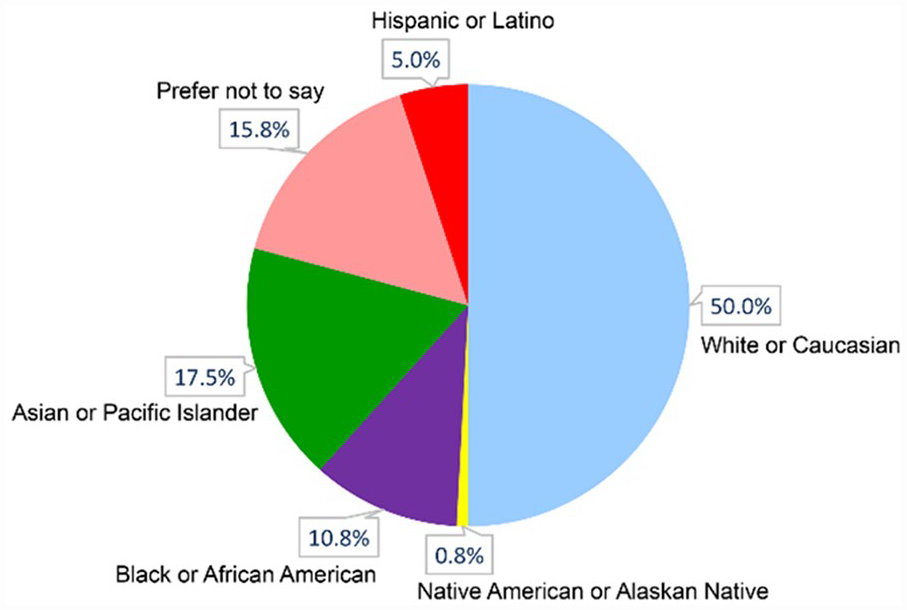
The pie chart provides the distribution of responding cohort of sonographers and is categorized by race and ethnicity.
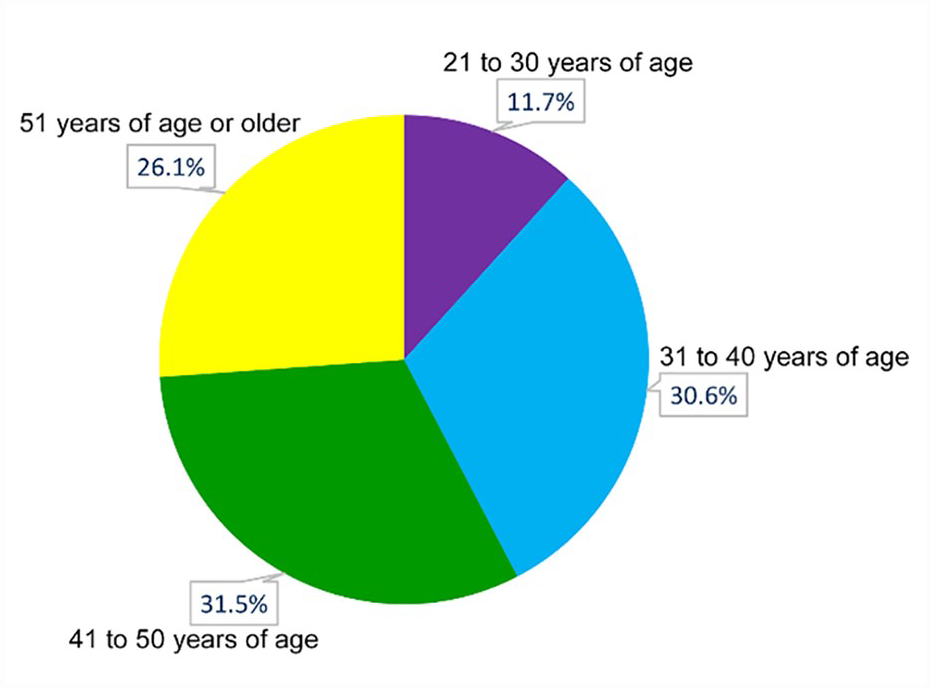
The pie chart provides a distribution of responding cohort of sonographers based on the varied age group categories.
This Table Provides the Demographics and Work Environment Classifications for the Cohort of Responding Survey Participants.
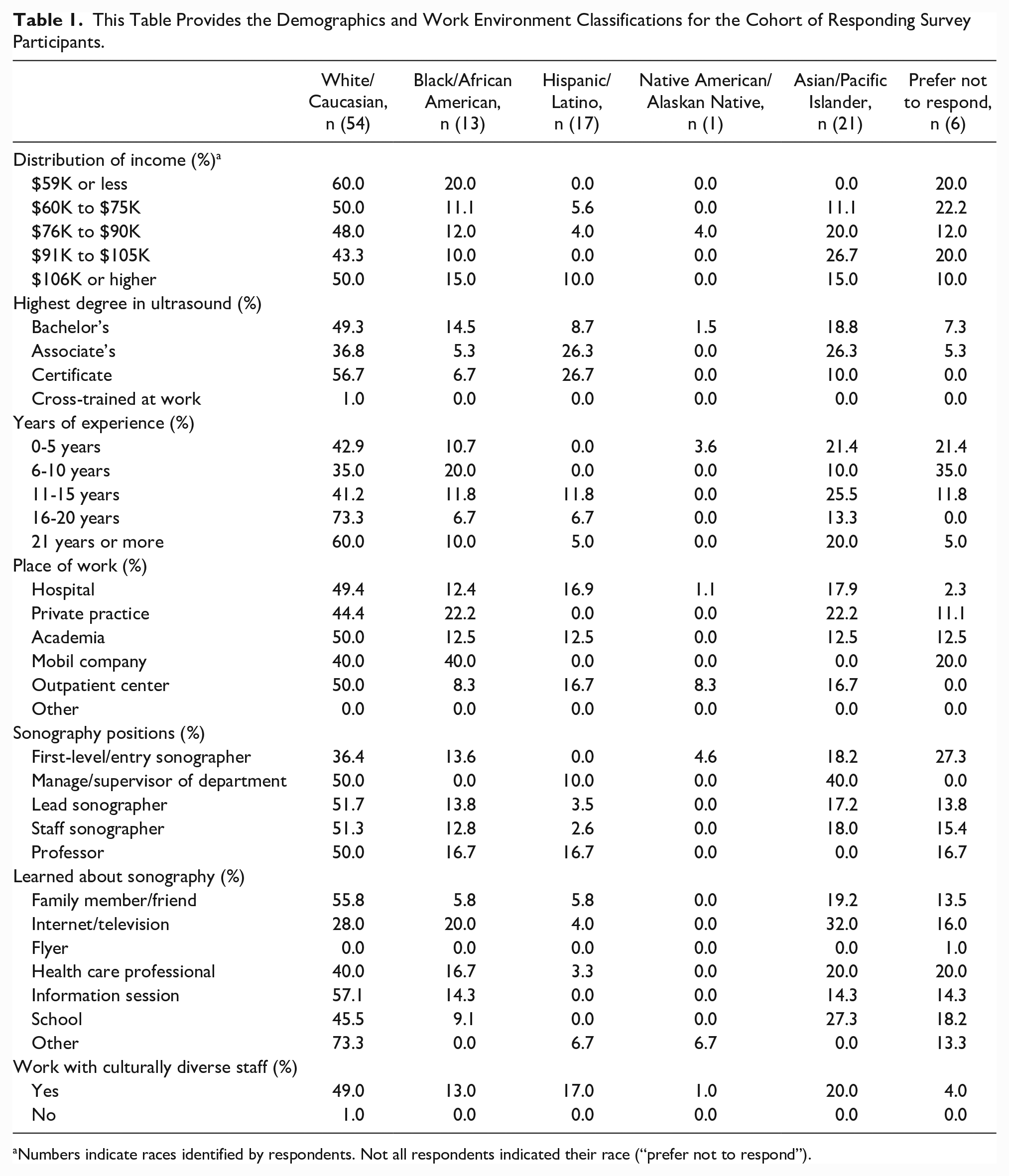
Numbers indicate races identified by respondents. Not all respondents indicated their race (“prefer not to respond”).
Perceptions About Diversity and Inclusion in the Workplace
Eighty-eight percent of the participants said their organizations promote equity and inclusion in the workplace, and when asked whether sonographers worked with a culturally diverse and/or culturally competent staff, respondents uniformly answered “yes.” The majority of sonographers reported regularly having meaningful interactions with people of different cultures and backgrounds (81%). Most respondents (87%) believed that it was important to understand the beliefs and values of the community members they serve. Eighty-two percent of participating sonographers reported that people of all cultures and backgrounds were valued and respected at their organizations (see Figure 3).
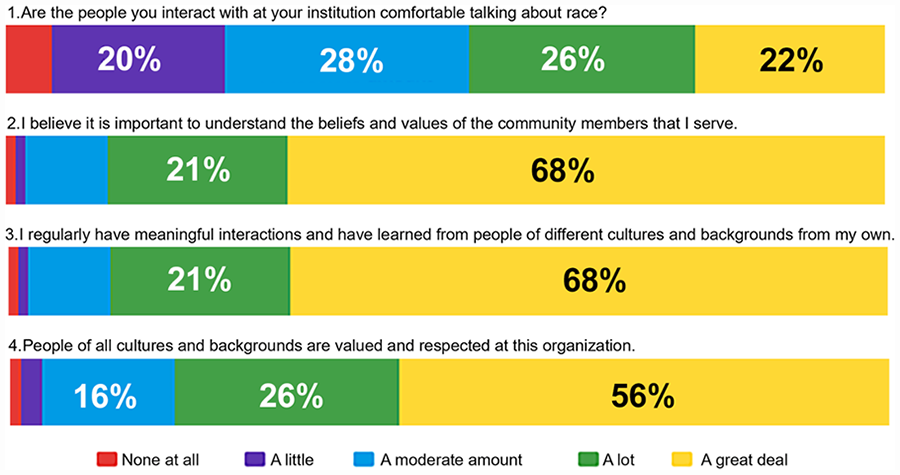
The bar chart provides the perceptions about diversity and inclusion in the workplace. All 4 questions reflect 112 respondents. Note: Specific percentages for categories with <15% of the sample are not labeled.
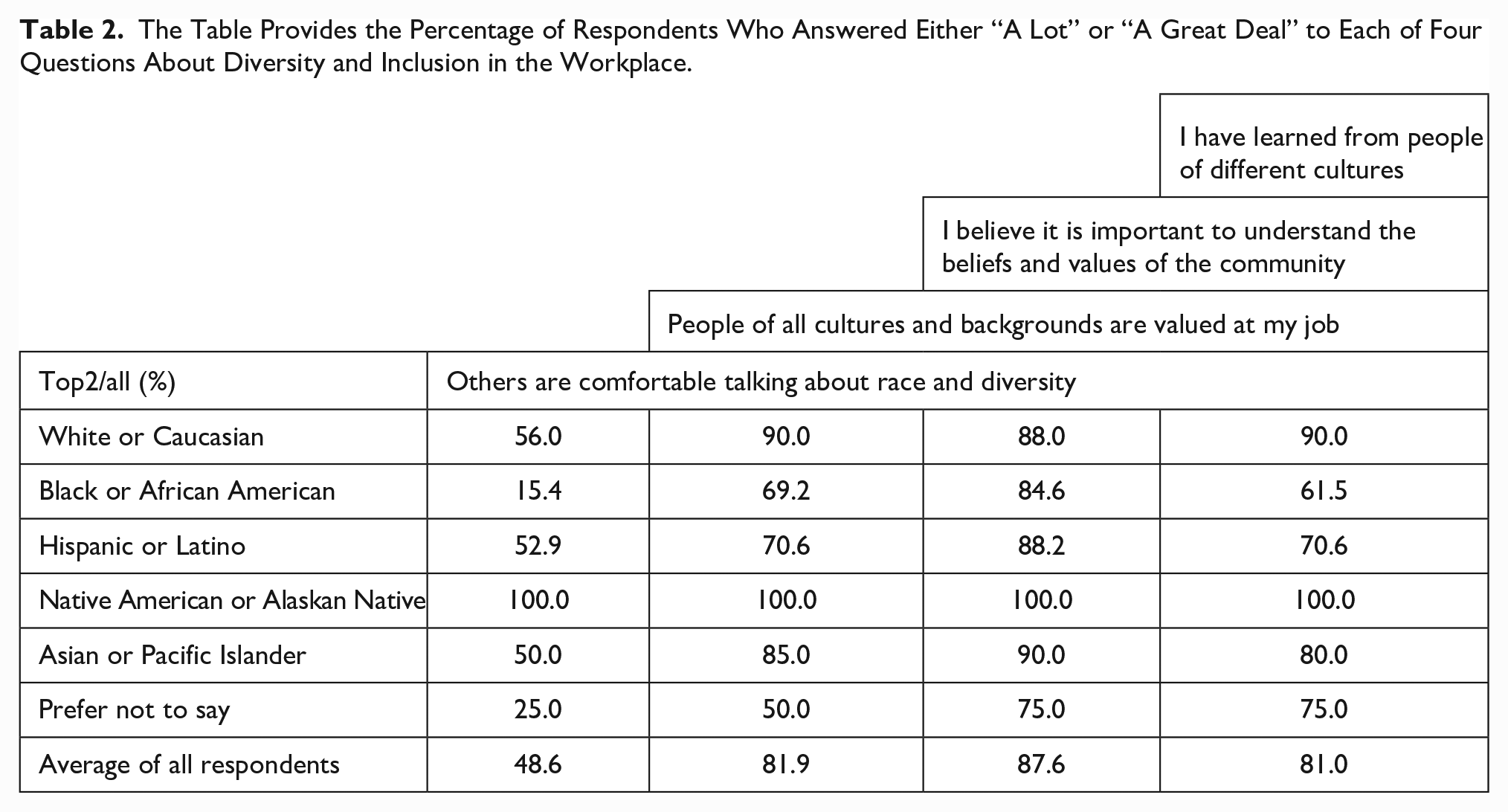
A further analysis was completed on the results shown in Figure 3, by examining the percentage of respondents selecting the two most positive choices (a lot and a great deal) for each of the racial/ethnic groups (see Table 2). In this analysis, the values shown in Figure 3 became the average values of the set of all respondents. Note that question 1 and question 2 asked the respondent to talk about others; question 3 and question 4 asked the respondent to talk about themselves. Table 2 summarizes the results for the four questions. Several features stand out from this analysis. Primarily, for two of the four questions, the “prefer not to answer” choice captured the most negative responses. In addition, the Black or African group showed the lowest average satisfaction score (using our metric) of all the identified ethnic groups. In response to three of the four questions (questions 2-4), their responses still reflected most of the respondents in the positive range, but these were the least positive. Last, the Hispanic or Latino group was bimodal in their responses, causing them to move above or below the overall average (questions 1-3).
The Table Provides the Percentage of Respondents Who Answered Either “A Lot” or “A Great Deal” to Each of Four Questions About Diversity and Inclusion in the Workplace.
Discussion
The use of sonography has expanded significantly over the past decade due to its portability, low cost, ease of use, and latest developments in the form of hand-held and laptop-sized ultrasound equipment platform. 18 As imaging technology advances, medical facilities have increased the utilization of sonography that, in turn, leads to greater consumer exposure to this imaging technique, including diverse minority populations.
New York City is already one of the most racially diverse cities in the United States. As the NYC population continues to become more diverse, pursuing the goal of cultural competence and improving delivery and access of quality health care services to diverse patients emerge as a leading strategy in reducing health disparities. 19 Health care professions, including sonography, should reflect the demographics and diversity of their community to help meet the unique needs of their patients, improve cross-cultural communication, and deliver patient-focused services.
Of the sonographers that responded to our survey, 50% identified as Caucasian and 34.17% of respondents identified as Asian/Pacific Islander (17.5%), Black/African (11%), Hispanic/Latino (5%), and Native American/Alaskan Native (0.83%). These findings mirror the findings of Harun et al as they pertain to minority representation within medical and dental fields of NYC, except for the nursing field. The study by Harun 17 revealed that Black/African and white/Caucasian populations were equally represented across the nursing profession. Nursing emerged as a profession in the mid-19th century. Diagnostic medical sonography was not recognized as a distinct health care profession by the US Department of Education until 1973; therefore, it has only been recognized for about 50 years.20,21 This would indicate that nursing had approximately a 100-year advancement as a profession for integrating diverse minority populations into the field and accumulating data on diversity, as a workforce.
As the US racial/ethnic distribution continues to become more diverse and multicultural with Black, Hispanic, Native, and Asian populations projected to make up 57% of the US population by the year of 2060,2,3 it is important that all health care professions, including sonography, reflect the makeup of the patients they serve. Diversity among sonographers can enhance understanding of the special needs of patients who have different ethnic and racial backgrounds. Moreover, research has shown that health care professionals with diverse backgrounds are more likely to practice in underserved areas, thus increasing access to quality health care. 22 It is imperative to consider what can be done to promote diversity in the field of sonography and create recruitment opportunities for qualified individuals from minority populations. Perhaps the first step would be to introduce middle school and high school students to the sonography profession and hold career fairs in minority communities. This would include encouraging high school and college counselors to introduce sonography as a sound career choice to their students. Counselors who are educated about the field of sonography as a profession will be more likely to assist students in exploring this career choice. According to the US Department of Labor, career fairs remain one the most effective means to reach minority groups and find diverse talent. 3 Health care and educational institutions can invest in advertising and social media to target minority populations. 3 It has been reported that social media plays a vital role in advancing diversity in health professions, providing peer-to-peer support among members of minority groups, fostering mentorship and professional development, recognizing accomplishments, and promoting empowerment.23,24 Professional sonography organizations could develop strategies to solicit funds from government, corporate, and commercial institutions to promote sonography as a profession to diverse minority communities. Professional organizations such as the National Medical Association, National Dental Association, National Hispanic Medical Association, The Hispanic Doctors & Chiropractic Association, National Black Nurses Association, and Asian American Pacific Islander Nurses Association have established practices that promote the profession to minority communities, represent interests of minority groups, and work on establishing a professional presence at legislative levels. 25 Sonography organizations can follow their lead.
Sonographers have several options for career advancement, and with the right preparation, education, experience, and mentoring, they can become supervisors, department heads, administrators, or faculty members. Numerous research has shown that the involvement of faculty and staff with ethnic minority background can help in building trusting relationships with minority students, increase students’ sense of belonging, contribute to a positive image of the study program, and give students more confidence.26,27 Ultrasound training programs can recruit minority sonographers for faculty positions to help integrate minority populations into leadership positions. Exposure to role models from the same cultural background who are successful in their roles as sonographers, as well as meeting faculty members and persons in leadership roles to whom the ethnic minority people can relate, can be a strong motivating factor for achieving the same career goals.
This study demonstrated that a vast majority of respondents reported that they work in a culturally sensitive environment that promotes ethnic and racial diversity and inclusion. The very small number of Native American/Alaskan Native respondents makes it difficult to evaluate these responses. In addition, the larger numbers of responses from the other four racial/ethnic groups permit some observations. In response to both the individual and organizations perceptions, the Black or African group or the “prefer not to say” group gave the lowest scores. It is important to continue to cultivate and employ a diverse sonography staff, which can help departments gain different perspectives and draw from varied experiences to solve complex problems in creative ways. The perspectives of the staff will be critical to evaluate both for understanding barriers to attracting sonographers to the profession and for optimizing the work environment. As Cohen et al 11 stated, it is smart business for health care organizations to draw from a diverse talent pool, adequately reflecting the racial and ethnic composition of the country. In addition, a varied group of sonographers with different ethnic and racial backgrounds may help attract a more diverse patient population, build genuine connections with patients, and improve patient satisfaction with their sonography experience. Another important benefit of a diverse workforce is that it may create a stronger feeling of inclusion and community for sonographers, which may make the workplace feel more enjoyable. The intent of this cohort study was to serve as a starting point for more extensive analyses and greater discussion within the sonography profession.
Sonography departments that work on diversifying the workforce can implement a reviewing process suggested by Salsberg et al, 4 which helps identify various factors contributing to the lack of diversity in the workplace and achieve greater representation of minority populations. In addition, integrating practices that foster diversity into the culture of the organization, maintaining diversity and inclusion efforts, and reflecting on various strategies that help diversify workforce are some of the steps organizations can take to build a diverse and inclusive workforce. 28 As Stanford states, “while these are only a few steps, any step forward is a step in the right direction to improve diversity and inclusion.” 28
Limitations
One of the limitations of this study was the research design and the purposive respondents who provided responses. In addition, this study had limited response rate, a small sample size, and unwillingness of some respondents to reveal their race and ethnicity. The data gathered indicated the racial and ethnic breakdowns based solely on those respondents who chose to report this information. The numbers of respondents who preferred not to reveal their racial and ethnic background were large enough that the data reported could underestimate certain minority groups. The response rate of 22% (112/500) for NYC sonographers is considered to be typical for surveys but represents an estimated 4.5% (112/2500) of all NYC sonographers. While the intent was to sample all five boroughs, results from this limited cohort can only allow for some inferences as to the diversity of NYC. For future studies, increasing the sample size by distributing the survey statewide or nationwide will improve statistical significance and could provide a better understanding of the racial and ethnic diversity within the profession of sonography.
Conclusion
This limited cohort study attempted to evaluate the racial and ethnic diversity within the sonography professionals of NYC. The results indicated that sonography professionals who reported as Black/African American, Hispanic, and Native American may be underrepresented compared with the city’s population they serve. Studies assessing racial and ethnic diversity among physicians, nurses, and other health care professionals have led to increased ethnic and racial inclusivity as well as the implementation of new educational programs and hiring initiatives. The purpose of this study was to address the gap in the literature regarding the ethnic and racial diversity in the field of sonography. Although limited, this work may contribute to the growing data on a diverse workforce in the health care professions. Hopefully, this cohort study spurs a more in-depth look into factors contributing to the paucity of diverse sonography workforce, association between these factors and patient satisfaction, ways on raising sonography awareness, and the best methods to achieve it. To advance this line of inquiry, more studies should be conducted to evaluate the progress in ethnic and racial composition of the sonography workforce.
Footnotes
Acknowledgements
The authors would like to acknowledge SUNY Downstate Health Sciences University faculty members, Dr Rena Orman, Dr Mark Stewart, and Dr Yosefa Pessin for their invaluable contributions to this study.
Declaration of Conflicting Interests
The authors declared no potential conflicts of interest with respect to the research, authorship, and/or publication of this article.
Funding
The authors received no financial support for the research, authorship, and/or publication of this article.
Ethics Approval
This study was reviewed by the SUNY Downstate Institutional Review Board and deemed exempt.
Informed Consent
This study was reviewed by the SUNY Downstate Institutional Review Board (IRB: 1831119).
Animal Welfare
Guidelines for humane animal treatment did not apply to the present study.
Trial Registration
Not applicable.
