




Abstract
Congenital heart disease (CHD) is a serious issue in pediatric health care. The objective of this study was to investigate the incidence of patent ductus arteriosus (PDA), atrial septum defect (ASD), and ventricular septum defect (VSD) using echocardiography. A descriptive prospective study was conducted at a medical center in Saudi Arabia. Pediatric patients were enrolled in the study if they exhibited one or more of the following: cardiomegaly, large pericardial effusion, or heart murmur grades 4 to 6. In total, 356 patients were enrolled in the study and underwent a standard comprehensive echocardiographic evaluation. These data were tested for associations with patient demographic data. Multiple CHD manifestations were noted (n = 446), with PDA (47.47%) most common, followed by ASD (41.85%) and VSD (28.9%). A statistical association was noted between PDA and patient age (P < .00) as well as ASD and female sex (P < .00). PDA was the most frequent of all CHDs manifestations.
Keywords
Congenital heart disease (CHD) is a major health problem in newborns and children. Studies have shown that CHD is a common cause of perinatal morbidity and mortality.1,2 CHD is responsible for approximately 4.0% of all neonatal deaths worldwide. 3 Epidemiological studies indicate a worldwide prevalence ranging from 8.0 to 12.0 per 1000 live births.4,5 While the prevalence of CHD varies, some regional studies established the range of CHD as 4.0 to 12.0 per 1000 live births in Iran 3 and 8.07 per 1000 in northern India. 6 A Sudanese study on 135 infants with CHD found a ventricular septal defect (VSD) in 52%, an atrial septal defect (ASD) in 12%, and patent ductus arteriosus (PDA) in 8% of cases. 7 A study conducted in the southern region of the Kingdom of Saudi Arabia (KSA) detected a CHD in 26.8% of all patients. 8 Another epidemiologic study in the KSA proposed that the incidence of CHD was approximately 5.4 per 1000 live births annually and the relative frequency of VSD was higher than ASD. 9
The purpose of the present study was to assess the prevalence of PDA, ASD, and VSD among CHDs using echocardiography. The target population included neonates, infants, and children. The researchers were seeking to answer the following questions: Which of the above three CHDs occurs at the highest frequency? Are these CHDs associated with sex or age? Also, which subtypes of ASD and VSD are more common in this selected population?
Materials and Methods
This descriptive prospective study was conducted in a major medical center in Riyadh, KSA. The inclusion criteria were pediatric patients who exhibited one or more of the following: cardiomegaly, large pericardial effusion, and heart murmur grades 4 to 6. A Philips iE33x Matrix echocardiography system with an X-Matrix Cardiac Transducer x5-1 (Phillips Medical Systems, Bothell, Washington) was used to evaluate each participant. An echocardiographic examination, including 2D B-mode imaging along with color, pulse, and continuous wave Doppler imaging, was performed on each patient. Standard parasternal long-axis, short-axis, apical four-chamber, two-chamber, subcostal, and suprasternal views were visualized. The presence and severity of cardiac defects were determined according to the American Society of Echocardiography (ASE) recommendations. 10 The King Fahad Cardiac Center review board provided an approval letter for conducting this study.
Data Collection
A data sheet was used to collect and organize the study variables, which included patient age, sex, weight, height, and echocardiography findings. The participants were classified into four age groups (<1 month, 1 month to <1 year, 1 year to <5 years, and 5–11 years). To ensure the patient’s confidentiality and anonymity, each was assigned a numeric code on his or her respective data collection sheet. An informed verbal consent for patient information and images to be published was obtained from an adult accompanying the participants.
Data Analysis
The Statistical Package for Social Sciences version 16.0 (SPSS, Inc., an IBM Company, Chicago, Illinois) software was used to analyze the data. Pearson’s correlation coefficient was calculated to statistically determine the associations between the study variables. The association was considered statistically significant when the P value was <.05.
Results
A total of 356 neonates, infants, and children were enrolled in the present study. This included 160 males (45%) and 196 females (55%), with ages ranging from <1 month to 11 years (Figure 1).
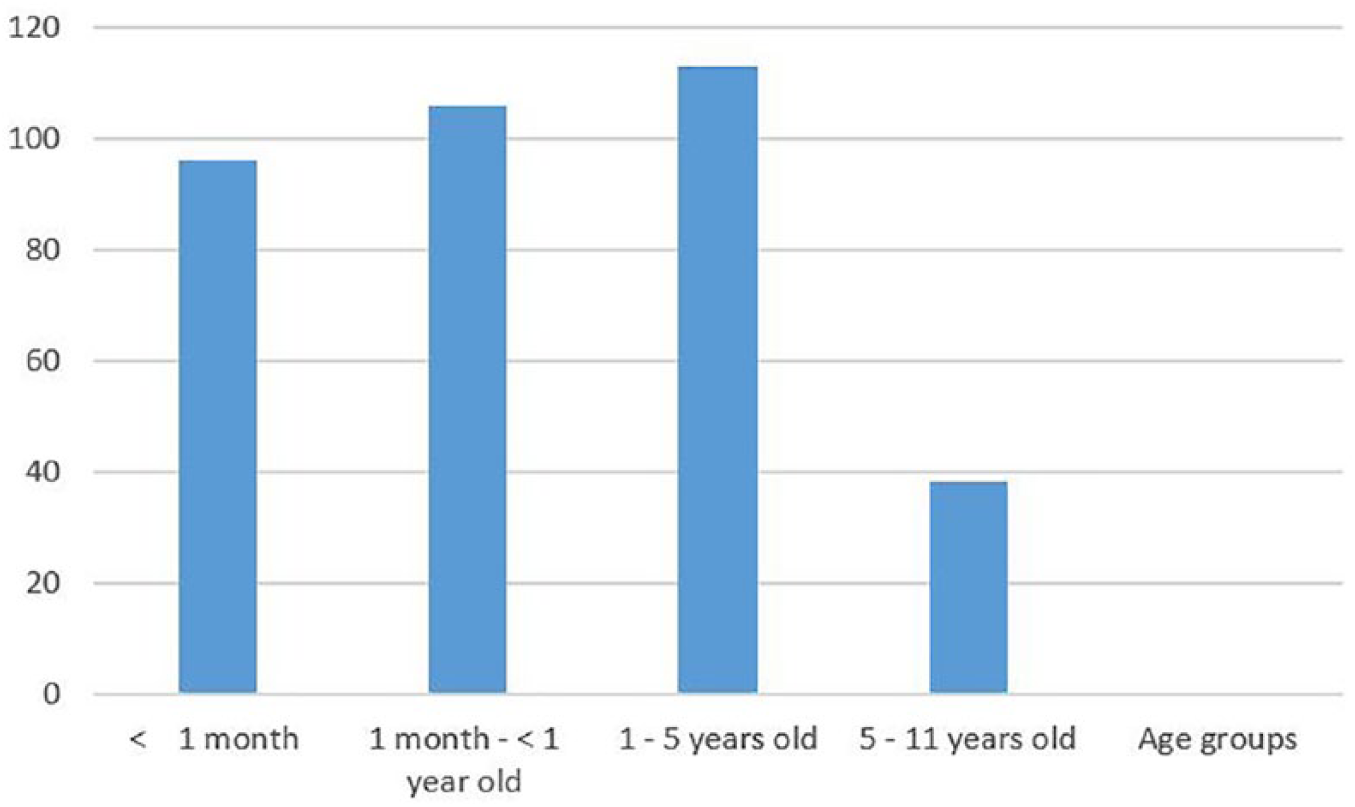
Age group distribution.
Table 1 presents the echocardiography findings from all of the patients. A total of 446 common CHDs were noted (some participants had multiple cardiac defects). PDA was present with the highest frequency (n = 169) with a percentage of 47.47% (of 356) and ASD was detected in 41.85% (n = 149). VSD was detected in 28.9% of the participants (n = 103). Aortic stenosis (AS) was detected in 2.5% (n = 9). Tricuspid valve regurgitation (TR) (moderate/severe) was detected in 2.2% (n = 8). Mitral valve regurgitation (MR) (moderate/severe) was detected in 1.68% (n = 6) and aortic valve regurgitation (AR) (moderate/severe) in 0.56% (n = 2).
Common Echocardiogram Findings Among the Participants.
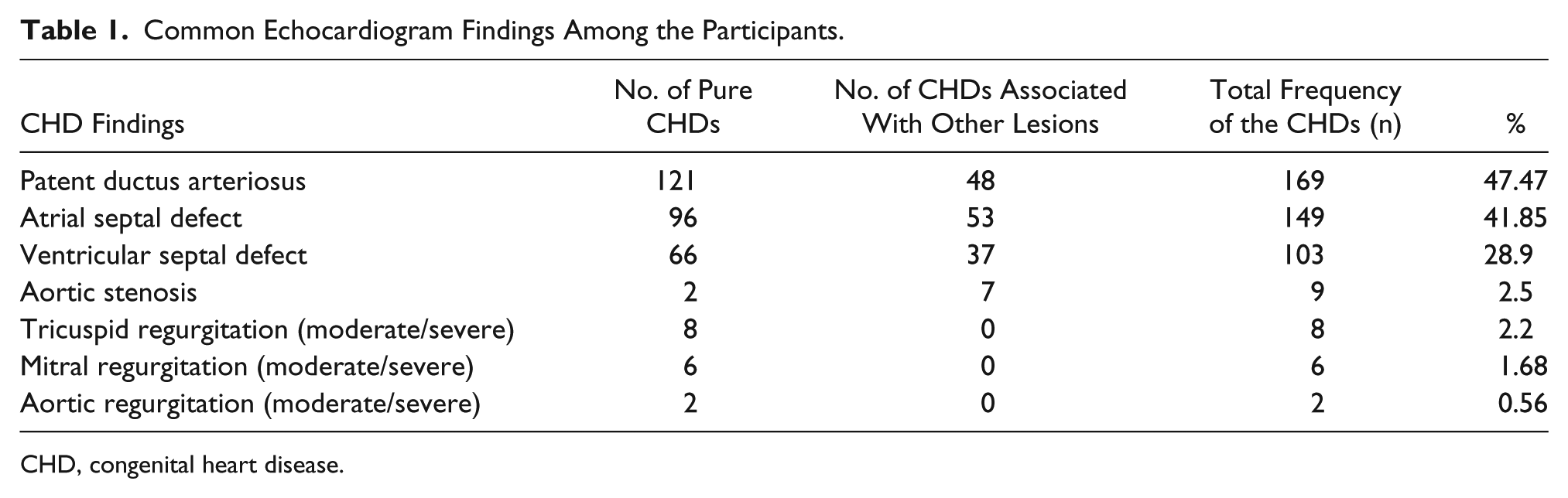
CHD, congenital heart disease.
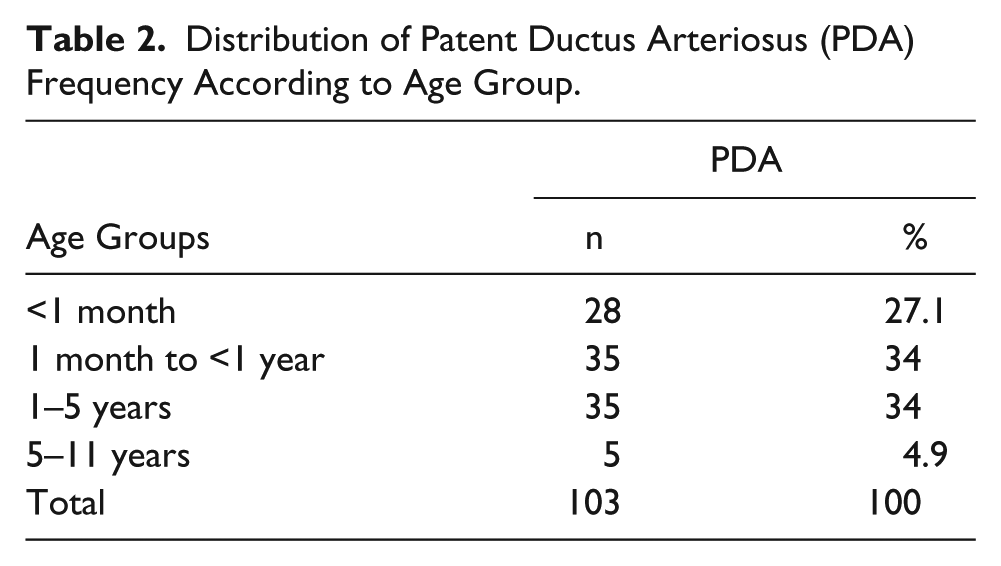
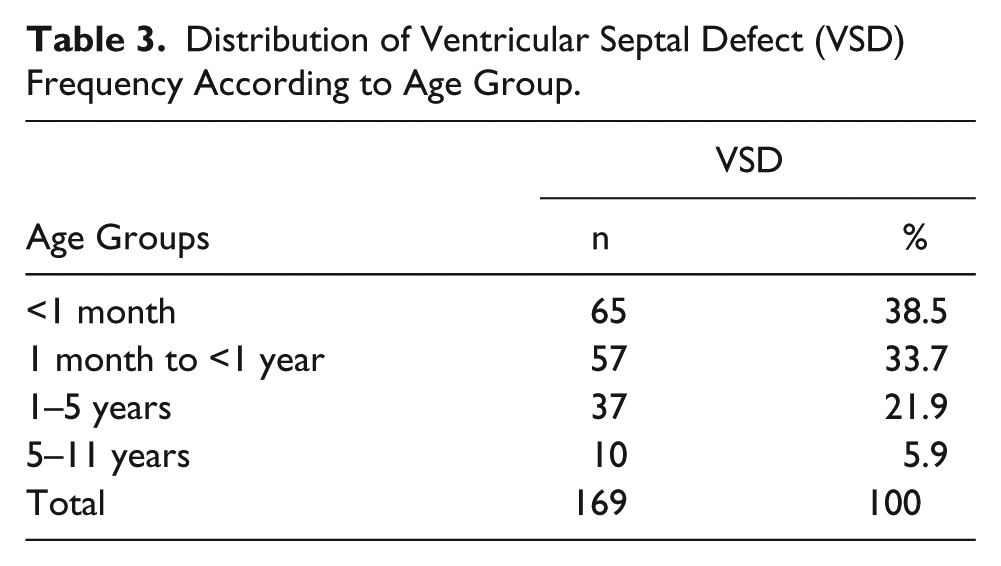
Tables 2 through 4 summarize the frequency of PDA, VSD, and ASD relative to age group. The 5- to 11-year-old age group had the lowest frequencies at 5.9% of 169, 4.9% of 103, and 5.4% of 149 for PDA, VSD, and ASD, respectively. Statistical analysis showed a significantly moderate association between PDA and the participants’ age (P < .00, r = 0.38). There was no correlation between ASD or VSD and age (P = .46, r = 0.098 and P = .40, r = −0.138 respectively).
Distribution of Patent Ductus Arteriosus (PDA) Frequency According to Age Group.
Distribution of Ventricular Septal Defect (VSD) Frequency According to Age Group.
Distribution of Atrial Septum Defect (ASD) Frequency According to Age Group.
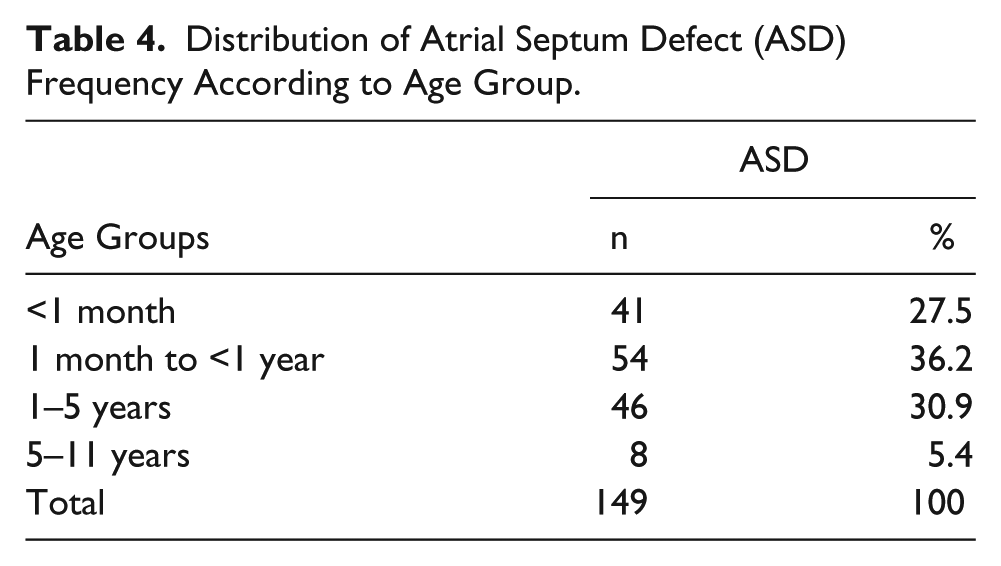
Table 5 shows VSD types according to patient age. Membranous VSD was the most common type of VSD with a frequency of 63.1% (of 103), and 41.5% of this type of VSD was found in the 5- to 11-year-old age group.
Distribution of Ventricular Septal Defect (VSD) Type According to Age Group.
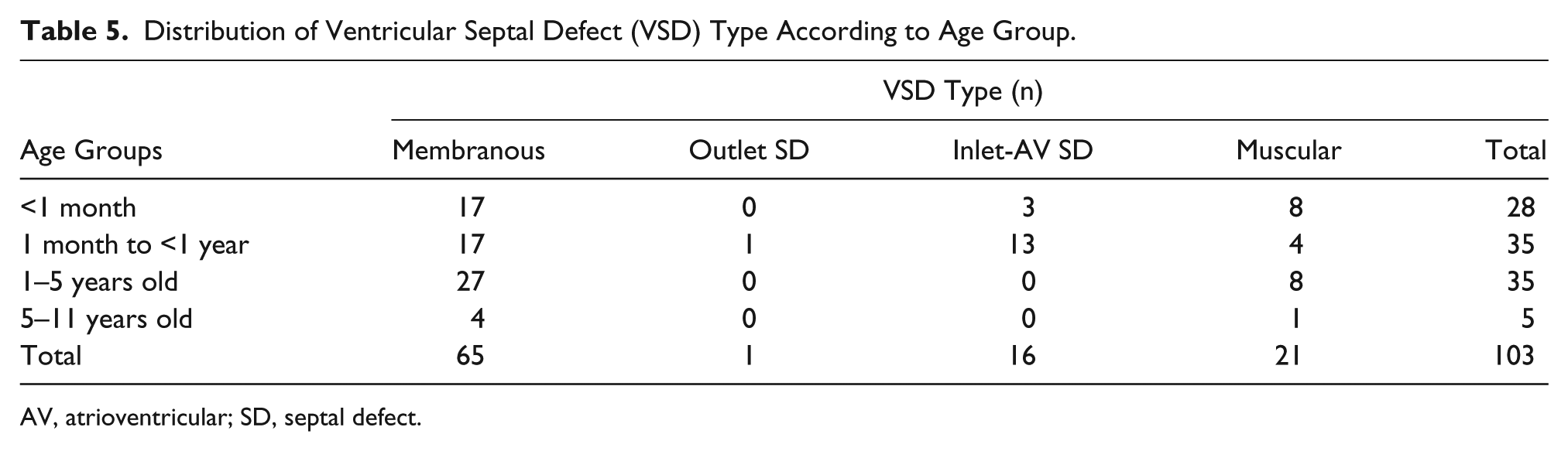
AV, atrioventricular; SD, septal defect.
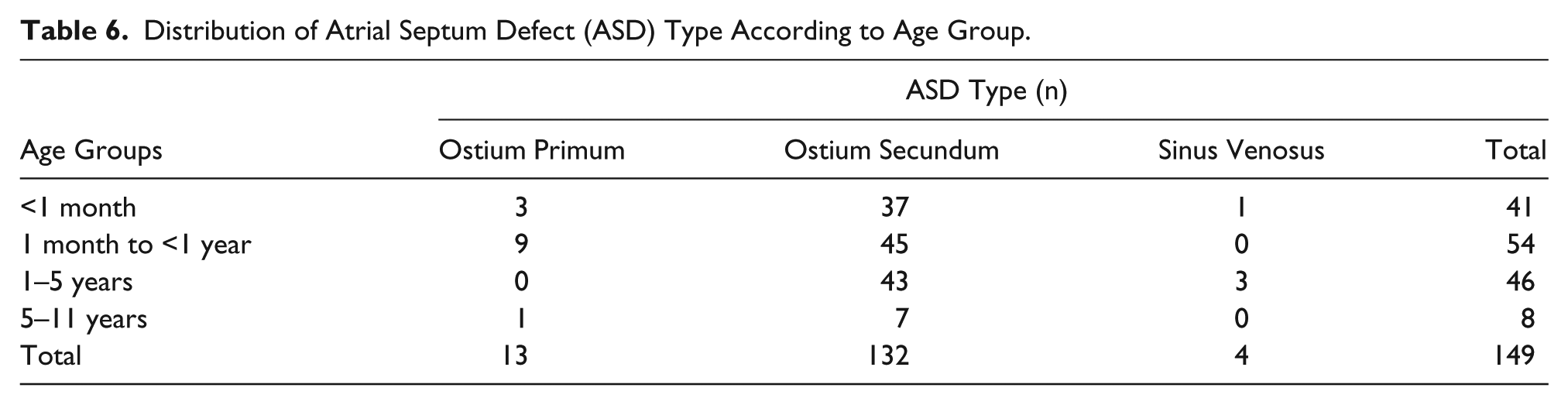
Table 6 shows ASD types according to patient age; the ASD types include ostium secundum ASD, which involves direct communication between the two atria, and ostium primum ASD, which is an isolated defect resulting from a fusion failure between the free edge of the septum primum and the endocardial cushion. Ostium secondum ASD occurred with the highest frequency in this study at 88.6% (of 149) and was more common in the 5- to 11-year-old age group. These results stress the consideration of heart murmurs when studying CHDs as this age group also had the highest frequency of heart murmur (Figure 2). The frequency of heart murmur in this study population was 62.3% and more common in participants younger than five years. An abnormal heart murmur can be associated with CHD or heart valve disease.
Distribution of Atrial Septum Defect (ASD) Type According to Age Group.
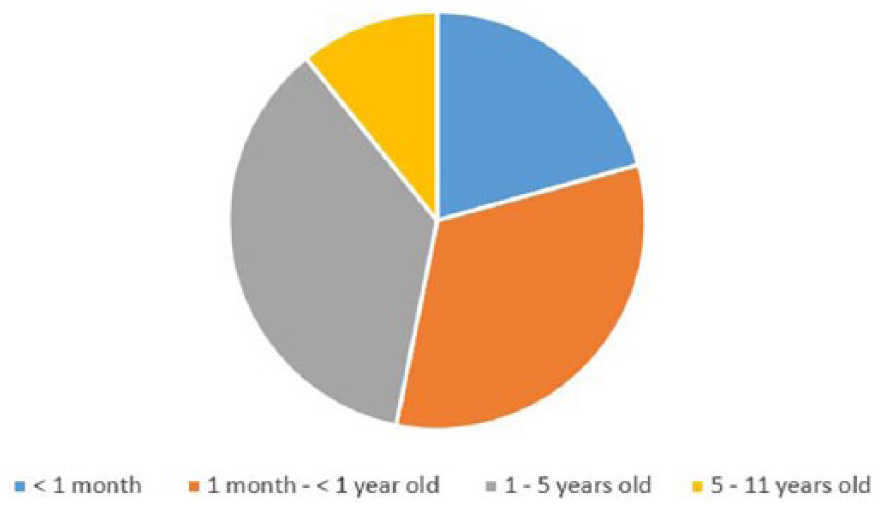
Frequency of heart murmur according to age group.
Figure 3 summarizes the comparison between sex and the most common CHD types. PDA and ASD were more prevalent among females than males, while VSD frequency was slightly increased in the male participants. There was a statistically significant weak association between ASD and the female sex (P < .00, r = 0.22). There was no statistically significant association between VSD or PDA and sex (P = .20, r = −0.07 and P = .79, r = −0.02, respectively).
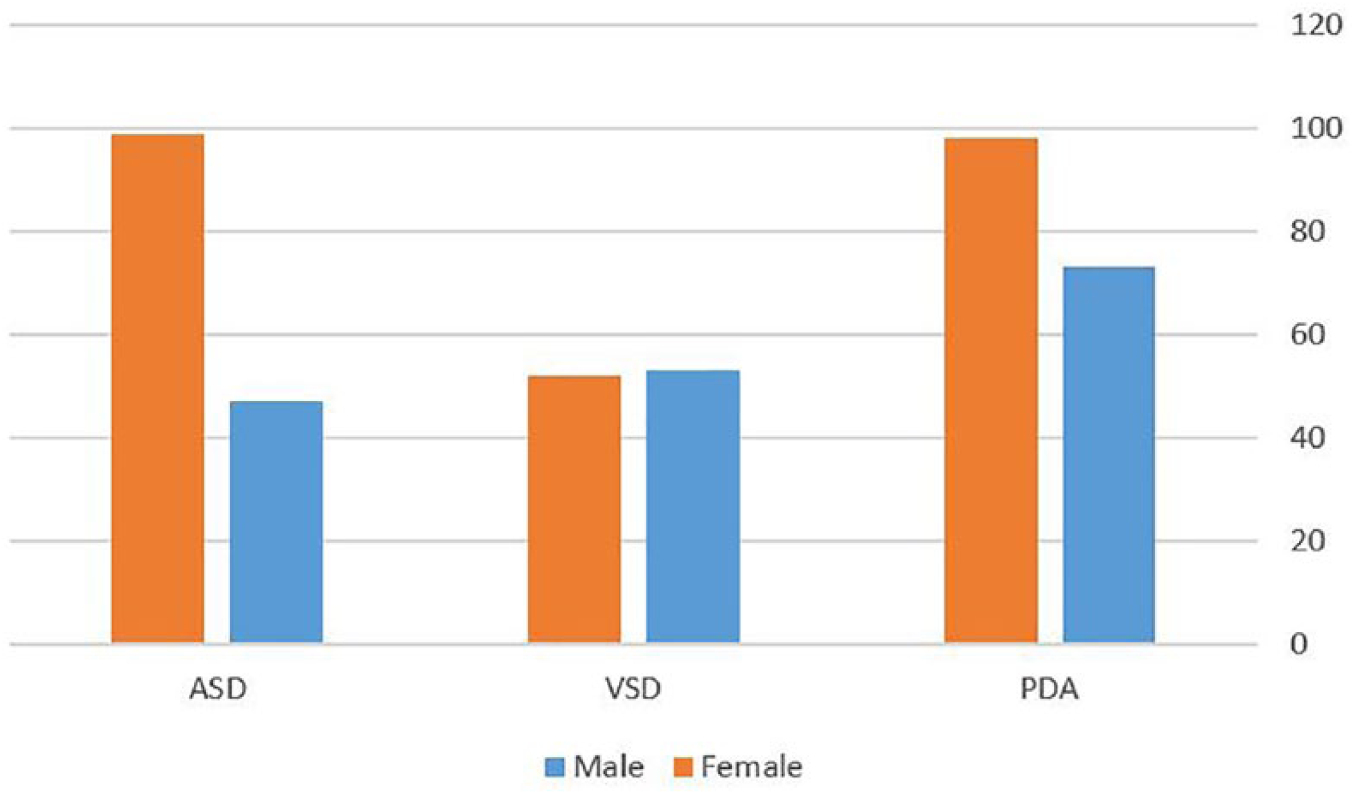
Comparison between atrial septum defect (ASD), ventricular septum defect (VSD), and patent ductus arteriosus (PDA) according to sex.
Figures 4 through 8 contain sample images from the echocardiogram evaluations. Color flow Doppler confirmation of left ventricle (LV) to right ventricle (RV) shunt in muscular VSD is presented in Figure 4. A large ostium primum ASD (84 mm) with a 34-mm inlet VSD is noted in Figure 5. A large PDA (31 mm) with color flow Doppler confirmation is illustrated in Figure 6. The small ostium secundum ASD (0.18 cm) noted in Figure 7 can be seen with color and spectral Doppler confirmation in Figure 8.
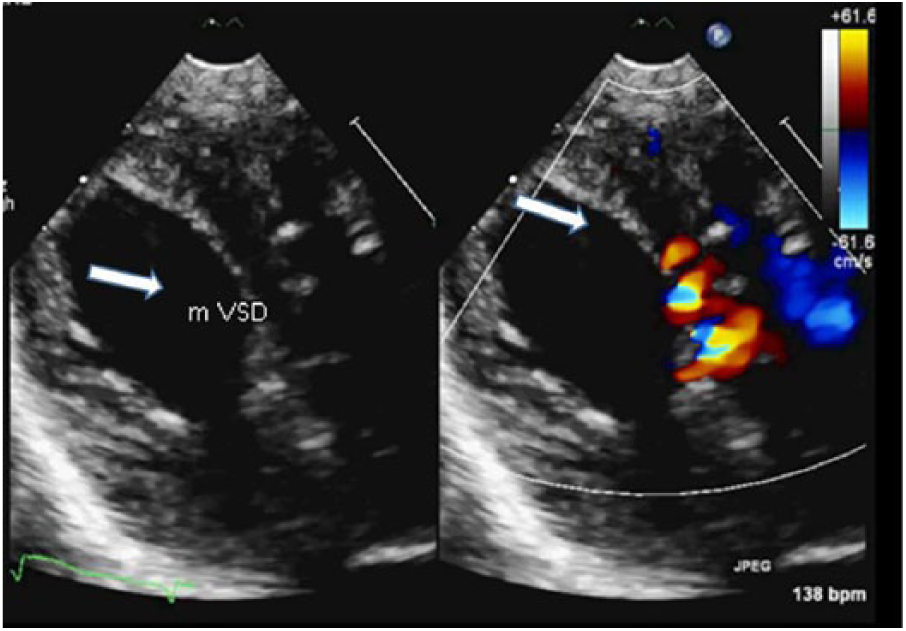
A one-day, female 2D echocardiogram and color flow Doppler confirmation of left ventricle to right ventricle shunt in muscular ventricular septum defect (VSD). Note the jet from the left to right ventricle across the VSD (arrows).
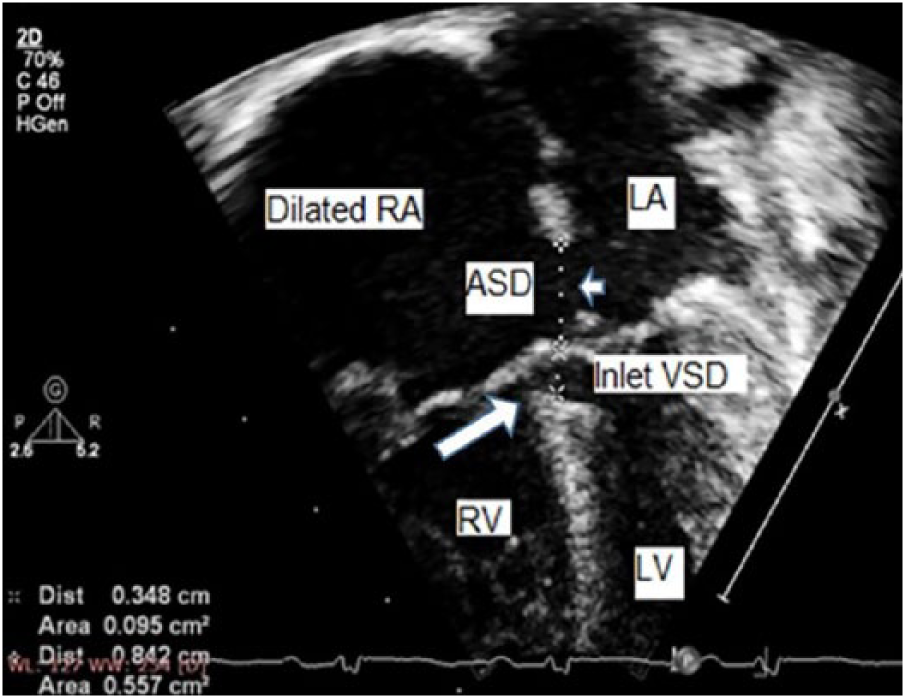
Apical four-chamber view for six days, female patient, demonstrating a large ostium primum atrial septum defect (84 mm; arrowhead) and inlet ventricular septum defect (34 mm; arrow). ASD, atrial septum defect; LA, left atrium; LV, left ventricle; RA, right atrium; RV, right ventricle; VSD, ventricular septum defect.
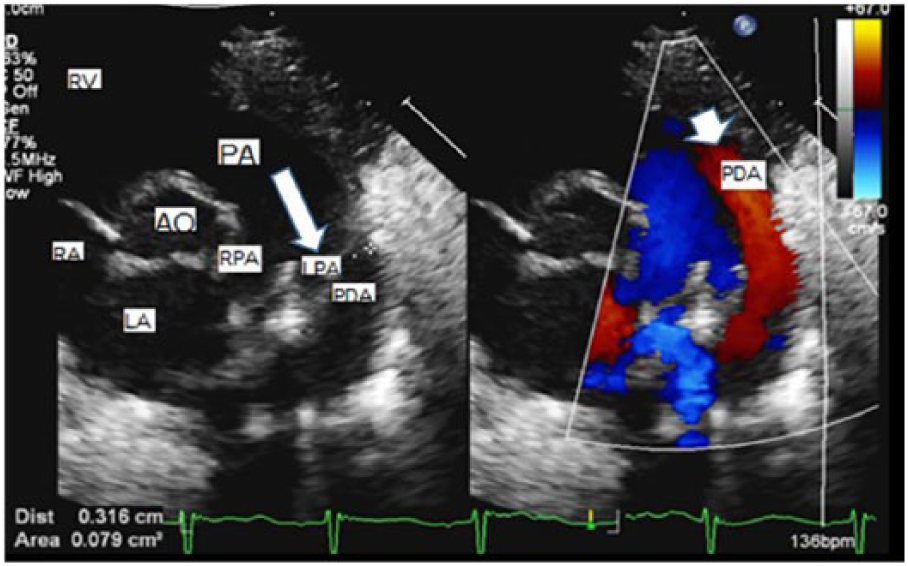
A 2D echocardiogram of a 13-month-old male patient, demonstrating a large patent ductus arteriosus (31 mm; arrow) with a color flow Doppler confirmation (arrowhead). AO, aorta; LA, left atrium; LPA, left pulmonary artery; PA, pulmonary artery; PDA, patent ductus arteriosus; RA, right atrium; RPA, right pulmonary artery; RV, right ventricle.
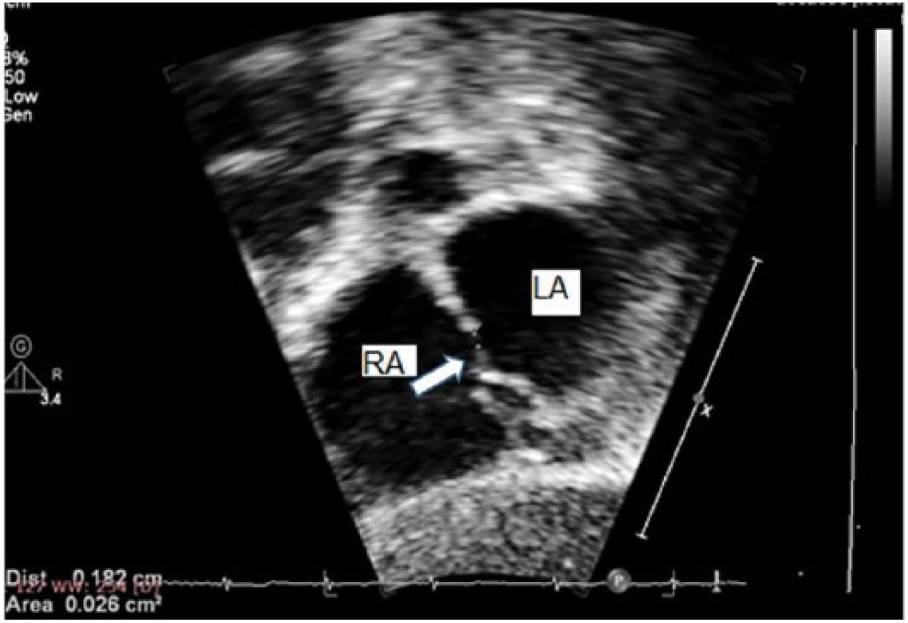
A 2D echocardiogram of a two-year-old female patient showing a small ostium secundum atrial septum defect measured (0.18 cm; arrow). LA, left atrium; RA, right atrium.
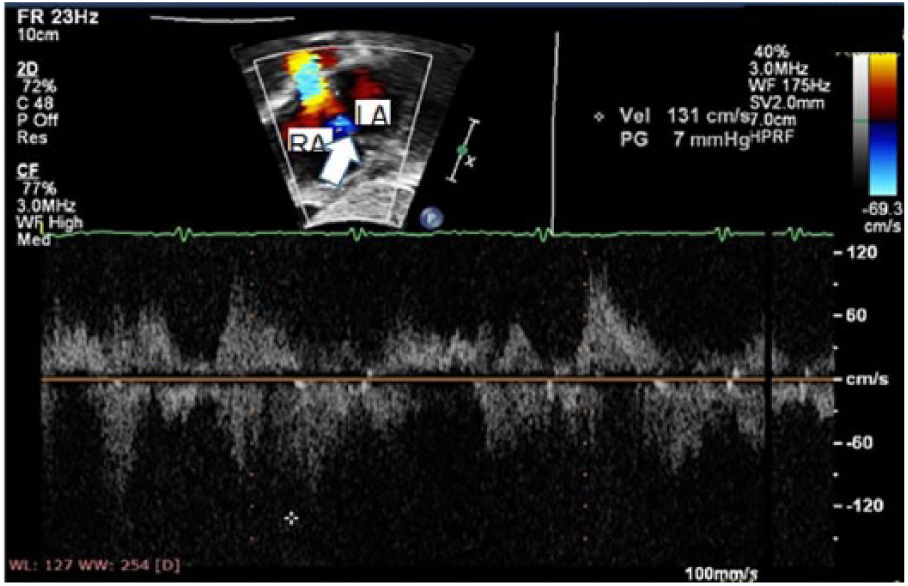
Color and spectral Doppler confirming ostium secundum atrial septum defect (arrow) in a two-year-old female patient. LA, left atrium; RA, right atrium.
Discussion
CHD is a serious issue in pediatric health care associated with a high risk of morbidity and mortality. The most common noncyanotic cardiac defects in the present study were PDA (47.47%), ASD (41.9%), and VSD (28.9%). PDA and ASD were more prevalent in females than in males.
Results regarding the incidence of PDA, ASD, and VSD in the KSA vary. Osman et al. 7 determined that PDA occurs with the lowest frequency (8%), ASD occurs at 12%, and VSD has the highest frequency (52%) among the CHDs. In addition, results published by Abdulmajid et al. 8 indicated that ASD has the lowest frequency (9.3%), and VSD is the most common lesion (29.6%), followed by PDA (9.5%). These results do not agree with the results of the present study.
Regarding the association between CHDs and sex, the present study partially agreed with results of Alqurashi et al., 11 whose study, based on house visits and questionnaires, suggested that females have the highest frequency of CHDs. They found that VSD occurs in 46% and ASD in 8.5% of children with CHDs in the KSA. Alabdulgader 12 determined that VSD is the most common lesion (33.9%), followed by ASD (18.1%) and PDA (11.6%).
The present study agrees with several results outside of the KSA regarding the sequence of ASD and VSD frequencies. Oyati et al. 13 showed that the most common CHDs were ASD (25%), followed by VSD (5.8%). Atwa and Safar 14 suggested that the most common CHD is ASD (28.8%), followed by VSD (28.2%). These results fall in line with Kamal et al., 15 who suggested that the most common type of noncyanotic CHD was ASD (34.1%), followed by VSD (31.6%), while other defects were less common.
Regarding the association between sex and CHDs subtypes, Kamal et al. 15 found no association between sex and type of CHD in children. This is in contrast to the findings from the present study that females have higher frequencies of PDA and ASD.
The present study also compared the incidence of PDA, AVD, and VSD with age group. Patients younger than one year had the highest frequencies at 72.2% of 169, 63.7% of 149, and 61.1% of 103 for PDA, AVD, and VSD, respectively. These findings agree with Nelson et al., 16 who showed that CHDs were predominant in neonates and infants, corresponding to 71.5% of these cases. Statistical analysis of the data from the present study showed a statistically significant association between PDA and the age of the participants. There was no significant association between ASD or VSD and age.
Conclusions
The study found that PDA was the most common CHD and that PDA and ASD were more prevalent among female patients. A significant association between ASD and the female sex was found (P = .000). Membranous VSD and ostium secundum ASD were the most common types of CHDs, and they were more frequent in the one- to five-year-old age group. This study revealed that ASD is more prevalent in patients with heart murmurs. This was a cohort study; therefore, these results would need to be confirmed with continued research in this region.
Footnotes
Acknowledgements
The researchers send their gratitude and appreciation to the King Fahad Cardiac Center, King Khalid Hospital, Riyadh, KSA for the opportunity to conduct this study.
Declaration of Conflicting Interests
The authors declared no potential conflicts of interest with respect to the research, authorship, and/or publication of this article.
Funding
The authors received no financial support for the research, authorship, and/or publication of this article.
