




Abstract
Roll-coating, also known as roll-to-roll coating or web coating is a continuous and high-speed method used in various industrial applications to apply a thin and uniform layer of material onto a substrate. This process is commonly employed in industries such as electronics, photovoltaic, printing, packaging, and other fields where precise and consistent coating is essential. Here we present an asymptotic analysis of forward roll coating over a rigid substrate for low Weissenberg number viscoelastic fluids. The analysis uses lubrication theory coupled with regular perturbation theory assuming a simplified Phan-Thien-Tanner (SPPT) constitutive equation and small values of the extensibility parameter ε. The analytical expressions of velocity fields, pressure gradient and pressure fields are obtained while the load carrying force, and power input are estimated by numerical solutions (4th order Runge-Kutta). Increases in both Wi and ε increases the pressure gradient in the nip region and increases in viscoelasticity reduce the overall force on the roll. Further, SPTT model predicts 14% lower pressure for
Keywords
Introduction
The polymer industry relies on roll coating to enhance the properties and performance of polymer materials, create versatile products, and meet the demands of various applications. It's an essential tool for producing high-quality polymer-based products that are used in diverse sectors such as packaging, electronics, textiles, automotive, and plastic film. Roll-coating, like any industrial process, can encounter several common problems that may affect the quality and efficiency of the coating operation. Some typical issues include: Uneven Coating, Defects and Contaminants, Air Entrapment, Edge Beading, Wrinkling and Delamination, Coating Adhesion Issues, Drying or Curing Irregularities, Controlling Coating Thickness, Equipment Maintenance and Material Waste. Greener and Middleman 1 conducted an analysis of roll-over-web coating with the minimal roll curvature assumption. They provided the analytical expressions for Newtonian and power law fluids while the perturbation technique was used to find the engineering quantities for viscoelastic fluid. A detailed theory of coating process was discussed by Middleman 2 in his book. The experimental and theoretical studies of coating flow of Newtonian fluid were conducted by Greener and Middleman. 3 They used Lubrication theory to find the film thickness. The two theories were developed by Coyle et al., 4 to obtain the film thickness in the analysis of asymmetric forward roll coating. An experimental study of forward and reverse coating phenomena was reported by Gaskell et al., 5 A comparison was made to measure the film thickness and the meniscus position. A comprehensive study of coating flows was provided by the authors. 6 Sofou and Mitsoulis. 7 used different models to investigate the roll-coating phenomenon under LAT and determine all the engineering quantities. The third-grade fluid in roll-over-web coating was analyzed by Zahid et al., 8 under LAT. The operating variables were calculated using the regular perturbation technique. The deformable roll-coating were examined by Carvalho and Scriven 9 using a viscocapillary model. Zevallos et al., 10 analyzed roll-to-roll coating theory. Their findings reveal that the presence of elastic stresses alters the flow dynamics near the meniscus where the film splits. Ali et al., 11 studied the couple stress effects in coating flow under LAT. The theory of forward deformable roll coater is developed by Lécuyer et al., 12 to analyze coating formulation using finite element technique. The theoretical analysis of roll coating is presented by Atif et al., 13 for micropolar fluid using LAT. The closed form expressions for velocity, microrotation, and pressure gradient were given by them. Lee et al., 14 performed an experiment to study the ribbing instability and dynamics in forward roll-coating. Zahid et al., 15 conducted an analysis based on LAT in roll over porous web for second-grade fluid. Their study shows that Reynolds number and fluid parameters control the flow rate, coating thickness and engineering quantities. Roll coating of viscoelastic polymer fluid was investigated by Cheng et al., 16 They presented a numerical solution based on power series method. The roll to sheet theory is developed under LAT using cu-water based nanoparticles by Khaliq and Abbas. 17 The governing differential equations are modeled using the fundamental laws and simplified by low Reynold number assumption. Cheng and Liu 18 investigated macroscopic film system instabilities of a thin viscoelastic polymer fluid in coating flow. The forward roll coating of a mathematical model is developed by Zahid et al., 19 for a thin film of a non-Newtonian fluid through a small gap between two counter-rotating rolls. The solution is obtained for velocity and other quantities using regular perturbation technique analytically. Zafar et al., 20 examined the couple stress effects between two rotating rolls. Abbas and Khaliq 21 used micropolar-Casson fluid to investigate the roll-coating analysis and found closed form expressions. Manzoor et al., 22 presented the theory of a roll over thin layer formation. They used optimal homotopy asymptotic method to find the solution. The roll-to-roll coating phenomena were investigated by different authors23,24,25 under LAT. Very recently, Atif et al., 26 provided the exact and numerical solution in roll-over-web coating process using Rabinowitsch model. Moreover, the study of different non-Newtonian fluids has been reported21,27–34 in coating, calendaring, sperm swimming, cilia motion and electro-osmotic flows.35–39
In the above mentioned review, no attempt has been made to capture the viscoelastic effects using Simplified Phan-Thien Tanner (SPTT) model during roll-over-web coating analysis. Moreover, the SPTT fluid has an advantage in that it can be reduced to a Newtonian fluid. The questions: • How the viscoelasticity affects the coating thickness in roll-coating, and how can it be controlled? • What is the pressure distribution in the nip during roll-coating and how does the separation point depend on flow rate?
Cannot be addressed without understanding the simplified Phan-Thien Tanner fluid. Applying the SPTT model has been reported for many industrial processes in the last few decades. For example, Escandón et al. 40 studied the heat transfer analysis in a microchannel to investigate the electro-osmotic flow using SPTT fluid. Ferrás et al., 41 analyzed the channel flow using Giesekus and the viscoelastic SPTT models and presented analytical and semi-analytical solutions. Cruz et al., 42 conducted an analysis to calculate the friction factor and Nusselt number in circular pipes using SPTT model. In a wavy-wall microchannel, the electroosmotic flow of a viscoelastic fluid is reported by Martínez et al., 43 using SPTT. Khaliq and Abbas 44 developed the theory of blade coating using the SPTT fluid to predict the viscoelastic effects. Javed et al., 4 45 used the PTT fluid to study the wire-coating process.
Mathematical formulation
The velocity fields are governed by the continuity equation (1) and the equation of motion 8.8,26(2)


The left-hand side of Equation (2) denotes the inertial terms and the right-hand side refers to pressure gradient and viscous terms.
Mathematical formulation
Consider a steady, two-dimensional and incompressible liquid that contacts a rigid roll surface at the position Geometrical representation of roll-coating process with physical variables.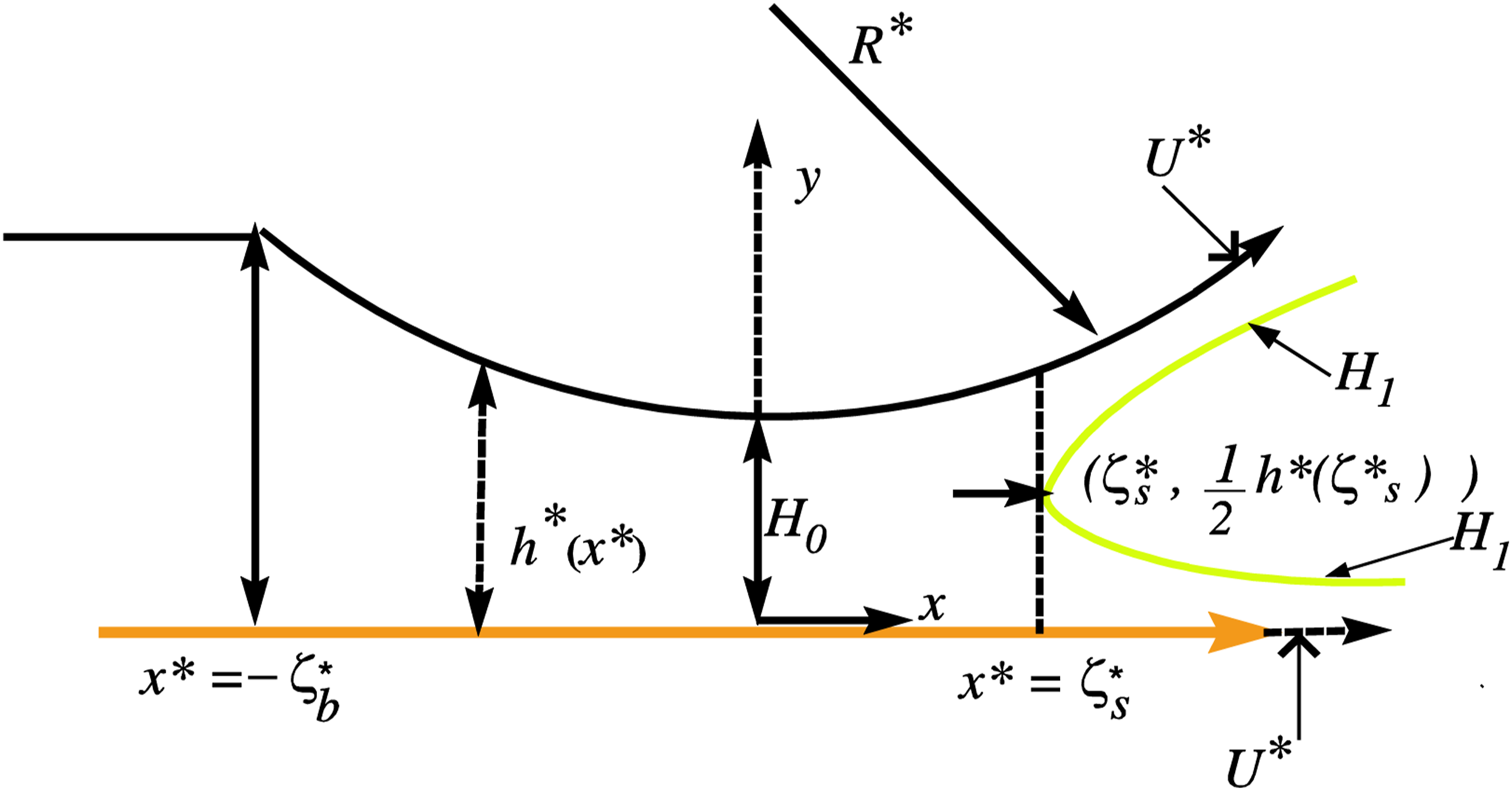
The SPTT model with constitutive equation
30
is given as


The linearized form of

We define the velocity field as

By considering (6) we can express equations (1–5) as follows






The boundary conditions are


Physically, the condition (13-b) states that the pressure is not affected by the flow at the biting point or where the fluid touches the roll and the separation point.
From Figure 1, the variable height

Upon using

Dimensionless analysis
The dimensionless variables are defined below
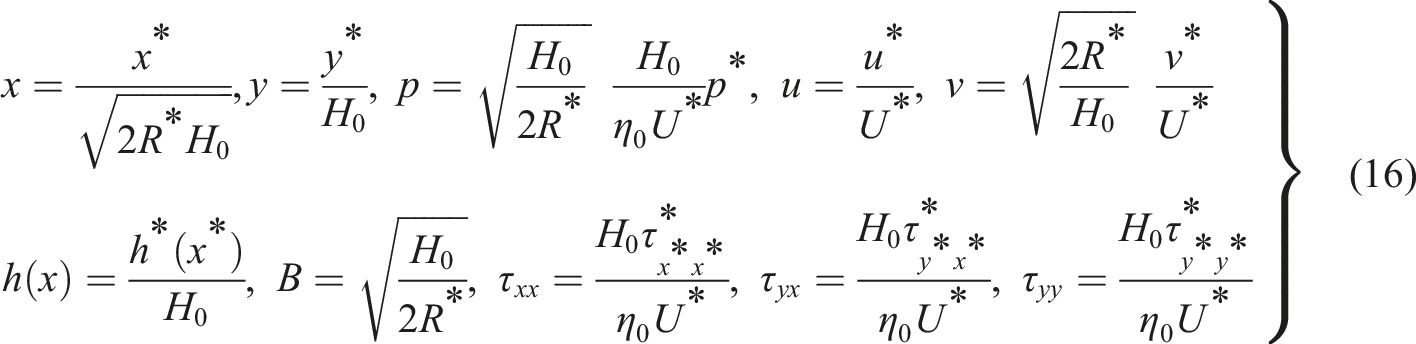
After using (16) in equations (7–12), we obtain






In above equations • • •
In the roll-coating process, the Reynolds number is typically much smaller than 1 due to the thin film flow and low fluid velocities involved.
The assumptions





From equation (26), we get

Solving (25) and (27) and using (28), we find


Integrating (30) yields

Substituting (31) into (29), yields

Boundary condition is dimensionless form turns to be


Solution methodology
The regular perturbation technique
46
with






When we substitute the expressions (35–40) in (32) and equating the power of
Solution of zeroth-order system



The zeroth-order dimensionless flow rate is given below

The term “flow rate” refers to the rate at which the coating material is applied or supplied onto the moving web as it passes through the nip formed by the rolls.
Equations (41–44) denote the Newtonian case as reported by Middleman
2
and its solution is given below

From (44) and (45), the zeroth-order pressure gradient turns

Equation (45) after using (46) yields

To find the zeroth-order pressure, we integrate (46) and using


The separation point
Solution of first-order system




Under the same procedure as described in previous section, we obtain the required quantities for first-order system as


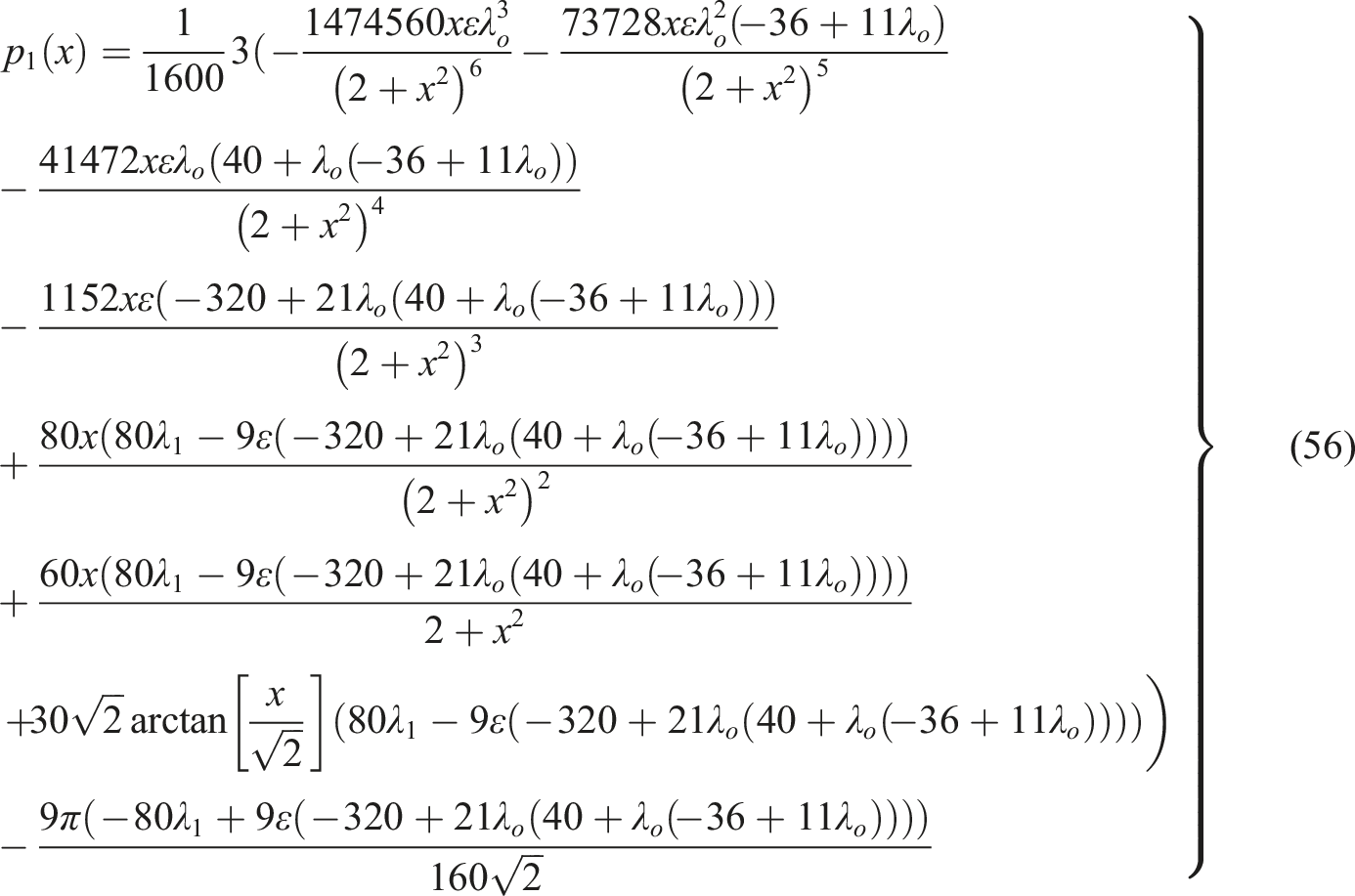

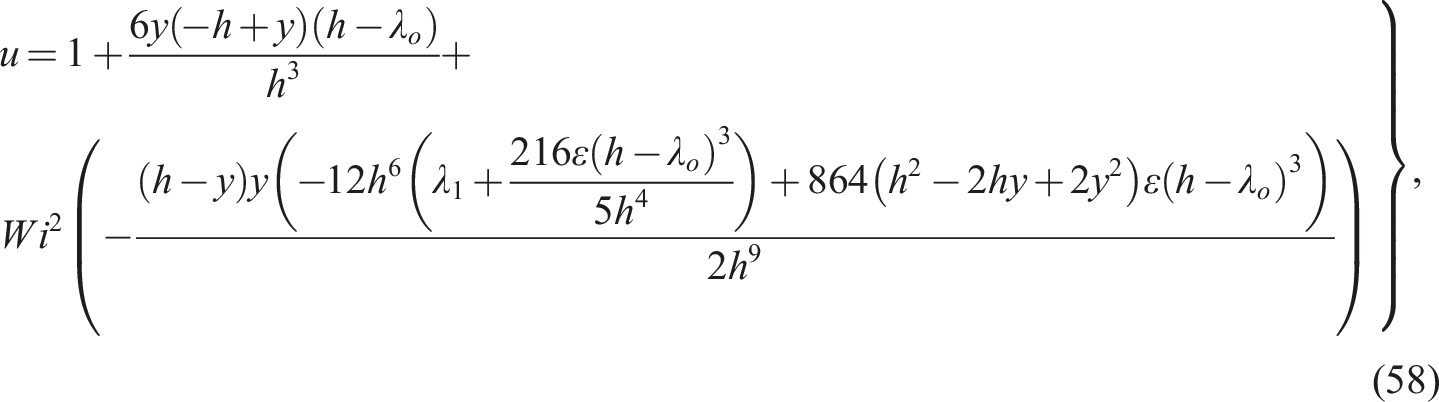
By joining the solutions of each order, the final expressions are

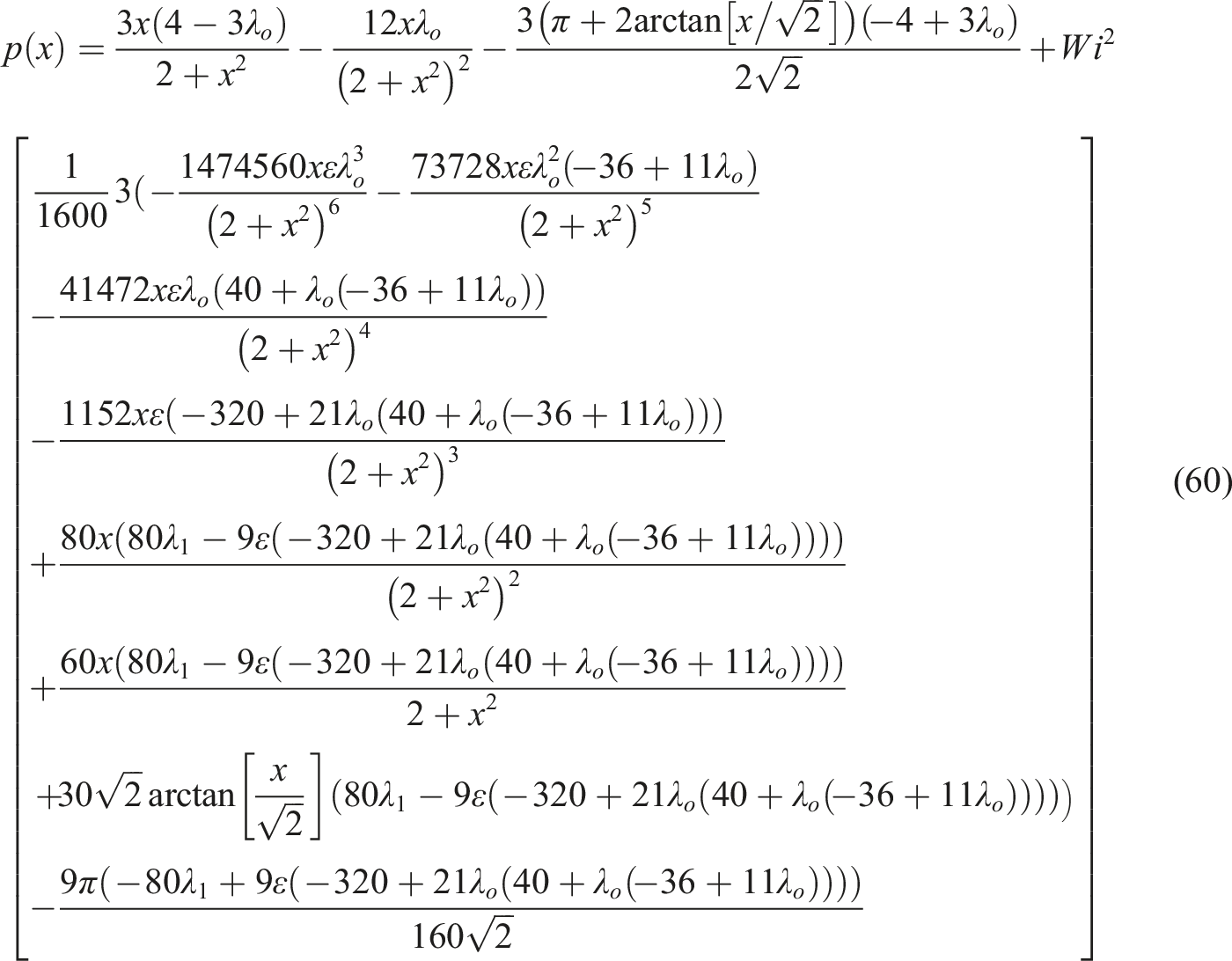


Engineering quantities and coating thickness
The power input
7
and the roll-separating force are defined in Equations (63) and (64)


The power and force are in dimensionless form given below


The fourth order Runge-Kutta method is used to calculate the roll-separating force and power input.
The final coated thickness

Expression (67) takes the dimensionless form as

Graphical results
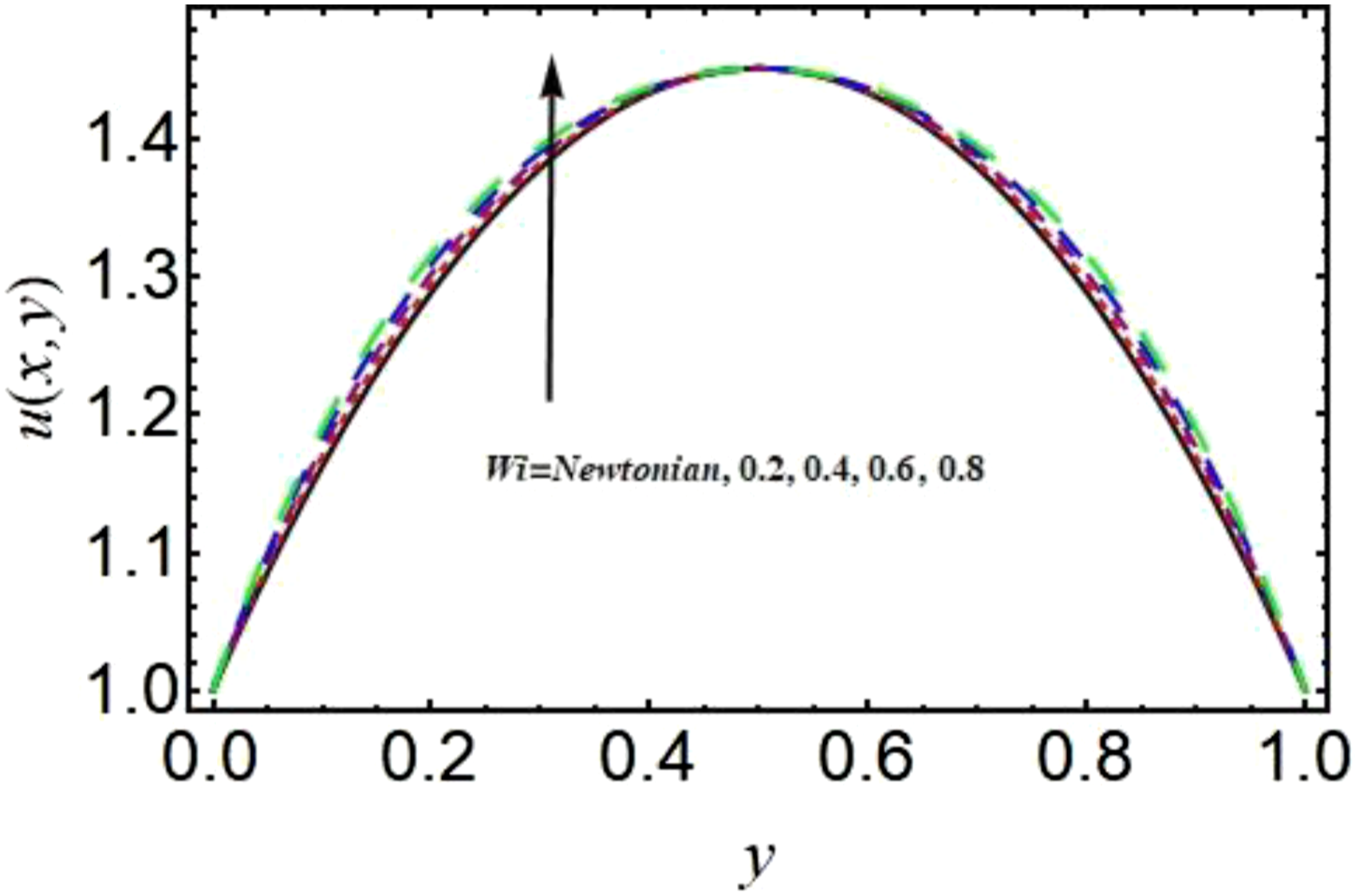
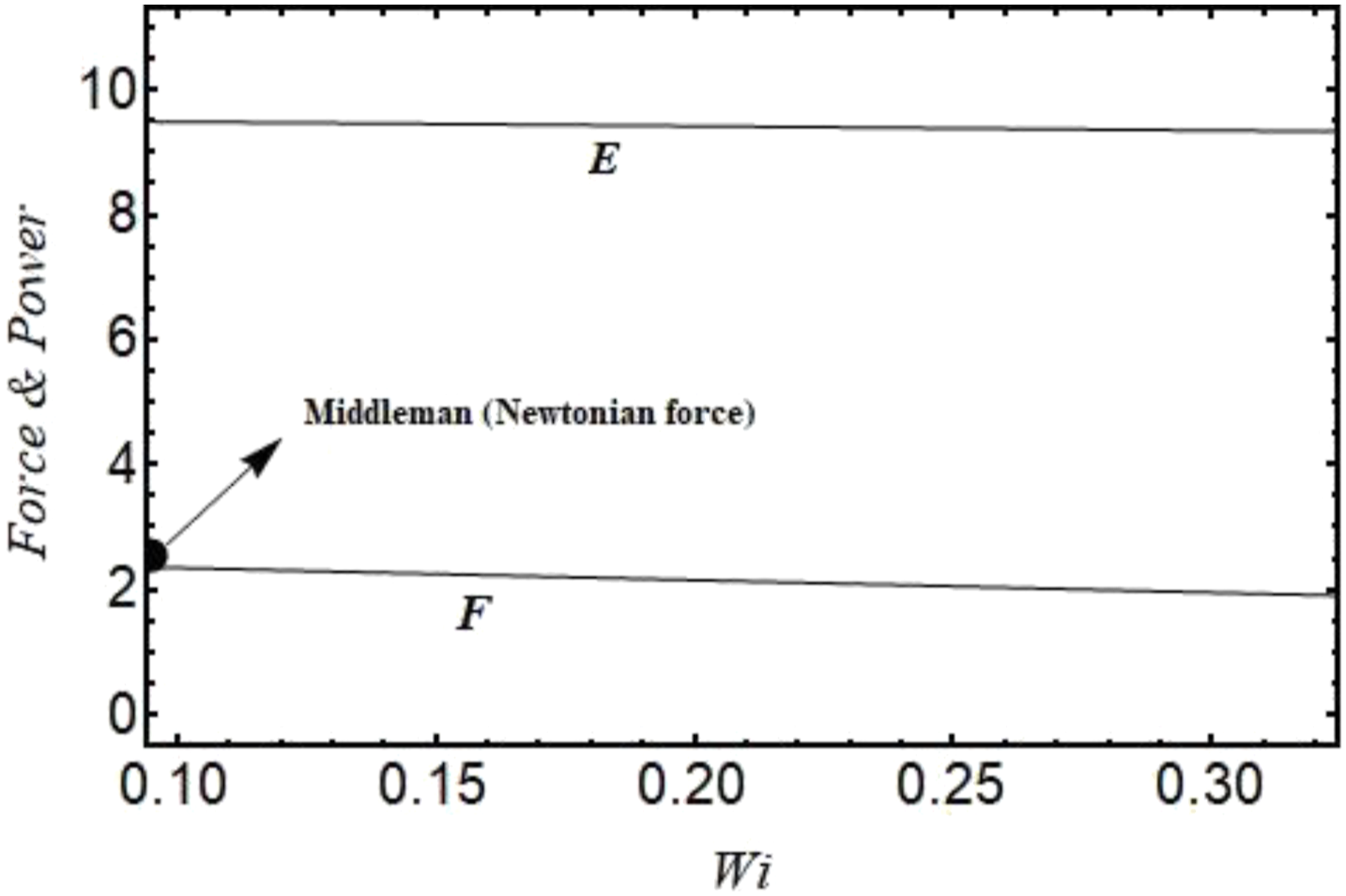
We discuss the SPTT fluid parameters Effects of Effects of Effects of Effects of Effects of Effects of Power (E) and force (F) as a function of Effects of 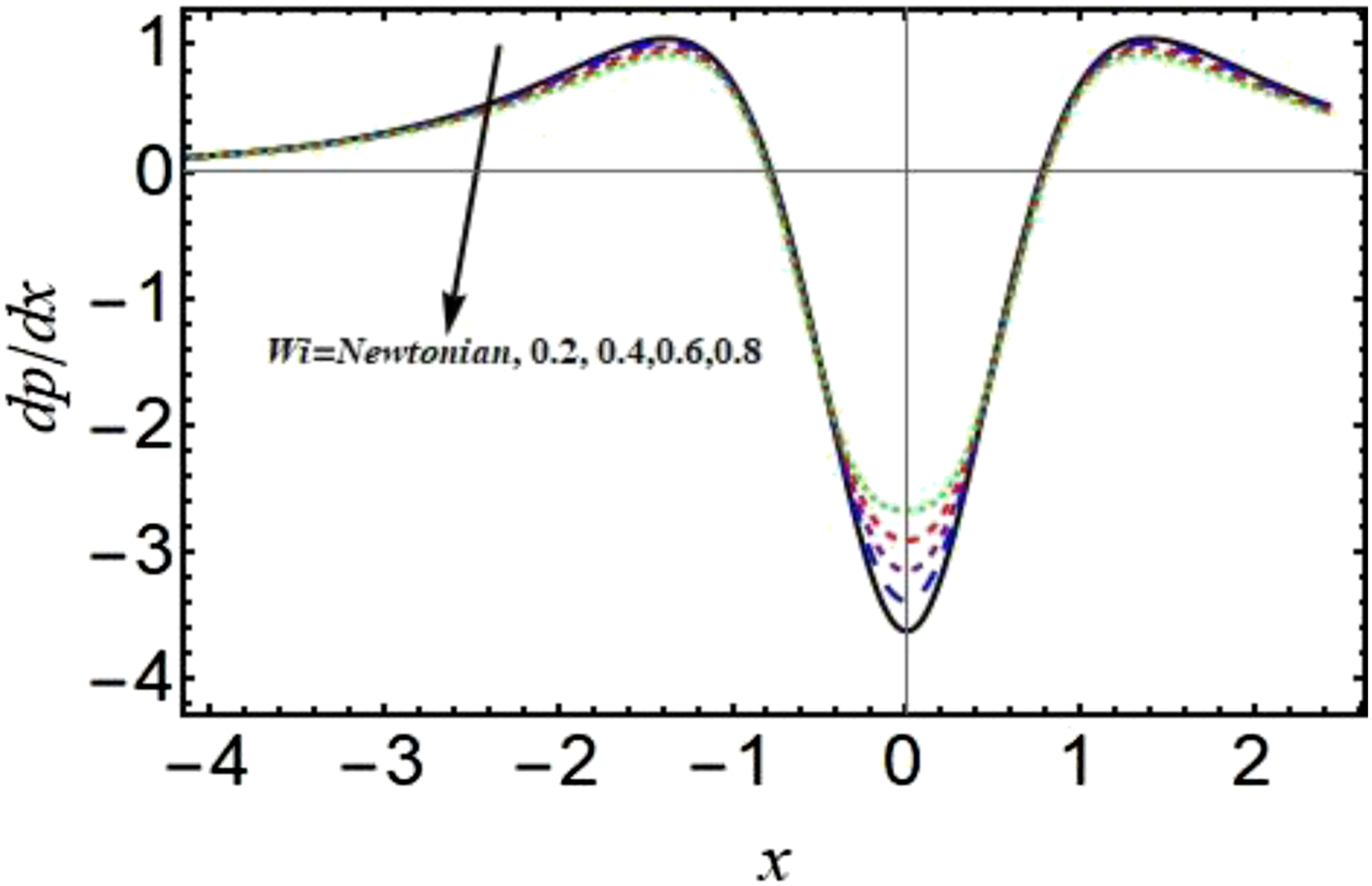
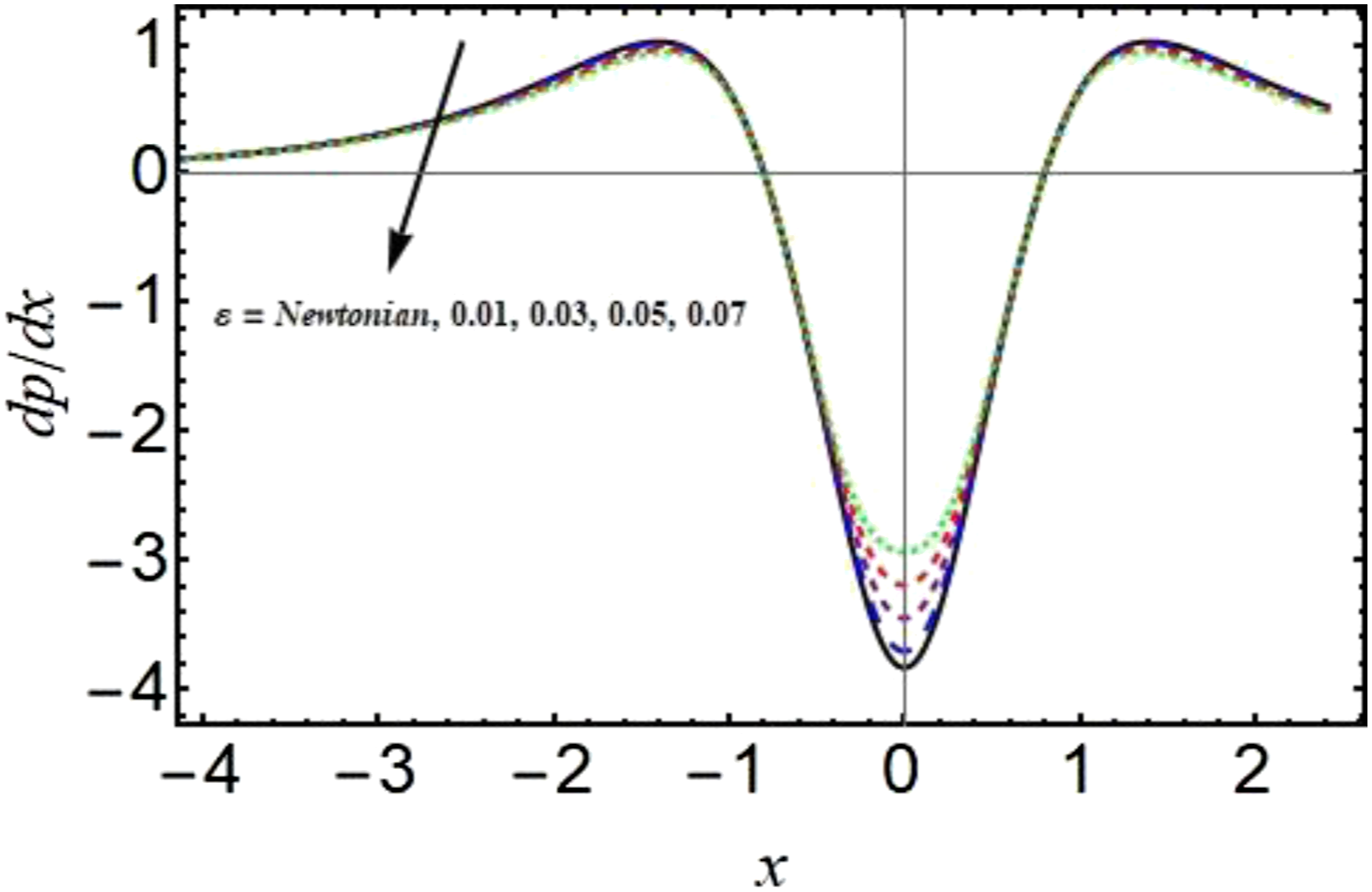
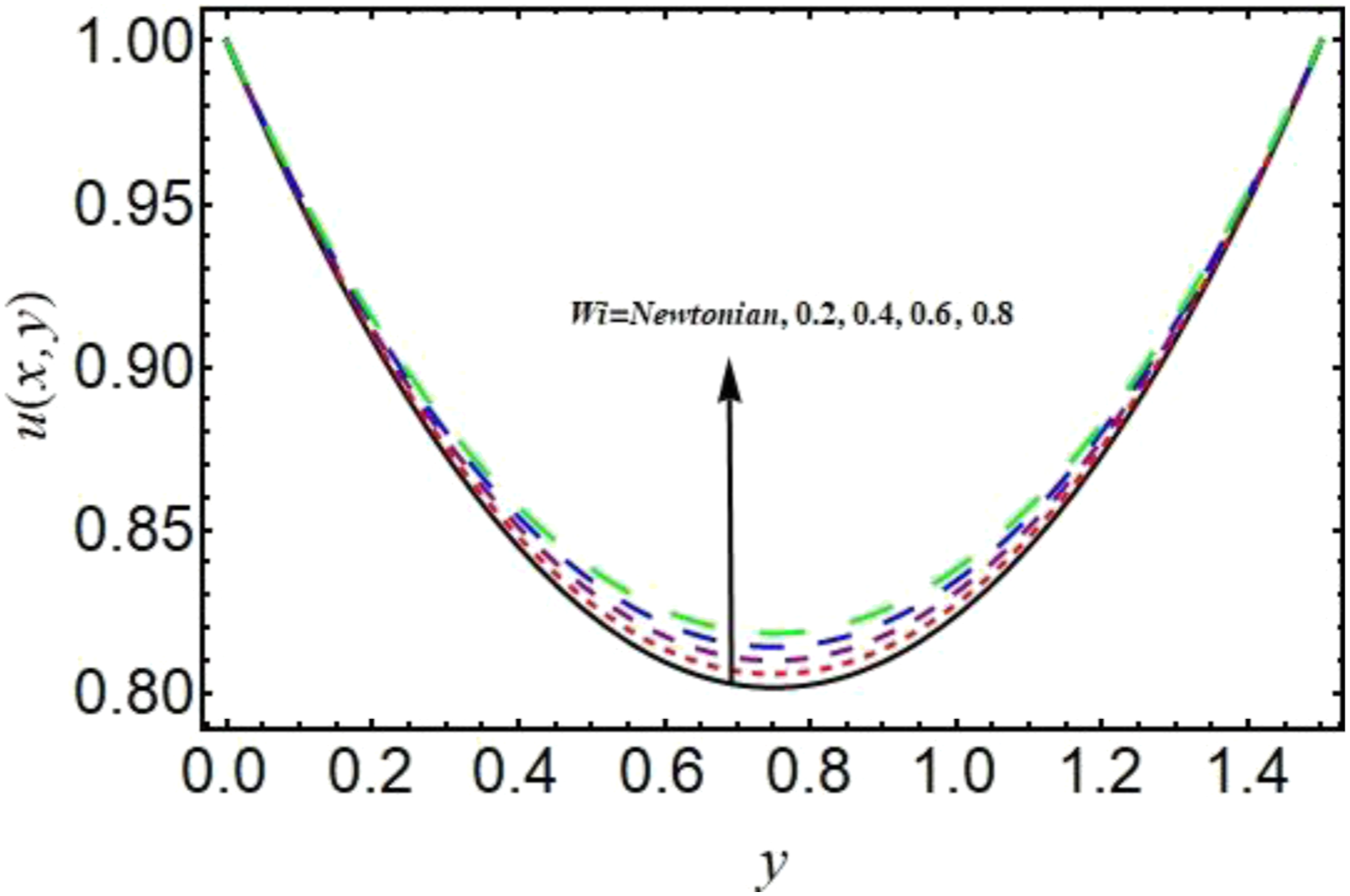
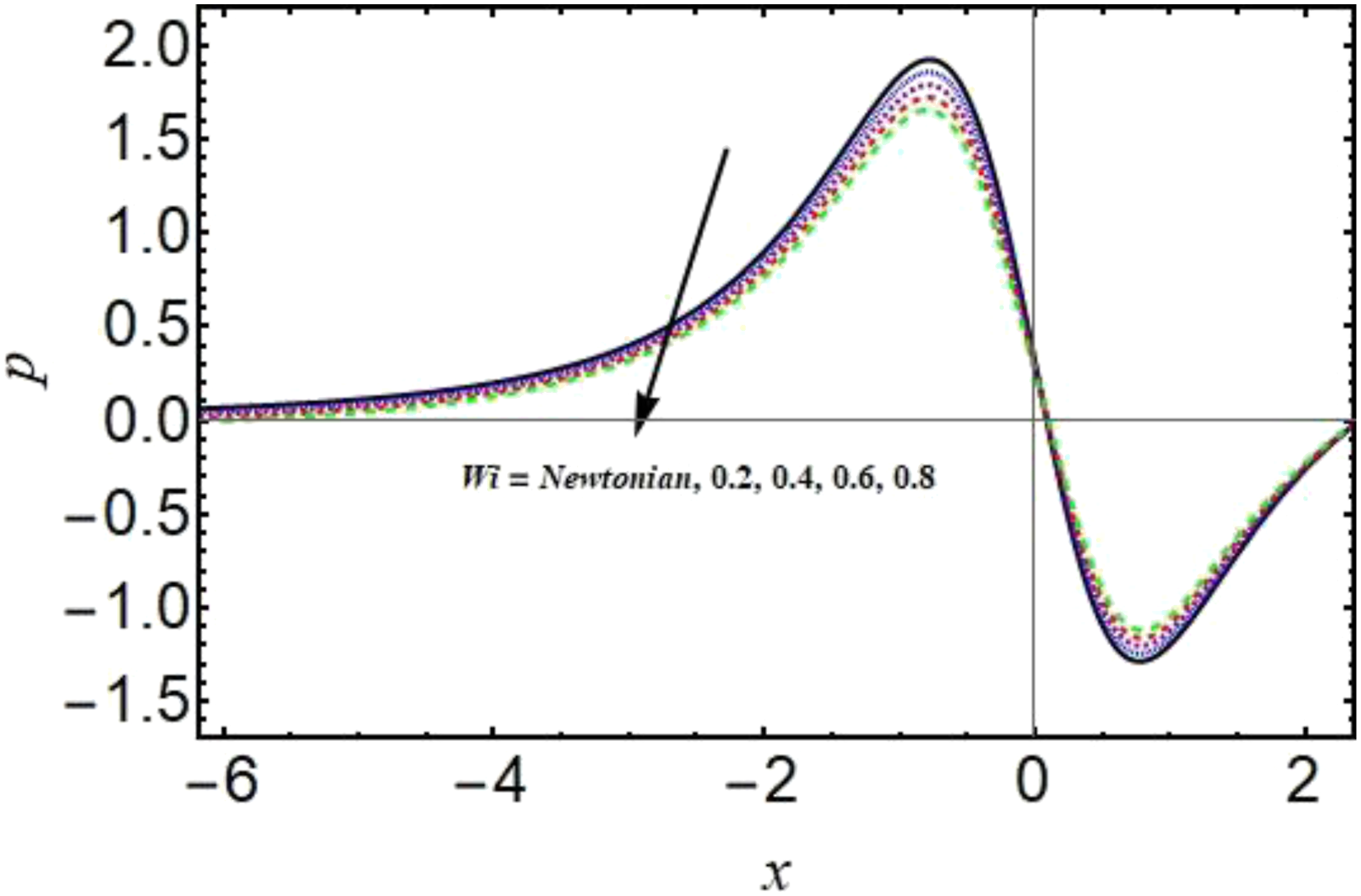
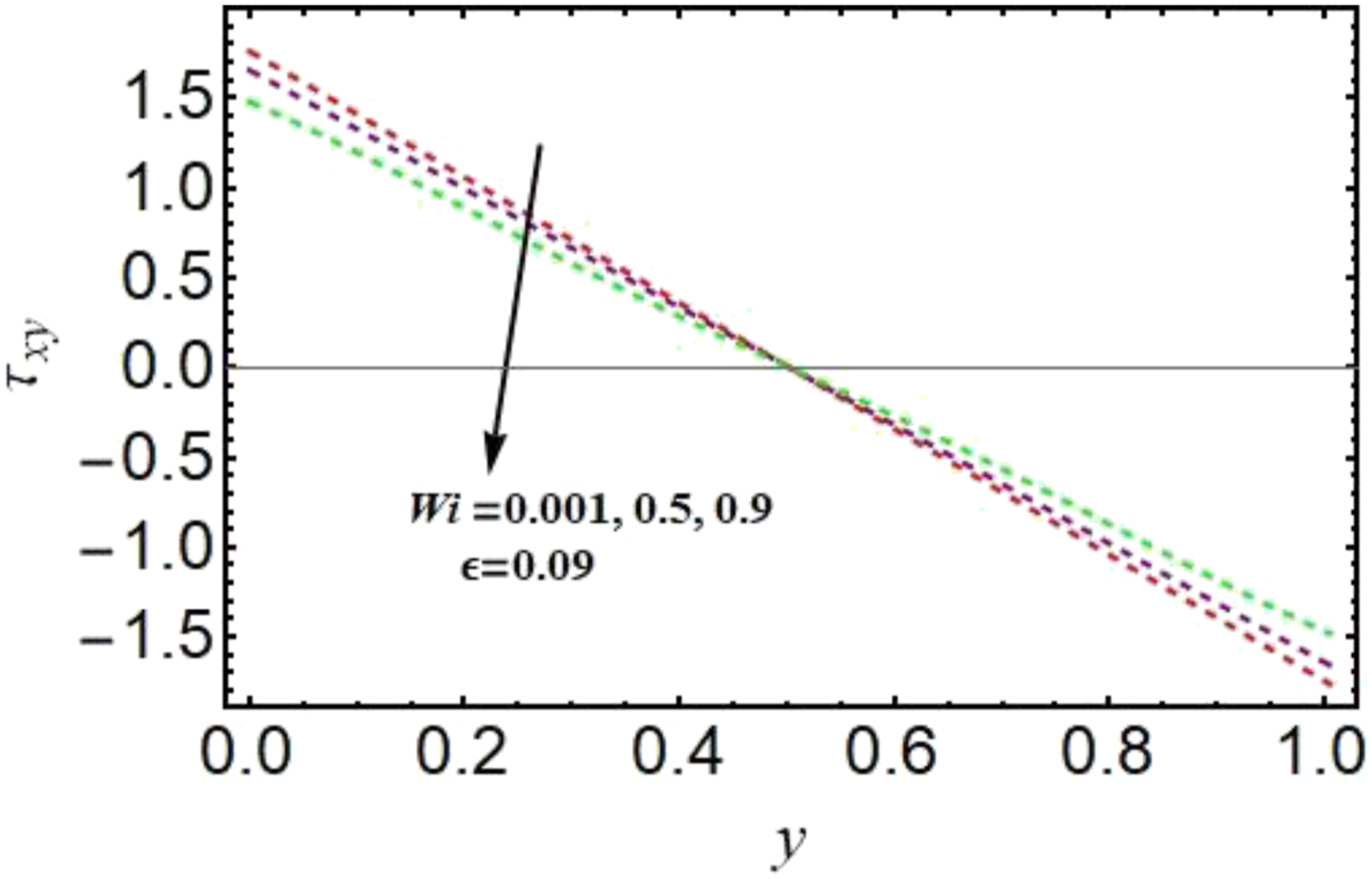
Figures 4 and 5 illustrate the impact of
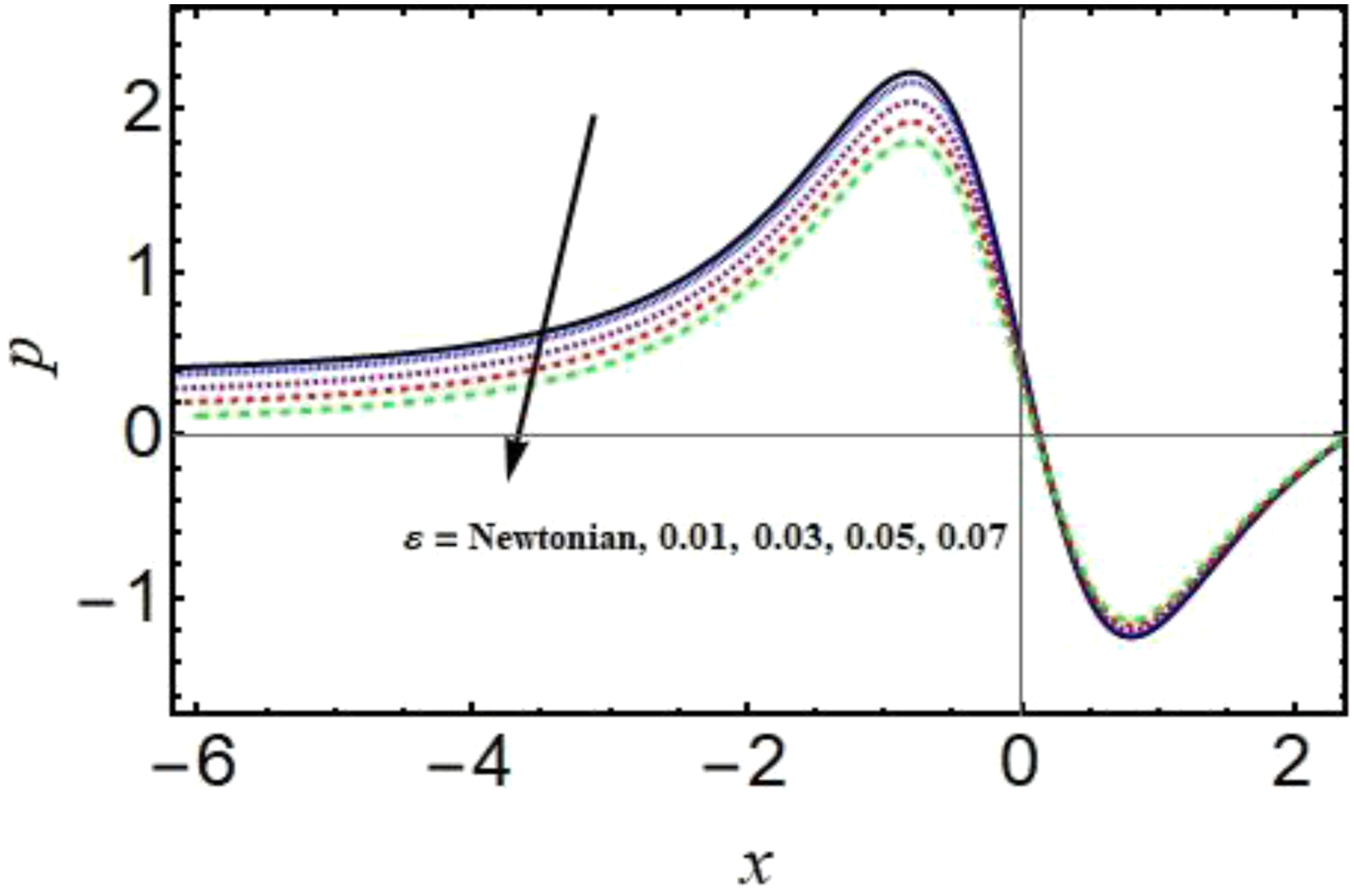
Figures 6 and 7 show the pressure profiles for different
Figure 8 describes the behavior of force and power against
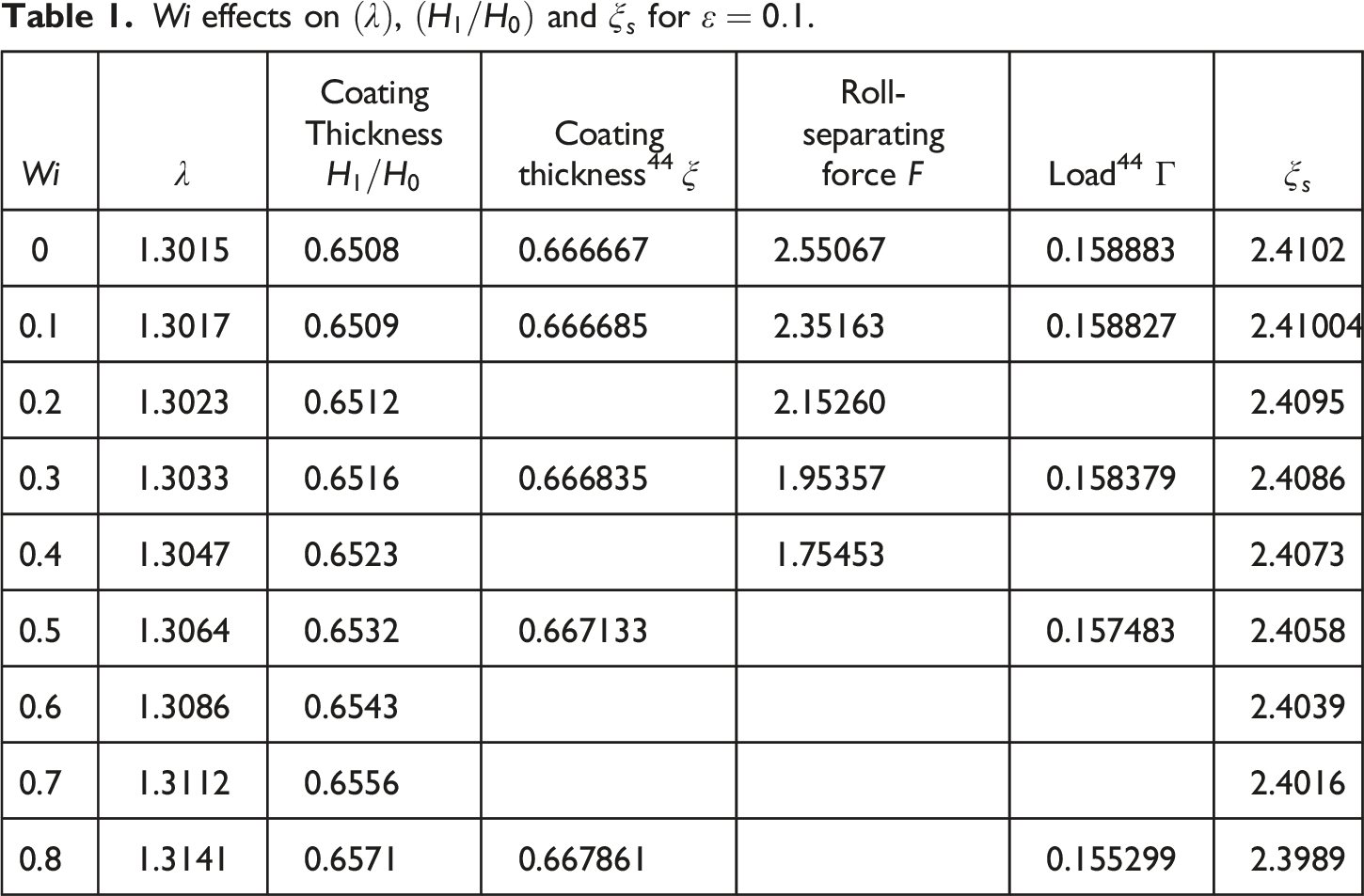
The effects of Weissenberg number
Conclusion
The asymptotic analysis given here provides estimates of the effect of Weissenberg number and extensibility parameter ε on the velocity field, pressure field, force on the roll and power consumption valid for low Wi and ε for fluids that behave according to a simplified Phan-Thien Tanner (SPPT) constitutive equation. The non-Newtonian nature of the fluid leads to a slight increase in final film thickness and draws the film splitting meniscus toward the nip when compared to the Newtonian case. Non-Newtonian effects also reduce the lubrication pressure, force on the roll, and power consumption.
The majority of coating fluids are polymeric liquids in many industries and therefore the flow analysis of viscoelastic fluid is essential. Gaining a comprehensive understanding of the impact of viscoelastic liquids on the roll coating process is crucial to fulfill the requirements for top-notch coated products. Therefore, the current study can be used in roll coating industry to optimize the process and to increase the profitability by setting the values of roll diameter, nip region height, roll speed and viscosity.
Footnotes
Declaration of conflicting interests
The author(s) declared no probable conflict of interests concerning the research work, authorship, and/or publication of this article.
Funding
The author(s) obtained financial assistance by no means in support of the research work, authorship, and/or publication of this article.
