




Abstract
The primary goal of the present study is to investigate how to obtain a periodic solution for a fractal Mathieu–Duffing oscillator. To achieve this, the fractal oscillator in the fractal space has been transformed into a damping Mathieu–Duffing equation in the continuous space by employing a new modification of He’s definition of the fractal derivative. The required analytical periodic solution has been based on the rank upgrade technique (RUT) presented. The RUT successfully generates a periodic solution without sacrificing the damping coefficient by creating an alternate equation, aside from any challenges in managing the impact of the linear damping component. The homotopy perturbation method (HPM) has been used to find the required periodic solution for the alternate equation. A comparison of the numerical solutions of the original equation and the alternative equation showed good agreement. The stability behavior in the non-resonance case as well as in the sub-harmonic resonance case has also been discussed. Further, another method, “the non-perturbative approach”, that deals with the obtained equation has been introduced.
Keywords
Introduction
The vibration of oscillatory systems is reduced or stopped by a damping action, which can have an internal or external impact. Friction can be a factor in damping, but in general, the definition of damping should not be confused with friction. This damping is divided into two types, the first of which does not depend on the loss of energy in oscillation, which is evident in biological systems and some mechanical systems such as the suspension system of bicycles. 1 The second type depends mainly on the loss and dispersion of the energy stored in the oscillation, which appears clearly in physical systems such as the dispersion and absorption of light in optical oscillators and resistance in electronic oscillators, as well as some mechanical systems, such as viscous damping processes, where mechanical oscillations are slowed down due to the resistance resulting from fluid viscosity. 2 The damping strength depends on a parameter called the damping ratio, which is an important measure that describes the rate at which vibrations decay from one feedback to another in the system after a perturbation occurs. If the damping ratio parameter is equal to zero, the system is called un-damped; if it is less than one, it is called un-damped; if it is equal to one, it is called critically damped; and if it is greater than one, it is called over-damped.3,4 Oscillating systems have important applications in structural engineering, such as erecting a tall building in the wind, electrical engineering, as well as control engineering, such as controlling the speed of an electric motor. Therefore, applications of the damped nonlinear oscillator are of great importance in plasma physics and mechanical engineering.
In 1868, Émile Léonard Mathieu 5 introduced his equation while investigating the vibration of the elliptical drumheads. Since then, Mathieu’s equation has gained great importance because of its significant applications in a variety of areas, including general relativity, quantum mechanics, optics, applied mathematics, physics, and mechanical engineering. 6 An example of these applications is the analysis of dynamic systems that contain periodic forces in time or space, as well as the study of some boundary value problems in elliptical symmetry. 7 The stability zone analysis of the damped Mathieu model was studied by many researchers, such as Taylor and Narendra, 8 Gunderson et al., 9 Turyn, 10 Pradeep and Shrivastava, 11 Allievi and Soudack, 12 and Barrios et al. 13 The same study was also carried out in the presence of a time delay effect in Refs. 14–17 Moreover, El-Dib and Elgazery 18 proposed an analytical solution for the damped Mathieu model by using a modulating homotopy perturbation technique. Recently, Li-He’s method developed as a novel modified homotopy perturbation technique to deal with this type of problems. 19 Moreover, He and El-Dib 20 introduced another enhanced homotopy perturbation mechanism for solving the Klein–Gordon equation. Moreover, the rank upgrading mechanism is extended in Refs. 21,22 for solving some nonlinear oscillations via homotopy perturbation technique. Also, for the Mathieu–Duffing oscillator with fractional order, the super-harmonic resonance case, and dynamical delayed response were studied by Niu et al. 23 and Wen et al., 24 respectively.
Theoretical applications of fractal analysis that have been of interest to various studies include the physical phenomena of hierarchical structure, thermal conductivity in micro-channels, diffusion, dynamics of the atmosphere and ocean, petroleum and nuclear engineering, meteorology, material design, and thermo-elasticity25–33. Through a porous structure, Sheng et al. 34 investigated a fractal model, and Miao et al. 35 looked into another fractal model of shale. Moreover, for a forced damped fractal oscillator, Elías-Zúñiga et al. 36 computed a precise solution during a steady state. He et al. 37 investigated a rough solution for the Toda oscillator in fractal space employing the technique of homotopy perturbation. He et al.38,39 also developed a contemporary fractal modification and used the Hamilton principle to determine a periodic solution for a fractal Duffing oscillator. Additionally, numerous publications have been written about the research of micro/nano-electromechanical fractal systems; for examples, see Refs. 40–42 Further, Wang 43 used the Fourier series to provide a novel method for a class of discontinuous fractal nonlinear oscillators in the context of microgravity space. El-Nabulsi et al. 44 also developed a novel local derivative operator with fractals across Lagrangian/Hamiltonian functions for further research of the dynamical systems. The two-scale fractal theory was developed by Anjum and his school45,46 to study the mathematical models of both population and tsunami waves. The same fractal theory was also employed by He and El-Dib, 47 Feng, 48 and Lu and Chen 49 to determine the analytical solutions for the fractal Shabat-Zhiber, Duffing, and Yao-Cheng oscillators. Furthermore, the two-scale fractal theory has been utilized to explore several crucial models, including drinking of alcohol, some rheological issues, heat transfer, and porous media (for more details, see Refs 50,51). On the other hand, a novel technique for computing the fractal dimensions of porous medium was presented by Xia et al. 52 Recently, He and Liu 53 also discussed how to calculate fractal dimensions.
As mentioned in Refs54,55, He’s frequency formulation could be extended to the nonlinear fractal oscillators, which constitutes the motivation for the work to obtain a periodic solution for the Mathieu–Duffing fractal oscillator by converting it into a damping Mathieu–Duffing equation in the continuous space via a new modification of He’s definition of the fractional derivative. A surrogate equation is produced using the rank upgrade technique (RUT), despite any difficulties in controlling the impact of the linear damping component. These were solved using two distinct approaches.
Parametric excitation in fractal space
The investigation of the Mathieu–Duffing equation has a great history, and it is mostly considered that most properties of its solutions have been perfectly elucidated.
6
In the present study, the properties of the solution to the fractal Mathieu–Duffing equation will be investigated. In the fractal space, it has the form


The fractal operator obeys the modification of He’s definition of the fractal derivative
51
. This modification was established by El-Dib and Elgazery56,57 and El-Dib et al.
58
and was to transform the oscillator in the fractal space into the continuous space. It has the form


One of the most important features of the transformation (3) is that it deals directly with the operator, unlike the previous works that deal with the variable 36 .
The resulting equation (4) is a damping Mathieu–Duffing equation in continuous space, which represents the equivalent form of the original equation (1). This alternative equation has new coefficients defined as



Also, the fractal initial conditions (2) have been transformed to

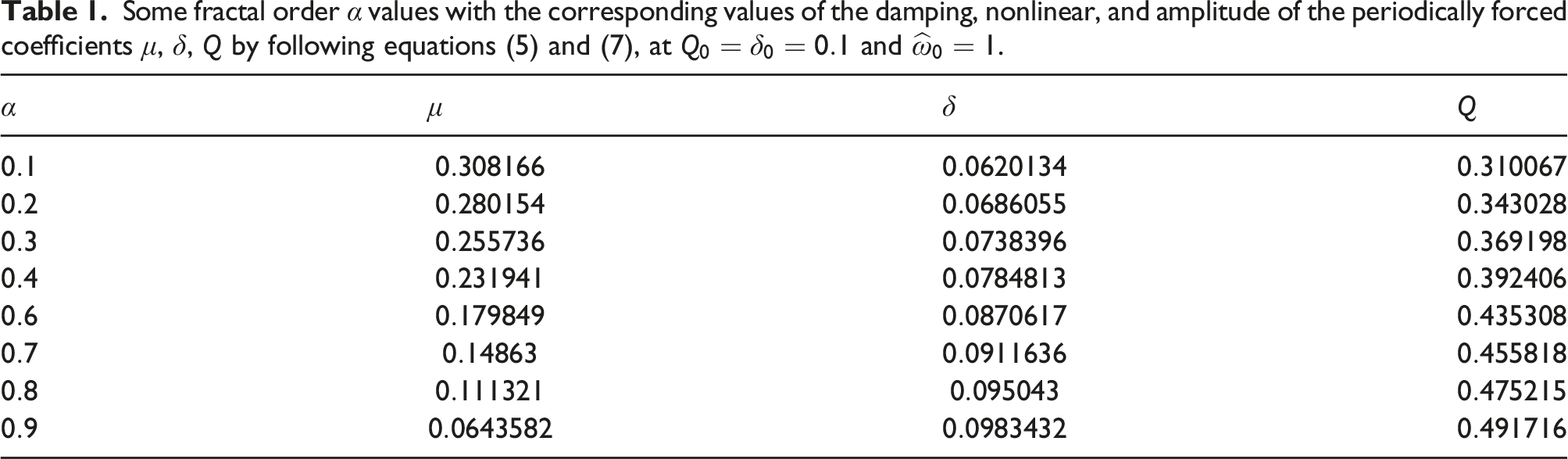
The computed fractal parameter

Employing equations (5) and (6) into equation (9) leads to

Alternating technique leads to a periodic solution
El-Dib et al.21,22,59 succeeded in creating a new form that does not explicitly show damping forces. They used the rank-upgrading method to present equation (4) in its alternative form of a fourth-order system having parametric excitation forces. Then they proceeded to replace the first-order and the third-order derivatives with their equivalent expressions. The procedure may be followed as follows:
By differentiating equation (4) concerning the variable

A double differentiation of equation (4) concerning the variable


Equation (13), a nonlinear fourth-order differential equation with a parametric coefficient, is free of the difficulties due to the linear damping term and depends on the following initial conditions

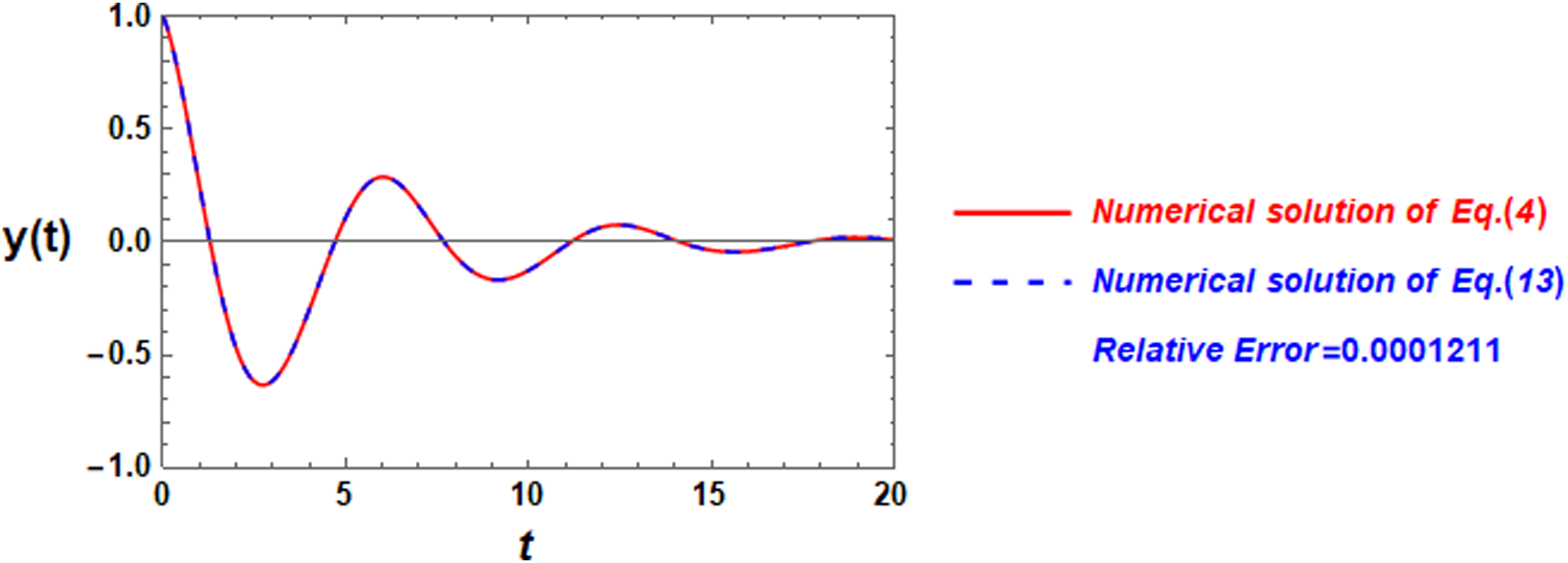
To ensure that equation (13) is indeed the alternative form of equation (4), the comparison of their numerical solutions can be done for
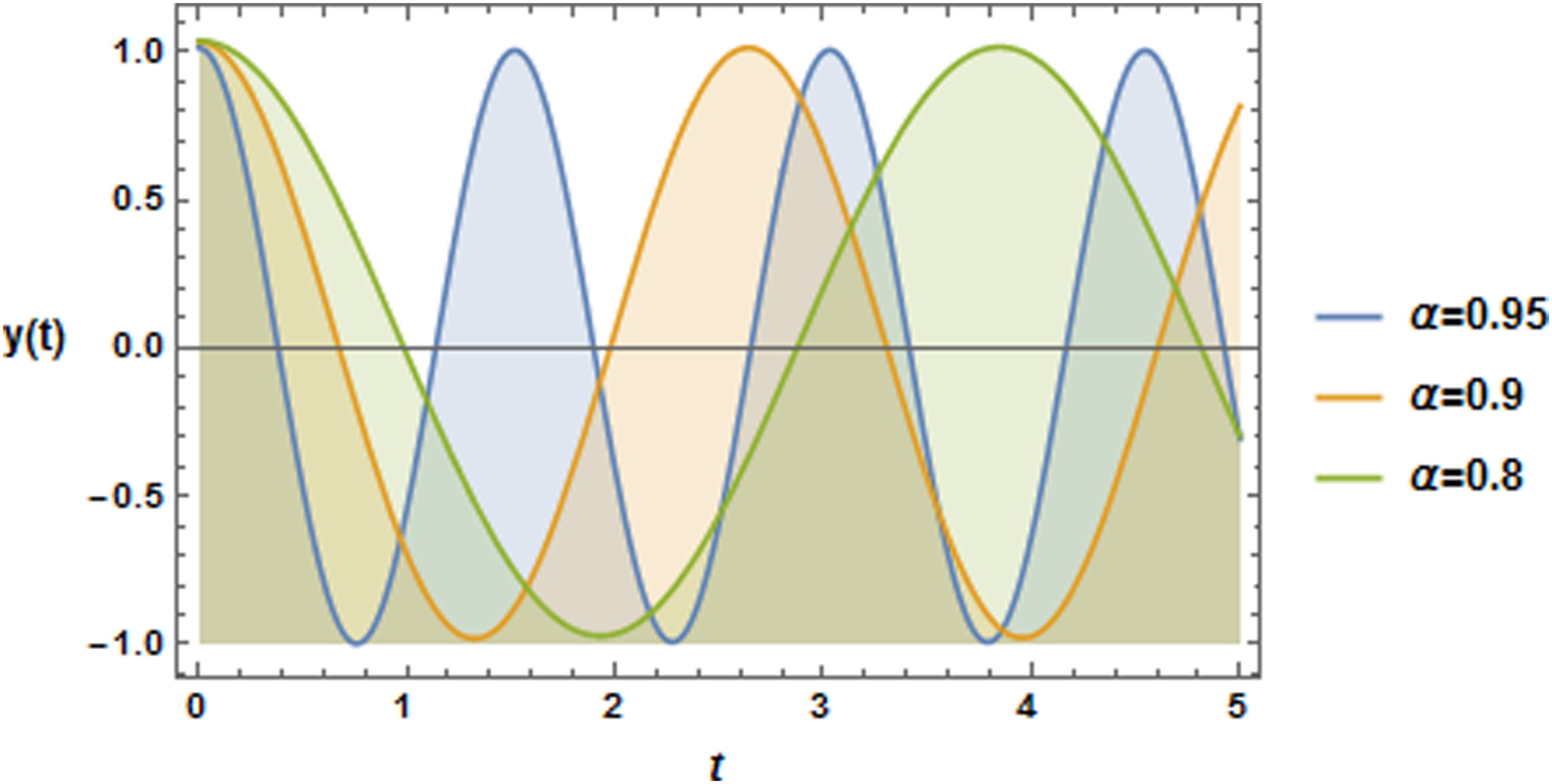
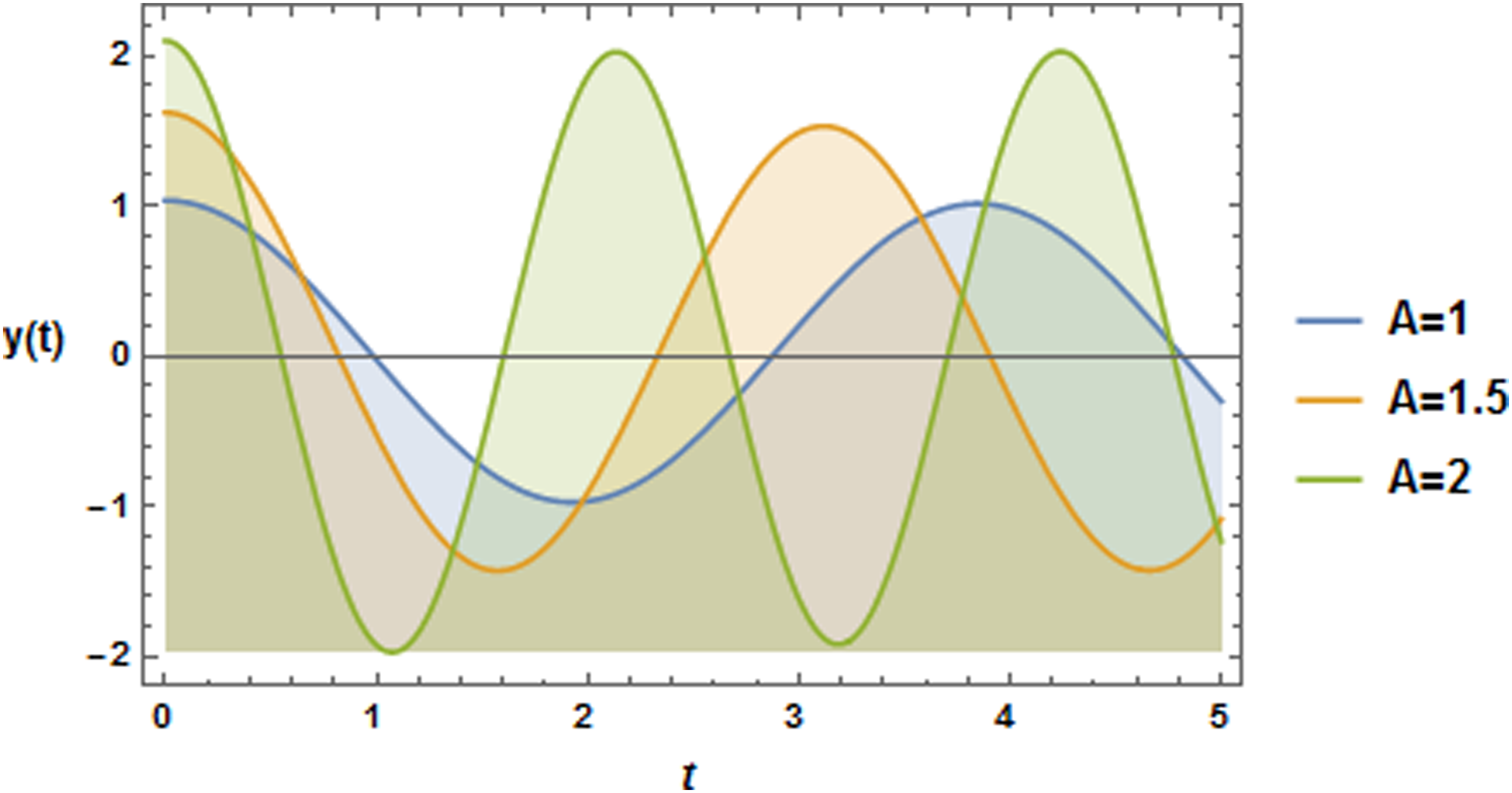
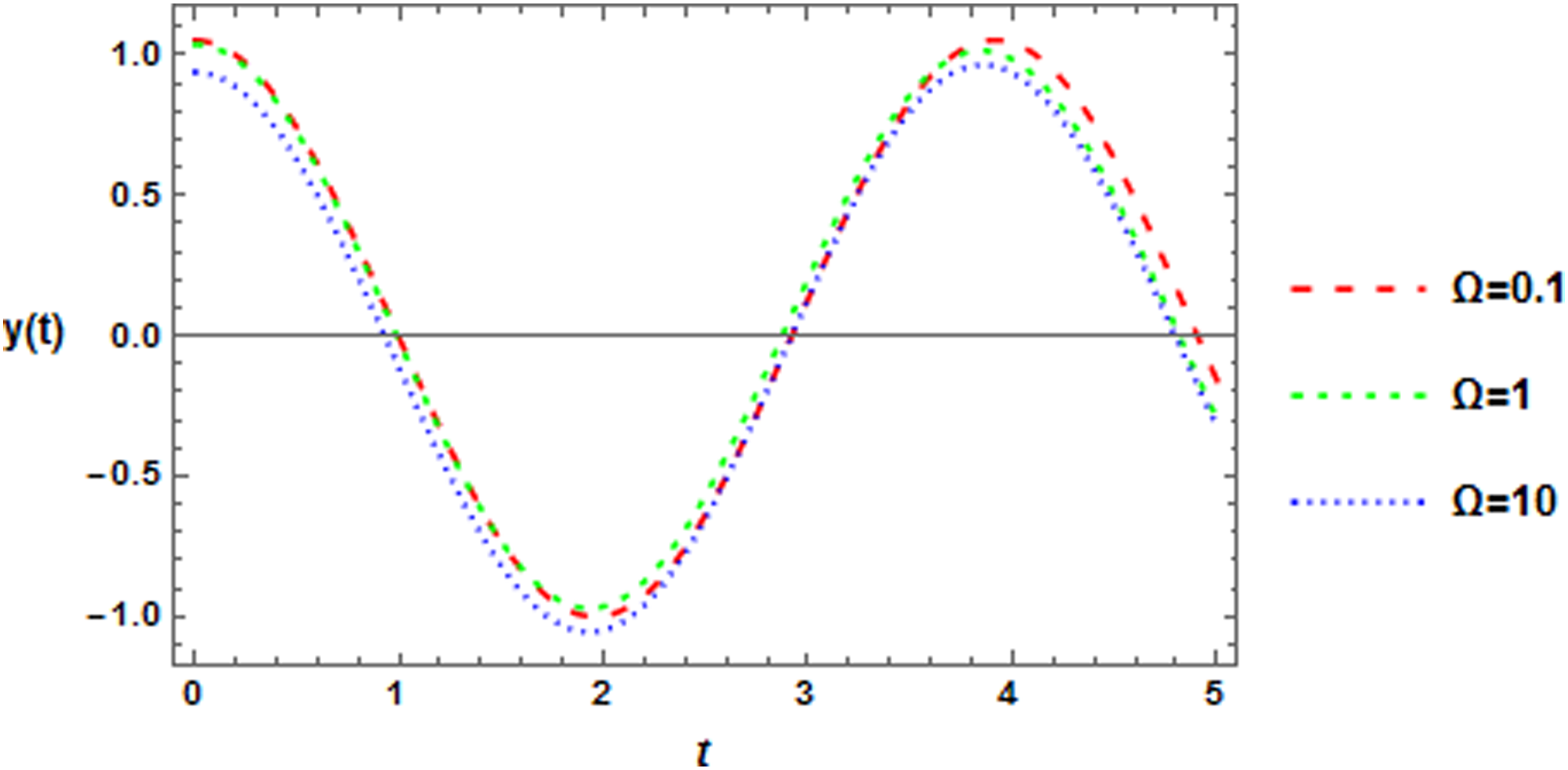
A comparison of the numerical solutions of the original and alternative equations is displayed in Figures 1–3 which shows good agreement. This prompts us to trust the possibility of dealing with the alternative equation, addressing how to solve it, and then using its results as a reliable indicator. Further, as we have seen in Figures 1–3, the fractal parameter 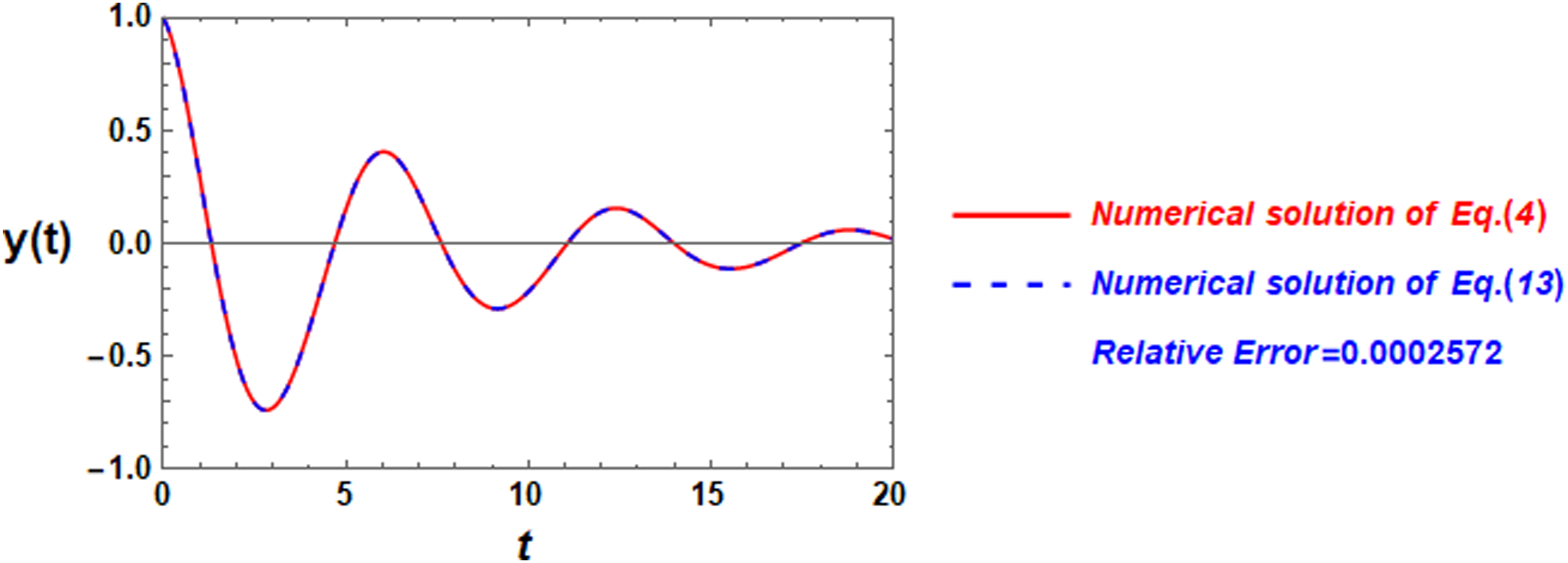

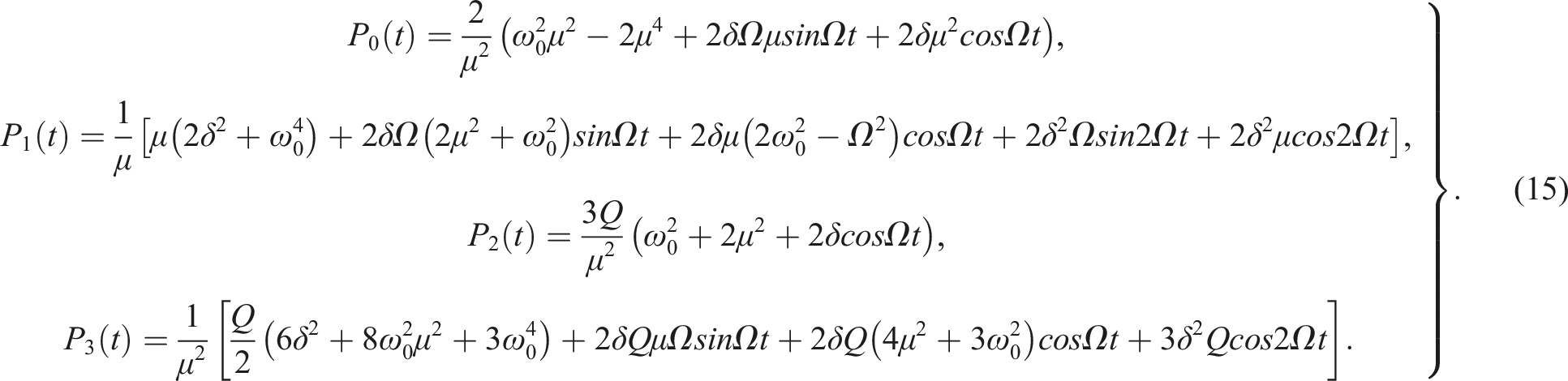
The alternative fourth-order equation (13) has multiple forms of periodic coefficients, which represents a complicated problem to handle analytically. To calculate an analytical solution for this equation, we may reduce its rank to become a second-order one. This can be accomplished by using the HPM. This will be achieved in the following section.
Constructing a homotopy equation and its solution
In the present section, reducing the rank of equation (13) is well done. Also, the stability behavior will be discussed in the non-resonance and sub-harmonic resonance cases. The HPM should be used for these purposes.

Since the higher power in equation (16) is artificial, we need to reduce this power to a second-order power similar to the original one. This can be accomplished throughout integration, and then by replacing the left-hand side of equation (26) by

Consider that the function

Substituting from equation (18) into equation (17), the unknown function


The solution (19) is employed into equation (20) to obtain the first-order solution. The non-resonance case occurs, where the natural frequency

The above equation shows that the stability of the non-resonance case requires

The first-order asymptotic periodic solution can be performed as

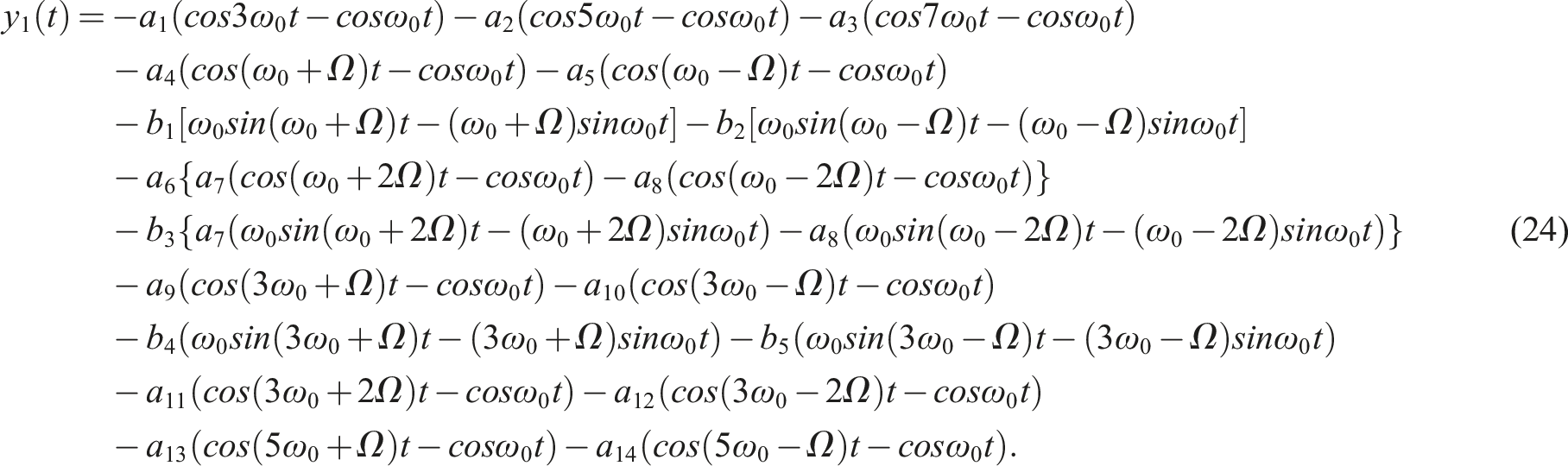
The constant coefficients appearing in the above equation are listed below in the appendix.
Numerical estimations for the non-resonance case
To illustrate the stability picture of the non-resonance case, we estimate the stability condition (22). Besides, the periodic solution (23) should be plotted to show the behavior along with time in the non-resonant case. In Figure 4, we plot the natural frequency Stability distribution in the plane ( The influence of the fractal order The variation of the coefficient of the parametric force The time history of the periodic solution (23) for a system of 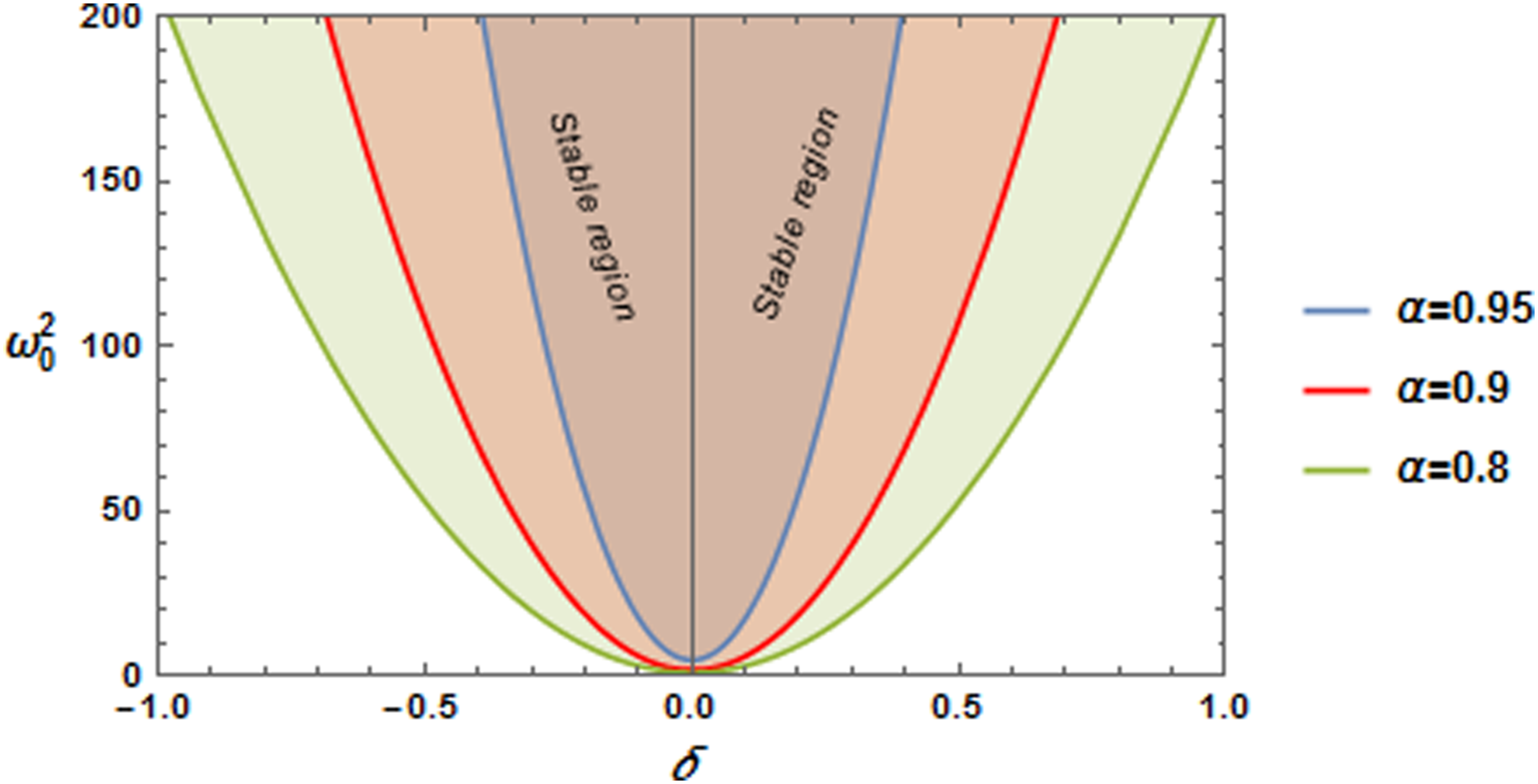
Sub-harmonic resonance case
In acoustics, resonance is defined as an interference modality between two sounds with somewhat different frequencies. It can also be viewed as a periodic alteration in magnitude whose rate is the distinction between the two frequencies. Three sub-harmonic resonance cases can be distinguished in the first-order problem (20), namely, 
Considering the definition (25), and employing the expansion (18) into the homotopy equation (17), the analysis leads to the solution of the zero-order problem as
The first-order problem is converted to
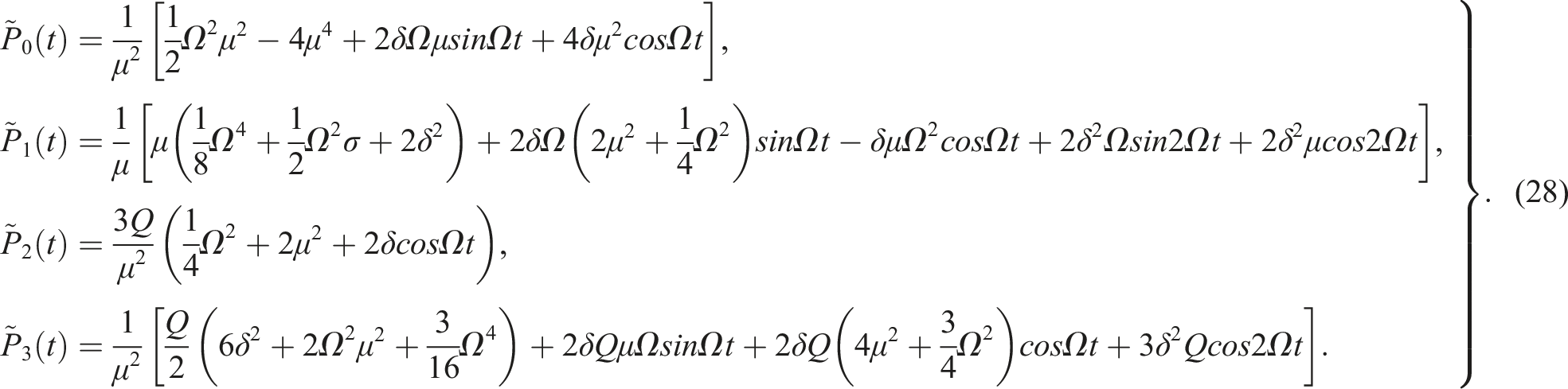
By utilizing the solution of (26) into the first-order equation (27), removing the secular terms requires

Under the above conditions, the first-order solution arises in the form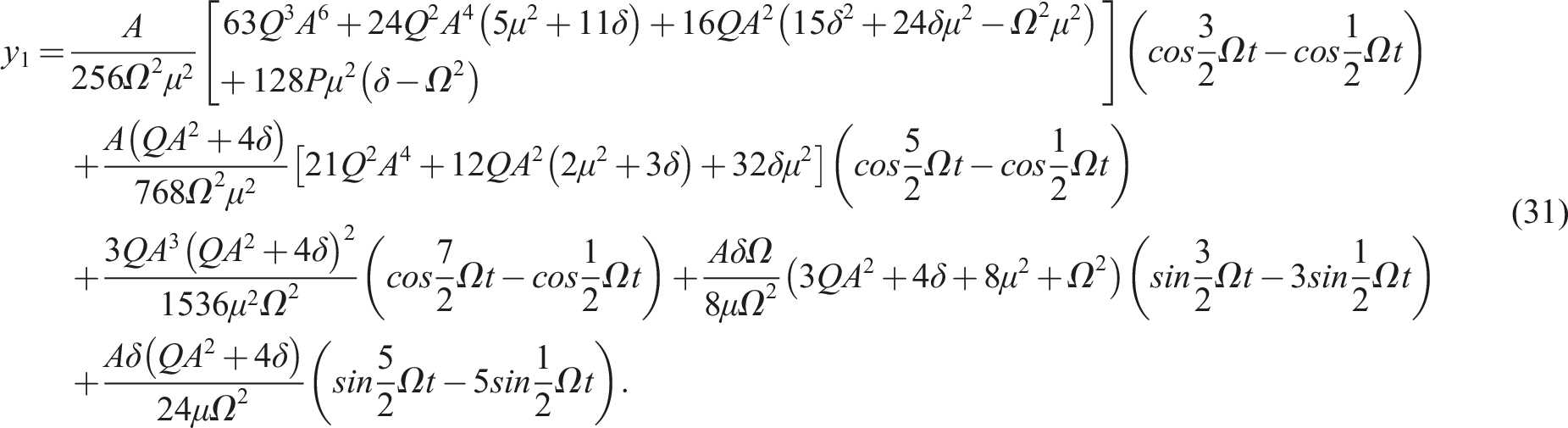
As mentioned before, the first-order periodic solution in the sub-harmonic resonance case 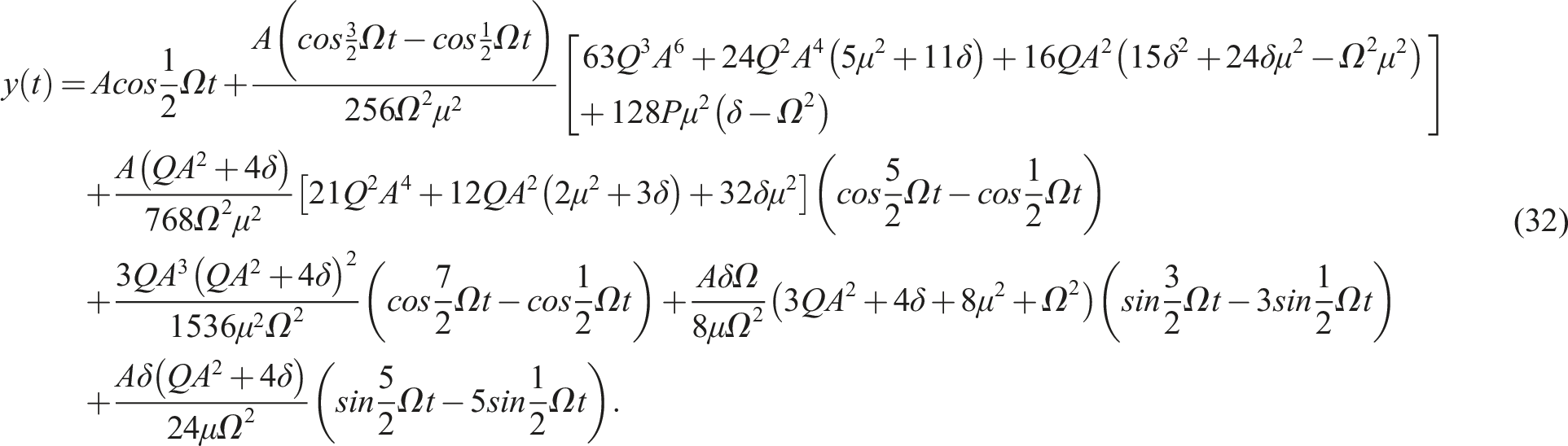
Stability analysis in the sub-harmonic resonance case
It is noted that the behavior of the frequency 
To construct the frequency equation at the resonance case, we insert equation (33) into equation (25) and let 
This is a quadratic equation in the parameter 
The following conditions need to be satisfied, to ensure the presence of the positive real roots of the frequency equation (34)
The above stability conditions (36) can be arranged in terms of 


The investigation of the above stability conditions (37)–(39) reveals that condition (39) lies between the two conditions (37) and (38). Therefore, the last two conditions are critical stability conditions. Their corresponding transition curves will surround the unstable region. It should be noted that the curves coincide when the parameter
Numerical estimations at the harmonic resonance case
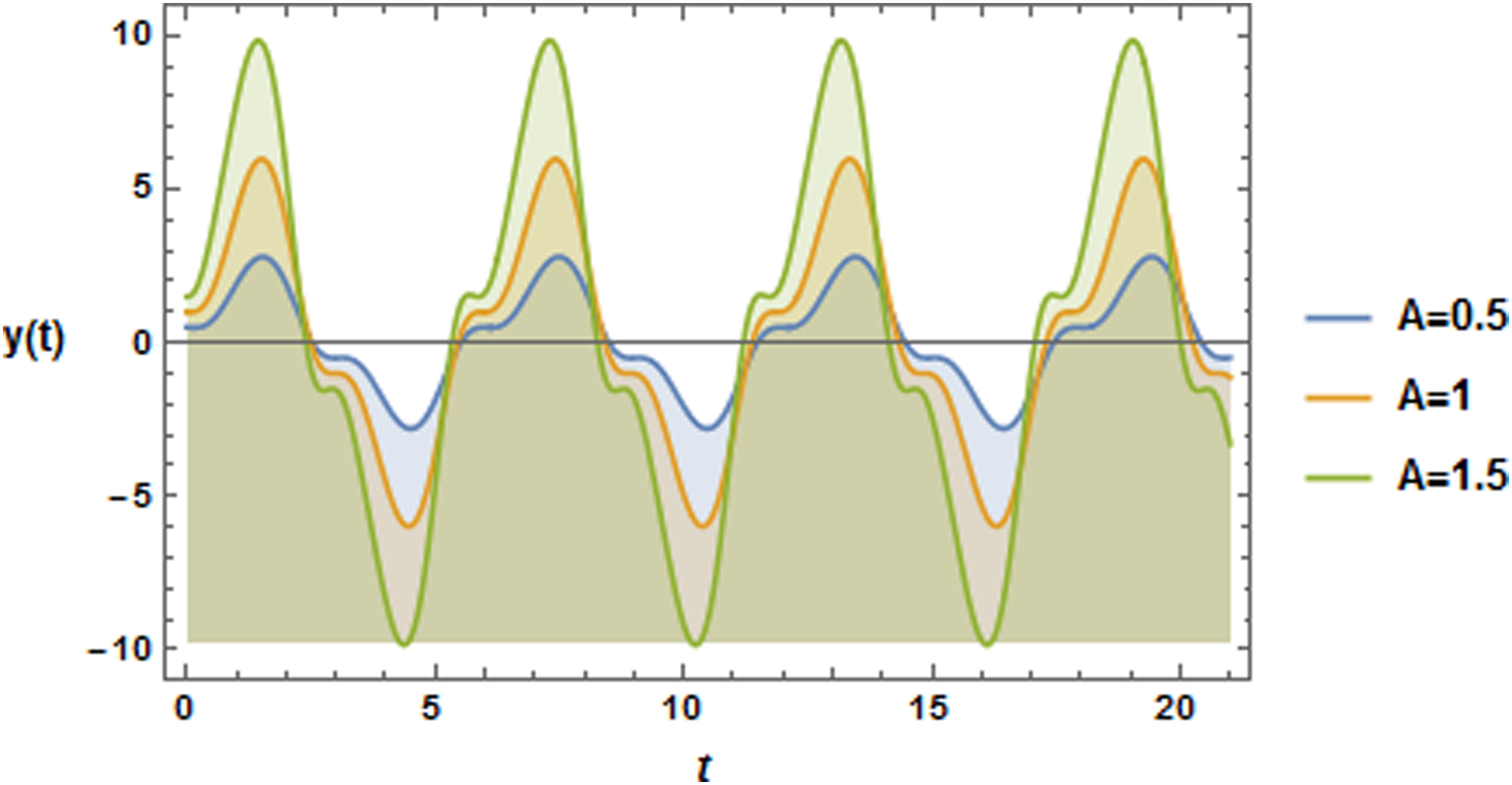
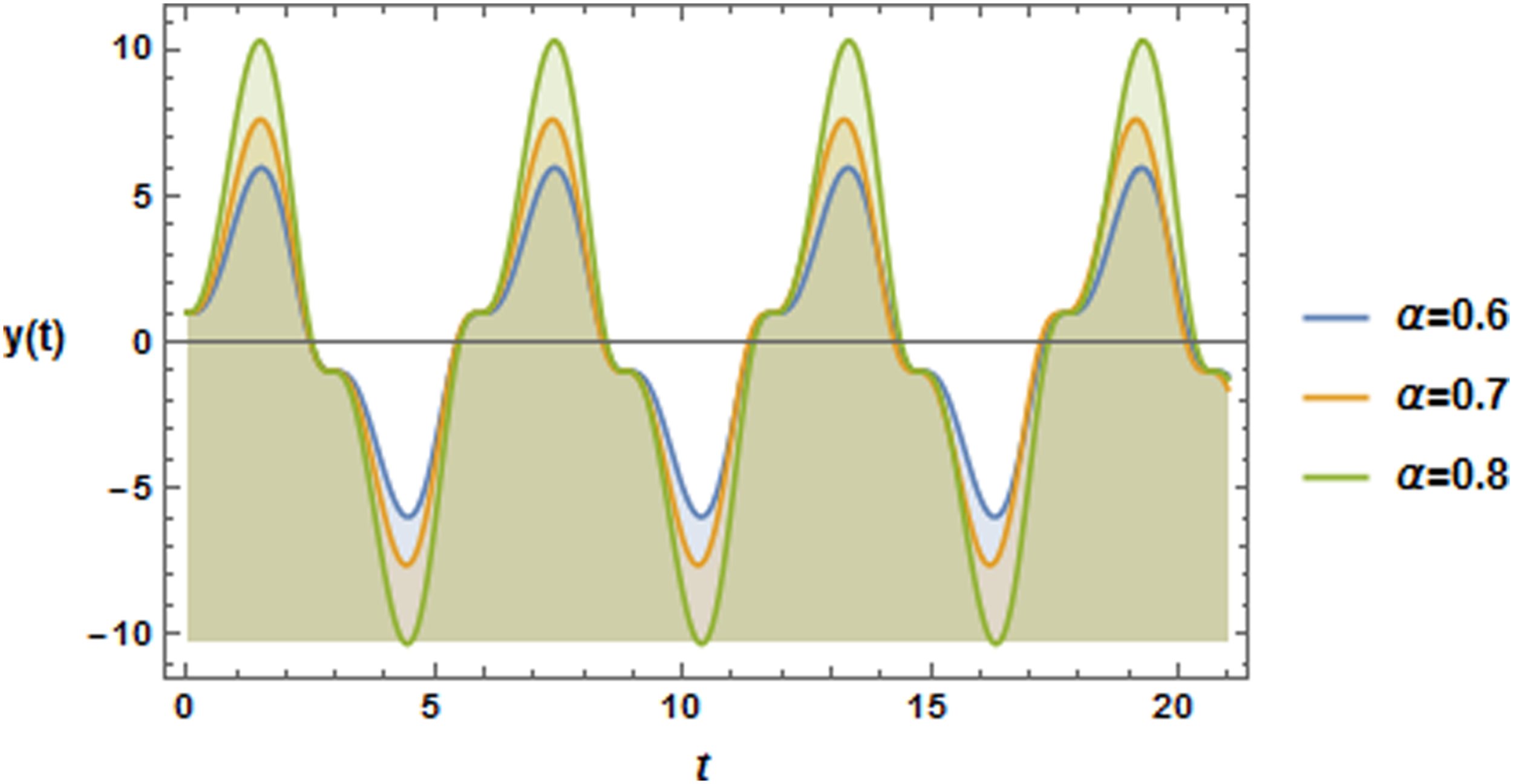
The small detaining parameter The change of the detaining parameter The change of the solution (32) with the parametric force The change of the solution (32) with the fractal-order 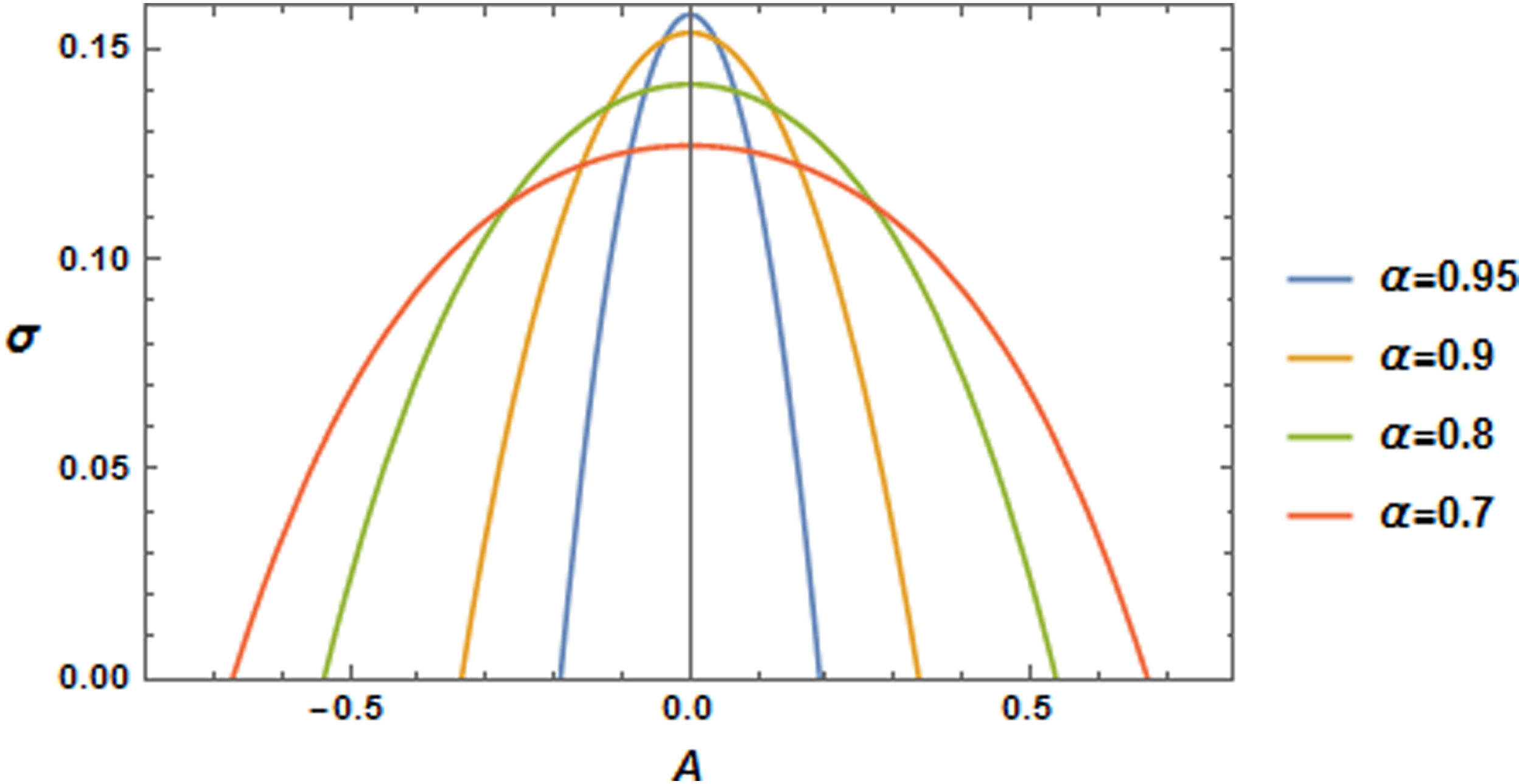
Advanced task for the analytical solution of the parametric fourth-order equation
In this section, another analytical periodic solution can be performed for equation (13) without using the perturbation method and without reducing its rank. This task can be achieved using the non-perturbative technique59,62–65. As mentioned before, this system of a nonlinear oscillator having periodic coefficients represents a highly complicated equation. The plan for handling this equation has two steps. The first step deals with obtaining a linear representation that corresponds to the nonlinear equation (13). This aim can be accomplished using Caughey’s linearization method 66 as proposed by El-Dib. 63 The second step is concerned with calculating the solution of the parametric linear fourth order having multi-periodic coefficients. To provide the required solution, Galerkin’s method can be used to obtain the frequency for the parametric differential equation. The procedure is as follows:
It is noted that equation (13) can be viewed as


It is noted that the linearized form of equation (40) can be established by using the equivalent linearization technique given in Ref 66. Since both the functions 

Simply, the linearization will be available when equation (40) can be written as


This leads to

According to the suggested solution (48), equation (45) may have the form

Applying Galerkin’s method to (50) requires
To evaluate the above integration, the normalized form of the excitation frequency 
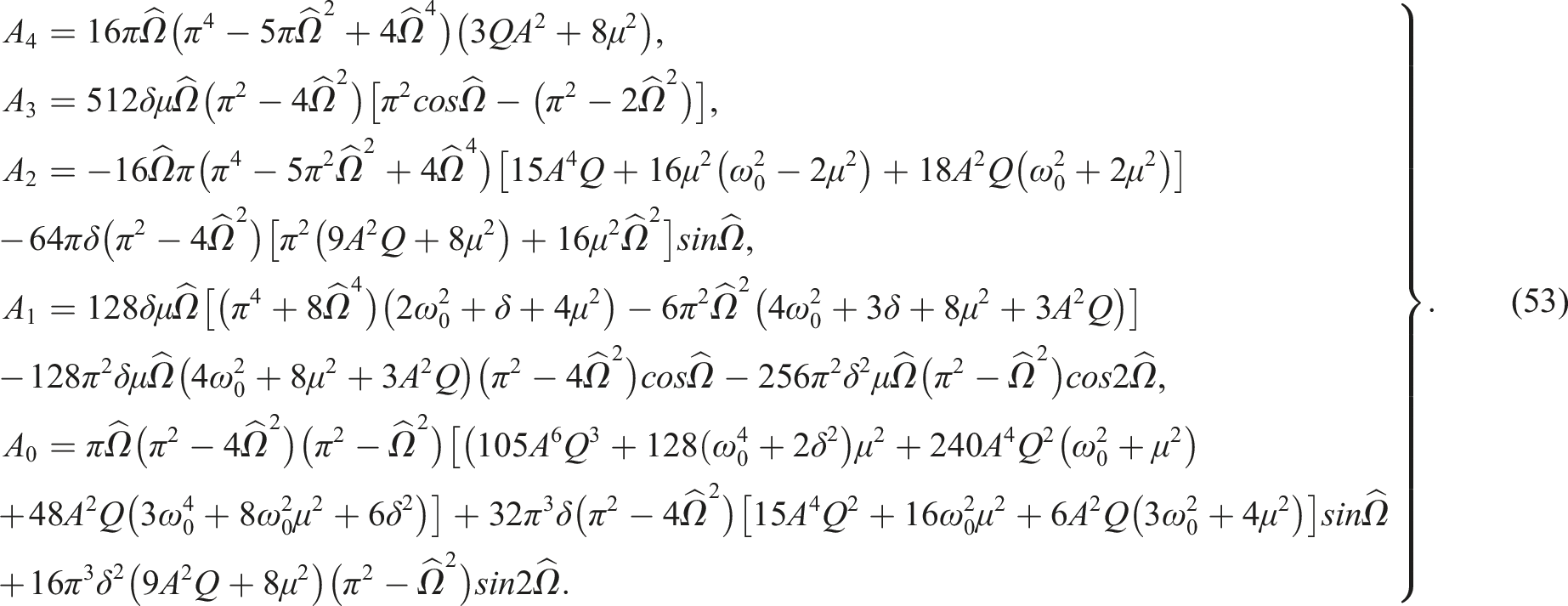

This solution represents a solution of the parametric fourth-order nonlinear equation (13). Rather, it represents a solution to the original fractal Mathieu equation (1). The comparison of the above analytical solution (54) with the numerical solution of equation (1) can be accomplished in the simulation as the fractal parameter 

This means that the standard nonlinear Mathieu equation takes the form
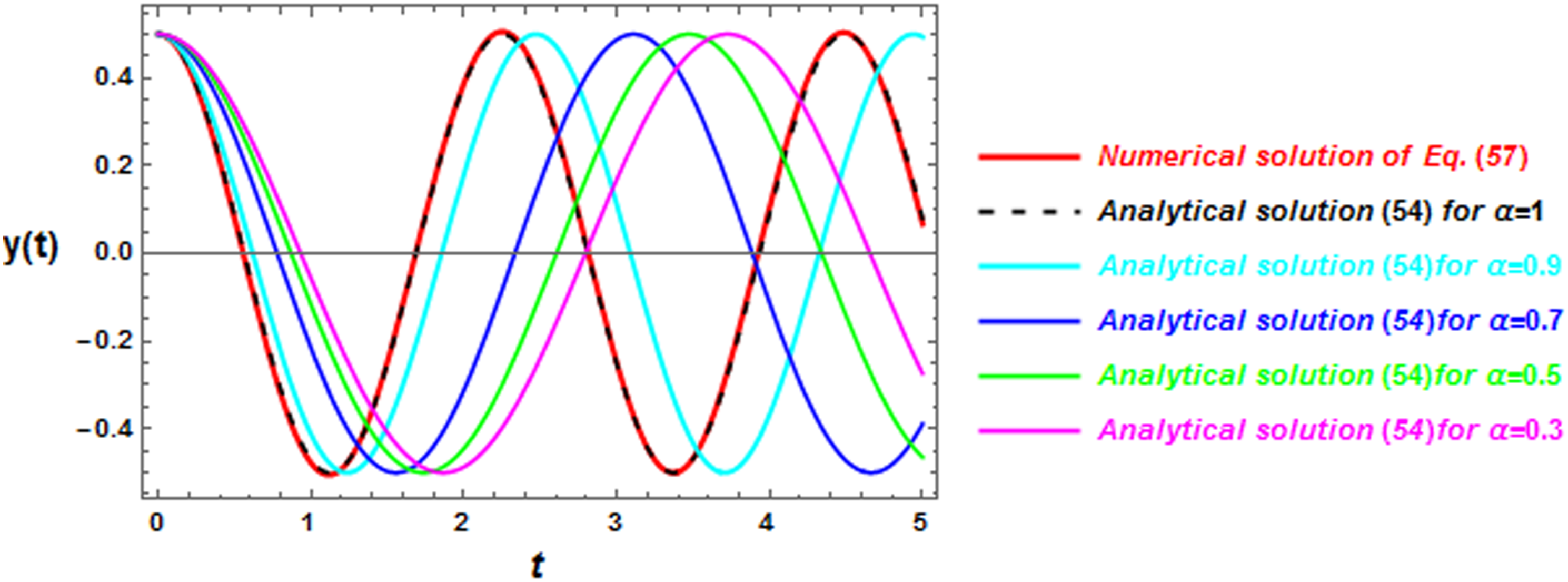
The comparison between the analytical solution (54) and the numerical solution of equation (57) appears in Figure 11. Finally, the analytical solution (54) for variation of the fractal order with a comparison with the numerical solution of equation (57) for the same system considered in Figure 11 has been represented in Figure 12. It is clear that with an increase in the value of the fractal parameter 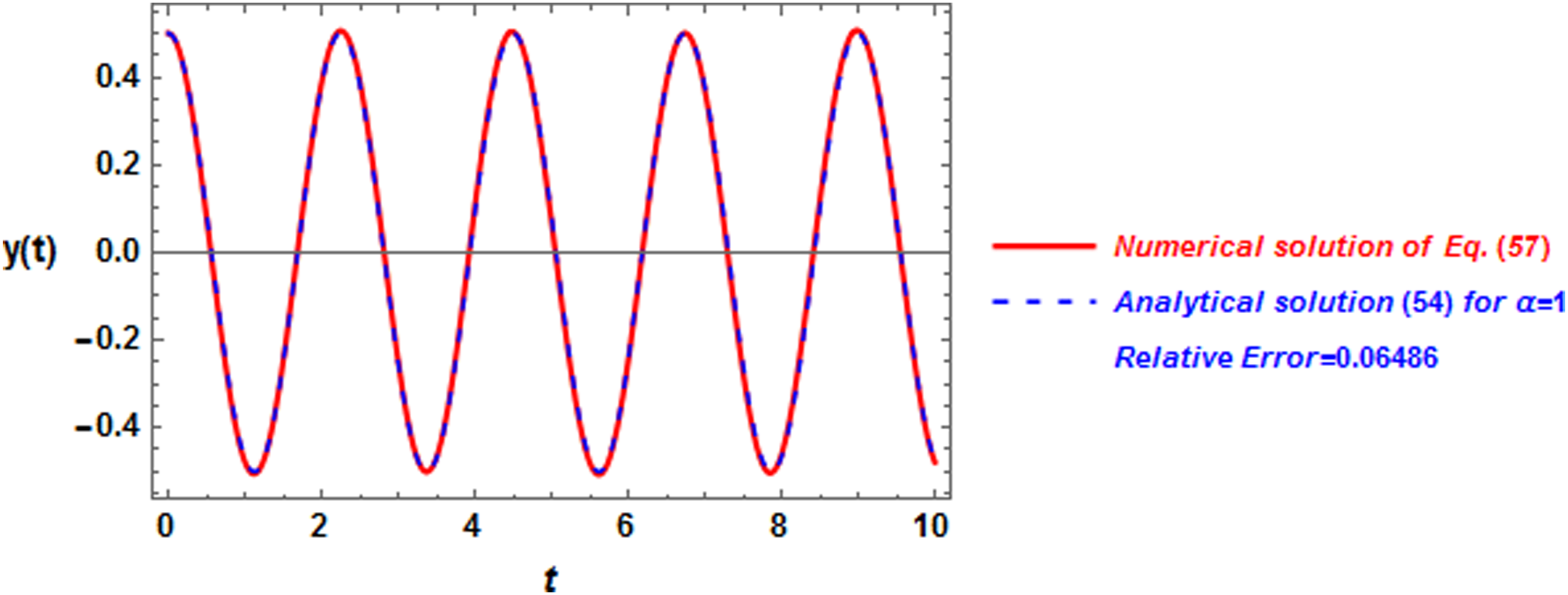
Conclusions
In this article, the periodic solution to the fractal Mathieu–Duffing equation is discovered. The steps listed below have been used to do this. 1. The fractal oscillator in the fractal space has been converted into a damping Mathieu–Duffing one in the continuous space by employing a new modification of He’s definition of the fractal derivative. 2. Utilizing a novel method named the RUT can create a similar equation, aside from any challenges in managing the impact of the linear damping component. 3. Ensuring that the numerical solutions of the alternative equation agree with the solutions of the original equation.
Thus, a similar equation can be manipulated to obtain the desired solution. Two different techniques have been suggested. The homotopy perturbation technique has been used to find the required periodic solution without sacrificing the damping coefficient. The stability behavior in the non-resonance case as well as in the sub-harmonic resonance case has also been discussed. Further, another method called “the non-perturbative procedure” that deals with the obtained equation has been introduced. The current technique is very important in the study of electric resonators and their applications in engineering. Moreover, the current procedure is suitable to examine various oscillations and acoustic waves in plasma physics systems.
Footnotes
Acknowledgements
The authors express their gratitude to Princess Nourah bint Abdulrahman University Researchers Supporting Project Number (PNURSP2023R17), Princess Nourah bint Abdulrahman University, Riyadh, Saudi Arabia.
Author contributions:
Yusry O El-Dib: Conceptualization (equal); Formal analysis (equal); Investigation (equal); Methodology (equal). Nasser S Elgazery: Conceptualization (equal); Formal analysis (equal); Investigation (equal); Methodology (equal). Haifa A Alyousef: Conceptualization (equal); Formal analysis (equal); Investigation (equal); Methodology (equal).
Declaration of conflicting interests
The author(s) declared no potential conflicts of interest with respect to the research, authorship, and/or publication of this article.
Funding
The author(s) received no financial support for the research, authorship, and/or publication of this article.

Appendix
The coefficients that appear into equation (24) are