




Abstract
In this study, we analyze a symmetrical anharmonic oscillator that differs from a basic harmonic oscillator by including additional terms in the potential energy function. This oscillator’s nonlinear characteristics are important in many physics fields, allowing for modeling of complex systems. We begin by creating the Lagrangian and obtaining the equation of motion through the Euler–Lagrange equation. Both the multi-step differential transforms method (Ms-DTM) and the Runge–Kutta 4th-order (RK4) method are employed to solve this equation, providing both analytical and numerical solutions. By examining these solutions, we confirm our findings and enhance our comprehension of the oscillator’s behavior, which can be applied to more intricate nonlinear systems.
Keywords
Introduction
Oscillatory systems are of great relevance in many fields of physics, from quantum mechanics to classical mechanics. Among them, the symmetric anharmonic oscillator is a basic model for comprehending quantum field theories and nonlinear dynamics. The term “anharmonicity,” which describes a departure from basic harmonic motion, adds complexity to the behavior of the system and opens up new avenues for theoretical investigation and real-world application.1,2
The potential energy function of the symmetric anharmonic oscillator differs from the harmonic oscillator potential’s quadratic shape. The anharmonic oscillator has higher-order terms that result in nonlinear dynamics, whereas the harmonic oscillator potential is quadratic and represents a linear restoring force. Even with this nonlinearity, the system has some symmetries that make it amenable to analytical analysis and meaningful mathematical characterizations.
We explore the theoretical underpinnings and practical uses of the symmetric anharmonic oscillator in this introduction, looking at its importance in both classical and quantum settings. We examine its mathematical description, analytical solutions, and how anharmonicity affects real-world occurrences.3,4
As it is known oscillators are everywhere, and the majority of them are by nature nonlinear. Even though a nonlinear equation often cannot be solved exactly analytically, there are several simple yet useful methods for deriving crucial information about the problem’s solution. In the literature, many efforts have been paid on understanding physics of different oscillators and a variety of numerical methods for studying nonlinear differential equations. Among these methods, we have variational iteration method which is used to study the nonlinear oscillator. 5
In addition, the authors in Reference 6 studied a 2D oscillator with an asymmetric design and investigated its stable vibration utilizing the Ms-DTM method. The characteristic features of Yao-Cheng nonlinear oscillator have been investigated both analytically as well as numerically, where the study indicates that the solution of the nonlinear oscillator shows oscillatory behavior and also the phase portrait for this oscillator system reflects the closed loop signifying the stability of the system. 7 Also, a power series approach has been used in studying a nonlinear oscillator equation containing two strong linear terms, and an approximate solution was obtained by employing the power series approach. 8 Dealing with symmetric and asymmetric oscillators is not a new problem. Duffing’s 9 study focused on the dynamics of a machine having periodic motion. Furthermore, in order to describe the vibrations of a certain membrane, Helmholtz 10 was the first to establish the notion of an asymmetric oscillator. Furthermore, a great deal of study has been done on symmetric and asymmetric nonlinear oscillators; for examples, see References 11 and 12 and the references therein.
Furthermore, a new two-step iterative procedure for solving nonlinear equations with fifth-order convergence has been used. This iterative method uses the foundation of Hermite orthogonal polynomials to build an appropriate approximation of the second derivative of functions. 13 On the other hand, a few effective numerical techniques that utilize the Newton–Raphson method to solve nonlinear equations and numerical algorithms are built using the modified Adomian decomposition approach. 14 In that paper, the authors provide many numerical examples to demonstrate the effectiveness of the methods. Moreover, in studying heat and mass transfer many numerical approaches have been implemented and used in solving the nonlinear differential equations appear.15,16 The motivation of this paper is to analyze a symmetrical anharmonic oscillator that varies from the well-known harmonic oscillator problem by adding extra terms in the potential function and adopt the well-known semi-analytic technique called multi-step differential transform method, which has already been established to be a very effective method to examine the physical behavior of the considered oscillator. The Ms-DTM was considered in Reference 17, where sufficient conditions for the stability and convergence of this method were obtained.
In this short paper, we consider a symmetric anharmonic oscillator. In the next section we derive the equations of motion, while in the section following it we reserved shortly for the multi-step differential transform method (Ms-DTM). In the final section, we present the solution of the equation of motion obtained using Ms-DTM with discussion of results. Finally we close the paper by a conclusion.
Symmetric anharmonic oscillator
Consider the following Hamiltonian representing a symmetric anharmonic oscillator
18

The Lagrangian and Hamiltonian are related to each other as follows:


Now, using

On substituting (4) into (3) and simplifying one gets the following equation:

Finally, the equations of motion (EOM) can be derived from (5) using the following formula:



Ms-DTM
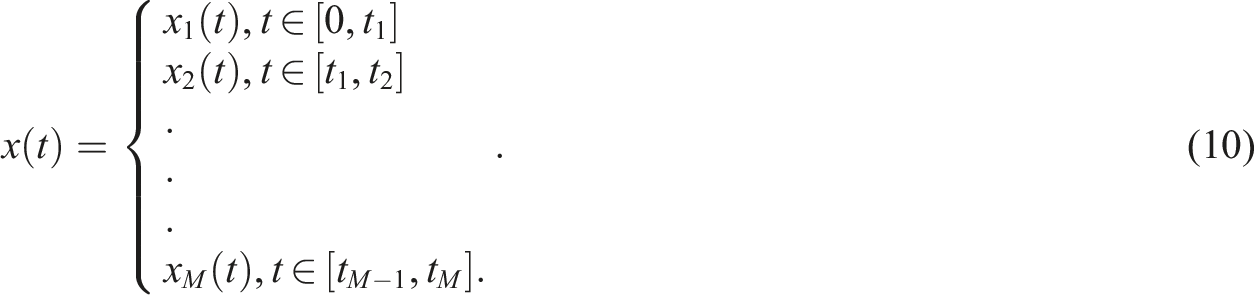
This section is reserved for the multi-step differential transform method (in short, Ms-DTM) for obtaining the numerical solution of ODEs. Let

We assume interval


Solution of the system using Ms-DTM
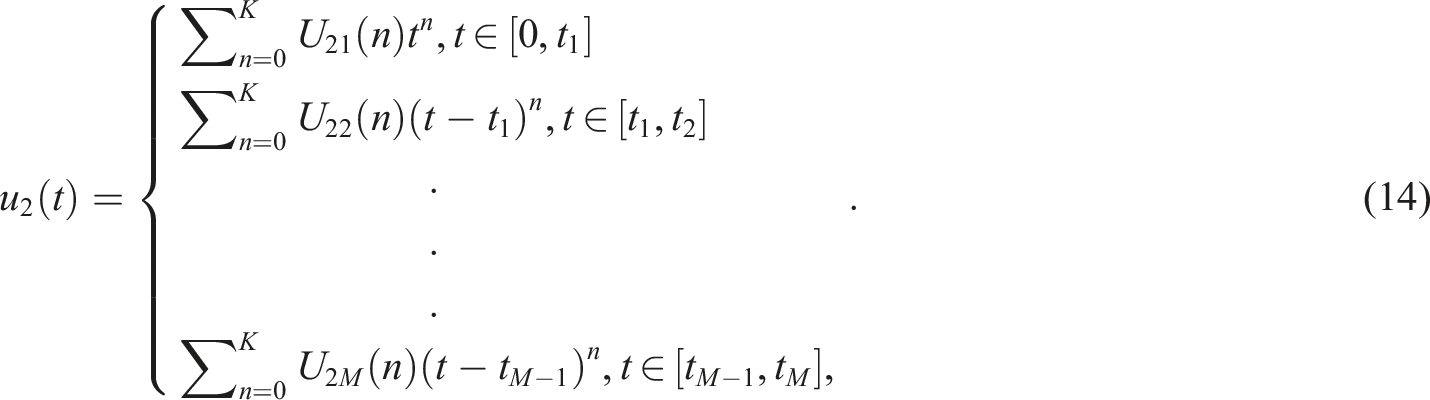
In this section, we apply the Ms-DTM to equation (6) to demonstrate the effectiveness of Ms-DTM as an approximate tool for solving the ODE. Let
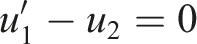

Thus equation (6) can be expressed in the form of two simultaneous first-order differential equations in terms of

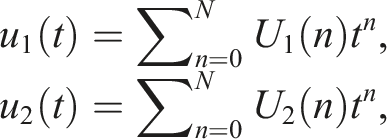
Taking the DT of equation (11) by using the well-known differential transform formulas, we obtain


The DT of the initial conditions is given by
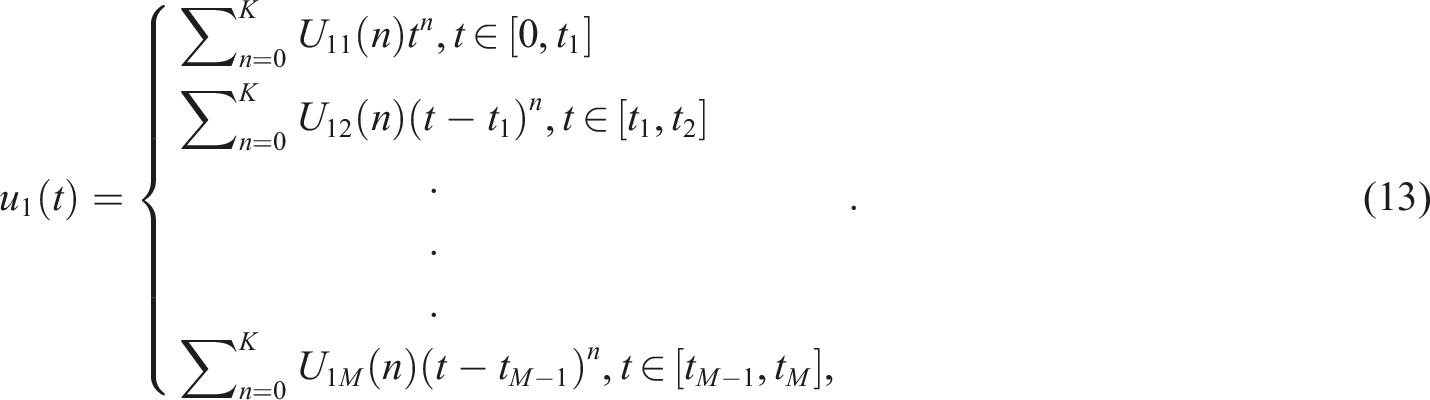

Finally, if we start with Simulation of system (6) using Ms-DTM: (a) 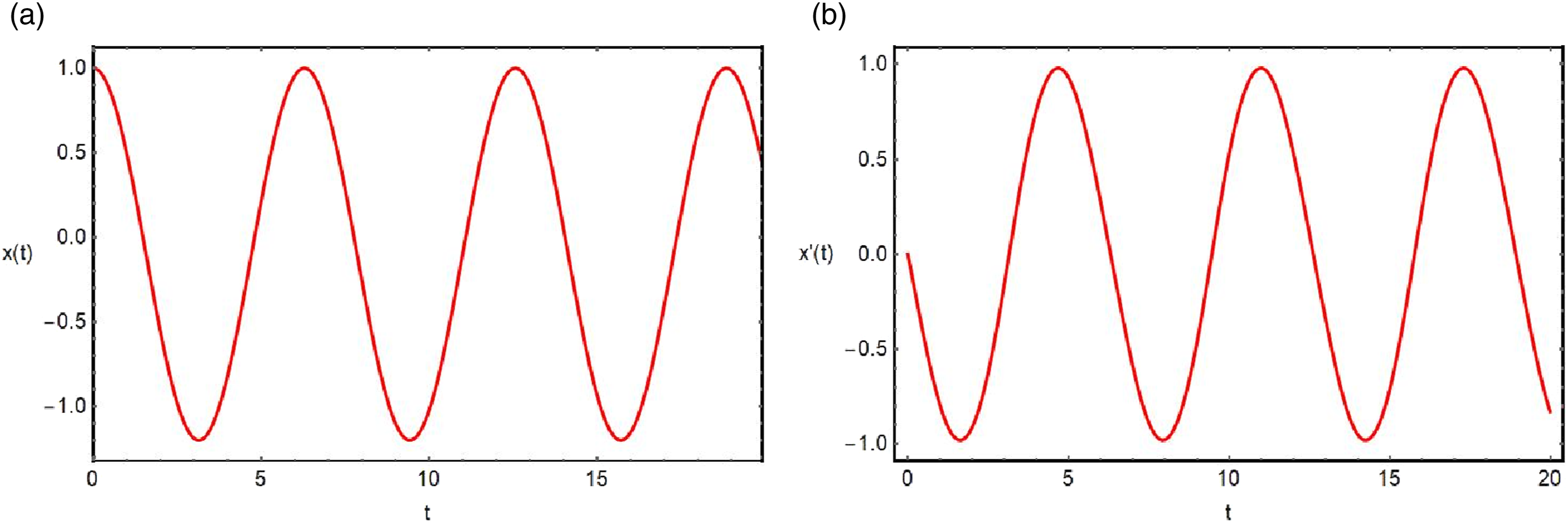
Figure 2 shows the phase plane trajectories for equation (6) obtained using Ms-DTM. Phase portrait of system (6): 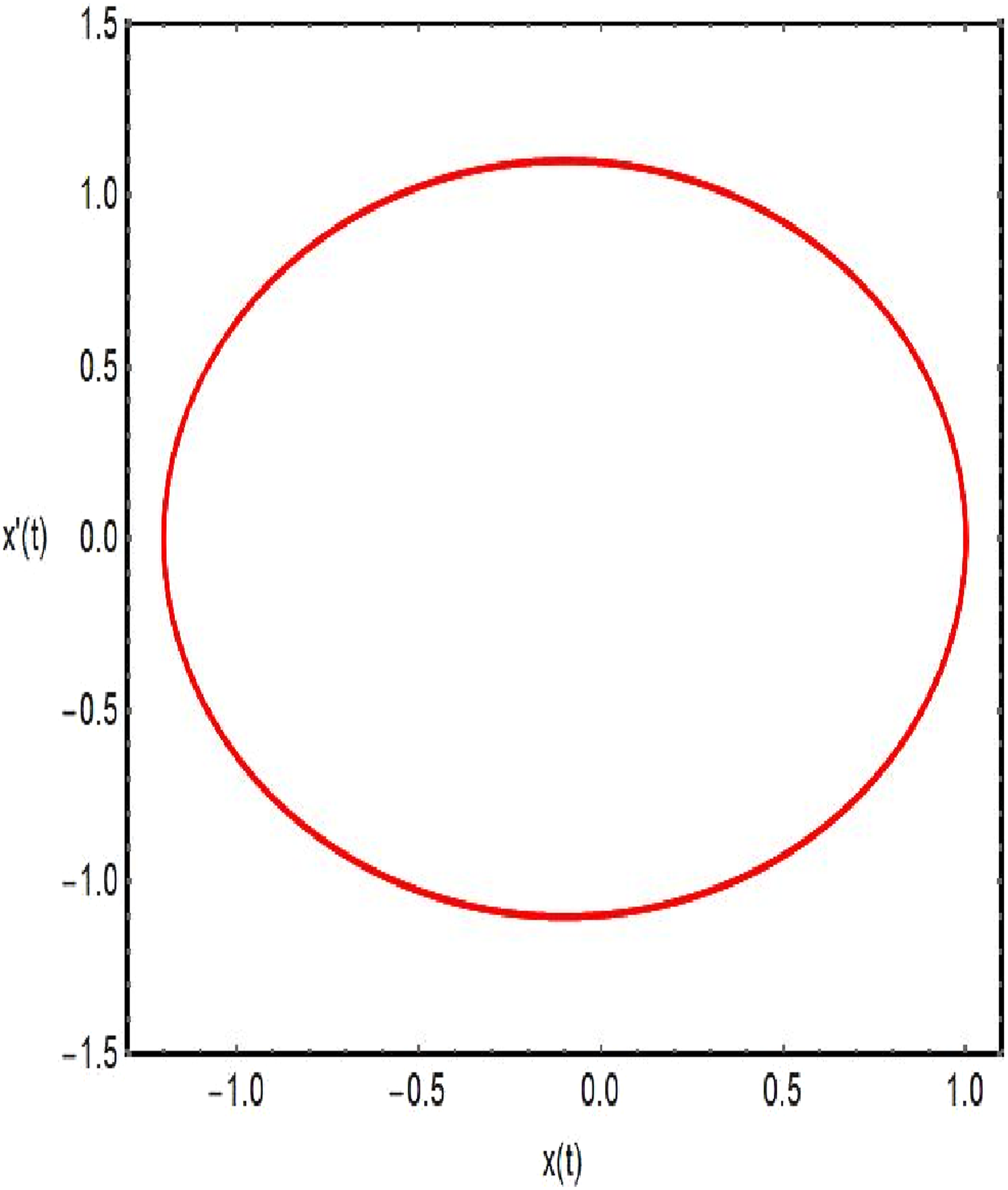
Figure 3 shows the numerical solutions for equation (6) using Runge–Kutta 4th order, while in Figure 4 we show the phase portrait of system (6): Simulation of system (6) using Runge–Kutta 4th order: (a) Phase portrait of system (6): 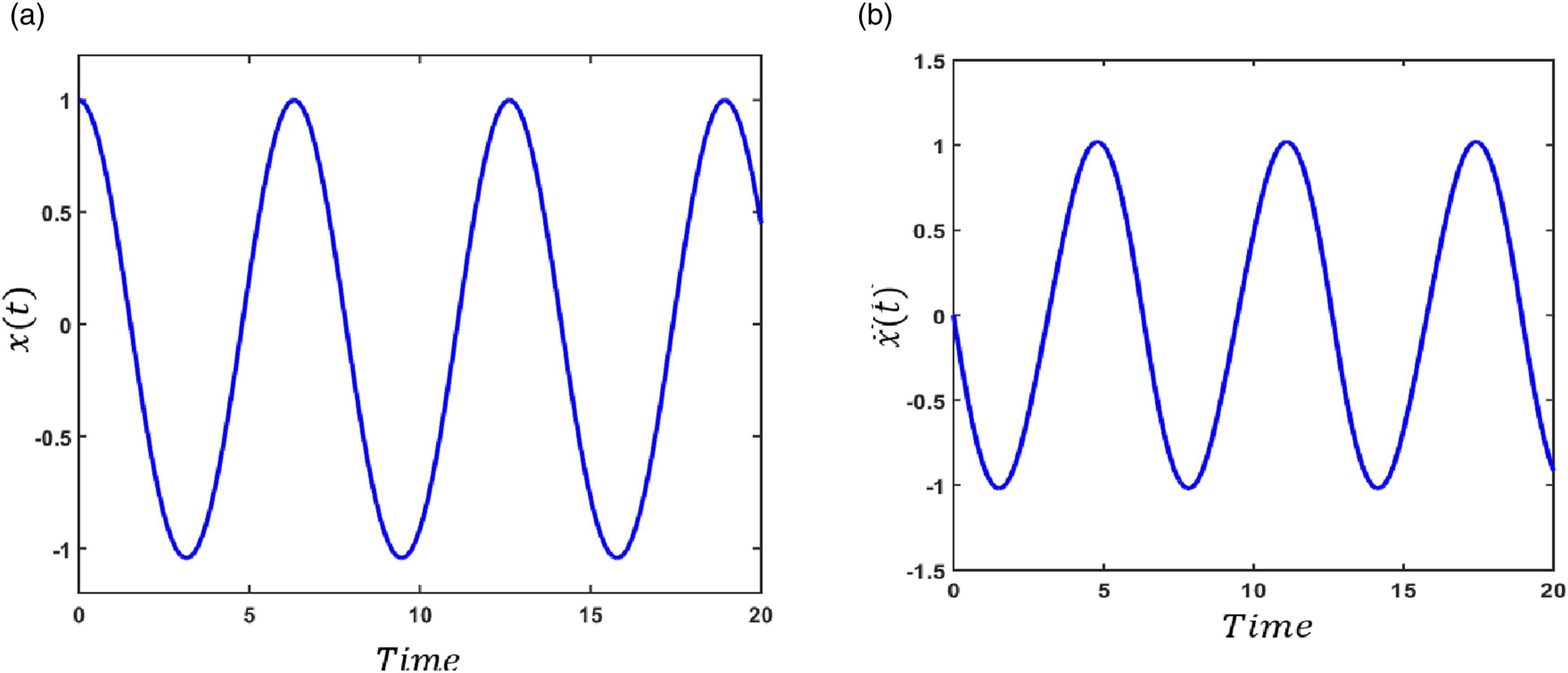
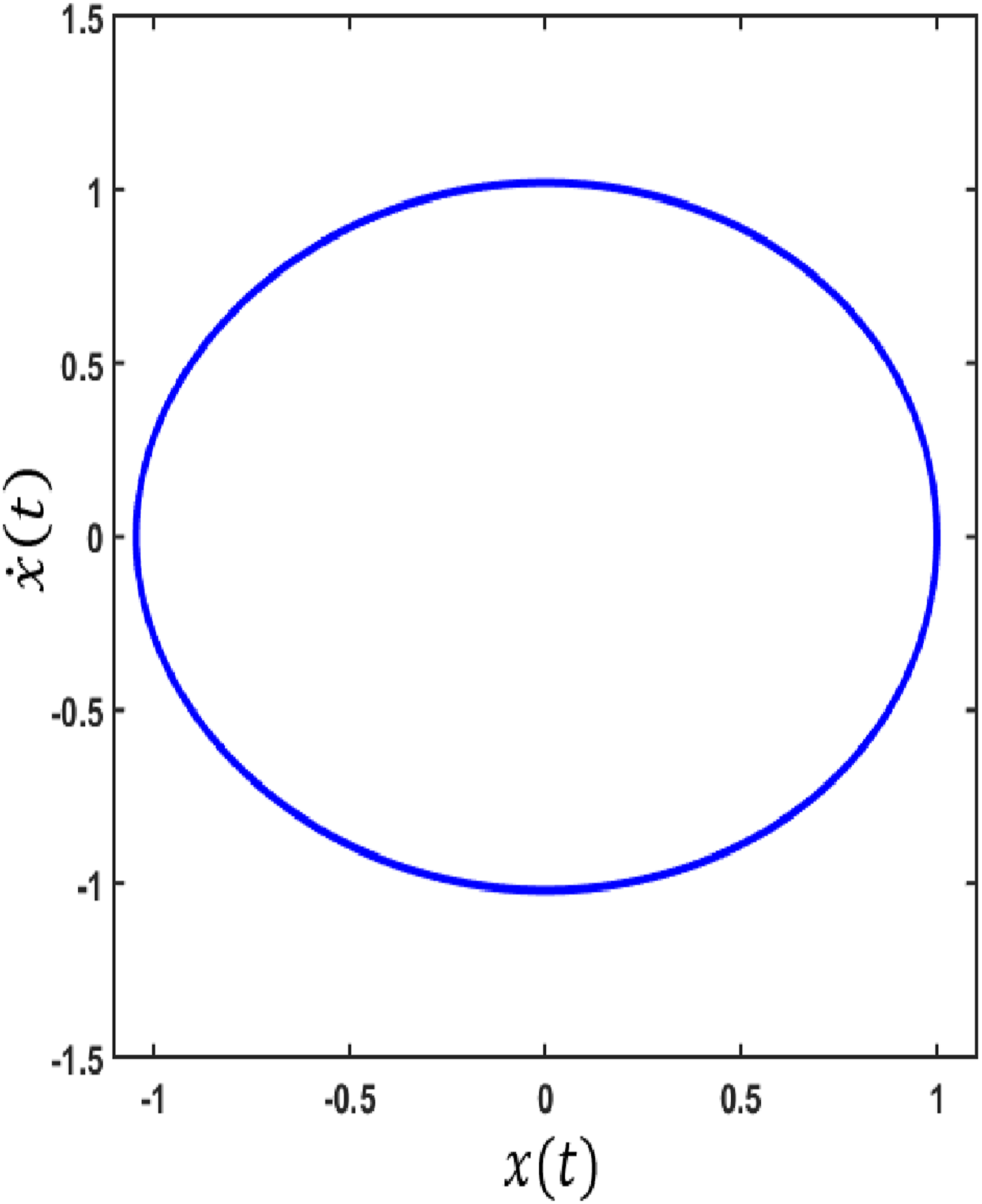
It is clear from the figures that we have an excellent agreement between the Ms-DTM method and Runge–Kutta 4th-order results. Furthermore, the closed phase portrait obtained is nearly circular. The phase portrait also indicates the stability of the system.
Finally, Figure 5 shows the potential energy function of the symmetric anharmonic oscillator with different values of Symmetric anharmonic oscillator potential with 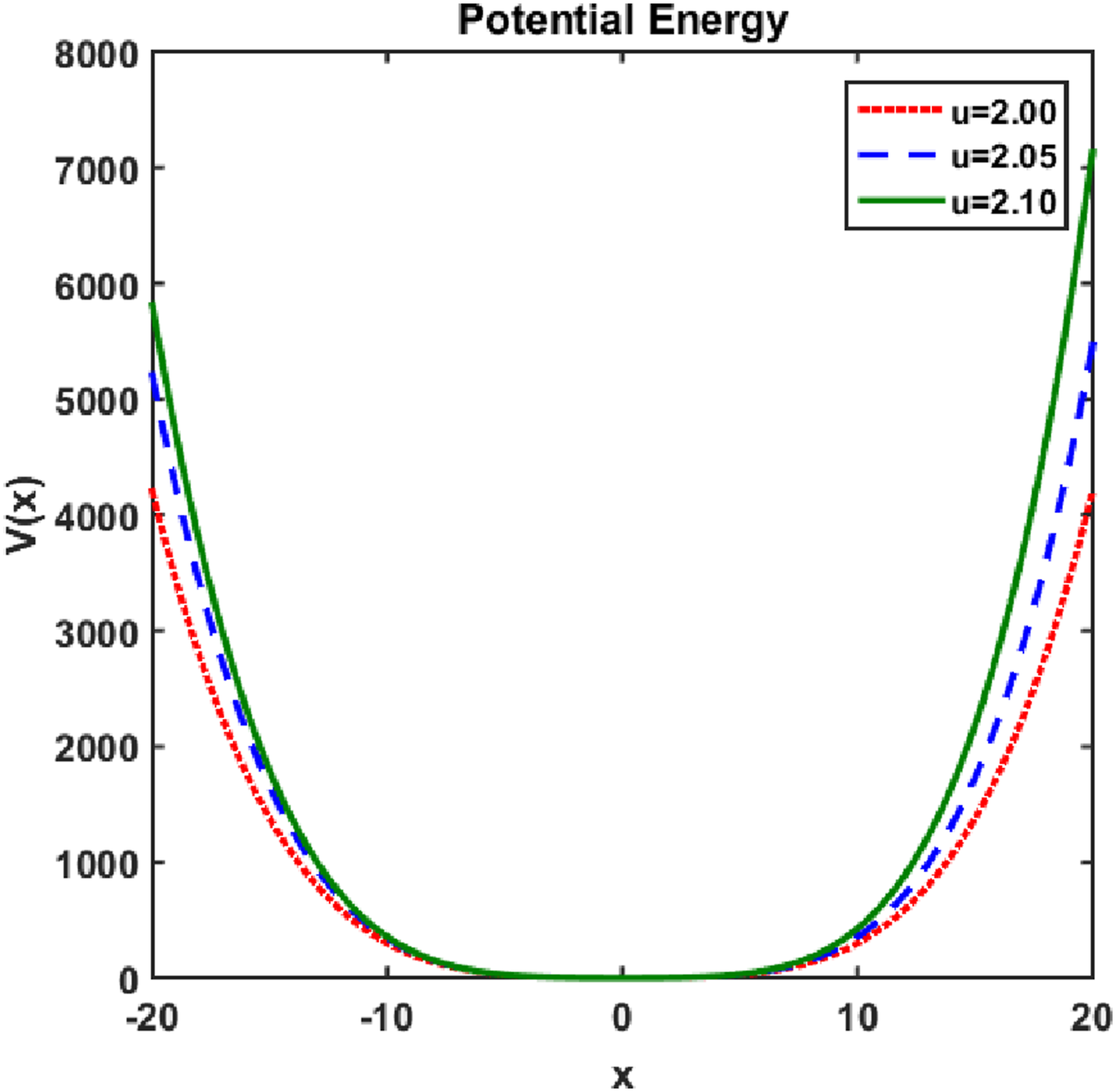
It can be seen from Figure 5 that even a small change in
Conclusion
By including more terms into the potential energy function, the symmetrical anharmonic oscillator’s study has yielded important insights into its nonlinear properties. We were able to construct analytical and numerical solutions to the oscillator’s equation of motion by applying the Runge–Kutta 4th-order (RK4) technique in addition to the multi-step differential transforms method (Ms-DTM). The consistency of these techniques attests to the validity of our results. This work provides useful tools for future research in a variety of physics domains by improving our knowledge of the oscillator’s behavior and demonstrating the applicability of similar approaches to more complicated nonlinear systems.
Footnotes
Acknowledgments
The authors Rabab Jarrar and Jihad Asad would like to thank Palestine Technical University-Kadoorie for supporting them during this research.
Declaration of conflicting interests
The author(s) declared no potential conflicts of interest with respect to the research, authorship, and/or publication of this article.
Funding
The author(s) received no financial support for the research, authorship, and/or publication of this article.
