




Abstract
Attention-deficit/hyperactivity disorder (ADHD) has a significant impact on psychosocial and occupational functioning. Sixty-five percent of children with ADHD continue to meet full or partial diagnostic criteria for ADHD in adulthood, and an estimated 4% of the workforce has a diagnosis of ADHD. We performed a systematic literature review to understand the experience of ADHD in the workplace. Articles were included in the systematic literature review if they reported results on employment outcomes of adults with ADHD. Methodological quality assessment was evaluated using the Mixed Methods Appraisal Tool. Seventy-nine studies were included in this systematic literature review (nADHD = 68,275). Results were synthesized into four categories: challenges, strengths, adaptations, and sex differences. Eight themes were included: ADHD symptoms at work, workplace performance, job satisfaction, maladaptive work thoughts and behaviors, interpersonal relationships at work, personal strengths, embracing ADHD, person-environment fit, and accommodations and support. Workers with ADHD can adapt and thrive in employment with the right person-environment fit, and accommodations and support. Many challenges related to ADHD can be remodeled into assets in a workplace environment that promotes flexible working practices and openness to neurodiversity.
Lay abstract
Attention-deficit/hyperactivity disorder (ADHD) interferes with many important adult life outcomes such as employment. This paper presents a full review of past studies on the topic of ADHD and employment to help researchers and nonresearchers alike to better understand the experience of ADHD in the workplace. Articles were included in this review if they reported at least one employment outcome of individuals with ADHD. Seventy-nine studies were included in this review, which totaled the workplace experiences of 68,275 individuals with ADHD across 22 countries. The results were synthesized into four main categories of challenges, strengths, adaptations, and sex differences. The three first categories were further subdivided into eight themes: ADHD symptoms at work, workplace performance, job satisfaction, maladaptive work thoughts and behaviors, interpersonal relationships at work, personal strengths, embracing ADHD, person-environment fit, and accommodations and support. Our results demonstrate that workers with ADHD can adapt and thrive in employment with the right person-environment fit, and accommodations and support. Many challenges related to ADHD can be remodeled as assets in a workplace environment that fosters acceptance, flexible working practices, and openness to neurodiversity.
Registration: Open Science Framework (10.17605/OSF.IO/RBNF4).
Introduction
Attention-deficit/hyperactivity disorder (ADHD) is characterized by a persistent pattern of inattention and/or hyperactivity-impulsivity that interferes with development and later psychosocial and occupational functioning (American Psychiatric Association, 2013). Although often conceptualized as a developmental disorder of childhood, 65% of children with ADHD continue to meet full or partial diagnostic criteria for ADHD in adulthood (Faraone et al., 2006). This translates to an estimated 7% of the adult population (Song et al., 2021) and 4% of the workforce having a diagnosis of ADHD (de Graaf et al., 2008).
Given the high prevalence of ADHD in the workplace, it is likely that employers and employees will work alongside individuals with ADHD. It is vital that research investigates the effects of ADHD on employment as this knowledge can benefit employers, coworkers, and individuals with ADHD themselves.
Past research indicates that individuals with ADHD are more likely to experience various adverse employment outcomes such as lower performance at work, higher turnover rates and higher unemployment rates (Erskine et al., 2016; Fletcher, 2014; Frazier et al., 2007; Jangmo et al., 2021; Kleinman et al., 2009; Kuriyan et al., 2013). A recent systematic review (Christiansen et al., 2021) of longitudinal studies corroborates that individuals diagnosed with ADHD in childhood whose symptoms persisted into adulthood experienced worse employment outcomes than those without ADHD. Interestingly, even when symptoms did not persist into adulthood, individuals with childhood ADHD nonetheless experienced worse employment outcomes than their neurotypical counterparts.
The relationship between ADHD and employment outcomes is complex, and environmental factors such as person-environment fit and workplace accommodations may mediate the risk of employment difficulties. Identifying these factors provides for the development of improved workplace accommodations and targeted interventions to improve employment outcomes among people with ADHD.
This systematic literature review aims to synthesize the current literature on the employment outcomes of workers with ADHD. While the topic of ADHD and employment has been previously addressed in reviews, the scope is often limited to the challenges (Christiansen et al., 2021; Gordon & Fabiano, 2019) or strengths (Antshel, 2018) or adaptations (Lauder et al., 2022; Sarkis, 2014) separately but never integrated into one review. This systematic literature review adopts a more inclusive approach and thus adds nuance to the experience of ADHD in the workplace.
Method
The protocol for this systematic literature review was registered on Open Science Framework (DOI: 10.17605/OSF.IO/RBNF4). The 2020 PRISMA guidelines were followed (see Appendices A, B, and C in the supplemental materials for checklists and flowchart, respectively).
The articles were first identified by a title and abstract search in PsycINFO, EBSCO Medline, ERIC, Cochrane, PubMed, ProQuest Dissertations, CINAHL, and Social Work Abstracts on five separate occasions from June 27, 2022 to January 9, 2024 using the keywords “ADHD” OR “attention deficit hyperactivity disorder” AND “job*” OR “occupation*” OR “work*” OR “employ*.” An extensive view of the search strategy is illustrated in Appendix D in the supplemental materials.
The screening process was conducted by four reviewers at five timepoints with a 4- to 6-month interval between each timepoint. Articles were screened based on titles and abstracts. For selected articles, full-text articles were retrieved for full-text review and subsequent data extraction. The entire process from screening to data extraction was repeated at every search update.
Articles were included in the systematic literature review if they reported results on employment outcomes of adults with ADHD. Articles were excluded if they only assessed the effectiveness of an occupational intervention. There were no exclusion criteria based on the year of publication, country of origin, type of article, study design, measures used, or participant's sociodemographic characteristics (except adulthood). Discrepancies between reviewers regarding screening and selection decisions were mainly resolved by consensus agreement.
Data extraction for the first three waves of screening was divided between three to four reviewers and tracked using an Excel template developed and piloted by one of the authors. The last two waves of screening and data extraction were performed independently by the first author. The methodological quality assessment was evaluated using the most recent version of Mixed Methods Appraisal Tool (MMAT; Hong et al., 2018) by the same four reviewers. The MMAT is a validated tool that assesses the quality of quantitative, qualitative and mixed-methods studies for systematic reviews. The MMAT score is based on five core criteria wherein points are attributed/not attributed based on how many criteria a study meets or does not meet for a total score out of five (Hong et al., 2018).
Results
The literature search was conducted at five timepoints. At the fifth timepoint, the search strategy identified a cumulative total of 1,672 articles. After screening for relevance in the title and the abstract, 144 articles were retained for full-text retrieval, read and extracted by the same reviewers. Seventy-nine articles met the inclusion criteria. The studies ranged from 1993 to 2023 and sampled a total of 68,275 individuals with ADHD across the United States of America, Sweden, Norway, Germany, Israel, the United Kingdom, Canada, Japan, Denmark, Spain, Belgium, Holland, Switzerland, France, Italy, Colombia, Mexico, Lebanon, and South Africa. The review process is outlined in Appendix C in the supplemental materials, and the study characteristics (including quality assessment) are summarized in Table 1 in the supplemental materials. Overall, the studies were of notably high quality with a mean MMAT score of 3.98, a median score of 4 and a mode score of 5 out of 5.
Four broad overarching categories were generated from the literature on ADHD and employment: challenges, strengths, adaptations, and sex differences. The three first categories were further subdivided into eight themes: ADHD symptoms at work, workplace performance, job satisfaction, maladaptive work thoughts and behaviors, interpersonal relationships at work, personal strengths, embracing ADHD, person-environment fit, and accommodations and support.
ADHD challenges
ADHD symptoms at work
Although each symptom poses its unique set of constraints, inattention was the most commonly cited challenge. Attention in the workplace is crucial and subsumes many work-related competences such as learning, organizing new information, concentrating on tasks, being alert to details, keeping track of items and equipment, and following instructions (Asbjørnsen et al., 2015; Barkley & Fischer, 2010; Barnett, 2019; Fuermaier et al., 2021; Gjervan et al., 2013; Harris, 2020; Högstedt et al., 2023; Liebel et al., 2023; Mather, 2013; Schreuer & Dorot, 2017; Shifrin et al., 2010). Mather (2013) suggested that inattention in ADHD can be subdivided into four separate constructs comprised of deficits in (a) selective attention (i.e., the ability to concentrate exclusively on task-relevant and ignore task-irrelevant stimuli), (b) divided attention (i.e., the ability to simultaneously attend to two or more tasks, colloquially labeled “multitasking”), (c) shifting attention (i.e., the ability to intentionally shift one's focus between different tasks), and (d) sustained attention (i.e., the ability to maintain persistent focus over time on uninteresting tasks). Deficits in selective attention may lead workers with ADHD to have difficulty attending to work-related tasks in the presence of competing external stimuli such as noise, conversation, lights, and movement (Biederman et al., 2006; Button, 2018; Harris, 2020; Högstedt et al., 2023; Liebel et al., 2023; Mather, 2013; Shifrin et al., 2010; Thomas, 2019). Deficits in divided attention may lead to difficulties in multitasking and feeling overwhelmed when confronted with multiple job demands (Biederman et al., 2006; Button, 2018; Grossberg, 2004; Mather, 2013; Oscarsson et al., 2022). Deficits in shifting attention may lead to difficulties in redirecting efforts between distinct tasks while deficits in sustained attention may lead to difficulties in staying motivated when working on monotonous and repetitive duties (Barkley & Fischer, 2011; Biederman et al., 2006; Grossberg, 2004; Liebel et al., 2023; Mather, 2013; Oscarsson et al., 2022; Shifrin et al., 2010).
In parallel, many individuals with ADHD also reported specific experiences at work related to their hyperactivity and impulsivity (Barkley & Fischer, 2010, 2011; Caserta, 2019; Fuermaier et al., 2021; Owens et al., 2017; Rowe et al., 2021; Schreuer & Dorot, 2017; Thomas, 2019). Hyperactivity is not unidimensional and comprises of three aspects: (a) cognitive hyperactivity (i.e., racing thoughts, overactive mental activity), (b) behavioral hyperactivity (i.e., physical restlessness), and (c) emotional hyperactivity components 1 (i.e., irritability, impatience). Hyperactivity can manifest itself in frequent bouts of movement, restlessness in long meetings, the psychosomatic sense of having a “motor running” (Rowe et al., 2021, p. 13), an inability to sit still in one's chair, overactive mental activity going “a million miles an hour” (Rowe et al., 2021, p. 13), irritability, impatience, overanalyzing, or ruminating (Barkley & Fischer, 2010; Rowe et al., 2021; Schreuer & Dorot, 2017; Shifrin et al., 2010). To a lesser extent, impulsivity was also a strong predictor of problematic work behaviors (e.g., excessive talking, disruptive behavior at work), receiving formal discipline at work and resigning due to boredom (Barkley & Fischer, 2010; Barnett, 2019; Button, 2018; Mather, 2013; Schreuer & Dorot, 2017). Individuals with ADHD have expressed that the mental effort undertaken to dampen their hyperactivity and impulsivity left them exhausted and prevented effective task initiation and maintenance at work (Rowe et al., 2021).
Lastly, other cognitive symptoms related to ADHD such as executive dysfunction, organizational difficulties, memory deficits, and problems with time management also interfered with employment (Barkley & Fischer, 2011; Barkley & Murphy, 2010; Barnett, 2019; Biederman et al., 2006; Button, 2018; Grossberg, 2004; Halleland et al., 2019; Harris, 2020, Högstedt et al., 2023; Kent, 2017; Liebel et al., 2023; Mather, 2013; Robello, 2019; Shifrin et al., 2010; Thomas, 2019). Workers with ADHD described themselves as disorganized both mentally in establishing work priorities and physically when working in a cluttered work environment (Kent, 2017; Liebel et al., 2023).
Combined with short–term and working memory problems, many individuals with ADHD reported challenges in managing their time, following instructions, categorizing documents, meeting deadlines, remembering important dates, and attending important appointments and events (Barkley & Fischer, 2011; Barnett, 2019; Grossberg, 2004; Harris, 2020; Högstedt et al., 2023; Kent, 2017; Liebel et al., 2023; Shifrin et al., 2010; Robello, 2019).
Workplace performance
The relationship between ADHD and workplace performance is complex partly due to the difficulties related to symptoms. Many studies found that self-rated workplace performance and functioning were poorer in individuals with ADHD (Antshel et al., 2009; Aragonès et al., 2013; Babinski et al., 2017; Barkley & Fischer, 2010, 2011; Brook et al., 2013; de Araujo Roland, 2018; de Graaf et al., 2008; Grinblat & Rosenblum, 2021; Joseph et al., 2019; Nakai et al., 2022; Owens et al., 2017; Paley Altit et al., 2019; Shifrin et al., 2010; Sobanski et al., 2007). However, other studies reported no difference in performance and functioning at work between those with and without ADHD (Ballaschke et al., 2018; Fabiano et al., 2018). A study has found evidence of a positive illusory bias where individuals with ADHD overestimated their abilities and competences at work (Caserta, 2019). Corroborating this, many studies have shown discrepancies in self-reports versus informant reports of workplace performance. Individuals with ADHD appeared to have a tendency to rate their workplace performance significantly higher than did employers (Barkley & Fischer, 2010), clinicians (Owens et al., 2017), parents (Babinski et al., 2011; Owens et al., 2017), or independent observers (Klein et al., 2012; Paley Altit et al., 2019). Similarly, some workers with ADHD reportedly minimized or overlooked the effects of their ADHD symptoms on their workplace performance (Bayne, 2007; Thomas, 2019).
Job satisfaction
Job satisfaction is an integral part of work experience and enhances an individual's ability to remain employed in spite of other difficulties (Goffer et al., 2022; Harris, 2020; Högstedt et al., 2023; Lasky et al., 2016). Job satisfaction can be partitioned into intrinsic job satisfaction and extrinsic job satisfaction: the former refers to the satisfaction derived from one's preferences, abilities, and initiatives at work while the latter refers to the satisfaction derived from one's wages, compensation, policies, and career advancement (Painter et al., 2008). Studies revealed that workers with ADHD had significantly lower overall job satisfaction (Döpfner et al., 2021; Painter, 2003; Painter et al., 2008; Paley Altit et al., 2019; Selke, 1999), intrinsic job satisfaction (Antshel et al., 2009; Painter, 2003; Painter et al., 2008), and extrinsic job satisfaction (Biederman et al., 2006; Painter, 2003; Painter et al., 2008). Lower job satisfaction could be in part explained by improper person-environment fit, as described in Section ‘Person-Environment Fit'.
Maladaptive work-related thoughts and behaviors
Workers with ADHD exhibit several maladaptive work-related thoughts and behaviors like dysfunctional career thoughts such as decision-making confusion, commitment anxiety, external conflict (see definitions below), feelings of inadequacy, fear of being outperformed, self-stigma, and shame.
Painter (2003) and Painter et al. (2008) mainly explored dysfunctional career thoughts, decision-making confusion, commitment anxiety, and external conflict. Painter (2003) defined decision-making confusion as the inability to start or sustain the decision-making process due to overwhelming emotions and/or a lack of understanding on how to make decisions. They further defined commitment anxiety as a perpetual state of anxiety and inability to commit to a career choice. Finally, they defined external conflict as the inability to properly weigh input from oneself and others leading to a reluctance to make decisions.
Painter's results suggested that core ADHD symptoms of inattention and hyperactivity significantly predicted decision-making confusion and commitment anxiety. Lower intrinsic and extrinsic job satisfaction predicted higher dysfunctional career thoughts and commitment anxiety (Painter, 2003; Painter et al., 2008).
Another prominent maladaptive work-related thought was observed in Barnett's (2019) study on subjective feelings of inadequacy leading to low self-esteem. Participants expressed that their diagnosis may cause them to be underpaid, passed over for promotions, and treated unfairly in the workplace. Echoing the findings of Barnett (2019), Grossberg (2004) observed a recurrent fear in individuals with ADHD of being outperformed by neurotypical colleagues who they appraised to be able to work faster, make fewer mistakes in detail-oriented work, and be less forgetful. This fear was often accompanied by a lack of confidence in their own professional abilities, destructive self-criticism and frustration (Grossberg, 2004; Oscarsson et al., 2022).
Furthermore, individuals with ADHD reported experiencing a lot of shame and self-stigma. Workers with ADHD reported not feeling “normal” (Barnett, 2019, p. 103) compared to their colleagues, and shame was also largely reported by the participants (Antshel et al., 2009; Schreuer & Dorot, 2017). Nondisclosure of ADHD diagnosis was common among participants due to their awareness of potential stigma in the workplace (Liebel et al., 2023; Thomas, 2019; Tromans et al., 2023) and their fear of being deemed incompetent (Grossberg, 2004).
Interpersonal relationships at work
Interpersonal relations were raised as the last significant challenge (see Grossberg, 2004; Högstedt et al., 2023; Kent, 2017; Kirino et al., 2015; Liebel et al., 2023; Mather, 2013; Oscarsson et al., 2022; Thomas, 2019; Tromans et al., 2023).
In Kirino et al. (2015), over three quarters of participants agreed or strongly agreed that their ADHD symptoms negatively impacted their relationships at work. Workers with ADHD recounted that their inattentiveness, emotional impulsivity, and failure to notice certain social cues impaired their ability to develop and maintain interpersonal relationships with colleagues and employers (Barkley & Fischer, 2010; Bayne, 2007; Grossberg, 2004; Liebel et al., 2023; Oscarsson et al., 2022; Robello, 2019; Schreuer & Dorot, 2017; Tromans et al., 2023). Individuals with ADHD described how their difficulties with attention and impulsivity may have resulted in a tendency to get distracted, forget details (Robello, 2019), blurt out incoherent thoughts (Button, 2018; Grossberg, 2004), interrupt others (Schreuer & Dorot, 2017), talk excessively (Mather, 2013), and be uncomfortably blunt or straightforward in conversations (Liebel et al., 2023; Oscarsson et al., 2022). These tendencies could be off-putting for colleagues and reportedly lead them to view their ADHD colleagues as being rude, discourteous, or insensitive (Button, 2018; Liebel et al., 2023; Robello, 2019).
Many workers with ADHD reported not being taken seriously (Grossberg, 2004), being patronized and perceived as “troublemakers,” “uncaring,” “uneducated,” “reckless” (Rowe et al., 2021, p. 9), procrastinators, and “strange” (Tromans et al., 2023, p. 7) by colleagues (Högstedt et al., 2023; Thomas, 2019). Such presumptions from colleagues regarding ADHD weakened the trust between workers with ADHD and their coworkers (Rowe et al., 2021; Thomas, 2019).
ADHD strengths
Personal strengths
In spite of the challenges encountered in the workplace, many individuals reframed their ADHD as an integral part of their identity that conferred special talents and skills (Abramowicz, 1998; Kent, 2017) such as determination, resilience, multitasking, creativity, hyperfocus, emotional intelligence, and various other assets (Abramowicz, 1998; Anhalt, 2015; Bayne, 2007; Button, 2018; Grossberg, 2004; Kent, 2017; Liebel et al., 2023; Oscarsson et al., 2022; Robello, 2019; Schreuer & Dorot, 2017; Tromans et al., 2023).
First, many participants noted their determination in accomplishing demanding and challenging work tasks (Kent, 2017). Participants described a self-reinforcing effect of success where succeeding in a goal increased motivation for future goals (Abramowicz, 1998; Button, 2018). Individuals with ADHD affirmed that they learned from their mistakes to foster success in later attempts (Bayne, 2007; Button, 2018). Abramowicz (1998) and Robello (2019) demonstrated that workers with ADHD showed remarkable resilience following a loss of employment as they persevered to reintegrate the job market.
Second, where the performance of some workers with ADHD was hindered by inattention, hyperactivity, and impulsivity, others perceived these as inherent talents that facilitated effective multitasking and creativity (Anhalt, 2015; Button, 2018; Grossberg, 2004; Kent, 2017; Liebel et al., 2023; Schreuer & Dorot, 2017). Living with ADHD reportedly enabled individuals to rapidly switch from one task to another in the workplace (Abramowicz, 1998; Button, 2018; Grossberg, 2004; Kent, 2017). Additionally, the increased vigor of workers with ADHD compelled them to actively seek out novelty and sparked creative thinking (Button, 2018; Grossberg, 2004; Kent, 2017; Oscarsson et al., 2022; Schreuer & Dorot, 2017). It has been reported that people with ADHD show immense creativity in thinking of nontraditional solutions, putting forward new hypotheses by aggregating knowledge across different fields, and adapting strategies to reach their occupational goals and be successful (Abramowicz, 1998; Button, 2018; Liebel et al., 2023; Rowe et al., 2021; Schreuer & Dorot, 2017; Steele et al., 2021).
Third, the ability to hyperfocus seems to be more common in ADHD than in neurotypical populations. Hyperfocus refers to one's capacity to be completely absorbed in a task to the extent that everything else is ignored (Ashinoff & Abu–Akel, 2021; Hupfeld et al., 2019). Hyperfocus was especially likely when the work-related task was interesting, when deadlines were pressing or in crises/emergency situations (Abramowicz, 1998; Anhalt, 2015; Button, 2018; Grossberg, 2004; Kent, 2017; Liebel et al., 2023; Schreuer & Dorot, 2017). The participants illustrated this altered state of consciousness as being entirely dedicated to their task and outstandingly productive (Abramowicz, 1998; Kent, 2017; Liebel et al., 2023).
Fourth, although ADHD may increase sensitivity to the environment, some people with ADHD recognized that this also made them more empathetic and understanding toward others (Abramowicz, 1998; Oscarsson et al., 2022). These individuals capitalized on this heightened awareness to get along with others, be mindful of other's feelings and be good team players (Abramowicz, 1998; Grossberg, 2004; Kent, 2017; Oscarsson et al., 2022). Grossberg (2004) denoted that this specific skill set, along with extensive knowledge about different subject areas and the ability to identify and make the most out of colleagues’ strengths indicated that people with ADHD may make exceptionally good leaders.
Fifth, Hennessey et al.'s (2006) study assessing individual strengths noted that university students with ADHD had high levels of optimism regarding their future career and felt that they were well-equipped to enter the workforce, had useful job skills, were able to choose from a long list of possible jobs, could obtain a job with the potential for career advancement, and could evaluate the suitability of workplace accommodations. It is as of yet unknown whether this optimism has persisted over time.
Embracing ADHD
Although the literature often characterizes ADHD as a disability that negatively impacts employment, many individuals with ADHD reported that ADHD confers numerous personal strengths. Many workers with ADHD have gone a step further in accepting their symptoms and embracing ADHD as part of their identity (Bayne, 2007; Grossberg, 2004; Liebel et al., 2023; Thomas, 2019; Zapata & Worrell, 2023). Education on ADHD and involvement in the diagnostic process strengthened positive occupational identity and informed participants as to the strengths and weaknesses associated with their ADHD—prompting a more efficient use of strategies to manage their symptoms at work (Grossberg, 2004; Högstedt et al., 2023; Liebel et al., 2023; Sandell et al., 2013). Embracing their ADHD led to a better appraisal of their employment strengths and limitations and reduced symptom-related impairments at work (Abramowicz, 1998; Grossberg, 2004; Harris, 2020; Liebel et al., 2023; Thomas, 2019).
ADHD adaptation
Person-environment fit
Numerous quantitative and qualitative studies have underscored the importance of person-environment fit on employment outcomes (Abramowicz, 1998; Anhalt, 2015; Bayne, 2007; Button, 2018; Dray, 2003; Glynn & Schaller, 2017; Goffer et al., 2022; Grossberg, 2004; Kent, 2017; Lasky, 2015; Lasky et al., 2016; Lyhne et al., 2021; Nagata et al., 2019; Schreuer & Dorot, 2017; Thomas, 2019). The experience of ADHD as well as the ADHD symptoms themselves are greatly dependent upon workplace environment.
Many individuals situated their ADHD in the environment rather than within themselves in that their ADHD reflected a problem with the environment they were in and not a problem within themselves (Lasky, 2015; Lasky et al., 2016). This perspective on ADHD effectively dispelled feelings of inadequacy or of being “defective” while also inciting workers to seek workplace environments that optimally suited their needs (Lasky, 2015; Lasky et al., 2016). Person-environment fit had a critical role in job satisfaction, job maintenance and workplace adaptation for individuals with ADHD (Anhalt, 2015; Button, 2018; Goffer et al., 2022; Lasky, 2015; Lasky et al., 2016; Lyhne et al., 2021; Schreuer & Dorot, 2017). Workers with ADHD indicated that stimulating workplace environments with challenge, novelty, multitasking, fast-paced activities, physical labor, active learning, communal and quiet spaces, and personal autonomy were an especially good fit for ADHD (Abramowicz, 1998; Anhalt, 2015; Button, 2018; Glynn & Schaller, 2017; Goffer et al., 2022; Lasky, 2015; Lasky et al., 2016; Liebel et al., 2023; Lyhne et al., 2021; Schreuer & Dorot, 2017; Verheul et al., 2016).
On this last point of personal autonomy, compared to traditional “9 to 5” employment, self-employment may be a better fit for some workers with ADHD as self-employment allows the individual to establish their own work conditions, environment, and hours (Abramowicz, 1998; Högstedt et al., 2023; Kent, 2017; Mannuzza et al., 1993, 1997; Nagata et al., 2019; Schreuer & Dorot, 2017; Verheul et al., 2016).
In contrast, an unsuitable workplace environment exacerbated ADHD symptoms and in turn is detrimental to workplace performance, job satisfaction, and job tenure (Lasky, 2015; Lasky et al., 2016). Workers with ADHD experienced multiple workplace challenges in incompatible environments where they had to “[try] to do the work using another person's way” (Button, 2018, p. 95) or “change [themselves] to fit in with work rather than changing [the work to fit with themselves]” (Rowe et al., 2021, p. 12).
Accommodations and support
In situations wherein workers with ADHD could not choose an employment that optimally fit their personal characteristics, workplace accommodations and social support could help them adjust to their workplace environment (Abramowicz, 1998; Button, 2018; Glynn & Schaller, 2017; Liebel et al., 2023; Means et al., 1997; Robello, 2019; Sandell et al., 2013; Tromans et al., 2023). Workplace accommodations are defined as any “change in the work environment or the terms and conditions of employment that allows a person with limitations in their abilities, or who faces barriers from the standard rules and conditions of work, to perform their job” (Canadian Association for Supported Employment, 2021). Common workplace accommodations for ADHD have focused on providing private and quiet workspaces, flexible workday hours, frequent breaks in long meetings, and delegating tedious tasks among colleagues (Button, 2018; Ek & Isaksson, 2013; Harris, 2020; Kent, 2017; Liebel et al., 2023; Means et al., 1997; Oscarsson et al., 2022; Schreuer & Dorot, 2017).
Assistive devices may be used to overcome deficits in attention and memory. Assistive devices such as to-do lists, checklists, electronic planners, calendars, smartphones, and productivity software may be used by workers with ADHD to develop structure, habits, and a regular routine at work (Abramowicz, 1998; Button, 2018; Grossberg, 2004; Harris, 2020; Högstedt et al., 2023; Kent, 2017; Liebel et al., 2023; Lindstedt & Umb-Carlsson, 2013; Means et al., 1997; Oscarsson et al., 2022; Robello, 2019; Sandell et al., 2013; Schreuer & Dorot, 2017). Alternatively, other assistive device such as alarms, timers, sticky note reminders, electronic reminders, note-taking systems, spellcheckers, premade templates/spreadsheets, noise-canceling headphones, fidgets, and key/object finders may be used by workers with ADHD who contend with attention and/or memory deficits at work (Abramowicz, 1998; Button, 2018; Grossberg, 2004; Liebel et al., 2023; Lindstedt & Umb-Carlsson, 2013; Means et al., 1997; Oscarsson et al., 2022; Robello, 2019; Schreuer & Dorot, 2017).
Importantly, the use of medication to improve workplace performance was met with ambivalence (Goffer et al., 2022; Gordon et al., 2021; Harris, 2020; Liebel et al., 2023; Sandell et al., 2013; Schreuer & Dorot, 2017). While many acknowledged the benefits of ADHD medication on focusing attention and improving workplace performance (Harris, 2020; Goffer et al., 2022; Gordon et al., 2021; Liebel et al., 2023; Schreuer & Dorot, 2017), many were disinclined to use them due to their unpleasant side effects (e.g., migraines, restlessness, insomnia, zombielike feelings) and impressions of not being themselves when medicated (Goffer et al., 2022; Liebel et al., 2023; Schein et al. 2023; Schreuer & Dorot, 2017).
Furthermore, a supportive social support system involving employers, colleagues, coaches, vocational rehabilitation services, therapists, family, friends, and significant others may also provide technical and moral support facilitating workplace adaptation (Abramowicz, 1998; Anker et al., 2018; Button, 2018; Ek & Isaksson, 2013; Glynn & Schaller, 2017; Harris, 2020; Högstedt et al., 2023; Kent, 2017; Liebel et al., 2023; Lyhne et al., 2021; Mühlbacher & Nübling, 2010; Nagata et al., 2019; Oscarsson et al., 2022; Sandell et al., 2013). In the workplace, supportive employers, colleagues, and coaches who offered encouragement, advice, and verbal reminders helped workers with ADHD feel motivated, be self-confident, and stay on track (Button, 2018; Harris, 2020; Kent, 2017; Lyhne et al., 2021; Oscarsson et al., 2022). Workers with ADHD may also benefit from vocational rehabilitation services providing job search assistance, job placement assistance, and on the job support (Glynn & Schaller, 2017).
Sex differences
Although there are many differences in the experience of ADHD between males and females (see Babinski, 2024; Greven et al., 2018), Shifrin et al.'s study (2010) found no significant sex differences in ADHD symptom severity in the workplace. Within our included studies, the impact of diagnosis on work performance did not vary across sex as ADHD seemed to affect males and females similarly on overall work performance, impacted work areas and intrinsic job satisfaction (Babinski et al., 2011; Halmøy et al., 2009; Painter, 2003; Painter et al., 2008; Shifrin et al., 2010). However, several sex differences emerged in other employment areas. Notably, a larger percentage of females with ADHD reported being unemployed or not in school during the year prior to the study (Anker et al., 2019; Fredriksen et al., 2014), had significantly greater difficulty finding and keeping employment (Helgesson et al., 2021), and were significantly less integrated in the labor market (Chen et al., 2023).
However, employment rates by sex were not consistent across studies. Anker et al. (2018) study reported that females with ADHD were significantly more likely to be employed whilst Soendergaard et al. (2015) found no sex differences in employment status. Ahlberg et al. (2023) found no sex differences in job shifting (i.e., number of different jobs held over a set period of time). However, male workers with ADHD seemed to have more dysfunctional career thoughts, lower extrinsic job satisfaction (Painter, 2003; Painter et al., 2008), higher termination rates, and more absence days than female workers with ADHD (Kleinman et al., 2009). Interestingly, when taking sex into account in rates of accidental injury, Canu's study (2007) revealed that males with ADHD tended to place less emphasis than females with ADHD on work safety.
A single study (Tromans et al., 2023) reported a comparative analysis between genders, which refers to a psychosocial construct in opposition to the biological construct of sex. The scope of this review can therefore as of yet not comment on the role of gender in ADHD and employment.
Discussion
The objective of this systematic literature review was to disentangle the experiences of employment for individuals with ADHD. Our study revealed four broad overarching categories of ADHD challenges, ADHD strengths, ADHD adaptation, and sex differences further subdivided into eight themes. Figure 1 summarizes the main findings presented in this systematic literature review. This systematic literature review was cowritten with one author who has a diagnosis of ADHD and revised by a collaborator working in the field of ADHD to ensure accuracy and experiential sensitivity in reporting the results.
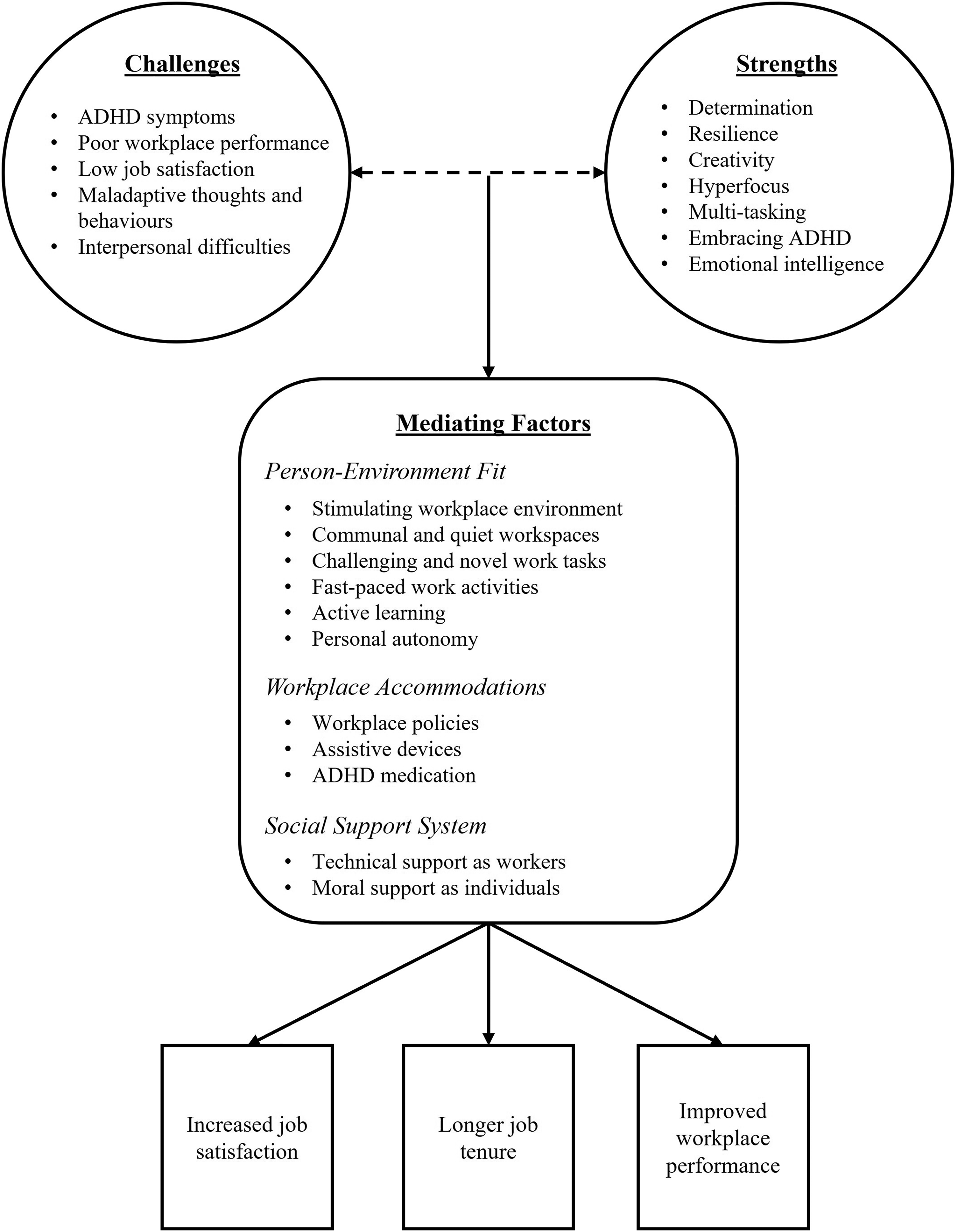
Narrative results summary.
Briefly, the results indicate that ADHD confers both strengths and limitations related to employment. Workers with ADHD can adapt and thrive in employment with the right person-environment fit, and accommodations and support. The results suggest that many challenges related to ADHD can be managed or remodeled as strengths in a workplace environment that fosters flexible working practices and openness to neurodiversity.
Furthermore, ADHD is a broad neurological construct that encompasses heterogenous profiles. The expression and experience of ADHD vary widely by the subtypes of ADHD (Dobson-Patterson et al., 2016; Luo et al., 2019), symptom severity (Alexander & Farrelly, 2018; Luo et al., 2019; Mostert et al., 2015), those who do/do not meet full/partial diagnostic criteria in adulthood (Barkley & Fischer, 2010; Hechtman et al., 2016), comorbid neurodevelopmental and psychiatric disorders (Anker et al., 2018; Halmøy et al., 2009; Jangmo et al., 2021; Katzman et al., 2017; Kirino et al., 2015; Sobanski et al., 2007), intellectual quotient (Park, 2019), and sex and gender (see Babinski, 2024; Greven et al., 2018; Williamson & Johnston, 2015). Moreover, the exact etiology of ADHD remains elusive; multiple genes have been associated with ADHD and evidence of distinct neural pathways (e.g., fronto-striatal) have been proposed to explain some cognitive symptoms that underlay work-related functions (Canadian ADHD Research Alliance, 2020, p. 3). While this study presented work challenges and strengths associated with ADHD, the complete understanding of these complex relationships must also integrate the aforementioned factors.
Importantly, we believe there may be a potential issue in the psychometric quality of the measures used to evaluate impairment for workers with ADHD. Many studies report that workers with ADHD rate their functioning at work significantly higher than employers, clinicians, parents, and independent observers do (Babinski et al., 2011; Barkley & Fischer, 2010; Klein et al., 2012; Owens et al., 2017; Paley Altit et al., 2019). Although Caserta (2019) attributes these findings to a positive illusory bias, these findings may, in fact, reflect issues in the type of measures used. The measures used to assess work impairment for adults with ADHD often consist of semistructured interviews and rating scales on the participants work history and interpersonal relationships with colleagues (e.g., Social Adjustment Scale Self-Report, Work Productivity and Activity Impairment Questionnaire, Occupational Performance History Interview, etc.). Such measures entail that participants recall prior events at work, identify their behaviors and notice how others at work react to their behaviors. These types of demands on retrospective recall and self-awareness may be impeded by the deficits in memory, attention, and social cognition inherent to ADHD. Thus, we hypothesize that it may not be the case that workers with ADHD overestimate their performance at work but rather that the measures used are not well-adapted to this population.
Limitations of reviewed studies and current review
This systematic literature review has several limitations regarding the included studies’ sample and study design. To begin with, the samples in most of the included studies were disproportionately male (see Table 1 in the supplemental materials). Thus, this study is a better reflection of male workers with ADHD than female workers with ADHD. It is well-documented that the experience of ADHD is different between males and females in terms of symptom profile, access to treatment, treatment effectiveness, and inevitably employment (Dakwar et al., 2014; Faheem et al., 2022; Klefsjö et al., 2021; Nussbaum, 2012). This review may not fully generalize to female workers with ADHD. Future studies should investigate the unique experience of females with ADHD in various areas of adult life. Moreover, many of the included studies used cross-sectional and correlational designs (see Table 1 in the supplemental materials). This limits our ability to draw definite conclusions on both causal mechanisms and long-term associations between ADHD and employment outcomes.
Regarding the present systematic literature review, the screening process was conducted by four reviewers according to preset inclusion and exclusion criteria using consensus agreement but interrater reliability was not quantified. Lastly, included studies in this systematic literature review were limited to peer-reviewed and published studies and dissertations. The “file drawer problem” may have incurred a publication bias to statistically significant findings (Rosenthal, 1979). We have performed additional searches in the grey literature to allay part of this issue.
Conclusion
ADHD confers multiple challenges and strengths related to employment but this relationship is largely dependent upon person-environment fit and appropriate workplace accommodations. Neurodiversity is not necessarily a hindrance if individuals with ADHD are permitted to adapt their working conditions and work in a supportive environment. We recommend that employers, supervisors, and coworkers embrace the strengths conferred by ADHD and adopt inclusive hiring and managing practices. Future studies should examine the effects of sex, gender, and comorbid neurodevelopmental and psychiatric disorders on the relationship between ADHD and employment.
Supplemental Material
sj-docx-1-ndy-10.1177_27546330241287655 - Supplemental material for Strengths and challenges to embrace attention-deficit/hyperactivity disorder in employment—A systematic review
Supplemental material, sj-docx-1-ndy-10.1177_27546330241287655 for Strengths and challenges to embrace attention-deficit/hyperactivity disorder in employment—A systematic review by Adèle Hotte-Meunier, Lisa Sarraf, Alan Bougeard, Félicia Bernier, Chloé Voyer, Jiaxuan Deng, Stéphanie El Asmar, Alina Nusa Stamate, Marc Corbière, Patrizia Villotti and Geneviève Sauvé in Neurodiversity
Supplemental Material
sj-docx-2-ndy-10.1177_27546330241287655 - Supplemental material for Strengths and challenges to embrace attention-deficit/hyperactivity disorder in employment—A systematic review
Supplemental material, sj-docx-2-ndy-10.1177_27546330241287655 for Strengths and challenges to embrace attention-deficit/hyperactivity disorder in employment—A systematic review by Adèle Hotte-Meunier, Lisa Sarraf, Alan Bougeard, Félicia Bernier, Chloé Voyer, Jiaxuan Deng, Stéphanie El Asmar, Alina Nusa Stamate, Marc Corbière, Patrizia Villotti and Geneviève Sauvé in Neurodiversity
Footnotes
Declaration of conflicting interests
The authors declared no potential conflicts of interest with respect to the research, authorship, and/or publication of this article.
Funding
The authors disclosed receipt of the following financial support for the research, authorship, and/or publication of this article: This work was supported by the Fonds de Recherche du Québec - Société et Culture (Grant no. 312580) to GS and the Canada Graduate Scholarship (CGS) - Master's (Social Sciences and Humanities Research Council) to LS.

Supplemental material
Supplemental material for this article is available online.
Notes
References
Supplementary Material
Please find the following supplemental material available below.
For Open Access articles published under a Creative Commons License, all supplemental material carries the same license as the article it is associated with.
For non-Open Access articles published, all supplemental material carries a non-exclusive license, and permission requests for re-use of supplemental material or any part of supplemental material shall be sent directly to the copyright owner as specified in the copyright notice associated with the article.
