



Abstract
This study analyzes 17,538 textual posts from 5,890 child-rearing mothers across nine cities in Northeast China’s “Mama.cn” community, employing LDA topic modeling and fine-grained sentiment lexicon analysis to systematically examine how online communities empower mothers in addressing parenting challenges. Key findings reveal: (1) Maternal discussions coalesce around five core themes—Childcare (Information Support), Lifestyle (Social Comparison), Healthcare (Mutual Aid), Aspiration Expression (Emotional Bonding), and Emotional Venting (Esteem Support), with the integration of traditional cultural symbols like “Buddha” and “blessing” demonstrating localized strategies in digital motherhood practices; (2) Developmental stages dynamically shape participation patterns: peak nocturnal activity (22:00–00:00) among mothers of infants (0–1 year) reflects sleep deprivation stress, while dramatic engagement decline post-child’s second birthday suggests workforce re-entry and intergenerational support interventions; (3) Sentiment analysis indicates 75.7% positive emotional expression, yet Theme 5 exhibits paradoxical coexistence of high-frequency distress terms (“breakdown,” “insomnia”) with linguistic cosmetic strategies (e.g., framing “help-seeking” as “experience sharing”), revealing characteristic pressure-concealment in online discourse. Theoretically innovating through integrating developmental stage theory with digital motherhood frameworks, this research uncovers mothers’ anonymous negotiation mechanisms reconciling the “myth of ideal motherhood” with practical contradictions. These findings provide interdisciplinary insights for optimizing online parenting support systems within China’s low fertility rate context.
Introduction
Background
Since the implementation of China’s one-child policy, there has been a significant shift in the reproductive environment, transitioning from strict limitations to active encouragement (Basten and Jiang, 2015; Shi and Yang, 2014; Wang, 2022a). Concurrently, urban environments have undergone disruptive changes due to economic and technological development alongside the concentration of a large population. Against this backdrop, disparities in living environments between minority groups and other residents within the same geographical area have gradually become apparent, garnering increasing attention from researchers due to their immediate interests and group needs. The arrival of a child is often viewed as a joyous yet burdensome gift for women. Throughout the course of life, the transition into motherhood is considered a feature fraught with risks, continually reverberating with each life milestone (Moore, 2020). Amidst the significant physiological and psychological changes, the traditional Chinese cultural expectation of a “husband providing outside the home while the wife manages domestic affairs” persists. This entails men being responsible for generating household wealth and advancing family social status through paid work outside the home, while women are expected to handle domestic chores (Chai, 2014), childcare, child education, and family ties. In the execution of unpaid domestic labor, conflicts often arise with career re-entry, resulting in unprecedented family burdens for women in the dual role of “double workers” during the child-rearing period.
Furthermore, in Chinese families, the bonds of affection fostered by traditional culture are significant factors contributing to the enduring stability of intergenerational households. Within Chinese households where multiple generations live together, frequent conflicts in intergenerational childcare arise due to differences in child-rearing beliefs and practices (An, 2016). This presents distinct characteristics compared to the challenges predominantly faced by women in Western countries. The home space is not only frequently inundated with the intensive mothering involved in nurturing and labor but also serves as a reflection of societal expectations of intensive mothering at the smallest unit level. It represents a dilemma encompassing confessional language and behavioral norms. The rapid urbanization has led to the gradual disappearance of traditional parenting communities in cities where childcare support was once accessible, primarily due to geographical constraints and the increased mobility of women and children (Gleeson et al., 2022). Additionally, the pressures of survival have resulted in many young mothers living separately from their parents in urban areas, making them susceptible to losing the childcare support provided by older generations (Zhou, 2023). Combined with minimal support on large platforms and dispersed geographical communities, the practice of motherhood has become exceptionally challenging, necessitating more spaces for confiding and supportive communication for mothers.
Mothers in the parenting stage are those who have children aged 0–6 years (Zhang, 2019). Within this group, novice mothers who are in the early stages of parenting (children aged 0–3 years) find themselves entirely immersed in the new journey of nurturing life, lacking opportunities to deal with changes gradually (Pai, 2023). When they are unable to quickly adapt to the sudden shift in social roles, the challenges and negative impacts arising from the aforementioned issues are amplified exponentially. Under pressure, in today’s digital society, social media has provided a fresh communication environment (DePaula et al., 2018), content sharing (Stieglitz et al., 2018), and modes of interaction and collaboration (Ahmed et al., 2019; Kamboj et al., 2018) for different individuals and organizations. Increasingly, critical studies in the field of data and algorithms have elucidated the impact of algorithms on society and the environment (Dumas et al., 2023; Kirkpatrick and Lee, 2022), profoundly influencing discussions that were previously based on actual geographical distance, and providing individuals and groups with more opportunities and space for activities. In response to the aforementioned parenting challenges, an increasing number of Parenting Website Communities have emerged (de los Santos et al., 2019). These platforms, possessing communication and dissemination traits, not only satisfy mothers’ needs for self-presentation and emotional expression but also provide them with convenience, anonymity (Gleeson et al., 2019), and support (Verniers et al., 2022). They serve as crucial spaces for mothers to construct their motherhood experiences (Izhak and Aharoni, 2023; Romagnoli and Wall, 2012). It is evident that digital practices of motherhood through parenting websites may help mothers in the parenting stage better examine their experiences and access essential parenting social support and related information resources. This, in turn, enhances their quality of life and sense of well-being (Zhao and Basnyat, 2018), representing a new presentation of maternal practices in a fresh discourse space for researching mothers in the parenting stage.
Review of theoretical discussions
Social support as a facilitator of child-rearing
This study centers on analyzing the characteristics of online support acquisition by child-rearing mothers in the digital age, grounded at the intersection of Social Support Theory and the Digital Empowerment Framework. Drawing from Cutrona and Russell’s (Cutrona and Russell, 1990) typology of social support, online communities may provide four core functions: emotional support (affective reassurance), informational support (knowledge sharing), companionship support (social belonging), and esteem support (identity validation). Complementing this, van Uden-Kraan et al.’s (2008) online community empowerment model posits that digital interactions influence psychological adaptation through three pathways: information exchange, emotional bonding, and social comparison. These theoretical lenses offer critical analytical dimensions for deciphering young mothers’ online behavioral patterns.
Social support theory holds particular salience for child-rearing women. Prenatal and postnatal depression has become alarmingly prevalent, exerting profound impacts on both mothers and their children (Letourneau et al., 2017). Feminist scholarship has long advocated for heightened societal attention to women during prenatal, postnatal, and early child-rearing stages, urging a shift from simplistic satisfaction assessments to nuanced explorations of how social support tangibly benefits mothers and their families. Scholars emphasize that postpartum women prioritize active maternal agency (encompassing maternal self-esteem, competence, and autonomy), adaptation to evolving familial relationships, and restoration of infant/maternal health and well-being (Finlayson et al., 2020). Empirical evidence underscores social support’s pivotal role: postpartum mothers with robust early social support demonstrate enhanced role competence (Yang et al., 2020); increased parenting self-efficacy between 6 weeks and 3 months postpartum correlates positively with perceived social support (Gao et al., 2014); breastfeeding pressures and social support exert direct opposing effects—amplifying versus mitigating parenting and role stress (Swanson and Hannula, 2022). Furthermore, social support during pregnancy significantly predicts maternal capability at 6 weeks postpartum (Esmaelzadeh Saeieh et al., 2017), while maternal self-identified emotional needs systematically incorporate “lack of social support” as a key indicator (McLeish and Redshaw, 2017). Medical research further highlights that mothers from diverse sociodemographic backgrounds universally recognize the unique challenges of the postpartum period. Professional informational support from healthcare providers crucially bolsters maternal confidence and coping capacities, while emotional and psychosocial support remains indispensable regardless of existing familial or spousal support (McLeish et al., 2021; Sacks et al., 2022).
In summary, social support proves indispensable to child-rearing mothers, functioning through emotional solace, informational guidance, and practical assistance to alleviate stress, enhance role competence, and foster familial harmony and child development.
The evolution of digital motherhood
The exploration of how social support facilitates maternal child-rearing practices has been significantly enriched by the burgeoning field of digital motherhood (motherhood online) research, a domain that has expanded markedly with growing scholarly attention to online media production and consumption, maternal communication dynamics, and the reconfiguration of motherhood (Mackenzie and Zhao, 2021). Current scholarship in digital motherhood primarily coalesces around two thematic axes: first, interrogating maternal identities and their associated practices within post-industrial communities; second, examining how digital media mediate maternal challenges and transformations in cyberspace, thereby catalyzing shifts in both practices and communal structures.
Emergent empirical investigations reveal that the study of motherhood online has gone through three journeys of validation-focused, methodological innovation.
In order to investigate the potential benefits of social media platforms for mothers, researchers conducted a study on three popular platforms: Facebook, Twitter, and Instagram. The study revealed that Russian mothers on Facebook and Instagram were influenced by their level of self-acceptance (Djafarova and Trofimenko, 2017), while Facebook in Australia provided social support for new mothers with young children (Archer and Kao, 2018). The study by Zhang et al. (2019) demonstrates that platforms like Twitter not only help new mothers build social networks and find peers but also provide an effective channel for organizations and experts to deliver targeted and customized information to this demographic. Additionally, the study examined the effectiveness of social media as a source of support for young mothers. Morris (2014) conducted a study on American mothers of young children (0–3 years) and their usage of popular social media platforms Facebook and Twitter. The study involved analyzing the emotional content (positive and negative) of their posts. Morris discovered that mothers on Facebook tend to promote self-care in closed groups that they create themselves. These groups serve as a platform for sharing personal experiences related to the birth of a young child (Hickman Dunne et al., 2022).
In recent years, there has been an increase in studies examining the effects of reproductive education (Xu, 2021), gender labor (Guo, 2022; Xiao, 2021; Zhang, 2019), reproductive motivation, and traditional culture on women with young children (Wang, 2022b). This increase can be attributed to China’s growing humanitarian concern and changes in reproductive policy. China’s urban middle-class mothers are becoming more involved in Knowledge-intensive Maternal Services (Chen, 2018), which require significant emotional effort. They continuously update their knowledge of childcare to promote the physical and mental well-being of their children. Additionally, education privatization has placed mothers in the role of Agents (Yang, 2018), who are responsible for coordinating their children’s homes, schools, and market-driven educational resources. It is crucial to prioritize and emphasize the individual development of mothers. However, existing studies primarily concentrate on the mother’s role in society, providing an objective description of the group from an external perspective. These studies overlook the proactive expression of individual experiences and fail to address the lack of research on the self-expression of female groups in childcare and the collective care provided by different communities. Consequently, the unique characteristics of women’s activities during childbirth as a group are underestimated. When examining the Myth of Motherhood (Woodward, 1997), we discovered that providing social foster care support is crucial in reducing the burden on Chinese parents and enhancing their inclination towards having children (Li, 2017). As a novel outcome of external social assistance, online foster communities will serve as a significant link between families and social fostering (Zhou, 2019). Additionally, widely used social platforms like Xiao Hongshu and WeChat will amplify support for mothers (Liu and Wang, 2023; Meng, 2020). Nevertheless, self-expression on popular social media platforms is typically not anonymous and transparent, which results in the absence of a stable community focused on female foster care. Consequently, conducting research on child-rearing websites can provide more precise information by actively gathering data from individuals who willingly share their experiences. Researchers conducted a comprehensive analysis of various online platforms, such as portals, associations, fertility and family planning websites (Joan, 2022). They examined the impact of social networks on female parenting (Cannon et al., 2020) and assessed how well these platforms cater to the needs of users (Tawia and Haines, 2022). The study revealed that online sites provide a diverse array of options. For instance, Mumsnet, the largest childcare exchange site in the UK (Pedersen, 2016), offers women with children a platform to seek advice, engage in discussions, and share experiences with other women (Jarvie, 2016; Pedersen and Smithson, 2013). It serves as a diverse and free space for exchanging ideas, introducing new forms of femininity like the concept of a “bad mother”, and challenging the traditional notion of a “good mother” (Locke, 2015). Mumsnet recognizes that the idea of a “bad mom” (Orton-Johnson, 2017) holds more influence in maternal culture (Matley, 2020). Valtchanov et al., (2014) views a nursing community as a means of transforming the community, making it more accessible and supportive through online platforms. The focus is on how technology may shape and influence maternal experiences. Other comparable websites, such as MomForum.com (Zhang et al., 2019) and babytree.com (Zhao and Basnyat, 2018), provide researchers with the opportunity to delve deeper into mother experiences through focused studies on child-rearing platforms. In the realm of Internet development in China, prominent mother and baby websites have transitioned into web pages that cater to both mobile and PC users. These platforms offer real-time updates and a plethora of fixed activities such as city positioning, peer-to-peer exchanges, product sharing, and targeted user engagement. The primary user base consists of women who are either preparing for pregnancy, currently pregnant, or in parenting. This demographic composition enhances the precision and credibility of research data for researchers.
The use of traditional online questionnaires and in-depth interviews in data acquisition and analysis (Moon et al., 2019) has been studied, and in recent years, the rapid development of Reptile techniques that enable data to break the original limits and text analysis techniques that can quickly identify text and imitate and learn according to fixed instructions has been widely used in research on childcare websites. Similar techniques include the random forest model for automatic text classification (Moon et al., 2019) and the qualitative card classification method, card sorting (Gao et al., 2021), etc.; the Latent Dirichlet Allocation (LDA) theme modeling technique, which meets the classification and condensation of dialogue plates, through which researchers have explored in detail issues such as co-creation difficulties (Sepahpour-Fard and Quayle, 2022) or gender stereotypes (Westrupp et al., 2022), since machine learning cannot completely replace manual, studies have also carried out manual checks and manual vocabulary restructuring in terms of accuracy of phrase (Ryan et al., 2022), and it can be seen that the use of new methods to analyze new spaces for childbirth has become a trend in the field in recent years.
Data and methodology
Research framework diagram
This study integrates Social Support Theory (Cutrona and Russell, 1990) and the Online Community Empowerment Model (van Uden-Kraan et al., 2008) to examine how digital platforms mediate maternal social support acquisition. The framework posits that:
Social support dimensions manifest as: Informational support (knowledge sharing on childcare), Emotional support (affective validation), Esteem support (identity affirmation), Companionship support (belongingness).
Digital empowerment pathways operate through: Information exchange, Emotional bonding, Social comparison. This synthesis enables analysis of how online communities reconcile intensive motherhood pressures (Hays, 1996) with mothers’ pragmatic needs, addressing gaps in culturally situated digital motherhood research (Mackenzie and Zhao, 2021).
Research hypotheses
Based on this framework, we propose:
H1: Maternal discussions will coalesce into five thematically distinct clusters corresponding to social support dimensions (informational, emotional, esteem) and digital empowerment pathways (social comparison, mutual aid).
H2: Child developmental stage (0–1 y, 1–2 y, 2–3 y) will significantly predict (a) topical engagement patterns and (b) diurnal activity rhythms.
H3: Linguistic strategies (e.g., euphemizing distress as “experience sharing”) will mediate negative emotional expression, reflecting cognitive dissonance reduction between “ideal motherhood” myths and lived realities. Building upon the theoretical framework outlined above, this study establishes the analytical pathway illustrated in Figure 1.
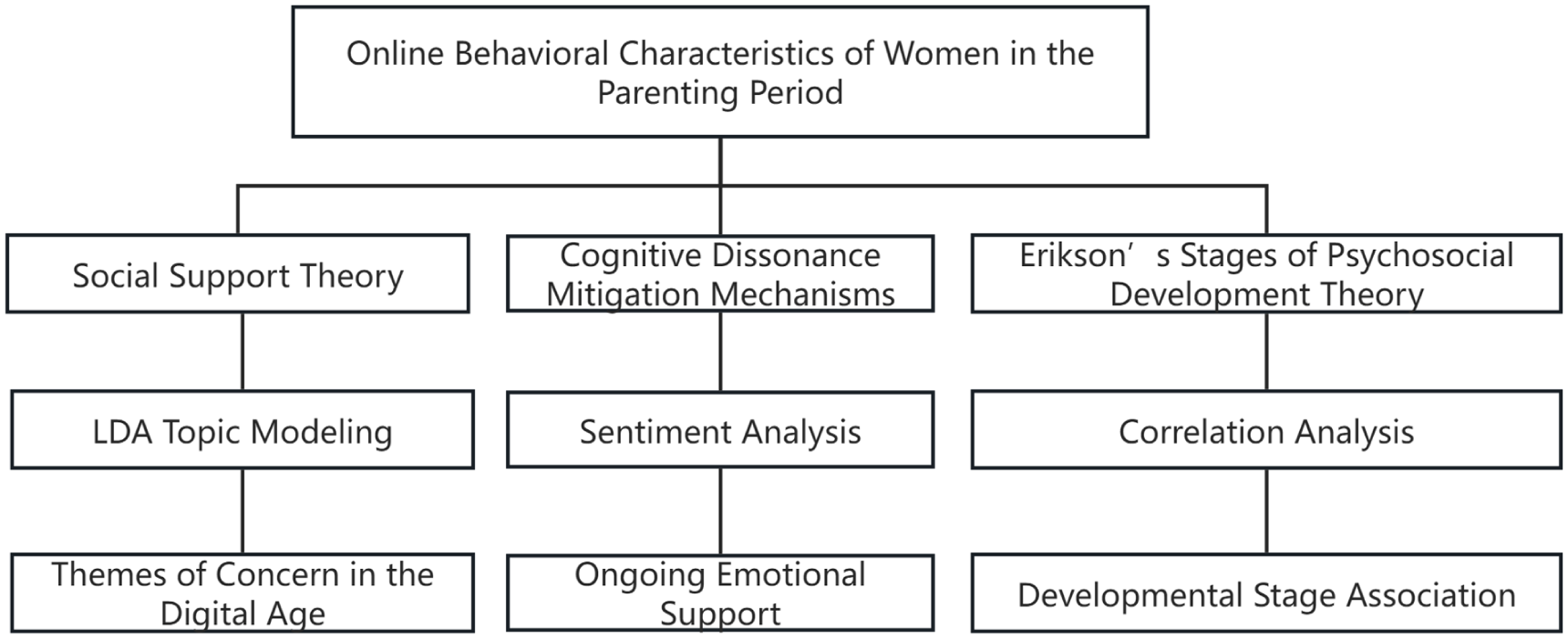
Research framework diagram.
Data and methods
Text data source
The selection of cities is based on the China National Total Fertility Rate (TFR) in 2022. TFR is a statistical indicator that estimates the average number of children a woman is expected to have in her fertility year, based on the fertility rate for a specific observation year (Salvati et al., 2020). There are two factors that contribute to the selection of cities from Jilin Province, Heilong Jiang Province, and Liaoning Province: 1. The provinces they belong to, with TFR data of 760, 751.4, and 740.9, are ranked 27th, 28th, and 29th out of a total of 31 provinces in the national rankings. These rankings are significantly lower than the national average of 118.1. Therefore, the fertility status and experiences of women in these provinces provide a suitable area for a typical study. 2. The three provinces are geographically close to each other and located in the northeastern part of China. They are also adjacent to one another. This proximity ensures that the data samples collected from these provinces minimize the influence of policy, institutional, and historical cultural differences on the research. The cities are chosen based on a thorough evaluation of their GDP and population in the three provinces. Feasibility tests, including website restrictions in the area, are conducted. Data localization is performed in the top nine cities: Dalian, Shenyang, Yangchun, Harbin, Daqing, Anshan, Jilin, Zizihar, and Fushun.
To gather an ample amount of text data, the researchers selected the site’s yearly data as the primary source. They determined the exact launch time by recording daily data over a short period. Consequently, the study utilized two datasets: one encompassing a one-year timeframe (2021–2022) with a total of 5,890 online mothers who published 17,538 data points (yielding 17,258 distinct texts after deduplication); the second dataset consisted of continuous 24-hour data collected over a span of 14 days. The dataset was collected using the web crawler software “Houyi,” which operates on the popular Chinese website mama.cn. This software selectively gathers information from specific fields. The fields selected for this study include the geographic region of maternal childbirth, text publication timestamps, child age, counts of comments and replies, and participation titles. According to SimilarWeb (www.similarweb.com), mama.cn is a highly popular online platform offering comprehensive pregnancy and parenting information, functioning as a Q&A hub. It hosts 32 localized city-specific forums, including Guangzhou Mama Wang, Beijing Mama Wang, Tianjin Mama Wang, and Xi’an Mama Wang. It is the only parenting website to receive investment from Tencent. The site averages 425,500 monthly visits, with an average session duration of 4 minutes and 55 seconds and a high pageview-per-visit rate. Additionally, the platform is linked to mobile applications “Mama Wang Yunyu (Pregnancy)” and “Mama Wang Qingliao (Light Chat),” enabling real-time sharing and updates of content posted on the website. This integration not only amplifies the volume of information but also meets the demand for instant updates, making mama.cn an ideal platform for this study.
Methods
This paper examines the digital behavior of moms in the virtual community on a website, specifically looking at the research conducted by previous scholars, initially utilizing LDA (Westrupp et al., 2022). Thematic modeling, together with the use of TF-IDF (Term Frequency-Inverse Document Frequency) approaches (Arroyo-Fernández et al., 2019), can enhance cluster accuracy. Thematic modeling is a robust tool for data mining and has the potential for data discovery (Chen et al., 2022; Hu, 2021). To enhance the accuracy of theme documentation, we incorporate the TF-IDF algorithm for keyword extraction, enabling us to establish the connection between data and text documentation. The detailed technique is provided in an appendix. By the end of this section, we will obtain several categories of keywords that are grouped together in the text. The number of categories represents the quantity of topics, and the common keyword pointing to the subject is the subject’s name. The determination of the number of topics is based on the perplexity test, which proves that the most suitable number of topics is five when k = 5. The chart is placed in the appendix. It is important to note that LDA only provides a category of words with a shared nature and cannot directly determine the theme. Therefore, researchers in each country must reasonably select the specific name for the subject based on the language context used. Thus, the selection of a suitable name for the topic is dependent on the language context utilized and can be considered an intentional intervention in presenting the final results.
Since mothers are in different stages, the study is divided from the childhood stage to investigate specific participation in the community of the mothers’ groups raising young children (0-1-1, 1-2, 2-3 years old, using basic statistical analysis tools). Including the type of themes, they participate in and the characteristics of their active time, this is the second major part of the study. This section employs traditional correlation analysis to examine variable relationships, with results systematically presented through ANOVA tables. In order to delve deeper into the emotional consequences of new identity changes or childbirth challenges in women during the childbearing stage, we have chosen to conduct a meticulous emotional study (Guzman and Maalej, 2014). The emotional dictionary text analysis approach is a method used to analyze text based on emotions. Sentiment analysis (SA), also referred to as Opinion Mining (OM), is a natural language processing technique used to classify and analyze the emotional analysis of people’s views, emotions, attitudes, opinions, etc. on various entities (such as themes, products, and services) (Birjali et al., 2021). In the field of emotional analytics, the emotion dictionary holds significant importance and is extensively utilized in the process of emotion analysis (Ahmed et al., 2020). In the current era, the application of computer technology development to study the experiences of Chinese mothers provides valuable insights and references for future research on women’s groups. By analyzing emotions in web text, researchers can establish a more effective emotional research process and overcome media limitations. This allows them to understand the overall emotional characteristics and expressions of the group in a larger context. This allows them to understand the overall emotional characteristics and expressions of the group in a larger context. The construction process of emotional dictionaries primarily involves the integration of machine learning techniques, such as the identification of emotional words, point-to-point information algorithms, and the calculation of emotional intensity. However, the assessment of emotional polarity is limited to simple categorizations of positive, neutral, and negative (Zhang et al., 2018), resulting in a rudimentary emotional analysis. This paper uses the emotional vocabulary ontology library of Dalian University of China (Wang and Xia, 2016), which explores how the dictionary may provide a more accurate description of the emotional intensity of words in Chinese grammar and expression patterns. It also examines how verbal interpretation can identify and evaluate the seven emotions. Examples of these seven emotional and composite phrases are provided: PA: joy, happiness, delight, smiling, overjoyed, etc.; PD: reverence, respect, admiration, respectful, solemn, etc.; NE: displeasure, frustration, irritability, upset, seeking trouble, etc.; NB: sadness, grief, sorrow, heartache, mournful, etc.; NC: fear, timidity, fear, scared, trembling with fear, etc.; NA: anger, indignation, anger, furious, mad, etc.; PC: strange, marvelous, surprised, jaw-dropped, etc., can achieve the effect of fine-grained recognition of emotional texts to help determine the emotional health of the mothers in the study group at that stage and the capacity to accurately discern and analyze the subtle nuances of emotional texts enables the assessment of the emotional well-being of the mothers in the study group at this particular time. The process will be fully completed only based on the outcomes of machine learning.
Results
The primary subject that mothers investigate
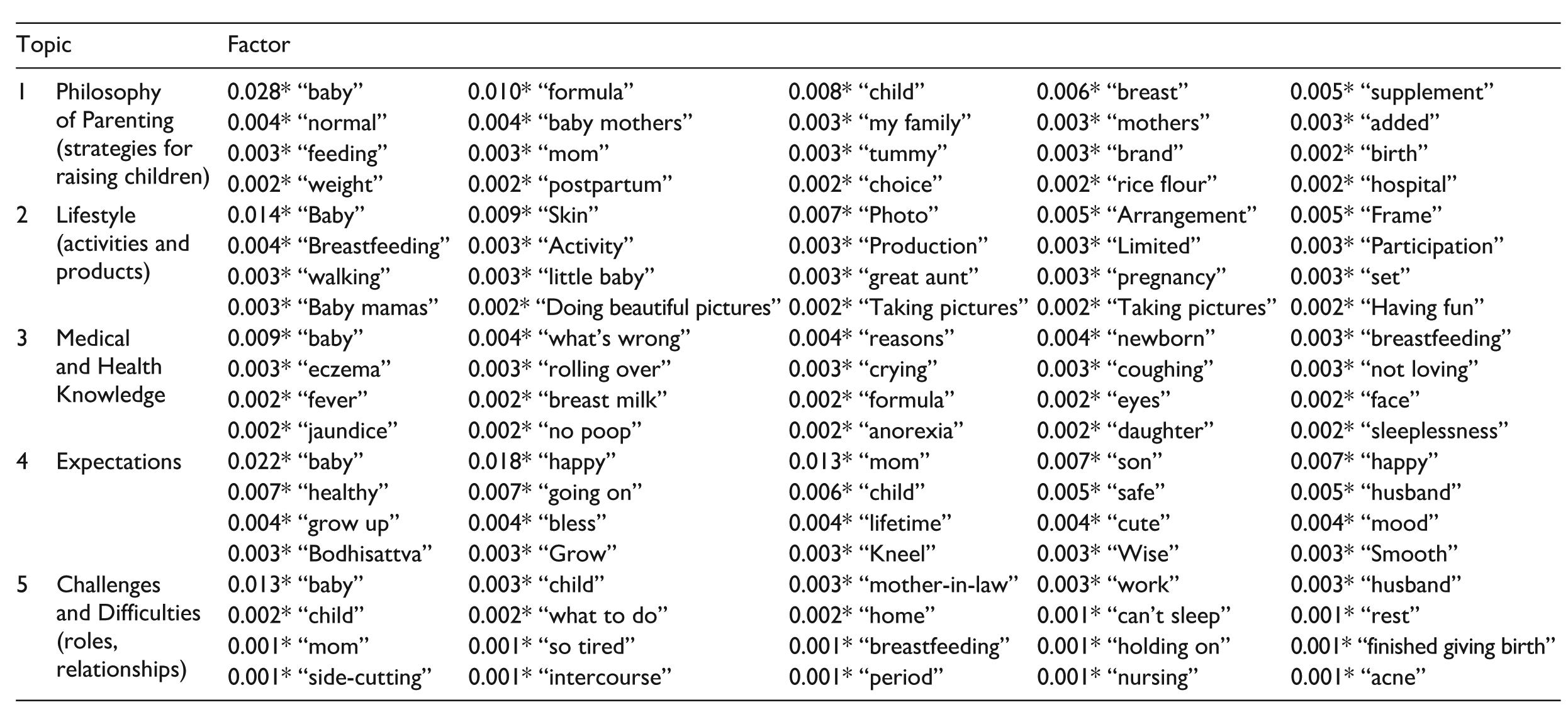
The discussion of Mama’s daily lives and moral difficulties created a speech space to examine circumstantial rationality and normative judgments that shaped expectations about how to behave as a newborn mother. The aggregate results presented the number of Topics in five categories, each containing 20 keywords in the category, a total of 100 keywords (see Appendix table). This section presents the classification results using the LDA methodology. Regarding the overlap between Theme 4 and Theme 5, based on the results of the tests and manual semantic identification, this is a genuine semantic association (both involve family stress) rather than a model error. The findings reveal alignment with the four-dimensional model of social support theory while demonstrating distinct digital cohort characteristics. During specific time periods, mothers among the website visitors primarily focused on the following five themes:
Category 1 (Topic 1): The theme of Children’s Philosophy aligns with the informational support and information sharing dimensions of Social Support Theory, centering on appropriate dietary care practices for young children and encompassing educational strategy development. The most commonly used words in this topic are “baby,” “milk powder,” “child,” “mother’s milk,” and “supplementary food.” The focus is on the importance of breastfeeding for the baby, which signifies the beginning of new responsibilities for the mother in terms of post-parenting. This marks the start of the mother’s involvement in childcare. Additionally, there is a shift in identity, as reflected in the change of self-nickname from “mothers” to “babies.” This indicates the mother’s recognition of her transition in this stage, and the frequent use of “post-parental” words suggests an understanding of the new life after childbirth.
I also overlooked the concept of “hidden hunger”, I thought I had been very careful to match the baby’s diet, but I did not expect that there were still omissions.
Category 2 (Topic 2): Lifestyle (Activities & Products). This theme primarily focuses on young children’s daily routines and activities, demonstrating conceptual parallels with social comparison mechanisms in maternal digital communities. We have observed that the words “photo”, “production”, and “walk” frequently appear in outdoor activity posts shared by mothers. This suggests that mothers are primarily interested in sharing their children’s daily behavior as they gradually adapt to their role as caregivers. This is also a clear indication of the division of labor in child care. Additionally, terms such as “skin” and “menstruation” are mentioned in the context of lifestyle. This indicates that mothers not only care for their children but also pay attention to their own physiological needs. These lifestyle posts often include related products and brands, creating social capital connections. We view this as a positive exploration of daily life.
How to prevent red farts? More than 9 months, as a new mother alone with children I have accumulated some experience, diapers change often (I will change every time before feeding or baby poop) after the poop water rinse buttocks to dry, apply buttock cream, choose the right baby diapers to choose fast absorption, breathable good.
Category 3 (Topic 3): Within the framework of informational sharing support, medical/health knowledge, which focuses on the health and medical issues of young children, from the keyword can be found the theme demonstrates the side of mutual assistance of women in early childhood in child health issues, seeking help and support on specific children’s health issues such as rash, fever, crying, yellow fever, and lactation, through “what’s going on” and “cause”, asking questions at will show the inclusion of the site also shows the encouragement and support that other mothers have, although for technical reasons we cannot show comments on the posts, the researchers found that in the responses to such posts are more than encouraging logical reasoning and help, can be seen as a direct representation of the use of childcare sites to seek help; because of the health problems in the incubation phase, the onset of disease, the implementation of measures, and the economic consumption of the actual medical needs in the post-therapy sections, this is the way in which information is published and reasonably encouraged to be the habit of mothers to publish initiative posts.
What is the transcutaneous jaundice value for a full term 34-day old newborn, 12.6 is it high?
Category 4 (Topic 4): Characterized by highlighting advantageous attributes of discussed issues to address uncertain future conditions, this cluster exhibits pronounced emotional and companionship support functions. The key words in the text indicate the presence of positive emotions such as “happy,” “happily,” “healthy,” and “successful.” These words convey a sense of hope for the future. Additionally, there are numerous references to “Buddha” and “blessed,” which are commonly used in traditional Chinese culture to express devout prayers to the gods. The theme of the text also includes blessings for family members, specifically “husband” and “children.” In contrast to our preconceived notion of “expecting to be a better mother,” the focus of the text’s discourse is on others rather than oneself. This lack of exploration of self-expectation is what makes it particularly unique.
Mom is not perfect, and sometimes she can’t help but yell at you, but no one loves you more than mom. While others welcome your birth with laughter and joy, your mother has to die for your first cry.
Category 5: Focusing on maternal negative emotional articulations during early postpartum stages, this theme exclusively embodies emotional and esteem support dimensions, with online communities providing vital platforms for cathartic release and identity reaffirmation. These emotions are related to their physical changes, family situation, return to work, difficulties in adapting to physical changes while still conforming to the expectations of the “work-out mother” role, and the additional unpaid household work that most women undertake after the division of childcare responsibilities within the family. The presence of key terms such as “insomnia”, “too tired”, and “what to do” reveals the anxiety, frustration, and partially uncontrolled emotions that moms openly express in this platform for speech.
It is said that mothers are great, they can endure all kinds of discomfort during pregnancy, they can also endure the pain during delivery, and they can also endure staying up all night to breastfeed. I’m no longer the delicate little girl I used to be, I’m the mother of a child who can stay up all night, be so tired that she can’t stand up, and be so annoyed that she collapses and then heals herself.
The LDA theme model is a text cluster model that visually clusters the five themes into bubble graphs in Excel. The distance between bubbles provides insight into the correlation between themes. Closer or more overlapping bubble spaces indicate overlap or relevance between themes, such as Themes 4 and 5. On the other hand, larger gaps between bubbles indicate a stronger cluster effect of the model, as seen with Themes 1 and 3. Furthermore, we utilize the proximity characteristics of bubbles within bubbles to deduce that in the domain of speech, Theme 2 (life style) exhibits a stronger correlation with Theme 4 (expectations and visions), while Theme V (negative emotional leakage) is more prominent. The latter encompasses both instances of emotional expression that are contrary to each other (word-type co-emotionality) and instances that are distinct (theme emotion), indicating a propensity to articulate their unique language during that particular phase of the theme.
Developmental stage-based analysis of community participation patterns
Rooted in Erikson’s theory of psychosocial development (Erikson, 1963), this study categorizes maternal child-rearing stages through offspring age markers:
Infancy (0–1 year): Corresponds to the trust-building critical period, requiring mothers’ immediate responsiveness to infants’ physiological needs;
Toddlerhood (1–2 years): Aligns with the autonomy development phase, characterized by children’s environmental exploration and emerging self-awareness;
Early Childhood (2–3 years): Maps to the initiative cultivation stage, marked by significantly heightened social engagement demands.
Within the Mama platform, each user’s text data is annotated with child age information to form developmental identity labels. This categorization enables us to examine stage-specific needs, such as whether distinct developmental phases correspond to differentiated discussion themes—including “feeding safety” focus during infancy and shifts toward “social guidance” in toddlerhood—as well as track developmental transition effects. It facilitates analysis of adaptive adjustment patterns in maternal community engagement during children’s transition from “complete dependence” (0–1 years old) to “limited autonomy” (2–3 years old). Additionally, temporal patterns are revealed through post timestamp data, identifying stress-sensitive periods within the diurnal cycle for mothers at different stages, such as the peak nocturnal activity among infant-stage mothers reflecting sleep deprivation stress. This developmental perspective intervention transforms static age grouping into a dynamic demand-response analytical framework, better elucidating the phased evolution patterns of parenting challenges and corresponding support strategies.
Thematic features of community participation
In the previous section, 17,538 texts authored by 5,890 online mothers were organized into five themes. These recurring themes permeated the texts, reflecting the varied concerns of mothers across different stages. The themes were analyzed in terms of maternal characteristics within the community, facets of child development stages, common challenges faced by mothers, and coping mechanisms. To examine the relationship between the age of mothers’ children and their thematic focus, a Pearson correlation test was conducted, with results presented in an ANOVA table (Table 1). A heatmap, structured by monthly intervals, categorized children into three age groups: Category a (children under one year old: 0 ⩽ n ⩽ 11 months), Category b (children aged 1–2 years: 12 ⩽ n ⩽ 23 months), and Category c (children aged 2–3 years: 24 ⩽ n ⩽ 35 months). The color intensity in the heatmap is positively correlated with the volume of posts published under each theme. When analyzing temporal participation density, it is evident that maternal online engagement peaks during the year of childbirth.
Significant correlation between age and topics of interest.

The depth of color in the chart was found to be positively correlated with the number of posts published under the theme. Upon analyzing the phase density in Figure 2, it becomes evident that mothers are most engaged on the Internet during the year they give birth. The speech patterns transition from real-life interactions to a diverse array of virtual communities that support fostering. This shift is accompanied by a change in the philosophical and lifestyle perspectives of foster mothers. During this period, mothers tend to prioritize matters related to fostering, rather than their own emotional regulation and familial concerns. The philosophical interchange and acquisition of knowledge about child-rearing is connected to the adoption of novel methods and concepts required by the modern generation of mothers throughout the childbirth process. Consequently, there is a need to facilitate the dissemination of child-rearing knowledge through reciprocal exchange.
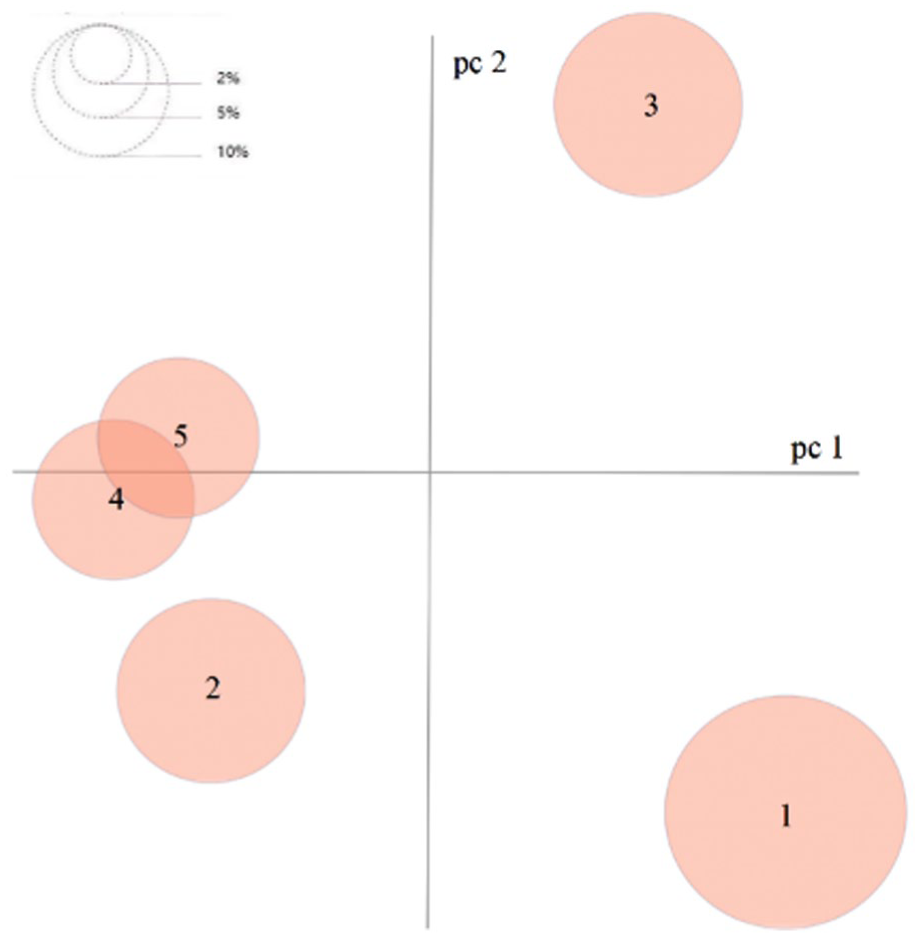
Schematic distribution of five types of themed bubbles.
Significantly, the figure reveals that the theme’s status is influenced by both the level of attention given to it and the objective fraction of users. The study revealed that among the 17,258 data analyzed, 78% of the mothers belonged to the A-type category. Furthermore, it was observed that during the first 30 days after childbirth, there was a maximum of 16% of A-type mothers. However, when the child reached the age of 12 months or older, there was a notable decline in the mothers’ inclination to engage in online communication, as well as a significant decrease in their participation in various discussion topics. Mothers of children under the age of one are highly engaged in discussions on child-rearing websites, making them the most prominent group of participants among the five identified themes. This may be attributed to the atypical conditions experienced by the mother who has recently undergone a change in her social standing, as well as the unemployment prevalent in the real-life sports community. At this point, moms are very motivated to discuss and embrace the principles of childcare, specifically in terms of evaluating the feasibility of incorporating nursing and baby care practices, going beyond mere lifestyle adjustments. Mothers classified as B-class have shown a notable rise in their focus on a variety of activities and social opportunities in their lives. This shift has moved their attention from solely breastfeeding to a more comprehensive approach to parenting. They are now paying more attention to their child’s development and the social environment they are exposed to, as well as their own social interactions. Mothers in category C experienced a greater number of difficulties and obstacles during childbirth. These included the discomfort associated with raising multiple generations and the insufficiency of job retraining. The proportion of mothers facing these challenges was the largest among the three categories. It is important to note that because the data covers a one-year period, there are multiple instances of the same user IDs appearing at different times throughout the year. This suggests that a significant number of mothers remain active in the community, addressing new challenges that arise at various stages of their child’s development. This ongoing engagement ensures that the website community remains relevant and useful as children grow.
Temporal characteristics
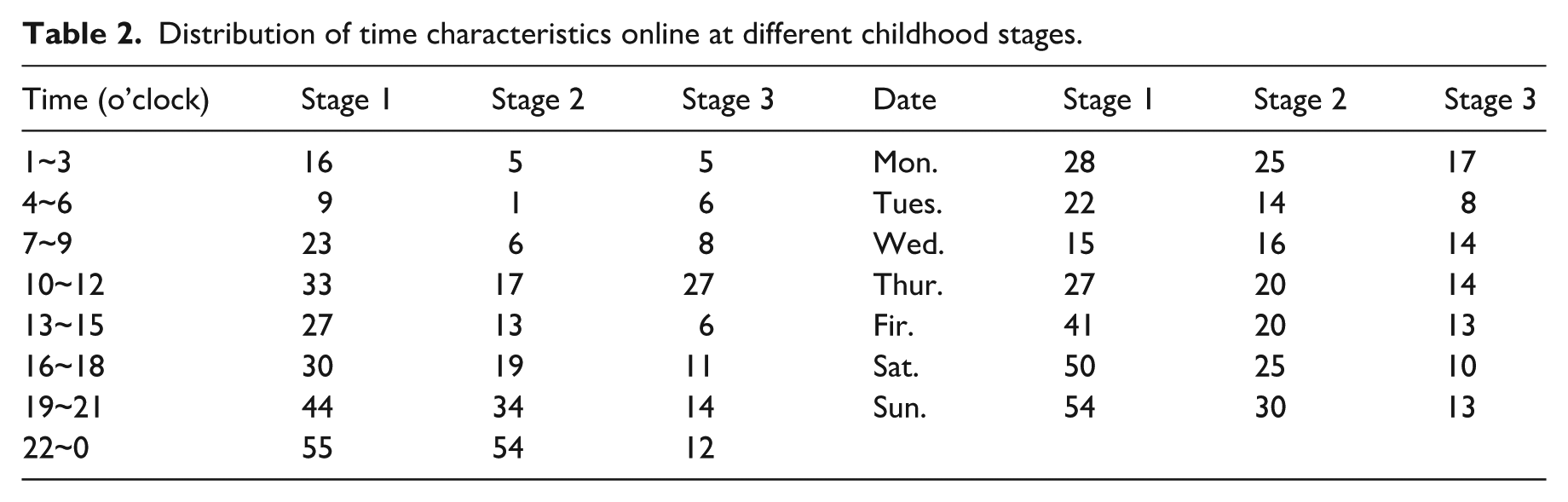
The researchers gathered data on the daily Internet usage patterns of women throughout the early stages of motherhood in nine cities located in three northeastern provinces of China. The data was collected uninterruptedly for a period of 14 consecutive days, encompassing all 24 hours of each day. The study reduced the time interval to an hourly basis in order to evaluate the online behavior of women in various stages of motherhood on participating websites. Analyze the active duration of various demographic segments is essential for comprehending their website usage patterns, since different segments display distinct habits and behaviors towards the website. Through a direct comparison (Table 2), it was noted that mothers who are engaged on mama.cn exhibit the following attributes: Firstly, there is a disparity in the active groups, which corresponds to the general distribution of active individuals on the website. More precisely, there is a substantial disparity in the online presence of mothers between the age groups of 0–1 years and 2–3 years, with the former having nearly three times the number of online mothers compared to the latter. Furthermore, the level of activity exhibited by moms at various phases within a certain timeframe also indicates a certain level of consistency and uniformity. Mothers in all three periods had increased levels of involvement in website interactions throughout the evening hours (18–21) and late at night (22–0), based on Chinese dietary and sleeping habits. Moreover, we found that the group’s activity was not only determined by the tempo of their daily routines and professional obligations. The difference in activity levels between weekdays and days off for the participating mothers on the website was minimal. While there was a slight uptick in activity during days off in comparison to weekdays, the total numerical change was negligible.
Distribution of time characteristics online at different childhood stages.
Sentiment analysis
The emotional dictionary is a tool used for analyzing emotions. It examines the behavior of a group on a website to help researchers better understand the group’s behavior and needs. We are particularly interested in understanding how local women in a fertile context manage childbirth difficulties and adapt their self-role representation. Emotional recognition can provide insight into the fundamental attitudes of mothers towards birth outcomes (Figure 3).
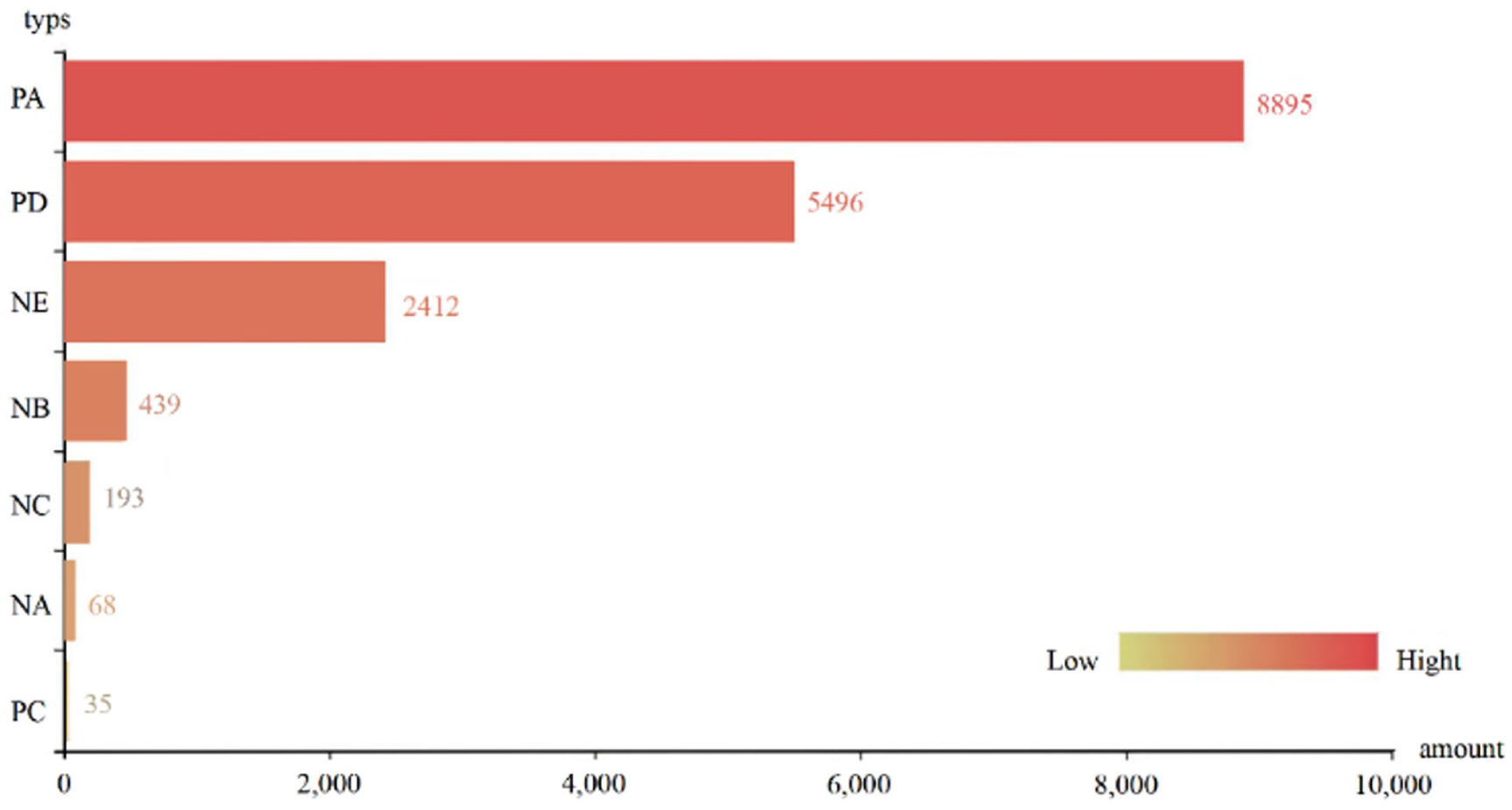
Percentage of results for seven categories of sentiment analysis of text.
Specifically, PA (n=8,895) represents 50.1% of the total emotional category, along with PD (n=5,496), which signifies positive emotions and contributes to the overall emotional volume. Conversely, NE, NB, NC, NA, and PC do not play a substantial role in the emotional analysis results. Subsequently, by observing the positive mood examples judged to be PA and PD, the most of them are recommending parenting products to each other and taking the initiative to share their parenting life, such as:
Look what I found out what’s good, the lazy man automatic cooking pot halakha I liberated my hands, according to the recipes directly to all the ingredients seasoning all poured into the pot. . .
Been working full time with a baby for over a year now, from the start of preparing my waiting bag to now, either being recommended or on the way to being recommended, from an empty home for 2 people to a corner full of. . .
. . .has heard a lot of talk about strong mothers destroying families before, and here it is, a little more. Even if a mother is strong, please love her a little more.
We argue that this phenomenon arises from cognitive coordination to mitigate contradictions, rooted in the fundamental tension between real-world parenting pressures—exemplified by intergenerational conflicts, career disruptions—and the societal expectation of the “perfect mother.”
The emotional modulation strategies identified include:
Linguistic reframing: Euphemizing challenges, such as substituting “experience sharing” for “pleas for help.” For instance, medical discussions in Theme 3 frequently adopt vague inquiries like “What’s going on?” to soften urgency.
Anxiety attenuation and symbolic transformation: Converting personal struggles into collective blessings, as seen in Theme 4 with phrases like “Bless our children,” reframing individual hardships as communal hopes.
Positive closure: Emphasizing self-recovery after negative expressions, exemplified by cases in Theme 5, where mothers conclude narratives with affirmations of resilience.
Undoubtedly, the sustained cultivation of positive emotions significantly bolsters mothers’ courage and capacity to navigate challenges and communicate effectively during childbirth and parenting. While childbirth and childcare are not inherently daunting, confronting these responsibilities alone can be overwhelming. As intensive parenting practices become increasingly prevalent, fostering collective solidarity and mutual support among mothers is imperative. By doing so, they create a repository of inspiring narratives for future researchers to analyze, ensuring that the extraordinary resilience and determination mothers exhibit in adversity are neither overlooked nor undervalued. This collective ethos not only mitigates isolation but also highlights the transformative power of shared experience in redefining societal perceptions of motherhood.
Discussion
The role of parenting websites in supporting mothers
Intensive parenting, a dominant ideology demanding mothers to invest significant attention and care in child-rearing (Hays, 1996), underscores the critical role of parenting websites in China’s maternal social support system, as validated by this study. The five themes identified through the LDA topic model—childcare, lifestyle, medical health, aspirational expressions, and emotional venting—align closely with the tripartite framework of social support theory: informational, emotional, and instrumental support (Cutrona and Russell, 1990). For instance, mutual-aid discussions in Theme 3 (Medical Health) not only provide informational support but also strengthen emotional bonds through “encouraging logical reasoning,” reflecting how online communities empower mothers through dual pathways of “knowledge sharing” and “emotional resonance” (van Uden-Kraan et al., 2008). While these findings resonate with studies on international platforms like Mumsnet (Pedersen, 2016) and Babytree (Zhao and Basnyat, 2018), this research further uncovers culturally specific practices in the Chinese context. For example, the integration of traditional cultural symbols such as “Buddha” (Fo) and “blessings” in Theme 4 highlights mothers’ fusion of traditional beliefs with digital tools to navigate uncertainty, thereby expanding the cultural dimensions of “digital mothering” theory (Mackenzie and Zhao, 2021).
The thematic exploration of this platform satisfies our curiosity about the topics mothers prioritize in parenting communities. They openly discuss the joys and challenges of childbirth, the impact of postpartum sexuality on marital relationships, and strategies for managing tensions with mothers-in-law—a dynamic that, if unresolved, can lead to postpartum mental health issues in Chinese families (Song and Zhang, 2012). Traditionally, public expression of such issues has been stigmatized as deviating from the “sacred maternal ideal” in Chinese culture, leaving women with few avenues for seeking validation or support in offline communities.
Notably, the adjacency of Theme 5 (Negative Emotional Venting) and Theme 4 (Positive Aspirations) in Figure 2 reveals the complexity of maternal emotional expression. Mothers simultaneously employ religious symbolism to attenuate anxiety (e.g., “blessings”) and adopt “positive closure” strategies (e.g., “self-recovery” narratives) to reframe distress. This duality reflects the tension between the “myth of motherhood” and real-world pressures, while underscoring online communities’ function as a “safety valve”—a space where mothers subvert societal expectations of the “perfect mother” and achieve cognitive reconciliation through anonymous expression.
Age-stage mapping of maternal behavioral patterns
A phase-based analysis grounded in Erikson’s developmental theory reveals distinct stage-specific patterns in mothers’ online behaviors. During infancy (0–1 year), mothers exhibit heightened activity in Theme 1 (Childcare) and Theme 3 (Medical Health), with peak engagement occurring late at night (10:00 PM–12:00 AM, Figure 4), mirroring sleep deprivation pressures linked to newborn care. As children transition into toddlerhood (1–2 years), maternal focus shifts toward Theme 2 (Lifestyle), particularly social activities and product sharing, reflecting a progression from “survival needs” to “developmental priorities.” This finding challenges traditional assumptions of static parenting stress, emphasizing the necessity of a dynamic lens to parse the evolution of maternal demands.
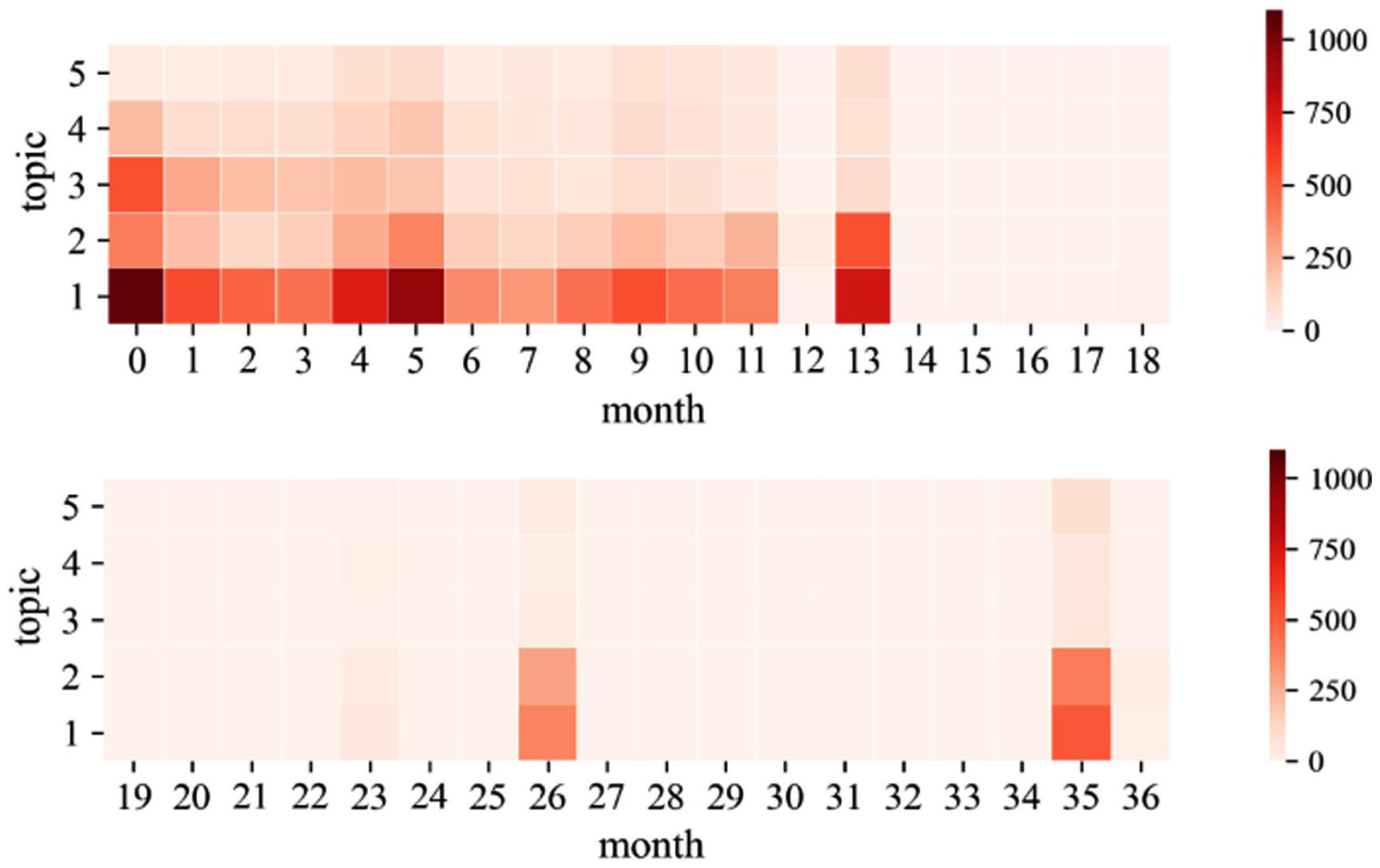
Displays the degree of interest among users at various phases in the topic.
Furthermore, data indicate a significant decline in maternal engagement once children surpass 2 years old (Figure 3). This may correlate with mothers’ return to the workforce, shifts in caregiving responsibility allocation (e.g., grandparental involvement), and suggests opportunities for platforms to design retention strategies targeting high-attrition phases—such as introducing dedicated sections on “early childhood education” or “working mothers’ strategies.” These interventions could address unmet needs while fostering sustained community participation.
Sustained emotional support amid cognitive dissonance
Sentiment analysis reveals that positive emotions (accounting for 75.7% of PA + PD scores) dominate online discourse. However, the potential misdirection of “positivity bias” demands critical scrutiny. Superficially, this aligns with existing conclusions that social support alleviates parenting stress. Yet, the prevalence of high-frequency terms like “insomnia” and “breakdown” in Theme 5 indicates that ostensibly positive expressions may partially originate from linguistic reframing strategies—where mothers reconstruct “pleas for help” as “experience sharing” to conform to the community’s normatively positive atmosphere. This “emotional modulation” phenomenon suggests that relying solely on machine learning-based sentiment classification risks underestimating the intensity of negative emotions. It necessitates integrating qualitative analysis to uncover the underlying tensions embedded in these discourses.
The interplay between overt optimism and covert distress underscores the complexity of maternal emotional labor in digital spaces. Such dynamics highlight the need for hybrid methodologies to decode the gap between performative positivity and latent vulnerability, ensuring a holistic understanding of how mothers negotiate societal expectations while navigating the realities of intensive parenting.
Innovation and shortcomings
Unlike previous studies that analyze the parenting characteristics of women in the parenting stage by comparing the behavior of parents on parenting websites (Ammari et al., 2018), this paper specifically examines the concerns of Chinese women in the parenting stage and how they seek social support through parenting websites. It also explores the impact of perceived social support on predicting and reducing the risk of postpartum depressive symptoms (Liu et al., 2022). The study suggests specific research implications and does not rely on a summary of behavior differences between genders, such as discussing topics in the parenting section. Previous studies have extensively examined the social and institutional factors that shape the experiences of postpartum women (Price et al., 2018; Sawyer et al., 2019; Xie et al., 2021). This paper contributes to this discussion by analyzing data on the use of childcare websites by women in early childbirth. It uncovers patterns in the utilization of publicly available user information and time data, which may go unnoticed by observers. By effectively utilizing user disclosure information and timing data, this paper presents a more comprehensive understanding of how childcare websites facilitate social support for women in need, surpassing previous research in this area. Chivers’s (2020) utilization of analysis techniques such as theme analysis, sentiment analysis, and word frequency calculation in her article bears resemblance to the content of this study. However, we have achieved a more extensive collection of seven sentiment categories, expanded the feasibility of expressing sentiment, and identified themes related to the characteristics of Chinese women. Additionally, we have overcome the constraints imposed by demographics and geographic information by identifying positive parenting experiences on the parenting experiences on the website.
Limitations of this study include the reduction in the range of behaviors that had to be made and the limitation of the data surface. In the study, we were very curious about how the mothers had interacted in each of the replied posts, but due to the insufficient technical preparation for viewing the replies in the data collection, it was not possible to observe the replying behaviors, and subsequent similar studies could be enriched in terms of technical means and types of websites in order to expand the scope of the study population and the coverage of the behavioral data. In addition, the data source of this study comes from data crawling generated by machine learning, and future studies can also use qualitative research methods such as in-depth interviews to validate and supplement the conclusions in order to gain a more comprehensive understanding of the behaviors and emotional expressions of women in the childcare period in the website community.
Conclusions
The examination of online mothers should question the belief that women experience a significant rise in postpartum anxiety and communication needs. It should emphasize the advantages of their active sharing of information to ensure the authenticity of the study. Additionally, it should demonstrate how advancements in virtual platforms can assist in reducing insecurity and enhancing motivation among these mothers. This study also illustrates that providing a subjective account of early childhood experiences might provide light on the less-observed phases of life, not only in China but also in other regions. This approach can serve as a means to support women after childbirth, helping them overcome feelings of isolation and vulnerability that may be prevalent in certain cultures.
Footnotes
Appendix table
| Topic | Factor | |||||
|---|---|---|---|---|---|---|
| 1 | Philosophy of Parenting (strategies for raising children) | 0.028* “baby” | 0.010* “formula” | 0.008* “child” | 0.006* “breast” | 0.005* “supplement” |
| 0.004* “normal” | 0.004* “baby mothers” | 0.003* “my family” | 0.003* “mothers” | 0.003* “added” | ||
| 0.003* “feeding” | 0.003* “mom” | 0.003* “tummy” | 0.003* “brand” | 0.002* “birth” | ||
| 0.002* “weight” | 0.002* “postpartum” | 0.002* “choice” | 0.002* “rice flour” | 0.002* “hospital” | ||
| 2 | Lifestyle (activities and products) |
0.014* “Baby” | 0.009* “Skin” | 0.007* “Photo” | 0.005* “Arrangement” | 0.005* “Frame” |
| 0.004* “Breastfeeding” | 0.003* “Activity” | 0.003* “Production” | 0.003* “Limited” | 0.003* “Participation” | ||
| 0.003* “walking” | 0.003* “little baby” | 0.003* “great aunt” | 0.003* “pregnancy” | 0.003* “set” | ||
| 0.003* “Baby mamas” | 0.002* “Doing beautiful pictures” | 0.002* “Taking pictures” | 0.002* “Taking pictures” | 0.002* “Having fun” | ||
| 3 | Medical and Health Knowledge | 0.009* “baby” | 0.004* “what’s wrong” | 0.004* “reasons” | 0.004* “newborn” | 0.003* “breastfeeding” |
| 0.003* “eczema” | 0.003* “rolling over” | 0.003* “crying” | 0.003* “coughing” | 0.003* “not loving” | ||
| 0.002* “fever” | 0.002* “breast milk” | 0.002* “formula” | 0.002* “eyes” | 0.002* “face” | ||
| 0.002* “jaundice” | 0.002* “no poop” | 0.002* “anorexia” | 0.002* “daughter” | 0.002* “sleeplessness” | ||
| 4 | Expectations | 0.022* “baby” | 0.018* “happy” | 0.013* “mom” | 0.007* “son” | 0.007* “happy” |
| 0.007* “healthy” | 0.007* “going on” | 0.006* “child” | 0.005* “safe” | 0.005* “husband” | ||
| 0.004* “grow up” | 0.004* “bless” | 0.004* “lifetime” | 0.004* “cute” | 0.004* “mood” | ||
| 0.003* “Bodhisattva” | 0.003* “Grow” | 0.003* “Kneel” | 0.003* “Wise” | 0.003* “Smooth” | ||
| 5 | Challenges and Difficulties (roles, relationships) | 0.013* “baby” | 0.003* “child” | 0.003* “mother-in-law” | 0.003* “work” | 0.003* “husband” |
| 0.002* “child” | 0.002* “what to do” | 0.002* “home” | 0.001* “can’t sleep” | 0.001* “rest” | ||
| 0.001* “mom” | 0.001* “so tired” | 0.001* “breastfeeding” | 0.001* “holding on” | 0.001* “finished giving birth” | ||
| 0.001* “side-cutting” | 0.001* “intercourse” | 0.001* “period” | 0.001* “nursing” | 0.001* “acne” | ||
Statements and declarations
This study does not involve the privacy ethics of patients or participants, because the data obtained in this study are completely from the text data of the Internet, and it is completely anonymous, and there are no direct participants in the study.
Declaration of conflicting interests
The authors declared no potential conflicts of interest with respect to the research, authorship, and/or publication of this article.
Funding
The authors disclosed receipt of the following financial support for the research, authorship, and/or publication of this article: This work was supported by a grant from the Youth Program of the National Natural Science Foundation of China (grant number: 41901187).
Ethical statement
Data for this study were collected via web scraping from publicly accessible discussion threads on the Mama.cn online community forum. We acknowledge that user-generated content may contain personal opinions or experiences. To protect user privacy, all data were rigorously anonymized during analysis; usernames and any other personally identifiable information were removed. The research focuses on aggregate patterns and thematic trends, and no individual users are identifiable in the findings presented. This study was conducted for academic purposes only and adheres to established research ethics principles.
