




Abstract
Farmer Producer Organisations (FPOs) are a viable alternative to cooperative farming, offering a commercialization model and improved income for smallholders. However, their adoption is often met with mixed sentiment among farmers, who lack capital, technical expertise, and institutional innovations. This study aims to explore the sentiments related to the adoption and success of FPOs in establishing a beneficial platform for small and marginal farmers, using Preferred Reporting Items for Systematic Reviews and Meta-Analyses (PRISMA), sentiment and thematic analysis. The findings suggest that FPOs can enhance marketing strategies and agricultural productivity, but their impact on agriculture is case-sensitive. Cooperatives, characterized by member ownership and bottom-up development approaches, are essential factors in the context. A programmatic and comprehensive understanding of FPOs can help to develop a better agricultural and allied business ecosystem for diversified categories of farmers. Study aims to assess the sentiments and success potential of FPOs under an abundance of small and marginal farmers, comparing them to cooperative and contract farming legislation, to encourage a sustainable agribusiness ecosystem in India.
Introduction
Smallholder agriculture is widely recognized as a crucial driver of economic development and poverty reduction in developing countries (Landy, 2013). Nearly 43.96% of India’s population 1 depends on agriculture and allied sectors, which provide 18.3% of the country’s GDP. 2 However, Indian agriculture is characterized by small and marginal farmers. According to the 2011 Census, over eighty-five percent of farmers are classified as small and marginal, with an average holding size of 1.16 ha, and the operational landholdings have increased drastically from 71 million in 1970-71 to 137.8 million landholdings in 2010-11. Consequently, the average landholding size decreased from 2.28 ha to 1.16 ha over this period. Nagayets (2005) states India has 92 million small holdings, 21% of 450 million global, making it the second-largest global holder, behind China. Small and marginal farmers often struggle to maximize their profit in the unorganized agricultural industry. Due to its importance to the economy, the Union Budget 2022-23 outlines a comprehensive strategy for the Indian agriculture industry and increases the Budget allocation to Rs. 1,24,000 crores for the Ministry of Agriculture and FW. 3 The recent fiscal plan also prioritizes rural infrastructure, food security, and farmer income security.
Small and marginal agricultural producers often have limited “capital and technical expertise” (Thamizhselvi and Rao, 2010) and frequently encounter challenges stemming from the absence of essential institutional innovations required to effectively tackle existing market failures (Hazell et al., 2010; World Bank, 2008). The enhancement of small-scale farmers’ involvement in agricultural production can be ameliorated by means of collective actions (Vadivelu and Kiran, 2013), as well as through the mitigation of market imperfections (Fischer and Qaim, 2012; Olwande and Mathenge, 2011). The need for Farmer Producer Organisations (FPOs) has emerged because of the recognition of such farmers’ collectives as an essential mechanism for linking smallholders to modern markets, encompassing both input and output channels, thereby facilitating numerous benefits at this interface.
In theoretical terms, FPOs is a collective approach to agricultural activity, characterized by the distinct feature of providing ownership to each participating farmer. The benefits of FPOs can be multifaced such as common property management, technology development and testing, rural infrastructure management, and marketing of manufactured outputs (Tinsley, 2004). FPOs quietly link unorganized farmers to organized sectors and increase farmers’ income. Membership in FPOs can increase agricultural production, provide a higher return on agricultural investment (Mukherjee et al., 2018), improve management of natural resources, yield economic benefits to farmers (Gramzow et al., 2018), and promote their general welfare (Mwaura, 2014), all of which have a positive effect on the income of small-scale farmers (Bachke, 2009).
Despite this importance, there is scant research describing the effectiveness of FPOs in agribusiness marketing and income earning potentials of marginal and smallholding farmers. Even if smallholders can access markets, poor bargaining position limits their ability to reach agreements with significant customers (Penrose-Buckley 2007). Indian Government attempted to gear up the growth in the agricultural sector through FPO, but the success is limited. Moreover, India faces threats to small farmers’ livelihoods due to liberalization, privatization, and private capital interest in agriculture (Trebbin and Hassler, 2012). Therefore, there exists a strong requirement for revisiting collectivization in the agricultural sector in the Indian economy. To bridge the gap, this study conducts a literature review on the adoption of FPO in agriculture, focusing on their strengths, weaknesses, and impact on agribusiness. The review is structured by describing the methodology and dividing articles into factors related to FPO adoption, such as sentiments, nexus in agribusiness marketing, strengths, and barriers. Finally, the study concludes and provides a future roadmap for study.
Methodology
Method of selecting articles
The Preferred Reporting Items for Systematic Reviews and Meta-Analyses (PRISMA) guidelines were followed (Asar et al., 2016), to report the literature review on the adoption of FPOs. Details of the PRISMA method are given in Figure 1. PRISMA flowchart.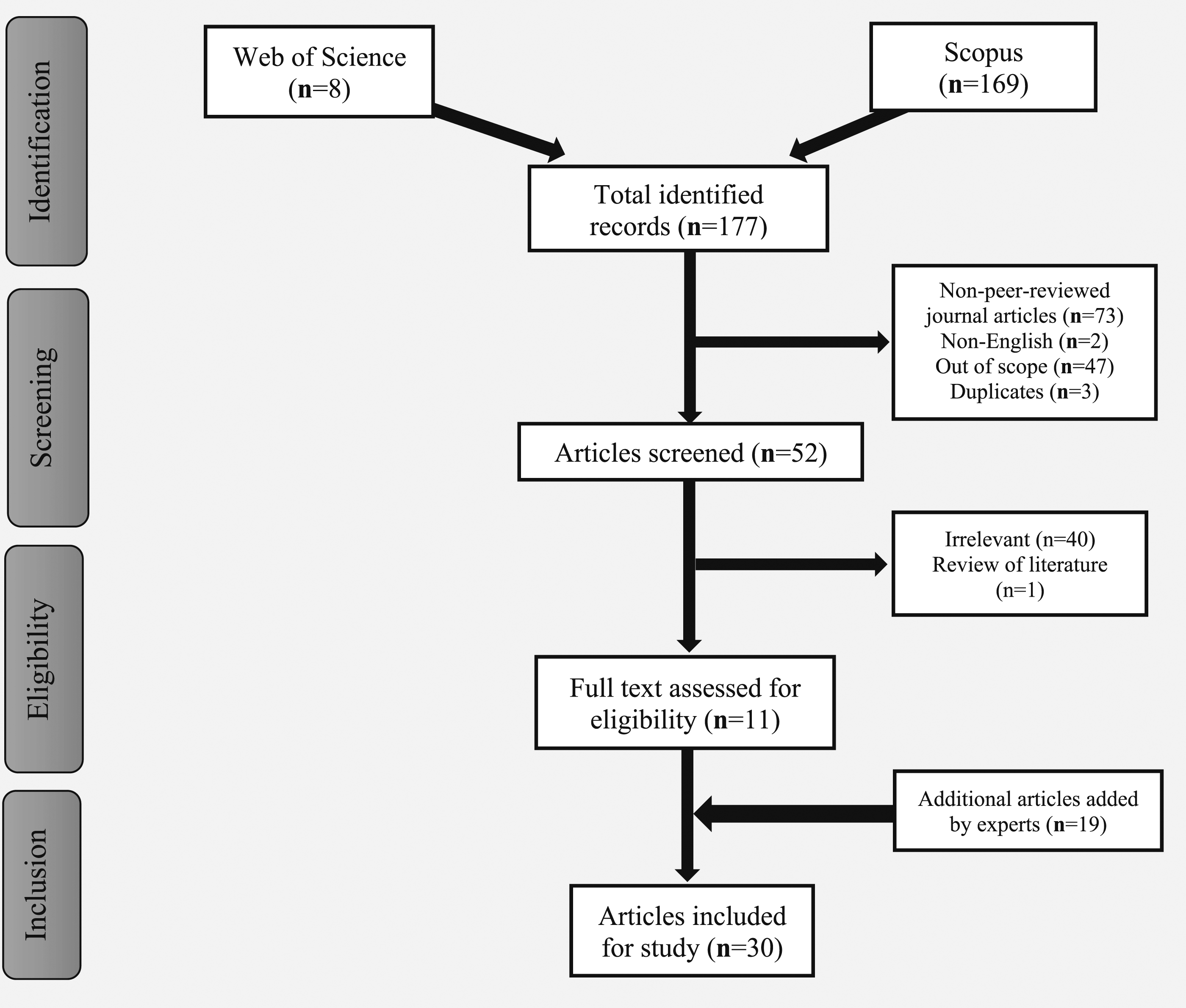
A comprehensive literature review was undertaken from January 2010 to December 2022, utilizing prominent electronic databases such as Scopus and Web of Science. The search was conducted using a set of keywords including “farmer producer organi*,” “fpo,” “participation,” “perception,” “adoption,” and “risk.” Furthermore, the bibliographies of pertinent publications were manually examined to identify the relevant works. The literature underwent analysis by two reviewers who worked independently. During this process, any duplicate sources were eliminated, and the remaining literature was carefully reviewed to determine its relevance and eligibility. A total of 52 papers were selected for comprehensive evaluation, with a specific emphasis on the adoption of FPO. The inclusion criteria required that the studies be original research articles published in peer-reviewed journals and written in the English language. In addition, we conducted an evaluation of the bibliographies of the pertinent articles to determine the final selection of papers for comprehensive textual analysis. Furthermore, we included an additional 19 articles that closely aligned with the subject matter under discussion. In conclusion, a total of 30 papers were selected for the purpose of analysis.
Analytical strategy
The present study employed a qualitative research approach. The NVivo software was utilized to carry out a thematic and sentiment analysis of the selected articles.
Adoption of FPOs
Sentiments toward adoption of FPOs
The sentiment classification in NVivo encompassed four distinct categories: very positive, moderately positive, moderately negative, and very negative. Figure 2 visually presents the prominent outcomes derived from a comprehensive review of the literature, which collectively demonstrates a tendency toward moderately positive sentiments concerning the adoption of FPOs. This observation warrants attention, as the proportion of sentiment categorized as very negative exceeds that of sentiment categorized as very positive. The findings of this study indicate that while most of the articles analyzed express support for the adoption of FPOs, the overall sentiment is diverse (Figure 2) and may be influenced by contextual factors. Sentiment analysis.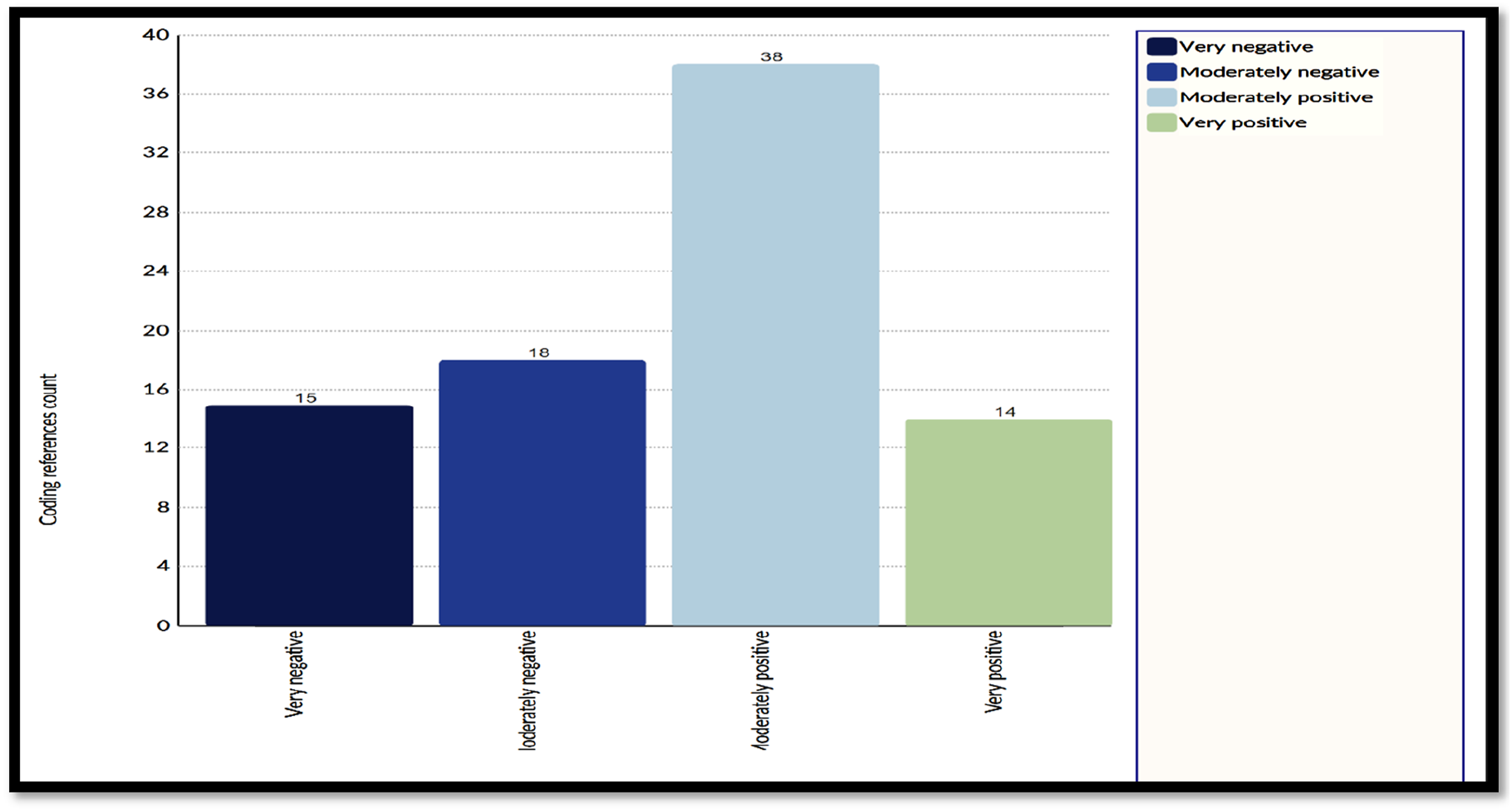
Sentiments and geographical location
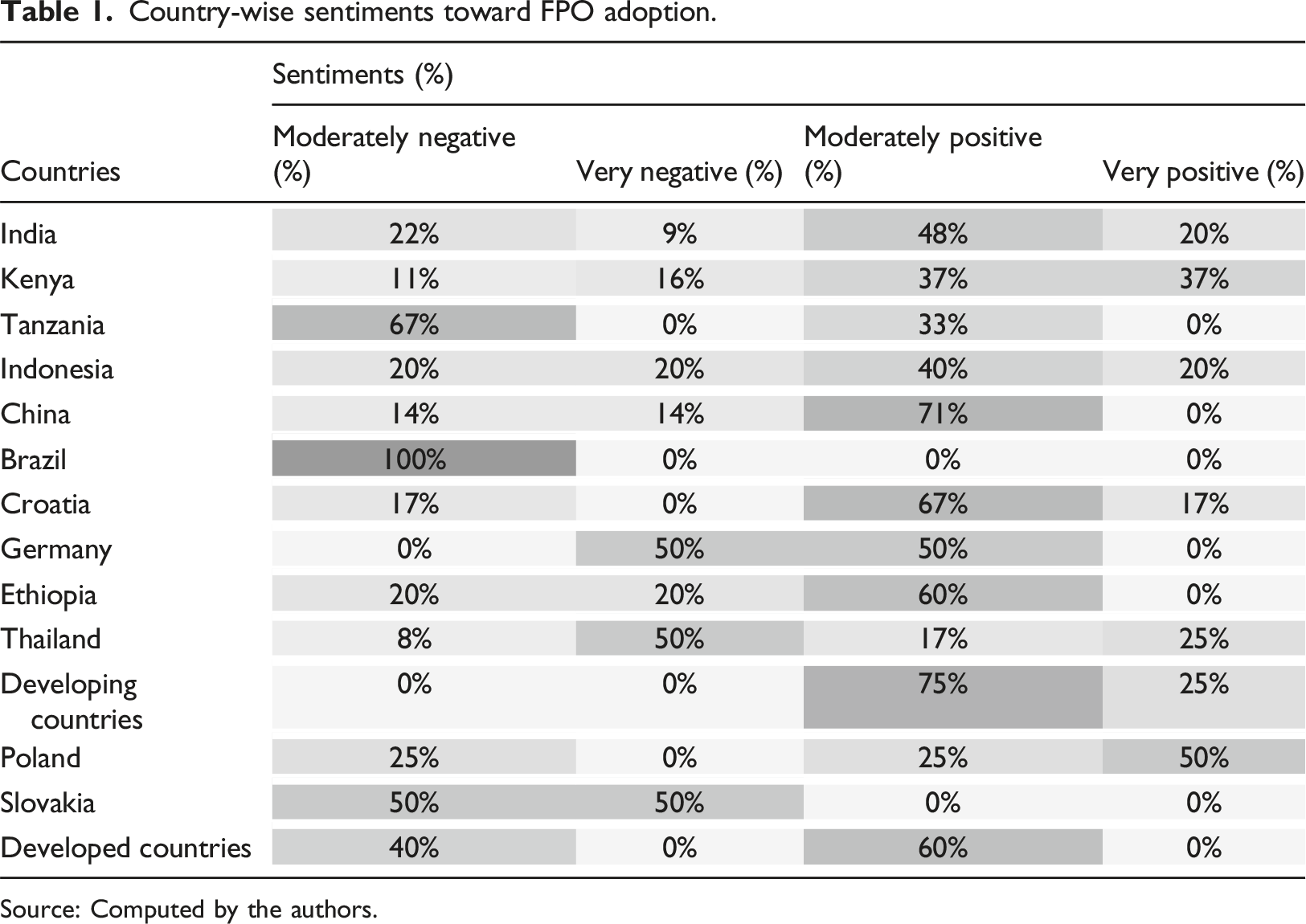
Country-wise sentiments toward FPO adoption.
Source: Computed by the authors.
Developed countries display higher proportions of moderately positive and moderately negative sentiments, suggesting a more nuanced sentiment distribution compared to developing countries. Developing countries generally exhibit higher proportions of positive sentiments (“Moderately positive” and “Very positive”) compared to developed countries. Regional patterns of sentiment are also visible, with Kenya and Slovakia having notable “Very negative” sentiment percentages, Brazil’s overwhelming “Moderately negative” sentiment indicating strong negativity in public discourse, and China’s higher “Moderately positive” sentiment and lack of “Very positive” sentiment suggesting a tendency to focus on the positive while avoiding extremely positive sentiments.
Sentiments across the themes
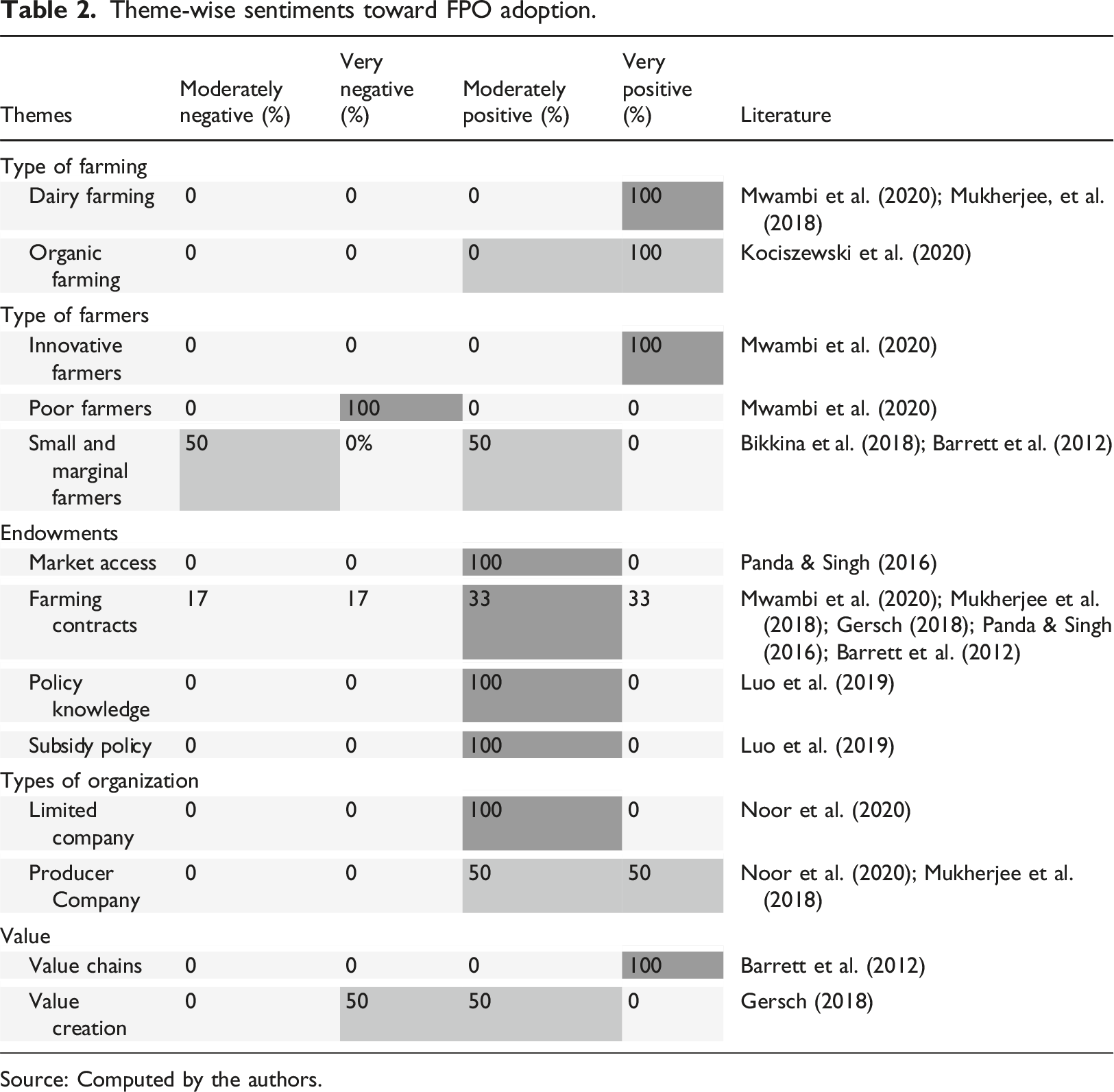
Theme-wise sentiments toward FPO adoption.
Source: Computed by the authors.
The findings highlight the diverse viewpoints present in discussions on dairy farming, innovative farmers, organic farming, market access, policy knowledge, subsidy policy, limited company, and value chains. Positive sentiments are evident in themes related to value chains, market access, and policy knowledge, while negative sentiments indicate concerns or challenges faced by poor farmers. The mix of sentiments for small and marginal farmers highlights the complexity of views on this category. The differing sentiments for value creation may reflect debates or concerns about the effectiveness of value-added processes. Overall, the text highlights the importance of considering diverse viewpoints in discussions on various aspects of agriculture.
FPO nexus in agribusiness
Contract farming (CF) and FPO
A study conducted by Gersch (2018) compares contract farming and producer organization models to address economic challenges in fragmented and small-scale agriculture. He found that contract farming benefits households’ economic risk, while producer organization improves income. According to him, both models supplement and can be used in combination. Participation in contract farming has been associated with welfare gains, but there is also a significant extent of contract noncompliance and dynamism in these value chains.
Which type of Producer Organization (PO) is (more) inclusive? The organization structure of farmers’ membership and participation in the decision-making process plays a major role in the ultimate success of FPOs. Another important aspect is which type of PO is inclusive-bargaining PO or producing PO (Mwambi et al., 2020). There is a significant trade-off between marketing performance and inclusiveness in Rural Producer Organizations (RPOs). For example, poorer farmers often avoid RPOs, despite indirectly benefiting from them, but are often excluded from decision-making processes (Bernard and Spielman, 2009).
FPO and agro-marketing
Smallholder farmers in developing countries are encouraged to join cooperatives to improve livelihoods and overcome marketing constraints (Mojo et al., 2017). However, in low-income countries, supermarkets and commodity-processing firms transform smallholder farmers’ marketing channels by transforming their relationships with firms (Barrett et al. (2012). Buxton (1979) and Imam et al. (2014) have identified five gaps in the field of agro-marketing that necessitate the involvement of merchant market actors for smallholder fresh produce producers. The gaps encompass temporal gaps, spatial gaps, quantitative gaps, as well as gaps in communication and knowledge. Consumers may lack knowledge of the origins of desired goods, whereas manufacturers may lack awareness of potential buyers.
FPO toward agri-diversification
The role of FPOs in enhancing agricultural output as depicted by the literature is multi-faceted. The economies of scale and scope that the FPOs can avail upon procuring agri-produces from multiple sources would help them to reduce costs and thereby explore more marketing opportunities. The backward and forward linkages created by the FPOs do help the farmers to diversify and market their agri-products. Sustainable farming involves enhancing agricultural productivity, sustainable livelihood as well as product diversification. Thus, the performance of FPOs depends crucially on how integrated the FPO is and how widespread its upstream and downstream linkages are. The effective coordination of an FPO across vertical and horizontal dimensions can yield significant benefits for buying a diverse range of products. Vertical coordination refers to the integration of multiple contract forms, while horizontal coordination involves collaboration with various farmer organization types, both of which are favored by potential purchasers. This coordinated approach has been found to effectively minimize transaction costs, as highlighted by Vroegindewey and Hodbod (2018). Also, literature shows FPOs well-connected vertically or horizontally can provide better market access, and have more impact on the smallholder vegetable farmer’s income (Aku et al., 2018).
The literature explores the Farmer Producers Company as a New Generation Cooperative, focusing on strategic problems and emerging potential (King et al., 2021). A comparative analysis in Karnataka examined market facilities received by members and non-members. Networking connections between FPOs and supporting agencies, particularly non-governmental organizations, have facilitated backward and forward linkages and essential market services, including high-quality inputs and timely information (Darshan et al., 2019).
FPO versus noncontract small and medium-sized enterprises (SMEs)
The midstream components of commerce, processing, and logistics involve a heterogeneous array of actors along the value chain who provide a varied range of supplementary services to agricultural producers. These services are rendered beyond the scope of formal contractual arrangements for resource provision but are not limited exclusively to major organizations; instead, it is widespread among SMEs (Liverpool et al., 2020). The classification of focal actors is based on their involvement in transactions, specifically as suppliers of agricultural inputs (e.g., chemical fertilizer: IS1) or providers of services (e.g., warehouse rental: L1) (Liverpool et al., 2020).
However, the literature suggests a bottom-up approach for small and marginalized farmers to enhance agricultural productivity and achieve sustainable livelihoods through member ownership and democratic operation (Panda and Singh, 2016). Nevertheless, it is worth noting that while value addition has the potential to enhance profitability for FPOs, a significant number of these organizations encounter obstacles that hinder their ability to engage in such activities. These constraints mostly stem from limited access to financial resources, a dearth of qualified labor, and other technical complexities (Thomas and George, 2018).
Strengths of FPO
Establishment of farmers’ markets
Within the realm of agricultural markets, a multitude of sequential stages and diverse participants are engaged, commencing from the provision of inputs, and culminating in the activities of retail vendors at the forefront of the market. The comprehensive range of stakeholders in this context encompasses many individuals and groups, including in-loaders operating at the farm, transporters, off-loaders situated at the market, in-market stall agents, market security agents, market license officers, wholesalers, and retailers (Mburu, 2020). The author observed that the implementation of farmers’ markets, which enable direct delivery from farmers to retailers, serves to reduce the length of the value chain connecting farmers and consumers. This reduction in intermediaries is projected to result in a significant boost of approximately 60% in farmers’ income. The interaction between farmers and retailers not only contributes to the enhancement of farmers’ profits but also facilitates the identification of market demands, thereby ensuring that farmers cultivate marketable crops. According to the research conducted by Bernard and Spielman (2009), rural producer organizations, specifically cooperatives, play a crucial role in facilitating the commercialization of smallholder farmers. The study examines the correlation between the implementation of inclusive and bottom-up principles and the marketing performance of these organizations.
Intermediary and role of FPO
Indian agriculture faces significant challenges due to the presence of intermediaries at various levels, layers, and capacities. This has led to malfunctioning institutions, cost escalation, and below-potential value addition. The role of intermediaries should be kept within bounds to prevent price distortion and lack of competitiveness. Factors such as farmers’ ignorance of large procurers, transportation costs, and long-term relationships with intermediaries contribute to these issues. FPOs have reduced middlemen’s power, allowing farmers to benefit directly from the money shared with them. However, concerns remain, such as recruiting qualified managers and maintaining salaries due to financial limitations.
Concerns and discussions in regulation and policy domains surround the effectiveness of FPOs in facilitating improved market access for farmers. Insufficient or unattainable transportation infrastructure and a dearth of communication networks impede the farmers’ ability to access profitable markets and create chances for local traders and intermediaries to engage in rent-seeking behavior (Negi et al., 2018).
FPOs toward inclusive farming
What are the dynamics of farmers’ membership and participation in the decision-making process? Which type of PO is inclusive-bargaining PO? Producing POs are discussed in the literature as specific cases (Mwambi et al., 2020). While the UN set the goals for Sustainable Development Goals (SDGs) which involves sustainable farming (SDG 2) inter alia, India started preparing for institutional and structural reforms toward that endeavor. On one hand, sustainable farming achieves the target of food security, and on the other hand, this will mitigate poverty and hunger-related developmental concerns.
A strand of agro-economic literature explores the concept of institutional reforms and rearrangements, specifically focusing on Contract Farming (CF). This literature posits that CF has the potential to generate a triple-win scenario, benefiting companies (sponsors), smallholders, and the environment (Vamuloh et al., 2020; Vamuloh et al., 2019). These studies demonstrate that the success of CF can have substantial beneficial consequences for SDGs pertaining to food security, poverty alleviation, climate change mitigation, and other relevant areas.
FPO and bargaining power
Farmer Producer Companies (FPCs) aim to mobilize small-scale farmers in India for collective bargaining power, empowering them and eliminating middlemen, but have not achieved success (Tandon, 2019). Smallholder farmers face limited access to big markets due to insufficient local markets and expensive transport, resulting in low-priced produce sales to traders (Hegde, 2010). The FPOs by its design can help farmers get higher earnings by directly selling their produce to the companies or traders. Thus, FPOs can help manage to get the right or fair price for their produce. Moreover, individual farmers when bargaining with intermediaries mostly cannot exercise their bargaining strength, which is feasible when specialized organizations with better managerial expertise do the bargaining on their behalf (Tandon, 2019; Trebbin and Hassler, 2012). In regions or states where marginal and smallholders and tillers with no ownership rights are highly skewed, FPOs can play a pivotal role in improving smallholders’ welfare (Mojo et al., 2017). Most studies consider FPOs to be homogeneous; however, it is extremely crucial while drawing any inference about the role of FPOs in improving small holders’ welfare or bargaining power to consider types of FPOs. Authors argue that POs have significant organizational structures and functionality differences, and studies should focus on these differences for better performance (Bijman et al., 2016; Michalek et al., 2018; Mwambi et al., 2020; Zhong et al., 2018). Also, differences do exist between types of POs such as Bargaining PO or Processing PO. Moreover, the potential for profit growth in FPOs lies in their ability to enhance value and improve management practices. Many FPOs face obstacles in achieving these objectives, including limited access to financial resources, a shortage of trained labor, and technical obstacles (Thomas and George, 2018).
Sustainable livelihood and regulatory mechanism of FPO
In the realm of agricultural production, a notable disparity exists between large-scale farmers and their smaller, more marginalized counterparts. This discrepancy stems from the differential access to networks and markets that these farmers possess, ultimately influencing their ability to effectively manage their income. Large farmers often have well-developed networks and markets and exhibit a large capacity to navigate the intricacies of income management to high levels. On the other hand, small and marginal farmers lack bargaining strength and encounter significant challenges in securing their rightful share of income within the agricultural sector. However, the cooperative business model like FPOs can enhance the principles of self-help, democracy, equality, and solidarity, and serve as an inclusive framework to facilitate the provision of goods, services, and livelihood opportunities to low-income communities in economically sustainable manners (Bijman and Wijers, 2019).
Weaknesses of FPO
FPOs/FPCs are combinations of both cooperatives and private companies. They often face challenges due to intense market competition and a shortage of skilled and competent managers to oversee the operations of such organizations. According to a study undertaken by the National Bank for Agriculture and Rural Development (NABARD, 2022), the availability of a skilled workforce to effectively administer FPOs in rural areas is limited. Moreover, FPOs frequently face significant financial constraints, hindering their ability to effectively provide goods and services to their members and establish trust. Such a financial crisis curtails access to affordable credit to needy members of FPOs, resulting from the absence of collateral and credit history (Baruah et al., 2022).
In the realm of Agriculture Marketing, the primary areas of study include legislation, distribution routes, and efficiency challenges (Asliddin and Suxrob, 2015). In contrast to other product categories, the field of agro-marketing has not undergone significant development in terms of adopting a marketing management approach. The primary emphasis was given on the various services that facilitate the effective transportation of agricultural goods from the production site to the end customer (Mburu, 2021). Moreover, there are ongoing concerns and discussions within the realms of legislation and policy regarding the effectiveness of FPOs in facilitating improved market access for farmers. Insufficient or unattainable transportation infrastructure, along with limited communication networks, impedes the ability of farmers to access profitable markets and generates middlemen opportunities to engage in rent-seeking activities (Negi et al., 2018).
Conclusion and the way forward
To the best of our knowledge, this is the first research to evaluate the regulatory discourse around FPOs, contrasting them to contract farming and cooperative farming laws in the service of promoting sustainable agriculture in India and sentiments about FPOs’ acceptance. FPOs represent a relatively new policy design in India with recent pilot interventions, and the existing data availability constraints limit the scope of drawing rigorous inferences at this stage. Nevertheless, through thematic analysis of the available literature, valuable insights have been gained into the evolving landscape of FPOs in India and the potential policy implications for ensuring their impactful transition.
The sentiment analysis of our study shows moderately positive sentiment, influenced by contextual factors. FPOs can enhance agricultural output by streamlining marketing processes and exploring new opportunities. However, their impact on agribusiness is nuanced and context-dependent. Bottom-up group development processes, member ownership, and democratic operation are crucial. The cooperative business model offers potential solutions for improving smallholder welfare and bargaining power.
This study has certain limitations. Firstly, there is a limited number of published journal articles on FPO in the Indian context. So, it was difficult to measure wide subcategories of the themes across the journal articles. Finally, the study ignored the analysis of the sentiment of FPO adoption across various themes, which is a potential area for future research studies.
Footnotes
Declaration of conflicting interests
The author(s) declared no potential conflicts of interest with respect to the research, authorship, and/or publication of this article.
Funding
The author(s) received no financial support for the research, authorship, and/or publication of this article.
