




Abstract
To mitigate the effects of global warming, there is a need to increase public awareness and knowledge as the global temperature continues to rise. In this regard, the purpose of this study is to evaluate how YouTube facilitates the dissemination of information and awareness about the notion of global warming. This study also shows the types of information available in global warming-related YouTube videos and the types of channels that upload these videos most regularly. In total, 443 videos and 25,993 comments were collected from the YouTube platform using the “Webometric Analyst” software and various search strings using the YouTube API key. The attributes of videos were evaluated with MS-Excel, while the sentiment of comments was analyzed with R-Studio. In 2006, only one video was submitted, however in 2022, 108 videos were uploaded, indicating that the demand for video uploads is steadily increasing. Two hundred and sixty-six videos (60.05 percent of the total) were uploaded with a focus on the meaning and concepts of global warming, whereas just 24 videos highlighted the causes of global warming. While uploading videos about global warming, developers also use phrases such as “climate change” and “greenhouse impact.” By analyzing the comments, it was discovered that the majority were favorable, indicating that viewers were content with the accessible videos. To understand the idea and concept of global warming, YouTube has a sufficient number of videos, however to know the causes or reasons for global warming, YouTube has a very limited number of videos. Therefore, additional videos on the causes and reasons for global warming are required.
Introduction
Global warming refers to the long-term increase in the average surface temperature of the Earth, which is mostly driven by the emission of greenhouse gases into the atmosphere by human activities (Papalexiou and Montanari, 2019; Wang et al., 2019). It is an important part of climate change, which involves broader alterations in temperature patterns, precipitation, sea levels, and weather events (Mikhaylov et al., 2020). The Earth’s atmosphere contains greenhouse gases such as carbon dioxide (CO2), methane (CH4), nitrous oxide (N2O), and water vapor that occur naturally. These gases operate as a blanket, keeping the Sun’s heat from escaping back into space and retaining it instead. This natural greenhouse effect is necessary for life on Earth because it keeps the world warm enough to support diverse ecosystems. Human activities, including as the combustion of fossil fuels (coal, oil, and natural gas), deforestation, and industrial operations, have significantly increased the concentration of greenhouse gases in the atmosphere. The excessive emission of CO2 from the combustion of fossil fuels is the leading cause of global warming. Deforestation exacerbates the situation because trees absorb CO2 and release oxygen.
According to NASA, global warming is the fast increase in Earth’s average surface temperature over the past century, caused mostly by the emission of greenhouse gases from the burning of fossil fuels (Riebeek, 2010). As many nations attempt to mitigate the effects of global warming by implementing various strategies and plans, the temperature continues to climb (Armstrong McKay et al., 2022). In earlier times, such as the pre-industrial age, global warming was caused by the massive combustion of fossil fuels and a sharp increase in the greenhouse effect. In modern times, these types of elements influence the Earth’s temperature to a lesser extent than they did in the past (Maslin, 2004), as the total process of global warming is caused not only by corporations, industries, or corporate entities, but also by the entire human population of the world. In order to reduce the contribution of the human population to global warming, there is a need for effective and persistent worldwide public education. In the majority of poor nations, people continue to use traditional coal or fossil fuels for cooking, burning crop residues for temporary purposes, while remaining fully unaware of the effects on global temperature. Therefore, there is a need for education and awareness among individuals in order for them to avoid previously conducted activities that ultimately affect the world temperature.
In this sense, social media participation will be highly useful for distributing information on global warming’s causes, effects, issues, and solutions. As the Internet and social media platforms increasingly serve as a source of information in the 21st century, traditional news sources are fading away (Alshalawi, 2022). People use the internet to obtain various forms of information and to clarify their understandings, as well as to solve their day-to-day difficulties. The internet displays the results that are available on many websites, as well as YouTube results on occasion. A study has shown that current learners are more interested in visually-based learning than in physical or conventional learning methods (Gordillo et al., 2022). In this aspect, the number of YouTube users is increasing relative to other social media platforms. Many firms, organizations, institutions, and governmental authorities favor YouTube as a platform for promoting their services, schemes, and/or products. In this regard, if YouTube had instructive videos about global warming, the greenhouse effect, and Earth’s temperature, it would be easier to spread awareness among people around the world, thereby reducing the global warming process. Numerous studies have been conducted highlighting the impact of social media on raising awareness across various societal issues, including environmental concerns like natural disaster (Rout, Acharya, and Acharya, 2024). Among these platforms, YouTube has emerged as a prominent medium for disseminating information. YouTube has emerged as a key platform for promoting environmental awareness through accessible and engaging content, with studies showing that videos on climate change and sustainability especially from credible sources can boost environmental literacy and concern (Abidin and Ots, 2015; Kumar and Nair, 2020). Its interactive features encourage community participation, though challenges remain, including the spread of misinformation via algorithms (Allgaier, 2019) and the risk of superficial engagement or “clicktivism” (Morozov, 2011). While eco-influencers can effectively drive awareness, their impact may be diluted by commercial interests (Keller and Nicolai, 2022). Most research has centered on Western audiences, with limited insights into long-term or cross-cultural effects. Overall, YouTube’s potential depends on content quality, media literacy, and managing misinformation.
However, there is a noticeable gap in the literature regarding how YouTube specifically contributes to spreading awareness about global warming and related topics. This study aims to address that gap by exploring the role of YouTube in educating viewers about global warming, while also examining the sentiments and perceptions of individuals after watching such content.
A growing body of literature suggests that YouTube is effective in raising environmental awareness. Choudhury and Shareef (2021a, 2021b) found that environmental videos on YouTube significantly increased viewers’ understanding of climate-related issues and influenced their attitudes towards sustainable practices. Similarly, Moghavvemi et al. (2018) reported that the platform serves not only as a source of knowledge but also as a motivational tool that can trigger behavior change, especially among younger audiences.
YouTube serves as a valuable source of climate change-related information (Duran-Becerra et al., 2020). By applying network analysis to the post-video discussion, it has been determined that climate activists are intentionally dissing climate change videos through their comments. While commenting on climate change-related YouTube videos, users frequently utilize the phrase “global warming.” It suggests that persons who are viewing these videos are aware of the connection between global warming and climate change (Shapiro et al., 2015). Shapiro et al. (2015) also emphasized that climate communication via social media is most effective when messages are strategically framed to align with audience values. By focusing on relatable themes like health impacts or economic benefits, communicators can influence perceptions and behaviors. The study highlights social media’s power to deliver targeted, persuasive content to diverse groups. Platforms like Facebook allow tailored outreach that enhances engagement with climate issues. Overall, strategic framing combined with social media reach boosts the impact of climate change communication. According to Allgaier (2020), the number of views on climate change-related videos was high. It means YouTube users are watching videos about climate change and global warming. After the publication of the IPCC Special Report on Global Warming of 1.5°C (SR15), there is a significant increase in relevant YouTube discussions. Social media, particularly YouTube, has become a powerful tool in environmental communication by enabling broad dissemination and engagement with climate content. Bounegru et al. (2020) analyzed the public’s response to the IPCC 1.5°C report on YouTube and found that both professional and grassroots voices shaped the discourse. Their study showed that emotionally resonant and critical videos gained more visibility than denialist content, suggesting growing audience interest in credible climate narratives. Its visual and interactive nature enhances understanding of complex climate issues among diverse audiences. There are numerous online videos about climate science and climate modification. As far as video material, there were still climate science fields in which no videos had been posted (Allgaier, 2016). Therefore, it may be advantageous for channels to cover all aspects of climate change-related content in order to attract a large audience. While numerous studies have indicated that social media plays a crucial role in disseminating climate-related information, no research has yet been conducted to specifically examine how YouTube contributes to mitigating the effects of global warming.
This study’s major purpose is to assess the availability of YouTube videos on global warming and the types of information included by these videos. Other specific objectives are listed below;
To determine the annual increase of YouTube videos relevant to global warming.
To find out the type of information covered by the available videos related to global warming.
To draw attention to things about videos, such as their number of views, likes, comments, popular channels, popular videos, etc.
To investigate the sentiments attached with the available videos by analyzing viewers comments.
Methodology
As previously mentioned, analyzing the content of YouTube videos about global warming has not yet been used to do a specific study. For this study, raw data were collected using a program called Webometric Analyst, with YouTube serving as the data platform. Sentiment analysis was conducted using R-Studio, which offers robust packages like syuzhet and tidytext that are well-suited for structured academic research (Silge and Robinson, 2016; Rout et al., 2024). Webometric Analyst is specifically designed for web-based data collection and link analysis, making it particularly effective for social media research (Bär, 2019). While Python’s NLTK is a powerful tool for sentiment analysis, it requires more advanced programming expertise, which may not align with the researchers’ background or the scope of the project (Pang and Lee, 2008). Additionally, both R-Studio and Webometric Analyst are widely used within the social sciences (Jockers, 2014). The selection of these tools may reflect existing institutional resources or the researchers’ prior experience. Nevertheless, a more detailed justification of the tool selection would enhance the methodological transparency of the manuscript. This free software runs on Windows and can do altmetrics, citation analysis, social web analysis, webometric analysis, and link analysis, among other things (Koulas et al., 2022; Thelwall, 2014). It usually pulls information from the web and saves it in different file formats. Before running the search, a YouTube API v3 Key was required, which was generated on the Google console platform. The YouTube API key is a code used to identify and authenticate the application or user in order to retrieve data from the respective application.
Methods
After the creation of the API key, several search phrases such as “global warming,” “global temperature,” “climate crisis” “climate heating” “environmental warming” and “global heating” were established. The keyword “global warming”, along with its synonymous terms, is directly aligned with the central research objective of understanding public sentiment toward climate change-related issues. It is a widely used term in both academic literature and public discourse, making it particularly suitable for sentiment extraction. A preliminary text analysis conducted using R revealed that “global warming” appears with notable frequency across various social media posts and news articles, underscoring its salience in public conversations surrounding climate and environmental topics. This keyword was selected for sentiment analysis due to its clear relevance to the study’s focus on climate discourse, its consistent occurrence within the collected corpus, and its specificity in representing a distinct environmental concern. Frequency analysis confirmed its prominence, and its established presence in public dialogue positions it as a reliable and meaningful term for examining sentiment trends related to environmental awareness and climate change. The search was conducted using a combination of Boolean and phrase search techniques in the webometric analyst program. During the search, the default language for gathering raw footage was English. It indicates that only videos with at least one English language title will be retrieved and videos available without any English language title were excluded for this study. It means videos which have multiple language-based titles are also included in this study. No additional parameters such as location, duration, or year were applied during data collection.
Datasets
A single search was conducted on 18 May 2023, and after human data verification, the software returned a total of 443 videos and 25,993 comments in.txt file format. The data were then copied from the.txt file format to the spreadsheet format for various analyses like year-over-year growth, number of likes, number of views, number of comments, etc. For analyzing the sentimemts of the commenters the R-studio platform was applied. R-studio is an environment for the computer language R, which is used for statistical computing and graphic design (Dos Santos et al., 2022; Flisikowski, 2022; Jaichandran et al., 2019). It is a free, open-source program that is compatible with the Windows operating system. For particular sentiment analysis, the “syuzhet” package was installed, which has the capacity to classify text into 10 distinct sentiment categories (Jockers et al., 2020; Kausar et al., 2021; Naldi, 2019). The “syuzhet” package in R categorizes sentiment using predefined lexicons like NRC, AFINN, and Bing, mapping words to emotions and sentiment scores (Silge and Robinson, 2016). These lexicons have been validated through linguistic research and human annotation, ensuring their reliability (Pang and Lee, 2008). While syuzhet works well for general sentiment, it may miss nuanced sentiment, requiring further validation for specific applications (Jockers, 2014). Additional checks or alternative methods can enhance its accuracy. After assessing sentiments, the findings were exported to a.csv file for presentation of sentiment distribution by percentage. Table 1 provides the whole list of commands used from pre-processing through export of sentiment results.
Command used for sentiment analysis in R-studio.
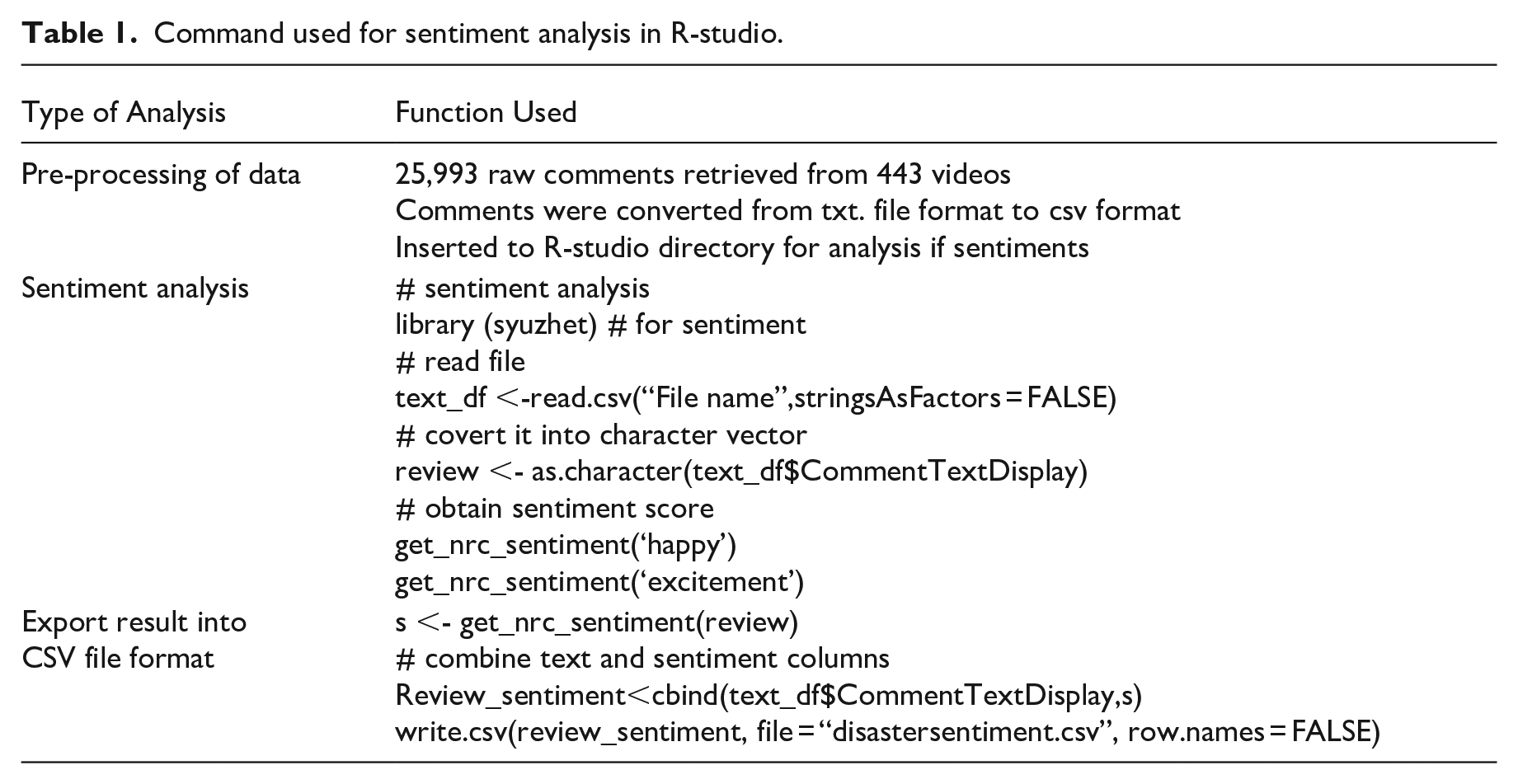
Figure 1 depicts the sequential progression of the research methodology and datasets utilized in this study. The first section of the flowcharts depicts data collection, while the second section depicts data analysis and interpretation. Initially, the Google console was used to generate the YouTube API key in order to authenticate YouTube with other applications. Following the development of the search term, a list of all YouTube videos connected to global warming was compiled. After successfully generating an API key and search phrase, the program known as Webometric Analyst, created by the Statistical Cybermetics Research Group, was instructed to collect raw data. A.txt file containing a list of raw data containing 443 videos and 25,993 comments was compiled with varied bibliographic metadata. In the second section, three methods of analysis are illustrated in general: content analysis, word frequency analysis, and sentiment analysis. Four hundred and forty-three videos were copied and pasted from text file format to spreadsheet file format for the content analysis. Using the MS-Excel spreadsheet, a variety of analyses, including the characteristics (likes, comments, and views) of videos, the growth of videos from year to year, the most relevant YouTube channels, the most relevant YouTube videos, and the type of content presented, were analyzed. For word frequency analysis, we utilized R-studio and the “bibliometrix” package to determine the frequency with which a given word appeared over the specified time period. The same R-studio platform was used for the third type of analysis, sentiment analysis, but the package for sentiment analysis was “syuzhet.”
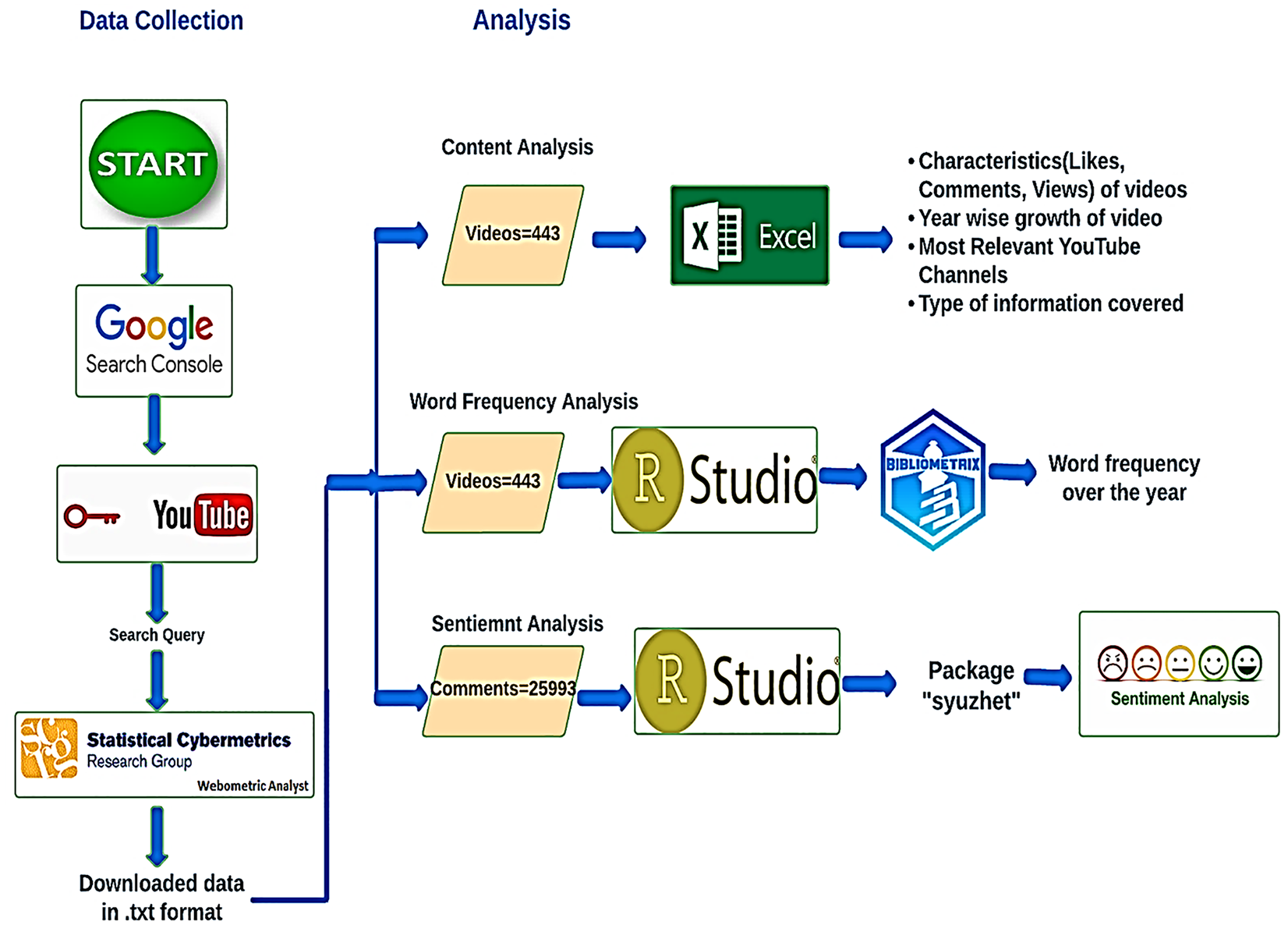
Flow chart of methodology and dataset.
Results
Year wise growth and annual growth rate of videos
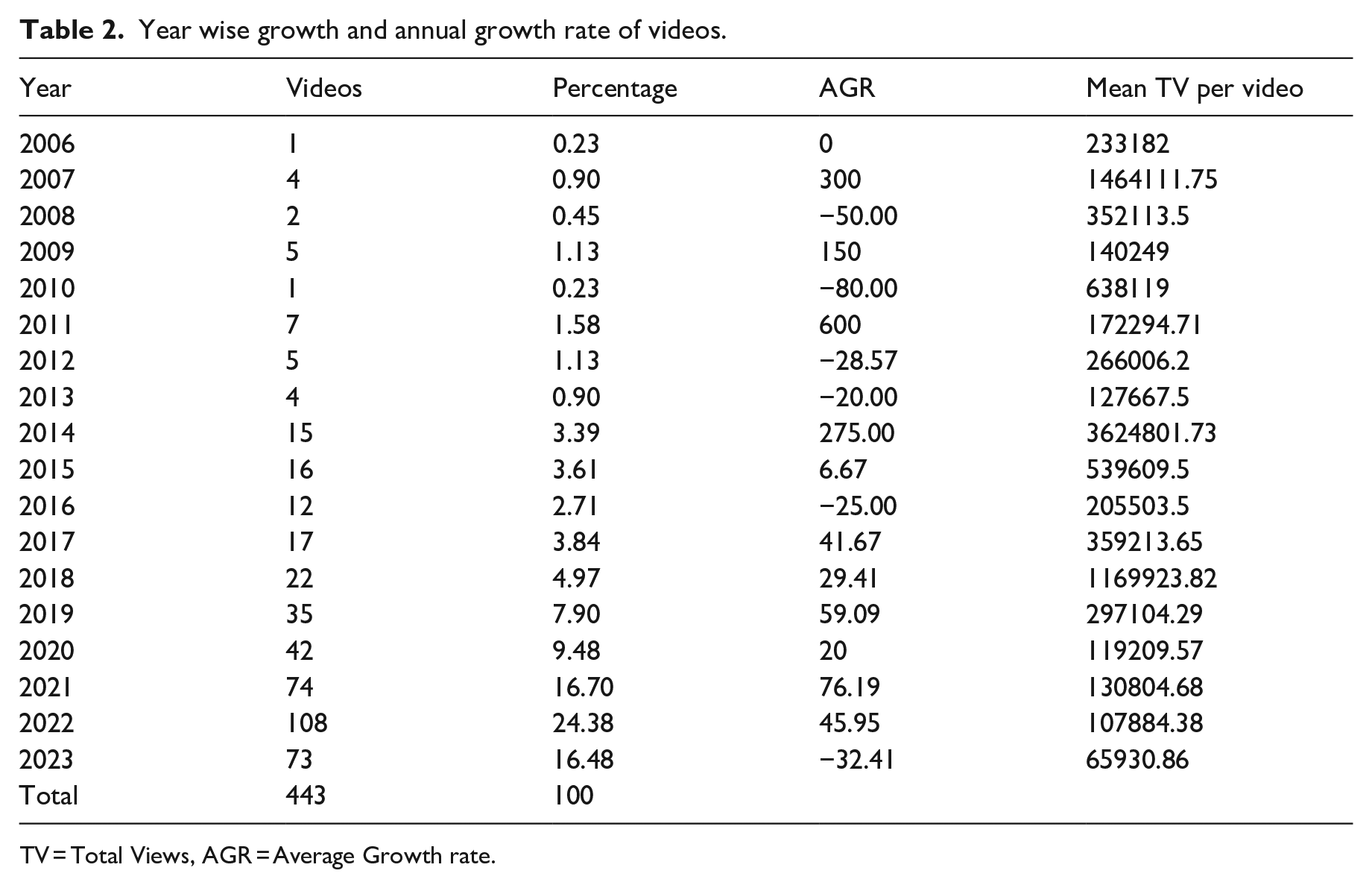
Table 2 displays the rise of YouTube videos connected to global warming by year. YouTube channels seek to upload videos that appear beneficial and are likely to be required by the majority of visitors. Therefore, the increase in video content is proportionate to the necessity and demand for such material by the public. The top 108 (24.38 percent) videos relating to global warming were uploaded in 2022, according to the results. In 2021, however, 74 (16.70 percent) videos were posted. This peak may be attributed to the intensification of extreme weather events driven by global warming, including severe wildfires in the United States, Turkey, and Canada, as well as catastrophic flooding in Europe and Pakistan, alongside heightened global attention following the 2021 COP26 summit. As the search was conducted on 18 May 2023, 73 (16.48 percent) global warming-related videos were published to YouTube in the preceding four months and eighteen days. The annual growth rate (AGR) of videos was computed using the following formula (Lizio et al., 2015).

Year wise growth and annual growth rate of videos.
TV = Total Views, AGR = Average Growth rate.
The yearly growth rate represents the change in the growth value of videos over the course of one year. The results indicated that in 2007 the growth rate was the greatest at 600 by uploading seven videos, followed by 2007 with four videos, and so on. The mean total views (TV) per video refers to the average number of views received by each global warming video during the specified year. In this context, the year 2014 had the greatest mean value, 3,624,801.73, with just 15 videos uploaded, followed by 2007 with a mean value of 1,464,111.75 and so on.
Definition and license used
Table 3 depicts the definitions and licenses used by video creators when submitting global warming-related content to YouTube. In general, the video definition represented the quality of videos and the quality of the videos’ content. If the video quality is high, it will attract and satisfy a greater number of viewers than those of poor quality (Laghari et al., 2017; Lu, 2023). The number of views received by videos of varying quality reflects public preferences regarding the quality of global warming-related content. Here, video quality has been divided into two distinct categories: high definition (HD) and standard definition (SD). The highest 395 global warming-related videos submitted to YouTube had high definition (HD) quality with 128,944,869 total views, 1,472,659 total likes and 218,702 total comments. Only 48 videos were uploaded in standard definition (SD) quality with 21,101,355 total views, 207,742 total likes and 154,960 total comments. It is evident that high-quality global warming videos tend to receive significantly more views compared to lower-quality videos.
Definition and license used.
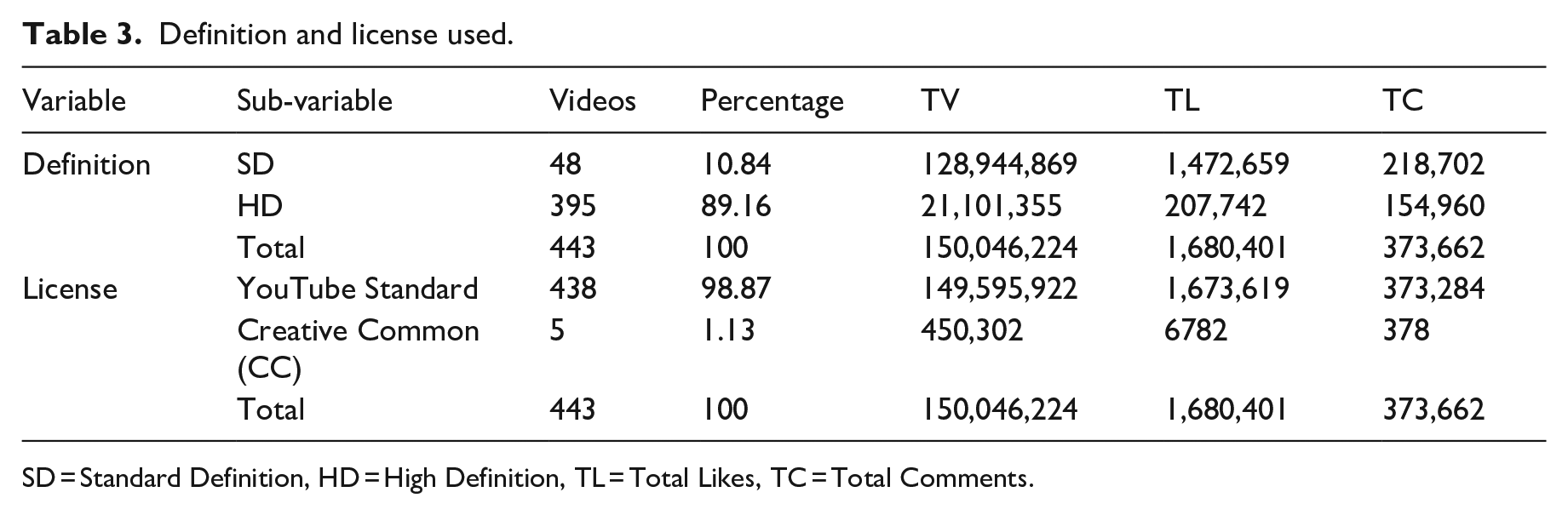
SD = Standard Definition, HD = High Definition, TL = Total Likes, TC = Total Comments.
A license grants the video’s owner the right to distribute and use the video (Sharifi et al., 2008). YouTube provides its users with two types of licenses: the YouTube standard license and the Creative Commons (CC) license. The YouTube standard license was chosen by the majority of video creators, as 438 videos (98.87 percent) were posted using this license and received the most views (149,595,922), likes (1,673,619) and comments (373,284). Only five videos were posted with a Creative Commons license, garnering a total of 450,302 views, 6782 likes, and 378 comments.
Type of information covered
Table 4 summarizes the content presented by each global warming-related video. YouTube hosts a vast number of videos related to global warming; however, the type of content these videos contain is outlined in this table. We broadly defined the content into four categories, which are discussed below along with relevant examples.
Causes Related = “7 causes of global warming! amazing 7”
Incidents and Cases Related = “American Steam Engines | The Leading Cause of Increasing Pollution and Global Warming”
Meaning and Concept Related = “Climate Change and Global Warming: Explained in Simple Words for Beginners”
Problems and Effect Related = “Government ‘fantastically communistic’ on global warming ‘non-problem’: ex-Thatcher adviser | LBC”
Type of information covered.
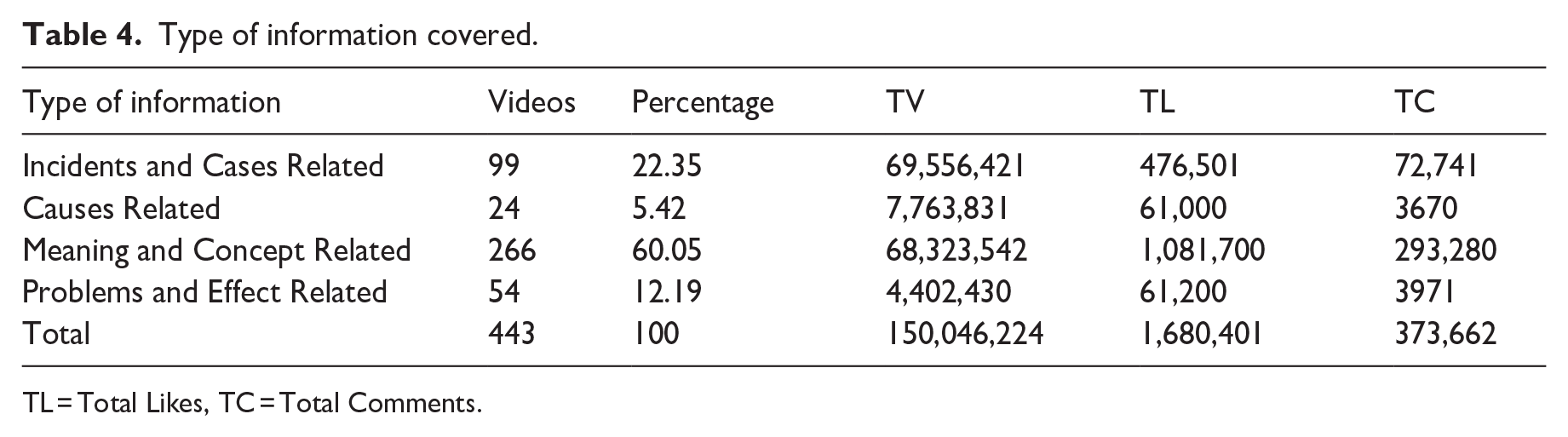
TL = Total Likes, TC = Total Comments.
The results indicate that the top 266 videos (60.05% of the total) were posted by emphasizing the meaning and concepts of global warming and obtained the most total views, likes, and comments. After that, 99 (22.35%) videos were published that highlighted situations, some of which were caused by global warming, and received a total of 69,556,421 views, 476,501 likes, and 72,741 comments. In addition, 54 videos (12.19 percent) were submitted to YouTube illustrating the difficulties and effects of global warming towards the world. These videos had a total of 4,402,430 views, 61,200 likes, and 3971 comments. Only 24 videos (5.42 percent) were published highlighting the causes and reasons for global warming and earned a total of 7,763,831 views, 61,000 likes, and 3670 comments.
Type of YouTube channels
Table 5 displays the types of YouTube channels that have posted videos relevant to global warming. This table illustrates the categories of YouTube channels that are involved in publishing global warming-related videos. A higher presence of credible channel types suggests that more reliable and authentic content is being uploaded. The author classified all YouTube channels that uploaded videos about global warming into four groups. The results indicate that the top 271 (61.17%) videos were published by personal/individual channels and received a total of 119,661,011 views, 1,165,142 likes, and 274,991 comments. Eighty-one (18.28 percent) of the global warming-related videos submitted to educational channels received a total of 7,961,932 views, 160,577 likes, and 16,066 comments. 50 (11.29%) of the videos were released by news channels, while 41 (9.26%) were uploaded by institutional/organizational channels.
Type of YouTube channels.
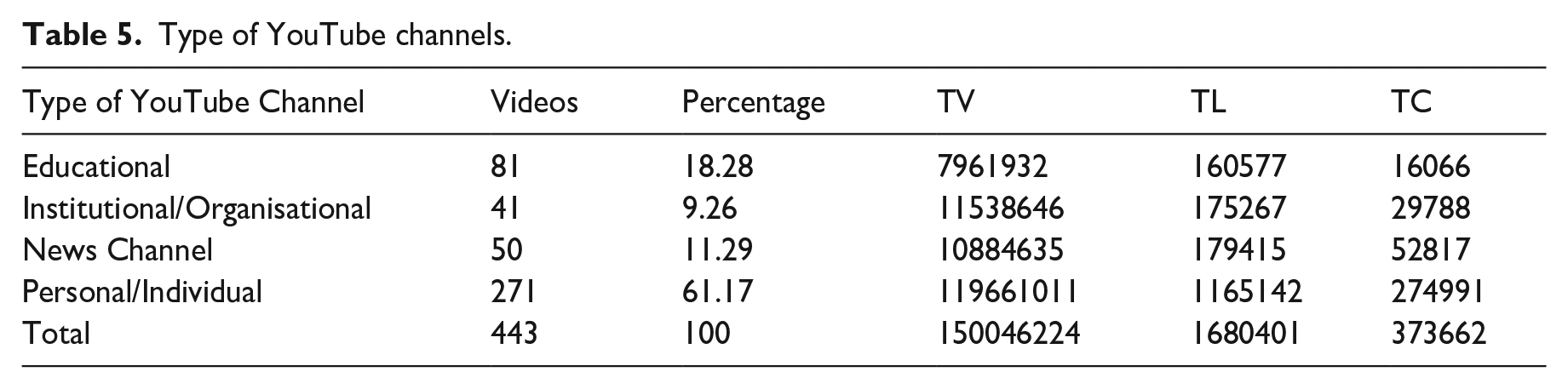
Duration of videos
Table 6 presents the distribution of durations of YouTube videos related to global warming, indicating the lengths most commonly used by content creators when uploading such videos. The majority of the 353 posted videos were between 1 and 20 minutes in length (79.86 percent). However, 8.58 percent of 20 - 40 and 40 - 60 minutes global warming-related videos were published on YouTube. Furthermore, just 14 (3.16 percent) videos with a duration of 60 minutes or longer were posted.
Duration of videos.
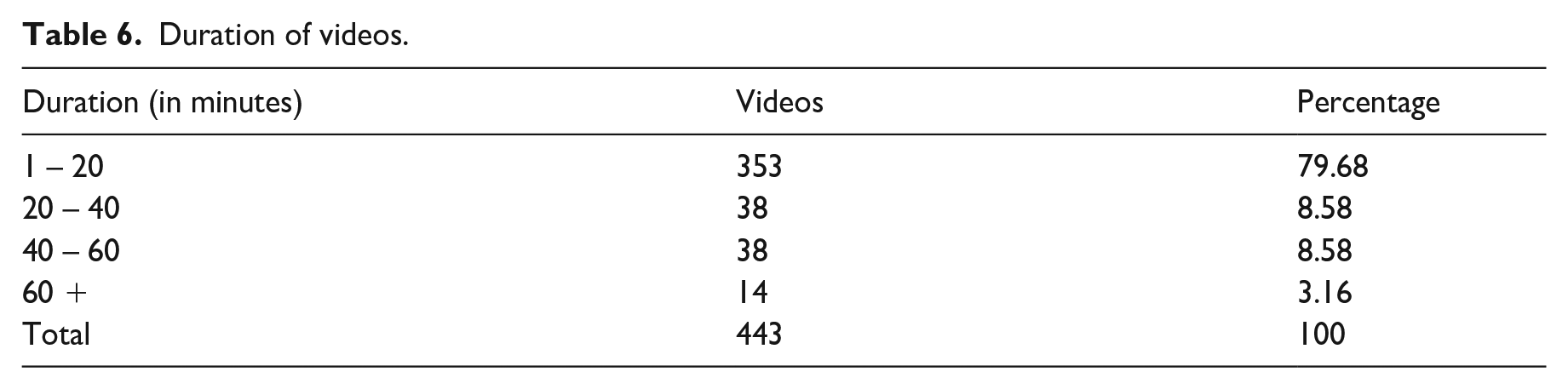
Most relevant YouTube channels
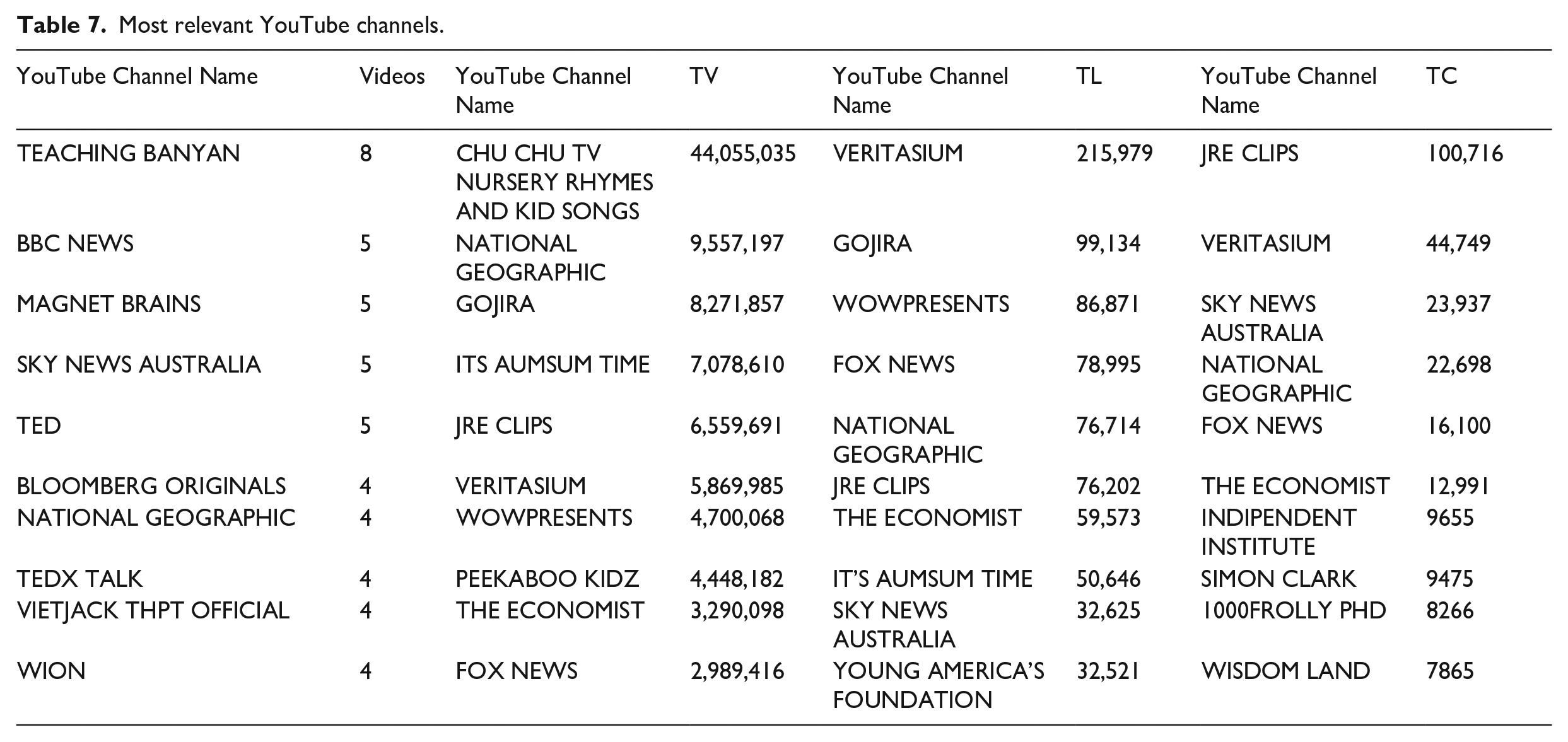
Table 7 displays the ten most relevant YouTube channels based on the number of videos, views, likes, and comments. These top YouTube channels are actively engaged in uploading content related to global warming, and their videos have received the highest numbers of likes, views, and comments. Various metrics, such as the number of views, likes, and comments received while posting a variety of videos, can be used to determine a YouTube channel’s popularity (Hoiles et al., 2017 NATIONAL GEOGRAPHIC). As measured by the total number of videos published, the “TEACHING BANYAN” channel has uploaded the most global warming-related videos, eight in all, and holds the top spot. However, networks such as “BBC NEWS,” “MAGNET BRAINS,” “SKY NEWS AUSTRALIA,” and “TED” have each published five videos and rank second. Additionally, the channels “BLOOMBERG ORIGINALS”, “NATIONAL GEOGRAPHIC”, “TEDX TALK”, “VIETJACK THPT”, and “WION” each released four videos about global warming. After conducting a YouTube video search, individuals often view the videos they believe would satisfy their informative needs. According to the view count, the channel named “CHU CHU TV NURSERY RHYMES AND KID SONGS” received the most views on global warming-related videos with 44,055,035, placing it in first place. However, the channel named “NATIONAL GEOGRAPHIC” received 9,557,197 total views and placed second, followed by the channel named “GOJIRA” which received 8,271,857 total views and placed third, and so on. After watching the videos viewers often give likes and dislikes. If a video adequately satisfies the viewers’ needs, they are more likely to appreciate it, and the opposite is true for dislike. Based on the number of likes, the “VERITASIUM” channel obtained the most total likes (215,979) and ranked first. Moreover, a channel named “GOJIRA” obtained 99,134 total likes and placed second, followed by channel named “WOWPRESENTS” which received 86,871 total likes and so on. Generally, viewers attach comments to share their viewpoint or provide feedback on previously viewed videos. This observation may be positive, negative, or neutral in nature. According to the total number of comments, the channel titled “JRE CLIPS” received the most total comments (100,716) and ranked first. The channel named “SKY NEWS AUSTRALIA” received a total of 23,937 comments, followed by the channel named “NATIONAL GEOGRAPHIC” which received a total of 22,698 comments, and so on .
Most relevant YouTube channels.
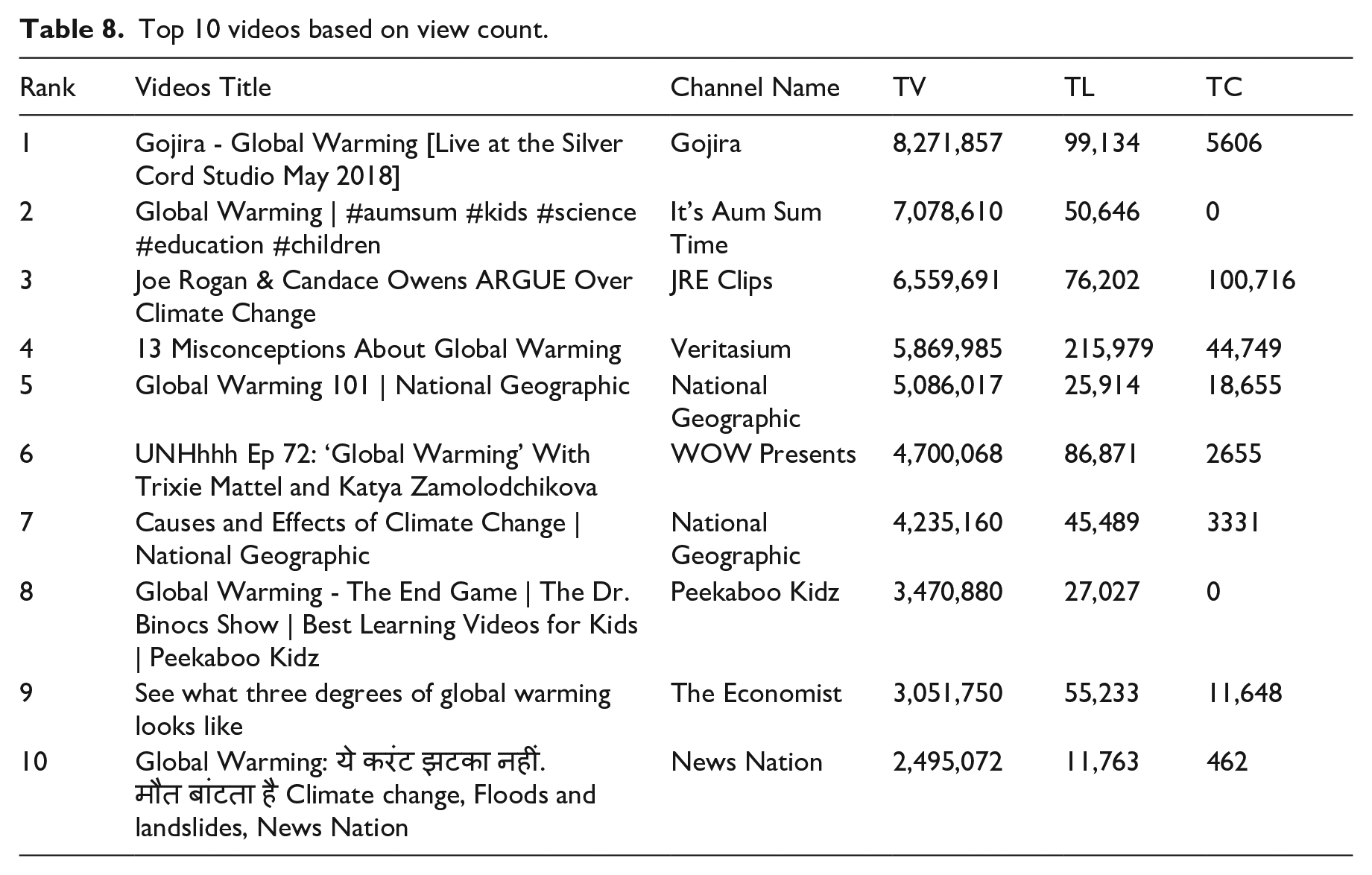
Top 10 videos based on view count
Based on the number of views, Table 8 lists the top 10 global warming-related videos on YouTube. This table highlights the top global warming-related videos that received the highest number of views, along with the channels that uploaded them, and the corresponding counts of likes and comments. After viewing the results of a YouTube search, viewers typically conclude that the video will satisfy their informational requirements. Again, a rise in YouTube video views might result in a rise in their popularity. According to the search results, the video named “Gojira - Global Warming [Live at the Silver Cord Studio May 2018]” uploaded by the channel “Gojira” earned the most views with 8,271,857, the most likes with 99,134, and the most comments with 5606. It also ranked first. After that video titled “Global Warming | #aumsum #kids #science #education #children” was submitted to the “It’s Aum Sum Time” channel, it gained 7,078,610 views, 50,646 likes, and 0 comments, and was placed second. However, video titled “Joe Rogan & Candace Owens ARGUING Over Climate Change” uploaded by channel “JRE Clips” received 6,559,691 total views with 76,202 likes and 100,716 comments and ranked third, followed by video titled “13 Misconceptions About Global Warming” uploaded by channel “Veritasium” which received 5,869,985 total views with 215,979 likes and 44,749 comments and ranked fourth, etc.
Top 10 videos based on view count.
Word frequency over the period of year
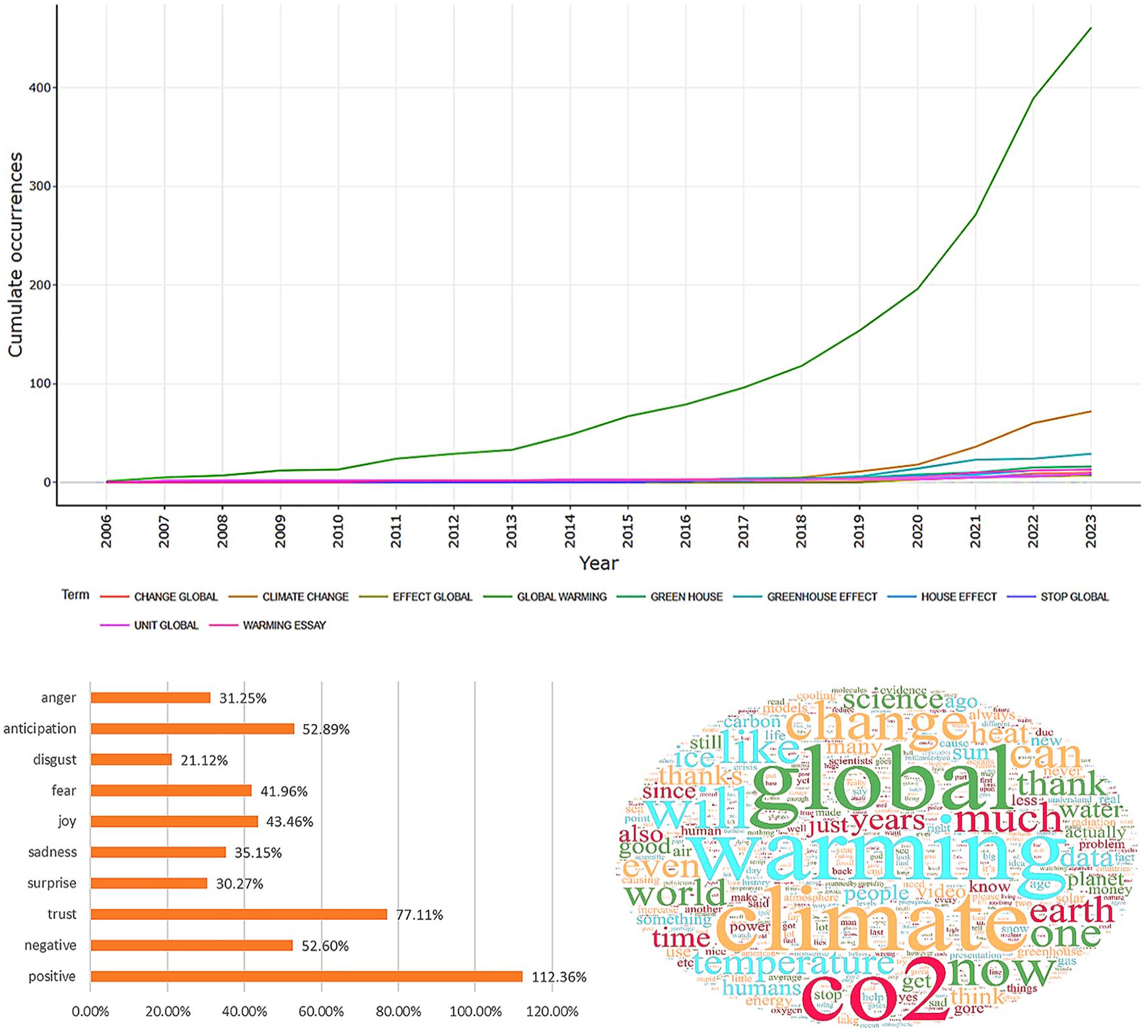
Figure 2 depicts the frequency of appearance of words in the titles of global warming-related videos uploaded by developers over the course of a year. This word frequency analysis aids in identifying the numerous terms related with the concept of global warming, as well as their growth through time. Video developers typically choose words for video titles that they believe will be helpful or engaging for viewers. Therefore, this word frequency analysis reflects how video developers have selected specific words over the years when uploading videos related to global warming. By applying the titles of videos to the “Bibliometrix” software package, namely the biblioshiny platform, the word frequency during the past year was analyzed. As the raw data were retrieved using the term “global warming,” the same word appeared repeatedly across the time period. In addition, many more phrases such as “green house,” “change global,” “climate change,” “greenhouse effect,” and “stop global” were observed in global warming-related videos. The term “climate change” was mentioned the most frequently, followed by “greenhouse effect”, then by “green house”, etc.
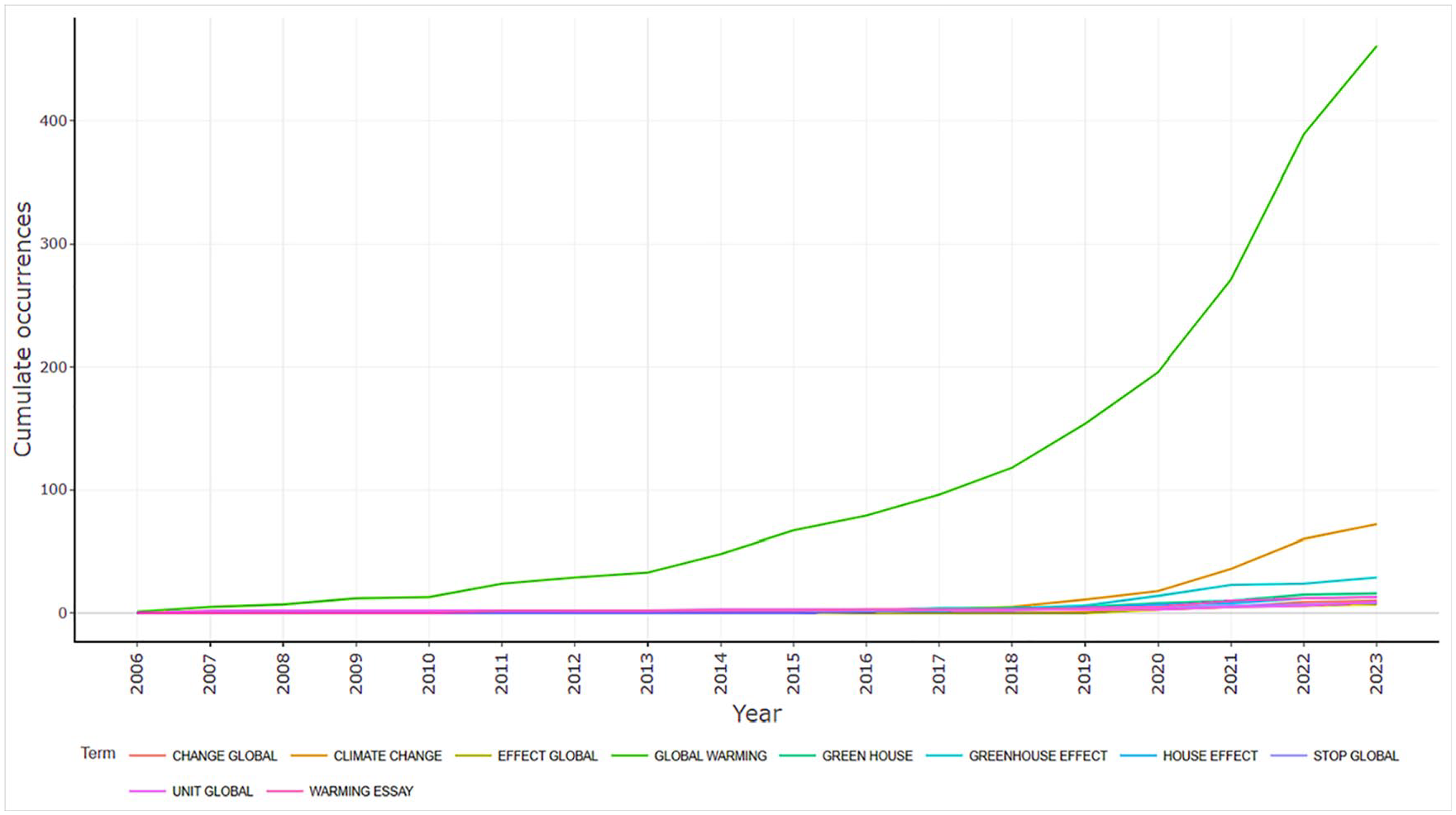
Word frequency over the period of year.
Sentiment analysis through viewers’ comments
Figure 3 depicts the sentiment analysis of 25,993 YouTube comments attached to 443 global warming-related videos. Through sentiment analysis is a computational method that can measure the viewer’s attitude by analyzing the words attached by the viewer (Appel et al., 2015; Jain et al., 2016). By analyzing the comments on videos related to global warming, it is possible to assess the level of viewer satisfaction. If viewers express satisfaction with the available content, it may suggest that they have gained some knowledge or information that could contribute to mitigating global warming. For instance, positive comments often include words such as ‘good’ or ‘nice,’ indicating a favorable reception of the content. Ten categories of feeling were used to roughly characterize the sentiments of all comments. Since some of the 25,993 comments appeared in more than one category, the percentage total exceeds 100. The majority of comments (111.36 percent) were positive, suggesting that the vast majority of viewers held a favorable perspective on videos related to global warming. This conclusion is drawn from an analysis of the words used by viewers in their comments, indicating that viewers are satisfied with the available content on global warming. Afterwards, 77.11 percent of comments were connected to trust, followed by 52.89 percent of comments related to expectation, 52.60 percent of negative remarks, 43.46 percent of comments related to happiness, and so on.
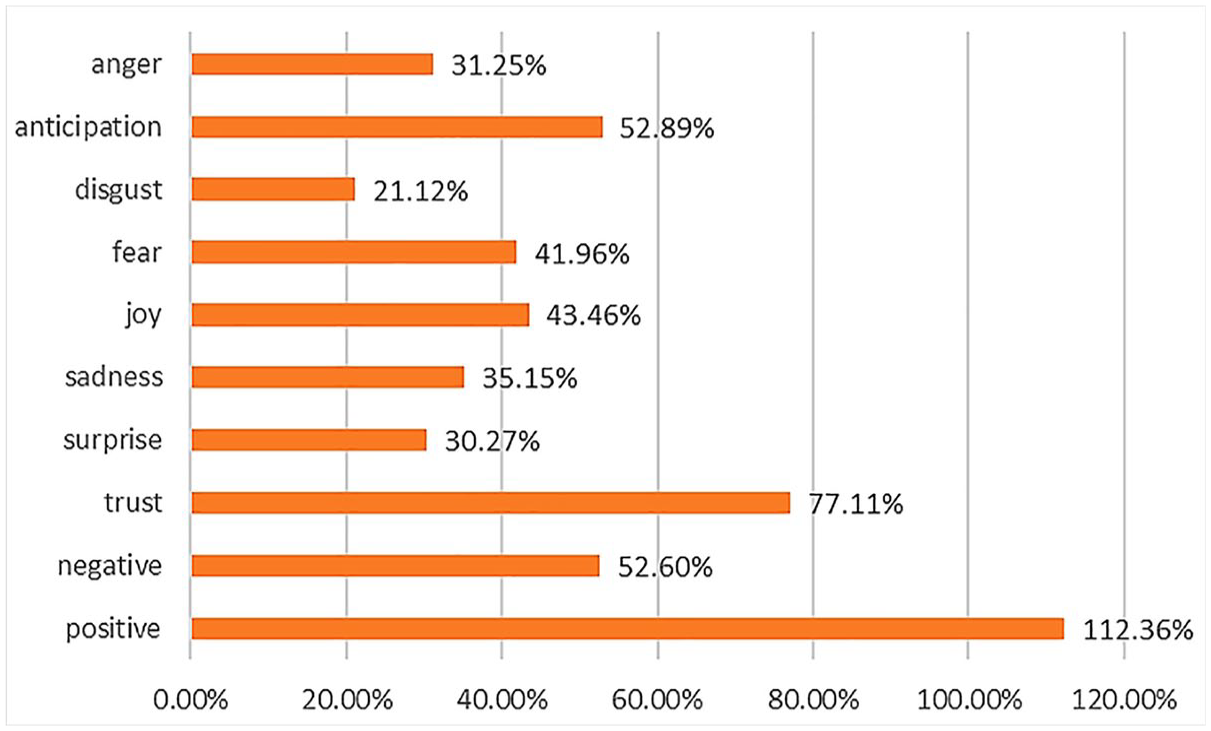
Sentiment analysis through viewers’ comments.
Word cloud of most commented word
Figure 4 depicts a word cloud of the most commented words associated to global warming-related videos by viewers. By analyzing the most frequently used words in the comments, it is possible to determine which terms are most commonly used by viewers when engaging with global warming-related videos. This, in turn, indicates that viewers are actively discussing these topics, which indirectly reflects their interest and involvement in the subject matter. The magnitude of the word in the word cloud diagram corresponds to the frequency with which that word appears in various viewer comments. The results indicate that many more comparable and associated terms with global warming were used by viewers while commenting on global warming-related YouTube videos. The majority of viewers commenting on global warming-related videos used terms such as ”global”, ”warming”, ”climate” and “CO2”. After that, viewers began using words such as “world”, “earth”, “water”, “heat” and “temperature” etc., when commenting on global warming videos.
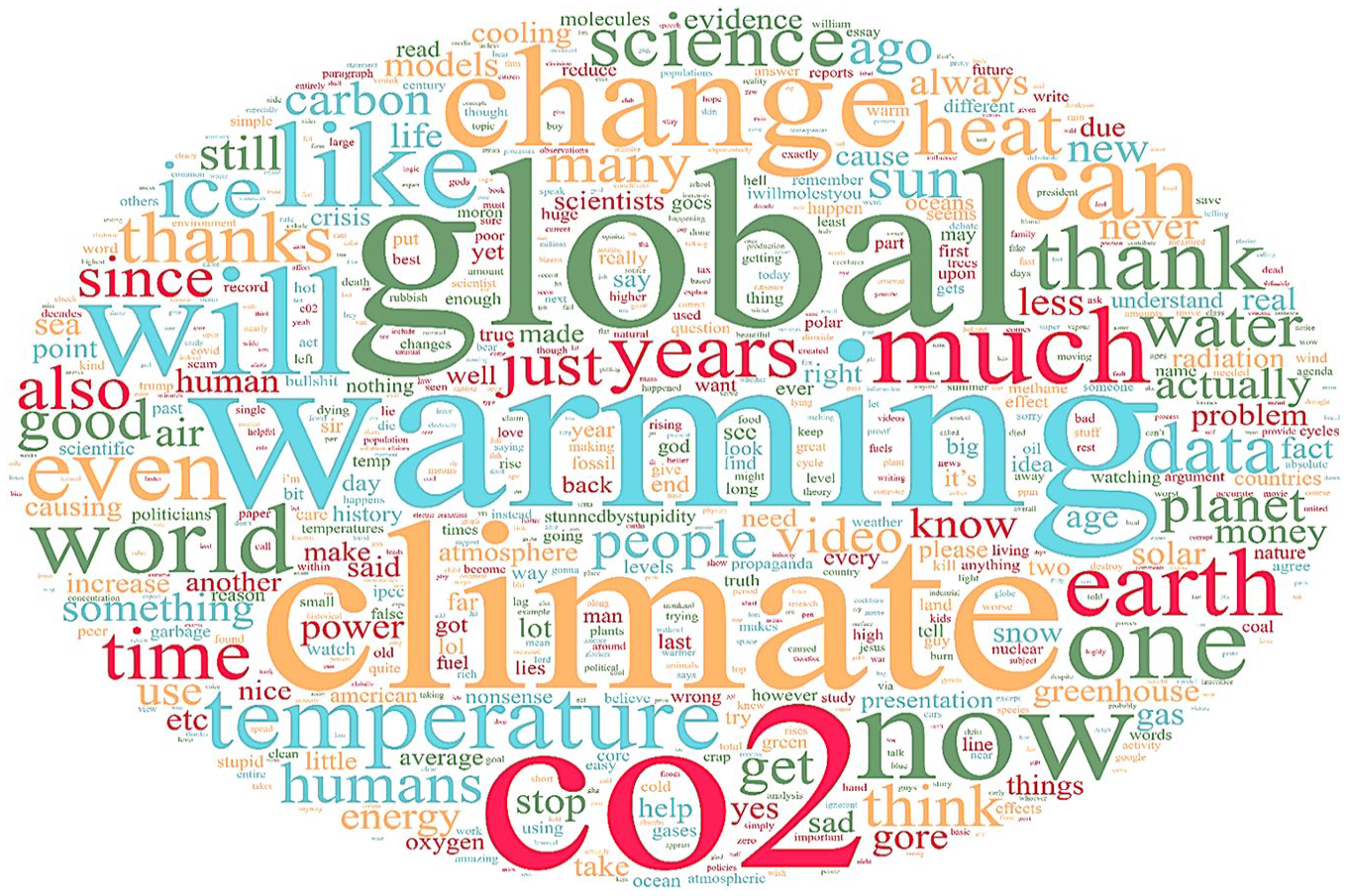
Word cloud of most commented word.
Discussion
YouTube and climate change awareness
With the ever-increasing rise in global temperature, humans are confronted with a multitude of environmental issues that must be mitigated for the creation of a green and clean world. In this perspective, global warming plays a crucial role in the destruction of many ecosystems around the world. As the elements of increasing global warming are no longer restricted to a single organization or institution, people from all over the world are now contributing to the rise in global temperature. Therefore, it is crucial to educate and raise awareness among the populace so that their impact to global warming can be minimized. As nearly all individuals use social media platforms such as Facebook, YouTube, Twitter, and Instagram today (Lyson et al., 2019), disseminating knowledge or information about global warming via social media will be extremely beneficial. YouTube plays a key role in the dissemination of educational, news, and entertainment-related content, relative to other social media platforms. In this study, the type and quantity of global warming-related information held by YouTube were analyzed. This study is limited by its exclusive focus on English-language videos, as the data collection software did not retrieve content in other languages. Consequently, potentially informative or relevant videos in non-English languages available on YouTube were excluded from the analysis. This language constraint introduces a sampling bias and restricts the scope of the study, as it overlooks diverse cultural perspectives and sentiment expressions present in other linguistic communities. As a result, the findings primarily reflect the views of English-speaking users and may not be fully generalizable to a global audience. To enhance the inclusivity and representativeness of future research, the incorporation of multilingual content is recommended.
YouTube channels are more likely to upload content that they believe will appeal to a broad audience, often guided by viewer engagement metrics such as views, likes, and shares. While the platform hosts a vast range of content, a growing number of videos focused on global warming suggests increasing interest in climate-related topics. According to Table 2, the annual growth in the number of global warming-related uploads indicates a trend where content creators are responding to heightened public awareness and demand for environmental information. The increasing mean value of total views per video further suggests that these videos are attracting a substantial global audience.
These findings align with the observations of Choudhury and Shareef (2021a, 2021b), who reported that YouTube plays a significant role in shaping environmental awareness by offering a space where user-generated content can rapidly reach mass audiences. Similarly, Allgaier (2019) found that YouTube’s recommendation algorithm tends to favor content that is emotionally engaging and widely appealing, which can increase the visibility of climate-related videos, especially during times of heightened environmental concern or global events. However, while this engagement trend is promising, it also underscores the need for balancing popularity with credibility—since algorithmic visibility may prioritize appealing content over scientifically accurate material. The current growth in climate-related videos therefore reflects both an opportunity for public education and a challenge in ensuring content quality.
It was observed the growth of videos fluctuates year by year. Several factors may contribute to these fluctuations. One potential reason could be significant global events or heightened public awareness that drew attention to climate change during that period. For example, the increasing frequency of extreme weather events, such as heatwaves, floods, and wildfires, could have spurred more discussions about climate change. Additionally, major international events such as the 2022 United Nations Climate Change Conference (COP27) may have triggered an increase in content creation and discussions surrounding global warming. Furthermore, the growing public interest in environmental issues, amplified by social movements like Fridays for Future and increasing media coverage, may have led to a rise in video uploads related to climate change. These factors highlight the influence of global events and shifting societal attitudes on the volume of content produced and shared, suggesting that such trends are not merely coincidental but are influenced by real-world developments and public discourse.
These findings are consistent with previous research. Ozturk et al. (2023a) also noted that global spikes in climate-related video uploads often coincide with major environmental incidents or policy events, suggesting that public engagement is responsive to external stimuli. Similarly, Veltri and Atanasova (2017) found that social media activity around environmental issues tends to surge in response to global media coverage or political developments. The role of grassroots movements such as Fridays for Future further amplifies this trend by mobilizing online and offline discussions, especially among younger demographics.
Content credibility and global influences
As high-definition videos are more satisfying for viewers, channels are likely to favor high definition over standard definition when publishing such videos. YouTube provides appropriate information about the concept and meaning of global warming, incidents and cases related to global warming, as well as problems and impacts associated with global warming, for learning knowledge about global warming. This clearly demonstrates that viewers can easily comprehend and become aware of various aspects of global warming by viewing these videos. However, YouTube hosts a limited number of videos that may not adequately convey in-depth information regarding the causes and underlying factors of global warming. This suggests that a greater number of videos should be uploaded, focusing on the causes of global warming. By increasing awareness of these causes, the problem of global warming can potentially be mitigated to some extent. Personal/individual channels uploaded the greatest number of videos to YouTube, 271 in total (see Table 5). The educational channels subsequently released 81 videos. It has also been observed that some organizations and institutions are uploading global warming-related videos. The dominance of personal or individual channels in uploading global warming-related videos has important implications, particularly regarding the credibility and authority of the content. Personal channels, often run by influencers, activists, or ordinary individuals, may offer unique and diverse perspectives on climate change. However, the lack of institutional oversight or scientific validation in such content raises concerns about its reliability and accuracy. Unlike content from established organizations, research institutions, or governmental bodies, personal channels may present information that is more subjective, potentially skewed by personal opinions, biases, or sensationalism to attract views. This could lead to the dissemination of misinformation or the amplification of unverified claims. The absence of peer review or expert validation further complicates the assessment of content credibility. Additionally, personal channels may prioritize emotional or dramatic appeal over evidence-based analysis, influencing public perception in ways that may not always align with scientific consensus. Therefore, the prevalence of personal channels in the production of climate change-related content underscores the need for critical evaluation of such sources and emphasizes the importance of promoting scientifically rigorous and fact-checked material in discussions on global warming. Given that global warming is an environmental issue, it is essential to have high-quality content and a clear understanding to address and mitigate this phenomenon. To effectively address this issue, increased involvement from institutions and environmental organizations is essential. These entities should focus on uploading well-researched, high-quality videos that specifically highlight the causes of global warming, the key contributing factors, and include fact-based, informative content to support the dissemination of accurate and reliable information. Ozturk et al. (2023b) discovered that the majority of YouTube channels upload short-duration videos. The same finding shows here as in Table 6; 79.68 percent of uploaded videos have short durations.
The quantity of videos does not necessarily attract viewers when uploading global warming content on YouTube. As shown in Table 7, channels that uploaded the highest number of global warming videos, ranking first in terms of video count, did not achieve the same ranking in terms of views, likes, and comment counts. Video developers should not only focus on the number of videos to attract viewers but also prioritize content quality and informative value, ensuring that more people are inclined to watch and engage with the videos. By analyzing the word frequency over the course of the year, it appears that with the concept of global warfare, several other concepts such as greenhouse effect, global temperature, and climate change are now being attached. Therefore, YouTube videos that contain information about global warming also provide information about the greenhouse effect, climate change, global change, etc. This will help raise public awareness not only about specific aspects of global warming but also allow YouTube to spread awareness of related concepts interconnected with global warming. Although YouTube contains a substantial number of videos addressing key aspects of global warming, public awareness could be enhanced by condensing this content into shorter clips and sharing them across other social media platforms such as Facebook, Twitter, and Instagram. As these platforms now support longer video formats, distributing global warming-related content through them could be more informative, accessible, and beneficial for a wider audience. While commenting on the videos, viewers often explore numerous associated themes relating to global warming. According to the comment analysis, several linked terms such as CO2, climate, water, globe, and humans have been mentioned by viewers. While “syuzhet” is a widely used tool for basic sentiment classification, it has notable constraints in capturing nuanced, context-dependent, or culturally embedded sentiments. The package primarily relies on a predefined lexicon-based approach, which assigns fixed sentiment scores to individual words without accounting for context, irony, sarcasm, or negation (Jockers, 2015). As such, complex emotional expressions and subtle shifts in tone may be misclassified or overlooked, potentially affecting the accuracy and depth of the sentiment analysis. These limitations suggest that while “syuzhet” can offer a general overview of sentiment trends, its findings should be interpreted with caution. Future research may benefit from incorporating more advanced tools—such as machine learning or deep learning models—that can better account for contextual and semantic nuances. Using sentiment analysis, it has been determined that the majority of viewers have a favorable opinion of the available videos on global warming. Which suggests that viewers are satisfied with the available videos. Sentiment analysis of global warming-related videos on YouTube reveals that the majority of viewers express a favorable opinion toward the available content, suggesting a high level of satisfaction with these videos. This finding aligns with previous studies that have explored public sentiment regarding environmental content on social media platforms. For instance, Moser (2016) found that social media users generally respond positively to climate change videos, especially when they present solutions or emphasize the urgency of the issue. Similarly, Choudhury and Shareef (2021a, 2021b) highlighted that environmental content with an optimistic tone or action-oriented messages tends to receive higher engagement and favorable responses.
Limitations and future research directions
This study has certain limitations. It focused exclusively on English-language videos, thereby excluding global warming-related content available in other local languages.
This study is limited by its exclusive focus on YouTube, particularly long-form video content. Other platforms such as Facebook, TikTok, Instagram, and podcasts also play a significant role in climate change awareness, often reaching different audiences through varied formats. As a result, the current analysis may not fully capture the broader landscape of public engagement. Future research should include multiple platforms to provide a more comprehensive view of climate communication.
Another limitation of this study is that it did not account for the potential effects of shadowbanning on comment visibility, which could have influenced the results. Comments from shadowbanned users may not have been visible to the wider audience, potentially affecting the overall sentiment analysis. Further research is needed to explore how shadow-banning might skew viewer engagement and comment patterns.
Future studies should aim to collect videos without language restrictions, allowing for the inclusion of content in various local languages. This approach would enable a more comprehensive and culturally diverse analysis, capturing perspectives that may be overlooked in English-only datasets.
A more rigorous analysis is required to identify the themes and content within the comments to better understand viewer engagement and informational needs.
Conclusion
In conclusion, raising awareness about global warming remains critical in addressing the complex and far-reaching challenges posed by climate change. When individuals, communities, and governments are equipped with a clear understanding of its causes, consequences, and potential solutions, they are better positioned to take informed and effective actions to mitigate its impact. Public awareness not only drives individual behavioural change but also fosters collective responsibility and encourages policymakers to adopt and prioritize climate-conscious legislation. Achieving a sustainable and resilient future depends on our ability to engage society at all levels through accessible and reliable information. This study reveals that while YouTube serves as a widely used platform for disseminating educational content on global warming, the majority of videos are uploaded by personal or individual channels. As a result, the depth, accuracy, and credibility of the content may vary significantly, raising concerns about the quality of information available to the public. While YouTube offers a useful starting point for understanding the general concepts of global warming, there is a noticeable gap in the availability of scientifically grounded, in-depth, and professionally produced content. Given the dominance of personal and non-expert channels, there is a risk of misinformation or oversimplified narratives surrounding the causes and impacts of global warming. Platforms such as YouTube must prioritize the algorithmic curation and promotion of fact-checked, science-based content to combat misinformation and enhance public understanding.
Footnotes
Acknowledgements
We would like to thank YouTube as we have collected the data from YouTube with no cost. We would also like to acknowledge the software used in this study which are available for free.
Authors’ contributions
Lulu Rout and Shubhasmita Acharya substantially contributed to planning of paper, critical revision of the draft and final approval of the manuscript. Lulu Rout provided the ideas for this study, gathered and examined the raw data from YouTube. All authors have read and approved the final manuscript.
Declaration of conflicting interests
The author(s) declared no potential conflicts of interest with respect to the research, authorship, and/or publication of this article.
Funding
The author(s) received no financial support for the research, authorship, and/or publication of this article.

Availability of data and materials
Raw data can be available after approval of all authors. The corresponding author will be the responsible for providing the data.