




Abstract
Paramedics from the Middle East are enrolling in overseas Doctor of Philosophy (PhD) programs in growing numbers, yet their experiences remain under-explored. This study sought to explore the lived experiences, challenges and supports that shape their PhD. Paramedics with a primary residence in the Middle East who had either completed or were undertaking their PhD study internationally were eligible to be included. Participants were purposively recruited. We conducted a qualitative reflexive thematic analysis through an inductive process at the semantic/explicit level with theme development informed by a critical-realist lens. Data was constructed from nine participants, leading to the development of four inter-locking themes. Theme 1: Importance of collaboration captured how PhD projects surged forward when students secured early alliances with university, ambulance-service and industry decision makers and paramedic mentors, yet drifted when those links were missing, leaving ethics applications and data requests languishing. Theme 2: A balancing act portrayed the daily tightrope of deciphering new academic norms while relocating families, making finances work amid soaring costs, and, for some, absorbing overt racism, pressures that often felt harder than the study itself. Theme 3: Having a reason highlighted the inner motivation from participants: ambitions to influence and contribute to elevating care provided by paramedics, gain academic seniority, or honour employer sponsorships that had staked faith in their success to undertake the study. Finally, Theme 4: Lack of paramedicine expertise revealed limitations participants paced with few paramedic supervisors and scant discipline-specific doctoral pathways being available, meant participants felt they were left translating their efforts to well-meaning but unfamiliar advisors. Middle Eastern paramedics negotiate complex academic, personal and cultural landscapes to complete overseas PhDs. Culturally responsive onboarding, structured mentorship by experienced paramedic researchers, and expansion of paramedicine-specific doctoral programs could ease this journey, improve experiences and better harness this cohort's capacity to advance global paramedic practice.
Introduction
Higher education is essential for personal and professional growth in many healthcare professions. It helps to develop critical thinking, provide specialised knowledge and helps to open doors to greater opportunities and leadership roles. 1 It has also been proven to create pathways to advanced career opportunities and enable individuals to contribute significantly to society. 2 In the pinnacle of higher education hierarchy, doctoral studies stand as the highest level of academic achievement, 3 either a professional doctorate or Doctor of Philosophy (PhD). Earning a doctorate can bring many benefits, by helping individuals grow in their careers and advancing a professional body of knowledge as a whole. 4 In the health professions, doctoral studies are valued for representing not only advanced academic achievement but also for their contribution to strengthening healthcare education and advancing professional practice. This impact is especially clear in fields such as medicine, nursing and pharmacy, where doctoral research has driven significant progress in both education and clinical practice.5–8
Paramedicine, an important profession within healthcare, has become an essential part of out of hospital care, earning recognition in academia and developing a distinct body of knowledge in the process. 9 This is noticeably shown with an increasing number of paramedics holding or currently working towards PhDs globally. 10 Paramedics from the Middle East region make up an increasing proportion of these paramedics with data from the Paramedic PhD international registry indicating that Middles eastern countries like Saudi Arabia, United Arab Emirates, Jordan, Kuwait and Israel have a growing number of paramedics engaged in doctoral studies. Specifically, these countries account for 27 entries in the registry, with 25 identifying as paramedics, representing ∼8% of all paramedic doctorates entries globally recorded on the registry. 11 The registry shows that the predominant type of doctoral studies recorded among Middle East countries was a PhD with 26 entries, while only one entry was recorded as a professional doctorate. 11 It is likely that many of these Middle Eastern paramedics are studying away from their home country which is not without challenges. These challenges have been reported to cover personal, academic, cultural and financial struggles.12–14 Communication and culture shock have been reported to be major barriers for international students, 13 while it has also been reported that international students encounter social isolation and struggle to form friendships with people from different cultures. 15 Additionally, international students can encounter discrimination from their domestic peers due to their cultural background. 16 On top of these challenges, international students from Asian countries, including Japan, South Korea and Taiwan, have been reported to experience outright harassment and racist behaviours. 17 These preconceptions extend to their academic and social experiences and students have been reported to feel disregarded in both academic and broader public communities. 15 These challenges can contribute to dropout from courses of study, with rates as high as two-thirds of international PhD students who start never completing the intended course of study. 18
While these challenges are common among international students, it may not reflect the particular circumstances of students from the Middle East. Alongside the usual challenges of studying abroad, Middle Eastern PhD students can be affected by factors like political instability and economic pressures which inevitably shape their academic experiences. 19 Yet much of the work on international student experiences still focuses on Western settings, 20 with far less attention given to the Middle East and North Africa. 21 Thus there is still much to learn about the experiences of Middle Eastern paramedics undertaking PhD studies abroad, as their academic and professional journeys are largely overlooked in existing research. By focusing on this specific group, this study seeks to offer an understanding of their journey, adding to the wider literature on international PhD students’ experiences. The insights gained will help universities and policymakers provide better support, potentially improving retention rates and creating a more inclusive academic environment for all international students. Therefore, this study aimed to explore the lived experiences of paramedics from the Middle East during their doctoral studies.
Methodology
Qualitative approach
Due to its adaptiveness and conceptual flexibility nature, we chose a reflexive thematic analysis approach, developed by Braun et al. 22 as the framework of the study. It is a qualitative approach that seeks to detect shared patterns across different participants lived experiences, opinions and understanding of a phenomenon. This method suited our research design well because the authors had a relativist/contextualist perspective. 23 This perspective recognises that any concept or phenomenon is created by individual viewpoints and particular contexts, which can differ according to different situations and perceptions.
Researcher characteristics and reflexivity
As an international paramedic research student from the Middle East, my journey from clinical practice to academic pursuits has been pivotal in shaping how I approached and interpreted this study. Coming from Saudi Arabia and having studied abroad myself, I shared with participants not only a regional background but also the experience of navigating new academic systems, cultural differences and social adjustments. This often made it easier for them to open up and speak freely about their experiences, but I was also mindful that my familiarity with these experiences could lead me to make assumptions. Therefore, I made a conscious effort to ask clarifying questions and let participants express their views fully in their own words. My position as a Middle Eastern paramedic and PhD student created a sense of familiarity with participants, while the outsider perspectives of my Anglo-Saxon Australian born colleagues helped me avoid over-assuming shared experiences.
During the interviews, I took an active role as the sole interviewer, guiding the flow of each conversation while adapting my approach to suit the participant's comfort level and communication style. I built rapport by using culturally familiar expressions, showing genuine curiosity about their personal journeys, and, when it felt appropriate, sharing my own experiences to foster mutual trust. Being at a similar stage in my academic career made it easier to connect with their academic challenges, while my background as a paramedic helped me better understand and appreciate the professional context they brought to our discussions.
The wider research team included an Australian based paramedic and academic with experience of completing a PhD in Australia, along with a senior paramedicine program head who had supervised many doctoral students from both local and international backgrounds. Working closely together, we discussed and reflected on my interpretations of the data, considering how my own cultural background and shared experiences with participants might have shaped the meanings I drew from their accounts. These conversations encouraged me to think beyond my own perspective and explore alternative ways of understanding the data, ensuring our analysis was richer and more detailed.
Research paradigm
The research team implemented a critical realist lens to guide the exploration and further analysis of the data in this research. 23 Critical realism is a philosophical viewpoint based on the idea that, while an objective reality exists independently of our opinions, our understanding of it is influenced by our social, cultural and personal perspectives. 23 This approach allowed the researchers to appreciate the presence of various levels of reality and recognise the complex interaction between individual, social, academic and systemic factors that influence the challenges and facilitators encountered by Middle Eastern paramedics during their PhD journeys. In practical terms, this meant beginning with a descriptive engagement with the data, before moving towards an interpretive development of themes that sought to identify the deeper processes shaping the participants’ experiences.
Study participants and settings
The study included participants if they met the inclusion criteria of being paramedics from a Middle Eastern country meaning they had citizenship in countries which included Saudi Arabia, Jordan, Bahrain, Iraq, Qatar, United Arab of Emirates, Kuwait, Yemen, Oman, Palestine, Iran, Lebanon, Syria and Israel. Additionally, participants had to have either completed or be undertaking their PhD study internationally on a paramedicine related topic. The Middle East is a region of significant cultural diversity and complex geopolitical dynamics, encompassing countries with varied political systems, economic statuses and levels of educational development. 24 Historical and ongoing socio-political challenges, including conflicts and limited resource allocation, have influenced the accessibility and advancement of higher education in specialised fields such as paramedicine. 25 In many Middle Eastern countries, opportunities for advanced paramedicine study and research may be constrained due to these factors. Consequently, paramedics often seek international education to access comprehensive doctoral programs, engage with global best practices and acquire advanced clinical and research skills. Studying overseas enables them to overcome local educational limitations and contributes to their capacity to enhance paramedicine as a profession upon returning to their home countries.
Recruitment process
We recruited participants purposively using our personal networks to directly reach out to potential participants and further supported this approach by contacting these potential participants through their social media pages. To recruit participants from a variety of countries and different gender groups we contacted colleagues who were known to supervise paramedic PhD students to inform them about the study, connecting the research team with more potential participants. This approach offered the most practical way to reach Middle Eastern paramedics undertaking doctoral studies abroad, since this group is not easily identifiable through professional associations, registries or other formal channels. Once participants were identified, we obtained their email addresses and sent them an invitation to participate in the study along with the explanatory statement and consent form.
Data generation
To generate our data, we used a semi structured interview process that was conducted via secure video conferencing. Participant recruitment began in March 2024 and concluded in May 2024, with all interviews being conducted during this time. All sessions were audio recorded and subsequently transcribed. This approach was valuable due to its practicality and cost-effectiveness, which allowed us to reach participants who were pursuing or had completed their PhD studies in different countries.26,27 Participants were asked a series of short demographic questions which included, age (which was grouped and categorised for anonymity), gender and country where studies where/being conducted in. Then to ensure the validity of our interview questions asked of participants, we created a list of questions informed by lived experience and a literature search which were reviewed by the research team and adapted to ensure that the questions allowed rich experiences to be collected for each participant. Seven questions were included starting with personal motivations of why the participants chose to join paramedicine as a discipline, moving through their incentives to pursue higher studies and the challenges encountered on this journey, and concluding with recommendations for future students and institutions. The list of questions asked can be found in Supplemental Material 1.
Data analysis
Data analytic strategies
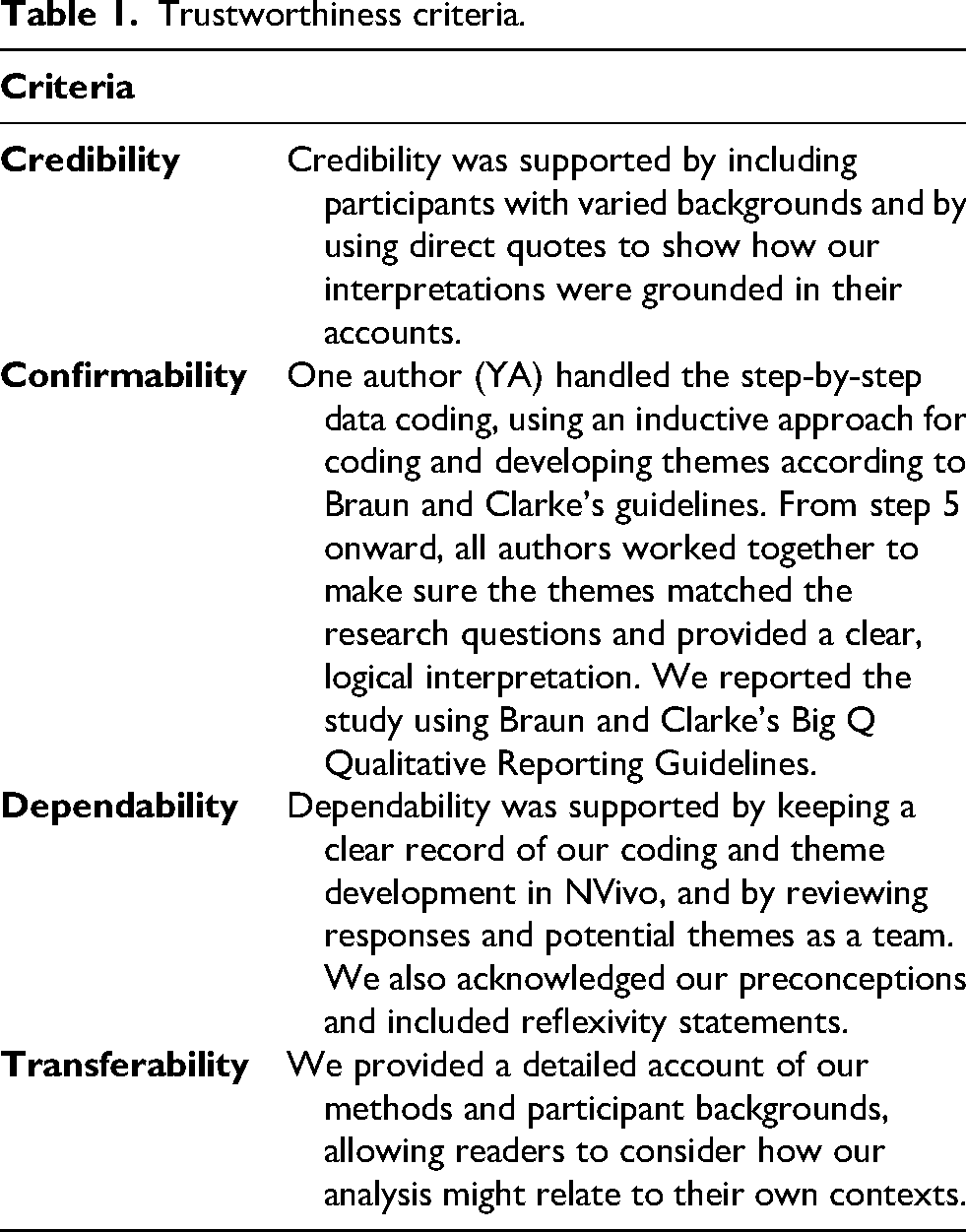
Braun and Clarke's method for reflexive thematic analysis was used to guide our analysis. 22 It is composed of six stages, starting with familiarising ourselves with the data, creating the primary codes, creating themes, reviewing themes, describing and naming themes and subthemes, and generating the report. We followed Braun and Clarke's (2024) Big Q Qualitative Reporting Guidelines (BQQRG) to support transparent and reflexive reporting of the study. 28 The primary author (YA) commenced the initial data analysis using NVivo 14 software to record the process while writing analytical memos to capture early reflections. Coding was inductive and semantic, and themes were developed with an emphasis on how participants’ accounts reflected their lived experiences. We interpreted these accounts within a critical realist lens, acknowledging that they were situated in and shaped by broader social and structural contexts. 23 To confirm that the themes, in terms of their definition and scope, provided rational and reasonable answers to the research question, authors had meetings throughout stage five onwards of the data analysis approach to refine the analysis. These meetings provided a reflexive space to critically engage with the data, refine interpretations and explore alternative meanings. The ongoing dialogue among the authors supported analytical rigour and credibility, consistent with reflexive thematic analysis. Rigor was supported through reflective and collaborative practices, including memo writing, team discussions and visual mapping as themes were developed. Trustworthiness was followed in this approach as described by Graneheim and Lundman, 29 including credibility, confirmability, dependability and transferability and is reported in Table 1.
Trustworthiness criteria.
Ethics
Monash University granted ethical approval for the project (MUHREC Project ID: 40696), with all participants providing written and informed consent. Prospective participants received a plain-language explanatory information sheet outlining the study purpose, what participation involved, the voluntary nature of involvement, anticipated risks/benefits and the intended use of anonymised quotations. They were given time to consider participation and ask questions before providing written informed consent, including consent to audio-recording. We emphasised that participation could be discontinued at any time without consequence and that participants could decline to answer any question or request that material be withdrawn from the record. Confidentiality was protected through removal of identifying details during transcription, the use of pseudonyms in reporting and attention to the risk of deductive disclosure when presenting illustrative quotes. The participant information and consent form are provided in Supplemental Material 2.
Analysis
Thirteen potential participants were invited for interviews, with nine consenting to participate. We decided to conclude the recruitment for practical research project timelines as well in consideration with the concept of information power, which values depth and relevance over numerical size. 30 By the ninth interview, the stories and perspectives being shared were both detailed and directly connected to our research aim, and we were no longer hearing substantially new insights. Participants were pursuing their doctoral studies at universities across three regions being Australia (33%, n = 3), the UK (44%, n = 4) and the USA (22%, n = 2). Age of participants fell into three brackets: 25–34 years (67%, n = 6), 35–44 years (22%, n = 2) and 45–54 years (11%, n = 1). Three participants identified as female (33%) and six as male (67%) with interview duration averaging 44 min. Through reflexive thematic analysis, we developed four main themes and three subthemes, which represented the participants lived experiences and included the challenges and facilitators faced during their PhD studies. These themes included the ‘Importance of Collaboration’, that's its ‘A balancing act’, the importance of ‘Having a reason’ and that a ‘Lack of Paramedicine expertise’ exists. The themes and subthemes where they existed under each theme are shown in Figure 1.
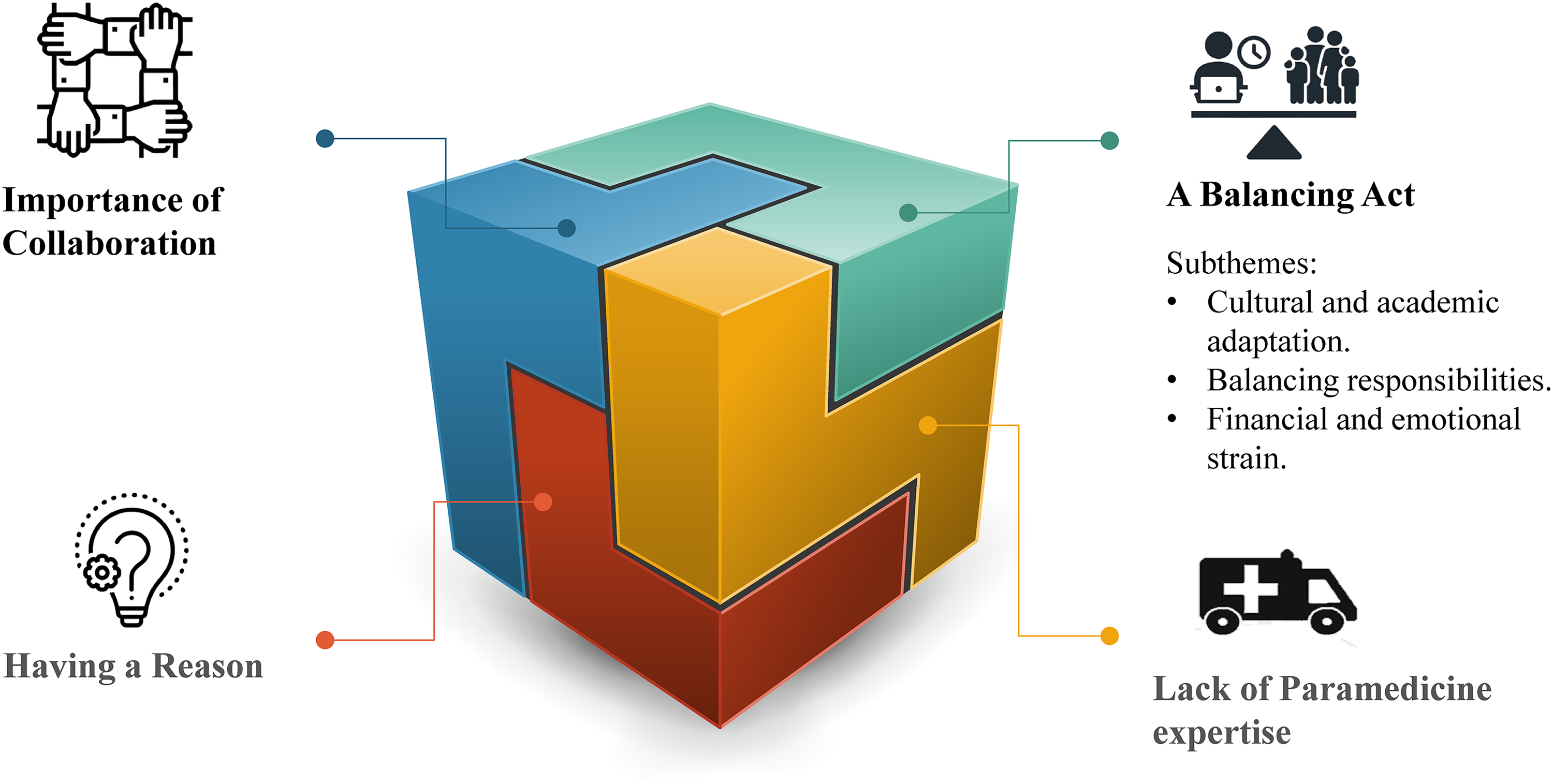
Themes and subthemes generated from analysis.
Theme 1: Importance of collaboration
This theme represents our interpretation of the critical role that collaboration plays in the success of PhD studies in paramedicine. Participants emphasised the importance of building connections, both within universities and with external organisations, to facilitate data access and enhance the overall research process, and the ongoing challenge of establishing these networks early in the academic journey. These collaborative efforts were seen as essential for ensuring that research remains practical and applicable in real-world settings.
Establishing relationships within universities and external organisations was essential for accessing key data, which participants identified as critical to the success of their research studies. Collaborating with external organisations, particularly ambulance services, provided access to resources and information that would have otherwise been difficult to obtain. These connections also helped participants build networks that supported their academic and professional growth. One participant explained the challenge of building connections in a new country, emphasising the difficulty of navigating paramedicine systems without established contacts: - Being exposed to the paramedicine within the country of your study was a major challenge, we all aware of how it's important to have wider connection, and how it's going to help you out to have better outcome. I believe this is one of the challenges that I found it rather difficult although that part of how major part of my sample was UK based. I believe that was one of the things that they are more difficult to approach, difficult to work with, you need to have a person within that environment to help you and facilitate everything. (Meshal) - I needed to contact the ambulance services, but they were always busy. And it was important for my studies to work with them. So, communication part here was difficult and time consuming. It's been 3 months just to communicate with ambulance services. So, one of the biggest challenges I have faced is managing the fucal approval process. I was struggling to be honest, but there was a National Conference at that time. So, I participated in that conference with oral presentation of my systematic review. and I found all the head of the research department of all ambulance services there, and I like talked with them more about my study and this is what facilitated the process by building connection with them. Also, I contacted them again at in the final year of my PhD to conduct a feasibility study, and the communication went smoothly at the end. Because of building connections to be honest. (Majed)
Theme 2: A balancing act
We developed this theme to demonstrate the personal challenges faced by participants. It highlights the difficulties in settling into a new environment, dealing with cultural differences and adapting to a different academic system. The theme also addresses the balancing act between family responsibilities and academic demands, managing time effectively, and coping with financial pressures due to high living costs. Additionally, it covers the emotional challenges of living away from family, experiencing racism and making friendships in a different cultural context.
Cultural and academic adaptation
The multifaceted challenges faced by participants due to relocating to a new country and adapting to a different academic system, are captured in this subtheme. Participants encountered difficulties in settling into a new cultural environment, finding suitable housing and adjusting to new social norms. Additionally, they had to navigate a transition from familiar academic structures to more independent study methods, understanding new teaching styles, academic expectations and standards. This combination of cultural and academic adaptation was found to be overwhelming for participants: - I was unfamiliar with the academic structure over here. So, I had to learn from scratch how they teach these studies because it's totally different than UK, totally different than Australia, and definitely totally different than Saudi Arabia. (Yaqoub) - One of the things as an international student is always you are going to come across difficulties related to moving to a different part of the world, trying to adjust about their tradition, their time and their requirement, their way of thinking. All of those challenges are actually there. (Meshal) - Being in a country that has a different culture, and you need to adapt to the new culture, and not just to adapt to the new culture but to be accepted as you have a new culture to the society. (Ali)
Balancing responsibilities
Participants also faced the challenge of balancing their family responsibilities with the demands of their PhD studies. Many found themselves not only adjusting to a new academic system but also managing the emotional, physical and logistical needs of their families. The added pressure of ensuring their family members were comfortable in the new environment, while trying to excel academically, further complicated their experience. Time management became essential, as participants needed to balance their academic, personal and family obligations, often while adjusting to new self-directed learning models. - Bringing my family with me as a new student was a big challenge to be honest. Because you have to deal with the changes that happen to you and to your family, because you have others to take care of, emotionally, mentally, and physically. You have to adhere to their needs and to yourself, because your trip is about you, but at the same time you have those people who're attached with you. (Yaqoub) - In PhD lifestyle, you need to be the one that's in control. To give equal amount of working and resting and especially coming from educational system that you don't really take charge when it comes to this, like we have our own module set for us, the assessments are set for us there isn't really a concept of self-learning. And if it is, it's like one class per week, and so that's not even discussed how to be conducted. So, this challenge of taking take care of your own educational process. Being a really important participant has been a bit challenging. (Noura)
Financial and emotional strain
The financial and emotional challenges participants faced during their studies was brought to light. Financial issues included high living expenses, rising housing costs and limited income, which impacted students’ budgets, ability to find funding and overall academic progress. Emotional strain encompassed living away from family, dealing with loneliness and homesickness, experiencing racism and discrimination, and the difficulties of forming new friendships in a different cultural context. These factors collectively were found to affect the well-being and academic experience of participants. - Another challenge is living alone, we are used to live with our families back home, and we are not used to do everything by ourselves. Usually like you have your mom cooking for you or your dad helping you with anything else. But here, you are doing everything for yourself. And this was not easy for me at my first few months, like to learn to do everything by myself. (Taraf) - Another challenge is the financial issues because we are students in a scholarship. Sometimes, the scholarship payment is not enough to take care of yourself, and you have to find work which is another hard issue to find work as an international student. So, the financial issues, like the high rent, I always in the end of the month having issues financially. I sometimes don't have anything to eat in the end of the month, because I spend all my salary on the rent, and then another expenses. So, it was hard for me. (Nouf) - I found it very difficult with the economic situation nowadays around the world, to find apartment that's suitable for me in terms of budget and location. So that was a big challenge. The prices are up in all sectors in the housing sector and the food chain sector that increases the prices for the groceries, utilities are high, the gases prices are high. So, all of that for sure will impact someone's experience that will eventually lead him to work more comfortably or to do his research more comfortably. (Faisal) - One of the challenges that I face is racism. Sometimes I got discriminated, maybe because I wear my Hijab. So, I faced couple of like situations inside and outside the university. So, this is also not easy to me, and it is one of the challenges into moving like to another country with a different culture. (Taraf)
Theme 3: Having a reason
The personal reasons behind pursuing a PhD in paramedicine are explored in this theme. Central to this theme is the desire to make a meaningful impact on both the profession and their individual careers. Participants expressed that support from employers, a drive to improve their research skills, financial and professional advancement, and a commitment to the evolution of paramedicine were key reasons behind their decision to further their education. For many, encouragement from employers played a pivotal role in their decision to undertake a PhD, as some participants highlighted how their workplaces recognised the value of advanced education and provided time, resources, or incentives to support their studies. - I joined the academic field, and I was required to pursue a master and a PhD Degree. (Yaqoub) - Actually, you know that when you go in the Academia you should get the PhD. Because, if you got your bachelor or your masters. You don't have that promotion, especially in the Middle East region. So, you should have the PhD. (Mazen) - The payment was very low compared to the effort and the nature of the work in the prehospital field. So, I felt also the nature of the work was overwhelming in terms of work hours and the field itself wasn't like very supportive. So, I decided to join the Academia instead of being practitioner. (Faisal) - Honestly, I want to specifically focus on paediatric research, because I realised during my master's that there were not a lot of investigations there and children are like our brother and sisters, our daughters and sons, you know they are. Have the community and I read a lot of studies where children were not like treated very well. So, this was mainly my aim to pursue my PhD specifically in pre-hospital paediatrics. (Taraf) - I pursued the PhD with hope that we can bring a lot of skills and what we learn abroad to improve the paramedicine field in Saudi Arabia. And it's nice to be part of this change in the future and contribute to improving the field in Saudi Arabia. (Majed) - One reason is to improve my knowledge, especially in research, because the PhD is mainly research focused. So, I had to increase my knowledge in research. See what's out there. And that's why it's beneficial to go around the countries, attending conferences and stuff like that to encourage your knowledge to increase it and to improve it in order to take what's positive out there and move it to your country and make a difference there. The main reason why I pursued my PhD is because I want to have a higher position to make a difference. (Nouf) - I choose to join academia to pursue my studies and good thing about the PhD it opens a lot of doors for you. So, I can move up to higher positions, for example later on, after I get my PhD, which can be difficult without PhD. (Majed)
Theme 4: Lack of paramedicine expertise
We constructed this theme based on the participants’ reflections on the limited expertise in paramedicine within academic and research settings, as well as the perceived lack of Paramedic specific research training programs. Participants felt that it was critical for paramedic professionals to take on roles in academic supervision, ensuring that participants could receive guidance and mentorship from those with direct field experience. - You can't have a paramedic who can be a main supervisor for your PhD. So, all of them will be emergency physician or from other disciplines, you know. So, my supervisor is professor of emergency physician and even though he's professor. But he doesn't know everything in the field. (Majed) - Another issue is not only the supervision team, but also can be the department, the college that you are working with, especially when you are looking for Paramedicine. The majority of us will be working with different departments, with different colleges rather than focusing on paramedicine. So, one of the things that is, I believe, is a major challenge that I encountered personally is how you are trying to make them understand the speciality itself. I'm talking about paramedicine. So how they understand it, how they are actually becoming more familiar with it. In terms of universities, I personally believe that there is more than willingness from different specialities and different backgrounds. You are naming different departments, no matter of what the department that's you are enrolling in, they are quite understanding that Paramedicine in need their own department. They are, understand that in near future they need to be in a way of their own challenges and their own project. (Meshal) - The problem is in paramedicine, there is not a lot of universities in the world that offer a PhD in the paramedicine. A lot of the universities offer programs in disaster management or health science or medical science, and through that you can go to link your research to paramedicine. A few universities offer programs in paramedicine, where you can experience a pure paramedicine in the journey. (Nouf)
Discussion
Our study analysis shed light on the challenges and facilitators faced by Middle Eastern paramedics undertaking their PhD studies internationally. The first theme identified the significance of collaboration in facilitating or hindering the process of PhD research. Building meaningful connections helped PhD students form robust networks, which were essential for advancing their careers and achieving professional success. 31 Previous studies have found that PhD students who were involved in and collaborate on closely related projects as part of a team or had opportunities to contribute to larger research endeavours within a specific team tended to finish their degrees within subscribed timelines. 32 Our participants also expressed that the involvement of paramedics in the supervision of a PhD gave an advantage to facilitate the identification and solutions to issues related to the field. This interpretation aligns with Williams et al., 33 who found that involving individuals with combined roles as clinicians and researchers in the topic area facilitates collaboration with practitioners. Additionally, the involvement of stakeholders in clinical research has been shown to significantly improve both the research process and the application of its outcomes, making clinical research more translatable to practice. 34 Although participants highlighted the value of involving paramedics in supervisory roles, it is important to distinguish this specific supervisory-level issue from the broader structural and institutional barriers identified as a lack of paramedicine expertise within academic settings. The former addresses interpersonal and immediate practical benefits, such as enhancing the relevance and applicability of research through direct supervisory input.35,36 In contrast, the latter points to systemic issues, including limited institutional recognition, the absence of dedicated paramedic departments, and inadequate paramedic-specific research training programs. 37 Recognising this distinction shows the need for both targeted improvements in supervision practices and broader institutional changes to fully address the academic needs of paramedics.
Our participants shared that moving to a new country for their studies brought significant challenges, including difficulties in settling into unfamiliar environments, navigating cultural differences and adapting to new academic systems and expectations. Previous research has consistently shown that international students often face unique challenges that must be addressed to ensure their overseas experience is both rewarding and successful.38,39 The ability to successfully complete university studies as an international student has been found to closely relate to the level of support received at the start of their studies, particularly in adapting to new academic systems. 40 In line with this, participants in our study reported that settling into a new country was particularly difficult in the early stages, facing common barriers encountered by many international students. 10 Cultural differences were also a significant factor, as indicated by Chapdelaine and Alexitch, 41 who found that international students were often less likely to seek assistance compared to their domestic peers. Several of our participants similarly struggled with social integration, finding it difficult to form friendships in their host countries. This challenge is echoed in studies conducted in Canada and the USA, where international students reported more social difficulties abroad than in their home countries, highlighting that this is a common experience shared by many international students globally.12,42
The barriers faced by international students in the literature extend to a level where they may experience outright verbal discrimination due to their cultural and religious identity. 43 Similar experiences were reported in our results with some participants from our study reporting outright verbal harassment because of how their look represented their religious and cultural background in their host countries. Another study found that the impact of these discriminatory behaviours can affect international student mental health, leading to increased stress and feelings of isolation, which further hinders their academic performance and overall well-being. 44 These challenges are compounded by the difficulty of balancing family responsibilities with demanding academic work, making effective time management crucial. We identified that many international students struggled to balance these responsibilities, which is consistent with research showing that effective time management among PhD students can lead to increased productivity. 45 Additionally, participants experienced emotional difficulties stemming from being away from their families and the challenges of forming new friendships in a different cultural context, all of which impacted their settlement and academic progress. Stress from adapting to a new culture was identified as a key factor that could hinder adjustment to the academic environment, while limited social connections further reduced the chances of successful integration. 46
Despite the challenges, participants expressed clear motivations for pursuing a PhD in paramedicine. Many were driven by a desire to improve their research skills and contribute to the advancement of the paramedicine profession. For some, this intrinsic motivation stemming from a personal commitment to growth and knowledge was the key factor. Others were motivated by external factors, such as employer encouragement, to advance professionally and financially. Research has shown that both intrinsic and extrinsic motivations play a critical role in driving PhD students to succeed.47,48 The desire for career advancement, higher income and social status often motivates international students to pursue advanced degrees, 48 with the pursuit of a PhD serving as an essential step in meeting qualification requirements and enhancing professional recognition. 49
While the motivations for pursuing a PhD in paramedicine ranged from personal ambition to external support, participants highlighted that the presence of experienced paramedics in academia significantly impacts the success of these efforts. However, a notable challenge remains the lack of paramedic representation in supervisory roles, which affects both individual academic progress and the broader development of the profession. The involvement of paramedics in academia and the supervision of research students was reported to be crucial from our participants for guiding them through the process. Despite this, paramedicine still lacks significant academic representation globally, with many in academic roles not holding doctoral degrees, lacking research experience and having limited collaboration with the wider research community.50,51 This issue aligns with our analysis, where participants reported that the shortage of paramedics in supervisory teams made it difficult to focus on real-world issues in the field. Furthermore, there is a clear need to raise awareness of paramedicine within academic and research communities. To secure greater professional recognition, it is essential to clearly define the scope and limitations of the profession, which will, in turn, help solidify its identity. 52
Recommendations
Although the individual themes presented in this study may be relevant to all PhD student, it is the intersection of these themes that affects the challenges and facilitators for Middle Eastern students pursuing a PhD in paramedicine at an overseas institution. Based on our analysis, institutions and supervisors can enhance the PhD journey for Middle Eastern paramedics by implementing targeted support and mentorship programs. Institutions should offer dedicated resources, such as culturally sensitive counselling services and peer support networks, to address the unique challenges faced by these students. This was supported in the literature, which highlighted the need for more support and resources for international students. 53 Supervisors can facilitate the integration of Middle Eastern paramedics into research communities, and more broadly any international students, by encouraging participation in international research collaborations and conferences, being mindful they may not proactively seek assistance as is experienced when supervising domestic students. Additionally, expanding postgraduate programs in paramedicine to include more research specific pathways and research opportunities will provide a broader range of options for advanced study. These steps will not only benefit Middle Eastern students but also enhance the overall experience for international students more broadly. By fostering a more inclusive and supportive academic environment, institutions can enrich the global research community and drive forward the advancement of paramedicine.
Limitations
During our results interpretation, it is important to consider a few limitations. Firstly, our study focused solely on Middle Eastern paramedics rather than including paramedics from around the world. We chose this focus to keep the research manageable with insights grounded in this context and potentially relevant to similar settings. Secondly, we specifically investigated the challenges and facilitators during the PhD journey, not all types of doctoral journeys, so our insights might miss some aspects relevant to other doctoral programs. Importantly, only three of nine participants were female. While our recruitment aimed for broader gender representation, personal and structural factors likely limited female participation. This imbalance reflects the gendered dynamics of paramedicine as a profession in the Middle East and may also signal additional challenges for female paramedics undertaking PhD study abroad, including caregiving roles and systemic barriers to mobility. 54 As such, our results should be interpreted with an awareness of these gendered dynamics, and further research is required to examine female experiences more closely. Additionally, the authors have come with their own lens when interpreting the data collected during interviews. However, using a critical realist lens to analyse the results helped us to generate a pattern of truth within the experiences faced by participants while maintaining a relativist viewpoint without diminishing the individual's experiences giving us a more thorough and detailed understanding of the data. Despite these limitations, our study provides valuable insights into the lived experiences, facilitators and challenges faced by Middle Eastern paramedics during their PhD journeys.
Conclusion
This study provides valuable insights into the challenges and facilitators faced by Middle Eastern paramedics during their international PhD journeys. Our analysis indicates that the PhD journey in paramedicine is shaped by several key factors, including the importance of collaboration, the balancing of personal and academic responsibilities, intrinsic and extrinsic motivations for pursuing higher education, and the lack of paramedicine-specific expertise in academic settings. Addressing these challenges is important in order to support the successful completion of doctoral studies and foster the growth of paramedicine as a profession globally. By understanding the unique experiences of Middle Eastern paramedics, universities and policymakers can implement targeted support mechanisms to improve retention rates, provide mentorship and expand research opportunities.
Supplemental Material
sj-docx-1-pam-10.1177_27536386251400781 - Supplemental material for Threading the PhD journey through collaboration, balance and belonging among Middle Eastern paramedics’. A reflexive thematic analysis
Supplemental material, sj-docx-1-pam-10.1177_27536386251400781 for Threading the PhD journey through collaboration, balance and belonging among Middle Eastern paramedics’. A reflexive thematic analysis by Yousef Ayidh Alotaibi, Kelly-Ann Bowles and Brendan Shannon in Paramedicine
Supplemental Material
sj-pdf-2-pam-10.1177_27536386251400781 - Supplemental material for Threading the PhD journey through collaboration, balance and belonging among Middle Eastern paramedics’. A reflexive thematic analysis
Supplemental material, sj-pdf-2-pam-10.1177_27536386251400781 for Threading the PhD journey through collaboration, balance and belonging among Middle Eastern paramedics’. A reflexive thematic analysis by Yousef Ayidh Alotaibi, Kelly-Ann Bowles and Brendan Shannon in Paramedicine
Footnotes
Acknowledgements
The authors would like to thank the participants for sharing their experiences in the paper. We would like to thank Adrian Lockhart for the assistance in pilot testing the interview process.

Ethical considerations
Monash University granted ethical approval for the project (MUHREC Project ID: 40696), with all participants providing written and informed consent. Prospective participants received a plain-language explanatory information sheet outlining the study purpose, what participation involved, the voluntary nature of involvement, anticipated risks/benefits, and the intended use of anonymised quotations. They were given time to consider participation and ask questions before providing written informed consent, including consent to audio-recording. We emphasised that participation could be discontinued at any time without consequence and that participants could decline to answer any question or request that material be withdrawn from the record. Confidentiality was protected through removal of identifying details during transcription, the use of pseudonyms in reporting, and attention to the risk of deductive disclosure when presenting illustrative quotes. The participant information and consent form are provided as Supplement 2.
Author contribution(s)
Funding
The authors received no financial support for the research, authorship, and/or publication of this article.
Declaration of conflicting interests
The author(s) declared the following potential conflicts of interest with respect to the research, authorship, and/or publication of this article: KAB is an associate editor for Paramedicine, but played no role in editorial decision making, which was conducted in adherence to the journal's blind review policy. All other authors declare no actual or perceived conflict of interests.
Data availability statement
De-identified participant data can be obtained from the corresponding author, YA, upon reasonable request.
Supplemental material
Supplemental material for this article is available online.
References
Supplementary Material
Please find the following supplemental material available below.
For Open Access articles published under a Creative Commons License, all supplemental material carries the same license as the article it is associated with.
For non-Open Access articles published, all supplemental material carries a non-exclusive license, and permission requests for re-use of supplemental material or any part of supplemental material shall be sent directly to the copyright owner as specified in the copyright notice associated with the article.
