



Abstract
Natural resource management intertwines with cultural practices and health outcomes for Indigenous peoples. Indigenous communities have managed and contributed to knowledge on ecosystems and sustainability since time immemorial. However, Indigenous communities in California face significant institutional constraints when implementing practices such as cultural burning. Indigenous-led research projects, programs, and political action are crucial to overcoming such constraints. It is important for non-Indigenous researchers to support Indigenous research agendas. This article helps to meet this need by identifying research procedures that respect Indigenous sovereignty and by using methods informed by Indigenous knowledge systems. The authors, representing the Southwest Climate Adaptation Science Center and the Karuk Tribe Department of Natural Resources, present a collaborative approach that integrates Native American and Indigenous Studies scholarship, participatory research methods, and engagement in the sovereign research protocols established by the Karuk Tribe. We share a process of effective collaborative research that respects Karuk research sovereignty. This process resulted in the Intentional Fire podcast series, a co-produced data set that documents Karuk stories on fire suppression, social impacts of fire exclusion, and Karuk determinants of healthy, resilient homeland ecosystems. The authors did not analyze the data further because Indigenous people do not need outside academics to speak on their behalf. The process also developed relationships, amplified knowledge, and strengthened capacities. We share our process and lessons learned to provide a model that can inform other collaborations that aim to support Indigenous research sovereignty.
Keywords
Introduction
Fire is an essential part of many ecosystems in the Western United States (US). However, in the last decade, wildfires have increased in frequency and intensity, leading to catastrophic events (Marks-Block et al., 2021; Mucioki et al., 2021; Williams et al., 2019). In the 20th century, federal and state agencies instituted fire suppression policies that excluded prescribed fires, including cultural burning by Indigenous communities (Clark et al., 2021; Goode et al., 2022; Marks-Block et al., 2021; Marks-Block and Tripp, 2021). These fire suppression policies and practices led to an accumulation of fuel and, consequently, more catastrophic events have occurred (Marks-Block et al., 2021; Mucioki et al., 2021; USGCRP, 2018). Anthropogenic climate change aggravates this situation, which has altered ecosystems and natural cycles, leading to an increase in burned areas (USGCRP, 2018).
Since time immemorial, Indigenous communities have used their knowledge to maintain healthy ecosystems (Austin, 2004; Kimmerer and Lake, 2001; Lake et al., 2017; Lightfoot and Parrish, 2009; Long et al., 2021; Mucioki et al., 2021). In the mid-Klamath River Basin of California, the Karuk and other Indigenous peoples have used low-intensity fires to minimize the risk of large wildfires, encourage desired plant communities, increase hunting successes, and maintain cultural resources, among other benefits (Anderson, 2006; Goode et al., 2022; Knight et al., 2020; Mucioki et al., 2021). However, since the onset of settler colonialism by the United States, people who are not familiar with the local dynamics of the region have carried out natural resource science and management (e.g. Austin, 2004) and suppressed Indigenous management to favor practices that have not effectively addressed site-specific needs (Goode et al., 2022). American scientific management and research, and policies that erase and ignore the presence of Indigenous livelihood and natural resource management, are the settler colonial practices and policies that suppress Indigenous fire management in Karuk territory (Meissner and Whyte, 2017; Norgaard, 2019; Wolfe, 1999). Many communities are currently experiencing the consequences of decisions made at a large scale by non-local people, including health risks due to air pollution from large wildfires (Austin, 2004; Clark et al., 2021; USGCRP, 2018). Many scholars have pointed to the problems that arise when researchers and resource managers who lack understanding of local contexts attempt to impose their epistemologies and practices. Chief et al. (2016) and Latulippe and Klenk (2020) point to additional impacts, such as Indigenous knowledge being extracted or ignored by Western scientific management and research practices. Wilmer et al. (2021) describe the ethical gaps that too often harm Indigenous (and other) communities when they are engaged in collaborative environmental research.
Interdisciplinary approaches and collaborative research are important in natural resource management because landscapes are complex and include stakeholders with different interests and knowledge (Wilmer et al., 2021). Therefore, the integration of different knowledges—through ethical collaborations—is essential to tackling some of the most pressing management issues (Norström et al., 2020). Previous studies have discussed the mutual benefits that can result from collaborations between local communities and Western science practitioners when those collaborations are done ethically and with respect for Indigenous research sovereignty (Austin, 2004; Lake et al., 2017; Popkin, 2016; Wilmer et al., 2021). In these collaborations, Indigenous communities can set the research agenda, craft and influence research protocols, and amplify issues of concern, as well as contribute their knowledge. When Western science practitioners conduct ethical and responsible research that respects and builds on Indigenous knowledge, they can work on issues of great importance and apply a transdisciplinary approach, which is necessary to understand complex natural resource issues (Lomawaima, 2000; Popkin, 2016).
Even though practitioners of Western science are increasingly interested in embracing and integrating Indigenous knowledge, there is still a lot to learn about these collaborations, and a need for more guidance on collaborative methods that implement Indigenous research sovereignty (Austin, 2004; Tuhiwai Smith, 2021; Wilmer et al., 2021). Many Tribal Nations have developed internal review processes that include protocols for collaboration and research in their territories. Researchers must understand and implement these protocols to ensure responsible projects that respect Indigenous sovereignty (Fisher and Ball, 2003; Lomawaima, 2000). Ethical partnerships and collaborations are needed between Western scientists, managers, and Indigenous knowledge holders, based on sound foundations, to steward ecosystem conservation in the local cultural context and with ethical practices that uphold Indigenous research sovereignty.
We understand Indigenous Research Sovereignty to be research enacted and implemented by Indigenous people and upholding their tribally specific knowledge and knowledge frameworks. Linda Tuhiwai Smith’s (2021) Indigenous Research Agenda guides researchers to understand that Indigenous people’s research can be harbored by and for Indigenous people. We also considered tenants of Indigenous data sovereignty by Stephanie Russo Carroll et al. (2019) who declare that the control of data must be with the Indigenous people. A 2014 report by the Karuk Tribe explains why scientists and natural resource managers must take time to understand Karuk Culture: “knowledge is generated through an ongoing process that involves not only observations and actions over time, but moral and spiritual components as well as ‘social license’ of knowledge practitioners” (Norgaard, 2014: 3). Karuk knowledge on fire, for example, cannot be separated from Karuk culture and so cannot be extracted and appropriated in other contexts or by other actors (Norgaard, 2014).
We enacted an Indigenous Research Agenda and data sovereignty through regular communication between the Karuk Department of Natural Resources (Karuk DNR) and the Southwest Climate Adapation Science Center (SW CASC), which allowed the latter to learn about Practicing Pikyav, the Karuk Tribe’s research oversight process and code of research ethics. Indigenous research sovereignty can be enacted by outside collaborators when they learn about, reflect on, and enact Tribe-specific research protocols. We want to be clear: collaboration with outside researchers is not at all a requirement for Indigenous research sovereignty. However, our experience demonstrates how collaboration can uphold Indigenous research sovereignty. Further practices can be developed to bridge the gap between Indigenous knowledge and Western science, and the patterns and challenges that occurred in this partnership might be useful for other collaborations between the American academy and Indigenous communities.
This article describes a collaborative research process between the Karuk Tribe Department of Natural Resources and a cohort of graduate students and their advisors who represent the Southwest Climate Adaptation Science Center. The authors comprise these two groups. Together, we explored two essential questions: “How can we develop a collaborative process to guide ethical research on topics related to Indigenous knowledge?” and “How can we amplify the knowledge and culture of Karuk People?” Figure 1 illustrates our research process through the metaphor of a campfire and guides the reader through the major sections of this article. Section 2 sets the scene by providing key background. We present the foundation of our research in section 3, which integrates principles from Native American and Indigenous Studies scholarship (NAIS), participatory research methods, and engagement with research governance protocols. In section 4, we demonstrate how we built a collaborative research process that sought to respect Indigenous sovereignty by providing a description of our research methods and practices. In section 5, we discuss the outputs and outcomes of this research project, including a podcast series titled Intentional Fire, which records Karuk stories and perspectives on the use of fire in their homelands. These stories serve as important data on the ecological impacts of fire suppression, social impacts of fire exclusion, and Karuk determinants of healthy, resilient ecosystems in Karuk Aboriginal Territory. We believe these stories will contribute to a positive change in relationships among people and between fire and people. We offer conclusions in section 6 on the role of Storywork and podcasting in the research activities of Tribal Nations and their collaborators.
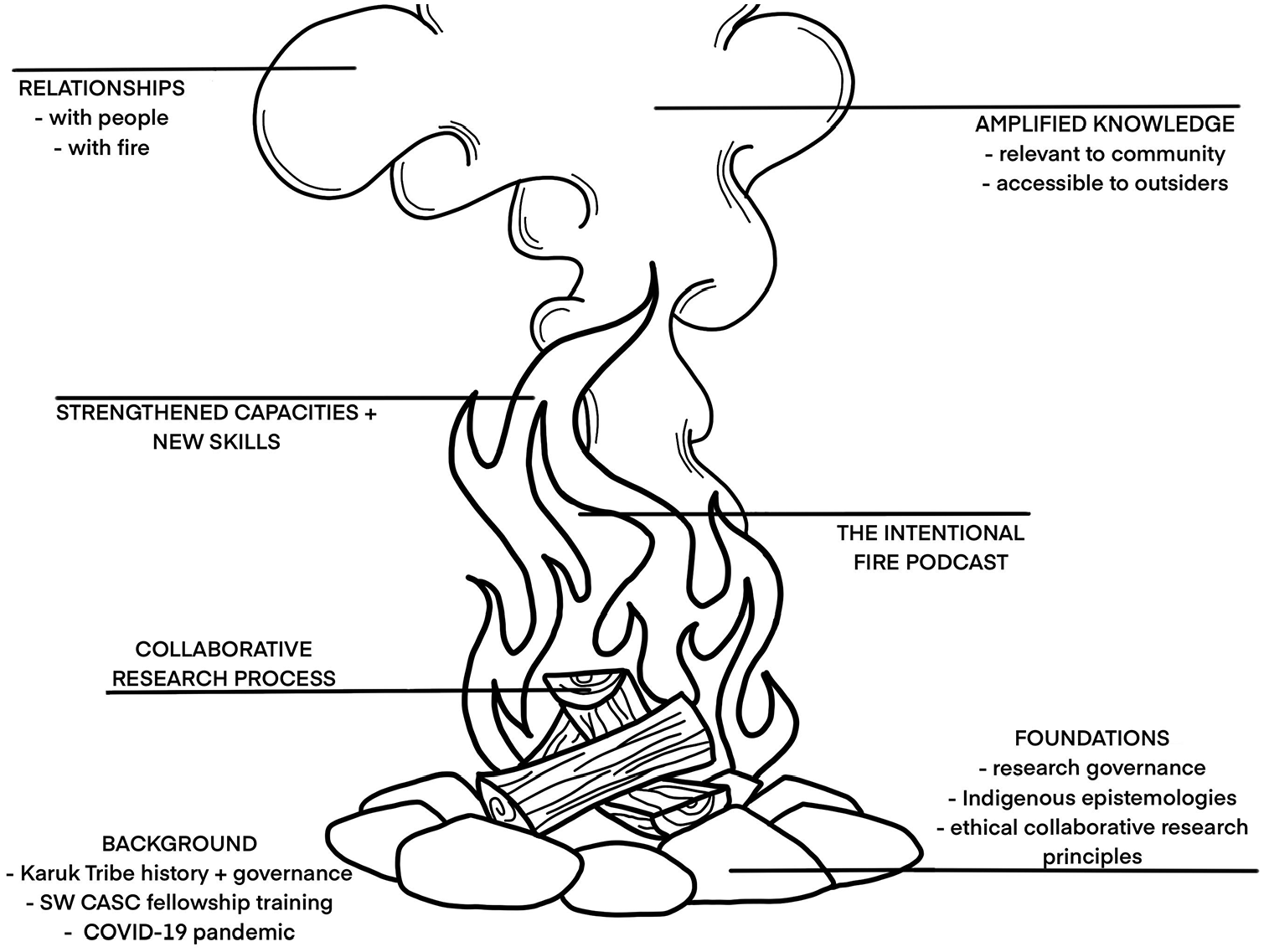
The foundations, outcomes, and outputs of our collaborative research process. This figure draws on the metaphor of a campfire to explain how we built the collaborative research process between Karuk DNR and SW CASC. The setting for the fire is the background described in section 2. Each stone in the fire ring is a foundation discussed in section 3. The fire ring supports the logs, or the collaborative research processes, which we built together. The built relationships can fuel future collaboration (section 4). The logs are potential energy; when built well, the logs slowly transform over time into good fire and smoke. The flames symbolize the Intentional Fire podcast series and the new and strengthened capacities of those involved in the project (section 5). As we keep our partnership strong through our relationships, the fire continues to glow. While fire can evoke fear, many communities have more complicated—and positive—relationships with fire (e.g. Kamakau, 1964; McGregor and Aluli, 2020; Marks-Block et al., 2021). The longer-term impacts of Karuk Storywork, in this case through podcasting, are less clear. These and cultural outcomes are represented by smoke (section 5). Although thick smoke can be dangerous to breathe, smoke can also be beneficial; it is used as an ecosystem management tool by Karuk People (David et al., 2018). The Karuk stories captured in the podcast have the potential to strengthen relationships among people and between people and fire. Through this project, partners examined their own relationships to fire and built a more positive relationship with fire on the land. From a warm campfire, built with community, the diffusion of ideas emerges as good smoke.
Background: The setting
Karuk Tribe
The homelands of the Karuk Tribe are located in the Siskiyou-Klamath Bioregion in California (Lake and Christianson, 2019) (Figure 2). The Karuk Aboriginal Territory is unceded land largely occupied by the US Forest Service (USFS). The Karuk Tribe has never given up their land through war or ratified treaty. In 1850, the United States authorized a treaty commissioner who negotiated treaties with Karuk and other peoples. However, Congress did not ratify these treaties, in part because gold was discovered in California Tribal lands (Raphael, 1993) and the creation of a reservation would have prevented Anglo settlement in these economically valuable lands (Baker, 2003; Heizer, 1972). Settlers expected to erase the Karuk from their homeland (Raphael, 1993), but the Karuk People continue to resist all attempts of removal and exile.
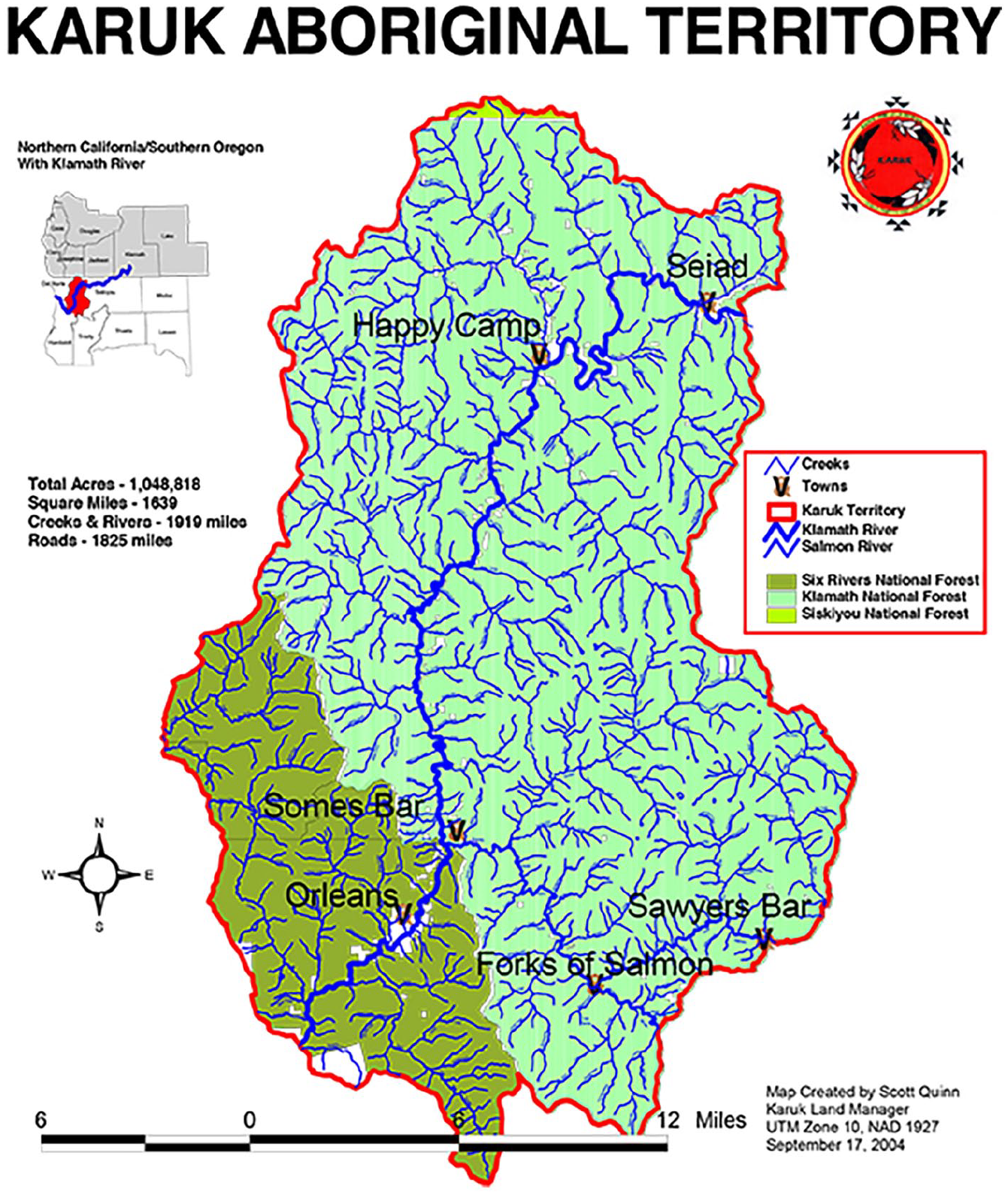
Map of Karuk Aboriginal Territory (Courtesy of the Karuk Tribe and Scott Quinn).
Karuk People have been impacted by the fire suppression policies of the USFS and California Department of Forestry and Fire Prevention (CALFIRE) (Marks-Block and Tripp, 2021). For example, the Week’s Act of 1911 authorized the purchase of millions of acres of land by the USFS, including Karuk Aboriginal Territory. This Act outlawed Karuk use of fire, while providing for and incentivizing cooperation on fire and forest management with state and private lands that vastly expanded the jurisdiction of the USFS with respect to fire suppression (Busenberg, 2004; Karuk Tribe, 2019a). Those who sought to maintain their cultural management of the land through fire stewardship faced law enforcement and violence. The Orleans District Ranger of the USFS wrote in a 1918 memo, “Every time you catch one [Karuk person] sneaking around in the bush like a coyote, take a shot at them.” 1 Like the Karuk, many Indigenous communities around the world—from the western provinces of Canada, the Amazonian Bioregion, the northern territory of Australia—persist in practicing cultural burning in their ancestral lands, despite many obstacles (Lake and Christianson, 2019).
At the beginning of the 1970s, some land management agencies began to support prescribed burning to restore ecosystems. In the 1990s, the USFS integrated some prescribed burning into its forest management, but fire managers were constrained by permitting requirements, narrow windows of opportunity to implement prescribed fire, and limitations imposed by the scale of prescribed fire (Clark et al., 2021). In the 2000s, Tribal Nation and NGO advocacy for prescribed burning grew. Karuk and other Tribal Nations in the region promoted cultural burning through informal governance mechanisms, such as inter-institutional alliances (Marks-Block et al., 2021; Marks-Block and Tripp, 2021). Today, the Karuk Tribe Department of Natural Resources works to restore fire regimes and implements prescribed and cultural fire. The Karuk Tribe Climate Action Plan calls for continued cultural burning programs to address climate change vulnerabilities (Karuk Tribe, 2019b; USGCRP, 2018). The Karuk People are responsible for restoring cultural and natural resources and ecological processes in Karuk Aboriginal Territories. The Karuk DNR’s mission is to “protect, enhance and restore the cultural/natural resources and ecological processes upon which Karuk people depend,” and Karuk DNR staff “ensure the integrity of natural ecosystem processes and traditional values are integrated into natural resource management strategies” (Karuk Tribe, 2022). The Karuk Tribe provides leadership for and participates in the Western Klamath Restoration Partnership (WKRP), an inter-institutional alliance with the USFS, non-profits, private landowners, and others in the Klamath region of California (Marks-Block et al., 2021). The partnership aims to “maintain resilient Klamath ecosystems, communities, and economies guided by cultural and contemporary knowledge,” through restoration of fire regimes (WKRP, n.d.).
SW CASC
The SW CASC is a partnership between the federal government and universities from the US Southwest. Partners include the US Geological Survey (USGS), seven research institutions (University of California, Davis; University of California, Los Angeles; Desert Research Institute; University of Arizona; Utah State University; Colorado State University; and Scripps Institution of Oceanography at University of California, San Diego), and a tribal climate resilience liaison (American Indian Higher Education Consortium) (Figure 3). These institutions work together to develop actionable science and inform climate adaptation solutions in partnerships with natural and cultural resource managers, policymakers, Tribal Nations, and researchers across the southwestern states of Arizona, California, Colorado, Nevada, and Utah.
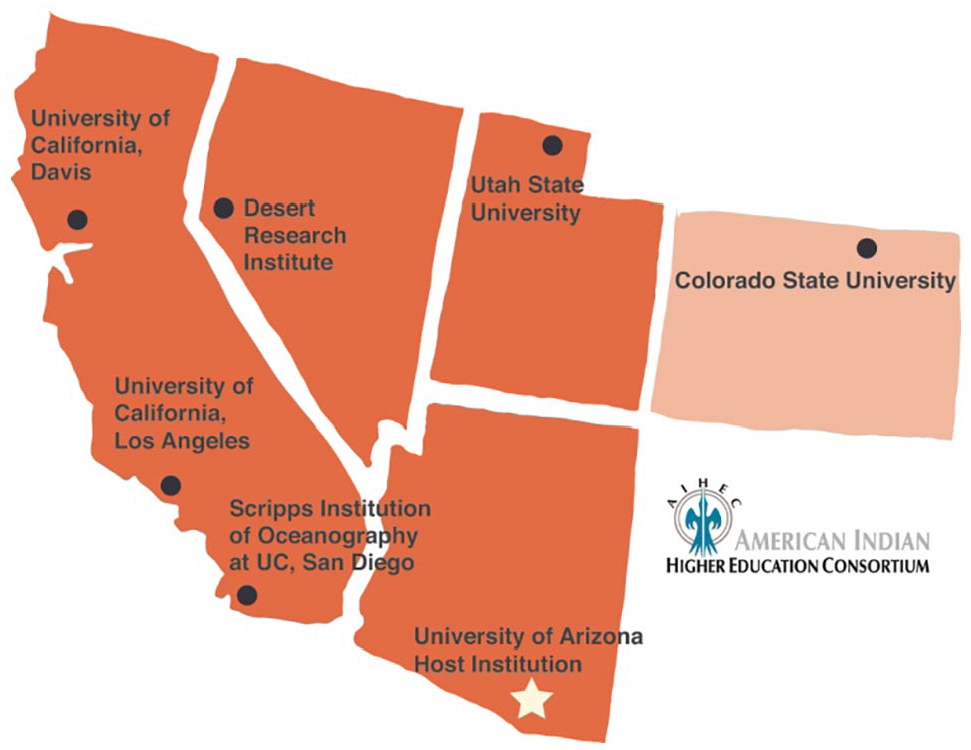
SW CASC Region (Courtesy of the Southwest Climate Adaptation Science Center).
The SW CASC’s goals include training young scholars and practitioners. Through its Natural Resources Workforce Development (NRWD) fellowship program, SW CASC mentors diverse cohorts of young scholars in use-inspired transdisciplinary team science. The collaborative research project described in this article took place over approximately one academic year through the NRWD fellowship program. The science theme for the 2020–2021 NRWD Fellowship was “management in the aftermath of landscape-scale disturbances.” The SW CASC fellows focused on fire suppression policies and the use of prescribed and cultural burning to reduce the occurrence and frequency of large wildfires (Williams et al., 2019).
The COVID-19 pandemic
Our collaborative research effort began during the first year of the COVID-19 pandemic, with its many personal, inter-personal, local, and institutional impacts and mitigations. This affected the partners in many ways, from losses of loved ones to increased childcare responsibilities to extra paperwork for approving travel. The pandemic impacted every aspect of the collaborative process, including relationship building, research protocols, and data collection.
Foundations for collaborative research: The fire ring
We constructed our collaborative process upon three foundational concepts: (1) principles of ethical, collaborative research, (2) the research governance of each institution involved in the partnership, and (3) Indigenous epistemologies. In Figure 1, we represent each foundation of our collaboration as a stone in the fire ring that surrounds and supports our collaborative research process. Table 1 summarizes the key contributions of the foundations of our research collaboration.
Foundation for collaborative research between the Karuk Tribe and the SW CASC.
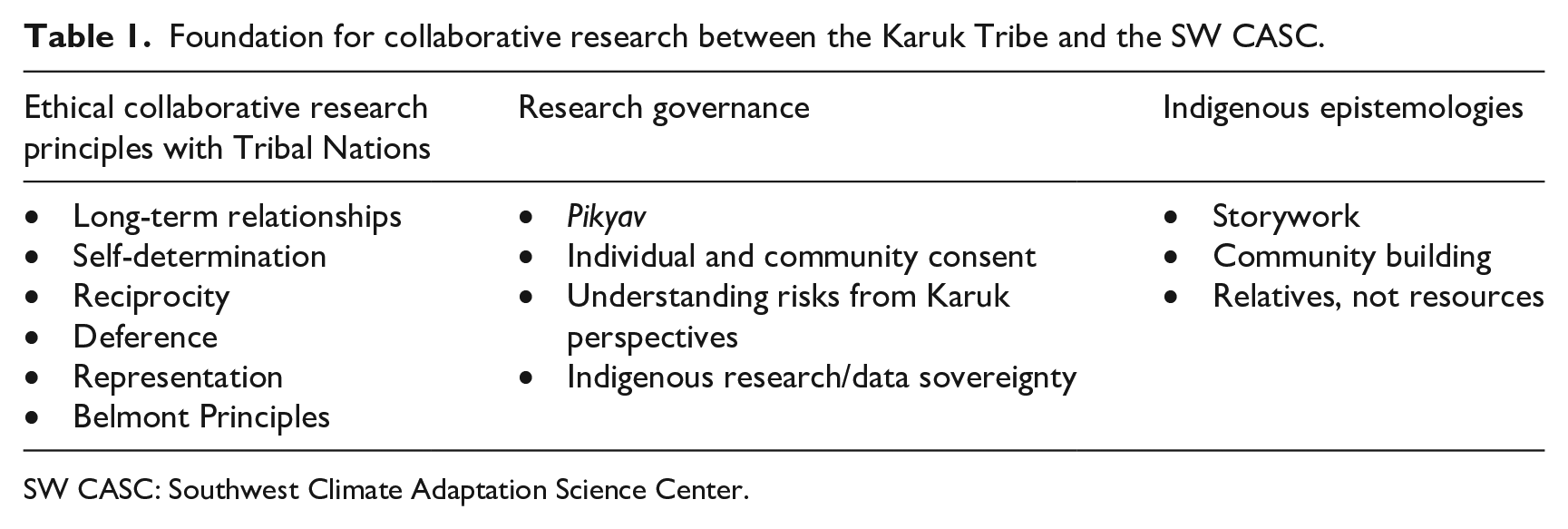
SW CASC: Southwest Climate Adaptation Science Center.
Principles of ethical collaborative research
The foundation for our partnership incorporates principles from various methods and frameworks of ethical collaborative academic research so as to do our best to uphold Indigenous research sovereignty (e.g. Archibald, 2008; Rainie et al., 2017; Tuhiwai Smith, 2021). Especially because of the legacy of academic research on Indigenous peoples, the preferred method of research in Indigenous communities is that it be initiated by and conducted by Indigenous people. With academia housing mostly non-Indigenous scholars, this is not the reality. Therefore, these principles aim to guide research that is as ethical as possible. “Research” retains a deeply negative connotation in many Indigenous communities around the world (Tuhiwai Smith, 2021). Since 1850 in the US, the most common form of research in Native communities has been salvage ethnography, the systematic collection of material culture and the looting of gravesites (Lomawaima, 2000). This extractive research lacks reciprocity and has allowed non-Indigenous researchers to claim expertise over Indigenous cultures (Lomawaima, 2000). In biomedical research, there have been cases where researchers have misused human biological samples from Native communities for research outside of the scope agreed upon by the Tribe and the individuals who granted their consent to participate in the study (e.g. Drabiak-Syed, 2010). The history of extractive and unethical research, and the power dynamic between academic researchers and local communities, must be understood and acknowledged to establish responsible research partnerships (Fisher and Ball, 2003; Lomawaima, 2000). Power dynamics among academic researchers and communities matter; the distribution of benefits between academic researchers, their non-academic Indigenous research partners, and communities should be scrutinized (Lomawaima, 2000). Also, the benefits to a Tribe may accrue slowly. An academic’s career may benefit in the short-term from publications and grants resulting from research collaborations with Tribes, but for Indigenous communities, these benefits may accrue more slowly and from the cumulative impact of the scholarship over time.
Ethical approaches to research with Tribal Nations and Indigenous people seek permission from, follow the leadership of, and meaningfully include the communities in every stage of the research process (Chief et al., 2016; Deloria, 1988). Wilmer et al. (2021) and Brittain et al. (2020) both discuss the necessity of careful considerations of ethical principles and actions when working with communities, particularly those who have been harmed by research in the past. Doyle and Buckley (2017) provide guidance on how standard research review boards within universities can more effectively manage the complexities of qualitative research. Tuhiwai Smith (2021) points out that Indigenous social movements since the 1960s, and multiple declarations by Indigenous people since 1993, document Indigenous people demanding ownership of their intellectual and cultural knowledge, despite Western laws that force private ownership of intellectual ideas. Indigenous people demand that they continue to be sole purveyors of their knowledge and that Indigenous descendants have access to Indigenous knowledge. Indigenous communities now maintain and produce their own guidelines for ethical collaborations, which can be found online, in written documents, or directly from the partnering Tribe.
Lomawaima (2000) poses four simple rules for research with Native communities: First, “if a researcher wants to know the ethics of doing research in a particular Native community or reservation, they must first ask, then listen.” Second, “if the researcher does more talking than listening in the ensuing dialogue, something is wrong.” Third, “where tribes have established guidelines for conducting research, researchers must find out the rules and follow them. They should acquaint themselves with tribal history, past social and economic conditions, and the tribe’s prior experiences with academic researchers.” Fourth, “researchers must give something back.”
In addition to the rules discussed above, participatory research methods can guide ethical collaborative research between Indigenous communities and non-Indigenous researchers. Methods of participatory research intend to democratize research through community participation (Cvitanovic et al., 2019). Community-based participatory research is used in public health and health sciences and participatory action research is an approach commonly used in the social sciences (Hacker, 2013; Whyte et al., 1989). These are approaches to research that emphasize community strengths, empower communities, and build capacities in the process of producing meaningful and valid research (Austin, 2004; Mariella et al., 2009). Participatory research approaches emphasize long-term partnerships between communities and researchers that encourage collaboration throughout the research process (Austin, 2004). Tribal-driven Participatory Research impresses the importance of Tribal authority and leadership of the research (Mariella et al., 2009). Social change and community empowerment are important objectives, especially in recognition of the historical trauma experienced in Indigenous communities and by Tribal Nations (Fisher and Ball, 2003; Mariella et al., 2009). Therefore, participatory research methods are often evaluated first by their success in addressing issues of importance to the Indigenous community and identifying or implementing solutions. This type of science is rooted in advocacy, a departure from the norm of objectivity that Western science practitioners may claim to implement or strive for (Fisher and Ball, 2003).
Transdisciplinary science, another participatory research practice, recognizes the contributions of different forms of knowledge, particularly local and Indigenous knowledge. Like the other participatory research approaches, transdisciplinarity emphasizes action and engagement and incorporates multiple ways of knowing into research and practice. However, transdisciplinary research, which is often applied in environmental scholarship, also emphasizes the integration of multiple academic disciplines. Transdisciplinary research is “a democratic scientific practice” that emphasizes “ethical and mutually respectful partnership” throughout the entire research process (Wilmer et al., 2021). Transdisciplinarity can include co-production of knowledge, a collaborative research process that emphasizes the importance of diverse knowledge and skills across the spectrum of science, policy, and society to collectively generate usable science (Djenontin and Meadow, 2018; Lemos and Morehouse, 2005). The process of co-production relies on long-term relationships, open communication, and producing usable information for decision-makers, managers, stakeholders, and communities (Meadow et al., 2015).
Wilmer et al. (2021) provide a set of expanded principles for transdisciplinary research that include non-academic partners in project design, implementation, and reporting. To have successful partnerships or collaborations, researchers need to expand ethical understandings and practices beyond the Belmont Principles (Wilmer et al., 2021), which are the underpinnings for research ethics policy in the United States. The Belmont Principles include respect for persons, justice, and beneficence (United States, 1978). However, Wilmer and colleagues find these principles to be important but insufficient for research collaborations, especially in partnerships between academics and Indigenous communities. They include four additional principles: (1) “Appropriate representation” acknowledges the implications of how representation affects “people, places, species, ecosystems, and socio-ecological relationships” on ethical and real-world levels. (2) “Self-determination” represents that Indigenous communities are sovereign peoples with the right to decide if and how research can occur, to require collective and individual consent for participation, and to control data related to their community, Indigenous knowledge, and ecological relationship. (3) “Reciprocity” refers to equitable sharing of benefits from research. (4) “Deference” means an understanding of and willingness to trust and defer to different ways of knowing and local expertise.
Research governance
The history of the relationship between the American academy and Indigenous communities provides some additional context underlying our approach to collaborative research. Both universities and Tribal Nations have established protocols that govern research, and both groups have institutional arrangements, specific parameters, and expectations that influence any collaboration. Crucial to the foundation of our collaborative work were the Karuk Tribe’s research protocol known as Practicing Pikyav (2017), the Arizona Board of Regents Tribal Consultation Policy (2016), University of Arizona (UA) Guidelines for Research and Engagement (2021), and the SW CASC use-inspired research practices.
Indigenous research sovereignty
Many Tribal Nations have established research protocols for oversight of scientific research conducted on their reservation lands or aboriginal territory, a trend that has been growing since the mid-1990s (Chief et al., 2016; Him et al., 2019). Common features of these protocols include the requirement for permission to conduct research, the Tribal Nation’s rights over data collected in research, collective rights and protections for the Tribal Nation in addition to the individual, direct benefit of the research to the Tribal Nation, requirements for non-Indigenous researchers to develop relationships and cultural fluency, and requirements for outside researchers to be sensitive to placing burdens on knowledge bearers (Chief et al., 2016; Rainie et al., 2017).
The Karuk Tribe’s research oversight process is called Practicing Pikyav. The Karuk Tribe established Practicing Pikyav to set “the terms for communication, informed consent, and expectations in collaborative research” with the Karuk Tribe and to prevent exploitation of the Karuk Tribe’s intellectual property (Karuk Tribe, 2017). Pikyav means “to fix or to repair” in the Karuk language and refers to the everlasting responsibility Karuk People hold to “repair and restore the complex sociocultural and ecological systems,” including actions ranging from their sacred annual world renewal ceremony, their research programs, land management, and ecological restoration (Karuk Tribe, 2017). The Karuk Tribe found their research protocol to be necessary after the legacy of past researchers, including those who dug up interred human remains when they excavated gravesites (Platt, 2011).
Human subjects protection at universities in the United States
Universities also have institutional arrangements that govern research ethics. Under the Federal Policy for the Protection of Human Subjects, known as the “Common Rule,” universities are required to uphold a basic standard for ethical human subjects’ research (HHS Office of Human Research Protections, 2017). The Common Rule is based on the 1979 Belmont Report, which outlines three ethical principles: respect for persons, justice, and beneficence. The Common Rule, and the Institutional Review Boards (IRBs) that implement these policies on university campuses, are important but insufficient to ensure ethical research in collaboration with Tribes (e.g. Drabiak-Syed, 2010). Wilmer et al. (2021) lay out four fundamental problems with the Common Rule concerning transdisciplinary research: (1) the Common Rule focuses on protecting research “subjects” and does not explicitly provide guidance on transdisciplinary approaches to research. In transdisciplinary research, a non-academic research partner may be in charge of the research agenda and retain sovereignty over data, which was the case for the SW CASC and Karuk DNR collaboration. (2) The Common Rule only governs “human subject research” as defined in the legislation. This leaves a gap in oversight because not all research that involves people meets this federal definition, meaning that partners could be involved in a project that does not provide sufficient legal protection for the experiences and knowledge they share within the research process. The upholding of ethical research standards relies on the awareness and actions of the academic researchers in such cases. (3) The Common Rule focuses on risks to individuals. Group harms are not considered, and yet group harms are essential considerations when working with Tribal Nations. Finally, (4) the Common Rule only requires transparency around the availability of direct benefits, if any, to participants without incentivizing direct benefits. Another historical weakness has been that only recently, the Common Rule was updated to state that federally recognized Tribal Nations regulate research conducted on Tribal lands (Tsosie et al., 2019). This is a step forward, but the gaps identified by Wilmer et al. (2021) remain.
Our collaborative project was subject to review by the UA’s IRB, because UA is the administrative seat of the SW CASC. UA prescribes additional procedures beyond the Common Rule requirements for Tribal partnerships. The Arizona Board of Regents adopted a Tribal Consultation Policy in 2016, which acknowledges sovereignty of Tribal Nations and states that all research projects and initiatives that engage with Tribal Nations must document consultation and approval processes (Harper and Newberg, 2016). The policy acknowledges the need for collective consent and for collaboration on research design (Arizona Board of Regents, 2016). UA has Guidelines for Research and Institutional Engagement with Native Nations, which guide faculty, students, and staff in their responsibilities to consult with Tribal Nations. These includes the responsibility to gain “an understanding and recognition of tribal sovereignty, early and continuous consultation, determination of formal and informal authority, demonstration that free, prior, and informed consent has been obtained, and recognition of the potential for heightened community risk.” Under these guidelines, UA Native Peoples Technical Assistance Office (NPTAO) reviews all IRB protocols and advises researchers on research collaborations with Tribal Nations not falling under human subjects research (University of Arizona, 2021).
SW CASC and use inspired research
The use-inspired approach of the Southwest CASC is another piece of the foundation. SW CASC conducts periodic stakeholder needs assessments, supplemented by annual consultations with natural resource managers in the region. The assessments and consultations inform their science themes and new programs. SW CASC researchers aspire to follow principles of translational ecology and other use-inspired research frameworks (e.g. Enquist et al., 2017; Parris et al., 2016); the research is conducted in collaboration with practitioners, to co-produce actionable science (Beier et al., 2017). While all scientific research depends on rigorous and transparent research methods, actionable science frameworks also emphasize the importance of understanding the context within which decision-makers operate, the need to develop strong researcher–practitioner relationships and trust, and the multi-directional communication of roles, responsibilities, and commitments to the collaborative research process, outputs, and outcomes (Ferguson et al., 2014; Meadow et al., 2015). The anticipated result of use-inspired actionable science is to inform environmental management practice and policy—to have real impact (Meadow and Owen, 2021).
Indigenous epistemologies
The last piece of our foundation is related to Indigenous Epistemologies. Native American and Indigenous Studies scholarship (NAIS) provides guidelines for ethical research with, by, for, and from Indigenous people, such as the Indigenous Research Agenda (IRA). Tuhiwai Smith writes that IRA can be carried out by Indigenous research programs (Tuhiwai Smith, 2021). NAIS provides theories and methodologies that recognize the validity of Indigenous scholarship, such as Indigenous Storywork (Archibald, 2008; Archibald et al., 2019), both within and beyond American academia. While the American biological and physical sciences considering the scientific method to be authoritative knowledge, Indigenous people have a generational pedagogical knowledge production system where specific people within the community are seen as knowledge keepers (Kimmerer, 2013). Academic writing is not the primary mode of knowledge production for Indigenous people; thus, the foundation of our research included Indigenous epistemology documented in media and communication beyond academic writing.
NAIS methodology and scholarship acknowledges that epistemology in Indigenous communities exists within, outside of, and alongside American academic institutions. Indigenous people’s knowledge and social production exists in Storywork, oral tradition, and storytelling; academic researchers may be able to integrate this knowledge using protocols and methodologies (Archibald, 2008; Archibald et al., 2019; Kimmerer, 2013; Wildcat, 2009). Indigenous people’s words, stories, and oral testimony are as valid as quantitative scientific data in the American system (Archibald, 2008; Betasamosake Simpson, 2017; Goeman, 2013; Kimmerer, 2013; Miranda, 2016; Tuhiwai Smith, 2021). In Indigenous Storywork, Archibald (2008) builds on the theoretical disposition from Stó:lō, Coast Salish elders and writes that when using Storywork in pedagogical settings, researchers must also engage in respect, responsibility, reciprocity, reverence, holism, interrelatedness, and synergy. Indigenous Storywork documents Archibald and Stó:lō, Coast Salish elders implementing Storywork over many decades and with regular meetings for local public school curriculum (Archibald, 2008). In Decolonizing Research: Indigenous Storywork as Methodology, Archibald and colleagues (Allen, 1992; Archibald et al., 2019; Betasamosake Simpson, 2017; Tuhiwai Smith, 2021) bring together scholars’ work in applying Storywork in various disciplinary contexts such as film, literature, mathematics, gender studies, and law. These scholars demonstrate the ways in which Indigenous communities practice Storywork to maintain their indispensable epistemology in stories.
Although Tribal communities and Indigenous people can engage in a conversation using the language of natural resource management, in Indigenous epistemologies, Indigenous knowledge producers discuss natural resources as relatives (Torres, 2019; Wildcat, 2009). For instance, the great Native American thinker and leader Vine Deloria (2000) once said “I think the primary difference is that Indians experience and relate to a living universe, whereas Western people—especially scientists—reduce all things, living or not, to objects.” An understanding that Indigenous fire practitioners would perceive fire, animals, and water as relatives needs to be adopted so that the academic researchers can perceive this important and nuanced difference when planning for climate change and prescribed fire practices. One way that Indigenous people build sustainable relationships with entities in their local ecosystems is to ensure clean air, clean water, food, and resources so that all relatives—whether bears, birds, wolves, hawks, or eagles—have what they need to live healthfully. This differs from the Western natural resource management model where entities, such as water, timber, land, and salmon, convert into commodities with market value, as natural resources (Allen, 1992; Betasamosake Simpson, 2017; Kimmerer, 2013; Tuhiwai Smith, 2021). Furthermore, NAIS scholarship supports an individual’s relationships, community, and personal experiences to inform research (Tuhiwai Smith, 2012).
Our collaborative research process: The logs
The SW CASC fellows and Karuk DNR aimed to collaborate in every stage of the research process (e.g. Austin, 2004; Wilmer et al., 2021), from November 2020 to February 2022, implementing our research to respect the research sovereignty of the Karuk Tribe throughout the process (Fisher and Ball, 2003; Wilmer et al., 2021). This partnership constructed the research process by drawing on the foundations, context, and lived experience of the co-authors. The process began with relationship building and culminated with planning for the dissemination of the podcast, although our relationships continue into the future.
Relationship building
The collaboration between SW CASC fellows and the Karuk DNR was initiated by the SW CASC fellows. As part of their research on landscape-scale ecological disturbance and climate change adaptation, the fellows wished to learn about Karuk cultural fire practices and produce a project that would be useful to the Tribal Nation. As this outreach began, one of the SW CASC fellows (Chumach), who perceives her role as a member of the larger Indigenous communities to be central to her work, critiqued the use of the term “stakeholder engagement” and offered instead “community building.” From her approach, community building relates to existing and ongoing relationships, reciprocity, and an understanding that good relationships are built over time. This attunement to the importance of Indigenous community building resonated with the SW CASC fellows as an improved way to work with Karuk People.
The fellows relied on existing relationships of the SW CASC and Karuk Tribe to ensure that this collaborative relationship would not be limited to the one academic year of the fellowship. As stated above, participatory research emphasizes long-term relationships or partnerships (e.g. Austin, 2004). One of the SW CASC fellows had previously worked with the Karuk Tribe. The fellow was introduced to one of the Karuk Tribe representatives, who manages research collaborations with universities for Karuk DNR, and she began to ask about projects that might be of value. The partners communicated over 6 months (November 2020–May 2020) before developing a research proposal (e.g. Lomawaima, 2000). The Karuk Tribe representative introduced the SW CASC fellows to the future cultural liaison for this project (Karuk, Yurok, Paiute, Pit River), a technician for Karuk DNR and graduate student at Humboldt State University who was in the process of developing her own research proposal for her master’s project. Her collective knowledge of DNR, Karuk ecologies and practices, and the community were essential to furthering the work of the podcast. Karuk Practice is only navigable by a Karuk person because many principles are unwritten, created by living in a Karuk community, and not yet described in a Western-dominated setting. Thus, this project built on an emerging institutional relationship of the SW CASC and Karuk Tribe and on one researcher’s ongoing relationship with Karuk.
Setting the agenda: Co-production of research topic, methods, and products
After Karuk DNR confirmed their interest in the potential of a collaborative project, the two groups discussed ideas that were of mutual interest and were realistic, given the skills and time available. After several discussions, both partners confirmed their interest in producing a podcast on cultural and prescribed burning. The idea for the podcast was to build from an existing effort of Karuk DNR, the Good Fire report, which describes barriers to prescribed and cultural fire in Karuk Aboriginal Territory and identifies solutions (Clark et al., 2021). The goal for the podcast was to increase awareness of the report and make the issues described in the report more personal and salient by sharing stories and perspectives that communicate their impacts on Karuk People. The intended audience was the local community, non-Indigenous land managers, and the broader public, who, with better understanding, might reimagine their relationship with fire and support cultural and prescribed burning in Karuk Aboriginal Territory.
Storywork (Archibald, 2008; Archibald et al., 2019) justifies anchoring Karuk people’s stories as a data set for best practices and protocols, harbored by generations of experience with the implementation of burning and controlled fire practices. Storywork provided both ethical considerations and a model methodology for upholding Karuk knowledge in this research collaboration. Thus, when participating in the collaborative research project, SW CASC fellows could understand the value of Karuk stories and oral testimonies in any research carried out together. The co-produced Intentional Fire podcast would document stories of Karuk people as a data set and as generational knowledge about the use of burning and fire when tending Karuk ecosystems, culture, and landscape.
Cultural protocols and research permitting
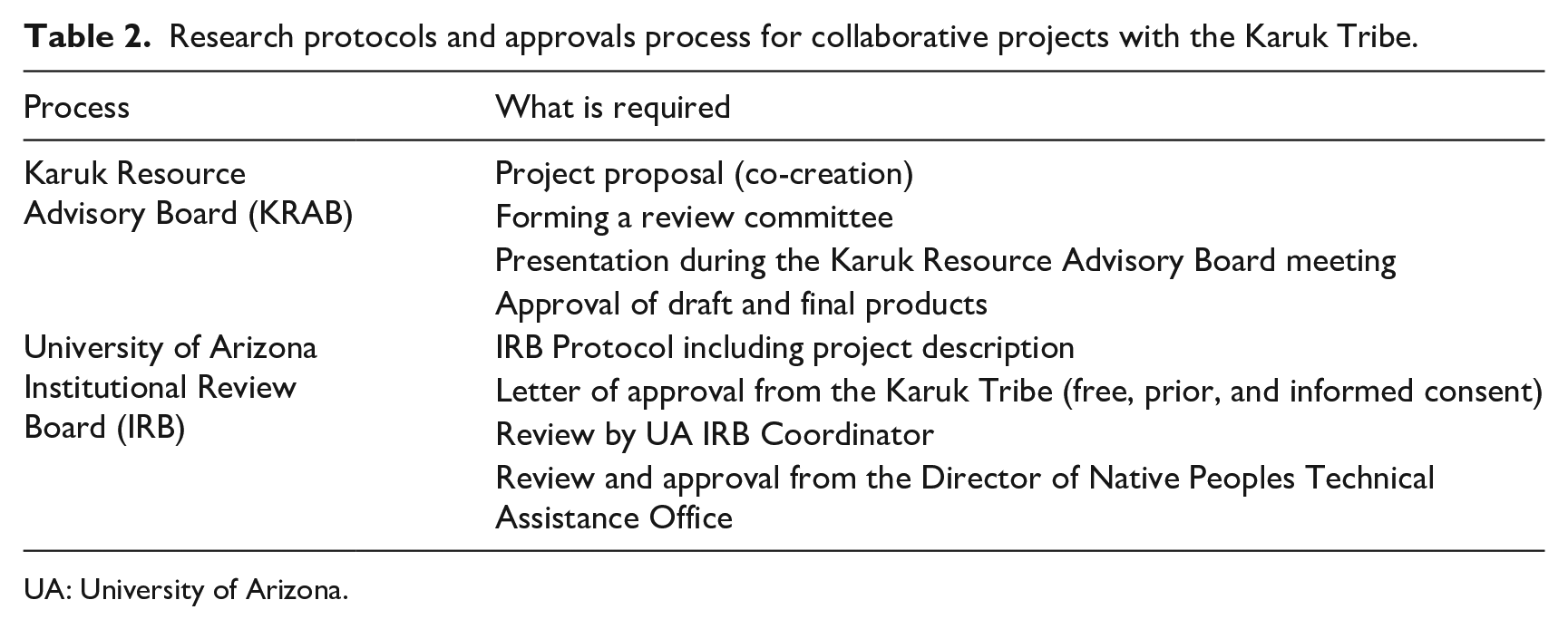
The collaborative project required research permitting from both the Karuk Tribe and the UA IRB (Table 2). The Karuk Tribe is a sovereign nation with the right to regulate research activities and enforce Tribal laws, unlike other non-native communities engaged with academic researchers (Karuk Tribe, 2017). According to Practicing Pikyav, the policy document providing procedures and principles for collaborative projects and research initiatives, a project proposal needs to be reviewed and approved by the Karuk Resources Advisory Board (KRAB). The document clarifies that the Karuk Tribe retains the rights to all data and overall research products produced and provides procedures that protect Karuk knowledge and collective intellectual property. For example, Practicing Pikyav requires the formation of a Review Committee (RC) to provide guidance throughout the research process on matters including the protection of the Karuk Tribe’s collective intellectual property and the review of research products to ensure culturally sensitive information is not published.
Research protocols and approvals process for collaborative projects with the Karuk Tribe.
UA: University of Arizona.
After KRAB approval in June 2021, UA was responsible for granting authorization through its IRB. The submitted IRB proposal included the letter of acceptance from KRAB. UA also requires an additional layer of approval, from the University’s Native People’s Technical Assistance Office, when working with Indigenous communities. In addition, UA required special permission to conduct in-person interviews to ensure participant’ safety during the pandemic. The fellows received two trainings: Social and Behavioral Research Investigators and Native American Research through the Collaborative Institutional Training Initiative (CITI program). We obtained approval from the UA IRB in July 2021. These approval processes aim to ensure that all participants are protected, informed, and their rights upheld.
Data collection: Practices and methods
Data collection consisted of in-person semi-structured interviews in the Karuk Aboriginal Territory in August 2021, informed by Storywork (e.g. Archibald, 2008; Archibald et al., 2019). Many safeguards guided data collection. Practicing Pikyav and an associated intellectual property agreement provided a framework for understanding how to respect Karuk research sovereignty, navigate cultural sensitivities, and protect Karuk knowledge. RC members provided invaluable guidance on how to conduct podcast interviews in a way that would be comfortable and beneficial for participants. The cultural liaison from the Karuk Tribe acted as mentor and research partner during data collection.
The process of identifying interview participants began with brainstorming sessions where Karuk DNR identified potential interviewees with diverse relationships to fire. We also sought interviewees of a range of ages, to highlight the importance of engaging youth in learning from elders in the Karuk culture. We used purposive sampling rather than a random or representative sample (Patton, 2015: 264). The cultural liaison selected individuals with particular knowledge that she wanted to center and who would be appropriate to interview. She prioritized participants who are Karuk, familiar with being interviewed, female, and with whom she held strong relationships. We recorded four interviews, with a DNR staff member, a grandmother, a forester, and a basket weaver. The cultural liaison led each interview, which increased the comfort of the participants, added her own knowledge into the conversations, and made Karuk voices central in the podcast episodes.
Responsible research collaboration between academic researchers and Tribal Nations must include informed consent, and informed consent by interview participants was part of the KRAB and UA IRB protocols. Each participant voluntarily granted consent before the recording, and one of the SW CASC fellows was responsible for carrying out and documenting the informed consent process. Free, prior, and informed consent is a first step in any project that includes Indigenous communities. Informed consent forms were co-developed to ensure Practicing Pikyav, and UA IRB requirements were considered. Practicing Pikyav always prevails over the UA IRB, because the project is conducted on Karuk Aboriginal Territory. We also provided each interviewee with the opportunity to review their interview in the draft podcast episode before publication.
Podcast production, data sovereignty, and dissemination of the research output
The podcast production process was a collaborative effort. We reviewed transcripts of the interviews and began to edit them into episodes, assisted by a graduate student who was a public radio science reporter intern and who had worked with Indigenous communities and natural resources. We were able to honor the individual stories of the participants in their near-original form by editing lightly for ease of listening. We did not qualitatively analyze or interpret the stories, in line with Storywork (Archibald, 2008). The objective was to provide a platform for Karuk people to share their perspectives on fire with their community, not to extract information from these stories for an academic publication. Both draft and final versions of each episode underwent a review process; episodes were not made public until final approval by the RC and Karuk DNR leadership.
Our objectives again were to practice reciprocity and provide benefits to the community (e.g. Lomawaima, 2000). The co-developed podcast project was designed to provide stories about cultural burning relevant to local audiences, but also accessible to outsiders including scientists, natural resource managers, and the general public. The Karuk DNR is a co-author of the podcast and retains the right to the raw data and creative control over the products. Karuk DNR will distribute the podcast and make it available to the local community.
Discussion on outcomes and outputs of the collaboration: The flames and smoke
This collaborative research project between the SW CASC fellows and the Karuk DNR was successful in building partnerships and capacities and in achieving project outcomes. The results of this collaboration went beyond our initial expectations, as we produced the podcast series and learned valuable lessons about research partnerships between academic institutions and Tribal Nations that support Indigenous research sovereignty. The partners gained new skills and strengthened their capacities in many areas, including the navigation of research protocols, project planning and implementation, and podcast production. As described in Figure 1, these outputs and outcomes are imagined as flames and good smoke that emerge from the campfire, supported by research foundations, and constructed from our research process. In this section, we discuss some of the critical outputs and outcomes of this research collaboration, including lessons learned.
The Intentional Fire podcast
One output from this collaborative research project was the four-episode Intentional Fire podcast (Karuk Tribe and SW CASC, 2022). Intentional Fire is a platform to share stories from Karuk people about their relationship with fire and the importance of sovereignty over fire practices. The episodes discuss many fire-related topics, such as Tribal sovereignty, colonization, forest and fire management, changes in the land over time, traditional and medicinal plants, and experiences with cultural and prescribed burning. The episodes also include additional knowledge from the cultural liaison, whose unique life experiences allow her to bridge many perspectives presented in the podcast.
Collaborations and learning experiences
The collaborative approach is the cornerstone of our research because collaboration ensured we upheld the research sovereignty of the Karuk People. We attribute the success of this collaboration to the foundations used to implement this research. These foundations allowed us to practice principles of Pikyav, collective consent, Indigenous research sovereignty, Indigenous data sovereignty, representation, self-determination, reciprocity, and deference. It allowed us to practice Storywork and community building, while growing relationships with our partners and with fire, as a relative. Key to the success of this project was the definition of common goals and months of communication before data collection began. Frequent, early, and open conversation-built relationships and a partnership where all parties felt comfortable with the collaboration and could share benefits equitably (e.g. Lomawaima, 2000).
We defined a transparent process to produce our results, including frequent virtual meetings (e.g. Austin, 2004). We held these meetings once a week, and discussed a variety of topics, including progress toward project goals against our timeline, each member’s progress report, challenges that came our way, and strategies to overcome them. These meetings helped us keep track of work and ensure that all were aware of the expected outcomes. Team members understood that building a partnership would require time and dedication to addressing challenges that were complicated by the COVID-19 pandemic. The partners committed to investing the time, effort, reflexivity, and good faith required to undertake this collaboration.
Ongoing collaboration
Collaborators expressed interest in working together beyond the project that had resulted in the initial Intentional Fire podcast, including writing this article. Ongoing researcher–practitioner collaborations, such as the institutional relationship between SW CASC and Karuk DNR and the production of this article, can bridge the gap between academia and Indigenous communities in an ethical manner. Such collaborations can lead to strengthened skills and research protocols that ensure that all voices are heard, and Tribal sovereignty is understood in the academy. In addition to continuing collaboration, the lessons learned from this shared research project will inform future collaborations that partners may pursue with others.
A further outcome is that the Karuk DNR is interested in producing a second season of the Intentional Fire podcast. We expect that the podcast episodes will fulfill their objective of disseminating cultural knowledge to younger generations, policymakers, and the broader public.
Working through challenges
Tribal-academic collaborations can address pressing environmental, social, political, and economic issues while upholding sovereignty of the Tribal Nation. It is important to convey the challenges of such partnerships to assure collaborators that persistence can resolve necessary challenges. We share several challenges we faced and worked through that may affect other research projects attuned to sovereignty of Tribal Nations:
Conclusion
This article describes the background, foundation, and process that formed a collaboration between the Karuk DNR and the SW CASC fellows, with special attention to supporting Indigenous research sovereignty by implementing Practicing Pikyav. The metaphor of a campfire (Figure 1) symbolizes each of the aspects of the project described in this article. We present the background (setting), the foundation of our collaboration (fire ring), the process that we constructed upon this foundation (logs), the podcast and capacity building that were outputs from the collaborative research process (flames), and the longer-term outcomes that emerged from this process and product, such as relationships and amplified knowledge (the smoke). This metaphor conveys community building with project partners and with fire as a relative.
Research on Indigenous knowledge requires the participation of Indigenous people throughout the process; in our case, the participation of Karuk DNR and the cultural liaison was essential. The Karuk Tribe shared its epistemology of cultural burning and its experience of the impacts of fire suppression policies on livelihoods. We developed an ethical framework for this specific collaboration. Then, we intentionally constructed a research process that reflected lessons from Indigenous Storywork, institutional research protocols, and principles of ethical and collaborative research. The output of this collaboration was the Intentional Fire podcast, which amplifies the voices of the Karuk people. The testimonies and stories, or Storywork, of Karuk people document their knowledge and understanding of fire suppression and fire exclusion. Intentional Fire podcast listeners learn directly from Karuk people about their Karuk-specific relationship to fire. In addition, during this process, the partners built skills in podcast production and received several training sessions, which may support the Karuk DNR in the production of future podcast episodes.
Each collaboration has its own context, protocols, and challenges. Nevertheless, we hope that sharing our research, the principles that guided the process, and the ways we navigated challenges will assist others to pursue ethical and meaningful research that supports Indigenous research sovereignty and uses Storywork and/or the stories of Indigenous people. We hope to contribute to knowledge about Indigenous research sovereignty by providing an example of how collaborative processes between universities and Tribal Nations can amplify knowledge production by Indigenous people in their own words. We also hope that our process contributes to reducing the gap between American academic researchers and Indigenous communities. Our research outlines how researchers can perceive stories as data with a theoretical foundation of Indigenous Storywork. The stories, the Indigenous Storywork, are necessary data to integrate Indigenous knowledge in climate adaptation planning. We anticipate that Storywork, as captured by podcasting, amplifies Indigenous peoples’ voices to inform decision-making processes. Our research demonstrates how Indigenous people’s knowledge and epistemology contribute to creating a sustainable and resilient future for everyone. Indigenous knowledge must be included to develop policy, planning, and management that affecting Indigenous homelands. Successful partnerships can form when researchers participate in and prioritize Indigenous knowledge production alongside of Western science.
Footnotes
Acknowledgements
The authors are grateful to those who told their stories for the Intentional Fire podcast and to all others who made the podcast and this manuscript possible. A special thanks is due to Ellis Juhlin who taught and performed podcast editing. We are grateful for our colleagues that provided support during the different stages of this research including Michelle Baker, Benjamin Davis, Anita Govert, Frank Lake, Sarah Leroy, Thaddeus Nicholls, Mariana Sofia Rodriguez McGoffin, Colleen Rossier, Bill Tripp, and Topher Warburton. We want to thank the SW CASC fellows with whom we discussed the progress of this project (Jacob Stuivenvolt-Allen, Johanna Eidmann, Tanner Waters).
Declaration of conflicting interests
The author(s) declared no potential conflicts of interest with respect to the research, authorship, and/or publication of this article.
Funding
The author(s) disclosed receipt of the following financial support for the research, authorship, and/or publication of this article: This research was funded by the Southwest Climate [Adaptation] Science Center (SW CASC) through Cooperative Agreement G18AC00320 from the United States Geological Survey (USGS), which funded the Natural Resources Workforce Development 2020–2021 graduate fellowship cohort which contributed to this work. Additional funds were provided by the School of Natural Resources and the Environment at the University of Arizona, and the Utah State University Ecology Center.
