



Abstract
In the face of climate change, Western environmental research and governance processes and institutions are increasingly seeking to learn from and harness Indigenous peoples knowledges, perspectives, and practices of land and water management. There are both opportunities and risks for Indigenous groups seeking to exploit these opportunities to (re)connect with their homelands and reinvigorate dormant cultural practices. This article considers these issues by highlighting the barriers, risks, and opportunities, across three case environmental study sites – cultural burning, Geographic Information Systems (GIS) mapping, and marine science. We offer Indigenous data sovereignty and Indigenous data governance as both guiding principles and a practical blueprint that can make safe these intercultural environmental collaborations by mitigating against perverse or unintended consequences of Indigenous knowledge theft, as well as maximising opportunities to foster sustainable self-determination and self-governance.
Keywords
Introduction
In the face of climate change, and the natural disasters it produces, Indigenous peoples land and water management knowledges, perspectives, and practices have come into sharp focus by environmental researchers and governing practitioners (Cumpston, 2020; David-Chavez and Gavin, 2018; Intergovernmental Panel on Climate Change (IPCC), 2022; Neale, 2020). The goal seems clear: to harness and learn from Indigenous peoples’ knowledges, perspectives and practices, and apply these to mitigate against the impacts of climate change and create more resilient landscapes and communities (David-Chavez and Gavin, 2018; Intergovernmental Panel on Climate Change, 2022). These strategic openings offer opportunities for Indigenous peoples to (re)connect with their traditional territories and reinvigorate their knowledges and traditions after centuries of oppression and disconnection (Davis and Todd, 2017; Nursey-Bray et al., 2019). Conversely, these engagements also carry significant risks to Indigenous peoples and their knowledges.
Historical colonisation and contemporary settler-colonialism have created systems, structures and processes that marginalise, discriminate and oppress Indigenous peoples (Alfred and Corntassel, 2005; Veracini, 2011; Wolfe, 2006). These systems of marginalisation, discrimination and oppression are observed in many parts of society such as the high rates of Indigenous incarceration (Shepherd et al., 2020), poverty, homelessness and removal of children (Bradford, 2020), and low rates of educational attainment, home ownership, economic participation and political representation (Altman et al., 2008; Bishop, 2021; Campbell et al., 2012; Houkamau and Sibley, 2015). Many of these features are shared by Indigenous peoples internationally in settler states such as Aotearoa New Zealand, Australia, Canada and the United States, suggesting that these phenomena are connected in a larger colonial project designed to control Indigenous peoples’ lands, and disempower them to respond (Alfred and Corntassel, 2005; Wolfe, 2006). We conjecture that over time, these processes have not abated and have in some ways intensified. It is in this settler–colonial context that we examine Indigenous peoples’ engagements with Western environmental research and governance practices, processes and institutions.
In this article, we examine the exponential growth in reference to Indigenous knowledges and practices in the fields of environmental research and governance. We seek to understand the drivers for this increasing recognition and ask whether a growing acknowledgement of the value of Indigenous knowledges represents meaningful opportunities for Indigenous peoples or simply the reproduction of Western modalities of extraction that have complicated Indigenous–settler relations since contact. The scope of these engagements varies widely from project-based collaborations in local communities, scientific collaborations examining a raft of environmental matters or ecological services, to jointly managed national parks and protected areas. They occur across a vast array of landscapes such as deserts, forests, coastlines and mountains, and include the management of fresh and saltwater. Within these engagements appears to be a hunger on the part of non-Indigenous environmental managers and researchers to learn about Indigenous peoples knowledges (knowledges), to understand Indigenous peoples relationships with their territories (perspectives), and to observe, record and evaluate Indigenous peoples land and water management practices (practices). In this article we collectivise the concurrent systems of knowledges, perspectives and practices into a new term: Indigenous environmental data.
As Indigenous peoples then, we find ourselves at a juncture of intersecting interests. On one hand, we feel compelled to seize opportunities to (re)connect with our territories, to practice our traditions, and strengthen and transmit culture. Should collaborations with settler environmental research and governance facilitate these connections, then it is in our collective interests to pursue these opportunities. Yet we cannot ignore our settler–colonial realities which uphold systems and structures that continue to marginalise and oppress. In the context of this article, we focus attention on Indigenous concerns that our environmental data will be appropriated and used to make safe and enhance environments that settler–colonialists themselves have desecrated and mismanaged (Gammage, 2011). Encouraged by the work of Potowatomi philosopher Kyle Powys Whyte (2017), we find ourselves asking, ‘In what ways does the collection and sharing of Indigenous environmental data propagate settler futurity through the maintenance of the settler-colonial status quo?’ With this in mind, the project that arises then, is the creation of meaningful intercultural engagements that bring about Indigenous custodianship of thriving environments, while mitigating against perverse or unintended consequences such as the appropriation and misuse of Indigenous environmental data. We suggest that the principles and practices of Indigenous data sovereignty offer both the intellectual framework and practical blueprint to make safe Indigenous environmental data in the context of settler environmental research and governance.
To have this yarn, 1 we will first introduce the concept of Indigenous data sovereignty and Indigenous data governance, drawing attention to their emergence as an international field of study and their contributions to policy and practice. We then examine the increasing recognition of the value of Indigenous peoples knowledges in Western environmental research and governance. This engagement is contextualised through the examination of three case-study areas: fire management, Geographic Information Systems (GIS) and marine research. Finally, we examine some of the risks, barriers and opportunities in these engagements. We then apply Indigenous data sovereignty principles to reveal a pathway to maximise the opportunities in intercultural collaborations while protecting Indigenous environmental data.
We write as a group of Indigenous academics from the continent currently known as Australia. Bhiamie Williamson is a Euahlayi man from north-west New South Wales, with familial attachments to north-west Queensland. He has an academic and professional background in Indigenous governance and cultural land management, with a particular focus on cultural burning. Being educated in Australia, Bhiamie has also studied in both Canada and the United States, bringing an awareness of the common challenges, and differences, between Indigenous peoples in various settler–colonial states. Sam Provost is a Yuin man from the south coast of New South Wales with Irish and Scottish settler heritage. Sam has an academic background in biodiversity conservation and GIS, with a research focus on holding Indigenous and settler understandings of place in conversation with one another towards the better management of the country. Cassandra Price is a Muruwari/Gangugari woman, raised on traditional lands of the Juru people in North Queensland, with an academic and professional background in marine science, climate ecology, Indigenous health and policy. Cassandra has developed and implemented Indigenous data governance policies, structures and processes to support Indigenous data sovereignty in her various roles. Bhiamie, Sam and Cassandra are members of the Maiam nayri Wingara Indigenous Data Sovereignty Collective. Maiam nayri Wingara is a group of Indigenous academics from various disciplines including demography, statistics, public health, geography and social science, dedicated to progressing Indigenous data sovereignty and Indigenous data governance throughout Australia. Maiam nayri Wingara forms a chapter in the Global Indigenous Data Alliance (GIDA), whose other groups include Te Mana Raraunga: Maori Data Sovereignty Network, and the United States Indigenous Data Sovereignty Network (USIDSN). In this article, we bring together our collective interest in, and desire to progress, Indigenous data sovereignty with our common work in adjacent fields of environmental research and governance. We each reflect on our areas of expertise and identify common risks in intercultural collaborations that we feel can be mitigated against through the practical application of Indigenous data sovereignty. We write this article for an international audience; such are the shared issues in Indigenous data sovereignty and environmental research and governance throughout the settler–colonial world. However, we remain grounded through our experiences as Indigenous peoples from, and our work with Indigenous groups throughout, Australia.
An introduction to Indigenous data sovereignty
Indigenous data sovereignty finds its roots in the inherent sovereignty of Indigenous peoples as affirmed in the United Nations Declaration on the Rights of Indigenous Peoples (UNDRIP) which recognises the rights of Indigenous Peoples to control, protect, maintain and develop their cultural heritage, traditional knowledge and traditional cultural expressions, including manifestations of their sciences, technologies and cultures (United Nations, 2007). Similarly, the UN Sustainable Development Goals consider data collection and management vital for building the sovereignty of Indigenous populations.
In this article we align with the following definitions, which were adopted at a summit hosted by the Maiam nayri Wingara Indigenous Data Sovereignty Collective and the Australian Indigenous Data Governance Institute in Canberra, Australia, in June 2018:
‘Indigenous Data’ refers to information or knowledge, in any format or medium, which is about and may affect Indigenous peoples both collectively and individually. ‘Indigenous Data Sovereignty’ refers to the right of Indigenous peoples to exercise ownership over Indigenous Data. Ownership of data can be expressed through the creation, collection, access, analysis, interpretation, management, dissemination and reuse of Indigenous Data. ‘Indigenous Data Governance’ refers to the right of Indigenous peoples to autonomously decide what, how and why Indigenous Data are collected, accessed and used. It ensures that data on or about Indigenous peoples reflects our priorities, values, cultures, worldviews and diversity (Maiam nayri Wingara & Australian Indigenous Governance Institute, 2018).
Indigenous data sovereignty has developed as both an academic field, and in policy and practice, over the past decade in response to poor data practices by governments, government agencies, researchers and research institutions. This includes not making Indigenous data accessible and available to Indigenous peoples, and using (or misusing) data to maintain pejorative stereotypes and paint Indigenous peoples as a ‘problem’ to be fixed (Ellinghaus, 2003). On this last point, Walter (2018) describes this through the BADDR framework, that is, data that are ‘Blaming, Aggregate, Decontextualised, Deficit and Restricted’ (p. 258).
What is missed in these data processes is collection of data that is valued by Indigenous peoples, including representative bodies such as First Nations governments, community-controlled organisations and tribal corporations. Rarely are Indigenous peoples considered legitimate end-users of data and thus, collection of data, primarily by government agencies, does not account for variables and data points that provide any basis for good governance and decision making.
In response, Indigenous academics, policymakers and community leaders have created and continue to progress the field of Indigenous data sovereignty and its activation mechanism, Indigenous data governance.
Indigenous data sovereignty includes data on Indigenous individuals, such as students in education or patients in healthcare, as well as collectively as groups, communities and nations. At both levels – individual and collective – Indigenous peoples possess unique rights over their data as highlighted in the UNDRIP. This includes rights to govern data about cultural knowledge, and land and resources (Rainie et al., 2019). In this way, Indigenous data sovereignty is an expression of Indigenous peoples inherent rights to self-determination and self-governance (United Nations, 2007: Art 18), and includes the rights of Indigenous Peoples to determine the means of collection, access, analysis, interpretation, management, dissemination and reuse of their data (Kukutai and Taylor, 2016; Snipp, 2016).
As complex as the terminology, practices, infrastructure, policies and more are in relation to Indigenous data sovereignty, it can be reduced to a simple philosophy: Indigenous control of, and benefit from, the entire data life cycle, that is: inception (which data are collected and why?), collection (how is the data gathered?), storage (what does software and physical infrastructure look like and what laws govern it?), access and permissions (who can view the data and under what conditions?), analysis (in what ways are the data interrogated?), storage (how are the data organised?) interpretation (what does the data mean?), representation (how are data communicated clearly with Indigenous peoples?) and reuse (how can existing data continue to add value?). A commitment to Indigenous data governance makes it possible to embed the principles of Indigenous data sovereignty no matter where data are held or by whom.
There have been important gains in Indigenous data sovereignty and governance in recent years. In Australia, Nyamba Buru Yawuru, the prescribed native title corporation for Yawuru people in the Kimberly region conducted a community wellbeing survey to categorise Indigenous peoples living in the Broome area (over which they are recognised native title holders) as well as to gather information on community health and wellbeing (Taylor et al., 2014). Since then, the Mayi Kuwayu longitudinal study of Indigenous wellbeing has been conducted by an Indigenous public health team at the Australian National University (Mayi Kuwayu National Study of Aboriginal and Torres Strait Islander Wellbeing, 2022). This study is the largest of its kind, gathering information on a range of health and wellbeing variables including culture, housing, health, education, racism (i.e. those who have experienced it and how) and more. This data set is stewarded by an Indigenous data governance committee that manages access to these data by researchers and external organisations.
Outside of Australia, Indigenous academics have taken steps to addressing these imbalances, such as through development of the CARE principles for Indigenous data governance. CARE is an acronym meaning Collective benefit, Authority to control, Responsibility and Ethical (Carroll et al., 2021). Carroll et al. (2021) state that
The CARE Principles for ‘Indigenous Data Governance’ empower Indigenous Peoples by shifting the focus from regulated consultation to value-based relationships that position data approaches within Indigenous cultures and knowledge systems to the benefit of Indigenous Peoples. This shift ultimately promotes equitable participation in processes of data reuse, which will result in more equitable outcomes. (p. 3)
Building on the CARE Principles, Indigenous academics and data practitioners have recently developed Biocultural (BC) labels (ENRICH, 2021; Local Contexts, 2022). BC labels build upon Traditional Knowledge (TK) labels, which have emerged as a critical tool for addressing ownership access and control over Indigenous data (Anderson and Hudson, 2020; ENRICH, 2021). These labels define the community expectations, and consent regarding appropriate and future use of Indigenous environmental data (Anderson and Hudson, 2020). The labels are directly incorporated into the digital infrastructure of data management systems and work at the level of metadata to enhance local-based decision making and Indigenous governance (Carroll et al., 2021). These BC labels, initiated by Indigenous people, demonstrate the innovative methods that are currently being developed under the umbrella of Indigenous data sovereignty and governance, and offer significant opportunity for environmental research and governance institutions to engage practically with Indigenous data. Importantly, these data management tools provide a mechanism for Indigenous peoples to safeguard their own data in an era of Big and Open Data (Walter et al., 2021). These examples demonstrate how Indigenous peoples, academics and leaders are progressing Indigenous data sovereignty and governance.
Yet despite its global significance and relevance to a great number of areas in society, Indigenous data sovereignty is currently applied unevenly across sectors. In our shared work, and in the context of this article, we describe the disciplines that underpin environmental research and governance as an Indigenous data sovereignty wasteland.
Indigenous environmental data in research and governance
The following section tracks the rise in engagement between Indigenous environmental data in environmental research and governance, and the apparent conditions under which these data are valued by Western science.
The utility of Indigenous environmental data for addressing the complexity of environmental problems such as anthropogenic climate change, mass extinction and pollution is attracting increasing attention in the academic literature (David-Chavez and Gavin, 2018). In order to better understand the context of this trend and to gain a clearer perspective of its drivers, we seek to answer two key questions: At what point did this engagement begin and at what rate is it occurring? To attempt to answer these questions, we ran a scoping review in Scopus, the largest abstract and citation database of peer-reviewed literature in the fields of science, technology, medicine, social sciences, and arts and humanities. The aim of the literature review was to graphically represent the amount and frequency that peer reviewed publications in the disciplines of environmental science referred to Indigenous knowledges, and synonyms thereof. Figure 1 illustrates an exponential rise in the number of publications in the period 1980–2021 in the discipline of environmental science that refer to Indigenous knowledges. 2 This date range was selected because, according to the Scopus database, prior to 1980 there were no consistent annual publications (outliers prior to 1980 were 1974 = 1, 1976 = 1 and 1978 = 1).
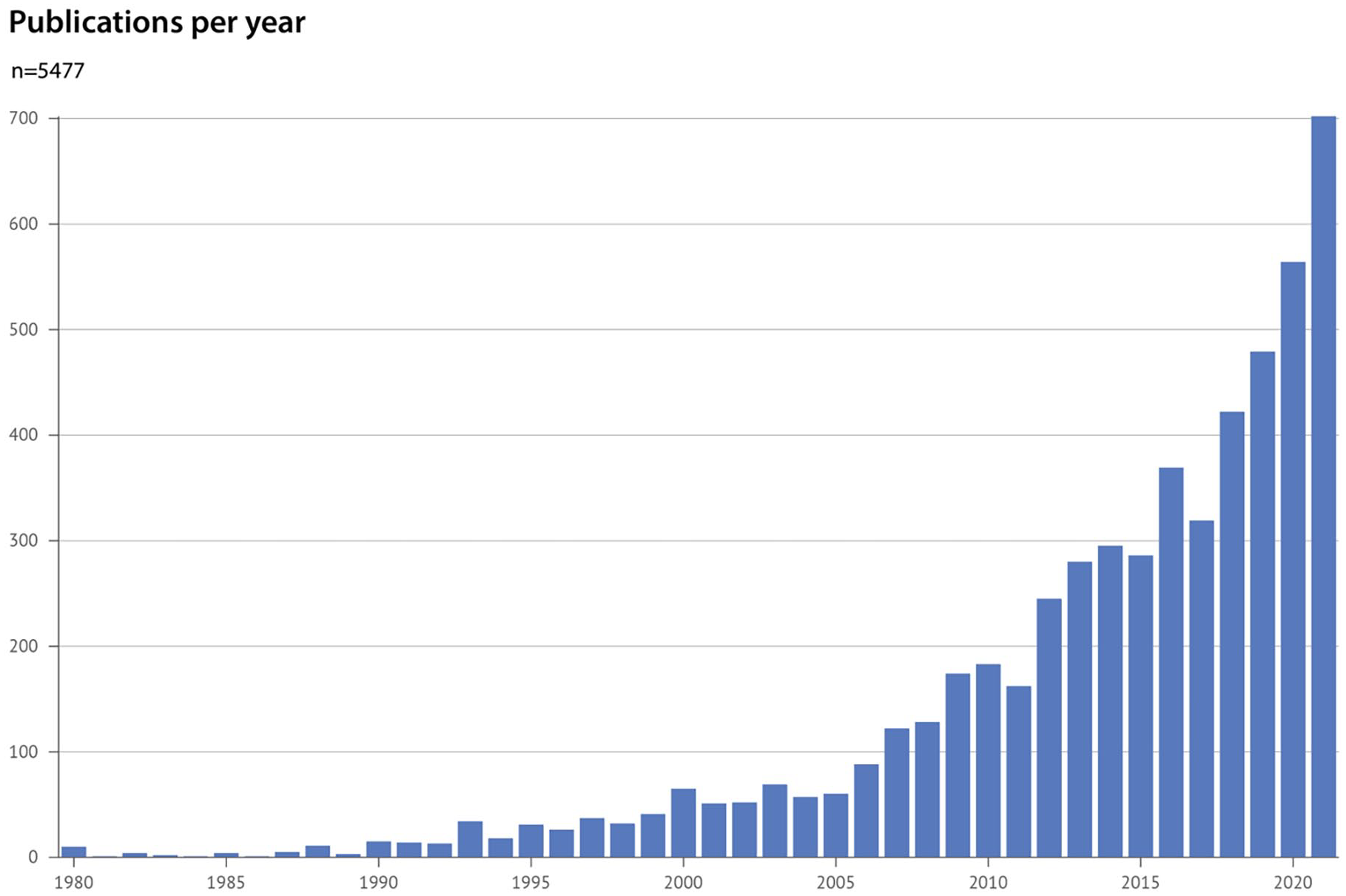
Number of publications per year referring to indigenous knowledges in the discipline of environmental science between 1980 and 2021.
Figure 1 demonstrates a clear trend of increased engagement between environmental science as a meta-field and Indigenous knowledges. More research is needed to dig deeper into this analysis and reveal the nature and extent of these collaborations, as well as whether it is more pronounced in certain scientific disciplines than others.
Articulations of the value that Indigenous environmental data can add to the myriad fields of environmental research are often utilitarian in nature. For example, in a paper by Stevenson (1996) detailing the difficulties and opportunities related to incorporating Indigenous knowledges into Environmental Impact Assessment processes in northern Canada, he writes, ‘The intention of this paper was not to debase traditional knowledge. Rather, it was to elucidate a process for maximising the full contributions of Aboriginal people and their entire knowledge base [emphasis added]’ (p. 287). Similarly, with a comparable move in a different field, Tengö et al. (2014) explain that ‘Indigenous and local knowledge systems, developed through experimentation, adaptation, and co-evolution over long periods of time can provide valid and useful [emphasis added] knowledge, as well as methods, theory and practices for sustainable ecosystem management’ (p. 579). David-Chavez and Gavin (2018) conducted a systemic review of global literature relating to the fields of climate studies and Indigenous peoples. In this study they found that
On a global scale we find that the vast majority of climate studies (87%) practice an extractive model in which researchers use Indigenous knowledge systems with minimal participation or decision-making authority from communities who hold them. (David-Chavez and Gavin, 2018: 8)
While displaying various degrees of subtlety, the extractive nature of Western scientific approaches to harnessing Indigenous environmental data to serve its own purposes – in this case, development and sustainability (more on how this is at odds with Indigenous paradigms later). Although well-meaning, espousing the benefits of leveraging ‘alternative’ worldviews to help solve what Western science has identified as wicked problems demonstrates a lack of understanding of the power imbalances that have marred cross-cultural engagements.
This push to engage Indigenous environmental data extends beyond concerned researchers and into international environmental bodies. In recent years, the Intergovernmental Panel on Climate Change (IPCC) has increased references to Indigenous environmental data in their reports. The 2014 Fifth Assessment positioned Indigenous knowledges as ‘a major resource for adapting to climate change’ (Pachauri et al., 2015: 19), however, as Ford et al. (2016) argued, while Indigenous peoples and knowledges were considered to be valuable, ‘there is little critical engagement with indigenous knowledge systems, and the historical and contextual complexities of indigenous experiences are largely overlooked’ (p. 349). While the IPCC outwardly advocates for the importance of Indigenous environmental data in their processes, an inability to deliver tangible progress in this space has prompted critique. A recent analysis of the modes of knowledge production in the IPCC (Rashidi and Lyons, 2021: 2) finds that Indigenous knowledges are ‘positioned as sources of information that may supplement science’, while Indigenous peoples are ‘situated as vulnerable to climate change, rather than actors who may be empowered by the tools of their own knowledge systems’. The recent publication of the IPCC 2022 Sixth Assessment has attempted to address this critique, and for the first time have included Indigenous knowledges in the report (Intergovernmental Panel on Climate Change, 2022). However, Indigenous scholars have highlighted the extractive nature of this inclusion due to a failure to ensure Indigenous leadership in the IPCC authorship team (Moggridge et al., 2022a). That one of the largest transnational research bodies has yet been unable to engage Indigenous peoples and their knowledges in a meaningful way may be indicative of a broader issue underpinning Western scientific approaches to knowledge production.
Indigenous environmental data is produced through connections to the earth, cultural identity, language, traditional kinship systems and the valuing of cultural knowledge holders within a community (Moggridge et al., 2022b). Where Indigenous peoples and their data have drawn the focus of Western scientific research, meaningful engagement has often been undermined by unequal power dynamics, coercion and knowledge theft (Ermine et al., 2004; Whitt, 2009). These trends exist historically but have also been identified contemporarily. David-Chavez and Gavin (2018) found that
When considering Indigenous knowledges in climate research studies we must also consider intellectual property rights and potential problematic risks to communities. Findings from this study infer that for most climate studies (n = 101, 81%), researchers from outside the community will inevitably be cited in connection with Indigenous knowledge reported in the research findings. (p. 11)
Despite the fraught process of engagement and inclusion, Indigenous knowledges in environmental research are rapidly increasing. Examination of the contexts under which Indigenous environmental data is considered valuable by environmental research and governance is worth pursuing. Historical and contemporary engagement of these data has tended to occur only under particular circumstances, while largely being disregarded otherwise. Looking to the key spaces in which intimate knowledges of landscapes, hydrological processes, and plant and animal distribution are valued by environmental research, we see that settler states of crises often drive motivations for engagement. This is particularly apparent in climate change research, where, due to historical adaptation and mobilisation in response to large-scale climatic shifts, Indigenous communities are framed as fonts of knowledge for resilience and adaptive capacity (Nursey-Bray et al., 2020; Whyte, 2017).
The leveraging of Indigenous knowledges in response to settler crises is not a new phenomenon. Consider the enlistment of Aboriginal and Native American guides by early European settlers such as Burke and Wills in Australia, or Lewis and Clark on Turtle Island (United States). The survival of these foreigners, charged with scientific exploration and the categorisation of ‘new lands’, relied heavily on local Indigenous knowledge. While these engagements may have been couched as attempts to understand the cultural and epistemological frameworks of Indigenous peoples, the result was more often the utilisation of Indigenous knowledges of these landscapes to ensure safe passage and the expansion of empire.
This harnessing of Indigenous environmental data towards the proliferation of settler colonialism can be seen globally. As if shocked, Duncan (2012) laments that not only was Turtle Island inhabited prior to the Corps of Discovery, he writes that ‘the even harder truth is this: Without those Indians, Lewis and Clark would never have made it to the Pacific Ocean and back’ (p. 106). Similarly, on the role that Indigenous environmental data played in this early tranche of scientific exploration in Australia, Host and Milroy (2001) write, ‘from the earliest days of European settlement, Western Australia has relied like other Australian states on the skills and labour of Aboriginal people. Without their expertise as guides and trackers, colonial expansion would have been severely restricted’ (p. 6). The expansion of the cattle industry throughout northern Australia offers another compelling example of how Indigenous peoples knowledges of landscapes have been leveraged against the country 3 they are obliged to care for. Knowledges of waterholes and safe travel routes throughout northern Australia provided the basis from which colonial settlers established a thriving cattle industry throughout northern Australia, with Indigenous men and women offering both the Indigenous environmental data as well as physical (and frequently unpaid) labour (Smith, 2003).
Within this context, these prototypical engagements of Indigenous knowledges can be read as the first instances of intercultural environmental collaborations, and arguably set the power dynamics for research and governance ever since. Even today, struggles of power can be observed in discourses of ‘environment’ and ‘management’ (Weir, 2021). Weir illuminates:
The language of environmental management is the language of whose perspectives are considered valid and authoritative, and, thus, whose priorities matter, and what might be done about them (2021: 175).
We continue this exploration of power dynamics through consideration of the barriers, risks and opportunities that remain in these intercultural collaborations. We consider three environmental domains to do this – fire management, GIS, and marine research. These case studies are informed by our individual experiences of research and collaboration in our respective fields and communities of partnership.
Fire management
Indigenous burning practices vary widely throughout the world. After all, the burning practices of Indigenous groups in northern Australia’s savannah will be ill-equipped to respond to environmental conditions in temperate forests in south-eastern Australia. This highly localised and place-based system of knowledge and practice has developed over millennia (Gammage, 2011; Steffensen, 2020). Indeed, the use of fire throughout the continent has shaped many native species that now require fire to survive and propogate (Gammage, 2011; Steffensen, 2020). For instance, there are seed pods that require smoke to germinate, native grasses that regenerate following low-intensity fire, bird species that use burning as strategic opportunities for hunting, and more. Although the use of fire was widespread, it was a practice that was closely guarded and supervised by senior cultural leaders (Steffensen, 2020).
The advent of colonisation including the removal of Indigenous groups from their traditional territories, the privatisation of land, land clearing for industry and urbanisation, resulting in many Indigenous fire management practices being suppressed, and lying dormant for many generations (Department of Environment, Land, Water and Planning, 2020; Smith et al., 2021). But these knowledges are waking up, stoked by an acknowledgement that Australia is a landscape that has evolved with and requires fire, as well as the need to respond to climate change including the natural disasters, such as wildfires, it drives (Neale, 2020; Smith et al., 2021).
Indigenous groups throughout northern Australia have led in this cultural burning renaissance (Altman and Fisher, 2020; Russell-Smith et al., 2010). In Australia’s north, twin features of savannah grasslands and monsoonal weather patterns produce highly flammable ecosystems (Russell-Smith et al., 2010). Added to these natural factors is the generational mismanagement of lands and waters by government agencies, mining industries and private landholders, creating a volatile landscape that by the 1980s was experiencing regular catastrophic wildfires (Kerins, 2012). The return of lands to Indigenous peoples, particularly in the Northern Territory through the Aboriginal Land Rights Act (Cth) 1976, permitted Indigenous groups to return to their territories and later, re-establish their burning regimes. The results of these practices have been stunning, with a demonstrable impact in reducing the frequency, size and severity of late season wildfire (Altman and Fisher, 2020; Kerins, 2012; Resilient Lanscapes Hub, 2014).
As these programmes have expanded and evidence collected to demonstrate their impact, Indigenous fire programmes have grown throughout central Australia and increasingly, southern temperate Australia (Neale et al., 2019; Smith et al., 2021). Indigenous burning programmes have also re-emerged throughout Turtle Island including northern California and Oregon (Marks-Block et al., 2021), British Columbia (Boutsalis, 2020), as well as southern Africa such as in Botswana (Johnston, 2020). Reinvigorating fire management traditions offer immense opportunity for Indigenous peoples as a method to reconnect with their traditional territories, to awaken dormant cultural–environmental practices, to transmit culture, and to create economic and community development through cultural land management programmes (Kerins, 2012).
Geographic Information Systems
GIS are software programmes developed for the storage, analysis and representation of digital geospatial data (Chang, 2019). GIS has emerged as the predominant suite of tools used by governments and practitioners for spatial governance and planning (Tomić Reljić et al., 2017; van Maarseveen et al., 2019), natural resource management (Zhu, 2016), biodiversity conservation (Doxa et al., 2016; Foody, 2008) and disaster response and management (Tomaszewski, 2021). At the same time, GIS is being harnessed by researchers and geospatial analysts to produce intricate and detailed spatial models that tell us new information about the landscapes we inhabit and belong to (Lü et al., 2019). Both use cases – from the logistical to the leading edge – offer novel opportunities for Indigenous peoples to articulate the unique relationships they share with their environments, and to influence the representation and management thereof.
Indigenous relationality means many different things to different peoples and communities. One of the ways that it manifests is as spirals of complex kinship webs that hold Indigenous peoples together and in place, which grounds us and emerges as ‘culturally specific and gendered axiologies, ontologies, and epistemologies that are connected to the earth’ (Moreton-Robinson, 2017: 1). While it is unlikely that this level of complexity ever could, or should, be represented in a software programme, GIS offers insights to this depth of place through its capacity to hold and display large amounts of information in a relatively accessible format. The novel and creative uses of GIS emerging in the academic literature show immense potential for exploring the interface between people and place. This capacity for creativity, coupled with rapid advances in remote sensing and mapping technology (Rose et al., 2015; Toth and Jóźków, 2016), has resulted in the uptake of GIS by Indigenous peoples globally. The development of Indigenous GIS has proven valuable across a range of cultural and geographic contexts with notable examples, including the interfacing of Indigenous spatial and cultural information with Western science for the Iñupiat community in Alaska (Eisner et al., 2012), asserting Indigenous rights to land and management over cultural resources for the Yawuru people of Broome (Potter et al., 2016), and supporting Indigenous agroecology for the Māori Te Kaio farm community in Aotearoa New Zealand (Moore et al., 2016).
Marine research
The field of marine research is broad and includes genomics, oceanography, marine modelling, marine biology and ecology, fisheries and aquaculture. In Australia, marine research agendas are largely geared towards answering questions set out by settler–colonial research institutions, leaving little room for Indigenous-led marine research (Austin et al., 2019). Since contact, Indigenous peoples have struggled for recognition of their legal rights to Sea Country and the resources therein (Rist et al., 2019; Smyth, 1993). Sea Country (or Saltwater Country) is a collective term for the marine environments that coastal Indigenous peoples belong to (Rist et al., 2019). Traditional Owners have been an active part of the Australian coastal landscape for thousands of years and have developed responsibilities and obligations to protect, manage and to look after Sea Country through customary lore and practice (Moggridge et al., 2022b). Aboriginal and Torres Strait Islander peoples, knowledge systems, values and rights for Sea Country are multifaceted and have only recently been recognised and incorporated into policy, decision-making and contemporary maritime management (Rist et al., 2019).
Most existing Indigenous-led or co-managed marine research projects have developed within the marine park management space such as in marine protected areas and Indigenous protected areas. These projects aim to integrate Indigenous knowledge and Western science in support of decision-making, policy development, research and management (see Kimberley Indigenous Saltwater Science Project, Great Barrier Reef Marine Park, Girringun Region). These projects predominantly occur on Sea Country where the rights of Traditional Owners have been recognised through legislation such as the Native Title Act 1993 or elsewhere have been recognised by the government via the International Union for the Conservation of Nature (IUCN) (Rist et al., 2019). However, opportunities for Indigenous management of Sea Country where Traditional Owner rights are not currently recognised are severely limited and there are few accountability mechanisms in place to ensure that governments and research institutions prioritise Indigenous aspirations or concerns. At present, while the recognition of Aboriginal and Torres Strait Islander rights to Sea Country is patchy at best, most marine research projects are not obliged to engage Traditional Owners meaningfully, despite the research happening on and in, Sea Country.
Discussion
In the sections above we have demonstrated that collaborations between Indigenous peoples and environmental research and governance are increasing exponentially (Figure 1). These collaborations are no doubt wide-ranging, varying in their size, scope and content. Moreover, they vary in their partnership arrangements from project-based activities, research and scientific collaborations, co-management agreements and more. By considering the three case-study areas of fire management, GIS and marine research as a small but representative sample of the forms these collaborations take, we highlight several commonalities that exist across these intercultural collaborations. These are organised into themes in three distinct but interrelated domains: barriers, risks and opportunities.
Barriers
There remain significant barriers for Indigenous peoples when engaging in environmental research and governance. Although we identify these challenges in the modern context, many have roots in early processes of colonisation and ensuing settler-colonialism. By highlighting the barriers that Indigenous peoples face in engaging fire management, GIS and marine research, we do not aim to discourage their uses and development. Rather, we do so to identify possible strategies to promote meaningful and reciprocal opportunities.
Following the horrific 2019–2020 ‘Black Summer’ bushfires which impacted vast areas throughout Australia, interest in Indigenous peoples’ burning practices as a tool to mitigate future catastrophic wildfire exploded. There was widespread interest in these practices as evidenced through national and international media (see Altman and Fisher, 2020; Bowman and Lehman, 2020; Funes, 2021; Neale, 2020), and, significantly, in the post-fire Royal Commission (Binskin et al., 2020).
Examining these engagements reveals that much of the interests in Indigenous peoples’ fire practices are predicated on how to manage the threat to other people’s lives or livelihoods, or how they can value-add to existing settler land and fire management regimes (Weir, 2021). These issues have been highlighted by a very few number of non-Indigenous scholars, such as Dr Timothy Neale (2020), who asks:
For non-Indigenous people with an established or new interest in this issue, the vital question to ask is: what are we trying to achieve in seeking to support cultural burning? Are we, the beneficiaries of colonial dispossession, simply trying to make our lifestyles, houses and property safer from the increasingly combustible landscapes we have helped create? After everything, are we still looking for help without reciprocity?
While Dr Jessica Weir puts it more bluntly:
Indigenous people to not need to ask, nor offer something useful, in order to be involved in environmental management on their own territory (2021: 75).
Yet, even if settler land and fire management agencies were to find common ground and support the practical self-determination of Indigenous peoples through applying cultural burning, it remains that Indigenous groups must operate within systems and structures that configure power imbalances against us (Freeman et al., 2021; Williamson, 2021).
For instance, settler fire management practices, such as hazard reduction burning, usually consist of establishing hard containment lines to ignite and halt the spread of introduced fire. Fires that escape containment lines are perceived as undesirable, even threatening, and often result in investigations to ascertain what went wrong. Indigenous perspectives of fire management are generally less concerned with hard boundaries, with more interest focused on fire behaviour. Should a deliberately lit fire snake its way through a forested landscape, cleaning up the forest floor without threatening the canopy, creating regenerative smoke for seed pods, and allowing smaller creatures such as insects, invertebrates and amphibians, to escape and find refuge, then why should a fire not be free to burn for as long as it desires? After all, a fire exhibiting this behaviour is generally easy to control and extinguish, should it encroach on housing or infrastructure. Of course, there is risk involved with this, centrally being that if a fire is left to smoulder that a change in weather conditions can lead to a damaging outbreak. This is why senior knowledge holders, with deep systems of knowledge about climate and the landscapes they belong to, are the authority – because they possess the knowledge of when a fire can safely be left to burn (Steffensen, 2020). Another example is evident when considering the times that fires are introduced. Historically, Western fire practices are performed during the day, due to the 9–5 working hours of fire and land management staff. Indigenous fire regimes often begin in the late evening, introducing fire into the landscape prior to the night offering cooler conditions (Freeman et al., 2021). Burning at night has the added advantage of allowing people to clearly see the fire, thus making it easier to manage.
These examples, of which there are many more, are offered simply to illustrate the myriad ways that Indigenous peoples use fire, and to make clear that even when Indigenous peoples are ‘supported’ to conduct cultural burning, they are often required to perform these activities in ways that accord with settler laws and regulation (Freeman et al., 2021; Williamson, 2021). In the excitement of settler institutions and society realising the enormous potential offered by Indigenous peoples burning practices, what is often missed are the conditions enforced by settler institutions. As Smith et al. states:
The intensely contested nature of wildfire policy and relatively recent prominence of Indigenous fire management means there is little literature that explicitly deals with why and how intercultural fire collaborations succeed or fail (2021: 82).
In this way, environmental research and governance must recognise the barriers they impose, and undertake to move away from questions such as ‘how can Indigenous peoples burning practices improve settler fire management regimes?’, and towards questions like, ‘what reforms are needed in settler institutions that can foster deeper collaborations with Indigenous peoples, including their cultural burning practices, if Indigenous peoples are able and willing to collaborate?’
In the spaces of GIS, the increase in engagement by Indigenous peoples and communities comes with challenges. In settler states such as Aotearoa New Zealand, Australia, Canada and the United States, GIS and cartography remain grounded in settler logics of possession (Moreton-Robinson, 2015) that have played a key role in the dispossession of Indigenous peoples of their territories, lands, and waters. For instance, the inscription of cadastral spatial models – the representation of the metes and bounds of settler property – over Indigenous territory has been framed as a crucial process in the administration of the settler colonial project (Adams, 2002; Black, 2018; Mar and Edmonds, 2010). Indigenous understandings of place do not fit neatly into blocks and property allotments. Instead, landscapes are experienced as a continuous entity connected through family, culture and relationships with the non-living. Despite the work done to decolonise geography and cartography, we remain hamstrung by spatial models and data structures that have not emerged from Indigenous lifeways. This distillation of landscapes into a series of lines, polygons and points raises questions about the appropriateness of GIS for modelling Indigenous relationality, prompting spatial analysts to decolonise the ways we think about representation.
Another key barrier to the production of Indigenous GIS is the preventive costs of the industry, which has the unintended consequence of exacerbating Indigenous peoples and communities’ data precarity. The often-prohibitive costs of maintaining GIS software licences and mapping software can have the adverse effect of encouraging communities to outsource their data collection and management processes. This results in Indigenous environmental data being stored with institutions that can afford it, such as universities or government institutions. This is worsened by institutional gatekeeping that continues to position researchers as experts, while Indigenous peoples are framed as untapped wells of environmental knowledge, but somehow unable to learn the skills to do the work themselves. In response, thoughtful GIS research must address questions of who has the training and capacity to collect data, make maps, run analysis and leverage outputs to support decision making.
In marine research and governance, inadequate engagement of Indigenous peoples remains one of the key barriers. Central to this issue is that while ethical guidelines have been developed to ensure that research with Indigenous people in Australia is highly moderated, these Codes of Ethics do not often apply to marine research which falls under animal or environmental research. The lack of Indigenous representation in marine research is concerning, especially as the current literature often frames Indigenous engagement as a tick-box exercise to support Western marine research priorities (see Figure 1 in Melbourne-Thomas et al., 2021). Furthermore, under Article 31 of UNDRIP, Indigenous peoples have the fundamental right to consent to the use of their cultural heritage, meaning that researchers and institutions wishing to undertake research on Sea Country are obliged to obtain free, prior, and informed consent before research is conducted. However, this is not often practised unless the Traditional Owners of the area are formally recognised.
The impacts of climate-induced changes in the marine environment are affecting Indigenous peoples, although Indigenous people have limited input into the research agendas to mitigate these impacts. For example, The East Coast of Lutruwita/Tasmania, Australia, is one of the world’s fastest warming marine areas (Hobday and Pecl, 2014) and the impacts of climate-induced changes in the marine environment are already being observed. These changes are impacting on the local Aboriginal community – the Palawa People – with significant cultural loss (i.e. cultural sights impacted from rising sea levels) (Pecl et al., 2019), loss of connection to Sea Country due to the decline of the maireener rainbow kelp shells (Lee, 2017) and negative impacts to traditional food sources (i.e. short-tailed shearwater, Ardenna tenuirostris, yolla in Aboriginal language) (Pecl et al., 2019). However, the monitoring of these cultural species is mostly conducted without input or consultation from the Palawa People and as a result, they have limited or no access to, or control over these data. Palawa people experience exclusion partly because they have limited recognition of extant rights to marine resources and access to resources is only through legislation (e.g. Living Marine Resources Management Act 1995, and Wildlife Regulations 2010) (Department of Natural Resources and Environment Tasmania, 2021; Pecl et al., 2019), and partly due to the failure of Western marine science researchers to recognise the inherent rights of Indigenous peoples as per UNDRIP, and include them in research design and management accordingly.
Risks
In addition to barriers, there are notable risks to Indigenous peoples in intercultural environmental collaborations (David-Chavez and Gavin, 2018). If left unnamed and unattended, the profile of these risks rises. We consider the risks in our three case-studies as exemplary of the associated risks to Indigenous peoples in this context. Exploring the potential for perverse or unintended consequences opens a discussion of how they may be mitigated against.
In the context of fire management, Indigenous environmental data draws on many interrelated and overlapping systems of knowledge including knowledge of climate, landscapes, ecologies, native species, water resources, recent fire history, forest resources, sacred sites, experiences of colonisation and more. These data are a strategic resource for Indigenous groups, offering important information about landscapes that they can draw upon when introducing fire into the landscape, as well as responding to natural hazards, such as wildfire. Through intercultural environmental collaborations, these data become exposed.
As highlighted earlier, the positioning of Indigenous peoples fire management practices as an add-on, supplementing settler fire management regimes, is widespread. The logic that underpins this practice is that fire management practices can, and should be, decoupled from the contexts in which they have been developed. This knowledge extraction undermines systemic calls to support the self-determination of Indigenous peoples, and the potential for these opportunities to foster more just terms between Indigenous and settler peoples. These concerns have been raised in the Victorian Traditional Owner Cultural Fire Strategy which states:
The protection and management of Traditional Fire Knowledge is critical as knowledge has been stolen, misappropriated and disrespected in the past. (Department of Environment, Land, Water and Planning, 2020: 18)
But it is not only in the extraction and disrespect of these sacred Indigenous environmental data that we observe risk. There is a commercial value proposition in Indigenous fire management practices as a technology capable of mitigating against catastrophic wildfire. As landscapes become more and more combustible, there are monetary opportunities for Indigenous peoples who can demonstrate effective mitigation through applying fire in the landscape. These commercial opportunities can come from multiple sources, including private landholders willing to pay groups to promote healthy landscapes and insulate infrastructure against wildfire threats, as well as insurance companies that may accredit Indigenous groups, and offer reduced premiums for customers who engage Indigenous peoples to reduce the threat profile over their properties, infrastructure or livestock, using cultural burning. Losing control of these data therefore threatens the ability of Indigenous groups to develop economically.
Similarly, engagement with GIS has the potential to pose serious risks to Indigenous peoples environmental data. If handled with care, the collection of Indigenous environmental data for GIS could be a generative cultural experience that opens a dialogue of care and allows for the invigoration of Indigenous epistemologies. If, however, the collection of these data reproduces the extractive modes of engagement that seek to understand knowledge outside of the bounds of its production, a space opens for ontological violence (Whitt, 2009). Scholars have questioned the appropriateness of applying cartographic systems developed from within Western, Cartesian logics to Indigenous use cases. Key critiques of the development of Indigenous GIS include the potential for the continued extraction and decontextualisation of Indigenous knowledges, and the assimilation of Indigenous epistemologies (Chambers, 2006; Engle, 2001; Hunt and Stevenson, 2017; Reid and Sieber, 2020; Rundstrom, 2013; Thatcher and Imaoka, 2018).
Negative experiences of research have taught Indigenous peoples to be cautious (Smith, 2013), diminishing communities’ willingness to engage in map making. In GIS, data misuse and misrepresentation are more likely to occur in instances where outside parties such as governments, researchers, or non-governmental organisations (NGOs), seek to collect data to serve their own agendas. Once Indigenous environmental data are collected and digitised, the potential for negative outcomes increases significantly. If questions of data ownership and governance, appropriate uses, access and permissions, and the costs of maintaining databases aren’t addressed ahead of time, communities open themselves to a raft of risks.
Similarly, the incorporation of Indigenous knowledges in marine research is increasing rapidly. Researchers are beginning to realise that by not engaging with Indigenous people and their knowledges, they limit the potential impact of their research (and fail to meet the needs of Indigenous people) (Trisos et al., 2021). Where Indigenous knowledges are being sought out, risks to Indigenous peoples such as cultural violence, loss of data ownership and misrepresentation increase. Since colonisation, Indigenous people have been disempowered when speaking our own knowledges and telling our stories, with Western epistemic hegemony marginalising Indigenous experiences (Lovett et al., 2020; Rigney, 2001; Wolfe, 1999). In some cases, this has led to settler scientists claiming a discovery where knowledge of the subject was already shared freely by Indigenous peoples (Trisos et al., 2021). Unfortunately, this dynamic persists in marine research.
This desire for marine research to leverage Indigenous environmental data raises a number of concerns and challenges for Indigenous communities, particularly around the protection, access and use of data. The demand for open access data, which is becoming a prerequisite for many environmental and marine research scientific journals (see Proceeding of the Royal Society and Scientific Data – Nature), has the potential to exacerbate these issues. Moreover, there have been calls to create Indigenous knowledge databases for use in Western science (Melbourne-Thomas et al., 2021). This is a concern as historical and contemporary data practices are poor, and when filtered through a settler–colonial cultural lens, can be coloured by notions of racial superiority, racism and sexism. In addition, Western data science agendas tend towards homogeneity and can strip Indigenous data of their diversity (Schnarch, 2004). Pushing an open data agenda normalises the assimilation and theft of Indigenous knowledges. For example, if a researcher collects Indigenous knowledges and digitises them, they can openly share that data without consent or oversight (Rainie et al., 2019). These stories belong to the original storyteller, or are communally held within the clan and tribal groups (Trisos et al., 2021) and should be treated accordingly.
Opportunities
Despite the barriers and risks, there remain myriad opportunities available to Indigenous peoples through intercultural environmental collaborations. These opportunities can be short-, medium- or long-term, they can be tangible (or direct) and intangible (or indirect) and they can benefit more than one party, including Country.
The ancient burning practices of Indigenous peoples have been shown to reduce the impacts of late, hot season bushfires. Indeed, recent research has demonstrated that only since the advent of colonisation have the waves of catastrophic bushfires now so common throughout Australia, taken hold (Mariani et al., 2022). Traditional fire management practices of Indigenous peoples promoted heterogeneous landscapes, cultivated native seeds, grasses, flowers, utilised fire as a tool to hunt game, kept for warmth, cooking and ceremony and reduced wildfire risk (Gammage, 2011; Mariani et al., 2022). Utilising fire as a land management tool has been interrupted due to removal from, and marginalisation in the management of, Country (Neale et al., 2019). This has resulted in the introduction of invasive weeds, grasses and pest species, and the transformation of landscapes through land clearing, urbanisation and damming (Freeman et al., 2021; Smith et al., 2021; Williamson, 2021). There are also the growing impacts of climate change driving increased fire threats in many of Australia’s forest and savannah landscapes. Despite the interruptions Indigenous peoples have incurred, many still possess intimate knowledges of fire in landscapes. Because the threat of catastrophic fire is now so extreme in many parts of the world, the opportunities for the resurgence of Indigenous fire management practices are immense. Within this new reality are a series of opportunities for Indigenous peoples to return to, and (re)connect with, their Country. In this way, using fire to provide important ecosystem services and reducing the threat of catastrophic wildfire, is a useful proxy for communities looking to re-establish relationships with homelands and rekindle ancient knowledge systems. To carry out prescribed burning also requires training, equipment and paid employment, providing important community and economic development opportunities to Indigenous groups. But it is not only in fire management that opportunities exist.
Indigenous engagement of GIS around the world is increasing, with communities and people using geospatial systems to record, store and manage their cultural knowledges and values (Potter et al., 2016), produce meaningful narratives about their relationships to landscapes (Jernigan and Roach, 2021), and assert their rights and interests over their territories, lands and waters (Hemsworth et al., 2021). The process of collecting digital spatial information to include in GIS can provide Indigenous peoples a space to share knowledge between generations while slowing the rates at which these knowledges are being lost. Moreover, moving beyond the limitations of a traditional paper maps allows for seemingly endless possibilities for the interrogation, analysis, and representation of Indigenous cultural and environmental data. For Indigenous peoples, this can mean the freedom to develop novel ways of articulating the spatial relationships that shape the way we see and interact with the world. Importantly, combining Indigenous environmental data with freely available spatial information such as wildfire, climate change and biodiversity data can help mitigate the impacts of environmental change on cultural values and relationships with more-than-human kin.
One of the key benefits of using GIS to collect, store and represent sensitive cultural information is that Indigenous protocols for data management and access can be integrated into its processes. GIS stores information in relational databases that can then be used to interrogate the interactions between landscapes (terrain, topography, resources, infrastructure) and human understandings of space (culture, history, identity). A common approach to GIS analysis is the representation of geospatial data stacked as layers, allowing users to create knowledge about relationships. While traditionally used to model the relationships between various biophysical information (Chang, 2019), this layered data approach is well suited to Indigenous cultural data because it aligns with Indigenous episteme, where landscapes of cultural significance are often separated into tiers of hierarchical and gendered knowledge.
Creating opportunities for Indigenous peoples to operationalise their knowledges in marine research will ensure the appropriate management of culturally significant species, while cultivating productive intercultural collaboration in the research conducted on Sea Country that align with Indigenous obligations to care for Country in sustainable ways. For example, the yolla (short-tailed shearwater) is a significant cultural and socio-economic species to Indigenous communities throughout Tasmania (Skira, 1986, 1990), and is a widely studied species in marine science, as it is an indicator taxa for monitoring large-scale resource availability and environmental changes within the marine environment (Price et al., 2020, 2021; Springer et al., 2018). However, at present, few synergies exist between Western marine science and Palawa people to manage the species, despite the concerns about the impacts of climate on the species (Price et al., 2020, 2021) and potential loss of cultural knowledge (Pecl et al., 2019). Yolla chicks are subject to annual commercial and recreational harvesting (often called mutton birding) and Palawa people operate the commercial harvest, yet the Department of Natural Resources and Environment Tasmania (DNRET) monitor and manage the annual harvest (Skira, 1986, 1990). The monitoring data (abundance of chick and adults) and harvest data (the number of chicks harvested annually) are collected by DNRET to inform management and policy decisions (Department of Natural Resources and Environment Tasmania, 2021). External institutions (e.g. universities) and organisations (e.g. Birdlife Australia) can apply to access these data for research without any oversight from the Tasmanian Aboriginal Community. Meaningful and equitable collaboration between Palawa peoples, government and research institutions would ensure the ethical conduct of research, help to set culturally informed research priorities, and enable Indigenous access to and control over the data. Ensuring that Indigenous worldviews, perspectives, priorities, rights and aspirations are incorporated into marine research will strengthen Indigenous decision-making and the health of Sea Country.
Embedding Indigenous data sovereignty in environmental research and governance
In this section, we propose that the principles of Indigenous data sovereignty and Indigenous data governance offer both the intellectual framework as well as practical pathways to address barriers and mitigate against the risks in intercultural environmental collaborations. We seek to demonstrate the value proposition that Indigenous data sovereignty represents by ensuring that the opportunities in intercultural environmental collaborations, some of which are highlighted above, can be maximised through meaningful and safe collaborations.
In order to progress Indigenous data sovereignty in environmental research and governance we propose the following practical steps:
Educational opportunities are offered to Indigenous groups so as to be aware of their inherent data rights and mechanisms to protect their environmental data;
All universities, scientific, environmental and research institutions, settler governments and government agencies formally endorse the CARE Principles for Indigenous data governance;
All partnerships between Indigenous groups and settler organisations and institutions in the myriad fields of environmental research develop clear data agreements.
As stated earlier, Indigenous data sovereignty is an expression of Indigenous peoples inherent rights to self-determination and self-governance. Fundamentally, Indigenous data sovereignty seeks to do two things: transform data systems that seek to frame and reinforce Indigenous deficit, and develop data processes that provide the basis to support the sustainable self-determination of Indigenous peoples. While operationalising Indigenous data sovereignty in environmental research and governance will positively impact the first of these aspirations, it is primarily concerned with supporting the second: providing a basis to support sustainable self-determination.
While the disciplines of health, genomics and demography have begun to grapple with Indigenous data sovereignty, the myriad fields of environmental research and governance can be understood as an Indigenous data sovereignty wasteland. This does not mean that practical steps have not already been taken to address these gaps. We previously highlighted the development of BC labels which build upon TK labels, as a method of Indigenous innovation in data sovereignty and governance. However, we note that this innovation is Indigenous led. Notwithstanding that some non-Indigenous research collaborations now address the concerns posed by, and seeks to safeguard, Indigenous environmental data, we consider the efforts to date substandard and in need of reconfiguring.
Enacting Indigenous data sovereignty through the ownership and management of Indigenous data allows us to imagine novel modes of engagement based on the CARE Principles for Indigenous data governance. Informed by our discussion of the barriers, risks and opportunities above, let us consider a project that begins with a commitment to Indigenous data governance and the ‘right of Indigenous peoples to autonomously decide what, how and why Indigenous Data are collected, accessed and used’ (Maiam nayri Wingara & Australian Indigenous Governance Institute, 2018). This would require Indigenous peoples defining their own needs and aspirations for the research project, deciding which data require collection, and determining the cultural protocols that tell us how these data can be used. Importantly, foregrounding these discussions prior to forming partnerships or negotiating agreements allows Indigenous peoples to think carefully about how data that are capable of being collected and stored digitally such as the characteristics of plant species, GIS maps or tidal histories, can be safeguarded into the future with conditional access and Indigenous oversight of secondary data (such as repositories).
For example, enacting Indigenous data sovereignty and governance in fire management would require discussion and agreement making between Indigenous and settler institutions as to what data are collected, how they are collected, for what purposes they can be used and any conditions on the secondary use of such data. Stipulating these criteria would ensure that Indigenous peoples can share their knowledge of cultural burning with confidence that this information will not be misappropriated or misused. Similarly, the barriers and risks in engaging Indigenous environmental data in GIS (the abstraction of landscapes and relationships into lines, points and polygons; the risks of data misuse) could be mitigated through Indigenous-led research design, the centring of local ontologies, and strong protocols for the use and reuse of Indigenous spatial data. Operationalising Indigenous data sovereignty through Indigenous data governance would also empower Indigenous peoples working in the field of marine research by ensuring that the priorities and aspirations of Indigenous peoples are incorporated into the marine research agenda through the institutionalisation of Indigenous decision-making in programme design, data capture, access to data, monitoring and analysis. This will also ensure that Indigenous people who are also Traditional Owners (both recognised or unrecognised by the state) have the ability to care for Sea Country in line with cultural obligations through leading marine research agendas.
In these examples, the potential for the coercion of Indigenous peoples into research, the extraction and ‘harnessing’ of Indigenous knowledges, and the abstraction and distillation of Indigenous environmental data to suit non-Indigenous agendas and narratives is drastically reduced. In-house management of data creates an environment where individuals feel that sharing their knowledge is safe and generative, while balancing the power dynamic in research by positioning Indigenous peoples and communities as the owners of their data. This repositioning empowers us to pursue the benefits of research including cultural, social, environmental, and importantly, economic. Indigenous data sovereignty and governance provides security for Indigenous peoples considering the commercial opportunities associated with Indigenous environmental data, such as through the use of cultural burning, fee-for-service production of Indigenous spatial information, and the sustainable harvest of marine resources.
Conclusion
In the same way that early European explorers sought out Indigenous knowledges to secure safe passage through what they considered to be treacherous and unforgiving landscapes (Moreton-Robinson, 2015), today Indigenous knowledges continue to be engaged in response to settler crises and the safeguarding of settler futures. The perpetuations of these extractive modes of engagement are illustrated in the growing reference to Indigenous Knowledges in climate change research. While often couched in the terms of inclusion and equity, the trend towards seeking out Indigenous environmental data to mitigate dangerous global warming, or to gain insight into climate change adaptation strategies appears more closely tied to the protection of settler–colonial futures. As Potawatomi philosopher Kyle Powys Whyte has argued, Western climate science and the rhetoric of sustainability is geared towards maintaining the settler colonial status quo, whereas Indigenous peoples tend to be less interested in the continuation of the present situation (Whyte, 2017). Environmental research and governance that continues the practices of extracting Indigenous environmental data while failing to recognise and account for the history of colonialism that Western science has helped to facilitate can thus be read as a re-enactment of the enlisting of Indigenous people and knowledges that was used to aid the expansion of colonialism.
In this article we align with the findings of David-Chavez and Gavin (2018), further revealing that where Indigenous environmental data has been valued by researchers and government institutions in the past, collaborations have frequently been geared towards the harnessing of Indigenous environmental data with little acknowledgement that these data are necessarily produced and must remain within Indigenous contexts. This has resulted in a power imbalance that ensures the benefits of research flow to settler environmental institutions and practices, not Indigenous peoples. We offer Indigenous data sovereignty and governance as an intellectual framework and practical blueprint capable of correcting the course to ensure that Indigenous peoples enjoy at least equally, if not more, the benefits from intercultural environmental collaborations.
Operationalising Indigenous data sovereignty through the application of the CARE Principles for Indigenous data governance is a solution for the assertion of the rights of Indigenous peoples through empowerment in environmental research and governance. This includes through partnerships with the environmental and research institutions that are engaging Indigenous peoples in ever-increasing frequency, as well as repositories that hold the secondary data of Indigenous peoples. To set a new path, environmental research and governance institutions and repositories must be able and willing to transform; to be agents of empowerment in support of Indigenous peoples.
As a group of Indigenous academics in various fields of environmental research and governance, we see the cultivation of a thriving Indigenous environmental research and governance sector to bring about Indigenous empowerment, while ensuring that the health of Country is prioritised in the process. Ultimately, we argue that under the right conditions, bringing together Indigenous and Western knowledges of the environment can create much needed new knowledge, enhance land and water management practices, and create networks of healthy Indigenous nations and landscapes, that can support our peoples and the planet as we grapple with changing and uncertain futures.
Footnotes
Declaration of conflicting interests
The author(s) declared no potential conflicts of interest with respect to the research, authorship and/or publication of this article.
Funding
The author(s) received no financial support for the research, authorship and/or publication of this article.
