



Abstract
In addition to radical reduction of greenhouse gas emissions, large-scale removal of anthropogenic CO2 will be required to mitigate the impacts of global warming. However, many greenhouse gas removal (GGR) methods remain at a nascent stage of development. A case study was carried out on the application of the collective intelligence (CI) model to the UK GGR sector and the need to scale up and accelerate development in an economically, socially and environmentally sustainable way. Through systems mapping, thematic analysis, workshops and semi-structured interviews, a rich dataset was formed on the existing level of and potential for CI within the UK GGR ecosystem. It was found that implementing CI thinking could address the need for increasing the visibility of the system and its workings to participants and the public. This would contribute to the formation of coherent, shared vision for the role of GGR in the UK’s net zero strategy. It is proposed that these risks could be mitigated by creating a publicly accessible ‘commons’ to visualise the UK GGR ecosystem process, dynamics, components, and goals, allowing innovation policy to be more responsive to innovator and net zero policy needs. Increasing ecosystem awareness could lay the foundations for sharing of information, promotion of a more collective culture, and increased transparency and accountability, all of which are critical building blocks in establishing a robust GGR sector for the future.
Keywords
Introduction
Collective Intelligence (CI) is the enhanced capacity that may emerge from individuals working together, with particular focus on when and how the emergent intelligence may become more than the sum of its contributing parts (Berditchevskaia and Baeck, 2020). The field has expanded from observing natural intelligent collectives, such as self-organisation in social insects, to how its powers may be harnessed through conscious orchestration, such as Google Maps or Wikipedia (Bonabeau et al., 1999). Whilst traditionally CI has focused on human-to-human interaction facilitated by the web, the new wave of affordable big data and AI techniques allow for machines to now be considered as a viable contributing intelligence. This ‘bigger mind’ – human and machine capabilities working together – has the potential to solve problems with a greater number of dimensions, if consciously organised to do so (Mulgan, 2018).
In 2019, the UK committed to achieving net zero emissions by 2050. Whilst great strides are being made to mitigate emissions across the UK and global economy, several sectors remain difficult to decarbonise such as agriculture and industry. Therefore, net zero strategy is likely to depend on the realisation of supplementary forms of carbon sequestration towards the second half of the century, particularly for the mitigation of any overshoot in emissions (Haszeldine et al., 2018). In the UK, this will mean creating a greenhouse gas removal (GGR) industry potentially of the size of the present water sector within 30 years from a standing start. However, many GGR methods remain at a nascent stage of development. Research and development of GGR methods will need to be accelerated now if deployment of the most economically, environmentally, and socially sustainable methods is to occur at scale before 2050 (Lomax et al., 2015; Obersteiner et al., 2018).
The nascent UK GGR sector is characterised by the following: (1) Deep uncertainty as to how the GGR technology portfolio will develop and what factors will be significant (Workman, et al., 2021); (2) the political economy which is being manifest from the retrofitting of GGR value chains throughout the fabric of economies (Workman et al., 2023); (3) the fact that GGR innovation is market led, that is, through de facto precedent setting, the market is in effect leading the development of regulation, policy, and market framework capabilities. In turn, these need to be assessed for best practice and net zero compliance by government and academia (Battersby et al., 2022; Workman and Hall, 2022); and (4) it is a highly fragmented sector and the cross-cutting nature of any GGR policy intervention means academia, funders, and participants have little systemic visibility of research, project activities, and investment programmes to enable whole of system insights required to design systemic interventions (CDR.fyi, 2024). Complexity and information asymmetries are therefore substantive.
The multifaceted nature of the challenge combined with its time dimension means that the pace and manner in which the field develops in the next few years will be critical in achieving socially equitable, responsible, and timely deployment of GGR. Forming a Collective Intelligence (CI) assembly theory could be key in unlocking value and realising the multidimensional solutions needed for such multifaceted challenges (Mulgan, 2018). The research set out to answer four questions: (1) What is the current level of CI within the GGR UK ecosystem? (2) How might greater CI be formed? (3) What are the perceived costs and benefits of the cost of thought needed to form greater CI? (4) What do these results mean in the context of net zero innovation as well as wider CI applications?
Methods
Framework development
In order to assess the current and potential CI of the ecosystem, a literature review was carried out to produce an operational framework. The following theoretical framework draws on elements from the literature, establishing the key variables and relationships between them. It is organised into the following three levels: • The • the • the
Understanding and mapping the ecosystem
The framework was then applied to the UK GGR ecosystem. To contextualise the involved organisations and initiatives in the GGR space, an ecosystem map was created from secondary data sources. These sources included initiative websites, press releases, funding calls, published reports, spending budgets, calls for evidence, and decarbonisation strategies. The map was created using Kumu, a network visualisation tool (Kumu, 2022). Nodes were created and categorised into the following hierarchy: (1) Funding bodies; (2) funds; (3) initiatives; and (4) projects.
Network connections followed public grant mechanisms. Connections were made between two nodes if there was: • a flow of capital; • a hierarchical structure; for example, a departmental body presiding over a subsidiary body; or • a direct collaboration.
The following views of the map were created: • Financial view – nodes were relatively sized based on the capital received (projects and initiatives) or capital to award (funds). • Technology filters – partial views were made available on the main map view based on technology type.
After the first construction phase, the map was shared with relevant organisations on the map for their comments and clarifications on its structure. Changes were then made in line with their comments, improving the map’s accuracy in its portrayal of the ecosystem.
Alongside the ecosystem map, a stakeholder–project matrix was created to visualise the relationships between the initiatives and the private, academic, and governmental bodies involved. Connections were registered based on official project partner lists.
Assessing the ecosystem: Secondary data collection
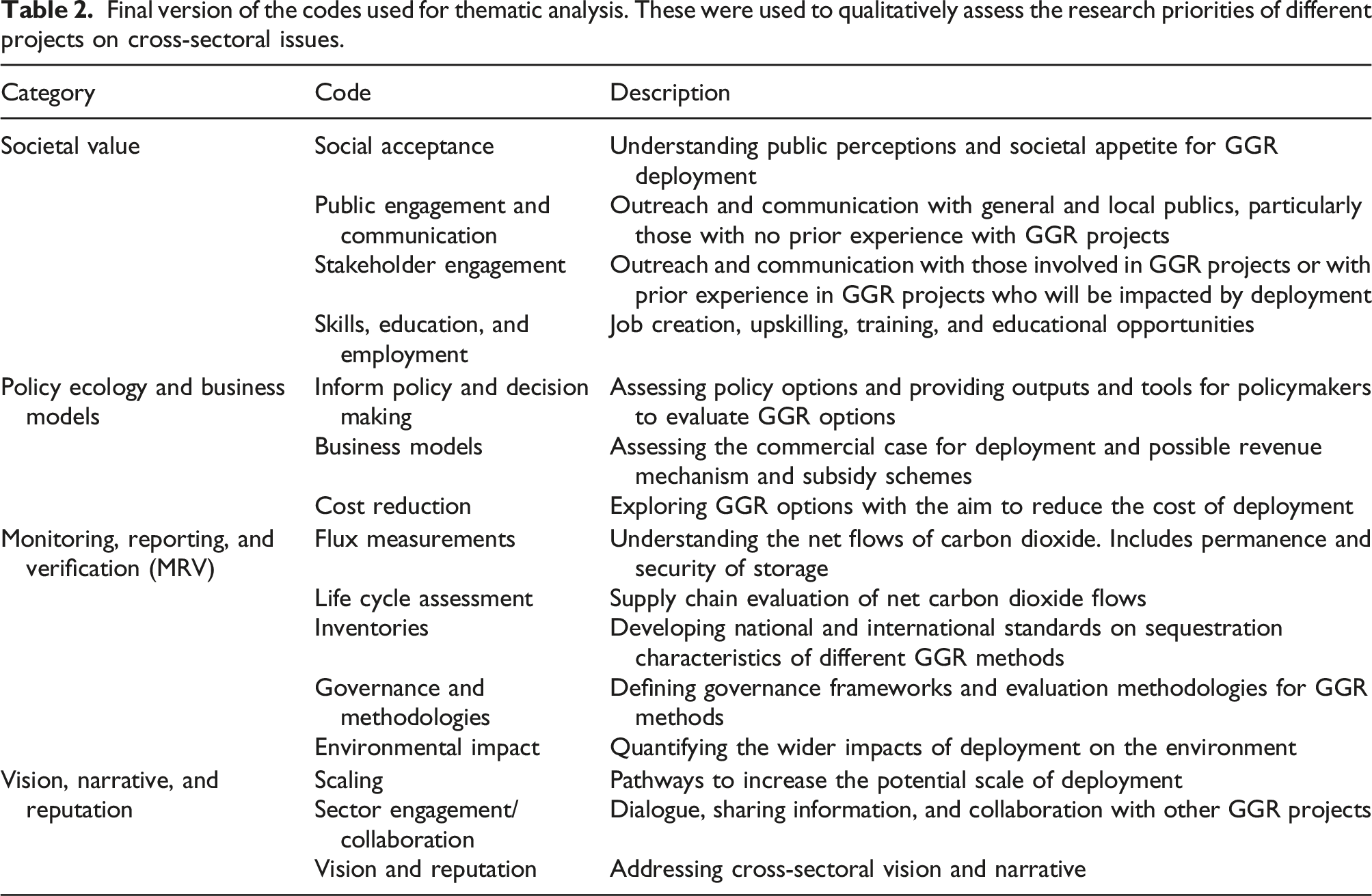
During the construction of the map, qualitative data analysis was conducted using documents from organisational, governmental, media, and institutional sources. Both inductive and deductive approaches were used to undertake a thematic analysis of the documents, with themes initially inspired by the cross-cutting issues in the work packages of the initiatives. During the analysis, these themes underwent significant evolution and refinement. This approach allowed for systematic analysis whilst remaining flexible in scope (Saunders et al., 2016). The documents were coded thematically using CAQDAS (Computer-Assisted Qualitative Data Analysis Software), specifically QDA Miner Lite, and each coded segment was taken as a data point (Provalis Research, 2022). Due to varying levels of publicly available material, uneven quantities of data were analysed for each initiative. Additionally, due to the maturity of some initiatives, the type of document varied. For example, a new round of funding was likely to only have short press release materials, whilst a more established research programme may have several publicly available reports. Therefore, the absolute numbers of themed data points were not analysed but were instead scaled relative to the number of words analysed. Whilst this reduced the uncertainty related to unequal levels of secondary data, it was not sufficient for full quantitative analysis. The results were interpreted as an indication of focus on themes relative to other initiatives to allow for this uncertainty.
Assessing the ecosystem: Primary data collection
An academia and private sector team was formed to carry out a pair of online workshops with a group of GGR stakeholders in the UK. The aim was to firstly test the hypothesis that the sector could benefit from increasing coordination across initiatives, and secondly to gain insight into where increased connectivity and CI could be most valuable. This included assessing the strengths, barriers, and limitations of the implementation of coordination initiatives. The cross-cutting areas derived during the thematic analysis were then explored in their broader categories during the workshops. A subjective approach to the research was taken in order to improve understanding of the views and perspectives of the organisation within and surrounding GGR ecosystem (Saunders et al., 2016). The workshops allowed participants to introduce their respective bodies of work, to identify their priority areas of work within the suggested and their own proposed themes, and for areas for potential increased coordination to be explored. The ecosystem map and stakeholder matrix were also presented. Understanding the stakeholder’s views on the practicalities of increased coordination, risks, benefits, and their concerns for the sector revealed insight into the potential for collective intelligence.
Exploratory semi-structured interviews were conducted after analysis of the workshop findings. The interviews sought to further understand what stakeholders in the space felt was necessary to allow for the potential of removals to be realised. This was in terms of sectoral organisation, as well as barriers and enablers to engagement in potential CI initiatives.
Results
Operational framework
Operational framework developed following a review of Collective Intelligence literature.

Understanding and mapping the ecosystem
The standard version of the ecosystem map created can be seen in Figure 1, and the live version of the document may be accessed via the link here (Hardisty and Mahfouz, 2021). The map enables filtering by technology type and the financial view sizes the elements based on the capital allocated, where the information is available. A still image of the live UK GGR ecosystem map. It visualises the number of bodies involved in the UK GGR space and their relationship or lack of.
The stakeholder matrix mapped 69 projects to 321 stakeholders across government, academia, and the private sector. Figure 2 shows the data in graphical form. It provides a sense of the scale of capacity within the sector as well as its complexity; however, the data may be better visualised in a manner similar to the ecosystem map displayed in Figure 1 as it was not immediately intuitive to participants in the workshop exactly what the lines in Figure 2 represented. Stakeholders were categorised into either academia, governmental, or private sector stakeholders, with the ‘other’ category reserved for unions and associations which did not fit into the other categories. Mapping of stakeholders to UK GGR projects, categories by the type of stakeholder.
Assessing the ecosystem: secondary data results
Final version of the codes used for thematic analysis. These were used to qualitatively assess the research priorities of different projects on cross-sectoral issues.

A comparison of the indication of research focus of two GGR projects (Project A and Project B) evaluated using thematic analysis.
Assessing the ecosystem: primary data results
The themes established through thematic analysis form part of the array of elements required to enable a strategic and coherent vision of GGR to be built in the UK. The following areas within the other themes were derived as potential areas for increased connectivity from the workshops: • Ecosystem awareness: Increasing knowledge of each other’s work across the sector. • Stakeholder engagement: Avoiding fatiguing stakeholders with uncoordinated repeated contact. • Monitoring, reporting, and verification of removals: The need for higher confidence in the reported values. • Business models: Collaborating on the construction of models and revenue mechanisms to inform decision making. • Co-deployment of technologies: Understanding if certain removal options may interfere constructively or destructively if applied together or in proximity. • Public perceptions: Determining social appetite for removals options and building a social license to operate accordingly.
The interviews explored these areas in more detail whilst learning more about the concerns and priorities of those within the ecosystem.
Analysis and discussion
Analysis of the ecosystem through the lens of CI provides several points for consideration. Within the ecosystem, many initiatives possessed key aspects of CI. For example, allowing clusters within the Industrial Decarbonisation Challenge to have greater autonomy and to be creative in how they develop their roadmap to net zero encourages innovative thinking. Simultaneously, allowing for the sharing of generated knowledge, common problems, and possible solutions between clusters through the Industrial Decarbonisation Research and Innovation Centre assists in the mitigation of the risk of duplication of work. Initiatives such as the SPF GGR Demonstrators programme encapsulate a broad range of research expertise from disciplines ranging from law and economics to engineering and environmental science (Imperial College London, 2022). Other initiatives were developing a comprehensive stakeholder engagement ‘commons’ to avoid stakeholder fatigue. However, the following analysis takes a different approach and evaluates the overall UK GGR ecosystem with individual initiatives and participants as contributors.
A Summary of the evaluation of the efficacy of the existing level of CI within the UK GGR sector.

What is the state of play?
Local level
Considerable capacity has been invested in increasing carbon sequestration within the UK. The overarching community goal appears to be for the UK to achieve its net zero target and to deploy GGR in a social, economic, and environmental manner at scale in the future. The majority of individual projects are focused on upscaling and developing one GGR option. Whilst key research challenges differ with each method, there are synergies around improving confidence in the amount captured, the permanence and security of the removal, cost reduction as well as the wider environmental impacts of deployment.
In addition to addressing technological challenges, individual initiatives tend to have a stronger emphasis on either the social, economic, or environmental aspect of GGR deployment. Figure 4 uses the thematic analysis results to illustrate this trend. Some initiatives demonstrated a higher focus on skills, education, and employment whilst others appeared to prioritise public engagement and communication. This particular divide highlights two aspects of a fair and equitable transition to a post-carbon society – creation of new green jobs (particularly for those in carbon-intensive industries) and determining the societal appetite and social license to deploy these technologies. One possible explanation revolves around the use of the land or facilities before deployment of GGR. Of those with a greater proportion of data points relating to skills, education, and employment, the majority resided in industrial clusters with technologies such as CCUS and DACCS. These industrial clusters are usually home to several carbon-intensive operations. For example, the Tees Valley cluster supports over 25,000 jobs through industries such as manufacturing, chemical processing, and raw material production (Mikunda, et al., 2018). Initiatives and projects with a greater focus on public engagement and communication tended to be based more in agriculture or enhancing ecosystems. These projects often rely on individual farmers and landowners either adopting new techniques or changing their land use. Furthermore, agriculture represents 63.1% of land use in England compared to 0.4% for industry and commerce; the potential number of communities affected by local deployment of GGR methods such as biochar application or land use changes is significant (Department for Levelling Up, Housing and Communities, 2022). There may be potential to realise the complementary strengths of these approaches when developing an overall strategy for GGR deployment. Comparison across the initiatives evaluated of the number of data points classed as public engagement and communication and skills, education, and employment scaled by the number of words analysed. Each initiative/project is represented by a letter.
The emergent level
The construction of the ecosystem map suggested an absence of the emergent level. Throughout the research stages, there was no single location where information on ongoing initiatives in the GGR field could be found. If CCUS is separated out from the GGR ecosystem, there is a CCUS council comprising BEIS/DESNZ and approximately 30 academic, institutional, and private sector stakeholders. A recent publication has updated the February 2019 major CCUS initiatives from the Net Zero Innovation portfolio, the Industrial Energy Transformation Fund, as well as the Industrial Decarbonisation Challenges (Department for Business, Energy and Industrial Strategy, 2019; Department for Energy Security and Net Zero, 2023. The overview of GGR in the UK published by BEIS/DESNZ, however, remains out of date and is severely limited in scope. It fails to include any initiatives with a non-primary GGR objective or from other departments, such as the Environmental Land Management schemes announced under the Nature for Climate Fund in DEFRA, independent offsetting strategies within the Department for Transport and Environment Agency, as well as more recent initiatives within BEIS/DESNZ itself such as the DAC and GGR competition (Department for Business, Energy and Industrial Strategy, 2020).
Additionally, during the construction of the ecosystem mapping, there did not appear to be any directorate, department, or council responsible for overseeing the development of GGR in the UK. Whilst BEIS/DESNZ has responsibility for the UK achieving its net zero target, GGR initiatives were dispersed across a range of pre-existing departments and institutions with no formal mechanism to connect them publicly visible. The lack of a coordinating body was confirmed in the workshops where participants were unsure of who was overseeing the overall GGR picture. The separation of GGR and CCUS must also be noted. Despite the significant dependence of GGR methods such as BECCS and DACCS on the development of the CCUS sector, GGR and CCUS developments were often framed as independent of one another and as of different ecosystems.
Global level
The findings at the global level were limited due to the lack of emergence from the local level.
Diversity
Diversity in this context has several implications. Firstly, technological diversity. With many different GGR methods being explored across the sector, this type of diversity is at a high level. Within initiatives, the diversity of approaches tends to narrow with the funding scope only allowing certain methods. For example, within the BEIS/DESNZ DAC and GGR Competition, afforestation and all other nature-based solutions are excluded (Department for Business, Energy and Industrial Strategy, 2021). This allows for specialisation of individual initiatives and supports the establishment of expertise. However, the potential benefits of this to the collective may be limited without an enabling emergent level.
Proportion of total stakeholders and connections to projects of academic, governmental, private sector, and other groups.

Diversity in terms of gender, ethnicity, or class was not explored in this research. Current literature on the diversity of participants in the field of GGR remains scarce, which may partly be due to the present size of the sector. However, it was noted that one study into gender diversity within geoengineering revealed that women represented just 3% of quotes on the topic in print and online news articles (Buck et al., 2014).
Independence
In general, a high level of independence exists between individual initiatives, except for some under the same fund. For example, the scopes of the CCUS Innovation 2.0 initiative and the DAC and GGR competition are designed to not overlap as both are part of the Net Zero Innovation portfolio overseen by BEIS/DESNZ. Within initiatives, the level of independence between projects varies greatly. Some initiatives encourage active collaboration and coordination between projects. For example, the SPF GGR Demonstrators programme contains a coordinating Hub for managing cross-cutting issues between its demonstrator projects (UK Research and Innovation, 2021). Other initiatives retain stricter competition framings, and collaboration is not actively encouraged. This division in the relative independence of projects reflects that in the Process gene of the Genome of CI. With innovation being analogous to the Create variation of the Goal gene, independent contributions relate to the collection and contest processes, whilst dependent contributions enable collaboration (Malone et al., 2009). This indicates differences in individual goals and views on how innovation may best be fostered within a programme.
Critical mass
The sector is at a nascent stage of development and therefore is still building up to the realisation of critical mass (Waller, et al., 2020). The increasing investment and inclusion within global and UK trajectories to achieve net zero suggest that the sector will undergo significant growth within the coming decades. This provides an opportunity to design organisational infrastructure now to allow for coordinated growth and maximum value to be elicited.
Adaptivity and robustness
The lack of an emergent level makes adaptive and reflexive thinking challenging; gaining visibility of the full picture is difficult without a full understanding of the ecosystem and the time to gather the outcomes of each individual project. Additionally, it was unclear where in the ecosystem reflexive thinking and focus may occur to allow the system to adapt. The high level of independence between initiatives also indicated low levels of representation of knowledge in multiple system locations. This is intensified by the specialisation and scope-limiting nature of the initiatives. The combination of little information redundancy and high specialisation suggested a less robust ecosystem. During the workshops and interviews, the issue of sharing information between projects was raised. A few participants argued that the current system allowed for this by projects sharing board members. However, dependence on select key people to share findings raises the issue of potentially decreasing resilience.
Why has greater CI not formed?
One of the greatest challenges in engagement throughout the research was understanding why those within the GGR ecosystem would or would not want to participate in a CI initiative. As many of those in the sector are already employed and the initiative would be part of their work, the motivation factor is likely to differ from the traditionally studied volunteer participants such as Wikipedia contributors. A combination of intrinsic and extrinsic factors would likely be required to encourage participation. The primary operable extrinsic factor for the participants appeared to be time, particularly for participants in government. Demonstrating that the project would ultimately save time and alleviate the pressure on other work requirements was seen as a substantial gain.
The time element may also factor into why those participating may or may not be receptive to engaging in initiatives aimed to increase collaboration and synchronisation. The majority of funding calls in the space were set up as a competition, with access to the next round of funding granted to those who can surpass the other applicants. Competitive mechanisms are used throughout CI initiatives and are capable of bringing new ideas to the table. However, such initiatives primarily achieve this by aiming the competition at the general public and going beyond the typical ‘expert’ group, which was not observed in the UK GGR space. Part of the justification behind the current structures can be attributed to the commercial sensitivity of technological innovation and potential implications on intellectual property rights. Uncertainty over IPRs and the possibility of knowledge ‘spill overs’ during collaboration can threaten a company’s market position, making collaborative partnerships less attractive to many firms (Czarnitzki et al., 2015).
It was also observed that the perceived benefits and costs of increasing collaboration and connectivity between initiatives were skewed in some cases depending on the stakeholder’s opinion on the future relevance of certain methods. Combining a competitive culture with increasing fragmentation may lead to the transfer of competition between projects to unnecessary early-stage decisions on the ‘winners and losers’ of GGR. Mature technologies possess greater certainty in their ability to deliver and are lower risk investments. This may affect decision making and undermine the ‘technology neutral’ approach aimed for by many of the ongoing publicly funded GGR projects. Crucially, unbounded competition between technologies continues to risk inadvertent ‘lock in’ to certain technological paths and most importantly diminishes the ability to form a coherent vision for GGR in the UK. Subsequent emergent ecosystem behaviour potentially suggests that a substantive proportion of the frontier innovation is taking place in the nascent GGR market by generating negative emissions offset credits via the Voluntary Carbon Market (VCM) platforms – either present credits or future credits (Arcusa and Sprenkle-Hyppolite, 2022). There are limited opportunities for academia and policy makers to connect to these initiatives. The VCM platforms are assimilating all the data from GGR innovators seeking negative emissions credits to raise capital and lower financing costs. The incentive for the VCM platforms to contribute to a CI is limited and their clients – GGR innovators – are focussing their limited bandwidth addressing the platform credit generation compliance needs. This natural fracture line within the UK GGR ecosystem could diminish the potential for CI generation and reduce the ability of UK net zero policy to be responsive to systemic GGR sector development and individual innovator needs.
Unhelpful framings in GGR may exacerbate this risk. Of current interest is the framing around ‘natural’ or nature-based approaches as opposed to technological, where the former encapsulates methods such as afforestation, peatland and wetland restoration, and biochar burial (Osaka et al., 2021). This division is more complex than it may initially appear as perceived naturalness influences how acceptable to people a technology or policy is – if something is labelled as ‘natural’ it invokes more positive responses (Corner et al., 2013). Examples of use of this divide in climate solutions can be seen across governmental organisations and academia (Fargione, et al., 2018; United Nation Environment Programme, 2017). Effects of this divide can be seen on the ecosystem map when filtering by technology type; ‘natural’, land-based options are largely allocated to DEFRA, whereas more technological or combined options fall under the remit of BEIS/DESNZ (Hardisty and Mahfouz, 2021).
Understanding how all the ecosystem components, initiatives, goals and value sets, different GGR and CCUS technologies, and externalities fit together is crucial to forming a coherent path to achieving net zero. This is reinforced by the time-pressured nature of tackling the climate crisis. A common thread is the barrier created by limited awareness of the rest of the ecosystem, exacerbated by the lack of visibility of how the system functions. Suggested operational measures such as co-deployment of technologies and coordination to avoid stakeholder fatigue rely on projects having base-level knowledge of the scope of work of other projects. Without this shared knowledge, the possible opportunities and incidents of duplication of work are obscured from all parties, leading to less efficient action and more costly deployment.
What further CI ideas were welcomed?
Increasing ecosystem awareness
The strongest and most widely accepted element for further connectivity was increasing and organising awareness of others work in the sector. An emphasis was placed on its role in building a strategic vision for GGR. These were not themes initially presented to participants – they formed part of a theory developed during preliminary research due to overlaps in project scope, but it could not be evidenced through individual initiative documents. However, engagement with stakeholders revealed a perceived need for greater coordination regarding this. Half of the attendees stated in the introduction section of the first workshop that they had attended because they were interested to hear about what was happening parallel to their own work within the sector.
Interviewees reacting positively and enthusiastically to the idea of awareness of others work and synchronisation of timelines as areas for increased coordination. Its importance was recognised by all interviewees to which the six areas were presented and was selected as one of the most important by the majority of interviewees. This was notably true when interviewees were asked to re-examine the areas for increased coordination in a global context, particularly with the prospect of international awareness leading to coordination around deployment and national strengths. Concerns about the general lack of ecosystem awareness were also echoed in the interviews. Increasing awareness of others work lends itself to the cross-cutting theme Vision and Narrative previously established during the thematic analysis. The enthusiasm around this area of work was particularly meaningful as it arose organically; it was not presented as one of the suggested areas of connectivity as it was thought to be too abstract but was picked up as a valuable area by participants regardless.
Opinions and understanding of the role of GGR in the transition to net zero remain varied. This was reflected within the interviews, with some interviewees expressing apprehension about the ability of GGR to have a timely impact at a significant scale, and some doubting the potential relevance of GGR a decade or two into the future. As could be expected, those researching and working in GGR were more optimistic about the field’s future relevance, although expectations of how much of a role they would play still varied. Diversity of thinking and opinion is crucial to ensuring an intelligent collective and avoiding herd mentality. Nevertheless, if part of the collective is rejecting a fellow component and its use to the collective, this is likely to prove a troublesome operational challenge. If one is not convinced of the future of GGR, the balance of the perceived benefits and demands of participation in the collective will likely not favour engagement in a CI initiative.
Stakeholder fatigue
Ideas around increasing coordination in stakeholder engagement as to avoid fatigue yielded mixed results. Early research, workshops, and interviews indicated a desire to find synergies around the need for stakeholder engagement. However, in a manner antithetical to collective intelligence thinking, louder voices seemingly spoke for the crowd and the majority of these concerns came from those not directly involved in stakeholder engagement. Upon conducting one-on-one interviews, contrasting opinions surfaced about the practicalities and the benefits of increasing coordination in this area. Several of the interviewees were sceptical of the potential of stakeholder fatigue to be a significant barrier to the sector’s future, with the view that engagement with multiple organisations and initiatives was a necessary reality for stakeholders engaging in the space.
Many of the initiatives had formal or informal stakeholder ‘commons’ where sub-team or project contact with stakeholders was recorded and a brief interview of the contact content included. Some interviewees highlighted their personal experiences of the advantages of coordinating stakeholder engagement within organisational teams. By presenting the team’s work as a whole, instead of just the sub-team’s work, the stakeholder experience improves, but so does the perception of the coordination of the team. However, there can be limits to centralisation due to increased administration and distance from the work requiring stakeholder engagement, suggesting the existence of a critical mass.
Whilst a high degree of centralised coordination may be questionable in the net value it delivers, the benefits of enhancing the stakeholder’s understanding of the big picture was a common element in ideas of what better coordination could look like. This idea was supported by the positive responses to the ecosystem map’s ability to increase the transparency of information on the workings and interactions within the system, as well as the ease in which this information could be conveyed to those less familiar with the space. The portfolio of possible actions changes with the reframing of the issue of stakeholder fatigue – it becomes less about the number of interactions a stakeholder has and more about the stakeholder’s experience and understanding of the role and impact of the interactions. Responsible research and innovation (RRI) thinking and public engagement theory also recognise the importance of the demonstrable impact of participation to those who are engaged with – a general understanding of the space is a central element to this (Wilsdon and Willis, 2004). This framing lends itself to the previous topic of increasing awareness of work in the wider ecosystem.
Co-deployment
Co-deployment of technologies received less attention from participants. Some interviewees spoke of the cross-pollination of ideas that resulted from having whole initiative meetings with multiple demonstrator projects, such as exploring biochar applications in combination with peatland restoration and reformation. What is notable here is that the meeting does not appear to have been designed with cross-pollination of ideas in mind, rather it provided the opportunity for knowledge to be shared and conversations were sparked consequently. It could be argued that a prominent barrier to the realisation of possible co-deployment opportunities lies once again in the limited shared knowledge of different GGR options and addressing this frailty explicitly or implicitly, such as through the sub-ecosystem organisation Interviewee 2 spoke of, may create the space for such synergies to be recognised. Collaborating on shared technological challenges was not directly explored during the interviews. This was due to its unpopularity in the workshops where there were no suggestions for increased collaboration, coordination, or connection.
Monitoring, reporting, and verification (MRV)
MRV was well received as an area where working together would benefit the ecosystem. Several interviewees were particularly enthusiastic about establishing standards and greenhouse gas inventories for GGR technologies, as this will increase confidence in GGR and CCUS and assist in unlocking further support. International science-based standards for biomass and CCS already exist; however, international standards for GGR have not yet been established and are a key recommendation of the Royal Society report into the future of GGR in the UK (Royal Society; Royal Academy of Engineering, 2018). Documentary analysis and primary data collected through the workshops and interviews suggest a desire in the sector for collaboration on MRV standards. However, CI may not be the most suitable lens to apply to this problem. The power of CI is mostly through its ability to make the invisible visible, bring new perspectives, and elicit expertise within the wider population. A CI approach to the problem could utilise the ‘miracle of aggregation’ or provide a shared commons of different estimates of the capacity and permanence of removals options (Surowiecki, 2004). However, MRV standards could be more efficiently addressed by a centralised body reviewing published data, collaborating with research bodies, and producing standards based on this. Whilst this would still involve sourcing different estimates of inventory values and some form of CI, this is not so different to what has already occurred with CCS and biomass standards. Therefore, it is unlikely that applying CI thinking would generate more value than the current approach, as long as GGR inventories are constructed in the near future.
Looking global
The research focused on the UK GGR sector, but there is potential for mapping and coordination work to be carried out at the international level. Across the global GGR community, each country has a different vision of how GGR may be implemented domestically. For example, Sweden has a mature forest industry and has set explicit targets for BECCS deployment in 2030 and 2045 (Fuss and Johnsson, 2021). The United States is home to more than half of the world’s CCS facilities due to a long history of government support for CCS projects (Beck, 2020). It was suggested in interviews that there could be a lot to gain from coordinating research to play to different national strengths. Understanding how these different strategies may be coordinated in a complementary manner may be valuable in the overall development of the sector and transition to net zero. This has subsequently become more salient with the establishment of US Infrastructure Act 1 and Inflation Reduction Act 2 which makes the US an extremely attractive location for start-ups and innovators and likely the geographical jurisdiction where cost curves will be addressed for the GGR sector. It likely has implications for which technologies will be established in the UK for the 2030 and 2035, 5 MtCO2 and 23 MtCO2 targets. Increasing ecosystem awareness was seen by interviewees as more important in this global context, as did developing international MRV standards and inventories for GGR methods.
Mission Innovation, ACT, and the Global CCS Institute are examples of projects looking to address the international coordination gap. Mission Innovation is composed of 22 countries and the EU and aims to accelerate progress towards achieving the Paris 2015 Agreement through coordinating investment and research into clean innovative technologies (Mission Innovation, 2022). ACT and the Global CCS Institute are specifically for CCUs technologies. ACT (Accelerating CCS Technologies) is an international initiative which aims to facilitate RD&D and innovation for safe and cost-effective CCUS technologies (ACT, 2022). The Global CCS Institute is a think tank which aims to build international CCS capacity through enabling investment and sharing knowledge, as well as providing a member access only database of CCS facilities (Global CCS Institute, 2022).
What does this mean?
Whilst there was agreement over a few problem-specific mechanisms, the common thread and the unanimously perceived need among stakeholders for sector development was increasing the level of ecosystem awareness. Transparency and comprehension of the bigger picture played into several of the other cross-cutting issues raised, such as stakeholder engagement. This need to increase ecosystem knowledge was also reflected in the initial assessment of existing CI in the sector; without an emergent level, the collective is not a collective but a series of independent pockets which impedes the formation of a coherent, strategic vision and narrative for GGR in the UK. Actions to address this will need to go beyond problem-specific collaboration and coordination mechanisms and tackle the system structure. Through installing a sense of collective culture, the foundations of a CI assembly may start to be established. This will be fundamental to ensuring an informed balancing of risks of (a) scaling up the sector too slowly against the unintended harms of policy design which needs to be undertaken within a compressed timeframe, as well as (b)allowing innovation policy to be more responsive to innovator and net zero policy needs.
This study suggests that in the case of the GGR space in the UK, the most effective and widely accepted method of increasing CI is the visualisation of the ecosystem’s workings to the wider public as well as key sector players. Creating a publicly accessible ‘commons’ and filling the emergent-level gap would also help establish an ecosystem memory – organising information from past, ongoing, and future initiatives in a utilisable way. The risk of not doing so could mean that the UK could miss out on a global leadership role in fostering GGR and other deep decarbonisation technologies (Financial Times, 2023a).
In contrast to classic observed examples of human CI such as Wikipedia or the miracle of aggregation, this ecosystem presents a further challenge in that the collective is not always certain it wants to be part of a collective. This was observed when some stakeholders perceived the benefits of joining a collective as skewed towards certain GGR methods depending on the stakeholder’s opinion on the future relevance of such methods. Additionally, if potential collective members feel there is technology bias present, particularly within the competitive funding mechanisms, it risks the collective rejecting an ecosystem approach and delegitimising the endeavour to form greater CI.
Therefore, the emphasis on ‘who’ organises and maintains the CI becomes stronger in this context, than more traditionally studied examples of CI such as crowdsourcing. Allowing the formation of an emergent level also gives away some control of the narrative as the emergent level organises information and provides a collective memory of the GGR ecosystem. The narrative will likely influence which methods are most accepted by decision makers and investors going forward; the stakes are high and so the perceived neutrality of the potential emergent level by the collective is critical to its formation, acceptance, and success.
Conclusion
A coherent, shared vision is essential for enabling the socially, economically, and environmentally sustainable scale up of GGR methods to achieve UK net zero. However, there is no mechanism at present to allow for the outputs of initiatives to be drawn together into one coherent overview. Whilst a range of potential solutions were explored, the approach with the most potential was the creation of a publicly accessible visualisation of the UK GGR space and its processes, components, and connections. This more systemic approach to increasing connectivity was seen more favourably by interviewed stakeholders than CI mechanisms addressing potential sectoral concerns more specifically and perhaps a necessary foundation before any further collaborative action to reduce fragmentation within the UK GGR sector, bring frontier innovation that is taking place in the nascent GGR market into the policy spectrum in a timely manner, and allowing innovation policy to be more responsive to innovator and net zero policy needs. Creating a publicly accessible ‘commons’ for UK GGR could facilitate increasing transparency, accountability, and promoting a more collective and collaborative culture in building a more robust UK GGR sector.
Footnotes
Declaration of conflicting interests
The author(s) declared no potential conflicts of interest with respect to the research, authorship, and/or publication of this article.
Funding
The author(s) received no financial support for the research, authorship, and/or publication of this article.
