




Abstract
The impact of random breath testing (RBT) on alcohol-related traffic crashes has been the subject of numerous studies over the past 30 years. The existing body of research clearly identifies the positive impact of RBT programmes around the world. However, very little is known about when and where RBT is deployed locally to achieve the desired outcomes. By understanding how RBT is being deployed in space and time opportunities may be identified to improve current practices. To start addressing this gap, the current paper characterises the location and timing of RBT within a Queensland Police District. Results identify RBT is more likely to be conducted within specific locations, on particular days and at particular times. These outcomes provide a level of clarity over the operationalisation of RBT, offering opportunities to explore how this strategy could be varied to try and improve road safety outcomes, for example, increasing the diversity of RBT locations or evening out the number of tests conducted each day of the week to increase the perceived certainty of sanctions. The results also have implications for future research. Of interest would be the impact of RBT predictability on perceptions of avoidance. The repeat police presence also provides an opportunity for future research to explore a potential diffusion of benefit, crime reduction. These implications are discussed, within the context of the extant literature, to guide future research aiming to maximise the efficacy and efficiency of RBT programmes.
Introduction
The impacts of random breath testing (RBT) programmes on road safety, particularly drink driving, have been extensively tested and analysed for over 30 years (Homel, 1988; Morrison et al., 2021a). Much of this research has focused on the efficacy of RBT at the state and national level using crash data or survey instruments (Bergen et al., 2014; Ferris et al., 2013; Freeman et al., 2021). RBT programmes are effective and have played a pivotal role in improving road safety outcomes in Australia and abroad (Bergen et al., 2014). However, achieving these outcomes requires a considerable commitment to resourcing. Approximately 8 million breath tests were conducted throughout Australia in 2021 after peaking at 15 million in 2019, just prior to COVID-19 (Bureau of Infrastructure and Transport Research Economics, 2022). Yet to date, there has been little research exploring opportunities as to how this considerably resourced strategy is implemented at a local level or if it may be possible to improve existing deployment methodologies and identify unintended outcomes. The current paper attempts to start this discussion by exploring the predictability of RBT before considering the operational implications for general deterrence and offender recidivism.
RBT is thought to work as a general deterrence for drink driving by increasing perceived risks of being caught, reducing any potential rewards (Erke et al., 2009). The aim is to create a perception that anyone can be tested anytime, anywhere, influencing intentions to drink drive (Queensland Police Service (QPS), 2020; Szogi et al., 2017). Early implementation of RBT programmes in Australia saw a mixture of results, but several states achieved sustained reductions in alcohol-related traffic crashes (ARTC) (Homel, 1993). Much of this success was put down to the increased awareness achieved through highly visible RBT activities not just the enforcement of drink-driving laws. Homel (1993) noted the extensive costs associated with high visibility enforcement and had called for a greater understanding of the nuances of RBT and drink-driving deterrence within the community. Since this time, a considerable body of literature has emerged exploring driver perceptions of RBT and its influence on drink-driving behaviour (Bates et al., 2016; Bergen et al., 2014; Truelove et al., 2022). Survey-based research has identified that drivers are less likely to self-report drink driving after observing RBT being conducted (Bates et al., 2016; Watson & Freeman, 2007). However, driver age, gender, previous drink-driving offences, avoidance of police and risky drinking behaviours have been identified as mediating factors (Bates et al., 2016; Freeman et al., 2021; Truelove et al., 2022). Specifically, these variables are associated with lower perceptions of apprehension certainty, lower perceptions of personal risk and a higher reported intent to offend in the future (Bates et al., 2016; Freeman et al., 2021; Truelove et al., 2022). Consistent with general deterrence theory, when drivers perceive risks to be nominal, they are more likely to drink and drive.
Internationally, research focusing on crash data, as the outcome variable, between 1980 and 2005 has found that introducing RBT programmes has been highly successful at reducing ARTC and traffic crashes generally (Erke et al., 2009). Recent studies have considered the impact of RBT programmes at state, city and community levels (Ferris et al., 2013; Morrison et al., 2019, 2021b). Additionally, the implementation of RBT programmes differs across studies. Some programmes targeted drink-driving offenders (specific deterrence), whilst other programmes aimed to increase general visibility (general deterrence) of police enforcement/checks (Ferris et al., 2013). Other strategies have included publicity campaigns, a focus on roadblocks or a focus on the total number of tests conducted (Erke et al., 2009; Morrison et al., 2019, 2021b). Whilst the strategy has been successful overall, variations in effect sizes have been observed. In Australia, Homel (1988) first noted that some states saw greater reductions in ARTC than others. This variation was identified again in 2013 (Ferris et al., 2013). In this instance, the difference was in how RBT programmes were implemented at the state level, high visibility versus targeted.
Despite the documented success of RBT operations, very little is known about when or where RBT is conducted within operational contexts (for exception, see Morrison et al., 2021b). Are RBTs truly conducted “Anytime, anywhere”? Does the answer to this question have an impact on desired outcomes? Some spatial clustering is anticipated due to workplace health and safety requirements and traffic volumes (Hart et al., 2003; QPS, 2021b). This is because in jurisdictions such as Queensland, RBT must be conducted at locations that are safe for both police and road users. As a result, some locations are not suitable. Additionally, RBT is traffic-focused; therefore, it makes sense that they would be conducted within locations with higher traffic volumes. To what extent policy and traffic volume influence site selection and clustering of RBT is unknown and outside the scope of the current paper, but could be worth further exploration. The extant literature certainly suggests that spatial clustering occurs to some extent (Ferris et al., 2013; Freeman et al., 2021; Morrison et al., 2021b). However, if RBT sites are predictable, this may increase opportunities to avoid detection, a known risk factor for recidivism (Truelove et al., 2022). Despite this evidence, the full extent of spatial clustering remains unknown with even less being understood about temporal clustering.
Having regard to the intent of RBT programmes, “Anytime, anywhere”, the current paper will explore the reality of RBT locations and times within a policing district in Queensland. By understanding when and where RBT is conducted, it becomes possible to explore potential weaknesses and opportunities within the current operational implementation of this strategy. The overarching research question being, is RBT predictable? This will be addressed by exploring the extent to which the location, day of the week and time of RBT operations are similar (clustered) or different (random). Operationally, this will assist the policing district in making decisions about deployment locations and times, exploring opportunities to improve the deterrence effect on the general motoring public and recidivist drink drivers. The findings will also guide future research that is of interest to the policing district, namely, exploring potential diffusion of benefits in the crime environment and attempting to identify optimal deployment patterns to improve road safety outcomes.
Background
Deterrence theory is often used to explain how RBT influences drink-driving behaviours (Ferris et al., 2013; Szogi et al., 2017). Much of this research has focused on classical deterrence theory, which suggests behavioural change is achieved through general deterrence or specific deterrence (Stafford & Warr, 1993). General deterrence occurs through the establishment of laws, policies or practices that articulate the unacceptability of a particular behaviour. For example, the establishment of drink-driving laws and RBT in New South Wales in 1982 has been attributed to a 36% reduction in ARTC (Homel, 1988). Specific deterrence is achieved through the specific action taken against an individual that deters subsequent behaviours. Evidence indicates that some Australian states prefer specific deterrence strategies, whilst others may prefer general deterrence strategies (see Ferris et al., 2013).
Stafford and Warr (1993) reconceptualised general deterrence theory to include direct (personal) and indirect (i.e., observation of others) punishment along with direct and indirect avoidance. For example, an individual can be deterred from further offending when they are sanctioned for an offence or observe another being sanctioned for an offence. However, the effect of this deterrence is mitigated by perceptions of avoidance. When an individual has previously avoided detection or may be aware of others avoiding detection, they are less likely to be deterred from offending. Through this particular lens, it is important that a greater understanding of RBT deployments is achieved. If, as anticipated, RBT is clustered in space and time, they would be somewhat predictable. With predictable testing times and locations, it becomes easier for motivated drivers to avoid detection. Based on Stafford and Warr's general deterrence theory, this may reduce the efficacy of RBT programmes, in some contexts. Alternatively, if RBT is randomly distributed, then this may decrease the overall visibility of RBT programmes, assuming existing operations target high traffic volume locations (Hart et al., 2003). This may reduce the general perception that RBT is being conducted on a regular basis (Freeman et al., 2021). There is a growing body of evidence supporting Stafford and Warr's general deterrence theory and the nuances of direct and indirect punishment or avoidance, particularly within survey literature (Freeman et al., 2021; Szogi et al., 2017; Truelove et al., 2022).
Survey-based research consistently demonstrates that drivers self-report lower incidents of drink driving when they perceive the likelihood of detection to be high (Bates et al., 2016; Szogi et al., 2017; Truelove et al., 2022). This perception is generated if drivers are personally subjected to RBT or if they observe others subjected to RBT (Watson & Freeman, 2007). The effect of direct and indirect punishment is not just short term but can last for up to 6 months (Watson & Freeman, 2007). Surveying 961 drivers, Freeman et al. (2021) found that drivers report observing RBT twice as often as they are tested. Their results also identified that this exposure to RBT was associated with lower intentions to drink drive in the future. Based on these results, Freeman et al. (2021) suggest that it may be more efficient for police to increase the visibility of RBT testing rather than trying to test every driver. One way proposed to achieve this is to focus RBT at locations with high traffic volumes. This would result in clustering of RBT within specific locations and is likely occurring in Queensland, based on recent spatial RBT research and a police survey (Hart et al., 2003; Morrison et al., 2021a). However, this research does not provide a complete picture. Hart et al. (2003) conducted semi-structured interviews with Queensland Police which indicated RBT operations focused on high-volume traffic times. Morrison et al. (2021a) looked at the time and placement of RBT operations, however, only included operations involving 25 or more breath tests within a 3- to 8-hour window. As a result, not all RBTs were included in the analysis. To date, research has not considered all available RBT or the days and times they are conducted.
Whilst there is a body of literature supporting highly visible, repeat exposure RBT, it should also be noted that there is emerging evidence identifying that drivers who have previously avoided detection are more likely to drink and drive in the future (Szogi et al., 2017; Truelove et al., 2022). A survey of 1,257 drivers from Queensland identified that previous avoidance of RBT was one of the strongest predictors of future drink driving (Szogi et al., 2017). This result only applied to direct avoidance as indirect avoidance (others avoiding police) was not found to be a significant predictor. These results were subsequently reinforced by Truelove et al. in 2022. Surveying 546 drivers with a history of alcohol or drug use, it was identified that directly avoiding punishment was a significant predictor of future offending. Given the risks associated with drink driving, further research is required to identify how limited policing resources can be appropriately tasked to achieve general deterrence and target at-risk drivers (Fergusson et al., 2008).
Taken together, the existing survey literature suggests that RBT programmes should be random enough to prevent predictability, enabling avoidance, but frequent enough to provide a general deterrent. This is a difficult task for police managing multiple demands. In short, survey data are already suggesting that the spatial distribution of RBT matters. Specifically, high visibility, repeat exposure locations generate general deterrence, whilst randomised testing locations may reduce predictability and avoidance behaviours (Freeman et al., 2021; Truelove et al., 2022). Extending this concept, it is not hard to suggest that time is also important to ensure as many of the driving population observe RBT as possible. Understanding how RBT is currently operationalised to achieve repeated exposure and random or targeted testing, to address recidivist behaviour, is the first step to optimising RBT programmes. It must also be noted that despite the nuances, much of the survey literature demonstrates that RBT programmes successfully reduce intent to drink drive (Freeman et al., 2021; Truelove et al., 2022).
This success has been identified not only in survey-based research but also within studies exploring the impact of RBT on traffic crash outcomes, particularly those related to alcohol. Within Australia, RBTs to licenced driver ratios were compared between Western Australia (1:3) and Queensland (1:1), whilst ARTC were used as the dependent variable (Ferris et al., 2013). The primary difference noted between the two states was the implementation of RBT programmes. The Queensland strategy aimed to test every licenced driver every year, whilst Western Australia adopted a more targeted approach attempting to specifically identify drink drivers. Essentially, the Queensland approach was a broad general deterrence strategy, whilst Western Australia sought to establish specific deterrence. To complete the analysis, RBT, licenced driver and crash data were aggregated to monthly counts over a 5-year period. Ferris et al. (2013) identified that the 1:1 RBT to licence driver ratio was associated with 5.5 ARTC per 100,000 licenced drivers, whilst the 1:3 ratio was associated with 7.5 ARTC per 100,000 licenced drivers. The results highlight the efficacy of highly visible RBT programmes but do not describe the spatial or temporal operationalisation of RBT at a local level.
A paper published by Morrison et al. (2021a) starts exploring what happens around RBT sites using smaller geographic boundaries. Using 6.5 years of RBT and traffic crash data in the greater Brisbane area, hierarchical cluster analysis was used to identify 2,069 RBT check points. For this study, RBT check points were defined as clusters of RBT 180–640 minute in duration with three or more testing devices and 25 or more tests. Clustering was based on tests conducted within a 24-hr period commencing 6:00 a.m. This appears to be the first attempt to define a stationary RBT site for research purposes. There are many challenges to defining what constitutes a suitable stationary RBT, primarily due to a lack of research in this space. Challenges include identifying suitable testing rates per hour whilst accounting for different traffic volumes at different locations, times and days, the number of officers required at a site to make it highly visible and how long RBT site needs to last to be effective. Despite these challenges, the definition adopted by Morrison et al. (2021a) is logical and would likely be highly visible to a large number of motorists. The results from this study identified that large, highly visible check points reduced ARTC for up to 1 week. The definition and subsequent data set also suggest that RBT is clustered in space and time. However, the effect and influence of RBT falling outside of this definition are unknown. Nor is it known if smaller-scale RBT sites can achieve similar results.
Collectively, RBT research demonstrates a positive relationship with road safety outcomes (Bergen et al., 2014; Erke et al., 2009). Erke et al. (2009) completed a meta-analysis reviewing 40 studies across eight countries. The studies included were from countries such as Australia, New Zealand and the United States between 1980 and 2005. It was noted that between many of the countries, there was considerable variation in the legal frameworks used to conduct RBT programmes. For example, in the United States, officers require reasonable suspicion before they can intercept a vehicle. However, a different approach is adopted in Australia, whereby a legislative authority is provided to intercept drivers solely for the purpose of a breath test (i.e., Police Powers and Responsibilities Act, 2000 (Qld) s.60). In Queensland, the majority of RBT is conducted by setting up roadblocks (static interceptions) or through mobile interceptions (QPS, 2021b). Mobile interceptions involve police driving in behind vehicles and activating emergency lights and sirens which direct drivers to pull over (QPS, 2021b). On average, RBTs last for 20 seconds involving a verbal police direction and the driver blowing into a breath testing device which indicates the presence of alcohol (Bennett et al., 2019). Mobile intercepts are short and sharp, involving one or two officers, whilst static intercepts can last for several hours involving many officers. Despite the different legislative and theoretical frameworks, Erke et al. (2009) found that ARTC were reduced by 17%, whilst general traffic crashes were reduced by 10%–15%, with the implementation of RBT programmes.
Whilst there are some nuances, the overall consensus from the existing literature suggests that RBT effectively deters drink driving and improves road safety. Despite this considerable body of evidence and positive outcomes, much remains unknown about the operationalisation of RBT, particularly, how this strategy is deployed at the local level. For strategic planning, policing leaders need to know where and when RBT is being conducted as well as where they are not being conducted before they can make informed decisions about redistributing operations to try and improve road safety outcomes. For future research, identifying the randomness or predictability of RBT deployments offers an opportunity to further optimise this already successful strategy. However, before such decisions can be made or research questions accurately conceptualised, a greater understanding of existing deployment patterns is required. To start addressing this, the current paper aims to characterise RBT deployments within a Queensland Police District to guide local operational decision-making and future research.
Research site
The research site is a police district in Queensland covering 5,923 km2. The 2016 census identified 9% of the 212,890 residents were unemployed, which was above the state (7.6%) and national (6.9%) levels (Australian Bureau of Statistics, 2016; QPS, 2021a). The median weekly income is $1,410, similar to the national median, $1,438 (Australian Bureau of Statistics (ABS), 2022). The majority of residents (77.4%) within the study site use private vehicles to travel to and from work, which is above the 68.4% reported nationally. The research site was selected for the current study due to a desire from management to better understand existing policing practices with a view to explore how the district could improve RBT deployments in the future.
RBT data
A convenience sample of RBT tests conducted from July 2015 to June 2018 was provided by the QPS to complete this review. A total of 274,518 mobile or stationery tests were conducted in the research site during this time. RBT data included the latitude, longitude, date, time and reason code for each test conducted. Prior to conducting a test, officers select a reason code, such as “Mobile RBT”, to identify why they were completing the test at the time. Only stationary or mobile RBT reason codes were considered as these are conducted within the street and are thus visible to road users.
Methods
Spatial unit of analysis
Given the focus of the current paper is to characterise RBT to guide future research, focusing on the impact at a local level, an appropriate spatial unit must be selected. If spatial units are too small, there will be insufficient data to identify any potential impacts, and if they are too large, nuances may be missed (Morrison et al., 2021a; Wu, 2019). That is, units of analysis must be practical and meaningful. To date, the smallest spatial unit used, without modification, in RBT research has been a Statistical Area 2 (SA2) unit (Morrison et al., 2021b). 1 This is likely due to the low number of traffic crash incidents. An SA2 unit is a medium-sized area that represents a community that interacts together (ABS, 2022). Whilst populations within these locations can vary, they average 10,000 persons. However, due to the large area covered within SA2 units, spatial and temporal intricacies can be lost. This issue, known as the modifiable areal unit problem (MAUP), is well understood within crime literature, but it does not appear to be considered within the existing RBT literature (Chainey & Ratcliffe, 2013). MAUP occurs where counts of the dependent variable are a function of the geographic aggregation process, impacted by the size, shape and orientation of the geographic unit selected. Therefore, geographic units must be practical, having enough data for analysis, and meaningful, having real-world implications. Balancing these competing considerations, the decision was made to use SA1 units. An SA1 unit is considerably smaller than an SA2, averaging 400 residents per unit (ABS, 2016). They are the smallest unit available for use with Australian census data and are designed to be predominantly rural or urban in nature. SA1 units were ultimately chosen to describe RBT deployments in sufficient detail in a manner that would be useful for future research. Grid thematic mapping was not considered due to the difficulty operationalising spatial units without definable barriers. Preference was given to statistical areas because they are typically bounded by definable features (i.e., roads or creeks).
A total of 604 SA1 units were identified within the study location, with 545 containing at least one RBT count throughout the study period. Local Moran's I (LM-I) was used to assess if spatial autocorrelation (clustering) of RBT tests exists within the research site (Brown & Chung, 2006; Sydes, 2019). Each location is compared to its immediate neighbours and the overall area to calculate if the value is statistically higher than other locations (Bivand & Wong, 2018; Chhetri et al., 2019; Chainey & Ratcliffe, 2013). As a result, LM-I can identify statistical outliers (i.e., high–low hot spots) that are not identified by other hot-spot methodologies (Anselin, 1995). For example, a high–low hot spot is a location with high RBT counts surrounded by locations with low RBT counts. A queen's spatial contiguity matrix was adopted to complete the analysis to identify significant outliers and clusters within the research site.
Temporal unit of analysis
As with the selection of the spatial unit, careful consideration was given to selecting the appropriate temporal unit of analysis. It is not practicable to consider RBT counts over each minute of the day as there would be too little data for analysis. When temporal units are considered within the existing RBT, research days have previously been selected (see Morrison et al., 2019, 2021b). This also represents a meaningful unit of analysis that can be readily incorporated in operational planning. However, time of RBT operation does not appear to have been characterised in any detail to date. This is despite evidence of temporal patterns within traffic crash data (Department of Transport and Main Roads, 2021; Huang and Lai, 2011). Based on this, the decision was made that RBT would best be described by day of the week and hour of the day to ensure results are meaningful and align with current reporting of Queensland traffic crash data (Department of Transport and Main Roads, 2021). After describing the temporal patterns, negative binomial or Poisson regression is used to identify if significant temporal variation occurs between the SA1 units identified within the research site. These methods were selected for this analysis due to overdispersion observed within the data set (Briët et al., 2013; Hilbe, 2011).
Results
RBT locations
LM-I analysis identified significant clusters and outliers of RBT within the research site. High–high clusters accounted for 15,790 (5.3%) of the tests conducted within the research site, whilst only accounting for 3.15% of the SA1 units. A total of 103,391 RBTs were conducted within high–high or high–low clusters, representing 34.8% of all tests conducted within the research site. However, these were conducted in just 67 SA1 units, accounting for 11.1% of the possible locations. At the other end, low–low clusters accounted for 25,046 tests (8.4%) and 29.80% of all the SA1 units. Figure 1 provides a visual snapshot of these data, focusing on the more heavily populated locations within the study site. What is clear from these results is that RBT is spatially autocorrelated within the research site.
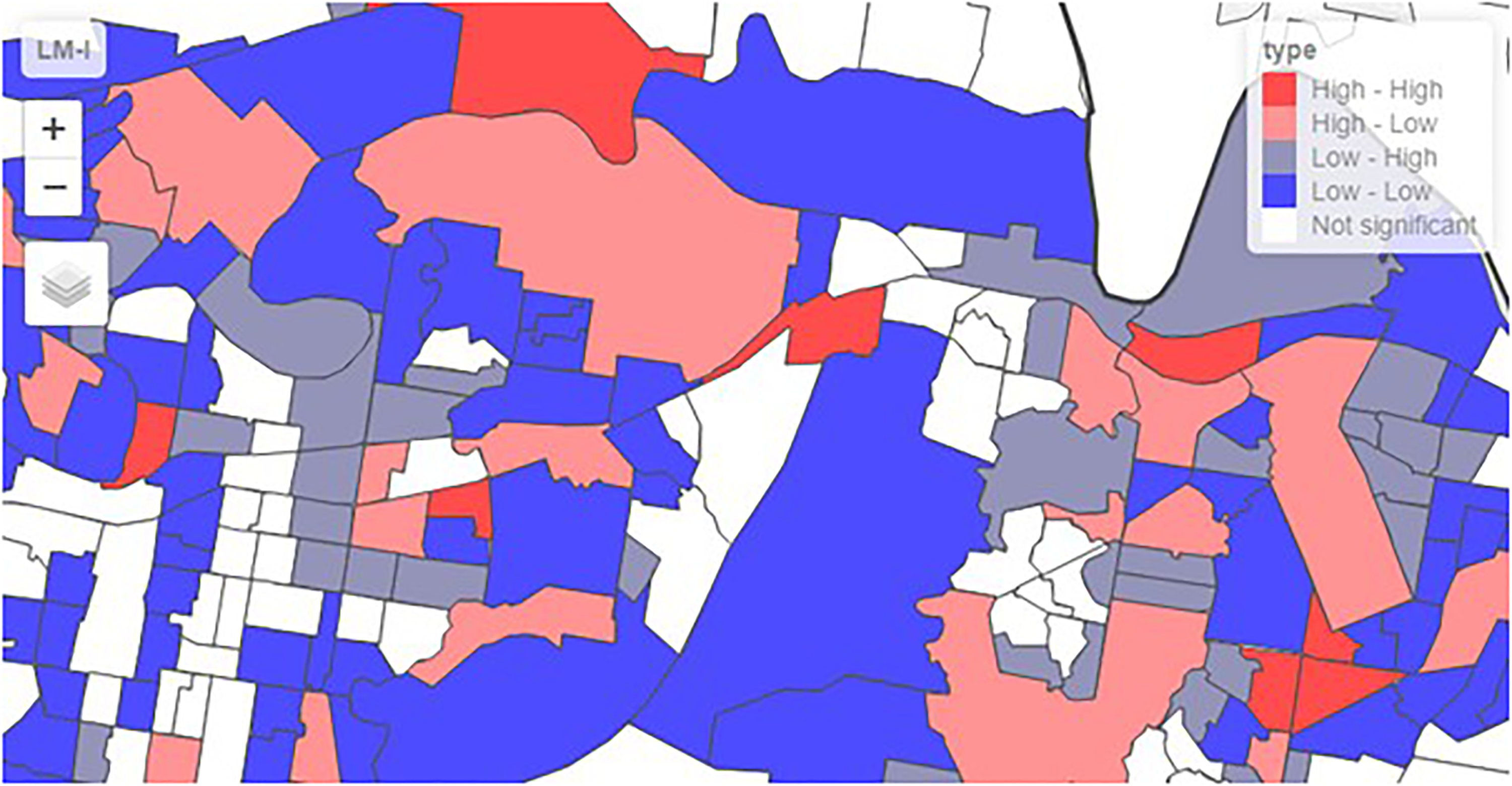
Local Moran's I map of random breath testing counts covering high population areas within research site.
RBT days
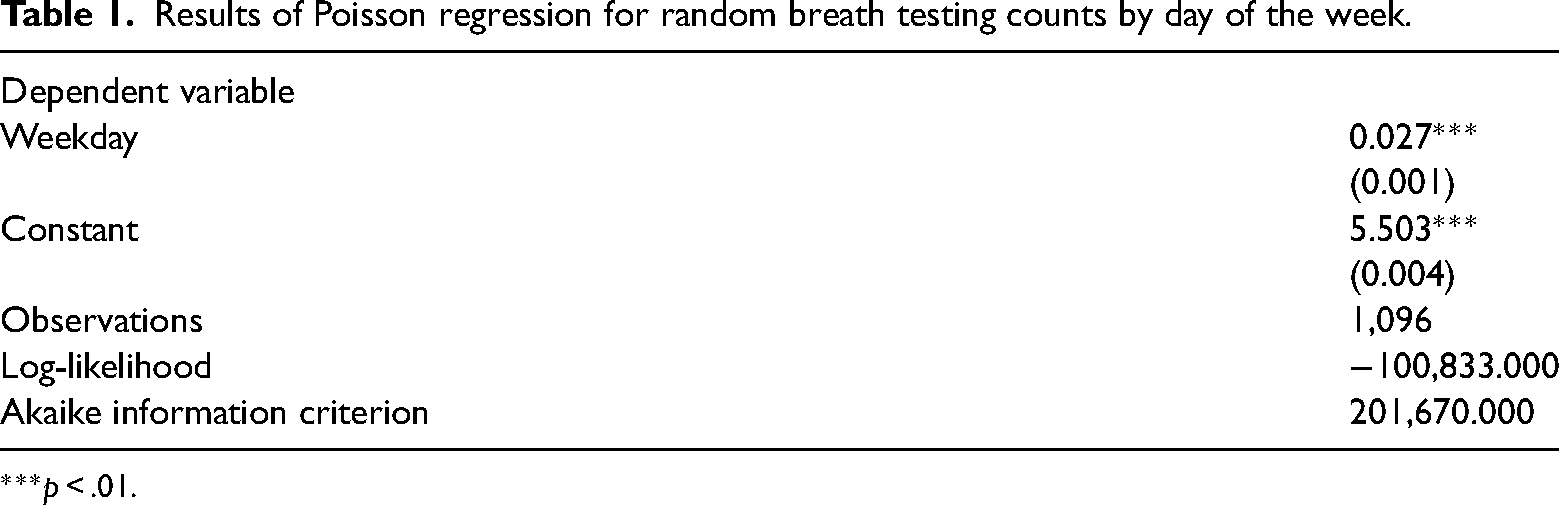
Reviewing RBT counts by day of the week across the research site also identified patterns. RBT numbers peak between Wednesdays and Fridays. Fridays accounted for 54,261 (18.1%) of the tests (see Figure 2). A noticeable reduction in RBT is observed on Saturdays and Sundays, whilst the least were conducted on Mondays. A total of 27,311 tests were conducted on Mondays, representing just 9.1% of all tests conducted, nearly half the number conducted on Fridays. Poisson regression identified a statistically significant (p < .01) difference in RBT counts by the day of the week during the research period (see Table 1). This demonstrates that RBTs are clustered not only in space but also by day of the week.
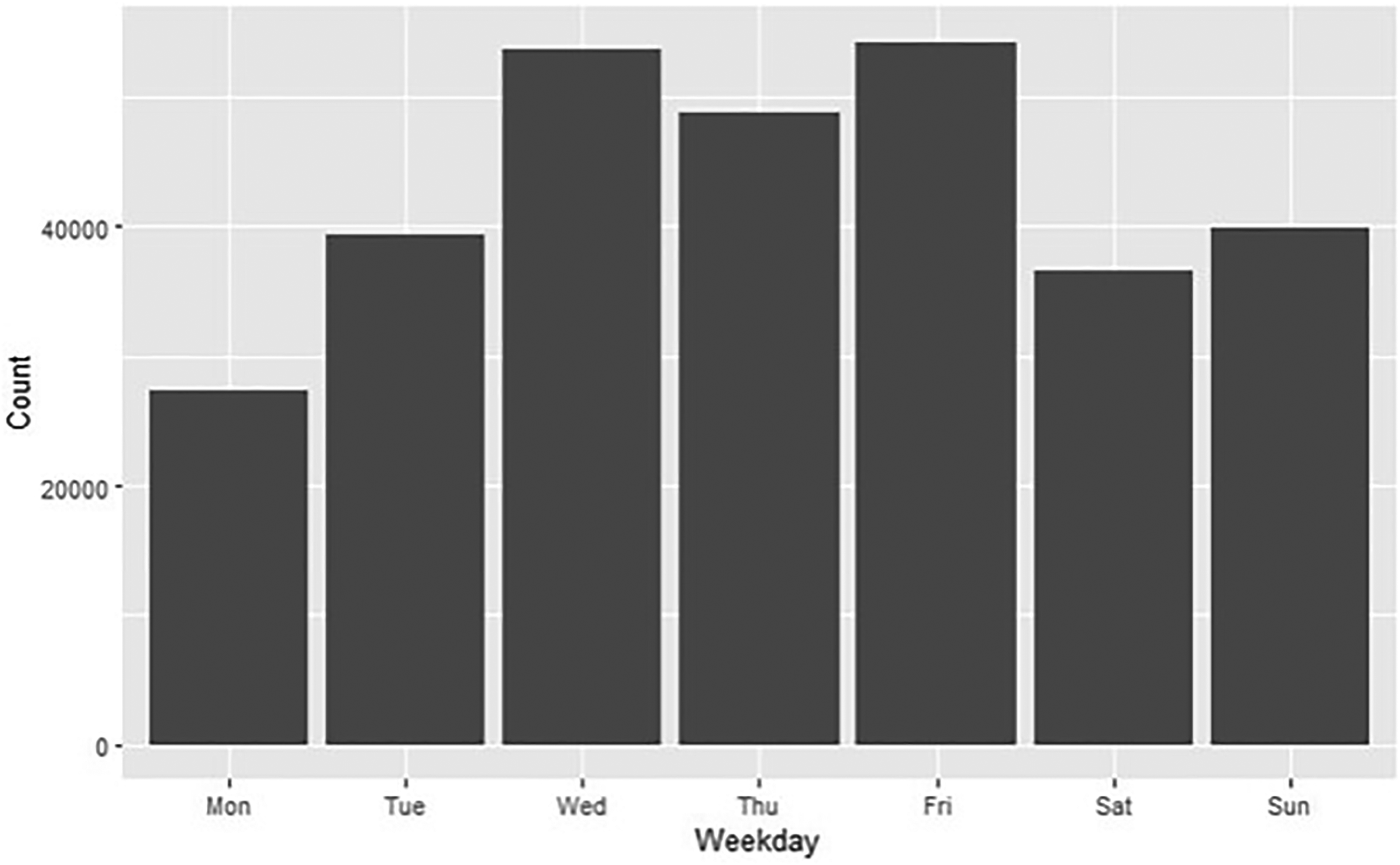
Random breath testing counts by day of the week.
Results of Poisson regression for random breath testing counts by day of the week.
***p < .01.
RBT times
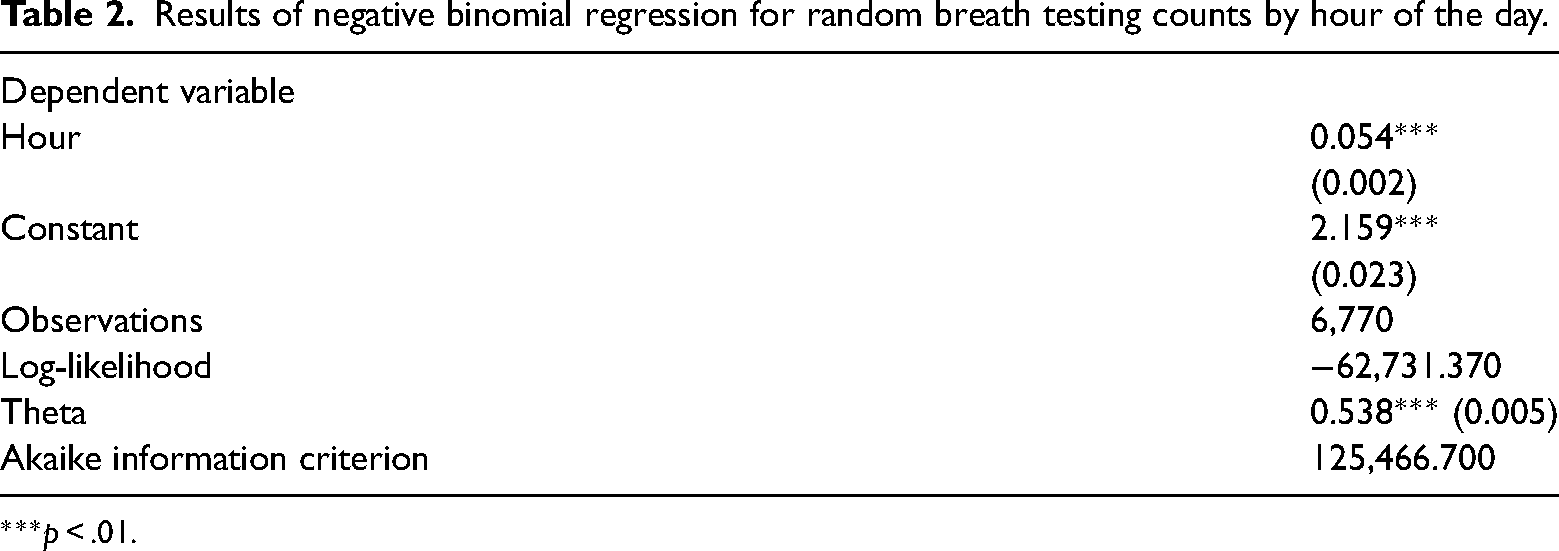
Similar to the review of RBT days, patterns are observed with RBT deployment times throughout the research site. The majority of RBT (67.96%) were conducted during business hours (8 a.m. to 4 p.m.), peaking between 2 p.m. and 4 p.m. RBT numbers were lowest between midnight and 7 a.m. (see Figure 3). Negative binomial regression was used to compare RBT counts by hour of the day during the study period (see Table 2). Results identified a statistically significant (p < .01) difference in RBT counts across hours of the day within the research site.
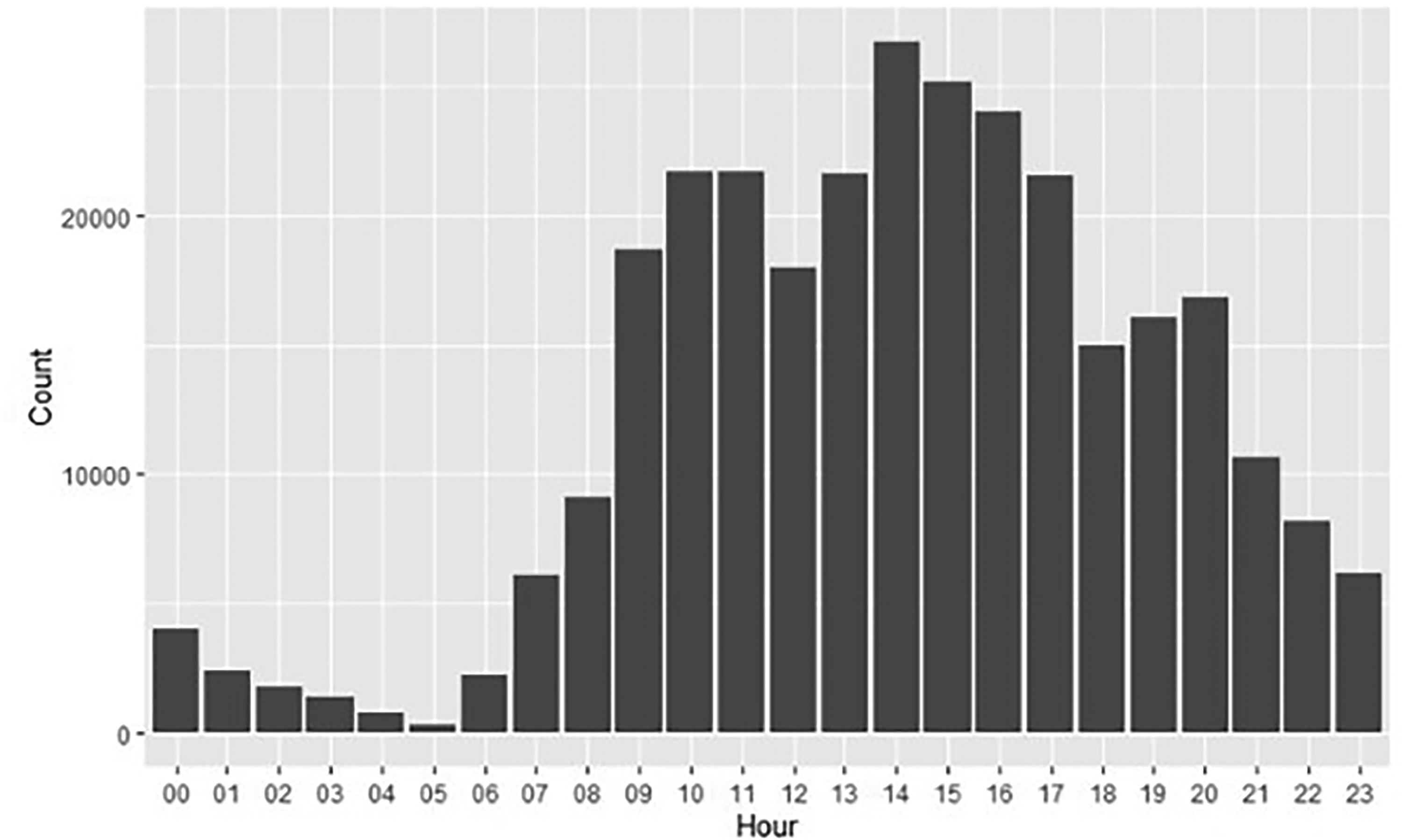
Random breath testing counts by time of day.
Results of negative binomial regression for random breath testing counts by hour of the day.
***p < .01.
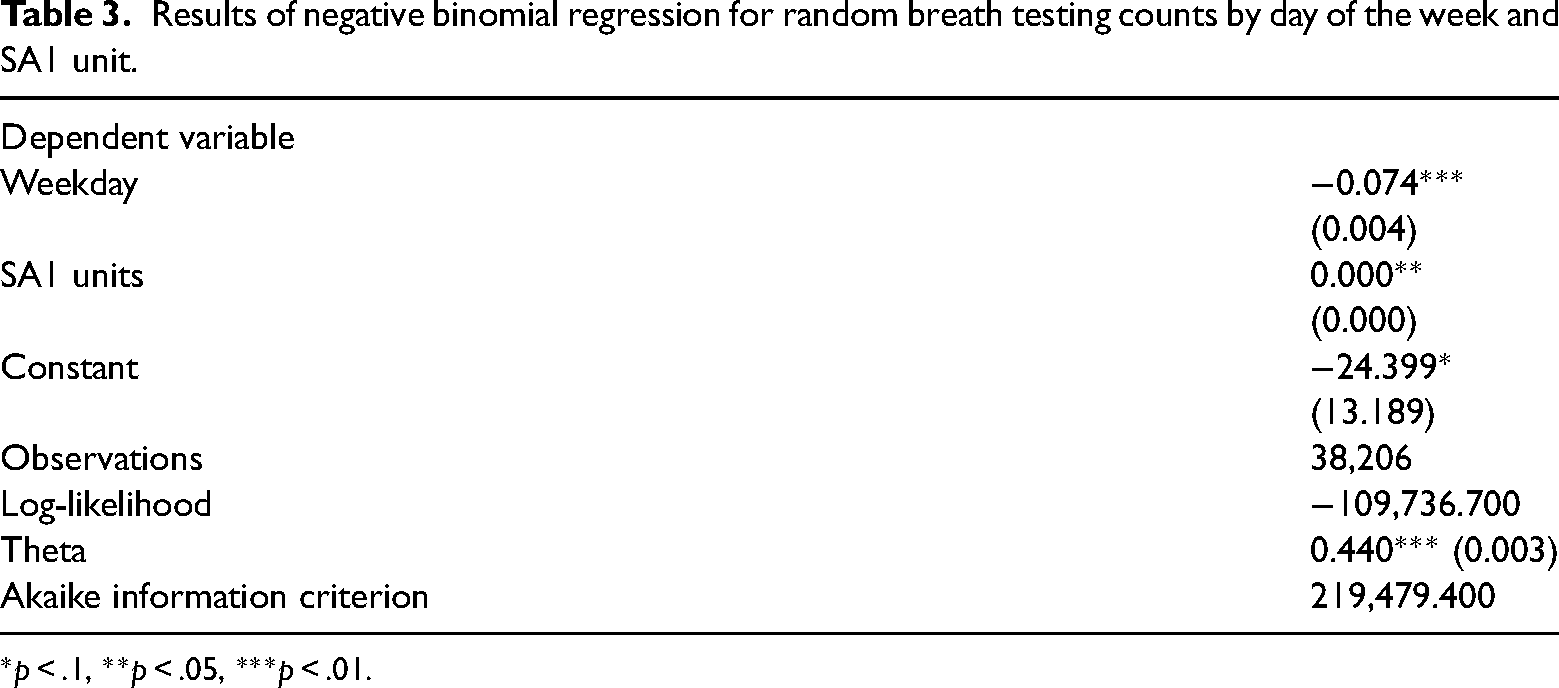
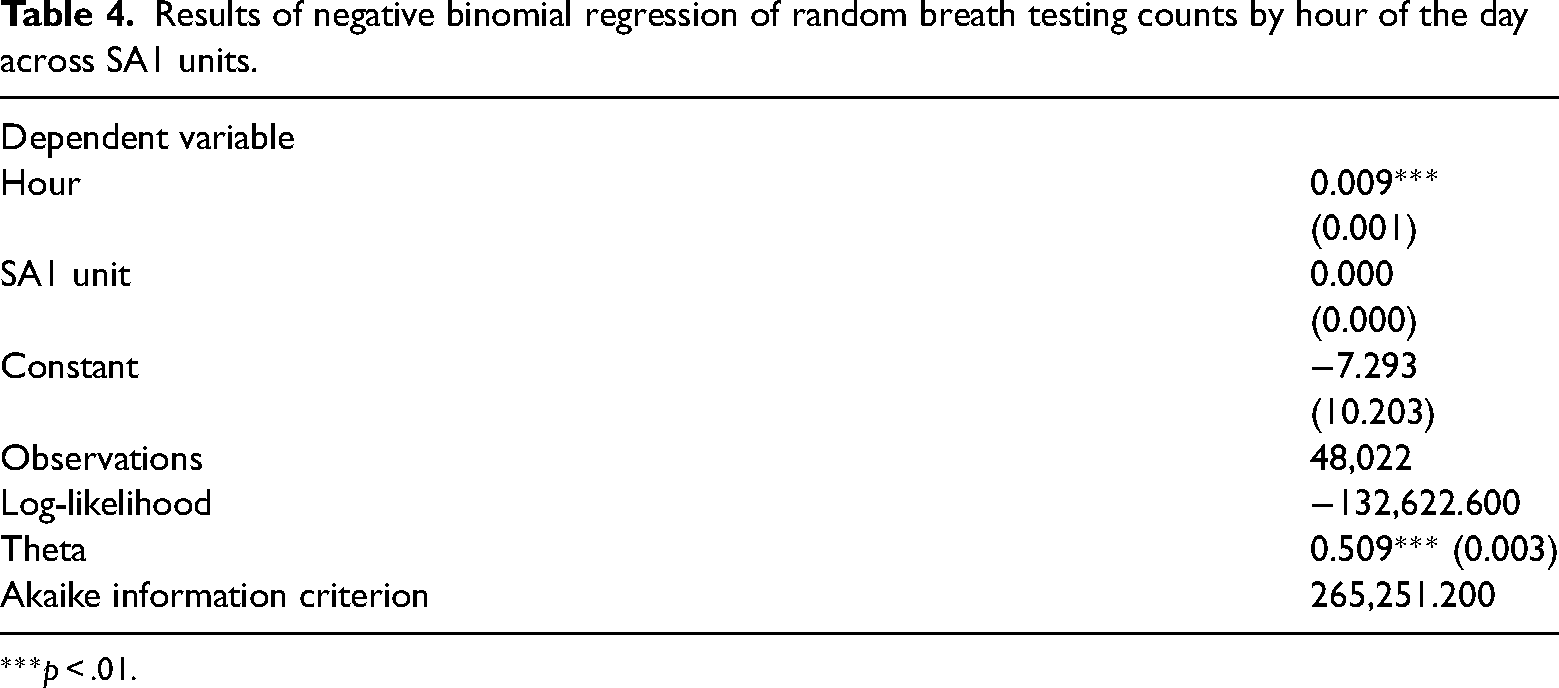
The final analysis sought to identify if temporal differences existed between each SA1 unit within the research site. Essentially, were there differences in the temporal distribution of RBT based on the location in which they were conducted? Negative binomial regression modelling identified significant (p < .05) differences between RBT counts on days of the week whilst controlling for the different locations, demonstrating that location influences not just RBT counts but the days they are conducted on (see Table 3). However, location was not identified to be a significant control variable for RBT times (see Table 4). These results suggest that, irrespective of location, RBT is conducted, primarily, during the same times throughout the research site.
Results of negative binomial regression for random breath testing counts by day of the week and SA1 unit.
*p < .1, **p < .05, ***p < .01.
Results of negative binomial regression of random breath testing counts by hour of the day across SA1 units.
***p < .01.
Discussion
The current paper is the first to characterise the distribution of all RBT within a jurisdiction at a local level. Three research questions were proposed to identify if RBT clustered within certain hours, days and locations in a Queensland Police District. The results identified that 34.8% of RBT is conducted within just 11.1% of the locations in the research site, confirming that spatial clustering occurs. This result is consistent with prior research from Queensland, Australia (Morrison et al., 2021a). These results, combined with previous police interviews (Hart et al., 2003), suggest that spatial clustering of RBT operations may be a common practice in Queensland.
Additionally, a significant association was observed between RBT counts and the time of the day. This result did not significantly differ between each location, suggesting RBT generally occurs at the same time regardless of where they a carried out. There appears to be little prior research exploring the temporal patterns of RBT operations to provide any comparison. The closest comparison lies in a recent drug-driving detection study (Mills et al., 2021). Mills et al. (2021) identified that drug-driving detection in Queensland peaked between 10 a.m. and 6 p.m. The results of the current research identified similar peak times for RBT counts, 10 a.m. to 5 p.m. Whether or not the drug detection peak identified was a function of testing rates during these times is currently unknown.
Similar to the hour of the day, significant differences were identified between RBT counts on the different days of the week. This result was subsequently identified to be influenced by the location. Essentially, whilst the time of RBT did not differ between locations, the days they were conducted did. The current study found that RBT numbers peak Wednesday through Friday, contrasting with recent research from the United States, identifying peak days being Friday through Sunday (Morrison et al., 2019). The operational impact of varying RBT numbers across the days of the week remains unknown. However, by identifying the existing deployment patterns, operational decisions can now be made about increasing the intensity of RBT operations on particular days (e.g., Mondays) in an attempt to increase perceptions of risk.
Given just observing RBT can deter future drink driving, it is highly likely that the clustering observed would positively contribute to road safety within the research site (Freeman et al., 2021). There are also a number of factors likely contributing to the observed temporal clustering. With fewer drivers on the road late at night, RBT is likely to be lower during these times. Conversely, conducting RBT during business hours, more specifically peak travel times, will increase visibility, and research suggests that this would also have a positive impact on driver behaviours (Freeman et al., 2021).
As already suggested, each of the findings offers opportunities for the police district to explore alternate deployment methodologies to improve road safety outcomes but also identify operational patterns that are likely impacting deterrence. Given the falling RBT numbers in Australia (Bureau of Infrastructure and Transport Research Economics, 2022), the remainder of this section will focus on the future research required to identify sustainable and effective operations. The proposed research focuses on identifying optimal RBT operations (i.e., deployment timings or randomised versus repeat exposure) to achieve positive road safety outcomes and identifying additional benefits (i.e., crime reduction) to optimise policing operations without adversely impacting community safety.
Future research
Further research is required to understand the differences observed in RBT counts by day of the week. The data set does not contain sufficient detail to explain why such variation exists. However, the variation observed does present an opportunity for future research. Using the research site for this paper as an example, increasing RBT conducted on Mondays may increase perceptions amongst the general driving population that police are increasing enforcement activities. Understanding the impact of reducing daily variation in RBT counts on roadside detections and traffic crashes would greatly assist operational planning. Strategically, these results suggest that operations should be regularly reviewed to ensure RBT days align with peak traffic crash days and times in an effort to increase perceptions of risk, thus improving compliance amongst the driving community. Similarly, operational considerations for police within the research site include a review of RBT locations against ARTC locations. In doing so, policing leaders can ensure that RBT operations are not just highly visible and predictable but strategic.
To improve operational deployment of limited resources, additional research is required to identify the “optimal” RBT site. Whilst there is now clearer guidance as to what an effective RBT site looks like (see Morrison et al., 2021a), the minimum frequency, size and duration of RBT presence required to achieve ARTC reductions remain unknown. Furthermore, survey data suggest that the repeated RBT times and locations may contribute towards some drivers’ belief that they can avoid detection, minimising the deterrent effect (Szogi et al., 2017; Truelove et al., 2022). Finding the balance between RBT exposure through repeated large-volume highly visible sites and random intercepts, addressing deterrence avoidance, is another area requiring further research. Whilst there are several statistical challenges associated with focusing on traffic crash data within small geographic units, there is a need to better understand the interaction between RBT and drivers at the local level in order to advance what is currently known.
With regard to the spatial and temporal distributions of RBT, there are also avenues for future survey research that have the potential to have meaningful impact on community safety outcomes. For example, future survey research should consider if the most recent RBT, experienced or observed, was a mobile or static intercept, exploring any impacts on drivers’ perception of avoidance. Similarly, questions should be included to identify if the RBT was conducted within an “expected” location and time or was perceived to be random. A greater understanding of how drivers believe they can avoid detection, particularly focusing on offending times and locations, could have considerable operational and community safety implications.
Opportunities for future RBT research are not just limited to road safety outcomes. The similarities between RBT concentration and hot-spot policing activities warrant further investigation. Hot-spot policing involves focusing police presence within high-crime locations (Braga et al., 2014). This research consistently demonstrates that a concentrated police presence reduces crime, often with a diffusion of benefit into neighbouring locations. Whilst this paper did not assess the crime rates of the RBT locations, the geographic concentration of this particular policing activity has a number of similarities with hot-spot policing methodologies. Whilst a number of different policing activities have been explored within the hot-spot literature (i.e., foot patrols, bike patrols and vehicle patrols), RBTs have not been considered. The potential benefit of using RBT as a source of police presence is considerable. RBT is already resourced and conducted in high volumes across Queensland, Australia and a number of countries throughout the world. Understanding if this highly visible policing presence can also have positive impacts on crime would be invaluable to operational commanders, as this would represent a single strategy with multiple beneficial outcomes. However, caution must be taken before wholesale changes are made to existing RBT deployment methodologies. It is possible that there may be unintended consequences to road safety if RBT is refocused to address crime, and any future research should consider this carefully. The spatial clustering highlighted within the current paper suggests that initial research could be conducted using a convenience sample to explore potential diffusion of benefits that are already occurring around RBT locations.
Overall, by identifying that RBT is not in fact random, several additional research questions can be proposed with a view of optimising outcomes and identify unintended benefits. What is the impact of clustered, highly visible, RBT presence on the surrounding crime environment? Does reducing temporal variation of RBT days and time increase the general deterrence effect? Does increasing the spatial and or temporal variation of RBT reduce perceptions of avoidance amongst recidivist drink drivers?
Limitations
Whilst this paper adds to the existing RBT literature, there are limitations that must be acknowledged. First and foremost, the data for this paper come from a single policing district. Anecdotally, it is likely that similar patterns occur elsewhere and there is some supporting evidence that spatial clustering occurs within other locations in Queensland (see Morrison et al., 2021a). To date, such studies have not explored RBT presence in totality. Despite this, it should not be assumed that the spatio-temporal distribution is heterogenous across Queensland or Australia. It is likely that variation will be observed within different locations based on how and when said places are used by drivers. Whilst these limitations exist, the value of this review is to provide greater clarity around how RBT is distributed within a place to guide future operational decision-making and research sought by policing leaders in the research site.
Conclusion
The current paper sought to identify the extent of spatio-temporal clustering within RBT deployments over a 3-year period in a Queensland Police District. The results suggest that RBT operations are predictable. Strategically, there is evidence that this can increase the general deterrence effect, but it does raise questions that can now be explored further by policing leaders within the research site. For example, are RBT deployments occurring in the right locations or conducted on the right days? By characterising the spatio-temporal distribution, multiple research questions have also been proposed, each representing an opportunity to improve deployment methodologies and thus community safety outcomes. Despite over 30 years of RBT research, the current paper highlights much remains unknown about how these programmes are operationalised or could be optimised at a local level. By identifying RBT is in fact predictable, the current paper provides a starting point to address these operational and research gaps.
Footnotes
Acknowledgements
The author would like to thank Sarah Bennett, Jonothan Corcoran and Michelle Sydes for their guidance and feedback. The author would also like to thank the reviewers for their time and feedback. The views expressed within this paper are those of the author and not those of the Queensland Police Service. Responsibility for any errors, omission or commission remains with the author. The Queensland Police Service expressly disclaims any liability for any damage resulting from the use of the material contained in this publication and will not be responsible for any loss, howsoever arising, from use or reliance on this material.
Declaration of conflicting interests
The author declared no potential conflicts of interest with respect to the research, authorship and/or publication of this article.
Funding
The author received no financial support for the research, authorship and/or publication of this article.
