




Abstract
Introduction:
Companionship-based care is essential for enhancing maternal and neonatal health services. Despite its importance, studies have shown inconsistent findings regarding the utilization of companionship during childbirth in developing countries, including Ethiopia.
Objective:
To evaluate the pooled utilization of companionship and identify the factors influencing this practice among women giving birth.
Design:
A systematic review and meta-analysis
Data sources and methods:
We conducted our review by searching common databases, including PubMed, Scopus, Wiley Online Library, ScienceDirect, and Epistemonikos, between February 1, 2025, and April 1, 2025. In addition, Google Scholar and unpublished theses from Ethiopian university research repositories were included. Data extraction was performed using an Excel data extraction form and subsequently imported into STATA version 11 for analysis. We employed forest plots, Cochran’s Q tests, subgroup analyses, sensitivity analyses, and meta-regression models to assess the heterogeneity among the included studies. Publication bias was evaluated through funnel plots and Egger’s regression tests. A random-effects model was used to estimate the pooled utilization of companionship.
Results:
From the 13 studies analyzed, which included a total of 8100 participants, we found that the utilization of companionship during childbirth was 28.86% (95% CI: 22.23, 35.48). Factors associated with higher utilization included the following: higher education level (prevalence and odds ratio (POR): 2.87, 95% CI: 1.81, 4.57), being primiparous (POR: 2.21, 95% CI: 1.82, 2.67), expressing a desire for companionship during delivery (POR: 2.77, 95% CI: 1.79, 4.28), having a history of obstetric complications (POR: 2.77, 95% CI: 1.79, 4.28), access to comfortable healthcare facilities (POR: 2.66, 95% CI: 1.97, 3.59), and possessing good knowledge about companionship care (POR: 2.35, 95% CI: 1.25, 4.41).
Conclusion:
The utilization of companionship during childbirth in Ethiopia remains low. The factors influencing this practice include higher education levels, being primiparous, the desire for a delivery companion, experiences of complications during pregnancy and labor, access to adequate healthcare facilities, and awareness of the benefits of having a birth companion. To improve this situation, healthcare management teams and providers should prioritize educating expectant mothers about the advantages of companionship during antenatal care.
Trial registration:
PROSPERO registration: CRD420251020204.
Plain language summary
Introduction
Labor companionship is the support a woman receives during labor and childbirth, which can come from partners, family members, friends, doulas, or healthcare professionals. 1 Many women prefer having their husbands or partners present, as it fosters family bonding, while others might opt for a female relative or friend for support. 2 Research shows that having someone trustworthy during this process is highly valued and beneficial. 3 Women who have a labor companion often report feeling safer, stronger, more confident, and secure. Evidence suggests that labor companionship can lead to improved maternal and perinatal outcomes, such as positively impacting the physiological processes of labor. 4 Clinically significant benefits linked to this support include shorter labor durations, higher rates of spontaneous vaginal births, fewer cesarean sections, reduced use of intrapartum analgesia, and overall greater satisfaction with the childbirth experience. 5 Women with a companion also report less fear and distress during labor, and their babies are less likely to have low 5-minute Apgar scores.6,7
Consequently, having a companion of choice during labor and childbirth is recommended in several World Health Organization (WHO) guidelines. 8 The WHO Standards for improving the quality of maternal and newborn care also state that every woman should have the option to experience labor and childbirth with a companion of her choice, recognizing it as a crucial intervention for enhancing women’s care experiences. In addition, studies have shown that companionship can lead to a reduction in unnecessary medication use during childbirth. 9
The respectful maternity care charter highlights the critical importance of honoring women’s choices in maternity care, particularly their desires for companionship during the birthing process. 10 This aspect of care is essential for ensuring that women feel supported and respected during a vulnerable time. However, it is important to note that the evidence surrounding the impact of companionship on maternity outcomes still shows inconsistent findings.
The Ethiopian Ministry of Health has focused its maternal health initiatives on tackling elevated rates of mortality and morbidity, particularly by improving access to facility-based maternal and newborn care services. 11 Despite significant advancements in reducing maternal mortality over the past decade, the country still faces ongoing challenges in addressing preventable maternal and newborn deaths. 12 Access barriers continue to be a critical issue in improving care for women.
The maternal mortality rate in Ethiopia has shown some improvement, decreasing from 412 deaths per 100,000 live births to 267 deaths per 100,000 live births. 13 However, this rate remains significantly high, indicating ongoing challenges in maternal healthcare and access to services in the country. To achieve the national target of fewer than 70 maternal deaths per 100,000 live births by 2030, further reductions are essential. 14 Continued efforts are necessary to further reduce this rate and improve the overall health outcomes for mothers and newborns. 15 Research suggests that 77% of maternal mortality could be prevented through comprehensive maternal healthcare services, including quality maternity care with a focus on women-centered healthcare services. 16 To enhance the quality of maternity healthcare services, there is a renewed emphasis on improving women’s and families’ experiences, ensuring equity, respect, and dignity. The study indicates that companionship during childbirth can significantly improve the birthing experience and create an empowering environment for the laboring individual. 17 Despite clear evidence of its benefits and the absence of harm, many national and facility-level policies in Ethiopia do not search comprehensively for labor companionship. 18 The existing studies also show inconsistent findings and varying recommendations regarding this issue. 19
To date, there is no published systematic review and meta-analysis exclusively focused on companionship care and associated factors among childbirth women in Ethiopia. Although several primary studies have examined the utilization of labor companionship in the Ethiopian context,10,20–25 their findings are inconsistent, and their methodological quality varies. These inconsistencies may be attributable to differences in socio-demographic characteristics, cultural norms, health system structures, and individual preferences across study settings.25–27 Furthermore, evidence indicates persistent barriers to the implementation of labor companionship, including poor adherence of healthcare providers to WHO intrapartum care recommendations, concerns regarding privacy and confidentiality within maternity wards, and women’s limited awareness of or desire for labor companionship.28,29
In response to inconsistencies in existing primary studies, this systematic review and meta-analysis were conducted to estimate the pooled utilization of companionship during childbirth and to identify associated factors among women giving birth in Ethiopia. The review addresses the need to strengthen healthcare providers’ understanding of labor companionship and to promote its recognition as a fundamental component of woman-centered maternal healthcare. In addition, it responds to the limited implementation evidence required to develop contextually appropriate labor companionship models that reflect the sociocultural values, preferences, and expectations of women. By synthesizing available evidence on utilization and existing companionship care models in Ethiopian health facilities, this study aims to generate actionable insights to inform policy, clinical practice, and the design of effective labor companionship interventions within the national maternal healthcare system.
Methods and materials
Development of the review method
The methodology of this systematic review was developed based on the Preferred Reporting Items for Systematic Reviews and Meta-Analyses Protocols (PRISMA 2020) Statement guidelines, 30 and the items in the PRISMA checklist were addressed (S1 File). The four phases that were drawn from the PRISMA flow chart were documented in the results to show the study selection process, from the initially identified records to the finally included studies. The protocol for this systematic review and meta-analysis was registered in the International Prospective Register of Systematic Reviews (PROSPERO) under the registration number: CRD420251020204.
Search strategy and review process
The literature search was carried out independently by the primary authors (AMZ, WCT, TMB, and BAM). These studies were conducted in English without a limitation on the study year. Major medical electronic databases such as PubMed, Scopus, Wiley Online Library, ScienceDirect, and Epistemonikos) were used to identify relevant literature for the review from February 1, 2025, to April 1, 2025. To cover gray literature, we hand-searched the literature using the Google Scholar search engine, online libraries of academic institutions, and the digital collections of the Ethiopian University of Science and Technology, electronically identifying articles (S2 File). A confirmatory search was also performed on Google Scholar to ensure that no primary studies were missed. The search terms were stemmed using the Medical Subject Headings (MeSH) Browser tool to retrieve keywords and synonyms. We applied the PubMed database used for searching MeSH. Further information regarding the search strategy of the selected databases is attached (Table 1).
Utilization of companionships in labor and associated factors among childbirth women in Ethiopia (CoCoPop) summary table.
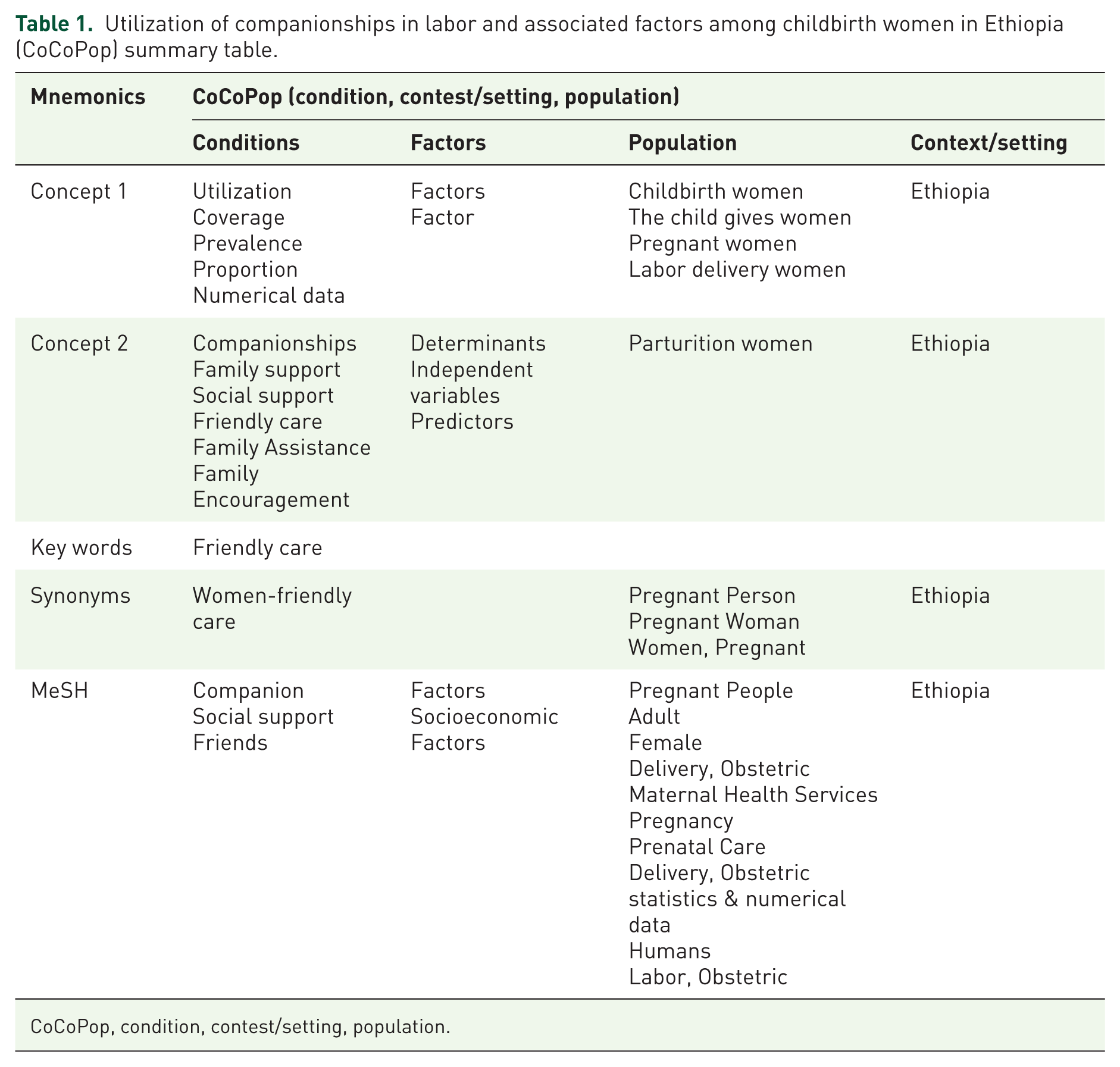
CoCoPop, condition, contest/setting, population.
The following keywords had been utilized during searching by Boolean operators: (utilization) OR (prevalence) OR (coverage) AND (companion) OR (companionship) OR (friends) OR (family support) OR (social support) AND (associated factors) OR (socioeconomic factors) AND (women) OR (child gives women) OR (pregnancy) OR (prenatal care) AND (Ethiopia). The search was specifically targeted at studies that examined the use of companionship and associated factors among women who give childbirth in Ethiopia. Any disagreements were resolved through discussion and consensus based on established criteria, or by involving all investigators when a consensus could not be reached.
Inclusion and exclusion criteria
Primary research studies that reported the utilization of companionship and associated factors among women in Ethiopia were included in this review. Observational studies with no restrictions on publication year were considered. However, the searched articles in studies from 2018 to 2025. Both published and unpublished articles written only in the English language were considered for inclusion. However, studies that did not clearly report the use of companionship and its associated factors among women during childbirth in Ethiopia were excluded. Exclusions were also made for articles that lacked a clear research topic, articles about childbirth at home, articles without full texts, abstracts, editorial reports, letters, reviews, or commentaries.
Study screening and selection
First, three researchers assessed the studies based on specific inclusion and exclusion criteria. They began reviewing the titles and the abstracts of the studies identified in the databases. Subsequently, the selected studies underwent full-text screening. The PRISMA flow diagram was utilized to document the reasons for including or excluding each survey. Finally, a list of studies eligible for the data extraction in the reviews was compiled (Table 2).
Characteristics of the included studies on utilization of labor companionship in Ethiopia.

Operation definition
Birth companionship
It is any person selected by a pregnant woman who provides her with continuous physical, informational, and emotional support throughout labor and birth. 31 In this context, a birth companion provides support to the woman both physically, emotionally, and socially throughout the labor and childbirth processes. The main focus of the review was on the utilization of childbirth companionship. According to primary studies, the utilizations of childbirth companionship was essentially evaluated by having a designated support person present with the laboring women in healthcare facilities during the labor process was different measured by 8–11 items in the companion presence having a 5-point Likert, the sum score ranging from a minimum of 8 to a maximum of 55 the higher the score the higher participants’ perception in the birth companion presence. Finally, the mean score was calculated and categorized into two groups (dichotomized) as the presence or absence of utilization of childbirth companionship. 32
Quality assessment
The authors (YAF and WGD) assessed the quality of searched articles. The Joanna Briggs Institute (JBI) tool was used for assessing the quality of the included primary studies 33 (S3 File). This assessment instrument consists of 10 primary components. These components are study design, sample frame appropriateness, sampling appropriateness, adequate sample sizes, description of subjects, analysis, validity, reliability, statistical test, and good response rate. Based on these quality assessment parameters, we evaluated them as high or low. To minimize potential recall and social desirability bias, the review included studies that used clear data collection methods and standardized instruments, and the quality of each study was assessed using the JBI checklist.
Data extractions
All identified primary studies were imported into EndNote for duplicate removal. Titles and abstracts were screened before full-text review. Data were extracted independently by four authors (AMZ, BAM, TMB, and WCT) using a standardized data extraction tool. Any discrepancies were resolved through discussion and consensus, with senior reviewers verifying the extracted data and engaging in discussions with the data extractors to ensure accuracy and consistency. The following information was extracted from the included studies: authors’ names, publication year, region, study area, sample size, study population, sampling technique, study design, utilization of companionship, and associated factors. The variables in this review were chosen because they were found to be a significant factor in two or more studies. When the investigators could not agree on how to abstract the data, they reached consensus, and the final three investigators (MTA, GAE, and WGD) took over (S4 File).
Statistical analysis
A pooled prevalence and odds ratio (POR) with 95% confidence interval (CI) were calculated using a random-effects framework employing the DerSimonian-Laird random-effects method. 34 Cochran’s Q and I-square statistics were used to assess heterogeneity between studies, with the following interpretations: Cochran’s Q, p < 0.05 and = I 2 = 0%–25% indicates that heterogeneity might not be important, 25%–50% suggests moderate heterogeneity, 50%–75% indicates substantial heterogeneity, and 75%–100% reflects considerable heterogeneity. 35 The sources of heterogeneity were explored through subgroup analysis based on sampling technique, which identified heterogeneity related to the sampling method. Subgroup analysis was conducted to evaluate the effect of each study on the overall estimate. Moreover, sensitivity analysis was performed to evaluate the effect of each study on the overall prevalence.
Publication bias
Publication bias was detected by visual inspection of the funnel plot and/or Egger’s test.36,37 Funnel plots are used to visually check for asymmetry in the studies. A p-value less than 0.05 from Egger’s test indicated notable publication bias, implying that studies with larger effects (either positive or negative) are more likely to be published. 38 A trim and fill analysis was performed to address this publication bias. 39
Result
Description of the studies
We retrieved 4855 studies through searching the medical electronic databases using electronic search (PubMed (3667), Scopus (35), Wiley Online Library (15), African Journal Online (231), Science Direct (7), Epistemonikos (104), Web of Science (323) and other relevant sources (Google scholar (41), and National digital library (232). From all the identified studies, 2073 articles were removed due to duplication, while 2403 studies were retained for further screening. Accordingly, the remaining 2403 studies were then screened for their eligibility based on titles and abstracts, the full texts, different study subjects, inconsistent study outcomes, or irrelevant to the target participants. Finally, 13 studies were included for the pooled utilization companionship during childbirth and associated factors among women giving birth in the analysis (Figure 1). Among the included studies, there were ten published articles, and three preprint gray master theses.
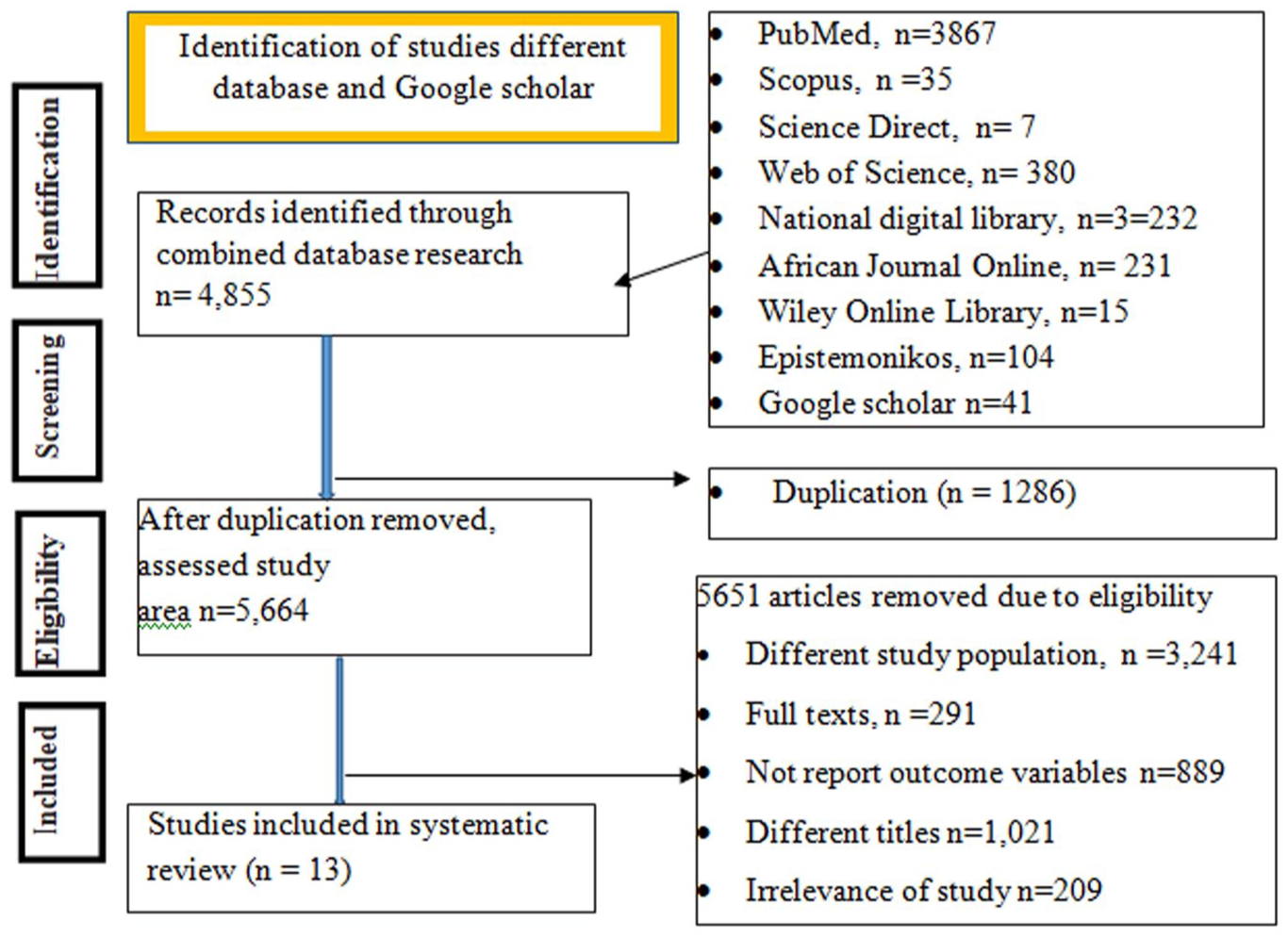
PRISMA flow chart for the systematic review and meta-analysis.
All of the included studies were health facility cross-sectional study designs conducted in a facility setting. Regarding the study regions, six studies (54.5%) were conducted in the Amhara region, while three studies (27.25%) were conducted in Addis Ababa. Of an estimated 8740 women, 8100 participated, resulting in a response rate of 92.7%. The studies reported that the utilization of companionship during childbirth varied from 13.8% to 45.8% (Table 2).
Pooled utilization of companionship during childbirth
The pooled utilization of companionship during childbirth in Ethiopia was reported at 28.86% (95% CI: 22.23, 35.48). There was a significant level of heterogeneity across the included studies, indicated by an I² = 93.1% and a p-value of 0.000. In addition, a visual representation using a forest plot showed that the confidence intervals of the studies did not overlap with one another, as illustrated in Figure 2.

Forest plot of the pooled utilization of labor companionship among childbearing women.
Publication bias: The publication biases of pooled utilization of companionship among childbirth women were assessed using Egger’s regression test and funnel plots. Egger’s regression test revealed that there was publication bias across studies (p > 0.000) (Table 3).
Assessment of publication bias using Egger’s test.

The funnel plot results also revealed an asymmetric shape, indicating the presence of publishing bias (Figure 3). Nonparametric trim and fill analyses were done utilizing companionship among the childbirth studies. Publication bias was corrected when four missing studies were imputed to the lower side by the trimming and filling analysis. After excluding four studies, 13 studies were included, resulting in a pooled utilization of companionship among childbirth women of 21.7% (95% CI: 14.27%, 29.14%) (Figure 4).

Funnel plot representation showing the presence of publication bias.

Trim and fill analysis.
Subgroup analysis
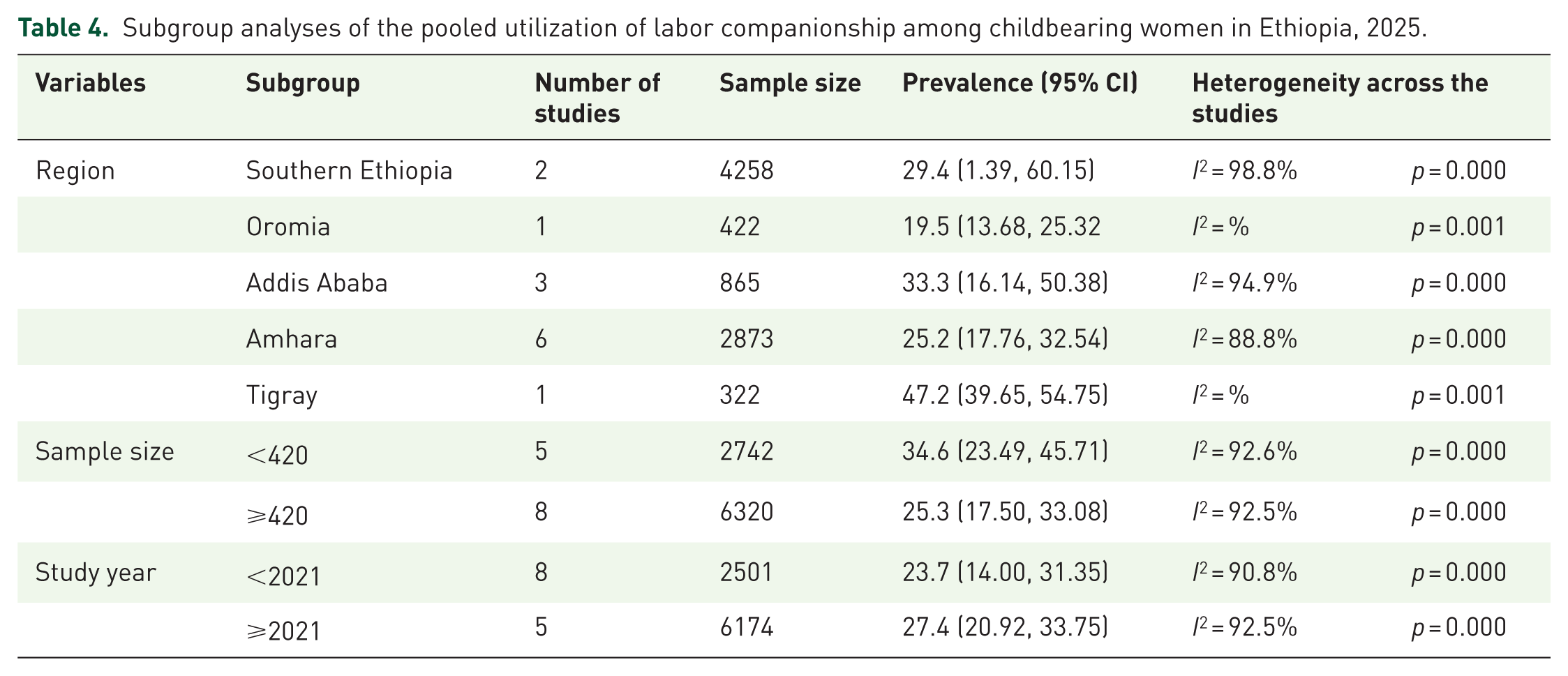
Subgroup analysis was conducted by considering possible sources of variation in the included studies and sources of variation. The subgroup analysis was conducted on three characteristics of the studies, considering study year, conducted region, and sample size. Regarding these subgroup analyses, the results showed a slight variation in the pooled utilization of labor companionship in the groups. However, no significant heterogeneity was detected across the studies (Table 4). Furthermore, meta-regression was carried out to detect the sources of heterogeneity across the studies among study years, study participants, and sample sizes.
Subgroup analyses of the pooled utilization of labor companionship among childbearing women in Ethiopia, 2025.
Sensitivity analysis
The authors conducted a sensitivity analysis to identify the potential source of heterogeneity. On the basis of the results of a random-effects model, no single study affected the overall pooled utilization of labor companionship among childbearing women in Ethiopia (Figure 5).

Sensitivity of the proportion and 95% CIs of pooled utilization of labor companionship among childbearing women in Ethiopia.
Meta-regression
Also, to handle heterogeneity, the effects of study participants, sample size, and year of the study on heterogeneity among the studies via a meta-regression model were assessed. However, there was no significant prediction of heterogeneity between the effect size and the assessed variables (sample sizes, study participants, and years of the study) (Table 5). In the adjusted model, the sample sizes, study participants, and years of the study did not indicate heterogeneity (p < 0.05) in the effect size, which was equivalent to the pooled proportion.
Univariable meta-regression analysis results for pooled utilization of labor companionship among childbearing women in Ethiopia, 2025.

Factors associated with the pooled utilization of companionships
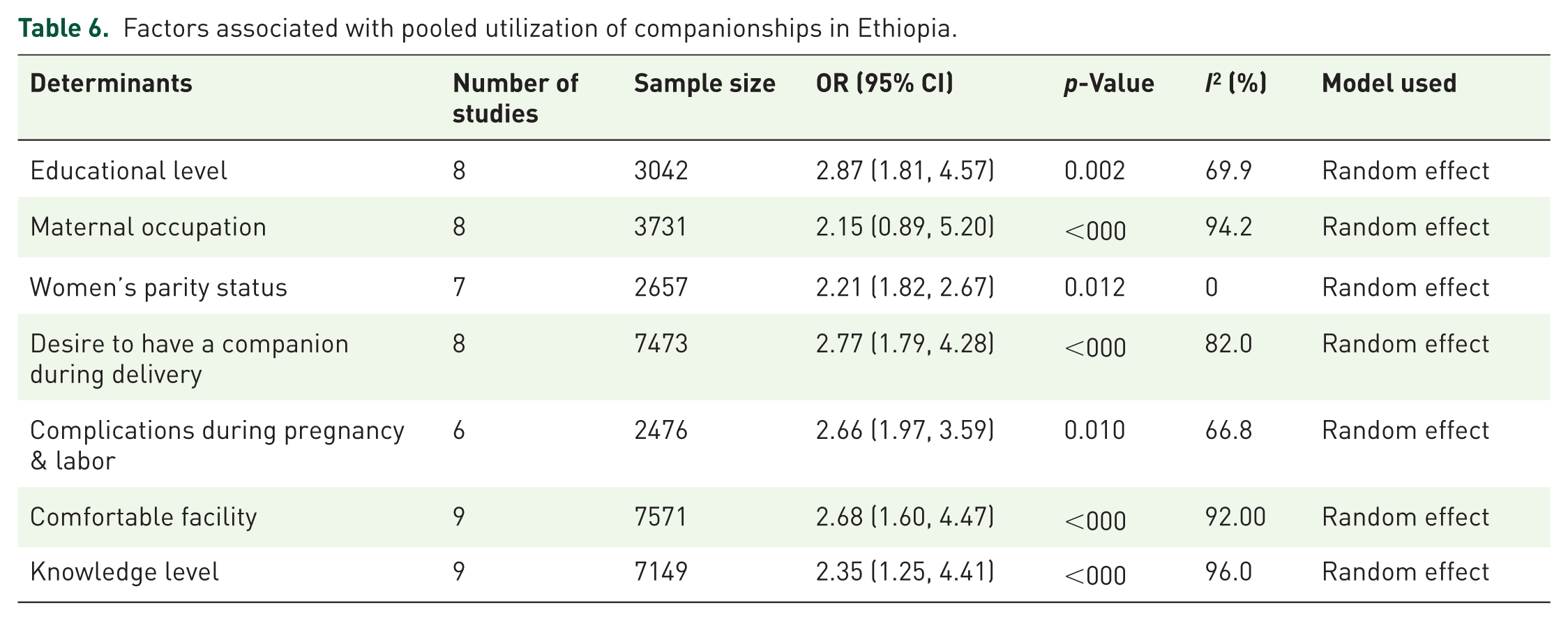
The current review highlighted several factors related to the pooled utilization of companionship during childbirth in Ethiopia. Out of the seven variables identified, six were significantly associated with this utilization. Key factors included the level of education, parity, and desire to have a companion during delivery, experienced complications during pregnancy and labor, the comfort of the facility for companions, and knowledge about the benefits of companionship during childbirth (Table 6).
Factors associated with pooled utilization of companionships in Ethiopia.
Educational level
Eight studies21–23,41–43 revealed that women’s education level was significantly associated with the pooled utilization of companionship during childbirth. It highlights that women who have completed a college education are more likely to utilize companionship than those with less educational attainment, with a specific statistic indicating a higher likelihood (POR: 2.87; 95% CI: 1. 81, 4.57).
Maternal occupation
Our systematic review demonstrated that there was no significant association between maternal occupation and pooled utilization of companionship (POR: 2.15; 95% CI: 0.89, 5.20). We assumed a random-effect model for the analysis since the I 2 statistics showed the presence of heterogeneity (94.2%).
Women’s parity status
The meta-analysis showed that the parity statu
Desire to have a companion during delivery
According to the factor analysis of the included studies, women who had a desire to have a companion during delivery were significantly associated with the pooled utilization of companionship.10,20–22,24,32,40,42 Women who gave birth were more likely to have pooled utilization of companionship (POR: 2.77, 95% CI: 1.79, 4.28). A random-effect model was used for the analysis, as the heterogeneity test showed an overall I 2 value of 65.8%.
Complications during pregnancy and labor
Childbirth women who experienced complications during pregnancy and labor showed a significant association with the pooled utilization of companionship.20,21,24,32,40,42 It was found that these women had increased odds of utilizing companionship compared to those without complications during pregnancy and labor (POR: 2.66; 95% CI: 1.97, 3.59). Due to the heterogeneity of the studies (I 2 = 66.8%), we used a random-effect model for the analysis.
Comfortable facility to be accompanied during childbirth
Our systematic review demonstrated a significant association between having a comfortable facility to be accompanied during childbirth and the pooled utilization of companionship (POR: 2.68; 95% CI: 1.60, 4.47) during childbirth.10,20,22,24,32 We assumed a random-effects model for the analysis, as the I² statistics showed the presence of heterogeneity (92.0%).
Knowledge
The overall odds ratio indicated a significant association between maternal knowledge and pooled utilization of companionship (POR: 2.35; 95% CI: 1.25, 4.41).10,20–22,24,32,40,42,43 Given the high heterogeneity, as reflected by an I² value of 96.0%, a random-effects model was also applied in the analysis (Table 6).
Discussion
Maternal education level, being primiparous, the desire to have a companion during delivery, complications during pregnancy and labor, access to comfortable facilities for companionship, and good knowledge about companionship were identified as significantly associated factors with the utilization of companionship during childbirth. In Ethiopia, it was found that 28.86% (95% CI: 22.23, 35.48) of women giving childbirth utilized companionship during childbirth. This systematic review and meta-analysis indicate that this figure is lower compared to other studies at the global level (40%), 29 and sub-Saharan Africa, 36%, 25 Hong Kong Chinese, 59.8%, 46 in Rural Bangladesh, 68%, 47 Brazil, 93.9%, 48 and in Saudi Arabia, 43.2%. 26 The discrepancy may stem from a lack of awareness among mothers and healthcare professionals regarding the benefits of childbirth companions, as well as existing negative attitudes toward birth attendants. In addition, the high heterogeneity observed in research (I² = 93.1%) suggests variances in findings. Cultural differences and the absence of regulations governing the choice of birth companions could also play a role. This aligns with a Cochrane review that highlighted how the lack of guidelines and cultural preferences can hinder the adoption of childbirth companions.
Efforts are therefore urgently needed to discuss at the national level how to ensure policies are available on labor companionship and ensure discussions with women, communities, health workers, and health program managers to address the implementation of barriers. The WHO recommends that women be offered a “companion of choice,”9,49 grounding this recommendation within human rights principles to ensure women’s autonomy, agency, and choice of their companions.
More effort is needed to create enabling environments within health facilities to support women in making informed choices about companionship. It is crucial to educate families and community members about the importance of labor companionship, as well as to orient health workers on the benefits of having companions during delivery. In addition to fostering these supportive environments, women should be provided with information, education, and the means to make and implement these choices effectively, 50 ensuring that there is no undue influence from partners, family members, or others. Allowing women to choose a companion during delivery can serve as a low-cost and effective intervention to enhance the quality of maternity care. 51
According to this review, factors associated with the utilization of birth companionship across studies were identified. These women who attended college and above an education level were 2.87 times more likely to utilize a birth companion during childbirth at a facility than those women who attended below a college education level. It is in line with studies conducted in India and Hong Kong Chinese, with higher educational levels more likely to use birth companionship27,52 than lower educational levels. This could be because higher education may enhance awareness and understanding of the role and importance of labor companionship, leading to increased preferences among educated women.
Primiparous women were another factor linked to childbirth companionship. These findings suggest that primiparous women were 2.21 times more likely to utilize a birth companion during childbirth at the facility than multiparous women. It is consistent with studies conducted in India and Iran, with lower parity more likely to use childbirth companionship31,53 than multiparous women. This might be due to the fear of childbirth because most of the time, primiparous women may face the fear of childbirth, and they will be more likely to be accompanied by their companions. This fear of childbirth can harm a woman’s psychological well-being and is associated with adverse obstetric outcomes and postpartum mental health difficulties. Another potential reason is that women with no experience of the childbirth process might need more social support than women who have had a history of childbirth. These associations are supported by a study conducted in Spain. 54 These associations are also supported by the WHO’s statistics, which indicate that prenatal care provides opportunities to give pregnant women interventions that might be crucial to both their maternal and their unborn child’s health. 29
Another important associated factor with birth companionship was the desire for companionship. In this review, those who desired to have childbirth companions were 2.77 times more likely to use birth companionship than their counterparts. It agrees with the mixed systematic review on the mistreatment of women during childbirth in healthcare facilities. 9 The possible explanation might be that the desire for the service has a strong correlation with culture, education, and knowledge. In fact, most Ethiopian women were delivered at home in the presence of traditional birth attendants and families. From the definition, to say utilize women should be accompanied by their companion of choice. Before deciding, desire should be considered. This could be related to labor; if a woman wants a birth companion, she should explain her desires to her closest friend or a healthcare provider. In addition, women who can make their own decisions have comprehensive access to maternity healthcare and are routinely informed about the benefits of labor companionship. 55
Our study concludes that complications during pregnancy and labor were significantly associated with the utilization of companionship services during childbirth. Women with a history of obstetric complications utilized labor companions 2.66 times more than those who had not experienced a complicated pregnancy. This result is consistent with research conducted in Thailand. 56 In fact, childbirth companions can observe the best practices employed by healthcare providers to reduce the likelihood of litigation in the event of any issues during labor and delivery, and they can even participate in the care.
Across the studies included in the review, there was a significant association between the availability of a comfortable facility for companionship during childbirth and the pooled utilization of companionship. Women who felt comfortable in the facility were 2.68 times more likely to utilize companionship during childbirth than those who did not feel comfortable. Possible explanations for this finding include that a comfortable facility may encourage companionship during childbirth. In addition, healthcare providers working in well-spaced health facilities may allow women to receive continuous support from another person throughout the labor process. This positive association aligns with findings from global reviews. 57
Finally, mothers who had a good understanding of labor companionship were 2.35 times more likely to want labor companions compared to those who did not. This can be attributed to the fact that women who are well-informed about labor companionship are more likely to recognize its potential benefits during labor and delivery, which can positively influence their attitudes. 58 In addition, knowledgeable women are better equipped to retain information about the importance of having companions during labor and various aspects of this knowledge. This understanding may help them navigate the modern healthcare system more effectively. As a result, their knowledge likely plays a significant role in fostering their desire for labor companionship.
Limitations of the review
Due to inconsistencies in variable reporting, the inclusion of some factors related to companionship during childbirth was not possible. Insufficient studies from all regions of Ethiopia may limit the national representativeness of the findings. A comprehensive search strategy and independent screening were applied to minimize publication bias, and the review adhered to the PRISMA 2020 checklist, with study quality assessed using the JBI criteria. Despite evaluating heterogeneity using random-effects models, subgroup analyses, sensitivity analyses, and meta-regression, substantial heterogeneity persisted, and its sources could not be identified. As all included studies employed cross-sectional designs, causal relationships between associated factors and companionship utilization could not be established. Although multiple steps were taken to reduce bias, the possibility of publication bias remains a limitation.
Conclusions and recommendations
Most women who present at health facilities for labor and delivery do not continue to receive continuous support and care during this time, despite having utilized companions. This finding may suggest that the WHO’s recommendation, which states that all women should have access to a companion during labor, is not yet widely implemented. According to this guideline, every woman giving birth should be accompanied by a childbirth companion of her choice. Factors associated with the desire for a companion during delivery include having a college education, being primiparous, experiencing complications during pregnancy and labor, feeling comfortable in the facility, and having prior knowledge about the process. Management teams and healthcare personnel must take the initiative to educate mothers during antenatal care about the benefits of having a birth companion.
Supplemental Material
sj-docx-1-reh-10.1177_26334941261434846 – Supplemental material for Companionship care and associated factors among childbirth women in Ethiopia: a systematic review and meta-analysis
Supplemental material, sj-docx-1-reh-10.1177_26334941261434846 for Companionship care and associated factors among childbirth women in Ethiopia: a systematic review and meta-analysis by Agerie Mengistie Zeleke, Worku Chekol Tassew, Banchgizie Adane Mengistu, Moges Tadesse Abebe, Worku Getachew Dessie, Getu Amsalu Erqu, Tirukelem Muhabaw Bizuayehu and Yeshiwas Ayale Ferede in Therapeutic Advances in Reproductive Health
Supplemental Material
sj-docx-2-reh-10.1177_26334941261434846 – Supplemental material for Companionship care and associated factors among childbirth women in Ethiopia: a systematic review and meta-analysis
Supplemental material, sj-docx-2-reh-10.1177_26334941261434846 for Companionship care and associated factors among childbirth women in Ethiopia: a systematic review and meta-analysis by Agerie Mengistie Zeleke, Worku Chekol Tassew, Banchgizie Adane Mengistu, Moges Tadesse Abebe, Worku Getachew Dessie, Getu Amsalu Erqu, Tirukelem Muhabaw Bizuayehu and Yeshiwas Ayale Ferede in Therapeutic Advances in Reproductive Health
Supplemental Material
sj-docx-3-reh-10.1177_26334941261434846 – Supplemental material for Companionship care and associated factors among childbirth women in Ethiopia: a systematic review and meta-analysis
Supplemental material, sj-docx-3-reh-10.1177_26334941261434846 for Companionship care and associated factors among childbirth women in Ethiopia: a systematic review and meta-analysis by Agerie Mengistie Zeleke, Worku Chekol Tassew, Banchgizie Adane Mengistu, Moges Tadesse Abebe, Worku Getachew Dessie, Getu Amsalu Erqu, Tirukelem Muhabaw Bizuayehu and Yeshiwas Ayale Ferede in Therapeutic Advances in Reproductive Health
Supplemental Material
sj-pdf-4-reh-10.1177_26334941261434846 – Supplemental material for Companionship care and associated factors among childbirth women in Ethiopia: a systematic review and meta-analysis
Supplemental material, sj-pdf-4-reh-10.1177_26334941261434846 for Companionship care and associated factors among childbirth women in Ethiopia: a systematic review and meta-analysis by Agerie Mengistie Zeleke, Worku Chekol Tassew, Banchgizie Adane Mengistu, Moges Tadesse Abebe, Worku Getachew Dessie, Getu Amsalu Erqu, Tirukelem Muhabaw Bizuayehu and Yeshiwas Ayale Ferede in Therapeutic Advances in Reproductive Health
Footnotes
Acknowledgements
The authors would like to thank the authors of the included primary studies, whose work served as the source of information for this systematic review and meta-analysis.
Declarations

Supplemental material
Supplemental material for this article is available online.
Artificial intelligence policy
We have used ChatGPT for grammar correction issues.
References
Supplementary Material
Please find the following supplemental material available below.
For Open Access articles published under a Creative Commons License, all supplemental material carries the same license as the article it is associated with.
For non-Open Access articles published, all supplemental material carries a non-exclusive license, and permission requests for re-use of supplemental material or any part of supplemental material shall be sent directly to the copyright owner as specified in the copyright notice associated with the article.
