




Abstract
Glulam bamboo has been preliminarily explored for use as a structural building material, and its stress–strain model under axial loading has a fundamental role in the analysis of bamboo components. To study the tension and compression behaviour of glulam bamboo, the bamboo scrimber and laminated bamboo as two kinds of typical glulam bamboo materials were tested under axial loading. Their mechanical behaviour and failure modes were investigated. The results showed that the bamboo scrimber and laminated bamboo have similar failure modes. For tensile failure, bamboo fibres were ruptured with sawtooth failure surfaces shown as brittle failure; for compression failure, the two modes of compression are buckling and compression shear failure. The stress–strain relationship curves of the bamboo scrimber and laminated bamboo are also similar. The tensile stress–strain curves showed a linear relationship, and the compressive stress–strain curves can be divided into three stages: elastic, elastoplastic and post-yield. Based on the test results, the stress–strain model was proposed for glulam bamboo, in which a linear equation was used to describe the tensile stress–strain relationship and the Richard–Abbott model was employed to model the compressive stress–strain relationship. A comparison with the experimental results shows that the predicted results are in good agreement with the experimental curves.
Keywords
Introduction
Fibre-reinforced polymers such as aramid, glass, carbon and graphite have been widely used in engineering field due to their excellent performance. 1 –8 The mechanical behaviour of these polymer matrix composites has been deeply investigated for various applications. However, most of the fibres consume high amounts of energy for their production. Natural fibres from plants including jute, sisal, kenaf, ramie, flax and bamboo have already been developed as load-carrying composite materials. 9 – 12 Bamboo fibre materials have received increasing attention for their high strength, biodegradation and carbon sequestration from the atmosphere. 15,13 –23 Moreover, bamboo is highly renewable with perfect environmental sustainability – it is a type of grass that is the fastest growing plant currently known – and bamboo stalks reach maturity in 8 years. 24,25 Raw bamboo can be processed into different types of bamboo products according to different processing technologies. 26,27 In the past, bamboo products were mainly utilized for nonstructural applications such as scaffolding, furniture, flooring, fencing, matting and crafts.
In fact, bamboo scrimber and laminated bamboo are very suitable for use as structural components in civil engineering owing to their outstanding overall performance. Bamboo has been explored to build different structural projects. 28 –32 Xiao et al. 28 designed and constructed a 10-m-long single lane roadway bridge, which performed satisfactorily; its mid-span deflection corresponding to its critical service loading condition was much smaller than the code-required limit. Wei et al. 29 proposed the design and construction method of a modern bamboo living room, in which a building constructed with bamboo beams, bamboo columns and metal nodes was employed. Terai and Minami 30 and Agarwal et al. 31 investigated the feasibility of using bamboo and non-steel as the reinforcing material in concrete members. Villegas et al. 32 designed and tested bamboo trusses assembled with culms and slats; the results illustrated that the bamboo trusses can work well as the floors and roofs for prefabricated housing projects.
Although the mechanical properties of various bamboo components including beams and columns have been investigated, 33 –42 studies on the stress–strain model of bamboo materials have rarely been carried out. For columns, Li et al. 39 –42 and Chen et al. 37 investigated the mechanical properties of bamboo scrimber columns under axial compression with different cross-section shapes and slenderness ratios, and the prediction model for the stability coefficient was proposed based on test results. However, these studies pay more attention to the calculation of carrying capacity. No doubt, the stress–strain model has a fundamental role in the analysis of bamboo components. For example, to carry out the calculation of bearing capacity and the whole process analysis of load-deformation of beams and columns, the stress–strain relationship model of materials must be determined first. The main purposes of this study are to obtain a deep understanding of the mechanical behaviour of bamboo scrimber and laminated bamboo and to establish the general stress–strain model for predicting the entire stress–strain response of glulam bamboo under tension and compression loading; moreover, the proposed model describing the main features can also be applied to other bamboo products.
Manufacturing techniques
Bamboo scrimber is a new engineering material made of bamboo via defibring and compositing technology that utilizes up to 90% raw bamboo materials. Bamboo scrimber has been widely used in flooring, furniture, building and so on. Bamboo scrimber has many advantages such as high strength, high density, good uniformity and natural texture, and it is suitable for use in structural members owing to its stable mechanical properties. In modern bamboo structures, bamboo scrimber has been selected for the manufacture of columns, which are the most important load-carrying components. 29 The key manufacturing process of bamboo scrimber is shown in Figure 1. First, Moso bamboo culms are cut into rectangular strips of the desired length, which are processed into interconnected and longitudinally continuous bamboo fibres by flattening, defibring and caramelizing. After caramelizing, the bamboo fibres are placed in a tunnel chamber to dry until reaching a moisture content below 7%. Subsequently, the bamboo fibres are dipped into phenolic resin adhesive. The amount of impregnated adhesive is approximately 5–10% of the dry mass of the bamboo fibres. A second drying cycle is undertaken for these bamboo fibres to ensure that the moisture content is between 6% and 8%. The impregnated bamboo fibres are placed in a prefabricated steel mould and subjected to pressure of approximately 70 MPa to achieve a desired size (such as 105 mm × 105 mm × 1860 mm) at room temperature. Finally, the compressed bamboo fibres are fixed in the mould and cured in a drying room with a temperature of approximately 140°C. The average density of the bamboo scrimber is often greater than 1000 kg/m3.

Production of bamboo scrimber. (a) Defibring, (b) caramelizing, (c) drying, (d) dipping, (e) bamboo fibres, (f) cold-pressing, (g) hot-curing and (h) finished products.
Laminated bamboo is another engineering material made by gluing technology, which is manufactured from Moso bamboo strips as shown in Figure 2. The bamboo culms are cut, split and planed into thin and rectangular bamboo strips with the desired dimensions. The inner and outer layers of bamboo culm wall are removed by planning to increase the performance of the adhesive bonding. Strips are also placed in a tunnel chamber for drying to reduce their moisture content after planning. The appropriate moisture content is approximately 7–9%. The urea-formaldehyde resin adhesive is applied to the surfaces of the planed strips by a coating machine with a glue-spread rate of approximately 200 g/m2. The edge-glued bamboo strips are assembled and clamped manually in the directions of the width and the thickness to form the required dimensions. The clamped blanks are then stacked atop one another, and the stack is hot-pressed under the conditions of 140°C and 2.5–3.0 MPa. The hot-pressing time can be evaluated as approximately 1.1 min/mm of thickness. The final product is displayed in Figure 2.

Production of laminated bamboo. (a) Culms, (b) split, (c) strips, (d) drying, (e) gluing, (f) assembly, (g) hot-pressing and (h) finished products.
Tensile behaviour
Materials and testing method
By referring to the relevant specification 43 and considering the different structural characteristics, specimens with dimensions of 15 mm × 4 mm × 300 mm and 15 mm × 15 mm × 300 mm were manufactured for the tension tests of bamboo scrimber and laminated bamboo, respectively. The length of 300 mm is parallel to the bamboo fibre direction. Five specimens were prepared for each type of glued bamboo; the bamboo scrimber specimens were named CL1–CL5, and the laminated bamboo specimens were designated as JL1–JL5. To avoid premature fracture due to the clamping stress concentration at the ends of the specimen, two pairs of 80-mm-long Carbon Fiber Reinforced Plastic (CFRP) strips and 50-mm-long aluminium flakes were pasted on both ends of each specimen to form a transition the region, and the details of glulam bamboo tensile specimens are shown in Figure 3. A 300-kN universal testing machine was used to test the tensile behaviour of the specimens. An extensometer with a gauge length of 50 mm and four strain gauges was placed along the longitudinal direction of the specimen to monitor the axial strains. The loading was applied with a displacement control of 1 mm/min, which was changed to 0.5 mm/min approaching the peak load.

Details of glulam bamboo tensile specimens.
Failure modes of tensile specimens
Figure 4 depicts the tensile failure modes of glulam bamboo specimens including both bamboo scrimber and laminated bamboo. Both types of specimens have a similar failure mode. During the loading process, no significant changes in appearance or abnormal noise can be observed for the tensile specimens. Finally, the specimen failure was accompanied by a sharp cracking sound owing to the fibre rupture of the bamboo, and two sawtooth failure surfaces appeared in the gaps. The tensile rupture occurred in the middle of the specimens, and no obvious signs can be found. The tensile failure may be defined as a brittle failure.
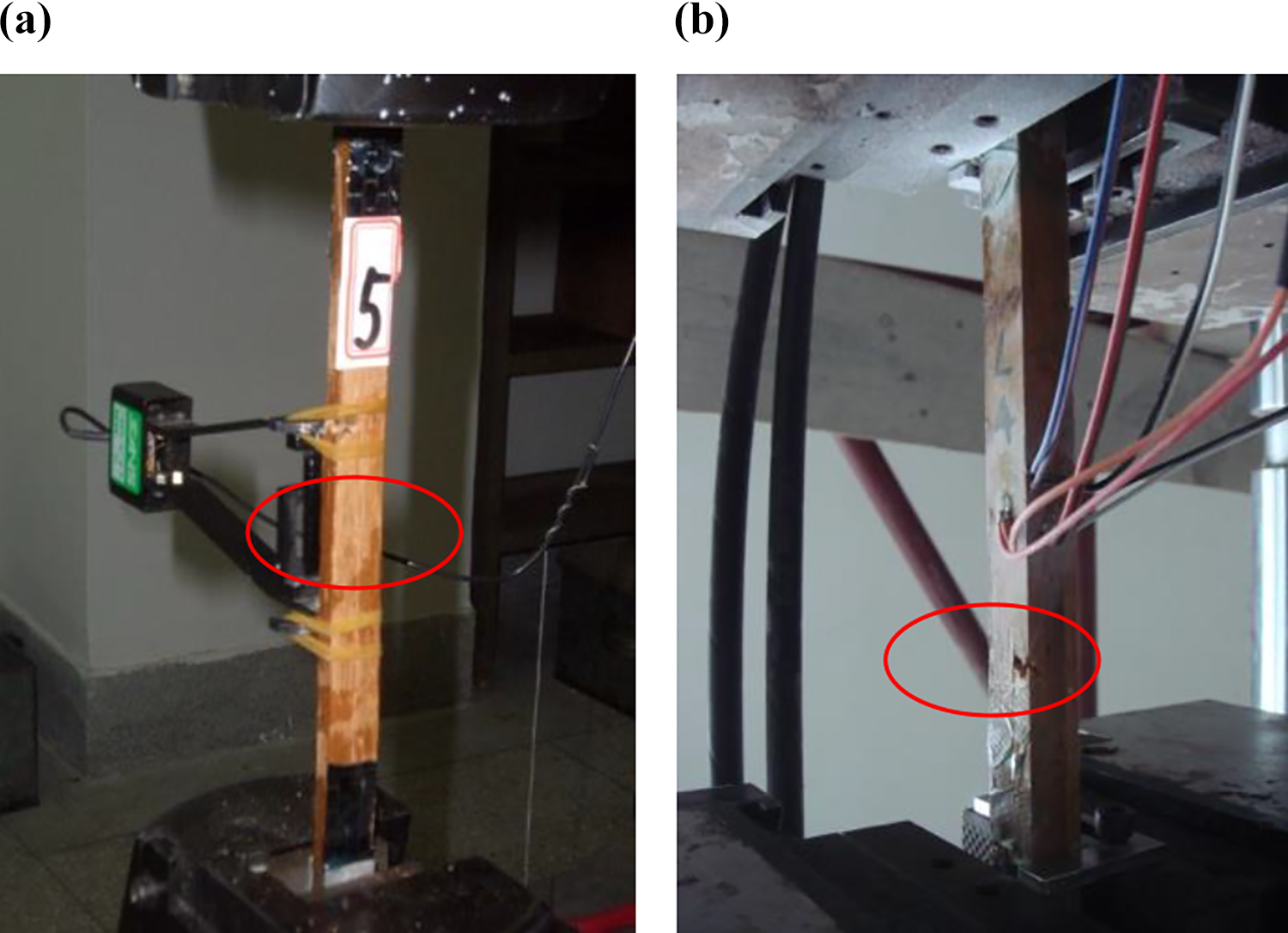
Tensile failure modes of glulam bamboo specimens. (a) Bamboo scrimber and (b) laminated bamboo.
Analysis of the tension test results
Figure 5 depicts the measured stress–strain curves of the bamboo scrimber and the laminated bamboo tension specimens. The axial stress is plotted against the axial strain. It can be clearly observed that the tensile stress–strain curves of glulam bamboo exhibit brittle failure characteristics; during the tensile loading process, the stress–strain curves showed linear behaviour until specimen rupture failure. The average curve of each group of specimens regressed by the least square method is also shown in the figure. It can be observed that the scatter of these curves was small. The tensile test results of glulam bamboo specimens are presented in Table 1. For the bamboo scrimber, the elastic modulus, tensile strength and ultimate strain were 9.8 GPa, 75.1 MPa and 0.008, respectively; for the laminated bamboo, they were 9.8 GPa, 69.3 MPa and 0.007, respectively. The coefficients of variation of the elastic modulus, tensile strength and ultimate strain of both bamboo scrimber and laminated bamboo are small – less than 20% of the required physical and mechanical properties according to the test method of wood. 44 Bamboo scrimber and laminated bamboo have similar elastic moduli, and the former has a slightly higher tensile strength and ultimate strain.

Tensile stress–strain curves of glulam bamboo specimens. (a) Bamboo scrimber and (b) laminated bamboo.
Tensile test results of glulam bamboo specimens.

Ptu : tensile ultimate load; ftu : tensile strength; ε tu : tensile ultimate strain; Et : elastic modulus; AV: average value; SD: standard deviation; CV: coefficient of variation.
Compressive behaviour
Materials and testing method
Based on Chinese code GB1927-1991, 44 the compression tests of glulam bamboo were carried out on a 3000-kN-capacity high-stiffness testing machine. Five specimens were manufactured for the compression test of each type of glued bamboo. Specimens with dimensions of 50 mm × 50 mm × 150 mm and 50 mm × 50 mm × 75 mm were constructed for bamboo scrimber and laminated bamboo, respectively, and the heights of the specimens (150 mm, 75 mm, respectively) were parallel to the direction of the bamboo fibres. The bamboo scrimber specimens were designated as CZ1–CZ5, and the laminated bamboo specimens were designated as JZ1–JZ5, respectively. The axial load was applied with displacement control at a rate of 1 mm/min, which was reduced to 0.5 mm/min approaching specimen failure. During the test, the failure modes were observed; four strain gauges with a gauge length of 5 mm were used to monitor the strains in the axial and transverse directions of the specimens as shown in Figure 6. Two displacement transducers (Linear Variable Differential Transducers [LVDTs]) were also used to monitor the axial deformation.
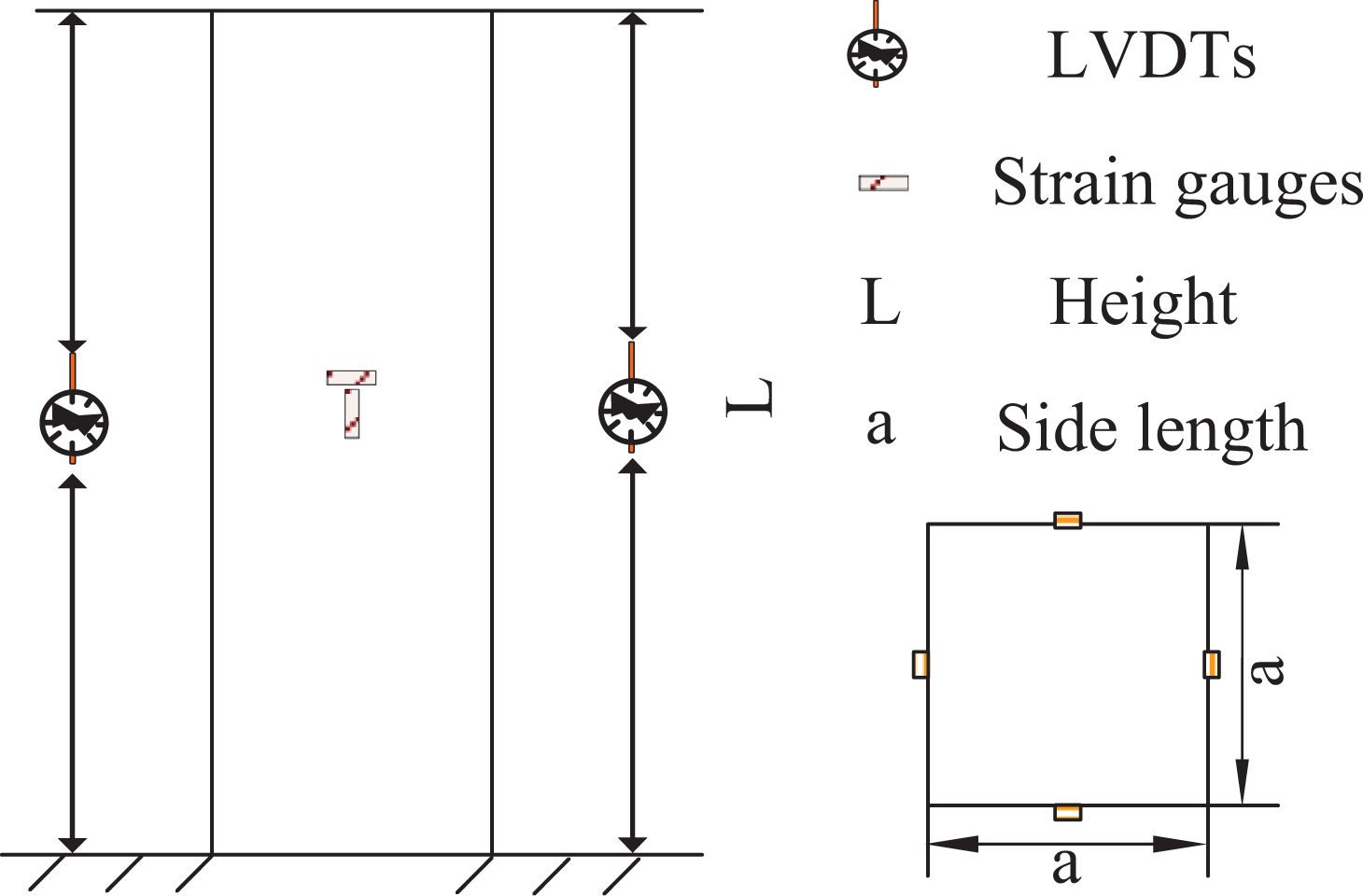
Gauge layout of glulam bamboo compressive specimens.
Failure modes of compressive specimens
There are two major failure modes of buckling and shear failure that finally occurred in the glulam bamboo specimens. The final modes are the results of complex initiation and development of diverse failure modes. In particular, the delamination of bamboo fibres may have started earlier that led to the buckling or the shear failure depending on the delamination growth, multiple delamination development as well as their interaction between one another. When the delamination of bamboo fibres in the column suffered a significant and rapid development, the column will bend as a result of delamination and then the buckling failure occurs; when the delamination is slight and slow, the bamboo column shows a good integrity, and it is more prone to shear failure. Figure 7 shows the compressive failure modes of the bamboo scrimber specimens. For buckling failure, the surficial bamboo fibres were partially bent outward during the test; one concentrated or multiple dispersive delamination of bamboo fibres appeared in the specimens. When the load reaches approximately 90% of the ultimate load, the longitudinal cracks of specimens developed rapidly, and the specimens were divided into several longitudinal prisms by these cracks. The specimens then bent towards one side, and longitudinal compression buckling occurred in the bamboo fibres; as a result, the specimens lost their load-carrying capacity. Essentially, the bamboo fractured because the bamboo fibres buckled outward and were subjected to bending due to the compression. Specimens CZ1 and CZ3 can be classified as compression buckling failure. Compression buckling failure also occurred in larger bamboo scrimber specimens. 37,45 For shear failure, the bamboo fibres of columns may work with good structural integrity and little delamination can be found. In the test, with increasing load, diagonal cracks gradually developed on the surfaces of the specimens and then the diagonal cracks developed into oblique shear slip planes at the ultimate load. In theory, the simultaneous compressive stress and shear stress at the oblique section lead to this failure mode. Specimens CZ2, CZ4 and CZ5 experienced compression shear failure. The compressive failure modes of laminated bamboo are illustrated in Figure 8. It can be observed that there are also two failure modes of compression buckling and compression shear failure, similar to the bamboo scrimber. When compression buckling occurred, obvious bending deformation and bamboo fibres buckling can be observed in the specimens; when compression shear failure occurred, some diagonal cracks were significant.
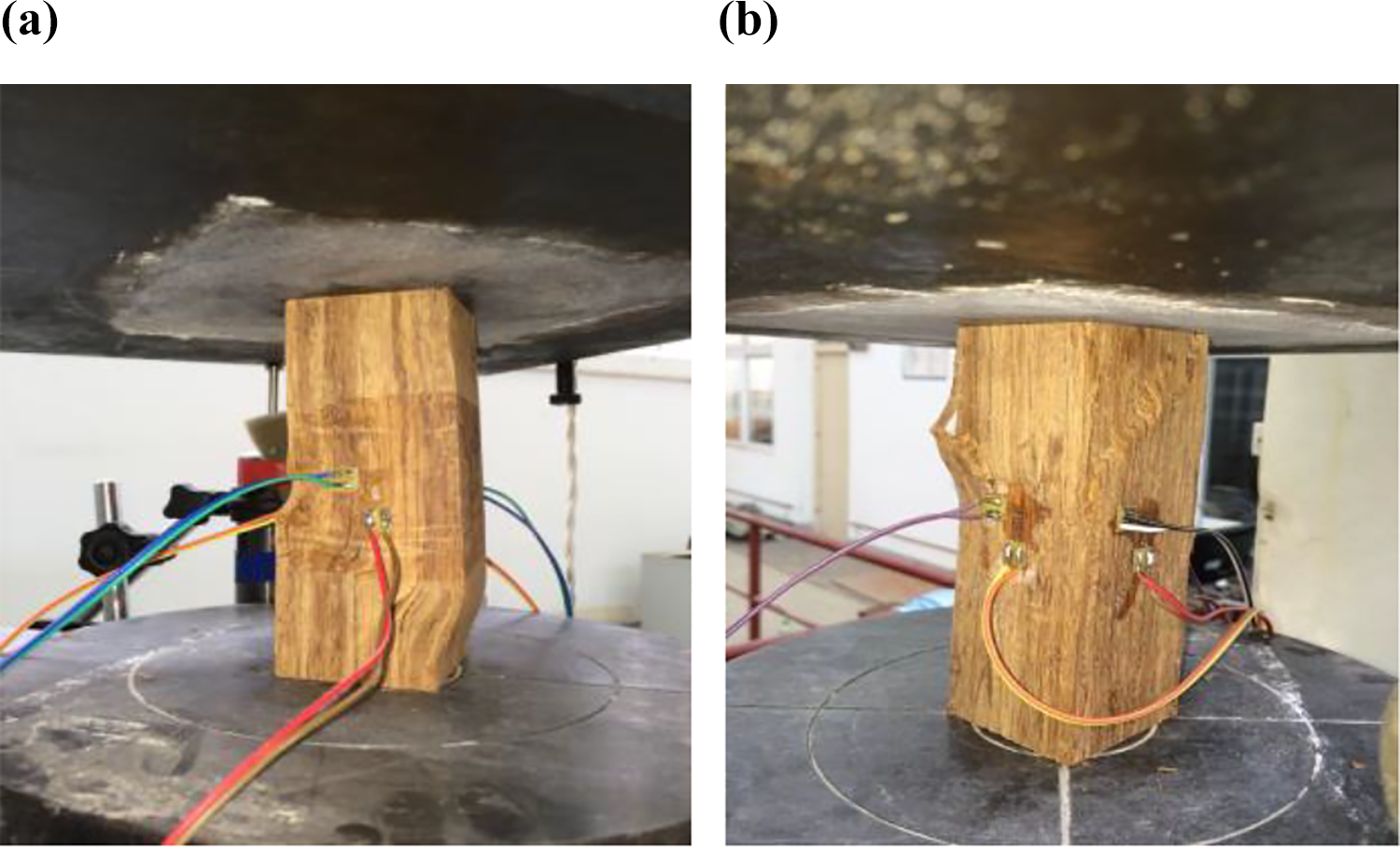
Compressive failure models of bamboo scrimber specimens. (a) Compression buckling and (b) compression shear.

Compressive failure modes of laminated bamboo specimens. (a) Compression buckling and (b) compression shear.
Analysis of the compression test results
Figure 9 shows the stress–strain curves of the bamboo scrimber and the laminated bamboo compression specimens. It can be observed that both materials exhibit similar stress–strain responses, in which the whole stress–strain behaviour can be divided into three stages: the first stage is an elastic stage, in which the stress–strain curves increase linearly; the second stage is an elastoplastic stage, in which the stress exceeds the elastic limit, the growth rate of the axial strain increases, the stress–strain curves increase non-linearly, and the elastic limit σe is approximately 60% of the ultimate stress; the third stage is the post-yield stage, in which the axial strain continues to increase rapidly, the stress increases slowly or remains nearly constant, and the stress–strain curve exhibits a flat, linear relationship.
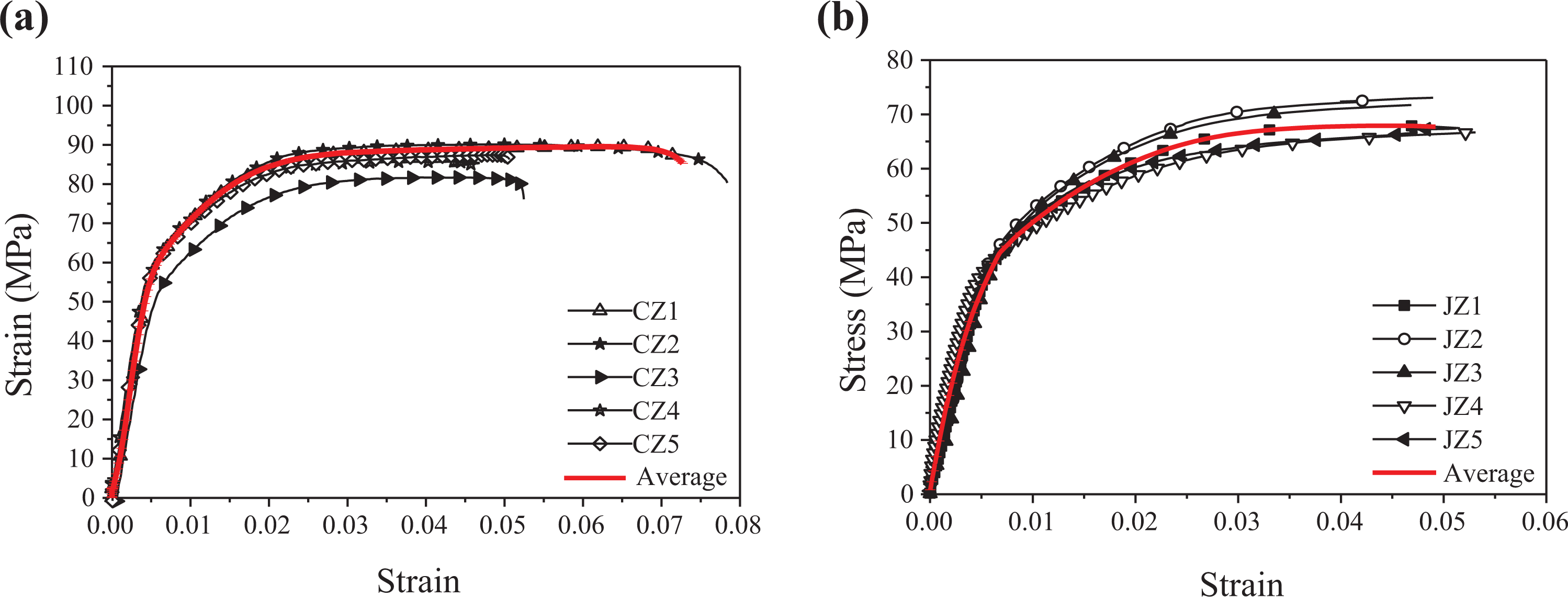
Compressive stress–strain curves of glulam bamboo specimens. (a) Bamboo scrimber and (b) laminated bamboo.
The compression test results of the bamboo scrimber and laminated bamboo specimens are presented in Tables 2 and 3, respectively. In the tables, Ec 2 is the post-yield modulus, which is defined as the slope of the post-yield stage of the stress–strain curve (approximately linear relationship). f 0 is a reference plastic stress, which is the intercept of the post-yield slope with the stress axis. According to the statistical results, for the bamboo scrimber, the average compressive strength, elastic modulus and ultimate strain are 87.4 MPa, 12.1 GPa and 0.060, respectively, and the average values of Ec 2/Ec 1 and f 0/fcu are 0.004 and 0.75, respectively; for the laminated bamboo, the average compressive strength, elastic modulus and ultimate strain are 68.7 MPa, 9.1 GPa and 0.050, respectively, and the average values of Ec 2/Ec 1 and f 0/fcu are 0.03 and 0.86, respectively. The coefficients of variation of the compressive strength of both bamboo scrimber and laminated bamboo are less than 13% of that required of the test method for the physical and mechanical properties of wood, 44 showing a small scatter in the test results.
Test results of bamboo scrimber specimens under axial loading.

Pcu : compressive ultimate load; σe: elastic limit stress; f 0: reference plastic stress; fcu : compressive strength; ε cu : compressive ultimate strain; Ec 1: elastic modulus; Ec 2: post-yield modulus; AV: average value; SD: standard deviation; CV: coefficient of variation.
Test results of laminated bamboo specimens under axial loading.a

a The meanings of the symbols are same as those in Table 2.
Proposed model
Mathematical modelling
According to the test results, when the glulam bamboo was under tension loading, the stress–strain relationship was linear, which can be described by a linear equation; when the glulam bamboo was under compression loading, the stress–strain relationship could be divided into elastic, elastoplastic and approximately linear stages after yielding, in which the first and third stages of the stress–strain curve can be depicted by a linear relationship with various slopes, and the second (elastoplastic) stage is a transition region connecting the first stage to the third stage, showing a smooth curve. In the past, several basic and classical models including the Sargin model, 46 Popovics model 47 and Richard–Abbott model 48 were developed to depict the stress–strain behaviour of the materials. According to a careful analysis of these models, the Richard–Abbott model can feature the three characteristic stages of the compressive behaviour of the glulam bamboo. Therefore, the Richard–Abbott model was employed to model the compressive stress–strain relationship of the glulam bamboo. The complete stress–strain curve of glulam bamboo is illustrated in Figure 10, which has the following equation:

where ftu ≤σ≤fcu , σ and ε are the stress and the strain of the glulam bamboo, respectively. Ec 1 is the initial compression elastic modulus; Ec 2 is the post-yield compression modulus; Et is the tensile elastic modulus; f 0 is a reference plastic stress; fcu is the compressive strength; ε cu is the compressive ultimate strain; and n is a shape parameter.

Proposed model for stress–strain relationship of glulam bamboo.
The prominent advantages of this model are its continuity with a single expression for the compressive stress–strain curve, and there are five main parameters: Ec 1, Ec 2, Et , f 0 and n. Parameter Ec 2 dominates the hardening slope, and parameter n mainly affects the curvature of the transition region connecting the two portions of the curve; for glulam bamboo, n can be set to a constant value of 2.0.
Performance of the proposed model
Based on the analysis of the test result of the glulam bamboo, the following values will be proposed: for the bamboo scrimber, Ec 2 = 0.01Ec 1, f 0 = 0.97fcu and εcu = 0.060; for the laminated bamboo, Ec 2 = 0.04Ec 1, f 0 = 0.82fcu and εcu = 0.050. In the proposed model, the parameters Ec 1, fcu and ftu can be obtained by the test. According to the above recommendation, the complete stress–strain curves for the glulam bamboo can be calculated. A comparison between the analytical stress–strain curves and the test results of the bamboo scrimber and the laminated bamboo are shown in Figures 11 and 12, respectively. As illustrated in the figures, the predicted curves and the experimental curves are in good agreement, and the proposed model has good applicability for the prediction of the stress–strain relationship of glulam bamboo. It should be noted that the mechanical properties of glulam bamboo certainly depend on the bio-composition of raw bamboo material, which, in turn, depends on the geographical regions, weather, moisture variation and so on. Failure models and mechanical behaviour are similar for bamboo scrimber and laminated bamboo; moreover, other bamboo products should also exhibit the mechanical properties of bamboo itself. Although the proposed models were derived from the experimental results of two kinds of typical glulam bamboo materials, the main features and expressions of the prediction models can also be applied to other similar bamboo products. When the proposed models are used for other specific bamboo products, the key parameters can be determined according to the actual test results.
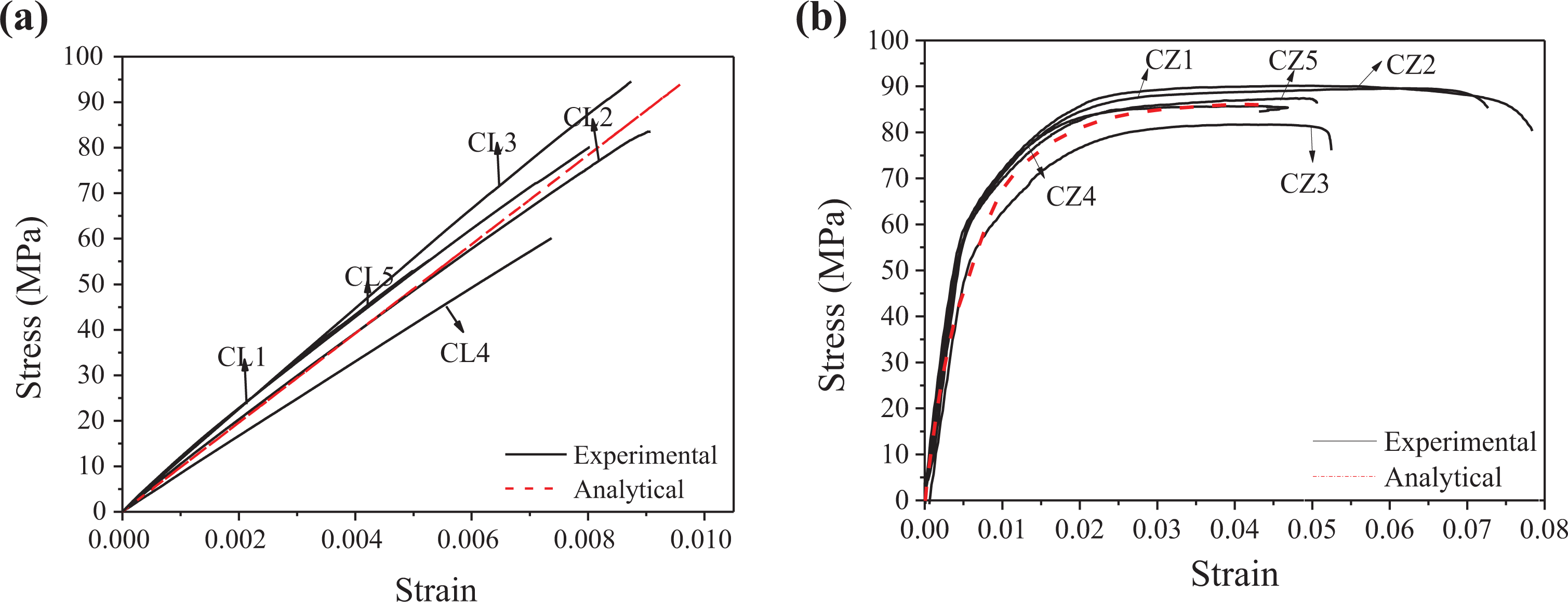
Comparison of calculated stress–strain curves with test results of bamboo scrimber specimens. (a) Tension specimens and (b) compression specimens.

Comparison of calculated stress–strain curves with test results of glued laminated bamboo specimens. (a) Tension specimens and (b) compression specimens.
Conclusions
In this work, the mechanical behaviour of bamboo scrimber and laminated bamboo under tension and compression loading were investigated, and the following conclusions can be drawn: Bamboo scrimber and laminated bamboo showed similar failure models. For tension failure, bamboo fibres were ruptured with sawtooth failure surfaces shown as brittle failure; for compression failure, there were two modes: compression buckling and compression shear failure. When compression buckling occurred, obvious bending deformation and bamboo fibre buckling could be observed in the specimens; when compression shear failure occurred, some diagonal cracks were significant. Bamboo scrimber and laminated bamboo demonstrated similar mechanical behaviour under tension and compression loading. The tensile stress–strain curves exhibited linear behaviour, whereas the whole stress–strain behaviour under compression loading could be divided into three stages: the elastic stage, the elastoplastic stage and the post-yield stage. Based on the test results, a stress–strain model was proposed for glulam bamboo, which is divided into two parts: the first part is the tensile stress–strain relationship, which is a linear equation; the second part is the compressive stress–strain relationship using the Richard–Abbott model, which can describe the three stages of the compression process with a single expression. A comparison with the experimental results shows that the proposed model and the experimental curves are in good agreement.
Footnotes
Declaration of conflicting interests
The author(s) declared no potential conflicts of interest with respect to the research, authorship, and/or publication of this article.
Funding
The author(s) disclosed receipt of the following financial support for the research, authorship, and/or publication of this article: The authors would like to acknowledge the financial support from the National Natural Science Foundation of China (Nos 51208262 and 51778300); the Natural Science Foundation (No. BK20191390), Key Research and Development Project (BE2020703), the 333 Project (No. BRA2016421) and the Qinglan Project of Jiangsu Province, and the six talent peaks project in Jiangsu Province (JZ-017).
