




Abstract
The use of blast furnace slag improves resource utilization and supports the achievement of sustainable development goals. The use of alkali-activated slag cementitious material (AASCM) provides a new direction for improving the fire resistance of masonry structures. The masonry investigated in this study was alkali-activated slag crushed aggregate concrete masonry (ASCCM) in which aggregates of blocks and mortars were crushed and screened using AASCM paste specimens. The compression behavior of 12 specimens during and after exposure to high temperatures, specifically 300, 500, 600, 700, 800, and 900°C was investigated. The specimens were maintained under the target temperature for 2 h. The compressive strength and axial deformation of the specimen were recorded. The compressive strength losses during exposure to 300, 500, 600, 700, 800, and 900°C are 15.9, 20.3, 38.3, 43.9, 63.3 and 73.8%, respectively. The compressive strength losses after exposure to 300, 500, 600, 700, 800, and 900°C are 10.6, 15.8, 34.0, 37.2, 58.6 and 72.2%, respectively. The rate of loss in elastic modulus is greater than that in compressive strength. During exposure to 300, 500, 600, 700, 800, and 900°C, the loss rates of elastic modulus are 56.5, 74.4, 83.3, 86.3, 92.9 and 93.9%, respectively. After exposure to 300, 500, 600, 700, 800, and 900°C, the loss rates of elastic modulus are 49.6, 67.3, 77.5, 82.0, 90.7 and 94.5%, respectively. The peak compressive strain values are 9.9 and 11.1 times that at room temperature. Equations for calculating the compressive strength, elastic modulus, peak compressive strain, and ascending section curve of the stress–strain relationship with temperature were derived. The research results provide a new choice for high temperature resistant masonry materials, and provide theoretical basis and data support for the application of AASCM in masonry structures in high-temperature environments.
Keywords
Highlights
Alkali-activated slag crushed aggregate concrete masonry has better resistant to high temperatures than the AASCM paste masonry and lightweight aggregate concrete block masonry. The compressive strength of alkali-activated slag crushed aggregate concrete masonry can be partially restored after cooling down. The formula of compressive strength, elastic modulus, peak compressive strain and the ascending part of the stress–strain relationship curve of alkali-activated slag crushed aggregate concrete masonry were obtained during and after elevated temperature exposure.
Introduction
Structural fire can cause loss of human lives and property (Almeshal et al., 2022). The Glenwell Tower fire on June 14, 2017 engulfed all 24 floors of the structure and killed 72 people (Huang et al., 2023). Masonry structures account for a considerable proportion of existing urban construction projects. They are associated with high population density, high housing density, and obsolete fire protection systems (Zheng et al., 2020; Khaliq and Bashir, 2016; Daware and Naser, 2021), leading to increased susceptibility to fire disasters. Although masonry materials do not combust, the mechanical strength of concrete blocks and cement mortar is reduced significantly, and the structure loses its stability at high temperatures (Mostafa et al., 2022; Noman et al., 2022a; 2022b). This can result in structural damage, building collapse, and casualties (Udi et al., 2022). In addition, some building structures have been in service in high-temperature environments for a long time. For instance, in high-temperature metallurgical and chemical workshops, the temperature can reach or even exceed 200°C. In chimneys used for discharging high-temperature flue gas, the lining temperature reaches 500 °C–600°C, and the shell temperature is approximately 200°C (Fu, 2014). Such structures require high retention ability at high temperatures. It is of practical significance to identify masonry materials with high-temperature performance and high strength.
Slag, a waste of blast furnace ironmaking, can be activated when mixed with an alkaline solution. After their combination, the resulting mixture is called alkali-activated slag cementitious material (AASCM) (Jiao, 2019). The AASCM has gradually attracted interest because it significantly reduces carbon dioxide emissions and utilizes industrial waste in its production; hence, it is more environmentally friendly than Portland cement. Every ton of crude steel produces 0.3 ton of blast furnace slag. In 2019, China produced approximately 243 million tons of blast furnace slag (Feng et al., 2021). Hence, an effective measure to achieve sustainable development goals is the rational utilization of blast furnace slag.
The influence of many factors on the strength of AASCM has been studied. The strength of AASCM varies in the range of 50–110 MPa (Fernández-Jiménez and Puertas, 2003; Zhu, 2014; Khan and Sarker, 2020). Most researchers proposed that AASCM compared with cement has excellent high-temperature resistance. Tran and Kwon (2018) showed that the compressive strength of AASCM mortar at 200°C increased when the percentage levels of sodium oxide (Na2O) were 4% and 6%. At 600°C, when the percentage values of Na2O were 4% and 10%, the mortar strength losses were 6.5% and ∼60%, respectively. Nasr (2018) found that no loss in the compressive strength of AASCM mortar was observed after exposure to 400°C. Moreover, when the exposure temperature was 600°C and the Na2O% was 8%–12%, the compressive strength of AASCM mortar significantly decreased. Fu et al. (2022) observed that the compressive strength of AASCM mortar slightly increased after exposure to 200°C. Moreover, the strength was equivalent to that at room temperature after exposure to 400°C. This might be because of the rehydration of unreacted slag leading to the formation C–A–S–H (Han and Zhang, 2018). The AASCM does not contain calcium hydroxide, and its main hydration product (C–S–H gel), decomposes to akermanite, maintaining certain mechanical properties after exposure to high temperatures (Fu et al., 2022).
However, the AASCM has high drying shrinkage (from 2 to 6 times that of cement) hindering the popularization of this cementitious material (Atis et al., 2009; Lee et al., 2014; Ye et al., 2017). Accordingly, the AASCM must be filled with non-shrinking aggregates. Natural sand and stone are the most commonly used aggregates. However, the thermal incompatibility between natural aggregate and cementitious material is a critical factor that decreases strength. At 300°C, microcracks form in concrete due to thermal incompatibility and the dehydration of calcium silicate hydrate. This damages the interface between the aggregate and matrix (Yoo et al., 2021; Zhang et al., 2020). When subjected to heat, the shrinkage of AASCM is more significant than that of cement, rendering thermal incompatibility to be more significant (Guerrieri et al., 2009; Hassanet al., 2022; Tu and Zhang, 2023). Lightweight aggregates are considered as alternative aggregates because of their lower coefficient of thermal expansion (Yun et al., 2013). Rashad et al. (2016) replaced natural sand with slag particles and found that the microcracking induced by high temperatures could be regulated; however, the strength loss after high-temperature exposure was not controlled. Although slag particles are aggregates resistant to high temperatures, the problem of expansion at high temperatures persists, leading to the thermal incompatibility between cementitious materials and aggregates as well as strength decrease (Kong and Sanjayan, 2010).
A method for reducing the shrinkage of AASCM while maintaining its high-temperature resistance was adopted in this study. First, several AASCM specimens whose sizes allow convenient crushing were prepared. After demolding, the specimens were maintained for several days at room temperature under dry conditions until shrinkage stopped. Then, the specimens were crushed into aggregates of various sizes. The aggregates were combined with the AASCM paste to form alkali-activated slag crushed aggregate concrete and mortar. This prevented the further shrinkage of the aggregates. Moreover, shrinkage was reduced by a decreasing the amount of paste per unit volume. Consequently, the resistance of the concrete and mortar to high temperatures is ensured. The AASCM paste and aggregates are made of the same materials, and their deformation is relatively coordinated. Using a specific mix proportion to prepare hollow blocks and mortar, the alkali-activated slag crushed aggregate concrete masonry (ASCCM) was fabricated.
The ASCCM is an environment-friendly and high-temperature-resistant masonry that can be used under high-temperature environments, such as high-temperature workshops. Nevertheless, to date, no study has been conducted to investigate its high-temperature resistance. Consequently, the main goal of this study is to explore and obtain the formulae for and variation in the compressive strength, elastic modulus, peak compressive strain, and rising section curve of the stress–strain relationship of the ASCCM with temperature.
Materials and experiments
Materials
Chemical Compositions of slag I and slag II %.

In the experiment, liquid sodium silicate (Na2O·nSiO2) (provided by Julide Chemical Engineering Ltd (Hebei, China)) was used. Its water content and modulus were 57.6% and 3.2, respectively. The mass fractions of Na2O and silicon dioxide (SiO2) were 10.3% and 32.10%, respectively. The sodium hydroxide (NaOH) used in the experiment was provided by the Dalu Chemical Reagent Factory (Tianjin; purity: 96.0%). The sodium carbonate (Na2CO3) (purity: 99.8%) was obtained from Zhiyuan Chemical Reagent Ltd (Tianjin). The steel fibers, which were provided by Kebeite Technology Development Ltd (Anshan), had diameters ranging 0.18-0.23 mm, lengths ranging 12-14 mm, and a tensile strength of 2850 MPa.
Specimen preparation
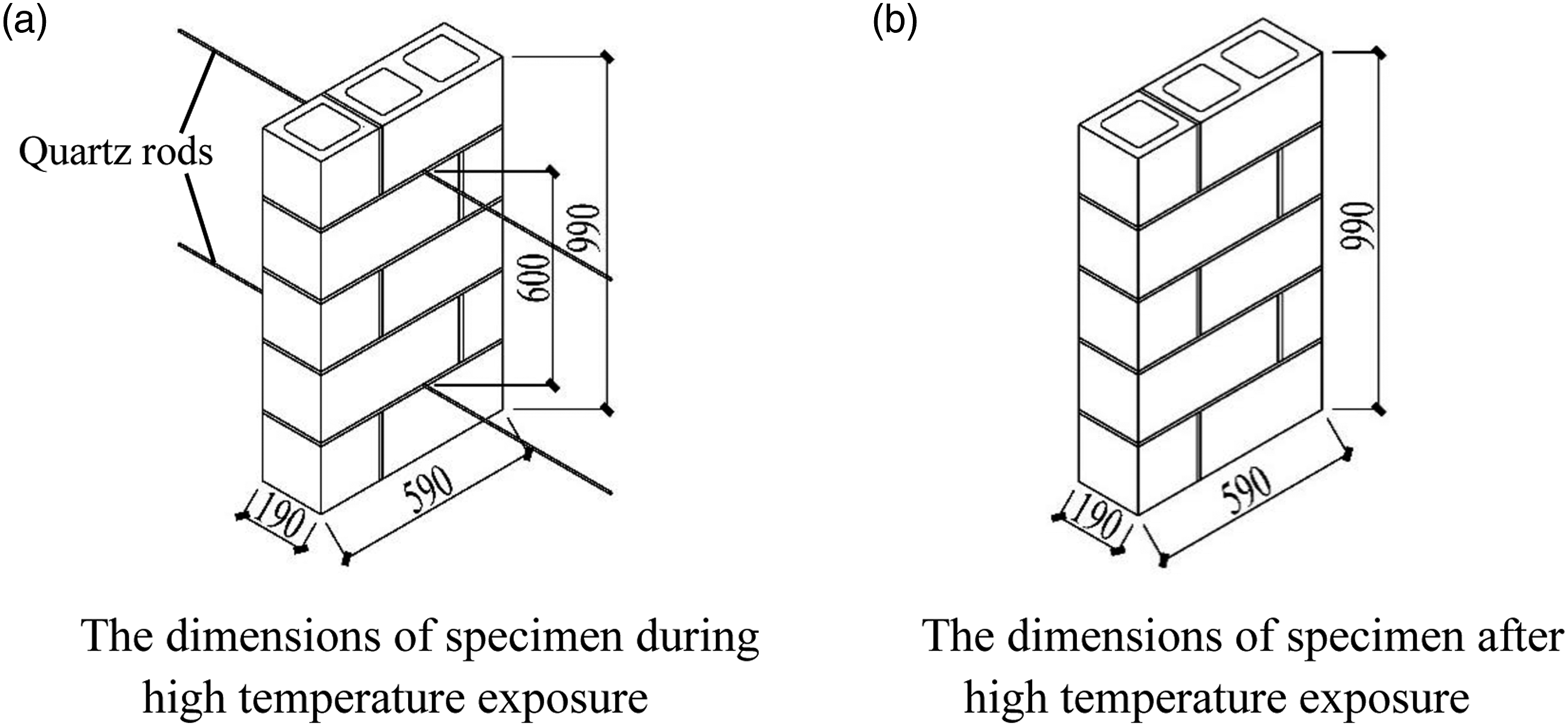
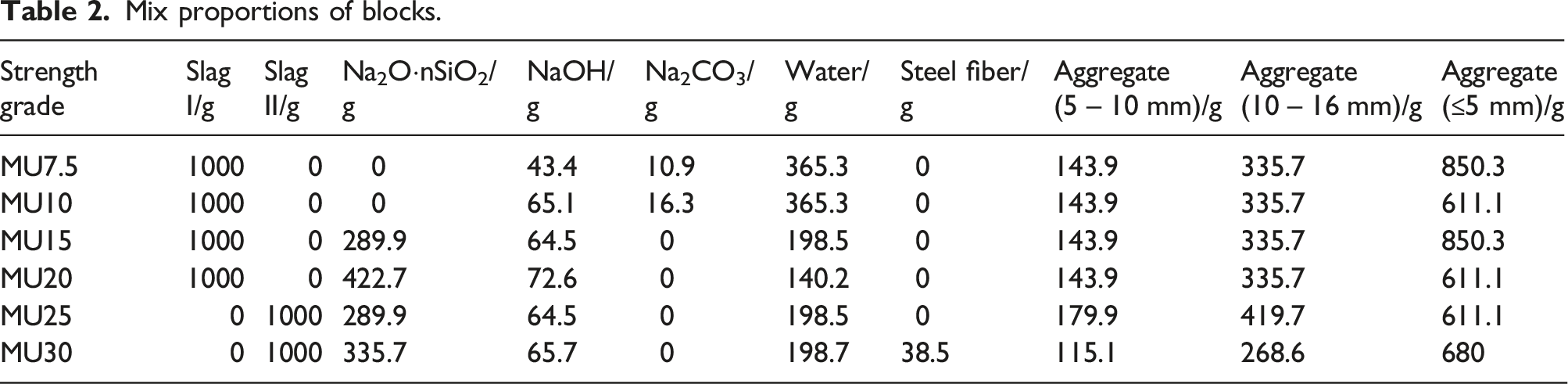
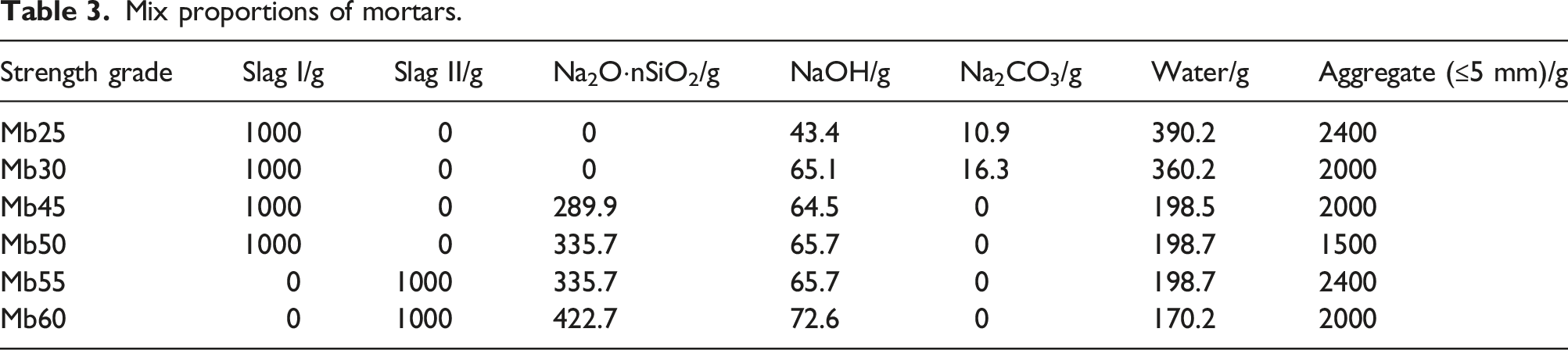
The dimensions of the main and auxiliary blocks were 390 mm × 190 mm × 190 mm and 190 mm × 190 mm × 190 mm, respectively. The blocks were hollow blocks; the proportion of hollow parts was approximately 50%. The mix proportion of the crushed AASCM aggregate and AASCM paste of specimens was the same as that of the block and mortar. The mix proportions of the block and mortar were adjusted according to that of the alkali-activated slag ceramsite concrete and alkali-activated slag mortar with pottery sand, as reported by Zhu et al. (2018a, 2018b, 2019). The specimens were constructed by staggering five layers of main blocks and auxiliary blocks. The specimen dimensions were 990 mm × 590 mm × 190 mm, and the ash joint thickness was approximately 10 mm. To test the axial deformation of specimens during exposure to elevated temperature, high-temperature resistant quartz rods were embedded in the ash joints of the top and bottom layers of the specimens during exposure to elevated temperature. The quartz rods were 1.5 m long and had sufficient stiffness. The preparation of specimens is illustrated in Figure 1, the dimensions of specimens are illustrated in Figure 2, and the mix proportions are listed in Tables 2 and 3. Six specimens for compression test during exposure to elevated temperature and six specimens for compression test after exposure to elevated temperature were made. The preparation of specimens. The dimensions of specimen. (a) The dimensions of specimen during high temperature exposure. (b) The dimensions of specimen after high temperature exposure. Mix proportions of blocks. Mix proportions of mortars.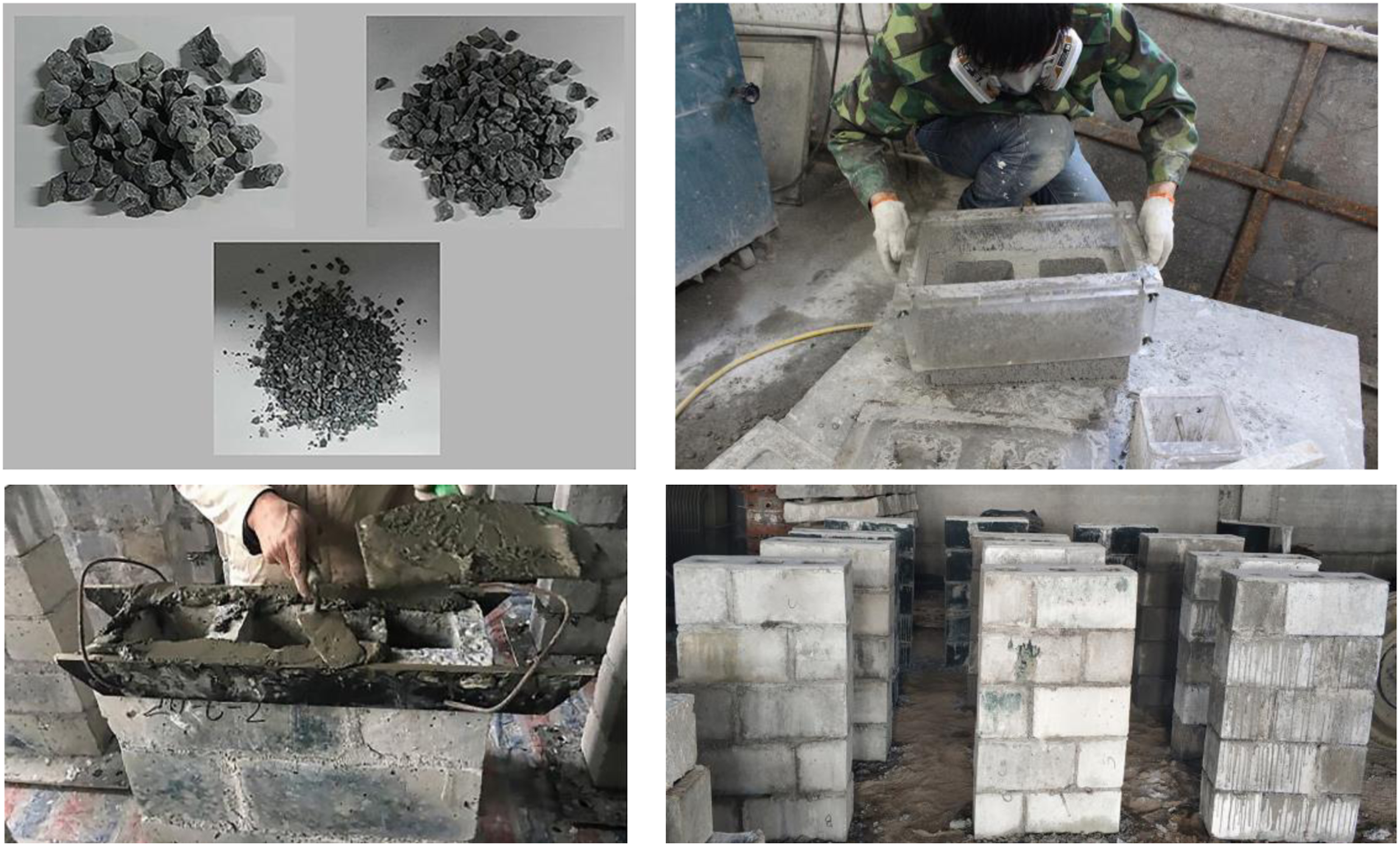
Heat methods
The high-temperature furnace used in this test was an RJZ-30-11-type resistance furnace, whose temperature rating was 1100°C. The interior dimensions of furnace were 1070 mm × 710 mm × 340 mm, the furnace was divided into upper and lower bodies, and were equipped with a WRN-130 thermocouple to monitor the inside temperature and a temperature control box to set the target temperature. An illustration of the high-temperature furnace is shown in Figure 3. The physical drawing of the high temperature furnace. Note—1: upper body; 2: lower body; 3: reserved holes; 4: thermocouple.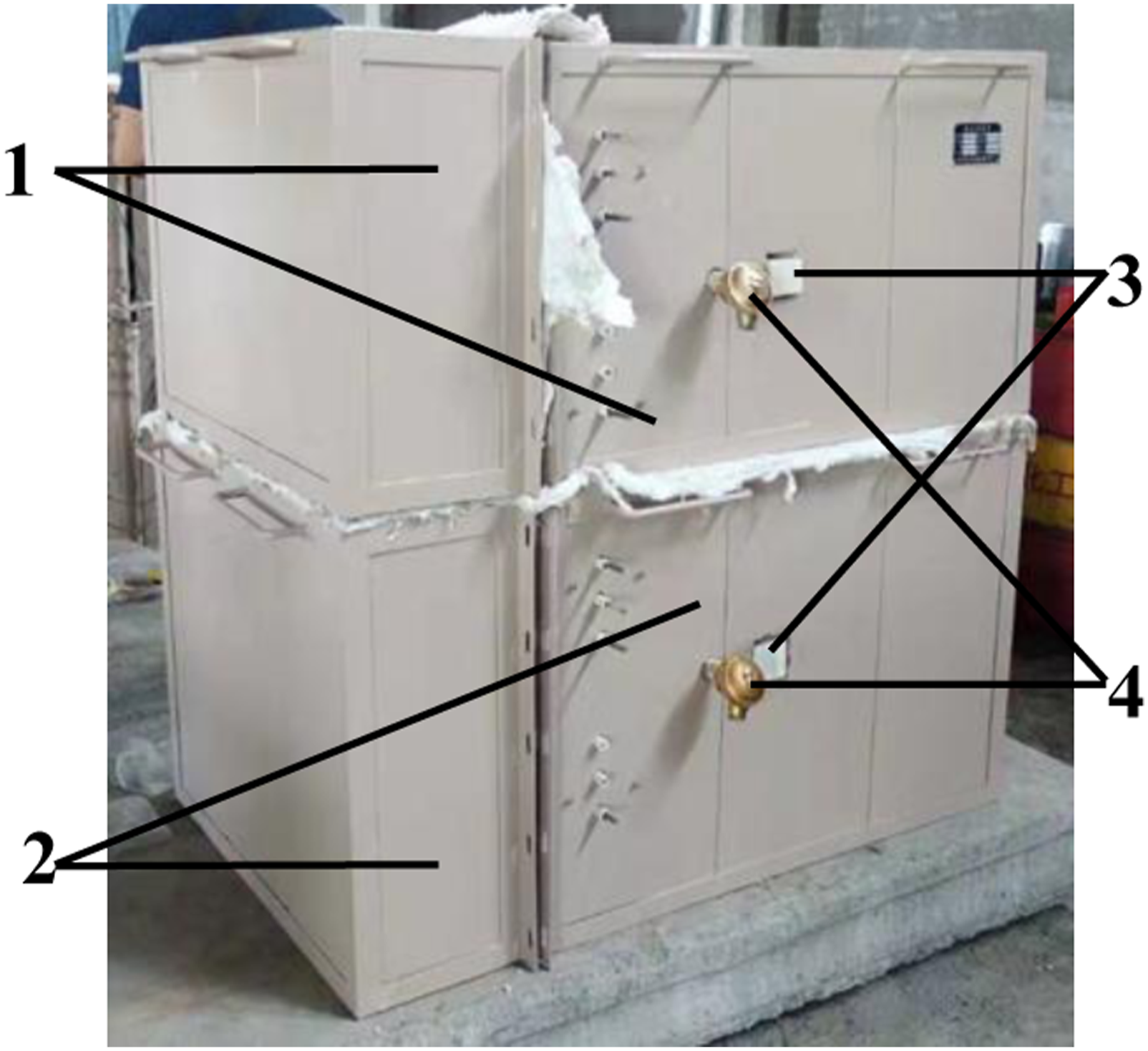
The elevated temperatures selected according to the Standard for Appraisal of Engineering Structures after Fire (CECS252-2019, 2019) were 300, 500, 600, 700, 800, and 900°C. The elevated temperature test was based on the standard of Fire Resistance tests—Elements of Building Construction (GB/T9978-2008, 2008). The measured time-temperature curves of the heating process are shown in Figure 4. The target temperature was maintained for 2 h to ensure that thermal balance was achieved. The control box was set to the target temperature such that furnace heating stopped when the target was reached. For the test during exposure to elevated temperature, after reaching the target temperature and maintaining for 2 h, the compression test was carried out. For the test after exposure to elevated temperature, after a holding time of 2 h, the heated specimens were left in the furnace to cool for 4–12 h depending on the highest temperature in the heating process. After cooling, the specimens were placed in an area at room temperature for 3 d and then tested in compression. Time-temperature curve of the heating process.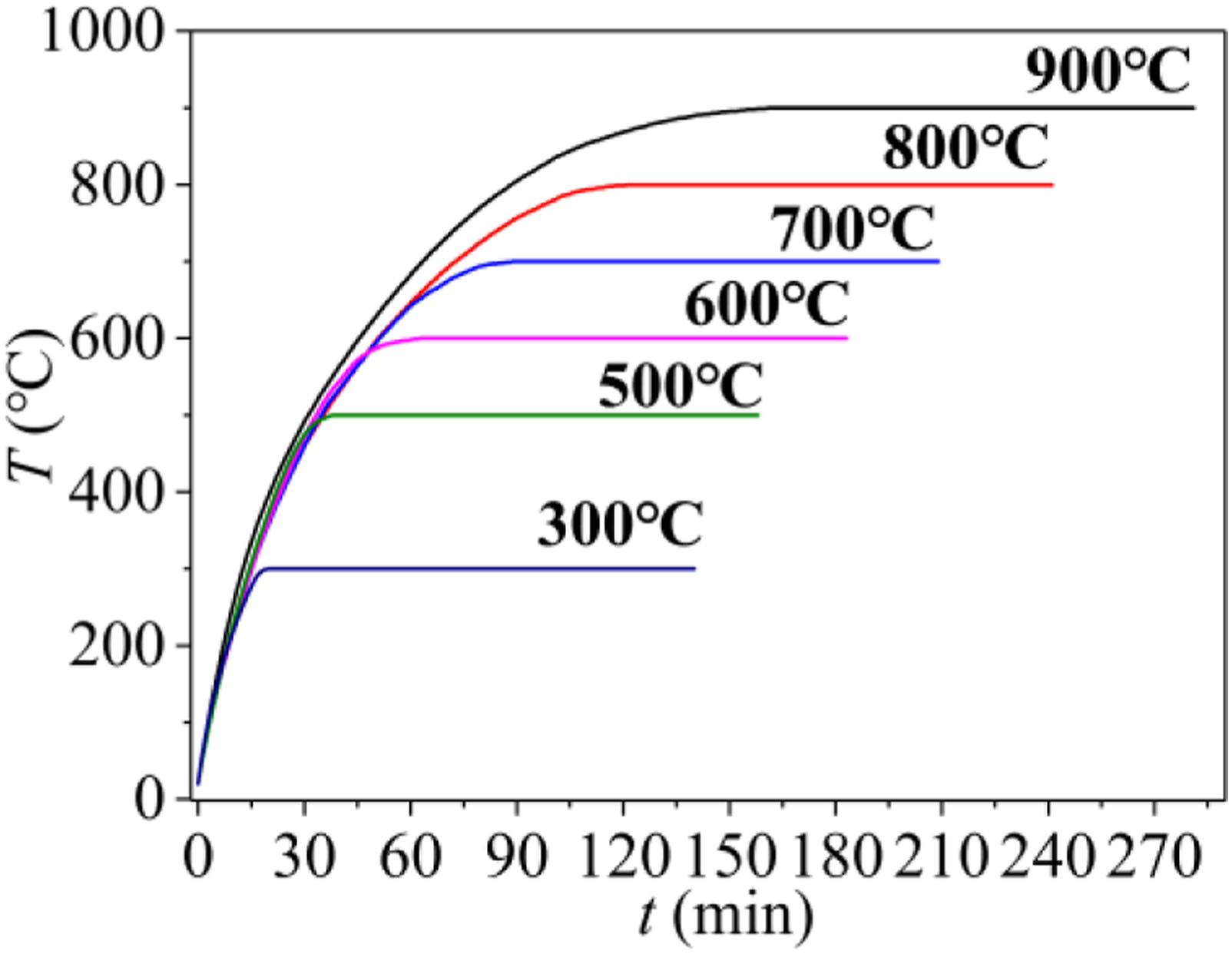
Test methods
To test the axial deformation of specimens during exposure to elevated temperature, the quartz rods buried in the layers were 1.5 m long and could be extended from the corresponding reserved holes of the specimen in the high-temperature furnace. A device for measuring axial deformation was installed to connect the displacement meter to the quartz rods. To ensure that no relative displacement occurred, the displacement meter and device were fixed using glue and wire. For the specimens tested after high-temperature exposure, a device for measuring axial deformation was directly fixed to the wall surface using glue and wire. A schematic of the specimens during and after exposure to elevated temperatures is shown in Figure 5. Before the test, the distance between the measuring points on the two wide surfaces of the specimen was measured. The thickness and width of the specimen were measured at three positions along the height of the specimen. Schematic diagram of the specimen. (a) Schematic diagram of the specimen during high temperature exposure. (b) Schematic diagram of the specimen after high temperature exposure. Note—1: specimen; 2: high-temperature furnace; 3: reserved holes; 4: quartz rods; 5: device for measuring axial deformation; 6: displacement meter.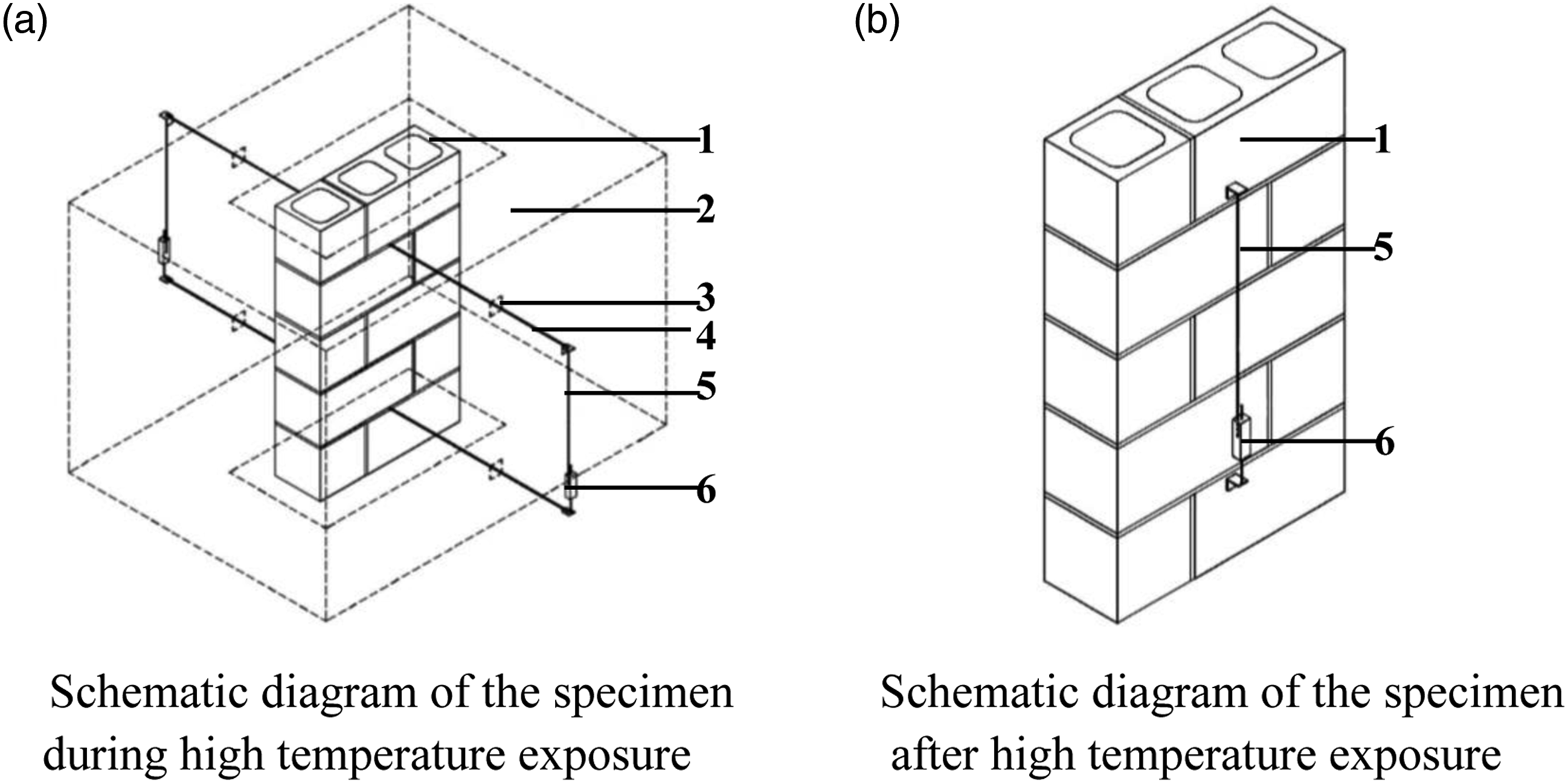
After the heating process, according to the Standard for Test Method of Basic Mechanics Properties of Masonry (GB/T50129-2011, 2011), 10% of the predicted failure load was preloaded 3–5 times before the test was started. Loading was performed when the difference in the axial deformations of the two wide surfaces was less than 10%. The specimens were loaded up to 80% of their failure load at a loading rate of 2 kN/s. Subsequently, they were loaded to failure at a loading rate of 0.5 kN/s. The test loading system is illustrated in Figure 6. The failure loads and axial deformations of the specimens were recorded. Compressive test of the specimen. (a) Compressive test of the specimen during elevated temperature exposure. (b) Compressive test of the specimen after elevated temperature exposure. Note—1: triangle reaction rack; 2: pre-stressed rebar; 3: jack; 4: scaffold; 5: pressure sensor; 6: loading beam; 7: high-temperature furnace; 8: specimen; 9: displacement meter; 10: bottom beam; 11: base.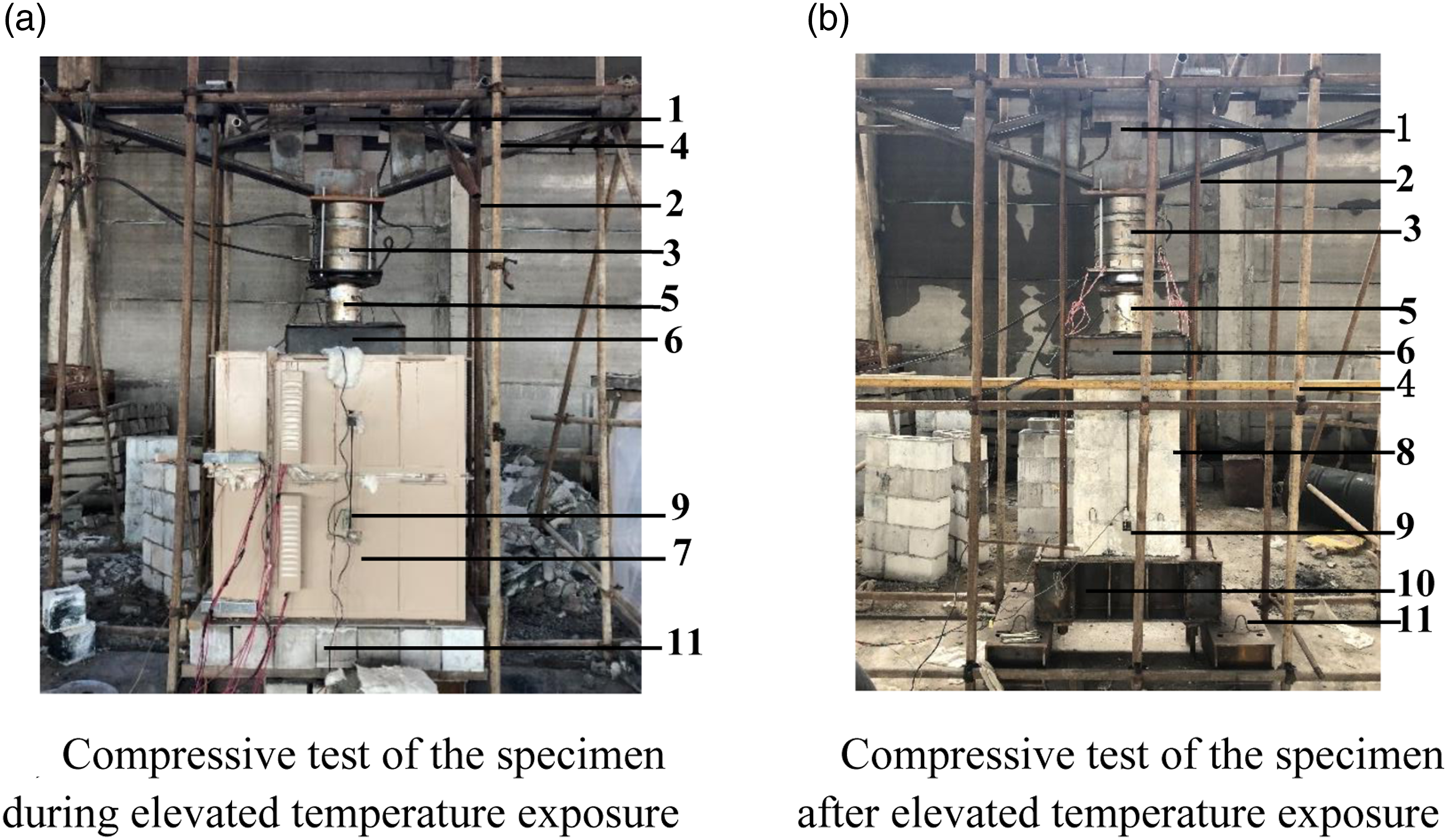
According to the Standard Test Method for Basic Mechanical Properties of Masonry (GB/T50129-2011, 2011), the compressive strength of a single ASCCM specimen is calculated as follows:
According to the Code for Design of Masonry Structures (GB50003-2011, 2011), Jiao (2019) adjusted the correction factor for the mortar strength and introduced the characteristic coefficient of alkali-activated slag mortar. The formula for calculating the axial compressive strength of the alkali-activated slag ceramsite concrete masonry is as follows:
Results and discussions
This section presents the investigation of the compressive strength, elastic modulus, peak compressive strain, and ascending part of the stress–strain relationship curve of the ASCCM during and after exposure to elevated temperatures. The mix proportions and activator types used for the ASCCM and alkali-activated slag ceramsite concrete masonry were similar. Accordingly, the test results of the alkali-activated slag ceramsite concrete masonry (Jiao, 2019) were used as the compressive strength, elastic modulus, peak compressive strain, and stress–strain ascending curve of the ASCCM at room temperature.
Thermal gradient
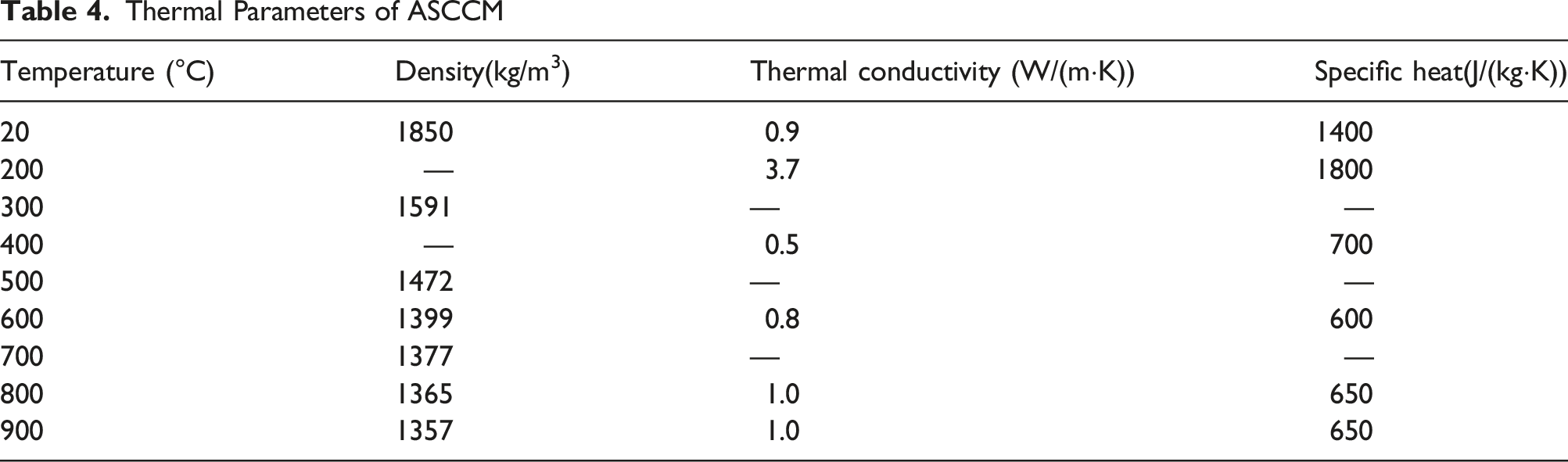
ABAQUS was used for the thermal analysis of the specimens to determine their thermal gradient after the heating process. The element type was DC3D8, which was used for transient heat conduction analysis. The force interaction between the block and mortar was ignored, and only the heat transfer between the two materials was considered. A “tie” constraint was used in the ABAQUS contact setting to bind the contact surfaces between the block and mortar. The contact surfaces were not separately analyzed, thus allowing heat transfer among the different parts.
Thermal Parameters of ASCCM
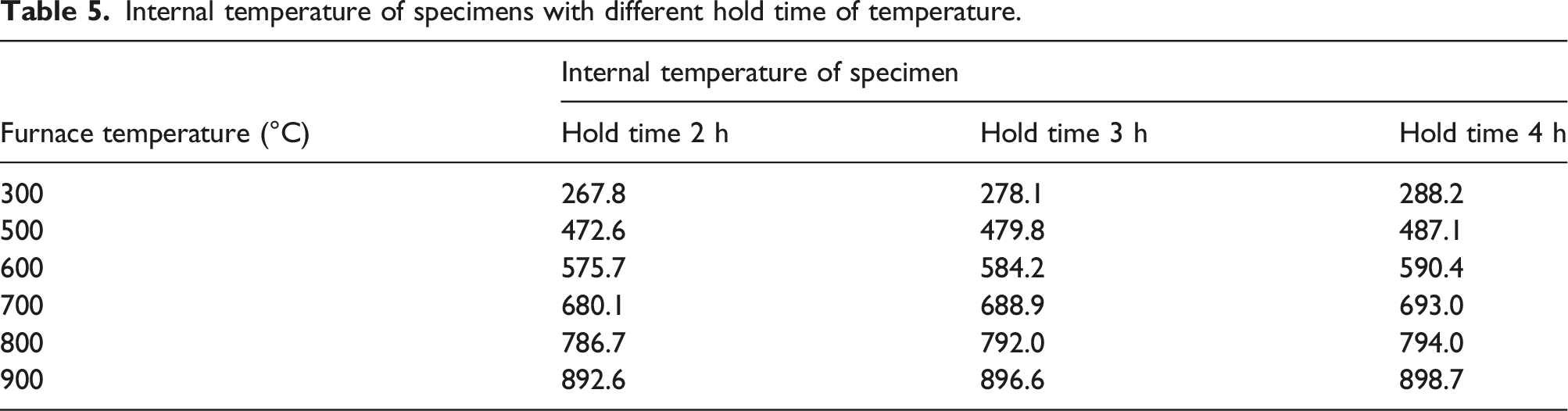
Internal temperature of specimens with different hold time of temperature.
Compressive strength
Compressive Strength of ASCCM During and After High Temperature Exposure.
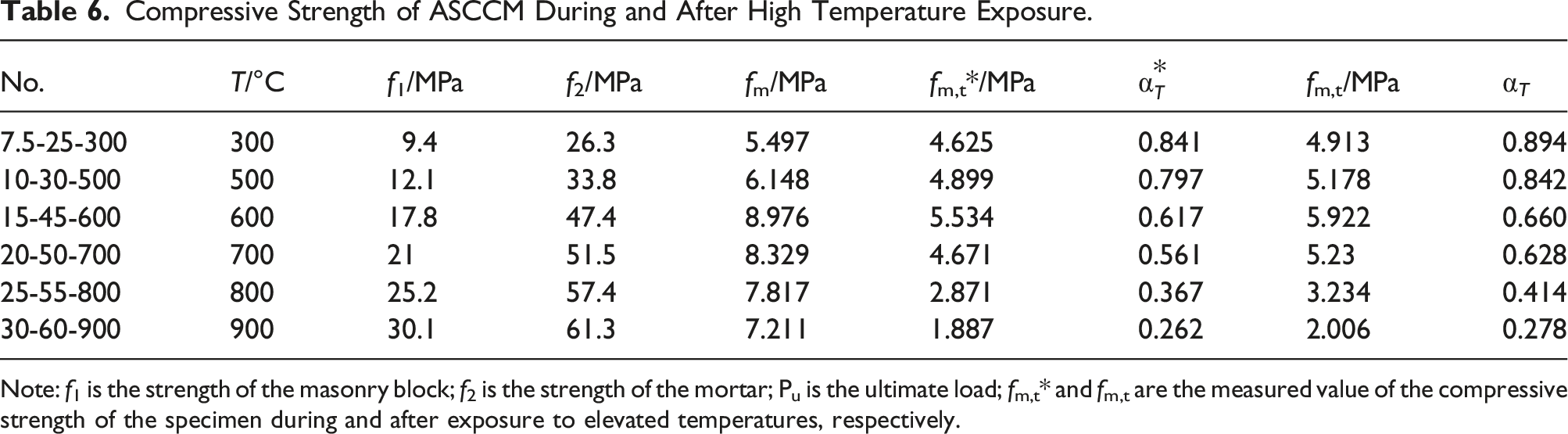
Note: f1 is the strength of the masonry block; f2 is the strength of the mortar; Pu is the ultimate load; fm,t* and fm,t are the measured value of the compressive strength of the specimen during and after exposure to elevated temperatures, respectively.
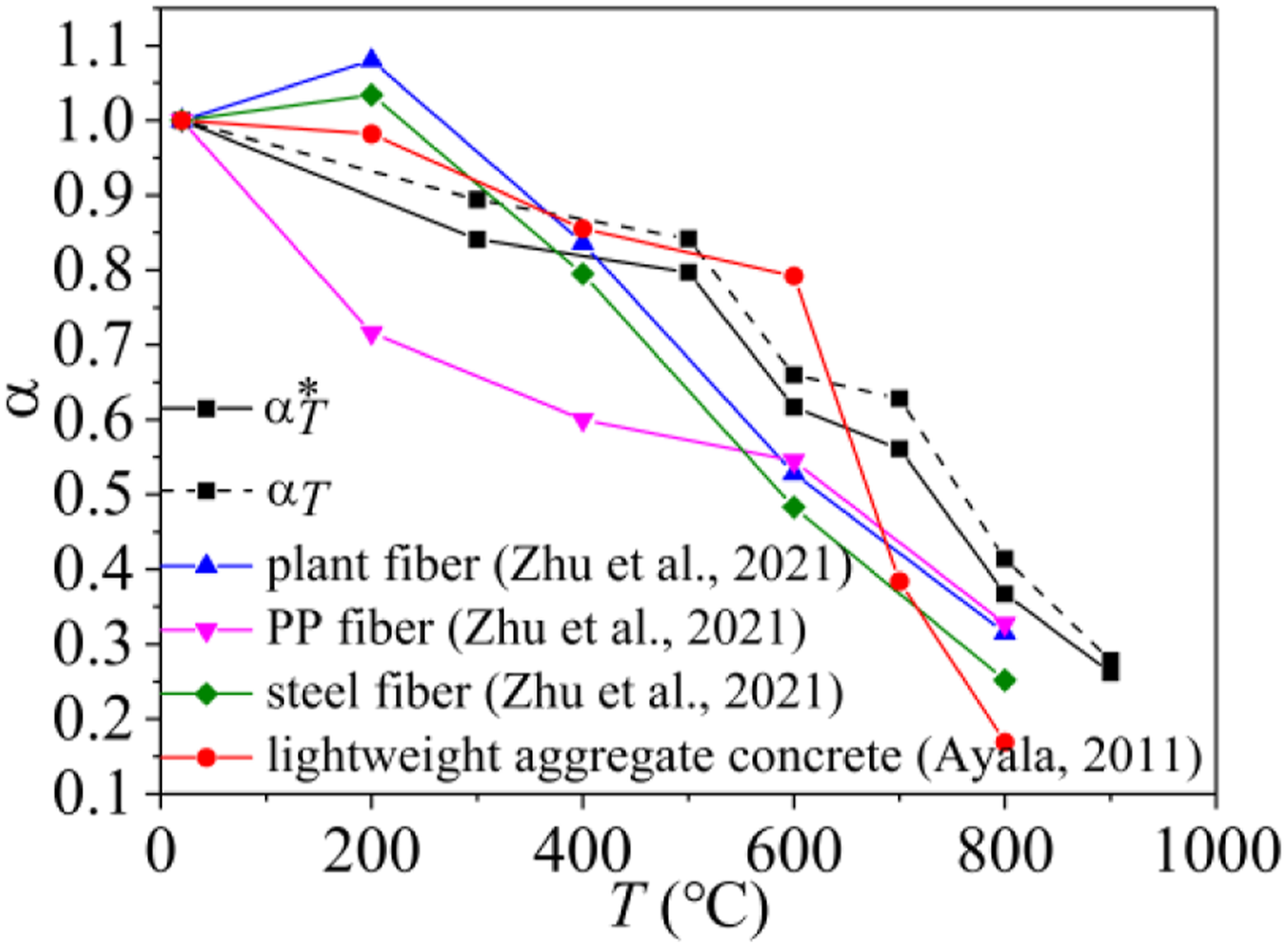
Comparison of test data and reduction coefficient of compressive strength of fibrous AASCM paste masonry and lightweight aggregate concrete block masonry after elevated temperature exposure.
Specimen numbers without “*” indicate that the specimens were tested after exposure to elevated temperatures. In contrast, specimen numbers with “*” indicate that the specimens were tested during exposure. In this paper, “*” has the foregoing meaning.
According to the data presented in Table 6 and Figure 7, the compressive strength of ordinary concrete during exposure to elevated temperatures is slightly higher than that after exposure. Calcium hydroxide in the concrete decomposes into calcium oxide at high temperatures. After cooling, the calcium oxide and moisture in the air form calcium hydroxide, which subsequently expand, leading to further concrete failure (Shi et al., 2003; Anand and Godwin, 2016). However, the ASCCM datas indicate the opposite. The foregoing observation is similar to the properties of reactive powder concrete obtained by Zheng et al. (2014). Unreacted slag is typically observed in the AASCM owing to rapid hydration reaction (Rashad and Essa, 2020; Zhang et al., 2021). A small amount of unreacted slag in the ASCCM continues to react under high-temperature curing. After exposure to high temperatures, the ASCCM undergoes high-temperature curing. Compared with the specimens that are tested during high temperature exposure, those that have been exposed to high temperatures have a longer time in the high-temperature environment owing to the cooling time of 4–12 h. This renders high-temperature curing more effective. The compressive strength increases owing to the further hydration of unhydrated products after high-temperature exposure and the possible development of C–S–H (Lublóy et al., 2017; Shumuye et al., 2021). Sugama and Brothers (2004) showed that the hydration products of the ASCCM after high-temperature curing contained hard calcium silicate crystals and tobermorite flake, which slightly increased the compressive strength.
Zhu et al. (2021a) measured the compressive strength of AASCM paste block masonry mixed with polypropylene, plant, or steel fibers after high-temperature exposure. A comparison of the foregoing with the test results in this study is shown in Figure 7. The compressive strength of the AASCM paste block masonry specimen mixed with plant fibers or steel fibers slightly increased after exposure to 200°C, and slightly lost compressive strength after exposure to other levels of high temperature. This was possibly because the fiber strength also decreased significantly after high-temperature treatment. Moreover, the tensioning effect that could be provided under normal temperatures was lost after high-temperature treatment, resulting in an even greater decline in strength. Kadhim et al. (2022) reported that melting fibers at high temperatures created microchannels in the matrix, increasing porosity and reducing residual strength. Although the fibers did not melt, the weak bond between the fibers and matrix reduced the compressive strength (Abdollahnejad et al., 2020).
Ayala (2011) measured the compressive strength of lightweight aggregate concrete block masonry after high-temperature treatment. A comparison of the results of the foregoing with the test results in this study is shown in Figure 7. The compressive strength of lightweight aggregate concrete block masonry gradually and rapidly decreased before and after heating at 600°C, respectively. The shrinkage of lightweight aggregate concrete was smaller than that of the AASCM. This delayed water loss and specimen cracking, causing its compressive strength to decline gradually before 600°C. In their paper “Alkali-activated Cements and Concretes,” Shi et al. (2003) reported that hydrated concrete contained a significant amount of calcium hydroxide. At approximately 500°C. this decomposed into calcium oxide, resulting in a significant loss in compressive strength. The hydration products of the ASCCM (hydrotalcite and calcium silicate hydrate) exhibited better high-temperature stability. Furthermore, the thermal incompatibility between the aggregate and matrix of concrete was a critical cause of the decline in strength (Yoo et al., 2021; Zhang et al., 2020). In contrast, both the aggregate and paste of the ASCCM were AASCM materials. Consequently, the shrinkage of the aggregate was reduced, cracking was delayed, and the thermal incompatibility between the aggregate and matrix after high-temperature exposure was eliminated. The interaction between the aggregate and matrix might also be involved in the reaction under high temperatures. Consequently, the interface between the aggregate and matrix was more closely bonded, and the integrity improved (Shi et al., 2022).
According to the data summarized in Table 6, 

Stress-strain behavior of masonry specimens
The load–displacement curve is based on the measurements of the loading device and axial displacement meter. The curve of the compression stress–strain relationship for the ASCCM during and after exposure to high-temperatures is shown in Figure 8. Compressive stress–strain relationship of ASCCM. (a) During elevated temperature exposure. (b) After elevated temperature exposure.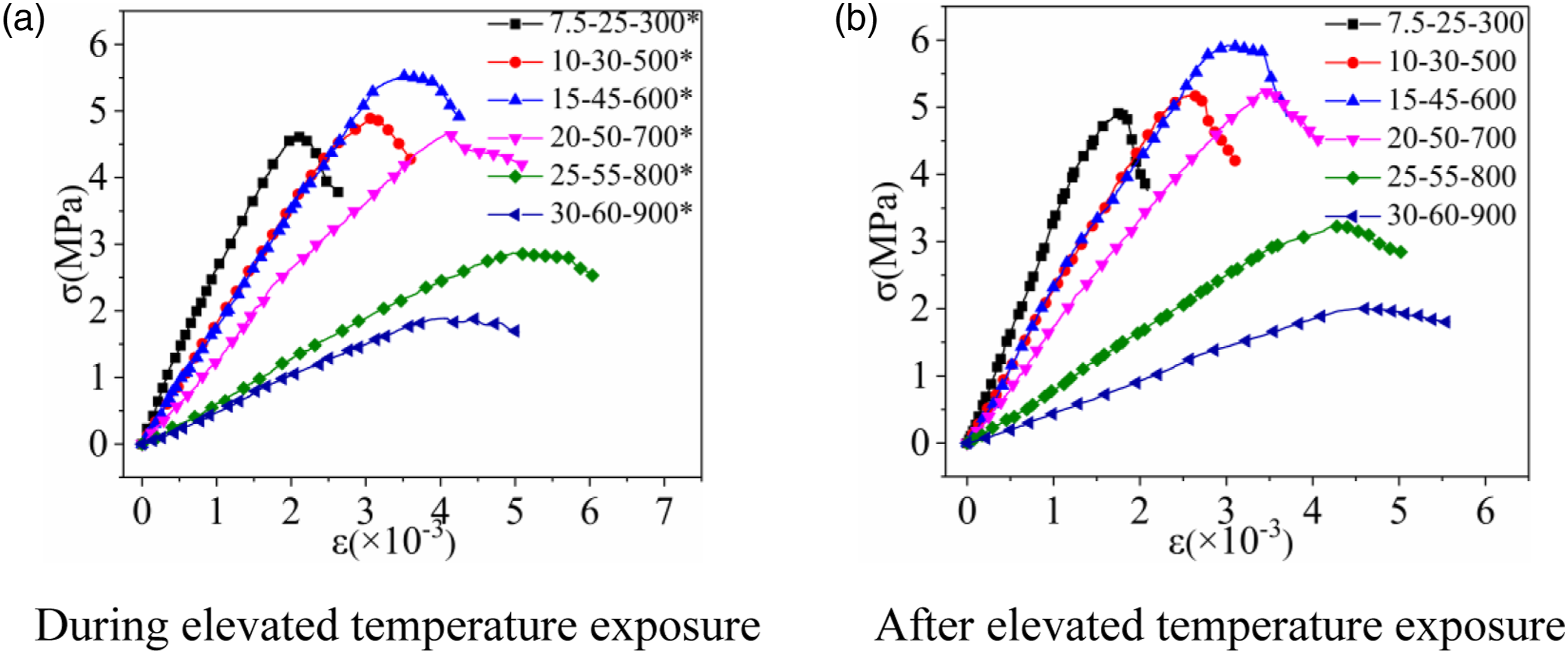
The compressive stress–strain curve for the ASCCM is predominantly linear with a few fluctuations. As the stress approaches the peak, the curve slightly bends downward. The elastic modulus is observed to decrease as the temperature increases, indicating the enhancement of the shaping properties of the specimens. Zemri and Bouiadjra (2020) also found that with an increase in temperature, the residual strength of the AASCM decreased, and the slope of the curve decreased. Consequently, the elastic modulus and plastic deformation increased. The stress–strain curve of the AASCM was steeper than that of the cement-binding materials.
The parabolic form better reflects the characteristic points of the ascending section of the curve and is in good agreement with the actual stress–strain state. Therefore, by considering the ratio of the compressive strain to the peak compressive strain as abscissa and the ratio of the compressive stress to the peak compressive stress as ordinate, a rectangular coordinate system was established. The compressive stress–strain curve of the ascending section for the ASCCM was obtained when each test point was placed in this coordinate system. The normalized relationship curve is shown in Figure 9, and Table 7 summarizes the values of A and B for each specimen during and after exposure to elevated temperatures. The mathematical expression for the curve is as follows: Normalized compressive stress–strain relationship of ASCCM. (a) During elevated temperature exposure. (b) After elevated temperature exposure. Values of a and B of ASCCM During and After Elevated Temperature Exposure. Note: A and B are the coefficients of the mathematical expression for the ascending section of the ASCCM compressive stress–strain curve.
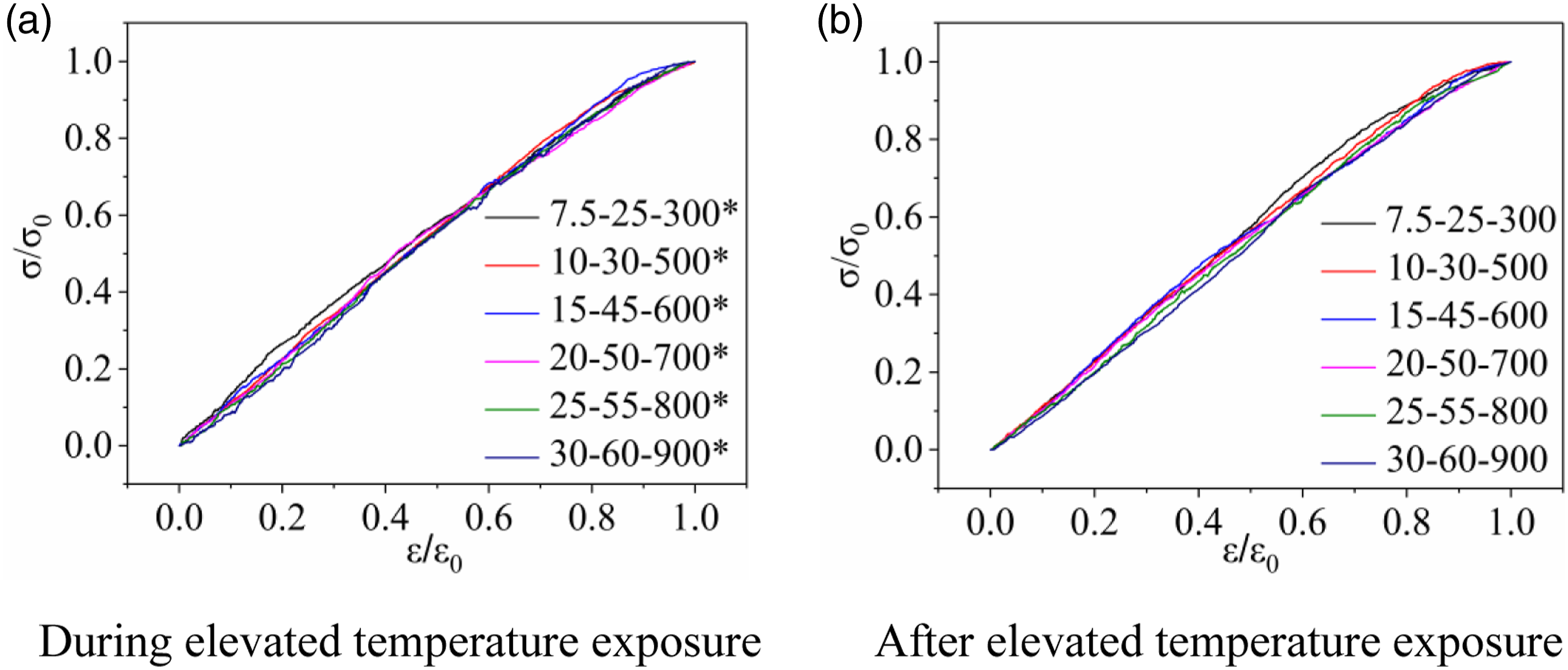
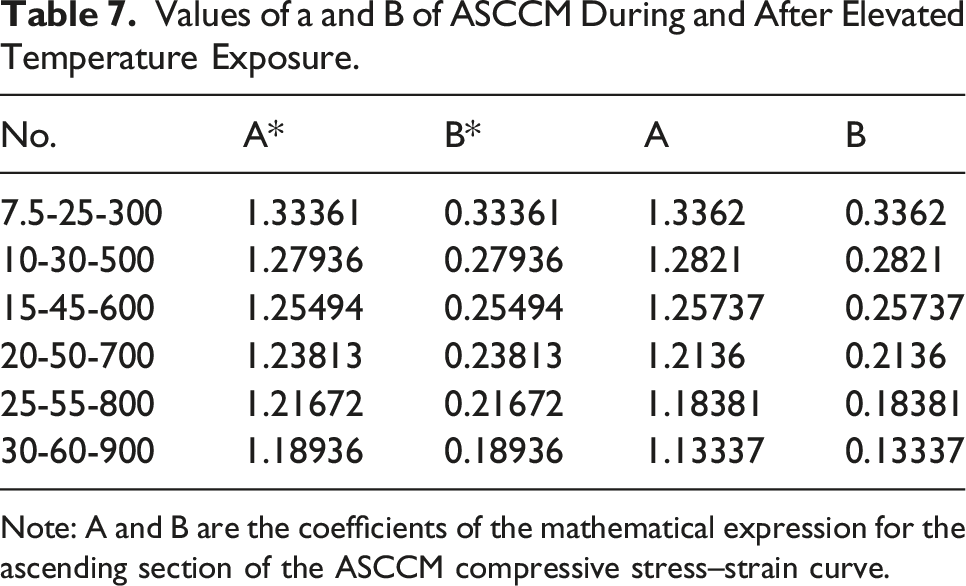
The effect of temperature on the shape of the curve is negligible. However, as the temperature increases, the values of A and B gradually decrease. The ratio of the initial tangent modulus to the peak secant modulus of the curve is represented by A; a small A value indicates that the strain rapidly increases when the stress is small. Wang and Zhu (2019) reported that the A value decreased rapidly with increasing temperature, indicating that the peak load and elastic modulus of the ascending section both decreased significantly, and the peak strain and ultimate strain increased rapidly. When the temperature was higher, the number of initial pores increased. Cracks were generated by water loss and phase change, causing the strain to increase rapidly at the beginning of compression. According to the results obtained by Jiao (2019) regarding the stress–strain relationship in the compression of AASCM masonry, A = 1.39. This value could be used for ASCCMs at room temperature. The following formulae for calculating A, A*, B, and B* with temperature change can be used as reference for establishing the ASCCM compressive stress–strain relationship during and after exposure to elevated temperatures. The formulae are

Elastic modulus
According to the Test Method Standard for Basic Mechanical Properties of Masonry (GB/T50129-2011), the secant modulus of masonry when σ = 0.4fm in the ascending section of the stress–strain relationship curve is considered as the elastic modulus of masonry. The elastic modulus of the AASCM masonry at room temperature based on the study of Jiao (2019) is as follows:
This formula can be used to calculate the elastic modulus of ASCCM.
A comparison of elastic modulus of the ASCCM and lightweight aggregate concrete (Ayala, 2011) after exposure to elevated temperatures is shown in Figure 10. The elastic modulus of the ASCCM decreases with temperature because the compressive strength also decreases as the temperature increases. The reduction in the elastic modulus of lightweight aggregate concrete is less than that of the ASCCM when the temperature does not exceed 600°C; the foregoing is the same as that observed in the reduction in compressive strength. When the temperature does not exceed 600°C, no large amount of product decomposition is observed, and the increase in strain mainly originates from cracks and pores. The ASCCM has more cracks and pores and greater strain growth than lightweight aggregate concrete, resulting in a greater loss in elastic modulus. When the temperature exceeds 600°C, the compressive strength loss caused by the phase change of the ASCCM is small, resulting in a small loss in elastic modulus. Zemri and Bouiadjra (2020) reported that the elastic modulus of the AASCM was smaller than that of cement materials when the temperature did not exceed 650°C. Moreover, the addition of slag reduced the elastic modulus, indicating that the AASCM had considerably deformed. Comparison of elastic modulus of ASCCM and lightweight aggregate concrete block masonry during and after exposure to high temperatures. Note: E*
T
and E
T
are the elastic modulus of the ASCCM during and after exposure to elevated temperatures, respectively.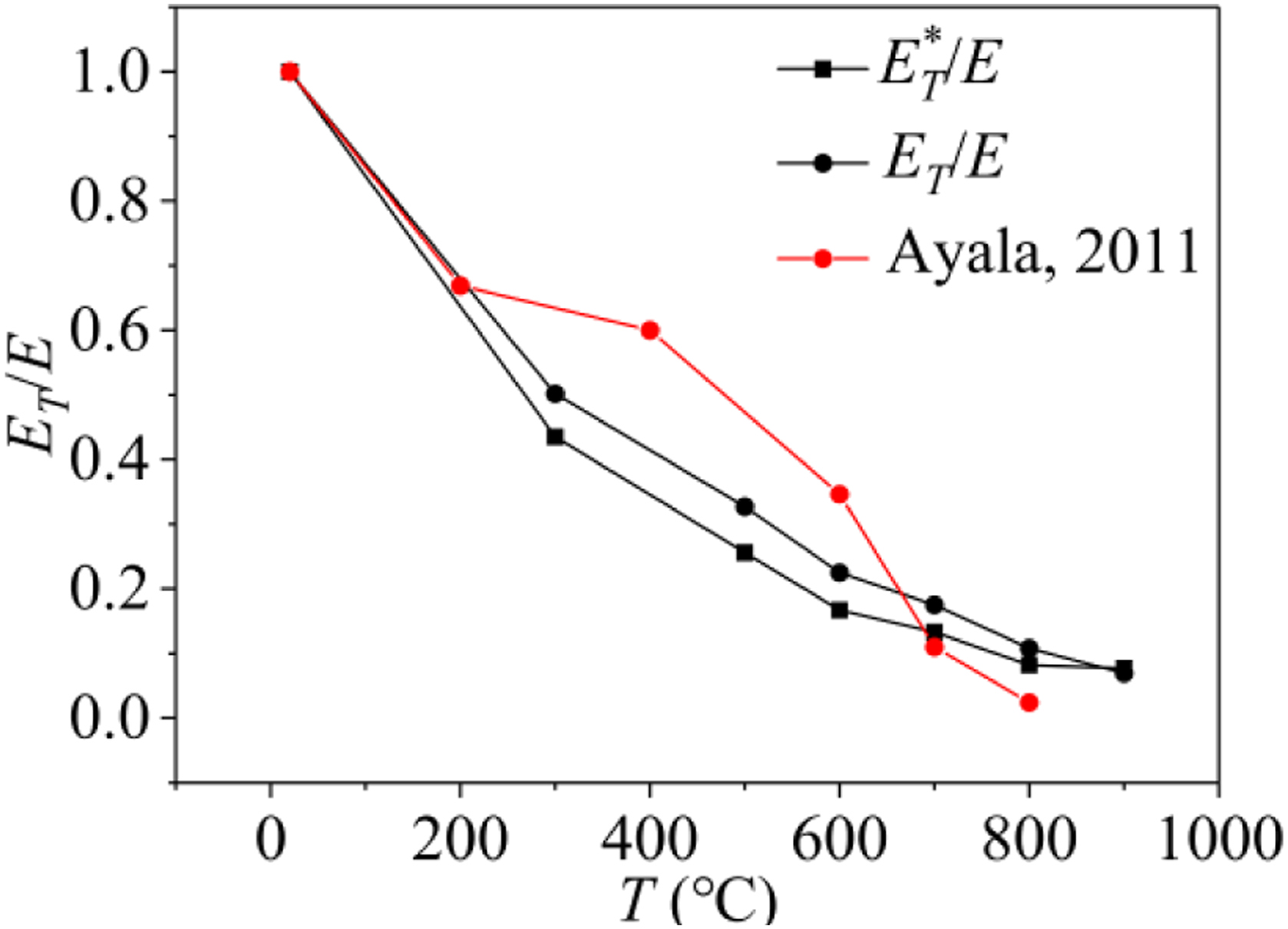
The E T –fm,t ratio decreased to 595.5 and 646.9 during and after exposure to 300°C, respectively, and to 270.3 and 228.8 during and after exposure to 900°C, respectively. When the temperature exceeds 500°C, E T /fm,t gradually decreases. This is because the higher the temperature, the greater the plastic failure of the wallete. The analysis indicates that the stress–strain curve gradually flattens, and the peak point decreases and shifts to the right. Moreover, the compressive strength decreases, peak strain increases, and elastic modulus sharply decreases.
The formulae for calculating the elastic modulus of the ASCCM during and after exposure to elevated temperatures can be obtained by fitting the foregoing data, as follows:

Peak compressive strain
Peak compressive strain of ASCCM during and after exposure to elevated temperatures.
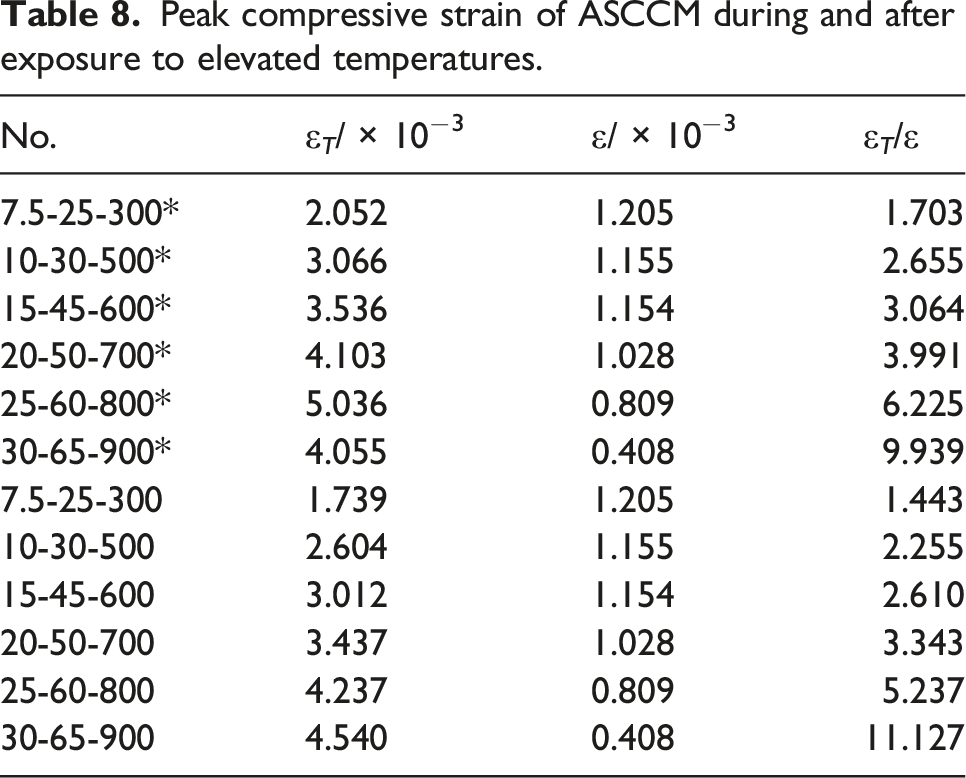
According to the characteristics of the variation in the peak compressive strain with temperature, several function forms are used to describe the change law. The appropriate function is as follows:
This function, which shows the variation law of the peak compressive strain, is relatively simple. Here, 

Conclusion
Six alkali-activated slag crushed aggregate concrete masonry (ASCCM) specimens during exposure to elevated temperature and six ASCCM specimens after exposure to elevated temperature were subjected to compression tests. The variation and formula of compressive strength, elastic modulus, peak compressive strain, and ascending section curve of the stress–strain relationship with temperature for the ASCCM were explored and obtained. The conclusions are as follows. (1) The decrease in the compressive strength of the ASCCM from room temperature to 600°C is considerably gradual, whereas the decrease from 600 to 900°C is rapid. The reduction coefficients of compressive strength during and after exposure to 600°C are 0.617 and 0.66, respectively; those during and after exposure to 900°C are 0.262 and 0.278, respectively. (2) Beyond 500°C, the compressive strength of the ASCCM is higher than those of the lightweight aggregate concrete block masonry and fibrous AASCM paste block masonry. The compressive strength of the ASCCM after exposure to elevated temperatures slightly exceeds that during exposure owing to the high-temperature curing process. (3) The ASCCM stress–strain relationship is an elastoplastic mechanical model. As the stress approaches the peak, the curve slightly bends downward, indicating the enhancement of the shaping properties of the specimens. The stress–strain curve of the AASCM is steeper than that of the cement-binding materials. When the temperature is high, the number of initial pores and cracks caused by water loss and phase change increases, causing the increase in strain to accelerate at the beginning of compression. The formulae for the ascending part of the stress–strain curve during and after the exposure of ASCCM to elevated temperatures are derived. (4) The reduction in elastic modulus with increasing temperature is extremely rapid. The reduction coefficients are 0.167 and 0.225 during and after the exposure of ASCCM to 600°C, respectively. The reduction in the elastic modulus of lightweight aggregate concrete is less than that of the ASCCM when the temperature does not exceed 600°C. (5) The increase in the peak compressive strain with temperature is extremely rapid. The peak compressive strain values at 700 and 900°C are 3–4 times and 10–11 times the compressive strain at normal temperature, respectively. The decomposition of products and the degradation of the bond between blocks and mortars are the reasons for the significant increase in peak compressive strain when the temperature exceeds 700°C.
Footnotes
Acknowledgements
The authors gratefully acknowledge the financial support provided by the National Science Foundation of China (Project No. 51478142).
Declaration of conflicting interests
The author(s) declared no potential conflicts of interest with respect to the research, authorship, and/or publication of this article.
Funding
The author(s) disclosed receipt of the following financial support for the research, authorship, and/or publication of this article: This work was supported by the National Science Foundation of China (Project No. 51478142).
