



Abstract
The Rare Diseases Clinical Research Network (RDCRN) works toward faster diagnosis and better treatment for people living with rare diseases, specifically by advancing clinical trial readiness. Inclusion of patient advocacy groups (PAGs) is mandated for each RDCRN consortia; principal investigator (PI)-PAG collaboration is expected to accelerate clinical trial readiness. Real-world examples of PI-PAG collaboration in rare disease clinical research (RDCR) are often not documented nor shared. We report on the Spring 2023 RDCRN meeting, which was dedicated to (a) capturing examples of ways that PAGs and PIs in the RDCRN collaborate, and (b) describing challenges and potential best practices for PAG-PI collaboration. PI and PAG attendees included 50 investigators and staff from 19 consortia and 41 PAG members from 21 consortia. Examples of collaboration in Study Design, Planning and Execution, Funding, and Stakeholder Engagement were captured, as were best practices and challenges to PI-PAG collaboration. Strengthening PI-PAG collaboration can accelerate rare disease research. Documenting real-world examples, and barriers and facilitators of collaboration, from across the RDCRN, supports existing frameworks for accelerating clinical trial readiness.
Plain language summary
Rare diseases affect millions, yet finding treatments is a big challenge. To help, the Rare Diseases Clinical Research Network (RDCRN) brings together researchers and patient groups to work on these diseases. At a big meeting in spring 2023, they shared ideas on how to do this better.
They found four main ways they work together best: designing studies, planning and doing the research, finding money for it, and working with companies and governments to make new treatments available.
They also talked about how to make their teamwork stronger:
But there are challenges, like not having enough time or money, rules that make sharing information hard, and making sure data from patients is really useful. They’re working on these problems by finding new ways to work together and communicate better.
In the end, the more researchers and patient groups can work together effectively, the faster they can find new treatments for rare diseases, helping improve the lives of many people.
Introduction
Rare diseases collectively affect millions worldwide, yet the pathway from discovery to treatment is more challenging than the pathway for more common diseases. 1 The complexities of designing clinical trials that are adequately powered for demonstrating safety and efficacy in heterogeneous and small patient groups, the absence of validated disease-specific outcome measures, and ethical considerations that may preclude placebo use complicate the translation of fundamental discoveries into tangible therapies. In all, the time required for the end-to-end translational process—from an idea in the laboratory to a drug or other intervention reaching all patients who could benefit—is currently over 20 years, and its success rate is below 1%. 2 This complex landscape underscores a pressing need for innovative methodologies and stronger collaborative frameworks as part of translational science. 2
Collaborating with patients in research ensures that research questions reflect the priorities of the patient, outcomes are relevant to the patients’ lived experience with the disease, interventions take into consideration cultural differences in the patient community, and research results are disseminated widely. 3 These practices help to make studies more feasible and accomplishing goals more efficient. For these reasons, engaging patients has the potential to bridge the methodological and regulatory challenges that are unique to rare disease research.4,5
The Rare Diseases Clinical Research Network (RDCRN), established by the Rare Diseases Act of 2002 (Public Law 107-280) and supported by the National Institutes of Health (NIH), was established to advance the diagnosis, management, and treatment of rare diseases and to promote highly collaborative, multisite, patient-centric, translational, and clinical research. 6 RDCRN focuses on clinical trial readiness—advancing the research needed to mount clinical trials, such as a thorough understanding of a rare disease’s natural history, identification of biomarkers, development of outcome measures, and pilot studies. It mandates the inclusion of patient advocacy groups (PAGs) as part of each Rare Disease Clinical Research Consortia (RDCRCs). This is in accordance with NCATS’ Translational Science Principles of “Creativity and Innovation,” “Cross Disciplinary Team,” and, especially “Boundary Crossing Partnerships.” 7 Further specification of these Translational Science Principles and enumeration of examples is fundamental to translational science.
The degree of PAG integration into consortium activities varies significantly from group to group, from formal designation of a PAG leader as one of the consortium’s PIs to periodic consultations to review consortium activities. To enhance PI-PAG collaboration across the network, the RDCRN held a meeting in the spring of 2023 to educate the network on the capabilities of PAGs, highlighting examples of successful PAG-PI partnerships, identifying shared challenges across consortia, and sharing effective strategies for PI-PAG collaboration in rare disease research. We share these with the intention to advance the translational science of rare disease clinical research.
Body
RDCRN Spring 2023 meeting
The agenda and objectives for the two-day Spring 2023 Meeting were collaboratively developed by PAG leaders and PIs, focusing on areas of high priority to both parties and understanding pain points and untapped opportunities for PI-PAG collaboration. This meeting sought to harness the collective wisdom and experience of all RDCRC PIs, PAG members, NIH program officers, and DMCC PIs and team members, aiming to enhance rare disease research through strengthened researcher-PAG partnerships. The flow of the meeting is below.

The Spring 2023 RDCRN Meeting’s design intentionally facilitated cross-consortium dialogue. On day one, participants were seated with members of multiple consortia to optimize cross-consortium knowledge sharing. On day two, participants were seated with members of their consortium to facilitate the sharing of innovative ideas and learnings with their team.
The sessions were crafted around Liberating Structures 8 to stimulate discussions across multistakeholder groups. These structures—defined as methods to organize group interactions—aim to build coordination, trust, and inclusivity regardless of group size. Techniques including Impromptu Networking, Appreciative Interviews, Discovery & Action Dialogues, and 1-2-4-All were employed. Each session commenced with a narrative highlighting a pertinent challenge or success, reinforcing the theme of collaboration. All sessions incorporated a patient advocate and investigator team, ensuring a balanced representation of perspectives.
The meeting attracted significant participation, including 50 investigators and staff from 19 consortia, 41 PAG members from 21 consortia, and 19 NIH program officers and project scientists, along with 14 DMCC staff members. Notably, the attendance was almost evenly split with 48% in-person and 52% virtual participation, effectively integrating a broad spectrum of stakeholders.
Examples of successful collaboration
Discussions at the meeting resulted in the identification of four critical areas where PI-PAG partnerships have been successfully leveraged in the RDCRN: study design, study execution and planning, funding, and engagement with external stakeholders.
Study design
In the domain of study design, the involvement of PAGs has proven extensive and indispensable, offering insights into the lived experiences of individuals with rare diseases. 9 This partnership is foundational from the earliest stages, where PAGs contribute to shaping research studies that represent patient needs and realities. Their engagement across the study’s lifecycle—from conceptualization to execution—can enhance the study’s relevance and ensure that it addresses the real-world complexities faced by patients and their families.
PAGs play an important role in evaluating study feasibility, patient burden, and acceptable risk, key considerations that influence patient recruitment. Their insights are instrumental in crafting questionnaires and informed consent documents that are not only informative but also accessible, using language that reflects the patients’ perspectives. Moreover, PAGs contribute to defining meaningful outcome measures, ensuring that the study outcomes hold value for the patient community. Such patient-centric outcomes align with FDA expectations that emphasize the significance and clinical relevance of study findings.
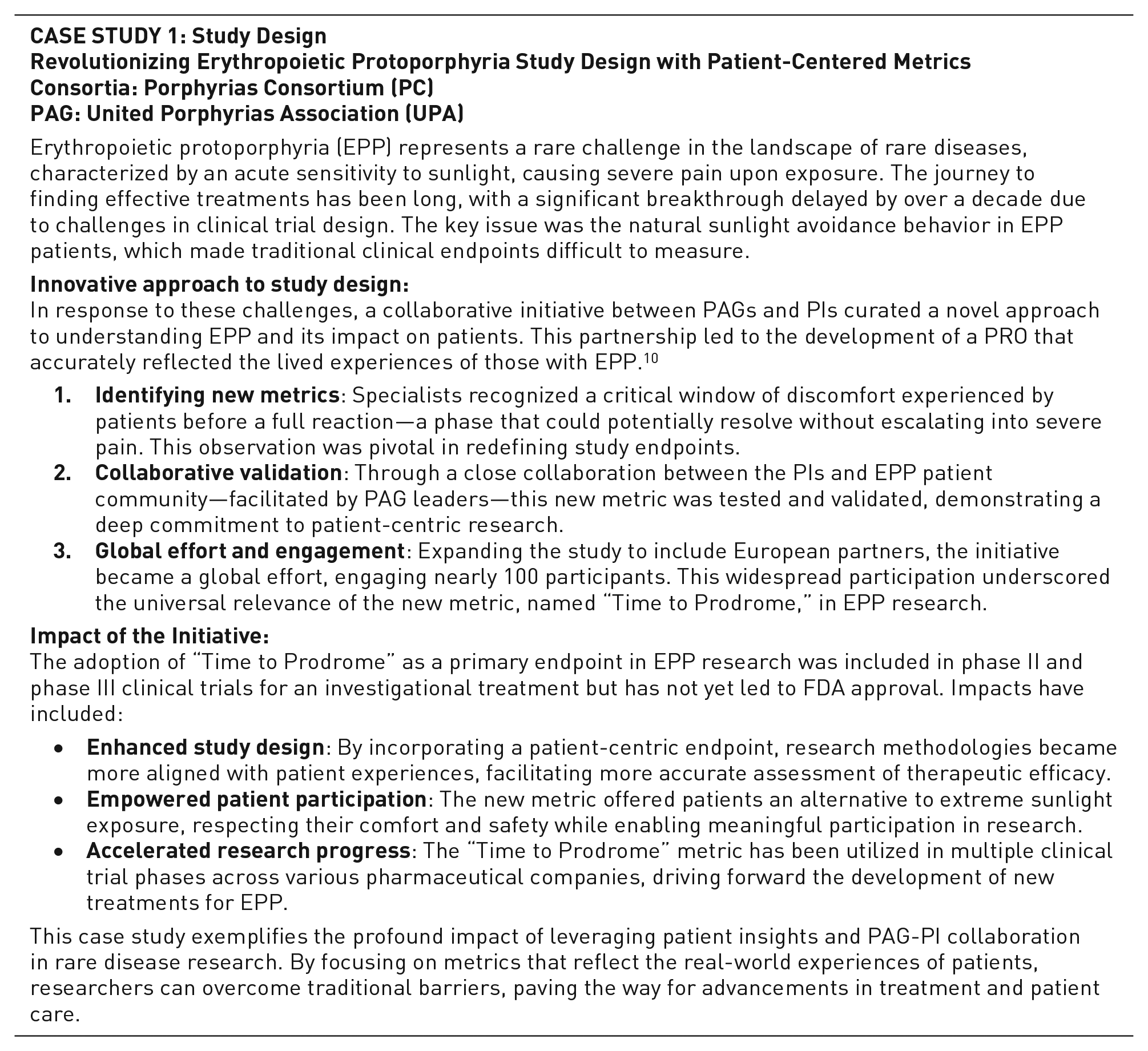
By integrating PAGs early and throughout the study design process, rare disease research can be better positioned to develop protocols that are both scientifically rigorous and deeply empathetic to patient experiences, setting a precedent for studies aimed at achieving regulatory approval and making a meaningful impact on patient care. The collaborative development of the “Time to Prodrome” patient reported outcome measure for erythropoietic protoporphyria (EPP) is a prime example of successful PI-PAG collaboration on study design in the RDCRN (see Case Study 1).
Study planning and execution
In Study Planning and Execution, the collaboration between PAGs and research teams can drive success, particularly in the critical areas of patient recruitment and retention. 11 PAGs can leverage their deep connections within the patient community to promote studies in a way that resonates with potential participants, ensuring that recruitment materials are tuned to meet patient needs and concerns. This alignment can enhance the appeal of the study and foster a sense of trust and security among potential participants, an aspect that is crucial for engaging members of underrepresented groups.
Innovative engagement strategies—such as co-hosted webinars or social media events by PAGs and researchers—serve as interactive platforms for transparently sharing study details, addressing questions, and dispelling concerns. Such initiatives can offer a personalized touch, drawing the patient and family community closer to the heart of the research process. The partnership with PAGs has enabled RDCRN investigators to tap into a wider, more diverse participant pool, ensuring studies are robustly powered and reflective of the rare disease spectrum (see Case Study 2).

Moreover, PAGs can contribute insightful recommendations on study site selection, advocating for locations that are accessible and welcoming to the target patient demographics. Their involvement can ensure that every phase of the study—from planning to execution—is underpinned by a patient-centered ethos, potentially enhancing the quality and impact of the research. The CMTA Patients as Partners initiative exemplifies the influence PAGs can have on the planning and execution of research studies in the RDCRN (see Case Study 3).

Funding
PAGs often possess critical resources that can bolster research projects, particularly those involving lower-cost pilot studies. Such pilot projects are important in providing essential data on clinical trial readiness, including the identification of biomarkers, sensitive and reproducible clinical outcome measures, responsive subpopulations, and optimal treatment durations.
Moreover, PAGs can play a pivotal role in fostering the next generation of rare disease researchers. 13 By financially supporting workshops and conferences, they can create dynamic platforms where emerging investigators can engage with established experts, discussing innovative research and building a robust network. This support is crucial for maintaining a vibrant and sustainable pipeline of talent in rare disease research.
PAGs can also offer indispensable guidance during the grant application process, contributing their insights to the formulation of grant aims, study design, recruitment strategies, study conduct, data sharing, and result dissemination plans. Their early involvement can ensure that proposals are comprehensive and patient-centered, aligning with the requirements of funding bodies like the NIH, which mandates the sharing of research data with the scientific community. Importantly, PAG input helps safeguard patient privacy and honor consent agreements in data-sharing initiatives.
The collaborative efforts between research consortia and PAGs in the RDCRN have proven to be a formula for success, pooling resources and expertise to expedite research progress while minimizing costs. Through these partnerships, the funding landscape of rare disease research is not only enriched but also strategically aligned with the ultimate goal of advancing patient care and treatment options. An example of such collaboration is provided in Case Study 4.

Interaction with external stakeholders
Navigating the pathway to the approval and adoption of new treatments involves a spectrum of external stakeholders, including regulatory bodies, the pharmaceutical industry, payers, and prescribers. Here, PAGs can play a pivotal role, leveraging their unique positions to bridge the gap between these stakeholders and the researchers.
One illustrative example is the Patient-Focused Drug Development (PFDD) meetings, which offer PAGs a platform to convey patient needs and experiences directly to the FDA. These discussions are instrumental in shaping the criteria for drug approval, emphasizing outcomes important to patients. Moreover, PAGs can advocate for innovative research methodologies—such as utilizing natural history data as external controls—to strengthen the evidence base for new treatments without the ethical concerns of placebo use.
Beyond regulatory interactions, PAGs can exert influence on policy and reimbursement decisions at state and federal levels, advocating for patient-centric changes. Their efforts have led to practical advancements like the establishment of ICD codes for rare diseases, facilitating faster diagnoses and enabling more targeted research through retrospective studies.
PAGs can also contribute to enhancing research participation. Their collaboration with the pharmaceutical industry can boost patient recruitment, ensuring that studies are well-powered and representative. Additionally, PAGs maintain extensive registries that offer researchers valuable insights into disease progression and potential treatments, enriching the research process with patient-derived data.
Through these multifaceted interactions, PAGs can not only support the research process but also ensure that the findings reach and benefit the wider patient community.
Strategies for successful PI-PAG collaboration
Several key strategies for successful PI-PAG partnerships that emerged during the meeting are summarized below:
Recognizing and leveraging capabilities
Mutual respect and team unity: Acknowledge that every participant, whether from a PAG or a research institution, brings valuable expertise to the table. Cultivating mutual respect and recognizing that you are part of the same team are fundamental.
Understanding and communication: Take the time to understand the capabilities and limitations of each partner. Clear, open communication about expectations and potential contributions ensures that collaborations are built on solid ground.
Inclusive engagement throughout the research process
Comprehensive involvement: Engage partners at every stage of the research process, from study design to data analysis and dissemination of results. This inclusive approach ensures research is patient-centric at its core.
Education and utilization of registries: Foster an environment where partners educate each other, sharing knowledge and resources. Utilize PAG-maintained registries not only for recruitment but as a rich source of data for research, tapping into the wealth of patient experiences and outcomes.
Diverse participant recruitment: Leverage the reach and trust PAGs have within patient communities to engage a broad and diverse participant base, ensuring research outcomes are representative and equitable.
Goal alignment and strategy development
Shared vision and roadmap: Collaboratively define the end goals of the research and develop a strategic roadmap to achieve them. This shared vision ensures all efforts are aligned and synergistic.
Role identification: Clearly identify who is best equipped to address each aspect of the research, playing to the strengths of both PAGs and PIs. This strategic allocation of tasks enhances efficiency and impact.
Continuous communication channels
Forums for ongoing dialogue: Establish and maintain dedicated forums for continuous communication among all stakeholders. Regular meetings, digital platforms, and joint workshops can serve as vital channels for sustaining engagement and addressing emerging challenges collaboratively.
Implementing these best practices can significantly enhance the quality and impact of rare disease research, fostering a collaborative ecosystem that is responsive to the needs of patients and driven by the collective goal of finding cures and improving lives.
Challenges to PI-PAG partnerships
Despite case examples of collaboration between PAGs and PIs in the RDCRN, the meeting discussion also revealed several challenges that could impede the full realization of this partnership’s potential. Addressing these hurdles is crucial for further strengthening these collaborative efforts.
Resource and time constraints: A primary challenge lies in the limited availability of time and resources. Researchers, often grappling with packed schedules and multiple project commitments, may find it difficult to engage deeply with PAGs. Conversely, PAGs, despite their commitment and enthusiasm, may face resource limitations that restrict their active participation in research collaborations. This mutual constraint of time and resources necessitates innovative solutions to maximize the impact of collaborations with the available bandwidth.
Regulatory and privacy barriers: The sharing of data between researchers and PAGs, crucial for enriching research with patient insights, is often impeded by regulatory barriers. Privacy laws and data protection regulations, while essential for safeguarding patient information, can pose challenges to seamless data exchange, potentially slowing down research progress. Navigating these regulations requires a balanced approach that respects patient privacy while enabling meaningful collaboration.
Data validity concerns: Concerns regarding the potential bias in patient-reported outcomes and data collected by PAGs are also notable. However, PAGs are increasingly employing validated methods and surveys to gather data, ensuring the relevance and reliability of patient experience data. This evolution in data collection practices by PAGs represents a positive shift toward generating high-quality, unbiased data from patient communities.
Communication gaps: Effective collaboration is underpinned by clear and consistent communication. At times, miscommunications or lack of communication can hinder the collaborative process, affecting the efficiency and outcomes of research projects. Strengthening communication channels and fostering an environment of open dialogue are essential steps toward overcoming this challenge.
Acknowledging and addressing these challenges head-on is imperative for enhancing the effectiveness of PI-PAG collaborations. By identifying practical solutions and strategies to overcome these barriers, the research community can further leverage the unique strengths and contributions of PAGs, driving forward the mission to advance rare disease research and patient care.
Conclusion
The RDCRN convened PIs and PAGs to explore examples of collaboration and to discuss best practices and barriers for collaboration. The examples cited, and the best practices and barriers suggested, are consistent with existing frameworks for research-patient collaboration, suggesting that these are robust and useful. Because RDCRN focuses on advancing clinical trial readiness, as opposed to phase III clinical trials, the impact of these collaborations on the approval of new therapies is distal. For this reason, the discussion of ways that PAGs can collaborate with external stakeholders (e.g., regulators, policy makers, payors) was both more speculative and more relevant as a strategic advantage to the RDCRN researchers. RDCRN has produced 2763 high-quality publications that have been cited more than 100,000 times; expanded international networks; and contributed scientifically to eight FDA-approved treatments for rare diseases. It is hoped that exposition of these real-world cases and potential best practices within RDCRN is useful for advancing clinical trial readiness in rare diseases and more broadly.
Footnotes
Acknowledgements
We would like to extend our heartfelt gratitude to Katherine Forsey, PhD, Charcot-Marie-Tooth Association (CMTA), Ellyn Kodroff, Campaign Urging Research for Eosinophilic Disease (CURED), and Andrea Miller, JD, MHA, CDG CARE, for their invaluable contributions to this paper. The information they provided on the collaborative efforts of their organizations brought the paper to life. We also want to thank Dakota Campbell, Cincinnati Children’s Hospital Medical Center, for her editing expertise.
