



Abstract
The primary goal of the case is to analyse how Rolls-Royce, a brand traditionally associated with extravagance, used its resources to make a substantial contribution to society during a global crisis. The research methodology for this case study included a case-based investigation of Rolls-Royce, an engineering business that has pioneered in power generation, aerospace and military. We split the research into two phases: identifying the hurdles to L&D practices and finding solutions. The exploratory study relies on secondary data sources such as websites, journals and research magazines. This approach supplements social capital theory to comprehensively understand how Rolls-Royce’s pandemic education programmes achieve their social commitments.
Introduction
In July 2020, during COVID-19, Mr Adam joined Rolls-Royce as a head of Learning and Development (L&D). The major challenge for him was to modify L&D strategies to accommodate restrictions imposed by COVID-19. The coronavirus pandemic and its socio-economic effects affect people’s well-being and mental health, requiring immediate attention (United Nations [UN], 2020). Through various mechanisms, including social exclusion, family stress, interrupted education, the possibility of domestic abuse and fear about the future, COVID-19 harmed the emotional development of children and teens (International Labour Organization [ILO], 2020a). The epidemic severely impacted the world’s labour force. Businesses’ reactions to the COVID-19 problem have been diverse, ranging from those demonstrating a principled approach to the workforce supported by an understanding of human capital’s worth to those highlighting the dangers of improperly prioritizing labour considerations. Given its well-established regulations for remote working and the expanding need for digital collaboration tools and technology to support remote working, the challenges of COVID-19 have shown to be better handled by the technology industry (Accenture, 2020).
History of Rolls-Royce
Henry Royce met Charles Rolls in May 1884 and built his first automobile for his London-based firm (Rolls-Royce, 2022). The beginnings of Rolls-Royce may be traced back to Henry Royce, who established a mechanical and electrical business in Manchester in 1884. He started by making cranes and dynamos. Later, after realizing the market potential of the auto industry, he started working on it.
Charles Rolls, on the other hand, graduated from Cambridge and worked for several companies. Due to his interest in marketing and autos, he started importing and selling cars.
Royce was creating and constructing his automobile when Rolls and Royce first met in 1904 at an auto club. Royce’s design won him over, and he caved in, promising to sell every car the company ever made. As a result, the Rolls-Royce name was thus created, and the first automobile, the Rolls-Royce 10HP (horsepower), made its premiere at the Paris Motor Show on December 23, 1904.
In 1904, Charles Rolls and Henry Royce founded the global British engineering company Rolls-Royce. The company operates in over 50 countries and is headquartered in London, United Kingdom.
The company primarily focused on building high-end automobiles before branching out to make aircraft engines and power systems. Rolls-Royce is now more diverse as an engineering firm emphasizing the aerospace, defence and power generation sectors. Rolls-Royce is a well-known engineering firm that greatly emphasizes innovation and technology.
The rationale for choosing Rolls-Royce Group PLC is that it is a leading manufacturer of high-power gas turbine engines for the world’s aviation sector. The London-based company was formerly a leader in the luxury vehicle market. Rolls-Royce has made a name for itself in this intensely competitive global business by creating proprietary technology that permits the upgradation of a single-engine model to produce more potent and economic aviation engines. With £15.3 billion in yearly revenue in 2019, the company had unparalleled growth, with about half of that coming from aftermarket services. FY 2019 saw £1.45 billion in R&D expenditures by Rolls-Royce. In addition, the business supports a network of 29 university technology centres worldwide, positioning Rolls-Royce specialists at the top of academic study. The group is steadfastly committed to developing staff competencies and hiring graduates and apprentices.
Background of the Case
In developing this case study, certain narrative elements have been included to enrich the educational value and understanding of the subject matter. While Rolls-Royce is a legitimate and well-known firm with a reputation for using cutting-edge techniques in various industries, it is vital to remember that specific scenarios and characters in this study have been created for illustrative purposes only. For example, the fictional figure ‘Adam’ is portrayed as a senior learning and development strategist at Rolls-Royce. This persona was created to offer a realistic and approachable setting for implementing e-learning techniques in a business setting. The incorporation of these fictitious features is meant to aid in a greater understanding of the humanistic approach to e-learning, not to represent the policies or tactics of Rolls-Royce. This narrative technique aims to improve the educational process by offering professionals and students hypothetical but realistic circumstances to examine and learn from. Mr Adam found a significant role of Rolls-Royce in the launch of various educational initiatives for the upliftment of society and community, which includes providing scholarship programmes for the students, launching project ‘Muskaan’ with Charities Aid Foundation (CAF) India, starting project ‘Nirmaan’ with Agastya International Foundation, providing a scholarship Programme ‘Unnati’ for Women Engineering Students with CAF India and Buddy4Study, a helping hand to NFBM School for Blind Girls (UK India Business Council, 2020). A few highlights of the many educational programmes that Rolls-Royce has started are as follows.
Challenges Faced During COVID-19
The difficulties faced by Mr Adam, the head of L&D at Rolls-Royce, during the pandemic has been discussed in the following sections.
Imposed Social Segregation
The COVID-19 epidemic has spurred the employment of previously unheard-of ‘social separation’ strategies to stop the virus transmission. Globally, governments have implemented social segregation for the general populace and isolation and quarantine procedures for individuals afflicted with the coronavirus (Hwang et al., 2020). Rolls-Royce strongly felt about planning strategies to counter-impose social segregation.
General Population’s Predominance of Anxiety, Stress and Despair During the COVID-19 Epidemic
In addition to endangering one’s physical health, COVID-19 can result in several psychological conditions. The emergence of the new coronavirus could affect people’s mental health everywhere. It is, therefore, crucial to develop psychological therapies that can improve the mental health of susceptible populations if the coronavirus outbreak is to avert adverse impacts on people’s mental health (Salari et al., 2020). Like other companies, Rolls-Royce must plan to mitigate employees’ fear of COVID-19 and future career anxieties.
Supply Chain Disruption
The COVID-19 pandemic disrupted worldwide supply networks, which impacted the accessibility of the components and materials needed for Rolls-Royce’s products. This interruption caused production to be delayed and costs to rise, which influenced the business’s profitability. Rolls-Royce needed help to address challenges due to delayed production, rising costs and decreased profitability.
A Decline in Demand
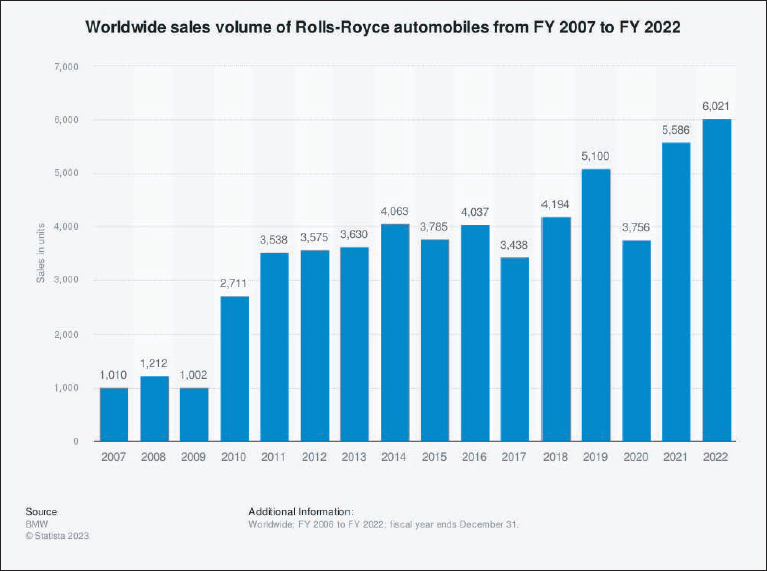
The travel restrictions put in place by governments worldwide due to the pandemic significantly impacted the demand for Rolls-Royce’s goods, particularly in the aviation industry. Due to the decline in demand, as shown in Figure 1, the company’s revenue fell, and its financial pressure rose. Rolls-Royce found it challenging due to declining demand, decreasing revenue and increasing financial pressure.
Worker Safeguarding
The pandemic mounted a severe risk to the health and safety of Rolls-Royce’s personnel, especially those who worked in manufacturing and production facilities. When feasible, the business had to implement several safety measures, including social isolation, more extraordinary hygiene precautions, and remote working. On the one hand, Rolls-Royce was under pressure to shoot up productivity; on the other hand, the company was facing a challenge to safeguard employees’ health.
Job Cuts in Rolls-Royce
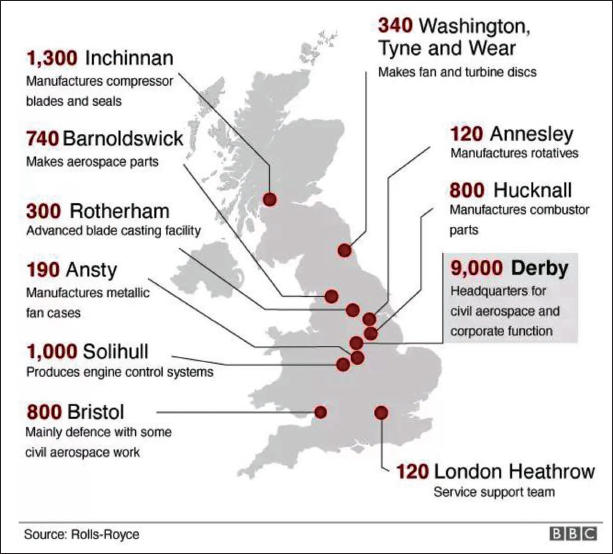
According to Rolls-Royce, as shown in Figure 2, who also predicted that 9,000 jobs would be lost due to the coronavirus epidemic, and the aviation sector would need ‘several years’ to recover.
The Breakdown of Training and Development
Rolls-Royce’s training and development programmes were also interrupted by the epidemic, which was necessary for the company to maintain its skilled personnel. The business needed to develop innovative ways to give its staff, especially those working remotely, opportunities for training and development. Rolls-Royce needed help to fulfil the disruption in the company’s training programmes.
Interruption to Skilling, Upskilling and Reskilling
As per the report by ILO (International Labour Organization, 2020b), lockdown procedures during the pandemic caused businesses and organizations to halt skill development. About 90% of employees, 83% of trainees/interns and 86% of apprentices had their training disrupted. MSMEs were particularly adversely affected in this regard. Rolls-Royce found it challenging to realign the interruption to skilling, upskilling and reskilling needs caused by the COVID-19 pandemic.
Like many other organizations, Rolls-Royce knew how the COVID-19 pandemic affected people’s lives and means of subsistence. The epidemic significantly interrupted daily life, business and education, raising stress and anxiety for many people. In response, Rolls-Royce took action to assist its personnel, clients and the general public.
Conclusion
The epidemic affected Rolls-Royce’s operations and employees’ work, presenting a problematic scenario. The company had to swiftly adjust to new working practices, such as remote work and virtual cooperation, which was one of its obstacles. Since many of its workers worked from home, the business had to develop innovative ways to give them opportunities for training and growth.
Rolls-Royce found itself in a significant predicament during the pandemic as the company grappled with the most effective approach to support its employees and the wider community. The dilemma was providing the best possible assistance to those affected by the pandemic while ensuring the company’s survival. The HR department of Rolls-Royce is now required and expected to work with the growth process and face the winds of change with the assurance of being able to adapt and provide results despite difficulties to maintain the business at the forefront. The need of the hour was to address the issue of employees’ well-being. Building people’s talents and providing the workforce the necessary learning platforms and opportunities to grow and spread their wings were major challenges for Rolls-Royce in such a turbulent environment. With a sprawling spread of employees, talent management became a gargantuan task that was impossible by traditional HR processes. Through STEM collaborations, local community, schools, and young people, Rolls Royce have already reached 6.71 million individuals by of-fering resources, role models, advice, and STEM activities by the end of 2023 (Engineering UK, 2024). Rolls-Royce planned to reach 25 million people worldwide in STEM by 2030. Due to COVID-19, Mr Adam faced a complicated situation created by challenges of addressing social segregation, ensuring worker safeguard, managing stress, anxiety and despair, mitigating the decline in demand, adapting to supply chain disruptions, addressing job cuts and training disruptions, and preparing for future troubles. Mr Adam needed to address the following case questions:
What modifications to L&D strategies should be implemented in the light of the unstable environment to guarantee the company’s continuous growth towards its long-term objectives?
How can L&D strategies change over time to remain responsive and flexible in a business environment that is constantly shifting?
How did Rolls-Royce gauge the effectiveness of L&D-related initiatives?
Enumerate the case in terms of theoretical and managerial implications.
Footnotes
Declaration of Conflicting Interests
The authors declared no potential conflicts of interest with respect to the research, authorship and/or publication of this article.
Funding
The authors received no financial support for the research, authorship and/or publication of this article
