



Abstract
Turkish Airlines has been one of the fastest-growing airlines in the past two decades. An aggressive growth strategy combined with a favourable environment helped the company to become one of the major players in the world airline industry. The global COVID pandemic between 2020 and 2022 had an enormous negative effect on the airline industry worldwide. Turkish Airlines, which has been a fast-growing airline in recent years, has also been affected tremendously by this worldwide pandemic. In addition, there have been additional challenges faced by Turkish Airlines such as increased competition from other regional players, lower economic growth as well as emerging new regulations about fuel efficiency and emissions. All these factors have put Turkish Airlines at crossroad to make some critical strategic decisions. How should the company design its strategy in this new post-pandemic era? Can it continue to grow with its existing strategy? What are the limits and risks of the aggressive growth strategy it has been following? Is there a need for changing its strategy? What should be the priorities? Like many other airline companies, these decisions will shape the future as well as the nature of competition of the airline industry.
Introduction
As the board meeting was approaching, Ilker Ayci, chairman of Turkish Airlines, was sipping his coffee before the meeting with his advisors. He was listening to the live press conference of Dr Fahretin Koca, the Minister of Health in Turkey. Dr Koca was announcing the easing of COVID restrictions, including the lift of face mask requirements in public areas. 2020 had been an unprecedented and tough year for many businesses, especially for the airline industry. Turkish Airlines as well as the entire airline industry was in survival mode at that time. Now, there seemed to be some light at the end of the tunnel and Mr Avci was thinking about what their next steps in this new era should be. He was ready to discuss the options with his advisors to come up with recommendations for the upcoming board meeting. After this survival period, shall the company continue with its historically aggressive growth strategy or is it the time to pause and slow down? It seems that it would be much riskier to pursue the same growth strategy as before and also harder to convince the board because of the higher risks. There is still a great deal of uncertainty about the future of the aviation industry. At the same time, the expectations are very high given the success of the company in recent times. Losing this growth trajectory could cause Mr Ayci his job and affect his future job prospects as well. So, Ilker Ayci was at crossroads and about to make one of the most important decisions in his career at Turkish Airlines.
When the Coronavirus was announced on 7 January 2020, no one would have guessed the enormous impact it would have on the entire world. The lockdowns and restrictions on travelling had a devastating impact on the global airline industry. Since the early months of 2020, the world aviation industry has experienced severe challenges which turned out to be the worst crisis the airline industry ever experienced. Beyond the airline industry, the COVID-19 pandemic is considered the biggest global crisis since World War II. According to estimates by the IMF, the cumulative economic loss by 2025 could reach 22 trillion USD. Like all other companies in the industry, Turkish Airlines has also been affected by this highly negative operating environment due to the COVID epidemic. However, Turkish Airlines, while being as strongly affected by this crisis as the rest of the industry has managed the first phase of the crisis relatively well and emerged perhaps as one of the lesser damaged airlines from the crisis.
Turkish Airlines was named the best airline in Europe for six years in a row. More importantly, in 2020, it was classified as a five-star airline for the first time in its history, putting the airline among the best and most prestigious airlines in the industry. In this case, we are going to discuss the successful growth story of Turkish Airlines, as well as its crisis management to overcome the challenges of the pandemic in the airline industry. We will also discuss the future challenges faced by Turkish Airlines as well as the industry in the coming years. The main questions faced by the management of Turkish Airlines are as follows: first of all, is the growth strategy sustainable in the coming years? What are the factors that are against and in favour of further growth? Should management revise its aggressive growth strategy? What are the potential benefits and costs of a continued growth strategy? How has Turkish Airlines managed the COVID crisis and what else could have been done? How does it compare to how other airlines have dealt with the crisis? What is the outlook for the airline industry in the coming years? What will it take to be successful in this industry given recent and future challenges? Although all these questions are important, the main decision that Ilker Ayci needs to decide is how he is going to shape the future of the company. The company has been pursuing an aggressive growth strategy with the support and encouragement of the Turkish government, which is a major shareholder. The company is at a crossroads with a crisis and a new environment. Most of the other major airline companies are trying to downsize to survive this crisis as they are under financial stress. Should the company take advantage of that and accelerate its growth strategy or shall it focus on the areas/routes that are more profitable and alter its growth plans? This crisis can provide an opportunity for the company to grow further and increase its market share. On the other hand, there is uncertainty regarding how long the pandemic will take and whether consumers’ travel behaviour will be back to normal or not, which makes the growth option very risky. Even if the company chooses to have a growth strategy, what will be the direction of this strategy in terms of regions and business segments? This dilemma that company management faces requires a very critical strategic decision that will shape the future of the company.
Company Background
Turkish Airlines, the national airline of Turkey, was founded on 20 May 1933 as the State Airline Company with a fleet of five aeroplanes and a staff number of less than 30 (Turkish Airlines, 2023). In its initial years, it served primarily as a domestic airline with its first international flight taking place in 1947 to Athens. Turkish Airlines like many national airlines of the time, was primarily serving its citizens and to a smaller degree foreigners travelling in and out of the country. When the increased migration of Turks to European countries began in the 1960s and continued in the 1970s, Turkish Airlines increased its destinations to major European cities. In the 1980s, the Europeans as well as several Middle Eastern destinations were the major international destinations served by Turkish Airlines. Until the 1980s, the airline was run essentially as a government organization with inefficiencies, technical problems, poor employee relations and customer service. The airline was primarily serving Turkish citizens. In the late 1980s, the airline became semi-independent and under new management started a series of reforms that laid the foundations of success that it reached decades later. After intense efforts in the last three decades, Turkish Airlines has become a major global airline serving annually more than 60 million passengers.
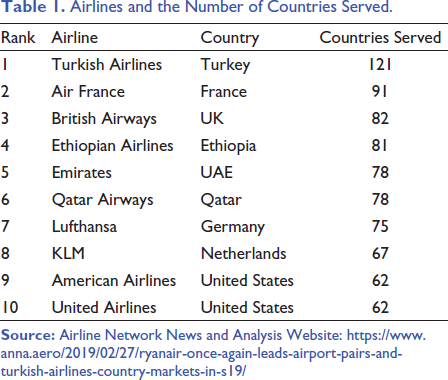
The success of the company can be mainly attributed to its business model. Turkish Airlines has mainly focused on providing a unique experience to its customers by using Turkish hospitality as a way to differentiate itself from its competitors, especially when compared to other European Airlines. The numerous awards Turkish Airlines received, which will be discussed later, demonstrate the focus on the quality aspect of experiences in its business model. Company representatives indicated this notion on various occasions (e.g. Adiloğlu-Yalçınkaya & Besler, 2021) pointed out Turkish Airlines to be a ‘full service company’, referring to the experiences provided to passengers. Another main pillar of its business model has been the emphasis on connecting the East and the West. Given the advantageous geographic location of the company, the goal has been to make Istanbul an international hub for connecting flights between the East (Asia/Africa) and the West (Europe/North America). Having the highest number of destinations worldwide (Table 1) demonstrates how important this goal has been in the business model of the company. The details of the business model will be explained in the following sections.
Airlines and the Number of Countries Served.
The Initial Take-off
In 1988, Cem Kozlu who has an MBA from Stanford University, became the new CEO and President of Turkish Airlines. He served at Turkish Airlines between the years 1988–1991 and 1997–2003. The main mission of Cem Kozlu was to turn the airline into a successful and market-oriented company. Among his first goals was to increase the efficiency by better utilization of the aircraft. To accomplish this, the airline started to better use the different timelines called waves. For the first time, the airline was consciously targeting international passengers who would not fly in or out of Turkey but who were flying in transit and using Istanbul as a hub for their final destination. The idea was not only to get additional customers but also to increase capacity utilization during time periods when the aeroplanes were mostly on the ground. Under Cem Kozlu’s leadership, the main philosophy was ‘putting people first’, which implied both the management of employees as well as servicing the customers. When Cem Kozlu, left the company in 2002, he had transformed the airline from an inefficient airline to a market oriented, financially successful international airline company. During his tenure, Turkish Airlines vastly improved its technical capabilities, employee and service quality and significant operational improvements such as on-time departure and in-flight service.
Reaching Further Heights
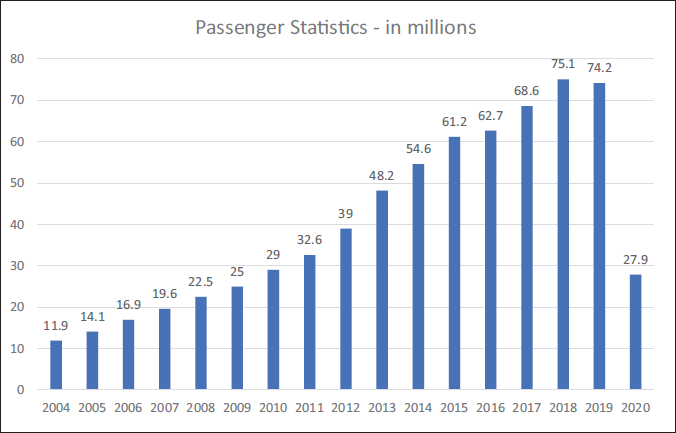
After Kozlu’s departure from the company, Temel Kotil became the new CEO of Turkish Airlines (Turkish Airlines, 2003). Kotil had received his PhD from the University of Michigan in Aeronautical engineering and worked as a professor at Istanbul Technical University. Upon his appointment, he embarked on an ambitious growth plan. Built on the solid foundation that his predecessor had built, the plan was to increase the fleet size and drastically increase the number of destinations. Another development was the further privatization of the company. The shares held by the government fell below 50% in 2006, which effectively changed the status of the airline to a private firm. In the following years, Turkish Airlines continued its growth strategy adding new planes and destinations. All these initiatives and changes allowed the company to double its number of passengers from 2011 to 2017 (Figure 1). As can be seen in Figures 2 and 3, the growth continued after 2017 as well until the pandemic hit. There was a big hit in 2020 in both the number of flights and the number of passengers as a result of the travel restrictions and lockdowns in several countries.
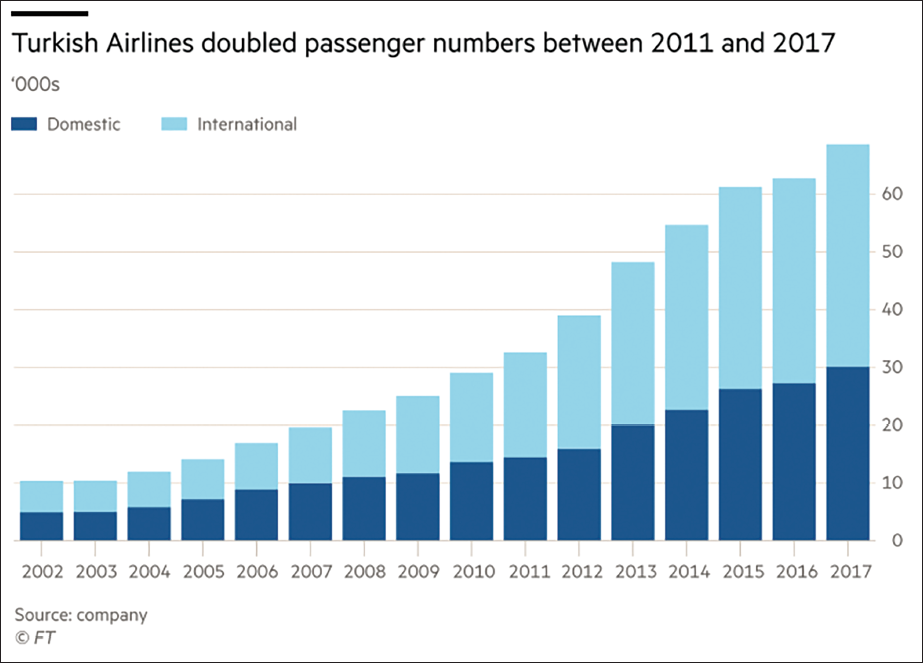
Number of Passenger Seats of Turkish Airlines (2004–2020).
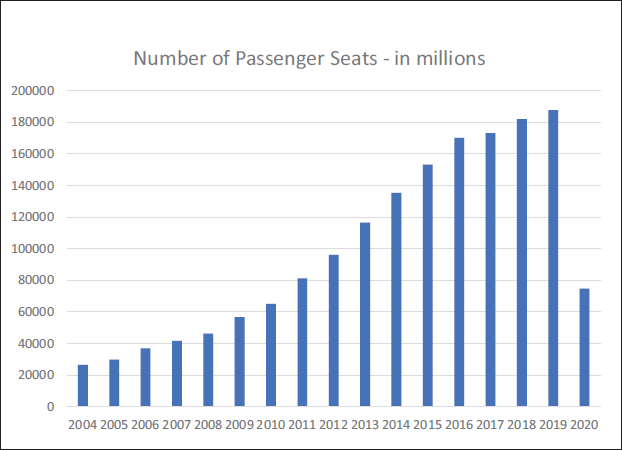
Passenger Statistics of Turkish Airlines over Years (2004–2020).
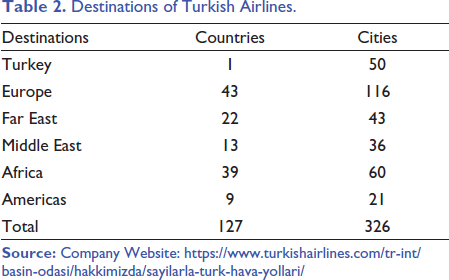
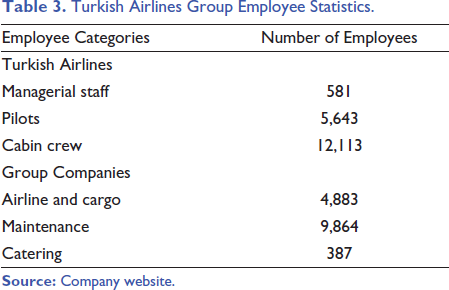
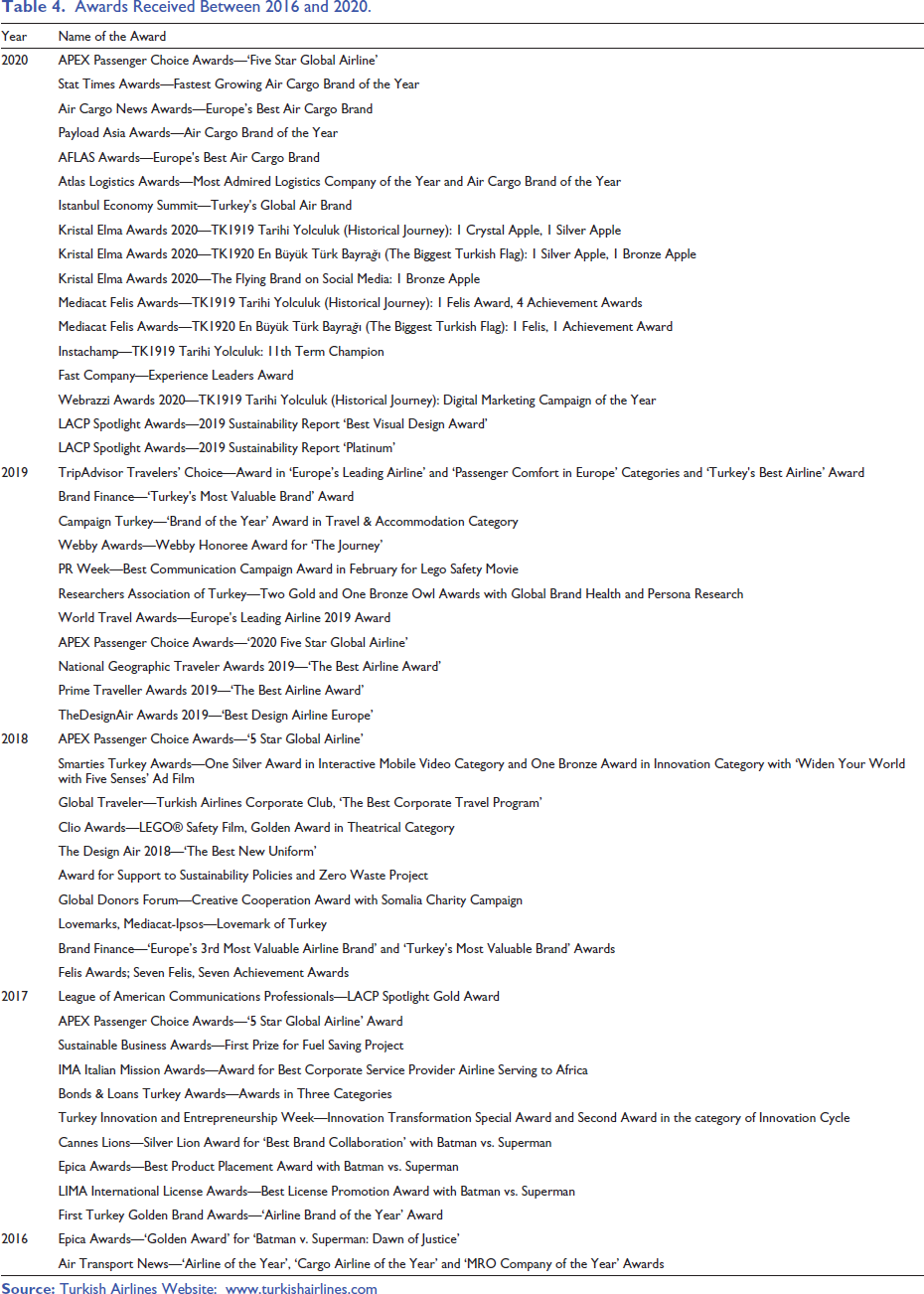
Today, the airline with its fleet of approximately 360 aeroplanes, flies to over 120 countries with 319 destinations worldwide being the leader in terms of the number of destinations served (Turkish Airlines, 2020). The destinations that the airline is flying now have become very diverse and its flights are practically reaching all regions in the world (Table 2). However, Europe, Africa and the Middle East are the top three areas in terms of destinations for Turkish Airlines. Turkish Airlines is running its operations with a total number of 33,471 employees, including 5,643 pilots and 12,113 cabin members (Table 3). Turkish Airlines was named as the Best Airline in Europe by Skytrax for six years in a row between 2011 and 2016. More importantly, it was named the 2020 Five-Star Global Airline for the first time in its history by the Airline Passenger Experience Association (APEX) (TRT World, 2019). The company has received several awards, which can be seen in Table 4.
Destinations of Turkish Airlines.
Turkish Airlines Group Employee Statistics.
Awards Received Between 2016 and 2020.
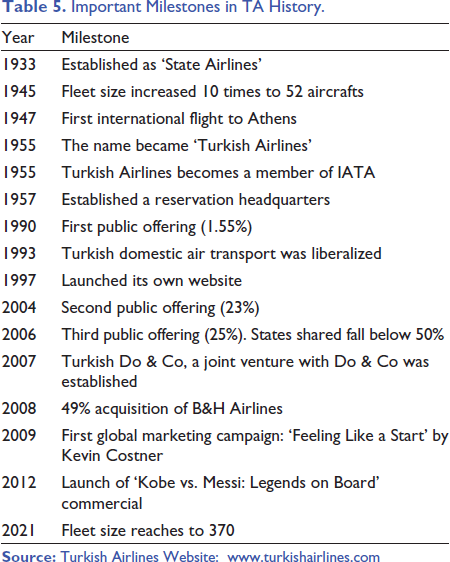
In 2019, Turkish Airlines moved to its new base, the newly opened Istanbul Airport. This new airport with an initial capacity of 90 million passengers annually would eventually reach a capacity of up to 200 million passengers when all the phases of the airport are completed. Clearly, Turkish Airlines’ new growth in the future would depend on a world-class grand airport (Pitel, 2018). The main milestones in Turkish Airlines’ journey are provided in Table 5. However, shortly after moving to the new Istanbul Airport the growth plans of Turkish Airlines were shattered with the onset of the COVID pandemic at the end of 2019 which broad the world to a standstill in early 2020 with lockdowns and travel restrictions. This crisis was a huge shock to the entire airline industry as the industry became one of the worst affected industries worldwide. In the initial months of 2020, travelling by air almost came to a stop worldwide. After the initial shock from March to June 2020, flights started to resume but at a much lower level than before the pandemic. Various travel restrictions and testing requirements have reduced the passenger numbers and consequently the flight numbers enormously. According to a McKinsey report (Bouwer et al., 2022), the passenger numbers in 2020 went down more than 50% for the year in comparison to 2019. The global airline industry loss was close to $170 billion in 2020. Mr Ayci, the chairman of the company, managed this challenging time very successfully and the company had a financially sound year in 2020. But, he is at a point where critical decisions need to be made about the future of the company as things started to get back to normal and board members are expecting a new strategy from him.
Important Milestones in TA History.
Health Measures
After the COVID crisis started in early 2020, the increased need for safety led Turkish Airlines to make serious efforts to reduce the health risks for flying. These measures were taken in cooperation with APEX and SimpliFlying. These extensive efforts have enabled the company to achieve the Diamond status, which is the highest-level status given for health-related measures. The airline was thus recognized for its extensive hygiene measures that was very critical during the pandemic. These measures allowed the airline to address the main concern of airline passengers since the COVID crisis hit the airline industry in early 2020. Along with this measure, the Turkish government continued to allow airline flights to many countries during the pandemic while constantly updating and revising the list of countries to which airlines were allowed to fly. Along with the cost-cutting measures that were introduced to maintain all its existing employees, these extra health initiatives allowed Turkish Airlines to be one of the most flying airlines during the pandemic that hit the airline industry.
Cargo Fleet
Prior to the pandemic, Turkish Airlines flew to 319 destinations around the globe—more than any other airline. In 2020, the company grounded some of its aircraft due to the COVID-19 pandemic. However, it broke new ground globally by including 50 of its passenger aircrafts in the 25-aircraft cargo fleet. This was consistent in Chairman Ayci’s comments in an interview: ‘Turkish Airlines is trying to adapt very quickly to the pandemic, because there are fluctuations in the market, especially internationally, causing so many inconsistent or unexpected situations’ (Harper, 2021) and ‘I don’t like having sleeping beauties [on the ground], especially when they are very expensive!’. These statements reflect the way the chairman looks at the segment and how the company turns the crisis into an opportunity. As a result of adaptation and response, the company boosted its market share the most in cargo transport. Turkish Airlines carried one out of every 20 shipments worldwide in 2020 (Harper, 2021). The company also received several awards in cargo during the year 2020 including the Fastest Growing Air Cargo Brand of the Year by Stat Times Awards, Europe’s Best Air Cargo Brand by Air Cargo News Awards, Air Cargo Brand of the Year by Payload Asia Awards (Table 4), etc. The great cargo expansion has led the company eyeing a place in the top three for air cargo business. This was also triggered by the demand in the market. Although the air cargo volume declined by 15%, the flights available for air cargo declined even further by 75%, which created an imbalance between demand and supply (Toll Group, 2021). This created a huge opportunity for the company. Turkish carrier’s goal is to grow the cargo business and transport one out of every 10 shipments globally. To achieve this goal, there are also discussions about developing Turkish Cargo into a subsidiary rather than a sub-brand, which is a decision that Mr Ayci needs to make in his recommendation to the board.
Pay Cut and Time-off
Once the COVID crisis started and the flights were stopped the airline decided not to lay off its employees. Instead, it put the employees on unpaid vacation with supplementary pay received from unemployment insurance. As a second step, it reduced the salaries of its employees between 30% and 50% with the promise to adjust them back once the pandemic crisis is over and the airline recovers. This allowed the airline to significantly reduce its personal costs while avoiding layoffs. In contrast, many other airlines laid off their employees to adjust their cost structures with the decreased demand.
Overview of the Airline Industry
Environmental Analysis
As it is the case with any other industry, the airline industry is subject to broader environmental (external) factors. Perhaps one of the most significant of these factors is the political/legal environment. The airline industries are strictly regulated both domestically and internationally. Strict operational standards and requirements are to ensure the safety of airline travelling. The industry is also very sensitive to the political situations of countries. Political instability due to situations such as unrest, crisis and conflicts can have a significant impact on the airlines. Another major factor is the economy. A recession or economic downturn can affect the demand of airline travel negatively. Likewise, an increase in fuel costs can significantly raise the cost of operations and affect the bottom line of airline companies. Another important environmental factor is related to technology. Newer aeroplanes bring advantages to the airlines in terms of better safety, lower maintenance and operational costs. This can include lower fuel costs due to lighter weight and more efficient engines. Finally, another emerging important factor in the airline industry is related to ecological factors. Airline companies are one of the biggest users of carbon energy sources and, therefore, a significant contributor to pollution. There is going to be much more pressure on the airlines in the future to become ecologically more friendly. While this is a challenge, it is difficult in the near term as alternative energies to power aircrafts are not on the horizon yet and air travel is expected to increase in the foreseeable future.
Industry Analysis
In the global airline industry, there are large players in each region. Since the airline industry is restricted in the sense that airlines can operate only out of their home country as their main base, this makes it difficult to consolidate the market internationally. Likewise, foreign airlines are not allowed to operate flights in a domestic market. Therefore, airlines have a home court advantage as no foreign airline is allowed to operate bases in other countries. As a result, there are significant barriers to entry in terms of geographical access to markets, which provides important protection to airlines from international competition. Competition is based more on routes rather than other factors. In other words, competition is based on the number of airlines flying between two destinations rather than the number of total competitors in the market. On the other hand, the rise of international transfer flights in recent years has increased the competition as this gives the customer more choices to fly (indirectly) to different destinations. Due to this reason, many airlines have formed alliances and code-sharing agreements to complement each other and to increase their efficiency due to the increased international competition. It is also due to this increasing competitive pressure that recent years have been marked by several mergers and acquisitions in the airline industry. This is especially true for the European airline industry where too many airlines existed historically and still exist today in a relatively condensed market. It would be safe to predict that further consolidation is likely in the future. Mergers and acquisitions are also likely to happen in the future for the larger airlines to gain access to the domestic/regional markets.
In terms of competitive intensity, the airline industry is generally considered a very competitive industry earmarked by relatively low levels of profitability. This is essentially due to excess competition and the difficulty for the airline companies to differentiate themselves. While there is room for differentiation, as demonstrated by some of the successful airlines, it is overall more difficult to achieve when compared to many other industries. Airlines fly similar aircraft, use the same airports and are subject to strict operational and safety standards. All these factors make it difficult to differentiate. Nonetheless, several airlines have succeeded with differentiation. Examples like Emirates, Singapore and Turkish Airlines are evidence that it is possible to create some differentiation advantage. Factors such as reliability, safety, in-flight service and catering have been used by these successful airlines to differentiate themselves. While airlines have been successful with differentiation, others have been successful through following a low-cost strategy. Ryan Air in Europe, and Southwest Airlines in the United States, are just a few examples of this low-cost business model. There are many other airlines successfully following this business model in other countries. Table 1 presents the top 10 airlines in the world in terms of their number of destinations. Turkish Airlines is at the top of the list as it flies to more destinations than any other airline in the world.
Major Competitors
There are three major airlines and competitors in the region. These airlines are Emirates Airlines, Qatar Airways and Etihad Airways. Since Turkish Airlines is in close geographical proximity to the three Gulf Airlines, there is a close overlap in the markets served. All three competitors serve as major transit hubs in the region connecting the Middle East, Asia, Europe and Africa. Emirates is the largest airline among the three. Qatar and Etihad Airways are relatively newcomers to the market but have grown very fast due to their vast financial resources.
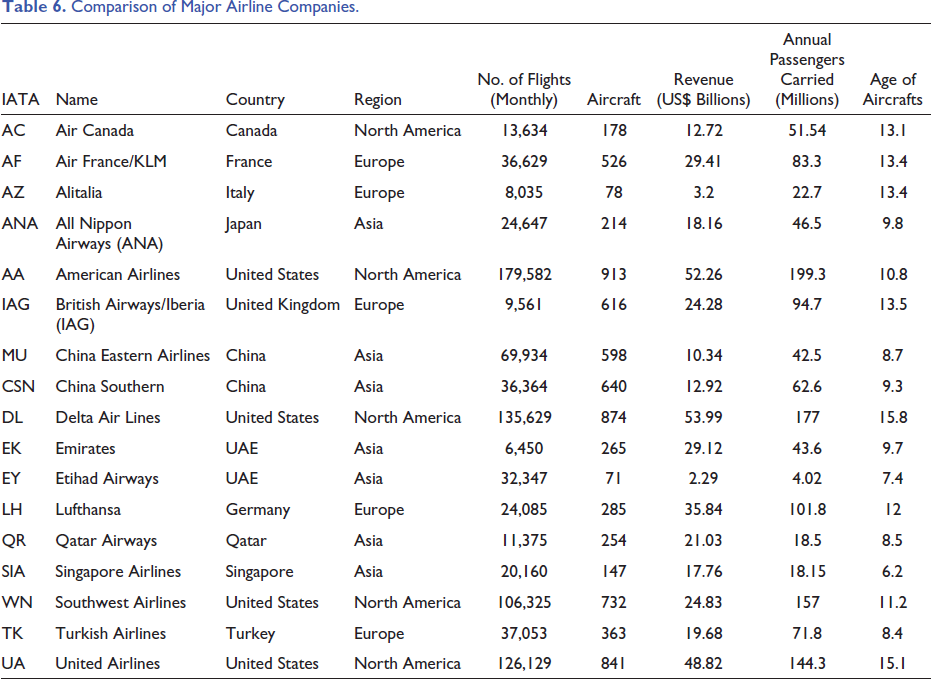
The Middle East’s largest three airline companies, Emirates, Etihad Airways and Qatar Airways, are among some of the most recognizable airlines in the world (Venckunas, 2021). Turkish Airlines have similar characteristics in terms of having aggressive growth and marketing initiatives as well as aiming to be the choice of passengers that travel between the East and West. Therefore, it has always been compared to three big players from the Middle East. One of the areas that Turkish Airlines is ahead of its Middle Eastern rivals is the number of destinations. Before the pandemic started in 2020, Turkish Airlines’ network doubled Emirates and Qatar and was three times bigger than Etihad Airways (Toll Group, 2021). Another advantage Turkish Airlines has compared to these rivals is the larger fleet size. With regard to the cargo business, Emirates has the largest cargo aircraft capacity and was the biggest among these carriers in terms of the cargo business (Toll Group, 2021). But, when it comes to the sales generated, Emirates is by far the leader among these companies (Table 6). Despite having the largest fleet and carrying more passengers, the sales figure of Turkish Airlines is very close to Qatar Airways, which can be explained by the destinations companies fly and the type of flights they have (Toll Group, 2021).
Comparison of Major Airline Companies.
Behind the Success of Turkish Airlines
Turkish Airlines is the most valuable brand in Turkey (Daily Sabah, 2021), and it has been moving in the direction of becoming a global company. Several factors both internal and external have contributed to the success of the company.
Structure
Turkish Airlines was fully state-owned until 1990 and periodically went on to become a publicly traded company. Privatization efforts have changed the mentality of the company. Managers and employees were affected by this transition in terms of a change in the mindset and having customer satisfaction as the priority. That is reflected in the growth of the company as well as the awards the company received over the subsequent years (Table 4). Today, despite 50.88% of its shares being publicly traded (Adiloğlu-Yalçınkaya & Besler, 2021), the majority owner is still the state. This situation can affect the company in negative ways in terms of decisions taken being affected by politicians. One of the executives of the company explained the situation as follows: ‘The difference between Turkish Airlines and its competitors is that it is a state-owned carrier. So, commercial decisions are affected by issues such as national interests’ (Adiloğlu-Yalçınkaya & Besler, 2021).
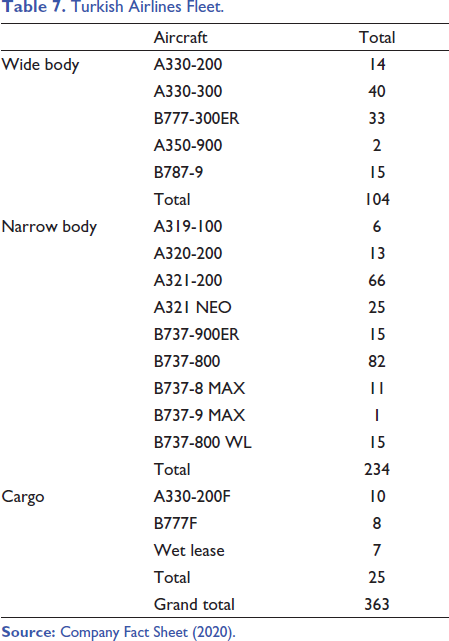
Having the state as the majority owner has some benefits as well. For instance, this lowered the pressure on the company in terms of generating profits and distribution of dividends, which allowed the management to invest most of the profits in new aircraft and marketing initiatives. The company has been very aggressive in expanding its fleet over the years. As a result of this expansion, the fleet size increased to 363 by the end of 2020 (Table 7). The most recent order was made in 2018 when the company decided to purchase 30 B787-9 and 30 A350-900 aircrafts from Boeing and Airbus (Turkish Airlines, 2020). However, the delivery of Airbus aircrafts, scheduled for the beginning of 2020, was postponed due to a halt in production (Tokyay, 2020). On the other hand, government support in different ways helped the company to add new routes. The Turkish government has also been very aggressive in expanding trade relations with emerging markets and has pushed Turkish Airlines to fly to more destinations in these regions. That resulted with a more proactive strategy with Turkish Airlines and allowed the company among the first movers in regions like Africa. In addition, unlike the airlines in the Gulf region, the company does not have infinite financial resources. This motivated the company managers to work harder and use financial resources more responsibly and effectively.
Turkish Airlines Fleet.
Human Resources
The employees of Turkish Airlines are dominantly Turkish. Turkey has a young and growing population and Turkish Airlines has not faced any shortcomings in recruiting new employees. That created stability and consistency in human resources. This led to a less diverse set of employees compared to many rival companies, especially compared to those from the Gulf region. A diverse set of employees results with more perspectives and ways of solving problems (Simple Flying, 2020). Emirates, one of the most diverse airline companies in the industry, on average has cabin members from 15 nationalities during a flight (Tadros, 2019). Turkish Airlines does not have this kind of diversity in its workforce as most of its employees are Turkish. This, however, brings its own advantages as the airline has a much lower turnover and less complexity in managing employees. Managing employees from different countries and cultures brings several challenges regarding maintaining a coherent company culture. In contrast, a homogeneous workforce makes it easier to manage and motivate the workforce. In addition, the company uses Turkish hospitality to motivate employees for customer service. This helped the company to provide great customer service which was one of the main differentiating points for the company (Tadros, 2019). Thanks to Turkish labour regulations that prohibit company employees to be part of more than one union, Turkish Airlines had to deal with only one union, representing all its employees. The relations with unions are much more complex and challenging for airline companies in Western countries. In addition, base salaries are lower in Turkey compared to many other major countries in the world. This helped Turkish Airlines to lower its personnel costs. This has been one of the advantages that Mr Ayci has been thinking of in terms of shaping the strategy of the company for the post-pandemic year.
Partnerships
One of the most important milestones in the history of Turkish Airlines took place when the airline entered the Star Alliance, which is the world’s largest global airline alliance. Becoming a member of Star Alliance helped Turkish Airlines to offer more destinations under a single ticket. Having the ability to increase more routes without making additional investments made the company more flexible and powerful in the competition (Daily Sabah, 2021). This partnership also forced the company to make improvements in its IT infrastructure and other operational aspects, which improved the efficiency of the company. Becoming part of an international alliance increased the visibility of the company and led them to make many changes in operations including changing the uniforms crews were using (Daily Sabah, 2021). By benchmarking other airline companies in the alliance, Turkish Airlines was also able to make improvements in other areas such as technical, catering, etc. (Daily Sabah, 2021). In addition to its membership with the Star Alliance, Turkish Airlines formed numerous other marketing partnerships with other airlines such as Japan Airlines, Austrian Airlines and Swissair, which allowed the company to offer more flights to cities in the home countries of those airline companies (Daily Sabah, 2021).
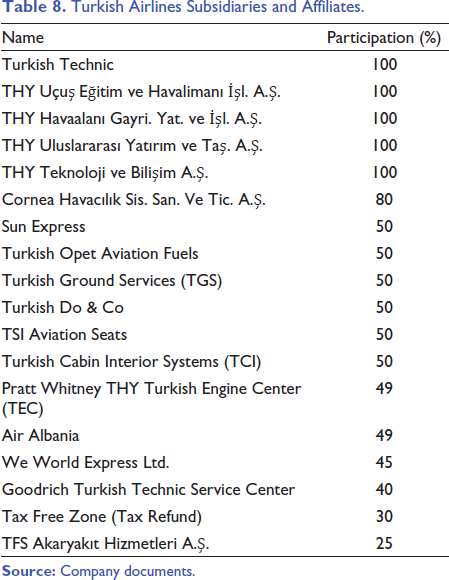
The company also engaged in partnerships in terms of joint ventures. One of the most successful joint ventures took place between Turkish Airlines and Do & Co restaurant and catering company based in Austria (Tadros, 2019). The company uses this joint venture for most of its catering needs, which helped the separate entity to grow very fast along with Turkish Airlines. Having control over catering allowed the company to make innovations in this area and increased customer satisfaction. With the help of this joint venture, Turkish Airlines has received many awards in this area of the business (Table 4). In addition to providing consistency in the offerings, the joint venture allowed to control both the quality and costs of food services. As a result, catering has been one of the key competitive advantages of Turkish Airlines. While many other airline companies lowered the quality of the catering services due to cost concerns, the innovative initiatives of Turkish Airlines allowed it to differentiate itself from many rivals. Turkish Airlines has also invested in many other suppliers at different levels (Table 8).
Turkish Airlines Subsidiaries and Affiliates.
External Factors
There are several external factors that have contributed to the success of Turkish Airlines. The geographic location of Turkey makes Istanbul a natural hub to connect west and east. A lot of passengers who want to travel from Europe (and North America) to Asia or Africa choose Istanbul as a connection point. The new Istanbul Airport was a big infrastructure investment by the Turkish government aimed at making Istanbul the biggest hub in the region. The new airport was opened in April 2019 and when fully completed will offer an annual passenger capacity of up to 200 million along with six runways (Singh, 2021). The airport provides a huge cost advantage as it allows Turkish Airlines to operate in a single terminal. Even without reaching its full capacity, the airport became the first airport in Europe in terms of number of passengers hosted at the end of 2020 (Turkish Airlines, 2020). In addition, Istanbul has been one of the most visited cities not only in Europe but in the world as well. This improved the visibility of the company tremendously.
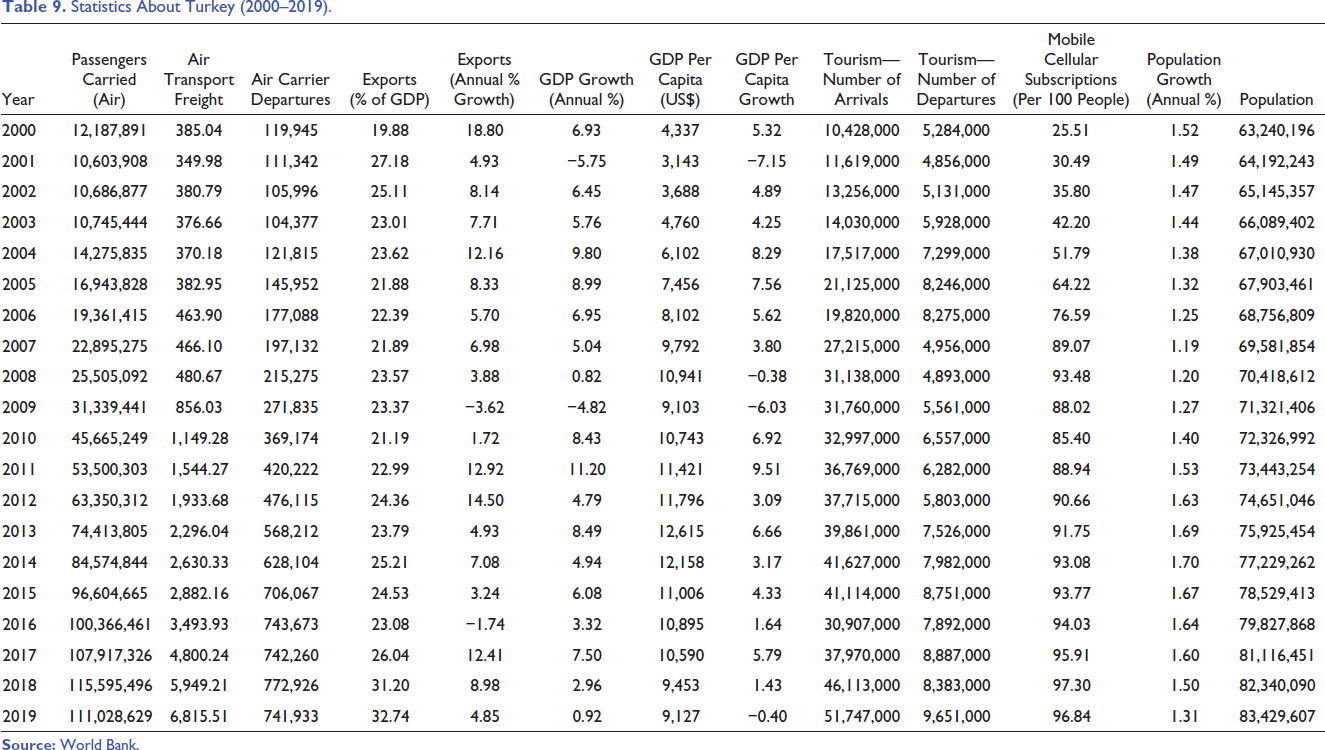
The high growth of the Turkish economy after 2000, although it has recently started to level off, increased the income levels of the middle class (Table 9). This combined with Turkey being the second most populous country in Europe, increased the demand in the domestic as well. Turkey has shown tremendous growth in most of the economic variables including GDP, income per capita, exports, number of tourists, etc. (Table 6). These macroeconomic indicators made it easier for Turkish Airlines to pursue its aggressive growth strategy. However, the Turkish economy is not doing very well in recent years, and it is far from the era of high growth rate. Geopolitical problems in the region also lowered the number of tourists that visit the country, which has been instrumental in Turkish Airlines’ growth. So, these external factors will play an important role in how the company will shape its post-pandemic strategy.
Statistics About Turkey (2000–2019).
Acquisitions and Integration
Turkish Airlines followed a vertical integration strategy. It has subsidiaries in many of the related sectors such as catering. Establishing and/or acquiring businesses that support the operations of Turkish Airlines was used as a strategy to strengthen the position of Turkish Airlines (Alcácer & Çekin, 2015). For instance, the joint venture with an Austrian catering company helped Turkish Airlines to have more say and input in designing its food menu items. That in turn became one of the strengths of the company. The company has also engaged in horizontal integration and acquired airline companies with the hope of creating economies of scale and scope benefits. The initiatives in that aspect were not as successful as vertical integration initiatives. For instance, the company had a partial acquisition of Bosnia and Herzegovina Airlines in 2008. The acquisition failed and the company had to divest all of its investments in 2012.
Marketing
Turkish Airlines used global marketing initiatives to strengthen its brand name and spent a huge amount of money over the years. They worked with globally known figures such as Lionel Messi, a football player from Barcelona, Kobe Bryant, an NBA superstar, well-known Hollywood actors Kevin Costner and Morgan Freeman, Dr Oz, a celebrity in the United States, etc. Turkish Airlines sponsored many international sports events and teams, especially in Europe, which is the biggest market for the company. It has been the title sponsor for the European Basketball League as well as sponsoring many teams such as Barcelona, Manchester United and Borussia Dortmund, the Turkish Football Federation National Team and Basketball Turkish Basketball Federation National Team. The amount of money spent on these commercials and sponsorship was huge compared to Western airline companies. That increased the visibility of the company, especially in the Western world along with competitor airline companies from the Middle East, which also spent aggressively on marketing initiatives.
Current Challenges and the Future of Airline Industry
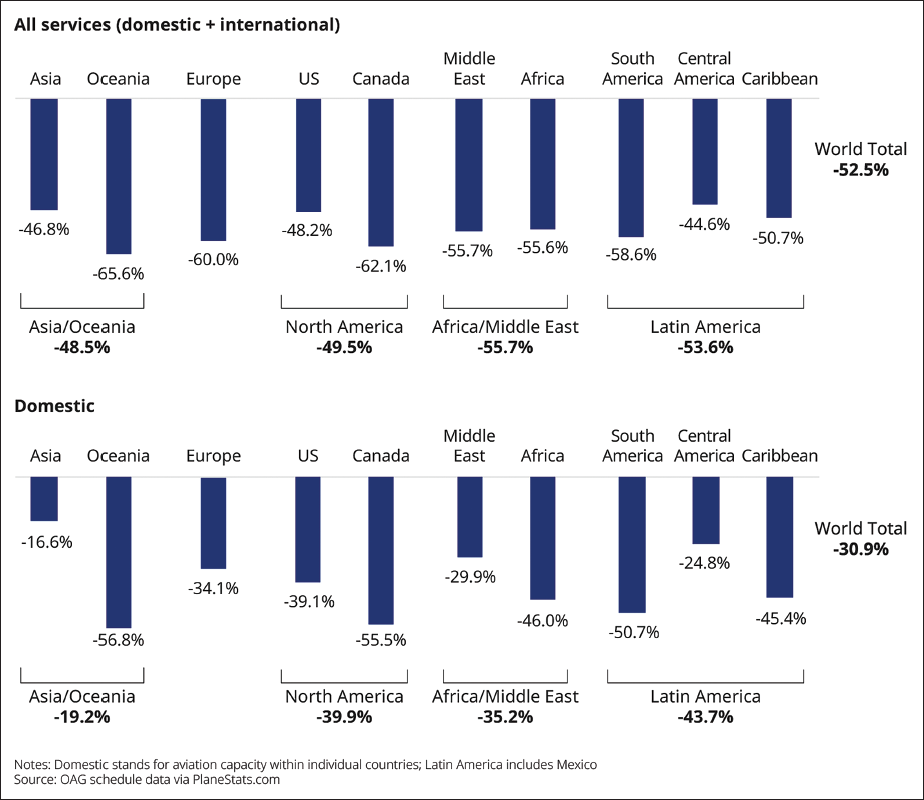
The airline industry had faced crises in the past before such as the 2008 financial crisis, 9/11 attacks, etc. However, the COVID-19 virus and the worldwide pandemic were probably the biggest crisis to hit the sector in recent history. It changed the dynamics of the airline industry as it never experienced such a shock before. Passenger demand evaporated almost completely after the pandemic hit the world as countries closed their borders and started lockdowns one after another in order to stop the spread of the virus (Barlas, 2021). Airline services in all regions of the world declined significantly in 2020 (Figure 4). All of a sudden, the industry lost 20 years and went back to the levels of 2003 (Barlas, 2021). Airline companies reported billions of dollars in losses, laid off thousands of workers, lost as much as 50% of their market shares, etc. Many airline companies such as Emirates, LOT, Austrian and Etihad grounded most of their fleets during the pandemic and cancelled the majority of their flights (Barlas, 2021). Those that continued operations did so at a much lower capacity and with minimum schedules (The Global Treasurer, 2020). All these challenges create a lot of uncertainty for the future of the industry. It is argued that the industry will enter a new era of consolidations and an environment of the ‘survival of the fittest’ (Barlas, 2021). With all these challenges and uncertainty, it is unknown whether the company will be able to continue with its traditional growth strategy. As the entire industry was facing these serious challenges, Turkish Airlines was also affected significantly. Ilker Ayci, the Chairman of Turkish Airlines, stated the challenges as follows:
Capacity management, resources management and risk management are more challenging than ever. Every month, every week and every day you are making new plans or reshaping plans and adapting yourself and at the end of the day, it is very challenging because of a very inconsistent decision-making process across global regulators. (World Pharma Today, 2020)
The sales and profitability declined significantly in 2020 due to the pandemic. The only area in which the company realized an upturn was in cargo volume with a 61.3% increase Turkish Airlines (2020). This was the result of the high need for COVID-related products such as sanitizers, masks, health equipment as well as due to challenges of other supply/transportation alternatives. In that year, Turkish Airlines had the highest growth rate among the best 25 air cargo carriers, which made it the fastest-growing air cargo in the world (World Pharma Today, 2020). The Chairman of Turkish Airlines, Ilker Ayci, stated:
Just like our nation, we are a company that cannot abide losing or giving up. During these difficult days where the only thing we can do is to carry cargo, we are doing our duty to the best of our abilities while doing valuable work for humanitarian and commercial ends. The success of Turkish Cargo shows our commitment to carry our country to a central position in the world for the air cargo sector. Our geopolitical location and available means will help our country to become a more significant player in the air cargo sector following the COVID-19 pandemic. 16
Mr Ayci’s statement gives a signal about how the company views the future of air cargo business and its importance for them. The company’s ambition about cargo is supported by the overall trend. Experts believe that the sector is going to look much different after the pandemic and the air cargo will have a larger position in the mix of cargo transportation. One of the reasons for this projection is the huge increase in e-commerce after the pandemic. We expect to see much more trade across borders through e-commerce, and this will increase the demand for air transportation. In addition, the speed of transportation has become a more important factor that companies consider given the supply chain disruptions in ocean freight, which also makes air cargo more attractive. Companies now have a better understanding of diversification as they had huge issues with the disruptions in ocean transportation. With this risk management, they are expected to use air cargo as a safer mode of transportation, which is another factor that can trigger the demand.
Most of the airlines survived during this difficult time with the help of government subsidies. For instance, France-KLM has received a 7-billion-euro bailout from the European Union (Barlas, 2015). Companies that did not get financial support from governments have faced bigger issues as in the case of Virgin Australia, which had to cease their operations in 2020 (Barlas, 2015). Financial relief measures by governments saved airlines from going bankrupt but increased the debt level in the industry to $550 billion (AviTrader, 2020). There were very few exceptions of companies that were able to generate profits during the pandemic. Ethiopian Airlines was one of those companies and finished 2020 with cash positive thanks to its decision to convert 25 passenger aircraft for cargo operations (Harper, 2021). Unlike many other airline companies, Turkish Airlines has not received any bailout from the government, which means the company needed to come up with some strategic decisions to overcome the serious challenges it was facing. One of the initiatives taken after the pandemic started was to lower costs. Total expenses declined by 53% which amounted to $1.1 billion in savings. This was the highest saving rate among all European airline companies. The company was also able to avoid layoffs during the pandemic and kept all of its 66,000 full-time employees at work but had to cut salaries (Chui, 2021). With the help of the Turkish Government, the company was able to broker a deal with the union and cut wages for 2021 by up to 50% (AviTrader, 2021). The deduction in salaries was 30% for ground employees, 35% for cabin employees, 50% for cockpit employees, and 30% for seniority payments of all other employees (Singh, 2021). As one of the very few airlines that did not lay off its employees, the company hopes to take advantage of this in terms of higher employee loyalty and performance when the pandemic is over as Ilker Avci stated:
Once the pandemic is over, with the decision keeping our strong staff, we will be able to offer better service and perceive the recovery quicker due to no layoffs compared to other carriers with layoffs. (World Pharma Today, 2020)
The pandemic was not the only challenge the company faced recently. The Turkish economy, which also has been a driving force behind the company’s growth and success, has been stagnant or showed very little growth in recent years. The growth rate of the Turkish economy has declined in the last couple of years, even before the pandemic (Table 9). The Turkish economy, which used to grow around 5–10%, achieved growth rates of only 2.96 and 0.92 in 2018 and 2019, respectively. Declining growth rates affected the travel prospects of Turkish customers, who are the main customer segment of the company. Another issue is the instability in the region. The civil war in Syria, political instability in Iraq, tension in Cyprus, political problems between the Trump Administration and the Turkish government, etc. were among the factors that have added to the insatiability of the region. Combined with the pandemic, these factors caused a decline in number of tourists and visitors to Turkey. As a result, the number of passengers declined in 2019, which happened for the first time in the last 20 years (Table 9). All these issues have created additional challenges for Turkish Airlines which necessitates a reassessment of its strategy for growth.
What Is Next for Turkish Airlines?
As of 2021, a year after the pandemic has started, challenges still existed. However, there is also hope for the future as restrictions for travelling started to ease. As Alexandre de Juniac, IATA’s Director General and CEO, states:
The worst of the collapse in traffic is likely behind us. A key to the recovery is universal implementation of the re-start measures agreed through the International Civil Aviation Organization (ICAO) to keep passengers and crew safe. And, with the help of effective contact tracing, these measures should give governments the confidence to open borders without quarantine measures. That’s an important part of the economic recovery because about 10% of the world’s GDP is from tourism and much of that depends on air travel. Getting people safely flying again will be a powerful economic boost. (IATA, 2020)
By the end of 2020 and within less than a year, several vaccinations were approved by various governments and began to be administered soon afterwards in many different countries. As the vaccinations have started, many countries have considered opening their economies and borders with the necessary measures taken. Airline companies hope that the year 2021 will be the start of the recovery and want to be more hopeful about the future of the industry. As many more borders started to be opened and the demand for airline travelling is expected to rise in 2021, the industry is expected to cut its losses to $15.8 billion for a net profit margin of −2.6% (Daily Sabah, 2021). Airlines hope to recover in 2021, but it probably would take more time, possibly years, to return to pre-pandemic levels. When asked about the projections about 2021, Juniac was cautiously optimistic and said:
Airlines will still be financially fragile in 2021. Passenger revenues will be more than one-third smaller than in 2019. And airlines are expected to lose about $5 for every passenger carried. The cut in losses will come from re-opened borders leading to increased volumes of travelers. Strong cargo operations and comparatively low fuel prices will also give the industry a boost. Competition among airlines will no doubt be even more intense. That will translate into strong incentives for travelers to take to the skies again. The challenge for 2022 will be turning reduced losses of 2021 into the profits that airlines will need to pay off their debts from this terrible crisis. (Daily Sabah, 2021)
As of January 2021, Turkish Airlines was performing much better than many other airlines. Before the pandemic, the company was flying to over 120 countries with 272 international and 52 domestic destinations (Turkish Airlines, 2020). It lost only 10% of its market value and continued its flights to 127 countries in 2021, which makes it the leading airline in terms of the number of destinations served worldwide. It is not the largest airline by sales, but it is the most connected airline in the world as measured by the number of destinations it flies to (Hayward, 2021). The occupancy rate reached 70% in 2021, which was significantly better than the industry average of 50%. At the beginning of 2021, the company became the largest carrier in Europe in terms of passenger volume and was ahead of major players in Europe such as Air France-KLM, British Airways, Lufthansa, etc. (Turkish Airlines, 2020). Turkish Airlines was able to outperform many others in the industry thanks to strategies as well as its flexible organizational structure. The company can use this momentum and further its market penetration because most of the other airline companies have been struggling with financial issues and are expected to have more conservation strategies in the future. They are less flexible especially due to the strict union contracts that they in the Western countries. Lower labour costs and more flexible workforce can be an advantage for Turkish Airlines for further market penetration. The impressive 70% occupancy rate the company has also provided an advantage to the company in terms of utilization of resources and efficiency compared to rivals. The company should also focus on keeping this high occupancy rate because entering new markets/routes can lower it. New routes can be risky, and it usually takes time to achieve high occupancy rates. Furthering market penetration has the risk of lowering the overall occupancy rate of the company. Hence, the market penetration strategy should be done with caution without harming the occupancy rate the company has.
While furthering market penetration and continuing its growth strategy may benefit Turkish Airlines, it may also prove to be very dangerous as it carries many risks. One of the biggest challenges comes from the inherent uncertainty and risks associated with the flight restrictions due to the crisis. It is not certain how long these restrictions will affect air travel and even if the restrictions are lifted it would be difficult to see how fast the industry would recover. Turkish Airlines suffered a loss of 836 million dollars in 2020, while it had a profit of 788 million dollars in 2019. While it would be expected that things would improve in 2021 given the vaccinations and the easing of restrictions, there is no clear picture as to how things would unfold. Given the new possibility of ongoing new variants of the COVID restrictions, there is the possibility that restrictions can continue or even become tighter again. If this does not become an issue and ease of restrictions (e.g. PCR test or vaccination certificates) continue, there is still the burden from the crisis period that airlines would have to unload. Turkish Airlines started to recover in the second half of 2020, and at the beginning of 2021, but there is still a lot of unused capacity. Assuming the industry will start to recover a growth strategy still may be a huge risk as the airline still needs to reach previous capacity utilization levels. An over-ambitious growth may cause a significant financial burden on the company which already has faced a considerable financial loss in 2020. Millions of potential passengers lost their jobs or had reduced pay during the pandemic which may affect their spending behaviour even after the pandemic is over. Likewise, many businesses switched to online meetings which are expected to continue after the pandemic, leading to less business travelling worldwide. Possibilities such as these would make it likely that there would be limited and slow growth in the years to come. In that scenario, it would be perhaps better to consider a more cautious approach where the company should aim at reaching previous operational levels instead of following a growth strategy. Furthermore, there could be more intense competition among the airlines to capture a smaller number of passengers which could lead to lower profit margins.
On the other hand, there could be also company-specific factors related to Turkish Airlines that speak against an expansion strategy. The airline has already grown very fast in the previous years, but continuing to do so even under normal market circumstances could be difficult. For example, adding new destinations and penetrating these markets profitably could be financially not very beneficial as the company may be stretching its optimal efficiency levels. Serving the most destinations in the world is not necessarily a good strategy financially. Likewise, trying to penetrate existing markets could also prove to be very difficult and costly as this would be more challenging for a variety of reasons such as market saturation, access to slots, increased retaliation from other airlines, etc. Therefore, continuing with a growth plan in the future could bring more costs than benefits if load ratios and general operational costs cannot be maintained. Furthermore, while the airline made an effort in the past years to differentiate itself, following a growth strategy may not only be counterproductive financially but also dangerous for maintaining the quality of services due to stretching its resources too thin.
It is evident that the new era will be very different. It will take several years to reach pre-pandemic levels. The Turkish economy has been in turbulence in the last couple of years and prospects for the future are not too optimistic. In addition, climate change has become a major issue in the world, which has the potential to affect the aviation industry in the coming years. Marc Hamy, vice president of corporate affairs at Airbus describe the challenge as follows:
But there’s another crisis on the horizon for the aviation industry: increasing pressure coming from climate change. So we absolutely need to recover from this crisis in aviation, and at the same time we’ll have to manage the most important transition in the history of our sector: decarbonized aviation. (Walla, 2021)
All these issues and challenges show that the aviation industry will enter a new era, which requires Turkish Airlines to assess the situation. Consequently, the company is in the midst of developing new strategies and making decisions to overcome the challenges at hand. Despite the improving conditions, there are still many uncertainties about the industry. What will the industry look like after the pandemic? Is it going to be back like it was before? If so, how long will it take? Or, are we going to see major changes and shifts in the industry? If so, what will be the new dynamics of the competition? Which players will have more advantage and why? Mr Ilker has been getting reports and briefings from his team about these questions. Now it is time to make critical decisions and present them at the upcoming board meeting. In his interview with Sam Chui, Ilker Avci stated that they are trying to adapt to the new situation where there are many inconsistent and unexpected situations. He emphasizes how capacity management, resources management and risk management have become more challenging than ever. The question now is how his company will deal with these challenges and uncertainty. He needs to come up with a reasonable strategy that will be approved by the board, embraced by employees and satisfy shareholders. He feels pressure from all stakeholders and the expectations from the publisher are very high.
Looking into the future, Turkish Airlines will need to reassess its strategy and make some critical decisions. First of all, can it maintain its aggressive growth strategy of the past? An aggressive growth has been the key aspect of its overall strategy for a long time but should the company cut down on its fleet size, flight numbers, destinations, etc.? Given the financial pressure on the company and uncertainty about the future of the airline industry, would it be more appropriate to adopt a more defensive strategy and scale down on its future plans? Alternatively, should the company see the current condition as an opportunity to grow further? As many airlines are going bankrupt or downsizing in the aftermath of the crisis, should Turkish Airlines use this as an opportunity for further growth and capitalize on the opportunity to capture new markets and market share? Given that many other airlines might be considering adjusting their operations by shedding certain routes or not considering new markets in order to become more efficient, would this be a unique opportunity for Turkish Airlines to successfully continue with the growth strategy and increase its market share? In the past, Turkish Airlines had aggressively spent on advertising and marketing initiatives to become a global brand. With the new strategy it will choose, how should the marketing strategy be shaped? How should the company’s management approach this dilemma and decide whether to continue with its growth strategy? How should the company manage this crisis and come up with the right decisions?
There is also mounting pressure and expectations from the Turkish government especially after the new Istanbul airport opened. The new airport had opened shortly before the pandemic and operated at a very low capacity during the crisis. There is huge physical capacity available for Turkish Airlines at the new Istanbul Airport should it choose to go back to its aggressive growth plan. If the company continues its growth strategy, what market or regions should it focus on? Should it add new destinations/routes or new flights to existing markets? What should be the focus of the company in terms of the segment it serves? These are some of the questions Turkish Airlines executives must address. The answers to some of the questions will have an important effect on the future performance of the airline. Undoubtedly, the success will depend on the choices the airline executives will make.
Footnotes
Declaration of Conflicting Interests
The authors declared no potential conflicts of interest with respect to the research, authorship and/or publication of this article.
Funding
The authors received no financial support for the research, authorship and/or publication of this article.
