




Abstract
Pluripotent stem cell suspension aggregates have proven to be an efficient and phenotypically stable means for expansion and directed differentiation. Bioreactor systems with automation of perfusion, fluidization, and gas exchange are essential for scaling up pluripotent stem cell cultures. Since stem cell pluripotency and differentiation are affected by both chemical and physical signals, we investigated a low-shear method for the expansion of cells in a rocking-motion bioreactor. The rocking motion drives continual mixing and aeration, and the single-use disposable bioreactors avoid issues around contamination during seeding, medium exchange, passage, and cell harvest. Serial passaging from a 150 mL to a 1 L scale was demonstrated, achieving cell densities of up to 4 million cells/mL. In an average of 13 experiments, pluripotent stem cell aggregates expanded 5.7-fold (with maximal 9.5-fold expansion) and maintained 97% viability over 4 days in a rocking bioreactor culture. In seven experiments with improved culture conditions, the average expansion was 6.8-fold. Maintenance of pluripotency was confirmed by differentiation to all three germ layers and surface marker expression, and the expanded aggregates maintained a stable normal karyotype. The automation associated with the rocking platform bioreactor required no user intervention during the 4-day culture, providing hands-off expansion of pluripotent stem cells.
Keywords
Introduction
A need for large-scale pluripotent stem cell culture is emerging for applications in pluripotent stem cell banking (e.g., for induced pluripotent stem cells), the commercial production of cells, and cell expansion for clinical trials.1–3 Advances in feeder-free pluripotent stem cell culture have enabled large-scale cell expansion in flasks and on microcarriers in bioreactors.4–7 Alternatively, suspension aggregate culture of pluripotent stem cells has been developed, which obviates the need for any substrates or carriers in bioreactor culture.8–11 The use of suspension culture avoids some of the challenges that occur when culturing pluripotent cells on traditional microcarriers, including the inefficient seeding and release of cells from carriers, the physical separation of microcarriers and cells during harvest, and the formation of cell carrier clumping that can lead to phenotypic changes in the cells. Data suggest that suspension aggregates are more biologically similar after directed differentiation and maturation than cells grown in two-dimensional (2D) culture.12,13 Control of aggregate size may also influence the efficiency of directed differentiation and maturation.14–16
Pluripotent stem cell expansion and differentiation on microcarriers has been demonstrated in spinner flasks, stirred tank reactors, and rocking platform bioreactors, albeit without closed-system serial passaging in the bioreactor and at relatively low volumes.17,18 Using a rocking bioreactor, differentiation of murine embryoid bodies was achieved, 19 but efficient expansion of human pluripotent stem cell aggregates in a rocking bioreactor has not been reported. Suspension aggregate culture of pluripotent stem cells in an impeller stirred tank bioreactor system has been performed in which aggregates were harvested by an open centrifugation step for passaging cells. 20 However, the ideal solution for cGMP culture is closed-system manipulation at each step of the process (including seed, perfusion, passage, and harvest), which allows for the maintenance of sterility in closed systems, reduces costs, and reduces human intervention, which assists in avoiding potential contamination.
The research presented here describes human pluripotent stem cell expansion in a closed-system rocking bioreactor using the Xuri W25 Cell Expansion System. In contrast to stirred tank reactors, which may induce cell line–specific shear effects, 6 the rocking motion of the platform induces waves in the culture fluid, providing continual mixing and aeration, resulting in a robust, lower-shear environment for cell growth. 21 The single-use disposable Cellbags require no cleaning or sterilization, providing ease of operation and protection against cross-contamination. Custom modifications were made for pluripotent stem cell expansion, including the addition of a filter-free perfusion system for retaining cell aggregates in the Cellbag during medium exchange. The platform software provides the ability to perform continuous or discontinuous perfusion or medium exchange in a closed system, with datalogging of all aspects of cell culture, including CO2 levels, temperature, bag weight, pump speeds, and gas exchange. Optical sensors are available for continuous monitoring of dissolved oxygen and pH, with real-time controls and data storage. Human pluripotent stem cell suspension aggregates were expanded in volumes of 150 mL to 1 L, demonstrating up to 9.5-fold expansion over 4 days and reaching cell concentrations of up to 4 million/mL.
Materials and Methods
Cells
The CT2 human embryonic stem cell line was obtained from the University of Connecticut; the NL5 (NCRM-5) human-induced pluripotent stem cell line was obtained from Guokai Chen at the National Heart, Lung, and Blood Institute iPSC and Genome Engineering Core Facility. Cell counts and viability were determined using a Nucleocounter NC-200 (Chemometec, Allerod, Denmark).
Materials
Aggregates were cultured in 2 L Xuri Cellbags with a perfusion filter (28-9376-52) and in Xuri Cellbags lacking a perfusion filter (CB0002L10-01 and CB0001L10-01). The final version of the 1 L Cellbags was custom built from the commercial dual bag. Modifications were made to the bags to improve pluripotent stem cell expansion, including heat sealing the corners and attachment of a prototype filter-free perfusion tubing assembly. The filter-free perfusion tubing assembly was manufactured specifically for this application and was not purchased through a commercial vendor. Fresh medium was held refrigerated in Hyclone Labtainer bags (SH30713.01). An Mbag from GE Healthcare (Pittsburgh, PA; MB0020L10-01) was used to collect waste. The rocking platforms used were the Xuri Cell Expansion System W25 and the Xuri Cell Expansion System W5 (formerly known as Wave 2/10; GE Healthcare). Accutase was purchased from MP Biomedicals (Santa Ana, CA); mTeSR1 medium was purchased from STEMCELL Technology Inc. (Vancouver, BC, Canada). Y-27632 (ROCK Inhibitor) was purchased from Sigma Aldrich (St. Louis, MO). Low-attachment six-well plates were purchased from Corning (Corning, NY; product no. 3471).
Adaptation to Rocking-Motion Culture
Human embryonic stem cells were adapted from Matrigel feeder-free culture to suspension aggregates for greater than five passages prior to initiation of rocking bioreactor experiments. The cells were recovered from Matrigel by Accutase and replated onto low-attachment six-well plates in the absence of Matrigel. Enzymatic passaging using Accutase produced a population of single cells and small (<5 cell) clusters. Aggregates of 50–200 microns in diameter formed over 12 h. Cells were rocked using a VariMix test tube rocker (Thermo Fisher Scientific, Waltham, MA) or Boekel Scientific Rocker II 260350 (Feasterville, PA) rocking platform maintained in a standard humidified CO2 incubator. Cell plating concentrations, rock angles, rock speeds, concentrations of Y27632, and the length of Accutase exposure during passaging were systematically tested for performance. The preferred conditions were slightly different across the three cell lines but fell within the range of seeding at 2 × 10⁵ to 6 × 10⁵ cells/mL, 15–20 rocks/min, and a 12°–18° rock angle, 1–10 micromolar Y27632, and passaging by a 5 min Accutase exposure prior to centrifugation at 300g. Daily medium changes of 50%–100% of the volume were performed by centrifugation for 1 min at 180g, or allowing aggregates to gravity settle for 2–5 min. Aggregates were passaged using Accutase every 3–5 days and were maintained at diameters less than 400 microns. Stock cells were confirmed to be karyotypically normal. Serial passaging was performed using Accutase to reduce aggregates to small clusters and single cells that reformed into suspension aggregates after seeding.
Xuri Cellbag Pluripotent Stem Cell Culture
Cells were added in a total volume between 150 and 500 mL for a 1 L Cellbag or 400 mL to 1 L for a 2 L Cellbag. When seeding from Accutased samples, 1–10 µM ROCK inhibitor and optionally 0.2% Pluronic F68 were added to the medium. The seeding cell concentration was between 400,000 and 1 million cells/mL. Cells were maintained at 37 °C temperature, 5% CO2, and ~18% O2. Rock angles between 3° and 5° and a rock speed of 15–20 rpm were used.
Accutase Passaging in a Xuri Cellbag
After lifting the Xuri platform tray up, aggregates were gravity settled for 1–5 min. A pump was used to remove all but 25–50 mL of medium from the Cellbag without disrupting the settled aggregates. A bag containing 250–500 mL of phosphate-buffered saline (PBS) prewarmed to 37 °C was sterile tube welded onto the Cellbag to wash cells. After 1–5 min of gravity settling, a pump was used to remove all but 25–50 mL. An additional 250–500 mL of PBS was added to the Cellbag to wash cells a second time, and then a bag containing 50 mL of Accutase prewarmed to 37 °C was sterile tube welded onto the Cellbag and incubated while rocking at 37 °C. A syringe was used to break apart the aggregates in Accutase. Fifty milliliters of complete medium was added, and cells were collected for downstream applications.
Pluripotency Analysis
Cells were fixed in 4% paraformaldehyde and permeabilized in 0.1% Triton X-100, and then analyzed by flow cytometry using an Oct4 antibody (BD Pharmingen, Franklin Lakes, NJ) conjugated with AlexaFluor 647 and a Tra-1-60 antibody (BD Pharmingen) conjugated with R-phycoerythrin (PE), or with a SSEA3 antibody (Cell Signaling, Danvers, MA) conjugated with fluorescein isothiocyanate (FITC). After embryoid body formation (9–14 days in E6 medium), differentiated cells were fixed overnight in 10% formalin, embedded in paraffin, and cut into 5-micron serial sections, and immunohistochemistry (IHC) staining was performed using anti-alpha-fetoprotein (endoderm), anti-smooth muscle actin (mesoderm), and anti-beta III tubulin (ectoderm). G-banding was used to analyze the karyotype of expanded cells.
Results and Discussion
Culture Design Parameters
The optimal expansion of pluripotent stem cell aggregates in bioreactors requires efficient aggregate formation, minimal numbers of single cells, and control over the aggregate size. Single pluripotent stem cells have poor viability in suspension and must rapidly combine to form aggregates. Under appropriate conditions, aggregates establish spontaneously from individual cells. Bioreactor conditions must be controlled to minimize shear; this avoids aggregate deformation, cell detachment from the aggregates, and unwanted cellular differentiation. The bioreactor conditions are also critical for controlling aggregate size, both during initial formation and by preventing the fusion of multiple aggregates. For a rocking bioreactor, two critical parameters are the rock angle (maximal angle as measured from a flat resting position) and the rock speed (in rocks per minute). Both of these parameters control the fluid motion in the bioreactor Cellbag, directly affecting the movement of cell aggregates and the shear imparted on the aggregates. For example, too little agitation could lead to cell settling near the center of the Cellbag, while too much agitation could induce excess shear. Likewise, the size of the Cellbag must match the medium volume for ideal fluid motion. For example, a 1 L Cellbag can be used for medium volumes between 150 and 500 mL, while a 2 L Cellbag can be used for medium volumes between 400 mL and 1 L. The same bioreactor parameters were applied for both the 1 and 2 L Cellbags, as the bag size scales appropriately with volume depth. In cases when larger Cellbag size does not scale to the volume, one would anticipate that a reduction in bioreactor rocking angles and/or rock speeds would be required; however, this has not yet been confirmed experimentally.
As with other types of bioreactors, the optimal conditions may vary between cell lines. For example, it was noted that the preferred rocking conditions were slightly different across three different cell lines. The preferred conditions were identified experimentally by culturing aggregates in low-attachment six-well plates on a rocking platform. The rocking conditions were translated from six-well plate to rocking bioreactor by reducing the rock angle to roughly 25% of the angle used for six-well plates and maintaining the rock speed.
Adaptation of Pluripotent Stem Cells to Rocking Conditions
Two pluripotent stem cell lines, CT2 and NL5, which had been maintained on Matrigel, were adapted to suspension culture in a rocking culture system. Pluripotent stem cells were recovered from Matrigel by dissociation with Accutase and then seeded onto low-attachment six-well plates in Y27632. The dissociated cells spontaneously formed aggregates, averaging approximately 50–200 microns in diameter. The nascent pluripotent stem cell aggregates were expanded for at least five passages to derive a suspension-adapted cell line. Conditions were systematically tested for the preferred cell plating concentration, the rock angle, the rock speed, the concentration of Y27632, and the conditions for Accutase exposure during passaging. The preferred conditions using low-attachment six-well plates varied slightly across the cell lines but fell within the range of 15–20 rocks/min and a 12°–18° rock angle. After establishing the suspension-adapted line, a 6- to 10-fold expansion was generally observed with viabilities above 95%. It was found that conditions that favor smaller aggregates provide greater expansion rates, likely owing to limited nutrient and gas exchange in larger aggregates.
Expansion of Aggregates in Rocking Bioreactors
Closed-system pluripotent stem cell expansion was performed in a Xuri Cellbag bioreactor ( Fig. 1 ). The rocking conditions were set to minimize shear, prevent aggregate conglomeration, and distribute medium throughout the bioreactor. The rocking parameters were systematically tested to achieve the ideal pluripotent stem cell morphology of spherical aggregates with minimal aggregate conglomeration. Relative to the preferred six-well plate conditions, it was determined that a reduction in the rocking angle was required to roughly 25% of the initial angle. Preferred conditions for the pluripotent stem cell lines tested in the Xuri Cellbag bioreactor included a rocking angle of between 3° and 5° and a rocking speed of between 15 and 20 rocks/min. It was critical to balance the level of agitation in the Cellbag, as too much agitation led to shearing (including deformation of aggregates) and excessive shedding of single cells. Too little agitation led to conglomeration of aggregates. Under optimal rocking conditions, aggregates were dispersed throughout the bag, with the greatest concentration near the center portion of the bioreactor bag. The aggregates remained suspended in the medium near the bag surface. Accutased cells were seeded into a Xuri Cellbag in a total volume between 150 and 500 mL for a 1 L Cellbag or in 400 mL to 1 L for a 2 L Cellbag. Aggregates ranging from 50 to 200 microns in diameter formed over 12 h after the addition of single cells or small clumps to the Xuri Cellbag. After 1 day in culture, little change in cell density was observed relative to the seeding density, suggesting that cell replication rates are reduced during the aggregate formation step. Cell replication was noted on day 2, and expansion rates were similar in days 2–4 of culture. Examples of daily aggregate morphology are depicted in Figure 2 .
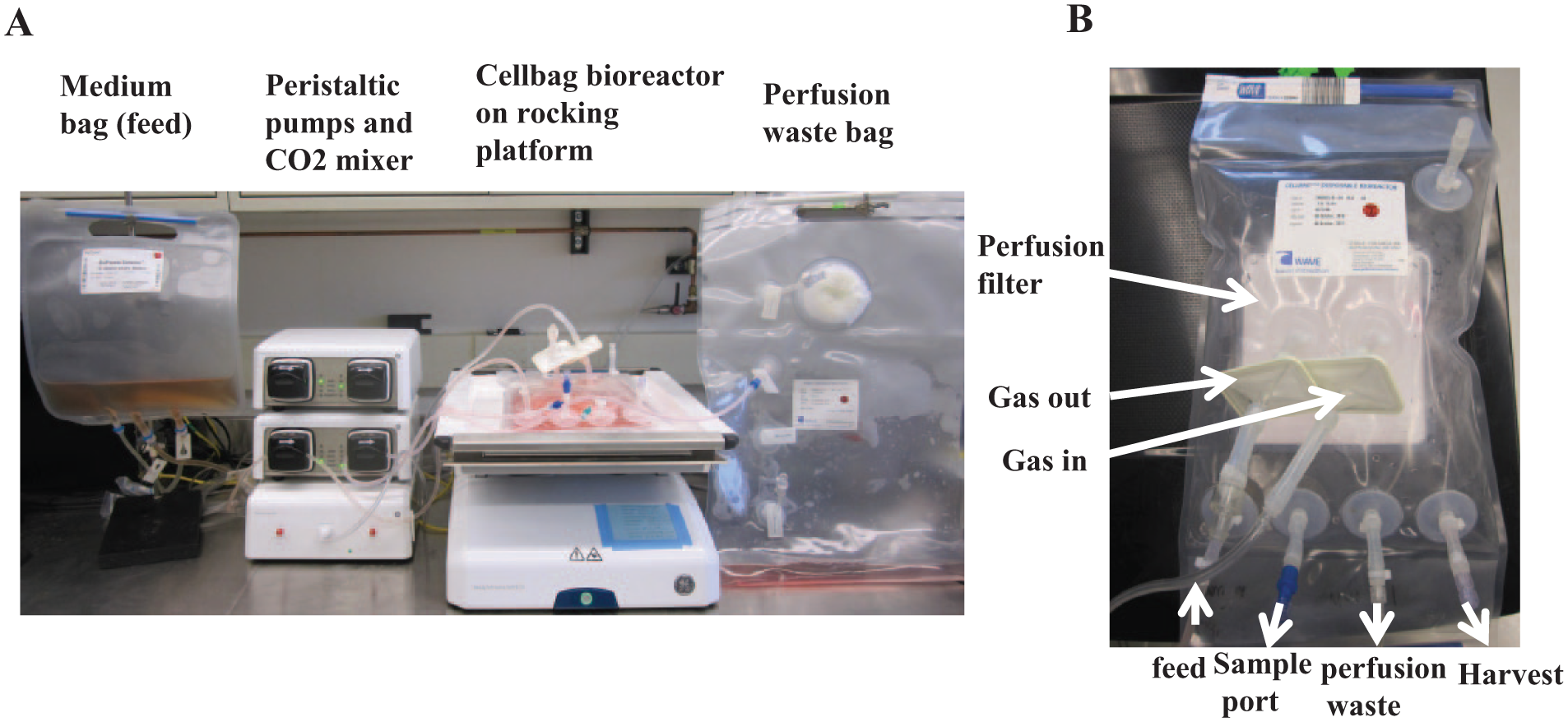
(
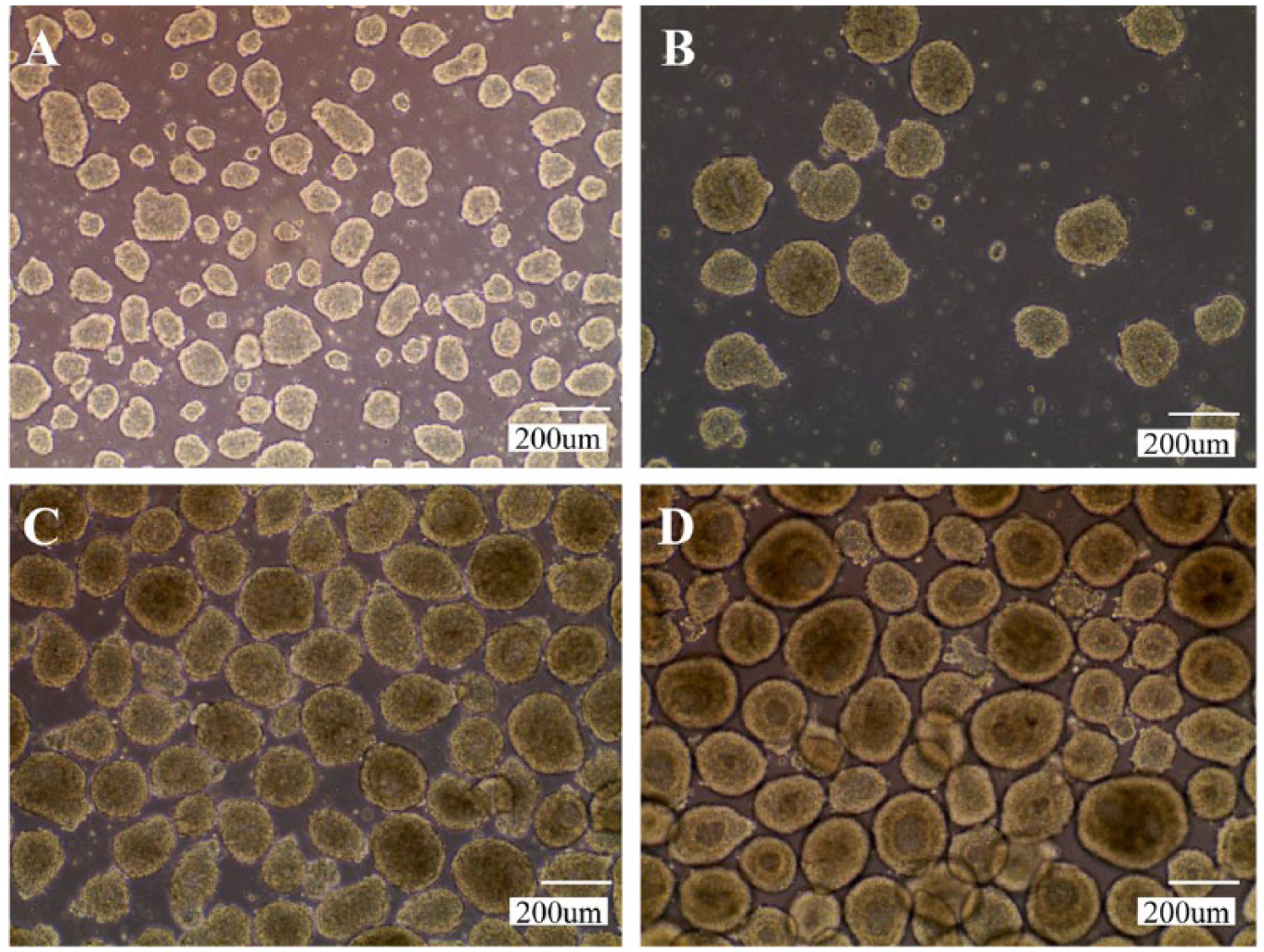
CT2 human pluripotent stem cell aggregate morphology (
Expansion in Perfusion Bioreactors
During pluripotent stem cell expansion, the pluripotent stem cell culture medium is exchanged daily or every other day. A standard laboratory practice is to use an open process involving manual pipetting of spent medium, centrifugation to recover any removed cells, and replacement with fresh medium. This approach cannot be performed in a bioreactor, as the medium exchange must be a closed process that minimizes the loss of cells. One method for automated closed-system medium exchange uses a perfusion Cellbag that contains a floating membrane for the removal of spent medium and retention of cells in the Cellbag.
For continuous perfusion, the weight-based Xuri W25 Unicorn software control was used to maintain the volume of cell culture medium at a specific level, regulating pumps for continuous spent medium removal and fresh medium addition. In this method, the weight of the bag was continually monitored to regulate the pump rates, which generally operated at 0.4–0.8 mL/min. Alternatively, pumps can be programmed at these defined rates independent of a weight measurement. In all cases, the volume of spent medium removed was equal to the volume of fresh medium added in order to maintain a constant volume.
For discontinuous perfusion, the software controls were programmed to regulate the rapid removal of a specific amount of spent medium, followed by rapid addition of fresh medium every few hours. This approach is independent of the vessel weight, as a predefined volume of spent medium is removed followed by bolus addition of a volume of fresh medium, according to a predefined feeding schedule. For example, a discontinuous feeding schedule could be set to activate pumps every 2 h for removal of 50 mL of spent medium, followed by the addition of 50 mL of fresh medium.
Expansion in Nonperfusion Bioreactors
With any filter-based method, a potential concern is the loss of cells in the filter, reducing the cell yield and the efficiency of perfusion. In order to avoid these potential concerns, prototype nonperfusion bioreactors were developed. Closed-system medium exchange was performed without a need for removing the Cellbag from the rocking platform using either a manual or automated process. The manual process for medium exchange is as follows: A spent medium collection bag was sterile tube welded onto the Cellbag. The rocking platform was tilted to an upright 60° angle. Aggregates were allowed to gravity settle for 1–5 min in the Xuri Cellbag. Using a pump, 50% or more of the spent medium was removed from the Cellbag, drawing from a port positioned above the settled aggregates. Single cells, which are typically nonviable, did not settle and were removed with the medium. Aggregates were gently resuspended in the remaining medium, and then a bag containing prewarmed fresh medium was sterile welded to the Cellbag to add fresh medium.
In the automated process, removal of the cell culture medium was accomplished through the use of a prototype filter-free perfusion tubing assembly containing a novel gravity settling chamber. A slow flow rate was used for medium removal to allow gravity settling of pluripotent stem cell aggregates while removing single cells and spent medium. This method utilizes a dip tube of sufficient length and orientation such that the cell culture medium can be removed from the nonperfusion bag while it is installed and in operation on the Xuri platform. Cell aggregate separation from the outgoing media is achieved by the introduction of a gravity settling chamber with sufficient height and diameter to ensure adequate gravity setting of aggregates during media removal. Spent medium removal is achieved by drawing the medium through the fluid removal path while keeping the fluid addition path closed. Fresh medium is added through the fluid addition path while keeping the fluid removal path closed. Any trapped cells in the gravity settling chamber are displaced back into the bioreactor during the medium addition step. Typical expansion protocols utilized a half volume or more medium exchange per day.
As an example, a nonperfusion Cellbag with a 500 mL culture volume was modified with the filter-free perfusion assembly to enable the removal and refeeding of 360 mL of medium each day. This was accomplished by slowly removing 15 mL at 0.3 mL/min and then rapidly adding 15 mL of fresh medium each hour. Software controls regulate the pump rate for spent medium removal and fresh medium addition. Low-viability single cells are lost through the perfusion assembly, which has the added benefit of improving the overall viability of the culture. In contrast, a filter-based method retains the low-viability single cells, resulting in a decreased overall viability of the culture (as observed experimentally at 1 L scale; see Fig. 3 ).
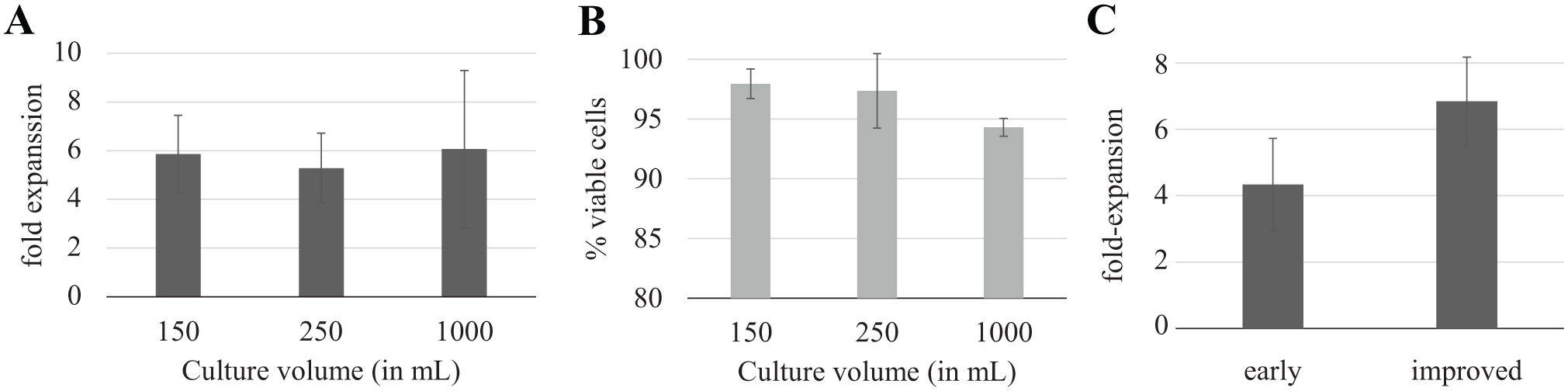
(
Enzymatic Passaging in the Cellbag
Pluripotent stem cell aggregates were passaged every 4 days when aggregates reached a size between 250 and 350 microns in diameter. NL5 and CT2 aggregates developed reduced overall viability when exceeding 400 microns in diameter. Other cell lines may tolerate an aggregate size of 400 microns or greater.
Two methods for performing enzymatic aggregate passaging in a Cellbag were performed: (1) recovery of cells from the Cellbag followed by enzymatic passaging in an off-line centrifuge tube or (2) closed-system enzymatic treatment in the Cellbag. In the first method, a simple open system for passaging was performed by transferring the Cellbag from the rocking platform to a cell culture laminar flow cabinet, and then draining cells into centrifuge tubes for Accutase passaging.
In contrast, the closed-system method allows the maintenance of aggregates in the Cellbag throughout passaging. The bioreactor platform tray was lifted to its 60° position, allowing the aggregates to gravity settle at each step of the process. A pump was used to remove the medium from the Cellbag without disrupting the settled aggregates, to a final volume of 25–50 mL. Aggregates were washed twice in 250–500 mL prewarmed PBS. Aggregates were then dissociated with 50 mL of prewarmed Accutase while rocking at 37 °C. A syringe, with tubing attached to a 0.22-micron filter to maintain sterility, was used to break apart the aggregates in Accutase. Afterward, 50 mL of complete medium was added and cells were collected in a sterile bag for downstream applications.
Pluripotent Stem Cell Expansion Rates in Rocking Bioreactors
A total of 13 individual expansion experiments were used to determine an average CT2 pluripotent stem cell expansion rate and viability after 4 days in rocking bioreactors, including five experiments at 150 mL scale, five experiments at 250 mL scale, and three experiments at 1 L scale ( Fig. 3 ). At 150 mL scale, expansion ranged from 3.7-fold to 7.0-fold for an average of 5.9-fold expansion with 97.9% average viability. At 250 mL scale, expansion ranged from 3.7-fold to 6.2-fold for an average of 5.3-fold expansion with 97.4% average viability. At 1 L scale, expansion ranged from 3.1-fold to 9.5-fold for an average of 6.1-fold expansion with 94.3% viability. The observed expansion rate variability is likely due to differences in perfusion schedules, with early experiments in which suboptimal medium exchange methods were used, producing generally lower expansion (average of 4.3-fold expansion over 4 days, n = 6) than later experiments with improved automated medium exchange methods (average of 6.8-fold over 4 days, n = 7). The following two sections are examples of observed cell expansion in a rocking bioreactor, in which the first example utilized a later-stage improved experimental procedure and the second example is from an unoptimized early experimental procedure.
Serial Passage from Filterless Bag to Floating Membrane Perfusion Bag Using Enzymatic Passage
Serial passaging of suspension aggregate pluripotent stem cells from a prototype filterless bag to a commercial floating-membrane perfusion bag was performed ( Fig. 4 ). The different types of bags were used for two reasons: (1) there are no commercial 1 L perfusion Cellbag products available, and (2) the current design of the prototype gravity settling tubing assembly had a maximal perfusion rate of ~400 mL/day, which was determined to be suboptimal for a 1 L culture volume. It is anticipated that the prototype can be scaled up to enable larger-volume medium exchange. The first passage was cultured at 250 mL volume, and the second passage was cultured in a 1 L volume. CT2 human embryonic stem cell aggregates were dissociated using Accutase. In the first passage, cells were seeded into a 1 L filterless Xuri Cellbag at 400,000 cells/mL in mTeSR1 plus a 10-micron Y27632 ROCK inhibitor. In the second passage, cells were seeded into a 2 L perfusion Xuri Cellbag at 400,000 cells/mL in mTeSR1 plus a 10-micron Y27632 ROCK inhibitor. The culture conditions consisted of 20 rocks/min, 5° rock angle, 37 °C, and 5% CO2. Aggregates of roughly 100–150 microns in diameter formed by the next morning. Half of the spent medium was replaced daily with fresh medium without a Y27632 ROCK inhibitor in the filterless bag, and a continuous perfusion protocol was used to exchange 500 mL of medium per day using the Xuri W25 software controls in the floating membrane perfusion Cellbag. Aggregates were passaged on day 4 after seeding by dissociation with Accutase to single cells or small clumps. In passage 1, a total of 6.96 × 10⁸ viable cells were recovered with the overall culture at 99.4% viability, representing a sevenfold expansion. In passage 2, a total of 2.23 × 10⁹ viable cells were recovered with the overall culture at 93.5% viability, representing a 5.6-fold expansion. Over 8 days, there was an overall 39.2-fold expansion. In this experiment, the perfusion filter Cellbag had relatively worse expansion than the filterless Cellbag; however, it remains unclear whether there is significant cell loss in the perfusion filter. Of note, the prototype gravity settling tubing assembly provides comparable or better expansion relative to the gold standard perfusion filter.
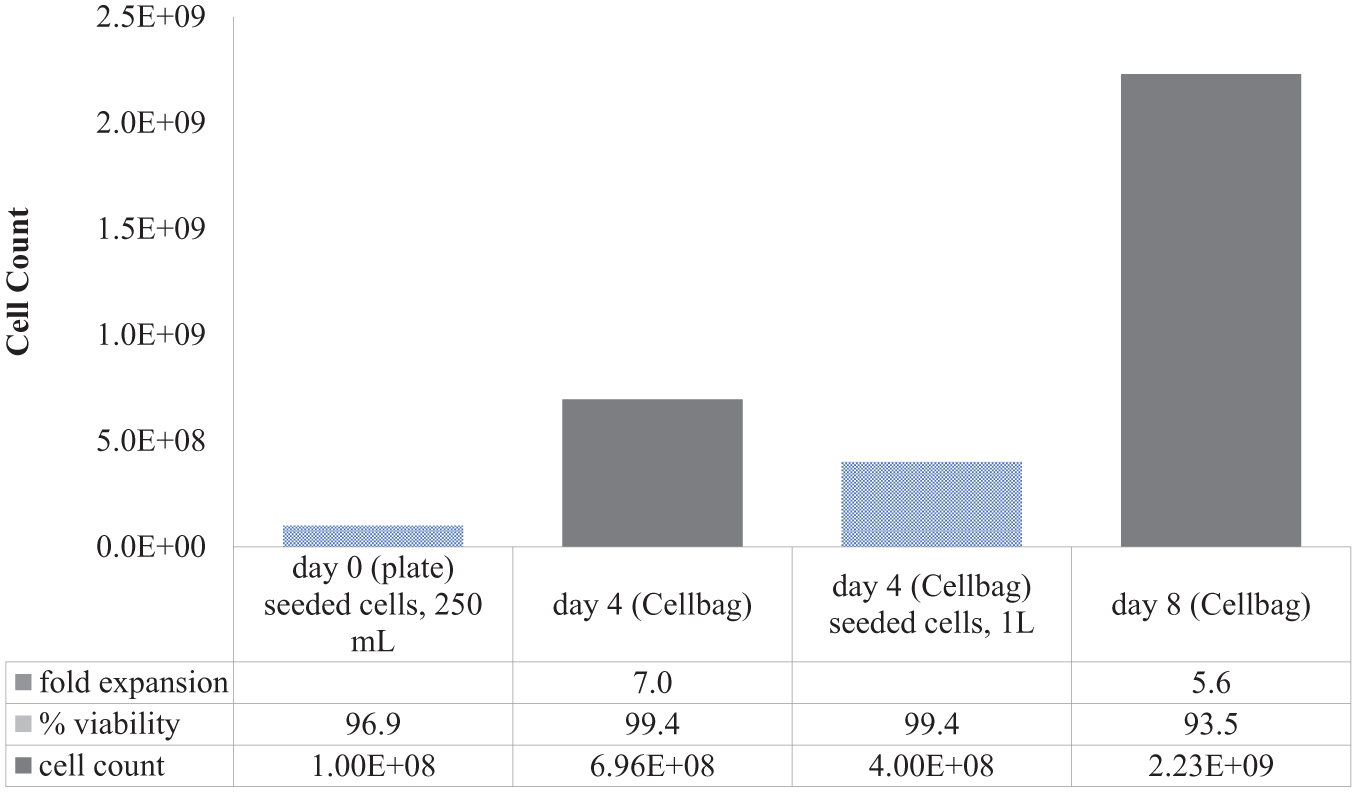
Example of expansion rates and cell viability during automated bioreactor culture and serial passaging of CT2 human pluripotent stem cell aggregates across different volumes and types of Cellbag. Serial passaging of CT2 aggregates was carried out using Accutase in a 1 L nonperfusion Cellbag at 250 mL volume, and then a portion of the cells were reseeded into a 2 L perfusion Cellbag at 1 L volume. Total expansion over 8 days was ~39-fold.
Four Consecutive Enzymatic Serial Passages in Xuri Cellbags
Serial passaging of suspension aggregate pluripotent stem cells over four passages was performed in 1 L Cellbags lacking a perfusion filter and in a 2 L perfusion Cellbag ( Fig. 5 ) using early nonoptimized bioreactor conditions. Two passages were expanded at 150 mL volume, followed by one passage at 400 mL volume and one passage at 1 L volume. CT2 human embryonic stem cell aggregates were dissociated using Accutase. In each passage, cells were seeded into a Xuri Cellbag at 400,000 cells/mL in mTeSR1 plus 10 micromolar Y27632 ROCK inhibitor. The culture conditions consisted of 20 rocks/min, 5° rock angle, 37 °C, and 5% CO2. Aggregates of roughly 100–150 microns in diameter formed by the next morning. In the 1 L Cellbags, half of the spent medium was replaced daily with fresh medium without Y27632 ROCK inhibitor using a manual method. A discontinuous perfusion method was used for the 2 L Cellbag. Aggregates were passaged on day 4 after seeding by dissociation with Accutase to single cells or small clumps. In passage 1, a total of 2.19 × 10⁸ viable cells were recovered with the overall culture at 99.1% viability, representing a 3.7-fold expansion. In passage 2, a total of 4.17 × 10⁸ viable cells were recovered with the overall culture at 97.8% viability, representing a 7-fold expansion. In passage 3, a total of 5.64 × 10⁸ viable cells were recovered with the overall culture at 97.2% viability, representing a 3.5-fold expansion. In passage 4, a total of 1.25 × 10⁹ viable cells were recovered with the overall culture at 94.4% viability, representing a 3.1-fold expansion. The overall expansion was ~280-fold over 16 days. This example using predominantly nonautomated methods represents the lowest expansion we observed in the rocking bioreactor system; subsequent experiments using automation and improved bioreactor conditions provided better cell expansion levels. Using the expansion rates from Figure 3 , a typical 4-day culture would provide ~6-fold expansion, and extrapolating to four passages, there would be a ~1300-fold expansion. Despite the overall low expansion levels, the samples were used to confirm pluripotency after consecutive serial passaging on a rocking bioreactor.
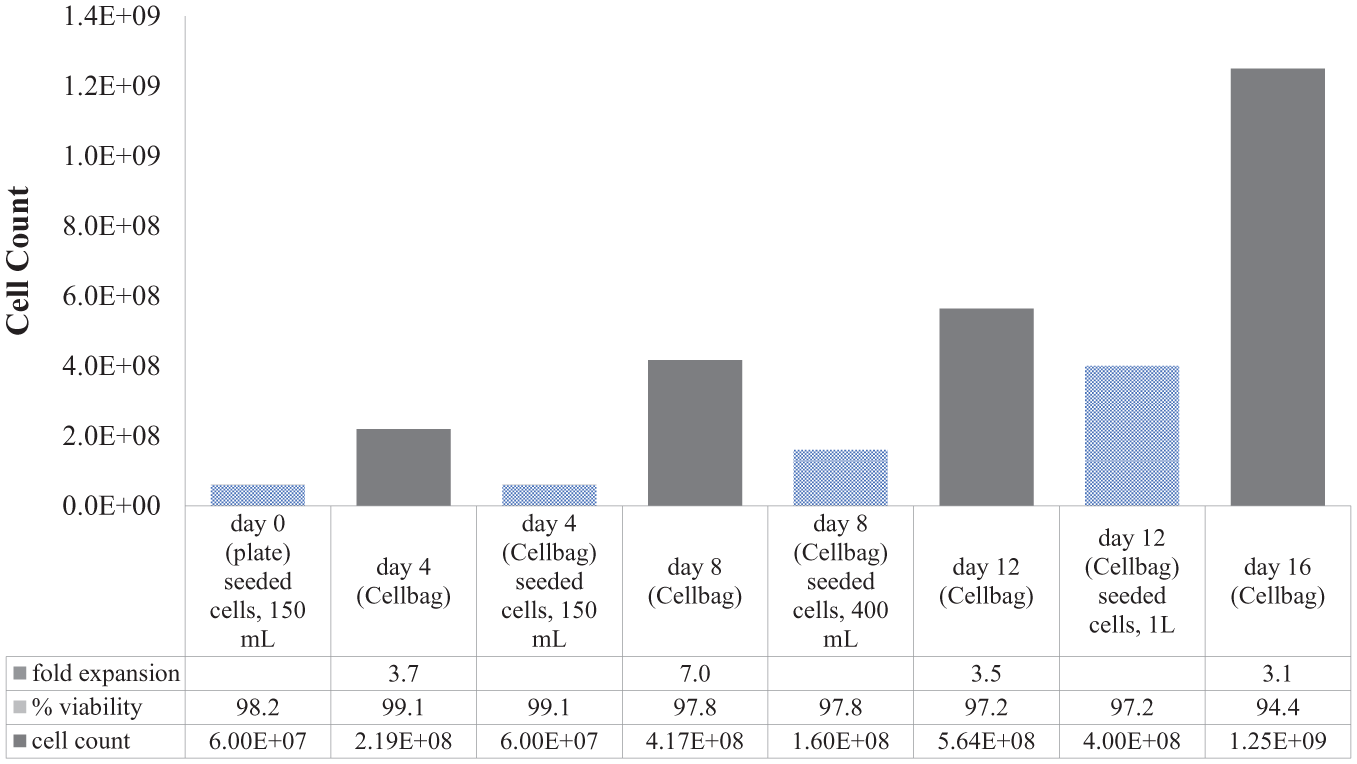
Graphs depicting expansion rates and cell viability during nonoptimized bioreactor culture and serial passaging of CT2 human pluripotent stem cell aggregates across different volumes and types of Cellbag. Serial passaging of CT2 aggregates was carried out using Accutase in a 1 L nonperfusion Cellbag at a 150 mL volume, and then a portion of the cells were reseeded into a 1 L nonperfusion Cellbag at a 150 mL volume, followed by a 1 L nonperfusion Cellbag at a 400 mL volume, and then into a 2 L perfusion Cellbag at a 1 L volume. The total expansion over 16 days was ~280-fold.
Confirmation of Pluripotency after Serial Passaging
After three serial passages in Cellbags, CT2 cells were analyzed for Oct4, SSEA3, and Tra-1-60 expression by flow cytometry, for karyotype by G-banding, and for three-germ-layer differentiation from embryoid bodies ( Fig. 6 ). Flow cytometry confirmed that aggregates expanded for three passages in the rocking bioreactor maintained greater than 98% expression of all three pluripotency markers, a level that is equivalent to that of positive control CT2 cells maintained on Matrigel. G-banding showed a normal karyotype in 20 of 20 cells analyzed. IHC on randomly differentiated embryoid bodies showed the presence of cells expressing alpha-fetoprotein (an endoderm marker), smooth muscle actin (a mesoderm marker), and beta III tubulin (an ectoderm marker). The embryoid bodies were cultured for 9–14 days in E6 medium (no TGF-B or bFGF), allowing cells to spontaneously differentiate along default pathways. Strong endoderm lineage, moderate ectoderm lineage, and very low mesoderm lineage differentiation from CT2 cells were observed. The lineage distribution from CT2 aggregates was comparable to that for CT2 cells maintained on Matrigel, further confirming that the CT2 aggregates maintained similar potency as the CT2 controls. Aggregate size has been shown to impact the efficiency of directed differentiation protocols; therefore, future experiments will be designed to optimize bioreactor conditions for expansion and specific differentiation or maturation protocols. In these experiments, further characterization of aggregates using immunofluorescence will describe the heterogeneity of cells in situ within the aggregates for markers of spontaneous versus directed differentiation, to guide optimal bioreactor condition development. Thus, the data confirm maintenance of pluripotency and karyotypic stability in suspension aggregates maintained under rocking conditions for more than five passages on six-well plates and three passages in Xuri Cellbags, consistent with the profiles of CT2 cells grown on Matrigel. 22
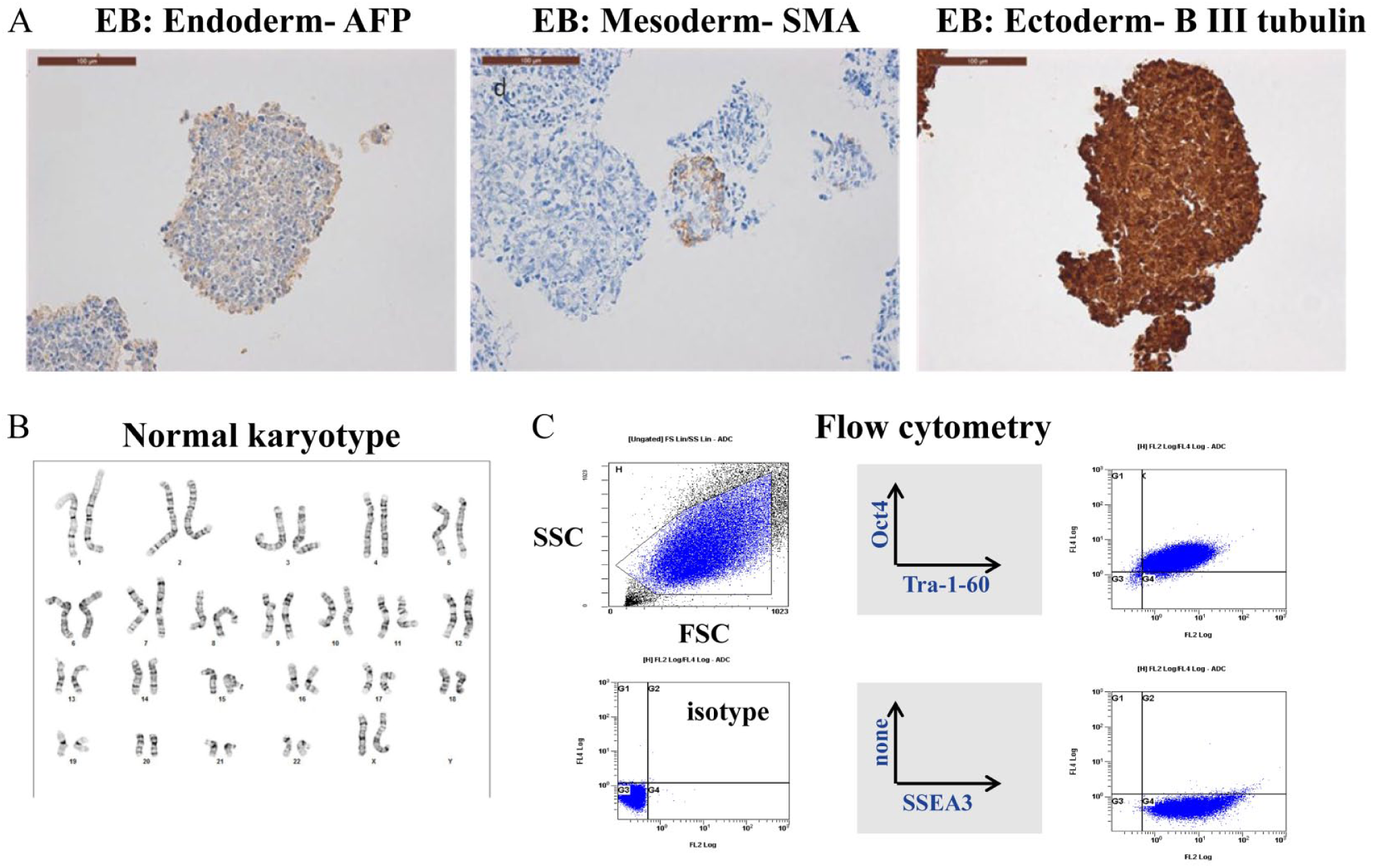
Phenotype of CT2 cells expanded for >5 passages as suspension aggregates on six-well plates and three passages as suspension aggregates in Xuri Cellbags. (
Advantages of Bioreactor Automation
The Xuri W25 rocking platform bioreactor enabled closed-system and hands-off expansion of pluripotent stem cell aggregates. Automated processes for medium exchange via software-controlled perfusion, gas exchange, and maintaining other key process parameters in conjunction with the ability to passage within the Cellbag enable a fully closed workflow that could benefit cGMP pluripotent stem cell production for both commercial and clinical processes. A major benefit to performing all steps in a closed manner is the reduced likelihood of user-induced contamination due to manual processing. Automated medium exchange and closed-system passaging methods avoid any open steps that could introduce a contaminant, ensuring that the cell product remains sterile. The cells do require adaptation to a rocking motion, as we observed that cells expanded in stirred reactors did not immediately transition to a rocking-motion bioreactor, and vice versa.
Another benefit to automated perfusion was the observation that greater cell numbers were produced using relatively less medium, which would reduce the costs associated with pluripotent stem cell expansion. For example, in six-well plates with a daily 2 mL medium exchange, roughly 20 million cells were obtained from a 48 mL total volume of medium used or 420,000 cells/mL (2 mL × 6 wells × 4 days = 48 mL). In a perfusion Cellbag, at 1 L scale, with 500 mL/day medium exchange, roughly 3.8 billion cells were obtained from 2.5 L of total medium used, or ~1.5 million cells/mL.
A suspension-adapted CT2 cell line was used to generate the results described above, but additional lines were also investigated. We found that other pluripotent stem cell lines, such as the NL5 line, required modifications to the described protocol, specifically around the rock angle, rock rate, and medium exchange procedure. It is recommended that any user using a rocking bioreactor determine the preferred parameters for their cell line before attempting to scale up in a Cellbag.
Other types of bioreactors have been used for the expansion of pluripotent stem cell aggregates, particularly stirred tank reactors. While it is impossible to directly compare expansion rates across publications because of the variable cell lines and culture conditions used, our personal experience using spinner flasks and the CT2 cell line provided approximately fivefold expansion over 4 days at 100 mL scale in jugular experimentation. Additionally, our experience with CT2 expanded on carriers showed an eightfold expansion over 4 days at 100 mL scale in spinner flasks, but only about a threefold expansion over 4 days at 500 mL scale, suggesting challenges in scaling up the carriers. In a rocking-motion bioreactor, cell expansion rates were approximately sevenfold at all scales tested between 150 mL and 1 L using improved culture conditions. Cell expansion rates in all bioreactors were lower than expansion rates in static culture conditions on Matrigel, in which the CT2 cells expand roughly 12-fold over 4 days. However, static culture is a nonscalable and labor-intensive open process that is not amenable to automation. Thus, we conclude that rocking-motion bioreactors are comparable to or exceed the expansion rates achieved using other types of scalable bioreactor cultures.
In conclusion, our results describe the successful expansion of suspension aggregate–adapted pluripotent stem cell lines in the Xuri Cell Expansion System W25 rocking bioreactor and Xuri Cellbags. Improved automated medium exchange conditions enabled near sevenfold expansion of CT2 suspension aggregates over 4 days at up to 1 L scale while maintaining viability levels above 95%. Maintenance of pluripotency was observed after serial passaging in rocking bioreactor conditions. Thus, these data confirm that pluripotent stem cell aggregates can be efficiently expanded and passaged in a closed-system automated rocking bioreactor.
Footnotes
Acknowledgements
The technology developed in this article was prepared with the support of General Electric’s Advanced Technologies Programs. Any opinions, findings, conclusions, or other recommendations expressed herein are those of the authors and do not necessarily reflect the views of the General Electric Company. The GE technology discussed in this article is in development and represents ongoing research and development efforts. Some of these concepts and technologies are not products and may never become products. They are not for sale. They are not CE marked. They have not been cleared, approved, or authorized by the U.S. FDA or other national regulatory authorities for commercial availability.
Declaration of Conflicting Interests
The authors declared the following potential conflicts of interest with respect to the research, authorship, and/or publication of this article: General Electric Company has previously filed patents on the methods, consumables, and devices described in this report.
Funding
The authors received no financial support for the research, authorship, and/or publication of this article.