



Abstract
From 2012 to 2019, there were approximately 3455 large-scale National Football League injuries reported. There is widespread commercial acceptance of compression garments as tools for reducing injury, promoting recovery, and improving performance in athletic activity. While studies have been conducted to assess the exercise physiology benefits of compression garments, there remains a gap in the scientific literature regarding the clothing comfort and resultant thermoregulation effects of compression girdles for performance athletes. This study aimed to assess the effects of tighter fitting, multi-layer compression systems when worn by American football athletes. A negative impact on thermoregulation may negate or outweigh any realized local benefit such as increased skin blood flow or reduced muscle oscillatory properties. Therefore, the purpose of this research was to determine the predicted hypothalamus temperature, skin blood flow, skin temperature, sweat rate, temperature sensation, and comfort perceptions of the male human body when wearing a compression girdle. A sweating thermal manikin was utilized to predict the physiological responses of a 50th percentile male when wearing football girdles in both practice and play settings. The results indicate significant differences in skin blood flow, skin temperature, core temperature, sweat rate, and comfort and sensation perceptions when wearing compression girdles compared to boxer briefs in replicated practice and play settings. Findings also demonstrate the use of real-time manikin simulation modeling for predicting physiological response outcomes of wearing compression garments to a realized extent.
Introduction
It is well-documented that participation in high-impact sports incurs a higher risk factor for sport-related injury. 1 In particular, football players experience a high number of injuries and a great deal of muscle soreness due to the amount of time spent engaging in conditioning, practice, and standard gameplay activities. Between 2012 and 2019, the National Football League (NFL) reported a total of 3455 injuries. 2 These numbers, however, only include large-scale injuries and do not account for soft tissue injuries, including calf, hamstring, quadricep, and adductor strains, which remain the highest driver of player missed days. 2 Hamstring injuries, especially, are recognized by the NFL as the most common injuries suffered by their players. 2 Between 2015 and 2018, 1352 hamstring strains caused time loss to NFL players with an average of 17.7 days off. 3 Similarly, college-level yearly data show that most injury sites are within the lower body, indicating a need to better protect this area. 1 These injuries can be prevented using a variety of methods, primarily within the categories of flexibility training, strength training, adequate warming up, and proper muscle recovery. 4 One such tool that has been widely accepted within the athletic community, at both amateur and professional levels, is compression. These garments have been widely adopted by the sports industry as tools for reducing injury, promoting recovery, and improving performance in athletic activity when worn during and/or following exercise. 5
Compression Garments
The primary use of compression garments is to provide mechanical pressure to the body, providing the ability to mitigate feelings of discomfort during recovery by mechanically blocking edema/swelling. Despite the ambiguous academic literature, there is a commercial belief that compression garments can increase muscle oxygenation, reduce perceptions of fatigue and the rate of perceived exertion (RPE), impact core (hypothalamus) temperature (THY), and improve lactate response.5,6 In the American football market, compression is often paired with padding to create what are known as compression girdles. 7 Similar to compression pants or shorts, compression girdles offer a comfortable compression underlayer alongside either built-in padding or designated pockets for athletes to insert their own. Common padding locations include the hips, tailbone, kidney, thigh, and other key contact areas. 8
While some literature supports that compression garments may impact localized skin temperature (TSK) and blood flow (SBF), leading to the potential of for improved recovery,6,9 other research indicates it has neither a beneficial nor significant adverse effect on the wearer.10–16 Specifically, Bautz et al. 10 assessed lower body compression garments for usage with a single-layer wildland firefighter clothing ensemble and found there was no significant change in heart rate, THY, or thermal comfort perceptions. Barwood et al. 13 also investigated lower body compression garments when worn during high intensity exercise under a hot radiant load and found no differences in sensation, comfort, RPE, or TSK when wearing compression. The effect of lower body compression during running performance in cold and hot environments was assessed by Goh et al., 16 who also found minimal to no differences in physiological or perception responses except for a slight increase in TSK; however, that occurred during 10°C conditions only.
Other compression trials have focused on full-body compression in various sport applications, such as field hockey, 15 skiing, 14 cricket, 11 and female running. 12 These studies also concluded there were no beneficial or adverse effects to wearing compression other than individual variations and preferences related to slight significant increases in localized TSK. There may be further physiological, biomechanical, performance, and perceptual benefits for individuals, but it is important to note that there is ambiguity within the literature regarding potential benefits and the best methods of use. 6 While some wear studies have been conducted to assess the potential physiological impact of compression garments in specific sport applications, there remains a large gap in the scientific literature regarding the physiological and thermoregulatory effects of compression girdles for performance athletes, specifically those of collegiate and professional American football athletes.
There are many limitations of previous compression garment studies from small sample sizes (n = 4) 12 and short bouts of exercise (no more than 60–90 min total) 10 to an overall lack of robust physiological measurements including THY, TSK, sweat rate (SWA), and perception responses all in the same study. These limitations are most likely due to the constraints of human wear testing, which are numerous from budget and time to subject recruitment and measurement equipment capability. Furthermore, these results cannot be generalized as they are uniquely specific in their application and conditions. To overcome many of these limitations, alternative measurement methodologies may be considered such as thermal modeling 17 using a dynamic sweating thermal manikin to simulate wear conditions as closely to as possible for more feasible assessments that are controlled and repeatable.
Human Thermoregulation Modeling
Human thermoregulation models, specifically the Fiala model18,19 that was developed in 1999, have been used to inform further thermo-physiological modeling techniques, including those that can be integrated with a sweating thermal manikin to allow for real-time, garment-level physiological predictions.20,21 In particular, the Manikin Physiology Control and Predictive Comfort (ManikinPC) model and software developed by Measurement Technologies Northwest, now ThermoAnalytics, simulates physiological and thermoregulatory human responses in dynamically changing environments. 22 This tool also utilizes the ThermoAnalytics-developed RadTherm Human Comfort Model22–24 and can be used to estimate thermal sensation and comfort at any activity level. The ManikinPC model is based on the Fiala model, which was developed at the Institute of Energy and Sustainable Development (De Montfort University, Leicester).18,19 ManikinPC has been used in previous studies to determine the impact of wearing various types of protective clothing and functional performance apparel.20,21,25,26
The Fiala model simulates the human body using cylinders in place of all body parts and a sphere representing the head. Each body part consists of several layers of simulated tissue including the brain (head), lung (chest), viscera (abdomen), bone, muscle, fat, and skin.18,19 In addition, where appropriate, each body segment is divided into anterior and posterior regions similar to the 35 individual manikin zones on the ANDI thermal manikin. 27
Specifically, heat transfer in the Fiala model is only considered radially outward through the body parts. It takes into account basal metabolism, autonomic thermoregulation in the muscles, blood perfusion, and sweating.18,19 In the Manikin PC model, however, the surface of the human body is broken into a mesh of nodes and for each surface node, there are nodes underneath representing the various layers of bone and muscle tissue.20–22 Heat transfer between these nodes is based on equations derived from the Fiala model, allowing the Manikin PC model to simulate impacts on deeper tissue, beyond the surface skin layers. Ultimately, this allows for a more complex model than the simple cylinders and spheres used by Fiala.20–22
In addition, Manikin PC does not make use of the many environmental heat transfer variables used in the Fiala model. Instead, these variables affect the manikin directly, in real time, and are passed back to the model as part of the boundary conditions. 22 For the subjective comfort and sensation perceptions, the Berkley Human Comfort Model, developed by Dr. Hui at the Berkeley Center for the Built Environment, is used.23,24 The ManikinPC model outputs TSK and THY to the Berkley Comfort Model, which computes comfort and sensation readings in the manikin ThermDAC software.22,27 Ultimately, there is a trend in the field of sports of using compression therapy to enhance recovery and while it may have significant localized impacts, the potential negative effects from a clothing insulation standpoint are not well known. This study aimed to assess the unintentional effects of tighter fitting, multi-layer compression systems that may lead to quicker onset of fatigue. This negative impact on thermoregulation may negate or outweigh any realized local benefit such as increased SBF or reduced muscle oscillatory properties. Therefore, the purpose of this research was to determine the predicted manikin THY, SBF, TSK, SWA, temperature sensation, and comfort perceptions of the male human body when wearing a compression girdle in multiple use settings. This research provides valuable feedback to American football stakeholders including athletes, coaches, trainers, and uniform manufacturers regarding the impacts of compression garments. As a secondary objective, this research also informs the academic literature of an alternative method for assessing compression garments given the restrictive limitations of wear testing.
Methods
Garment Samples
Three compression garments were tested according to the condition in which they would be worn: base layers, practice attire, and play uniform. The base-layer configuration consisted of a compression tank, athletic socks, football cleats, and one of three compression garments: (1) boxer briefs as a control, (2) a football compression girdle, or (3) a football compression girdle worn in conjunction with compression tights. This series of configurations allowed researchers to establish the impact of common methods of wearing the girdle, in comparison to a control ensemble including only boxer briefs. To replicate football practice attire, athletic shorts were donned on top of each base-layer configuration for additional testing. The same was done for the play uniform, which included a football jersey shirt and football uniform pants worn on top of each base-layer configuration (see Figure 1). It should be noted that the compression tank was not worn under the football jersey for the play configuration.
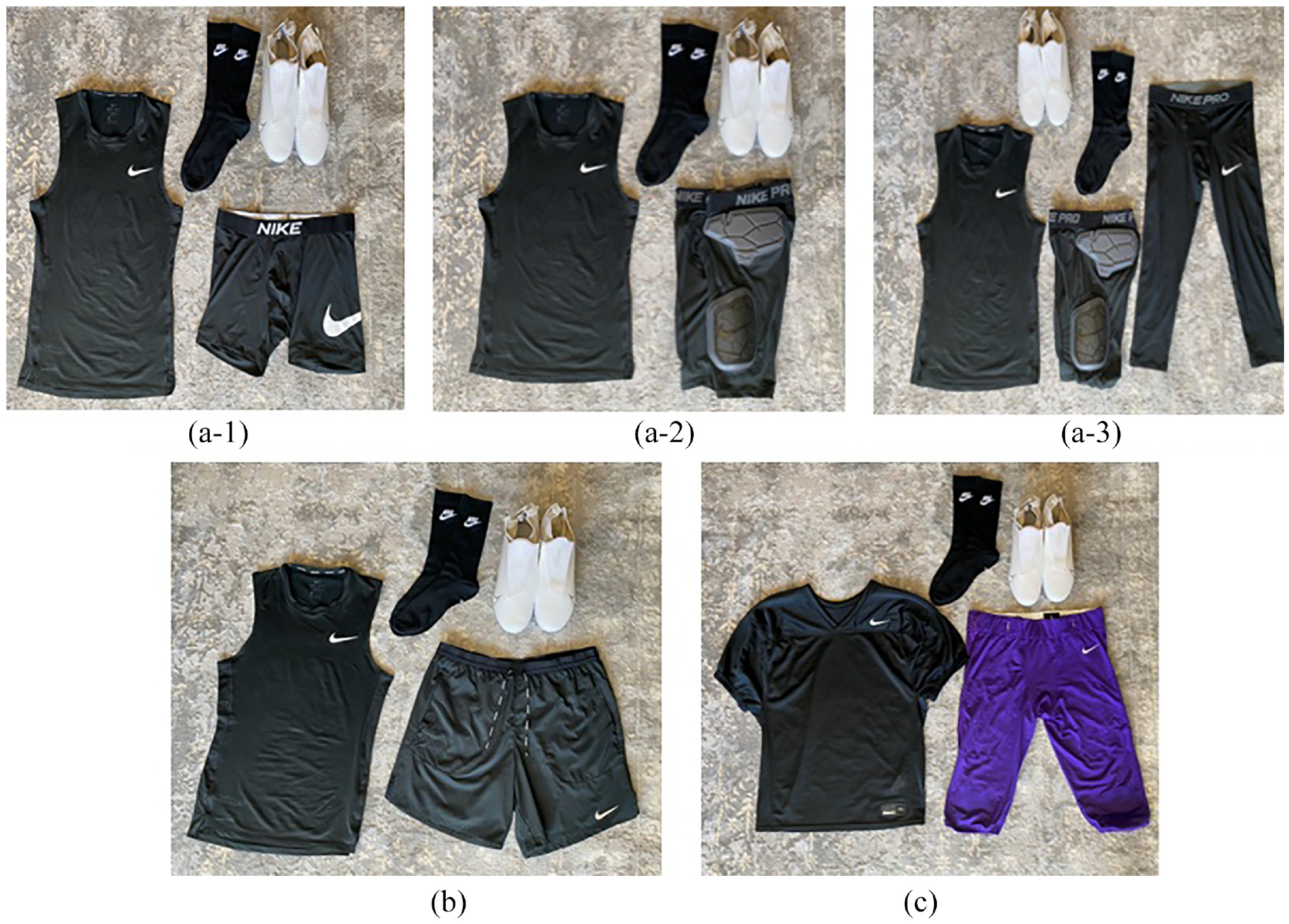
(a) Illustrates the base-layer configuration worn with, from left to right, (a1) the boxer briefs, (a2) compression girdle and (a3) compression girdle with compression tights; (b) practice attire consisting of athletic shorts worn on top of one of the three base-layer configurations (a1–a3); and (c) play uniform consisting of a football jersey shirt and pants worn over one of the three base-layer configurations shown in (a) (minus the compression tank).
Garments for each configuration were purchased from a leading athleticwear manufacturer in a size appropriate for an ANDI sweating thermal manikin. 27 All garments were composed of at least 78% polyester with the remaining content being spandex, except for the football uniform pants, which were composed of 86% nylon and 14% spandex. In addition, football cleats from the same leading manufacturer were purchased in an appropriate size for the manikin.
Thermal Manikin Testing Procedures
Using an ANDI sweating thermal manikin (Thermetrics®, Seattle, WA) 27 in an environmental chamber, predicted physiological responses were collected in real time under constant ambient conditions (32°C, 65% relative humidity, and 0.4 m/s wind speed) that replicated the hot, humid environment in which football games and practices commonly occur. A Manikin PC human thermal model plugin (Measurement Technology Northwest©, Seattle, WA) 22 was utilized within the ThermDAC software 27 to replicate real-time physiological and thermoregulatory responses to activity. Each test followed a 2.5-h protocol developed specifically for this study that simulated the game play of a wide receiver, with metabolic equivalent (MET) rates selected for each activity based on the 2011 Compendium of Physical Activities. 28 A met rate of 4.0 was selected to replicate warm-up activities, 8.0 METs reflected actual play time, 1.0 MET was used for rest during time-out periods, and 2.0 METs was used to simulate cool-down activity. Table 1 illustrates the 2.5-h test protocol replicating the game play of a dual offensive and defensive player. Three replicate tests were conducted for each base-layer configuration in each test setting.
Physiological testing protocol of replicated game play based on the 2011 Compendium of Physical Activities. 28
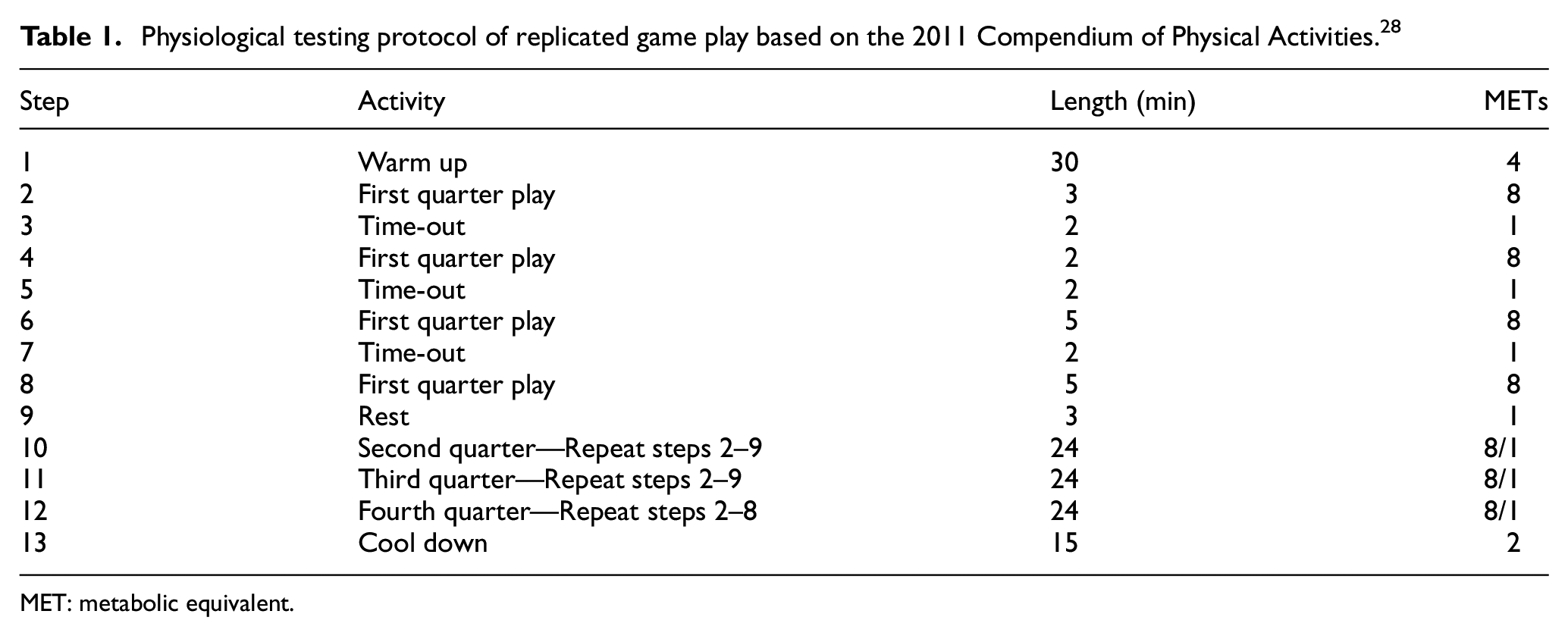
MET: metabolic equivalent.
Each garment configuration (boxer briefs, girdle, girdle with tights) in each testing configuration (base layers, practice, and play) was assessed according to the above test protocol for three repetitions. To begin each test, clothing ensemble elements were donned on ANDI and the manikin was heated to 33°C through model initialization.22,27 Once steady-state conditions were reached at 33°C, a Manikin PC test was started per the test protocol in Table 1. 22 After 2.5 h, the manikin operator terminated the test. Any sweat loss between repetitions was replaced via an external deionized water supply, which is used to replicate sweating during the test protocol across ANDI’s 140+ sweat pores distributed over 35 separate manikin zones.
Predicted Physiological Responses
Other than TSK, which is directly read in each region, or zone, of the manikin and fed to the physiological model for further calculation, it should be noted that all variables in this study were predicted physiological responses derived from the ManikinPC model.18,19,22–24 Throughout each test repetition, Manikin PC provides real-time predictions of a human’s thermal state during the prescribed activity protocol. As described in the test protocol (see Table 1), activity level was defined in METs, where one MET is defined as one kcal/kg/h. For an average male, one MET is equivalent to the energy consumption used while sedentary. 22
Active sweating (SWA) predicts the amount of sweat generated by active thermoregulation in grams per minute. The calculated volume is derived from control equations in the model, which are functions of body THY and TSK. 22 Using sensors within the 35 unique zones of the manikin, TSK was directly read from the manikin and fed into the physiological model, from which a mean TSK is calculated as a whole-body average. The THY is computed by the ManikinPC model in degrees Celsius, and is most representative of the respiratory, cardiac, and brain temperature. The modeled SBF parameter represents the simulated SBF in liters per minute and is representative of the body’s vasoconstriction/vasodilatation state.
Finally, ManikinPC factors in sensation metrics to estimate human thermal sensation and comfort in the prescribed scenario based on the Berkley Comfort model.23,24 Comfort is predicted on a scale from –4 (very uncomfortable) to 4 (very comfortable), with 0 representing a neutral “comfortable” state. When the manikin changes states, or undergoes dynamic conditions, it may encounter a pleasant experience that leads to a positive comfort value. Sensation is representative of how warm or cold the environment around the manikin feels relative to TSK and is predicted on a scale from –4 (cold) to 4 (hot), with 0 indicating that the manikin does not “feel” any sensation of warm or cold. 22 Sensation is independent of comfort. For example, a warm breeze can feel either comfortable or uncomfortable depending on other ambient conditions.
Data Analysis
The maximum peak value of each measure was averaged, per the three test replicates, for each base-layer configuration in each test setting. The same calculations were performed to determine the overall protocol average for the entire 2.5 h duration. To determine the statistical significance of the measured differences in the predicted physiological responses (THY, SBF, TSK, SWA, temperature sensation, and comfort perceptions), single factor, one-way analyses of variance (ANOVAs) were performed using the basic Excel statistical analysis tool-pak plug-in. A p-value < 0.05 was chosen to indicate significance. Two sample t-tests, assuming equal variance, were performed if the ANOVAs from each test configuration (base layer, practice, and play ensembles) indicated significant differences between the garment ensembles (briefs, girdle, and girdle + tights). It should be noted, that model predictions for comfort and temperature sensation perceptions were analyzed only for the 13 lower body zones of the ANDI manikin including the lower back, upper thighs, lower thighs, and calves. This provided a more realistic assessment of the compression girdle’s impact on wearer comfort and perception as opposed to considering the whole-body average. THY, TSK, SBF, and SWA were whole-body average predictions, as provided by the human thermal model plug-in.
Results and Discussion
The average maximum value reached in each garment configuration and use setting across the 2.5 h protocol are provided in Table 2 for each predicted response. Significant differences have been indicated using an asterisk. The remaining results in the sections below reflect the overall protocol average values, which are representative of the entire protocol duration.
Average maximum protocol values for predicted physiological responses and subjective thermal comfort perceptions.
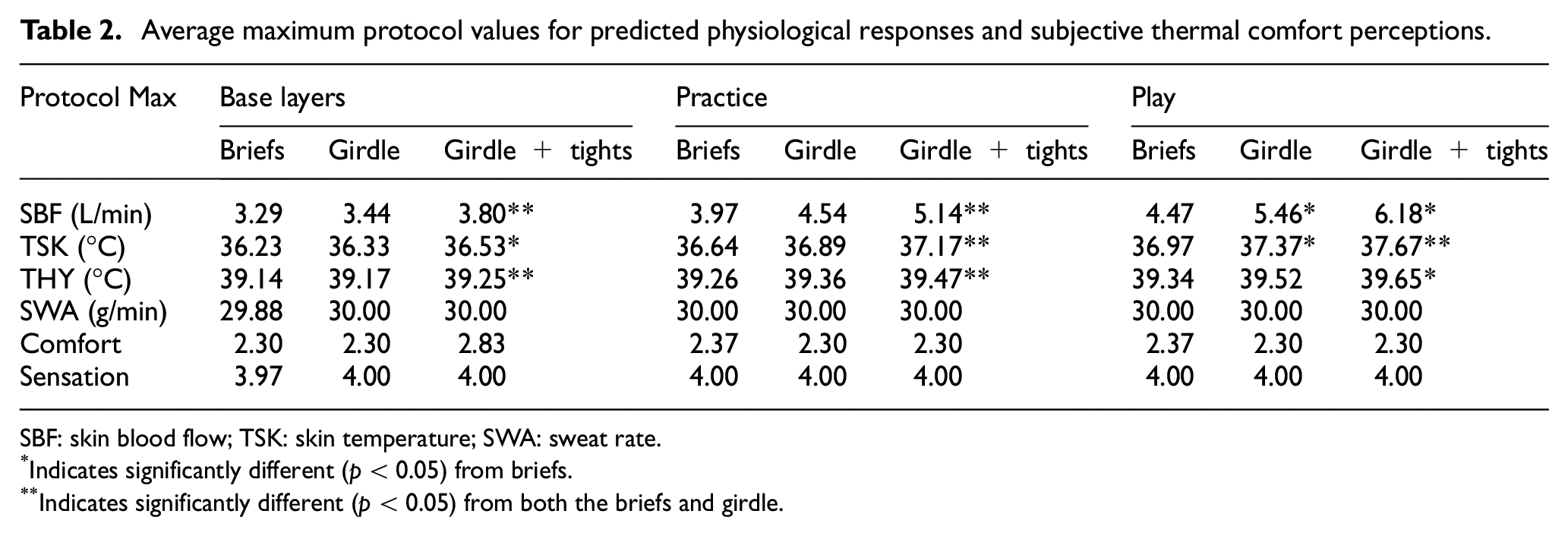
SBF: skin blood flow; TSK: skin temperature; SWA: sweat rate.
Indicates significantly different (p < 0.05) from briefs.
Indicates significantly different (p < 0.05) from both the briefs and girdle.
Table 2 demonstrates significant differences in all use settings (base layers, practice, and play) for predicted TSK and THY, as well as SBF, when wearing the girdle + tights compared to the briefs, and in some cases, the girdle alone. While many of these differences are statistically significant, they may not be meaningfully significant. For example, the greatest difference in predicted maximum THY was 0.31°C, which occurred in the play setting between the girdle + tights (39.65°C) and the briefs (39.34°C). This difference could be meaningfully significant; however, further human subject testing is necessary.
Skin Blood Flow
For average protocol values, in the base-layer condition alone, negligible differences were found for predicted SBF between the boxer briefs and compression girdle. Significant increases in predicted SBF were present, however, for the compression girdle with tights when compared to the boxer briefs (p = 0.018) and compression girdle when worn alone (p = 0.004).
In both practice and play configurations, SBF was highest when wearing the girdle with tights and lowest when wearing boxer briefs (see Figure 2). When worn under practice garments, the SBF values resulting from all three base-layer configurations yielded statistically significant differences when compared to one another. When wearing the play uniform, significant differences in SBF were only present when comparing the boxer briefs to the girdle with tights (p = 0.000).
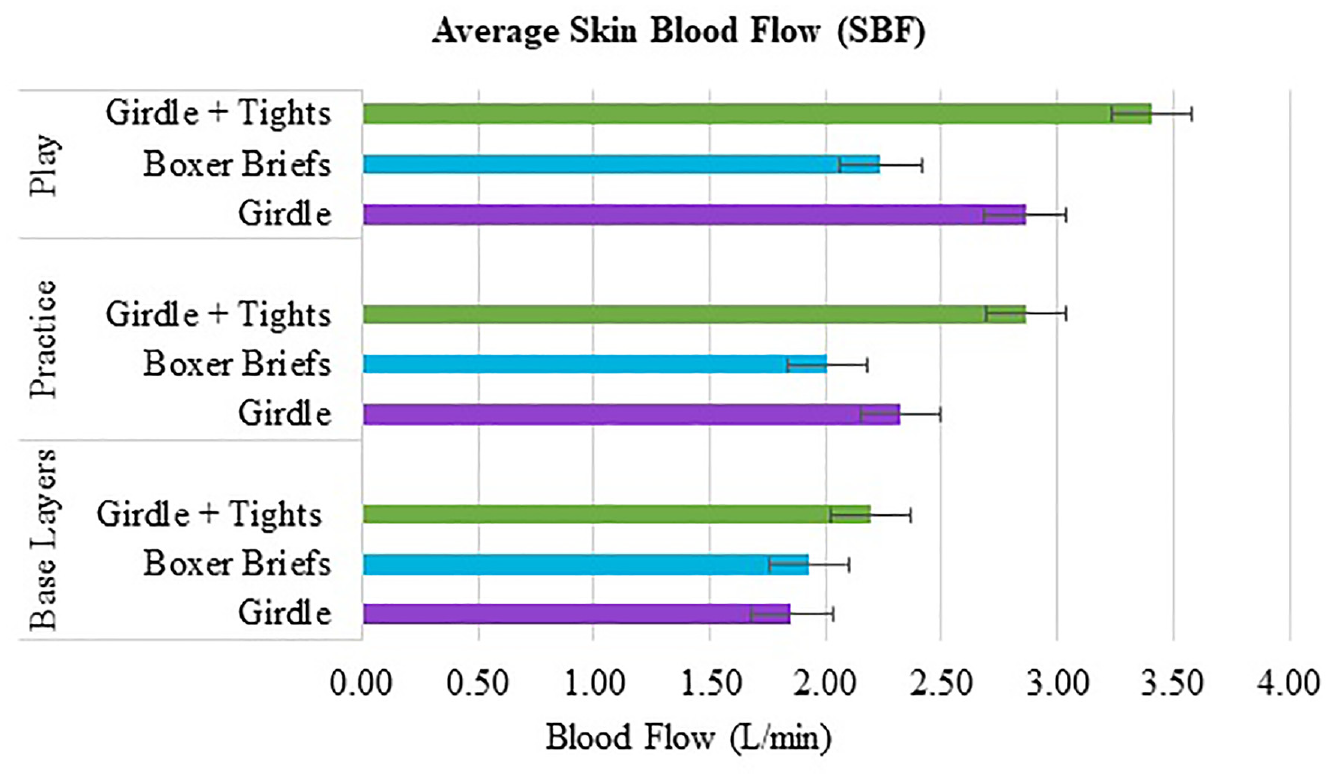
Overall protocol average skin blood flow (SBF) for base layer, practice, and play garment configurations for each compression garment (error bars reflect the standard error between compression garments in each wear setting).
These results demonstrate an increase in predicted manikin SBF when wearing the compression girdle in both the practice and play ensembles compared to wearing boxer briefs, though not all improvements were statistically significant. The SBF results may support the common commercial perception and acceptance of compression girdle protocols for practice and game day play.5,6 However, further research must be conducted on human participants to draw such conclusions as this finding is more likely to be a function of the next-to-skin fit of the garment as opposed to the specific amount of compression applied based on the limitations of using a thermal manikin to predict such a response as the manikin’s carbon epoxy shell cannot be compressed. For example, it is well known that as exercise intensity and/or ambient temperatures increase, so do internal body THY and TSK, alongside SBF. 29 Given the intense physical activity (up to 8 METs) and hot/humid environment, plus the addition of tight-fitting clothing layers, the increases in predicted SBF are not surprising. However, in actual use cases, it is possible that varying levels of compression may restrict blood flow, impact superficial circulation, and affect sweat gland activity. Therefore, human subject compression garment research should assess these parameters to determine whether such an increase in blood flow occurs during wear and leads to enhanced oxygen movement toward the muscles, potentially reducing recovery time. 30 Previous studies that have measured oxygenation and recovery when wearing compression garments have found mixed results.11,31
The manikin does, however, accurately reflect the impact of wearing tight-fitting compression garments on the wearer’s thermophysiological comfort, including SBF, in terms of thermal insulation and evaporative resistance. These properties are influenced by wearing next-to-skin fitting garments and by the moisture management properties of the clothing materials (fibers, fabrics, and finishes). To the extent these properties influence SBF in the ManikinPC model, they are accurately predicted for this measure.
Physiological Heat Stress Responses
The results indicate that wearing a compression girdle in combination with multiple layers, such as with compression tights and practice shorts or football pants, leads to statistically significant (p < 0.05) increases in predicted THY and TSK over the course of the 2.5-h protocol (see Figure 3). In the practice setting, predicted TSK was significantly greater when wearing the compression girdle (p = 0.037) and girdle with tights (p = 0.000) compared to the boxer briefs. Even adding the thin layer of tights significantly increased TSK compared to the compression girdle when worn alone (p = 0.018). In the play setting, significant differences were also present for TSK between the boxer briefs and girdle with tights garment configurations (p = 0.002). These TSK results are more pronounced than human subject exercise trials; however, they follow similar trends in literature in which the only statistically significant differences in measured human responses were primarily related to TSK.11,12,15,16
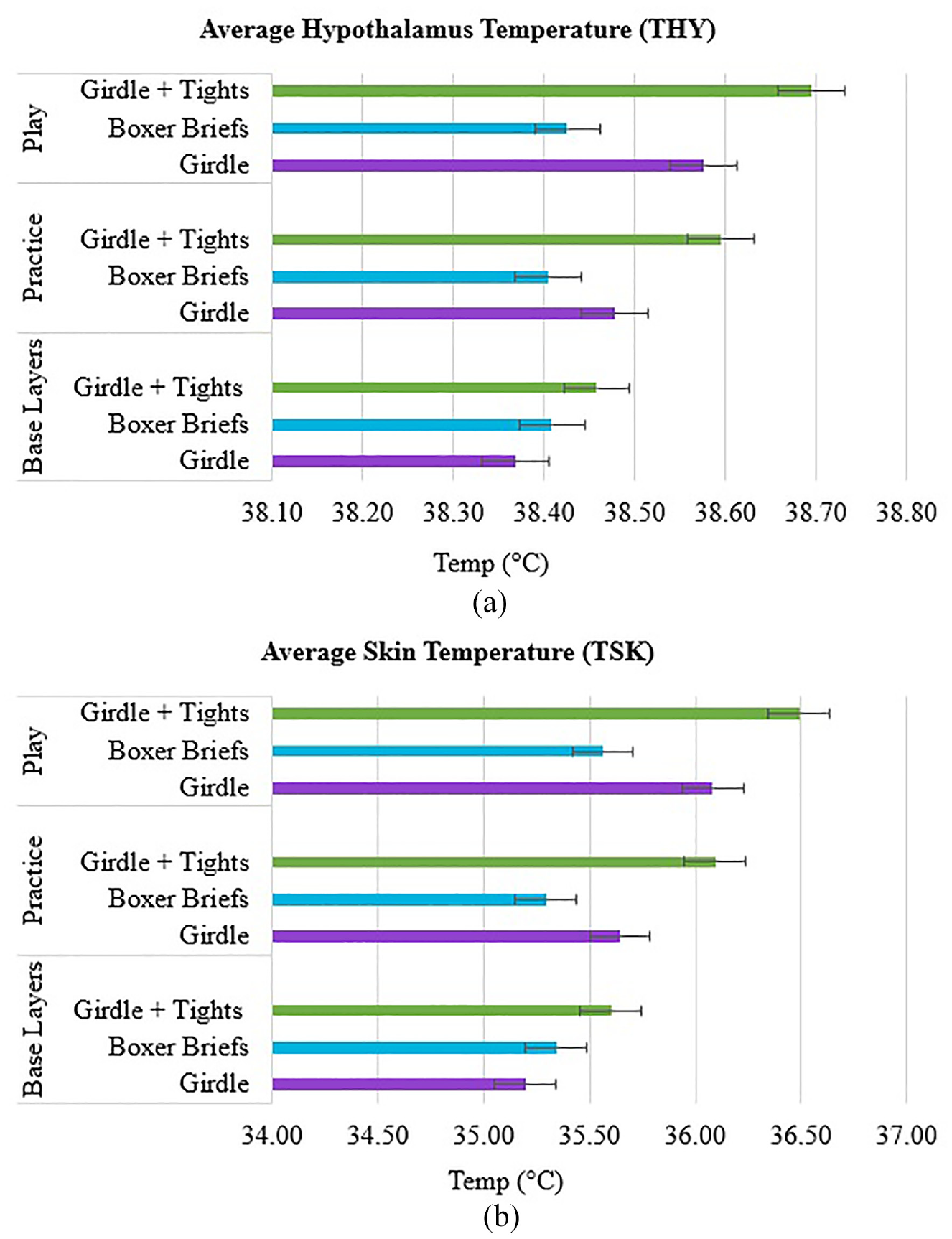
Overall protocol average of the predicted (a) hypothalamus core temperature (THY) and (b) skin temperature (TSK) for base layer, practice, and play garment configurations for each compression garment (error bars reflect the standard error between compression garments in each wear setting).
While significant differences in TSK were found, differences in THY can be harder to detect as this parameter does not fluctuate as much as TSK. Significant differences in predicted THY, however, were found and followed the same trends as TSK in the practice and play settings, as well as in the base-layer test configurations, with no significant differences present between the base-layer boxer briefs and compression girdle alone. Even so, the maximum detected increases of 0.27°C degrees in THY and 0.94°C degrees in TSK (across protocol averages) may not be meaningfully significant, similar to the max protocol value differences from Table 2. Regardless, the commercial perception that compression girdles impact THY may be true,5,6 although wear studies have not shown a significant change when assessed in wildland firefighter, cricket, or field hockey applications.10,11,15 Regardless, based on these findings, the impact is likely to be counterproductive as a rise in THY is not ideal for athletes exerting intense physical activity in hot and humid conditions while wearing multiple layers of clothing and equipment.
SWA predictions followed similar trends to TSK and THY in the base layer only test configuration and showed significant differences (p < 0.05) between each base-layer configuration when worn in a practice setting, and between the boxer brief and girdle with tights configurations in the play setting (see Figure 4). Similar to the TSK and THY results, testing of the base layers only showed that SWA was lowest when only wearing the girdle.
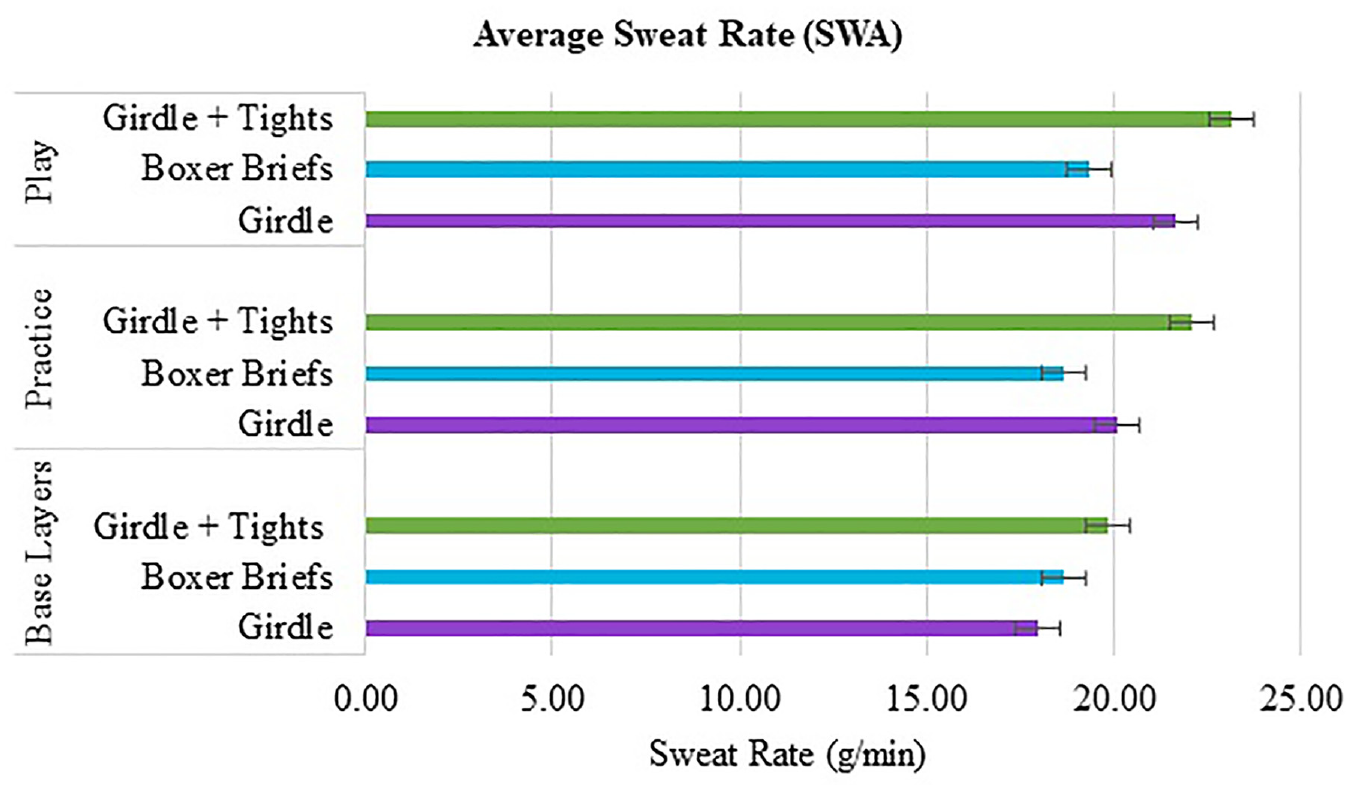
Overall protocol average sweat rate (SWA) for base layer, practice, and play garment configurations for each compression garment (error bars reflect the standard error between compression garments in each wear setting).
Ultimately, these physiological findings are not surprising as the wearer is donning additional layers of clothing, which increases insulation and therefore quickens the rise in TSK and THY during physical activity. Furthermore, these results follow similar trends measured in some previous studies related to significant increases in TSK and even SWA.11,12,15,16 This indicates that the predicted thermal manikin physiological modeling used in this study is a practical methodology for assessing the heat transfer properties of compression garment technologies before investing in a full-scale human wear trial.
When assessing statistically significant differences (p < 0.05) for TSK and THY, the results demonstrate significant differences between the boxer briefs and girdle with tights garment configurations in both practice and play settings. It is interesting to note that when the protocol was run using only base layers, average predictions for TSK and THY were lowest when wearing only the girdle (TSK = 35.20; THY = 38.37), as opposed to when wearing only the boxer briefs (TSK = 35.34; THY = 38.41). These results could point to the beneficial effects of specialized breathable materials that are incorporated into compression girdles with padding or the effect of a closer, next-to-skin fit that reduces air gaps and thermal insulation. Regardless, these results may not be meaningfully significant and may not be perceived by the wearer, as demonstrated in the literature,11,13–16 Future research should include a human wear trial for further consideration of the impact on athletes.
Thermal Comfort Perceptions
For the maximum values recorded, no significant differences were present between configurations for predicted comfort or sensation perceptions. For overall protocol averages, significant differences (p < 0.05) were found between garment configurations for both the predicted comfort and sensation perceptions (see Figure 5). Predicted temperature sensation was lowest when wearing the compression girdle alone in the base-layer configuration (sensation = 0.33) and highest when combining the compression girdle with tights along with practice shorts (sensation = 1.02) and football pants (sensation = 1.10) in the play and practice scenarios, respectively. In the base-layer testing scenario, wearing the compression girdle with tights significantly increased the predicted temperature sensation compared to boxer briefs (p = 0.019) or the compression girdle alone (p = 0.002), indicating the wearer would feel warmer or hotter. Significant differences were found between all three garment configurations for predicted thermal sensation in both the practice and play settings, except for the girdle alone compared to the girdle with tights during play. Both scenarios led to an increased sensation of temperature compared to wearing the boxer briefs alone.
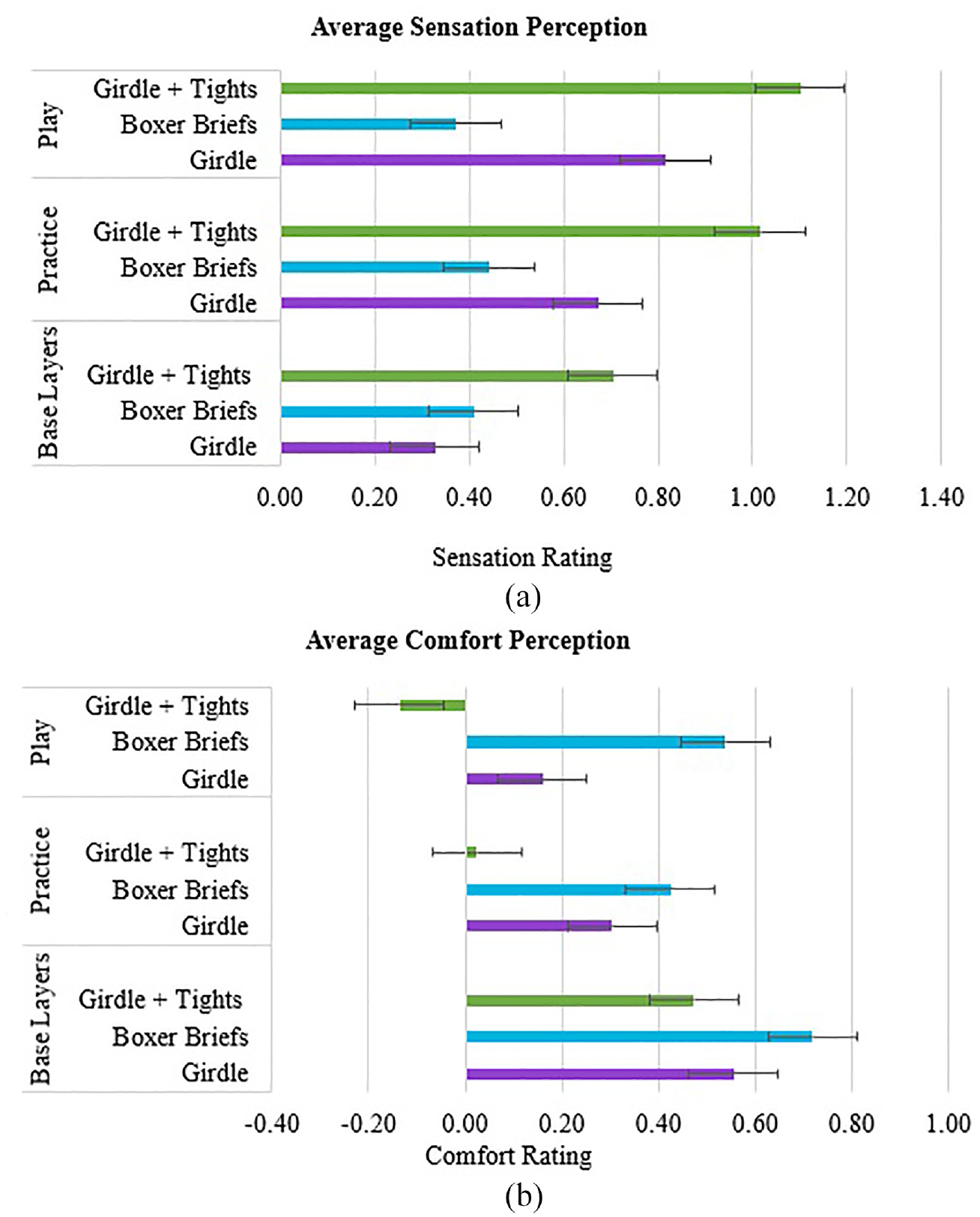
Overall protocol average (a) sensation and (b) comfort perceptions for base layers, practice, and play garment configurations for each compression garment (error bars reflect the standard error between compression garments in each wear setting).
In terms of predicted comfort perceptions, significant differences (p < 0.05) were found between all three garment configurations in all test scenarios except between the girdle worn alone and the girdle with tights in the base-layer configuration, and between the girdle worn alone and the boxer briefs in the practice setting. The model indicated wearing the boxer briefs alone, or in combination with practice shorts or football pants, was the most comfortable. In contrast, wearing the compression girdle with tights was found to be the least comfortable in terms of both predicted comfort perceptions and physiological responses. This is expected as the boxer briefs are the thinnest base layer compared to ensembles with additional clothing layers, as the layers increase thermal insulation and lead to decreased heat transfer from the body to the external environment.32–34 However, the addition of the compression girdle, and in some cases, the compression tights, was necessary to achieve a significant increase in predicted SBF as measured on the thermal manikin. It should be noted that the ManikinPC model returned positive values for comfort due to the dynamic testing protocol included in this study.
Conclusion
This study aimed to assess the effects of tighter fitting, multi-layer compression garment systems on the predicted physiological comfort of American football athletes. Although findings indicate that the fit of compression garments on a sweating thermal manikin significantly increases predicted SBF, which may lead to potentially faster recovery in actual use cases,4,30 more research is necessary to determine the realized benefits when worn on a human body. More importantly, this study demonstrated the detrimental impact in terms of thermal comfort when wearing additional tighter-fitting clothing layers.4,28 These negative effects were greatest when wearing the compression girdle in combination with tights. While this layering combination led to the greatest predicted SBF, it was found to be the least comfortable for both predicted thermophysiological responses and comfort perceptions. This outcome follows known trends in relation to fabric, air, and clothing layers as they relate to insulation, thermal and evaporative resistance, and heat transfer.32,33 The addition of clothing layers increases fabric and air insulation leading to increased heat transfer resistance from the body to the external environment, creating a warmer clothing microclimate. This, in turn, leads to lower perceived comfort and a faster rise in THY, TSK, and SWA.32,34
This was further demonstrated in this study for thin compression garments with minimal air gaps and fabric thickness. A significant rise in predicted TSK and THY was detected when compression was worn and combined with the compression tights. While significant increases in predicted SBF were determined, with limitations, the potential advantage of wearing tighter fitting gear is still largely unknown and may be negated by a significant reduction in thermoregulation. Based on these findings, future researchers and garment designers should consider the incorporation of material innovations such as ventilation,35–37 phase change materials,38,39 and active cooling minerals40,41 to improve heat loss through these multi-layer clothing systems.
To the authors’ knowledge, this study was the first of its kind to use a sweating thermal manikin with real-time ManikinPC integration to model predicted physiological responses for multi-layer compression garment systems. Given that the results follow similar trends measured through human subject research in the literature, it suggests this instrumentation may be used in future research and development activities to downselect between various compression garment materials and design enhancements before scaling up to a wear trial. However, the use of this instrumentation carries with it inherent limitations related to the functionality of the compression on the muscle tissue and resulting SBF. The true constriction experienced by the body via compression garments, including restricted blood flow, superficial circulation, and sweat gland activity, cannot be realized through donning the garments on a carbon shell epoxy manikin. The manikin does, however, serve as a beneficial tool for understanding how these tight-fitting garments impact thermophysiological responses as results followed similar trends of previous studies. Ultimately, human subject testing is needed to determine the additional impact on muscle tissue in actual use settings.
Limitations of this study also include the inability to analyze SBF, SWA, THY, and TSK predictions in a localized manner or for the lower body manikin zones only, which are more relevant for the garments assessed in this study. With the current ManikinPC software, only a single whole-body (35 zone) average is provided for these data points. While the ability to simulate activity and physiological responses is an important tool, the simulated nature of this study can also be treated as a limitation as true human activity does not exist in a vacuum. Furthermore, as this study serves to lay the foundation of predicted manikin physiological responses for athletic compression garments, data were collected in a static condition (manikin standing at a still air speed) and no additional design features (ventilation, active cooling, and so on) were considered.
For all these reasons, future research should seek to collect data through a full systems human wear trial to confirm findings and better understand perceived impacts in real-use settings. For example, in the case of increases in THY and TSK predictions, a human wear trial is required to determine how these predictions translate to actual-use scenarios and whether these differences are not only statistically significant, but also meaningful to the wearer. For SBF, such human subject research is vital as compression to the skin and muscles cannot be replicated using a thermal manikin.
This study lays the foundation for predicted thermal manikin physiological responses related to multi-layer compression garment clothing systems. However, much more research is needed to better understand compressions’ impact on both athlete recovery and physiological comfort. Findings from this study can begin to inform college and pro-level football players of the thermophysiological impact of wearing a girdle and/or compression pant, as well as guide compression garment manufacturers toward design improvements. Ventilation and other heat stress relief modifications should be explored for enhanced breathability to increase thermal comfort when wearing compression garments. Future studies should seek to validate whether the addition of ventilation can successfully reduce the negative impacts on thermal comfort.
Footnotes
Declaration of conflicting interests
The author(s) declared no potential conflicts of interest with respect to the research, authorship, and/or publication of this article.
Funding
The author(s) disclosed receipt of the following financial support for the research, authorship, and/or publication of this article: This work was supported by the 2021 American Association of Textile Chemists and Colorists (AATCC) Foundation, Student Research Support Grants, as well as the Florida State University, Phi Eta Sigma Undergraduate Research Award.
