






Abstract
Exposure to extreme temperatures causes heat stress, and even serious health issues such as heat stroke and malfunctioning of the body's thermal regulatory system. Conductive, evaporative, and phase-change cooling technologies are used in personal cooling garments for this specific reason. This study investigated their effectiveness over time in different environments, through a series of thermal manikin tests. Thermal insulation and evaporative resistance were analyzed. The conductive cooling vest had only an initial strong cooling effect, but quickly lost cooling power and even increased the thermal burden. The evaporative cooling vest showed a gradual cooling effect. The phase-change cooling garment did not show noticeable body cooling in either no-wind or windy conditions. The findings have practical implications for improved cooling vest design and optimal use for each cooling technology.
Introduction
Thermal discomfort in hot environments can evolve simply from long periods of heat exposure or when “heat production, generated by physical exercise, exceeds the body's heat dissipation capacity”. 1 Thermal discomfort can get worse and cause heat illness when combined with increased body heat generation from physical activity with impermeable clothing in a hot environment. 2 Heat illness decreases one's work efficiency by limiting the thermal regulatory response and physical performance and can further lead to conditions such as dehydration, heat stroke, lack of mental ability, and even fatality if appropriate medical treatment is not readily available. The literature documents that the human body's thermal regulation begins to malfunction and cause thermal illness when the core body temperature exceeds 39 °C. 3
The risk of such heat illness is a serious safety issue and a major cause for performance decrements for a majority of first responders (e.g., firefighters and military personnel) and for those working in unfavorable thermal environments where clothing functions primarily as a protective barrier against environmental hazards without cooling necessary to maintain thermal homeostasis. For example, military body armor made of multiple layers of Kevlar or Dyneema is primarily designed to provide ballistic protection, but it increases thermal insulation and resistance to evaporative cooling from the human body, which can increase the risk of heat illness during training and military operations. Chemical protective clothing for farmers, or HAZMAT (hazardous materials and items) suits, are made of highly impermeable materials which can lead to heat stroke by blocking the release of body heat and perspiration to the environment. As a solution to these kinds of thermal challenges, personal cooling garments are on the market to reduce thermal dis-comfort and further prevent heat illness.
Personal cooling garments can be classified by 1) area of cooling (torso/full-body cooling vs. localized cooling) and 2) cooling mechanism (active cooling and passive cooling). A majority of personal cooling garments have been developed to provide cooling mainly in the torso, where approximately more than 60% of body heat is stored, and also released to the extremities through vasodilation for effective and rapid cooling of the body by sending the blood (heat source in the body) to peripheral vessels close to the environment. 4 When a high level of thermal protection is required (e.g., a space suit), a full-body personal cooling garment is used. On the other hand, localized cooling garments or devices, such as neck coolers and head coolers, are designed to provide intensive cooling for target areas where large blood vessels pass. Those devices can provide a rapid cooling sensation with the expectation that cooling the large vessels will cool down the blood, which will circulate through the entire body and lower the body temperature. 3
Because of the convenience, portability, and rapid cooling in target areas, localized cooling devices have been tested for medical, athletic, and military applications. However, the literature shows that, in comparison with torso/full-body cooling garments, localized cooling devices have a limited cooling capacity to lower the core body temperature, and can cause thermal discomfort due to excessive cooling in applied areas and the large temperature gradient on the body. Localized cooling devices may also create misleading perceptions of cooling in applied cooling areas even when the core body temperature is still above the threshold point of thermal malfunction. 3
Active cooling garments are designed for the wearer to operate the cooling system and adjust the level of cooling when needed. Examples of active cooling garments include those that circulate cold gas/liquid. These typically consist of a battery pack, coolants, tubes/hoses, a pump, or fans. Therefore, active cooling garments circulate a cold gas or a cold liquid (often water) inside the garment, using a pump and tubes (for cold liquids) or fans and hoses (for cold gases). The advantages of active cooling garments include an immediately perceptible, strong cooling effect upon operation and the wearer's control over the level of cooling.
Previous studies show that garments circulating a cold liquid had a stronger cooling effect (127–147 W) underneath highly-encapsulated protective clothing than did those that circulated a cold gas (15–77 W).2,5 In a comparison between cold air and water cooling garments, the literature shows that cold water circulating garments provided quicker and more effective cooling (because of water's high heat conductivity) than cold air circulating garments. Despite a strong cooling effect and the convenience of adjusting the level of cooling, active cooling systems are used for limited applications where a high risk of thermal hazards with minimal physical activity is possible, because of the heavy and cumbersome auxiliary equipment required to cool and circulate the fluid. 6 Due to the substantial physical burden of carrying heavy, bulky equipment, the wearer's body movement is restricted, which significantly limits the time that wearers can work in these garments and the applications in which the garments can be used.
On the other hand, passive cooling garments are widely used for various occupational and civilian applications because they do not require a power source or heavy, bulky equipment to assemble or carry. Passive cooling garments provide a cooling effect through cooling materials inside the garments or the physical properties of the garment materials. Examples of passive cooling garments include conductive cooling (CC) garments, phase-change (PC) cooling garments, and evaporative cooling (EC) garments.
CC cooling garments use cooling inserts that require freezing the enclosed liquid. When the inserts freeze, they act as long-lasting ice packs that are then inserted into the interior of the vest for direct contact with the body.
PC cooling garments use a substance that absorbs heat from the body as it changes from a solid state to a liquid state and allows the body to further cool down. This cooling mechanism uses latent heat energy to keep the microclimate temperature close to the skin temperature. This kind of cooling and heating is effective while the phase-change materials change their phase from solid to liquid. Therefore, the cooling effect is effective within a narrow range of microclimate temperature that triggers a phase change of the material.
Evaporative cooling (EC) garments provide a cooling effect by facilitating evaporation through a highly-wicking fabric structure. This evaporative cooling effect lasts until all of the moisture on the cooling vest evaporates.
A distinctive characteristic of passive cooling garments is that the cooling capacity is likely to be greatly affected by environmental conditions, the wearer's activity, and its resultant body heat generation. The cooling effect of active cooling garments are relatively stable and less likely to be affected by environment conditions because the cooling agent is insulated by tubes/hoses or protective layers. 7 For example, in the case of passive cooling garments, the wearer's body temperature may affect the duration and intensity of cooling of ice-pack garments and PC cooling garments. Environmental air velocity, humidity, and temperature also affect the cooling effect of EC vests. In addition, the cooling effect of passive cooling garments is also likely to vary over time because the thermal interaction between the body and cooling garments impacts the microclimate temperature and humidity, which, in turn, affects the heat and moisture transport between the body and cooling garments.
Although passive cooling garments have been widely used for various applications (e.g., civilian, athletic, and industrial uses) for their affordability and convenience, the literature indicates that there has been little research on the change in cooling effect of passive cooling garments over time under different environmental conditions. An understanding of the intensity and duration of the cooling effect, and the change in the thermal properties of the entire ensemble when worn with a cooling garment over time, are expected to provide practical implications for further design improvements and suggestions for optimal use of each different cooling technology. Therefore, this study investigated the effectiveness of three different cooling mechanisms over time in different environments, through sweating thermal manikin tests based on the ASTM standard testing method.
Methods
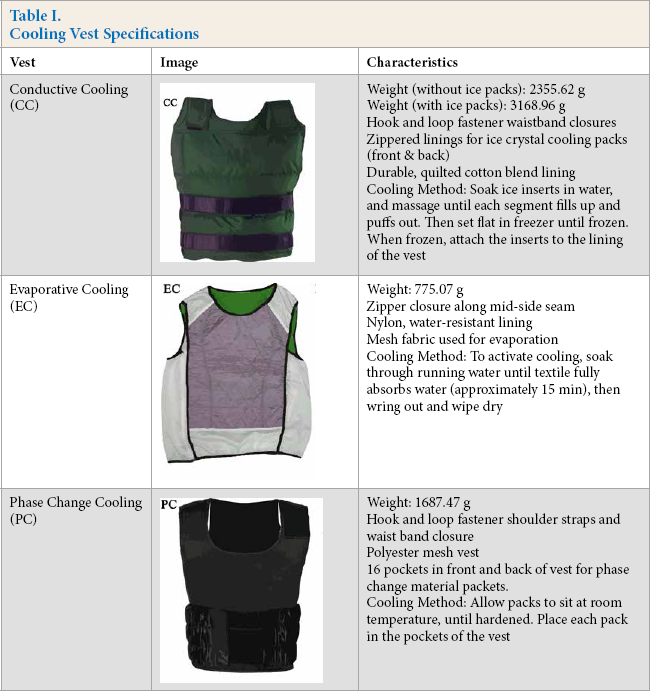
A series of sweating thermal manikin (Fig. 1) tests were conducted to evaluate cooling effects in an environmental chamber where the ambient temperature, humidity, and wind speed (< 0.1 m/s and 1 m/s) were controlled. The environmental conditions were set to 65% relative humidity (RH) ± 5% and 20 ± 1 °C following the ASTM F1291 standard (2005). A CC cooling vest using icepacks, an EC cooling vest, and a PC cooling vest were selected (Table I). The CC vest provided cooling by direct contact with a cold object (e.g., icepacks) on the skin, while the EC vest held onto water and slowly released it to evaporate and enhance the body's natural cooling system. The PC vest's phase-change material used latent heat energy to take the body heat away.
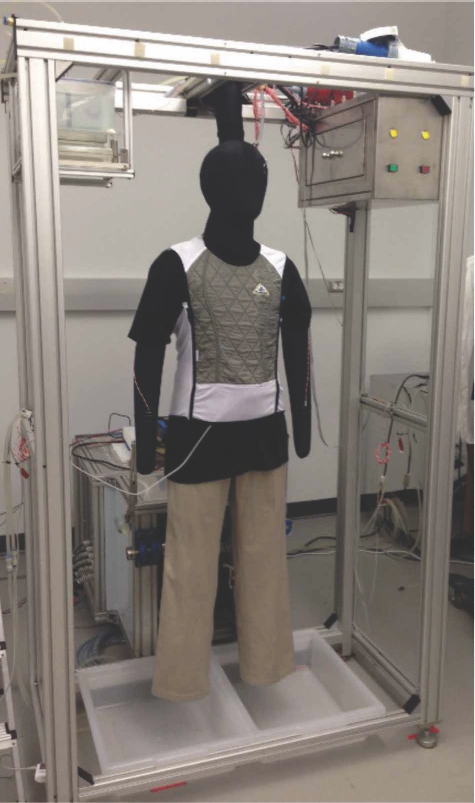
Walter sweating thermal manikin.
Cooling Vest Specifications
The thermal manikin test procedure was as follows: each of the three cooling vests was put on top of a control ensemble (a short sleeved T-shirt and long khaki pants, both 100% cotton, combined weight: 811.3 g) for each thermal manikin test in the environmental chamber. All testing garments were pre-conditioned for more than 24 h before testing. The mean skin temperature for the thermal manikin was set at 35 °C. The sweating thermal manikin was capable of simulating human perspiration, which was closely related to change in the core body temperature. The manikin was filled with warm water (approximately 35 ± 0.3 °C) underneath the breathable but waterproof membrane skin of the manikin to simulate human perspiration. The sweating thermal manikin used in this study had 16 skin temperature sensors and humidity sensors on each zone of the body (Fig. 2).
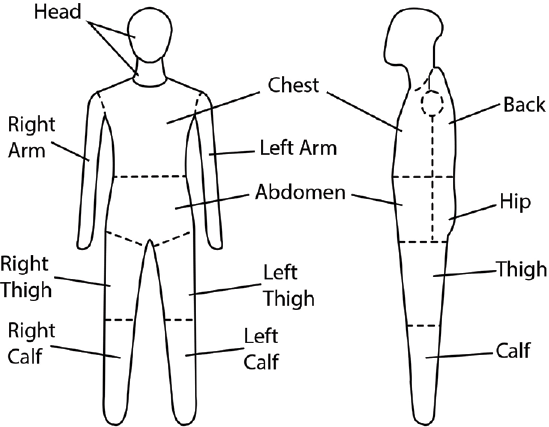
Map of skin temperature sensor and humidity sensor locations.
The following variables were used to calculate the thermal insulation and apparent evaporative resistance of the test garments: temperature, humidity data, water vapor pres-sure in a microclimate (between the manikin body and test ensemble), water loss, and electrical consumption. Thermal insulation (°C∙m2 /W) is the numeric indicator of how warm or cool the garment was in terms of heat transfer between the body and environment. The thermal insulation (

High values of thermal insulation indicate greater thermal resistance of the test ensemble, which delays heat transfer from the body's surface to the environment. Therefore, higher thermal insulation during winter and lower thermal insulation during summer is desirable for thermal comfort. In this study, it is expected that an increase in the cooling effect would result in a decrease in thermal insulation. In other words, the lower the thermal insulation of the test garments, the cooler the garment is, which shows a greater effectiveness in body cooling.
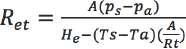
Evaporative resistance (Pa∙°C/W) is the numeric indicator of breathability of the test garment in terms of moisture transport between the body and environment through the garment layers. The higher the evaporative resistance is, the greater humidity there is inside the garments, which indicates less breathable clothing. Since the human body feels comfortable when the skin is dry under lower humidity conditions, lower values in evaporative resistance (greater breathability) are preferred for thermal comfort. In this study, apparent evaporative resistance (
The standing thermal manikin test was conducted in a no-wind condition (< 0.1 m/s, in a normal indoor ventilation system) and in a wind condition speed of 1 m/s for 3 h, using the control ensemble. The wind speed was controlled by the speed settings of the fan. This test protocol was used for each vest under both conditions (no-wind and wind at 1 m/s). Thermal insulation (°C∙m2/W), and apparent evaporative resistance (Pa∙°C/W) data were collected under non-isothermal conditions.
Results
No-Wind Conditions
Apparent Evaporative Resistance
As seen in Fig. 3, the test ensemble with the CC vest had the highest
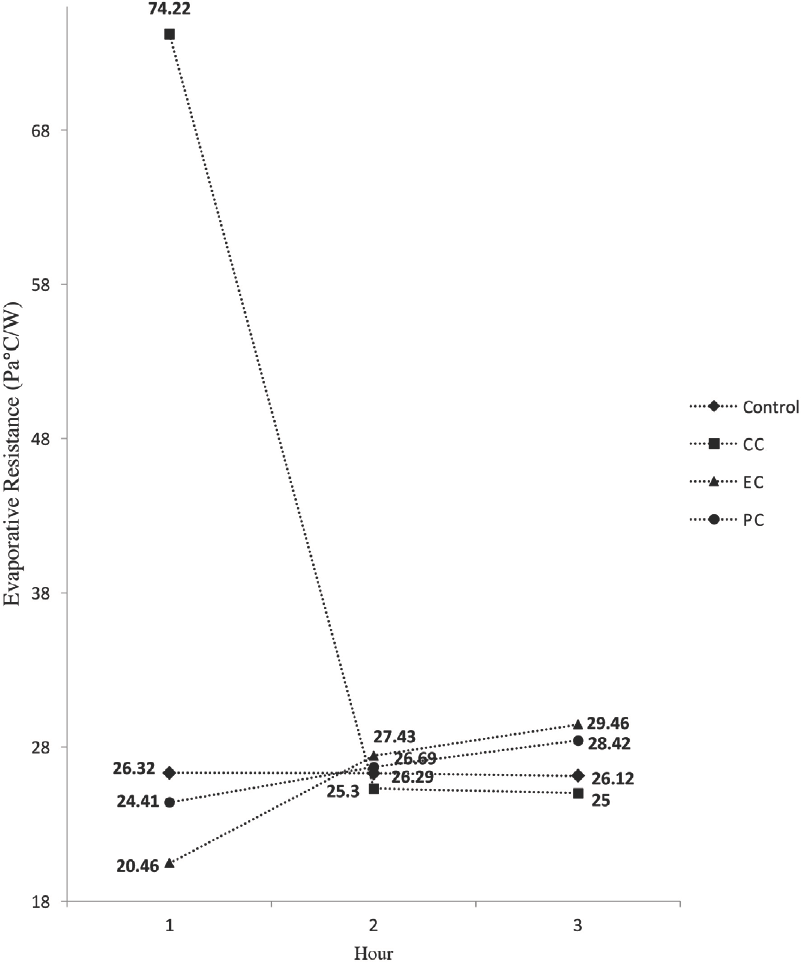
Apparent evaporative resistance under no-wind conditions.
In contrast, Fig. 3 shows that the test ensembles with the PC and EC vests began (after 1 h) at lower
Thermal Insulation
As shown in Fig. 4, thermal insulation of the control ensemble (without any cooling garments) remained stable between 0.161 °C∙m2/W and 0.163 °C∙m2/W for 3 h.
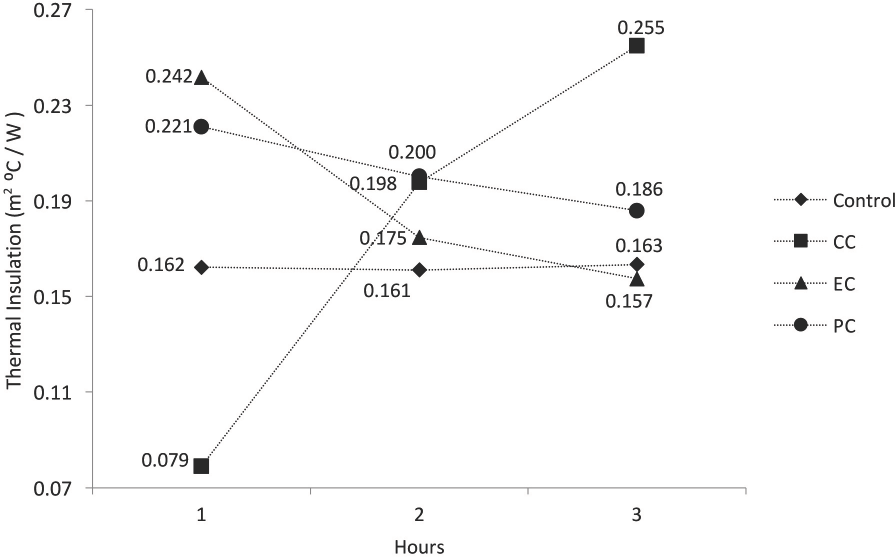
Thermal insulation under no-wind conditions after 1 h, after 2 h, and after 3 h.
After one hour of donning the cooling vests, only the test ensemble with the CC vest showed less thermal insulation of the total ensemble than the control ensemble, which indicated that only the CC vest provided a cooling effect for the first hour, while the EC vest and PC vest added thermal burden, as evidenced by the increased thermal insulation. Fig. 4 also shows that the test ensemble with the CC vest had the least thermal insulation (0.079 °C∙m2/W) at the beginning of testing, indicating that the strongest cooling effect resulted from rapid conductive heat transfer from the ice pack to the skin through direct contact, with a great temperature gradient between the icepack (below 0 °C) and the skin (35 °C). However, after 2 h, the thermal insulation of the ensemble with the CC vest quickly increased to 0.2 °C∙m2/ W, indicating that the CC vest lost its cooling effect and began to add thermal burden. After 3 h, the test ensemble with the CC vest had the highest thermal insulation (0.255 °C∙m2/W), which was, in fact, about three times greater thermal insulation than the control ensemble (0.079 °C∙m2/W after 1 h), indicating that the CC vest created a significant thermal burden instead of a cooling effect.
Surface temperature changes observed by an infrared cam-era also showed that the CC vest lost its cooling effect as the icepacks quickly melted over time. As shown in Fig. 5, the average surface temperature of the CC vest increased from an average of 13.01 °C (Fig. 5a) to an average of 14.89 °C (Fig. 5b) and 16.89 °C (Fig. 5c) as the icepacks melted.
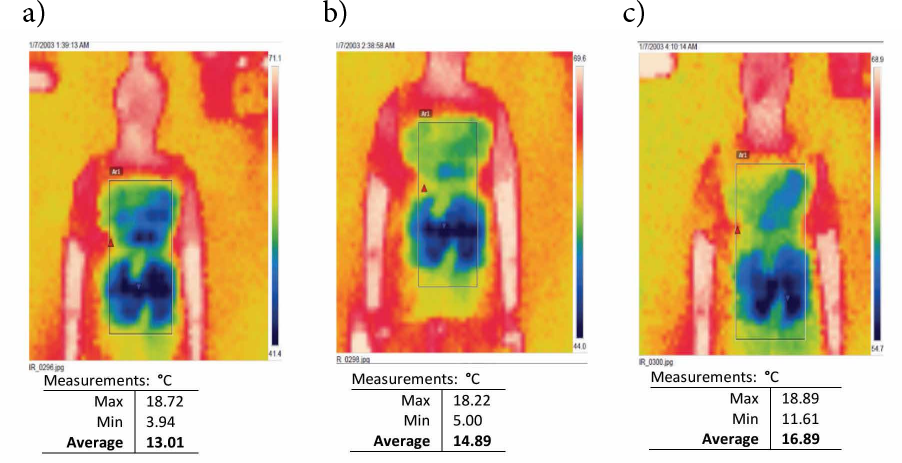
Surface temperature of the CC (conductive cooling) vest over time after activation.
The test ensemble with the other two cooling vests (EC and PC), showed a gradual decrease in thermal insulation (Fig. 4), which indicates that these vests began to provide a cooling effect two hours after being put on the test ensemble. The thermal insulation of the test ensemble with the EC vest decreased over time from 0.242 °C∙m2/W to 0.157 °C∙m2/W (Fig. 4). At the end of testing, the EC vest showed the least thermal insulation (0.157 °C∙m2/W), which was slightly less than the thermal insulation of the control ensemble (0.163 °C∙m2/W). This gradual decrease in thermal insulation indicates that it took quite a while (2 h in this experiment) for the EC vest to begin facilitating evaporative cooling on the body without active airflow.
However, note that the thermal insulation of the test ensemble with both the EC and the PC vests was actually greater than with the control ensemble until 2 h after the test, implying that wearing these vests was not practically helpful for cooling down the body under no-wind conditions; rather, it added thermal burden by adding an additional garment. The thermal insulation of the test ensemble with the PC vest gradually decreased over time from 0.221 °C∙m2/W to 0.186 °C∙m2/ W, which was still higher than the thermal insulation of the control ensemble during the entire test, indicating no practical cooling benefit.
Windy Conditions
Apparent Evaporative Resistance
Fig. 6 shows that
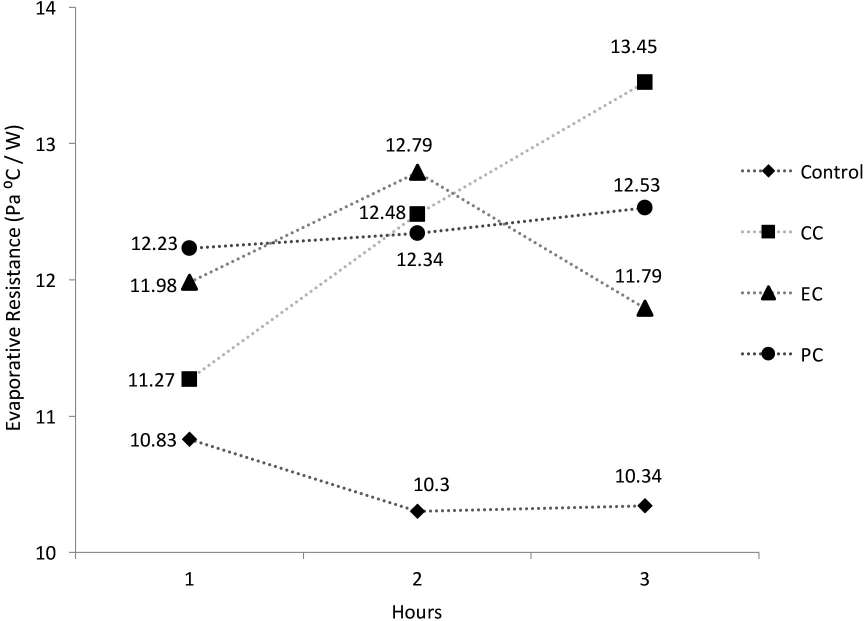
Apparent evaporative resistance under windy conditions.
The active airflow (1 m/s) significantly lowered the appar-ent evaporative resistance to facilitate the human body's natural cooling through sweat evaporation.
10
A noticeable, gradual increase in
Thermal Insulation
As seen in Fig. 7, the thermal insulation of all test ensembles (from 0.081 to 0.112 °C∙m2/W) decreased by about 50% or greater under windy conditions, compared to the thermal insulation of the test ensembles under no-wind conditions (from 0.079 to 0.255 °C∙m2/ W, Fig. 3).
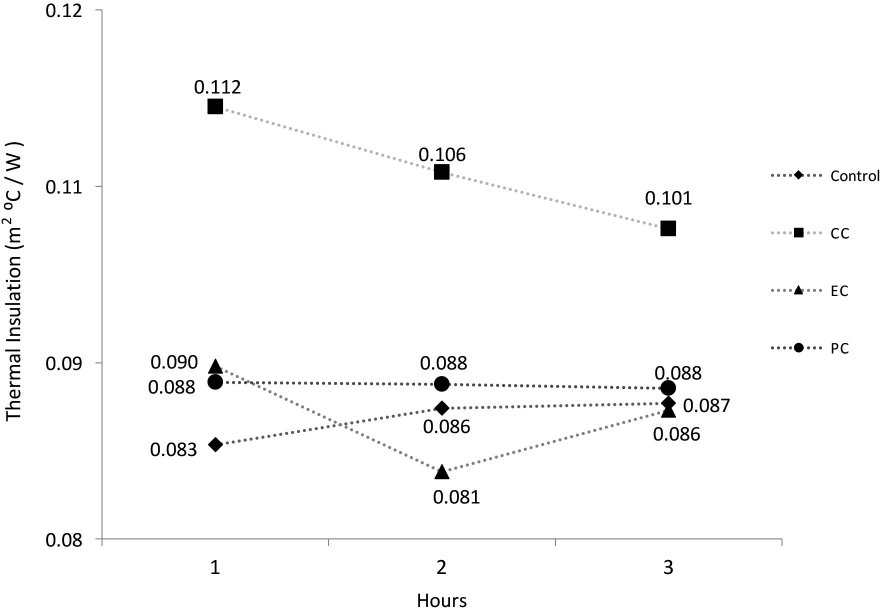
Thermal insulation under windy conditions.
The test ensemble with the CC vest, featuring the icepack, showed the greatest thermal insulation, which gradually decreased from 0.112 to 0.101 °C∙m2/W in 3 h, implying that active air flow may increase the effectiveness of cooling by increasing the convection of the air cooled by contact with the cold icepack on the skin. Therefore, both conductive and convective cooling by the cold icepack gradually increased the cooling effect over time under windy conditions. However, the thermal insulation of the test ensemble with the CC vest (from 0.101 to 112 °C∙m2/W) and with the PC vest (0.088 °C∙m2/W) was greater than the control ensemble (from 0.083 to 0.087 °C∙m2/W), implying that there was no practical benefit to wearing a cooling vest under windy conditions.
The test ensemble with the EC vest showed slightly less thermal insulation than the control ensemble after 2 h, indicating that wearing an EC vest can provide additional cooling under windy conditions after 2 h. Afterwards, the thermal insulation of the test ensemble increased slightly, up to 0.087 °C∙m2/W at the end of the test, with a decreased cooling effect, most likely due to the loss of moisture in the EC vest, resulting from continuous evaporation and facilitated by the active air flow under windy conditions.
Discussion
The results of this study suggested the optimal use of different cooling garments. Under no-wind conditions, the CC vest demonstrated the strongest initial cooling effect compared to the others (the EC and PC vests), but faced a dramatic decrease in cooling as the ice melted over time and began to increase the thermal burden after the icepack melted.
This result came from a thermal manikin test while the manikin was standing still, simulating minimal body heat generation for only basic metabolism, and under relatively comfortable indoor conditions (20 °C and 65% RH). The decrease in cooling power of the CC vest is very likely to be more rapid in real-world applications where consumers perform physical activities in hot environments, resulting in quicker melting of the icepack.
The literature confirms that the human body generates greater heat during active physical activity. For example, 1 met (metabolism unit) is 58.2 W/m2, which is “equivalent to the energy produced per unit surface area of a person, whose body surface is on average 1.8 m2, sitting at rest.” 12 Physical activity increases the metabolism, leading to increased body heat: about 70 W/m2 during rest standing still, about 165 W/m2 during walking at a speed of 2.5 km/h, and about 290 W/m2 during running at a speed of 7 km/h or higher. 13 Therefore, body movement while wearing a CC vest in hot environments (in real use) was very likely to cause loss of cooling power more quickly with the impact of body and environmental heat. Furthermore, the added weight of a CC vest with an icepack (3168.96 g in this study) on top of daily clothing can increase the physical burden and accelerate an increase in body heat generation. The results of this study also implied that the strong initial cooling effect from the icepack or a low-temperature cooling agent can cause overcooling of the body, requiring caution in using CC vests, especially when the temperature of the cooling agent (e.g., ice at 0 °C) is too low and the cooling agent directly touches the skin.
On the other hand, the initial strong cooling of the CC vest can benefit those who need a high level of thermal protection against a heat hazard for the relatively short duration of a light workload. In addition, if consumers wore the CC vest underneath encapsulated or well-insulated clothing (e.g., firefighters’ turnout ensemble or chemical protective clothing), the cooling effect may last longer because of the potentially reduced impact of the environmental heat. Test ensembles with the EC and PC vests showed a gradual decrease in thermal insulation over time, but the insulation value was greater than for the control ensemble, indicating that there was no practical cooling benefit from wearing the two cooling vests under no-wind conditions.
Under windy conditions, the control ensemble showed the lowest apparent evaporative resistance. The test ensemble with the CC, EC, and PC vests showed slightly greater apparent evaporative resistance. However, overall apparent evaporative resistance was considerably lower under windy conditions than under no-wind conditions. The thermal insulation of the test ensemble with the CC vest and the PC vest under windy conditions, was greater than for the control ensemble. The only exception was the EC vest, which showed slightly lower thermal insulation than the control ensemble. This indicates that wearing a cooling vest on top of a base garment under windy conditions did not provide practically effective cooling. In this case, the human body's natural sweat provides the most effective cooling system. This is because wearing a cooling vest adds an additional layer and creates still air between the control garment and the vest, which functions as another barrier to the heat and moisture transport from the body to the environment. 10
Considering that the EC vest was tested on the thermal manikin standing still, it was possible that the cooling effect of the EC vest would be greater while the wearer was actively moving because body movement increased convection around the body, facilitating evaporation on the skin. In particular, the EC vest can be effective for athletic activities do to its use of lightweight high-wicking fabric to maximize evaporative cooling on the body. Active body movement, along with windy conditions, may create a synergy for effective cooling. It is also possible that the EC vest can provide a greater cooling effect when worn directly on the skin. Note that the EC vest was placed on a cotton T-shirt in this experiment, which could have affected the efficacy of evaporative cooling.
Under both no-wind and wind conditions, the PC vest did not show a noticeable cooling effect. According to the literature, the cooling effect of phase-change material tends to be slow and subtle because the cooling effect occurs only at around the melting temperature of the phase-change material. Some literature even mentioned that the temperature regulating effect of this material is often too weak or too short to sense in thermally uncomfortable environments. 12 Further work needs to be pursued to develop an improved cooling effect using phase-change materials.
Conclusion
The findings of this study provided suggestions for improved design of cooling vests for enhanced thermal comfort. Weight was a major factor when discussing adding an additional cooling layer to a uniform for someone who is physically active the majority of the time. For example, the CC vest with the icepack weighed 3168.96 g, which added a physical burden over time and increased body heat generation quickly.
To make the conductive cooling vest more effective, the ice packs should be less bulky and spread out evenly. In this way, the cooling effect would be more evenly distributed. The CC vest lining should be insulating and waterproof to delay ice pack melting, but should be lightweight. The con-densation from the melting ice packs that accumulated on the under-side of the vest would be prevented and not create extra moisture on the body. For an improved cooling effect, the EC vest can incorporate another cooling feature so that it does not depend only on air movement in the surrounding space. If there were small conductive cooling icepacks in addition to the evaporative-specific textile, then this vest could be used in more situations.
This study had a few limitations. Changes were measured in thermal insulation and apparent evaporative resistance of each cooling vest over time in a lab environment under standard textile testing conditions, following ASTM F1291 standards, because of technical limitations of an environmental chamber to simulate hot environments with extreme temperatures.
Future studies are needed for more rigorous verification of the test results through more replications of the tests. In this study, radiant heat impact was not simulated since the thermal manikin test was conducted in an indoor environmental chamber without a radiant heat source. Future studies should also include exposure to higher temperature settings (including a realistic simulation of radiant heat impact) to simulate realistic heat stress conditions. This would provide more practical outcomes from a realistic simulation of environmental heat hazards.
This study evaluated cooling vests only under two conditions (windy and non-windy). This study investigated only thermal insulation and apparent evaporative resistance under non-isothermal condition using a standing thermal manikin. Therefore, investigation of total heat loss, subjective comfort, and physiological responses provided additional meaningful information about effectiveness of cooling garments. Additional thermal manikin tests with simulated walking motion are also expected to simulate a pumping effect, which can also provide further information about cooling effect while human body is moving. Thermal manikin tests under isothermal conditions would also pro-vide true total apparent evaporative resistance data.
In addition, a separate study involving human subject performance tests would also provide verification of the data from the thermal manikin tests. Subjective perceptions of cooling effects and insights into improved designs for effective cooling, ease of use, mobility, donning, and doffing would be valuable information to collect. It is also proposed that there is need for further research to develop standardized testing methods to evaluate and rate the effectiveness of cooling garments with consideration of realistic environmental thermal hazards and the wearer's work environment, including required occupational clothing. There is also a need to develop a reasonable rating system of cooling garments for consumers', including information about the intensity and duration of cooling and the requirements for effective cooling (e.g., pre-chilling procedure, use of battery, or any other physically demanding equipment) which are directly related to the consumers’ comfort, work efficiency and safety.