




Abstract
Heat stress has always been a critical issue among firefighters. Previous studies have indicated the potential influence of water-repellent finishing on heat release properties of clothing. Nevertheless, the impact of durable water repellent in a thermal liner on firefighter heat stress has never been studied. In this work, the impact of durable water-repellent finishing inside the thermal liner on heat stress has been evaluated systematically for the first time, using a sweat-guarded hotplate, a sweating manikin, and a physiological manikin. The results showed that there was no significant difference in heat loss capabilities on the fabric level or garment level between turnout clothing with or without durable water-repellent finishing in the thermal liner. In addition, no significant differences were identified in predicted physiological responses when tested in a mild environment. However, the turnout clothing with durable water-repellent finishing in the thermal liner demonstrated significantly less weight gain after the physiological manikin test. This initial investigation lays the groundwork for understanding how durable water-repellent finishing in thermal liners may impact firefighter comfort. It acts as a starting point for further research on the potential impact of durable water-repellent finishing on thermal protection and overall comfort under various ambient conditions.
Keywords
Introduction
Firefighting is an extremely dangerous profession and firefighters are exposed to various hazards, including thermal injuries, trauma, toxic liquids, and so on. 1 To protect structural firefighters against the external hazards, typically 3-layer turnout clothing is required. The thick and bulky protective clothing adds large resistance to the dissipation of metabolic heat, causing potential heat stress. 2 It has been reported that heat stress is a major cause of firefighters’ sudden cardiac deaths as well as numerous injuries. 3
Typical structural firefighter turnout clothing consists of an outer shell, a moisture barrier, and a thermal liner.4–6 Normally, a durable water-repellent finishing (DWR) is applied to the outer shell to protect from water. DWR is defined as textile finish that provide lasting repellency to water, and in some cases, oil and stains, depending on the chemicals utilized.7,8 Both perfluoroalkyl and polyfluoroalkyl substances (PFASs) and non-PFAS alternatives can be employed. 9 The difference is that PFAS-based DWR delivers both water and oil repellency, whereas non-PFAS-based formulations generally confer water repellency only. For firefighter outer shells and outdoor apparel, side-chained fluoropolymers, one form of PFAS, are commonly used due to their exceptional water, oil, and stain repellency. 10 In these fluoropolymer DWRs, PFASs are attached as side chains to polymer backbones, typically acrylic or polyurethanes. 9 Due to aging and degradation, these side chains can convert into toxic perfluoroalkyl acids (PFAAs), such as perfluorooctanoic acid (PFOA). 9 Efforts have been underway to replace PFAS-based DWR treatments with alternatives, such as wax, silicon, and so on.11,12 Although the alternatives can provide comparable water repellency, little oil repellency can be provided, making it challenging to replace the traditional PFAS-based DWR on firefighter gear. 10
Thermal liners, the innermost layer, can be shielded from external water infiltration by a moisture barrier. However, thermal liners can still become wet due to the significant perspiration firefighters experience during intense activities. It is also possible for water to get into thermal liners through leaks in the moisture barriers after they age. To limit water absorption, some commercially available turnout gears have DWR finishing in thermal liners. Unlike the outer shell, oil repellency is not essential for the thermal liner, and regular non-PFAS-based DWR finishing is adequate. Such turnout gear has much popularity among firefighters. In a firefighter workshop, some firefighters mentioned that they felt cooler when wearing such clothing. This prompted us to investigate the effect of DWR treatment on thermal comfort.
The influence of DWR finishing on clothing comfort has been studied extensively. Gibson studied the effect of DWR treatment in military uniforms and found that the uniform with or without DWR treatments showed similar air permeability and breathability, indicating no differences in heat strain potential. 13 However, it was reported that the DWR treatments did impact the perceived comfort negatively. 13 This is consistent with a previous study on the influence of fabric sweat management properties on perceived tactile comfort by Yoo and Barker. 14 Tama et al. used a thermal manikin to investigate the influence of water-repellent finishing on the insulation of knitted rowing shirts and found a change in effective insulation value after water-repellent treatment. However, only a dry manikin test was conducted without considering the effect of sweat wicking and evaporation. 15 Kwon et al. explored the comfort of water-repellent-treated combat uniform using manikin and human wear trials under simulated raining conditions. They revealed that DWR-treated uniforms could keep wearers dry, less cold, and more comfortable than the untreated clothing. 16 Kim et al. 17 compared the performance of fabrics treated with fluorine, wax, and silicon-based water-repellent finishes and revealed that fabric stiffness increased after water-repellent finishing, especially with the wax-based agent. Pektaş et al. 11 applied bicomponent room temperature vulcanizing silicone finishing onto cotton blended woven fabric and discovered that the treated fabric exhibited better air permeability, more rigidity, and higher thermal capacity value.
These previous studies have demonstrated DWR finishing could potentially impact thermal and tactile comfort. However, the effect of DWR finishing in the thermal liner of turnout clothing on firefighter thermal comfort is unknown. The aim of this study was to evaluate the potential effect of DWR finishing inside turnout clothing on firefighter thermal comfort. To the best of our knowledge, this is the first systematic study on the physiological effect of DWR finishing using a hotplate, sweating manikin, and physiological manikin.
Experimental Methods
Garments
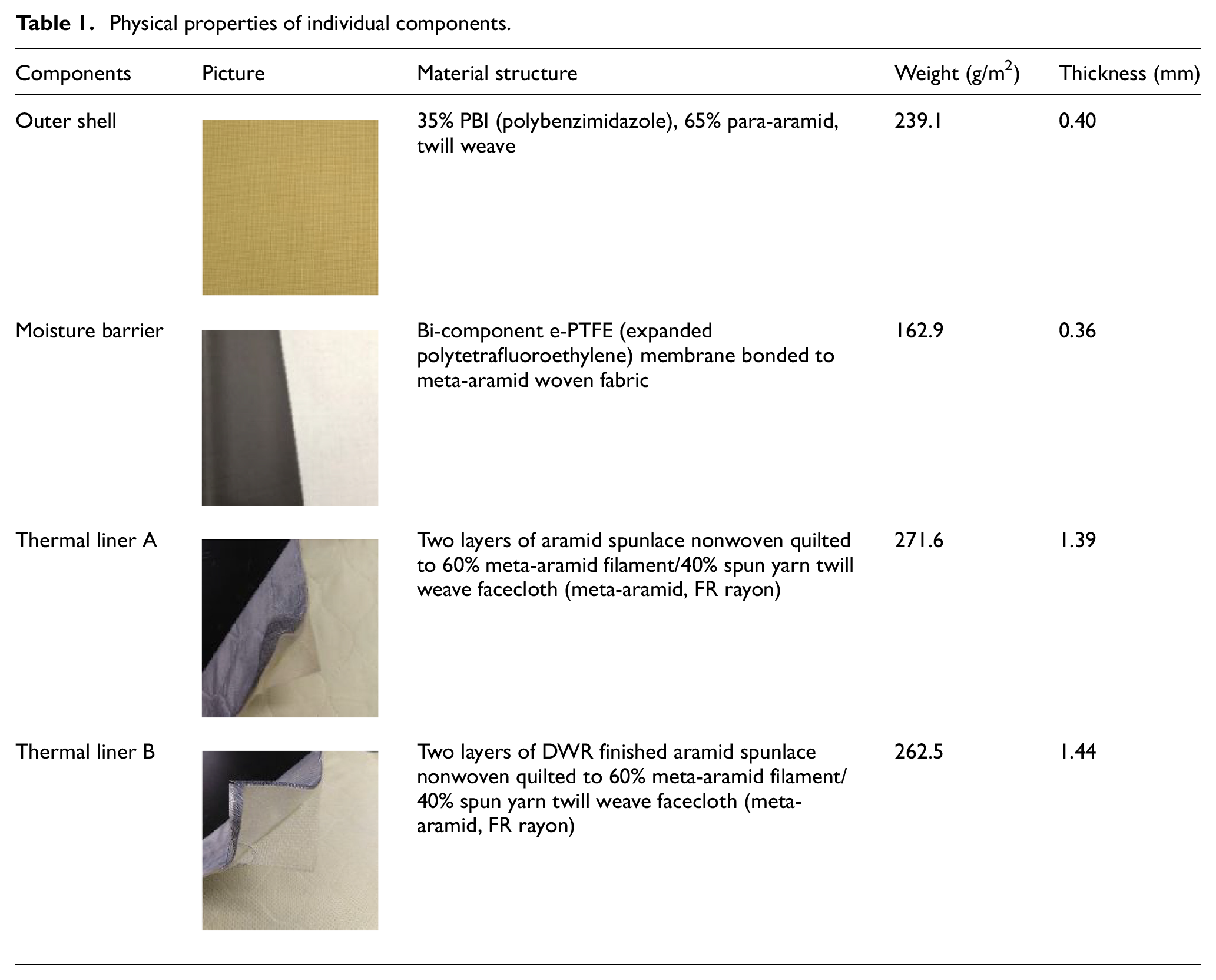
Two types of turnout clothing with the same outer shell and moisture barrier but different thermal liners were selected. The two thermal liners have similar weights, thicknesses, and structures. In addition, the same face cloth with a good moisture-wicking properties was used in the two thermal liners. The only difference is the spunlace nonwoven batting in thermal liner B was treated with PFAS-based DWR. However, it is worth noting that in the latest version of this commercial thermal liner, the manufacturer has replaced the PFAS-based DWR with a nonfluorinated alternative. More details for the composites are shown in Table 1.
Physical properties of individual components.
Sweat Guarded Hotplate Test
Total heat loss (THL) is used to characterize the heat transfer through firefighter composites and is regulated in NFPA 1971:2018. 18 It was obtained according to ASTM F1868 by measuring intrinsic thermal resistance (Rcf, °C·m2/W) and apparent evaporative resistance (ARef, kPa·m2/W) with a sweat guarded hotplate (Thermetrics, Seattle, USA) in an environment of 25 °C and 65% RH. 19 The hotplate surface was kept as 35 °C to simulate skin temperature. During ARef testing, a piece of microporous film was covered on the water-saturated hotplate surface, only allowing the transfer of water vapor through the fabric sample. THL (W/m2) was calculated by: 19

where ΔT is the temperature gradient between the hotplate surface and ambient (°C); ΔP is the vapor pressure difference between the hotplate surface and chamber (kPa); and the values of 0.04 and 0.0035 are standard bare plate values for dry and wet tests at a wind speed of 2 m/s, respectively. 20 THL consists of dry heat loss through conduction, radiation, and convection, and wet heat loss by evaporation.
Thermal Protective Performance (TPP) Testing
TPP testing was performed with a TPP tester (Custom Scientific Instrument Co.) in accordance with ISO 17492:2019. 21 It is equipped with nine quartz tubes and two Meker burners, generating a radiative heat exposure of 42 kW/m2 (1.0 cal/cm2sec) and a convective heat exposure of 42 kW/m2 (1.0 cal/cm2sec). TPP testing can predict the time to second-degree burn based on the Stoll curve. 22 TPP is the product of heat exposure intensity with the time to a predicted second-degree burn. 4 According to NFPA 1971 regulations, a minimum TPP rating of 35 cal/cm2 is required.
Sweating Manikin Test
Compared with the sweat-guarded hotplate test, a sweating manikin can capture the effect of garment design on heat loss. The tests were conducted with a 34-zone Newton sweating manikin (Thermetrics, Seattle, USA) according to ASTM F1291:2016 23 and ASTM F2370:2016. 24 Insulation measurements were conducted at 15 °C and 50% RH, and evaporative resistance tests were performed at 35 °C and 40% RH. The manikin surface was kept at 35 °C to simulate skin temperature. Three replicates of each garment were tested.
To simulate THL measured with sweating guarded hotplate, a predicted heat loss value (Qmanikin, W/m2) in an environment of 25 °C and 65% RH was estimated using the total evaporative resistance (Ret, kPa·m2/W) and thermal insulation value (Rt, °C·m2/W) measured using the manikin: 25

where Ts and Ta are the manikin surface temperature (35 °C) and ambient temperature (25 °C), respectively, and Ps and Pa are the vapor pressures (kPa) of the water-saturated skin surface and environment, respectively. The first part is dry heat loss mainly from conduction, convection, and radiation, and the second part is wet heat loss from evaporative heat loss.
Physiological Manikin
The physiological manikin system composed of a 34-zone Newton sweating manikin (Thermetrics, Seattle, USA) coupled with TAITherm v.13.0.0 (Thermoanalytics, Calumet, MI, USA) was used in this study. TAITherm implements the Fiala physiological model to predict the physiological responses of an average 80 kg male, and more details can be found in articles by Burke et al. 26 This system was proved to be a useful tool for predicting the physiological outputs of a firefighter wear trial in a recent study. 27
During the test, a short-sleeved cotton shirt (large size, 100% cotton), boxer briefs (medium size, 100% cotton), socks (100% cotton), firefighting gloves, a helmet, and athletic shoes were worn along with turnout suits. The bottom of the pants was taped up to simulate the pant-to-boot interface. Three replicates of each garment were tested. Figure 1 displays the pictures of fully dressed manikins under walking and rest conditions. All clothing items were preconditioned for at least 12 h in an environment of 21 °C, 65% RH.
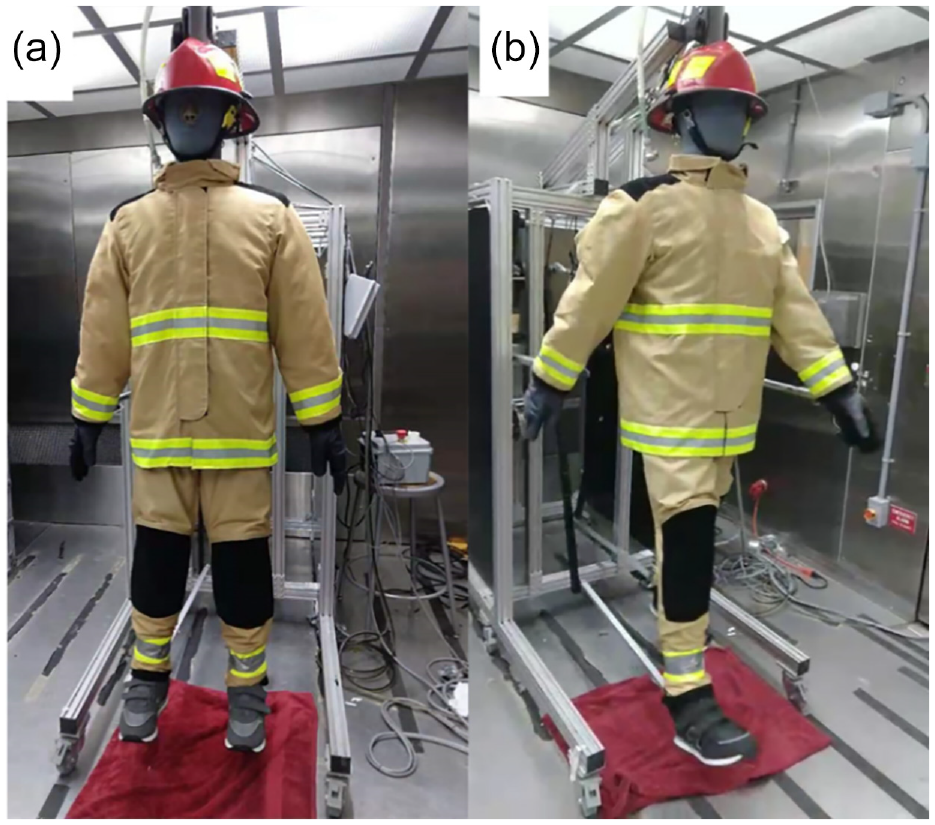
Picture of fully dressed physiological manikin under (a) rest and (b) walking conditions.
An ambient environment of 25 °C and 65% RH with a wind speed of ∼1 m/s was selected to represent the environment that firefighters may experience. Before testing, the manikin was preheated to a set of starting skin temperatures inside the environmental chamber. After reaching the equilibrium conditions (±0.05 °C of preset skin temperatures), the test protocol in Table 2 was executed. The work intensity levels and duration included in this protocol were established based on our prior studies involving firefighter wear trials.28,29
Testing protocol.
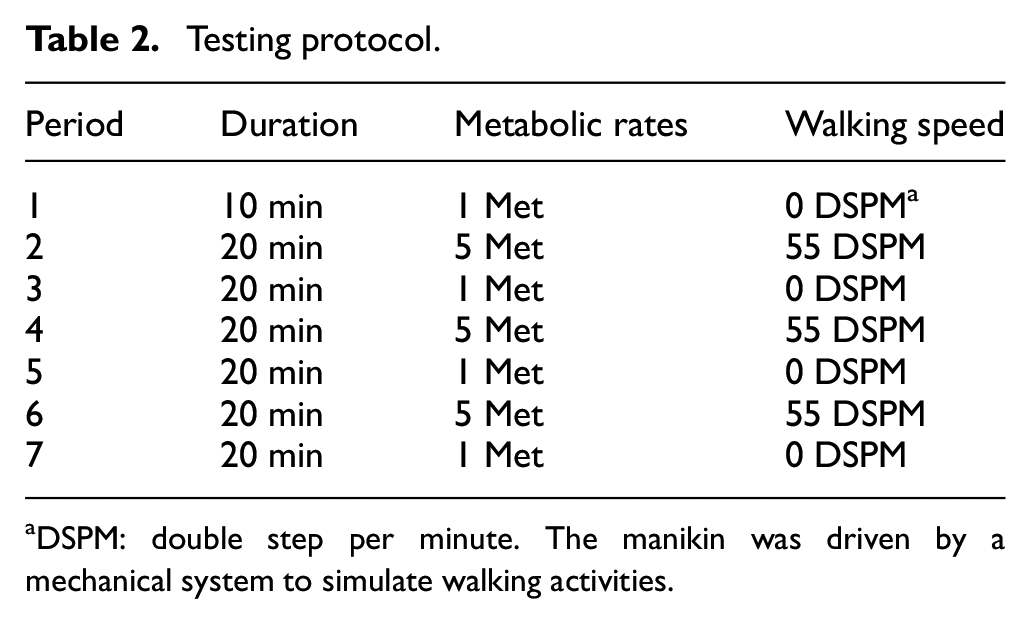
DSPM: double step per minute. The manikin was driven by a mechanical system to simulate walking activities.
We measured the weight change of the turnout gear following physiological manikin testing to evaluate how DWR finishing might affect sweat absorption. The reason behind this was that the model-controlled manikin has a self-adjusted sweating rate, providing a more realistic prediction of water absorption within clothing compared to conventional thermal manikin tests. In addition, for hotplate testing, a microporous membrane was covered on a hotplate, preventing any wicking between the thermal liner and hotplate. Thus, only the physiological manikin was selected to study the weight change of clothing.
Statistical Analysis
The statistical analysis was performed using JMP Pro 17 (SAS, Cary, NC, USA). The material properties (THL, TPP, and precited THL) and the predicted physiological responses (core temperature, sweating rate, skin temperature, and cardiac output) of garments A and B were compared using one-way analysis of variance (ANOVA), 95% confidence interval (p < 0.05). All tests were repeated three times. The Shapiro–Wilk test and Levene’s test were performed to check data normality and homogeneity of variances, respectively.
Results
Basic Properties on the Fabric Level
Fabric-level THL tested by sweating guarded hotplate is the only index for evaluating materials-related heat strain potential as specified in NFPA 1971:2018. 18 The THL of the three-layer base composite used in garments A and B is 238.9 and 230.8 W/m2, respectively, as shown in Figure 2(a). Both are larger than the minimum requirement of 205 W/m2 in NFPA 1971. In addition, the TPP value of the two composites is 39.1 and 38.5 cal/cm2, respectively, both exceeding the minimum requirement of 35 cal/cm2 in NFPA 1971. No significant difference was observed between the two composites on the fabric level regarding TPP or THL (p>0.05).
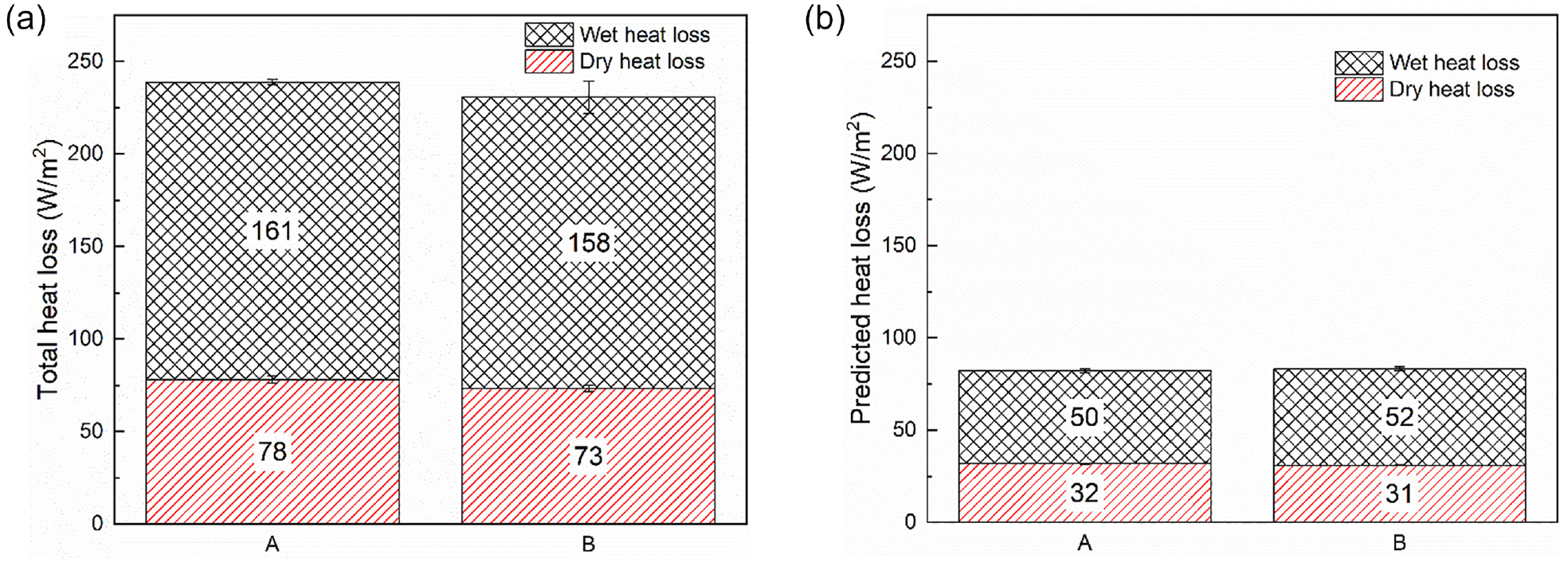
(a) Total heat loss measured by sweat guarded hotplate and (b) predicted total heat loss measured from sweating manikin.
Predicted THL Measured with Manikin
Compared to the bench level test, the manikin test allows the assessment of garment fit, design, air layers, etc. 30 A much smaller amount of heat loss from the manikin test was observed compared to hotplate tests as shown in Figure 2(b). Garments A and B show a predicted total heat loss of 82 and 83 W/m2, respectively. The heat loss was divided into dry and wet components, and it could be found that wet heat loss through evaporation is a major pathway to release heat. No significant difference between heat loss on the garment level was observed (p>0.05).
Physiological Manikin Results
The physiological manikin is a good alternative to human wear trials and can be used to predict the physiological effects of clothing. 31 Core body temperature (Tre), skin temperature (Tsk), cardiac output (CO), and sweating rate (Swa) when wearing garments A and B (with DWR in thermal liner) were predicted over the 130-min-long protocol (Table 2).
The body’s core temperature is one of the most important indicators of heat stress and a normal core body temperature should be maintained within a 1°C range of ∼37 °C by balancing the amount of heat produced in the body (metabolic activity) and heat loss to the environment.6,32–34 Figure 3 displays the average predicted core temperature for garments A and B. The two garments showed no significant difference (p>0.05). The rises and falls of Tre corresponded to the work and rest cycle. The predicted core body temperature for both garments reached the same maximum value of 38.2 °C after 113 min of the protocol. This indicates slight heat stress.
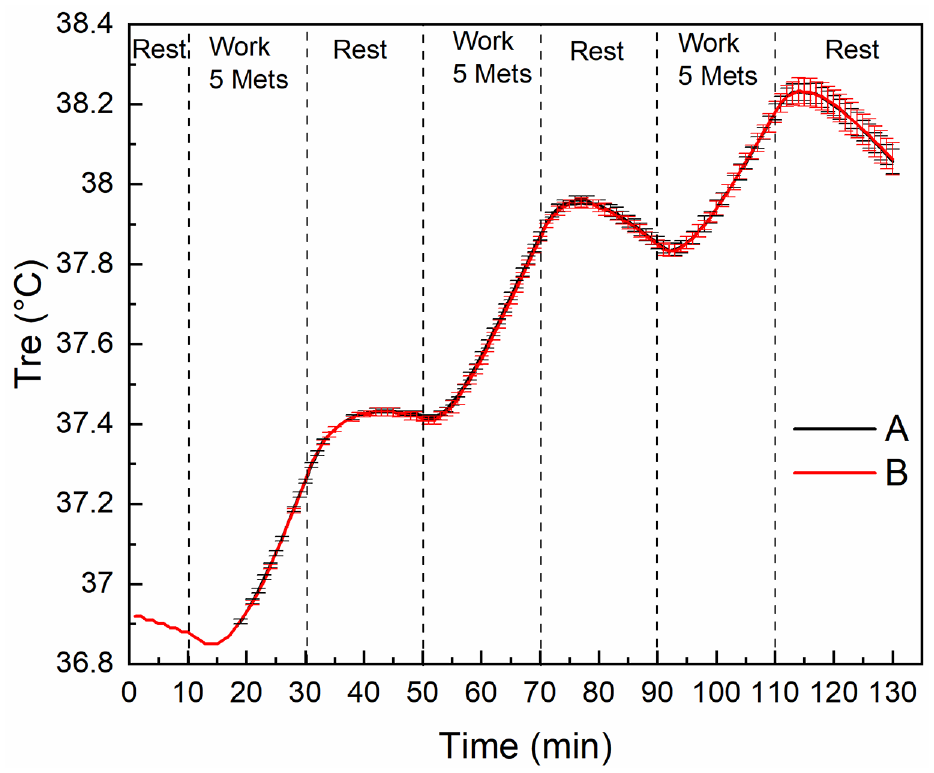
Predicted average core temperature (Tre) for turnout clothing in the environment of 25 °C, 65%RH.
Skin is the interface for heat exchange between the human body and environment. The starting skin temperature in thermal equilibrium environment in this model is 32.6 °C. In Figure 4, the average predicted skin temperature for garments A and B is displayed. No significant difference was identified (p>0.05).
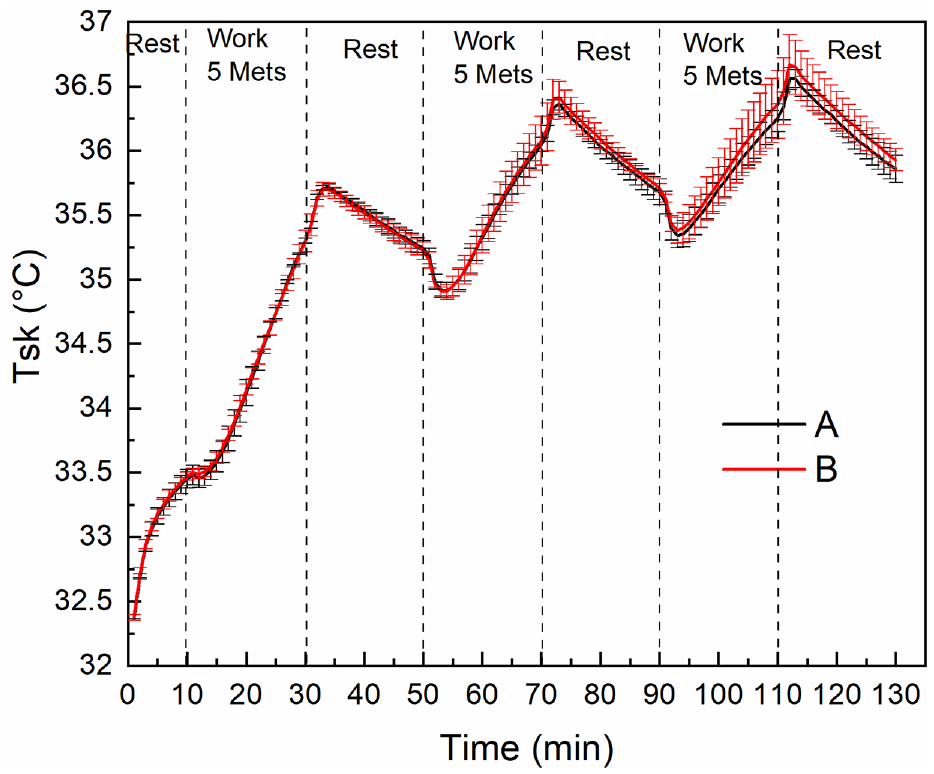
Predicted average skin temperature (Tsk) for turnout clothing in the environment of 25 °C, 65% RH.
Cardiac output is the amount of blood the heart pumps per minute, and equals to the production of the stroke volume and heart rate. 35 The predicted cardiac outputs of each suit under mild conditions for the 130-min protocol are displayed in Figure 5. The sharp rises and falls observed in the graph are due to the change of metabolic rates during work/rest cycle. At the end of the protocol, garments A and B showed a predicted cardiac output of 7.7 L/min. Similar to the predicted core body temperature and skin temperature, the two garments are statistically the same regarding cardiac output (p>0.05).
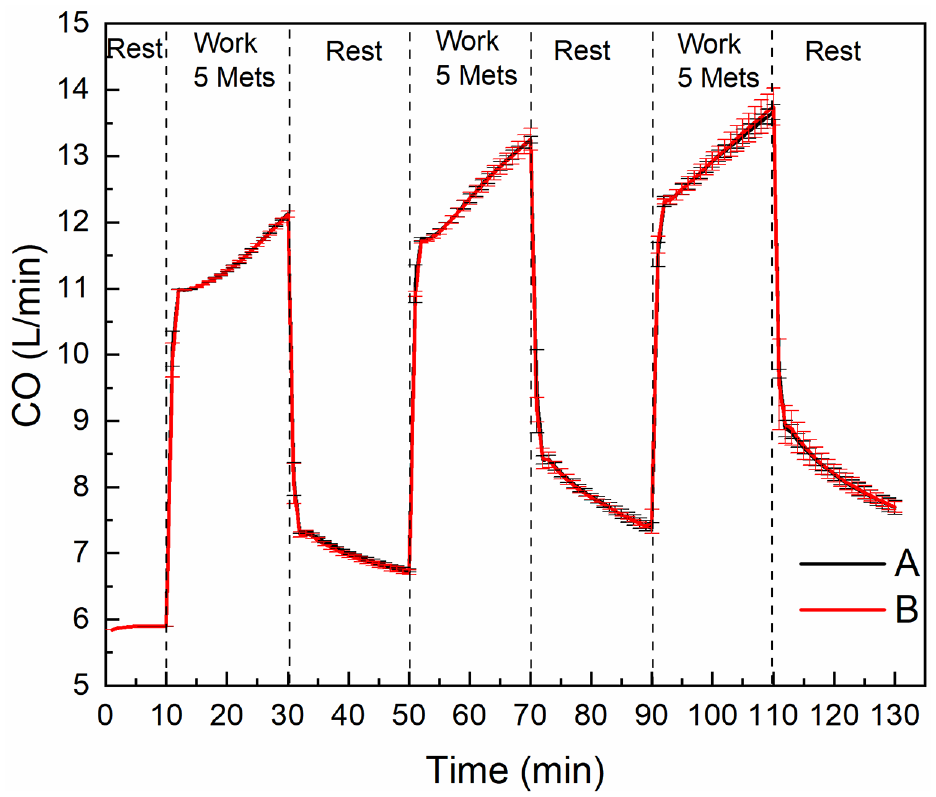
Predicted average cardiac output (CO) for turnout clothing in the environment of 25 °C, 65% RH.
Sweating is one of the main mechanisms that the human body uses to increase heat loss to the environment to maintain a stable body core temperature. 36 Average sweating rates for garments A and B were predicted, and the results are illustrated in Figure 6. In the first 17 min, the sweating rate is zero. After 112 min into the protocol, a maximum sweating rate of 25 g/min was reached for both turnout garments, close to the maximum allowable sweating rate of 30 g/min in this model. The two garments showed similar predicted sweating rates in the end (p>0.05).
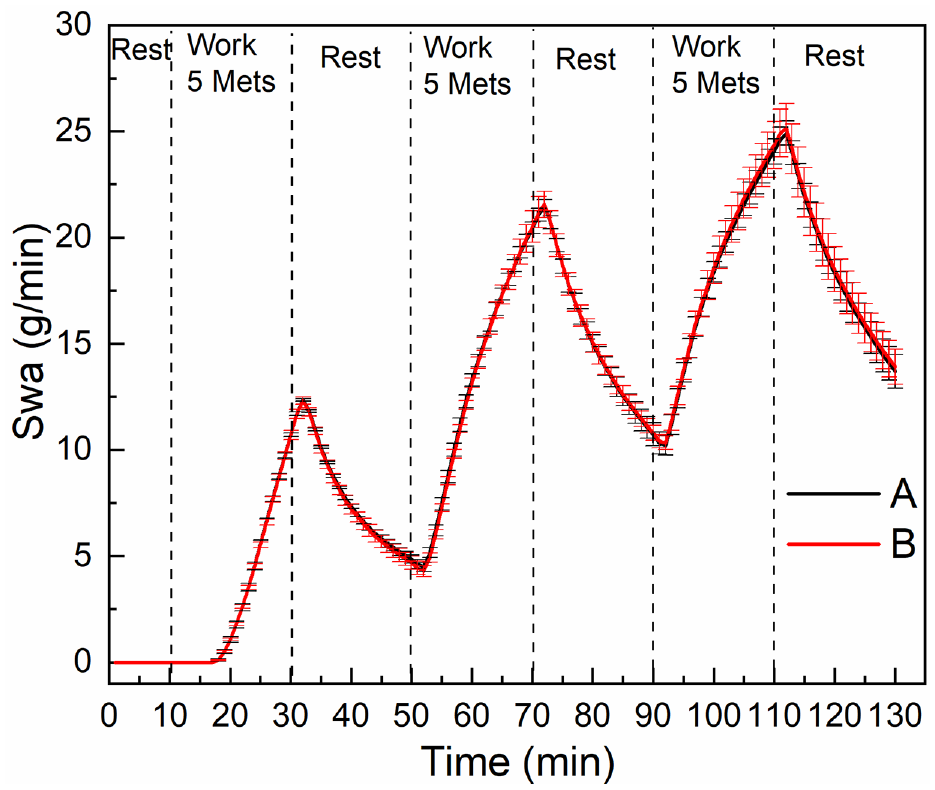
Predicted average sweating rates (Swa) for turnout clothing in the environment of 25 °C, 65% RH.
After the physiological manikin test, the weight gain inside turnout clothing was measured immediately and the results are displayed in Figure 7. Garment A showed an average of 156 g more weight gain compared with garment B with DWR finishing inside the thermal liner (p<0.05).
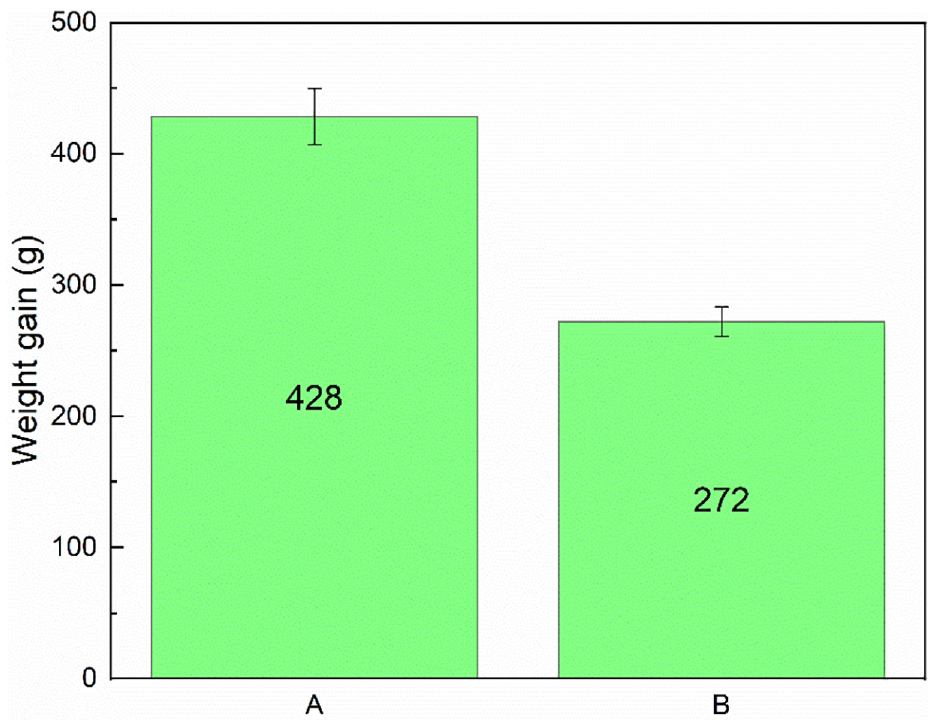
Weight gain inside clothing after the physiological manikin test.
Discussion
This study focused on the evaluation of the potential effect of DWR finishing inside the thermal liner on the thermal comfort of structural firefighters. The sweat guarded hotplate and sweating manikin test showed that there is no significant difference regarding the heat release properties in either the bench level or garment level between garments A and B. Heat stress results from the imbalance between heat produced inside the body and the heat exchange with the environment. With the same metabolic rate and total heat loss, as expected, there is no significant difference in predicted physiological response between turnout clothing with or without DWR finishing in thermal liners.
One of the key observations is that there is less water inside garment B. In the environment of 25 °C, 65% RH, the water present in turnout clothing may be due to the wicking of water from skin and condensation. The predicted sweating rates when wearing the two garments were similar and it is reasonable to conclude that the difference in the weight gain was caused by the difference in wicking properties. The thermal liner with DWR finishing could decrease the amount the water by wicking from the skin. Water absorbed by fabric will replace the air voids inside, and decrease the overall insulation since thermal conductivity of water (0.6 W/m/K) is about 25 times higher than that in air (0.024 W/m/K). 37 It is possible that garment A with more water inside could release more heat by conduction. However, this was not reflected as similar heat loss in the manikin test, as well as predicted physiological responses, were observed. This is because a slight change in the moisture content of clothing only has a small effect on heat release by wet conduction. 38
In this article, we assumed the metabolic rate is the same when wearing the two garments doing the same activities. However, it was reported that clothing weight could increase energy consumption.39–41 When wearing garment B, metabolic heat generation may be decreased since it has less weight gain and could cause less heat stress. However, this needs further investigation as the weight gain difference is only 156g and may not cause any significant difference in metabolic cost of work.
Comfort is a complicated concept and it was defined by Slater 42 as “a pleasant state of psychological, physiological, and physical harmony between a human and the environment.” Thermophysiological and sensorial comfort are two main aspects of clothing comfort. 43 The first is related to the clothing heat and moisture release properties, as discussed in this paper, and the latter relates to the interaction of the clothing with the tactile response of the skin. 44 If the moisture released from the skin surface is transported by wicking action, a sensation of wetness can be generated that causes the garment to feel clammy. 45 Having DWR in the thermal liner may limit the wicking activity and improve sensorial comfort.
Apart from the potential impact on clothing comfort, water trapped inside firefighter turnout gear could affect thermal protection. It was reported that 15% wetness inside thermal liner had the largest negative impact on TPP, while when wetness reached 100%, as high as 116.2% improvement in TPP was observed compared with dry thermal liner. 46 Steam burn is another concern. When exposed to thermal radiation, water inside clothing could re-evaporate, and condense on the skin, which may cause steam burns. 47 However, this is not within the scope of our study.
Limitations
The scope of our preliminary research was limited to a comparative analysis of heat release properties between DWR and non-DWR clothing under mild conditions. The absence of significant disparities observed could be attributed to the relatively less demanding environmental conditions employed, causing less sweating and a smaller difference in moisture absorption. The ambient conditions can affect the thermal comfort properties. Under hotter conditions with solar radiation, moisture within the thermal liner might amplify heat gain due to increased thermal conductivity, necessitating further investigation in other more stressful environmental conditions. In addition, our research samples were restricted, prompting the need for future studies to encompass a broader array of thermal liners for a more comprehensive representation.
Conclusion
In this study, we compared the thermal comfort properties of turnout clothing with or without DWR finishing in the thermal liner comprehensively utilizing sweat guarded hotplate, sweating manikin, and physiological manikin tests under mild conditions. No significant difference was observed in heat release properties or predicted physiological responses. A notable finding was that the turnout clothing with DWR finishing in the thermal liner demonstrated significantly less weight gain post testing.
This study implies that firefighters might not experience discernible differences in heat strain performance when using these gears in mild ambient conditions. It highlights the potential of DWR finishing to limit moisture absorption within turnout clothing, potentially influencing sensorial comfort and thermal protection. Nevertheless, these initial findings emphasize the necessity for further exploration, particularly employing more environmental conditions and thermal liner samples.
This preliminary study forms a foundational step in understanding the potential implications of DWR finishing within thermal liners on firefighter comfort. It serves as a springboard for subsequent investigations that can offer more crucial insights for optimizing firefighter protective gear and ensuring enhanced safety and comfort.
Footnotes
Declaration of conflicting interests
The author(s) declared no potential conflicts of interest with respect to the research, authorship, and/or publication of this article.
Funding
The author(s) disclosed receipt of the following financial support for the research, authorship, and/or publication of this article: This work was supported by the US Department of Homeland Security, Federal Emergency Management Agency, Assistance to Firefighters Grants Program (grant number EMW-2016-FP-00744).