




Abstract
Oil sorption capacity is one of the essential parameters to evaluate the practical performances of oil sorbent products. This study aims to compare the dynamic oil sorption capacity of industrial nonwoven sorbents, which were fabricated through the carding process, spun-bond technology, and composite processes. The oil sorbents were produced by polypropylene fibers or cotton fibers with different surface wettability. The study showed that raw cotton layers exhibited a higher oil sorption capacity than the other three samples: eight-layer thermal-bonded melt-blown polypropylene fiber nonwoven, polypropylene fibers on top and bottom with raw cotton layers in the middle, and polypropylene fiber melt-blown nonwovens. Comparatively, eight-layer thermal-bonded melt-blown polypropylene fiber nonwoven had the lowest oil sorption capacity. Moreover, the hydrophilic property can significantly enhance the water pick-up capacity of sorbents on both dynamic and static systems but reduce the maximum oil sorption ability. Overall, the major factors determining a nonwoven fabric’s oil absorption performance are its fiber type, surface wettability, and hydrophobicity/hydrophilicity. Specifically, raw cotton, polypropylene fibers, or polypropylene fiber/cotton composite oil sorbents with low hydrophobicity and high hydrophobicity will contribute to high oil absorption ability. The advantage of raw cotton over polypropylene fibers is 3–7 times higher in oil absorption capability, environmentally friendliness, and sustainability, attributed to their hydrophobic ingredients, including pectin and waxes. From a structure angle, products with a loose structure and good mechanical properties ensure a balance between service life and oil absorption performance.
This research is to analyze the effect of fiber types, the structure of sorbents, and surface wettability on nonwoven oil sorption capabilities. We compared the oil sorption capacity of multiple nonwoven sorbents, which were fabricated through the carding process, spun-bond technology, and composite processes. The oil sorbents were produced by polypropylene fibers or cotton fibers with different surface wettability. Their dynamic and static hydrophilic properties and their associations with oil sorption capabilities were examined.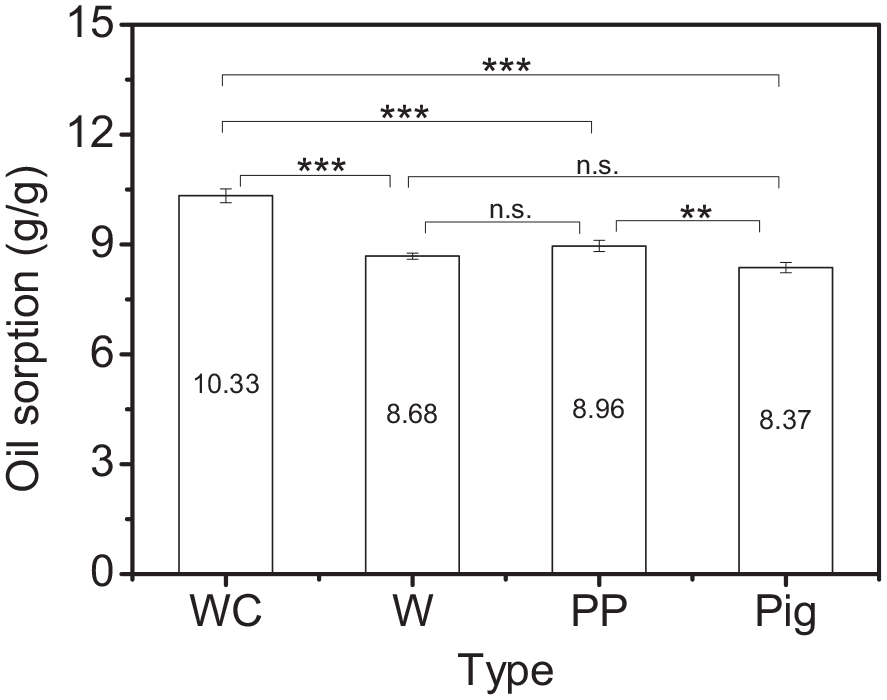
Introduction
Oil spills, such as one of the most massive marine spills in the world, named the Gulf of Mexico oil spill,1,2 have become a source of universal pollution since the oil industry extracts oil from offshore and onshore sources throughout the world. The various oil spill incidents release toxic volatile organic compounds like polycyclic aromatic hydrocarbons (PAHs) into the environment and bio-concentrates in biota and humans.3,4 Given these adverse effects on the environment, commonly used oil spill remediation techniques, including booms, sorbents, skimmers, in situ burning, and chemical dispersants, have been researched and used.5–7 Among these oil spill remediation techniques, sorbents are considered the most economical and environmentally friendly solution for cleanup of spilled oil based on research and industrial case studies.8,9
In the oil sorbents market, polypropylene fibers (PP-F) have been widely used for fabricating synthetic oil sorbents due to the characteristics of easy spinnability, high productivity, low cost, and good durability.10,11 New Pig Corporation 10 has produced various kinds of oil sorbents through the melt-blown process of PP-F. Due to the microfiber contamination issue, interest is emerging in developing oil absorbents with biodegradable components. Brady Corporation 11 also fabricated a PP-F assembly, which showed high tensile strength and oil sorption capacity. Similarly, Wellgro Tech Corporation has designed two-layer oil sorbents made from PP-F. However, the popularity and salability of PP-F-based oil sorbents, their oil sorption, and non-biodegradability performances are still considered critical and need to be further improved in their future applications.
Compared to commercial oil sorbents produced by manufactured polymers, some research scientists9,12–15 have explored high-efficiency oil sorbents made from natural fibers or new materials. For example, carbon nanotube sponges and natural cotton fibers show high oil sorption capacity.9,12,13 Based on the results of Singh et al., 9 raw immature cotton patches exhibited an oil sorption capacity of around 50.27 g/g, which was around 7% higher than that of cotton batts made from coarser and more mature fibers. Carbon nanotube sponges with high porous and hydrophobic properties were produced by Gui et al. 12 The as-prepared flexible, light, and porous sponges with a bulk density of 5–10 mg/cm3, surface area of 300–400 m2/g, and pore size of around 80 nm can effectively remove spreading diesel oil with a volume 800 times higher than itself. A further study conducted by Gui et al. 13 indicated the oil sorption ability of the carbon sponge was 100 g/g with a maintained sorption capacity of 20–40 g/g after 10 absorption cycles. Nevertheless, high raw material cost, lower strength of loose fibers, and complicated processes undoubtedly limit oil sorbents application in practical situations. Notably, Wahi et al. 14 reported that natural fibers like cotton are the best materials for oil spill cleanup in oil-water systems because of their excellent sorption performance. There is no doubt that loose fibrous sorbents lack the necessary strength and may not be directly used without strengthening technology such as needle-punching technology and thermally bonded technology. To improve the strength of oil sorbents, Wellgro Tech Corporation 15 has successfully fabricated several kinds of cotton oil sorbents with different structures and composite processes. The produced biosorb melt-blown cotton absorbents with excellent water-repellent characteristics can successfully absorb around 20 times more oil than their weight. Water absorption or pick-up capacity is an indirect parameter associated with the oil absorption capacity. This is because materials’ hydrophilicity and water pick-up rate indicate the relative tendency in an aqueous environment. For the typical materials discussed in this study, the lipophilicity and hydrophobicity are the opposite of hydrophilicity and water pick-up rate. In other words, materials with high hydrophilicity perhaps have a lower oil absorption capability.
In order to figure out the best dynamic oil sorption capacity among different commercial oil sorbents, we compared four commercial oil sorbents produced from either PP-F or cotton fibers. The melt-blown process made the oil absorbents with thermally bonded technology or mechanical bonded nonwoven technology with either a hydrophobic or hydrophilic surface. The oil sorption capacity and water pick-up capacity of each sample were explicitly determined. In addition, the tensile strength, maximum load, extension at break, and surface contact angles were also studied and analyzed.
Experimental Section
Samples
The Pig samples were obtained from a commercial source in the United States. The Pig absorbent mats 16 were thermally bonded with eight layers of 100% polypropylene together, where the melt-blown process fabricated each layer. The PP melt-blown nonwoven samples were obtained from a commercial source in the United States. The other two samples, W and WC, were received from a commercial source in India. Sample WC is made from raw cotton layers. Comparatively, sample W contains two PP-F spun-bond fabrics on the bottom and top. Figure 1 shows the surface morphologies of those four samples. A short summary of four samples is shown below:
Sample WC: two-layer raw cotton. The cotton fiber diameter is around 8–20 μm. The average pore size and pore size distribution are 30 μm and 15–60 μm. Sample WC was fabricated by dry-laid web formation.
Sample W: sample composite of PP-cotton-PP with sandwich structure, PP-F on top and bottom with raw cotton layers in the middle. The PP-F diameter is around 20–35 μm. The PP-F layer average pore size and pore size distribution are 65 μm and 50–90 μm. The first layer and third layer of sample W were formed by the weave method using PP-F.
Sample Pig: eight-layer thermal-bonded melt-blown PP-F nonwoven. The PP-F diameter is around 20–35 μm.
Sample PP: PP-F melt-blown nonwovens. The PP-F diameter is around 20–35 μm.
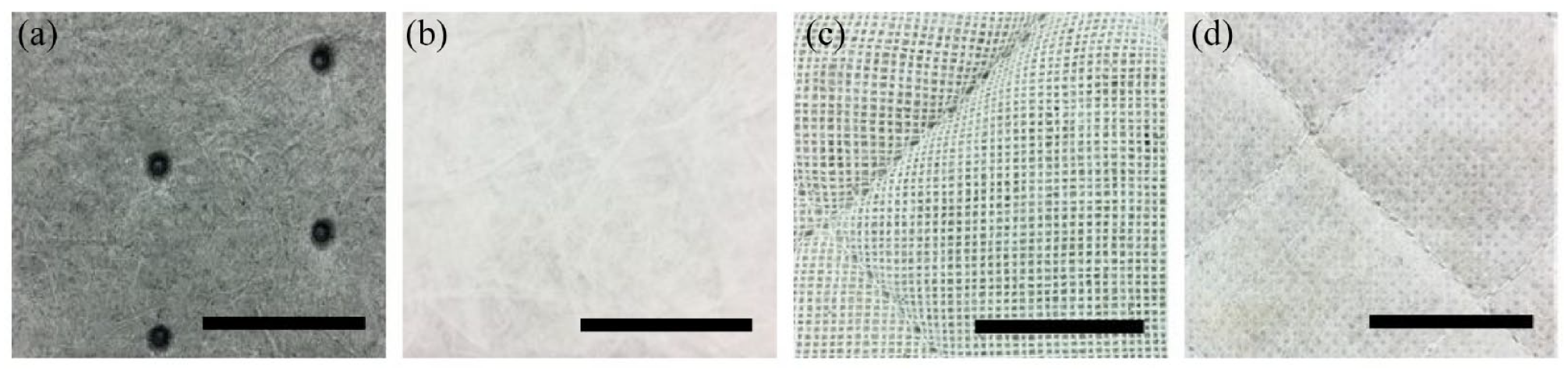
The surface images of (a) Pig, (b) PP, (c) WC, and (d) W. Scale bar = 25.4 mm (1 inch). Machine direction is perpendicular to the scar bar direction.
Characterization
The basis weight and thickness of samples were measured using ASTM Standard D 3776-96 17 and ASTM Standard D 5729-97 18 methods, respectively. We prepared 10 replicates of 25.4 mm (1 inch) × 25.4 mm (1 inch) for each sample to test the basis weight at 20°C and 65% relative humidity. Another 10 replicates of each sample were used to test thickness with an applied pressure of 4.14 kPa (8.6 oz or 0.6 psi). The basis weight and thickness values are given in Table 1. All values following symbol ± indicate the standard error of the mean.
Physical characteristics of samples.
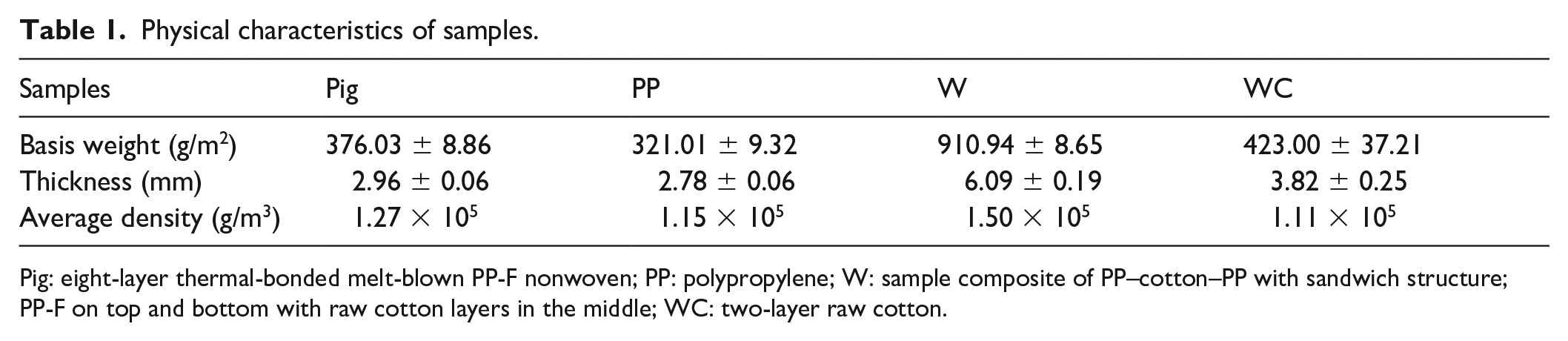
Pig: eight-layer thermal-bonded melt-blown PP-F nonwoven; PP: polypropylene; W: sample composite of PP–cotton–PP with sandwich structure; PP-F on top and bottom with raw cotton layers in the middle; WC: two-layer raw cotton.
Tensile Properties
The Instron tensile tester (Model Instron 5569), manufactured by Instron Corporation, Norwood, MA, was used to test samples’ tensile properties. According to ASTM standard D 5035-95,
19
we prepared each of five replicates of samples into 50.8 mm (2 inches) × 152.4 mm (6 inches) (width × length) rectangle pieces along the machine direction (MD) and seven replicates into the same size with cross direction (CD). The parameters for measuring tensile strength were set as gauge length 76.2 mm (L0, 3 inches) and with a crosshead speed of 300 mm/min. Extension at break (L, cm), tensile stress at maximum load (equation (1),


where
Dynamic Oil Sorption Capacity Testing
Using a modified oil absorption short method based on the ASTM standard F 726-17 20 to determine dynamic oil sorption capacity was a practical and reasonable measurement. The characteristics of motor oil used in the oil sorption evaluation are shown in Table 2. 21 Briefly, samples of 13 cm × 13 cm were cut and placed in a tank that contained 5 L of motor oil. After 15 min of static immersion (static system), the materials were transferred onto a mesh basket to drain the excess oil. A drain time of 10 min was required to remove the excess oil. The oil sorption capacity was calculated using equation (3): 20

where S0 = initial dry sorbent weight (g), SST = weight of the sorbent samples at the end of the oil test (g), and SS = (SST − S0) net oil adsorbed (g).
Characteristics of oil used. 21

To further assess the functional performance of these samples, the water uptake capacity was performed using the adsorption-short and adsorption-long test method based on the ASTM standard F 726-17 20 procedure except for replacing oil with water. The only difference between the adsorption-short and adsorption-long test is the immersing time, which is 24 h ± 30 min for the adsorption-long test (dynamic system). The water pick-up capacity was calculated using equation (4): 20

where S0 = initial dry sorbent weight (g), SWT = weight of the sorbent samples at the end of the dynamic degradation test (g), and SW = (SWT − S0) net water adsorbed (g).
Water Contact Angle Measurement
The water contact angle between the liquid and surface of substrates was examined by the shape of a drop of water. The Drop Image (Camera: DMK 21F04), manufactured by ramé-hart instrument Corporation, Norway, was mainly applied to test the water contact angle of the hydrophobic solid surface. The images of the drop of water on the solid surface were acquired with an EktaPro high grain imager manufactured by Kodak. Briefly, a single 5 μL of water was dropped on the solid surface and allowed to spread at room temperature (25 ± 2°C) until no further change in the contact angle was observed. Two sides for each sample with three replicates were tested.
Results and Discussion
Various kinds of materials have been applied in actual industries and research for oil spill cleanup.9,12–15,22 The physical and tensile properties of those sorbents are fundamental to ensure reasonable application performances and oil sorption efficiency. Table 3 shows the average tensile properties’ values of samples under both MD and CD. All values with the following symbol of “±” indicate the standard error of the mean. As shown in Table 3, sample W kept the largest Young’s modulus while samples WC and PP held the lowest one of around 5 MPa on MD and 6 MPa on CD, respectively. The values of energy at break had no significant difference among samples of Pig, W, and WC. However, the energy at break of sample PP was much lower than for the other three samples. We also know that tensile strain and stress at maximum load were lower than 1 mm/mm and 1 MPa for all samples, except for sample W at MD. Figure 2 shows the average extension at break. The average extension at break on MD for each sample was slightly larger than that on CD. The order of average extension at break on MD from largest to smallest was sample WC, Pig, W, and PP. For the average extension at break on CD, the order was the same as one on MD. There was no statistically significant difference between sample W and PP, while all other samples showed significant differences. Comparatively, there was a different scenario for maximum load shown in Figure 3. Sample W at MD had the largest maximum load and was significantly different from the other three samples on MD. Although samples WC and Pig had no significant difference in MD, they both showed significant differences from sample PP. This phenomenon was the same as for the maximum load of samples on CD. The mechanical properties indirectly indicated the structural compactness of the sorbents and fiber strength. Comparatively, manufactured PP polymer sorbents exhibited around 2–4 times higher major tensile properties (e.g. maximum load, extension at break, and Young’s modulus) than raw unmatured cotton sorbents in the MD direction. This might be due to the higher structure uniformity and more structure flaws in raw unmatured cotton fibers than in PP-F.
Experimental values for Young’s modulus, energy at break, tensile strain at maximum load, and tensile stress at maximum load.
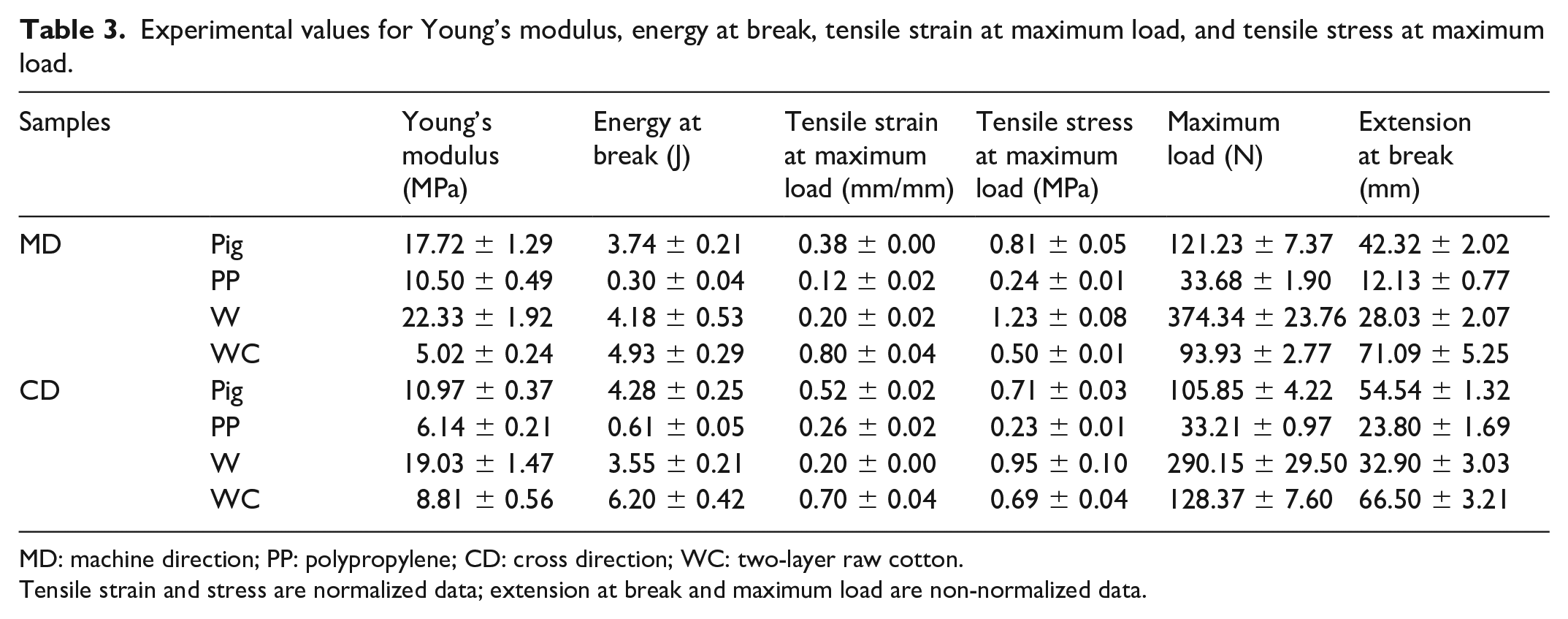
MD: machine direction; PP: polypropylene; CD: cross direction; WC: two-layer raw cotton.
Tensile strain and stress are normalized data; extension at break and maximum load are non-normalized data.
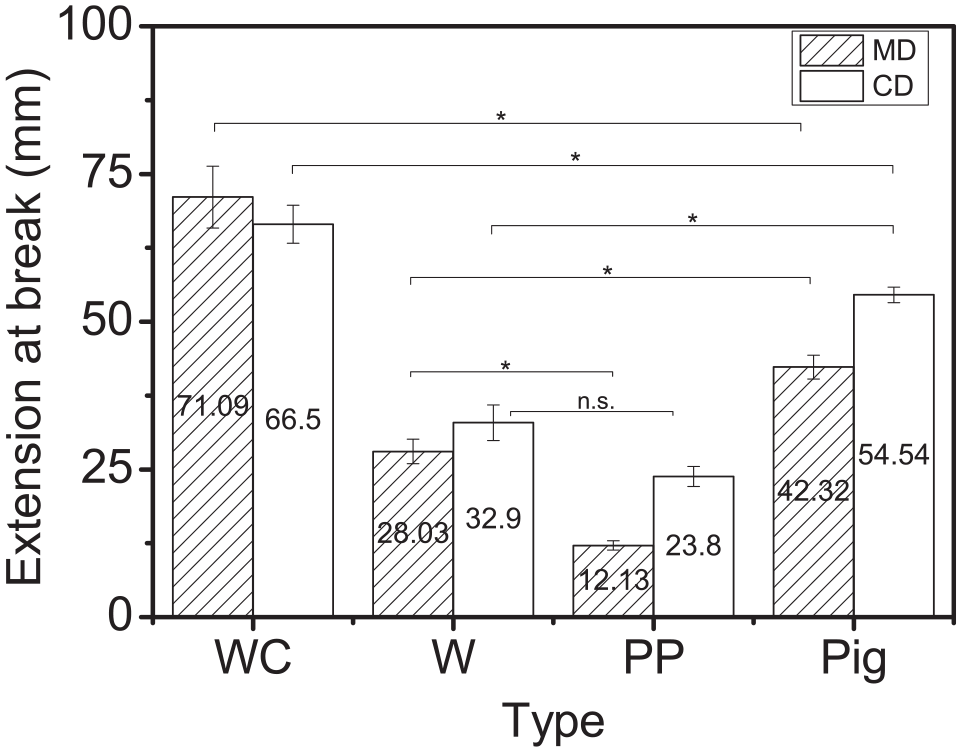
Average extension at break (mm) for oil sorbents (values shown in the center of each column). Crossbars represent the standard errors of the mean.
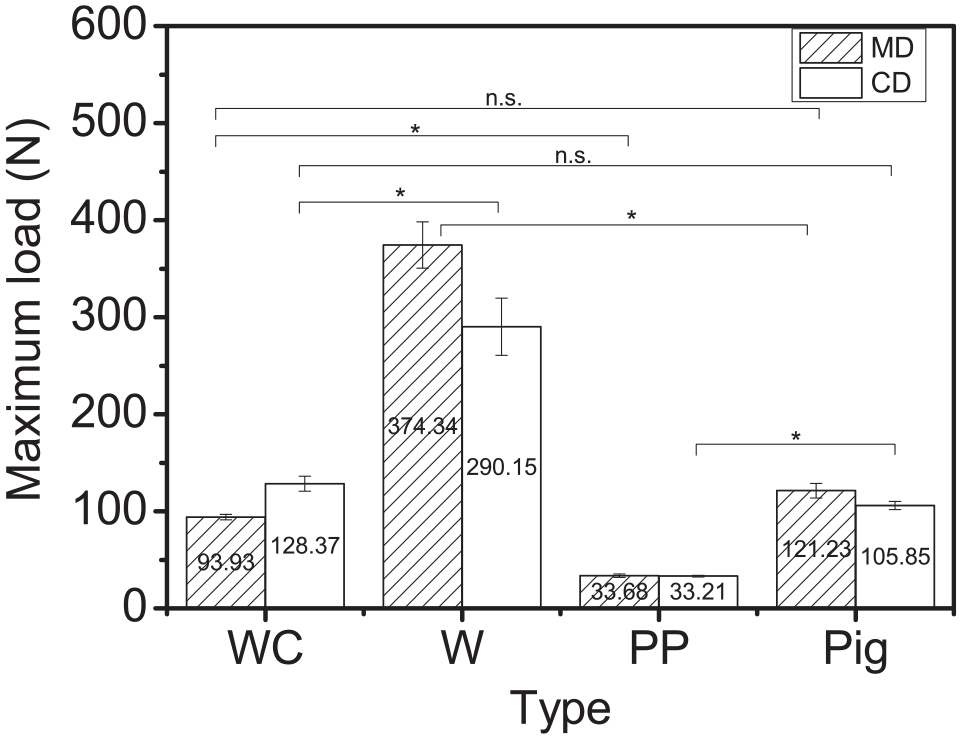
Average maximum load (N) for oil sorbents (values shown in the center of each column). Crossbars represent the standard errors of the mean.
Figures 4 and 5 show the average tensile strain and stress. Compared to maximum load and extension at break, tensile strain and stress are normalized results, which can be used to review authentic mechanical differences among samples. As shown, there are differences between MD and CD direction tensile strains for all samples except sample W. Comparatively, there are differences between MD and CD direction tensile stress for all samples except sample PP. The tensile strain and stress differences might be attributed to sample structures and polymer type. Meanwhile, samples with high tensile strain exhibit low tensile stress.
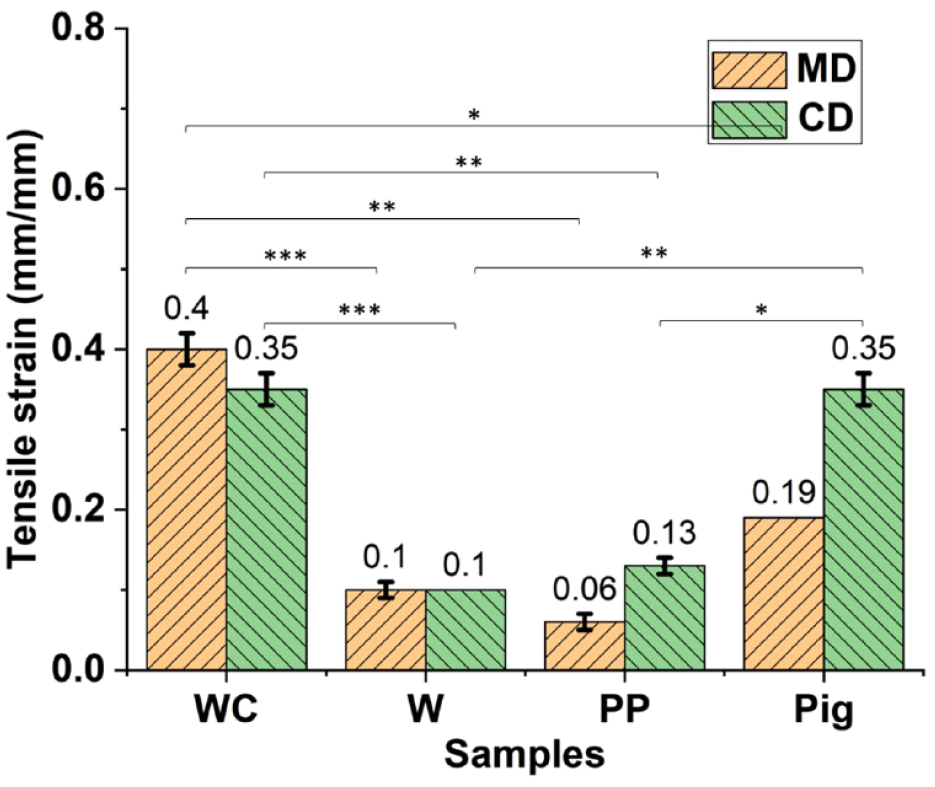
Average tensile strain (mm/mm) for oil sorbents (values shown in the center of each column). Crossbars represent the standard error of means.
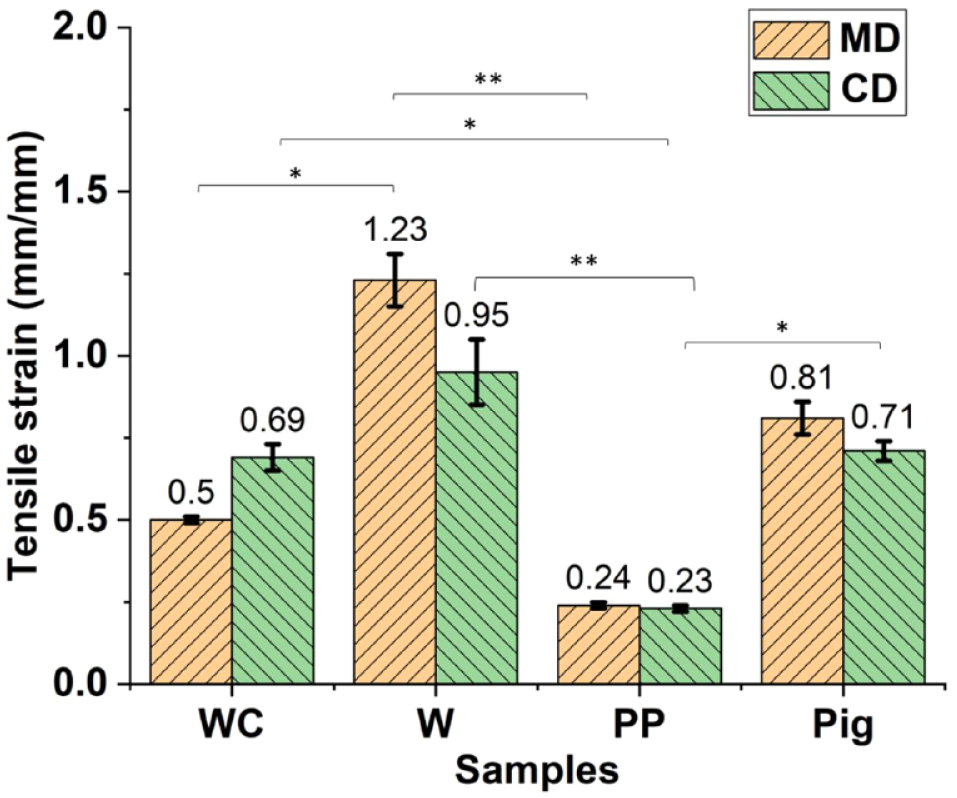
Average tensile stress (MPa) for oil sorbents (values shown in the center of each column). Crossbars represent the standard errors of the mean.
Essential parameters for evaluating the effectiveness of the oil sorbents are maximum oil sorption and water pick-up capacity. The dynamic oil sorption capacity test was performed according to ASTM standard F 726-17. Statistical analysis performed under two R environments (analysis of variance (ANOVA), p-value < 0.001 or p-value < 0.01) confirmed a statistically significant difference in dynamic oil sorption capacity among the four commercial oil sorbents. Samples WC and W were fabricated by combining the nonwoven technology of cotton or PP-F/cotton materials. More specifically, sample WC was fabricated by dry-laid web formation. However, the first and third layer of sample W were formed by the weave method using PP-F to keep a loose surface in order to let oil easily enter the median layer, which was similar to that of sample WC. Sample WC showed higher oil sorption capacity because of its unique structure and fiber difference. As shown in Figure 6, sample WC had a significant difference compared with the other three samples at a 99.9% confidence interval. It is worth noting that the difference in basis weight among samples WC, Pig, and sample PP were small. Thus, it is reasonable to consider that the cotton fiber performed better than PP-F-based oil sorbents, which has been proved in many previous works in the literature.23,24 On the contrary, although the difference in basis weight between sample W and sample PP and Pig was large, there was no significant difference among those samples on oil sorption capacity, which indicated that the basis weight was not a critical factor to determine the oil sorption capacity. For the same type of fiber, samples PP and Pig showed a significant difference in dynamic oil sorption capacity at a 99% confidence interval, which is mainly attributed to the hydrophobic surface of sample PP. Overall, the from WC composite made two-layer raw unmatured cotton exhibited around 115% to 123% higher oil sorption properties than all other samples: W, PP, and Pig, where the negligible difference was noticed.
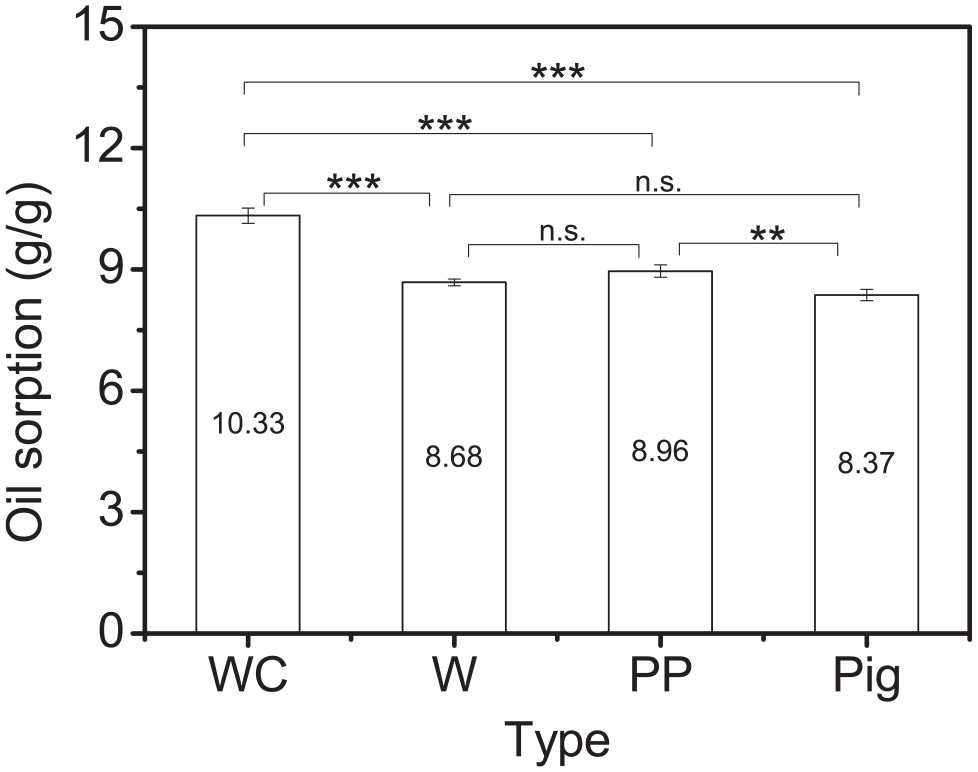
Comparison of dynamic oil sorption capacities by sorbent type. Crossbars represent the standard error of means.
It is crucial to determine the water pick-up capacity for the oil sorbents used in this study to better assess the real-time oil spill cleanup scenario. Water pick-up capacity indirectly influences samples’ oil absorption capacity because hydrophobicity is the opposite of hydrophilicity for the oil sorbents analyzed in this study. Therefore, we conducted a water pick-up test using both static and dynamic systems. Only sample Pig, being hydrophilic after treatment, showed significantly greater water pick-up than the other oil sorbents tested (Figure 7). In the static system, the water pick-up values were 0.31, 0.33, and 0.23 for samples W, WC, and PP, respectively. However, in the dynamic system, water molecules were forced into the interlayer of each sample, and thus, significantly greater water pick-up capacity was seen for all these samples in the dynamic system; the values were 0.61, 0.78, and 0.66 for samples W, WC, and PP, respectively. The water pick-up capacity further indicated the hydrophobicity or hydrophilicity of fibers within sorbents. The Pig samples exhibited the highest water pick-up performance, potentially due to surface treatment. Comparatively, WC and W samples made by unmatured cotton fibers or PP-F/cotton exhibited low water pick-up performance with no noticeable differences.
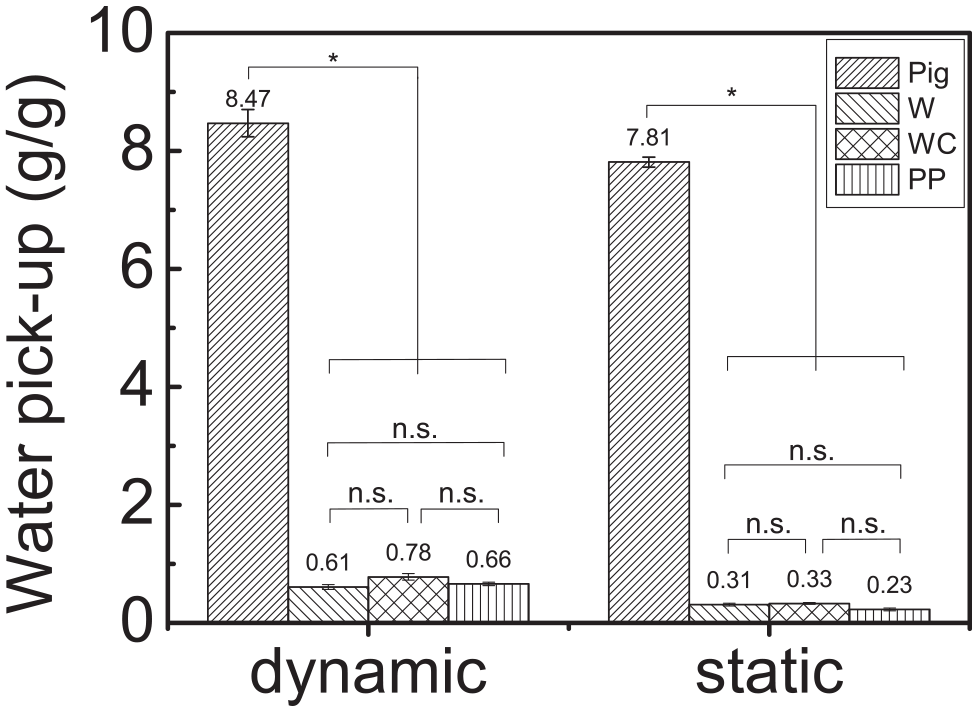
Average water pick-up (g/g) in dynamic and static assembly for four samples. Crossbars represent the standard error of means.
We should not ignore the other essential characteristic: surface wettability from the discussed results of maximum oil sorption and water pick-up capacity. In the real-time oil cleanup situation, oil usually mixes with water. Therefore, the hydrophilic surface of oil sorbents will affect the oil sorption capacity because it will absorb more water than oil. As shown in Figure 7, the hydrophilic surface of sample Pig led to the greatest water pick-up capacity of any other hydrophobic surface. In order to figure out the hydrophobic property of oil sorbents, we tested the water contact angle of each sample, as shown in Figure 8. PP-F is hydrophobic in nature with an average value of around 129°. However, with special surface treatment, the hydrophobic PP-F turns into hydrophilic, which can absorb a large amount of water, for example, sample Pig. The contact angle values for samples W and PP showed no significant difference at a 95% confidence interval, which corresponded to the result that there was also no significant difference in oil sorption capacity between samples W and PP. Similarly, the water contact angle of sample WC had a significant difference from samples W and PP, which was also consistent with the result that there was a significant difference in oil sorption capacity between sample WC and the other two samples, W and PP, at a 99.9% confidence interval. Overall, the WC sample with the lowest water contact angle of 110° exhibited the highest oil absorption ability. In contrast, W sorbents with the highest water contact angle of 140° exhibited the lowest oil absorption performance. Therefore, we could know that the water contact angle has a slightly negative influence on oil absorption performance for hydrophobic sorbents.
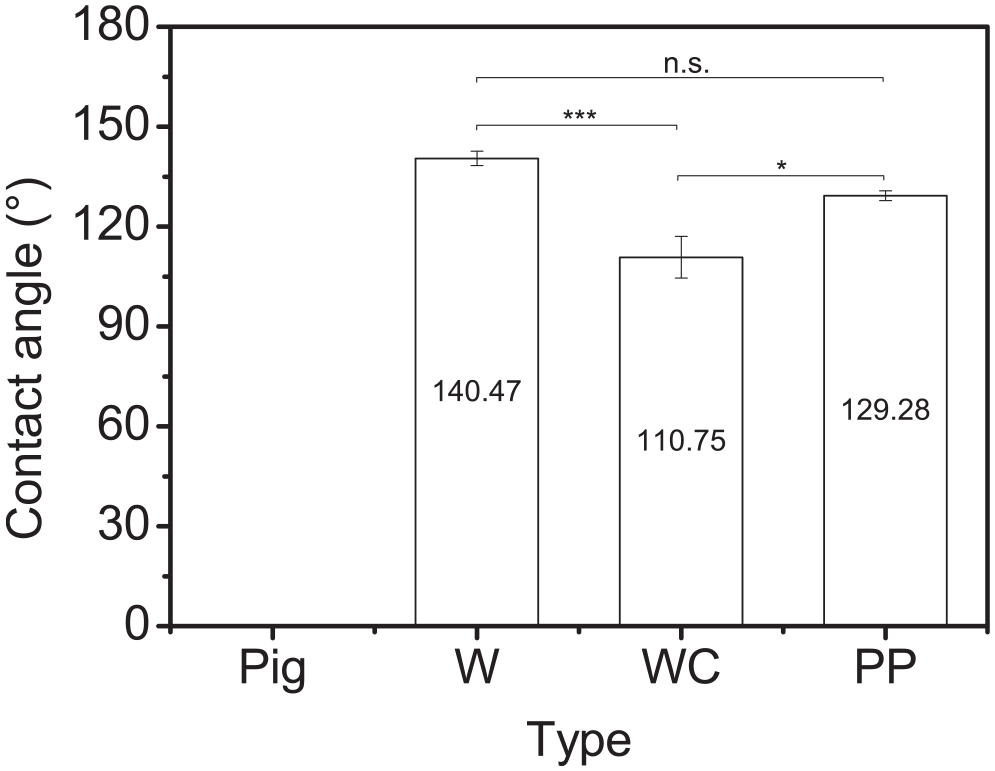
Average surface contact angle (°) for four samples. Crossbars represent the standard error of means.
We know that the fiber type slightly influences oil absorption ability from the discussion above. Compared to commonly used PP-F, raw cotton fiber (especially for low maturity untreated cotton fibers) exhibits a slightly higher oil absorption ability. The surface wettability and hydrophobicity/hydrophilicity have a huge influence on the oil absorption performance. The oil sorbents with low surface wettability and slight hydrophobicity will contribute to high oil absorption ability. As for sorbent structures, the one with a relatively loose structure and sufficient mechanical properties might ensure good service life and oil absorption performance. Overall, WC made from raw cotton fibers exhibited the highest oil absorption performance among the other tested oil sorbents: Pig absorbent mats, PP samples, and W.
The major difference among all tested samples is the sample type. The oil absorption mechanism of raw cotton is hydrophobic ingredients, including pectin, waxes, ashes, proteins, and fats. PP-F is a commercial material for oil absorbents due to its lipophilicity and high surface areas. The oil sorption capacity of PP-F is around 4.5–10 times its weight. 25 Our lab has measured the crude oil sorption rate of low micronaire raw cotton, around 30.5 times its weight. 26 Raw cotton, especially unmatured cotton fiber, exhibited high oil adsorption, absorption, and trapping capabilities due to its special morphologies and chemical properties. Here, the special morphologies included collapsed lumen and fine structure. The chemical properties indicate high hydrophobic ingredients, including pectin, waxes, ashes, proteins, and fats.
The fabric and sample assembly also impact oil sorption rate, attributed to the density/porosity. Comparatively, loose fabrics are preferred to be used as absorbents. For example, the majority of oil absorbents are nonwoven rather than woven fabrics. The commercial samples we selected are nonwoven. In this study, we found that sample WC with lowest density contributes the highest dynamic oil absorption capability. However, the association of density and dynamic oil absorption in this study is not linear. This is because of the other influencing factors, for example, fiber type. Based on the results, the authors recommend using raw cotton or PP-F/cotton composite nonwovens. The advantage of raw cotton is that it is environmentally friendly and sustainable.
The oil sorption mechanisms are adsorption, absorption, and trapping. The adsorption mechanism is oil attached on fiber surface due to intermolecular interactions between cotton fiber wax and oil droplets. Oil absorption is oil captured into the lumen structures of raw cotton fibers. The trapping mechanism is oil trapped within the loose fibrous substrate. The ribbon-like surface structure increased cotton fiber surface areas, further contributing to oil holding capabilities.
Conclusion
In this study, four types of commercial oil sorbents have been analyzed. Two sandwich structured oil sorbent samples, WC and W, were made of cotton or PP-F/cotton composites. The other two nonwoven oil sorbent samples, PP and Pig, consisted of 100% PP-F. Sample Pig was endowed with the hydrophilic surface after specific treatment. We conducted several experiments to assess these four samples’ tensile properties and comparative oil sorption capacities. This showed that sample WC had relatively medium oil sorption capacity and extension at break, as well as the lowest basis weight of all. Sample W had the most massive basis weight, corresponding to the largest maximum load and hydrophobic surface. In addition, sample Pig was the only sorbent with a hydrophilic surface, so there was a significant difference in water pick-up capacity from the other three samples and the relatively lowest oil sorption capacity. Sample PP showed the lowest basis weight and maximum load and had the lowest oil sorption capacity. Natural fibers like cotton have more advantages in oil sorption capacity than PP-F-based oil sorbents. Overall, the fiber types, structure of sorbents, and surface wettability influence the oil sorption capacity.
Footnotes
Acknowledgements
S.R. gratefully acknowledges Texas cotton producers for supporting the research reported in the paper. This work was funded through Texas State Support Committee of the Cotton Incorporated, Contract# TX15-667. Aruppukkottai, India-based Jayalakshmi Textiles is acknowledged for providing the cotton-based sorbent samples used in the study and supporting the research on cotton oil absorbents.
Declaration of conflicting interests
The author(s) declared no potential conflicts of interest with respect to the research, authorship, and/or publication of this article.
Funding
The author(s) received no financial support for the research, authorship, and/or publication of this article.