



Abstract
Photochromic textiles, a class of functional textiles, have a color build up feature under ultraviolet light irradiation. However, photochromic dye application onto textile materials by conventional finishing techniques has difficulties due to their low water solubility and low affinity to the textile materials. Encapsulation technology could be used to overcome these problems in the production of photochromic textile materials. This article, which is the third in a three-part series, deals with the application of photochromic dye microcapsules produced by a spray drying method onto cotton fabrics. The photochromic dye microcapsules were applied onto cotton fabrics by a pad–dry–cure process. Color build up and ultraviolet transmittance of the resultant photochromic fabrics were evaluated after the application and consecutive washing. Moreover, the fatigue resistance of the photochromic fabrics was studied and the effects of the incorporation of hindered amine light stabilizers into microcapsules were investigated. Ultraviolet protection factor values of the samples were found to be 50+ even after 20 washing cycles. It was shown that the photochromic fabrics have a loss of 10% in ultraviolet protection factor values and 20% in color values after 20 ultraviolet irradiation cycles and the fatigue resistance of the photochromic dye capsules improved with the use of hindered amine light stabilizer compounds during microcapsule production.
Keywords
Introduction
The standards of living have improved with advanced technology and thus people’s expectations from textile materials have changed day to day. Textile products with R&D-based functionality provide competitive power to companies within tough competition conditions in the textiles market. In this context, functional properties of textiles have gained an utmost importance in addition to the classical properties such as durability, aesthetics, and design. One of these functional textile categories is photochromic textiles which can change their color under ultraviolet (UV) irradiation. Owing to color changing features, photochromic textiles have potential for use both for fashion effects and in smart textile applications such as sensors,1–4 UV protection,5–9 brand protection, 10 and so on. Photochromic textiles appeared in the field in the 1990s11,12 and can be produced in the form of photochromic fiber/yarn by the incorporation of photochromic dyes into the polymer matrix during the production of synthetic fibers.12–14 In addition, products such as photochromic t-shirts have been obtained by photochromic dye application by printing methods. 15 However, some problems were encountered in the application of photochromic dyes to textile materials by conventional finishing methods due to their structurally neutral characteristics, low solubility in water, and poor affinity to textile materials.16–19 Microencapsulation, therefore, was offered as an alternative solution for the problems experienced.
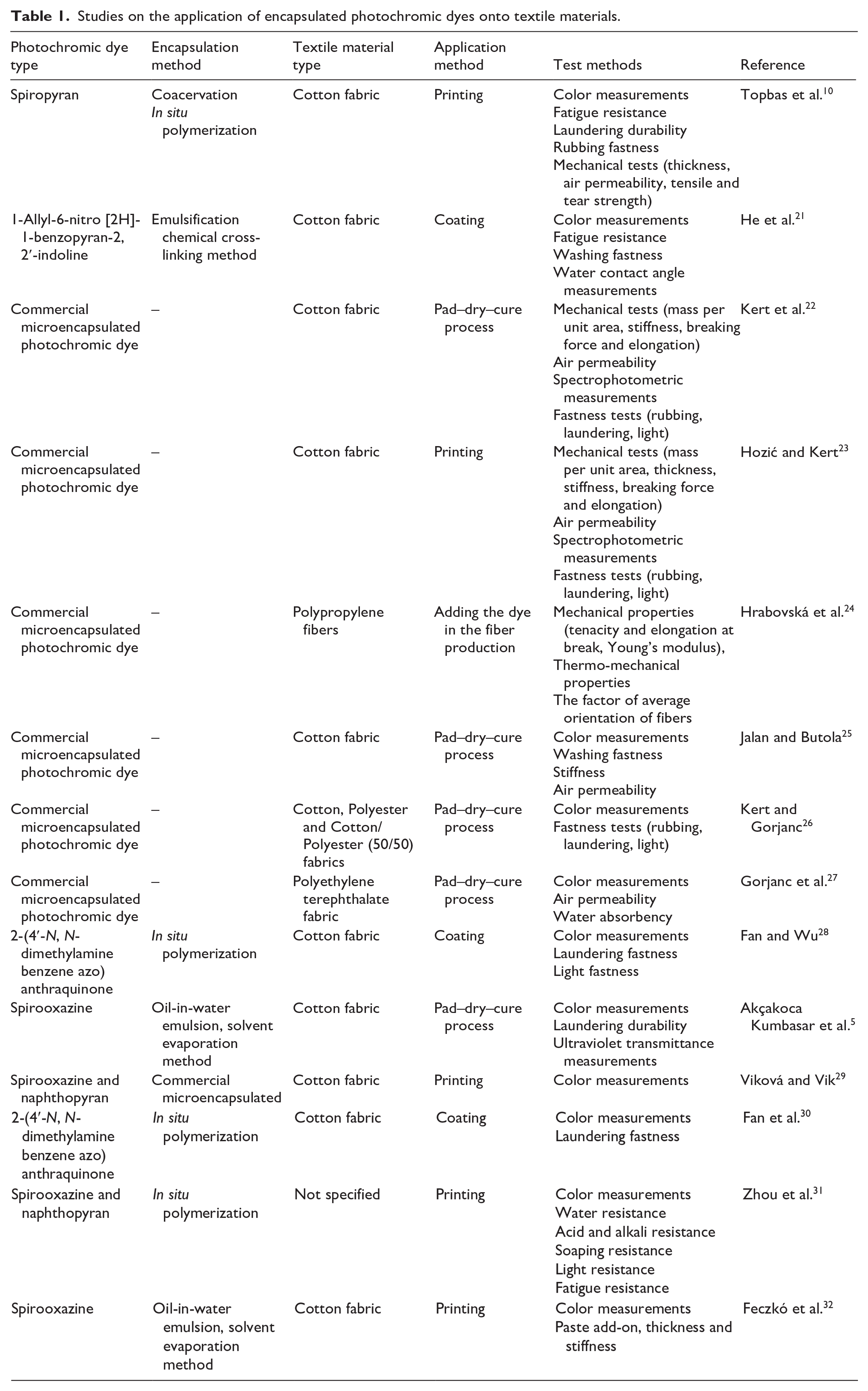
Several different studies on the application of encapsulated photochromic dye onto textile materials have appeared in the literature (these studies are summarized in Table 1). In these studies, photochromic dyes have been encapsulated by different methods—such as in situ polymerization, coacervation, emulsification chemical cross-linking, and oil-in-water emulsion solvent evaporation methods—and the resultant microcapsules were applied onto different textile materials (cotton fabric, polyester fabric, cotton/polyester fabric, polypropylene fibers). Several application methods were used such as printing, coating, the pad–dry–cure process, or incorporation of the dye during fiber production. The coloration, fatigue resistance, fastness, and mechanical properties of the photochromic textile materials were evaluated in these studies. In this article, the application of the photochromic dyes encapsulated by spray drying onto cotton fabrics was investigated. The encapsulation parameters were examined in the previous part of this study, 20 and as a continuation of that study, the performance investigation of spray-dried photochromic microcapsules on the cotton fabrics, such as color build up, UV protection property, washing durability and fatigue resistance, was done. Although color build up of photochromic textiles has been studied extensively, it will be a first for textiles including spray-dried photochromic microcapsules. It is also known that photochromic dyes have UV protection properties due to their absorbtion of UV light. However, there are few studies on the UV protective properties of photochromic textile materials.5,8,9 Therefore, another aim of this study is to observe the potential use of spray-dried photochromic microcapsules for the production of UV protective textile materials. Although the sun is an indispensable source of life for all living beings, UV rays, which make up 5% of the sun rays reaching the earth, are a serious threat in terms of general human health, especially for people who have to work under the sun, children playing outdoors, and people involved in sports outdoors. In order to be protected from the harmful effects of UV rays, it is possible to use textile materials, which is a simple and practical way, in addition to precautions such as staying away from the sun and using sunscreen creams. Textile materials provide UV protection by reflecting or absorbing sunlight; however, not all textile materials provide the same degree of UV protection. In this context, the degree of protection provided by textile materials against UV rays, namely, the ultraviolet protection factor (UPF), should be known. UPF is the ratio of the average of the effective UV rays in the environment to the average of the UV rays that transmit through the fabric. Although different standards are used in evaluating the UV protection properties of textile materials, the most widely used standard is the AS/NZS 4399:1996. According to this standard, the UPF values of textile materials are classified as in Table 2. According to this classification, fabrics with a UV protection factor of 40 and above provide excellent protection against UV rays.
Studies on the application of encapsulated photochromic dyes onto textile materials.
Classification of UPF values according to AS/NZS 4399:1996 standard. 33
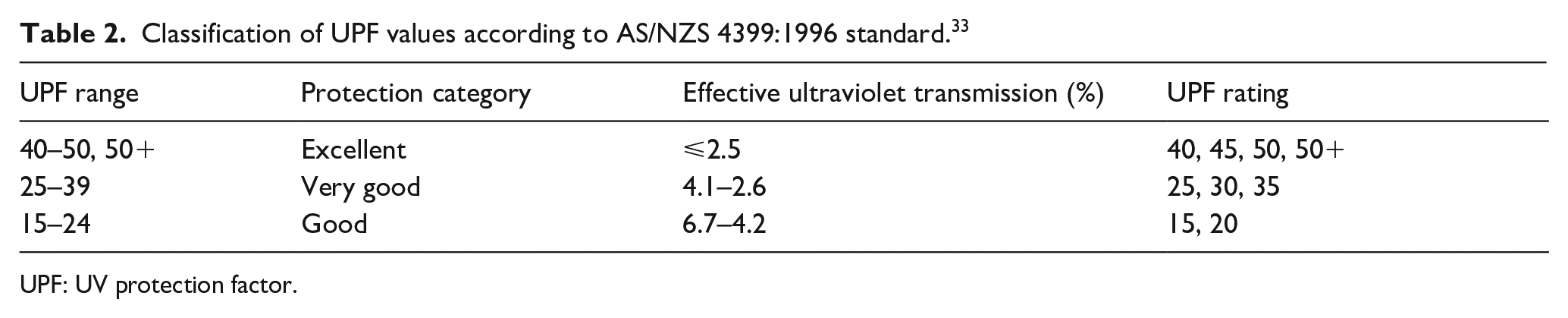
UPF: UV protection factor.
Fatigue resistance—which is the resistance to photodegradation—is one of the most important properties of photochromic materials. Fatigue resistance depends on the type of photochromic dye (e.g. spirooxazine dyes have higher fatigue resistance than spiropyran dyes). This property can be improved with some additives such as UV absorbers, antioxidants, and stabilizers.34–38 Hindered amine light stabilizers (HALS) are commonly used to improve fatigue resistance of photochromic dyes due to their good stability. In addition, HALS do not create a screening effect by absorbing UV radiation like UV absorbers.32,36–38 Considering the literature, the fatigue resistance of the spray-dried photochromic microcapsules was tested and the effect of the use of HALS on the fatigue resistance of the photochromic microcapsules was also examined in this study, for the first time.
Material and Method
Materials
Spirooxazine-based photochromic dye encapsulated by ethyl cellulose by spray drying method was used. Interlock knitted cotton fabric (227 g/m2, Ne 50/1 yarn count, scoured and bleached) was used for application. Polyurethane-based binder (Tubicoat PUS) and fixing agent (Tubicoat Fixierer HT) were supplied by CHT (Turkey). HALS (Tinuvin 144 and Chimassorb 944) was purchased from BASF (Turkey).
Preparation of Photochromic Microcapsules
Photochromic microcapsules were produced using a spray drying method as described in the previous paper. 20 The optimum values found in the previous study were selected and used in the application studies. Briefly, the feed solution containing 6% (w/v) total solids was prepared with ethyl cellulose/spirooxazine dye at the ratio of 2:1 on dry weight by dissolving in water/ethanol mixture—the proportion of 1:0.4 (v/v), and then, ethanol was fully evaporated by stirring for 24 h at room temperature, before spray drying. This solution was spray-dried by a laboratory-scale spray dryer (Büchi, B-290, Germany) with a flow rate of 3 mL/h, aspirator rate of 95%, and two different inlet temperatures maintained at 120°C and 150°C. After spray drying, the resulting solid products were collected and then stored in sealed containers. The photochromic capsules produced at 150°C inlet temperature had smaller particle sizes than the capsules produced at 120°C inlet temperature.
Preparation of Photochromic Microcapsules Containing HALS
The photochromic microcapsules containing HALS were also used in this study to improve fatigue resistance of the samples. The capsules were produced according to the method specified in the previous study, 20 and three different HALS concentrations (5%, 10%, and 20%) were added to the feeding solution. The parameters applied during the spray drying process were as follows: shell-to-core ratio = 2:1, water-to-ethanol ratio = 1:0.4, inlet temperature = 150°C, aspirator ratio = 95%, and feeding rate = 3 mL/h.
Pad–Dry–Cure Process
Encapsulated photochromic dyes were applied to the fabric by a pad–dry–cure process. Padding liquor containing photochromic microcapsules, binder, and fixing agent was prepared, and a laboratory-scale padder (ATAC, Turkey) was used for application. The wet pickup ratio was set to be 100%. Binder and fixing agent concentrations were 50 and 20 g/L, respectively. Encapsulated photochromic dye concentrations were 10, 20, 40, and 60 g/L. After padding, samples were dried at 80°C for 10 min and cured at 120°C for 5 min in a drying oven.
Washing Durability Test
Consecutive laundry washings were applied in a GyroWash (James Heal) washing machine for 5, 10, 15, and 20 cycles by simulating in accordance with the TS 5720 EN ISO 6330 standard since the fabric sample sizes are small and there is a lot of water consumption. In order to create mechanical effect in washes, 10 steel balls are placed in the tubes. After the washing processes, the fabrics were dried at room temperature.
Color Measurement
Color measurements were carried out according to CIELAB color space using a portable spectrophotometer (ColorLite sph860) in a UV cabinet (UVP) with a UV light bulb (UVA-type bulb, 15 W, maximum wavelength = 365 nm). The samples were placed into the UV cabinet and irradiated by UV light for 2 min. After irradiation, the UV light was switched off and color measurements were carried out immediately (~3 s).
UV Transmittance Measurement
UV transmittance and UV protection factor (UPF) values of the samples were measured using a Labsphere UV-2000F device according to standard AS/NZ 4399:1996.
Fatigue Resistance Testing
The fatigue resistance tests of the samples were carried out based on the literature.18,31,39 The samples were irradiated with UV light for 5 min and then left in the dark for 30 min to fade back to their original unexposed states. This irradiation and fading cycle was repeated 20 times for each sample. Color and UV transmittance measurements were carried out after every five irradiation cycles.
Statistical Analysis
The effects of inlet temperature at the microcapsule production, capsule concentration, and washing cycle on UV protection and color properties of the samples were evaluated by one-way variance analysis for the related samples in the SPSS statistics program (SPSS v25). Mauchly’s sphericity test was performed to test the homogeneity of the variances.
Results and Discussion
Color Build Up
The images of the fabrics before and after washing are shown in Figure 1. Color build up of the samples was investigated by determining K/S values (560 nm). Figures 2 and 3 show the K/S values of the samples including photochromic microcapsules produced at 120°C and 150°C spray drying, respectively, before and after consecutive washing tests. The estimated marginal average K/S graphs obtained as a result of statistical analysis are illustrated in Figure 4(a)–(c) depending on the inlet temperature–washing cycle, inlet temperature–capsule concentration, and capsule concentration–washing cycle interactions, respectively.

Samples before and after the washings (inlet temperature of the microcapsule production: 150°C).
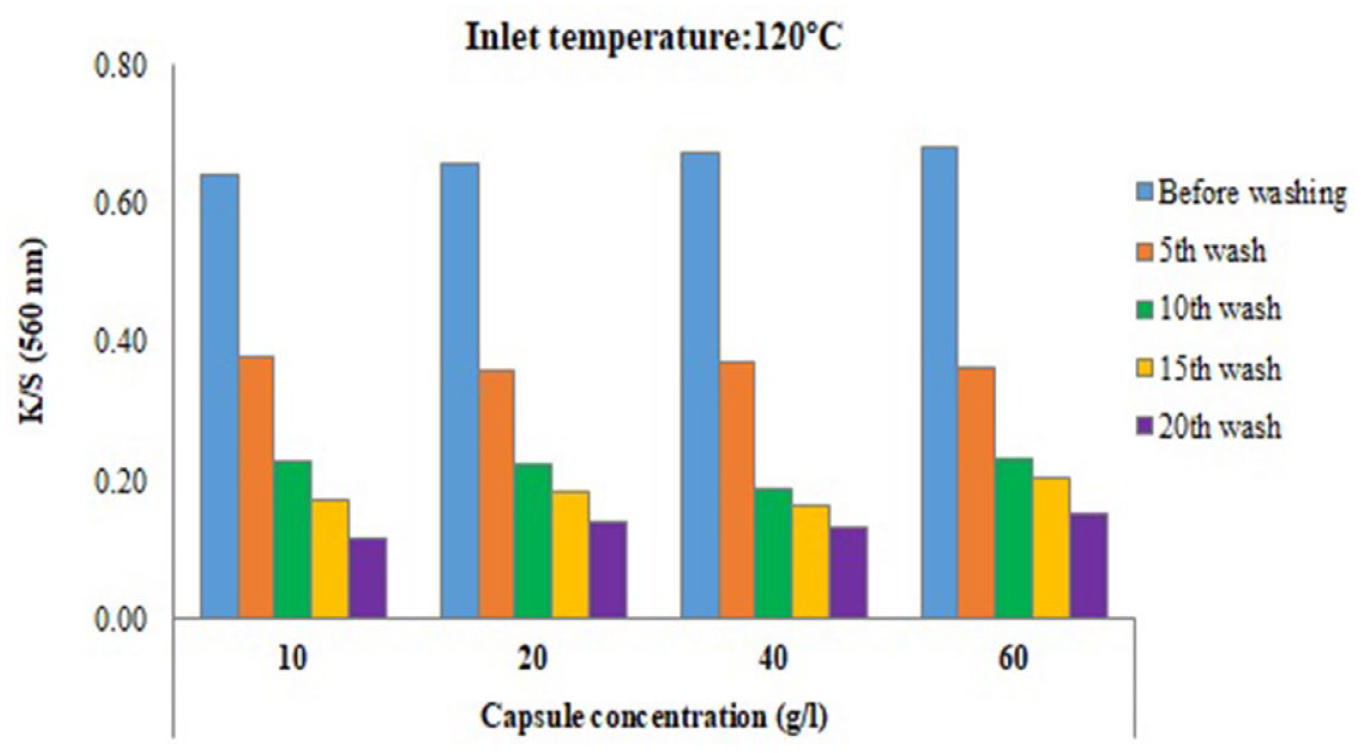
K/S values of the samples applied photochromic capsules produced at 120°C, before and after consecutive washing tests.
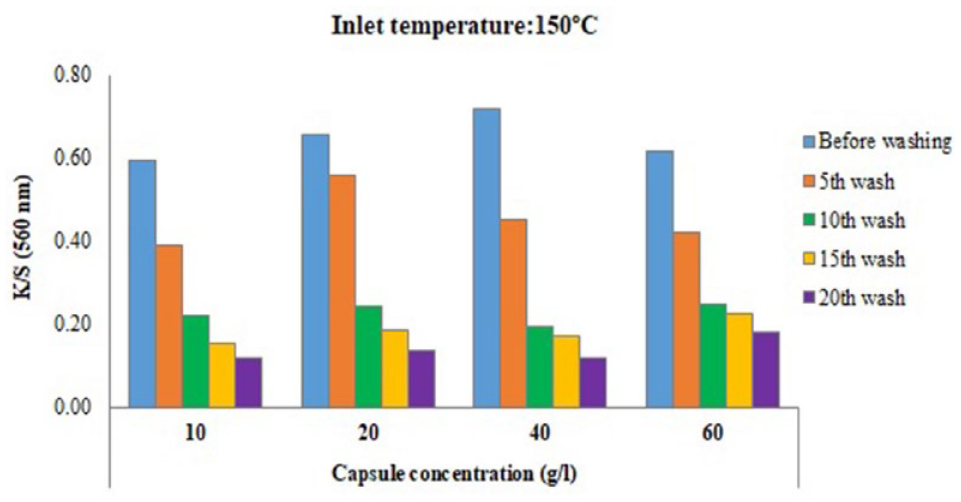
K/S values of the samples applied photochromic capsules produced at 150°C, before and after consecutive washing tests.
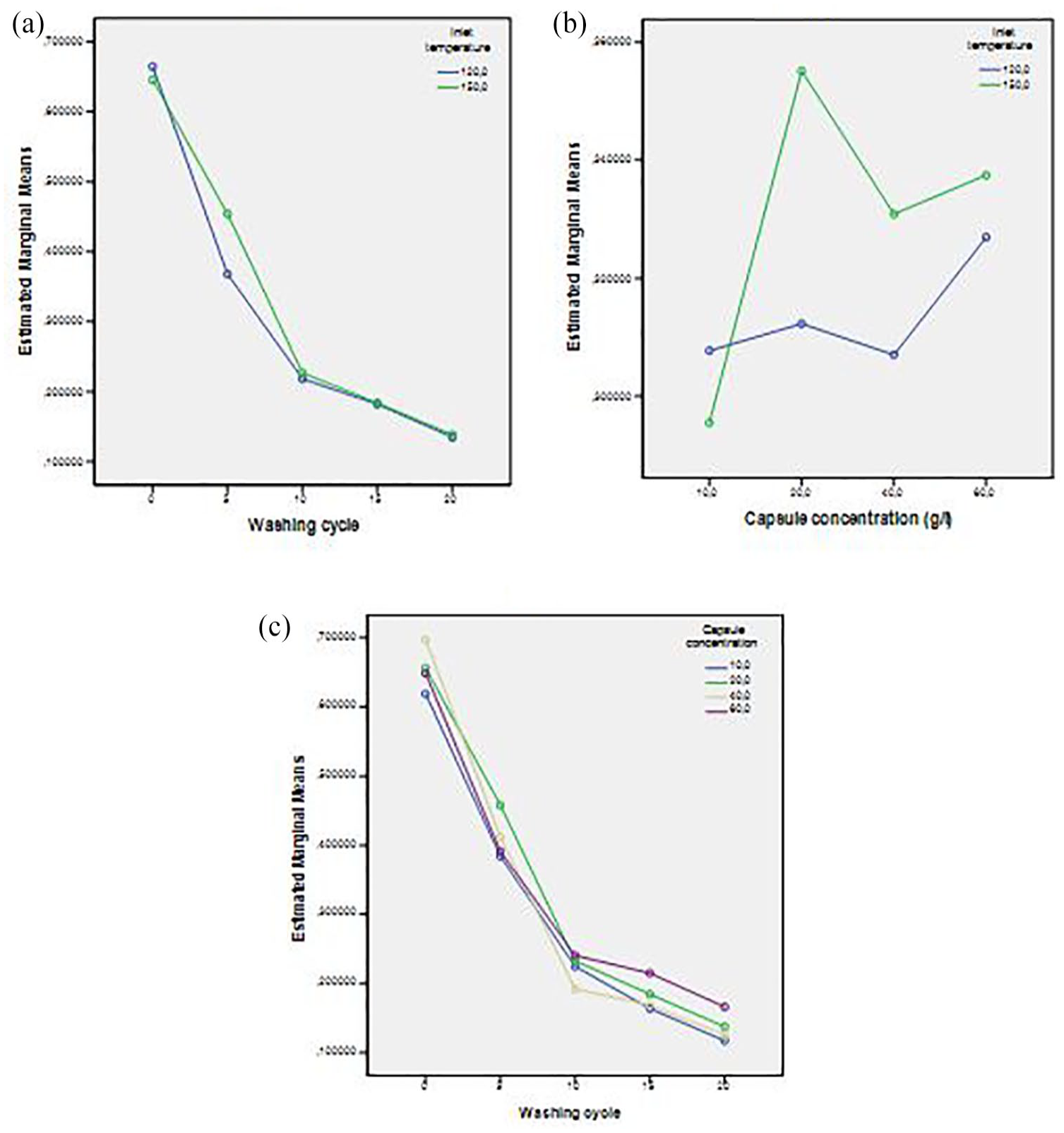
Statistical graphs of estimated marginal means for K/S values: depending on (a) inlet temperature–washing cycle, (b) inlet temperature–capsule concentration, and (c) the capsule concentration–washing cycle interactions.
When the K/S values of the fabric samples were examined in Figures 2 and 3, there was no statistically significant difference between the capsule concentrations (p < 0.05). As stated by Aldib and Christie, 18 it was thought that the photochromism effect might have been suppressed due to the aggregation of the photochromic dye. Therefore, it was understood that high concentrations, in terms of coloration, were not required for this study. A decrease in color values was observed after washing, as shown in the samples in Figure 1, and this was found to be statistically significant (p < 0.05).
In Figure 4(a), it was seen that the slopes of the curves for 120°C and 150°C of inlet temperatures were similar and the color values decreased as the washing cycles increased for both inlet temperatures. This result has revealed that there is no interaction between the inlet temperatures and the washing cycles, and the washing process has showed the same effect for both inlet temperatures. In Figure 4(b), it was observed that the slopes of the inlet temperatures are relatively similar and there is no interaction between the inlet temperature and the capsule concentration. However, when the capsule concentration was increased from 10 to 20 g/L, a more pronounced increase was observed in the color value of the samples for 150°C of inlet temperature. When the capsule concentration increased from 20 to 40 g/L, a more significant decrease was observed in the color values of the samples for 150°C inlet temperature; however, when it was increased from 40 to 60 g/L, a more pronounced increase was observed in the color value of the samples for 120°C inlet temperature. This behavior has revealed that the effect level of capsule concentration changes according to the inlet temperature. In Figure 4(c), all curves showed similar slopes with each other. This revealed that there is no interaction between the capsule concentration and the washing cycles, and the washing cycles at each capsule concentration had a similar effect.
It was indicated that the selected temperature of spray drying to produce microcapsules (120°C and 150°C of inlet temperatures) did not have a significant effect on color build up (p < 0.05), which shows that the change in the microcapsule size (in the studied range for this study) did not affect coloration. In the previous study in which an exergy analysis was carried out for the production of photochromic microcapsules by spray drying, 40 it was concluded that the use of lower air inlet temperature resulted in a higher exergy efficiency. Therefore, since there is no difference in color build up, when the performance criterion is coloration, it will be more appropriate to use microcapsules produced at low air inlet temperature for sustainable production.
UV-Protection Properties
The UPF values of the samples including photochromic microcapsules spray-dried at 120°C and 150°C inlet temperature are shown in Figures 5 and 6, respectively. The estimated marginal average UPF graphs obtained as a result of statistical analysis are illustrated in Figure 7(a)–(c) depending on the, inlet temperature–washing cycle, inlet temperature–capsule concentration, and capsule concentration–washing cycle interactions, respectively.
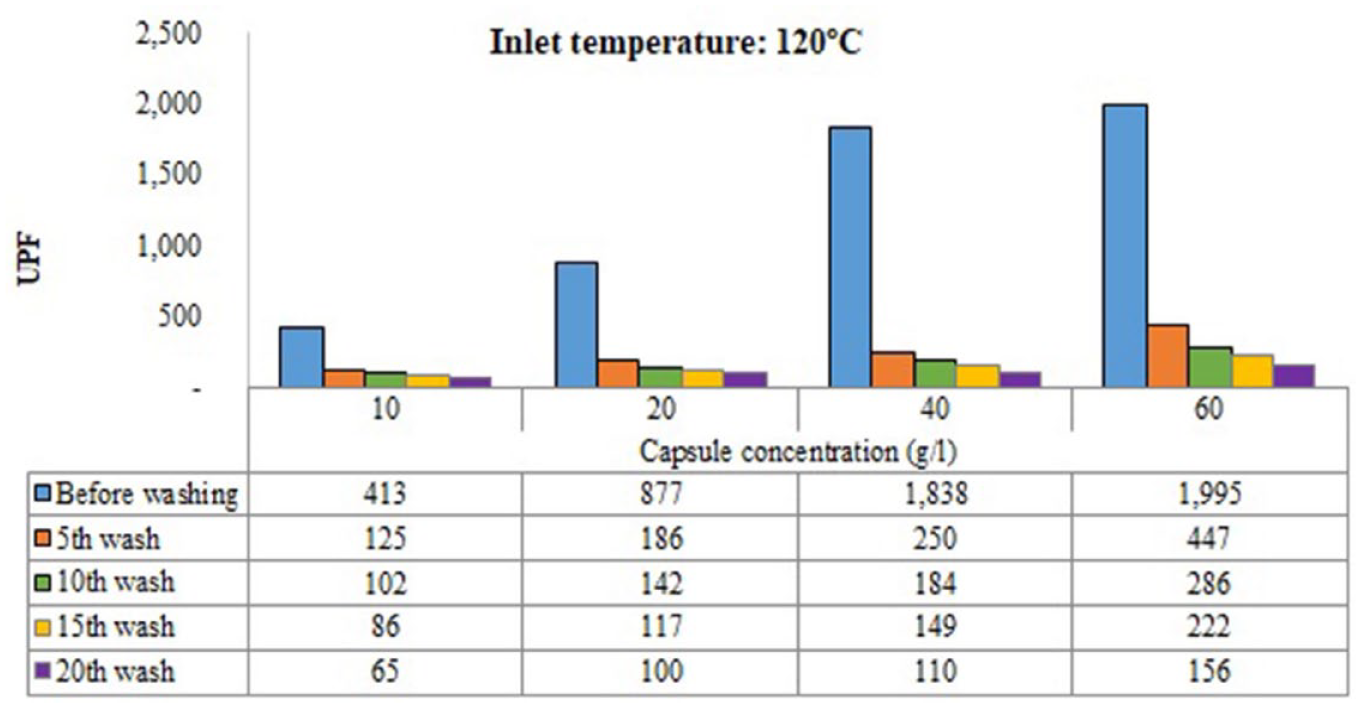
UPF values of the samples applied photochromic capsules produced at 120°C, before and after consecutive washing tests.
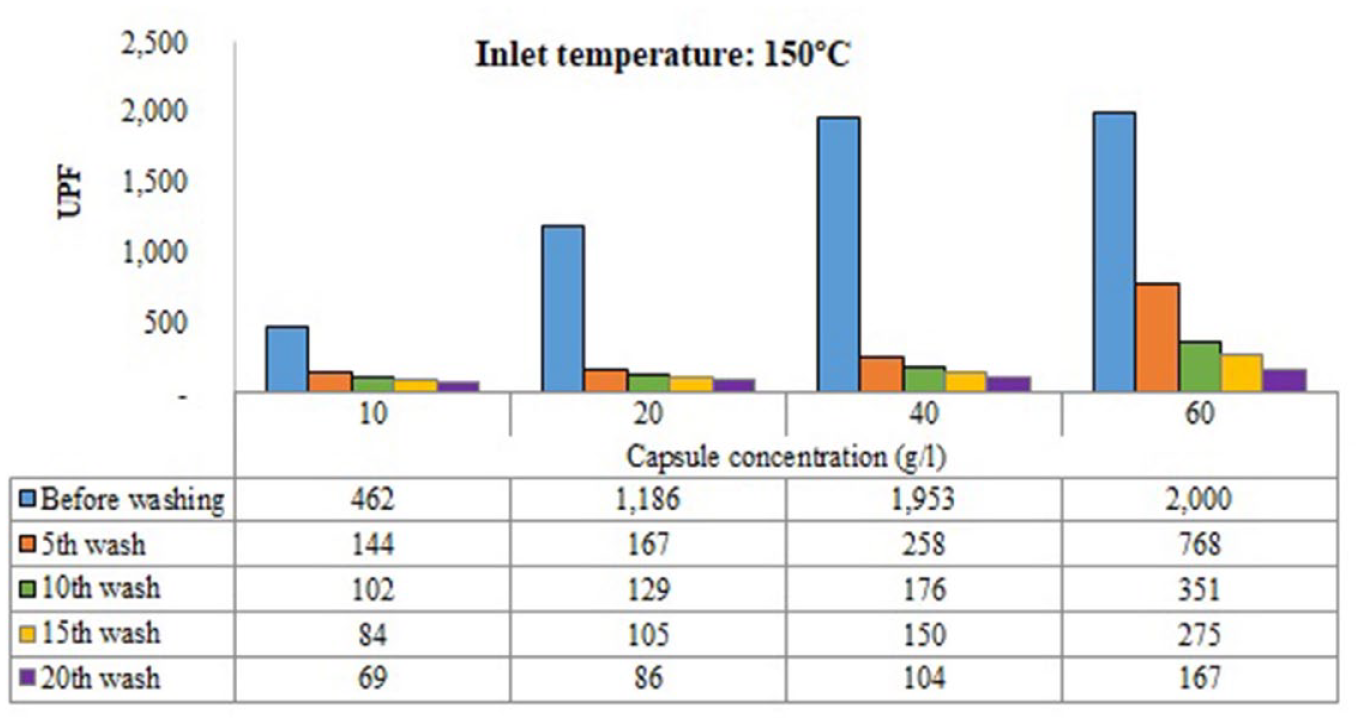
UPF values of the samples applied photochromic capsules produced at 150°C, before and after consecutive washing tests.
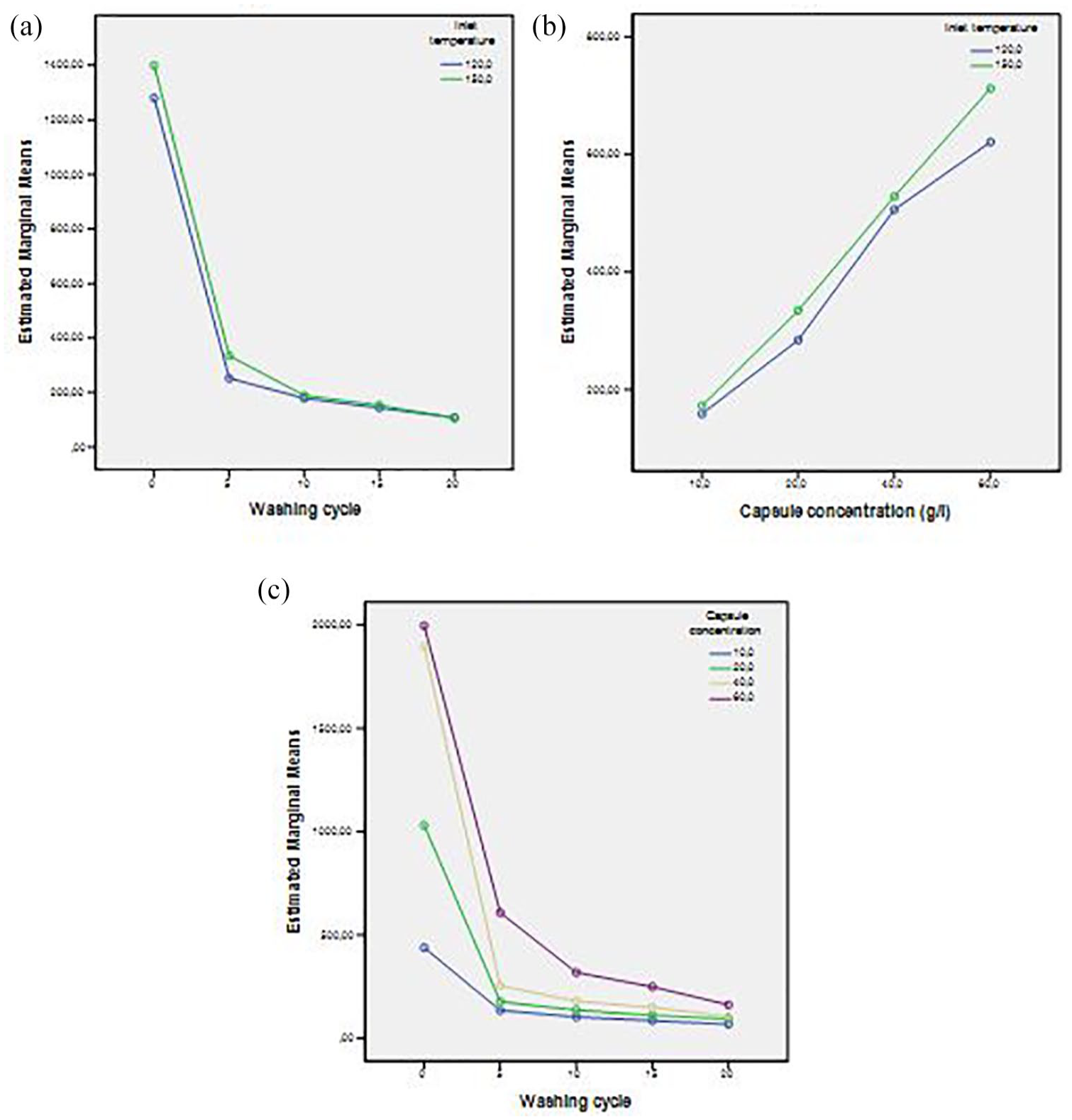
Statistical graphs of estimated marginal means for UPF values: depending on (a) the capsule concentration–washing cycle, (b) the inlet temperature–washing cycle, and (c) the inlet temperature–capsule concentration interactions.
When all three of the statistical graphs in Figure 7 were evaluated, it was understood that the slopes of the curves were similar, and in this case, the binary interactions between inlet temperature, capsule concentration, and washing number were not statistically significant.
50+ UPF values were obtained after the application of the photochromic microcapsules, while the UPF value of the untreated fabric was 25. The UPF values of the samples increased with increasing capsule concentration, and the effect of capsule concentration on the UPF values was statistically significant (p < 0.05). There was no significant effect of capsule concentration on the color build up due to the dye aggregation with the increase in concentration. However, the UPF values are thought to increase due to the increase in the amount of photochromic dye per unit area and therefore the amount of compound to absorb UV light. In addition, statistically significant decreases were observed in UPF values of the samples after consecutive washings (p < 0.05) even though 50+ UPF values were still obtained after 20 washing cycles (Figures 5 and 6). Although the photochromic microcapsules produced at 150°C inlet air temperature led to higher UPF values, it was indicated that even after 20 consecutive washing, fabrics including photochromic microcapsules produced at 120°C inlet air temperature also had 50+ UPF values. Therefore, it could be concluded from an exergetic point of view that the selection of 120°C spray drying inlet temperature will be more suitable because the exergy efficiency of microcapsule production by spray drying was reported to be higher in the previous study. 40
Fatigue Resistance
The samples to which photochromic microcapsules produced at 150°C of spray drying inlet temperature were applied were chosen to test the fatigue resistance of the photochromic microcapsules due to their relatively higher UPF test results. In addition to the microcapsules including photochromic dye, the microcapsules were also produced with the addition of HALS (Tinuvin 144 and Chimassorb 944) into the microcapsule solution to investigate the effect of the light stabilizers on the fatigue resistance. The photochromic microcapsules were applied to the fabrics at a concentration of 40 g/L. K/S and UPF values of the samples for every five cycles (UV on-off) are shown in Figures 8 and 9, respectively (T and C in the figures and tables mean “Tinuvin 144” and “Chimassorb 944,” respectively).
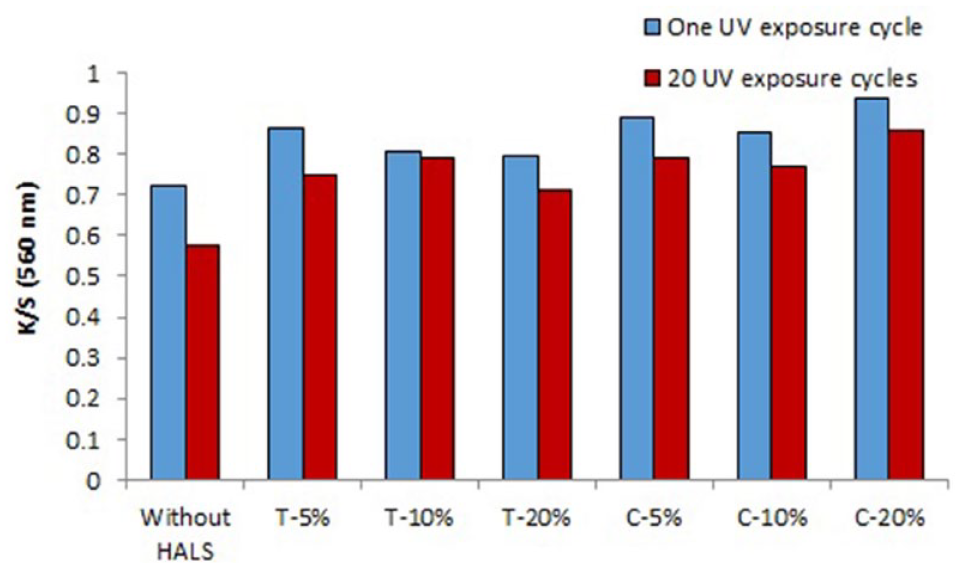
K/S values of the samples after the fatigue resistance tests.
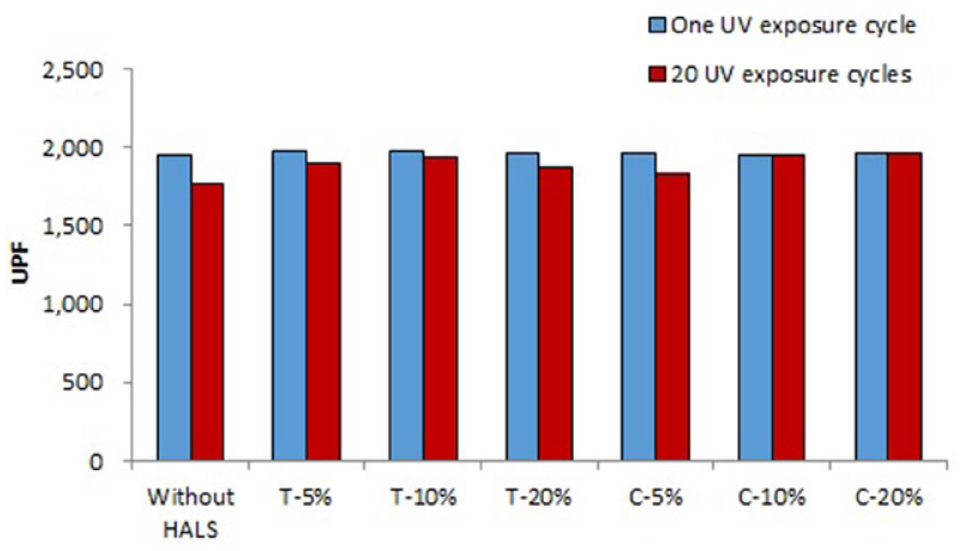
UPF values of the samples after the fatigue resistance tests.
The samples without HALS showed approximately 20% loss in K/S values and 10% loss in UPF values after 20 UV exposure cycles (Figures 8 and 9). The addition of HALS in the microcapsule formulation improved the fatigue resistance of the photochromic microcapsules because HALS scavenges the free radical intermediates formed in the degradation of the photochromic dye by UV light, and thus, it prevents the degradation of the dye. 38
Conclusion
In this study, photochromic dye microcapsules produced under the conditions determined in previous studies20,40 were applied onto cotton fabric by the pad–dry–cure process (capsule production parameters: feed rate = 3 mL/h; aspirator ratio = 95%; shell-to-core ratio = 2:1; water-to-ethanol ratio = 1/0.4; inlet temperature = 120°C and 150°C). Then, a consecutive washing process was applied to the fabrics.
The fabrics with photochromic microcapsules applied changed their colorless form to colored one by UV irradiation. The UV protection properties of the fabrics after dyeing and washing were tested and it was observed that the fabrics still provide UV protection at 50 + UPF level even after 20 washing cycles. The UPF values of the fabrics increased with the capsule concentration, but it was observed that the drying air temperature applied in capsule production did not have a significant effect on the UPF values of the fabrics. When the K/S values of the fabric samples were examined, it was understood that the microcapsule concentration and the drying air temperature applied in capsule production did not have a significant effect on the color values of the fabrics. As there is no difference in color build up between the inlet temperatures, it was concluded that the use of photochromic microcapsules produced at low air inlet temperature was more appropriate for sustainable production due to its production exergy efficiency.
According to the results of the application, the fatigue resistance of the samples applied at 40 g/L concentration of photochromic dye capsules produced at drying air temperature of 150°C was tested. In addition, in order to further improve the fatigue resistance of the photochromic dye capsules obtained, the effect of HALS compounds (Tinuvin 144 and Chimassorb 944) in the photochromic dye capsule was also investigated. As a result of the measurements, the UPF values of the photochromic dye encapsulated fabrics lost approximately 10% and K/S values lost about 20%. The use of HALS compounds during capsule production has been shown to improve fatigue resistance of photochromic dye capsules.
Footnotes
Declaration of conflicting interests
The author(s) declared no potential conflicts of interest with respect to the research, authorship, and/or publication of this article.
Funding
The author(s) disclosed receipt of the following financial support for the research, authorship, and/or publication of this article: The authors would like to gratefully acknowledge The Scientific and Technical Research Council of Turkey (TUBITAK) through Project No. 214M428, and Ege University, Scientific Research Projects, through Project No. 16-MUH-079 for financial support to this research project.