




Abstract
In this research, an industrially adaptable method is designed for antibacterial clothing. The essential oils of oregano and lavender were extracted using water vapor distillation, then they were spray-dried to form microcapsules. Comprehensive morphological analysis revealed the round shape of the microcapsules with smooth surfaces. The mean size of the optimum oregano and lavender microcapsules were 5.2 µm and 2.2 µm. The essential oils were detected in the polymeric matrix as peaks of microcapsules’ infrared spectra resembled both oils and polymer. Thermal analyses showed that encapsulation delays the degradation of the essential oil. The microcapsules were applied to six different fabrics used in sports and leisurewear by exhaustion. Scanning electron microscopy images indicated the existence of capsules after 10 washes. The antibacterial properties of cotton fabrics were assessed against Escherichia coli and Staphylococcus aureus in terms of the oil and washings. The developed products can serve as a long-lasting, natural antibacterial alternative to other products on the market.
Introduction
The textile industry is a growing sector from local to global brands and from retailers to wholesalers. Nowadays, customers have more options to choose from due to the increasing number of players in the textile sector. Textile surfaces have been modified for properties such as antibacterial, UV protection, antistatic, anticrease, and self-cleaning by the application of different inorganic and organic compounds.1–4 Today, people are conscious of the role bacteria play in health. The interest in all kinds of antimicrobial products has increased. Antibacterial textiles have also become one of the fastest growing sectors of the textile industry.4,5 Antibacterial textiles are expected to be effective against microorganisms, resistant to washing, and non-irritating to the skin while not affecting the appearance and quality of the textile product. 6
Plant-originated essential oils (EOs) are a rich source of phytochemicals with strong biological and pharmacological properties to improve human health. They offer high value-added, functional properties such as antibacterial, antiviral, antifungal, and insect repellents due to their physicochemical properties.2,5,7–9 Contrary to synthetic antibacterial agents, plant-derived natural antibacterial substances are environmentally friendly, biodegradable, skin-friendly, and do not have significant side effects. 10 Microencapsulation and nanotechnology applications using plant-based EOs draw attention to this field. 8
EOs known to have antimicrobial activity can be listed as thyme, oregano, lavender, mint, cinnamon, cumin, sage, clove, and eucalyptus. 11 These oils can be applied to textiles by antimicrobial finishing techniques. Oregano is a shrub, which is used as a spice and a therapeutic plant. Origanum vulgare and Origanum onites are well-known types. Carvacrol and thymol, the main components of oregano oil, have powerful biological activities, including anti-inflammatory, antibacterial, and anti-oxidation. Oregano oil inhibits various bacteria: Staphylococcus aureus, Pseudomonas aeruginosa, Alicyclobacillus, Escherichia coli, and so on.6,9
Lavender is a common name for flowering plants in the family of Lamiaceae. Several varieties of lavender plants can provide EO, but Lavandula angustifolia is one of the most frequently used in commerce. Lavender oil itself and its two major constituents linalool and linalyl acetate are used in aromatherapy, and they have been detected as strong antimicrobial agents against some bacteria and fungi including S. aureus, Bacillus species, E. coli, P. aeruginosa, and Candida albicans.7,11,12
Microencapsulation is the process of protecting active substances from the external environment in an inert shell by turning them into tiny particles. 13 The interior material of the microcapsule is generally called the core material, while the material that surrounds the delicate core material is called a wall or a shell. 14 The main purpose of microencapsulation use in the textile industry is to ensure the lowest possible waste of active substance with a minimum change in the fabric handle or color of the product. Prolonged release, macro-environmental protection, and increased shelf-life are some of the other beneficial aspects of this very special method.14–16 The direct use of EOs in finishing processes has limitations regarding effectiveness and durability as mentioned. Textiles, especially sportswear, are washed frequently. With using microencapsulation technology, the washing durability of the products is increased, and their lifespan is extended.1,2
Microencapsulation techniques are divided into two main categories as physico-chemical and physico-mechanical processes. 14 Spray drying is one of the physico-mechanical processes and is an industrially accepted method that uses the spraying of a liquid into a powder in a hot chamber.14,17 The stabilized emulsion or dispersion of the core and the shell are atomized through nano/micro-sized nozzles, preferably when stirring. Nano/micro-sized particles are formed with sudden evaporation in the drying chamber. Then powdered products are separated in the cyclone by the airflow and are deposited in the glass container. 13
Spray drying is widely used for the encapsulation of oils in the food industry and active substances in the pharmaceutical industry, due to its relatively low cost and high production rate. Researchers have encapsulated different core materials, both water-soluble and oil-soluble, with the spray drying technique. However, few of these have been developed for textiles so far. Thilagavathi and Kannaian investigated the encapsulation of geranium extract using gum Arabic as the wall material. They compared direct spray drying with the coacervation spray drying method. In that study, which obtained aroma and antibacterial textiles, a smaller and more homogeneous size was specified in the direct spray drying method. 18 Orange oil was encapsulated in chitosan to be used as a fragrance finishing of textiles. Capsules with an average diameter of less than 20 µm were added to the solution containing laundry detergent. The amount of orange oil that remained after washing was evaluated. The results revealed that the encapsulated orange oil was retained on cotton fabrics for up to 20 days. 19 Arıcı et al. prepared naproxen–ethyl cellulose microparticles to be used as an anti-inflammatory agent in orthopedic bandages. Microparticles in the 10 to 15 µm range displayed a biphasic release system with burst release followed by slow release from the textile. Microparticles in the 10 to 15 µm range displayed a two-phase release system with rapid release followed by slow release after being applied to textiles. 20 In another study, spirooxazine-based photochromic dyestuff was encapsulated with ethyl cellulose to develop UV-protective textiles. Microcapsule-applied cotton fabrics exhibited ultraviolet protection factor ratings of 50+ after 10 washes. 21 Recently, shea butter nanocapsules were formed using ethyl cellulose to achieve a moisturizing effect in denim fabrics. 22
This study prepares microcapsules of oregano oil, and lavender oil, to improve the lifetime of the EOs, for possible application in sports and leisurewear. The capsules containing EOs were made from the ground up using endemic plants. To this end, EOs were obtained from the harvested plants by water vapor distillation, and the concentrations of the active substances were determined. After that, the EOs were encapsulated in ethyl cellulose by spray drying. The production yield and the effect of shell polymer on the microcapsule morphology were examined. The average particle size was estimated from scanning electron microscopy (SEM) micrographs using the ImageJ software. Microcapsules with the best morphology were examined in terms of thermal behavior and chemical structure. The most suitable microcapsule formulation was applied to six different fabrics produced from different raw materials using the exhaustion method. Color change after capsule application was examined, and the effects on washing and rubbing were evaluated considering the material. The antibacterial activity of the microcapsule finish was assessed qualitatively using cotton fabrics. Comfort properties were evaluated after the microcapsule application. In addition, tests were performed on the microcapsules to confirm the non-toxicity for skin contact. With the chosen strategy and the outcomes obtained, it is expected that the manufacture of this product line, whose step from the field to the store is designed for the textile industry, would be economical and sustainable.
Material and Method
Material
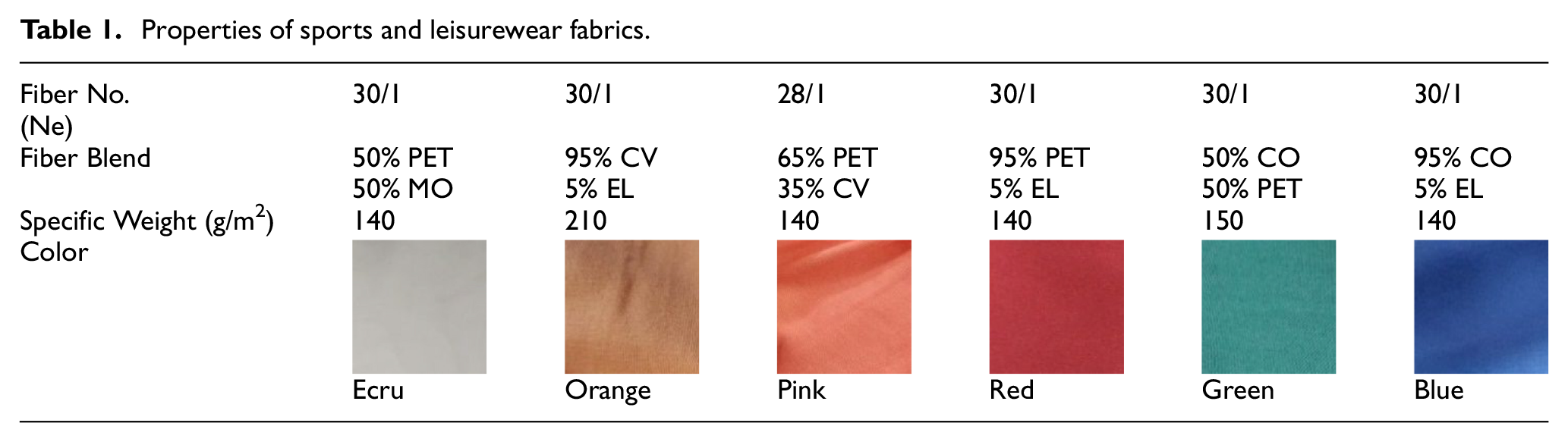
In this study, six different single jersey knitted fabrics, which are most preferred in sports and leisurewear, were used and the fabric properties are given in Table 1. Cotton, modal, viscose, and polyester fibers are materials that can be easily processed. EO microcapsules can be easily spread homogeneously to these fabrics. Single jersey and single jersey with elastane structures ensure the regular release of EOs from the carrier system, increased skin contact, and a comfortable feeling when worn.
Properties of sports and leisurewear fabrics.
To produce spray-dried microcapsules, ethyl cellulose (EC) was used as shell material. EC was purchased from Sigma-Aldrich. Oregano oil and lavender oil used as core materials were obtained by Doğal Destek, Türkiye (Tabia Pure Nature) using Lavandula angustifolia and Origanum onites L. plants, respectively. The surface-active agents (Tween 80 and Span 20) were obtained from Merck. Polyurethane-based binder (TANAPURTM One) and non-foaming wetting and deaerating agent (TANAWET® Q) were kindly donated from Tanatex Chemicals. All other auxiliary chemicals used in the study were of laboratory grade.
Production of Essential Oils and Determination of Composition
The raw materials used in the production of EOs were collected from Lavandula angustifolia and Origanum onites L. plants grown in the South and Central Aegean. The water vapor distillation technique is employed for extracting the EOs. The composition of the EOs was obtained by an Agilent gas chromatography-mass spectroscopy (GC-MS). An Agilent 7890A GC system with Agilent 19091N-136 (60 m × 0.25 mm inner diameter 0.25 μm film thickness) column and Agilent 5975C VL MSD with triple-axis detector was used as the equipment. Before the injection, the samples were diluted to 10% with n-hexane. The following GC-MS conditions were used during the analyses: split ratio 40:1; injection volume 1 μL; oven temperature program with a total run time of 100 min: holding at 60°C for 10 min, rising to 220°C with 4°C/min heating ramp, keeping at 220 °C with 1 °C/min heating ramp. The injector temperature was set to 250 °C and helium was used as carrier gas. The compounds in EOs were identified by the retention times specified in the GC-MS system library. The percentages of the compounds were determined using the peak area in the chromatograms. In this method, the base is calculated by extrapolating the peak’s sides to the baseline while assuming that the peak has a triangular shape. 23
Microencapsulation of Essential Oils
The spray drying method was employed for the encapsulation of EOs. Before the spraying, emulsions of shell and core materials were prepared at different concentrations (Table 2). The emulsion was fed while continuously being stirred from the 0.5 mm nozzle into a main chamber with an optimum pump speed of 2.5 mL/min. The compressor and air circulation speeds were operated at maximum. The experiments were carried out in a Lab Plant brand SD-Basic spray drying device with a main cabinet size of 380 mm × 110 mm with special equipment attached for working with solvents. Dried samples were collected from the cyclone and collector using a soft brush and stored in glass containers. Spray drying conditions are as in Table 2. After the experiments, microparticles were collected from the cyclone and collection vessel with a soft brush and stored in a zip-lock bag. The product yield was determined according to equation (1) as follows.

Microcapsule formulations and spray drying conditions.
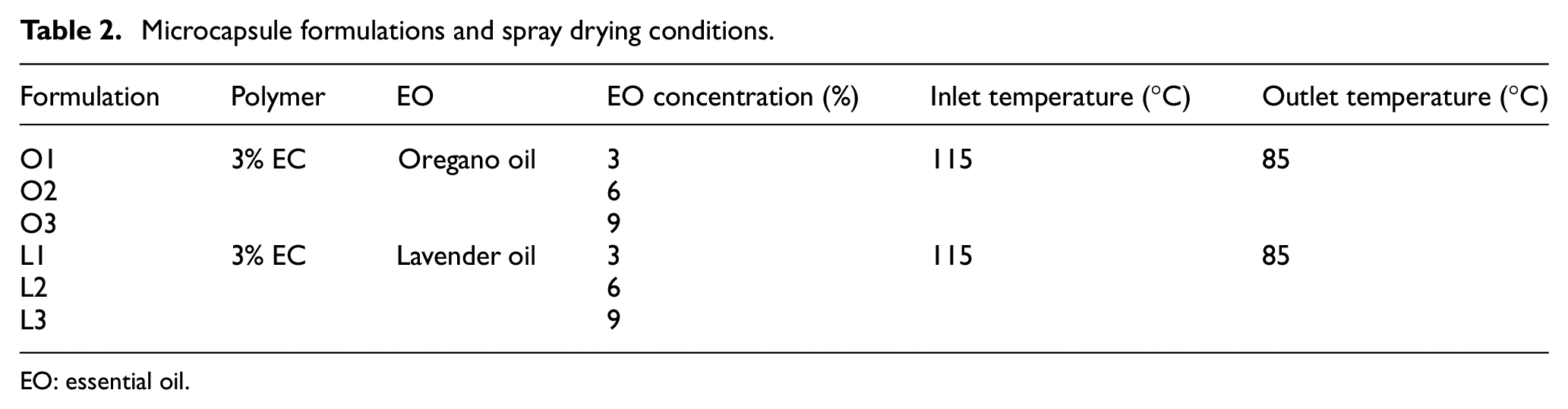
EO: essential oil.
Characterization of Microcapsules
The morphology and approximate particle sizes of the microparticles were determined by scanning electron microscopy (Carl Zeiss Sigma 300VP). Before imaging, the samples were plated with an 8 nm layer of gold for 1 min at 20 mA electric current (Quorum Q15OR ES). In order to estimate the average particle size, measurements were taken at approximately 500 different points from SEM micrographs using ImageJ software. Median (D50%), D90%, and D10% values were determined. The median is the value in the middle of the data set, showing that half of the microparticles reside below this value. Therefore, 90% and 10% of the microparticles are below D90% and D10%, respectively. Span, which is the polydispersity index of a data set, is calculated according to equation (2). Lower span values manifest narrow particle size distribution and lower polydispersity. 24

Attenuated Total Reflectance-Fourier Transform Infrared Spectroscopy (ATR-FTIR) (Perkin Elmer Spectrum BX) was employed to evaluate the chemical structures of microcapsules in the 4000–650 cm–1 wavelength range with a resolution of 4 cm–1 and 25 scans per sample.
The thermal properties of the materials were examined using a thermogravimetric and differential thermal analyzer (DT-TGA) (TGA-SDT Q600). Samples (5–10 mg) were compressed into the sample holder to be airtight. The experiments were performed under a nitrogen atmosphere at a heating rate of 5°C/min, in the range of 25°C to 300°C and with a sensitivity of 0.001°C. The melting peak (Tm) and maximum decomposition temperatures (Tp) were estimated and the data for enthalpy (ΔH) of each scaffold was calculated from the area under the melting peak by TA Universal Analysis software.
Application of Microcapsules
The dispersion bath of the optimum EOs microcapsules formulation (20 g/L), a nano-polyurethane-based binder (10 g/L), and a wetting agent (2 g/L) in water was prepared. The application of microcapsules onto knitted fabrics was done according to the exhaustion method (Ataç, ATC-GSR12) at 25°C for 15min. After application, the fabrics were dried at 60–80°C (Nüve, KD400) and fixation was done at 150°C for 5 min using Laborteks stenter.
Characterization of the Microcapsule-Treated Textiles
The behavior of the textile fabrics including microcapsules against washing and rubbing was examined. For washing processes, ISO 105 C06 standard was applied to employ A1S washing condition (at 40°C for 30 min) using 4 g/L ECE B detergent. Samples were taken after 1 and 10 sequential washes.
The rubbing test was applied to the microcapsule-applied fabrics according to ISO 105 X12 standard. The samples were evaluated with the help of a scanning electron microscope (Carl Zeiss Sigma 300VP). The conductivity of the samples is provided using the previously specified conditions.
The effect of the microcapsule application on the color of different fabrics was investigated by a spectrophotometer (Minolta CM-600d). The color of the fabrics was measured under the D65 light source before and after the microcapsule treatment. Color yield (K/S), lightness (L*), the red/green coordinate (a*), and the yellow/blue coordinate b* were defined. Chroma (C*), hue (H*), and color difference (ΔE*) were calculated from L*a*b* coordinates using the CIE Lab color space. The degree of whiteness was also determined for the Ecru fabrics according to the Stensby approach.
Air permeability and water vapor permeability analyzes were performed to examine the effect of microcapsule application on cotton fabric properties. A Textest FX 3300 Air Permeability Tester III was used regarding ISO 9237. The mean values of not less than five measurements were taken. The test area and the pressure were 20 cm2 and 100 Pa, respectively. Tests were applied on an SDL ATLAS M261 Water Vapor Permeability Tester following BS 7209:1990. The mean values of at least three measurements were used. The standard error bars shown in the graphs in air and water vapor transfer experiments were calculated according to 95% confidence limits.
Antibacterial Activity of the Microcapsule-Treated Textiles
Antibacterial activity of the microcapsule-applied fabrics was assayed against Gram-negative (Escherichia coli, ATCC 8739) and Gram-positive bacteria (Staphylococcus aureus, ATCC 6538) according to AATCC Test Method 147-1998: antibacterial activity assessment of textile materials: parallel streak method. Bacteria were cultured on tryptic soy broth medium for 18-24 h. Five parallel streaks of bacteria were seeded to tryptic soy agar-poured sterile Petri dishes. Then, the UV-sterilized fabrics were placed on them. Samples were incubated at 37 °C for 24 h for possible bacterial growth. After 24 hours of incubation, microcapsule-treated samples were compared to the control group by examining bacterial growth in Petri dishes.
Results and Discussion
Composition of Essential Oils
Lavandula angustifolia and Origanum onites are aromatic plants that include high yields of EOs. They are widely used commercially due to their pharmaceutical features and cosmetic properties such as flavor and pleasant smell. Lavender and Oregano EOs were extracted from these plants by the water vapor distillation method regarding the aforementioned parameters. The components in the EOs were identified by the retention times specified in the GC-MS system library developed in-house (Table 3).
Composition of EOs.
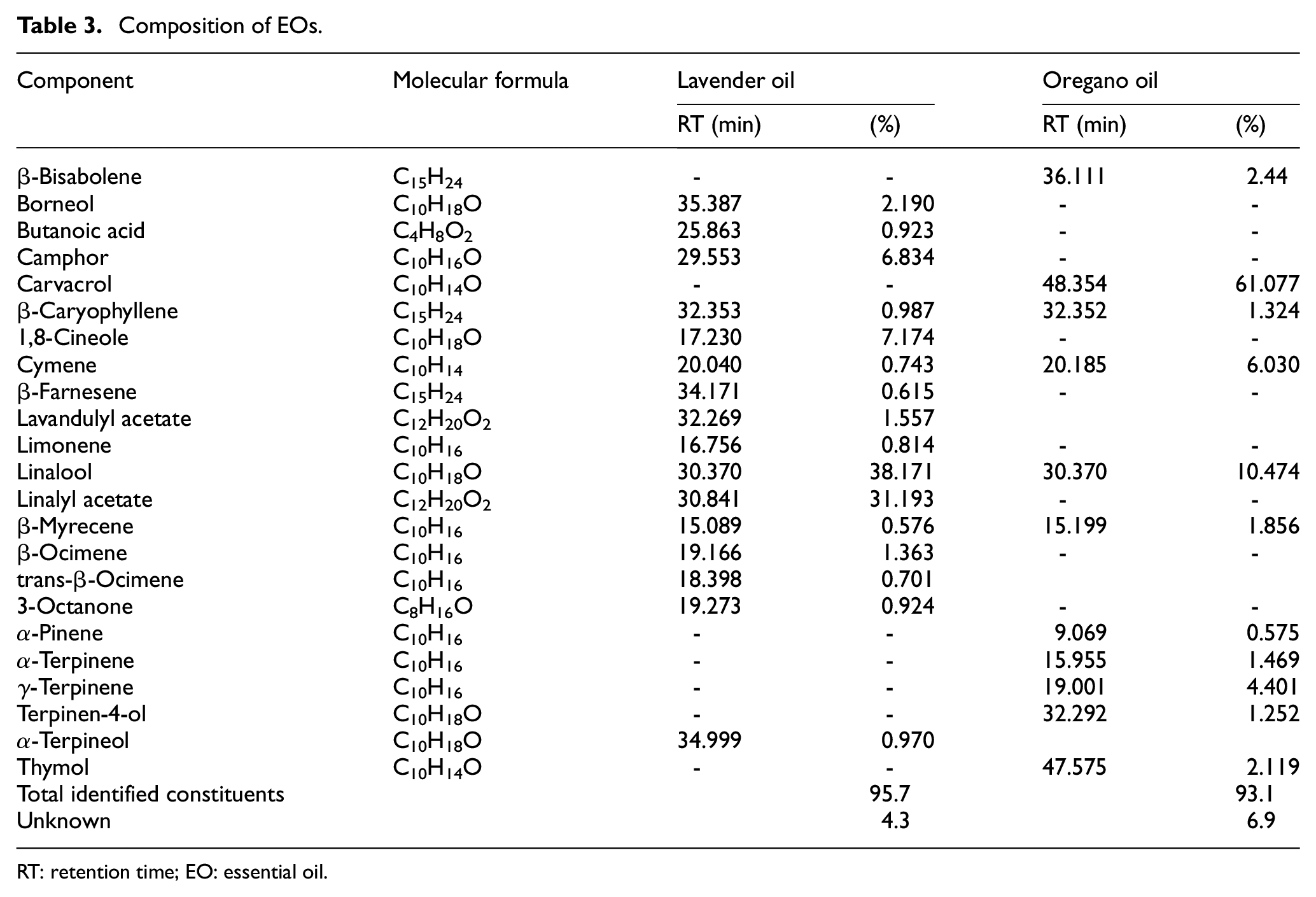
RT: retention time; EO: essential oil.
It is known that the composition of EOs varies significantly depending on the species and age of the plant and harvest region and time, drying, and extraction methods. 25 GC-MS analyses of lavender EO showed 16 components including linalool (38.2%), linalyl acetate (31.2%), 1,8-cineole (7.2%), and camphor (6.8%). Eleven compounds in the oregano EO were identified and the main constituents were revealed as carvacrol (61.1%), linalool (10.5%), cymene (6.0%), and γ-terpinene (4.4%). Accordingly, linalool, β-caryophyllene, and cymene were found as common components in both EOs. Linalool, which is the major compound in the lavender EO, was reported for its sedative activity.26,27 Besides, many researchers have reported therapeutic features of linalool and linalyl acetate, which are found both in lavender and in oregano EOs, such as anti-inflammatory, 28 anesthetic, 29 and antimicrobial activity.30,31 Pattnaik et al. 30 have reported that linalool was the most effective antibacterial agent, compared to various other compounds such as cineole, geraniol, and citral aromatics. The antibacterial and anti-inflammatory effects of carvacrol, which is the primary compound of the oregano EO, were revealed in the literature as well. 32 In addition, camphor, 1,8-cineole (eucalyptol), and limonene in lavender oil11,33 and thymol, γ-terpinene, p-cymene in oregano oil33,34 contribute to the antibacterial activity.
Characterization of Microcapsules
The characteristic features of microcapsules produced by the spray drying method are narrow particle size distribution, spherical shape, and a smaller core as a result of rapid evaporation.24,35 SEM photomicrographs of oregano oil and lavender oil capsules are given in Figure 1 under 2500× (scale: 10 µm) and 5000× (scale: 2 µm) magnification, respectively. The photomicrographs of O2 (Figure 1(b) and (e)), O3 (Figure 1(c) and (f)), L1 (Figure 1(g) and (j)) and L2 (Figure 1(h) and (k)) display the typical morphology of spray-dried microcapsules composed mainly of spherical-shaped particles with smooth surfaces. It is clear that not all particles appeared morphologically spherical. O1 has a wider particle size distribution and some microcapsules’ centers collapsed (Figure 1(a) and (d)). This might have occurred because there is sudden solvent evaporation when meeting the hot air chamber while there is insufficient EO to form a microcapsule. 24 On the other hand, with a higher EO, O3 tends to agglomerate (Figure 1(c) and (f)). It is clearly seen that the L1, L2, and L3 capsules formed with lavender EO at similar ratios have smaller particle sizes. Compared to L3 (Figure 1(i) and (l)), capsules formed with L1 and L2 formulations are more rounded.
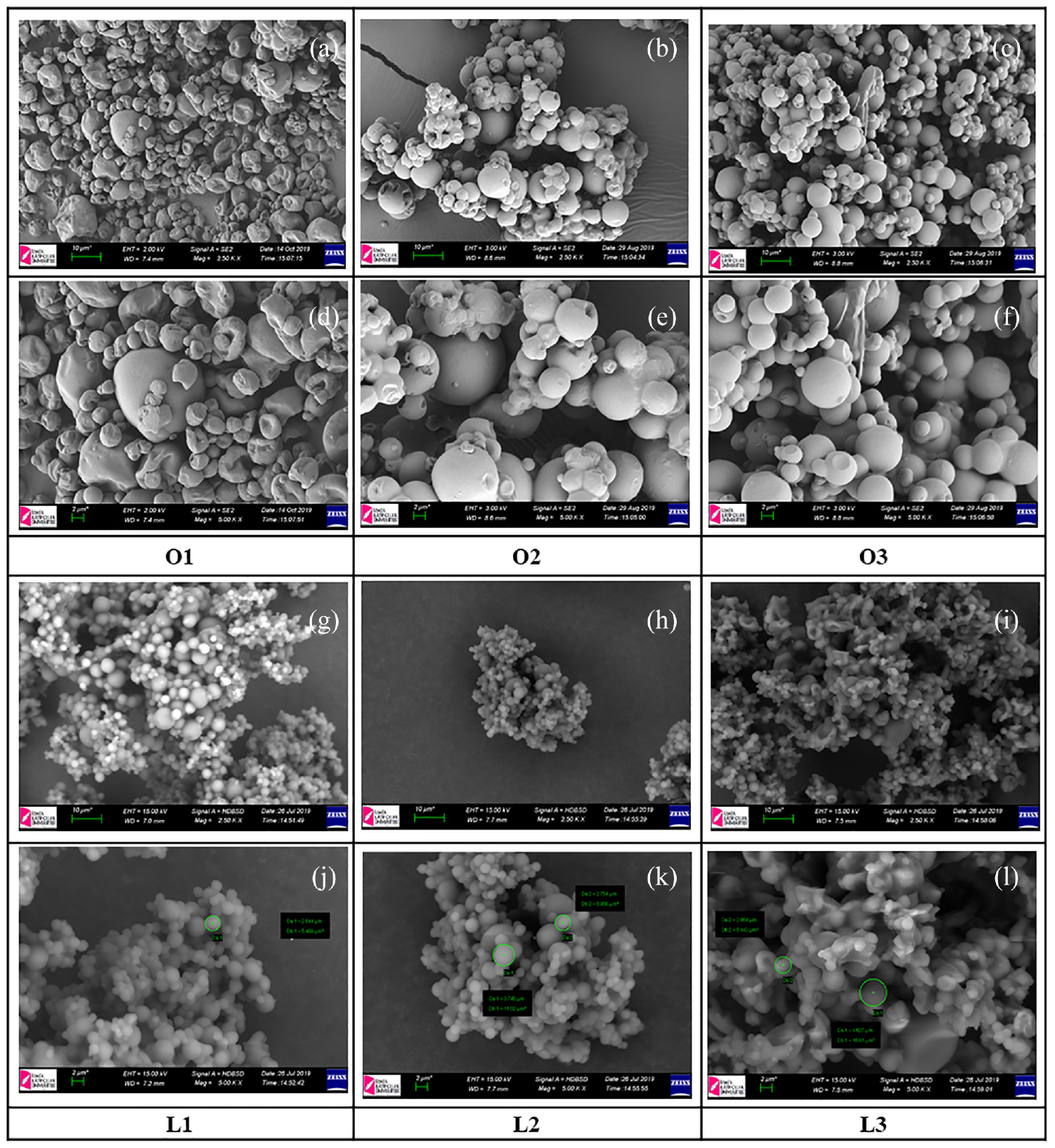
SEM photomicrographs of microcapsules containing oregano and lavender EO at different magnifications: (a) O1 at 2500x, (b) O2 at 2500x, (c) O3 at 2500x, (d) O1 at 5000x, (e) O2 at 5000x, (f) O3 at 5000x, (g) L1 at 2500x, (h) L2 at 2500x, (i) L3 at 2500x, (j) L1 at 5000x, (k) L2 at 5000x and (l) L3 at 5000x.
To examine the particle size distribution, further particle size analyses were performed using the ImageJ measurements. The data obtained from these measurements and production yield are presented in Table 4. While O1 capsules showed the lowest mean particle size among the oregano oil samples, they have higher span values. The lower particle size of O1 may be due to the collapsed form. Lower span values manifest narrow particle size distribution and lower polydispersity (24). The median, which is also called D50%, is the value in the middle of the data set, showing that half of the microparticles reside below this value. Although O3 has a lower span value, O2 has a relatively higher production yield (40.5 %), lower median value, and ease of operation due to lower oil content. The results show that the lavender oil capsules are significantly smaller compared to the oregano oil capsules. The lavender oil was easier to work with and the yield was higher. Half of the L2 particles were below 1.938 µm and showed the best span value (1.086) among the formulations and has the maximum yield (72.2%).
Particle size analysis results of microcapsules containing oregano and lavender EO.
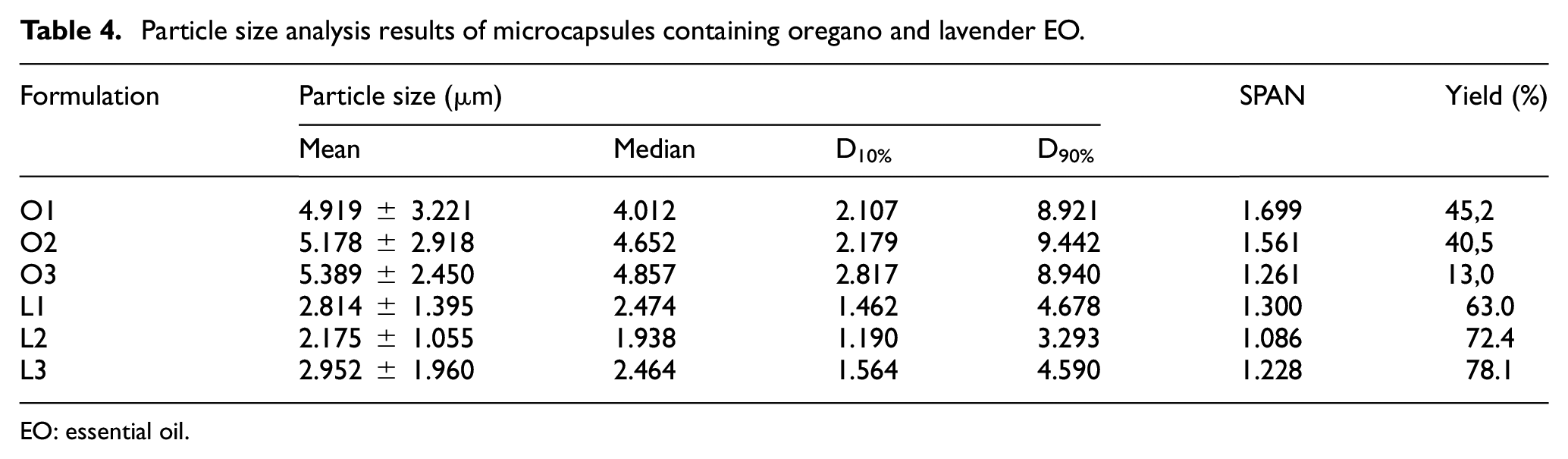
EO: essential oil.
The FT-IR spectra of formulations containing oregano and lavender EO are given in Figure 2(a) and (b), respectively. The characteristic IR bands of EC were seen at around 3500 cm−1 (−OH stretching vibration), 2975 and 2865 cm−1 (–C−H stretching vibration), 1380 cm−1 (C−H bending), 1098 cm−1 (C–O stretching), and 1053 cm−1 (–C–O–C–stretching). 36 The IR spectrum of oregano oil showed a broad peak around 3500 cm–1 corresponding to OH groups and a double peak at 2975 and 2865 cm–1 belonging to asymmetrical and symmetrical bands of CH3 groups, which is attributed to the presence of carvacrol and thymol, which are isomeric phenolic active substances.37,38 In the fingerprint region of the oregano EO spectrum, thymol and carvacrol peaks were observed between 900 and 1400 cm–1. Characteristic bands of carvacrol are at 995, 116, and 1179 cm–1, and characteristic bands of thymol are at 994, 1090, and 1286 cm–1. The peaks at 1460 and 1421 cm−1 are assigned to the bending vibrations of the C-H groups. The weak vibrations at 1620 and 1521 cm−1 are associated with C=C stretching vibrations. 39 The wavenumber between 1500 and 400 cm−1, which includes a more significant number of peaks, is called a fingerprint region and is used to distinguish the unique properties of compounds. It is known that the peaks at 1280 and 938 cm−1 are used to recognize thymol. The peaks around 1160, and 805 cm−1, which are also attributed to thymol, were overlapped with higher intensity peaks of carvacrol detected at 1255, 1175, 1116, 992, and 813 cm−1.39–41 Both oregano and ethyl cellulose peaks were observed in oregano microcapsules. It was concluded that the presence of oregano essential oil in the polymeric matrix was ensured and there was no significant chemical interaction between oregano oil and ethyl cellulose.
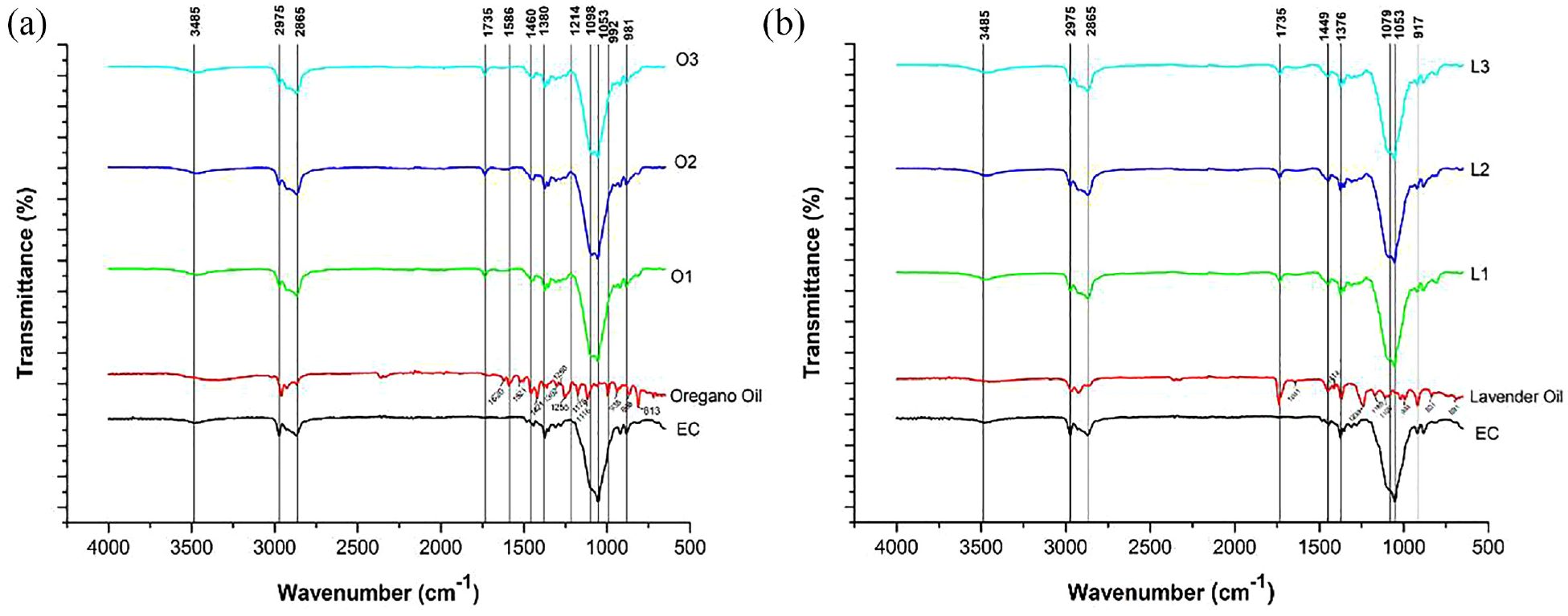
FT-IR Spectra of formulations containing (a) oregano and (b) lavender EO.
When the IR spectrum of lavender oil was examined, the stretching vibration of −OH groups was seen in the range of 3600–3200 cm-1, and the peaks of the CH3 groups were found around 2900 cm–1. The characteristic molecular groups of COOR and C=O and the peak of C=O stretching at 1735 cm–1 were determined. The band at 1641 cm−1 IR belongs to the C=C stretching vibration. In the fingerprint region, at 1413 cm–1, the C=CH2 in-plane deformation vibration was observed, which is specific to the linalool and its ester linalyl acetate. C–O stretching vibration (at 1238, 1169, and 1109 cm−1) of terpenoid compounds was observed in the lavender oil. Other important peaks in this region are peaks that are attributed to C–H bending vibrations (1449 and, 1376 cm−1), –CH2 vibrations (994 cm−1), and C–H vibrations (831 and, 691 cm−1).12,42 Lavender microcapsules presented significant peaks (at 1735, 1449, 1376, 1079, 1053, and 917 cm–1) found in lavender oil and ethyl cellulose. In addition, no additional peak formation was seen, similar to the thyme oil capsules.
Merged thermal gravimetric analysis (TGA) thermograms and differential scanning calorimetry (DSC) diagrams of oregano oil and lavender oil microcapsules are presented in Figure 3(a) and (b), respectively. The TGA graph of ethyl cellulose showed a weight loss of around 100 °C due to the moisture in the material. Pyrolysis starts around 225 °C and accelerates at 300 °C. The decomposition temperature of ethyl cellulose is around 440 °C. 43 The TGA graph of oregano oil revealed that it is thermally stable at around 60 °C and deterioration occurred around 150 °C. The DSC diagrams of oregano oil exhibited a wide endothermic peak in the range of about 35–140 °C. 44 The thermograph of lavender oil exhibited weight loss that starts around 35 °C and degrades around 125 °C. A wide endothermic peak was observed in the range of 30–120 °C in the DSC curve of lavender oil. The thermal behavior of microparticles both containing oregano oil and lavender oil was found to be similar to the shell polymer ethyl cellulose. Considering that these oils evaporate and decompose at much lower temperatures, it is thought that the oils are successfully retained within the polymer wall. In O1, O2, and O3 formulations, the mass loss at 180 °C, the temperature at which oregano oil fully decomposes, is not exceeding 5%. Lavender oil is thermally stable until 60 °C and decomposes completely at 150°C. At this temperature, the weight loss in L1, L2, and L3 microcapsules, containing both oil and the shell, is around 5%. This shows that the microcapsules are not affected by the drying temperature. The thermal behavior of microcapsules is negligibly less stable than the shell material but much more durable than EO. This is similar to the thermal behavior of microcapsules found in the study of Marcela et al. 37
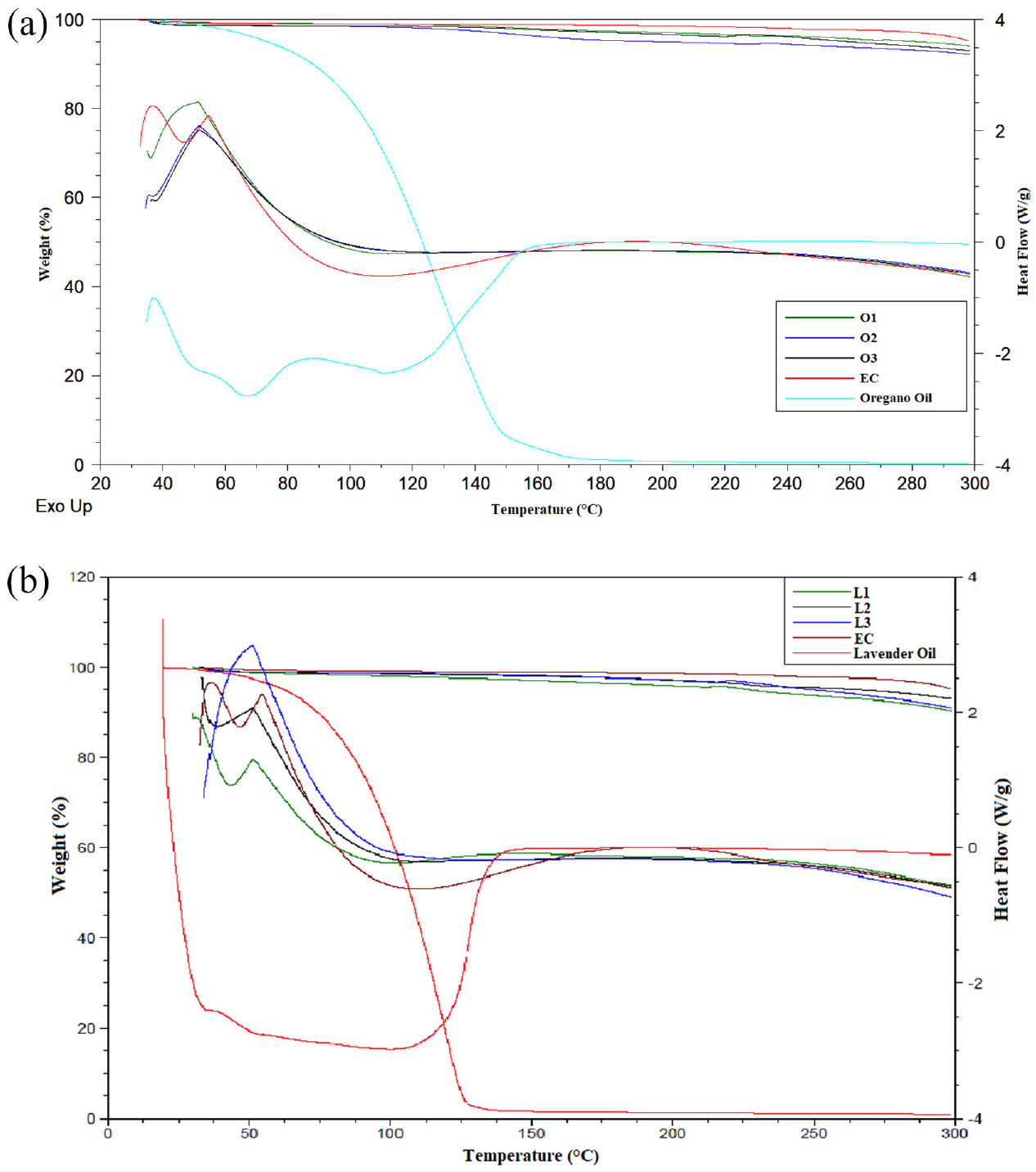
TGA thermogram and DSC diagram of formulations containing (a) oregano and (b) lavender EO.
According to the performed analysis, O2 and L2 were selected as optimum microcapsules. These formulations were chosen for use in the textile finishing investigations because they had more uniform morphology, smoother surfaces, better particle size distributions, and excellent span value among each group. In addition, the production yield was substantially higher for O2 (40.5%) and L2 (72.2 %). After that, selected formulas were applied to six different fabrics represented in Table 1 separately and the capsule-treated fabrics were washed 1 and 10 times. SEM micrographs of fabrics treated with oregano and lavender capsules are given in Figures 4 and 5, respectively.
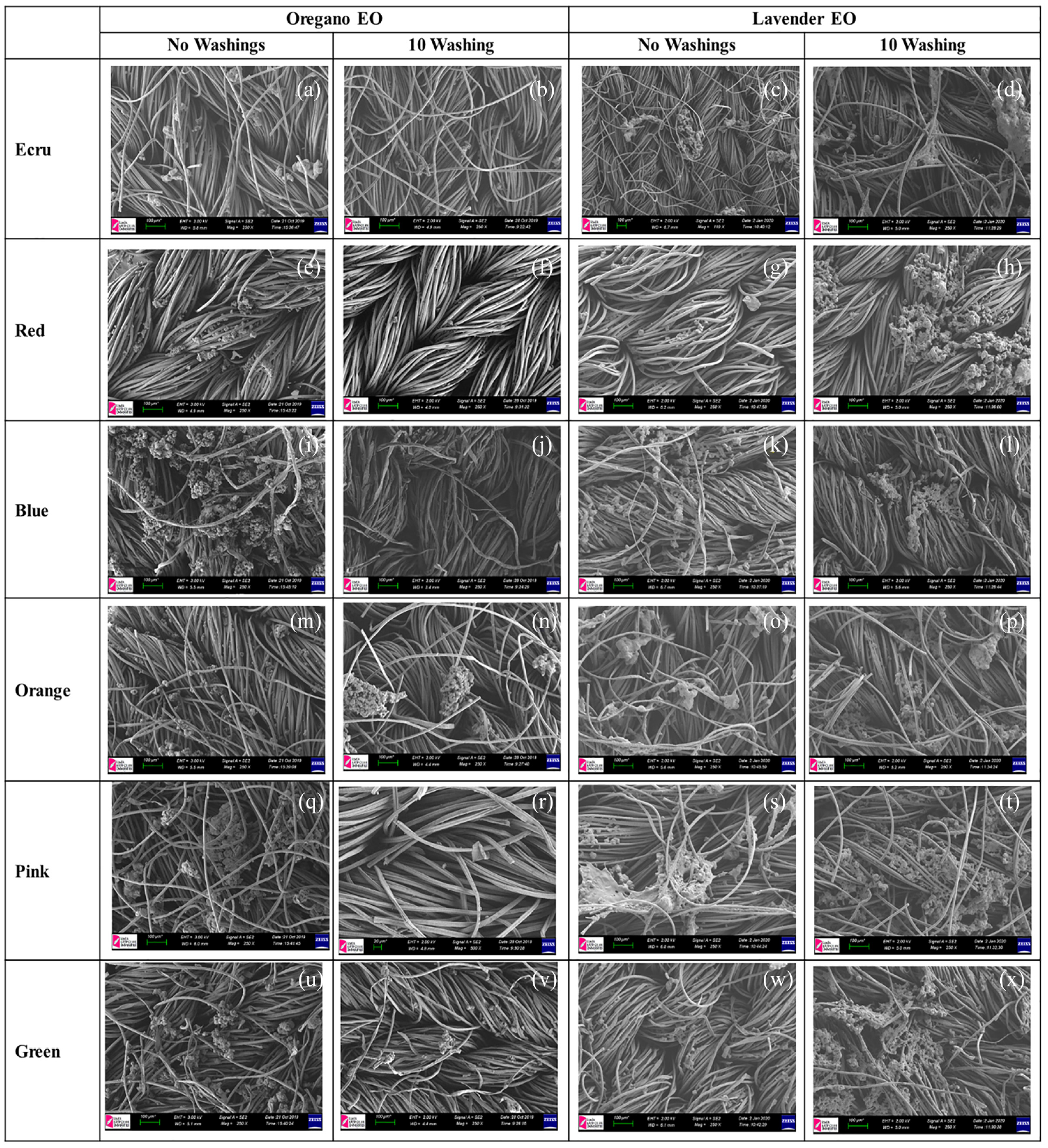
Washing resistance results of fabrics with microcapsules containing oregano EO: fabrics with (a) ecru without washing, (b) ecru after 10 washes, (e) red without washing, (f) red after 10 washes, (i) blue without washing, (j) blue after 10 washes, (m) orange without washing, (n) orange after 10 washes, (q) pink without washing, (r) pink after 10 washes, (u) green without washing, (v) green after 10 washes. Fabrics with microcapsules containing lavender EO: (c) ecru without washing, (d) ecru after 10 washes, (g) red without washing, (h) red after 10 washes, (k) blue without washing, (l) blue after 10 washes, (o) orange without washing, (p) orange after 10 washes, (s) pink without washing, (t) pink after 10 washes, (w) green without washing, (x) green after 10 washes (fabric definitions are given in Table 1).
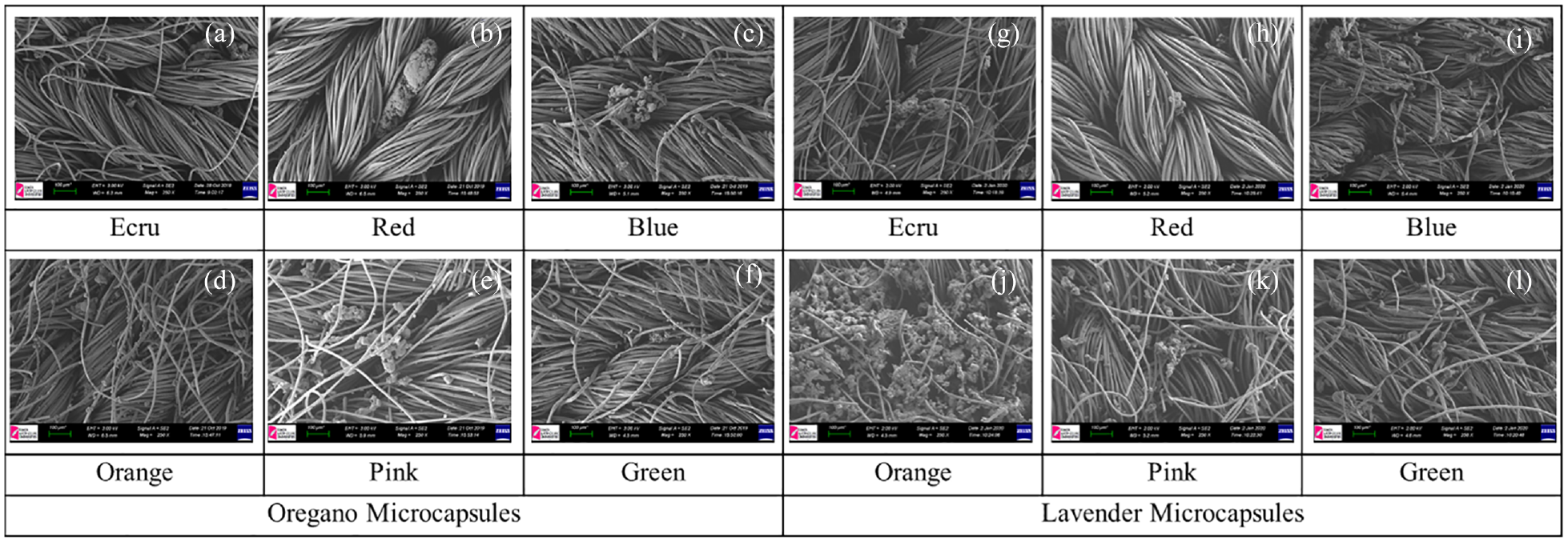
Rubbing resistance results of fabrics with microcapsules containing oregano EO: (a) ecru, (b) red, (c) blue, (d) orange, (e) pink, (f) green. Fabrics with microcapsules containing lavender EO: (g) ecru, (h) red, (i) blue, (j) orange, (k) pink, (l) green (fabric definitions are given in Table 1).
The 250× and 500× magnified SEM micrographs showed that all fabric types contained high numbers of microcapsules after finishing (Figure 4). These capsules are mostly found in the spaces between fibers. In some areas of the fabric, a pile of capsules found on the binder layer is observed, as seen on SEM images of pink fabric containing lavender oil microcapsules (Figure 4(s)). Although homogeneous finishing liquor was prepared, it was observed that there could be an uneven microcapsule distribution on the fabric (Figure 4(g) and (h)). While a significant number of capsules were found on the fabric after 1 wash (data not shown), fewer capsules were found after 10 washes. This showed that the binding was successful, and the microcapsules produced in the study could withstand up to 10 washes (Figure 4(b), (d), (f), (j), (l), (n), (p), (r), (t), (v) and (x)). The fiber type did not show a significant difference in terms of the binding of the microcapsules, and the binder is found to be largely responsible for the adhesion of the microcapsules to the fabric.
The 250× magnified SEM micrographs (scale 100 µm) of fabrics containing oregano and lavender microcapsules after rubbing tests are presented in Figure 5. The images show that the pressure of the presser foot flattens the fabric surface and removes microcapsules (Figure 5(b) and (j)). Microcapsules in the spaces between fibers and yarns tend to be preserved (Figure 5(a), (d), (f), (g), (i), (k) and (l)). Therefore, it is concluded that choosing a fabric structure with pores proportional to the microcapsule size will make them more resistant to washing and rubbing.
Color measurement results of fabrics containing oregano microcapsules were examined (data not shown). No change was observed at the chromatic point (nm) after the microparticle application. ΔE values are calculated as a maximum of 3.17 (red fabric) and ΔE ≤ 1.0 for orange, pink, and green fabrics. The fabric where the color change can be observed distinctly is the light-colored ecru fabric. The whiteness degree of the ecru fabric was decreased after microcapsule treatment. The changes in colors are probably due to the natural color of oregano oil, which is dark yellow to pale brown, besides the binder and polymer. The increase in the yellowness in the b* axis and the more redness in the a* axis of the ecru fabric support this.
Similarly, the chromatic point did not change after the color measurement of fabrics with lavender EO microcapsule application. The ΔE values are calculated as a maximum of 2.25 (pink fabric) and a minimum of 0.93 (ecru fabric) (data not shown). Lavender oil has a pale-yellow color that is often described as a colorless oil. The degree of whiteness decreased as expected, but this decrease was not as distinct as in oregano oil. The ΔE value was lower than that of the ecru fabric with oregano microcapsules, which indicates that the color shift is less.
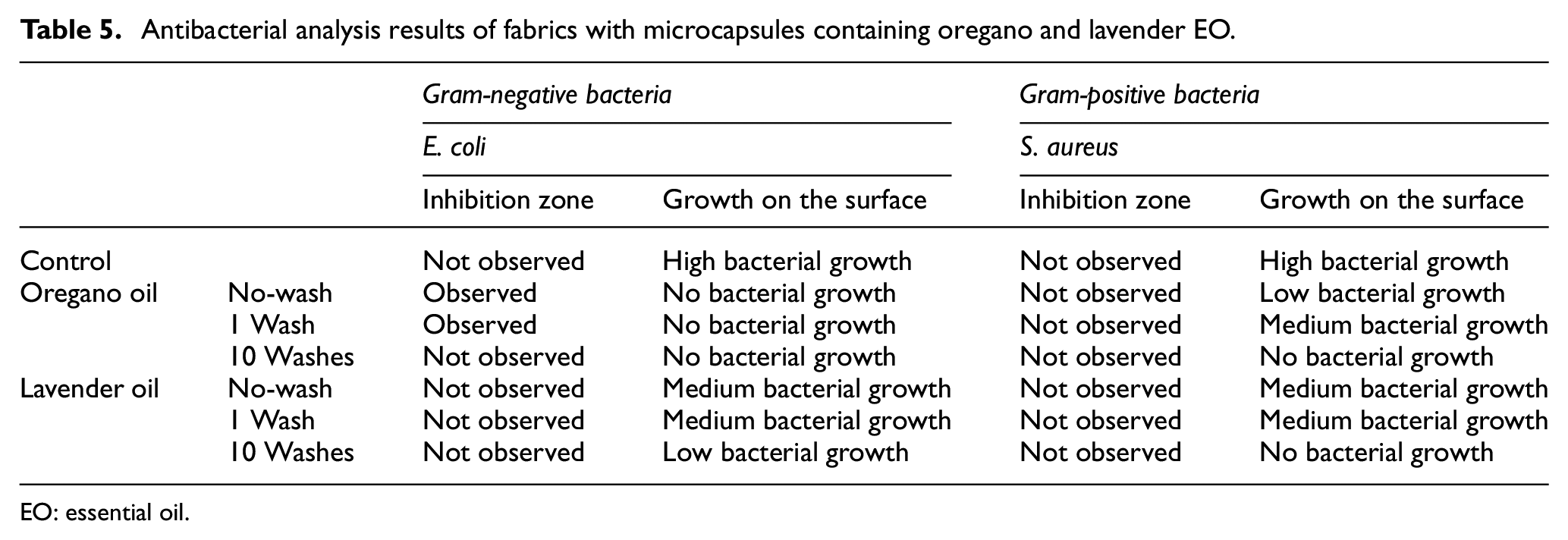
Antibacterial activity tests were performed on cotton fabrics (blue), one of the most vulnerable to bacterial contamination, according to a qualitative method (AATCC 147). The results are presented in Table 5 for fabrics containing oregano oil capsules and lavender oil capsules. High bacterial growth was observed for both Gram-negative and Gram-positive bacteria on the control fabric after 24 h. Oregano oil capsules applied to fabrics showed significant antibacterial activity against Gram-negative bacteria. The samples that were not washed and washed once showed an inhibition zone against E. coli. The inhibition zone was not seen on the samples washed 10 times. Antibacterial activity was seen on the surface even after 10 washes. In terms of Gram-positive bacteria S. aureus, the inhibition zone did not occur, and there is low bacterial growth on the contact surface. While the antibacterial activity decreased after one wash, no growth was observed on the fabric after ten washes. This may be due to the possible EO released by washing. The antibacterial assays of fabrics with microcapsules containing lavender EO did not reveal a zone of inhibition against both E. coli and S: aureus. The bacterial growth on the surface of fabrics treated with lavender EO microcapsules was higher compared to the fabrics with oregano oil microcapsules. The bacterial activity on the surface after one wash was similarly moderate. After ten washes, there was a lower bacterial growth against E. coli and no bacterial growth on S. aureus on the fabric surface.
Antibacterial analysis results of fabrics with microcapsules containing oregano and lavender EO.
EO: essential oil.
The transfer properties of the fabrics were also evaluated after binder and microcapsule application and the results are revealed in Figure 6. The water vapor permeability and air permeability were not affected significantly after a binder or any kind of microcapsule application.
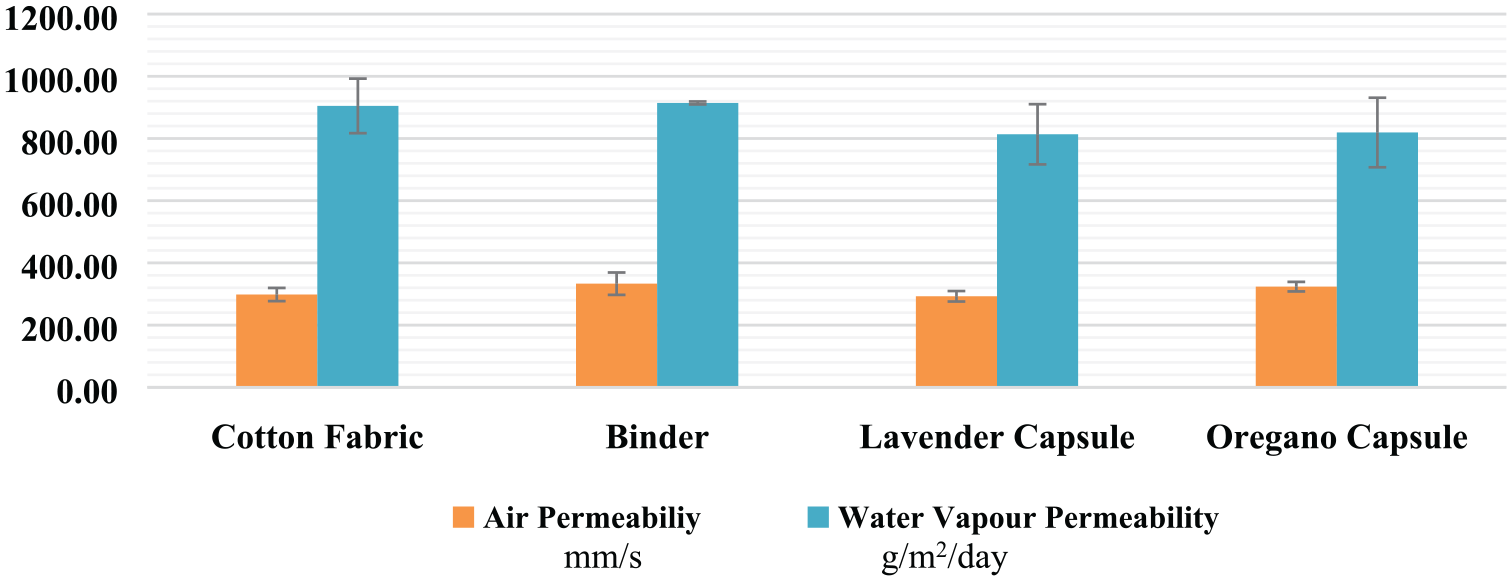
Transfer properties of fabrics with microcapsules containing oregano and lavender EOS.
Conclusion
The study aimed to develop sports and leisure clothes containing microcapsules with oregano and lavender oil. EOs were produced from the ground up. The plants grown in the south and central Aegean zones of Türkiye were picked and EOs were collected without the risk of the solvent residue by water vapor distillation. In the manufacture of capsules, ethyl cellulose, which is skin-safe, is used as a shell polymer. The selected technique, spray drying, which is an industrially adaptable method, has made possible the rapid and economical production of microcapsules. Oregano oil and lavender oil have been chosen to provide both a nice smell and control bad odors caused by bacteria that may occur during exercise. Compositions of essential oils were revealed and apparently, lavender EO is rich in linalool (38.2%) and linalyl acetate (31.2%), whereas oregano oil contained mostly carvacrol (61.1%) and linalool (10.5%). These two active agents are held responsible for the antibacterial properties of linalool and carvacrol. The optimum microcapsule formulations were chosen as L2 and O2 which both have a 1:2 polymer: oil ratio. Lavender EO had a higher production efficiency (72.4%) and the ability to produce smaller, more uniform particles (2.175 × 1.055 m) than oregano EO (5.178 × 2.918 m). SEM images revealed the pearl-like round shape of L2, which is highly unlikely due to the spray-drying process. FT-IR provided information about the capsules’ chemical composition. DSC analysis proved that the evaporation of essential oils was delayed and preserved in the capsule structure. These optimum microcapsules were applied to six different fabrics, which are highly demanded by fashion brands containing different compositions of cotton, viscose, modal, polyethylene terephthalate, and elastane. After five washing and dry rubbing with the assistance of polyurethane binder, they all demonstrated good adhesion capacities. It was noted that the capsule application caused a slight color shift in the textile materials depending on the color. Cotton fabric was selected for antibacterial tests since it is prone to bacterial growth and is more frequently used in the assays in the literature. In tests with E. coli and S. aureus, oregano EO capsules demonstrated greater antibacterial action than lavender EO. Also, the air and water vapor permeability of the fabrics was not significantly affected by the microcapsule finishing. As a conclusion, it has been shown that these products are suitable for industrial manufacturing. It has been determined that they have a high potential for commercialization and providing an alternative to the products in the fashion market.
Supplemental Material
sj-png-1-aat-10.1177_24723444231175211 – Supplemental material for Spray-Dried Oregano Oil and Lavender Oil Microcapsules for Antibacterial Sports and Leisurewear
Supplemental material, sj-png-1-aat-10.1177_24723444231175211 for Spray-Dried Oregano Oil and Lavender Oil Microcapsules for Antibacterial Sports and Leisurewear by Gizem Ceylan Türkoğlu, Gökhan Erkan, Sinem Yaprak Karavana, Ayşe Merih Sarıışık, Ayşegül Çetmeli Bakadur, Burçin Ütebay and Alina Popescu in AATCC Journal of Research
Supplemental Material
sj-png-2-aat-10.1177_24723444231175211 – Supplemental material for Spray-Dried Oregano Oil and Lavender Oil Microcapsules for Antibacterial Sports and Leisurewear
Supplemental material, sj-png-2-aat-10.1177_24723444231175211 for Spray-Dried Oregano Oil and Lavender Oil Microcapsules for Antibacterial Sports and Leisurewear by Gizem Ceylan Türkoğlu, Gökhan Erkan, Sinem Yaprak Karavana, Ayşe Merih Sarıışık, Ayşegül Çetmeli Bakadur, Burçin Ütebay and Alina Popescu in AATCC Journal of Research
Footnotes
Acknowledgements
We would like to thank Doğal Destek, Türkiye (Tabia Pure Nature), and Ali Toprak for their help in obtaining essential oils and characterization GC-MS analysis. We also would like to thank Assoc. Prof. Dr. Hüseyin Ata KARAVANA for enabling us to benefit from the spray drying laboratory.
Authors’ note
Preliminary studies about lavender and oregano microcapsules were presented at the 10th International Conference TEXTEH 2021, Romania, and The 17th National 3rd International, Recent Progress on Textile Technology and Chemistry Symposium, 2019, Türkiye.
Declaration of conflicting interests
The author(s) declared no potential conflicts of interest with respect to the research, authorship, and/or publication of this article.
Funding
The author(s) disclosed receipt of the following financial support for the research, authorship, and/or publication of this article: This work (AromaTex) was supported by MANUNET as an international project collaboration between Romania and the Republic of Türkiye. It is funded by TUBITAK Scientific and Technological Research Council in the frame of the TEYDEB Project 917 0 25 and by UEFISCDI as MNET17/NMAT-1240 and by grants of the Romanian National Authority for Scientific Research and Innovation, CCCDI—UEFISCDI, project number 29/2018 COFUNDMANUNET III-AromaTex, project title “Manufacturing of value-added textiles for aromatherapy and skin care benefits.”

Supplemental material
Supplemental material for this article is available online.
References
Supplementary Material
Please find the following supplemental material available below.
For Open Access articles published under a Creative Commons License, all supplemental material carries the same license as the article it is associated with.
For non-Open Access articles published, all supplemental material carries a non-exclusive license, and permission requests for re-use of supplemental material or any part of supplemental material shall be sent directly to the copyright owner as specified in the copyright notice associated with the article.


