




Abstract
Who is the determining factor for the sex of the offspring—mother, father, or both parents? This fundamental hypothesis proposes a new model of sex determination, challenging the existing dogma that the male Y chromosome of the father is the sole determinant of the sex of the offspring. According to modern science, the 3 X chromosomes (male XY and female XX) are assumed to be similar, and the sex of the offspring is determined after the zygote is formed. In contrast to this, the new hypothesis based on theoretical research proposes that the 3 X chromosomes can be differentiated, based on the presence of Barr bodies. The first X in female XX chromosomes and X in male XY chromosomes are similar as they lack Barr body and are hereby denoted as ‘X’ and referred to as ancestral chromosomes. The second X chromosome in the female cells which is a Barr body, denoted as X, is different. This X chromosome along with the Y chromosome are referred to as parental chromosomes. Sperm with a Y chromosome can only fuse with an ovum containing the ‘X’ chromosome. Similarly, sperm with the ‘X’ chromosome can only fuse with an ovum containing the X chromosome. Cell biology models of gametogenesis and fertilization were simulated with the new hypothesis model and assessed. Only chromosomes that participated in recombination could unite to form the zygote. This resulted in a paradigm shift in our understanding of sex determination, as both parents were found to be equally responsible for determining the sex of the offspring. The gender of the offspring is determined during the prezygotic stage itself and is dependent on natural selection. A new dimension has been given to inheritance of chromosomes. This new model also presents a new nomenclature for pedigree charts. This work of serendipity may contribute to future research in cell biology, gender studies, genome analysis, and genetic disorders including cancer.
Introduction
Against the backdrop of worldwide research on the human genome, this fundamental hypothesis gives a new dimension to inheritance of chromosomes and sex determination. 1,2 The hypothesis is based on innovative theoretical research.
Human cells contain 46 chromosomes, which include 44 autosomes and 2 sex chromosomes, namely, 46, XX (female) or 46, XY (male). In cell biology, the 2 X sex chromosomes in female cell and the single X chromosome in male cell were assumed to be similar; only the Y chromosome was thought to be different. 3 However, the Barr body, which plays a significant role in differentiating the 3 X chromosomes, is an important factor to consider. The Barr body has been observed in the nuclei of female cells only and not in male cells. 4 This clearly indicates that the X sex chromosomes in female and male cells have some differences.
Who Is the Determining Factor for the Sex of the Offspring?
(1) Mother, (2) father, or (3) both parents?
In the ancient traditional view, the mother was believed to be responsible for not only conceiving the offspring but also its sex. This was replaced by the modern science view that the father contributes the determining factor, based on observation of sex chromosomes after zygote formation. During the fertilization process, there are 2 possibilities. (1) If a spermatozoon with an X chromosome fuses with the ovum, the offspring would be a female (46, XX). (2) If a spermatozoon with Y chromosome fuses with the ovum, the offspring would be male (46, XY). The Y chromosome was therefore thought to be a powerful determinant. The presence of Y chromosome was necessary for the birth of a male (XY) offspring, and its absence resulted in a female (XX) offspring. 5
According to the new hypothesis presented here, both parents are equal determinants of the sex of the offspring. The Barr body plays an important role in differentiating between the 2 X chromosomes in female cells and the X chromosome in male cells. The sex of the offspring depends on viable combinations of specific sex chromosomes: the ancestral ‘X’ of the father or mother combined with the parental X/Y from the mother/father, respectively, during the fertilization process prior to the formation of zygote—a paradigm shift from the idea that the father’s Y chromosome is the determining factor. 6
The master blueprint that directs all cells in the body during embryogenesis can be found in the DNA of the diploid set of chromosomes present in the zygote, with the exception of any subsequent changes caused by mutation and epigenetics. 7,8 Current research data on the dynamics and behavior of sex chromosomes prior to formation of the zygote are limited. However, this hypothesis attempts to explain it theoretically. This new hypothesis considers the possibility that the sex of the offspring is predetermined during the process of fertilization, prior to zygote formation. 9,10
This new and innovative concept of categorizing sex chromosomes as “ancestral” and “parental” was applied to cell biology models of gametogenesis and fertilization. It resulted in a fundamental new model, which depicts a novel pattern of chromosomal inheritance. A new nomenclature for pedigree charts was also developed based on this hypothesis. However, further research is required to easily identify the chromosomes inherited from each parent.
This fundamental hypothesis may open new perspectives for understanding meiosis, sex determination, genetics, and heredity. It throws new light on some observations, such as the release of the primary polar body, the secondary polar body, aneuploidy, X inactivation, X-linked inheritance, and heredity. 11
Materials and Methods
This theoretical research was carried out with the objective to investigate prevailing dogma that the presence or absence of the father’s Y chromosome in the cell determines the sex of the offspring. 12 Modern concepts state that the male and female X chromosomes are similar and ignore the presence and absence of Barr bodies. This new hypothesis has been created around the possibility that the presence (and absence) of Barr body plays a major role in determining the sex of offspring. It was important to explore the possibility of differentiating between the 3 X chromosomes and to evaluate any effects that may be visible if the difference is evident.
The New Fundamental Hypothesis Elucidated By Theoretical Research
The 3 X chromosomes were viewed from a different perspective. The central crux of this hypothesis is built around differentiating between the 3 X chromosomes. The Barr body (sex chromatin body) has been observed in the nuclei of female cells only and not in male cells. 13 If more than one X chromosome is present in the nucleus, all but one X chromosome will be converted into Barr bodies. 14 This indicates that the XX in female cells and the X in male cells, which were assumed to be similar, may be different.
The 3 X chromosomes (in XX and XY) were differentiated based on the presence or absence of the Barr body. Differences in the X chromosomes were evident. Only one X sex chromosome in female cells and the single X sex chromosome in male cells (denoted as ‘X’ and depicted as first of the 2 sex chromosomes) are similar, as they do not have Barr bodies. The other X chromosome in the female, which is a Barr body (denoted as X), is different. Female: ‘X’ X Male: ‘X’ Y ‘X’ chromosome (no Barr body): ancestral (+ve) chromosome in both mother and father; X chromosome (with Barr body): parental (−ve) chromosome of mother; Y chromosome: parental (−ve) chromosome of father.
Meiosis, Fertilization and the New Hypothesis
The concept differentiating sex chromosomes as ancestral and parental was substantiated by simulation of cell biology models of gametogenesis and fertilization with the fundamental hypothesis models.
In the cell biology model (Figure 1), during gametogenesis of the 4 haploid gametes released, only 2 of them take part in genetic recombination during meiosis I, whereas the other 2 gametes do not undergo genetic recombination. 16
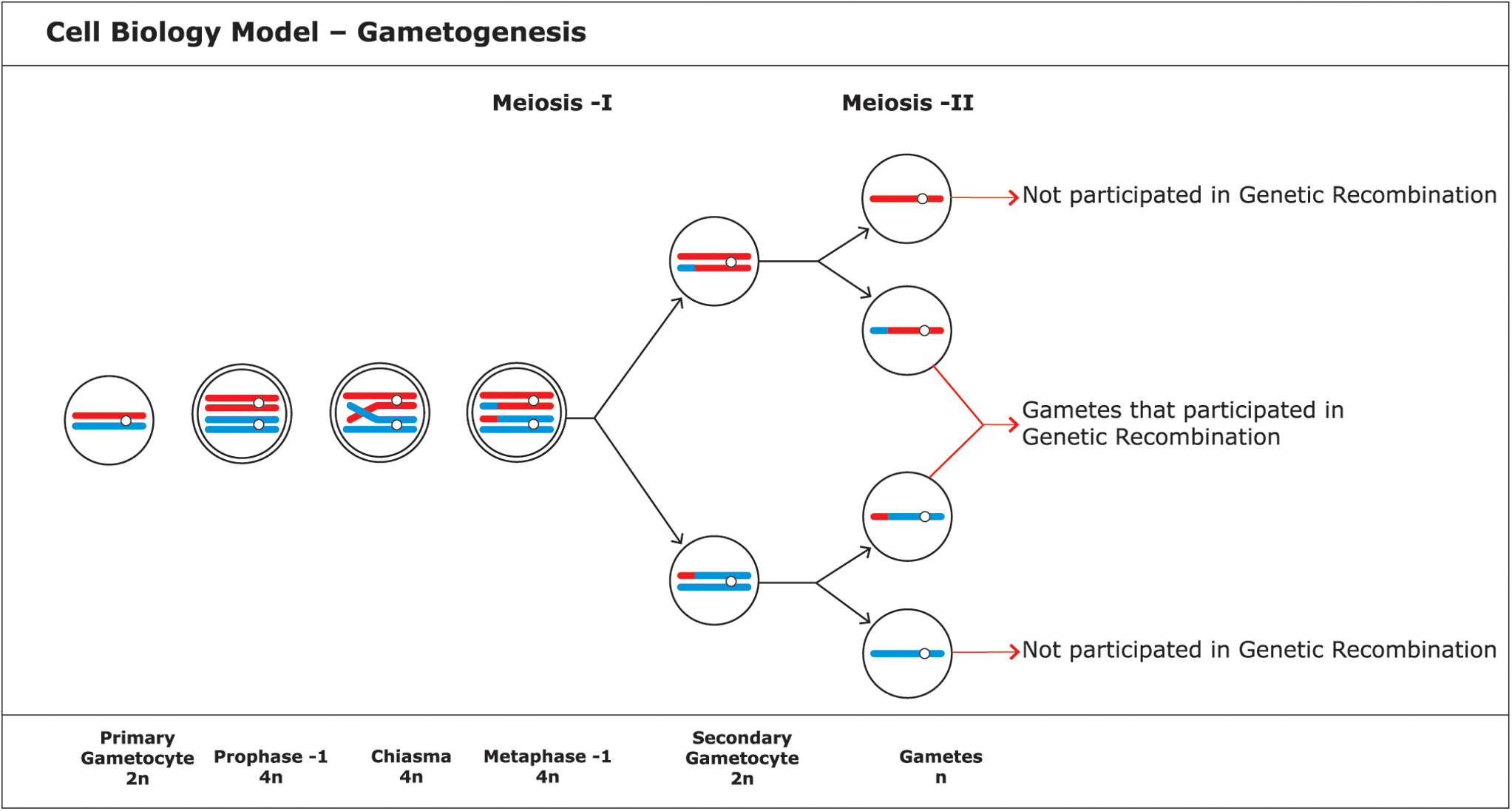
Cell biology model—gametogenesis. The 2 sex chromosomes in the primary gametocyte represent sex chromosomes acquired from the mother (blue) and the father (red). The 4 haploid gametes released post recombination are depicted.
In the new model of gametogenesis (Figure 2), the sex chromosomes were differentiated as ancestral sex chromosomes and parental sex chromosomes. The 4 gametes released during gametogenesis are depicted as follows:
Gamete—1: ancestral ‘X’ (+ve) no Barr body: inactive (no recombination)
Gamete—2: ancestral ‘X’ (+ve) no Barr body: active (participated in recombination)
Gamete—3: parental X (−ve) with Barr body or Y (−ve): active (participated in recombination)
Gamete—4: parental X (−ve) with Barr body or Y (−ve): inactive (no recombination)
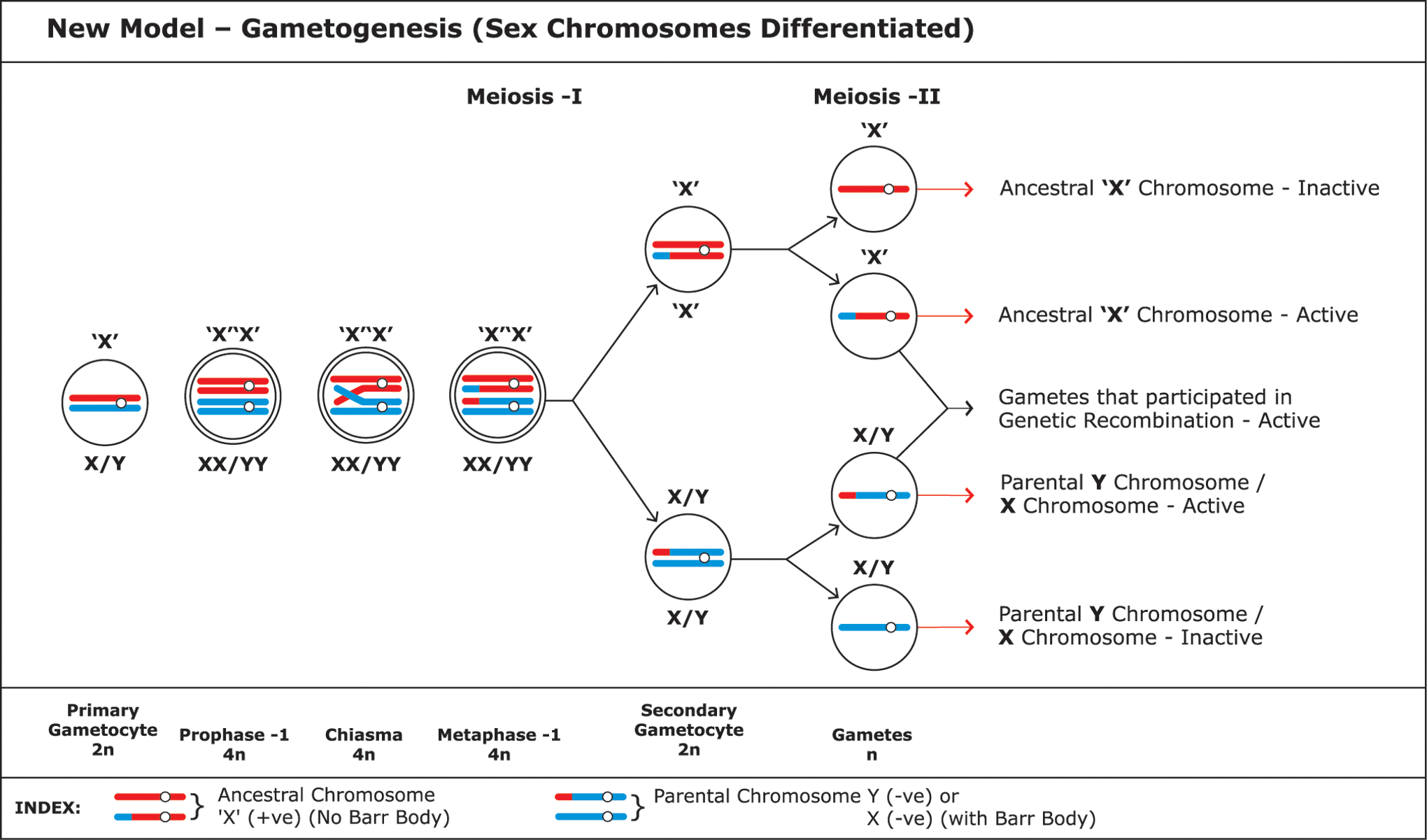
New model—gametogenesis. The 2 sex chromosomes in the primary gametocyte represents sex chromosomes acquired from each parent. The sex chromosomes have been differentiated as ancestral and parental. The sex chromosome (red) represents ancestral ‘X’ chromosome with no Barr body in both male and female cells, and the sex chromosome (blue) represents parental Y chromosome in male or parental X chromosome (with Barr body) in female, depicted as X/Y. Only the 2 gametes that undergo genetic recombination during meiosis I (combination of red and blue) are active. The other 2 gametes that do not participate in recombination are inactive.
According to the new hypothesis, only gametes that have taken part in genetic recombination (chiasma) during gametogenesis are capable of taking part in fertilization. The other 2 gametes that have not taken part in genetic recombination are assumed to remain inactive and do not take part in fertilization, 17,18 as they would carry the same genes as that of the parent.
Having arrived at this fundamental model through the application of this concept of ancestral and parental chromosomes, cell biology models of spermatogenesis (Figure 3A), oogenesis (Figure 3B), and fertilization (Figure 3C) were simulated with the new fundamental hypothesis models of spermatogenesis (Figure 4A), oogenesis (Figure 4B), and fertilization (Figure 4C) respectively.
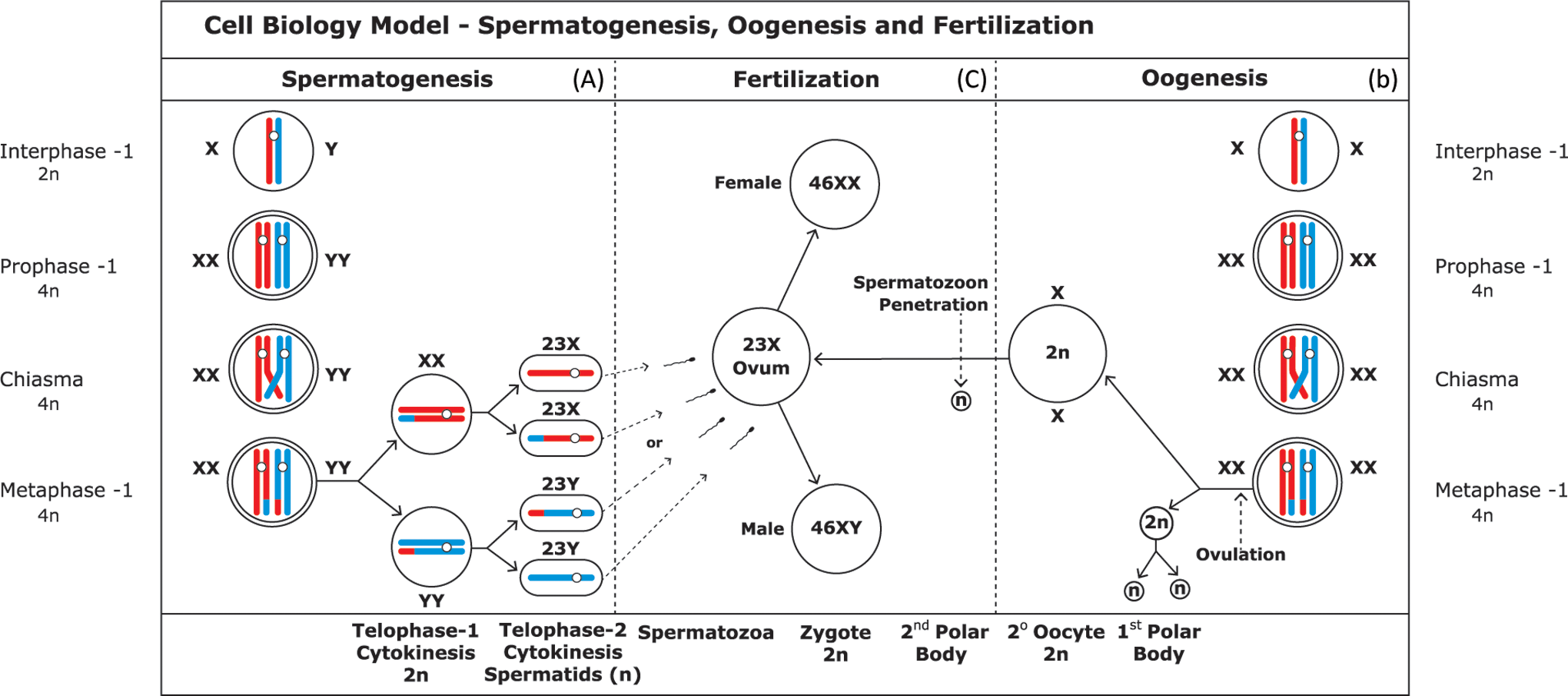
Cell biology model—spermatogenesis, oogenesis, and fertilization: Spermatogenesis depicts the different stages of spermatogenesis in meiosis I and II, including chiasma, resulting in the release of 4 haploid spermatids. Oogenesis depicts the different stages of oogenesis in meiosis I and II, including chiasma, resulting in the release of the large 20 oocyte (2n) and I polar body (2n). Fertilization: At the time of sperm penetration, the II polar body (n) is released, and the ovum becomes haploid with only one X sex chromosome. All the 4 spermatozoa in this model are capable of taking part in fertilization.
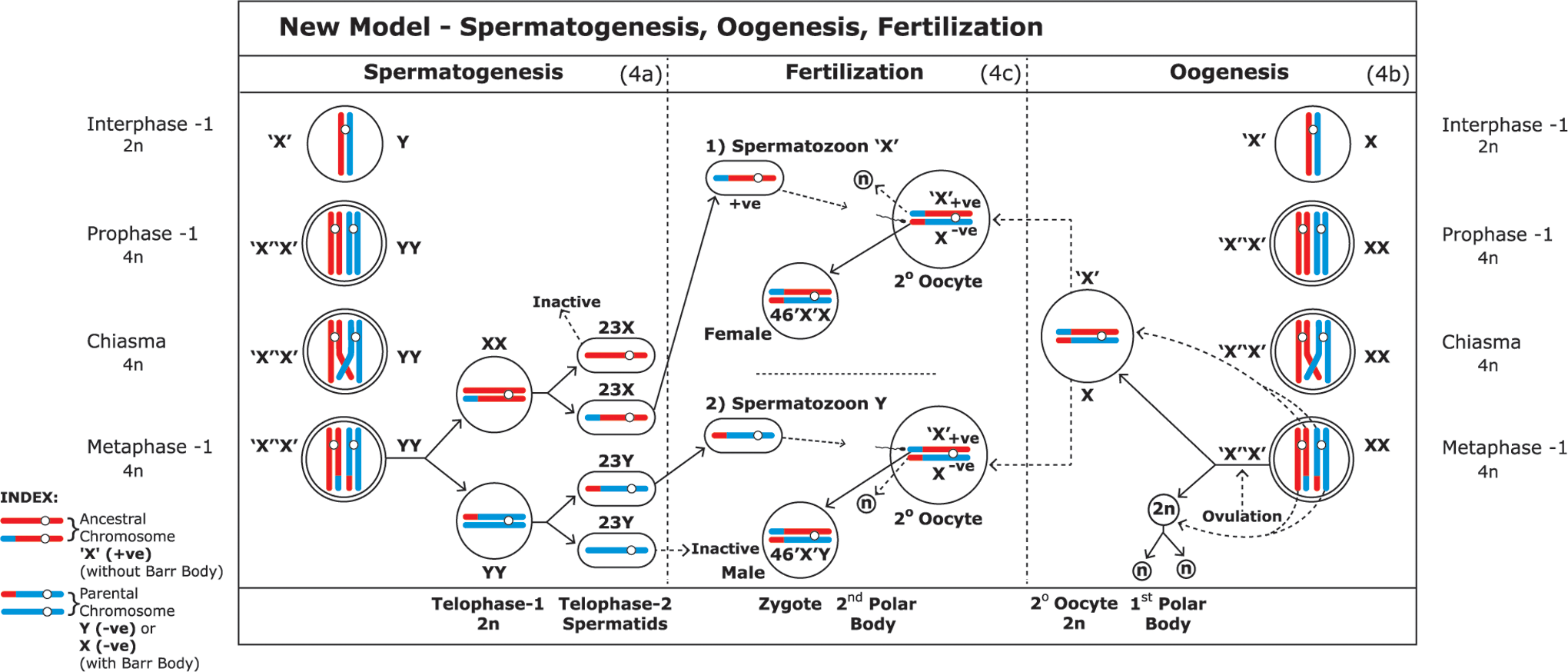
New model—spermatogenesis, oogenesis, and fertilization. The cell biology models of spermatogenesis, oogenesis, and fertilization were simulated. The sex chromosomes have been differentiated as ancestral and parental. The sex chromosome (red) represents the ancestral ‘X’ chromosome (no Barr body); the sex chromosome (blue) represents the parental Y or parental X (with Barr body). The sex chromosomes that have taken part in genetic recombination during meiosis I in both (A) spermatogenesis and (B) oogenesis are the ancestral ‘X’ chromosome (blue in red zone) and parental X chromosome (red in blue zone). The same secondary oocyte in oogenesis has been depicted twice under fertilization (C) to portray the fusion of (1) spermatozoon ‘X’ with X of ovum to form a female zygote, and (2) spermatozoon Y with ‘X’ of ovum to form a male zygote.
Cell Biology Models of Spermatogenesis, Oogenesis, and Fertilization
The existing models presented in Figure 3 served as the basis for developing new hypothesis models.
Spermatogenesis (Figure 3A): Spermatocytes give rise to 4 spermatids, 2 of which have X sex chromosome and the other 2 spermatids have Y sex chromosome. Only 2 of the 4 spermatids participate in genetic recombination during meiosis I.
Oogenesis (Figure 3B): As the 4 gametes are not differentiated, it is assumed that any 2 gametes can form the secondary oocyte resulting in an ovum with only one X chromosome.
Fertilization (Figure 3C): During fertilization, any of the 4 haploid spermatozoa can penetrate the ovum and fuse with the X sex chromosome to form the zygote. The sex of the offspring is decided based on whether the spermatozoon with the X or Y chromosome unites with the X sex chromosome in the ovum to form the zygote; resulting in female (XX) or male (XY) offspring. 4,6
Results
The cell biology models of spermatogenesis, oogenesis, and fertilization were simulated after differentiating sex chromosomes as ancestral and parental in the new model (Figure 4). They were systematically analyzed theoretically, and the findings were presented as follows.
New Models of Spermatogenesis, Oogenesis, and Fertilization
Spermatogenesis
The different stages of spermatogenesis in meiosis I and II, including recombination, results in the release of 4 haploid spermatids, as shown in Figure 4A. Only the 2 spermatids that have taken part in genetic recombination during meiosis I, that is, the ancestral ‘X’ chromosome and parental Y chromosome, are capable of taking part in the fertilization process. The other 2 spermatids, the ‘X’ and Y that have not taken part in recombination, will be inactive and cannot take part in the fertilization process.
Oogenesis
The different stages of oogenesis, in meiosis I and II, including chiasma, are depicted in (Figure 4B). The large secondary oocyte (2n) has 2 sex chromosomes that have taken part in genetic recombination during meiosis I: the ancestral ‘X’ chromosome and the parental X chromosome. The other 2 sex chromosomes ‘X’ and X that have not taken part in gene recombination are released as primary polar bodies (2n). 19
Fertilization
Only gametes that have undergone genetic recombination during gametogenesis are capable of taking part in fertilization (Figure 4C). Thus, the sex chromosomes that can take part in fertilization are
Female—ovum: ‘X’ chromosome (+ve) comprises a relatively small portion of parental X (−ve) of mother in the predominant ancestral ‘X’ (+ve) of father. X chromosome (−ve) comprises a relatively small portion of ancestral ‘X’ (+ve) of father in the predominant parental X (−ve) of mother.
Male—spermatozoon: ‘X’ chromosome (+ve) comprises a relatively small portion of parental Y (−ve) of father in the predominant ancestral ‘X’ (+ve) of mother. Y chromosome (−ve) comprises a relatively small portion of ancestral ‘X’ (+ve) of mother in the predominant parental Y (−ve) of father.
As the ‘X’ chromosome in the ovum and ‘X’ chromosome in the spermatozoon carry the same type of charge that is (+ve), they cannot unite and are likely to repel. Similarly, the X chromosome in the ovum and Y chromosome in the spermatozoon that carry the same type of charge, that is −ve, too cannot unite and are likely to repel.
Thus, only 2 viable combination exist for the sex chromosomes during fertilization to form the zygote: Spermatozoon carrying ancestral ‘X’ (+ve) can combine with parental X (−ve) in the ovum to form the zygote ‘X’ X—female offspring. Spermatozoon carrying parental Y (−ve) can combine with the ancestral ‘X’ (+ve) in the ovum to form the zygote ‘X’ Y—male offspring.
Depending on whether spermatozoon with ancestral ‘X’ (+ve) chromosome or parental Y (−ve) chromosome penetrates the ovum, the corresponding ancestral ‘X’ (+ve) chromosome or parental X (−ve) in the ovum carrying the same charge as the spermatozoon will be released as a secondary polar body. Thus, ovum and sperm with opposite charges form the zygote of male (‘X’Y) or female (‘X’ X) offspring.
Sex Determining Factor
The prevailing dogma in modern science that the father is the determining factor for the sex of the offspring is based on the observation of sex chromosomes after the zygote is formed. 20 This new model, however, is based on possible combinations of specific sex chromosomes at the time of fertilization in the prezygotic stage. In this model, a specific spermatozoon would penetrate the ovum to form the zygote; this may be mutually decided by the ovum and the spermatozoon through cell signaling prior to fertilization. 21,22 Thus, there is equal possibility of a male or female offspring to be born. The sex of the offspring is determined through natural selection in the pre-zygotic stage itself. This is clearly depicted in Figure 5. Thus, both parents are equally responsible for the sex of the offspring.
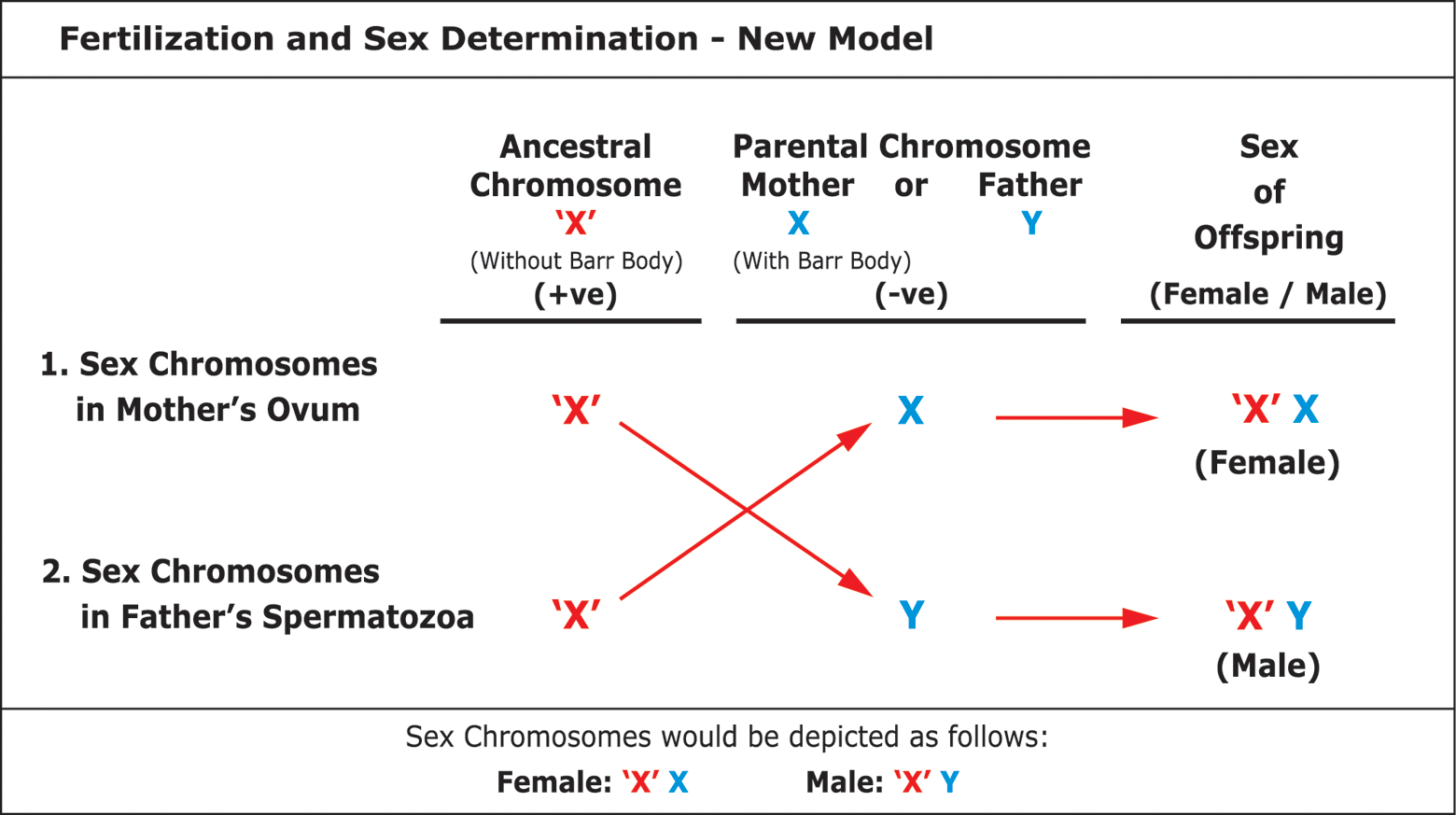
Fertilization and sex determination—new model. The ancestral ‘X’ chromosomes in the ovum and spermatozoon with a +ve charge will repel each other and cannot unite. Similarly, the parental X chromosome in the ovum and the Y chromosome in the spermatozoon with a −ve charge will repel each other and cannot unite. There are only 2 possible combinations of sex chromosomes during fertilization. (1) Ancestral ‘X’ (+ve) of mother can unite only with parental Y (−ve) of father to form zygote ‘X’ Y—male. (2) Ancestral ‘X’ (+ve) of father can unite only with parental X (−ve) of mother to form the zygote ‘X’ X—female. In the new pattern of depicting sex chromosomes, the ancestral ‘X’ chromosome is followed by the parental X/Y sex chromosome. The sex chromosomes would be depicted as: Female: ‘X’ X Male: ‘X’ Y.
It was also possible to support this hypothesis by simulating cell biology models of gametogenesis by the application of principles of opposites Yin–Yang which is relevant to this day. 23 According to the Yin–Yang principle, every object or phenomena in the universe consists of 2 complementary opposites: Yin and Yang (Yin is −ve and Yang +ve). The twin polarities are in an eternal conflict with each other, interdependent, and cannot exist alone. Yin (−ve) is passive in nature, whereas Yang (+ve) is active. Some examples of Yin–Yang are (1) night is Yin (−ve) and day is Yang (+ve), (2) female is Yin (−ve) and male is Yang (+ve), and (3) the south pole of a magnet is Yin (−ve) and the north pole is Yang (+ve). Another good example of Yin–Yang is seen in the diploid set of chromosomes in the human cell (2n = 46); one member of each pair of chromosomes is of maternal origin (Yin −ve), whereas the other is of paternal origin (Yang +ve). According to Yin–Yang principles, absolute Yin or Yang cannot exist alone, such as the North pole (Yang) and South pole (Yin) of a magnet. This principle also applies to the sex chromosomes where recombination does not occur.
Inheritance of Chromosomes
A novel pattern of inheritance of chromosomes has emerged from this fundamental new model, depicted in Figure 6. Either the ancestral ‘X’ (+ve) chromosome of the mother would combine only with parental Y (−ve) chromosome of the father, resulting in a male offspring (XY), or the ancestral ‘X’ (+ve) chromosome of the father would combine only with the parental X (−ve) chromosome of the mother, resulting in a female offspring (XX).
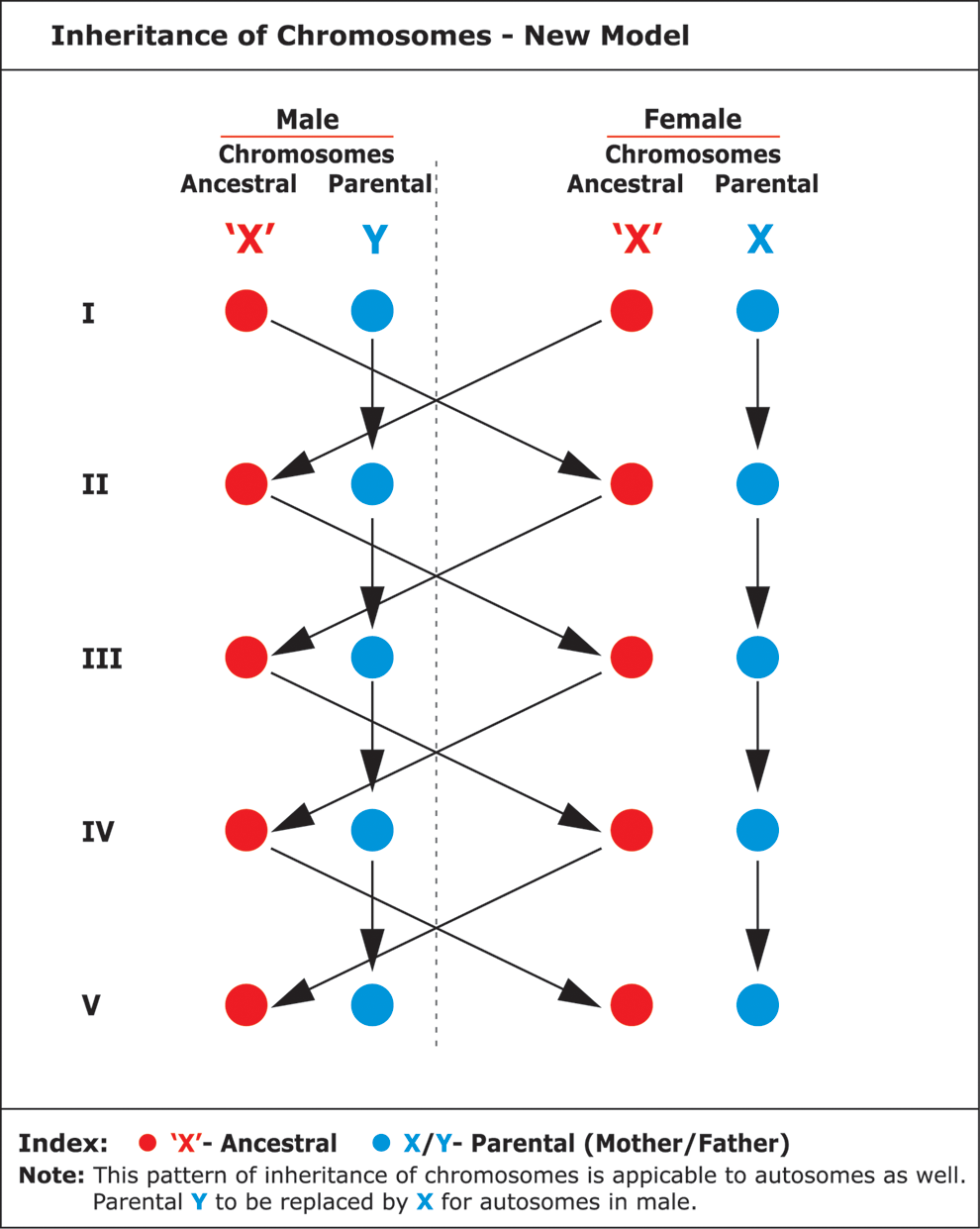
Inheritance of chromosomes—new hypothesis model. A new dimension is given to inheritance of chromosomes in this new model. This schematic diagram depicts the pattern of inheritance of (1) Ancestral sex ‘X’ chromosomes from the mother and father and (2) Parental X (of mother) or Y (of father) chromosomes across 5 generations (I-V) based on sex chromosome combinations that can occur during fertilization to form the zygote. This pattern of chromosomal inheritance is applicable to autosomes as well. To depict the autosomes, sex chromosomes can represent autosomes, but the Y sex chromosome needs to be replaced with an X autosome.
Ancestral ‘X’ sex chromosome of the father always gets transferred to the daughter, and ancestral ‘X’ sex chromosome of the mother is always transferred to the son. Similarly, the parental Y chromosome gets transferred from father to son and the parental X chromosome (Barr body) gets transferred from mother to daughter only. Theoretically, this shows that, both parents are equally responsible for determining the sex of the offspring.
Fundamental Principles of the New Theory
The sex of the offspring, which forms an important factor in evolution, depends on natural selection. Both parents are equally responsible for determining the sex of the offspring. One out of the pair of sex chromosomes (XX or XY) in both female and male cells pertains to the predominantly ancestral chromosome (‘X’), and the other sex chromosome pertains to the predominantly parental chromosome (X or Y), depicted as ‘X’ X (female) and ‘X’ Y (male).
Fertilization involves a combination of the ancestral chromosome ‘X’ of a parent of the opposite sex to that of the offspring, with the parental sex chromosome X or Y of another parent of the same sex as that of the offspring. Thus, the ‘X’ chromosome is always transferred to the offspring of the opposite sex (i.e., from father to daughter or mother to son). The parental X or Y chromosome is always transferred to the offspring of the same sex (i.e., X from mother is transferred to daughter and Y from father is transferred to son).
Only chromosomes that have taken part in recombination during meiosis are capable of being transferred to the offspring so as to maintain continuity of the hereditary chain. The presence of the ancestral ‘X’ chromosome is essential for the survival of the embryo. This pattern of inheritance of ancestral and parental chromosomes is also applicable to autosomes.
Hereditary Characteristics and Genetics: New Nomenclature
Hereditary characteristics depend on gene recombination, which occurs during chiasma as well as the combination of the chromosomes of both parents during fertilization to form the zygote, in accordance with the new pattern of inheritance of chromosomes. Crossovers resulting in genetic recombination may be taking place at different points on the chromosomes, each time depending on natural factors such as time, internal milieu such as homeostasis and epigenetic influence, and external factors such as the environment and geographical location. The hereditary pattern based on the combination of sex chromosomes, aside from contributing to the gender of the offspring, may broadly appear as follows: Male offspring (‘X’ Y)—Combination of ‘X’ chromosome, which would predominantly have ancestral characteristics of the maternal side with some of the mother’s characteristics because of recombination; and the Y chromosome, which would predominantly have characteristics of the father with some ancestral characteristics from the paternal side. Female offspring (‘X’ X)—Combination of ‘X’ chromosome, which would predominantly have ancestral characteristics from the paternal side, with some of the father’s characteristics because of recombination; and the X chromosome, which would predominantly have characteristics from the mother, with some ancestral characteristics from the maternal side.
New Nomenclature for Pedigree Charts
A new nomenclature for pedigree charts was developed (Figure 7) based on the pattern of inheritance of ancestral and parental chromosomes. It gives a new dimension to the inheritance of hereditary traits. Of the 2 sex chromosomes, XX or XY, the first chromosome ‘X’ represents the ancestral sex chromosome; the second chromosome, X or Y, represents the parental sex chromosome from the mother or father, respectively. Autosomes are also differentiated in the same manner.
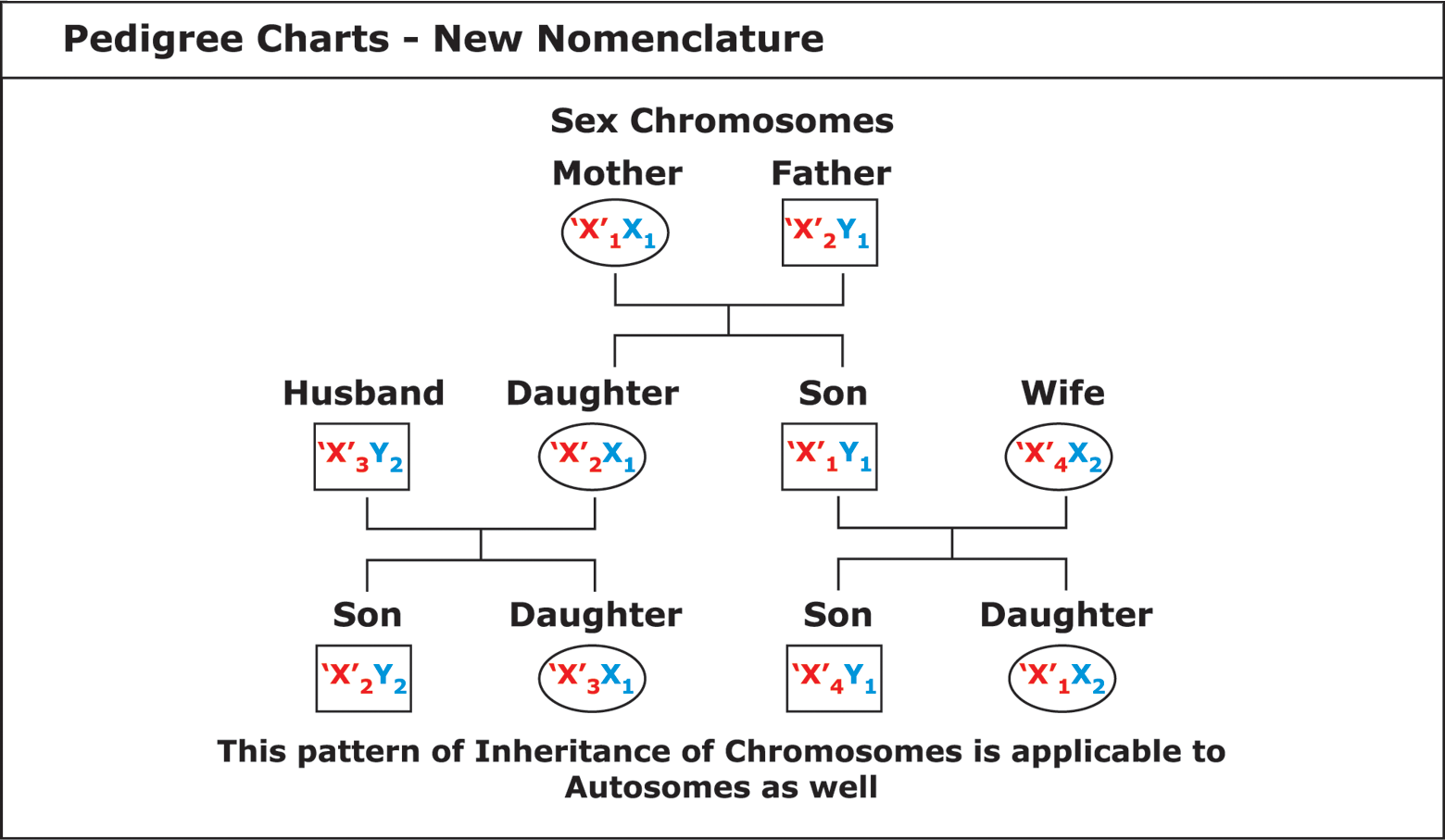
Pedigree charts—new nomenclature. The inheritance of sex chromosomes based on the new hypothesis is depicted in the pedigree chart by applying the proposed new nomenclature. The ancestral ‘X’ chromosome is depicted in red and appears as the first of the 2 sex chromosomes. The chromosomes depicted in blue refer to the parental X or Y chromosomes. Suffix numbers are to be given in sequential order to the ancestral sex chromosomes as ‘X’1, ‘X’2, ‘X’3 and parental chromosomes as X1, X2, X3 or Y1, Y2, Y3. It is essential to depict the new married partners with new numbers for their sex chromosomes in sequential order. This pattern of inheritance of chromosomes can also be applied to autosomes.
In pedigree charts, suffix numbers would be given in sequential order to ancestral sex chromosomes as ‘X’1, ‘X’2, ‘X’3 and parental sex chromosomes as X1, X2, and X3 or Y1, Y2, and Y3. It will also be essential to depict married partners in these pedigree charts. Siblings, however, will carry one sex chromosome from each parent; therefore, their chromosome combinations would be easy to discern by applying this new pattern of inheritance of chromosomes. New numbers in sequential order would be given to the sex chromosomes of new members joining the family through marriage.
Applying the new nomenclature for pedigree charts (Figure 8) gives better clarity for the inheritance of hereditary characteristics. 24 It would help in genetic counseling and in improving our understanding of how some types of consanguineous marriages predispose offspring to genetic disorders, such as couples whose fathers are brothers or those whose mothers are sisters. However, it is clear from Figure 8 A that 1 type of consanguineous marriage in which the couples parents are brother and sister, would not cause genetic disorders in the offspring. 25 The new nomenclature for pedigree charts can be applied only after new techniques are developed to more easily differentiate chromosomes inherited from mother and father in the karyotypes.
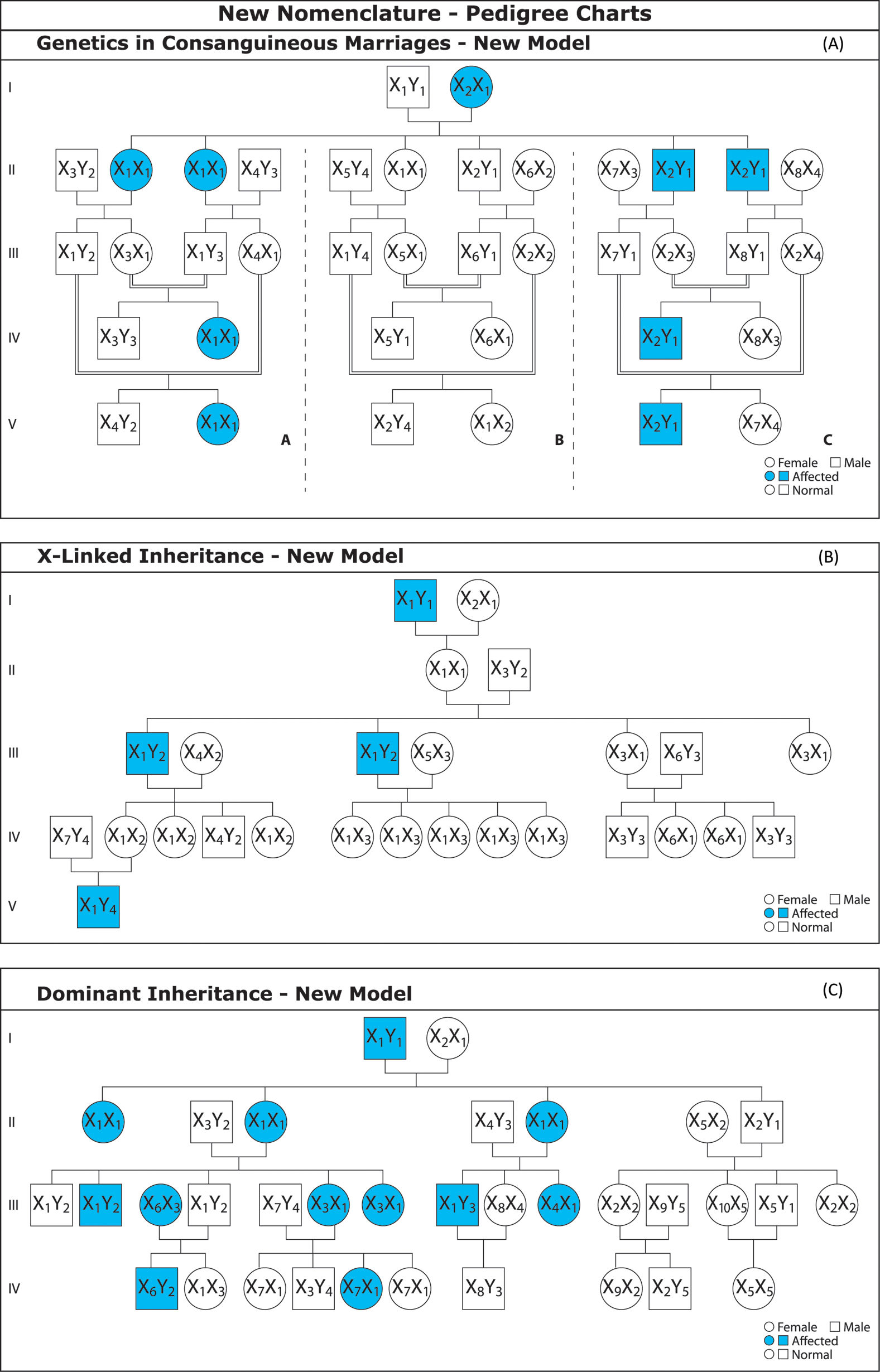
New nomenclature—pedigree charts. All individuals are identified by their sex chromosomes based on the new nomenclature for chromosomal inheritance. Of the 2 sex chromosomes in males (XY) and females (XX), the first X chromosome is ancestral chromosome, and it is followed by the parental X/Y chromosome. (A). Genetics in consanguineous marriages: the pattern of inheritance of chromosomes in 3 types of consanguineous couples who are first cousins. Similar chromosomes (indicated in blue), of offspring and their grandparents are seen in the case of offspring in A, whose grandmothers happen to be sisters, and in C, whose grandfathers happen to be brothers. However, no such similarity is noted in B, whose grandparents are brother and sister. (B). New hypothesis model for X-linked inheritance. Affected males are depicted in blue, and carry the affected ancestral ‘X’ chromosome of the mother. (C). New hypothesis model for dominant inheritance. Affected persons indicated in blue.
Discussion
Theoretical Analysis of the New Model
Significance of Barr body: Presence or absence of Barr body in the X sex chromosomes helps in differentiating it and forms the basis for the new hypothesis.
Inheritance of sex chromosomes: (a) it is clear in molecular biology that the Y chromosome is always transferred from father to son. Therefore, the son’s X sex chromosome would have to be inherited from the mother. However, as the son’s X sex chromosome does not have Barr body, it is clear that the ancestral ‘X’ chromosome from the mother must be transferred to the son. (b) As the Y chromosome is always transferred from father to son, the ancestral ‘X’ sex chromosome of the father would always be transferred to the daughter. The second sex chromosome of the daughter which is inherited from the mother would be the parental X chromosome (with Barr body), as the ancestral ‘X’ chromosome (without Barr body) of the mother as mentioned above will always be transferred to the son. Although the 2 sex chromosomes of the mother (XX) appear to be similar, according to this new hypothesis, they are different and are transferred to the son or daughter specifically as mentioned above and not at random as is currently thought.
Aneuploidy: Sex chromosome aneuploidies occur relatively frequently during meiosis.
26
YO—nonviable: Presence of ancestral ‘X’ chromosome is essential for embryo survival, and the parental X or Y chromosome may be necessary for the expression of some specific sex characteristics. YO does not exist because of the absence of ancestral ‘X’ sex chromosome. XO—(Turners syndrome): Girls with XO chromosomes survive because of the presence of the ancestral ‘X’ chromosome inherited from the father.
26
However, some female sex characteristics are affected in patients with this syndrome: The female is sterile and will not experience puberty. These are attributed to the absence of the parental (mother’s) X chromosome.
27
XXX, XXXX, karyotypes: Normal fertile females with mild phenotypic effects because the ancestral ‘X’ chromosome is present and parental X chromosomes are present in greater numbers. XXY—(Klinefelter syndrome): Nonfertile male.
28
Besides having the ancestral ‘X’ sex chromosome, the presence of both the parental sex chromosomes (X and Y) may result in the expression of some sex characteristics of both male and female.
X-inactivation: All but one X chromosome in female cells are inactivated in order to compensate for the presence of only one X chromosome in male cells, as the Y chromosome is very small compared to the X chromosome with regard to the number of genes it contains. 29 According to the new model, the presence of the ancestral ‘X’ chromosome, inherited from the father, is essential for the embryo to survive; therefore, the ancestral ‘X’ chromosome cannot be inactivated. Thus, the inactivation is expected to take place only in the parental X chromosome.
Inactivation of one of the X sex chromosome in female cells for dosage compensation may be predetermined at the time of zygote formation and not at the time of expression of Xist gene in blastocyst stage as is believed at present. 30 The presence of Sry gene/testis-determining factor or the germ cells that direct the formation of the testis or absence of it are only events that might be predetermined at the time of the formation of the zygote itself. 31
However according to Lyons hypothesis, X-inactivation is a random phenomenon in which either of the 2 X chromosomes in the female undergo inactivation during early development. 32 This may be attributed to epigenetics and mutations in a few cells after the formation of the zygote. Recent studies have shown that several genes escape X-inactivation. 33 This may be required to express parental hereditary characteristics in the female and to balance genes present in the Y chromosome.
Autosomes: The inheritance pattern of ancestral chromosomes and parental chromosomes is not restricted to sex chromosomes only but to autosomes as well. 34
Genetic recombination: An important aspect of evolution is genetic recombination, which takes place during meiosis I; the inheritance of hereditary characteristics depends on it. Only gametes that have undergone genetic recombination are capable of going through the process of fertilization to form the zygote. Other gametes that have not participated in gene recombination are eliminated, as they would possess the same characteristics as the parent.
X-linked inheritance: If the gene causing a disease such as hemophilia is X-linked and is transferred from mother to son with the daughters as carriers, then the pattern of inheritance that is applicable can be explained as follows. 35 The disease gets expressed in the male offspring if the gene is present in the ancestral ‘X’ sex chromosome which is inherited from the mother. During recombination, there is more or less 50% chance of the gene being transferred to parental X sex chromosome. X-linked inheritance depends on the time when recombination occurs as well as the time when fertilization has taken place: (1) If the gene is present in the ancestral ‘X’ sex chromosome of the mother post recombination, and if a male is born, it would be hemophiliac. If a female is born, it would be normal. (2) However, at the time of recombination, if the gene is transferred to parental X sex chromosome of the mother and fertilization takes place and a male baby is born, it would be normal; if a female baby is born it would be a carrier.
Conclusion
This fundamental hypothesis portrays a novel pattern for inheritance of ancestral and parental chromosomes, which is applicable to both sex chromosomes and autosomes. Both parents are equally responsible for the sex of the offspring, which is predetermined at the time of fertilization, prior to the formation of the zygote. The time of recombination, along with the time of conception of the male or female zygote, plays an important role in the inheritance of hereditary characteristics. The new nomenclature for pedigree charts may help for genetic counseling. Further research is required to develop new techniques for identifying chromosomes inherited from each parent. This fundamental hypothesis may open new vistas for our understanding of meiosis, fertilization, gender, and genome. It may help future research in finding solutions to genetic disorders including cancer.
Footnotes
Acknowledgments
I thank Prof H. Sharatchandra and Dr Satyavati M. Sirsat for constructive discussions.
Declaration of Conflicting Interests
The author declared no potential conflicts of interest with respect to the research, authorship, and/or publication of this article.
Funding
The author received no financial support for the research, authorship, and/or publication of this article.